
Quick answer: A dental implants emergency needs immediate emergency care if swelling affects breathing, swallowing or the eyes, if facial trauma is severe, or if bleeding will not stop. Increasing swelling, fever, pus, severe pain, a suddenly mobile implant, trauma or persistent postoperative bleeding need urgent dental assessment. Do not tighten, glue or repeatedly test the implant yourself.
A dental implants emergency can mean very different things: a loose crown may be inconvenient but stable enough for a prompt dental visit, while rapidly spreading swelling can threaten the airway and needs emergency medical care. The safest first step is not to guess the diagnosis. It is to identify danger signs, avoid actions that could worsen the problem, and contact an appropriate clinician. This guide explains how to distinguish immediate danger from a same-day dental problem and from an issue that can usually wait for a scheduled appointment.
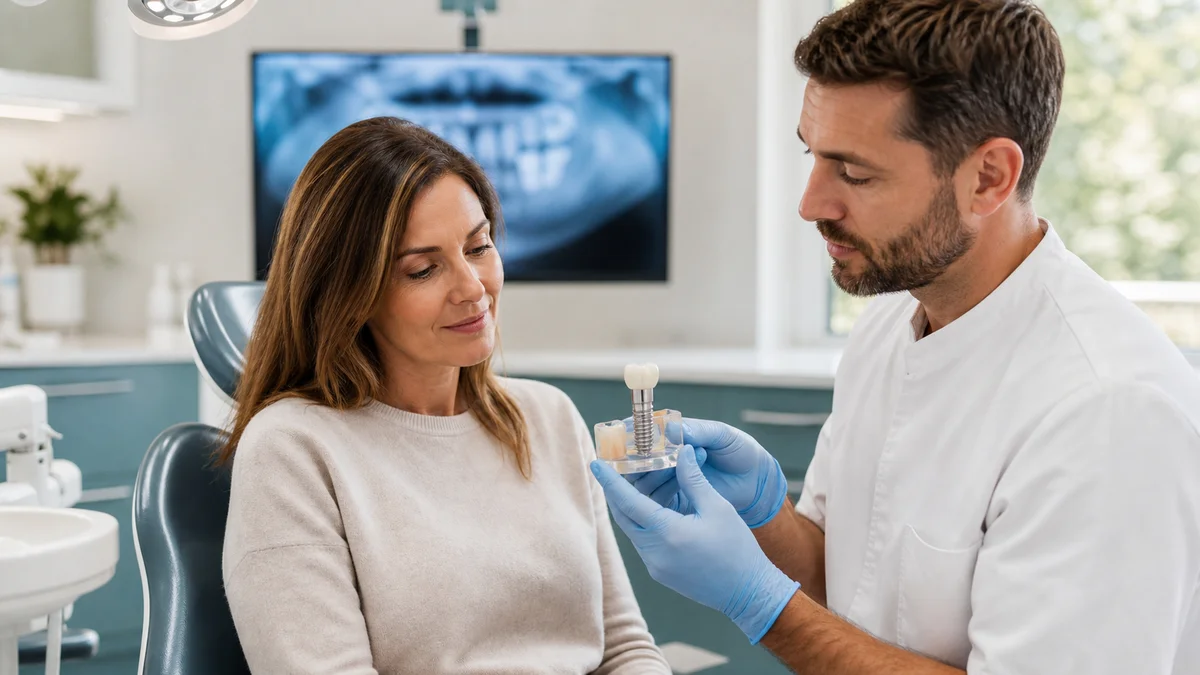
Dental implants have several components. The implant body sits in bone, an abutment connects the restoration, and the visible crown or bridge restores function. A patient may describe any movement in this system as a “loose implant,” but the clinical implications differ. A screw-retained crown can loosen while the implant body remains integrated; alternatively, the implant body itself may be mobile. Only an examination, and sometimes radiographs, can establish which component is involved. The information below supports safe triage and does not replace diagnosis or treatment by a dentist.
Is a dental implants emergency always a hospital emergency?
No. Most implant complications are best assessed by a dentist or an oral surgery service, but a small group of symptoms belongs in an emergency department or requires the local emergency number. The distinction depends on the person’s breathing, swallowing, bleeding, general condition and trauma—not simply on whether an implant is present. An implant clinic can advise about component problems, but it cannot safely manage an unstable airway remotely.
Official NHS guidance directs people to emergency medical care for severe swelling of the mouth, lips, throat or neck when breathing is difficult, for serious facial or jaw injuries, and for heavy mouth bleeding that will not stop. NHS England clinical guidance similarly classifies spreading orofacial swelling with possible airway or intracranial compromise, severe systemic illness, and orofacial fracture as life-threatening presentations. If you are unsure and symptoms are escalating, choose the safer level of care and tell the clinician that you have an implant and when it was placed or restored.
Dental implants emergency decision table
Use this table as a triage aid, not a diagnosis. Local service names and access routes vary by country. When a clinician gives you individual instructions, follow those instructions over general online guidance.
| What you notice | Likely care level | Safe action now | What to avoid |
|---|---|---|---|
| Difficulty breathing or swallowing; severe swelling involving the mouth, throat, neck or eye | Emergency medical care now | Call the local emergency number or go to an emergency department | Do not drive yourself if impaired; do not wait for a routine dental reply |
| Heavy bleeding that does not stop, collapse, or major facial/jaw trauma | Emergency medical care now | Seek emergency help; apply gentle pressure only if safe | Do not probe the wound or remove embedded material |
| Increasing swelling, pus, fever or feeling systemically unwell | Urgent same-day dental or oral surgery assessment; medical escalation if worsening | Call a dentist and describe the progression and systemic symptoms | Do not drain the area or start leftover antibiotics |
| Severe or increasing pain, especially if sleep or normal activity is affected | Urgent dental assessment | Contact an urgent dental service and follow safe analgesic advice | Do not place aspirin or chemicals on the gum |
| Implant body seems mobile, or a component became loose after a blow | Urgent dental assessment | Avoid loading the area and arrange prompt examination | Do not wiggle, tighten or glue it |
| Crown feels slightly loose without pain, swelling, trauma or bleeding | Prompt dental appointment | Stop chewing on it and contact the treating clinic | Do not delay for weeks or use household adhesive |
| Minor tenderness that is stable and improving after recent surgery | Follow the postoperative plan; contact the clinic if uncertain | Monitor the direction of change and follow written instructions | Do not compare recovery only with another person’s experience |
9 warning signs in a dental implants emergency
The word “emergency” should be tied to clinical risk rather than anxiety alone. These nine signs help organize a response. More than one may appear together, and a worsening pattern is often more important than a single snapshot.
- Breathing or swallowing difficulty: treat this as an emergency medical problem, particularly when swelling is spreading.
- Rapidly increasing facial, jaw, mouth or neck swelling: urgent assessment is needed, with emergency escalation if the airway, eye or general condition may be affected.
- Heavy bleeding that will not stop: continuous or uncontrolled bleeding requires emergency care.
- Severe facial or jaw trauma: fractures and head injury symptoms require medical evaluation, not only an implant appointment.
- Fever, chills or feeling markedly unwell with oral symptoms: systemic illness can change the urgency of a local infection.
- Pus, foul discharge or a rapidly worsening bad taste: these findings warrant urgent dental assessment.
- Severe or escalating pain: pain that disrupts sleep or daily life, or is not controlled by appropriate measures, should be triaged urgently.
- New mobility of the implant body or restoration: movement needs assessment; avoid repeated testing.
- Persistent numbness, altered sensation or functional change: contact the treating clinician promptly, especially after recent surgery.
A dental implants emergency assessment should consider the person as a whole. Diabetes control, immune suppression, anticoagulant or antiplatelet medicines, recent surgery, allergies and other medical conditions may affect risk and treatment. Do not stop prescribed medication without advice. Give the urgent-care team an accurate medicine list and explain the implant history.
Breathing difficulty and bleeding in a dental implants emergency
These are the highest-priority red flags in a dental implants emergency. Severe swelling can narrow the airway even when the original problem began around a tooth or implant. Warning features may include increasing difficulty swallowing saliva, a changed or muffled voice, inability to open the mouth normally, swelling extending into the neck, marked weakness, confusion or rapidly deteriorating symptoms. Do not wait for a photograph to be reviewed by a distant clinic if breathing is compromised.
For uncontrolled bleeding, sit upright if able and follow emergency-service instructions. Gentle pressure with clean gauze may be appropriate for accessible postoperative bleeding, but do not pack material deeply into a wound or probe around an implant. If a person is faint, has sustained a serious head injury, is vomiting after trauma, or has double vision, emergency medical assessment is more important than preserving a dental restoration.
In a life-threatening implant-related crisis, bring implant records only if doing so causes no delay. The essential action is emergency care. Once the person is stable, the medical and dental teams can coordinate management of the implant and surrounding tissues.
Dental implants emergency with swelling, pus or suspected infection
Inflammation around implants can range from superficial soft-tissue disease to loss of supporting bone, but symptoms cannot define the extent reliably. A dental implants emergency involving redness, bleeding on gentle cleaning, tenderness, swelling, discharge, an unpleasant taste or increasing discomfort may point to inflammation or infection. Fever or feeling unwell makes urgent assessment more important. Some clinically important problems cause little pain, so absence of pain does not prove that the tissues are healthy.
A clinician may assess plaque, the gum tissues, bleeding, discharge, probing findings, restoration contours and bone levels on appropriate images. They also consider whether the implant is stable and whether the bite or prosthesis is contributing. This is why online advice cannot confirm peri-implant mucositis, peri-implantitis, an abscess or implant failure. The same symptom may have different causes and therefore different treatments.
Do not squeeze or puncture a swelling. Do not place concentrated antiseptics, essential oils, aspirin, heat or household substances against the gum. Antibiotics are not a substitute for drainage or dental treatment when those are indicated, and leftover antibiotics may be inappropriate, expired or incomplete. A dentist or medical prescriber should decide whether an antimicrobial is needed after considering the presentation, allergies and local guidance.
Dental implants emergency after surgery: normal healing or urgent problem?
Some soreness, swelling and bruising can occur after an implant procedure. The treating clinic’s written instructions are the best reference because the procedure, grafting and medical history differ. In an uncomplicated course, symptoms generally become manageable and trend in the expected direction. Concern rises when pain or swelling is severe, rapidly increasing, newly returns after improvement, is accompanied by discharge or fever, or cannot be controlled using the advised regimen.
A dental implants emergency after recent surgery may also involve persistent bleeding, an allergic reaction, altered sensation or trauma to the site. Contact the clinic promptly and give specific information: the procedure date, which area was treated, when symptoms changed, whether swelling is expanding, your temperature if measured, medicines taken and any difficulty breathing or swallowing. This is more useful than simply rating pain as “bad.”
Use pain medicine only if it is normally safe for you and follow the label or your clinician’s instructions. People with pregnancy, ulcers, kidney or liver disease, bleeding disorders, asthma triggered by certain medicines, anticoagulant use or drug interactions need individualized advice from a dentist, doctor or pharmacist. Never place an oral pain tablet directly on the gum; it can injure tissue.
Dental implants emergency with a loose crown, screw or implant body
Movement during a dental implants emergency deserves prompt attention, but it does not reveal which component is loose. A crown can rotate or rock because a screw or cement interface has failed while the implant body remains stable. Alternatively, the implant itself may be mobile. The latter is more concerning because an osseointegrated implant body should not move. Repeatedly pushing the restoration with your tongue or fingers can damage components, irritate tissues and make the clinical picture harder to assess.
If the crown or bridge is loose, stop chewing on that side and contact the implant provider or an urgent dental service. If a small component comes out, place it in a clean, closed container and bring it to the appointment; do not swallow or reinsert it. If aspiration may have occurred and coughing, breathing difficulty or chest symptoms develop, seek urgent medical advice.
Never use superglue, denture adhesive or a home tool on an implant crown. Never attempt to tighten an implant screw. Dental components require identification, compatible instruments, controlled torque and an assessment of why loosening occurred. Simply retightening without evaluating fit, damage and bite forces can allow the problem to recur or worsen.
The U.S. Food and Drug Administration advises patients to tell their dental provider right away if an implant feels loose or painful. That is a useful safety rule for any dental implants emergency: protect the area from load and arrange professional assessment rather than testing it at home.
Dental implants emergency after trauma to the implant, crown or jaw
A blow can turn a stable restoration into a dental implants emergency by damaging the visible crown, an abutment or screw, the implant-bone interface, nearby teeth, soft tissues or the jaw. The absence of an obvious fracture does not exclude injury. New bite changes, movement, sharp edges, bleeding, numbness, difficulty opening the mouth or pain when biting all justify prompt evaluation.
Major facial trauma, suspected jaw fracture, loss of consciousness, vomiting, double vision or heavy bleeding belongs in emergency medical care. For a less severe incident, contact a dentist urgently, avoid chewing on the area and keep any detached piece. A cold pack wrapped in cloth may be used externally for short periods if tolerated, but do not use extreme heat or cold directly on tissue. If there is a cut, do not dig for fragments.
Photographs can help a remote clinician understand visible damage, but they cannot show bone, internal component fractures or the full extent of injury. A dental implants emergency after trauma may require clinical examination and imaging before a safe plan is possible.
What to do during a dental implants emergency while arranging care
Once immediate medical red flags have been excluded in a dental implants emergency, protect the site and improve the information available to the treating team. If you cannot reach the original implant clinic, call a local urgent dental service. A general dentist can triage many problems and refer to oral surgery, periodontology or prosthodontics when appropriate.
- Stop chewing on the affected implant and choose soft foods that do not require pressure on the site.
- Continue gentle oral hygiene unless your surgeon gave different postoperative instructions; do not scrub a fresh surgical wound.
- Record when the problem began, how it is changing and whether there was trauma or a recent procedure.
- List medicines, allergies, medical conditions and any anticoagulant or antiplatelet treatment.
- Keep detached components in a clean, sealed container and take them to the appointment.
- Use prescribed medication exactly as directed; ask a pharmacist or clinician if over-the-counter options are safe for you.
- Keep the implant brand, treatment dates, radiographs and clinic contact details available if you have them.
- Escalate immediately if breathing, swallowing, swelling, bleeding or general condition worsens.
Do not smoke or vape around a recent surgical site, and do not drink alcohol when it conflicts with prescribed medication or postoperative advice. Do not fast unless a clinician tells you to; urgent treatment does not automatically mean sedation. When you call, ask whether you should eat, take routine medicines and bring an escort.
What a dentist may check during a dental implants emergency
A dental implants emergency appointment begins with triage. The clinician asks about breathing, swallowing, bleeding, fever, pain, trauma, timing and medical history. They may examine facial symmetry, lymph nodes, mouth opening, soft tissues, the implant restoration, bite and movement. If movement exists, they try to determine whether it comes from the crown, a screw, the abutment or the implant body. Appropriate radiographs can help assess components, bone and adjacent structures, although imaging is selected according to the clinical question.
Treatment depends on the cause. It might involve cleaning, protecting the site, adjusting the bite, securing or removing a compromised restoration, managing soft-tissue infection, treating an adjacent tooth, or referring for specialist assessment. A mobile implant body may require a different plan from a loose crown. No responsible guide can promise that an implant will be saved, removed or replaced before examination.
The FDA lists recognized implant risks such as local or systemic infection, delayed healing, adjacent tooth damage, sinus perforation, jaw fracture, altered sensation, cleaning difficulty, loosening of an abutment screw and implant body failure. These are possible complications, not a diagnosis of your symptoms. A structured evaluation avoids both false reassurance and unnecessary alarm.
How quickly should a dental implants emergency be seen?
Breathing difficulty, severe swelling, major facial trauma or uncontrolled bleeding should be managed immediately through emergency medical services. Infection that is spreading but not currently compromising the airway, severe uncontrolled dental pain, functional trauma, persistent postoperative bleeding and a suspected mobile implant generally warrant urgent dental assessment—often the same day or as soon as the service advises. A slightly loose crown without pain or swelling still needs prompt attention because continued use can damage components.
When calling, avoid saying only “I have a dental implants emergency.” Describe the observable features: “Swelling has doubled since this morning,” “I cannot swallow saliva,” “The crown moves but the gum is not swollen,” or “Bleeding has continued despite pressure.” Clear information helps the team select the right setting and time frame.
If the original clinic is closed, use its after-hours instructions, a local urgent dental line, a medical advice service or emergency care according to symptoms. The American Dental Association emphasizes that dental practices should have triage and after-hours arrangements and should direct life-threatening emergencies to emergency medical services. Access routes differ, so check the official health service for the country where you are currently located.
Dental travel and a dental implants emergency away from home
Patients may experience a dental implants emergency while traveling or after returning home from treatment abroad. Distance should not delay local urgent assessment. The immediate clinician’s role is to protect health, relieve urgent risk and identify the component or tissue problem; coordination with the original provider can follow. Ask the original clinic to send relevant records directly when possible, including implant system details, procedure dates, radiographs, restoration information, prescribed medicines and known complications.
If your implant was placed at Redent Klinik, use the Redent Klinik contact page to share the treatment date, implant location and current symptoms. For background on planned treatment rather than emergency diagnosis, see the clinic’s dental implants in Turkey information. You can also return to the Redent Klinik English homepage for general service information. If any emergency red flag is present, contact local emergency services first; a remote message must not delay care.
Before future travel, keep a concise digital record and confirm how to access urgent dental care at the destination. Travel insurance and dental coverage vary. Read exclusions, notification deadlines and documentation rules, but do not delay emergency treatment to obtain financial authorization when breathing, uncontrolled bleeding or major trauma is involved.
Dental implants emergency costs, insurance and informed decisions
The cost of a dental implants emergency cannot be stated safely without knowing the diagnosis, country, provider, imaging needs, components and treatment. An urgent examination and temporary stabilization may be separate from definitive repair. Ask for an itemized written estimate that distinguishes assessment, imaging, professional fees, components, laboratory work, medicines, temporary care and follow-up.
Insurance may treat emergency examination, infection care, trauma management, implant components and definitive restoration differently. Ask the insurer whether preauthorization is required, which documents are needed, whether out-of-network care is covered and how an emergency abroad is handled. Keep receipts, clinical notes and radiographs. Coverage is an administrative decision, not proof that a treatment is clinically necessary or unnecessary.
Where several clinically reasonable options exist, ask about the purpose, material risks, expected limitations, alternatives, timing and what happens if treatment is postponed. Avoid providers who promise a guaranteed rescue or a fixed outcome before examination. Patient safety and a defensible diagnosis should guide the plan.
Reducing the chance of another dental implants emergency
Not every complication is preventable, but regular professional maintenance and consistent home care help clinicians detect tissue inflammation, cleaning problems, wear, bite changes and component loosening earlier. The maintenance interval should be individualized according to periodontal history, implant design, restoration, plaque control, smoking, diabetes and other risks.
- Attend the recall and implant-maintenance schedule recommended by your dental team.
- Clean around the implant and restoration with tools demonstrated for your anatomy and prosthesis.
- Report bleeding, discharge, persistent bad taste, pain, movement or bite change rather than waiting for a routine visit.
- Avoid using the restoration to crack hard foods or objects.
- Use a protective sports mouthguard when appropriate and discuss grinding or clenching symptoms.
- Do not smoke; seek cessation support if needed.
- Work with your medical team to manage relevant long-term conditions and keep the dentist informed of medication changes.
Maintenance reduces risk but does not guarantee that an implant will never develop a problem. The best response to a suspected dental implants emergency remains early, proportionate assessment: emergency medical care for airway, severe bleeding or major trauma; urgent dental care for escalating pain, infection, mobility or postoperative concerns; and prompt scheduled care for stable component issues.
Frequently asked questions about a dental implants emergency
Can a loose implant be a dental implants emergency?
No one can tell remotely whether the moving part is the crown, screw, abutment or implant body. Stop chewing on it and contact a dentist promptly. A loose crown without pain may not require an emergency department, but continued loading can damage components. If the implant body appears mobile, or movement follows trauma, treat it as an urgent dental problem.
When does swelling become a dental implants emergency?
Swelling is an immediate medical emergency when it causes difficulty breathing or swallowing, spreads severely into the mouth, throat, neck or around the eye, or accompanies serious systemic illness. Increasing but localized swelling, pus, fever or worsening pain still needs urgent dental assessment. Because progression can be unpredictable, escalate if symptoms worsen while you wait.
Should I test movement during a dental implants emergency?
No. Repeated testing may loosen a component further, irritate tissue or increase the risk that a small part detaches. Avoid chewing on the area and let a clinician isolate the source of movement with appropriate instruments and imaging.
Can I use glue during a dental implants emergency?
No. Household glues and denture adhesives are not suitable for implant restorations and may damage tissue, contaminate components or obstruct proper repair. Store any detached part in a clean container and bring it to the dentist. Do not attempt to tighten a screw yourself.
Do I need antibiotics for a dental implants emergency?
Not automatically. Antibiotics do not correct every cause of swelling or pain and cannot replace dental procedures when drainage, cleaning or component management is indicated. A qualified clinician should assess the symptoms, medical history, allergies and local guidance. Do not use leftover or borrowed antibiotics.
Does pain mean a dental implants emergency is implant failure?
No. Tenderness and swelling can occur during normal early healing, and the expected pattern depends on the procedure. Severe, increasing or returning pain, rapidly expanding swelling, pus, fever, uncontrolled bleeding, altered sensation or mobility should be reported urgently. Only an examination can determine whether healing is within the expected range.
What if I swallow a component during a dental implants emergency?
Contact a healthcare professional for individualized advice and tell the dentist what component may be missing. If there is choking, persistent coughing, breathing difficulty or chest symptoms, seek emergency medical care because aspiration is a different risk from swallowing. Do not induce vomiting unless a medical professional instructs you to do so.
Can a local dentist treat a dental implants emergency after care abroad?
An emergency dentist can assess urgent risks, pain, infection, trauma and component mobility even if another clinic placed the implant. Definitive repair may require implant-system information or specialist input. Ask the original provider to share records, but do not postpone local emergency or urgent care while waiting for them.
What information should I bring to a dental implants emergency visit?
Bring your medical history, medicines and allergies, the procedure date, implant location, implant or restoration records if available, and any detached component. Explain the symptom timeline, recent trauma, fever, swelling, bleeding and changes in breathing or swallowing. Clear facts help the team triage and investigate safely.
Sources and clinical references
This patient guide prioritizes official public-health, regulatory and professional sources. It was prepared for review by Dentist Esma Çevrük Çakır and does not replace an examination.
- NHS: How to find an emergency or urgent dentist
- NHS England: Clinical guidance for unscheduled urgent and non-urgent dental care
- U.S. Food and Drug Administration: Dental implants—what you should know
- U.S. Food and Drug Administration: Implants and prosthetics
- American Dental Association: Emergency treatment and after-hours triage
- American Dental Association: Medical emergencies in the dental office
- American Dental Association
- World Health Organization: Oral health fact sheet