
Many people across the United States wonder whether it is possible to get dental implants free with Medicare. With the growing need for affordable dental care among seniors, this question is not only common but also highly important. Dental implants are considered the gold standard for replacing missing teeth because they look, feel, and function like natural teeth. However, they can also be extremely expensive, with single implants often costing between $3,000 and $5,000 each. That’s why Medicare coverage is a critical point of discussion for patients seeking affordable solutions.
In this guide, we’ll explore every aspect of dental implants free with Medicare so that you can clearly understand what is covered, what is not, and what options you may have. We’ll also break down the types of Medicare plans, discuss eligibility, explore alternative programs, and help you find practical solutions if implants are out of reach financially. 🦷
Why Medicare Coverage Matters for Dental Implants
Traditional Medicare (Parts A and B) does not typically cover routine dental care, including implants, cleanings, and dentures. This creates a significant financial burden for seniors who lose teeth due to aging, gum disease, or injury. Since implants are not just cosmetic but also functional, many patients argue that Medicare should consider them a medical necessity. Missing teeth can lead to nutritional issues, difficulty speaking, and bone loss in the jaw. Therefore, the debate around dental implants free with Medicare is not only about cost but also about long-term health and quality of life.
Understanding the Phrase “Free With Medicare”
When people search for dental implants free with Medicare, they are usually hoping that their insurance will fully cover the procedure. Unfortunately, in most cases, dental implants are not entirely free under Medicare. However, there are specific situations where partial coverage, assistance programs, or Medicare Advantage (Part C) plans may offer benefits that significantly reduce costs. Knowing these distinctions helps avoid disappointment and prepares patients to make informed decisions.
Costs of Dental Implants Without Medicare
To appreciate the importance of coverage, consider the real-world cost of implants. A single implant, including the crown, may cost between $3,000 and $5,000. If multiple implants are needed, the price can easily rise above $20,000. These figures are far beyond the budget of many retirees living on fixed incomes. That’s why the possibility of receiving dental implants free with Medicare or at least at a reduced cost is so appealing. For comparison, removable dentures often cost between $1,000 and $3,000, but they lack the stability and longevity of implants.
Medicare Advantage as a Potential Solution
Although Original Medicare rarely covers implants, Medicare Advantage plans offered by private insurers sometimes include dental benefits. These plans may cover part of the cost of implants, exams, or related procedures. Patients should carefully review each plan’s dental coverage before enrolling. For example, some Advantage plans offer an annual dental allowance (such as $1,500 or $2,000 per year), which can be applied toward implants. While this does not make dental implants free with Medicare, it can significantly reduce out-of-pocket expenses.
Alternative Paths for Coverage
Even if Medicare does not fully pay for implants, patients still have options. Some dental schools provide discounted implant procedures performed by supervised students. State-level assistance programs may also exist to help seniors with dental needs. Nonprofit organizations sometimes fund dental implant surgeries for low-income patients. Exploring these resources can help patients bridge the financial gap while waiting for broader Medicare reforms.
Importance of Researching Providers
Patients interested in maximizing benefits should thoroughly research dental clinics and compare coverage options. Many clinics highlight whether they accept Medicare Advantage dental benefits. In some cases, clinics may even promote specific programs that bring patients closer to achieving dental implants free with Medicare. For direct assistance or consultations, patients can also contact clinics like Redent Klinik Contact Page to explore personalized options.
Expert Insights and Advocacy
Experts in dental health and insurance continue to push for expanded Medicare coverage. According to the American Dental Association, oral health is inseparable from overall health, and therefore should be included in Medicare benefits. As policies evolve, patients are encouraged to stay informed about potential expansions that may one day make implants truly free under Medicare. Until then, understanding current rules is the key to planning.
Practical Takeaway
While it is rare to find dental implants free with Medicare today, seniors still have pathways to reduce costs. By carefully selecting Medicare Advantage plans, exploring state and nonprofit programs, and consulting with trusted providers, it’s possible to make implants more affordable. Staying updated with policy changes and health advocacy movements may also pave the way for more inclusive coverage in the future.
✅ Final note: Dental implants are life-changing, both for confidence and for health. While the dream of truly free implants through Medicare is still limited, the strategies shared here can help patients move closer to affordable solutions while improving their overall quality of life.
Does Medicare Cover Dental Implants in 2025?
One of the most frequently asked questions among seniors is whether Medicare covers dental implants in 2025. The demand for dental implants free with Medicare has increased because implants are often the only long-lasting and natural-looking solution for missing teeth. Yet, the cost remains a significant barrier. To fully understand where things stand in 2025, it’s important to review the rules of Original Medicare, Medicare Advantage, and the latest policy updates. 🦷
Original Medicare: What’s Covered and What’s Not
Traditional Medicare (Parts A and B) has not historically provided coverage for routine dental care. This includes cleanings, dentures, crowns, and dental implants. The rule remains the same in 2025: Original Medicare does not pay for implant surgery or prosthetic crowns, even if tooth loss significantly affects your health. The reasoning is that Medicare is designed to cover essential medical care, not elective dental procedures. This limitation is the primary reason people search for options like dental implants free with Medicare.
There are some exceptions. If a dental procedure is considered medically necessary for a covered hospital procedure—for example, preparing the jaw for radiation treatment—Medicare Part A may cover certain hospital-related costs. However, the implant itself and the dental work are excluded from reimbursement. For most seniors, this means that Medicare alone does not provide financial relief for implant costs.
Medicare Advantage in 2025: Expanding Benefits
Medicare Advantage (Part C) is the best chance for patients to access dental implant benefits. These plans are offered by private insurance companies and are approved by Medicare. In 2025, many Advantage plans continue to expand their dental benefits in response to the growing demand. Some of these plans may provide annual allowances of $1,000–$3,500 that can be applied toward dental services, including implants.
How Medicare Advantage Dental Benefits Work
Here’s an example of how these benefits may apply in 2025:
- A plan may give you an annual allowance of $2,000 for dental services.
- This allowance can be used for exams, extractions, crowns, or implants.
- Costs beyond the allowance remain out-of-pocket for the patient.
While this doesn’t make dental implants free with Medicare, it can significantly reduce financial strain. Patients with multiple implants may still face high bills, but even partial coverage is a step forward compared to Original Medicare.
2025 Policy Discussions and Potential Reforms
As of 2025, there have been ongoing discussions in Congress and among health advocacy groups about expanding Medicare to include comprehensive dental coverage. Organizations like the American Dental Association argue that oral health is essential to overall health, and excluding it from Medicare creates inequity. While these reforms are still under debate, seniors should keep an eye on updates. If new legislation passes, future enrollees may one day access dental implants free with Medicare.
Out-of-Pocket Costs Without Medicare Coverage
If you are not enrolled in a Medicare Advantage plan with dental coverage, you may face the full cost of implants. As of 2025, average implant prices remain:
- Single dental implant: $3,000–$5,000
- Full-mouth implants (All-on-4): $15,000–$30,000 per arch
- Bone grafting (if required): $500–$3,000
These costs explain why many seniors look for clinics or programs that can connect them to dental implants free with Medicare or alternative financial assistance. For some patients, dental schools and nonprofit clinics provide lower-cost care, although availability varies by location.
Finding the Right Medicare Advantage Plan
For those determined to reduce implant expenses, researching Medicare Advantage plans is essential. Plans differ widely in terms of dental allowances, coverage networks, and annual limits. Before enrolling, patients should:
- Check whether implants are specifically mentioned in the plan’s dental benefits.
- Review annual maximum coverage amounts.
- Confirm which dental clinics accept the plan.
- Compare premiums versus potential out-of-pocket savings.
For personalized advice, it may be helpful to consult clinics that work with international patients and Medicare holders, such as Redent Klinik Contact Page. They can explain available financing and insurance strategies.
Practical Tips for 2025 Enrollees
For those navigating Medicare in 2025, here are practical steps:
- Check whether you’re eligible for Medicare Advantage dental benefits during open enrollment.
- Ask for written confirmation from the insurer about implant coverage.
- Keep track of your annual allowance to avoid surprise bills.
- Explore additional state and nonprofit assistance programs.
While this may not guarantee dental implants free with Medicare, it ensures you maximize the benefits available today.
Final Thoughts
In 2025, the answer to the question “Does Medicare cover dental implants?” is still complex. Original Medicare does not cover implants, but Medicare Advantage plans may provide partial benefits that make them more affordable. Though the dream of dental implants free with Medicare is not yet fully realized, expanding Advantage plans and ongoing policy debates point to a future where dental coverage could become standard. Until then, careful planning, research, and provider consultation remain the best strategies for patients seeking a healthy, confident smile without overwhelming costs.
Understanding Medicare Advantage Plans and Implant Benefits
When seniors hear about the possibility of getting dental implants free with Medicare, they often discover that the answer lies in Medicare Advantage plans. Known as Part C, these plans are offered by private insurers approved by Medicare, and they frequently include additional benefits beyond what Original Medicare provides. In 2025, Medicare Advantage plans remain the most practical route for anyone seeking dental implant coverage. Let’s explore how these plans work, what benefits they offer, and how to maximize your chances of saving on implant costs. 🦷
What Are Medicare Advantage Plans?
Medicare Advantage plans bundle your hospital (Part A) and medical (Part B) benefits together, and often include prescription drug coverage (Part D). Unlike Original Medicare, Advantage plans may also cover services such as routine vision, hearing, fitness, and dental care. This makes them attractive for seniors who want more comprehensive health coverage under a single plan.
Dental Coverage as a Competitive Feature
To compete in the marketplace, many Medicare Advantage providers offer dental benefits. These can range from basic cleanings and exams to more advanced treatments like crowns, dentures, and implants. While not all plans include implants, the growing demand for them has encouraged insurers to expand benefits. For many patients, this creates the closest opportunity to obtaining dental implants free with Medicare or at least at a significantly reduced price.
How Implant Benefits Are Structured
Medicare Advantage dental benefits for implants usually take the form of:
- Annual Allowances: A fixed amount (e.g., $1,500–$3,500) that you can apply toward dental care, including implants.
- Discounted Networks: Access to participating dentists who offer lower rates for covered services.
- Coinsurance or Copayments: You may still need to pay a percentage of the cost, but the plan subsidizes part of it.
For example, if your plan provides a $2,000 annual dental allowance, and your implant costs $4,000, you’d pay $2,000 out of pocket. This does not technically make dental implants free with Medicare, but it substantially lowers the financial barrier.
Examples of 2025 Advantage Plans Covering Implants
In 2025, several major insurers, such as UnitedHealthcare, Aetna, and Humana, have Advantage plans that include dental implant coverage. Here’s a breakdown of what some plans may look like:
- UnitedHealthcare Advantage Choice: $2,000 dental allowance per year, can be used for implants.
- Aetna Medicare Premier: $1,500 dental coverage annually with negotiated discounts on implant procedures.
- Humana Gold Plus: $3,500 dental maximum that applies to major dental work, including implants.
Each plan varies by state and provider network, so patients must confirm the details during enrollment. Reviewing these benefits carefully is critical before assuming coverage for dental implants free with Medicare.
Limitations and Fine Print
While Advantage plans offer more coverage than Original Medicare, there are limitations. Annual maximums may not cover the full cost of multiple implants, and some plans impose waiting periods before benefits apply. Others restrict implant coverage to specific dental providers within their network. Additionally, unused benefits often do not roll over, so patients should schedule treatments strategically.
Hidden Costs Patients Should Expect
Even with Advantage coverage, patients may face:
- Out-of-network provider fees
- Additional copayments for exams or imaging
- Separate charges for anesthesia or bone grafting
These hidden costs remind patients that while Medicare Advantage can help, it rarely guarantees dental implants free with Medicare in a literal sense. It is better to think of these benefits as discounts rather than complete coverage.
How to Choose the Right Medicare Advantage Plan
Choosing a plan requires careful comparison of dental benefits. Here’s a step-by-step approach:
- Make a list of your expected dental needs, including implants, crowns, or bone grafts.
- Compare the annual maximum benefits across available plans in your area.
- Confirm that your preferred dentist or oral surgeon is in-network.
- Check for waiting periods, exclusions, or fine print about implants.
- Balance premium costs against the potential dental savings.
By taking these steps, you’ll be in the best position to access affordable implants through Medicare Advantage, even if they are not completely free.
Why Advantage Plans Matter for Seniors
For many seniors, the difference between keeping and losing natural chewing ability lies in whether implants are financially accessible. Medicare Advantage plans empower patients to regain confidence and health by lowering implant costs. Combined with nonprofit aid or dental school clinics, the financial puzzle becomes easier to solve. Seniors should also remember to revisit plans annually during open enrollment, as benefits change from year to year.
Final Takeaway
In 2025, Medicare Advantage plans represent the most reliable path toward reducing implant costs. While the dream of truly dental implants free with Medicare is not yet a reality, Advantage plans bring patients much closer to affordable, high-quality dental care. Seniors should take time to research and compare available options, ask detailed questions, and make informed choices. With proper planning, these plans can turn the once out-of-reach dream of implants into a realistic solution for long-term oral health.
For professional guidance and personalized consultation, patients can always reach out to trusted providers such as Redent Klinik Contact Page, which helps patients navigate the complexities of dental implant care under various insurance plans.
Eligibility Requirements for Free or Low-Cost Dental Implants
Many seniors search online to see if they qualify for dental implants free with Medicare. While Medicare’s rules can be confusing, eligibility for free or low-cost implants depends on several factors: your type of Medicare plan, your income level, state-specific programs, and even your medical condition. In this section, we’ll break down the exact requirements that may influence your ability to get implants at little to no cost in 2025. 🦷
Eligibility Under Original Medicare
Original Medicare (Parts A and B) generally does not cover dental implants. This means that, under standard eligibility, no patient receives dental implants free with Medicare through Original Medicare alone. The only exceptions occur when dental procedures are tied to covered medical treatments. For instance, if you are hospitalized for jaw surgery due to an accident, Medicare Part A may cover hospital costs but not the implant itself. Therefore, seniors must look beyond Original Medicare for implant support.
Eligibility Through Medicare Advantage (Part C)
The most common way seniors qualify for implant coverage is through Medicare Advantage plans. To be eligible:
- You must already be enrolled in Medicare Part A and Part B.
- You must live in an area where Medicare Advantage plans are offered.
- You must select and enroll in a plan that includes dental coverage, specifically noting whether implants are part of the benefits.
Once enrolled, you may qualify for partial implant coverage through allowances or copay reductions. While this may not equal dental implants free with Medicare, it can make the procedure significantly more affordable.
Special Enrollment Considerations
Seniors who miss the standard enrollment window may still qualify during special enrollment periods (SEPs). These apply if you move to a new area, lose current coverage, or become eligible for programs like Medicaid. Knowing these rules ensures you don’t miss a chance to join a plan that lowers implant costs.
Income-Based Eligibility for Financial Assistance
Some seniors qualify for assistance because of limited income or assets. While Medicare itself may not directly provide dental implants free with Medicare, pairing Medicare with Medicaid or state-run programs can open new options. Medicaid eligibility varies by state but often provides broader dental coverage than Medicare.
Dual Eligibility (Medicare + Medicaid)
Patients who qualify for both Medicare and Medicaid are known as “dual-eligible beneficiaries.” These individuals often have access to expanded dental benefits through Medicaid. Depending on your state, you may receive:
- Full coverage of dentures and partial coverage of implants
- Discounted treatment at state-partnered clinics
- Referrals to dental schools offering free or reduced-cost implants
For low-income seniors, this pathway may provide the closest opportunity to obtaining dental implants free with Medicare or at least with minimal costs.
Medical Necessity Requirements
Another factor that may influence eligibility is whether implants are deemed medically necessary. While Medicare rarely recognizes implants as medical necessities, some Advantage or supplemental insurance policies may do so. Conditions that may justify implant treatment include:
- Severe jawbone loss leading to nutritional deficiencies
- Difficulty speaking or eating due to missing teeth
- Medical treatments (such as cancer therapy) requiring oral restoration
Though rare, cases that demonstrate a direct medical need may receive greater coverage consideration than purely cosmetic implant requests.
Eligibility Based on Age and Enrollment Periods
To qualify for Medicare at all, individuals must generally be aged 65 or older, or younger with qualifying disabilities. Once enrolled, you become eligible to select Medicare Advantage plans during the Annual Enrollment Period (October 15 – December 7 each year). Choosing wisely during this period ensures you don’t miss opportunities for implant coverage.
Early Disability Enrollment
People under 65 with permanent disabilities or end-stage renal disease may also qualify for Medicare early. These individuals, once enrolled in Medicare Advantage, may access the same dental benefits as older beneficiaries. This expands the pool of patients eligible for discounted implant procedures.
Other Programs That Influence Eligibility
In addition to Medicare and Medicaid, several programs affect whether you can qualify for reduced-cost or free implants:
- Dental Schools: Many dental schools offer implant services at a lower cost to provide students with training opportunities.
- Veterans Affairs (VA): Veterans may qualify for dental coverage through the VA if implants are deemed medically necessary.
- Nonprofit Programs: Charitable organizations sometimes run programs offering implants at little or no cost for low-income seniors.
While these are not direct Medicare benefits, they can supplement coverage and help bring the total cost closer to free.
Practical Steps to Check Your Eligibility
Here’s a roadmap for seniors trying to determine if they qualify:
- Review your Medicare Advantage plan details to confirm implant coverage.
- Check your state’s Medicaid website for dental coverage options.
- Ask your provider if implants may be considered medically necessary for your condition.
- Research local dental schools and nonprofit organizations for discounted services.
For one-on-one help, contacting dental providers is highly recommended. For example, Redent Klinik Contact Page can guide patients through eligibility checks and explain available financing options.
Final Thoughts on Eligibility
Eligibility for dental implants free with Medicare is not straightforward. Original Medicare rarely covers implants, but Medicare Advantage, Medicaid, and supplemental programs can reduce costs. Income level, health status, and enrollment timing all play crucial roles. While total “free” coverage is rare, with the right combination of programs, patients can dramatically lower expenses and restore their dental health affordably.
As policies continue to evolve, and as advocacy groups like the American Dental Association push for expanded dental benefits, seniors should remain informed. By understanding eligibility requirements today, you can position yourself for the best possible coverage tomorrow.
Alternative Programs Beyond Medicare for Implant Coverage
While many seniors search for dental implants free with Medicare, the reality is that Original Medicare does not fully cover implants. However, this doesn’t mean that affordable or even free dental care is out of reach. Numerous alternative programs exist outside of Medicare that can help patients reduce the financial burden. From nonprofit organizations to dental schools, state-funded initiatives, and private financing solutions, there are multiple ways to bridge the gap. Let’s explore these options in detail so that patients can find practical paths toward affordable implant treatment. 🦷
State and Local Assistance Programs
Many states have assistance programs designed to help low-income seniors with dental care. While these programs vary, they sometimes include coverage for dentures and may offer limited support for implants. Seniors should check their state Medicaid office or Department of Health website to see whether such programs are available. Though these programs rarely provide dental implants free with Medicare, they may cover related procedures like extractions or crowns, making the implant process more affordable overall.
Examples of State Initiatives
- California: Denti-Cal provides limited adult dental services, and while implants are not standard, patients may receive partial assistance for medically necessary care.
- New York: The Essential Plan offers broader dental benefits for low-income adults, including restorative care that can reduce implant costs.
- Massachusetts: MassHealth covers dentures and some oral surgeries, potentially offsetting other expenses connected to implant treatment.
These programs, combined with Medicare Advantage benefits, can bring patients closer to achieving dental implants free with Medicare-like results.
Dental School Programs
Dental schools across the United States offer discounted or sometimes free dental services performed by supervised students. Patients benefit by paying significantly less than standard clinic rates. While the treatment process may take longer, the savings are substantial.
Why Choose a Dental School?
- Treatment performed under the supervision of licensed professionals
- Lower costs compared to private practices
- Access to the latest techniques and technologies
Many dental schools provide implant services, making this one of the most realistic alternatives for those seeking dental implants free with Medicare. However, availability depends on the school’s curriculum and resources.
Nonprofit and Charitable Organizations
Several nonprofits are dedicated to helping seniors access affordable dental care. These organizations often host free dental days, mobile clinics, or funding assistance for complex treatments such as implants. Some of the most notable programs include:
- Dental Lifeline Network: Provides free dental care to seniors, disabled individuals, and those who cannot afford treatment.
- Missions of Mercy (MOM): Organizes free dental clinics across the country, offering a wide range of services including extractions and sometimes implant-related care.
- Local Charitable Foundations: Many local charities work with dental professionals to subsidize implant procedures for low-income patients.
Though these programs are not technically Medicare benefits, they are crucial for those pursuing dental implants free with Medicare alternatives.
Veterans Affairs (VA) Benefits
Veterans may qualify for dental coverage through the VA if their dental condition is service-related or if they meet specific eligibility requirements. In some cases, the VA may cover implant procedures. Veterans should contact their local VA dental clinic to explore available benefits. While not part of Medicare, VA support can create a pathway to affordable or free implants for eligible veterans.
Clinical Trials and Research Studies
Another lesser-known option involves participating in clinical trials conducted by universities or dental research centers. These studies often provide free or discounted implant procedures to qualified participants in exchange for allowing researchers to evaluate outcomes. This arrangement can be an excellent way to receive implants at no cost while contributing to scientific advancement.
Private Financing and Dental Discount Plans
For those who cannot find direct coverage, private financing options exist to spread out implant costs over time. Dental discount plans are also available, offering reduced rates at participating clinics for an annual membership fee. While this doesn’t equate to dental implants free with Medicare, it provides a manageable way to make implants more affordable without relying solely on insurance.
Examples of Discount Options
- CareCredit: A healthcare credit card offering interest-free financing for dental procedures when paid within promotional periods.
- Dental Discount Cards: Membership cards that grant access to reduced dental fees nationwide.
- In-House Payment Plans: Many clinics allow patients to pay in monthly installments.
Combining Programs for Maximum Benefit
Patients can often combine multiple programs for greater savings. For example:
- Enroll in a Medicare Advantage plan that offers some dental allowance.
- Seek additional assistance through a state program or Medicaid.
- Use a dental school or nonprofit organization for reduced-cost implant placement.
By stacking these opportunities, patients may get very close to the goal of dental implants free with Medicare in practical terms, even if not technically free under federal rules.
Final Thoughts
Although Medicare’s limitations remain, seniors are not without options. From state programs and dental schools to nonprofit organizations and VA benefits, many resources exist to make implants affordable. By exploring these alternatives, seniors can dramatically reduce costs and regain their quality of life. Staying proactive and resourceful is the key to finding the right solution. For those seeking personal guidance and treatment options, contacting a trusted clinic such as Redent Klinik Contact Page can help patients identify which of these alternatives best suits their needs.
As advocacy groups like the American Dental Association continue to push for expanded dental coverage, the hope for future reforms grows stronger. Until then, these alternative programs provide a valuable bridge for patients determined to achieve a confident, healthy smile without bearing the entire financial burden.
Average Costs of Dental Implants Without Insurance
Understanding the true cost of dental implants is crucial for seniors who are exploring options such as dental implants free with Medicare. Since Medicare rarely covers implants directly, many patients must pay out of pocket unless they find assistance programs or Medicare Advantage plans. To better appreciate why affordable alternatives are so important, let’s take a closer look at the average costs of implants in the U.S. and what factors influence these expenses. 🦷
National Average Costs in 2025
As of 2025, the average cost of a single dental implant in the United States ranges between $3,000 and $5,000. This price usually includes the titanium post, abutment, and crown. For patients needing multiple implants or full-arch replacements, costs rise dramatically:
- Single Implant: $3,000 – $5,000
- Implant-Supported Bridge: $6,000 – $10,000
- All-on-4 (full arch replacement): $15,000 – $30,000 per arch
- Full Mouth Implants: $30,000 – $60,000 or more
These prices highlight why so many seniors hope to find dental implants free with Medicare. For individuals on fixed incomes, these figures are daunting and often unaffordable without supplemental help.
Factors That Affect Implant Costs
Several variables influence the cost of implants. No two patients will have the exact same bill because dental health conditions differ. Factors include:
- Location: Urban areas tend to have higher implant fees compared to rural areas.
- Number of Implants: Multiple implants increase overall costs significantly.
- Type of Implant: Standard titanium implants may cost less than zirconia or advanced implant systems.
- Pre-Surgical Needs: Bone grafting, sinus lifts, or extractions add to expenses.
- Specialist Fees: Oral surgeons or prosthodontists often charge more than general dentists.
Each of these factors means that some patients may pay more than average, further emphasizing the importance of Medicare Advantage dental benefits and alternative assistance programs.
Breakdown of Typical Costs
When calculating implant costs, it helps to break down the components of treatment. Here’s a typical example for one implant:
- Initial Consultation and X-rays: $200 – $500
- CT Scan (if required): $300 – $800
- Surgical Placement of Implant: $1,500 – $2,500
- Abutment: $300 – $600
- Crown: $1,000 – $2,000
Total: $3,300 – $6,400. This explains why patients search for dental implants free with Medicare or discounted programs to help offset these costs.
Additional Expenses to Consider
Beyond the base implant cost, there are often hidden or secondary expenses, such as:
- IV sedation or anesthesia: $250 – $1,000 per session
- Bone grafting: $500 – $3,000
- Sinus lift: $1,500 – $5,000
These add-ons can raise the final bill dramatically, making it nearly impossible for retirees to afford implants without financial aid or insurance benefits.
Comparison With Other Tooth Replacement Options
To understand why implants are expensive but highly sought after, compare them with alternatives:
- Removable Dentures: $1,000 – $3,000 (less stable, less natural)
- Fixed Bridges: $2,000 – $5,000 (require alteration of surrounding teeth)
- Dental Implants: $3,000 – $5,000 each (durable, natural, long-term solution)
Although dentures and bridges are cheaper initially, implants provide longer-lasting benefits. This is why patients continue to seek dental implants free with Medicare options—implants remain the gold standard in tooth replacement, even if costly upfront.
Why Implants Are Worth the Cost
Despite their high price, implants offer unique advantages that make them worth the investment:
- They preserve jawbone health and prevent bone loss.
- They provide stable chewing ability for a normal diet.
- They look and feel like natural teeth, boosting self-confidence.
- They last decades, often longer than dentures or bridges.
For seniors, these benefits improve both physical health and overall quality of life. This is why many advocate for expanded Medicare coverage to one day include implants as standard care.
International Alternatives and Medical Tourism
Some patients lower their implant costs by traveling abroad for treatment. Countries like Turkey, Mexico, and Hungary are known for offering implants at 50–70% lower costs than in the U.S. For example, a single implant in Turkey may cost only $800 – $1,500. Clinics such as Redent Klinik Contact Page specialize in international dental care and provide affordable packages that include travel and lodging. While this is not the same as dental implants free with Medicare, it’s an attractive alternative for patients unable to afford U.S. prices.
Final Thoughts on Costs
The cost of implants without insurance underscores why so many seniors seek assistance programs and better Medicare benefits. Paying $3,000 to $5,000 per tooth—or up to $60,000 for a full set—is unrealistic for most retirees living on fixed incomes. While the dream of dental implants free with Medicare is not yet reality, options like Medicare Advantage, Medicaid, dental schools, nonprofits, and medical tourism can help significantly lower expenses.
For ongoing updates and advocacy, organizations such as the American Dental Association continue to campaign for broader dental coverage. Until then, patients should carefully weigh the true costs of implants, compare alternatives, and seek professional advice to make informed financial decisions.
How to Find Clinics Offering Dental Implants Free With Medicare
For seniors searching for dental implants free with Medicare, the journey often begins with finding the right clinic. While Original Medicare does not usually cover implants, there are ways to identify dental providers who accept Medicare Advantage plans, participate in state-funded assistance programs, or collaborate with nonprofit organizations. Knowing how to research and evaluate clinics is essential for reducing costs and ensuring safe, high-quality care. 🦷
Start With Medicare Advantage Provider Directories
The first step in finding a suitable clinic is to check the provider directory of your Medicare Advantage plan. These directories list in-network dentists and oral surgeons who accept your plan’s dental benefits. Since Advantage plans often include allowances for implants, using in-network providers ensures you receive the maximum financial benefit.
Key Questions to Ask Providers
- Does your clinic accept my specific Medicare Advantage plan?
- Do you apply dental allowances toward implants?
- Are there annual or lifetime limits on implant coverage?
- What are the estimated out-of-pocket costs for my treatment plan?
By asking these questions, you can avoid surprises and determine whether a clinic is a realistic option for accessing dental implants free with Medicare or at least reduced-cost implants.
Utilize State and Local Dental Programs
Some clinics participate in state-funded dental assistance programs, which may help seniors reduce implant costs. These programs vary widely by state, but contacting your local Medicaid office or Department of Health can point you toward approved providers. While these clinics may not directly offer dental implants free with Medicare, they can partner with insurance benefits to lower total expenses.
Look Into Dental Schools and Teaching Hospitals
Dental schools are another excellent option for affordable implant treatment. Clinics associated with universities often provide implants at reduced rates since procedures are performed by students under supervision. Patients benefit from access to advanced technology and carefully monitored care.
Benefits of Dental Schools
- Significant savings on implant costs compared to private practices
- Opportunity to receive treatment from future specialists
- Thorough care due to faculty oversight
Although the process may take longer, dental schools are among the best places to get affordable or sometimes free implant procedures that complement Medicare Advantage coverage.
Seek Out Nonprofit and Charity-Supported Clinics
Nonprofit dental organizations often operate mobile clinics or permanent centers that provide low-cost or free services to underserved populations. These clinics may not be widely advertised, so it’s important to research local charities or community health centers.
Notable Nonprofit Options
- Dental Lifeline Network: Offers free dental care for seniors and individuals with disabilities.
- Mission of Mercy (MOM): Hosts free dental events across the country where implants may be available at reduced or no cost.
- Community Health Centers: Federally qualified health centers often provide sliding-scale fees for dental services, including restorative treatments.
For seniors seeking dental implants free with Medicare, these organizations provide crucial supplemental support that fills the coverage gap.
Exploring International Clinics
Some patients explore dental tourism to access more affordable implants abroad. Countries like Turkey, Mexico, and Hungary are well-known for providing high-quality dental services at a fraction of U.S. prices. Clinics such as Redent Klinik Contact Page offer international patients comprehensive treatment packages, including implants, lodging, and transfers. While this isn’t technically part of Medicare, it is a practical solution for those who cannot find affordable implants locally.
Using Online Search Tools Effectively
Patients can also use online tools and platforms to locate Medicare-participating dental providers. Websites such as the Medicare.gov plan finder allow you to search for Advantage plans with dental benefits and identify in-network providers. In addition, many insurers list their dental networks online with filters for procedures like implants.
Tips for Online Research
- Search using terms like “Medicare Advantage dental implant providers near me.”
- Cross-check reviews on Google and Yelp to confirm provider quality.
- Use Medicare.gov’s “Find a Provider” tool to ensure coverage validity.
Combining Clinics With Financial Assistance Programs
Sometimes the best option is to combine clinic services with external funding programs. For example, a dental school may charge discounted rates, and the remainder can be covered by a Medicare Advantage allowance or nonprofit aid. This hybrid approach can bring you much closer to dental implants free with Medicare results in practice, even if not technically free under federal rules.
Final Thoughts
Finding clinics that support affordable dental implants requires research, persistence, and asking the right questions. Whether through Medicare Advantage directories, state-funded programs, dental schools, nonprofit clinics, or international providers, seniors have multiple pathways to reduce implant expenses. While the phrase dental implants free with Medicare may not fully reflect today’s reality, by strategically selecting providers and leveraging available programs, patients can come very close to achieving affordable or even free implant solutions.
As organizations like the American Dental Association continue advocating for expanded dental benefits, the future may hold even more opportunities. Until then, seniors should remain proactive in researching and connecting with reputable clinics to restore their smiles and improve their health without breaking the bank.
Financial Assistance and State Programs for Seniors
For many seniors, the dream of receiving dental implants free with Medicare feels out of reach because Medicare has strict limitations on dental coverage. However, there are numerous financial assistance opportunities and state programs designed to reduce the burden of implant costs. By combining Medicare Advantage benefits with state-level support, nonprofit aid, and specialized grants, older adults can significantly lower their expenses and, in some cases, achieve free or nearly free implants. Let’s examine the most reliable financial pathways available in 2025. 🦷
State Medicaid Programs for Seniors
One of the most important resources for seniors is Medicaid. While Medicare rarely covers implants, Medicaid may offer some level of dental support, depending on the state. Medicaid is a state-administered program, so coverage varies significantly:
- California (Medi-Cal): Offers adult dental benefits, though implants are usually limited to medically necessary cases.
- New York: Provides broader dental coverage, including restorative treatments that reduce implant-related costs.
- Massachusetts: Covers dentures and some oral surgery procedures, which can offset implant expenses.
Although implants themselves may not always be included, Medicaid can cover related services like extractions, bone grafts, and crowns, lowering the overall cost of care. This brings patients closer to the concept of dental implants free with Medicare when programs are used together.
Dual Eligibility (Medicare + Medicaid)
Seniors who qualify for both Medicare and Medicaid—called “dual eligibles”—have access to expanded benefits. In these cases, Medicare may provide partial coverage through Advantage plans, while Medicaid fills in gaps. This combination can reduce or eliminate out-of-pocket expenses for dental work, making implants far more accessible.
State-Funded Dental Assistance Programs
In addition to Medicaid, some states operate dental assistance programs specifically for low-income seniors. These programs often partner with local clinics and universities to provide free or discounted implants. Examples include:
- Dental Lifeline Network State Programs: Available in multiple states, offering free or reduced-cost care through volunteer dentists.
- State Health Departments: Some states allocate funds for senior oral health programs that may include partial implant support.
- Community-Based Initiatives: Local senior centers sometimes collaborate with dentists to provide reduced-cost implant services.
While these do not technically fall under Medicare, they complement Medicare benefits and increase the likelihood of affordable implant access.
Nonprofit and Charitable Financial Aid
Nonprofits play a critical role in bridging gaps left by Medicare and Medicaid. Seniors can apply for assistance through organizations that provide direct funding, grants, or free clinics:
- Dental Lifeline Network: Offers the “Donated Dental Services” program, connecting seniors with volunteer dentists nationwide.
- America’s Dentists Care Foundation: Organizes Missions of Mercy events where free implants may occasionally be available.
- Local Charities: Many faith-based or community organizations fundraise for seniors in need of dental work.
These programs may not guarantee dental implants free with Medicare, but they bring patients closer to achieving implants at little or no cost.
University and Dental School Clinics
Many universities operate dental schools that provide services at reduced rates. Patients only pay for materials, while procedures are performed by students under faculty supervision. This model allows seniors to save thousands of dollars on implants. When combined with Medicare Advantage allowances, it can mimic the effect of receiving dental implants free with Medicare.
Advantages of Dental School Clinics
- Lower costs compared to private clinics
- Supervised by licensed dental professionals
- Access to modern techniques and technology
Grants and Special Funding Programs
There are also targeted grants available for seniors. While not widely advertised, some private organizations and foundations offer grants for dental care, especially for those whose oral health impacts overall health. Examples include health-focused nonprofits that provide funding for cancer survivors, veterans, or individuals with disabilities.
How to Apply for Assistance
Applying for financial aid requires careful preparation. Seniors should:
- Gather proof of income, disability, or financial need.
- Request letters from dentists outlining medical necessity for implants.
- Contact state Medicaid offices to confirm available benefits.
- Reach out to nonprofit organizations and dental schools to apply for reduced-cost care.
For personalized assistance, contacting clinics that handle international patients—such as Redent Klinik Contact Page—can provide detailed guidance on navigating state and nonprofit aid alongside Medicare coverage.
Practical Example of Combining Resources
Consider a senior with a $2,000 annual Medicare Advantage dental allowance. If their state Medicaid program covers extractions, and a dental school provides discounted implant placement, the combined effect may bring implant costs down to a manageable level—or even make them free in certain circumstances. This layered approach demonstrates how creative planning can turn the idea of dental implants free with Medicare into a near reality.
Final Thoughts
Financial assistance and state programs are essential tools for seniors seeking implants. While Medicare alone rarely provides full coverage, Medicaid, nonprofit aid, dental schools, and grants all work together to fill gaps. By combining these resources, patients can reduce costs drastically and sometimes even access free implant procedures. The key is persistence, research, and applying to as many relevant programs as possible. With continued advocacy from groups like the American Dental Association, there is hope that broader Medicare dental benefits will be introduced in the future. Until then, seniors must rely on these state and nonprofit resources to achieve affordable, and sometimes free, dental implant care.
Step-by-Step Application Process for Coverage
Applying for coverage that may help you access dental implants free with Medicare or at least at a reduced cost can feel overwhelming. Between Medicare Advantage options, Medicaid applications, and nonprofit programs, the process requires careful planning. In this section, we’ll walk through a clear, step-by-step guide to help seniors navigate applications efficiently and maximize their chances of receiving assistance with dental implant procedures. 🦷
Step 1: Understand Your Medicare Coverage
The first step is knowing what type of Medicare you currently have. Original Medicare (Part A and Part B) does not cover dental implants, so if that’s your only coverage, you will not qualify for dental implants free with Medicare. However, if you are enrolled in or considering Medicare Advantage (Part C), there may be benefits available.
What to Do
- Check your Medicare ID card to see if you are enrolled in Original Medicare or Medicare Advantage.
- Review your plan’s Evidence of Coverage (EOC) document for dental benefits.
- If you are on Original Medicare only, consider enrolling in a Medicare Advantage plan during the next open enrollment period.
Step 2: Research Medicare Advantage Dental Benefits
Medicare Advantage plans differ widely in their dental coverage. Some offer only preventive care, while others include allowances for implants. Since you’re looking for dental implants free with Medicare or at reduced cost, focus on plans that mention implant coverage specifically.
What to Do
- Use the Medicare.gov Plan Finder tool to compare Advantage plans in your area.
- Search for “dental implants” or “major dental services” in the plan’s details.
- Call the plan provider directly to confirm implant coverage and annual maximums.
Step 3: Verify Eligibility for State Programs
After confirming your Medicare coverage, explore state-level programs that may assist with implant costs. Many states offer dental benefits through Medicaid, and seniors who qualify can combine these benefits with Medicare Advantage plans for more comprehensive coverage.
What to Do
- Visit your state’s Medicaid website and review adult dental coverage options.
- Check if you qualify for “dual eligibility” (Medicare + Medicaid).
- Contact your local Medicaid office for application forms or online enrollment.
Step 4: Collect Documentation
Applying for financial assistance or insurance benefits requires documentation. Without it, applications may be delayed or denied. To demonstrate eligibility, gather documents that show both financial and medical need.
Documents You May Need
- Medicare card and plan documents
- Proof of income (tax returns, Social Security statements, or bank records)
- Medical records demonstrating tooth loss or related health conditions
- Letters from dentists outlining the medical necessity of implants
Step 5: Apply to Nonprofit and Charitable Programs
If Medicare and Medicaid do not fully cover implants, nonprofit organizations may help. Programs like the Dental Lifeline Network and Missions of Mercy offer free or reduced-cost dental care, which can be combined with Medicare benefits to lower implant costs.
What to Do
- Visit the Dental Lifeline Network website to apply for Donated Dental Services.
- Look for upcoming Missions of Mercy events in your state.
- Reach out to local community health centers for available grants or discounted services.
Step 6: Contact Dental Clinics Directly
Many clinics are familiar with patients seeking help through Medicare Advantage and other assistance programs. Some clinics even offer their own in-house financing or payment plans. International clinics, such as Redent Klinik Contact Page, specialize in helping patients reduce costs significantly.
What to Do
- Ask clinics if they accept your Medicare Advantage plan.
- Request itemized treatment estimates for implants.
- Inquire about additional financial aid programs they may offer.
Step 7: Submit Applications and Follow Up
Submitting applications is only part of the process. Following up ensures that your application is being reviewed and that you don’t miss deadlines.
Best Practices
- Submit all required documentation at once to avoid delays.
- Keep copies of every document you send.
- Call or email the program’s office within two weeks to confirm receipt.
- Be prepared to provide additional information if requested.
Step 8: Combine Benefits Strategically
Rarely will a single program cover the entire cost of implants. Instead, the most successful approach is to combine benefits. For example, you may use your Medicare Advantage dental allowance, Medicaid coverage for extractions, and nonprofit assistance for implant placement. Together, these can bring your out-of-pocket expenses close to zero, which for many patients is effectively dental implants free with Medicare.
Step 9: Stay Informed About Policy Updates
Finally, keep an eye on evolving Medicare policies. Advocacy from groups such as the American Dental Association continues to push for expanded dental coverage. Future reforms may broaden benefits to include implants directly under Medicare, changing the application process entirely.
Final Thoughts
Applying for coverage to reduce implant costs requires patience, organization, and persistence. By following this step-by-step process—understanding your Medicare plan, researching Advantage benefits, verifying Medicaid eligibility, applying for nonprofit aid, and combining resources—you maximize your chances of lowering expenses. While the phrase dental implants free with Medicare is still more aspirational than literal, using this structured approach can help seniors get as close as possible to achieving affordable, or even free, implant treatment.
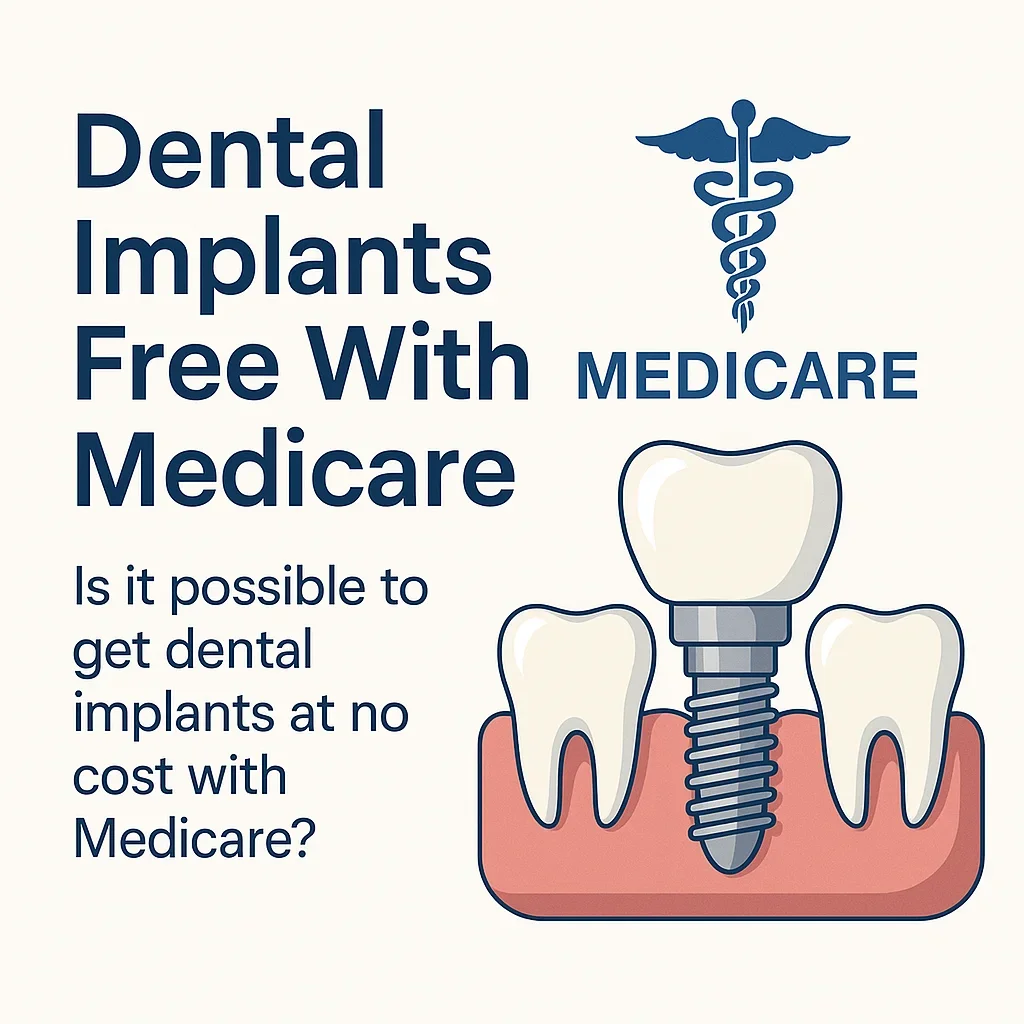
Expert Opinions: Are Free Implants Really Possible?
One of the most common questions seniors ask is whether it is truly possible to get dental implants free with Medicare. While advertisements and rumors may suggest free implants exist, the reality is more complex. To clarify this issue, it’s important to examine what dental experts, insurance professionals, and policy analysts say. By understanding their perspectives, patients can separate fact from fiction and set realistic expectations for their dental care journey. 🦷
Dental Experts on Implant Necessity
Most dentists and oral surgeons agree that dental implants are the gold standard for tooth replacement. Experts emphasize that implants prevent jawbone loss, improve chewing ability, and restore self-confidence. However, they also acknowledge the financial challenges. According to leading prosthodontists, implants are not “luxury” treatments but necessary medical interventions for many seniors. This is why the conversation around dental implants free with Medicare continues to gain traction in policy debates.
Why Dentists Advocate for Coverage
- Implants maintain long-term oral health by preventing bone resorption.
- They reduce dependence on removable dentures, which can cause discomfort.
- They contribute to better nutrition by restoring chewing function.
- They provide psychological benefits, improving quality of life.
From the perspective of dental professionals, the lack of Medicare coverage for implants creates a gap in patient care that urgently needs addressing.
Insurance Professionals on Medicare’s Limitations
Insurance experts consistently point out that Original Medicare (Parts A and B) does not cover dental implants. At best, Medicare may cover related hospital stays if a medical complication arises, but the implants themselves are excluded. Medicare Advantage (Part C), on the other hand, may include limited dental benefits, such as annual allowances for major procedures. Even then, coverage rarely results in dental implants free with Medicare; instead, it helps reduce out-of-pocket costs.
Key Insights From Insurance Analysts
- Implants are categorized as “routine dental care,” not “medically necessary.”
- Annual maximums in Advantage plans (often $1,500–$2,000) cover only part of implant expenses.
- Patients should always confirm whether implants are explicitly included in their plan benefits.
Insurance experts encourage patients to view Medicare Advantage as a way to lessen implant costs, but not as a guarantee of full coverage.
Policy Analysts on Future Possibilities
Health policy analysts highlight that the push for expanded Medicare dental benefits is growing. Advocacy groups, including the American Dental Association, argue that oral health is an inseparable part of overall health. While current laws limit dental implant coverage, analysts suggest that reforms may eventually make implants more affordable or even free under Medicare.
Trends in Policy Discussions
- Increased attention on senior oral health in congressional hearings.
- Proposals for adding dental coverage to Medicare Part B.
- Pilot programs in select states exploring expanded benefits for low-income seniors.
Though reforms are not yet finalized, the conversation is evolving, giving hope to those who dream of dental implants free with Medicare.
Critics of the “Free Implants” Concept
Not all experts are optimistic. Some critics argue that full coverage for implants under Medicare is unlikely in the near future due to high costs. With an average price of $3,000 to $5,000 per implant, covering millions of seniors would place enormous financial strain on the Medicare system. Instead, critics believe the focus will remain on preventive and basic restorative dental care.
Why Skepticism Exists
- High upfront costs make nationwide coverage unsustainable.
- Budget constraints and competing healthcare priorities slow reform.
- Some policymakers consider implants “elective” rather than essential.
International Perspective From Clinics Abroad
Outside the United States, dental implants are often more affordable, even without Medicare involvement. Countries like Turkey and Mexico provide implants for as low as $800 – $1,500 each. Clinics that serve international patients, such as Redent Klinik Contact Page, have shown that free or low-cost implants are achievable when healthcare systems prioritize affordability. While this does not equate to dental implants free with Medicare in the U.S., it demonstrates that more affordable models exist globally.
Practical Advice From Experts
Despite differences in opinion, most experts agree on practical steps seniors can take:
- Enroll in Medicare Advantage plans with strong dental benefits.
- Seek state and nonprofit programs to supplement coverage.
- Research dental schools and teaching hospitals for discounted implant options.
- Stay informed about legislative changes that could expand Medicare dental benefits.
Final Thoughts
Expert opinions confirm that while the idea of truly dental implants free with Medicare is not yet a reality, there are significant pathways to reduce costs. Dental professionals argue implants are essential, insurance experts highlight current limitations, and policy analysts point to future reforms. Critics caution against expecting fully free coverage in the short term, but international clinics prove that affordability is possible. For seniors, the best approach is to combine current resources, remain proactive in seeking aid, and watch for policy shifts that may bring Medicare closer to covering implants comprehensively in the years ahead.