
When patients search for dental implants how long after tooth extraction, they are usually trying to understand the safest and most effective timing for restoring their smile after losing a tooth. This is one of the most important decisions in modern dentistry because timing directly affects healing, implant success, aesthetics, and long-term oral health. 🦷
The question of dental implants how long after tooth extraction does not have a one-size-fits-all answer. Instead, dentists evaluate several factors such as bone quality, infection presence, gum health, and overall medical condition. However, there are general timelines that help patients understand what to expect.
In many cases, dental implants can be placed immediately after tooth extraction. This is known as an immediate implant. If conditions are ideal—meaning there is no infection, sufficient bone density, and healthy gum tissue—the dentist may insert the implant right after removing the tooth. This approach reduces treatment time and preserves bone structure.
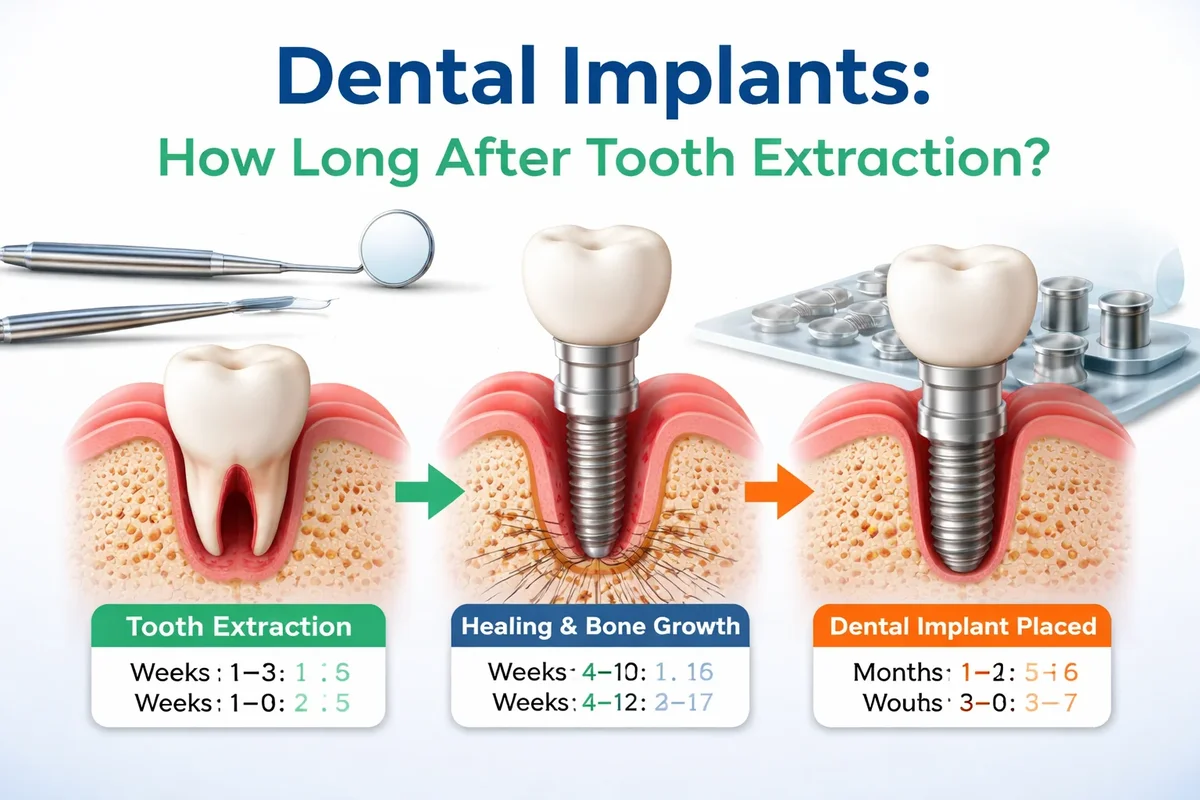
However, when asking dental implants how long after tooth extraction, many patients fall into the category where a waiting period is necessary. Typically, dentists recommend waiting between 6 to 12 weeks for the initial healing of soft tissues. In more complex cases, especially when bone loss is present, the waiting period may extend to 3 to 6 months or longer.
Understanding dental implants how long after tooth extraction also requires knowing how the body heals. After a tooth is removed, the socket begins to close, and new bone starts forming. This process is essential because dental implants rely on a process called osseointegration, where the implant fuses with the jawbone. Without adequate healing, the implant may fail.
Another key point in dental implants how long after tooth extraction is the condition of the extracted site. If the tooth was removed due to infection or periodontal disease, dentists often delay implant placement to allow complete healing and eliminate bacteria. Placing an implant too early in such cases increases the risk of complications.
Patients also ask dental implants how long after tooth extraction when they are concerned about aesthetics. In visible areas, such as front teeth, dentists may prefer immediate implants combined with temporary crowns to maintain appearance. This approach ensures that patients do not experience gaps in their smile during the healing process. 😊
Cost considerations can also influence decisions related to dental implants how long after tooth extraction. Immediate implants may reduce the number of surgical procedures, potentially lowering overall costs. However, delayed implants sometimes require additional procedures such as bone grafting, which can increase expenses.
Estimated Costs (Global Average):
- Single Dental Implant: $1,000 – $3,000
- Bone Grafting (if needed): $300 – $1,500
- Full Procedure (implant + crown): $2,500 – $5,000
If you are still unsure about dental implants how long after tooth extraction, the best approach is to consult a qualified dental professional. Each case is unique, and personalized evaluation ensures optimal results. You can easily reach out through the Redent Klinik Contact Page to get expert advice tailored to your situation.
Additionally, trusted organizations such as the American Dental Association provide valuable guidelines and patient education resources to help you better understand implant procedures and healing timelines.
In summary, the answer to dental implants how long after tooth extraction depends on individual factors, but the common options include immediate placement, early placement (within weeks), or delayed placement (after several months). Choosing the right timing is crucial for long-term success, comfort, and aesthetics.
By understanding the full scope of dental implants how long after tooth extraction, patients can make informed decisions, reduce anxiety, and achieve the best possible outcomes. Always prioritize professional evaluation and follow your dentist’s recommendations for a safe and successful implant journey. 🚀
1. What Is the Ideal Timing for Dental Implants After Extraction?
Understanding the ideal timing for dental implants is the most critical part of answering the question dental implants how long after tooth extraction. Patients often assume there is a fixed waiting period, but in reality, the correct timing depends on clinical conditions, healing stages, and individual oral health factors. Choosing the right moment ensures long-term success, stability, and aesthetics of the implant. 🦷
Immediate, Early, and Delayed Implant Placement
When evaluating dental implants how long after tooth extraction, dentists typically categorize implant timing into three main approaches: immediate, early, and delayed placement.
Immediate Implant Placement
Immediate placement occurs on the same day as tooth extraction. This is the fastest answer to dental implants how long after tooth extraction. However, it is only suitable when:
- There is no active infection
- Bone structure is strong and sufficient
- Gum tissue is healthy
This method reduces treatment time and preserves bone volume. However, it requires precise planning and expertise to avoid complications.
Early Implant Placement (2–12 Weeks)
In many cases, dentists recommend early placement, which typically occurs within a few weeks after extraction. This is a common answer to dental implants how long after tooth extraction for patients with minor inflammation or soft tissue healing needs.
During this phase, gums heal while the bone remains relatively preserved, making it an optimal balance between speed and safety.
Delayed Implant Placement (3–6 Months or More)
Delayed placement is often necessary when there is infection, bone loss, or trauma. For many patients asking dental implants how long after tooth extraction, this is the safest option.
Waiting allows full bone regeneration and reduces the risk of implant failure. However, additional procedures such as bone grafting may be required.
Key Factors That Determine Ideal Timing
To accurately answer dental implants how long after tooth extraction, dentists evaluate several clinical factors:
- Bone Density: Adequate bone is essential for implant stability.
- Presence of Infection: Infections must be fully treated before implant placement.
- Gum Health: Healthy soft tissue improves healing outcomes.
- Tooth Location: Front teeth may require faster solutions for aesthetic reasons.
- Patient Health: Conditions like diabetes or smoking can slow healing.
Each of these factors plays a crucial role in determining dental implants how long after tooth extraction, making personalized treatment planning essential.
Why Timing Matters for Implant Success
Many patients underestimate how important timing is when considering dental implants how long after tooth extraction. Placing an implant too early can lead to infection or poor integration, while waiting too long may result in bone loss.
Bone resorption begins immediately after tooth extraction. Within the first 3–6 months, significant bone volume can be lost. This directly affects the outcome of dental implants how long after tooth extraction, as insufficient bone may require grafting procedures.
Correct timing ensures proper osseointegration, where the implant fuses with the jawbone. This process is essential for durability and function.
Average Timeline Overview
Typical Timeline for Dental Implants:
- Immediate Placement: Same day
- Early Placement: 2–12 weeks after extraction
- Delayed Placement: 3–6 months after extraction
- Full Healing & Crown Placement: 3–6 months after implant insertion
This timeline helps clarify dental implants how long after tooth extraction, but it is always customized for each patient.
Cost Considerations Based on Timing
The timing of implant placement can also affect cost. Patients researching dental implants how long after tooth extraction should be aware of potential financial differences:
- Immediate Implant: $2,500 – $4,500 (may reduce additional procedures)
- Delayed Implant with Bone Graft: $3,000 – $6,000
- Additional Procedures (Sinus Lift, Grafting): $500 – $3,000
While immediate implants may seem more cost-effective, delayed procedures sometimes provide better long-term success depending on the case.
Professional Evaluation Is Essential
Ultimately, the most accurate answer to dental implants how long after tooth extraction comes from a professional consultation. Dentists use imaging technologies such as 3D scans and X-rays to determine the optimal timing.
If you are considering dental implants and wondering dental implants how long after tooth extraction, it is highly recommended to consult with experts. You can easily schedule an appointment through the Redent Klinik Contact Page to receive a personalized treatment plan.
Additionally, trusted institutions like the American Dental Association provide valuable guidelines on implant procedures and oral health standards.
Final Thoughts on Ideal Timing
In conclusion, the answer to dental implants how long after tooth extraction varies depending on multiple factors, but the goal is always the same: achieving optimal healing, strong bone integration, and long-lasting results.
Whether the implant is placed immediately or after several months, proper timing ensures better function, aesthetics, and patient satisfaction. Always prioritize a personalized approach rather than a one-size-fits-all timeline. 🌟
2. Immediate vs Delayed Implants: Which Option Is Better?
When patients research dental implants how long after tooth extraction, one of the most important decisions they face is choosing between immediate and delayed implant placement. Both options have advantages and limitations, and the right choice depends on clinical conditions, aesthetic goals, and long-term oral health considerations. Understanding these approaches in detail helps patients make informed decisions and achieve the best outcomes. 🦷
What Are Immediate Dental Implants?
Immediate implants are placed at the same time as tooth extraction. This is often considered the fastest solution when answering dental implants how long after tooth extraction. Instead of waiting for the site to heal, the implant is inserted directly into the fresh extraction socket.
Advantages of Immediate Implants
- Reduced Treatment Time: Combines extraction and implant placement in one procedure.
- Preserves Bone Structure: Prevents early bone loss after extraction.
- Fewer Surgical Visits: Minimizes the number of appointments.
- Better Aesthetics: Ideal for front teeth where appearance matters.
For many patients asking dental implants how long after tooth extraction, immediate implants can seem like the most attractive option because they provide quicker results and less waiting time.
Disadvantages of Immediate Implants
- Not suitable if infection is present
- Requires sufficient bone density
- Higher risk if not carefully planned
Even though immediate placement answers the question dental implants how long after tooth extraction with “same day,” it is not always the safest or most predictable option.
What Are Delayed Dental Implants?
Delayed implants are placed after a healing period following tooth extraction. This is one of the most common answers to dental implants how long after tooth extraction, especially in cases involving infection, bone loss, or complex extractions.
Advantages of Delayed Implants
- Lower Risk of Infection: Allows full healing before placement.
- Better Bone Assessment: Dentists can evaluate bone quality after healing.
- Higher Success Rates: Especially in complex cases.
For patients concerned about complications, delayed placement is often the safest answer to dental implants how long after tooth extraction.
Disadvantages of Delayed Implants
- Longer treatment time (3–6 months or more)
- Possible bone loss requiring grafting
- More surgical procedures
While delayed implants require patience, they often provide more predictable long-term results when evaluating dental implants how long after tooth extraction.
Which Option Is Better for You?
The answer to dental implants how long after tooth extraction depends heavily on individual conditions. There is no universal “best” option—only the most suitable one for your case.
Choose Immediate Implants If:
- No infection is present
- Bone density is strong
- Gum tissue is healthy
- You want faster results
Choose Delayed Implants If:
- There is infection or inflammation
- Bone grafting is required
- The extraction was complex
- You prefer a safer, staged approach
Understanding these differences is key to answering dental implants how long after tooth extraction in a way that aligns with your health and expectations.
Clinical Factors That Influence the Decision
Dentists evaluate several important factors when deciding between immediate and delayed placement in the context of dental implants how long after tooth extraction:
- Bone Volume: Adequate bone is required for immediate placement.
- Infection Status: Active infections require healing time.
- Tooth Location: Front teeth often favor immediate solutions.
- Patient Health: Smoking, diabetes, and immune conditions affect healing.
These factors help determine the safest and most effective timing for dental implants how long after tooth extraction.
Cost Comparison: Immediate vs Delayed
Cost is another important consideration when evaluating dental implants how long after tooth extraction. The timing of the procedure can influence overall expenses.
Average Cost Comparison:
- Immediate Implant: $2,500 – $4,500
- Delayed Implant: $2,000 – $3,500
- Bone Grafting (if needed): $300 – $1,500
While immediate implants may reduce additional procedures, delayed implants may involve extra costs if bone grafting is required.
Long-Term Success Rates
When considering dental implants how long after tooth extraction, long-term success is the ultimate goal. Studies show that both immediate and delayed implants have high success rates when performed under the right conditions.
However, delayed implants may have slightly higher predictability in complex cases, while immediate implants can be equally successful in carefully selected patients.
Expert Guidance Is Essential
The best way to determine dental implants how long after tooth extraction for your specific situation is through a professional consultation. Dentists use advanced imaging techniques such as 3D scans to evaluate bone and tissue conditions.
If you are unsure which option is right for you, you can consult experts via the Redent Klinik Contact Page for personalized advice.
You can also explore professional guidelines from the American Dental Association to better understand treatment standards.
Final Comparison Summary
In conclusion, the choice between immediate and delayed implants is central to answering dental implants how long after tooth extraction. Immediate implants offer speed and convenience, while delayed implants provide safety and predictability.
The right decision depends on your oral health, bone condition, and treatment goals. By understanding both options, patients can confidently navigate the process and achieve a successful, long-lasting smile. 😁
3. Healing Stages After Tooth Extraction Explained
To fully understand dental implants how long after tooth extraction, it is essential to explore the healing stages that occur after a tooth is removed. Healing is not a single event but a complex biological process involving soft tissue recovery, bone regeneration, and structural stabilization. Each stage directly impacts when a dental implant can be safely and successfully placed. 🦷
Patients often ask dental implants how long after tooth extraction because they want to minimize waiting time. However, rushing the process can compromise implant success. Knowing how healing progresses helps patients and dentists determine the ideal timing.
Stage 1: Blood Clot Formation (First 24–48 Hours)
The first stage after extraction is the formation of a blood clot in the socket. This is the body’s natural response and plays a critical role in answering dental implants how long after tooth extraction.
What Happens During This Stage?
- A blood clot forms to protect the bone and nerve endings
- Bleeding gradually stops
- The healing process begins immediately
This stage is crucial because if the clot is disturbed (a condition known as dry socket), healing can be delayed significantly. In such cases, the timeline for dental implants how long after tooth extraction will be extended.
Stage 2: Soft Tissue Healing (1–2 Weeks)
After the initial clot forms, the gums begin to heal and close over the extraction site. This phase is an important milestone when evaluating dental implants how long after tooth extraction.
Key Developments in This Stage
- Gum tissue starts regenerating
- Swelling and discomfort decrease
- The risk of infection reduces
Many dentists consider early implant placement during or after this stage, depending on the patient’s condition. For some patients asking dental implants how long after tooth extraction, this is the earliest safe window for implantation.
Stage 3: Initial Bone Healing (2–6 Weeks)
Bone healing begins beneath the surface even while the gums appear healed. This stage is vital in determining dental implants how long after tooth extraction because implants rely on strong bone support.
What Happens to the Bone?
- New bone cells begin forming
- The socket gradually fills with bone tissue
- Structural stability starts improving
During this period, dentists carefully monitor healing. In some cases, early implant placement is possible, but only if the bone is stable enough. This stage provides a partial answer to dental implants how long after tooth extraction for patients seeking faster treatment.
Stage 4: Advanced Bone Regeneration (6–12 Weeks)
This stage represents a more stable healing phase, where bone density improves significantly. For many patients, this is the most common timeframe when answering dental implants how long after tooth extraction.
Why This Stage Is Ideal
- Bone structure becomes more stable
- Implant placement success rates increase
- Risk of complications decreases
Many dentists prefer this window because it balances healing and efficiency. It is often the recommended timing when discussing dental implants how long after tooth extraction in standard cases.
Stage 5: Full Bone Maturation (3–6 Months or More)
In more complex cases, full bone maturation is required before implant placement. This stage is particularly relevant when patients ask dental implants how long after tooth extraction after infections or trauma.
Characteristics of This Stage
- Bone becomes fully dense and stable
- Ideal conditions for long-term implant success
- Often required after bone grafting procedures
While this stage involves a longer waiting period, it provides the most predictable results when determining dental implants how long after tooth extraction.
Factors That Can Delay Healing
Not all patients heal at the same rate. Several factors can influence dental implants how long after tooth extraction by slowing down recovery:
- Smoking: Reduces blood flow and delays healing
- Diabetes: Affects tissue regeneration
- Poor Oral Hygiene: Increases infection risk
- Age: Older patients may heal more slowly
Understanding these factors is essential when evaluating dental implants how long after tooth extraction for individual cases.
Healing Timeline Overview
Typical Healing Timeline:
- 0–2 Days: Blood clot formation
- 1–2 Weeks: Soft tissue healing
- 2–6 Weeks: Initial bone formation
- 6–12 Weeks: Advanced bone healing
- 3–6 Months: Full bone maturation
This timeline provides a structured understanding of dental implants how long after tooth extraction, helping patients set realistic expectations.
Cost Implications of Healing Time
The healing stage can also impact treatment costs related to dental implants how long after tooth extraction. Longer healing periods may require additional procedures.
- Standard Implant Placement: $2,500 – $4,500
- Bone Grafting (if delayed): $300 – $1,500
- Advanced Procedures: $1,000 – $3,000
Patients should consider both time and cost when planning their treatment.
Professional Monitoring During Healing
Dentists closely monitor healing progress to determine the correct timing for dental implants how long after tooth extraction. Regular check-ups ensure that the site is healing properly and is ready for implantation.
If you are unsure about your healing stage, you can consult specialists through the Redent Klinik Contact Page for a personalized evaluation.
For additional clinical guidelines, you can also refer to the American Dental Association, which provides authoritative information on dental procedures and healing standards.
Final Thoughts on Healing Stages
In conclusion, understanding the healing stages is essential for answering dental implants how long after tooth extraction. Each phase—from clot formation to full bone maturation—plays a critical role in ensuring implant success.
By respecting the body’s natural healing process and following professional advice, patients can achieve optimal results, reduce risks, and enjoy long-lasting dental implants. 🌟
4. Factors That Affect Dental Implant Timing
When evaluating dental implants how long after tooth extraction, one of the most important considerations is that timing is never universal. Each patient’s situation is unique, and multiple clinical and personal factors directly influence when an implant can be safely placed. Understanding these variables is essential for achieving long-term success, stability, and aesthetics. 🦷
Many patients expect a simple answer to dental implants how long after tooth extraction, but dentists must carefully assess several conditions before determining the optimal timeline. These factors can either shorten or extend the waiting period, depending on the complexity of the case.
Bone Quality and Density
Bone quality is one of the most critical factors affecting dental implants how long after tooth extraction. Dental implants rely on strong, healthy bone for stability and integration.
Why Bone Density Matters
- Provides support for the implant
- Ensures proper osseointegration
- Reduces the risk of implant failure
If bone density is sufficient, immediate or early implant placement may be possible. However, if the bone is weak or has deteriorated, the timeline for dental implants how long after tooth extraction may extend due to the need for bone grafting.
Presence of Infection or Inflammation
Infection is another major factor influencing dental implants how long after tooth extraction. If the extracted tooth was affected by decay, abscess, or periodontal disease, the surrounding tissue may not be ready for immediate implant placement.
How Infection Affects Timing
- Delays healing process
- Increases risk of implant failure
- Requires complete treatment before implantation
In such cases, dentists typically recommend waiting several weeks or months. This ensures that the area is fully healed before proceeding with dental implants how long after tooth extraction.
Gum Health and Soft Tissue Condition
Healthy gums are essential when determining dental implants how long after tooth extraction. The soft tissue surrounding the implant plays a key role in protecting it from bacteria and ensuring long-term success.
Key Considerations
- Healthy gums promote faster healing
- Inflamed gums require additional healing time
- Soft tissue thickness affects implant aesthetics
If the gums are not in optimal condition, the timeline for dental implants how long after tooth extraction may need to be extended to allow proper healing.
Type and Complexity of Tooth Extraction
The nature of the extraction itself significantly impacts dental implants how long after tooth extraction. Simple extractions heal faster, while complex or surgical extractions may require longer recovery periods.
Simple vs Complex Extraction
- Simple Extraction: Faster healing, possible early implant placement
- Surgical Extraction: Longer healing time due to trauma
Patients with complex extractions often need additional time before proceeding with dental implants how long after tooth extraction.
Bone Loss After Extraction
Bone loss begins immediately after a tooth is removed. This is a crucial factor in determining dental implants how long after tooth extraction.
Impact of Bone Resorption
- Reduces available bone for implant placement
- May require bone grafting procedures
- Can delay treatment timeline
To minimize delays in dental implants how long after tooth extraction, dentists may recommend early intervention or bone preservation techniques.
Need for Bone Grafting
In cases where bone loss is significant, bone grafting becomes necessary. This directly affects dental implants how long after tooth extraction because grafted bone needs time to integrate.
Bone Grafting Timeline
- Healing period: 3–6 months
- Improves bone volume and strength
- Enhances implant success rate
Patients requiring grafting should expect a longer timeline when considering dental implants how long after tooth extraction.
Patient’s Overall Health
General health conditions also play a significant role in determining dental implants how long after tooth extraction.
Health Factors That Influence Healing
- Diabetes: Slows healing process
- Smoking: Reduces blood flow to tissues
- Immune Disorders: Increase risk of complications
Patients with these conditions may require a longer waiting period before proceeding with dental implants how long after tooth extraction.
Tooth Location in the Mouth
The location of the extracted tooth can also affect dental implants how long after tooth extraction.
Front Teeth vs Back Teeth
- Front Teeth: Often require immediate placement for aesthetics
- Back Teeth: May allow for longer healing time
This factor is especially important for patients concerned about appearance while determining dental implants how long after tooth extraction. 😊
Cost Implications Based on These Factors
Each of these factors can influence the overall cost of treatment related to dental implants how long after tooth extraction.
Estimated Costs Based on Complexity:
- Standard Implant: $2,000 – $4,000
- Bone Grafting: $300 – $1,500
- Advanced Procedures: $1,000 – $3,000
Understanding these costs helps patients plan their treatment effectively.
Importance of Professional Assessment
The most accurate way to determine dental implants how long after tooth extraction is through a professional dental evaluation. Dentists use advanced imaging and clinical assessments to create a personalized treatment plan.
If you are considering dental implants and want expert guidance on dental implants how long after tooth extraction, you can contact specialists through the Redent Klinik Contact Page.
Additionally, trusted organizations such as the American Dental Association provide reliable information on dental procedures and patient care.
Final Thoughts on Timing Factors
In conclusion, multiple factors influence dental implants how long after tooth extraction, including bone quality, infection, gum health, and overall health conditions. There is no single answer that applies to everyone.
By understanding these factors and working closely with a dental professional, patients can ensure optimal timing, reduce risks, and achieve long-lasting implant success. 🌟
5. How Bone Loss Impacts Implant Placement Timing
One of the most critical aspects of understanding dental implants how long after tooth extraction is recognizing how bone loss affects the timing of implant placement. After a tooth is removed, the jawbone no longer receives stimulation from chewing forces, which leads to gradual bone resorption. This natural process can significantly influence when an implant can be placed and whether additional procedures are required. 🦷
Patients often underestimate how quickly bone loss begins. In fact, within the first few months after extraction, a significant portion of bone volume can be lost. This makes the question dental implants how long after tooth extraction even more important, as delays can complicate treatment and increase costs.
Why Bone Loss Happens After Tooth Extraction
The jawbone relies on tooth roots to maintain its density and structure. Once a tooth is removed, the bone in that area begins to shrink due to lack of stimulation. This process directly impacts dental implants how long after tooth extraction.
Key Causes of Bone Loss
- Loss of mechanical stimulation from chewing
- Natural remodeling process of the body
- Infection or periodontal disease prior to extraction
Understanding these causes helps explain why timing is so crucial when considering dental implants how long after tooth extraction.
How Fast Does Bone Loss Occur?
Bone loss begins almost immediately after extraction. Studies show that up to 25% of bone width can be lost within the first year. This rapid change directly affects dental implants how long after tooth extraction because sufficient bone is essential for implant stability.
Typical Bone Loss Timeline
- First 3 months: Most significant bone reduction
- 3–6 months: Continued bone remodeling
- 6–12 months: Slower but ongoing bone loss
This timeline highlights why delaying treatment too long can complicate dental implants how long after tooth extraction.
Impact of Bone Loss on Implant Placement
Bone loss directly affects whether an implant can be placed immediately or requires delay. When evaluating dental implants how long after tooth extraction, dentists must assess the amount and quality of remaining bone.
Potential Challenges
- Insufficient bone for implant stability
- Increased risk of implant failure
- Need for additional procedures such as bone grafting
These challenges can extend the timeline for dental implants how long after tooth extraction, making early planning essential.
Bone Preservation Techniques
To reduce bone loss and improve outcomes, dentists often use preservation techniques immediately after extraction. These methods help optimize dental implants how long after tooth extraction by maintaining bone structure.
Common Preservation Methods
- Socket Preservation: Filling the extraction site with bone graft material
- Membrane Placement: Protects the graft and promotes healing
- Immediate Implant Placement: Prevents bone resorption
These approaches can significantly improve the timing and success of dental implants how long after tooth extraction.
When Bone Grafting Becomes Necessary
If bone loss is severe, bone grafting is required before implant placement. This is a major factor affecting dental implants how long after tooth extraction because it adds additional healing time.
Bone Grafting Process
- Bone material is placed in the deficient area
- The graft integrates with natural bone
- Healing period ranges from 3 to 6 months
This extended timeline must be considered when planning dental implants how long after tooth extraction.
How to Minimize Bone Loss
Patients can take proactive steps to reduce bone loss and improve their timeline for dental implants how long after tooth extraction.
Preventive Measures
- Consider immediate or early implant placement
- Maintain excellent oral hygiene
- Avoid smoking
- Follow post-extraction care instructions
These steps can help preserve bone and shorten the waiting period for dental implants how long after tooth extraction.
Cost Implications of Bone Loss
Bone loss can significantly increase the cost of treatment related to dental implants how long after tooth extraction. Additional procedures may be required to rebuild the bone.
Estimated Costs Related to Bone Loss:
- Bone Grafting: $300 – $1,500
- Sinus Lift (if needed): $1,500 – $3,000
- Full Implant Procedure: $2,500 – $5,000
Understanding these costs helps patients make informed decisions about dental implants how long after tooth extraction.
Professional Evaluation Is Crucial
Dentists use advanced imaging techniques such as 3D scans to assess bone levels and determine the best timing for dental implants how long after tooth extraction. A personalized treatment plan ensures optimal results.
If you are concerned about bone loss and timing, you can consult experts through the Redent Klinik Contact Page for a detailed evaluation.
For additional guidance, the American Dental Association provides trusted information on oral health and implant procedures.
Final Thoughts on Bone Loss and Timing
In conclusion, bone loss is a critical factor in determining dental implants how long after tooth extraction. The faster bone loss occurs, the more complex the treatment becomes.
By understanding the impact of bone resorption and taking preventive measures, patients can improve their chances of successful implant placement and reduce delays. Acting early and seeking professional guidance are key to achieving the best outcomes. 🌟
6. When Bone Grafting Is Needed Before Implants
When discussing dental implants how long after tooth extraction, one of the most important topics to understand is bone grafting. In many cases, patients do not have sufficient bone volume or density to support a dental implant immediately after extraction. This is where bone grafting becomes a critical step in the treatment process. 🦷
Bone grafting is a procedure used to rebuild or augment the jawbone so that it can properly support an implant. For patients asking dental implants how long after tooth extraction, the need for bone grafting can significantly extend the treatment timeline, but it also greatly increases the chances of long-term success.
Why Bone Grafting Is Necessary
Bone loss can occur due to several reasons, including tooth extraction, periodontal disease, or trauma. When evaluating dental implants how long after tooth extraction, dentists assess whether there is enough bone to securely hold the implant.
Main Reasons for Bone Grafting
- Bone Resorption: Natural shrinkage after tooth loss
- Infection Damage: Bone deterioration caused by disease
- Trauma: Injury leading to bone loss
- Long-Term Tooth Loss: Extended periods without teeth
If any of these conditions are present, bone grafting becomes essential before proceeding with dental implants how long after tooth extraction.
Types of Bone Grafting Procedures
Different types of grafting techniques are used depending on the patient’s needs. These procedures directly affect the timeline for dental implants how long after tooth extraction.
Socket Preservation Graft
This is performed immediately after tooth extraction to preserve bone volume. It is one of the most effective ways to minimize delays in dental implants how long after tooth extraction.
Ridge Augmentation
This procedure rebuilds the jawbone where significant loss has occurred. It often requires a longer healing period before implants can be placed.
Sinus Lift
For upper jaw implants, a sinus lift may be necessary to increase bone height. This is a specialized procedure that extends the timeline for dental implants how long after tooth extraction.
Healing Time After Bone Grafting
Healing is a crucial phase when considering dental implants how long after tooth extraction with bone grafting. The graft must fully integrate with the natural bone before an implant can be placed.
Typical Healing Timeline
- Minor grafts: 2–3 months
- Moderate grafts: 3–6 months
- Extensive grafts: 6–9 months
This additional healing period is why bone grafting significantly impacts dental implants how long after tooth extraction.
Signs You May Need Bone Grafting
Patients often wonder if they will need grafting when researching dental implants how long after tooth extraction. Certain signs indicate insufficient bone.
Common Indicators
- Visible bone loss on X-rays
- Loose dentures or shifting teeth
- Gum recession
- Long-term missing teeth
If these signs are present, the timeline for dental implants how long after tooth extraction will likely include a grafting phase.
Benefits of Bone Grafting
Although it extends the timeline, bone grafting offers significant benefits when planning dental implants how long after tooth extraction.
Key Advantages
- Improves implant stability
- Enhances long-term success rates
- Restores facial structure
- Prevents further bone loss
These benefits make grafting an essential step in many cases of dental implants how long after tooth extraction.
Cost of Bone Grafting Procedures
Bone grafting can affect the overall cost of treatment related to dental implants how long after tooth extraction. The complexity of the procedure determines the final price.
Estimated Bone Grafting Costs:
- Socket Preservation: $300 – $800
- Ridge Augmentation: $1,000 – $3,000
- Sinus Lift: $1,500 – $3,500
Patients should consider these costs when planning their treatment timeline for dental implants how long after tooth extraction.
How to Reduce the Need for Bone Grafting
Preventive strategies can help minimize the need for grafting and shorten the timeline for dental implants how long after tooth extraction.
Helpful Tips
- Consider immediate implant placement when possible
- Maintain good oral hygiene
- Avoid delaying treatment after extraction
- Follow your dentist’s recommendations
Taking these steps can improve outcomes and reduce delays in dental implants how long after tooth extraction.
Professional Evaluation and Planning
Dentists use advanced imaging technologies to determine whether bone grafting is necessary. This evaluation is essential for accurately answering dental implants how long after tooth extraction.
If you are considering implants and want to know whether you need bone grafting, you can consult experts through the Redent Klinik Contact Page for personalized guidance.
For additional information on dental procedures and patient care, the American Dental Association offers reliable resources.
Final Thoughts on Bone Grafting
In conclusion, bone grafting is often a necessary step when bone volume is insufficient. While it may extend the timeline for dental implants how long after tooth extraction, it significantly improves implant success and durability.
By understanding when and why bone grafting is needed, patients can make informed decisions and achieve optimal long-term results. Planning ahead and consulting with professionals ensures the best possible outcome. 🌟
7. Risks of Placing Implants Too Early or Too Late
When evaluating dental implants how long after tooth extraction, timing is not just about convenience—it is directly linked to safety, success rates, and long-term oral health. Placing a dental implant too early or waiting too long can both lead to complications. Understanding these risks helps patients make informed decisions and avoid unnecessary problems. 🦷
Many patients assume that faster is always better when asking dental implants how long after tooth extraction, but premature placement can lead to failure. On the other hand, delaying too much can result in bone loss and additional procedures. Achieving the right balance is essential.
Risks of Placing Implants Too Early
Placing implants immediately after extraction can be beneficial in some cases, but it also carries certain risks if conditions are not ideal. When considering dental implants how long after tooth extraction, early placement must be carefully evaluated.
1. Infection Risk
If the extracted tooth had an infection, placing an implant too soon can trap bacteria inside the bone. This significantly increases the risk of implant failure and complications related to dental implants how long after tooth extraction.
2. Poor Osseointegration
Osseointegration is the process where the implant fuses with the bone. If the bone has not healed properly, this process may fail, leading to instability. This is a critical concern when evaluating dental implants how long after tooth extraction.
3. Insufficient Bone Support
Immediately after extraction, the bone structure may not be strong enough to support an implant. This can lead to micromovements and failure. Proper timing is essential when determining dental implants how long after tooth extraction.
4. Soft Tissue Complications
If the gums have not healed, placing an implant too early can result in poor gum adaptation and aesthetic issues, especially in visible areas.
Risks of Delaying Implant Placement Too Long
While waiting can reduce certain risks, excessive delay also creates challenges. Patients asking dental implants how long after tooth extraction should be aware of the consequences of waiting too long.
1. Bone Loss (Resorption)
One of the biggest risks of delay is bone resorption. Without stimulation from a tooth root, the bone begins to shrink. This directly impacts dental implants how long after tooth extraction because insufficient bone may require grafting.
2. Increased Need for Bone Grafting
As bone loss progresses, additional procedures such as bone grafting or sinus lifts may become necessary. This extends both the timeline and cost of dental implants how long after tooth extraction.
3. Changes in Facial Structure
Bone loss can lead to facial changes, such as sunken cheeks or premature aging. These aesthetic concerns are often overlooked when considering dental implants how long after tooth extraction.
4. Shifting of Adjacent Teeth
When a tooth is missing for a long time, neighboring teeth may shift into the empty space. This can complicate implant placement and orthodontic alignment.
Balancing the Timing: The Ideal Window
The safest approach to dental implants how long after tooth extraction is finding the optimal timing—not too early and not too late. Dentists typically aim for a window where healing is sufficient, but bone loss is minimal.
Recommended Timing Range
- Immediate placement (same day): Only in ideal conditions
- Early placement (2–12 weeks): Balanced and commonly recommended
- Delayed placement (3–6 months): For complex cases
This balanced approach ensures better outcomes when addressing dental implants how long after tooth extraction.
Clinical Factors That Influence Risk
Several factors determine whether early or delayed placement is appropriate when considering dental implants how long after tooth extraction.
Key Risk Factors
- Presence of infection
- Bone density and volume
- Patient’s overall health
- Smoking habits
Each of these factors must be carefully evaluated to minimize risks associated with dental implants how long after tooth extraction.
Cost Implications of Poor Timing
Incorrect timing can increase the cost of treatment related to dental implants how long after tooth extraction. Additional procedures may be required to correct complications.
Potential Additional Costs:
- Bone Grafting: $300 – $1,500
- Implant Replacement (if failure occurs): $2,000 – $4,000
- Corrective Procedures: $500 – $2,000
Understanding these costs emphasizes the importance of choosing the right timing for dental implants how long after tooth extraction.
How to Minimize Risks
Patients can take proactive steps to reduce risks and improve outcomes when considering dental implants how long after tooth extraction.
Best Practices
- Follow your dentist’s recommended timeline
- Maintain excellent oral hygiene
- Avoid smoking during healing
- Attend regular follow-up appointments
These steps can significantly improve success rates and reduce complications.
Professional Guidance Is Essential
The most reliable way to determine dental implants how long after tooth extraction is through a professional dental evaluation. Dentists use advanced imaging and clinical assessments to determine the safest timing.
If you are unsure about the right timing, you can consult experts through the Redent Klinik Contact Page for personalized advice.
Additionally, the American Dental Association provides trusted guidelines on implant procedures and patient care.
Final Thoughts on Timing Risks
In conclusion, both early and delayed implant placement come with risks if not properly managed. Understanding these risks is essential when answering dental implants how long after tooth extraction.
The key to success lies in proper timing, professional evaluation, and personalized treatment planning. By balancing these factors, patients can achieve safe, effective, and long-lasting implant results. 🌟
8. Step-by-Step Dental Implant Timeline After Extraction
To fully understand dental implants how long after tooth extraction, it is helpful to break the entire process down into a clear, step-by-step timeline. Many patients feel uncertain because they do not know what happens between extraction and the final implant crown. This section explains each stage in detail, helping you visualize the journey from tooth removal to a fully restored smile. 🦷
The timeline for dental implants how long after tooth extraction varies depending on individual factors, but the general process follows a predictable sequence. Knowing each step allows patients to plan better and set realistic expectations.
Step 1: Tooth Extraction (Day 0)
The process begins with the removal of the damaged or decayed tooth. This is the starting point when evaluating dental implants how long after tooth extraction.
What Happens During Extraction?
- The tooth is carefully removed
- The socket is cleaned and disinfected
- In some cases, bone graft material is placed immediately
At this stage, the dentist may decide whether immediate implant placement is possible, directly impacting dental implants how long after tooth extraction.
Step 2: Initial Healing Phase (1–2 Weeks)
After extraction, the body begins healing soft tissue. This stage is essential in determining dental implants how long after tooth extraction.
Key Developments
- Blood clot formation
- Gum tissue closure
- Reduction of swelling and discomfort
Some patients may qualify for early implant placement during this phase, depending on their condition and the answer to dental implants how long after tooth extraction.
Step 3: Bone Healing and Regeneration (2–12 Weeks)
During this stage, new bone begins forming in the extraction site. This is a critical phase when evaluating dental implants how long after tooth extraction.
Why This Stage Matters
- Bone becomes strong enough to support implants
- Healing reduces risk of complications
- Provides a stable foundation for placement
For many patients, this is the ideal window for implant placement when answering dental implants how long after tooth extraction.
Step 4: Implant Placement Surgery
Once the site is ready, the dental implant is surgically placed into the jawbone. This step is central to dental implants how long after tooth extraction.
Procedure Overview
- The implant (titanium post) is inserted into the bone
- The gum is sutured over or around the implant
- Healing begins for osseointegration
This stage marks the transition from healing to restoration in the timeline of dental implants how long after tooth extraction.
Step 5: Osseointegration (3–6 Months)
Osseointegration is the process where the implant fuses with the jawbone. This is one of the most important phases when considering dental implants how long after tooth extraction.
What Happens During Osseointegration?
- Bone grows around the implant
- The implant becomes stable and secure
- Foundation for the crown is established
This stage requires patience, as rushing it can compromise the success of dental implants how long after tooth extraction.
Step 6: Abutment Placement
After osseointegration is complete, an abutment is attached to the implant. This connects the implant to the final crown.
Key Points
- Minor surgical procedure
- Gum tissue is shaped around the abutment
- Preparation for crown placement
This step is essential in completing the process of dental implants how long after tooth extraction.
Step 7: Final Crown Placement
The final stage is placing the custom-made dental crown. This restores function and aesthetics, completing the journey of dental implants how long after tooth extraction.
Benefits of the Final Crown
- Natural appearance
- Full chewing function restored
- Long-lasting durability
At this point, the entire process of dental implants how long after tooth extraction is complete, and the patient can enjoy a fully restored smile. 😊
Complete Timeline Overview
Typical Full Timeline:
- Day 0: Tooth extraction
- 1–2 Weeks: Soft tissue healing
- 2–12 Weeks: Bone healing
- 3–6 Months: Osseointegration
- Final Step: Crown placement
This structured timeline provides a clear answer to dental implants how long after tooth extraction, showing that the full process may take several months depending on individual factors.
Cost Breakdown by Timeline Stage
Each stage of the process contributes to the overall cost of dental implants how long after tooth extraction.
- Extraction: $100 – $500
- Implant Placement: $1,000 – $3,000
- Abutment & Crown: $1,000 – $2,000
- Total Cost: $2,500 – $5,000
Understanding these costs helps patients plan their treatment effectively.
Professional Support Throughout the Process
Each step in the timeline requires professional monitoring to ensure success. Dentists evaluate healing and determine the appropriate timing for dental implants how long after tooth extraction.
If you are planning your treatment and want expert guidance, you can contact specialists through the Redent Klinik Contact Page.
For additional information and clinical guidelines, you can visit the American Dental Association.
Final Thoughts on the Timeline
In conclusion, the process of dental implants how long after tooth extraction involves multiple stages, each playing a crucial role in ensuring success. While the timeline may seem long, each step is necessary for achieving a stable, functional, and aesthetically pleasing result.
By understanding this step-by-step process, patients can approach treatment with confidence, knowing exactly what to expect from start to finish. 🌟
9. Expert Tips to Speed Up Healing and Implant Success
When patients research dental implants how long after tooth extraction, one of the most common concerns is how to shorten the waiting period without compromising safety. While healing is a natural biological process that cannot be rushed excessively, there are proven strategies that can significantly improve recovery speed and increase implant success rates. 🦷
Understanding how to optimize healing is essential when evaluating dental implants how long after tooth extraction. By following expert recommendations, patients can reduce complications, enhance bone regeneration, and achieve better long-term results.
Maintain Excellent Oral Hygiene
Proper oral hygiene is one of the most important factors affecting dental implants how long after tooth extraction. Keeping the extraction site clean prevents infection and promotes faster healing.
Best Practices for Oral Care
- Brush gently around the extraction site
- Use antibacterial mouthwash as recommended
- Avoid touching the area with your tongue or fingers
Good hygiene minimizes delays and supports optimal timing for dental implants how long after tooth extraction.
Follow Post-Extraction Instructions Carefully
Dentists provide specific aftercare instructions that directly influence dental implants how long after tooth extraction. Ignoring these guidelines can lead to complications such as infection or dry socket.
Important Aftercare Tips
- Avoid smoking for at least 72 hours
- Do not use straws or spit forcefully
- Stick to soft foods during initial healing
Following these instructions ensures a smoother recovery and improves outcomes related to dental implants how long after tooth extraction.
Choose Immediate or Early Implant Placement When Possible
One way to reduce overall treatment time is to opt for immediate or early implant placement when conditions allow. This approach directly impacts dental implants how long after tooth extraction.
Benefits of Early Placement
- Prevents bone loss
- Reduces total treatment duration
- Minimizes the need for additional procedures
However, this option should only be chosen after professional evaluation to ensure it is safe for your specific case.
Maintain a Healthy Diet for Faster Healing
Nutrition plays a crucial role in healing and directly affects dental implants how long after tooth extraction. A balanced diet supports tissue repair and bone regeneration.
Recommended Nutrients
- Protein: Supports tissue healing
- Calcium: Strengthens bone
- Vitamin C: Promotes gum healing
- Vitamin D: Enhances bone growth
Eating nutrient-rich foods can significantly improve the timeline for dental implants how long after tooth extraction. 🍎
Avoid Smoking and Alcohol
Smoking and alcohol consumption can severely delay healing and negatively impact dental implants how long after tooth extraction.
Effects on Healing
- Reduces blood flow to the gums
- Slows bone regeneration
- Increases risk of implant failure
Patients who avoid these habits typically experience faster healing and better outcomes.
Attend Regular Dental Check-Ups
Regular follow-up visits allow dentists to monitor healing and determine the best timing for dental implants how long after tooth extraction.
Why Check-Ups Matter
- Early detection of complications
- Personalized treatment adjustments
- Ensures proper healing progress
Consistent monitoring is key to optimizing the timeline for dental implants how long after tooth extraction.
Consider Bone Preservation Techniques
Bone preservation methods can significantly reduce delays in dental implants how long after tooth extraction by maintaining bone structure after extraction.
Effective Techniques
- Socket preservation grafts
- Immediate implant placement
- Use of protective membranes
These techniques help ensure that sufficient bone is available for implant placement.
Manage Health Conditions Properly
Chronic health conditions can affect healing and influence dental implants how long after tooth extraction.
Conditions to Monitor
- Diabetes
- Immune disorders
- Hormonal imbalances
Proper medical management can improve healing speed and implant success.
Cost Benefits of Faster Healing
Faster healing can reduce overall costs related to dental implants how long after tooth extraction by minimizing additional procedures.
Potential Savings:
- Reduced need for bone grafting: Save $300 – $1,500
- Fewer appointments: Lower overall costs
- Faster treatment completion: Less time off work
These savings make proper care and planning even more valuable.
Seek Professional Guidance
The best way to optimize dental implants how long after tooth extraction is to follow professional advice. Dentists use advanced imaging and clinical evaluations to create personalized treatment plans.
If you want expert guidance on your treatment, you can contact specialists through the Redent Klinik Contact Page.
For additional information and trusted guidelines, you can visit the American Dental Association.
Final Thoughts on Speeding Up Healing
In conclusion, while the timeline for dental implants how long after tooth extraction depends on individual factors, patients can take proactive steps to improve healing and reduce delays.
By maintaining good oral hygiene, following aftercare instructions, and working closely with dental professionals, you can achieve faster recovery and long-lasting implant success. 🌟