
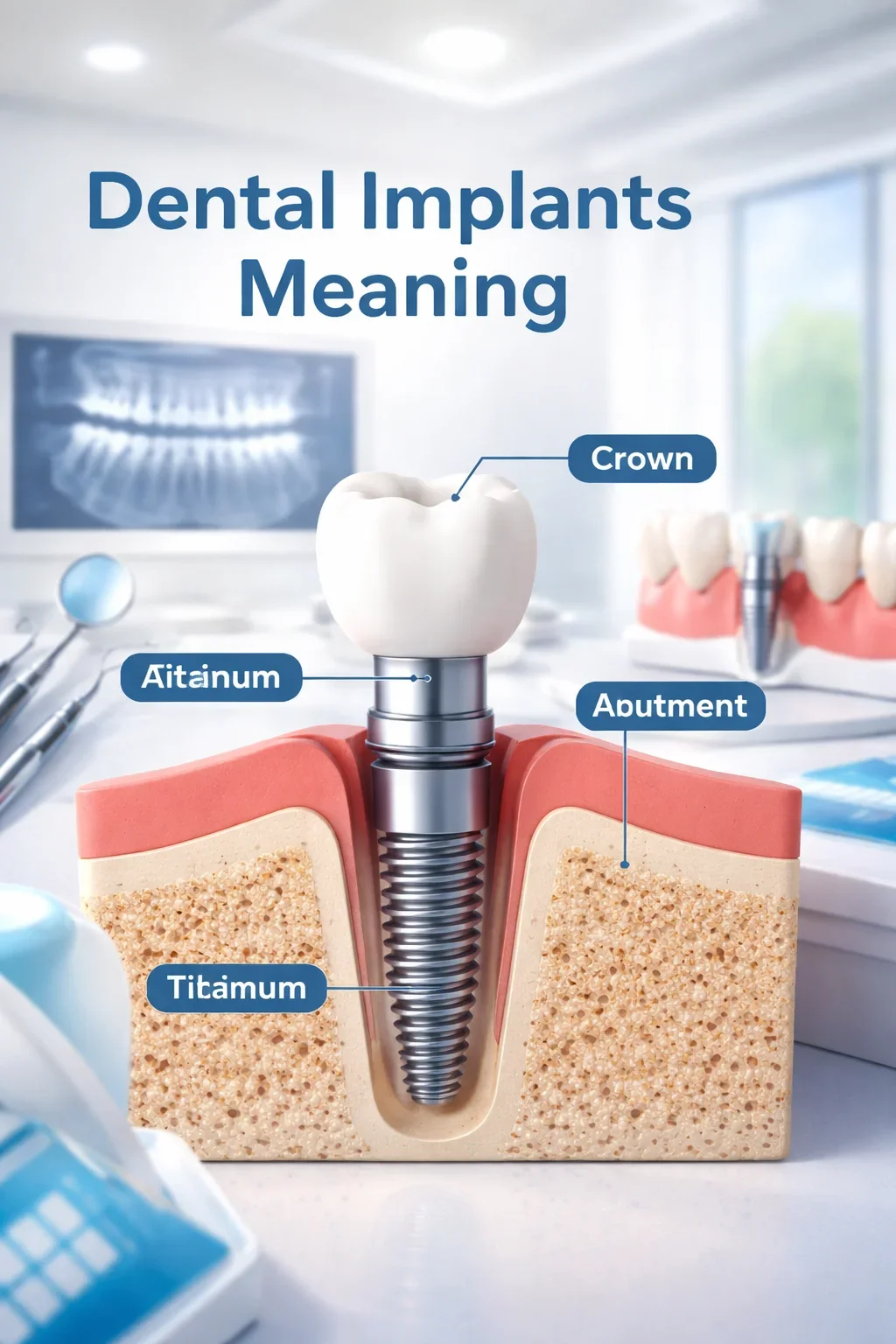
Understanding the dental implants meaning is essential for anyone researching modern solutions for missing teeth. Many people hear about implants at dental clinics or online, but they may not fully understand what the term actually represents. In simple terms, the dental implants meaning refers to a permanent dental restoration method where an artificial tooth root is surgically placed into the jawbone to support a replacement tooth or bridge. This innovative treatment has transformed modern dentistry by providing a solution that closely mimics natural teeth in appearance, function, and durability.
To understand the dental implants meaning, it helps to break the concept into two parts: the implant itself and the artificial tooth attached to it. The implant is usually a small titanium screw placed into the jawbone. Titanium is widely used in medical procedures because it integrates safely with human bone through a process called osseointegration. Once the implant fuses with the bone, it acts as a stable foundation for the artificial tooth. This is why the dental implants meaning goes beyond a simple tooth replacement—it actually recreates the structure of a natural tooth root.
Many dental professionals explain the dental implants meaning as the most advanced form of tooth replacement currently available. Unlike removable dentures or traditional dental bridges, implants are fixed in the jawbone and do not rely on neighboring teeth for support. This allows them to function very similarly to real teeth. Patients can chew, speak, and smile confidently after treatment. Because of these advantages, the dental implants meaning has become increasingly associated with long-term oral health and stability.
Another important aspect of the dental implants meaning is how implants help preserve jawbone health. When a tooth is lost, the bone that previously supported that tooth can begin to shrink over time. This process is known as bone resorption. Dental implants stimulate the jawbone in the same way natural tooth roots do, helping prevent bone loss. This biological benefit is one reason why dentists frequently recommend implants as a long-term solution for missing teeth.
Patients who explore the dental implants meaning often discover that the procedure is highly customizable. Dental implants can replace a single tooth, multiple teeth, or even support a full arch of teeth. For example, one implant can hold a single crown, while several implants can support bridges or implant-supported dentures. Because of this versatility, the dental implants meaning encompasses a wide range of treatments designed to restore both function and aesthetics.
According to professional dental organizations such as the American Dental Association, dental implants are considered a safe and predictable procedure when performed by qualified professionals. Research has shown that implant success rates often exceed 95% when patients maintain good oral hygiene and follow proper dental care routines. This high success rate further strengthens the clinical importance of understanding the dental implants meaning for individuals exploring tooth replacement options.
From a practical perspective, the dental implants meaning also involves a multi-step treatment process. First, a dentist evaluates the patient’s oral health, jawbone density, and overall suitability for implants. Imaging technologies such as digital X-rays or 3D scans are often used during this stage. After careful planning, the implant is surgically placed into the jawbone. Healing typically takes several months while the implant integrates with the bone. Once the healing phase is complete, a connector called an abutment is attached, followed by the final crown or prosthetic tooth. Each step contributes to the complete dental implants meaning as a comprehensive dental restoration system.
Another important element of the dental implants meaning is patient comfort and quality of life. Many people who previously struggled with removable dentures report dramatic improvements after implant treatment. Implants eliminate the need for adhesives, reduce movement in the mouth, and provide a stable bite force. This means patients can enjoy a wider variety of foods and maintain better nutrition. For individuals who value confidence and oral function, understanding the dental implants meaning can help them make informed healthcare decisions.
It is also important to understand that the dental implants meaning includes long-term maintenance and care. While implants themselves cannot decay like natural teeth, the surrounding gum tissue must remain healthy. Proper brushing, flossing, and regular dental checkups are essential to maintain implant success. Dentists typically recommend professional cleanings and examinations to monitor the implant and surrounding tissues. Patients interested in learning more about personalized implant options can easily reach specialists through the Redent Klinik Contact Page.
Ultimately, the dental implants meaning represents much more than simply replacing a missing tooth. It reflects a sophisticated combination of medical science, surgical precision, and restorative dentistry designed to recreate natural oral function. By understanding the dental implants meaning, patients gain valuable insight into why implants are widely considered the gold standard for tooth replacement today. Whether restoring a single tooth or rebuilding an entire smile, dental implants provide a durable, functional, and aesthetically pleasing solution that can last for decades with proper care. 😊
Dental Implants Meaning: What Exactly Does It Refer To?
When patients first encounter the term dental implants meaning, they often assume it simply refers to a replacement tooth. However, the true dental implants meaning is much broader and more sophisticated than a single artificial tooth. In dentistry, the phrase describes a complete medical restoration system designed to replace missing teeth by recreating both the root structure and the visible crown of a natural tooth. Understanding the dental implants meaning helps patients appreciate why this treatment has become one of the most recommended long-term solutions for tooth loss.
To clearly understand the dental implants meaning, it is important to recognize that a dental implant does not only restore appearance. It restores functionality, oral stability, and even jawbone health. Unlike temporary tooth replacements, dental implants are anchored directly into the jawbone, which allows them to function almost exactly like natural teeth. Because of this structural integration, the dental implants meaning often represents a permanent solution rather than a short-term dental fix.
The Core Definition of Dental Implants
At its core, the dental implants meaning refers to a small medical-grade titanium post that is surgically placed into the jawbone. This post acts as an artificial tooth root. Over time, the implant bonds with the surrounding bone in a biological process known as osseointegration. This process allows the implant to become extremely stable and capable of supporting chewing forces just like a natural tooth root would.
Once the implant integrates with the bone, a connector piece called an abutment is attached. Finally, a custom-made crown or prosthetic tooth is placed on top. This three-part structure forms the foundation of the dental implants meaning. Each component plays a critical role in recreating the strength, durability, and natural appearance of real teeth.
The reason dentists emphasize the dental implants meaning when discussing treatment options is because implants address multiple dental issues simultaneously. They replace missing teeth, stabilize the bite, preserve jawbone density, and restore confidence when smiling or speaking.
Why the Concept of Dental Implants Meaning Is Important
Many patients researching tooth replacement options encounter a variety of terms such as crowns, bridges, dentures, and implants. Understanding the dental implants meaning helps patients differentiate implants from these other solutions. While bridges and dentures sit on top of the gums or rely on neighboring teeth for support, implants are embedded directly into the jawbone.
Because of this difference, the dental implants meaning is closely associated with stability and longevity. Implants are designed to last many years and often decades with proper care. This durability is one of the reasons why dental professionals frequently recommend implants over removable prosthetics.
Organizations such as the American Dental Association highlight implants as one of the most predictable restorative dental treatments available today. Their clinical success rates are extremely high, which reinforces the long-term reliability associated with the dental implants meaning.
Dental Implants Meaning in Modern Dentistry
In modern dentistry, the dental implants meaning represents a technological breakthrough that allows dentists to restore missing teeth without damaging adjacent teeth. Traditional bridges often require grinding down neighboring teeth to create support. Dental implants eliminate that need entirely because the implant itself functions as the new tooth root.
Another important aspect of the dental implants meaning is bone preservation. When a natural tooth is lost, the surrounding jawbone begins to deteriorate because it no longer receives stimulation from chewing forces. Dental implants restore that stimulation, which helps maintain bone density and facial structure. This benefit significantly contributes to long-term oral health.
For many patients, understanding the dental implants meaning also involves recognizing the emotional and psychological benefits of restored teeth. Missing teeth can affect speech, confidence, and social interaction. By replacing both the root and visible tooth structure, implants provide a sense of normalcy and security that removable dentures may not offer.
Situations Where Dental Implants Are Commonly Used
The dental implants meaning also includes a wide range of treatment applications. Implants are not limited to replacing a single tooth. In fact, they can be used in several restorative scenarios depending on the patient’s needs.
One common use of implants is single-tooth replacement. In this case, the implant replaces a missing tooth without affecting the neighboring teeth. Another application is implant-supported bridges, which can replace multiple missing teeth using fewer implants. For patients missing an entire arch of teeth, dentists may recommend implant-supported dentures or full-arch restoration techniques.
Because of this versatility, the dental implants meaning is often associated with flexible treatment planning. Dentists can design customized implant solutions tailored to each patient’s dental structure and health condition.
Patients interested in exploring personalized implant treatments can consult dental professionals through the Redent Klinik Contact Page, where specialists evaluate individual needs and create customized treatment plans.
Key Advantages Highlighted by the Dental Implants Meaning
Another reason why understanding the dental implants meaning is important lies in the many benefits implants offer compared with traditional tooth replacement methods. Implants provide stability when chewing, prevent neighboring teeth from shifting, and help maintain proper jaw alignment.
Additionally, the dental implants meaning emphasizes aesthetic improvement. Implant-supported crowns are designed to match the color, shape, and size of natural teeth. As a result, the final restoration blends seamlessly into the smile.
Long-term durability is another key factor behind the dental implants meaning. With proper oral hygiene and regular dental checkups, implants can last for decades. This longevity makes them a cost-effective option over time, even though the initial procedure may require a larger investment.
Ultimately, the dental implants meaning represents a complete dental restoration philosophy that focuses on rebuilding the entire tooth structure rather than simply replacing the visible portion. By restoring the root, crown, and surrounding bone stimulation, implants offer one of the most comprehensive solutions for tooth loss available in modern dentistry today. 😊
Why Understanding Dental Implants Meaning Matters for Patients
For many individuals researching tooth replacement options, understanding the dental implants meaning is a crucial first step before making any treatment decision. Patients often encounter the term when searching online, speaking with dentists, or exploring restorative dental procedures. However, without a clear explanation of the dental implants meaning, it can be difficult to fully appreciate why implants are considered one of the most advanced and reliable solutions in modern dentistry.
The dental implants meaning is not simply about replacing a missing tooth. Instead, it refers to a complete medical and structural solution that restores the entire tooth system—from root to crown. When patients understand the dental implants meaning, they gain insight into how implants support oral health, improve daily comfort, and provide long-term functional benefits. This knowledge allows patients to make informed decisions about their dental care rather than choosing treatments based only on cost or convenience.
Dental Implants Meaning and Patient Awareness
One reason the dental implants meaning matters is because awareness helps patients understand the difference between temporary and permanent dental solutions. Many individuals assume dentures or bridges provide the same benefits as implants, but the dental implants meaning reveals a significant difference. Implants replace the missing tooth root, which plays a vital role in maintaining bone health and supporting natural bite forces.
Without understanding the dental implants meaning, patients may overlook this important biological function. Tooth roots stimulate the jawbone every time we chew or bite. When a tooth is lost, the jawbone gradually shrinks because it no longer receives this stimulation. Dental implants replicate the natural tooth root and prevent this bone loss. Therefore, the dental implants meaning is closely connected with preserving facial structure and long-term oral stability.
Educational organizations such as the American Dental Association often emphasize patient education when discussing restorative treatments. Understanding the dental implants meaning empowers patients to participate actively in treatment planning and long-term oral care decisions.
How Dental Implants Meaning Influences Treatment Decisions
When patients clearly understand the dental implants meaning, they are more likely to evaluate their treatment options carefully. For example, a removable denture may appear less expensive initially, but it may require frequent adjustments or replacements over time. Dental implants, on the other hand, are designed to function for many years and often decades with proper maintenance.
This long-term perspective is an important part of the dental implants meaning. Instead of viewing implants as a simple dental procedure, patients begin to recognize them as an investment in oral health and quality of life. Because implants integrate directly with the jawbone, they offer greater stability and comfort than removable alternatives.
Another reason the dental implants meaning affects treatment decisions is related to chewing efficiency. Missing teeth can make it difficult to eat certain foods, particularly those that require strong biting forces. Dental implants restore this chewing capability by creating a stable anchor within the jawbone. Patients who understand the dental implants meaning often realize that implants allow them to return to a more natural and varied diet.
The Psychological Benefits Behind Dental Implants Meaning
The dental implants meaning also extends beyond physical health and includes psychological benefits. Tooth loss can affect confidence, speech clarity, and social interactions. Many people feel self-conscious about smiling or speaking when they have missing teeth. Dental implants restore the appearance of natural teeth, which helps patients regain confidence in their smile.
Understanding the dental implants meaning allows patients to see implants not only as a medical procedure but also as a life-changing improvement in self-esteem and daily comfort. Patients frequently report feeling more relaxed in social situations and professional environments after receiving implant treatment.
Dental Implants Meaning and Long-Term Oral Health
Another reason why the dental implants meaning is important lies in its impact on long-term oral health. When a tooth is lost and not replaced properly, nearby teeth may begin to shift into the empty space. This movement can lead to misalignment, bite problems, and increased risk of gum disease. Dental implants prevent this issue by filling the gap and stabilizing the surrounding teeth.
Because the dental implants meaning involves recreating the natural tooth root, implants help maintain the natural structure of the dental arch. This prevents the gradual collapse of the bite that can occur with untreated tooth loss.
In addition, understanding the dental implants meaning encourages patients to maintain proper oral hygiene habits. Although implants themselves cannot develop cavities, the surrounding gums must remain healthy to support the implant. Regular brushing, flossing, and dental checkups are essential for maintaining implant success.
Dental Implants Meaning in Personalized Treatment Planning
Every patient has unique dental needs, which is why understanding the dental implants meaning also helps individuals explore personalized treatment plans. Dentists evaluate factors such as bone density, gum health, and overall medical history before recommending implant therapy.
For example, some patients may require bone grafting before receiving implants, while others may be eligible for immediate implant placement after tooth extraction. These decisions are easier to understand when patients grasp the full dental implants meaning and how it relates to their oral anatomy.
Patients who want to discuss their individual treatment options can easily reach professionals through the Redent Klinik Contact Page, where dental specialists can evaluate each case and explain the best approach to implant therapy.
The Role of Education in Dental Implants Meaning
Ultimately, patient education plays a central role in understanding the dental implants meaning. When people understand how implants work, why they are effective, and how they support long-term oral health, they are more confident about pursuing treatment.
The dental implants meaning therefore represents more than a technical dental definition. It reflects a comprehensive approach to restoring oral function, protecting bone health, and improving quality of life. Patients who take the time to learn the true dental implants meaning often feel more comfortable discussing treatment options with their dentist and are better prepared to make decisions that support their long-term dental health. 😊
Dental Implants Meaning Explained Through Implant Components
To fully understand the dental implants meaning, it is important to explore the individual components that make up a dental implant system. Many patients initially believe that an implant is simply an artificial tooth placed in the mouth. However, the real dental implants meaning involves a carefully designed medical structure consisting of multiple parts that work together to replace a missing tooth from root to crown. Each component has a specific role in ensuring stability, functionality, and a natural appearance.
When dentists discuss the dental implants meaning, they typically refer to three primary elements: the implant fixture (the artificial root), the abutment (the connector), and the prosthetic crown (the visible tooth). These parts combine to recreate the structure and function of a natural tooth. Understanding these components is essential for patients who want to appreciate why implants are considered the gold standard in tooth replacement.
The Implant Fixture: The Foundation of Dental Implants Meaning
The implant fixture is the core element behind the dental implants meaning. This component is a small screw-shaped post usually made from medical-grade titanium or titanium alloy. The fixture is surgically placed into the jawbone where the missing tooth root once existed. Titanium is used because it is biocompatible, meaning the body accepts it without rejecting it.
Once the implant fixture is placed in the jawbone, the healing process begins. During this phase, the bone gradually fuses with the implant in a biological process called osseointegration. This integration is one of the key reasons the dental implants meaning represents a long-term solution rather than a temporary dental restoration.
Because the implant fixture becomes anchored in the bone, it can support chewing forces similar to those experienced by natural teeth. This structural stability is central to the dental implants meaning, allowing patients to eat comfortably and confidently without worrying about movement or slipping prosthetics.
The Abutment: Connecting Structure in Dental Implants Meaning
The second major component in the dental implants meaning is the abutment. This piece acts as the connector between the implant fixture and the final artificial tooth. Once the implant has successfully fused with the jawbone, the dentist attaches the abutment to the top of the implant.
The abutment extends slightly above the gum line and provides a stable base for the dental crown. Without this connecting structure, the implant system would not be able to support a prosthetic tooth properly. Therefore, the abutment plays a critical role in the overall dental implants meaning.
Modern dentistry offers customized abutments that are designed to match the shape and alignment of the patient’s natural teeth. This customization improves both aesthetics and functionality, reinforcing the advanced restorative philosophy behind the dental implants meaning.
The Dental Crown: The Visible Part of Dental Implants Meaning
The dental crown is the final and most visible part of the dental implants meaning. This prosthetic tooth is carefully designed to replicate the shape, size, and color of natural teeth. Dentists typically create crowns from durable materials such as porcelain or ceramic because they closely resemble natural enamel.
Once the crown is attached to the abutment, the dental implant restoration is complete. At this stage, the full dental implants meaning becomes evident. The implant functions just like a natural tooth, allowing the patient to chew, speak, and smile with confidence.
Another benefit of the crown component is that it blends seamlessly with surrounding teeth. Skilled dental technicians carefully match the shade and contour of the crown so that it looks indistinguishable from natural teeth. This aesthetic improvement is an important aspect of the dental implants meaning for many patients who want to restore their smile.
How These Components Work Together
The true dental implants meaning becomes clear when all three components work together as a single system. The implant fixture provides the foundation, the abutment connects the structure, and the crown restores the visible tooth. Together, they recreate the entire anatomy of a natural tooth.
This structural design is why dental implants offer superior performance compared with traditional dental bridges or removable dentures. Instead of resting on the gums, implants are integrated directly into the bone. As a result, the dental implants meaning represents both a functional and biological restoration.
Leading dental authorities, including the American Dental Association, recognize dental implants as one of the most predictable and successful procedures in modern dentistry. Their high success rates and long-term durability highlight the importance of understanding the dental implants meaning for patients exploring tooth replacement treatments.
Additional Components Sometimes Used in Implant Systems
In some cases, additional elements may be included as part of the dental implants meaning. For example, implant-supported bridges may use multiple crowns attached to several implants. Implant-retained dentures may include special attachments that allow removable prosthetics to snap securely onto implants.
These variations demonstrate how versatile the dental implants meaning can be. Whether replacing a single tooth or supporting a full arch of teeth, implant systems can be customized to meet the needs of different patients.
Patients interested in learning more about implant treatment options can consult dental specialists through the Redent Klinik Contact Page. Professional evaluations help determine which implant components and treatment approach are most suitable for each individual case.
Why Component Knowledge Strengthens Understanding of Dental Implants Meaning
Understanding each part of the implant system allows patients to grasp the complete dental implants meaning. Instead of seeing implants as a single artificial tooth, patients begin to recognize the sophisticated medical design behind the treatment.
This knowledge also helps patients feel more confident when discussing treatment with their dentist. When individuals understand how implants work—from the fixture to the crown—they are better prepared to evaluate treatment options and make informed decisions about their oral health.
Ultimately, the dental implants meaning represents a combination of surgical precision, restorative dentistry, and advanced materials science. Each component contributes to the overall success of the implant system, allowing patients to regain natural function, aesthetic confidence, and long-term oral stability. 😊
How Dental Implants Replace Missing Teeth Naturally
Understanding how dental implants function helps clarify the true dental implants meaning for patients exploring modern tooth replacement solutions. Many people initially believe implants are simply artificial teeth placed into the mouth, but the deeper dental implants meaning involves restoring the entire structure of a natural tooth. This includes the root, the supporting bone stimulation, and the visible crown. Because implants replicate these biological and mechanical functions, they are widely considered the most natural-feeling tooth replacement option available today.
When a natural tooth is lost, several problems occur simultaneously. The gap left behind affects chewing ability, neighboring teeth may shift out of alignment, and the jawbone can gradually lose density. The dental implants meaning addresses all these problems by recreating the missing tooth root and restoring the bite structure. By anchoring directly into the jawbone, implants allow patients to regain natural function and maintain long-term oral stability.
The Biological Principle Behind Dental Implants Meaning
A central concept behind the dental implants meaning is the biological process known as osseointegration. This term describes the natural bonding that occurs between the implant and the jawbone after surgery. The implant, typically made from medical-grade titanium, is placed into the bone where the missing tooth root once existed. Over time, the bone grows around the implant surface and integrates with it.
This biological integration is what allows implants to function like real teeth. Because the implant becomes part of the bone structure, it provides a stable anchor for chewing forces. The dental implants meaning therefore goes beyond cosmetic improvement—it involves restoring natural biomechanics inside the mouth.
According to dental research referenced by the American Dental Association, osseointegration is one of the key reasons dental implants have such high long-term success rates. Understanding this scientific aspect helps patients better appreciate the complete dental implants meaning.
Restoring the Natural Tooth Structure
Another important aspect of the dental implants meaning is how implants recreate the anatomy of a natural tooth. A healthy tooth consists of two main parts: the crown above the gum line and the root embedded in the jawbone. Traditional dentures and bridges replace only the crown portion. Dental implants, however, restore both parts.
The implant itself replaces the root, while the crown attached on top replaces the visible tooth surface. This structural design allows the implant system to replicate the strength and stability of natural teeth. As a result, the dental implants meaning represents a comprehensive restoration rather than a partial solution.
Because implants restore the root structure, they help maintain proper jaw alignment and prevent the shifting of nearby teeth. This structural stability is a major reason dentists recommend implants for long-term oral health.
Why Dental Implants Feel More Natural Than Other Options
One reason the dental implants meaning is often associated with natural tooth replacement is the stability implants provide. Unlike removable dentures, implants do not shift or move while eating or speaking. This fixed position allows patients to experience a biting force very similar to that of natural teeth.
Patients frequently report that implant-supported teeth feel so natural that they eventually forget they have implants. This comfort and familiarity reflect the true dental implants meaning, which aims to recreate the natural oral experience as closely as possible.
In addition, implants eliminate the need for adhesives or removable components. Once the implant restoration is complete, patients can brush, floss, and care for their implants just like natural teeth. This simplicity reinforces the natural lifestyle benefits associated with the dental implants meaning.
Protection Against Bone Loss
Another critical factor behind the dental implants meaning is the prevention of jawbone deterioration. When a tooth is lost, the bone that once supported that tooth begins to shrink because it no longer receives stimulation from chewing. Over time, this bone loss can alter facial structure and lead to further dental complications.
Dental implants stimulate the jawbone in the same way natural tooth roots do. Every time a patient bites or chews, the implant transfers pressure into the bone, encouraging it to maintain its density. This biological stimulation is an essential element of the dental implants meaning and a key reason implants are considered beneficial for long-term oral health.
Daily Function and Comfort
The functional benefits of the dental implants meaning become most noticeable during daily activities such as eating and speaking. Missing teeth can make it difficult to chew certain foods, particularly those that require strong biting forces. Implants restore chewing ability by providing a stable anchor within the jawbone.
Speech can also improve after implant treatment. Missing teeth or loose dentures sometimes cause pronunciation difficulties. Because implants remain fixed in position, they allow patients to speak more clearly and confidently.
For many individuals, the dental implants meaning ultimately represents a return to normal life. Patients can smile, eat, and interact socially without worrying about discomfort or embarrassment caused by missing teeth.
Personalized Treatment and Professional Support
Every patient’s oral health situation is unique, which is why the dental implants meaning also includes personalized treatment planning. Dentists evaluate factors such as bone density, gum health, and overall dental structure before recommending implant therapy.
Some patients may require additional procedures such as bone grafting before implant placement. Others may be suitable candidates for immediate implant placement after tooth extraction. Understanding the dental implants meaning helps patients recognize why these individualized treatment plans are necessary.
Patients who want to explore whether implants are suitable for their dental needs can contact specialists through the Redent Klinik Contact Page. Professional consultations provide detailed assessments and personalized guidance for implant treatment.
Ultimately, the dental implants meaning reflects the ability of modern dentistry to restore missing teeth in a way that closely replicates natural biology. By replacing the root structure, preserving jawbone health, and restoring full oral function, dental implants provide a solution that looks, feels, and performs like real teeth. This natural integration is what makes implants one of the most transformative innovations in modern dental care. 😊
The Medical and Functional Dental Implants Meaning in Dentistry
To fully understand the dental implants meaning, it is essential to examine its medical and functional significance in modern dentistry. Many people think of implants primarily as cosmetic solutions, but the true dental implants meaning extends far beyond improving appearance. Dental implants represent a medically advanced treatment designed to restore oral function, stabilize the bite, maintain jawbone health, and support long-term dental wellness. Dentists worldwide rely on this procedure because it addresses both structural and functional challenges caused by missing teeth.
When dentists explain the dental implants meaning, they often emphasize its role as a biologically integrated tooth replacement method. Unlike traditional prosthetics, dental implants become part of the oral anatomy. Once placed into the jawbone, the implant gradually bonds with surrounding bone tissue, allowing it to function like a natural tooth root. This biological integration is why the dental implants meaning is closely associated with stability, durability, and long-term success.
Dental Implants Meaning in Clinical Dentistry
In clinical dentistry, the dental implants meaning refers to a specialized surgical and restorative procedure aimed at rebuilding the entire structure of a missing tooth. Dentists and oral surgeons collaborate to place the implant fixture inside the jawbone. After healing, restorative dentists attach a crown or prosthetic tooth to complete the restoration. This multidisciplinary process highlights the clinical importance behind the dental implants meaning.
Medical professionals value the dental implants meaning because it provides a stable and predictable treatment for tooth loss. According to information provided by the American Dental Association, dental implants have consistently high success rates when patients maintain proper oral hygiene and receive treatment from qualified professionals. This reliability reinforces the medical credibility of the dental implants meaning within the dental community.
Another clinical advantage associated with the dental implants meaning is its ability to restore full bite function. Missing teeth can significantly reduce chewing efficiency and place extra pressure on remaining teeth. By recreating the natural tooth root and crown, implants distribute bite forces evenly across the dental arch. This mechanical stability is an essential aspect of the dental implants meaning.
Functional Benefits Behind Dental Implants Meaning
The dental implants meaning becomes especially important when examining the functional improvements implants provide in daily life. Teeth play a critical role in chewing, speaking, and maintaining facial structure. When teeth are lost, these functions can be compromised. Dental implants restore these capabilities by providing a stable anchor within the jawbone.
For example, chewing efficiency often decreases significantly after tooth loss. Patients may avoid certain foods because of discomfort or instability caused by missing teeth or loose dentures. The dental implants meaning addresses this issue by restoring strong bite force, allowing patients to eat a wide range of foods comfortably.
Speech is another function influenced by the dental implants meaning. Teeth help form certain sounds and maintain proper tongue placement. Missing teeth can sometimes affect pronunciation. Because implants remain fixed in position, they support natural speech patterns and improve communication clarity.
Dental Implants Meaning and Jawbone Preservation
One of the most medically significant aspects of the dental implants meaning involves jawbone preservation. After a tooth is lost, the surrounding bone may begin to deteriorate because it no longer receives stimulation from chewing forces. Over time, this bone loss can alter facial appearance and compromise oral stability.
Dental implants prevent this process by transmitting chewing pressure directly into the jawbone, mimicking the function of a natural tooth root. This stimulation encourages the bone to maintain its density and strength. Because of this benefit, the dental implants meaning plays a critical role in protecting long-term oral health and facial structure.
Dental Implants Meaning in Comprehensive Oral Health
Another key element of the dental implants meaning is its contribution to overall oral health. When teeth are missing, neighboring teeth may drift into the empty space. This shifting can lead to bite misalignment, uneven wear, and increased risk of gum disease. Dental implants fill these gaps and help maintain the natural alignment of the dental arch.
Additionally, the dental implants meaning supports long-term periodontal health. Because implants do not rely on adjacent teeth for support, they preserve the natural tooth structure of surrounding teeth. Traditional bridges often require grinding down healthy teeth, but implants avoid this process entirely.
Patients who understand the dental implants meaning often recognize that implants provide a more conservative and biologically friendly solution compared with other restorative treatments. This awareness helps individuals make better decisions regarding their oral healthcare.
Psychological and Lifestyle Impact of Dental Implants Meaning
Beyond medical and functional benefits, the dental implants meaning also includes psychological improvements that significantly affect quality of life. Missing teeth can make individuals feel self-conscious when smiling, speaking, or interacting socially. Dental implants restore a natural-looking smile, which often improves confidence and self-esteem.
Because implants are fixed in the mouth, patients also experience greater comfort and security compared with removable dentures. The stability provided by implants allows individuals to speak and laugh freely without worrying about prosthetics shifting. This lifestyle improvement reinforces the broader significance of the dental implants meaning.
Personalized Care and Professional Consultation
Every patient’s dental condition is unique, which is why the dental implants meaning also involves personalized treatment planning. Dentists evaluate factors such as jawbone density, gum health, and medical history before recommending implant therapy. In some cases, additional procedures like bone grafting may be required to create a stable foundation for implants.
Patients interested in learning more about implant procedures can consult dental professionals through the Redent Klinik Contact Page. Experienced specialists can evaluate individual cases and explain how the dental implants meaning applies to each patient’s dental needs.
Ultimately, the dental implants meaning represents a combination of medical science, restorative dentistry, and functional rehabilitation. By restoring missing teeth, protecting jawbone health, and improving daily comfort, dental implants play a vital role in modern dental care. Understanding the medical and functional aspects of the dental implants meaning helps patients appreciate why implants are widely regarded as one of the most effective and reliable tooth replacement solutions available today. 😊
Dental Implants Meaning vs Traditional Tooth Replacement Options
When patients begin researching solutions for missing teeth, they often encounter multiple treatment options such as dentures, dental bridges, and implants. Understanding the dental implants meaning becomes especially important when comparing these solutions. The dental implants meaning represents a modern restorative method that replaces the entire structure of a missing tooth, including the root and the visible crown. In contrast, traditional tooth replacement methods typically replace only the visible portion of the tooth without restoring the root.
This distinction is one of the most important aspects of the dental implants meaning. Because implants integrate directly into the jawbone, they provide stability, durability, and biological benefits that other tooth replacement solutions cannot offer. Patients who understand the dental implants meaning are better equipped to evaluate which treatment best supports long-term oral health.
Traditional Tooth Replacement Methods
Before dental implants became widely available, dentists primarily used removable dentures or fixed dental bridges to replace missing teeth. These methods are still used today in certain situations. However, the dental implants meaning has gradually changed how dentists approach restorative treatments because implants offer advantages that traditional methods often cannot provide.
Removable dentures are one of the most common traditional options. Dentures consist of artificial teeth attached to a removable base that sits on the gums. While dentures can restore appearance and basic chewing ability, they may sometimes shift during eating or speaking. Because dentures do not replace the tooth root, they do not stimulate the jawbone. Understanding the dental implants meaning highlights this difference, as implants restore the missing root structure and preserve bone health.
Dental bridges represent another traditional tooth replacement solution. A bridge typically consists of an artificial tooth supported by crowns placed on neighboring teeth. Although bridges provide a fixed restoration, they require the dentist to reshape healthy adjacent teeth to create support. The dental implants meaning differs significantly because implants do not depend on neighboring teeth for support.
Structural Differences in Dental Implants Meaning
The structural design behind the dental implants meaning is what sets implants apart from other restorative treatments. Dental implants consist of a titanium post surgically inserted into the jawbone, an abutment that connects the implant to the prosthetic tooth, and a crown that replicates the natural tooth surface. This structure recreates the complete anatomy of a natural tooth.
Traditional dentures and bridges replace only the crown portion of the tooth. Because they lack the root structure, they cannot provide the same level of stability or bone stimulation. This difference is central to understanding the dental implants meaning and why implants are often recommended as a long-term restorative solution.
Bone Health and Dental Implants Meaning
Another key factor when comparing treatments is jawbone preservation. When a tooth root is missing, the surrounding bone gradually shrinks because it no longer receives stimulation during chewing. Dentures and bridges do not address this problem because they sit above the gums rather than integrating with the bone.
The dental implants meaning includes the ability to preserve bone health. Once the implant integrates with the jawbone through a process known as osseointegration, it transmits chewing pressure directly into the bone. This stimulation helps maintain bone density and prevents facial structure changes that may occur after tooth loss.
Dental research referenced by the American Dental Association confirms that implants are one of the most reliable restorative treatments for preserving jawbone health. This biological benefit reinforces the importance of understanding the dental implants meaning.
Comfort and Stability Compared to Other Options
Comfort is another factor that highlights the differences between traditional restorations and the dental implants meaning. Dentures can sometimes cause discomfort because they rely on the gums for support. Over time, the shape of the jawbone may change, which can cause dentures to loosen and require adjustments.
Dental implants, on the other hand, remain fixed in the jawbone. This stability is a defining aspect of the dental implants meaning. Patients can chew, speak, and smile without worrying about prosthetics moving or slipping. Many individuals report that implant-supported teeth feel very similar to natural teeth.
Long-Term Durability and Maintenance
The longevity of treatment is another area where the dental implants meaning differs from traditional options. Dentures and bridges may need to be replaced or adjusted over time due to wear or changes in the jawbone structure. Implants, however, are designed to function for many years and sometimes decades when properly maintained.
Although implants require good oral hygiene and regular dental checkups, their durability makes them a popular choice among patients seeking a long-term solution for missing teeth. The dental implants meaning therefore includes not only structural restoration but also long-term reliability.
Personalized Treatment Planning
Choosing the right tooth replacement method depends on several factors, including bone density, gum health, and the number of missing teeth. Understanding the dental implants meaning allows patients to discuss treatment options more effectively with their dentist.
Some patients may require bone grafting before implant placement if the jawbone has already lost density. Others may be suitable candidates for immediate implant placement following tooth extraction. These individualized treatment plans demonstrate how the dental implants meaning adapts to each patient’s dental condition.
Patients interested in exploring implant treatment options can consult dental specialists through the Redent Klinik Contact Page. Professional evaluations help determine whether implants or alternative treatments are the best option for restoring oral health.
Ultimately, the comparison between traditional restorations and the dental implants meaning highlights why implants have become one of the most advanced solutions for tooth replacement. By restoring the tooth root, preserving bone health, and providing exceptional stability, dental implants offer a comprehensive treatment approach that supports both function and aesthetics. 😊
Who Is a Good Candidate When Considering Dental Implants Meaning?
Understanding the dental implants meaning also involves knowing who can benefit most from this advanced dental treatment. While implants are widely recognized as one of the most effective solutions for replacing missing teeth, not every patient is automatically a candidate for the procedure. Dentists evaluate several health and anatomical factors before recommending implant therapy. When patients clearly understand the dental implants meaning, they are better prepared to discuss these factors with their dental professional and determine whether implants are the right option for their oral health needs.
In simple terms, the dental implants meaning refers to a restorative treatment that replaces the root of a missing tooth with a titanium implant anchored in the jawbone. Because the implant must integrate with the bone through a process called osseointegration, the patient’s overall oral health and bone condition play a critical role in determining eligibility. Therefore, understanding the dental implants meaning also means understanding the biological conditions necessary for implant success.
Basic Health Requirements for Dental Implant Candidates
One of the first aspects dentists evaluate when discussing the dental implants meaning with patients is general oral health. Healthy gums are essential for successful implant placement because gum tissue surrounds and protects the implant structure. Patients with active gum disease may need periodontal treatment before proceeding with implants. Once gum health is restored, the benefits associated with the dental implants meaning can be fully realized.
Another important factor is jawbone density. The implant fixture must be anchored securely within the jawbone to support chewing forces. If the bone has deteriorated due to tooth loss, dentists may recommend bone grafting before implant placement. Bone grafting rebuilds the jawbone structure and creates a stable foundation that supports the dental implants meaning as a long-term restorative solution.
Overall health also influences implant eligibility. Conditions that affect healing, such as uncontrolled diabetes or certain immune disorders, may impact implant success. Dentists carefully review medical history to ensure that patients can safely undergo the procedure. Understanding the dental implants meaning helps patients recognize why these health assessments are necessary before treatment begins.
Age Considerations and Dental Implants Meaning
Age is another factor that patients often ask about when learning the dental implants meaning. In general, dental implants are recommended for adults whose jawbones have fully developed. For most individuals, this occurs in the late teenage years or early adulthood. Younger patients whose bone growth is still ongoing may need to wait before implant placement.
On the other hand, there is typically no upper age limit for implant treatment. Many older adults successfully receive implants and experience significant improvements in chewing ability and quality of life. As long as a patient has sufficient bone density and overall good health, the dental implants meaning remains applicable across a wide age range.
Lifestyle Factors Affecting Dental Implants Meaning
Lifestyle habits can also influence whether a patient is an ideal candidate for implants. Smoking, for example, may slow the healing process and increase the risk of implant complications. Dentists often encourage patients to reduce or quit smoking before implant surgery in order to maximize the success of the treatment. Understanding the dental implants meaning includes recognizing how lifestyle choices can affect long-term implant stability.
Good oral hygiene habits are equally important. Patients who brush and floss regularly are more likely to maintain healthy gum tissue around the implant. Because the surrounding gum and bone must remain healthy for implants to last many years, maintaining proper hygiene is a crucial aspect of the dental implants meaning.
Patients Missing One or Multiple Teeth
Another key consideration within the dental implants meaning is the number of teeth being replaced. Dental implants are extremely versatile and can be used in several restorative situations. Patients missing a single tooth can receive one implant with a crown placed on top. Individuals missing multiple teeth may receive several implants supporting a bridge.
For patients who have lost an entire arch of teeth, implants can support full-arch restorations such as implant-supported dentures. This flexibility is one of the reasons the dental implants meaning is associated with personalized dental treatment planning. Dentists can design implant solutions that match each patient’s specific dental condition.
Diagnostic Evaluation for Implant Candidates
Before recommending implant treatment, dentists perform a comprehensive diagnostic evaluation. This evaluation may include digital X-rays, 3D imaging scans, and a thorough examination of the mouth. These tools allow dentists to measure bone density, identify anatomical structures, and determine the optimal implant placement position.
These diagnostic steps are a critical part of understanding the dental implants meaning in a clinical setting. The goal is to ensure that the implant can be placed safely and that the surrounding bone can support the implant over the long term.
Dental organizations such as the American Dental Association emphasize the importance of thorough diagnostic planning for implant procedures. Proper planning increases the likelihood of successful osseointegration and long-term implant stability, reinforcing the medical reliability behind the dental implants meaning.
Consulting a Dental Specialist
Because every patient’s dental situation is unique, professional consultation is essential when exploring the dental implants meaning. Dentists and oral surgeons evaluate each individual case to determine whether implants are the most appropriate treatment option.
Patients interested in learning whether they are suitable candidates for implants can schedule an evaluation through the Redent Klinik Contact Page. During this consultation, dental professionals review oral health conditions, discuss treatment goals, and explain the steps involved in implant therapy.
Ultimately, understanding the dental implants meaning helps patients recognize that implant candidacy depends on several factors, including bone health, gum condition, lifestyle habits, and overall medical history. With proper evaluation and personalized treatment planning, many patients can successfully receive implants and enjoy the long-term benefits of restored teeth, improved oral function, and enhanced confidence in their smile. 😊