
Understanding dental implants medi cal coverage can feel overwhelming, especially if you are dealing with missing teeth, pain, or difficulty eating and want a long-term solution 🦷. Many patients search this topic because they rely on Medi-Cal for healthcare and want to know whether dental implants are realistically accessible. This guide is designed to fully answer that question with clear, accurate, and up-to-date information—no confusing jargon, no guesswork.
Dental implants are widely considered the gold standard for replacing missing teeth. Unlike dentures or bridges, implants replace the tooth root itself, providing superior stability, bone preservation, and a natural look. However, because implants are often classified as an advanced dental procedure, dental implants medi cal coverage is not as straightforward as routine cleanings or fillings. Coverage depends on medical necessity, documentation, and strict eligibility rules.
Medi-Cal is California’s Medicaid program, providing low-cost or free healthcare coverage to millions of residents. Dental benefits under Medi-Cal are managed through the Denti-Cal program, which covers many essential dental services. When it comes to dental implants medi cal, approval is typically evaluated on a case-by-case basis, focusing on whether the implant is medically necessary rather than cosmetic.
Medical necessity is the most important concept to understand. In most cases, Medi-Cal does not approve dental implants simply to improve appearance. Instead, dental implants medi cal may be approved if missing teeth cause serious functional problems such as difficulty chewing, speaking, or maintaining adequate nutrition. Conditions like jawbone deterioration, trauma, congenital defects, or tooth loss due to systemic disease may also strengthen a case for approval.
Another key factor is documentation 📄. Dentists and oral surgeons must provide detailed clinical notes, X-rays, and treatment justifications explaining why alternative treatments (such as dentures) are not appropriate. Without this documentation, dental implants medi cal requests are usually denied. This is why choosing an experienced provider who understands Medi-Cal’s approval process is critical.
It’s also important to understand that Medi-Cal does not operate the same way as private dental insurance. Even when dental implants medi cal coverage is approved, it may only apply to specific parts of the procedure. For example, the surgical placement might be covered, while abutments or crowns may require additional authorization or patient contribution. Clear communication with your provider helps avoid unexpected surprises.
Patients often ask whether age, income, or health conditions affect eligibility. The answer is yes—indirectly. While there is no age limit for dental implants medi cal, overall health plays a major role. Conditions such as uncontrolled diabetes, severe smoking habits, or untreated gum disease can reduce eligibility until properly managed. Medi-Cal prioritizes treatments that are safe, predictable, and medically justified.
Another common misconception is that approval happens quickly. In reality, dental implants medi cal approval can take weeks or even months due to prior authorization requirements. Patience is essential. During this time, your dental provider may request additional imaging or specialist consultations to strengthen the case.
If you are considering treatment outside the United States or want expert guidance on implant options, it can still be helpful to speak with an experienced dental team. For personalized consultation and next steps, you can reach out through the
Redent Klinik Contact Page. Professional guidance ensures you understand both local and international alternatives while staying compliant with Medi-Cal rules.
For authoritative dental standards and patient education resources, the
American Dental Association is a trusted reference. Their guidelines help explain why dental implants are considered a functional, health-preserving treatment rather than a purely cosmetic option—an important distinction when discussing dental implants medi cal.
In summary, dental implants medi cal coverage is possible, but not guaranteed. Success depends on medical necessity, thorough documentation, and working with knowledgeable dental professionals. If you or a loved one rely on Medi-Cal and are struggling with tooth loss, understanding these fundamentals puts you in the strongest position to move forward with confidence 😊.
What Are Dental Implants and How Do They Work?
To fully understand dental implants medi cal coverage, it’s essential to first understand what dental implants are and why they are considered one of the most effective tooth replacement solutions available today 🦷. Dental implants are not just artificial teeth; they are advanced medical devices designed to replace missing tooth roots and restore full oral function.
The Basic Structure of a Dental Implant
A dental implant consists of three main components. The first is the implant post, usually made of medical-grade titanium or zirconia, which is surgically placed into the jawbone. This post acts as an artificial tooth root. The second component is the abutment, a connector that sits on top of the implant post. The third is the crown, the visible tooth-shaped restoration that looks and functions like a natural tooth.
When evaluating dental implants medi cal, Medi-Cal focuses primarily on the implant post and its medical necessity. This is because the implant post integrates with the jawbone through a biological process called osseointegration, making it a structural and functional treatment rather than a cosmetic one.
How Osseointegration Works
Osseointegration is the process where the jawbone grows around and bonds with the implant post. Over several months, the implant becomes securely anchored in the bone, allowing it to withstand chewing forces just like a natural tooth root. This process is one of the main reasons dental implants are superior to dentures or bridges.
From a Medi-Cal perspective, osseointegration is a key factor when reviewing dental implants medi cal cases. Because implants help prevent bone loss and maintain facial structure, they may be classified as medically necessary in certain situations—especially when bone deterioration could lead to further health complications.
Dental Implants vs Other Tooth Replacement Options
Many patients ask why dental implants are treated differently from dentures or bridges under dental implants medi cal policies. Dentures rest on the gums and do not stimulate the jawbone, which can lead to ongoing bone loss. Bridges require grinding down healthy neighboring teeth, potentially causing long-term damage.
Dental implants, on the other hand, preserve bone health, protect adjacent teeth, and restore bite force more effectively. This functional advantage is one reason implants may qualify for coverage under dental implants medi cal when other options fail to meet a patient’s medical needs.
Functional and Health Benefits of Dental Implants
Dental implants offer numerous health benefits beyond aesthetics. They improve chewing efficiency, support clear speech, and help maintain proper digestion by allowing patients to eat a balanced diet 🥗. Missing teeth can cause shifting of remaining teeth, jaw joint strain, and facial collapse over time—all issues that implants help prevent.
These functional benefits are central to dental implants medi cal approval decisions. If a patient cannot properly chew or speak due to tooth loss, and dentures are ineffective or intolerable, implants may be considered a medically necessary solution rather than an elective procedure.
The Surgical Process Explained Simply
The implant process usually begins with a comprehensive dental evaluation, including X-rays or 3D scans. The implant post is placed during a minor surgical procedure under local anesthesia or sedation. After healing and osseointegration, the abutment and crown are attached.
In dental implants medi cal cases, each step must be justified. Medi-Cal often requires proof that the surgical procedure is safe, necessary, and likely to succeed based on the patient’s overall health and bone condition.
Why Dental Implants Are Not Always Automatically Covered
Although dental implants are highly effective, they are also resource-intensive. This is why dental implants medi cal coverage is not automatic. Medi-Cal prioritizes treatments that restore essential function at the lowest reasonable cost. If dentures can achieve the same outcome, implants may not be approved.
However, when dentures cause chronic sores, instability, nutritional deficiencies, or bone loss, implants may become the more medically appropriate choice. Understanding this distinction helps patients and providers present stronger cases for dental implants medi cal approval.
Who Benefits Most From Dental Implants?
Patients who benefit most from implants include those with traumatic tooth loss, congenital absence of teeth, severe gag reflexes that prevent denture use, or advanced bone loss that dentures cannot stabilize. These clinical scenarios are frequently cited in successful dental implants medi cal authorization requests.
In conclusion, dental implants are a sophisticated, medically significant treatment—not just cosmetic dentistry. Their ability to restore function, preserve bone, and improve quality of life explains why dental implants medi cal exists as a possibility, even though approval requires careful evaluation and documentation. Understanding how implants work is the foundation for navigating Medi-Cal coverage successfully 😊.
Does Medi-Cal Cover Dental Implants?
One of the most searched and misunderstood questions in California dentistry is whether dental implants medi cal are actually covered. The short answer is: yes, but only in specific and limited situations. Medi-Cal does not treat dental implants as a routine benefit, yet it does recognize that implants can be medically necessary for certain patients. Understanding how and when coverage applies is essential if you want realistic expectations and a higher chance of approval 🧠.
How Medi-Cal Views Dental Implants
Medi-Cal, through its dental program known as Denti-Cal, is designed to cover medically necessary dental care. This distinction is critical. Unlike private insurance, Medi-Cal does not focus on comfort or aesthetics alone. Instead, dental implants medi cal are evaluated based on whether they are required to restore essential oral function or prevent serious health deterioration.
From Medi-Cal’s perspective, implants are categorized as a “specialized service.” That means they are not automatically included and always require prior authorization. Approval depends heavily on clinical justification, supporting documentation, and proof that less invasive treatments are insufficient.
Situations Where Dental Implants May Be Covered
Although coverage is limited, dental implants medi cal may be approved under certain medically justified conditions. These include, but are not limited to:
- Severe tooth loss that prevents proper chewing or nutrition
- Jawbone deterioration that cannot be managed with dentures
- Congenital conditions involving missing teeth
- Traumatic injury resulting in tooth and bone loss
- Medical conditions where dentures are not tolerated
In these scenarios, implants are not considered cosmetic. Instead, they are viewed as a structural medical solution. This is the foundation on which successful dental implants medi cal cases are built.
Medical Necessity vs Cosmetic Dentistry
One of the biggest reasons claims are denied is because they are framed incorrectly. Medi-Cal does not cover procedures performed solely to improve appearance. If the request emphasizes looks rather than function, dental implants medi cal approval is unlikely.
Successful cases focus on function: the inability to chew solid food, speech impairment, chronic pain, jaw instability, or progressive bone loss. When implants are presented as the only viable solution to these problems, Medi-Cal is more likely to consider coverage.
What Parts of the Implant Are Typically Covered?
Even when dental implants medi cal is approved, coverage may be partial. Medi-Cal often evaluates each component separately:
- Surgical implant placement: Sometimes covered if medically necessary
- Bone grafting: Covered only if essential for implant stability
- Abutment and crown: May require additional authorization or patient contribution
This means patients should never assume full coverage of the entire implant system. A detailed treatment plan and cost breakdown should always be discussed with the dental provider before proceeding.
Why Most Requests Are Initially Denied
It’s important to know that many dental implants medi cal requests are denied on the first submission. This does not always mean the patient is ineligible. Common reasons for denial include incomplete documentation, lack of medical justification, or failure to demonstrate why dentures are unsuitable.
Appeals are common and often successful when additional clinical evidence is provided. X-rays, specialist reports, and detailed narratives explaining functional limitations can significantly strengthen an appeal.
The Role of the Dental Provider
Your dentist or oral surgeon plays a decisive role in dental implants medi cal approval. Providers experienced with Medi-Cal understand how to write authorization requests using the correct medical language and diagnostic codes. This expertise can be the difference between approval and denial.
Patients are encouraged to work with clinics that routinely handle Medi-Cal cases and are transparent about timelines, documentation, and potential out-of-pocket costs.
Realistic Expectations for Patients
Even in ideal cases, dental implants medi cal coverage is not fast. The authorization process can take weeks or months, and multiple reviews may be required. However, for patients who genuinely need implants for functional health reasons, persistence often pays off 💪.
In summary, Medi-Cal can cover dental implants, but only when strict medical necessity criteria are met. Understanding how Medi-Cal evaluates implants, preparing proper documentation, and working with the right provider dramatically improves your chances of success with dental implants medi cal.
Who Is Eligible for Dental Implants Through Medi-Cal?
Eligibility is the most critical factor when patients ask about dental implants medi cal. Many people assume that being enrolled in Medi-Cal automatically qualifies them for implants, but this is not how the system works. Medi-Cal eligibility for dental implants is determined by a combination of clinical, functional, and medical criteria—not income alone. Understanding these criteria helps patients avoid frustration and focus on what truly matters for approval 🧩.
General Medi-Cal Enrollment Requirements
Before dental implants medi cal can even be considered, a patient must be actively enrolled in Medi-Cal with full dental benefits under the Denti-Cal program. Some Medi-Cal plans offer limited or emergency-only dental coverage, which does not include implant evaluation. Patients must confirm that their plan includes comprehensive dental services.
Eligibility is also influenced by continued enrollment status. Any lapse in coverage during the authorization process can delay or invalidate an implant request. This is why maintaining uninterrupted Medi-Cal coverage is essential throughout the dental implants medi cal evaluation and approval process.
Medical Eligibility Criteria for Dental Implants
Medi-Cal focuses heavily on medical necessity. To be eligible for dental implants medi cal, patients must demonstrate that missing teeth are causing significant health or functional problems. These problems typically include impaired chewing, speech difficulties, jaw instability, or progressive bone loss.
Patients who can function adequately with removable dentures are less likely to qualify. However, those who experience chronic pain, sores, gag reflex issues, or nutritional deficiencies due to dentures may meet eligibility requirements for dental implants medi cal.
Conditions That Strengthen Eligibility
Certain medical and dental conditions significantly increase the likelihood of eligibility. These include:
- Traumatic injuries resulting in tooth and bone loss
- Congenital absence of permanent teeth
- Advanced periodontal disease causing tooth instability
- Jawbone deterioration that dentures cannot stabilize
- Systemic conditions affecting oral function
When these conditions are well-documented, dental implants medi cal requests are more likely to be viewed as medically justified rather than elective.
Age and Dental Implants Medi-Cal Eligibility
There is no strict age limit for dental implants medi cal. Both younger adults and seniors may qualify if they meet medical criteria. However, implants are generally not approved for children or adolescents whose jawbones are still developing.
For older adults, eligibility often depends on overall health. Chronic conditions such as heart disease or osteoporosis do not automatically disqualify patients, but they may require medical clearance. Medi-Cal prioritizes patient safety and predictable outcomes when evaluating dental implants medi cal.
Health Factors That May Affect Approval
Certain health conditions can delay or complicate eligibility. Uncontrolled diabetes, heavy smoking, untreated gum disease, or poor oral hygiene can all reduce the likelihood of approval. In these cases, Medi-Cal may require that the condition be stabilized before reconsidering dental implants medi cal.
The good news is that these are often temporary barriers. Patients who commit to improving their oral and general health may become eligible after reevaluation. This makes long-term planning an important part of the dental implants medi cal journey.
Psychological and Functional Considerations
In some cases, psychological or functional limitations are also considered. Patients with disabilities that prevent them from using removable dentures may qualify for implants under dental implants medi cal. Documentation from medical specialists or caregivers can be especially helpful in these cases.
The Importance of Clinical Documentation
Eligibility is not determined by patient statements alone. Every dental implants medi cal request must be supported by thorough clinical documentation. This includes dental exams, radiographs, periodontal evaluations, and written explanations from the provider.
Incomplete or vague documentation is one of the most common reasons eligibility is denied. Experienced providers know how to frame the request using functional and medical language rather than cosmetic reasoning.
Can Eligibility Be Reassessed?
Yes—eligibility for dental implants medi cal is not always final. Patients who are initially denied may reapply or appeal after addressing the reasons for denial. Changes in health status, worsening functional impairment, or failure of alternative treatments can all justify reassessment.
In conclusion, eligibility for dental implants medi cal is based on much more than financial need. It requires medical necessity, functional impairment, stable health, and strong clinical documentation. Patients who understand these requirements and work closely with knowledgeable providers are far more likely to qualify and successfully receive implant treatment 😊.
Medical vs Dental Necessity in Medi-Cal Implant Approval
One of the most decisive—and often misunderstood—factors in dental implants medi cal approval is the difference between medical necessity and dental (or cosmetic) necessity. Many denials happen not because a patient doesn’t need implants, but because the request is framed incorrectly. Understanding how Medi-Cal defines necessity helps patients and providers present stronger, clearer cases 🧠.
What Medi-Cal Means by “Medical Necessity”
Medi-Cal defines medical necessity as care required to protect life, prevent significant illness or disability, or alleviate severe pain. In the context of dental implants medi cal, this means implants must be essential to restore core oral functions—not simply improve appearance.
Examples of medical necessity include the inability to chew solid food, speech impairment caused by tooth loss, jaw instability leading to pain or dysfunction, or progressive bone loss that threatens long-term oral health. When implants are the only reliable way to address these issues, Medi-Cal may consider them medically necessary.
Why Dental or Cosmetic Necessity Is Not Enough
Dental necessity alone—such as wanting a fixed tooth instead of a removable denture—is usually not sufficient for dental implants medi cal approval. Medi-Cal does not cover procedures performed primarily for comfort, convenience, or aesthetics.
For example, a patient who can chew adequately with dentures but prefers implants for confidence or comfort is unlikely to qualify. Even if implants would improve quality of life, Medi-Cal requires proof that other covered treatments are ineffective or harmful.
Functional Impairment Is the Key Difference
The turning point between dental and medical necessity is functional impairment. If missing teeth cause measurable problems—such as weight loss due to poor nutrition, gastrointestinal issues from improper chewing, or jaw pain—these outcomes shift the case toward medical necessity.
Successful dental implants medi cal cases clearly document how tooth loss affects daily function and overall health, not just oral appearance.
How Providers Prove Medical Necessity
Dental providers must translate clinical findings into medical language. This includes documenting failed attempts with dentures, chronic soft tissue irritation, instability during chewing, and bone loss confirmed by imaging. The stronger and more specific the documentation, the better the chance of dental implants medi cal approval.
Supporting evidence often includes:
- Radiographs showing bone deterioration
- Clinical notes describing chewing or speech limitations
- Records of unsuccessful denture use
- Medical referrals linking oral issues to systemic health
Common Mistakes That Lead to Denial
Many dental implants medi cal requests fail because they focus too much on what the patient wants rather than what the patient needs medically. Statements like “the patient prefers implants” or “implants are more comfortable” weaken the case.
Another common mistake is failing to explain why dentures or bridges are not viable. Medi-Cal assumes that lower-cost alternatives should be tried first unless there is clear evidence they will fail or cause harm.
Reframing the Request Correctly
A well-framed request emphasizes prevention of future harm. For example, explaining that dentures accelerate bone loss or worsen jaw instability can reposition implants as a preventive medical treatment rather than a luxury.
This reframing is often what turns a denied dental implants medi cal request into an approved one upon appeal.
Special Medical Circumstances That Strengthen Approval
Certain medical conditions strongly support the argument for medical necessity. These include neurological disorders affecting denture control, anatomical defects, post-cancer reconstruction, or severe gag reflexes that make removable appliances unusable.
In such cases, implants may be the only safe and functional option, making dental implants medi cal approval more likely.
The Appeals Process: When Medical Necessity Is Overlooked
Even strong cases can be denied initially. The appeals process allows providers to submit additional evidence emphasizing medical necessity. Many successful dental implants medi cal approvals occur at this stage, once reviewers better understand the functional consequences of tooth loss.
In conclusion, the difference between medical and dental necessity is the cornerstone of Medi-Cal implant decisions. Patients who understand this distinction—and work with providers who document it clearly—stand the best chance of receiving approval for dental implants medi cal. When implants are presented as essential healthcare rather than elective dentistry, Medi-Cal is far more likely to say yes 😊.
Step-by-Step Process to Get Dental Implants with Medi-Cal
For many patients, the most confusing part of dental implants medi cal is not eligibility itself, but the actual process required to move from diagnosis to treatment. Medi-Cal follows a structured, multi-step pathway that must be completed correctly to avoid delays or denials. Understanding each step helps patients set realistic expectations and actively participate in their care 🧭.
Step 1: Initial Dental Examination and Diagnosis
The journey toward dental implants medi cal begins with a comprehensive dental examination. This visit typically includes a full oral exam, dental X-rays, and sometimes 3D imaging. The goal is to document missing teeth, bone quality, gum health, and overall oral function.
During this stage, the dentist evaluates whether tooth loss is causing functional problems such as difficulty chewing, speech issues, or jaw discomfort. These findings form the clinical foundation of any dental implants medi cal request. Without clear functional impairment, the process usually cannot move forward.
Step 2: Evaluation of Alternative Treatments
Medi-Cal requires proof that lower-cost alternatives have been considered or attempted. This means dentures or bridges are often discussed or tried first. If these options fail—due to pain, instability, gag reflex, or worsening bone loss—the provider must document these failures clearly.
This step is critical for dental implants medi cal. Medi-Cal reviewers want to see that implants are not the first choice, but the only viable solution left to restore function and health.
Why Denture Failure Matters
Denture intolerance is one of the strongest justifications for implants. Chronic sores, inability to chew properly, or repeated adjustments without success help establish medical necessity. When documented correctly, these issues significantly strengthen a dental implants medi cal request.
Step 3: Medical Clearance and Health Stabilization
Before submitting an authorization request, patients may need medical clearance. Conditions such as diabetes, heart disease, or autoimmune disorders must be well-controlled. Medi-Cal prioritizes patient safety and predictable outcomes when evaluating dental implants medi cal.
If gum disease or infections are present, they must be treated first. Medi-Cal may temporarily pause implant consideration until oral health is stabilized, after which the case can be reassessed.
Step 4: Prior Authorization Submission
This is the most important administrative step in the dental implants medi cal process. The dental provider submits a prior authorization request to Denti-Cal, including:
- Detailed clinical notes
- X-rays or 3D scans
- Explanation of failed alternatives
- Justification of medical necessity
Clear, medically focused language is essential. Requests that emphasize function, health risks, and prevention of future complications are far more likely to be approved.
Step 5: Review, Decision, and Possible Denial
Once submitted, the request enters review. This stage can take several weeks. It is common for dental implants medi cal requests to be denied initially—not necessarily because the patient is ineligible, but because reviewers request more information.
Patients should not be discouraged by an initial denial. Many approvals occur after additional documentation or clarification is provided.
The Appeals Process Explained
If denied, the provider can submit an appeal with stronger evidence. Appeals often include more detailed narratives, specialist opinions, or updated imaging. Persistence during this stage is key, as many successful dental implants medi cal cases are approved on appeal.
Step 6: Treatment Planning After Approval
Once approval is granted, the dentist creates a final treatment plan outlining the timeline for surgery, healing, and restoration. Patients are informed which parts of the implant procedure are covered and whether any out-of-pocket costs apply.
Transparency at this stage prevents misunderstandings and ensures patients feel confident moving forward with dental implants medi cal.
Step 7: Surgical Placement and Healing
The implant post is surgically placed into the jawbone under local anesthesia or sedation. Healing and osseointegration typically take several months. During this time, temporary solutions may be used to maintain appearance and function.
Medi-Cal closely monitors compliance and follow-up during this stage. Skipping appointments or neglecting care can jeopardize continued coverage under dental implants medi cal.
Step 8: Final Restoration and Follow-Up
After healing, the abutment and crown are placed, completing the implant process. Follow-up visits ensure proper function and long-term success. Ongoing oral hygiene and regular checkups are essential to protect the investment made through dental implants medi cal.
In summary, obtaining dental implants medi cal is a structured, step-by-step process that rewards preparation, documentation, and patience. Patients who understand each phase—and work closely with experienced providers—are far more likely to navigate the system successfully and achieve lasting oral health 😌.
Limitations and Exclusions of Dental Implants Medi-Cal Coverage
While many patients are relieved to learn that dental implants medi cal may be covered in certain cases, it is equally important to understand the limitations and exclusions that apply. Medi-Cal operates under strict cost-control and medical-necessity rules, which means coverage is never unlimited. Knowing these boundaries upfront helps patients avoid unrealistic expectations and plan their treatment journey more effectively ⚠️.
Why Medi-Cal Places Limits on Dental Implant Coverage
Medi-Cal is a public health program designed to provide essential care to millions of Californians. Because of this, it prioritizes treatments that restore basic function at the lowest reasonable cost. Even though dental implants are clinically superior in many situations, dental implants medi cal coverage is restricted to cases where implants are the only medically appropriate option.
This means Medi-Cal does not evaluate implant requests based on long-term convenience or patient preference. Instead, reviewers focus on immediate medical need, risk reduction, and functional necessity. Any request that exceeds these criteria is likely to be limited or excluded.
Common Exclusions in Dental Implants Medi-Cal
There are several scenarios in which dental implants medi cal coverage is almost always denied. These exclusions are consistent across most cases:
- Implants requested solely for cosmetic or aesthetic reasons
- Patients who can function adequately with dentures
- Replacement of implants that failed due to poor hygiene or non-compliance
- Elective upgrades such as premium implant materials
- Procedures performed without prior authorization
Understanding these exclusions helps patients and providers avoid submitting weak requests that are unlikely to be approved under dental implants medi cal.
Cosmetic vs Functional Requests
One of the most frequent reasons for denial is when implants are framed as a cosmetic improvement. Statements focusing on appearance, confidence, or comfort—without documenting functional impairment—often lead to rejection.
Medi-Cal expects dental implants medi cal requests to focus on chewing ability, speech function, jaw stability, and overall health impact. Cosmetic benefits, even if real, are not considered valid justification on their own.
Limitations on the Number of Implants
Another major limitation involves how many implants Medi-Cal may approve. Full-mouth implant reconstructions are extremely rare under dental implants medi cal. Even when implants are approved, coverage is often limited to the minimum number needed to restore function.
For example, Medi-Cal may approve one or two strategically placed implants to stabilize a denture, rather than multiple individual implants. This approach meets functional needs while controlling costs.
Coverage Gaps Within the Implant Procedure
Even when dental implants medi cal is approved, not every component of treatment may be covered. Common coverage gaps include:
- Custom or high-end implant crowns
- Upgraded abutments
- Additional cosmetic contouring procedures
- Optional sedation methods
Patients may be responsible for these costs out of pocket. Clear communication with the dental provider before treatment begins is essential to avoid financial surprises.
Bone Grafting and Ancillary Procedures
Bone grafting is sometimes necessary to support an implant, but it is not always covered. Under dental implants medi cal, bone grafting must be proven essential—not preventative or elective.
If grafting is required solely to improve long-term implant success rather than to address an immediate medical problem, Medi-Cal may deny coverage for that portion of treatment.
Patient Compliance and Ongoing Responsibilities
Coverage under dental implants medi cal also depends on patient compliance. Missed appointments, poor oral hygiene, or failure to follow post-operative instructions can jeopardize ongoing coverage.
Medi-Cal expects patients to actively participate in their care. If an implant fails due to neglect, Medi-Cal generally will not cover replacement. This makes long-term maintenance and follow-up care critically important.
Geographic and Provider-Based Limitations
Not all dental providers accept Medi-Cal, and even fewer are experienced with implant authorization. Access to providers who understand dental implants medi cal policies may be limited depending on location.
Patients may need to travel or wait longer for treatment with approved providers. While this can be frustrating, working with an experienced Medi-Cal provider significantly increases the chance of approval and successful outcomes.
Can Exclusions Be Challenged?
Some exclusions are absolute, but others can be challenged through appeals. If new medical evidence emerges—such as worsening bone loss or failure of dentures—patients may reapply for dental implants medi cal consideration.
Appeals that clearly demonstrate increased medical necessity often receive closer review, especially when supported by specialist reports and updated imaging.
In summary, dental implants medi cal coverage comes with clear limitations and exclusions designed to prioritize essential care. Patients who understand these boundaries, comply with treatment requirements, and work with knowledgeable providers are best positioned to navigate the system successfully and avoid unnecessary disappointment 😊.
Alternative Tooth Replacement Options Covered by Medi-Cal
When patients discover that dental implants medi cal approval is limited or delayed, the next logical question is: what alternatives are available under Medi-Cal? Understanding these options is essential, because Medi-Cal requires that lower-cost, functionally adequate treatments be considered—or attempted—before implants are approved. This section explains the main tooth replacement solutions Medi-Cal typically covers, how they compare to implants, and when they may or may not be sufficient 🧩.
Why Alternatives Matter in Dental Implants Medi-Cal Decisions
Medi-Cal operates on a step-care model. That means less invasive and lower-cost treatments must usually be explored first. In dental implants medi cal cases, alternatives are not just options—they are benchmarks. Reviewers assess whether these treatments can reasonably restore chewing, speech, and oral stability.
If an alternative works adequately, Medi-Cal is unlikely to approve implants. If it fails or causes harm, that failure becomes key evidence supporting dental implants medi cal medical necessity.
Removable Dentures: The Most Common Covered Option
Full and partial removable dentures are the most frequently covered tooth replacement under Medi-Cal. They are considered cost-effective and sufficient for many patients. Dentures are designed to restore basic chewing function and appearance, and they do not require surgery.
However, dentures have limitations. Many patients experience poor stability, sore spots, difficulty chewing harder foods, and reduced taste sensation. From a dental implants medi cal perspective, dentures are often the first-line treatment—but not always the final one.
When Dentures Are Not Enough
Denture failure is one of the strongest arguments for implants. Chronic gum irritation, repeated adjustments, inability to chew properly, or accelerated jawbone loss all indicate that dentures are not meeting medical needs. When these issues are documented, they significantly strengthen a dental implants medi cal request.
Partial Dentures and Their Limitations
Partial dentures are used when some natural teeth remain. They attach to existing teeth with clasps and restore gaps caused by tooth loss. Medi-Cal often covers partial dentures as a conservative alternative to implants.
Despite their usefulness, partial dentures can place stress on remaining teeth, increase plaque accumulation, and cause long-term damage. If partial dentures compromise oral health or fail functionally, implants may be reconsidered under dental implants medi cal.
Dental Bridges Under Medi-Cal
Dental bridges replace missing teeth by anchoring to adjacent natural teeth. In some cases, Medi-Cal may cover bridges as an alternative to dental implants medi cal. Bridges can restore appearance and basic function without surgery.
However, bridges require the reduction of healthy neighboring teeth, which can weaken them over time. For patients with already compromised teeth or widespread tooth loss, bridges may not be a viable solution. Documenting these limitations helps clarify why implants may be medically preferable.
Why Bridges Are Sometimes Rejected
If adjacent teeth are weak, heavily restored, or missing, bridges may fail prematurely. In such cases, providers can argue that implants are the only predictable option, supporting dental implants medi cal approval.
Implant-Supported Dentures: A Hybrid Solution
In some situations, Medi-Cal may consider limited implant placement to stabilize a denture rather than replacing each tooth individually. Implant-supported dentures use a small number of implants to anchor a removable prosthesis.
This approach balances cost control with functional improvement and is sometimes viewed more favorably in dental implants medi cal reviews. It provides better chewing efficiency and comfort than traditional dentures while limiting the number of implants required.
Functional Comparison: Alternatives vs Dental Implants
From a functional standpoint, alternatives generally restore basic function, while implants restore near-natural function. Dentures may allow eating soft foods, while implants enable patients to chew a broader, healthier diet 🍎.
Medi-Cal weighs this difference carefully. If basic function is achieved with alternatives, implants may be denied. If basic function is not achieved, dental implants medi cal becomes a more compelling medical solution.
Using Alternatives Strategically in the Approval Process
Alternatives are not setbacks—they are often necessary steps. Patients who try dentures or bridges and experience documented failure are in a stronger position when applying for dental implants medi cal. This trial-and-document approach aligns with Medi-Cal’s decision-making framework.
In conclusion, Medi-Cal covers several tooth replacement options, each with benefits and limitations. Dentures, partials, and bridges serve as important benchmarks in determining medical necessity. When these options fail to restore function or cause harm, they pave the way for dental implants medi cal approval. Understanding and navigating these alternatives strategically is a key part of achieving long-term oral health 😊.
Dental Implants Medi-Cal Costs, Waiting Times, and Expectations
For patients researching dental implants medi cal, practical concerns often matter just as much as eligibility. Even when coverage is possible, people want clear answers about costs, timelines, and what to realistically expect from the process. This section explains how Medi-Cal approaches pricing, how long approvals and treatment can take, and what patients should prepare for—both financially and emotionally ⏳.
How Much Do Dental Implants Cost Without Medi-Cal?
Understanding the real-world cost of implants helps explain why dental implants medi cal coverage is so tightly regulated. In the private market, a single dental implant can be expensive, especially when surgery, materials, and follow-up care are included.
Average Dental Implant Costs (Private Pay)
- Single implant post: $1,500 – $3,000
- Abutment: $300 – $600
- Crown: $1,000 – $2,000
- Total per implant: $2,800 – $5,500+
- Bone grafting (if needed): $500 – $3,000
These figures show why dental implants medi cal approval focuses on medical necessity. Medi-Cal is not structured to routinely absorb costs at this level unless implants prevent serious health consequences.
What Costs Are Covered Under Dental Implants Medi-Cal?
When dental implants medi cal is approved, coverage is often partial rather than all-inclusive. Medi-Cal typically evaluates each phase of treatment separately and covers only what is deemed medically essential.
Commonly covered elements may include:
- Diagnostic imaging required for authorization
- Surgical implant placement (in approved cases)
- Medically necessary bone grafting
Items that may not be fully covered include custom crowns, upgraded materials, or elective sedation. Patients should always request a written treatment estimate before proceeding with dental implants medi cal.
Out-of-Pocket Expenses: What Patients Should Expect
Even with approval, some out-of-pocket expenses are common. These may include upgraded restorations, additional procedures not covered, or follow-up services beyond Medi-Cal’s scope.
Importantly, Medi-Cal does not allow balance billing for covered services. This means patients should not be charged extra for approved portions of dental implants medi cal, but uncovered services must be clearly disclosed in advance.
Waiting Times for Approval
Patience is essential when navigating dental implants medi cal. Prior authorization is required, and the review process can be lengthy. Initial decisions often take several weeks, and denials may require appeals that extend timelines further.
From first evaluation to final approval, the process may take:
- Initial evaluation and documentation: 2–4 weeks
- Authorization review: 4–8 weeks
- Appeals (if needed): 4–12 additional weeks
Overall, it is not unusual for the approval phase of dental implants medi cal to take several months.
Why Delays Are Common
Delays often occur because Medi-Cal reviewers request additional documentation or clarification. Missing X-rays, incomplete notes, or unclear medical justification can slow the process. Working with an experienced provider helps minimize these setbacks.
Treatment Timeline After Approval
Once approved, the actual implant treatment still takes time. Surgical placement is followed by a healing period that allows osseointegration to occur. This healing phase typically lasts three to six months.
During this time, temporary solutions may be used. Final restoration occurs only after the implant is fully integrated. Patients pursuing dental implants medi cal should expect the full treatment journey—from first visit to final crown—to take six to twelve months.
Managing Expectations for Outcomes
Dental implants have high success rates, but they are not instant fixes. Patients must commit to excellent oral hygiene, follow-up visits, and lifestyle adjustments such as smoking cessation if advised.
Medi-Cal expects patients receiving dental implants medi cal to actively protect the investment. Failure due to neglect may not be covered for replacement, making long-term care essential.
Emotional and Practical Considerations
Waiting, uncertainty, and paperwork can be stressful. Many patients feel discouraged during the dental implants medi cal process, especially if initial requests are denied. Understanding that delays are common—and not personal—helps maintain perspective.
Support from knowledgeable providers and clear communication about timelines and costs significantly improves the experience. Patients who stay informed and proactive tend to navigate the system more successfully.
In summary, dental implants medi cal can dramatically reduce treatment costs, but they require time, patience, and realistic expectations. By understanding pricing structures, waiting periods, and personal responsibilities, patients can approach the process with confidence and make informed decisions about their oral health 😊.
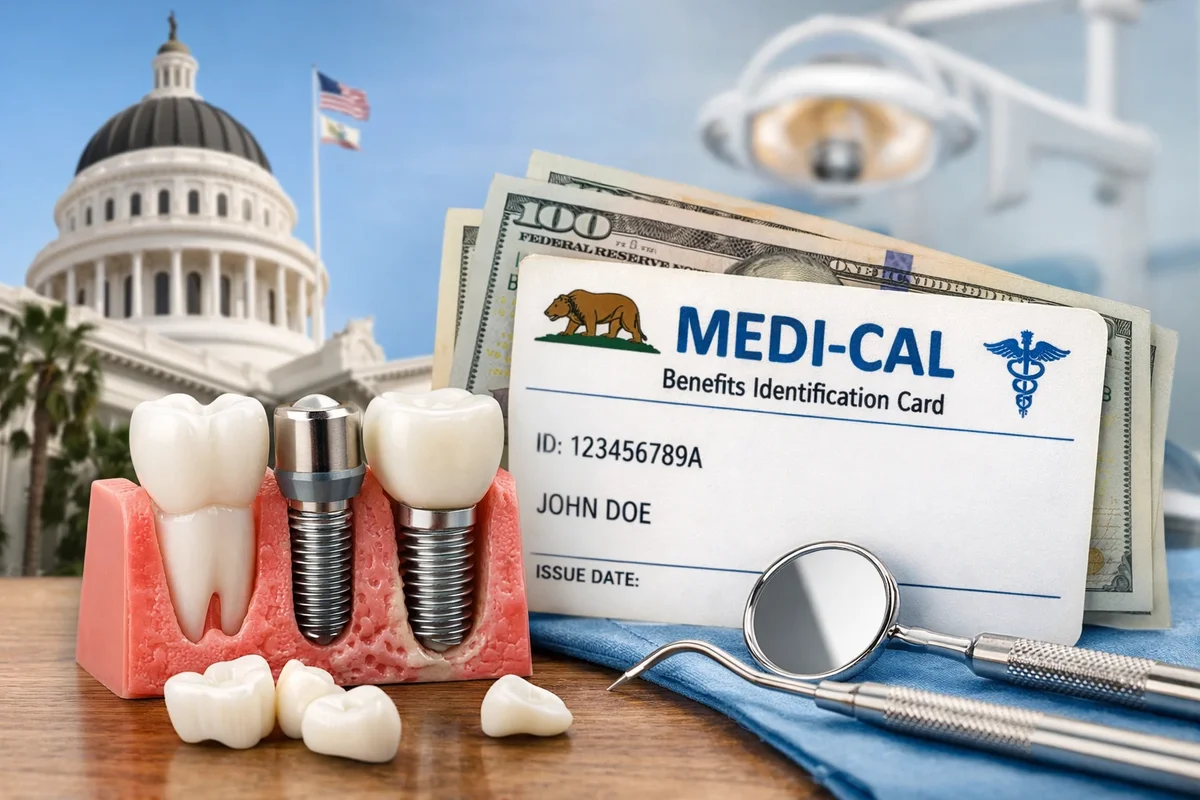
Frequently Asked Questions About Dental Implants Medi-Cal
Patients exploring dental implants medi cal often share the same questions and concerns. Because Medi-Cal rules are complex and approvals vary by case, clear answers help reduce confusion and anxiety. This section addresses the most common questions in a practical, honest, and patient-focused way, so you can better understand what to expect and how to move forward with confidence 😊.
Are Dental Implants Fully Covered by Medi-Cal?
No, dental implants medi cal are not automatically or fully covered. Medi-Cal may cover implants only when they are deemed medically necessary. Even then, coverage is often limited to specific components of treatment, such as the surgical placement of the implant.
Items like custom crowns, upgraded materials, or elective procedures may not be covered. Patients should always request a detailed treatment plan outlining what Medi-Cal approves and what may involve out-of-pocket costs.
How Do I Know If My Case Qualifies as Medically Necessary?
Medical necessity is based on function and health impact—not appearance. dental implants medi cal may be considered medically necessary if missing teeth cause serious problems such as:
- Inability to chew properly or maintain nutrition
- Speech impairment
- Jaw instability or chronic pain
- Progressive bone loss
- Failure or intolerance of dentures
A qualified dental provider must document these issues clearly using clinical notes and imaging. Patient preference alone is not enough for approval.
Do I Need to Try Dentures First?
In most cases, yes. Medi-Cal typically requires that lower-cost alternatives such as dentures be considered or attempted before approving dental implants medi cal. Denture failure—when properly documented—often strengthens an implant request.
If dentures cause chronic sores, instability, gag reflex problems, or nutritional issues, these outcomes help demonstrate that implants are medically necessary.
What If Dentures Make My Condition Worse?
If dentures worsen bone loss, jaw pain, or oral health, this information should be documented and submitted. Medi-Cal reviewers take these consequences seriously when evaluating dental implants medi cal requests.
How Long Does the Approval Process Take?
The timeline varies, but patience is essential. For dental implants medi cal, the process typically includes:
- Initial evaluation and documentation: several weeks
- Prior authorization review: 4–8 weeks
- Appeals (if needed): additional weeks or months
From first appointment to final approval, several months is common. Delays do not necessarily mean denial.
What Happens If My Request Is Denied?
An initial denial is common and does not mean the process is over. Many dental implants medi cal cases are approved after appeal. Appeals allow providers to submit additional documentation, clarify medical necessity, or include specialist opinions.
Patients should work closely with their dental provider to understand the reason for denial and address it effectively.
Can Seniors Get Dental Implants Through Medi-Cal?
Yes. There is no age limit for dental implants medi cal. Seniors may qualify if they meet medical necessity criteria and are healthy enough for surgery. Medical clearance may be required, especially for patients with chronic conditions.
Age alone does not disqualify a patient—overall health, function, and documentation matter far more.
Will Medi-Cal Replace a Failed Implant?
Generally, no—especially if failure is due to poor oral hygiene, smoking, or missed follow-up care. Medi-Cal expects patients receiving dental implants medi cal to actively maintain their oral health.
If an implant fails due to unavoidable medical reasons, coverage may be reviewed on a case-by-case basis, but replacement is not guaranteed.
How Can I Improve My Chances of Approval?
Patients can improve their chances by:
- Maintaining good oral hygiene
- Attending all appointments
- Following medical and dental recommendations
- Working with providers experienced in Medi-Cal cases
Clear communication and strong documentation are the foundation of successful dental implants medi cal approval.
Is It Worth Applying for Dental Implants Through Medi-Cal?
For patients who truly need implants to restore function and health, absolutely. While the process can be long and complex, dental implants medi cal can dramatically reduce treatment costs and improve quality of life.
Understanding the rules, setting realistic expectations, and staying persistent makes the journey far more manageable.
In conclusion, questions about dental implants medi cal are common—and justified. By knowing how the system works, what qualifies as medical necessity, and how to navigate denials and appeals, patients can make informed decisions and advocate effectively for their oral health 🦷.