
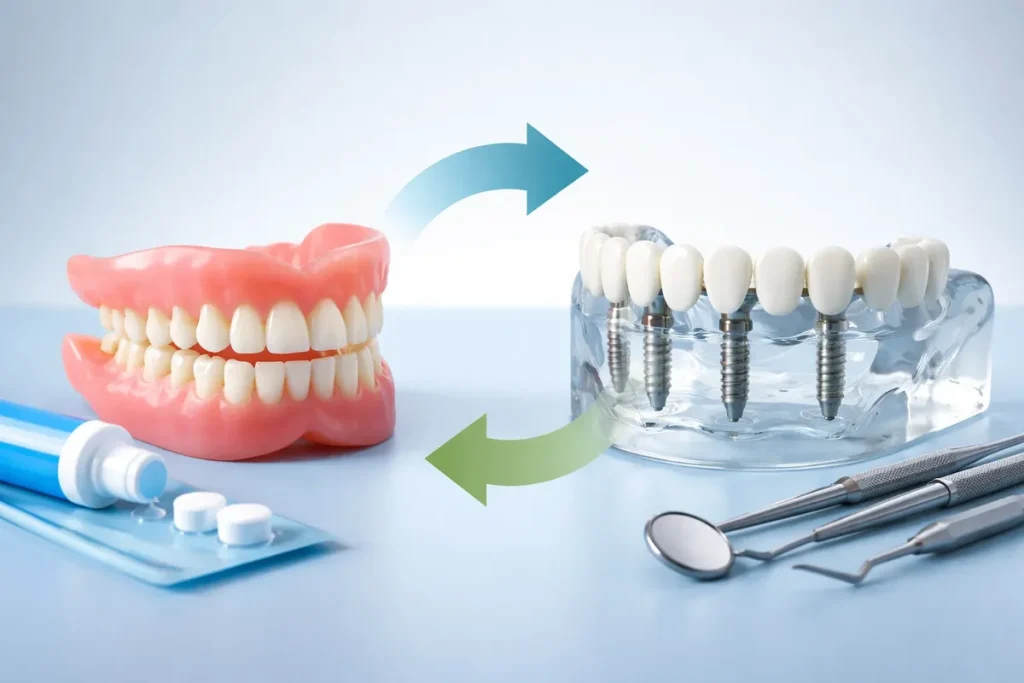
For many people who wear removable dentures, daily life can feel limiting. Slipping teeth, difficulty chewing, speech problems, and constant discomfort can reduce confidence and overall quality of life. Fortunately, modern dentistry offers a powerful, long-term solution: dental implants to replace dentures. This advanced treatment allows patients to transition from unstable removable prosthetics to fixed, secure teeth that look and function naturally. 😊
Dental implants to replace dentures are titanium posts surgically placed into the jawbone to act as artificial tooth roots. These implants anchor a fixed bridge or full-arch prosthesis, eliminating the need for removable dentures. Unlike traditional dentures that rest on the gums, dental implants integrate directly with the bone through a process called osseointegration. This creates unmatched stability and prevents bone loss — a major issue for long-term denture wearers.
When patients consider dental implants to replace dentures, they are typically seeking better chewing power, improved aesthetics, and greater comfort. Removable dentures often shift while eating or speaking, which can cause embarrassment and limit food choices. With implant-supported solutions, patients regain up to 90–95% of their natural chewing ability. That means enjoying steak, apples, and crunchy vegetables again without worry. 🥗
One of the biggest advantages of dental implants to replace dentures is bone preservation. Traditional dentures do not stimulate the jawbone, leading to gradual bone resorption over time. This bone shrinkage changes facial appearance, causing a sunken or aged look. Dental implants, however, stimulate the bone similarly to natural tooth roots, helping maintain facial structure and a youthful appearance.
There are different approaches when using dental implants to replace dentures. Some patients receive implant-supported overdentures, which snap into place and can be removed for cleaning. Others opt for fixed full-arch restorations such as All-on-4 or All-on-6 systems. These permanent solutions stay in the mouth and function like natural teeth. Your dentist evaluates bone density, oral health, and overall medical condition to determine the best option.
The success of dental implants to replace dentures depends on proper planning and clinical expertise. According to the American Dental Association, dental implants have a success rate of over 95% when placed in healthy individuals. Advances in digital imaging, 3D planning, and guided surgery have made the procedure more predictable and comfortable than ever before.
Many patients ask whether they are too old for dental implants to replace dentures. Age alone is not a limiting factor. As long as the patient has sufficient bone volume or qualifies for bone grafting, implant treatment is possible. In fact, many seniors report dramatic improvements in confidence, nutrition, and overall well-being after switching to implant-supported teeth. 😄
Comfort is another major factor. Traditional dentures can cause sore spots and gum irritation. Adhesives may be required daily, and frequent adjustments are common. With dental implants to replace dentures, the prosthesis is securely anchored, eliminating friction and movement. Patients often describe the experience as “finally feeling like I have real teeth again.”
Another key benefit of dental implants to replace dentures is improved speech clarity. Loose dentures may click or shift, affecting pronunciation. Implant-supported restorations remain stable, allowing clear and confident communication. This improvement can significantly enhance social interactions and professional life.
From a psychological perspective, choosing dental implants to replace dentures can be life-changing. Many denture wearers avoid smiling, laughing, or eating in public. Fixed implant-supported teeth restore self-esteem and eliminate daily anxiety about dentures slipping out of place. ✨
At Redent Klinik, we provide personalized treatment planning for patients interested in dental implants to replace dentures. Our team carefully evaluates each case using digital diagnostics to ensure safety and optimal results. If you would like to learn whether you are a candidate, visit our Redent Klinik Contact Page to schedule a consultation.
In summary, dental implants to replace dentures represent a long-term investment in oral health, comfort, and confidence. They prevent bone loss, restore chewing function, improve aesthetics, and eliminate the inconveniences of removable prosthetics. Whether you have been wearing dentures for years or are considering them for the first time, understanding this modern solution can help you make an informed decision about your smile and your future.
1. What Are Dental Implants to Replace Dentures?
Dental implants to replace dentures are a modern, fixed solution designed to permanently restore missing teeth by anchoring a full set of artificial teeth to titanium posts placed in the jawbone. Unlike removable dentures that sit on the gums and may slip during eating or speaking, dental implants act as artificial tooth roots. These roots fuse with the jawbone, creating a stable foundation for a fixed prosthesis that looks, feels, and functions like natural teeth. 😁
For patients who are tired of loose dentures, adhesives, and dietary restrictions, dental implants to replace dentures offer a transformative alternative. Instead of relying on suction or gum support, the implants integrate directly into the bone through a biological process known as osseointegration. This integration is what makes the treatment secure, long-lasting, and highly functional.
How Dental Implants Work
To understand dental implants to replace dentures, it helps to break the system into three main components:
1. The Implant Post
This is a small titanium screw surgically placed into the jawbone. Titanium is biocompatible, meaning the body accepts it naturally. Over several months, the bone grows around the implant, locking it firmly in place.
2. The Abutment
The abutment is a connector piece placed on top of the implant post. It serves as the support structure that holds the final prosthetic teeth.
3. The Prosthetic Teeth
This is the visible part — a custom-designed bridge or full-arch restoration. In treatments involving dental implants to replace dentures, the prosthetic can be either fixed permanently or designed as a removable overdenture that snaps securely onto implants.
When combined, these components create a solution far superior to traditional dentures in terms of stability and durability.
Why Traditional Dentures Often Fall Short
Traditional dentures rest directly on the gums without stimulating the jawbone. Over time, this leads to bone resorption, meaning the bone gradually shrinks. As the bone shrinks, dentures become loose, requiring relining or replacement. This cycle can continue for years.
Dental implants to replace dentures solve this problem by preserving the jawbone. Because implants function like natural tooth roots, they provide the stimulation necessary to maintain bone density. This helps prevent the sunken facial appearance often associated with long-term denture wear.
Another issue with removable dentures is limited chewing efficiency. Many denture wearers can only achieve about 20–30% of their original bite strength. With dental implants to replace dentures, patients often regain up to 90% of their natural chewing power. This allows for a more varied, nutritious diet. 🥗
Types of Implant Solutions for Denture Replacement
There are different approaches when considering dental implants to replace dentures, depending on bone structure, budget, and patient preference:
Implant-Supported Overdentures
These dentures snap onto two to four implants. They are removable but significantly more stable than traditional dentures. This option is often more affordable while still offering improved comfort.
All-on-4 or All-on-6 Fixed Systems
This advanced technique uses four to six strategically placed implants to support a full arch of permanent teeth. The result is a non-removable, highly stable solution that closely mimics natural teeth.
Both options fall under the broader category of dental implants to replace dentures, but the fixed approach provides the highest level of stability and convenience.
Who Typically Needs Dental Implants to Replace Dentures?
Patients who have lost most or all of their teeth due to decay, gum disease, or trauma are ideal candidates. Many individuals who have worn dentures for years seek dental implants to replace dentures because of discomfort or dissatisfaction.
However, even patients with moderate bone loss can often qualify thanks to modern bone grafting and sinus lift procedures. Age alone is not a limitation. What matters most is overall health and sufficient bone support.
Are Dental Implants Safe?
Yes, dental implants to replace dentures are considered one of the safest and most predictable procedures in dentistry. According to the American Dental Association, dental implants have a long track record of safety and success when performed by qualified professionals.
Success rates exceed 95% in healthy individuals. Proper planning, digital imaging, and sterile surgical protocols further improve outcomes. When patients maintain good oral hygiene and attend regular check-ups, implants can last 20 years or more — often a lifetime. ✨
How They Improve Daily Life
Choosing dental implants to replace dentures is not only about replacing missing teeth — it is about restoring quality of life. Patients often report:
- Improved self-confidence
- Clearer speech
- Better digestion due to stronger chewing ability
- No need for messy adhesives
- Greater comfort and stability
Unlike removable dentures that must be taken out at night, fixed implant-supported teeth remain securely in place. They become a seamless part of daily life.
In summary, dental implants to replace dentures represent a long-term, biologically sound solution for full tooth replacement. By integrating with the jawbone, preserving facial structure, and restoring near-natural function, they offer advantages that traditional dentures simply cannot match. For patients seeking a permanent and reliable alternative, this treatment stands at the forefront of modern restorative dentistry. 😊
2. Why Patients Choose Dental Implants Instead of Traditional Dentures
For decades, removable dentures were considered the standard solution for people who lost most or all of their teeth. While dentures can restore appearance to some extent, many patients eventually look for a more stable and long-term alternative. This is why dental implants to replace dentures have become one of the most requested treatments in modern restorative dentistry. Patients increasingly prefer implant-supported solutions because they provide superior comfort, function, durability, and confidence. 😊
The decision to switch to dental implants to replace dentures often comes after years of frustration. Loose dentures, sore spots, difficulty chewing, and fear of dentures slipping at social events can significantly impact daily life. Implant-supported restorations eliminate these common problems by anchoring artificial teeth directly into the jawbone, creating a secure and permanent foundation.
Improved Stability and Security
One of the primary reasons patients choose dental implants to replace dentures is stability. Traditional dentures rely on suction, adhesives, or the shape of the jaw to stay in place. Over time, natural bone shrinkage reduces this support, making dentures loose and uncomfortable.
No More Slipping or Clicking
Implant-supported teeth remain firmly fixed in the mouth. Whether speaking, laughing, or eating, patients do not have to worry about embarrassing movement or clicking sounds. Dental implants to replace dentures restore confidence in social and professional settings.
Elimination of Denture Adhesives
Many denture wearers depend on adhesives daily. These products can be messy, inconvenient, and unreliable. With dental implants to replace dentures, adhesives are no longer necessary, simplifying daily oral care routines.
Better Chewing Efficiency and Nutrition
Another major advantage of dental implants to replace dentures is improved bite strength. Traditional dentures typically restore only a fraction of natural chewing power. As a result, patients often avoid hard or fibrous foods such as nuts, raw vegetables, or certain meats.
Implants, however, are anchored into the jawbone, allowing for significantly greater force distribution during chewing. Studies show that patients who choose dental implants to replace dentures can regain up to 90–95% of their original bite strength. 🍎 This improvement supports better digestion and overall health because patients can maintain a balanced, nutrient-rich diet.
Preservation of Jawbone and Facial Structure
Bone loss is one of the most overlooked consequences of traditional dentures. When teeth are missing, the jawbone no longer receives stimulation from tooth roots. As a result, the bone gradually resorbs, leading to a sunken facial appearance over time.
How Implants Prevent Bone Shrinkage
Dental implants to replace dentures act as artificial roots that stimulate the jawbone during chewing. This stimulation helps maintain bone density and prevents the progressive bone loss associated with removable dentures.
Patients who switch to dental implants to replace dentures often notice that their facial contours remain fuller and more youthful compared to long-term denture wearers. This preservation of facial structure is both a functional and aesthetic advantage.
Enhanced Comfort and Long-Term Durability
Traditional dentures sit directly on the gum tissue, which can cause irritation, sore spots, and pressure-related discomfort. Adjustments and relining are often required. In contrast, dental implants to replace dentures transfer chewing forces directly to the bone rather than the gums.
Reduced Gum Irritation
Because the prosthetic is supported by implants rather than resting on soft tissue, patients experience fewer pressure points. This significantly increases comfort, especially during long conversations or extended meals.
Long-Lasting Solution
With proper care, dental implants to replace dentures can last 20 years or more. Many implants last a lifetime. While the prosthetic teeth may need replacement after many years due to normal wear, the implant posts themselves are designed for long-term stability.
Psychological and Social Benefits
The emotional impact of tooth loss can be profound. Patients often report avoiding social gatherings or smiling less because of insecurity related to dentures. Choosing dental implants to replace dentures frequently leads to a dramatic boost in self-esteem. 😄
Speech clarity also improves. Loose dentures may cause slurred pronunciation or difficulty with certain sounds. With dental implants to replace dentures, speech becomes more natural and predictable because the prosthesis does not shift during conversation.
Backed by Clinical Research
According to the American Dental Association, dental implants have a high success rate and are considered a safe, effective treatment option for replacing missing teeth. Modern techniques, digital planning, and improved materials have made dental implants to replace dentures more predictable than ever before.
Clinical research consistently shows that implant-supported restorations outperform removable dentures in terms of patient satisfaction, chewing efficiency, and long-term oral health outcomes.
Is the Investment Worth It?
While the upfront cost of dental implants to replace dentures may be higher than traditional dentures, many patients view it as a long-term investment. Dentures often require frequent relining, adjustments, and eventual replacement. Implant-supported solutions reduce these recurring costs and offer significantly improved quality of life.
In summary, patients choose dental implants to replace dentures because they offer superior stability, better nutrition, preserved facial structure, long-term durability, and renewed confidence. For individuals seeking a permanent and reliable alternative to removable dentures, implant-supported teeth provide a life-changing solution that aligns with both functional and emotional needs. ✨
3. Types of Dental Implants Used to Replace Dentures
When considering dental implants to replace dentures, one of the most important steps is understanding the different types of implant-supported solutions available. Not all patients require the same approach. Bone density, oral health status, aesthetic expectations, and budget all influence which treatment plan is most appropriate. Modern dentistry offers several predictable options that allow clinicians to customize dental implants to replace dentures according to each patient’s specific needs. 😊
Broadly speaking, dental implants to replace dentures can be categorized into removable implant-supported overdentures and fixed full-arch implant systems. Both options significantly improve stability compared to traditional dentures, but they differ in structure, comfort level, and long-term functionality.
Implant-Supported Overdentures
Implant-supported overdentures are one of the most common forms of dental implants to replace dentures. This system uses two to four implants placed in the jawbone to anchor a removable denture securely.
How Overdentures Work
In this approach, the implants are surgically inserted into the jawbone and allowed to heal through osseointegration. After healing, special attachment mechanisms (such as locator attachments or bars) connect the implants to the denture. The denture “snaps” into place, providing stability while still being removable for cleaning.
Patients who choose this type of dental implants to replace dentures benefit from significantly improved retention compared to conventional dentures. There is less movement during eating and speaking, and adhesives are typically no longer required.
Advantages of Overdentures
- More affordable than fully fixed systems
- Easier cleaning because the prosthesis can be removed
- Improved chewing strength compared to traditional dentures
- Reduced gum irritation
For patients transitioning gradually, implant-supported overdentures offer a practical introduction to dental implants to replace dentures.
All-on-4 Implant System
The All-on-4 technique is a revolutionary method of placing dental implants to replace dentures using four strategically angled implants to support a full arch of fixed teeth.
Why Only Four Implants?
Two implants are placed vertically at the front of the jaw, while two are placed at an angle in the back. This angulation maximizes bone contact and often eliminates the need for bone grafting. Because of this design, many patients who previously thought they were not candidates for dental implants to replace dentures can qualify for treatment.
Immediate Function Possibility
In many cases, temporary fixed teeth can be attached on the same day as implant placement. This “teeth in a day” concept allows patients to leave the clinic with a functional smile immediately. However, final restorations are placed after complete healing.
The All-on-4 method of dental implants to replace dentures provides exceptional stability and eliminates the need for removable appliances.
All-on-6 Implant System
Similar to All-on-4, the All-on-6 system uses six implants instead of four. This approach distributes biting forces more evenly across the jaw.
When Is All-on-6 Recommended?
Patients with stronger jawbone density may benefit from additional implants for increased long-term support. All-on-6 dental implants to replace dentures offer enhanced durability and can be especially beneficial for patients with strong bite forces.
By increasing the number of implants, this system improves load distribution and may extend the lifespan of the prosthesis.
Zygomatic Implants for Severe Bone Loss
In cases of advanced upper jaw bone loss, traditional implant placement may not be feasible. Zygomatic implants are a specialized form of dental implants to replace dentures that anchor into the cheekbone (zygoma) rather than the jawbone.
When Are Zygomatic Implants Necessary?
These implants are typically used when patients have severe bone resorption and wish to avoid extensive bone grafting procedures. Zygomatic implants provide a stable foundation even in challenging anatomical situations.
This advanced solution expands the possibilities for dental implants to replace dentures, ensuring that even patients with complex cases can regain stable, fixed teeth.
Mini Dental Implants
Mini dental implants are smaller in diameter than traditional implants. They are sometimes used to stabilize lower dentures.
Benefits and Limitations
Mini implants require less invasive surgery and can be placed in narrower bone ridges. However, they may not provide the same long-term strength as standard implants. For certain patients, mini dental implants to replace dentures offer a cost-effective stabilization option.
Choosing the Right Option
Selecting the ideal type of dental implants to replace dentures requires comprehensive evaluation. Dentists assess:
- Bone density and volume
- Overall oral health
- Medical history
- Aesthetic goals
- Budget considerations
Advanced 3D imaging and digital planning tools help clinicians determine the most predictable solution. According to the American Dental Association, proper case selection significantly contributes to implant success.
Long-Term Performance Expectations
Regardless of the type selected, dental implants to replace dentures provide superior function compared to removable dentures. Fixed systems typically offer the highest level of stability and chewing efficiency, while overdentures balance affordability with improved retention.
With proper oral hygiene and routine dental check-ups, dental implants to replace dentures can last decades. The implant posts themselves often remain stable for life, while prosthetic components may require maintenance over time.
In summary, understanding the different types of dental implants to replace dentures empowers patients to make informed decisions. Whether choosing overdentures, All-on-4, All-on-6, or specialized zygomatic implants, each option is designed to restore function, comfort, and confidence. The right choice depends on individual anatomy and treatment goals, but all options represent a significant upgrade from traditional removable dentures. ✨
4. Step-by-Step Procedure for Getting Dental Implants
Understanding the full treatment journey helps patients feel confident about choosing dental implants to replace dentures. While the idea of implant surgery may sound complex, the procedure is carefully planned, highly predictable, and performed under controlled clinical conditions. Modern digital dentistry has significantly improved precision, safety, and comfort. When performed by experienced professionals, dental implants to replace dentures follow a structured step-by-step process designed to ensure long-term success. 😊
Initial Consultation and Comprehensive Evaluation
The first step in receiving dental implants to replace dentures is a detailed consultation. During this appointment, the dentist evaluates oral health, medical history, and overall treatment goals.
Digital Imaging and 3D Scans
Advanced imaging techniques such as CBCT (Cone Beam Computed Tomography) provide a 3D view of the jawbone. This allows precise measurement of bone density, nerve location, and sinus positioning. Accurate diagnostics are essential for planning dental implants to replace dentures safely and effectively.
Treatment Planning
Using digital software, the dentist determines how many implants are needed and where they should be placed. Whether the patient requires implant-supported overdentures or a fixed All-on-4 system, the plan is customized for optimal stability and aesthetics.
Preparatory Procedures (If Necessary)
Not all patients have sufficient bone volume immediately. Long-term denture wear often leads to bone shrinkage. In such cases, preparatory treatments may be required before placing dental implants to replace dentures.
Bone Grafting
Bone grafting strengthens areas with insufficient bone density. This procedure encourages new bone growth, creating a stable foundation for implants.
Tooth Extractions
If remaining teeth are severely damaged or infected, they are removed prior to placing dental implants to replace dentures. In some cases, implants can be placed immediately after extraction.
Surgical Placement of Implants
The core step in obtaining dental implants to replace dentures is the surgical insertion of titanium implant posts into the jawbone. The procedure is performed under local anesthesia, and sedation options are available for patient comfort.
Precise Implant Insertion
Using guided surgical templates based on digital planning, the dentist places each implant at the exact angle and depth required. Precision ensures long-term stability and optimal support for the prosthetic teeth.
Patients typically report minimal discomfort during implant placement. Compared to tooth extraction, many find the procedure surprisingly manageable.
Osseointegration and Healing Phase
After placement, the implants must integrate with the jawbone in a process called osseointegration. This healing phase is crucial for the success of dental implants to replace dentures.
Healing Timeline
Osseointegration generally takes between 3 to 6 months. During this period, the bone grows around the implant surface, creating a secure anchor.
Temporary Teeth Option
In many cases, especially with All-on-4 treatments, temporary teeth are placed immediately after surgery. This allows patients receiving dental implants to replace dentures to leave the clinic with functional teeth while healing continues.
Abutment Placement
Once healing is complete, small connectors called abutments are attached to the implants. These components serve as the link between the implants and the final prosthesis.
This step prepares the mouth for the permanent restoration, completing the structural foundation of dental implants to replace dentures.
Final Prosthetic Placement
The last stage involves attaching the custom-designed prosthetic teeth. Whether removable overdentures or fixed full-arch bridges, the final restoration is carefully adjusted for fit, comfort, and bite alignment.
Customized Design
The prosthetic is crafted to match facial proportions, lip support, and natural tooth aesthetics. Patients often describe the final result of dental implants to replace dentures as life-changing. 😄
Post-Procedure Care and Follow-Up
After the final placement, patients receive detailed care instructions. Although dental implants to replace dentures are highly durable, maintaining good oral hygiene is essential.
- Daily brushing and flossing
- Use of water flossers for fixed restorations
- Regular dental check-ups
- Professional cleanings
According to the American Dental Association, maintaining oral hygiene significantly increases implant longevity and prevents peri-implant diseases.
How Long Does the Entire Process Take?
The complete journey for dental implants to replace dentures can range from a few months to approximately 6–8 months, depending on bone condition and whether grafting is required. Immediate-load techniques may shorten this timeline in suitable cases.
While the treatment requires patience, the long-term benefits far outweigh the temporary waiting period. Once completed, dental implants to replace dentures provide decades of stability, comfort, and functionality.
Is the Procedure Painful?
Most patients report mild discomfort rather than severe pain. Swelling and minor soreness are common in the first few days, but these symptoms are manageable with prescribed medication. The structured and minimally invasive approach used in modern dental implants to replace dentures procedures ensures patient comfort remains a top priority.
In summary, the step-by-step process of receiving dental implants to replace dentures involves careful planning, precise surgical placement, healing integration, and final restoration. Each phase is designed to maximize safety, stability, and long-term success. With advanced technology and expert care, this treatment transforms not just smiles but overall quality of life. ✨
5. Benefits of Dental Implants to Replace Dentures
Choosing dental implants to replace dentures is not simply about upgrading your smile — it is about transforming daily comfort, oral health, and long-term quality of life. While traditional dentures have helped millions of patients over the years, modern implant-supported solutions offer significant advantages that go far beyond aesthetics. Patients who switch to dental implants to replace dentures frequently describe the decision as one of the most impactful improvements they have ever made for their health and confidence. 😊
Superior Stability and Confidence
One of the most noticeable benefits of dental implants to replace dentures is stability. Traditional dentures can shift, loosen, or even fall out during meals or conversations. This constant worry affects social interactions and self-esteem.
No Movement During Daily Activities
Implants are surgically anchored into the jawbone, meaning the prosthetic teeth remain firmly in place. Patients who choose dental implants to replace dentures can laugh, speak, and eat without fear of slipping appliances.
Restored Self-Confidence
With secure teeth, patients regain the confidence to smile openly. The psychological boost provided by dental implants to replace dentures often leads to improved social engagement and overall well-being. ✨
Improved Chewing Power and Nutrition
Removable dentures typically restore only limited bite strength. Many denture wearers avoid tough meats, crunchy vegetables, or nuts due to instability.
Dental implants to replace dentures restore up to 90–95% of natural chewing ability. Because the implants integrate with the bone, they distribute bite forces efficiently and safely. This improvement allows patients to maintain a healthier and more varied diet. 🍎
Better nutrition supports digestion, heart health, and overall systemic wellness — making dental implants to replace dentures beneficial not only for oral health but for the entire body.
Prevention of Jawbone Loss
One of the most medically significant advantages of dental implants to replace dentures is the prevention of bone resorption. When natural teeth are lost, the jawbone no longer receives stimulation, causing gradual shrinkage.
How Implants Preserve Bone
Implants function like artificial tooth roots, stimulating the jawbone during chewing. This stimulation preserves bone density and maintains facial structure.
Patients who rely solely on traditional dentures often experience facial sagging over time. By contrast, dental implants to replace dentures help maintain youthful facial contours and prevent the “sunken” appearance associated with long-term tooth loss.
Enhanced Comfort
Traditional dentures rest directly on the gums, which can lead to irritation and sore spots. Adhesives may be needed daily, and frequent adjustments are common.
Dental implants to replace dentures eliminate gum friction because the prosthetic is supported by implants rather than soft tissue. Patients often report that implant-supported teeth feel far more natural and comfortable.
No Adhesives Required
Because implants secure the prosthesis in place, messy adhesives are no longer necessary. This simplifies daily hygiene routines and improves convenience.
Long-Term Durability
Another important benefit of dental implants to replace dentures is longevity. While traditional dentures typically require replacement every 5–8 years due to wear and jaw changes, implants are designed for long-term performance.
High Success Rate
According to the American Dental Association, dental implants have a success rate exceeding 95% when properly maintained. With routine dental visits and good oral hygiene, dental implants to replace dentures can last 20 years or more — often a lifetime.
Improved Speech Clarity
Loose dentures can cause slurred speech or clicking sounds. Many patients feel self-conscious during conversations.
With dental implants to replace dentures, speech becomes clearer and more predictable because the prosthetic remains stable. Patients can pronounce words confidently without worrying about movement.
Better Oral Health Maintenance
Implant-supported restorations are easier to maintain than many people assume. Patients clean fixed prosthetics using brushing, flossing tools, or water flossers.
Unlike traditional dentures that must be removed nightly, fixed dental implants to replace dentures function like natural teeth and integrate seamlessly into daily routines.
Cost-Effectiveness Over Time
Although the initial investment in dental implants to replace dentures may be higher than removable dentures, long-term costs are often lower. Dentures frequently require relining, repairs, and replacement. Implants reduce these recurring expenses.
Additionally, improved chewing efficiency and oral health can reduce other dental complications, making dental implants to replace dentures a financially sound decision over time.
Emotional and Psychological Benefits
Beyond physical improvements, dental implants to replace dentures provide emotional relief. Patients no longer worry about embarrassing situations, uncomfortable meals, or denture mishaps.
Feeling secure in your smile can positively influence professional opportunities, relationships, and self-image. The confidence restored by dental implants to replace dentures often leads to a more active and fulfilling lifestyle. 😄
Summary of Key Benefits
- Permanent stability
- Improved chewing strength
- Bone preservation
- Enhanced facial aesthetics
- Long-lasting durability
- Greater comfort
- Improved speech clarity
- Reduced long-term maintenance costs
In conclusion, the advantages of dental implants to replace dentures extend far beyond cosmetic improvement. They protect jawbone health, restore nearly natural function, and dramatically enhance quality of life. For patients seeking a reliable, long-term alternative to removable dentures, implant-supported teeth provide a scientifically supported and life-changing solution. ✨
6. Cost of Dental Implants Compared to Dentures
One of the most common questions patients ask when considering dental implants to replace dentures is about cost. While traditional dentures are generally less expensive at the beginning, the long-term financial picture often tells a different story. Understanding the pricing structure, what influences the total investment, and how implant-supported solutions compare over time helps patients make informed decisions. 💡
Dental implants to replace dentures involve advanced surgical procedures, high-quality biocompatible materials, digital planning, and custom prosthetics. These factors contribute to higher upfront costs compared to removable dentures. However, durability, stability, and reduced maintenance frequently make implants more cost-effective in the long run.
Average Cost of Traditional Dentures
The cost of conventional dentures varies depending on materials and customization. In the United States, average prices typically fall within these ranges:
- Basic full dentures: $600 – $1,500 per arch
- Mid-range dentures: $1,500 – $3,000 per arch
- Premium dentures: $3,000 – $5,000 per arch
Although the initial cost appears lower, dentures often require relining every 1–2 years and replacement every 5–8 years due to bone shrinkage. Over time, the cumulative cost increases significantly.
Average Cost of Dental Implants to Replace Dentures
The cost of dental implants to replace dentures depends on the type of system chosen, the number of implants required, and whether additional procedures like bone grafting are necessary.
Implant-Supported Overdentures
- $6,000 – $15,000 per arch (2–4 implants)
All-on-4 or All-on-6 Fixed Systems
- $15,000 – $30,000 per arch
These figures reflect average U.S. pricing and may vary internationally. While dental implants to replace dentures require a higher initial investment, they are designed for long-term performance, often lasting 20 years or more.
Factors That Influence the Total Cost
Several elements affect the overall cost of dental implants to replace dentures:
1. Number of Implants
More implants increase stability but also raise the cost. All-on-6 systems generally cost more than All-on-4 systems.
2. Bone Grafting or Sinus Lifts
Patients with bone loss may require preparatory procedures, adding $500 – $3,000 depending on complexity.
3. Type of Prosthetic Material
High-quality zirconia restorations cost more than acrylic options but provide greater durability and aesthetics.
4. Geographic Location
Costs vary by country and clinic expertise. Many patients explore international dental tourism to reduce expenses while maintaining high treatment standards.
When evaluating dental implants to replace dentures, it is important to consider the full treatment plan rather than focusing solely on the surgical component.
Long-Term Financial Comparison
Although traditional dentures may cost less initially, recurring expenses accumulate. Relining, repairs, adhesives, and replacements can add thousands of dollars over 15–20 years.
By contrast, dental implants to replace dentures often require fewer long-term adjustments. The implant posts themselves can last a lifetime with proper care. Prosthetic components may require maintenance after many years, but overall recurring costs are significantly reduced.
Cost Over 20 Years (Estimated)
- Traditional dentures: $8,000 – $20,000+ including replacements and maintenance
- Dental implants to replace dentures: Higher initial cost but lower recurring expenses
From a long-term perspective, dental implants to replace dentures can provide better value, especially considering improved quality of life and reduced complications.
Insurance and Financing Options
Some dental insurance plans partially cover implant procedures, though coverage varies. Many clinics offer financing plans or payment installments to make dental implants to replace dentures more accessible.
Flexible financing allows patients to spread the investment over manageable monthly payments rather than paying the full amount upfront.
Are Dental Implants Worth the Investment?
According to the American Dental Association, dental implants are a predictable and long-lasting treatment option for replacing missing teeth. When considering chewing efficiency, bone preservation, and emotional well-being, many patients view dental implants to replace dentures as a worthwhile long-term investment.
Patients frequently report that the stability, comfort, and confidence gained from dental implants to replace dentures outweigh the higher initial cost. The ability to eat normally, speak clearly, and maintain facial structure provides both functional and psychological benefits.
Hidden Costs of Traditional Dentures
It is also important to consider the indirect costs of removable dentures:
- Ongoing purchase of adhesives
- Frequent dental adjustments
- Time lost due to discomfort or appointments
- Potential nutritional limitations
These hidden expenses are often eliminated when patients transition to dental implants to replace dentures.
Final Considerations
While the upfront cost of dental implants to replace dentures may appear substantial, the long-term durability, reduced maintenance, and life-changing functional improvements often justify the investment. Patients should evaluate not only the financial aspect but also the impact on health, confidence, and overall lifestyle.
Ultimately, choosing dental implants to replace dentures is about more than replacing teeth — it is about restoring stability, comfort, and long-term oral health. When viewed as a long-term solution rather than a short-term expense, implant-supported teeth provide exceptional value and lasting satisfaction. 😊
7. Recovery Timeline and Healing Process
Understanding the recovery timeline is essential for patients considering dental implants to replace dentures. While the surgical procedure itself is carefully controlled and typically straightforward, the healing phase plays a critical role in long-term success. Many patients are pleasantly surprised to learn that recovery from dental implants to replace dentures is often smoother than expected, especially when proper aftercare instructions are followed. 😊
The healing journey can vary depending on individual factors such as bone quality, overall health, and whether additional procedures like bone grafting were required. However, most treatment plans follow a predictable pattern that ensures stability and safety.
Immediately After Surgery (First 24–72 Hours)
The first few days after implant placement are focused on initial healing. Patients who receive dental implants to replace dentures may experience mild swelling, slight bruising, and minor discomfort.
What to Expect
- Minor swelling around the surgical area
- Light bleeding within the first 24 hours
- Mild soreness controlled with prescribed medication
Cold compresses and rest are typically recommended. Most patients report that the discomfort associated with dental implants to replace dentures is comparable to or less than a tooth extraction.
First Week of Recovery
During the first week, soft tissue healing begins. Patients are advised to follow a soft-food diet to avoid placing excessive pressure on the implant sites.
Diet Recommendations
- Soups and broths
- Mashed vegetables
- Yogurt and smoothies
- Soft pasta or rice
Avoiding hard or crunchy foods supports proper healing after receiving dental implants to replace dentures. Gentle oral hygiene is encouraged, but direct brushing over surgical areas should be avoided until advised by the dentist.
Osseointegration Phase (3–6 Months)
The most critical part of recovery from dental implants to replace dentures is the osseointegration process. During this phase, the titanium implant fuses with the jawbone, creating a strong and stable foundation.
Why Osseointegration Matters
This biological bonding ensures that dental implants to replace dentures can withstand chewing forces long-term. Without proper integration, implant stability may be compromised.
Healing time varies, but most patients require approximately 3–6 months for full integration. Smokers or individuals with certain medical conditions may require additional healing time.
Temporary Teeth During Healing
Many modern protocols allow patients receiving dental implants to replace dentures to wear temporary teeth during the healing phase. In All-on-4 treatments, temporary fixed prosthetics are often attached on the same day as surgery.
Benefits of Temporary Restorations
- Immediate aesthetic improvement
- Ability to speak and smile confidently
- Maintained daily function during healing
Temporary teeth are designed to protect the implants while minimizing pressure during the integration period.
Final Restoration Placement
Once osseointegration is complete, the final prosthesis is attached. At this stage, patients experience the full benefits of dental implants to replace dentures, including restored bite strength and natural aesthetics.
The final restoration is custom-designed to match facial proportions and bite alignment, ensuring both functionality and long-term comfort.
Managing Discomfort and Complications
While complications are rare, proper care is essential after receiving dental implants to replace dentures.
Common Temporary Symptoms
- Mild swelling
- Temporary gum sensitivity
- Slight jaw stiffness
Serious complications are uncommon when treatment is performed by experienced professionals. According to the American Dental Association, dental implants have a high success rate when patients follow post-operative guidelines carefully.
Long-Term Healing and Maintenance
Even after full recovery, maintaining dental implants to replace dentures requires ongoing oral hygiene and regular dental check-ups.
Daily Care Routine
- Brush twice daily
- Use floss or water flossers around implant areas
- Schedule professional cleanings every 6 months
Good oral hygiene prevents peri-implantitis, an inflammatory condition that can affect implant stability. Patients who care properly for dental implants to replace dentures often enjoy decades of reliable performance.
When Can You Return to Normal Activities?
Most patients resume light daily activities within 1–2 days after surgery. However, strenuous physical activity should be avoided for at least a week. As healing progresses, normal chewing gradually resumes once cleared by the dentist.
Patients frequently report that adapting to dental implants to replace dentures feels natural and comfortable after the initial healing phase. Many forget they even have implants because the prosthetic functions so similarly to natural teeth. 😄
Overall Recovery Timeline Summary
- First 3 days: Initial swelling and mild discomfort
- 1 week: Soft tissue healing
- 3–6 months: Full osseointegration
- After healing: Final prosthesis placement
In conclusion, the recovery process for dental implants to replace dentures is structured, manageable, and highly predictable. With modern surgical techniques and careful aftercare, patients typically experience minimal discomfort and excellent long-term outcomes. By following professional guidance and maintaining oral hygiene, individuals can enjoy stable, functional, and natural-looking teeth for many years. ✨
8. Who Is a Good Candidate for Dental Implants?
One of the most important questions patients ask before starting treatment is whether they qualify for dental implants to replace dentures. While implant dentistry has advanced significantly and is suitable for a wide range of individuals, not everyone is automatically an ideal candidate. A thorough clinical evaluation is essential to determine whether dental implants to replace dentures can be placed safely and predictably. 😊
In general, most healthy adults who are missing multiple or all teeth can benefit from dental implants to replace dentures. However, several medical, anatomical, and lifestyle factors influence candidacy.
Basic Requirements for Dental Implant Candidacy
To qualify for dental implants to replace dentures, patients must meet certain foundational conditions:
Sufficient Jawbone Density
Because implants are anchored into the jawbone, adequate bone volume is essential. Long-term denture wear often leads to bone shrinkage. However, modern procedures such as bone grafting can often restore sufficient support for dental implants to replace dentures.
Healthy Gums
Gum health is critical for implant success. Active periodontal disease must be treated before proceeding with dental implants to replace dentures, as infection can compromise implant stability.
Good Overall Health
Chronic conditions such as uncontrolled diabetes or severe immune disorders may affect healing. However, many patients with controlled medical conditions can still receive dental implants to replace dentures safely.
Ideal Candidates for Dental Implants
Patients who typically benefit most from dental implants to replace dentures include:
- Individuals who have lost all or most of their teeth
- Long-term denture wearers experiencing discomfort
- Patients with stable general health
- Non-smokers or those willing to reduce smoking
- Individuals seeking a permanent solution
For these individuals, dental implants to replace dentures provide superior stability, improved chewing function, and long-term bone preservation.
Age Considerations
Many people wonder if they are too old for dental implants to replace dentures. The good news is that there is no upper age limit for implant treatment. Seniors in their 70s, 80s, and even 90s have successfully undergone implant procedures.
Lower Age Limit
Implants are generally not recommended for individuals whose jawbones are still developing. Full skeletal maturity is required before placing dental implants to replace dentures.
Age alone is not a limiting factor. What matters most is bone quality and overall systemic health.
Patients with Bone Loss
Bone loss is common among long-term denture wearers. Fortunately, advances in implant dentistry have expanded candidacy for dental implants to replace dentures.
Bone Grafting Solutions
Bone grafting procedures rebuild areas of insufficient bone, creating a stable base for implants.
Zygomatic Implants
In severe upper jaw bone loss cases, specialized implants anchored in the cheekbone may allow patients to receive dental implants to replace dentures without extensive grafting.
These innovations make treatment accessible to many patients who previously believed implants were not an option.
Medical Conditions and Implant Eligibility
Certain medical conditions require careful management before receiving dental implants to replace dentures.
Diabetes
Patients with controlled diabetes often heal successfully after implant surgery. However, uncontrolled diabetes can impair healing.
Osteoporosis
While osteoporosis affects bone density, many patients with this condition still qualify for dental implants to replace dentures after proper evaluation.
Smoking
Smoking increases the risk of implant failure due to reduced blood flow. Patients who quit or reduce smoking significantly improve their chances of long-term success with dental implants to replace dentures.
According to the American Dental Association, patient health history and lifestyle habits are critical considerations when planning implant treatment.
Psychological Readiness and Commitment
Beyond physical health, patients must be committed to maintaining oral hygiene. Dental implants to replace dentures require consistent brushing, flossing, and routine dental visits to prevent peri-implant disease.
Individuals who are motivated to maintain long-term oral care are ideal candidates for dental implants to replace dentures.
When Implants May Not Be Recommended
In some cases, dental implants to replace dentures may be delayed or reconsidered:
- Uncontrolled systemic diseases
- Severe untreated gum infections
- Insufficient bone without willingness for grafting
- Poor oral hygiene habits
However, even in complex cases, alternative treatment plans may still make dental implants to replace dentures achievable after proper preparation.
Comprehensive Evaluation Process
Determining candidacy involves:
- Detailed medical history review
- 3D imaging and bone assessment
- Evaluation of gum health
- Bite analysis and facial structure assessment
This thorough process ensures that dental implants to replace dentures are placed safely and strategically for long-term success.
Final Thoughts on Candidacy
In conclusion, most adults who have lost teeth are potential candidates for dental implants to replace dentures, especially with modern surgical advancements. Age is rarely a limitation, and bone deficiencies can often be corrected. The key factors include good general health, sufficient bone support (or willingness to undergo preparatory procedures), and commitment to oral hygiene.
By undergoing a comprehensive evaluation, patients can determine whether dental implants to replace dentures are the right solution for restoring function, comfort, and confidence. With proper planning and expert care, implant-supported teeth offer a predictable and life-enhancing alternative to traditional dentures. ✨
9. Long-Term Care and Maintenance of Dental Implants
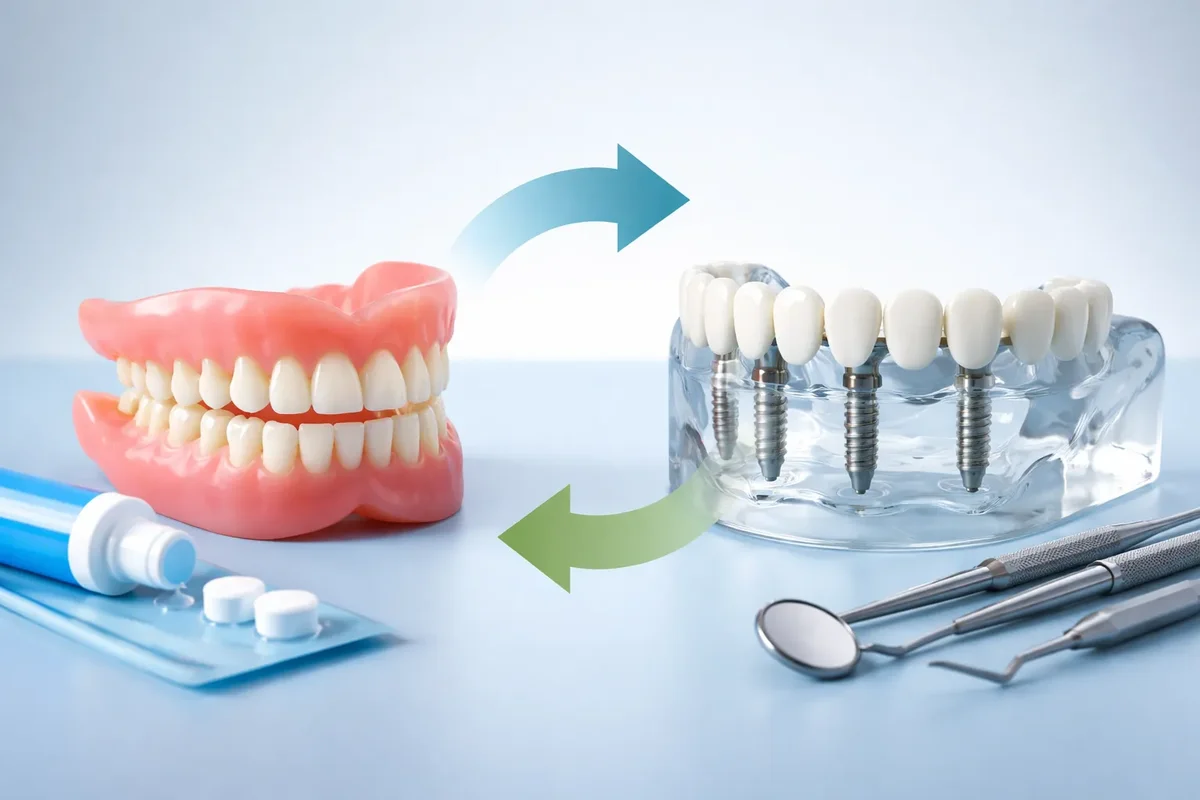
After completing treatment, proper care becomes the key to ensuring the longevity of dental implants to replace dentures. While implants are designed to be durable and long-lasting, they are not completely maintenance-free. Just like natural teeth, implant-supported restorations require consistent hygiene and professional monitoring. Patients who commit to proper care can expect dental implants to replace dentures to function successfully for decades. 😊
Unlike removable dentures that are taken out at night, many forms of dental implants to replace dentures are fixed permanently in the mouth. This means daily oral hygiene routines become even more important to prevent inflammation around the implants.
Daily Oral Hygiene Routine
Maintaining a thorough daily cleaning routine is essential for protecting dental implants to replace dentures. Plaque and bacteria can accumulate around the implant gum line just as they do around natural teeth.
Brushing Technique
Patients should brush at least twice daily using a soft-bristled toothbrush. Electric toothbrushes are often recommended because they provide consistent and effective plaque removal around dental implants to replace dentures.
Flossing and Interdental Cleaning
Flossing is equally important. Special implant floss, interdental brushes, or water flossers help clean beneath bridges and around implant posts. These tools are particularly helpful for individuals with full-arch dental implants to replace dentures.
Consistent daily cleaning significantly reduces the risk of peri-implantitis, a condition involving inflammation and bone loss around implants.
Professional Dental Check-Ups
Regular dental visits are critical for monitoring the health of dental implants to replace dentures. Most dentists recommend check-ups every six months.
Professional Cleaning
Dental hygienists use specialized instruments designed specifically for cleaning around implants without scratching their surface. Routine cleanings protect the long-term stability of dental implants to replace dentures.
Radiographic Monitoring
Periodic X-rays may be taken to evaluate bone levels around the implants. Early detection of changes ensures prompt intervention if needed.
According to the American Dental Association, preventive care and routine monitoring are essential for maximizing implant success rates.
Preventing Peri-Implantitis
One of the most important aspects of caring for dental implants to replace dentures is preventing peri-implantitis. This inflammatory condition can develop when plaque accumulates around the implant site.
Signs of Peri-Implantitis
- Red or swollen gums
- Bleeding during brushing
- Bad breath
- Implant mobility (in advanced cases)
Early intervention can prevent serious complications. Patients who maintain proper hygiene dramatically reduce the risk of peri-implant disease affecting their dental implants to replace dentures.
Lifestyle Factors That Affect Longevity
Certain habits can influence the lifespan of dental implants to replace dentures.
Smoking
Smoking reduces blood flow to the gums and increases the risk of implant failure. Quitting smoking significantly improves long-term outcomes.
Diet
A balanced diet supports gum health and overall immune function. Although dental implants to replace dentures allow patients to enjoy most foods, avoiding excessive sugar helps prevent inflammation.
Teeth Grinding (Bruxism)
Patients who grind their teeth may require a custom night guard to protect dental implants to replace dentures from excessive pressure.
Maintenance of Implant-Supported Prosthetics
While the titanium implant posts are designed to last many years, the prosthetic teeth attached to dental implants to replace dentures may require occasional maintenance.
Prosthetic Repairs or Replacement
After many years of use, acrylic or ceramic restorations may show wear. Replacing or refurbishing the prosthesis helps maintain aesthetics and functionality.
Attachment Replacement for Overdentures
Patients with implant-supported overdentures may need periodic replacement of locator attachments to maintain proper retention.
These routine adjustments ensure that dental implants to replace dentures continue functioning optimally.
How Long Do Dental Implants Last?
With excellent care, dental implants to replace dentures can last 20 years or more. In many cases, the implant posts remain stable for life. Longevity depends heavily on hygiene habits, regular dental visits, and overall health.
Research consistently shows high success rates for dental implants to replace dentures when patients follow recommended care guidelines.
Emotional and Lifestyle Benefits of Proper Maintenance
Maintaining dental implants to replace dentures ensures continued confidence and comfort. Patients can eat, speak, and smile without worry. Regular care prevents unexpected complications and protects the investment made in treatment. ✨
Patients who commit to maintenance routines often report that dental implants to replace dentures feel indistinguishable from natural teeth. Over time, they become a seamless part of daily life.
Summary of Long-Term Care Principles
- Brush twice daily
- Floss or use interdental cleaning tools
- Attend professional cleanings every six months
- Avoid smoking
- Monitor for early signs of inflammation
In conclusion, the long-term success of dental implants to replace dentures depends on consistent oral hygiene, regular professional monitoring, and healthy lifestyle habits. With proper maintenance, implant-supported teeth provide decades of stability, comfort, and natural function — making them one of the most reliable solutions in modern dentistry. 😄
Disclosure: this page may contain affiliate links. We may earn a commission if you use them, at no extra cost to you.