
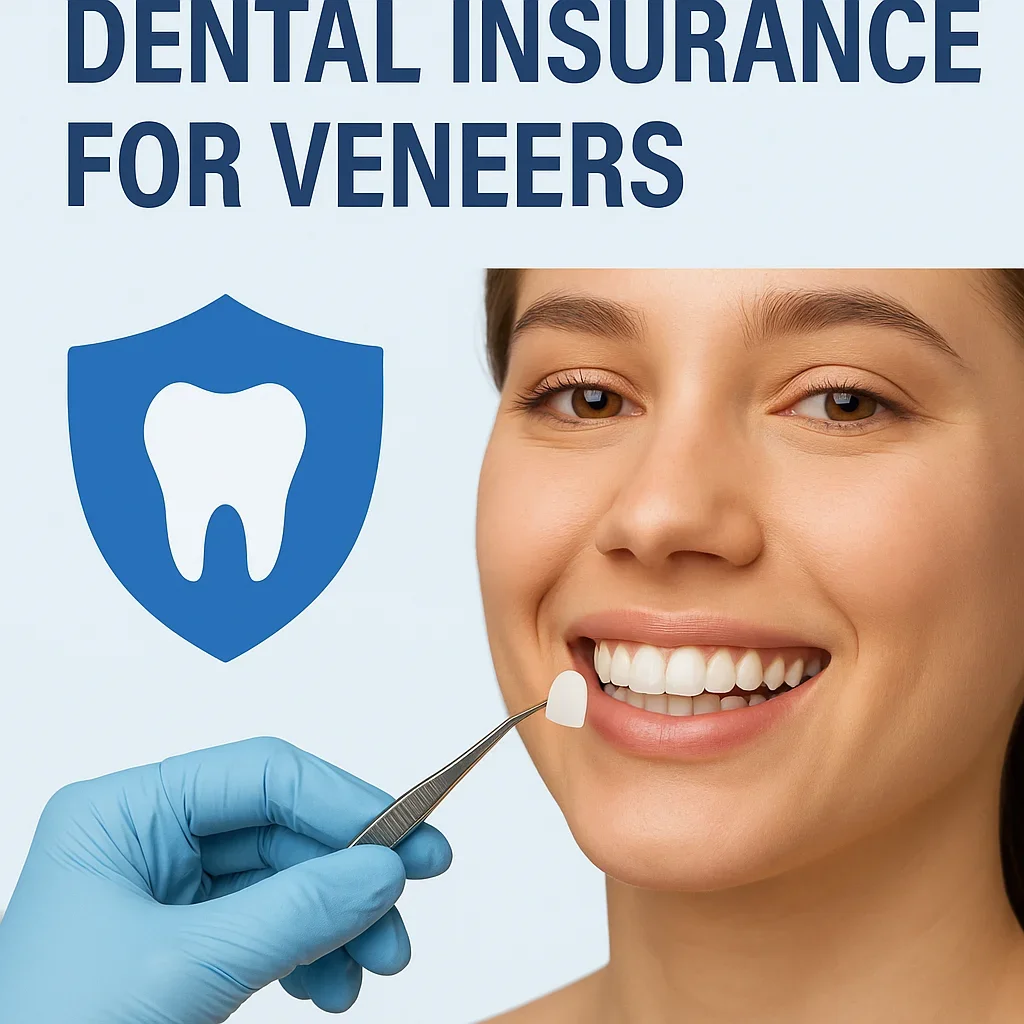
Understanding dental insurance for veneers is one of the most common concerns for patients interested in cosmetic dentistry. Veneers are thin shells, usually made from porcelain or composite resin, that cover the front surface of teeth to improve their appearance. They are often chosen to fix discoloration, chips, gaps, or misshapen teeth. However, because veneers are usually classified as a cosmetic procedure, insurance coverage can be complicated. This comprehensive guide will walk you through everything you need to know in 2025, including coverage options, costs, alternatives, and insider tips for maximizing your benefits.
✅ Quick fact: Veneers can last 10–15 years with proper care, making them a long-term investment in your smile. But before you commit, it’s crucial to understand how dental insurance for veneers may or may not reduce your expenses.
Why Veneers Are Popular in 2025
Modern patients are more interested than ever in cosmetic enhancements. Veneers can instantly brighten your smile, correct minor alignment issues, and boost confidence. Social media trends, professional career demands, and a growing emphasis on aesthetics have increased demand for veneer treatments worldwide. In Turkey, the U.S., and across Europe, veneer procedures are among the most requested dental services. However, as popularity rises, so do questions about whether insurance helps cover the cost. This is where knowing the details about dental insurance for veneers becomes vital.
Does Dental Insurance Cover Veneers?
In most cases, standard dental insurance policies do not cover veneers because they are categorized as elective, cosmetic procedures. However, there are exceptions. If veneers are deemed medically necessary—for example, to repair broken or damaged teeth after an accident—some insurance companies may approve partial coverage. In these rare cases, you will need extensive documentation and a professional diagnosis from your dentist. Patients seeking clarity on dental insurance for veneers should always contact their insurance provider before beginning treatment.
Typical Costs of Veneers
On average, the cost of veneers in 2025 ranges between $900 and $2,500 per tooth in the United States. In other regions such as Turkey, prices can be much more affordable, often starting at $250–$600 per tooth. These prices can vary depending on material type (porcelain is more expensive than composite), location, and the dentist’s expertise. Without dental insurance for veneers, patients must cover these costs out-of-pocket, which is why exploring financing and insurance options is essential.
Average Veneer Costs (2025):
• United States: $900 – $2,500 per tooth
• United Kingdom: £750 – £2,000 per tooth
• Turkey: $250 – $600 per tooth
• Germany: €700 – €1,800 per tooth
Why Insurance Usually Excludes Veneers
Dental insurance companies generally divide procedures into three categories: preventive, restorative, and cosmetic. Preventive (cleanings, X-rays) and restorative (fillings, crowns) are commonly covered. Cosmetic procedures, such as teeth whitening and veneers, are excluded because they are not considered “medically necessary.” This is why finding dental insurance for veneers requires careful research and often negotiation with your provider. The American Dental Association also outlines how insurers classify treatments, which patients can reference for more clarity: American Dental Association.
Possible Alternatives
For patients disappointed by limited dental insurance for veneers, there are still options. Many dental clinics offer flexible payment plans, cosmetic dental loans, or medical credit cards. In addition, some patients consider traveling abroad to countries like Turkey, where world-class clinics provide veneers at a fraction of the cost. Before making a decision, patients are encouraged to speak with professionals directly. If you’re considering this option, you can reach out here: Redent Klinik Contact Page.
Key Takeaway
Although most dental insurance policies in 2025 don’t cover veneers, patients can still manage costs by exploring alternatives. Thoroughly reviewing your plan, seeking pre-approval, and exploring international options can make veneers more affordable. Ultimately, the value of veneers lies in their ability to transform both smiles and confidence. With the right research, patients can balance financial planning and cosmetic goals effectively.
In this guide, we’ll continue exploring details about dental insurance for veneers, including plan types, filing claims, pre-approvals, financing, and expert tips to help you make the smartest decision for your dental health.
Does Dental Insurance Cover Veneers in 2025?
One of the most frequently asked questions patients have before committing to veneers is whether their dental insurance will help pay for the procedure. Unfortunately, the short answer is often no. Most policies treat veneers as a cosmetic treatment rather than a medically necessary procedure. This means that even though veneers can dramatically improve oral health and confidence, traditional plans usually exclude them from coverage. However, there are some exceptions and loopholes patients can explore. In this detailed section, we will break down how dental insurance for veneers works in 2025, what policies may cover, and strategies for maximizing your benefits.
Why Insurance Companies Classify Veneers as Cosmetic
Dental insurers categorize treatments into three buckets: preventive (such as cleanings and exams), restorative (such as fillings, crowns, or root canals), and cosmetic (such as whitening or veneers). Preventive and restorative procedures usually receive the highest reimbursement, while cosmetic procedures rarely qualify for benefits. Veneers are almost always placed for aesthetic improvement—covering discoloration, fixing minor gaps, or reshaping uneven teeth. Because they are not considered essential for oral health, insurers generally exclude them. This is the key reason why finding reliable dental insurance for veneers is challenging.
When Veneers Might Be Covered by Insurance
Despite the cosmetic label, there are unique scenarios where an insurance provider may approve coverage for veneers. These situations typically involve medical necessity. For example:
- Accidental injury: If a patient breaks or severely damages a tooth in an accident, insurers may cover veneers as part of restorative care.
- Enamel erosion: In cases of significant enamel loss that causes sensitivity and functional issues, veneers may be considered medically necessary.
- Developmental defects: Some patients are born with conditions like amelogenesis imperfecta that affect tooth appearance and strength. Insurance may step in here.
It’s worth noting that these cases require extensive documentation, including dental records, X-rays, and a professional letter of medical necessity from your dentist. Even then, coverage is not guaranteed. Patients who are proactive in gathering evidence stand a better chance of having dental insurance for veneers approved.
Partial Coverage vs. Full Coverage
When coverage is granted, it’s typically partial rather than full. Insurers may agree to cover the cost equivalent to a crown or filling while the patient pays the remaining balance. For instance, if a crown is covered up to $800, and a veneer costs $1,500, the insurer might reimburse $800 while you pay the remaining $700 out of pocket. Understanding these limitations helps set realistic expectations about how dental insurance for veneers will actually reduce costs.
Regional Differences in Coverage
Insurance regulations vary by country. In the United States, cosmetic exclusions are strict, but there is still room for appeals in cases of trauma. In the United Kingdom, veneers are generally not covered by NHS treatment, but private plans may provide partial reimbursement. In Germany, insurers sometimes assist if the procedure restores functionality. Meanwhile, in Turkey, where veneers are significantly more affordable, patients usually rely on self-payment rather than insurance. Understanding these differences is crucial when comparing dental insurance for veneers across regions.
United States
Coverage is rare but possible through PPO and premium-level dental plans, especially for trauma-related cases. Patients should request pre-authorization.
United Kingdom
The NHS does not cover veneers for cosmetic reasons. Some private policies provide discounts on elective treatments but rarely cover full costs.
Germany
If veneers are deemed medically necessary to restore functionality, partial reimbursement may be possible. Strict documentation is required.
Turkey
Because veneers are much more affordable here, patients often bypass insurance entirely. Clinics frequently offer package deals for international patients.
Steps to Maximize Insurance Benefits
Even if insurance companies are reluctant, patients can still take proactive measures to improve their chances of approval. Here are some tips:
- Get a pre-authorization: Submit all diagnostic materials, photos, and your dentist’s report before starting treatment.
- Highlight functional issues: Focus on health-related problems such as enamel erosion or bite discomfort rather than cosmetic goals.
- Compare alternative codes: Ask your dentist whether coding the procedure as a crown restoration instead of a veneer could increase coverage likelihood.
- Appeal denials: If your first request is rejected, file an appeal with additional documentation. Persistence often pays off.
The Role of Dental Discount Plans
If your insurer refuses coverage, dental discount plans may be a valuable alternative. These are membership-based programs that provide discounted rates for cosmetic treatments, including veneers. While not technically dental insurance for veneers, they function as a financial relief option for patients who want to lower costs without paying full price.
Practical Example
Consider a patient in the U.S. who wants veneers after a sports injury. The insurance company initially denies coverage. The patient, however, provides evidence of tooth fracture and enamel damage, along with X-rays and a dentist’s recommendation. On appeal, the insurer agrees to reimburse $1,000 out of a $2,000 veneer treatment, leaving the patient with $1,000 to pay. This real-world example demonstrates how persistence and documentation can make dental insurance for veneers work in your favor.
Conclusion
In 2025, most dental insurance plans will still exclude veneers, but exceptions exist. Patients who pursue medical documentation, understand regional differences, and explore alternative financing can still make their dream smile achievable. While coverage is limited, knowing your rights and leveraging every option available helps ensure you get the most out of your policy. As you continue this guide, you’ll discover specific insurance plans, cost breakdowns, and expert strategies for making veneers affordable even when coverage is partial.
Types of Dental Insurance Plans That May Help With Veneers
When exploring dental insurance for veneers, it’s important to understand that not all insurance policies are the same. The type of plan you choose can significantly impact your chances of securing partial or full coverage. While most insurers classify veneers as cosmetic, certain plans provide broader benefits that may help reduce costs—especially when medical necessity is proven. In this section, we’ll break down the major types of dental insurance plans in 2025, examine how they approach veneer coverage, and explore alternatives such as discount programs and supplemental policies.
Preferred Provider Organization (PPO) Plans
PPO plans are among the most flexible and popular options for patients seeking dental insurance for veneers. These plans allow members to choose from a wide network of dentists, with partial reimbursement even for out-of-network providers. While veneers are not commonly covered under PPO plans, patients have a better chance of receiving partial coverage if the procedure is deemed medically necessary. Additionally, PPO plans often provide higher annual maximums compared to other insurance types, which can help offset veneer expenses.
Pros of PPO Plans
- Large provider networks
- Potential for partial reimbursement if veneers are justified medically
- Higher annual maximums ($1,500–$3,000 on average in 2025)
Cons of PPO Plans
- Higher monthly premiums compared to HMOs
- Annual limits may still not cover full veneer costs
Health Maintenance Organization (HMO) Plans
HMO plans focus on preventive and basic restorative care. They require patients to select a primary care dentist and get referrals for specialists. Unfortunately, veneers are almost never covered under HMO dental insurance. Even if a veneer is necessary for restoring function, HMO policies are more restrictive. Patients considering veneers should not rely on HMOs as their primary source of dental insurance for veneers, though these plans are cost-effective for basic dental needs.
Pros of HMO Plans
- Low monthly premiums
- Strong preventive coverage (checkups, cleanings, X-rays)
Cons of HMO Plans
- Limited provider networks
- Very restrictive cosmetic procedure exclusions
Indemnity (Traditional) Insurance Plans
Indemnity plans, also known as “fee-for-service” plans, offer the greatest flexibility. Patients can see any dentist, and the plan reimburses a percentage of the treatment fee. While indemnity insurers typically exclude veneers, these plans may allow reimbursement if veneers are considered restorative rather than cosmetic. For example, if a tooth is fractured in an accident, insurers may cover part of the veneer cost at the same reimbursement rate as a crown. This makes indemnity insurance one of the better options for patients seeking dental insurance for veneers.
Pros of Indemnity Plans
- Freedom to choose any dentist
- Higher potential for coverage in special circumstances
Cons of Indemnity Plans
- High out-of-pocket costs before reimbursement
- Paperwork-intensive claims process
Dental Discount Plans and Membership Programs
Although not technically insurance, dental discount plans offer reduced rates on cosmetic procedures like veneers. Patients pay an annual membership fee, typically between $150–$300, and gain access to negotiated rates at participating dental offices. These programs can reduce veneer costs by 10–30%. While they don’t function as dental insurance for veneers, they are a practical way to save money when traditional insurance fails to cover elective treatments.
Supplemental Dental Insurance Riders
Some insurers now offer supplemental riders that can be added to a standard policy. These riders may expand cosmetic coverage, including veneers, at an additional monthly cost. While rare, these add-ons are becoming more common in premium dental plans as demand for cosmetic dentistry grows. Patients interested in this route should ask their provider whether a supplemental option for dental insurance for veneers is available in 2025.
Employer-Sponsored Plans vs. Individual Plans
Employer-sponsored insurance tends to have broader benefits than individual policies purchased privately. Large companies may negotiate group coverage that includes partial cosmetic benefits. If you receive dental insurance through your employer, carefully review whether cosmetic dentistry riders are included. If not, consider pairing your plan with a discount program or supplemental coverage for veneers.
International and Travel Insurance Coverage
With the rise of dental tourism, some international insurance providers now offer partial reimbursement for treatments received abroad. For example, if a U.S. patient travels to Turkey for veneers, their insurance may cover a portion of restorative care if medical necessity is documented. This is a growing niche in dental insurance for veneers, especially since overseas procedures are much more affordable.
Conclusion
While veneers are rarely covered outright, understanding the differences between PPOs, HMOs, indemnity plans, and discount programs can help patients make informed decisions. PPOs and indemnity plans offer the greatest potential for partial reimbursement, while discount memberships and supplemental riders provide valuable alternatives. By carefully evaluating plan types and exploring international options, patients can maximize financial support for veneers in 2025. Choosing the right type of dental insurance for veneers requires balancing premium costs, annual maximums, and realistic expectations about coverage limitations.
Cost of Veneers With and Without Dental Insurance
One of the most important factors patients consider before committing to veneers is the price. Veneers are a long-term investment, but they can be expensive depending on where you live, the material chosen, and your dentist’s expertise. Since dental insurance for veneers is often limited, patients must prepare for significant out-of-pocket costs. In this section, we’ll provide a detailed breakdown of veneer prices in 2025, compare costs with and without insurance, and offer practical strategies to make treatment more affordable.
Average Cost of Veneers in 2025
The cost of veneers varies widely based on location and material type. On average, patients can expect the following price ranges:
Typical Veneer Prices (Per Tooth in 2025):
• United States: $900 – $2,500
• United Kingdom: £750 – £2,000
• Germany: €700 – €1,800
• Turkey: $250 – $600
• Australia: AUD 1,200 – AUD 2,800
These costs reflect the use of high-quality porcelain veneers, which are more durable and natural-looking than composite veneers. Composite options are generally cheaper, averaging 30–40% less, but they last fewer years. Patients researching dental insurance for veneers should note that insurance rarely reduces these figures unless medical necessity is proven.
Cost Factors Affecting Veneer Pricing
Several factors influence how much veneers cost in 2025:
- Material type: Porcelain is more expensive but lasts 10–15 years. Composite veneers are cheaper but last 5–7 years.
- Dentist’s expertise: Cosmetic specialists with international credentials charge more than general dentists.
- Geographic location: Urban areas and developed countries have higher pricing compared to medical tourism hubs like Turkey.
- Number of veneers: A single veneer is costly, but packages (4–8 teeth) may lower the per-tooth price.
- Additional procedures: Whitening, gum contouring, or orthodontics performed before veneers add to the total bill.
Cost With Dental Insurance
If you are fortunate enough to have a plan that partially covers veneers, the financial impact can be reduced. However, coverage is usually partial and applies only under specific conditions. For instance, if a veneer is used to restore a broken tooth, insurers may reimburse the cost equivalent to a crown. Let’s look at a practical example:
Example: A patient in the U.S. needs one porcelain veneer at $1,800.
• Insurance reimburses up to $900 (equivalent to a crown allowance).
• The patient pays the remaining $900 out of pocket.
While this is helpful, patients must understand that dental insurance for veneers rarely covers elective, cosmetic cases. Coverage, when available, is usually capped by annual maximums (often $1,500–$2,500 total per year).
Limitations of Insurance Coverage
- Coverage applies only when veneers are deemed medically necessary.
- Annual maximums limit reimbursement amounts.
- Pre-approval and supporting documentation are required.
Cost Without Dental Insurance
For most patients, veneers are self-funded because insurers classify them as cosmetic. Without dental insurance for veneers, patients pay the full amount, which can be substantial. A full smile makeover of 8–10 veneers may cost $12,000–$20,000 in the U.S., compared to $3,000–$6,000 in Turkey. For this reason, dental tourism is becoming increasingly popular.
Financing Options Without Insurance
- Dental loans: Personal loans designed for medical or dental expenses.
- Medical credit cards: Cards like CareCredit offer promotional 0% interest financing.
- In-house payment plans: Many clinics allow installment payments spread over several months.
- Discount memberships: Annual programs offering 10–30% off cosmetic procedures.
International Cost Comparisons
Because costs vary globally, many patients explore dental tourism. Turkey, Hungary, and Mexico are popular destinations for affordable veneers. Clinics in these countries provide international-quality care at significantly reduced prices. While dental insurance for veneers may not apply abroad, overall savings can still be greater than relying on limited domestic insurance coverage.
Strategies to Reduce Veneer Costs
Whether you have insurance or not, several strategies can help reduce overall treatment expenses:
- Get multiple quotes: Compare prices from several clinics before committing.
- Check insurance loopholes: If your plan covers crowns, ask if veneers can be billed under restorative codes when medically justified.
- Use flexible spending accounts (FSA) or health savings accounts (HSA): These accounts let you pay with pre-tax dollars, lowering effective costs.
- Travel abroad: Consider reputable international clinics for significant savings.
Conclusion
In 2025, veneers remain a premium cosmetic investment, with costs ranging widely depending on geography and material. With dental insurance for veneers, patients may save some money, but coverage is rare and often partial. Without insurance, patients must explore financing and discount options to make treatment accessible. By comparing regional pricing, evaluating insurance policies carefully, and considering dental tourism, patients can achieve their dream smile without overwhelming financial stress.
Alternatives if Dental Insurance Does Not Cover Veneers
For many patients, the harsh reality is that dental insurance for veneers is either unavailable or extremely limited. Since most insurers classify veneers as elective cosmetic procedures, people must often search for alternative methods to finance their treatment. Fortunately, there are several practical options available that can make veneers affordable, ranging from financing programs to cost-effective alternatives like composite bonding. In this section, we will explore these alternatives in detail and provide strategies for patients who want a beautiful smile without breaking the bank.
Dental Financing and Payment Plans
One of the most common alternatives is financing through dental clinics or third-party providers. Many dental offices offer in-house installment plans, allowing patients to spread costs over 6 to 24 months. Third-party financing solutions such as CareCredit, LendingClub, or Alphaeon Credit also provide medical-specific loans with promotional interest rates. While this is not technically dental insurance for veneers, it achieves a similar goal—making high upfront costs more manageable.
Advantages of Financing
- Affordable monthly payments
- Immediate access to treatment without waiting periods
- Options for 0% promotional interest in some cases
Drawbacks of Financing
- Interest rates can be high after the promotional period
- Requires credit approval, which not all patients qualify for
Dental Discount Plans and Memberships
Another alternative to dental insurance for veneers is enrolling in dental discount programs. These are annual membership plans that offer discounts of 10–30% on cosmetic procedures, including veneers. Patients pay a yearly fee—typically between $150 and $300—and then receive discounted rates at participating clinics. These programs are especially useful for patients without traditional dental insurance.
Pros of Discount Plans
- No waiting periods or pre-approvals
- Significant savings on cosmetic treatments
- Accessible even for patients with poor credit
Cons of Discount Plans
- Not accepted at every dental office
- Savings vary by provider and may not be as large as expected
Flexible Spending Accounts (FSA) and Health Savings Accounts (HSA)
If your employer offers an FSA or if you have an HSA, these tax-advantaged accounts can be used to pay for veneers. While not the same as dental insurance for veneers, these accounts allow you to use pre-tax dollars, effectively reducing the cost by 20–30%. Patients should confirm whether cosmetic procedures like veneers qualify under their specific plan rules.
Traveling Abroad for Affordable Veneers
Dental tourism has become a booming industry, especially for procedures like veneers. Countries such as Turkey, Hungary, and Mexico provide world-class dental care at a fraction of U.S. or U.K. prices. While dental insurance for veneers typically does not apply abroad, the overall cost savings can be substantial. For example, eight porcelain veneers may cost $16,000 in the U.S. but just $4,000 in Turkey, including travel and accommodation expenses.
Popular Dental Tourism Destinations
- Turkey: Known for advanced cosmetic dentistry and affordable packages.
- Hungary: A leading European hub for dental care with English-speaking professionals.
- Mexico: Convenient for U.S. patients due to proximity and competitive pricing.
Alternative Treatments to Veneers
If veneers are too expensive, there are several cosmetic alternatives that provide smile improvements at lower costs:
- Composite bonding: Uses resin material to repair chips, cracks, or discoloration. Average cost: $300–$600 per tooth.
- Teeth whitening: A much cheaper option for patients who want brighter smiles without major cosmetic changes. Average cost: $300–$800 per session.
- Dental crowns: While more invasive, crowns may be partially covered by insurance when medically necessary. Cost: $800–$1,500 per tooth in the U.S.
These options may not offer the same long-term durability or aesthetics as veneers, but they are viable solutions when dental insurance for veneers is unavailable.
Negotiating Directly With Dental Clinics
Some patients overlook the power of negotiation. Many dental clinics are open to offering discounts when patients pay in full upfront or commit to multiple veneers at once. Bundled pricing packages are increasingly popular, especially in cosmetic-focused practices. If insurance fails to cover veneers, negotiating directly can provide meaningful savings.
Charitable and Academic Programs
Dental schools and nonprofit organizations sometimes provide reduced-cost cosmetic treatments. Dental students perform the procedures under supervision from licensed professionals, significantly lowering prices. While not a direct substitute for dental insurance for veneers, these programs make veneers more accessible to patients with limited budgets.
Conclusion
When traditional dental insurance for veneers fails, patients still have numerous alternatives. Financing, discount memberships, FSAs, and HSAs provide structured payment solutions. Dental tourism offers a cost-effective path to high-quality care abroad, while composite bonding, crowns, and whitening serve as budget-friendly substitutes. By carefully weighing these alternatives, patients can find a solution that fits their financial situation and aesthetic goals, proving that a beautiful smile is achievable even without insurance coverage.
How to File a Dental Insurance Claim for Veneers
Even though dental insurance for veneers is often restricted, some patients can receive partial coverage if their treatment qualifies as medically necessary. To unlock this possibility, you must carefully navigate the insurance claim process. Filing a claim for veneers requires more than simply submitting a bill—it demands detailed documentation, strategic communication with your dentist, and persistence in dealing with your insurance provider. In this section, we’ll walk through each step of the process, highlight common mistakes to avoid, and share insider tips that increase your chances of success.
Step 1: Confirm Eligibility Before Treatment
The first step is to determine whether your insurance plan has any provisions for veneer coverage. Review your policy documents carefully and pay attention to terms like “cosmetic exclusions” and “restorative benefits.” Contact your insurance provider directly and ask whether veneers may be covered under certain circumstances, such as trauma or enamel erosion. Understanding your policy upfront can save time and frustration later. Remember, without pre-approval, most insurers will automatically deny a claim for veneers.
Step 2: Gather Documentation
Documentation is critical when applying for dental insurance for veneers. Insurance companies want clear evidence that the procedure is not merely cosmetic. Work with your dentist to collect:
- Dental records: X-rays, photos, and treatment history showing damage or medical need.
- Letter of medical necessity: A written explanation from your dentist explaining why veneers are required to restore function.
- Detailed cost estimates: A breakdown of veneer costs compared to alternative treatments like crowns or bonding.
- Accident reports: If veneers are needed due to trauma, include hospital or emergency room records.
The stronger your documentation, the higher the chance your claim will be approved. Many patients underestimate this step, but insurers rarely approve veneers without thorough evidence.
Step 3: Submit a Pre-Authorization Request
Before undergoing treatment, ask your dentist to submit a pre-authorization form to your insurer. This is essentially a request for conditional approval. It outlines the treatment plan, provides medical justification, and estimates costs. While pre-authorization is not a guarantee of payment, it gives you clarity on whether your insurer will reimburse part of the veneer expenses. For patients seeking dental insurance for veneers, this step is essential.
What to Include in Pre-Authorization
- Diagnosis codes (ICD-10) and procedure codes (CDT)
- Full treatment plan, including veneer placement details
- Supporting evidence such as X-rays, photographs, and the dentist’s report
Step 4: File the Official Claim
Once treatment is complete, your dentist will usually file the insurance claim on your behalf. The claim includes standardized forms such as the ADA Dental Claim Form, which details services performed and their corresponding codes. If you are filing independently, be meticulous in completing the form. Incorrect or incomplete coding is one of the top reasons claims for dental insurance for veneers are denied.
Key Tips for Filing
- Ensure all documentation matches the claim codes.
- Double-check that supporting records are attached.
- Keep copies of everything submitted in case of disputes.
Step 5: Follow Up and Appeal if Necessary
After submission, insurers may take 2–6 weeks to process the claim. If your claim is denied, don’t give up. Most companies allow appeals, and success often comes on the second or third attempt. When appealing, provide additional documentation and emphasize functional necessity rather than cosmetic goals. Persistence is often the difference between rejection and partial approval of dental insurance for veneers.
Common Reasons for Denial
- Lack of documentation proving medical necessity
- Incorrect coding of procedures
- Annual maximum already reached
- Policy exclusions for cosmetic dentistry
Step 6: Consider Out-of-Network Filing
If your dentist is out-of-network, you may still file for partial reimbursement. Insurers often cover a lower percentage for out-of-network providers, but it can still reduce costs. Always ask your dentist to provide a detailed invoice with CDT codes, as insurers will require this to process reimbursement.
Real-World Example
Imagine a patient who fractures a front tooth in a biking accident. Their dentist recommends a veneer instead of a crown due to better aesthetics and function. The patient’s dentist submits X-rays, photos, and a letter of necessity to the insurer. Initially, the claim is denied as cosmetic. The patient appeals, adding an accident report from the hospital. On the second review, the insurer reimburses $1,000 of the $1,800 cost. This example demonstrates how persistence and documentation can make dental insurance for veneers work in rare but important cases.
Conclusion
Filing an insurance claim for veneers is not simple, but it can be successful when approached strategically. By confirming eligibility, gathering detailed documentation, securing pre-authorization, and appealing denials, patients can improve their chances of reimbursement. While most insurers will not cover veneers, diligent filing and persistence may result in partial coverage, reducing overall costs. For anyone exploring dental insurance for veneers, mastering the claims process is a vital step toward making this cosmetic treatment more affordable.
Pre-Approval and Waiting Periods for Veneer Coverage
When considering dental insurance for veneers, two critical factors patients often overlook are pre-approval requirements and waiting periods. Even in cases where insurers may consider partial reimbursement for veneers, they will almost always require prior authorization and may enforce specific waiting times before coverage applies. Understanding these elements is essential to avoid unexpected denials and costly surprises. In this section, we’ll break down how pre-approvals and waiting periods work in 2025, why insurers enforce them, and how patients can navigate these hurdles effectively.
What is Pre-Approval?
Pre-approval—also known as pre-authorization or prior authorization—is the process of obtaining conditional approval from your insurance company before treatment begins. For procedures like veneers, this step is particularly important since insurers typically exclude cosmetic dentistry by default. If your dentist can demonstrate medical necessity (e.g., veneers needed after trauma, severe enamel erosion, or developmental defects), the insurer may approve partial reimbursement in advance. Without pre-approval, claims for dental insurance for veneers are almost guaranteed to be denied.
Documents Required for Pre-Approval
- Detailed treatment plan: Outlines the number of veneers, materials used, and reasons for placement.
- X-rays and intraoral photos: Visual evidence of damage or functional problems.
- Dentist’s letter of necessity: Explains why veneers are medically appropriate rather than purely cosmetic.
- Cost estimate: Breaks down expected charges and compares them to alternative treatments like crowns.
The stronger and more thorough your documentation, the better chance you have of securing approval. Patients who attempt veneer claims without pre-authorization often end up paying the entire bill themselves.
Why Insurers Require Pre-Approval
Insurance companies implement pre-approval processes to control costs and ensure treatments align with policy terms. For veneers, pre-approval is especially strict because most cases are cosmetic. By requiring prior review, insurers limit payouts to only the rare instances where veneers can be justified as restorative. This is why pre-approval is a cornerstone of accessing any potential dental insurance for veneers.
Understanding Waiting Periods
In addition to pre-approval, many dental plans include waiting periods before benefits for major or elective treatments apply. Waiting periods prevent patients from purchasing insurance solely to cover immediate cosmetic procedures. For veneers, even in cases where insurers offer partial coverage, a waiting period is usually enforced.
Typical Waiting Periods in 2025
- Preventive care: No waiting period (applies to cleanings, exams, X-rays).
- Basic restorative care: 3–6 months (applies to fillings, simple extractions).
- Major restorative care: 6–12 months (applies to crowns, bridges, and rarely, veneers).
For patients hoping to use dental insurance for veneers, this means you may need to hold an active policy for at least 6–12 months before being eligible for any veneer-related benefits. This is especially important if you are buying a new policy in 2025 with cosmetic or supplemental riders.
How to Minimize Waiting Periods
Some strategies can help patients reduce or bypass waiting periods:
- Choose employer-sponsored plans: Many workplace plans waive waiting periods due to group negotiations.
- Look for no-wait supplemental riders: Premium cosmetic riders sometimes offer immediate access.
- Enroll early: If you plan to get veneers next year, sign up for coverage now to ensure eligibility later.
Case Example: Pre-Approval in Action
A patient in Germany suffers severe enamel erosion due to acid reflux. Their dentist recommends veneers as a functional and cosmetic solution. Before beginning treatment, the dentist submits a pre-authorization package, including X-rays, intraoral images, and a letter of medical necessity. The insurer initially requests additional information but ultimately approves partial reimbursement equivalent to crown coverage. Because the patient had already met the 12-month waiting period, the claim is honored, reducing costs by nearly 40%. This case highlights how pre-approval and waiting period compliance can unlock partial dental insurance for veneers.
Common Pitfalls to Avoid
- Starting treatment before pre-approval is granted
- Assuming veneers are covered without confirming waiting period rules
- Failing to provide detailed medical documentation
- Misunderstanding the annual maximums that cap reimbursement
Conclusion
Pre-approval and waiting periods are two of the biggest barriers patients face when seeking dental insurance for veneers. While insurers rarely approve cosmetic cases, patients who gather thorough documentation, comply with waiting period requirements, and strategically plan their insurance enrollment have the best chance of securing partial reimbursement. In 2025, patients who approach veneers with patience and preparation can significantly reduce costs and avoid unnecessary claim denials.
Comparing Dental Insurance vs. Cosmetic Dental Loans
When patients discover that dental insurance for veneers rarely covers elective cosmetic procedures, they often turn to other financial options. One of the most common comparisons in 2025 is between using insurance benefits (where possible) and securing cosmetic dental loans. Both options can reduce the financial burden of veneers, but they operate very differently. Understanding the pros and cons of each helps patients choose the best path to a confident, beautiful smile without unnecessary financial stress.
How Dental Insurance Works for Veneers
Insurance is typically designed to cover preventive and restorative care. When it comes to veneers, policies almost always exclude coverage unless the treatment is deemed medically necessary. In such cases, dental insurance for veneers may reimburse costs equivalent to crowns or similar restorative procedures. However, patients must comply with pre-approvals, waiting periods, and annual maximum limits. For example, if your policy covers $1,000 toward a veneer but your dentist charges $2,000, you are responsible for the balance.
Advantages of Dental Insurance
- Potential partial reimbursement if veneers are medically necessary
- Coverage may include alternative treatments like crowns or bonding
- Can combine with FSAs or HSAs for further tax savings
Disadvantages of Dental Insurance
- Rarely covers elective cosmetic cases
- Annual maximums ($1,500–$2,500 on average) limit benefits
- Requires waiting periods and extensive documentation
How Cosmetic Dental Loans Work
Cosmetic dental loans are personal loans specifically designed for dental procedures not covered by insurance. They are provided by banks, credit unions, and online lenders. Unlike dental insurance for veneers, loans provide immediate access to funds, allowing patients to pay for treatment upfront and then repay the loan in monthly installments. Interest rates depend on credit score, loan amount, and repayment terms, which can range from 12 to 60 months.
Advantages of Dental Loans
- Immediate access to full treatment funding
- No need for medical necessity documentation
- Flexible repayment schedules tailored to your budget
- Available even if insurance denies coverage
Disadvantages of Dental Loans
- Interest rates can be high, especially with poor credit
- Monthly payments add to overall household debt
- Total repayment cost is higher than original treatment price
Cost Comparison: Insurance vs. Loan
Let’s break down a practical scenario. Suppose a patient in the U.S. needs four porcelain veneers at $1,800 each, totaling $7,200.
Scenario 1: With Limited Insurance Coverage
• Insurance reimburses $1,000 per veneer (as crown equivalent).
• Total reimbursement = $4,000.
• Patient’s out-of-pocket = $3,200.Scenario 2: With a Cosmetic Dental Loan
• Loan covers entire $7,200 at 8% APR over 36 months.
• Monthly payment ≈ $225.
• Total repayment = $8,100 (including interest).
In this example, dental insurance for veneers is more cost-effective if coverage is granted. However, since most patients are denied coverage, loans often become the more practical solution.
When to Choose Insurance
Patients should rely on insurance if:
- Veneers are required after trauma, disease, or severe enamel erosion
- Your policy offers a supplemental cosmetic rider
- You’re comfortable with waiting periods and documentation requirements
When to Choose Dental Loans
Loans are a better option when:
- Your insurance plan explicitly excludes veneers
- You want treatment immediately without waiting periods
- You’re open to spreading payments over several years
Other Financing Alternatives
If neither dental insurance for veneers nor loans fit your needs, patients can also explore:
- Medical credit cards: Options like CareCredit offer 0% interest promotional periods.
- Dental discount memberships: Annual programs providing 10–30% savings on cosmetic work.
- In-house payment plans: Offered directly by many dental clinics.
Conclusion
In 2025, patients weighing dental insurance for veneers against cosmetic dental loans must evaluate their financial situation, urgency, and eligibility. Insurance can be beneficial if medical necessity is proven, but strict rules and limited reimbursements make it unreliable for most patients. Cosmetic dental loans, on the other hand, guarantee access to treatment but add interest costs. By comparing both options and considering supplemental financing alternatives, patients can select the solution that balances affordability and convenience while achieving their dream smile.
Tips for Choosing the Best Dental Insurance for Veneers
Selecting the right policy can make all the difference when it comes to dental insurance for veneers. Because veneers are usually classified as cosmetic, most plans won’t cover them unless medical necessity is proven. However, some insurers offer supplemental riders, broader restorative coverage, or partial reimbursement options that can significantly reduce your expenses. In 2025, patients need to be strategic about choosing the right plan. Below, we’ll cover insider tips for evaluating policies, avoiding common pitfalls, and maximizing benefits.
Understand Your Coverage Categories
Dental insurance divides treatments into three categories: preventive, basic restorative, and major restorative. Preventive services like exams and cleanings are fully covered, while major services like crowns often require co-pays and waiting periods. Veneers typically fall under the cosmetic category, but some policies treat them as major restorative care if they address functional issues. To secure the best dental insurance for veneers, patients must carefully review how their policy defines and classifies procedures.
Key Coverage Questions to Ask
- Are veneers explicitly excluded as cosmetic treatments?
- Does the plan cover crowns or bonding that could apply in veneer-related cases?
- What percentage is reimbursed for major restorative care?
- What is the annual maximum, and does it reset each calendar year?
Compare PPO, HMO, and Indemnity Plans
Different plan structures impact your chances of success with veneer claims. PPO plans typically provide the greatest flexibility and higher annual maximums. Indemnity plans allow you to choose any dentist and may reimburse for veneers coded as restorative. HMOs, on the other hand, are the most restrictive and rarely consider veneers for coverage. To maximize your options for dental insurance for veneers, lean toward PPO or indemnity plans.
Look for Cosmetic or Supplemental Riders
Some insurers now offer supplemental riders that expand coverage for cosmetic treatments. These add-ons come with higher monthly premiums but may include partial reimbursement for veneers. For patients planning cosmetic work in the near future, paying for a supplemental rider could be worthwhile. Always ask your insurer whether cosmetic riders are available, and review the fine print to confirm if veneers are included.
Advantages of Riders
- Expand standard insurance to cover elective procedures
- May reduce veneer costs by 15–30%
- Available in premium-level plans from certain insurers
Limitations of Riders
- Higher premiums compared to standard plans
- May enforce strict waiting periods (6–12 months)
- Coverage often capped at low annual maximums
Check for Pre-Approval Requirements
Even if a plan technically allows veneer coverage, insurers will almost always require pre-authorization. This means your dentist must provide treatment details, X-rays, and a letter of necessity before approval. Without pre-authorization, claims are usually denied. Patients researching dental insurance for veneers should prioritize policies that clearly outline their pre-approval process to avoid surprises.
Evaluate Annual Maximums
Most dental insurance plans cap annual benefits between $1,500 and $3,000. Since veneers often cost between $900 and $2,500 per tooth in the U.S., a single annual maximum may only cover part of one or two veneers. If you plan a full smile makeover, look for policies with the highest possible annual maximum or consider staggering treatment across multiple calendar years to maximize coverage.
Confirm Network Options
PPO and indemnity plans allow patients to visit out-of-network providers, but coverage percentages are lower. HMOs restrict you to a narrow network. Since cosmetic dentists are not always part of standard networks, choosing a flexible plan type ensures you can work with the specialist of your choice. For patients pursuing dental insurance for veneers, having the freedom to select an experienced cosmetic dentist is crucial.
Factor in Waiting Periods
Many plans impose 6–12 month waiting periods for major restorative care, and some apply the same rules to veneers. If you want veneers immediately, look for plans that waive waiting periods for employer-sponsored groups or supplemental riders. Planning ahead is key—enrolling in insurance now may help you qualify for veneer coverage in the following year.
Red Flags to Watch Out For
- Policies that broadly exclude “all cosmetic procedures” without exceptions
- Annual maximums under $1,500 (insufficient for veneers)
- Hidden restrictions requiring you to exhaust other treatments first
- Excessive waiting periods beyond 12 months
Conclusion
Choosing the best dental insurance for veneers in 2025 requires careful planning and attention to detail. Patients should prioritize PPO or indemnity plans, seek supplemental riders if available, and evaluate annual maximums realistically. Pre-approval requirements, waiting periods, and network flexibility must also be considered. While no plan guarantees veneer coverage, strategic selection can improve your chances of partial reimbursement and lower your out-of-pocket costs. Ultimately, the best insurance plan balances affordability with the potential for cosmetic support, helping you achieve the smile you’ve always wanted.
FAQs About Dental Insurance and Veneers
Patients exploring dental insurance for veneers often have a wide range of questions. Veneers are a significant financial investment, and since insurance coverage is limited, it’s normal to seek clarity before making a decision. To help, we’ve compiled the most frequently asked questions about insurance coverage, costs, and alternatives. Each answer below is designed to provide practical, reliable guidance for patients in 2025 who are considering veneers.
Are veneers covered by dental insurance in 2025?
In most cases, the answer is no. Veneers are considered cosmetic procedures, and insurers rarely cover cosmetic work. However, exceptions exist when veneers are medically necessary—for example, to restore function after trauma, enamel erosion, or developmental defects. In such cases, dental insurance for veneers may cover costs equivalent to a crown or other restorative procedure. Patients must obtain pre-approval and provide detailed documentation for any chance of reimbursement.
What percentage of veneer costs does insurance typically cover?
When insurers agree to partial reimbursement, they usually pay up to the equivalent of a crown. This often covers about 40–60% of the veneer’s total cost. For example, if a veneer costs $1,800 and your insurance covers $1,000 for a crown, you would still be responsible for $800. Annual maximums also apply, typically capping benefits at $1,500–$3,000 per year, which limits how many veneers can be covered through dental insurance for veneers.
Can I appeal if my veneer claim is denied?
Yes, appeals are an important part of the insurance process. If your claim is denied, you can resubmit with additional documentation, such as X-rays, photos, and a stronger letter of medical necessity. Some patients succeed on their second or third attempt. Persistence is often the key to making dental insurance for veneers work in rare cases.
Are veneers ever covered by the NHS or public healthcare systems?
In the United Kingdom, the NHS does not cover veneers for cosmetic purposes. However, veneers may be available in rare cases where function is severely compromised. In Germany and other parts of Europe, public insurance may offer limited coverage if veneers restore essential function. In countries like Turkey, where veneer costs are lower, patients generally pay out of pocket without relying on insurance. This demonstrates how dental insurance for veneers varies significantly by region.
What alternatives exist if my insurance doesn’t cover veneers?
Many patients explore alternatives when insurance excludes veneers. Options include dental loans, medical credit cards, in-house financing, and dental discount memberships. Cosmetic alternatives like composite bonding or professional whitening can also provide affordable smile enhancements. While not technically dental insurance for veneers, these alternatives help reduce costs and make treatment more accessible.
Do waiting periods apply to veneer coverage?
Yes, if your insurer considers veneers under major restorative care, waiting periods of 6–12 months usually apply. This means you must hold your policy for a set time before benefits are available. For patients hoping to use dental insurance for veneers in the future, it’s wise to enroll early and plan treatment around waiting period requirements.
What documentation is required for veneer claims?
To improve approval chances, you’ll need:
- Dental records including X-rays and photos
- A detailed treatment plan from your dentist
- A letter of medical necessity explaining functional problems
- Cost estimates compared to alternative treatments
- Accident or trauma reports, if applicable
This evidence helps insurers evaluate whether veneers are truly restorative, which increases the likelihood of receiving partial reimbursement through dental insurance for veneers.
Are composite veneers treated differently than porcelain veneers?
Insurance companies typically classify both porcelain and composite veneers as cosmetic. However, porcelain veneers are more expensive, so patients may notice a bigger financial difference without coverage. Since composite veneers are less costly (about $300–$800 per tooth), many patients choose them when dental insurance for veneers is not available, making treatment more affordable upfront.
Can I combine insurance with an FSA or HSA for veneers?
Yes. Even if dental insurance for veneers does not fully apply, patients can use Flexible Spending Accounts (FSA) or Health Savings Accounts (HSA) to pay with pre-tax dollars. This reduces the effective cost by 20–30%. For example, a $1,500 veneer effectively costs $1,050 after tax savings through these accounts, making them a valuable supplement.
How do international patients manage veneer costs?
Patients from countries with high dental costs often travel abroad to destinations like Turkey, Hungary, or Mexico, where veneers are significantly cheaper. While insurance may not apply internationally, the overall expense is often lower than using partial dental insurance for veneers domestically. Many clinics abroad offer bundled packages that include treatment, accommodation, and airport transfers, making the process convenient for international patients.
Conclusion
Patients researching dental insurance for veneers in 2025 often face more questions than answers. While coverage is rare, understanding exceptions, preparing documentation, and exploring supplemental options can make a difference. For those whose insurance won’t cover veneers, financing programs, discount memberships, FSAs, and dental tourism offer alternative paths. By learning from frequently asked questions and carefully planning your approach, you can reduce costs and achieve the smile you’ve always dreamed of.