
A dental office communication system is no longer a luxury or a “nice-to-have” tool—it has become a core operational backbone for modern dental clinics 🦷. Patients today expect fast responses, clear information, seamless appointment management, and professional follow-ups. At the same time, dental teams need structured internal coordination, reduced errors, and efficient workflows. This is exactly where a well-designed dental office communication system delivers measurable value.
At its core, a dental office communication system is a centralized digital framework that manages how information flows between patients, dentists, hygienists, front-desk staff, and administrative teams. It brings together appointment reminders, patient messaging, internal notes, treatment explanations, confirmations, recalls, and even emergency notifications into one integrated platform. Instead of scattered phone calls, handwritten notes, and missed emails, everything becomes organized, traceable, and consistent.
From the patient’s perspective, a dental office communication system creates clarity and trust 😊. Patients receive timely appointment reminders via SMS or email, clear pre-visit instructions, post-treatment care messages, and easy ways to ask questions without waiting on hold. This level of communication reduces anxiety, improves attendance rates, and enhances the overall perception of professionalism. When patients feel informed and supported, they are more likely to return, comply with treatment plans, and recommend the clinic to others.
For the dental team, the impact of a dental office communication system is equally significant. Front-desk staff can instantly see appointment histories, patient preferences, and communication logs. Dentists and hygienists can leave internal notes that are visible to the entire care team, ensuring continuity of care even across multiple visits. Administrative errors—such as double bookings, missed follow-ups, or forgotten confirmations—are dramatically reduced. This structured flow of information saves time, lowers stress, and allows the team to focus on patient care rather than paperwork.
Another crucial reason a dental office communication system matters is efficiency 📈. Automated workflows handle repetitive tasks like appointment confirmations, recall reminders, and follow-up messages. Instead of manually calling patients one by one, the system delivers consistent messages automatically. This not only reduces labor costs but also ensures no patient slips through the cracks. Over time, clinics using a dental office communication system often see higher chair utilization, fewer no-shows, and improved revenue stability.
Compliance and documentation are also key advantages. A modern dental office communication system stores communication records securely, creating a clear audit trail of patient interactions. This is especially important for consent forms, treatment explanations, and post-operative instructions. Having documented communication protects both the clinic and the patient, supports ethical practice standards, and aligns with professional guidelines promoted by organizations like the American Dental Association.
In competitive healthcare markets, patient expectations are shaped by experiences outside dentistry—online booking, instant messaging, and personalized notifications are now standard. Clinics that rely solely on phone calls risk appearing outdated. A dental office communication system helps bridge this gap by offering modern, user-friendly communication channels while maintaining the personal touch that patients value ❤️. It allows clinics to meet patients where they are, using familiar digital tools without sacrificing professionalism.
Importantly, a dental office communication system is not only for large practices. Small and mid-sized clinics benefit just as much, if not more. With limited staff, automation and clarity become essential. A single missed message or scheduling error can disrupt an entire day. By centralizing communication, the dental office communication system acts as a silent assistant—working 24/7 to keep the clinic organized and responsive.
In summary, a dental office communication system matters because it improves patient satisfaction, streamlines internal workflows, enhances compliance, and supports sustainable growth. It transforms communication from a reactive task into a proactive strategy. Clinics that invest in the right dental office communication system position themselves as modern, trustworthy, and patient-centered—qualities that directly influence long-term success in today’s digital healthcare landscape 🌍.
How a Dental Office Communication System Improves Patient Experience
Patient experience is one of the most decisive factors in the success of any dental clinic, and a well-implemented dental office communication system plays a direct role in shaping that experience 😊. From the first interaction to post-treatment follow-ups, every touchpoint influences how patients perceive the clinic. Modern patients value clarity, speed, personalization, and consistency—qualities that are difficult to deliver without a structured communication framework.
A dental office communication system ensures that patients feel informed, respected, and cared for at every stage of their journey. Instead of fragmented phone calls or forgotten messages, communication becomes predictable, timely, and professional. This reduces confusion, lowers anxiety, and builds trust—especially important in dentistry, where fear and uncertainty are common.
Clear and Timely Communication Before Appointments
Before a patient even steps into the clinic, a dental office communication system sets expectations clearly. Automated appointment confirmations, reminders, and pre-visit instructions help patients prepare properly 🗓️. They know exactly when to arrive, what documents to bring, and whether there are any special instructions such as fasting or medication adjustments.
This proactive communication significantly reduces no-shows and late arrivals. Patients appreciate reminders that respect their time and help them organize their schedules. When a dental office communication system handles these tasks automatically, the clinic appears organized and reliable, which immediately improves patient confidence.
Reducing Anxiety Through Information and Transparency
Dental anxiety is a major barrier for many patients. A dental office communication system helps reduce this anxiety by providing clear, easy-to-understand information before and after procedures 😌. Treatment explanations, consent forms, and post-care instructions can be sent digitally, allowing patients to review them at their own pace.
When patients feel informed, they feel in control. A dental office communication system allows clinics to explain procedures step by step, answer frequently asked questions, and address concerns proactively. This transparency transforms the patient experience from stressful to supportive.
Personalized Messaging That Builds Trust
Personalization is a powerful element of patient satisfaction. A dental office communication system enables clinics to tailor messages based on patient history, treatment type, and preferences. Instead of generic reminders, patients receive relevant and meaningful communication that shows the clinic understands their individual needs ❤️.
For example, follow-up messages after a surgical procedure can include specific care instructions, while routine check-up reminders can reference previous visits. This level of personalization makes patients feel valued rather than processed, strengthening long-term relationships.
Faster Responses and Better Accessibility
Patients today expect quick responses. Waiting on hold or playing phone tag is frustrating and outdated. A dental office communication system improves accessibility by offering multiple communication channels such as SMS, email, and secure messaging 📱.
Patients can ask questions, request appointment changes, or confirm visits without calling during office hours. This convenience dramatically improves satisfaction and reduces front-desk workload. The dental office communication system ensures that no message is lost and every inquiry is tracked and answered efficiently.
Consistency Across the Entire Patient Journey
Consistency is often overlooked but is critical to patient experience. A dental office communication system ensures that every patient receives the same high standard of communication, regardless of which staff member is involved. Messaging tone, timing, and content remain uniform and professional.
This consistency prevents misunderstandings and builds a reliable brand image. Patients know what to expect and feel reassured by the clinic’s structured approach. Over time, this reliability becomes a key differentiator in a competitive dental market.
Post-Treatment Follow-Ups and Long-Term Engagement
The patient experience does not end when the appointment is over. A dental office communication system enables effective post-treatment follow-ups, which are essential for both care quality and patient satisfaction 🌱. Automated check-in messages, recovery tips, and recall reminders show patients that the clinic genuinely cares about their well-being.
Long-term engagement is also strengthened through preventive care reminders and educational messages. By staying connected, the dental office communication system encourages regular visits, improves oral health outcomes, and increases patient retention.
In summary, a dental office communication system improves patient experience by delivering clarity, personalization, accessibility, and consistency. It reduces anxiety, saves time, and builds trust at every interaction point. Clinics that prioritize patient-centered communication through a dental office communication system create stronger relationships, higher satisfaction, and a reputation for excellence in modern dental care 🌍.
Key Features Every Dental Office Communication System Should Have
A modern dental office communication system is only as effective as the features it offers. While many clinics adopt digital tools, not all systems truly support efficient workflows, patient satisfaction, and long-term scalability. Understanding the essential features helps dental professionals choose a solution that genuinely improves daily operations rather than adding complexity 😌.
An ideal dental office communication system should centralize all communication, automate routine tasks, ensure data security, and support both patient-facing and internal communication. Below are the core features that define a high-quality system and explain why each one is critical for a successful dental practice.
Centralized Patient Messaging Hub
At the heart of any dental office communication system is a centralized messaging hub. This feature allows all patient communications—SMS, email, appointment reminders, confirmations, and inquiries—to be managed from a single dashboard 📩.
Without a centralized hub, messages are scattered across phones, inboxes, and handwritten notes, increasing the risk of missed or duplicated communication. A dental office communication system consolidates everything, ensuring staff can instantly review message history, respond consistently, and maintain a professional tone across all interactions.
Automated Appointment Reminders and Confirmations
Automation is one of the most valuable features of a dental office communication system. Automated appointment reminders reduce no-shows, improve schedule efficiency, and save significant administrative time ⏰.
Patients receive timely notifications via their preferred communication channel, allowing them to confirm, reschedule, or cancel appointments easily. This feature not only improves patient convenience but also allows clinics to fill canceled slots faster, increasing overall productivity.
Smart Scheduling and Calendar Integration
A robust dental office communication system integrates seamlessly with scheduling software. Smart calendar synchronization ensures that any changes made by staff or patients are updated in real time, preventing double bookings and confusion.
This integration supports smoother front-desk operations and enhances the patient experience by providing accurate appointment information at all times.
Internal Team Communication and Task Management
Effective internal communication is just as important as patient messaging. A dental office communication system should allow team members to leave internal notes, assign tasks, and share updates securely 👩⚕️👨⚕️.
For example, a dentist can note specific patient concerns for the hygienist, or the front desk can flag follow-up calls for later in the day. This structured internal communication reduces verbal miscommunication and ensures continuity of care across visits.
Patient Education and Treatment Communication Tools
Education is a major component of modern dental care. A dental office communication system should support digital delivery of treatment explanations, care instructions, and educational materials 📚.
Sending clear, written explanations before and after procedures improves patient understanding and compliance. It also reduces repetitive questions, freeing up staff time while improving care quality.
Digital Forms and Consent Management
Another essential feature is digital form handling. A dental office communication system should allow patients to complete intake forms, medical histories, and consent documents electronically.
This reduces paperwork, minimizes errors, and ensures that important documents are stored securely and can be accessed instantly when needed.
Secure Data Handling and Compliance Support
Security is non-negotiable in healthcare. A dental office communication system must protect sensitive patient information through encryption, access controls, and secure storage 🔒.
Proper compliance features help clinics align with professional standards and data protection regulations. Secure audit trails of communication also provide legal protection and reinforce ethical practice.
Multi-Channel Communication Options
Patients have different communication preferences. A high-quality dental office communication system supports multiple channels such as SMS, email, and secure messaging platforms.
This flexibility improves accessibility and ensures patients can interact with the clinic in ways that feel comfortable and convenient. Multi-channel communication also increases response rates and overall engagement.
Analytics and Performance Tracking
Advanced dental office communication system platforms include analytics tools that track appointment confirmations, response times, no-show rates, and patient engagement 📊.
These insights allow clinics to identify communication gaps, optimize workflows, and continuously improve performance. Data-driven decisions lead to better patient outcomes and stronger business growth.
In conclusion, the effectiveness of a dental office communication system depends on its features. Centralized messaging, automation, internal coordination, patient education, security, and analytics are not optional—they are essential. Clinics that invest in a feature-rich dental office communication system gain efficiency, consistency, and a superior patient experience, positioning themselves for long-term success in an increasingly digital dental landscape 🌍.
Internal Team Coordination with a Dental Office Communication System
Behind every smooth patient experience is a well-coordinated dental team. A dental office communication system plays a critical role in aligning dentists, hygienists, assistants, and administrative staff so that everyone works from the same information source 🤝. When internal communication is fragmented, mistakes happen—missed notes, duplicated tasks, delayed follow-ups, and inconsistent messaging to patients. A structured system transforms teamwork from reactive to proactive.
An effective dental office communication system centralizes internal communication, clarifies responsibilities, and preserves institutional knowledge. Instead of relying on hallway conversations or sticky notes, teams collaborate within a secure, trackable environment. This improves efficiency, reduces stress, and directly enhances care quality.
Centralized Internal Notes and Patient Context
One of the most valuable internal features of a dental office communication system is centralized note-taking. Clinicians and staff can add patient-specific notes that are instantly visible to authorized team members 📝.
For example, a dentist can document a patient’s anxiety triggers, preferred communication style, or upcoming treatment plan. When the hygienist or front-desk staff accesses the patient record, they immediately understand the context. This continuity prevents repetitive questioning and creates a seamless experience for the patient while empowering the team with clarity.
Task Assignment and Workflow Visibility
A dental office communication system improves coordination by enabling task assignment and status tracking. Administrative tasks such as insurance verification, follow-up calls, lab coordination, or referral management can be assigned with clear deadlines ⏳.
This visibility eliminates ambiguity about who is responsible for what. Team members can see task progress in real time, reducing bottlenecks and preventing tasks from being forgotten. Over time, this structured approach leads to faster turnaround times and more predictable daily operations.
Reducing Interruptions and Verbal Miscommunication
Constant interruptions disrupt clinical focus and increase error risk. A dental office communication system reduces the need for verbal interruptions by allowing staff to communicate asynchronously when appropriate.
Instead of stopping a procedure to ask a question, a team member can leave a message or note that is addressed at the right moment. This respectful communication flow improves concentration, safety, and overall job satisfaction.
Improved Front Desk and Clinical Alignment
Misalignment between the front desk and clinical team is a common operational challenge. A dental office communication system bridges this gap by synchronizing scheduling, treatment plans, and patient communication 📅.
When treatment notes, procedure durations, and special requirements are clearly documented, the front desk can schedule appointments accurately and set realistic expectations. This alignment reduces rescheduling, avoids overbooking, and ensures patients are prepared for their visits.
Supporting Onboarding and Training
Staff turnover and onboarding are easier with a dental office communication system. New team members can quickly learn workflows, communication standards, and documentation practices by reviewing existing records and templates 🎓.
This consistency ensures that institutional knowledge is preserved rather than lost when employees change. A dental office communication system acts as a living knowledge base, supporting long-term stability and scalability.
Standardized Communication Templates
Templates are another internal coordination advantage. A dental office communication system can store standardized internal messages, checklists, and patient communication scripts.
This standardization ensures consistency in tone and content while allowing customization when needed. It also reduces decision fatigue for staff and supports quality control across the clinic.
Enhanced Accountability and Transparency
Accountability improves when actions are visible and documented. A dental office communication system records who sent messages, updated notes, or completed tasks, creating transparency across the team 🔍.
This visibility fosters a culture of responsibility without blame. When everyone understands their role and contributions are recognized, morale and collaboration improve.
Remote and Multi-Location Team Coordination
For clinics with multiple locations or remote administrative staff, a dental office communication system is essential. Cloud-based access allows authorized team members to collaborate securely from different locations 🌐.
This flexibility supports growth, enables shared resources, and ensures consistent standards across all branches of the practice.
In summary, internal coordination is a cornerstone of high-performing dental practices. A dental office communication system strengthens teamwork by centralizing information, clarifying responsibilities, reducing interruptions, and supporting accountability. When teams communicate effectively behind the scenes, patients experience smoother visits, better care, and greater confidence in the clinic’s professionalism.
Digital Communication Tools Used in Modern Dental Practices
Modern dental clinics rely heavily on digital tools to deliver fast, accurate, and patient-centered care. At the center of this transformation is the dental office communication system, which integrates multiple digital communication tools into one coordinated workflow 🚀. These tools are designed to replace fragmented phone calls, paper notes, and manual reminders with streamlined, automated, and trackable communication.
A dental office communication system does not rely on a single channel. Instead, it combines several digital tools that work together to improve efficiency, consistency, and patient satisfaction. Understanding these tools helps clinics maximize the value of their communication strategy and stay competitive in a digital-first healthcare environment.
SMS and Text Messaging Platforms
Text messaging is one of the most widely used tools within a dental office communication system 📱. Patients open and respond to text messages far more frequently than emails or voicemail messages. For this reason, SMS has become essential for appointment reminders, confirmations, and short updates.
A dental office communication system uses secure SMS platforms to send automated reminders, last-minute schedule changes, and quick follow-ups. This reduces no-shows and allows clinics to fill canceled appointments faster. Importantly, all messages are logged within the system, ensuring transparency and accountability.
Email Communication for Detailed Information
Email remains a critical component of a dental office communication system, especially for longer or more detailed messages 📧. Treatment plans, consent forms, post-operative instructions, invoices, and educational materials are often best delivered via email.
By integrating email into the dental office communication system, clinics ensure that all correspondence is centralized and easily retrievable. Patients benefit from clear documentation they can revisit anytime, while staff save time by using templates and automated workflows.
Email Automation and Personalization
Automation enhances email effectiveness. A dental office communication system can trigger emails based on specific events, such as upcoming appointments or completed treatments.
Personalized subject lines and content—such as addressing patients by name or referencing their specific procedure—improve engagement and trust. This balance of automation and personalization is key to professional communication.
Secure Patient Messaging Portals
Many modern clinics use secure patient portals as part of their dental office communication system 🔐. These portals allow patients to send messages, view appointment details, access treatment documents, and complete forms securely.
Unlike standard email or SMS, secure portals are designed to protect sensitive health information. They also reduce administrative workload by allowing patients to self-manage certain tasks without calling the office.
Voice and VoIP Integration
While digital messaging dominates, phone communication remains important. A dental office communication system often integrates VoIP (Voice over Internet Protocol) tools to manage calls more efficiently ☎️.
Call logs, recordings, and voicemail messages can be linked to patient records, ensuring continuity of communication. This integration allows staff to follow up accurately and avoid miscommunication.
Automated Reminder and Recall Systems
Reminder and recall tools are foundational to any dental office communication system. These tools automatically notify patients about upcoming appointments, overdue cleanings, and preventive care schedules ⏰.
By automating recalls, clinics maintain long-term engagement and encourage regular visits. This improves oral health outcomes while stabilizing clinic revenue.
Multi-Channel Reminder Delivery
Advanced dental office communication system platforms allow reminders to be sent via multiple channels—SMS, email, or portal notifications—based on patient preferences.
This flexibility increases response rates and shows respect for individual communication styles.
Internal Chat and Collaboration Tools
Internal messaging is another critical digital tool within a dental office communication system 👥. Secure internal chat allows staff to communicate quickly without interrupting patient care.
Team members can ask questions, share updates, and coordinate tasks in real time. This improves efficiency and reduces reliance on verbal interruptions or paper notes.
Analytics and Communication Dashboards
Data-driven insights are increasingly important. A dental office communication system often includes dashboards that track message delivery rates, patient responses, and appointment confirmations 📊.
These analytics help clinics identify gaps, optimize communication timing, and continuously improve patient engagement strategies.
In conclusion, modern dental practices depend on a range of digital tools unified by a dental office communication system. SMS, email, secure portals, VoIP, automation, internal chat, and analytics all work together to create efficient, patient-friendly communication. Clinics that fully leverage these tools deliver better experiences, reduce administrative burden, and build stronger, long-lasting patient relationships in today’s digital healthcare landscape 🌍.
Dental Office Communication System and Appointment Management
Appointment management is one of the most operationally sensitive areas in any dental clinic, and a well-structured dental office communication system directly determines how smoothly this process runs 🗓️. Missed appointments, double bookings, last-minute cancellations, and unclear scheduling policies can quickly disrupt daily workflows and negatively impact both revenue and patient satisfaction. By integrating appointment management into a dental office communication system, clinics gain control, predictability, and efficiency.
A dental office communication system transforms appointment scheduling from a manual, error-prone process into an automated, patient-friendly experience. It ensures that patients are informed, staff are aligned, and schedules are optimized at all times.
Automated Appointment Reminders and Confirmations
One of the most impactful features of a dental office communication system is automated appointment reminders ⏰. These reminders are typically sent via SMS, email, or secure messaging and notify patients of upcoming visits well in advance.
Automated confirmations allow patients to confirm, reschedule, or cancel with minimal effort. This reduces no-show rates significantly and gives clinics time to reallocate canceled slots. A dental office communication system ensures that every reminder is sent consistently and logged for accountability.
Real-Time Scheduling Updates
Real-time updates are essential for accurate appointment management. A dental office communication system synchronizes scheduling changes instantly across the entire team 🔄.
When a patient reschedules or cancels, the system updates the calendar automatically. Front-desk staff, clinicians, and administrative teams all see the same information, preventing confusion and double bookings. This real-time visibility improves coordination and reduces stress during busy clinic hours.
Reducing Overbooking and Underutilization
Without accurate scheduling data, clinics risk overbooking or leaving chairs empty. A dental office communication system helps balance appointment load by tracking appointment durations, treatment types, and provider availability.
This data-driven approach ensures optimal chair utilization while maintaining realistic schedules that respect both staff capacity and patient time.
Patient Self-Scheduling and Convenience
Modern patients value convenience, and many expect online self-scheduling options. A dental office communication system can offer secure self-booking features that allow patients to request or schedule appointments digitally 📱.
This reduces phone traffic, empowers patients, and extends scheduling availability beyond office hours. Importantly, the dental office communication system applies predefined rules to self-scheduling, ensuring appropriate appointment types and durations.
Waitlist and Last-Minute Slot Management
Cancellations are inevitable, but empty chairs don’t have to be. A dental office communication system can manage digital waitlists that notify patients when earlier slots become available 🔔.
By automatically contacting patients who have expressed interest in sooner appointments, clinics can quickly fill gaps and maximize productivity. This feature benefits both patients seeking flexibility and clinics aiming for efficiency.
Smart Notifications for Schedule Changes
When schedule changes occur, timely communication is critical. A dental office communication system sends instant notifications to affected patients, minimizing confusion and frustration.
Clear, proactive updates maintain trust and demonstrate professionalism, even when unexpected changes arise.
Coordination Between Clinical and Administrative Teams
Appointment management is not just about time slots—it’s about preparation. A dental office communication system ensures that clinical notes, treatment requirements, and special considerations are linked to appointments 🦷.
This allows administrative staff to schedule appropriately and clinical teams to prepare in advance. The result is smoother visits, fewer delays, and better patient experiences.
Data Insights and Appointment Performance Tracking
Advanced dental office communication system platforms provide analytics on appointment performance 📊. Metrics such as no-show rates, cancellation patterns, and average appointment durations offer valuable insights.
Clinics can use this data to refine reminder timing, adjust scheduling policies, and identify opportunities for improvement. Over time, these insights support smarter decision-making and operational growth.
In summary, appointment management is one of the strongest use cases for a dental office communication system. Through automation, real-time updates, patient self-scheduling, waitlist management, and analytics, clinics gain control over their schedules while improving patient convenience. A well-implemented dental office communication system turns appointment management into a strategic advantage rather than a daily challenge 🌍.
Data Security, HIPAA, and Compliance in Communication Systems
In modern dentistry, protecting patient data is not optional—it is a professional, ethical, and legal responsibility. A dental office communication system must be designed with strong data security, privacy protection, and regulatory compliance at its core 🔒. As digital communication becomes the norm, clinics handle increasing volumes of sensitive information, including medical histories, treatment plans, appointment records, and personal contact details. Without proper safeguards, this data can be exposed, putting both patients and clinics at serious risk.
A reliable dental office communication system ensures that all patient interactions are secure, compliant, and traceable. It protects patient trust while shielding clinics from legal and reputational damage.
Why Data Security Is Critical in Dental Communication
Every message sent through a dental office communication system may contain protected health information (PHI). This includes appointment details, diagnoses, imaging references, and post-treatment instructions. If this information is accessed by unauthorized parties, it can lead to identity theft, financial fraud, or misuse of medical data ⚠️.
Strong data security ensures that only authorized users can access sensitive information. A dental office communication system uses encryption, secure servers, and access controls to safeguard patient data throughout its lifecycle—from creation to storage and transmission.
HIPAA Compliance and Regulatory Standards
In many regions, dental practices are required to follow strict healthcare data protection regulations. A dental office communication system must support compliance with these standards by design, not as an afterthought.
HIPAA compliance, for example, requires safeguards for confidentiality, integrity, and availability of patient data. A compliant dental office communication system ensures that electronic communications meet these requirements through secure messaging channels, controlled access, and documented policies.
Audit Trails and Accountability
One of the most important compliance features is audit logging. A dental office communication system records who accessed data, when messages were sent, and what changes were made 🧾.
This transparency supports accountability and allows clinics to demonstrate compliance during audits or investigations. It also helps identify and resolve internal issues quickly.
Secure Messaging and Encryption
Not all communication channels are suitable for healthcare data. A dental office communication system uses secure messaging protocols to protect information during transmission 🔐.
Encryption ensures that even if data is intercepted, it cannot be read or misused. Secure messaging replaces unprotected channels like personal email or standard text messages, reducing exposure to data breaches.
Role-Based Access Control
Not every staff member needs access to all patient information. A dental office communication system implements role-based access control to limit data visibility based on job responsibilities.
For example, administrative staff may access scheduling information, while clinical staff view treatment details. This minimizes risk and supports the principle of least privilege, strengthening overall security.
Staff Training and Security Awareness
Technology alone is not enough. A dental office communication system is most effective when combined with proper staff training 🎓.
Clinics should ensure that team members understand data handling policies, secure login practices, and how to recognize potential security threats. Clear guidelines reduce human error, which remains one of the most common causes of data breaches.
Secure Storage and Data Retention Policies
A dental office communication system must store data securely using encrypted databases and protected servers. Clear data retention policies ensure that information is kept only as long as necessary and disposed of securely when no longer needed.
This approach reduces long-term exposure risk and supports regulatory compliance while maintaining operational efficiency.
Patient Trust and Ethical Responsibility
Beyond legal requirements, data security is about trust ❤️. Patients expect their dental clinic to protect their personal information. A dental office communication system that prioritizes security reinforces professionalism and ethical care.
When patients feel confident that their data is safe, they are more willing to engage digitally, communicate openly, and build long-term relationships with the clinic.
In summary, data security and compliance are foundational elements of a dental office communication system. Through encryption, secure messaging, access controls, audit trails, and staff training, clinics protect patient information while meeting regulatory standards. A secure dental office communication system not only prevents risk—it strengthens trust, credibility, and the long-term sustainability of modern dental practices 🌍.
Choosing the Right Dental Office Communication System for Your Clinic
Selecting the right dental office communication system is a strategic decision that directly affects patient satisfaction, team efficiency, and long-term growth 🧭. With many platforms on the market, clinics must look beyond surface features and evaluate how well a system fits their workflows, patient demographics, compliance needs, and scalability goals. The right choice simplifies operations; the wrong one adds friction.
This section outlines a practical, step-by-step approach to choosing a dental office communication system that aligns with real clinical needs—today and in the future.
Assess Your Clinic’s Communication Needs
Before comparing vendors, start with an internal assessment. A dental office communication system should solve your clinic’s actual pain points, not introduce new ones. Identify where communication breaks down: missed reminders, slow responses, scheduling confusion, internal misalignment, or limited patient engagement.
Consider your clinic size, patient volume, and service mix. A single-location practice may prioritize simplicity and automation, while multi-location clinics need advanced coordination and reporting. Mapping these needs ensures the dental office communication system you choose delivers immediate value.
Evaluate Patient-Facing Capabilities
Patient experience should be central to your decision. A strong dental office communication system offers intuitive, multi-channel communication that patients actually use 😊. Look for easy appointment confirmations, reminders, secure messaging, and clear treatment communication.
Ask whether the system supports patient preferences and accessibility. Can patients respond easily? Are messages clear and timely? A patient-friendly dental office communication system reduces no-shows and builds trust.
Customization and Personalization Options
Personalization matters. A dental office communication system should allow customized templates, branded messaging, and tailored workflows. This ensures communication feels human rather than robotic.
Customization also supports consistency in tone and content across your clinic, reinforcing professionalism and brand identity.
Internal Workflow Integration
Communication tools must integrate smoothly with daily operations. A dental office communication system should connect with scheduling, patient records, and internal task management without duplicating work 🔄.
Evaluate how easily staff can adopt the system. Intuitive interfaces, centralized dashboards, and role-based access reduce training time and resistance to change. The best dental office communication system supports your team rather than forcing them to adapt to rigid processes.
Security, Compliance, and Reliability
Security is non-negotiable. Any dental office communication system must provide encryption, secure access controls, and compliance support for healthcare data protection standards 🔐.
Ask vendors about audit trails, data storage practices, uptime guarantees, and incident response. Reliability matters—communication failures directly impact patient care and trust.
Vendor Transparency and Support
Technology is only as good as the support behind it. Choose a dental office communication system provider that offers clear documentation, responsive support, and regular updates.
Vendor transparency about data handling, system limitations, and pricing builds confidence and prevents surprises down the line.
Scalability and Future-Proofing
Your clinic will evolve, and your dental office communication system should evolve with it 🌱. Consider whether the platform can handle growth in patient volume, additional locations, or expanded services.
Look for systems that offer modular features, integrations, and analytics. A future-ready dental office communication system adapts to changing patient expectations and technological advancements.
Cost, Value, and Return on Investment
Cost matters, but value matters more. Evaluate the total cost of ownership, including setup, training, and ongoing fees. A dental office communication system should deliver measurable returns through reduced no-shows, improved efficiency, and higher patient retention.
Ask for demos or trials to see real-world impact. The right system pays for itself by saving time and improving outcomes.
Making the Final Decision
Involve key team members in the decision process. Front-desk staff, clinicians, and administrators offer valuable perspectives on usability and workflow fit 👥.
Ultimately, the right dental office communication system aligns technology with people and processes. It supports patient-centered care, strengthens internal coordination, and positions your clinic for sustainable success.
In summary, choosing the right dental office communication system requires clarity, evaluation, and foresight. By assessing needs, prioritizing patient experience, ensuring security, and planning for growth, clinics can select a dental office communication system that becomes a long-term asset rather than a short-term fix 🌍.
Future Trends in Dental Office Communication Systems
The evolution of the dental office communication system is accelerating as technology, patient expectations, and healthcare standards continue to change 🌐. What was once a simple reminder tool is rapidly becoming an intelligent, predictive, and highly personalized communication ecosystem. Dental clinics that understand and prepare for these trends will gain a significant competitive advantage in patient satisfaction, efficiency, and long-term growth.
The future of the dental office communication system is not about adding more tools—it is about smarter integration, deeper personalization, and proactive care delivery. Below are the most important trends shaping the next generation of dental communication systems.
Artificial Intelligence and Smart Automation
Artificial intelligence (AI) is becoming a core component of the modern dental office communication system 🤖. AI-driven automation goes beyond simple reminders by analyzing patient behavior, appointment history, and engagement patterns.
Future systems will automatically optimize reminder timing, personalize message content, and predict no-show risks. For example, a dental office communication system may identify patients who frequently reschedule and adjust communication strategies to improve attendance. This intelligence reduces administrative workload while improving outcomes.
Hyper-Personalized Patient Communication
Personalization will move from optional to expected. A future-ready dental office communication system will tailor communication based on patient preferences, treatment history, and even anxiety levels ❤️.
Instead of generic messages, patients will receive content that reflects their unique journey—specific care tips, targeted educational content, and personalized follow-ups. This level of personalization strengthens trust and deepens patient relationships.
Behavior-Based Messaging
Advanced dental office communication system platforms will trigger messages based on patient actions or inactivity.
For example, patients who delay appointments may receive gentle educational reminders, while highly engaged patients receive preventive care insights. This behavior-based approach improves engagement without overwhelming patients.
Omnichannel Communication Integration
The future dental office communication system will fully embrace omnichannel communication 📱💻. Patients expect seamless interaction across SMS, email, secure portals, and even voice assistants.
Rather than managing channels separately, future systems will unify them into a single conversation history. Patients can start a conversation on one channel and continue it on another without losing context. This continuity dramatically improves convenience and satisfaction.
Deeper Integration with Clinical and Practice Management Systems
Integration will become deeper and more seamless. A dental office communication system will connect tightly with electronic dental records, imaging systems, billing platforms, and scheduling software 🔄.
This integration enables real-time updates, reduces duplicate data entry, and supports more accurate communication. For example, treatment completion can automatically trigger follow-up instructions, while overdue care can initiate recall workflows.
Enhanced Data Security and Patient Control
As communication systems become more powerful, data protection will remain a top priority 🔐. Future dental office communication system platforms will offer even stronger encryption, advanced authentication, and greater transparency.
Patients will gain more control over their data, communication preferences, and consent settings. This empowerment aligns with ethical care standards and builds long-term trust.
Patient-Centered Privacy Dashboards
Future systems may allow patients to manage communication preferences directly through dashboards.
This includes choosing channels, adjusting reminder frequency, and reviewing communication history—making the dental office communication system more transparent and patient-centric.
Predictive Analytics and Preventive Care Support
Predictive analytics will transform how clinics approach care. A dental office communication system will analyze trends to identify patients at risk of missed care, poor compliance, or delayed treatment 📊.
By proactively engaging these patients, clinics support preventive care and improve long-term oral health outcomes. This shift from reactive to preventive communication benefits both patients and providers.
Virtual Assistance and Conversational Interfaces
Virtual assistants and conversational interfaces are emerging as part of the dental office communication system ecosystem 💬.
These tools can answer common questions, guide patients through scheduling, and provide instant information outside office hours. While not replacing human interaction, they enhance accessibility and responsiveness.
The Role of Human Touch in Future Systems
Despite technological advances, the human element remains essential. The most successful dental office communication system will enhance—not replace—personal relationships.
Technology will handle routine tasks, allowing staff to focus on empathy, care, and meaningful interactions. This balance defines the future of patient-centered dentistry.
Clinics preparing for these trends should also ensure their communication strategy supports easy patient outreach. For direct support or personalized consultation, patients can always reach out via the Redent Klinik Contact Page.
In conclusion, the future of the dental office communication system is intelligent, integrated, secure, and deeply patient-focused. Clinics that adopt these innovations thoughtfully will deliver better experiences, stronger relationships, and sustainable growth. Embracing the future today positions your practice as modern, trustworthy, and ready for the next era of digital dental care 🌍.
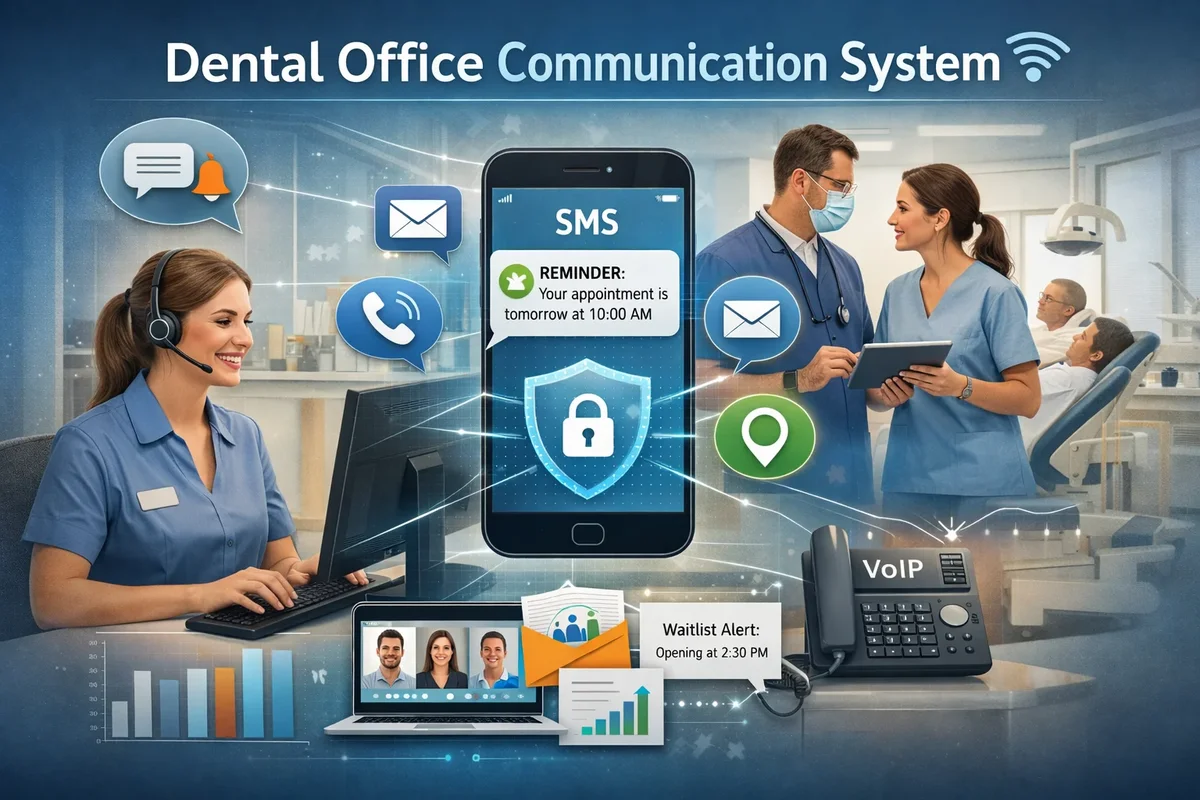
Measuring Success and ROI of a Dental Office Communication System
Implementing a dental office communication system is an investment, and like any strategic investment, its success must be measured clearly and consistently 📈. Beyond improving daily workflows, clinics need to understand how a dental office communication system impacts patient behavior, operational efficiency, staff productivity, and long-term revenue. Measuring return on investment (ROI) ensures that the system is not only functional but truly valuable.
A modern dental office communication system provides built-in data, analytics, and measurable outcomes that allow clinics to evaluate performance objectively. This section explains how to assess success using practical metrics and real-world indicators.
Key Performance Indicators (KPIs) to Track
The first step in measuring the success of a dental office communication system is identifying relevant KPIs. These indicators reflect how communication improvements translate into operational gains.
Common KPIs include appointment confirmation rates, no-show percentages, cancellation recovery rates, response times to patient inquiries, and recall compliance. A well-optimized dental office communication system typically shows measurable improvement across all these metrics within a few months.
Reduction in No-Shows and Schedule Gaps
No-shows are one of the most visible cost factors in dental practices. A dental office communication system directly addresses this issue through automated reminders, confirmations, and follow-ups ⏰.
By comparing no-show rates before and after implementation, clinics can clearly see ROI. Even a small percentage reduction in missed appointments often translates into significant revenue recovery over time.
Filling Last-Minute Cancellations
Advanced dental office communication system platforms also improve cancellation recovery through waitlists and instant notifications.
Tracking how many canceled appointments are successfully rebooked provides another concrete measure of system effectiveness.
Staff Time Savings and Productivity Gains
Time is one of the most valuable resources in a dental clinic. A dental office communication system automates repetitive tasks such as reminders, confirmations, and routine follow-ups, freeing staff to focus on higher-value activities 👥.
Clinics can measure time savings by evaluating reduced call volumes, shorter administrative hours, and improved task completion rates. These gains often result in lower operational stress and improved staff satisfaction.
Patient Engagement and Satisfaction Metrics
Patient engagement is a strong indicator of communication success. A dental office communication system increases engagement through consistent, clear, and personalized messaging ❤️.
Metrics such as message open rates, response rates, and follow-up compliance provide insight into how well patients interact with the system. Higher engagement typically correlates with stronger loyalty and retention.
Patient Feedback and Reviews
Qualitative feedback is equally important. Patient surveys, online reviews, and direct comments often reflect improved communication clarity and convenience.
Many clinics report that patients specifically mention reminders, ease of contact, and clear instructions—direct benefits of an effective dental office communication system.
Long-Term Patient Retention and Lifetime Value
One of the most powerful ROI indicators is patient retention. A dental office communication system supports long-term engagement through recalls, preventive care reminders, and ongoing education 🌱.
Tracking how many patients return regularly—and how long they remain active—reveals the system’s impact on lifetime patient value. Improved retention stabilizes revenue and reduces the cost of acquiring new patients.
Data-Driven Continuous Improvement
A major advantage of a dental office communication system is access to actionable data 📊. Clinics can continuously refine communication strategies by analyzing performance trends.
Adjusting reminder timing, message tone, or channel selection based on data ensures the system evolves with patient behavior. This continuous optimization maximizes ROI over time.
Aligning ROI with Strategic Goals
Finally, success should be measured against your clinic’s strategic goals. Whether the objective is growth, efficiency, patient satisfaction, or scalability, a dental office communication system should support those priorities.
When communication outcomes align with broader business goals, the value of the system becomes clear—not just as software, but as a core operational asset.
In summary, measuring the success and ROI of a dental office communication system requires both quantitative metrics and qualitative insights. Reduced no-shows, time savings, higher engagement, improved retention, and data-driven improvements all signal a strong return. Clinics that actively monitor these indicators ensure their dental office communication system delivers sustained value and supports long-term success in an increasingly competitive dental landscape 🌍.