
Dental posts and crowns are among the most effective and widely used restorative treatments in modern dentistry 🦷. If you have experienced severe tooth damage, decay, or a root canal procedure, chances are your dentist may recommend dental posts and crowns to restore both function and aesthetics. Understanding how dental posts and crowns work is essential for making informed decisions about your oral health and achieving a long-lasting, confident smile.
At their core, dental posts and crowns are designed to rebuild and protect teeth that can no longer support themselves. When a tooth becomes significantly weakened—often due to deep decay, trauma, or infection—it may not have enough structure left to hold a crown on its own. This is where dental posts and crowns come into play as a combined solution that strengthens the tooth from within while restoring its outer appearance.
Understanding the Role of Dental Posts
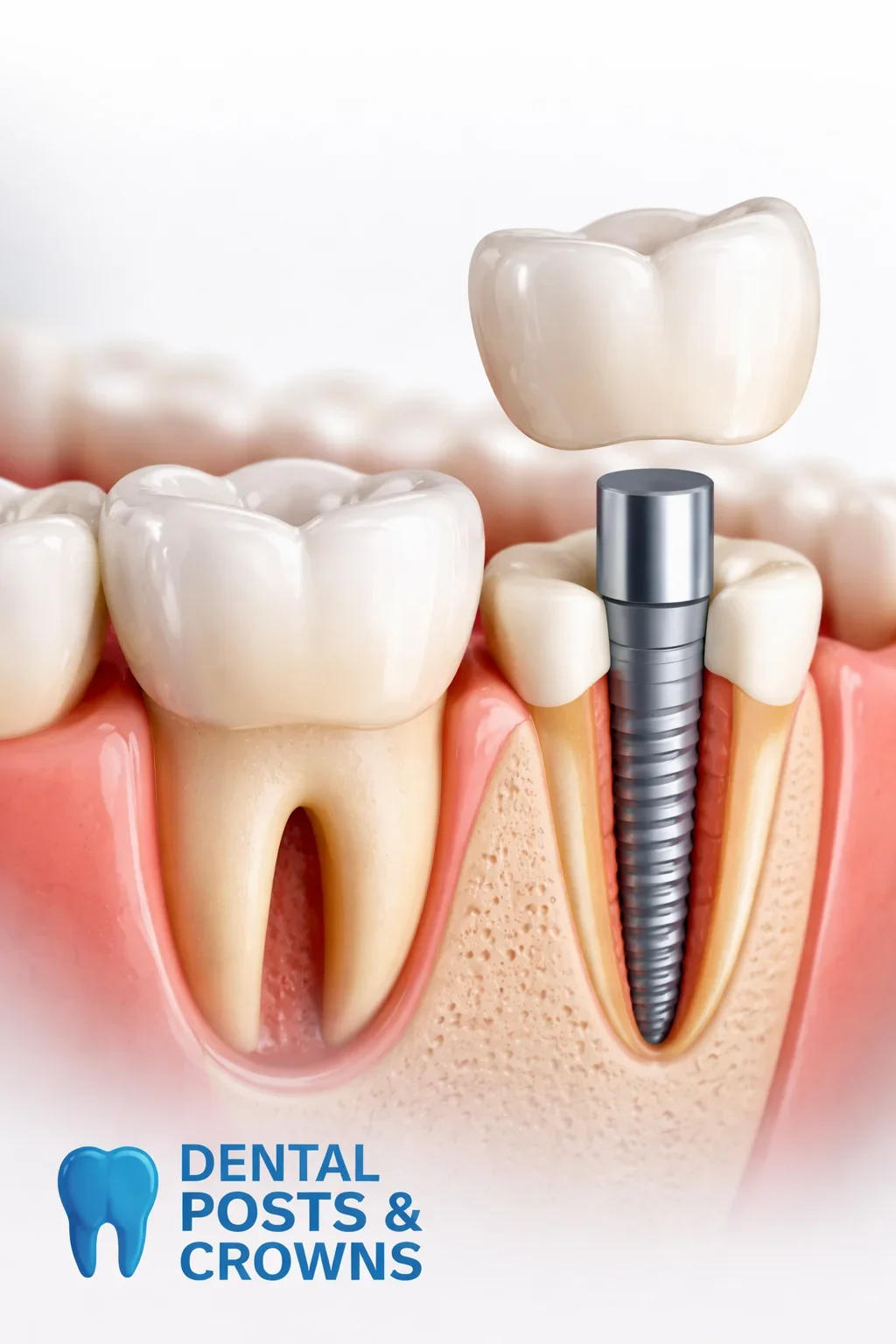
A dental post is a small, rod-like structure that is placed inside the root canal of a treated tooth. After a root canal procedure, the inner pulp of the tooth is removed, leaving a hollow space. The dental post is inserted into this space to provide internal support. Dental posts and crowns work together, with the post acting as a foundation and the crown serving as the visible restoration.
Dental posts can be made from various materials, including metal, fiber-reinforced resin, or ceramic. Each material offers unique advantages in terms of strength, flexibility, and aesthetics. For example, fiber posts are often preferred for front teeth because they blend better with natural tooth color, while metal posts may be used for molars due to their durability.
What Is a Dental Crown?
A dental crown is a custom-made cap that covers the entire visible portion of a damaged tooth. When used in combination with dental posts and crowns procedures, the crown is securely placed on top of the rebuilt tooth structure. Its purpose is to restore the tooth’s shape, size, strength, and appearance.
Crowns can be crafted from materials such as porcelain, zirconia, metal alloys, or porcelain-fused-to-metal. The choice depends on factors like the location of the tooth, cosmetic preferences, and functional requirements. Dental posts and crowns together ensure that even severely damaged teeth can be restored to full functionality.
Why Dental Posts and Crowns Are Necessary
There are several situations where dental posts and crowns become necessary. The most common scenario is after a root canal treatment. Since the tooth loses its internal structure and vitality, it becomes brittle and prone to fractures. Dental posts and crowns provide reinforcement and protection, significantly reducing the risk of tooth breakage.
Additionally, dental posts and crowns are often recommended when a large portion of the tooth has been lost due to decay or trauma. In such cases, a simple filling would not be sufficient. Instead, the combination of a post and crown ensures that the tooth can withstand normal chewing forces and maintain its structural integrity.
How Dental Posts and Crowns Improve Oral Health
One of the biggest advantages of dental posts and crowns is their ability to preserve natural teeth. Instead of extracting a severely damaged tooth, dentists can use dental posts and crowns to rebuild it, allowing patients to maintain their natural bite and jaw alignment. This is crucial for long-term oral health and prevents complications such as bone loss or shifting teeth.
Moreover, dental posts and crowns contribute to improved chewing efficiency and speech clarity. When a damaged tooth is restored properly, it functions just like a natural tooth, enabling you to eat comfortably and speak without difficulty. 😊
Aesthetic Benefits of Dental Posts and Crowns
Beyond functionality, dental posts and crowns offer significant cosmetic benefits. Modern dental technology allows crowns to be customized in color, shape, and size to match your natural teeth seamlessly. This means that dental posts and crowns not only restore your oral health but also enhance your smile.
Patients who feel self-conscious about damaged or discolored teeth often experience a boost in confidence after undergoing dental posts and crowns treatment. A well-crafted crown can transform the appearance of a tooth, making it indistinguishable from the surrounding teeth.
Longevity and Durability
When properly cared for, dental posts and crowns can last for many years, often ranging from 10 to 15 years or more. Their longevity depends on factors such as oral hygiene habits, the materials used, and regular dental check-ups. By maintaining good oral care practices, you can maximize the lifespan of your dental posts and crowns.
Routine brushing, flossing, and professional cleanings play a crucial role in ensuring that dental posts and crowns remain in excellent condition. Avoiding habits like teeth grinding or biting hard objects can also help prevent damage.
Are Dental Posts and Crowns Right for You?
If you have a severely damaged or root canal-treated tooth, dental posts and crowns may be the ideal solution for restoring your smile. However, every case is unique, and a thorough dental examination is necessary to determine the best treatment plan. Consulting with an experienced dental professional ensures that your dental posts and crowns are tailored to your specific needs.
If you are considering this treatment and want expert guidance, you can easily reach out through the Redent Klinik Contact Page. Getting personalized advice will help you understand whether dental posts and crowns are the right choice for your situation.
For additional trusted information about dental treatments and standards, you can also visit the American Dental Association, which provides reliable guidance on procedures like dental posts and crowns.
In summary, dental posts and crowns are a powerful combination in restorative dentistry, offering both structural support and aesthetic enhancement. Whether you need to rebuild a weakened tooth or improve your smile, dental posts and crowns provide a durable, effective, and long-term solution. 🦷✨
What Are Dental Posts and Crowns?
Dental posts and crowns are fundamental components of modern restorative dentistry, designed to rebuild and protect teeth that have been significantly damaged or weakened 🦷. When a tooth is no longer structurally strong enough to support itself—often due to decay, trauma, or a root canal procedure—dentists rely on dental posts and crowns to restore both its functionality and appearance. Understanding what dental posts and crowns are is essential for anyone considering advanced dental treatment.
Definition of Dental Posts and Crowns
Dental posts and crowns work together as a two-part restoration system. A dental post is a small rod that is inserted into the root canal of a treated tooth, while a dental crown is a custom-made cap that covers the visible portion of the tooth. Together, dental posts and crowns provide internal support and external protection, ensuring that the tooth can function normally again.
Dental posts and crowns are especially important after root canal therapy. Once the infected pulp is removed, the remaining tooth structure can become fragile. In such cases, dental posts and crowns reinforce the tooth from within and shield it from further damage.
Why Both Components Are Needed
Many patients wonder why both dental posts and crowns are necessary instead of just a crown. The answer lies in the extent of tooth damage. If there is not enough natural tooth structure left, a crown alone cannot securely attach. Dental posts and crowns solve this problem by creating a stable foundation inside the tooth and a protective layer outside.
This combination ensures that dental posts and crowns can withstand the forces of chewing and biting, making them a long-term solution for severely compromised teeth.
How Dental Posts Work
Dental posts are placed inside the root canal after the cleaning and shaping process is completed. The dentist carefully prepares the canal and inserts the post using dental cement. Dental posts and crowns rely on this internal anchor to provide stability for the final restoration.
There are two main types of dental posts used in dental posts and crowns procedures:
- Prefabricated Posts: These are ready-made posts that come in standard sizes and materials such as metal or fiber.
- Custom Posts: These are specifically designed for the patient’s tooth, offering a more precise fit and improved support.
Dental posts and crowns benefit greatly from advances in materials. Fiber-reinforced posts, for example, are popular because they mimic the flexibility of natural dentin and reduce the risk of root fracture.
How Dental Crowns Complete the Restoration
Once the dental post is securely in place, a core build-up material is added to recreate the shape of the tooth. After this, a dental crown is placed over the rebuilt structure. Dental posts and crowns together restore the tooth’s full anatomy, allowing it to function just like a natural tooth.
Dental crowns can be made from different materials, including:
- Porcelain: Ideal for front teeth due to its natural appearance.
- Zirconia: Extremely durable and aesthetically pleasing.
- Metal Alloys: Known for their strength, often used for molars.
- Porcelain-Fused-to-Metal: Combines strength with aesthetics.
The choice of material plays a crucial role in the success of dental posts and crowns, as it affects durability, appearance, and comfort.
When Are Dental Posts and Crowns Used?
Dental posts and crowns are typically recommended in several clinical situations. The most common indication is after a root canal treatment, where the tooth has lost its internal support. Dental posts and crowns are also used when a tooth has suffered extensive decay or trauma that cannot be repaired with a filling.
In some cases, dental posts and crowns may also be used to support a dental bridge or as part of a larger restorative plan. Their versatility makes dental posts and crowns a cornerstone of comprehensive dental care.
Signs You May Need Dental Posts and Crowns
- Severely broken or cracked tooth
- Tooth weakened after root canal treatment
- Large fillings that compromise tooth strength
- Significant tooth wear or structural loss
If you experience any of these issues, your dentist may recommend dental posts and crowns as the most effective solution.
Advantages of Dental Posts and Crowns
Dental posts and crowns offer numerous benefits, making them one of the most reliable restorative options available. One of the key advantages is their ability to preserve the natural tooth. Instead of extraction, dental posts and crowns allow the tooth to remain functional within the mouth.
Additionally, dental posts and crowns provide excellent durability. With proper care, they can last many years, restoring both strength and aesthetics. Patients also appreciate the natural look of modern crowns, which blend seamlessly with surrounding teeth 😊.
How Dental Posts and Crowns Compare to Alternatives
There are alternative treatments available, such as dental implants or bridges. However, dental posts and crowns are often preferred when the natural tooth root is still intact. Unlike implants, which require surgical placement, dental posts and crowns are less invasive and preserve the original tooth structure.
Compared to large fillings, dental posts and crowns offer superior strength and longevity. Fillings may fail under heavy pressure, whereas dental posts and crowns provide a more stable and durable solution.
Long-Term Importance of Dental Posts and Crowns
The long-term success of dental posts and crowns depends on proper placement and maintenance. Regular dental check-ups, good oral hygiene, and avoiding harmful habits like teeth grinding are essential for preserving the integrity of dental posts and crowns.
Ultimately, dental posts and crowns are more than just a repair—they are a comprehensive solution that restores confidence, improves oral function, and protects long-term dental health. By understanding what dental posts and crowns are and how they work, patients can make informed decisions and achieve optimal outcomes.
When Are Dental Posts and Crowns Needed?
Dental posts and crowns are not always required for every dental issue, but they become essential in specific situations where a tooth has lost significant structure or strength 🦷. Understanding when dental posts and crowns are needed helps patients make informed decisions and avoid unnecessary complications. These restorative solutions are typically recommended when a tooth cannot support a filling or crown alone due to extensive damage.
Common Situations Requiring Dental Posts and Crowns
There are several clinical scenarios where dental posts and crowns are the best treatment option. The most common situation is after a root canal treatment. During this procedure, the infected pulp is removed, leaving the tooth hollow and fragile. Dental posts and crowns are then used to reinforce and restore the tooth.
Another frequent reason for dental posts and crowns is severe tooth decay. When decay has destroyed a large portion of the tooth, a simple filling is no longer sufficient. In such cases, dental posts and crowns provide the necessary support and protection to restore function.
Root Canal Treatment and Structural Loss
After a root canal, the tooth loses its internal vitality and becomes more prone to fractures. Dental posts and crowns are critical in these cases because they rebuild the internal structure and protect the tooth externally. Without dental posts and crowns, the treated tooth may crack or break under normal chewing forces.
In addition, dental posts and crowns help distribute pressure evenly across the tooth, reducing the risk of further damage. This makes them an essential part of post-root canal care.
Severely Broken or Fractured Teeth
Teeth that have been broken due to trauma, accidents, or biting on hard objects often require dental posts and crowns. When a tooth is fractured deeply, especially below the gum line, there may not be enough remaining structure to support a crown alone. Dental posts and crowns provide a stable foundation for rebuilding the tooth.
In these situations, dental posts and crowns can often save a tooth that might otherwise need to be extracted. This preservation of natural teeth is one of the major advantages of choosing dental posts and crowns.
Large Fillings That Weaken Tooth Structure
Teeth with large fillings are more vulnerable to fractures over time. When a significant portion of the tooth has been replaced with filling material, the remaining natural structure may not be strong enough to withstand daily use. Dental posts and crowns are recommended in such cases to reinforce the tooth and prevent future damage.
By replacing a large filling with dental posts and crowns, dentists can restore the tooth’s strength and ensure long-term durability. This proactive approach helps avoid more complex treatments later on.
Repeated Dental Repairs
If a tooth has undergone multiple restorations, it may become progressively weaker. Dental posts and crowns provide a more permanent solution compared to repeated fillings or temporary fixes. Instead of continually repairing the same tooth, dental posts and crowns offer a comprehensive restoration that enhances both strength and stability.
Teeth with Significant Wear or Erosion
Over time, teeth can wear down due to grinding (bruxism), acid erosion, or aging. When the enamel is significantly worn, the tooth may lose its natural shape and strength. Dental posts and crowns are often used to rebuild these teeth, restoring their original function and appearance.
Dental posts and crowns are particularly beneficial for patients with severe tooth wear because they provide both reinforcement and aesthetic improvement. This makes them an ideal solution for restoring worn-down smiles 😊.
Support for Dental Bridges
In some cases, dental posts and crowns are used as anchors for dental bridges. When adjacent teeth are not strong enough to support a bridge on their own, dental posts and crowns can provide the necessary stability. This ensures that the bridge remains secure and functional over time.
Dental posts and crowns play a crucial role in such restorative plans, helping distribute forces evenly and preventing complications.
When Dental Posts and Crowns May Not Be Suitable
Although dental posts and crowns are highly effective, they are not always the best option for every patient. For example, if the tooth root is severely damaged or infected beyond repair, extraction and dental implants may be recommended instead. Dental posts and crowns require a healthy root structure to be successful.
Additionally, if there is insufficient bone support or severe gum disease, the dentist may need to address these issues before proceeding with dental posts and crowns.
Importance of Professional Evaluation
A thorough dental examination is essential to determine whether dental posts and crowns are appropriate. Dentists use X-rays and clinical assessments to evaluate the condition of the tooth and surrounding structures. Based on this evaluation, they can recommend the most suitable treatment plan.
Choosing dental posts and crowns without proper assessment can lead to complications, so it is important to rely on professional guidance.
Benefits of Timely Treatment with Dental Posts and Crowns
Delaying treatment when dental posts and crowns are needed can result in further damage, infection, or even tooth loss. Early intervention allows dentists to preserve the natural tooth and avoid more invasive procedures.
Dental posts and crowns not only restore the tooth but also improve overall oral health. By stabilizing damaged teeth, they prevent issues such as misalignment, bite problems, and additional decay.
In conclusion, dental posts and crowns are needed in a variety of situations where teeth have been significantly compromised. Whether due to root canal treatment, trauma, decay, or wear, dental posts and crowns provide a reliable and long-lasting solution. Understanding when dental posts and crowns are required ensures that patients can take timely action and maintain a healthy, functional smile for years to come 🦷✨.
Types of Dental Posts Used in Restorative Dentistry
When planning a restoration involving dental posts and crowns, one of the most important decisions is selecting the right type of dental post 🦷. Dental posts and crowns work as a system, and the success of the restoration heavily depends on the material, design, and compatibility of the post with the patient’s tooth structure. Understanding the different types of dental posts used in restorative dentistry helps patients make informed choices and ensures long-term durability.
Why the Type of Dental Post Matters
Dental posts and crowns rely on a strong internal foundation. The dental post is inserted into the root canal and acts as the anchor that supports the crown. Choosing the correct type of post ensures proper stress distribution, reduces the risk of fractures, and improves the longevity of dental posts and crowns.
The ideal post should mimic the natural flexibility of dentin while providing sufficient strength. If the post is too rigid, it can increase the risk of root fractures. If it is too flexible, it may not provide adequate support for dental posts and crowns.
Key Factors in Post Selection
- Remaining tooth structure
- Location of the tooth (front vs. back)
- Bite force and chewing habits
- Aesthetic requirements
- Compatibility with crown material
These factors guide dentists in choosing the most suitable option for dental posts and crowns.
Metal Dental Posts
Metal posts have been used for decades and remain a reliable option in many cases. These posts are typically made from stainless steel, titanium, or gold alloys. Dental posts and crowns using metal posts are known for their strength and durability, especially in molars where chewing forces are high.
Metal posts are often prefabricated, meaning they come in standard sizes. They are easy to place and provide excellent retention. However, dental posts and crowns with metal posts may not be ideal for front teeth due to their metallic color, which can affect aesthetics.
Advantages of Metal Posts
- High strength and durability
- Long clinical history of success
- Cost-effective in many cases
Disadvantages of Metal Posts
- Less aesthetic for visible teeth
- Higher rigidity may increase fracture risk
- Potential for corrosion over time (rare)
Despite these drawbacks, dental posts and crowns with metal posts are still widely used in posterior restorations.
Fiber-Reinforced Dental Posts
Fiber posts have become increasingly popular due to their aesthetic and mechanical advantages. These posts are made from materials such as carbon fiber, glass fiber, or quartz fiber embedded in a resin matrix. Dental posts and crowns using fiber posts offer a more natural look and improved flexibility.
One of the biggest advantages of fiber posts in dental posts and crowns is their ability to mimic the elasticity of natural dentin. This reduces stress concentration and lowers the risk of root fractures.
Benefits of Fiber Posts
- Excellent aesthetics, especially for front teeth
- Better stress distribution
- Reduced risk of catastrophic root fracture
Limitations of Fiber Posts
- May not be as strong as metal in high-load areas
- Technique-sensitive placement
For patients seeking a natural-looking solution, dental posts and crowns with fiber posts are often the preferred choice.
Ceramic and Zirconia Posts
Ceramic and zirconia posts are used in cases where aesthetics are a top priority. These materials are tooth-colored and blend seamlessly with natural teeth. Dental posts and crowns with zirconia posts are especially popular in cosmetic dentistry.
Zirconia posts are extremely strong and resistant to corrosion. However, their rigidity can be a disadvantage, as it may increase the risk of root fractures if not used carefully.
Advantages of Zirconia Posts
- Superior aesthetics
- Biocompatibility
- Resistance to corrosion
Disadvantages of Zirconia Posts
- High stiffness compared to natural dentin
- More difficult to remove if retreatment is needed
Dental posts and crowns using zirconia posts are best suited for cases where appearance is critical and the risk of excessive force is minimal.
Prefabricated vs. Custom Posts
Another important distinction in dental posts and crowns is between prefabricated and custom-made posts.
Prefabricated Posts
These are ready-made posts available in standard sizes and materials. They are commonly used because they are convenient and cost-effective. Dental posts and crowns using prefabricated posts can often be completed more quickly.
Custom Posts
Custom posts are designed specifically for the patient’s tooth using impressions or digital scans. They provide a precise fit and are often used in complex cases. Dental posts and crowns with custom posts offer superior adaptation and support.
Although custom posts may be more expensive, they can significantly improve the outcome in challenging restorations.
Choosing the Right Post for Dental Posts and Crowns
The selection of the appropriate post type is a critical step in ensuring the success of dental posts and crowns. Dentists evaluate factors such as tooth position, remaining structure, and patient preferences before making a recommendation.
For example, fiber posts are often chosen for anterior teeth due to their aesthetics, while metal posts may be preferred for molars due to their strength. In some cases, custom posts are used to achieve optimal results.
Long-Term Performance of Different Post Types
The longevity of dental posts and crowns depends on the type of post used and how well it integrates with the tooth structure. Studies have shown that fiber posts tend to have favorable outcomes due to their stress distribution properties, while metal posts excel in strength.
Regardless of the type, proper placement and maintenance are essential. Regular dental check-ups and good oral hygiene practices ensure that dental posts and crowns remain functional for many years.
In conclusion, the type of dental post plays a vital role in the success of dental posts and crowns. From metal and fiber to zirconia and custom options, each type offers unique advantages and considerations. By understanding these differences, patients can work with their dentist to choose the best solution for their specific needs and achieve a durable, aesthetically pleasing restoration 😊.
Different Types of Crowns for Dental Restoration
When it comes to restoring damaged teeth, dental posts and crowns play a vital role in rebuilding both function and aesthetics 🦷. While the dental post provides internal support, the crown is the visible part that restores the tooth’s shape, strength, and appearance. Choosing the right type of crown is essential for the success of dental posts and crowns, as it directly impacts durability, comfort, and overall satisfaction.
Why Crown Selection Matters in Dental Posts and Crowns
Dental posts and crowns function as a unified system, and the crown must be carefully selected based on the location of the tooth, bite pressure, and cosmetic expectations. A poorly chosen crown can compromise the entire restoration, even if the dental post is properly placed. Therefore, understanding the different crown types used in dental posts and crowns is crucial for achieving long-lasting results.
Key Factors Influencing Crown Choice
- Location of the tooth (front or back)
- Bite force and chewing habits
- Aesthetic expectations
- Budget considerations
- Material compatibility with dental posts
Each of these factors helps determine which type of crown will perform best when used in dental posts and crowns treatments.
Porcelain Crowns
Porcelain crowns are one of the most popular choices for dental posts and crowns, especially for front teeth. They are designed to closely mimic the natural color and translucency of real teeth, making them virtually indistinguishable from surrounding teeth.
Dental posts and crowns with porcelain crowns are ideal for patients who prioritize aesthetics. These crowns are custom-made to match the patient’s smile, providing a natural and attractive appearance 😊.
Advantages of Porcelain Crowns
- Excellent natural appearance
- Stain-resistant surface
- Ideal for visible teeth
Disadvantages of Porcelain Crowns
- Less durable than some other materials
- May chip under high pressure
Despite these limitations, dental posts and crowns with porcelain crowns remain a top choice for cosmetic restorations.
Zirconia Crowns
Zirconia crowns are known for their exceptional strength and durability. Made from a high-performance ceramic material, they are suitable for both front and back teeth. Dental posts and crowns using zirconia crowns offer a perfect balance between aesthetics and strength.
Zirconia crowns are highly resistant to wear and fracture, making them ideal for patients with strong bite forces or teeth grinding habits.
Benefits of Zirconia Crowns
- Outstanding strength and longevity
- Natural tooth-like appearance
- Biocompatible and safe for gums
Limitations of Zirconia Crowns
- May be more expensive than other options
- Less translucent than porcelain in some cases
Dental posts and crowns with zirconia crowns are often recommended for molars and high-stress areas.
Porcelain-Fused-to-Metal (PFM) Crowns
Porcelain-fused-to-metal crowns combine the strength of metal with the aesthetics of porcelain. In dental posts and crowns procedures, PFM crowns provide a durable and visually acceptable solution.
These crowns have a metal core covered with a porcelain layer, offering both support and a natural appearance.
Advantages of PFM Crowns
- Strong and durable
- Better aesthetics than full metal crowns
- Long track record of success
Disadvantages of PFM Crowns
- Metal margin may become visible over time
- Porcelain layer can chip
Dental posts and crowns with PFM crowns are often used when both strength and moderate aesthetics are required.
Metal Crowns
Metal crowns are made from alloys such as gold, palladium, or base metals. Although they are not commonly used for visible teeth, they are extremely durable. Dental posts and crowns with metal crowns are ideal for back teeth where strength is more important than appearance.
These crowns require minimal removal of tooth structure and can withstand heavy chewing forces.
Benefits of Metal Crowns
- Exceptional durability
- Minimal wear on opposing teeth
- Long lifespan
Drawbacks of Metal Crowns
- Unattractive metallic appearance
- Not suitable for front teeth
Dental posts and crowns using metal crowns are a practical choice for patients prioritizing function over aesthetics.
All-Ceramic Crowns
All-ceramic crowns are similar to porcelain crowns but offer improved strength and aesthetics. Dental posts and crowns with all-ceramic crowns are an excellent option for patients seeking a metal-free restoration.
These crowns are highly biocompatible and suitable for individuals with metal allergies.
Advantages of All-Ceramic Crowns
- Superior aesthetics
- No metal components
- Excellent gum compatibility
Disadvantages of All-Ceramic Crowns
- May not be as strong as zirconia in some cases
Dental posts and crowns with all-ceramic crowns are often used for front teeth and cosmetic cases.
Temporary Crowns in Dental Posts and Crowns Procedures
Before the final crown is placed, patients often receive a temporary crown. Dental posts and crowns treatments typically involve a waiting period while the permanent crown is being fabricated.
Temporary crowns protect the tooth and maintain its appearance during this period. Although they are not as durable, they play an important role in the overall success of dental posts and crowns.
Choosing the Best Crown for Dental Posts and Crowns
Selecting the right crown involves careful consideration of multiple factors. Dentists evaluate the patient’s oral condition, aesthetic goals, and functional needs before recommending a specific type. Dental posts and crowns must be customized to ensure optimal performance and longevity.
For example, porcelain or all-ceramic crowns may be chosen for front teeth, while zirconia or metal crowns are preferred for molars. The goal is to achieve a balance between strength and appearance.
Longevity and Maintenance of Crowns
The lifespan of crowns used in dental posts and crowns depends on the material and how well they are maintained. With proper care, crowns can last 10–15 years or even longer. Regular brushing, flossing, and dental visits are essential for preserving dental posts and crowns.
Avoiding habits like teeth grinding, biting hard objects, and poor oral hygiene can significantly extend the life of your restoration.
In conclusion, understanding the different types of crowns used in dental posts and crowns allows patients to make informed decisions about their dental care. Each crown type offers unique benefits and limitations, and the best choice depends on individual needs. With the right selection and proper care, dental posts and crowns can provide a durable, functional, and aesthetically pleasing solution for restoring damaged teeth 🦷✨.
The Step-by-Step Procedure for Dental Posts and Crowns
Understanding the full process of dental posts and crowns helps patients feel more confident and prepared before starting treatment 🦷. Dental posts and crowns are not completed in a single step; instead, they involve a carefully planned, multi-stage procedure designed to restore both the strength and appearance of a damaged tooth. Each stage plays a critical role in ensuring the long-term success of dental posts and crowns.
Initial Consultation and Examination
The journey of dental posts and crowns begins with a comprehensive dental examination. During this stage, the dentist evaluates the condition of the tooth, surrounding gums, and bone structure. X-rays are typically taken to assess the root canal and determine whether dental posts and crowns are appropriate.
The dentist will also discuss your symptoms, expectations, and medical history. This step ensures that dental posts and crowns are the most suitable treatment option for your specific case.
Diagnostic Planning
At this stage, a personalized treatment plan is created. The dentist decides the type of dental post and crown material that will best suit your needs. Proper planning is essential for achieving optimal results with dental posts and crowns.
Root Canal Treatment (If Required)
In most cases, dental posts and crowns are placed after a root canal procedure. This step involves removing the infected or damaged pulp from inside the tooth. The canal is then cleaned, disinfected, and sealed.
Dental posts and crowns rely on this step because it creates the space needed for the dental post. Without proper root canal treatment, the success of dental posts and crowns would be compromised.
Cleaning and Shaping the Canal
The dentist carefully shapes the canal to prepare it for the dental post. This ensures that the post fits securely and provides strong internal support for dental posts and crowns.
Placement of the Dental Post
Once the root canal is completed, the next step in dental posts and crowns is placing the dental post. The dentist inserts the post into the prepared canal using a special dental cement. This post acts as the foundation for the restoration.
Dental posts and crowns depend heavily on the stability of this post. A properly placed post ensures that the crown will remain secure and functional.
Types of Post Placement
- Immediate Placement: The post is inserted right after the root canal.
- Delayed Placement: The dentist waits for healing before placing the post.
The choice depends on the condition of the tooth and the overall treatment plan for dental posts and crowns.
Core Build-Up Procedure
After placing the dental post, the dentist performs a core build-up. This involves adding a filling material around the post to recreate the shape of the tooth. Dental posts and crowns require this step because the crown needs a properly shaped base to fit securely.
The core build-up essentially replaces the missing tooth structure and prepares the tooth for crown placement.
Importance of Core Stability
A strong and well-shaped core ensures that dental posts and crowns function effectively. It also helps distribute chewing forces evenly, reducing the risk of failure.
Tooth Preparation for the Crown
Once the core build-up is complete, the dentist prepares the tooth for the crown. This involves reshaping the tooth to create space for the crown. Dental posts and crowns require precise preparation to ensure a perfect fit.
During this step, the dentist removes a small amount of the outer tooth structure to allow the crown to sit comfortably and look natural.
Impression Taking
An impression or digital scan of the prepared tooth is taken. This is used to create a custom crown that matches the shape, size, and color of your natural teeth. Dental posts and crowns rely on this precision to achieve a seamless result.
Temporary Crown Placement
While the permanent crown is being fabricated in a dental laboratory, a temporary crown is placed over the tooth. Dental posts and crowns treatments often include this step to protect the tooth and maintain aesthetics.
The temporary crown allows you to eat and speak normally while waiting for the final restoration.
Care for Temporary Crowns
- Avoid hard or sticky foods
- Brush gently around the area
- Be cautious when flossing
Proper care ensures that dental posts and crowns progress smoothly to the next stage.
Final Crown Placement
Once the permanent crown is ready, the dentist removes the temporary crown and places the final one. Dental posts and crowns reach their final stage during this step. The crown is carefully adjusted for fit, bite, and appearance before being permanently cemented.
The dentist ensures that the crown aligns perfectly with your bite and feels comfortable.
Final Adjustments
Minor adjustments may be made to ensure that dental posts and crowns function naturally. This includes checking the bite and polishing the crown for a smooth finish.
Post-Treatment Care and Follow-Up
After the completion of dental posts and crowns, the dentist provides instructions for care and maintenance. Regular check-ups are essential to monitor the condition of the restoration.
Dental posts and crowns require good oral hygiene practices, including brushing twice daily, flossing, and routine dental visits.
Long-Term Maintenance Tips
- Avoid biting hard objects
- Use a mouthguard if you grind your teeth
- Maintain regular dental cleanings
Following these guidelines ensures that dental posts and crowns remain functional and durable for many years.
How Long the Entire Procedure Takes
The complete process of dental posts and crowns typically takes two to three dental visits over a few weeks. However, this can vary depending on the complexity of the case and the materials used.
Advanced technologies such as same-day crowns may shorten the process, but traditional methods are still widely used for dental posts and crowns due to their precision and reliability.
In conclusion, the step-by-step procedure for dental posts and crowns is a carefully structured process designed to restore damaged teeth effectively. From initial consultation to final placement, each stage contributes to the success of dental posts and crowns. By understanding this process, patients can approach their treatment with confidence and achieve long-lasting, satisfying results 😊🦷.
Benefits of Choosing Dental Posts and Crowns
Dental posts and crowns are among the most reliable and effective solutions in restorative dentistry, offering both functional and aesthetic improvements 🦷. When a tooth is severely damaged, weakened, or treated with a root canal, dental posts and crowns provide a comprehensive way to restore its strength and appearance. Choosing dental posts and crowns comes with numerous advantages that go beyond simple repair, making them a preferred option for both patients and dental professionals.
Restoration of Tooth Strength and Function
One of the primary benefits of dental posts and crowns is their ability to restore the strength of a compromised tooth. After significant damage or decay, a tooth may no longer be able to withstand normal chewing forces. Dental posts and crowns reinforce the tooth internally and externally, allowing it to function like a natural tooth again.
Dental posts and crowns help distribute biting pressure evenly, reducing the risk of fractures. This is especially important for molars, which are exposed to high chewing forces on a daily basis.
Improved Chewing Efficiency
With dental posts and crowns, patients can regain full chewing ability. This means you can enjoy your favorite foods without discomfort or fear of damaging your teeth. The restored tooth becomes stable and reliable, enhancing overall oral function.
Preservation of Natural Teeth
Another significant advantage of dental posts and crowns is that they help preserve natural teeth. Instead of extracting a severely damaged tooth, dentists can use dental posts and crowns to rebuild it. Keeping your natural tooth is always preferable, as it maintains the natural alignment of your bite and prevents bone loss.
Dental posts and crowns support the remaining tooth structure, ensuring that it remains functional for many years. This approach minimizes the need for more invasive treatments such as dental implants.
Prevention of Tooth Loss
By reinforcing weakened teeth, dental posts and crowns reduce the likelihood of tooth loss. This not only preserves your smile but also prevents complications such as shifting teeth and jawbone deterioration.
Enhanced Aesthetic Appearance
Dental posts and crowns are not only functional but also highly aesthetic. Modern crowns are designed to match the color, shape, and size of natural teeth, resulting in a seamless appearance 😊. Whether you have a discolored, chipped, or misshapen tooth, dental posts and crowns can dramatically improve your smile.
Patients often experience a boost in confidence after undergoing dental posts and crowns treatment. A well-restored tooth can make a significant difference in both personal and professional interactions.
Natural-Looking Results
With advanced materials such as porcelain and zirconia, dental posts and crowns provide a natural look that blends perfectly with surrounding teeth. This makes them an ideal choice for both front and back teeth.
Long-Lasting Durability
Durability is another key benefit of dental posts and crowns. When properly placed and maintained, they can last for many years—often over a decade. Dental posts and crowns are designed to withstand daily wear and tear, making them a long-term investment in your oral health.
The materials used in dental posts and crowns, such as zirconia and metal alloys, are highly resistant to fracture and wear. This ensures that your restoration remains intact and functional over time.
Resistance to Daily Wear
Dental posts and crowns are built to endure the pressures of chewing, speaking, and other daily activities. With proper care, they maintain their strength and appearance for years.
Protection Against Further Damage
Dental posts and crowns act as a protective shield for weakened teeth. By covering the entire tooth structure, the crown prevents further decay, cracks, or fractures. Dental posts and crowns also seal the tooth, reducing the risk of bacterial infiltration.
This protective function is especially important after root canal treatment, where the tooth becomes more vulnerable to damage.
Reduced Risk of Infection
By sealing the tooth, dental posts and crowns help prevent bacteria from entering and causing infections. This contributes to better overall oral health and reduces the need for additional treatments.
Improved Speech and Comfort
Damaged or missing teeth can affect speech and cause discomfort. Dental posts and crowns restore the natural shape of the tooth, improving pronunciation and overall comfort. Patients often notice an immediate improvement in their ability to speak clearly after treatment.
Dental posts and crowns also eliminate sharp edges or irregular surfaces that may irritate the tongue or gums.
Versatility in Treatment
Dental posts and crowns are highly versatile and can be used in various dental situations. Whether you need to restore a single tooth or support a larger restoration like a bridge, dental posts and crowns offer a flexible solution.
They can be customized to meet individual needs, ensuring optimal results for each patient. This adaptability makes dental posts and crowns a cornerstone of restorative dentistry.
Suitable for Multiple Cases
- Root canal-treated teeth
- Severely decayed teeth
- Broken or fractured teeth
- Teeth with large fillings
Dental posts and crowns can address all these conditions effectively.
Boost in Confidence and Quality of Life
Beyond physical benefits, dental posts and crowns have a significant impact on a patient’s confidence and quality of life. A restored smile can enhance self-esteem and encourage social interaction.
Dental posts and crowns allow patients to smile, eat, and speak without hesitation. This improvement in daily life is one of the most valuable outcomes of the treatment.
Cost-Effective Long-Term Solution
Although dental posts and crowns may seem like a significant investment initially, they are cost-effective in the long run. Their durability and ability to prevent further damage reduce the need for additional treatments.
By choosing dental posts and crowns, patients can avoid more expensive procedures such as implants or extensive restorations in the future.
In conclusion, the benefits of choosing dental posts and crowns are extensive and impactful. From restoring strength and aesthetics to preserving natural teeth and improving quality of life, dental posts and crowns provide a comprehensive solution for damaged teeth. With proper care and professional guidance, dental posts and crowns can deliver long-lasting, satisfying results that enhance both oral health and overall well-being 😊🦷.
Risks and Potential Complications to Consider
While dental posts and crowns are highly effective and widely used in restorative dentistry, it is important to understand that, like any dental procedure, they come with certain risks and potential complications 🦷. Being aware of these possibilities helps patients make informed decisions and take proactive steps to ensure the long-term success of dental posts and crowns. Fortunately, most complications are rare and can often be prevented with proper planning, skilled execution, and good oral hygiene.
Why Understanding Risks Is Important
Dental posts and crowns are designed to strengthen and restore damaged teeth, but they rely on several biological and mechanical factors. If any part of the process is compromised, complications may arise. By understanding these risks, patients can better follow their dentist’s recommendations and protect their investment in dental posts and crowns.
Common Causes of Complications
- Improper placement of the dental post
- Weak or insufficient remaining tooth structure
- Poor oral hygiene habits
- Excessive bite force or teeth grinding
- Low-quality materials or techniques
Addressing these factors is key to minimizing risks associated with dental posts and crowns.
Root Fracture Risk
One of the most serious complications of dental posts and crowns is root fracture. This occurs when the root of the tooth cracks due to excessive stress. Dental posts and crowns can sometimes increase this risk if the post is too rigid or improperly placed.
Metal posts, for example, are stronger but less flexible than natural dentin. This can lead to stress concentration within the root. Dental posts and crowns using more flexible materials, such as fiber posts, help reduce this risk.
How to Prevent Root Fractures
- Use appropriate post materials
- Ensure proper placement by an experienced dentist
- Avoid biting hard objects
- Wear a night guard if you grind your teeth
With proper care, the likelihood of root fractures in dental posts and crowns can be significantly reduced.
Post Loosening or Failure
In some cases, the dental post may become loose or fail over time. This can happen if the bonding between the post and the tooth weakens. Dental posts and crowns depend on a secure connection, so any loosening can compromise the entire restoration.
Post failure may result in discomfort, reduced stability, or even complete loss of the crown. Early detection and treatment are crucial to prevent further complications.
Signs of Post Loosening
- Movement or instability in the tooth
- Discomfort when biting
- Visible gaps around the crown
If you notice any of these signs, consult your dentist immediately to evaluate your dental posts and crowns.
Crown Dislodgement or Damage
Another potential issue with dental posts and crowns is crown dislodgement. This occurs when the crown becomes loose or falls off. It can happen due to wear and tear, poor bonding, or excessive force.
Dental posts and crowns are designed to be durable, but habits such as chewing hard foods or grinding teeth can weaken the bond over time.
Preventing Crown Problems
- Avoid sticky or hard foods
- Maintain regular dental check-ups
- Follow post-treatment care instructions
Taking these precautions helps ensure that dental posts and crowns remain securely in place.
Infection or Re-Infection
Although root canal treatment aims to eliminate infection, there is still a small risk of re-infection. Dental posts and crowns can sometimes mask underlying issues if bacteria re-enter the root canal system.
This can occur if the seal is compromised or if oral hygiene is inadequate. Dental posts and crowns must be properly sealed to prevent bacterial infiltration.
Symptoms of Infection
- Pain or sensitivity
- Swelling around the tooth
- Persistent bad taste or odor
If any of these symptoms occur, immediate dental attention is necessary to protect your dental posts and crowns.
Gum Irritation and Inflammation
Improperly fitted crowns or poor oral hygiene can lead to gum irritation. Dental posts and crowns must be carefully designed to fit the gum line without causing discomfort.
Inflamed gums can affect the stability of the restoration and may lead to more serious periodontal issues if left untreated.
Maintaining Healthy Gums
- Brush and floss daily
- Use antibacterial mouthwash
- Visit your dentist regularly
Healthy gums are essential for the long-term success of dental posts and crowns.
Allergic Reactions or Sensitivity
Some patients may experience allergic reactions or sensitivity to the materials used in dental posts and crowns. This is more common with metal components, although it is relatively rare.
Modern materials such as zirconia and ceramic are highly biocompatible and reduce the risk of such reactions.
Choosing Biocompatible Materials
If you have known allergies, inform your dentist before undergoing treatment. Selecting the right materials ensures that dental posts and crowns are safe and comfortable.
Bite Misalignment Issues
If the crown is not properly aligned with your bite, it can cause discomfort and uneven pressure distribution. Dental posts and crowns must be carefully adjusted to ensure a natural bite.
Misalignment can lead to headaches, jaw pain, and excessive wear on surrounding teeth.
Importance of Final Adjustments
During the final placement, the dentist checks your bite and makes necessary adjustments. This step is crucial for ensuring that dental posts and crowns function harmoniously with your natural teeth.
Long-Term Risks Without Proper Care
The success of dental posts and crowns depends heavily on how well they are maintained. Neglecting oral hygiene or skipping dental visits can lead to complications such as decay around the crown or gum disease.
Dental posts and crowns are not immune to damage, so consistent care is essential for their longevity.
Best Practices for Long-Term Success
- Brush twice daily with fluoride toothpaste
- Floss regularly to prevent plaque buildup
- Schedule routine dental check-ups
- Avoid harmful habits like teeth grinding
Following these practices helps ensure that dental posts and crowns remain in excellent condition.
Final Thoughts on Risks and Safety
Although there are potential risks associated with dental posts and crowns, they are generally safe and highly successful when performed by experienced professionals. Most complications can be prevented through proper planning, high-quality materials, and good oral hygiene.
Dental posts and crowns remain one of the most effective solutions for restoring damaged teeth. By understanding the risks and taking preventive measures, patients can enjoy the benefits of dental posts and crowns with confidence and peace of mind 😊🦷.
Cost of Dental Posts and Crowns: What to Expect
The cost of dental posts and crowns is one of the most common concerns for patients considering restorative dental treatment 🦷. While dental posts and crowns provide long-lasting and highly effective solutions, their price can vary depending on several factors. Understanding the cost structure of dental posts and crowns helps patients plan their treatment and avoid unexpected expenses.
Average Cost of Dental Posts and Crowns
The total cost of dental posts and crowns typically includes multiple components: the root canal treatment (if needed), the dental post placement, the core build-up, and the crown itself. On average, dental posts and crowns can range between $500 and $3,000 per tooth depending on the complexity and materials used.
Estimated Price Breakdown
- Root Canal Treatment: $300 – $1,500
- Dental Post Placement: $150 – $500
- Core Build-Up: $100 – $400
- Dental Crown: $800 – $2,500
These estimates can vary significantly depending on location, clinic reputation, and technology used. Dental posts and crowns performed in specialized clinics may cost more but often provide higher precision and durability.
Factors That Influence the Cost
The cost of dental posts and crowns is not fixed and depends on various factors. Each case is unique, and the final price is determined after a detailed evaluation.
Material of the Crown
The type of crown used in dental posts and crowns has a major impact on cost. For example:
- Porcelain Crowns: Moderate cost with excellent aesthetics
- Zirconia Crowns: Higher cost due to durability and strength
- Metal Crowns: Often more affordable but less aesthetic
Choosing the right material is essential for balancing cost and performance in dental posts and crowns.
Type of Dental Post
The material and design of the dental post also affect pricing. Fiber posts may cost more than standard metal posts due to their advanced properties. Custom-made posts used in dental posts and crowns are typically more expensive than prefabricated ones.
Complexity of the Case
More complex dental conditions require additional procedures, which can increase the cost of dental posts and crowns. For example, teeth with severe damage or curved root canals may require more time and expertise.
Geographic Location
The cost of dental posts and crowns varies depending on the country and city. In countries with higher living costs, dental treatments tend to be more expensive. Many patients choose dental tourism to access high-quality dental posts and crowns at more affordable prices.
Cost of Dental Posts and Crowns in Different Countries
Dental tourism has become increasingly popular for patients seeking affordable dental care. Here is a general comparison of dental posts and crowns costs in different regions:
- United States: $1,500 – $3,000 per tooth
- United Kingdom: £800 – £2,000 per tooth
- Turkey: $300 – $900 per tooth
- Europe (general): €700 – €2,000 per tooth
Countries like Turkey offer high-quality dental posts and crowns at competitive prices, making them a preferred destination for international patients 😊.
Are Dental Posts and Crowns Covered by Insurance?
Insurance coverage for dental posts and crowns depends on the provider and the specific policy. In many cases, dental insurance may cover a portion of the cost, especially if the procedure is medically necessary rather than purely cosmetic.
Dental posts and crowns following a root canal treatment are more likely to be covered. However, patients should always check with their insurance provider to understand their benefits.
Tips for Insurance Claims
- Request a detailed treatment plan from your dentist
- Submit all required documents to your insurance company
- Confirm coverage percentages in advance
Being informed helps you maximize your insurance benefits for dental posts and crowns.
Are Dental Posts and Crowns Worth the Cost?
Although dental posts and crowns may seem expensive initially, they are a long-term investment in oral health. Their durability and effectiveness often make them more cost-efficient than repeated temporary treatments.
Dental posts and crowns can last 10–15 years or longer with proper care, reducing the need for frequent replacements. This long lifespan makes dental posts and crowns a valuable solution for restoring damaged teeth.
Long-Term Value
By preventing further damage, infection, and tooth loss, dental posts and crowns can save patients from more costly procedures such as implants or full-mouth restorations.
Additional Costs to Consider
In addition to the main procedure, there may be additional costs associated with dental posts and crowns. These can include:
- Consultation and diagnostic imaging (X-rays or scans)
- Temporary crowns
- Follow-up visits
- Maintenance treatments
It is important to discuss all potential costs with your dentist before starting dental posts and crowns treatment.
How to Save Money on Dental Posts and Crowns
There are several ways to reduce the cost of dental posts and crowns without compromising quality:
Cost-Saving Tips
- Compare prices from multiple clinics
- Consider dental tourism options
- Use dental insurance benefits
- Ask about payment plans or financing options
These strategies can make dental posts and crowns more accessible and affordable.
Choosing Quality Over Price
While cost is an important factor, it should not be the only consideration. High-quality materials, experienced dentists, and advanced technology play a crucial role in the success of dental posts and crowns.
Choosing a reputable clinic ensures that your dental posts and crowns are durable, functional, and aesthetically pleasing. Investing in quality treatment reduces the risk of complications and additional expenses in the future.
In conclusion, the cost of dental posts and crowns varies depending on multiple factors, including materials, complexity, and location. While the initial expense may seem significant, the long-term benefits and durability make dental posts and crowns a worthwhile investment. By understanding the pricing structure and exploring available options, patients can make informed decisions and achieve high-quality dental care that fits their budget 😊🦷.
Aftercare Tips for Long-Lasting Dental Posts and Crowns
Proper aftercare is essential to ensure the longevity and success of dental posts and crowns 🦷. While dental posts and crowns are designed to be durable and long-lasting, their performance heavily depends on how well they are maintained. With the right care routine, dental posts and crowns can function effectively for many years, providing both strength and aesthetic benefits. Understanding the best aftercare practices will help you protect your investment and maintain optimal oral health.
Why Aftercare Matters for Dental Posts and Crowns
Dental posts and crowns restore damaged teeth, but they are not indestructible. Poor oral hygiene, bad habits, or neglect can lead to complications such as decay around the crown, gum disease, or even failure of the restoration. Aftercare plays a critical role in preserving the integrity of dental posts and crowns and preventing costly repairs or replacements.
Key Goals of Aftercare
- Protect the crown from damage
- Maintain healthy gums and surrounding tissues
- Prevent bacterial buildup and decay
- Ensure long-term stability of dental posts and crowns
Following these goals ensures that dental posts and crowns remain functional and aesthetically pleasing.
Daily Oral Hygiene Routine
Maintaining a consistent oral hygiene routine is the foundation of aftercare for dental posts and crowns. Brushing and flossing regularly help remove plaque and bacteria that can accumulate around the restoration.
Brushing Techniques
Brush your teeth at least twice a day using a soft-bristled toothbrush and fluoride toothpaste. Pay special attention to the area around dental posts and crowns to prevent plaque buildup. Gentle brushing helps protect both the crown and the surrounding gum tissue.
Flossing Around Crowns
Flossing is equally important for maintaining dental posts and crowns. Carefully floss around the crown to remove debris and prevent gum inflammation. Using interdental brushes or water flossers can also be beneficial.
Dietary Habits to Protect Dental Posts and Crowns
Your diet plays a significant role in the longevity of dental posts and crowns. Certain foods can damage or weaken the restoration if consumed excessively.
Foods to Avoid
- Hard foods like ice, nuts, and hard candies
- Sticky foods such as caramel and chewing gum
- Highly acidic foods that can weaken enamel
Avoiding these foods helps prevent damage to dental posts and crowns and reduces the risk of complications.
Recommended Foods
Soft and balanced foods are ideal for maintaining dental posts and crowns. Include fruits, vegetables, lean proteins, and dairy products in your diet to support overall oral health.
Managing Teeth Grinding and Bite Pressure
Teeth grinding (bruxism) can significantly impact the lifespan of dental posts and crowns. Excessive pressure can cause cracks, loosening, or wear over time.
Use of Night Guards
If you grind your teeth at night, your dentist may recommend a custom night guard. This protective device reduces stress on dental posts and crowns and prevents damage.
Managing bite pressure is essential for preserving the strength and stability of dental posts and crowns.
Regular Dental Check-Ups
Routine dental visits are crucial for monitoring the condition of dental posts and crowns. Your dentist will check for any signs of wear, loosening, or gum issues and address them early.
Frequency of Visits
It is recommended to visit your dentist every six months for check-ups and professional cleanings. Regular monitoring ensures that dental posts and crowns remain in optimal condition.
Recognizing Warning Signs
Being aware of potential warning signs can help you address issues with dental posts and crowns before they become serious.
Common Warning Signs
- Pain or sensitivity around the treated tooth
- Loose or moving crown
- Swelling or redness in the gums
- Difficulty chewing
If you notice any of these symptoms, contact your dentist immediately to evaluate your dental posts and crowns.
Avoiding Harmful Habits
Certain habits can shorten the lifespan of dental posts and crowns. Avoid using your teeth as tools to open packages or bite hard objects. These actions can damage the crown or weaken the underlying structure.
Protective Practices
- Do not bite nails or pens
- Avoid chewing ice
- Be cautious with hard foods
These simple precautions can significantly extend the life of dental posts and crowns.
Maintaining Gum Health
Healthy gums are essential for the success of dental posts and crowns. Gum disease can compromise the stability of the restoration and lead to complications.
Gum Care Tips
- Use antibacterial mouthwash
- Massage gums gently while brushing
- Maintain proper flossing habits
Strong and healthy gums provide a solid foundation for dental posts and crowns.
Longevity Expectations and Maintenance
With proper care, dental posts and crowns can last 10–15 years or even longer. Their lifespan depends on factors such as oral hygiene, material quality, and lifestyle habits.
Regular maintenance and professional care are key to maximizing the longevity of dental posts and crowns. Patients who follow recommended aftercare practices often enjoy long-lasting and reliable results.
Final Thoughts on Aftercare
Aftercare is not just an optional step—it is a critical part of ensuring the success of dental posts and crowns. By maintaining good oral hygiene, adopting healthy habits, and attending regular dental check-ups, you can protect your restoration and enjoy its benefits for years to come 😊.
In summary, dental posts and crowns require consistent care and attention to remain functional and aesthetically pleasing. Following these aftercare tips will help you maintain a healthy smile, prevent complications, and ensure that your dental posts and crowns continue to perform at their best 🦷✨.