
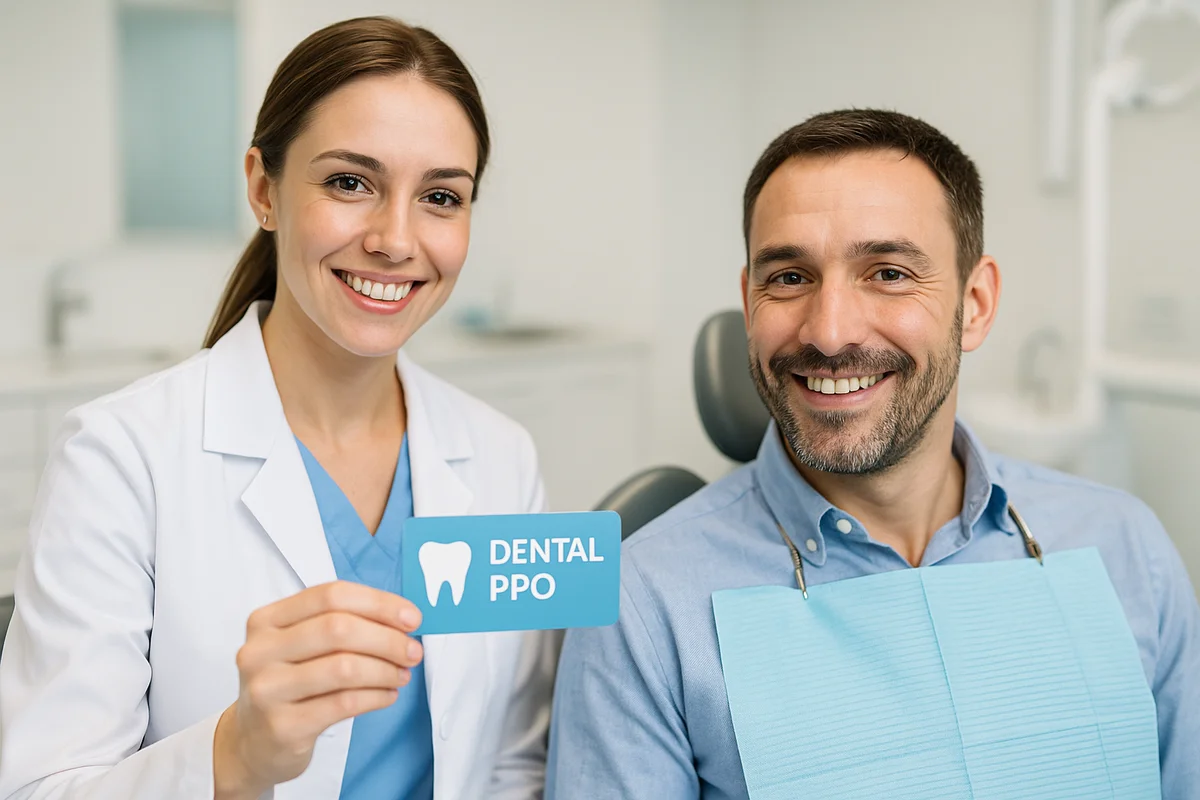
What Is a Dental PPO and How Does It Work?
Imagine having a flexible dental insurance plan that lets you see almost any dentist you want without breaking the bank—welcome to the world of dental PPO coverage! 🌟 A dental PPO (Preferred Provider Organization) is a popular type of dental insurance that contracts with a wide network of dentists who agree to provide services at pre-negotiated rates. Because of this arrangement, members enjoy freedom of choice, predictable costs, and fewer administrative headaches compared with more restrictive plans.
In a traditional dental PPO, you can visit any licensed dentist, but you’ll save the most when you choose an in-network provider. The insurer covers a larger percentage of the bill for in-network care, while you typically pay a lower coinsurance amount after meeting your annual deductible. Even if you opt for an out-of-network dentist, the plan still helps—just at a smaller reimbursement level—so you never feel locked in. This balance of flexibility and cost control is why millions of Americans rely on a dental PPO for preventive cleanings, fillings, crowns, and even orthodontic work.
Here’s a quick snapshot of how a standard dental PPO operates:
- ✅ Annual deductible: A fixed amount (e.g., $50–$150) you pay before benefits kick in.
- ✅ Coinsurance tiers: Typical splits are 100% for preventive, 80% for basic, and 50% for major procedures—though percentages vary by plan.
- ✅ Annual maximum: The insurer’s total payout cap per calendar year (often $1,000–$2,000).
- ✅ Network discounts: Contracted rates can be 30–40% lower than usual fees, instantly reducing your out-of-pocket costs.
- ✅ No referrals needed: See specialists directly without extra paperwork.
Because a dental PPO is built around preventive care, routine check-ups (cleanings, exams, X-rays) are usually covered at 100% when you stay in network. By removing financial barriers to regular visits, a dental PPO helps catch cavities early, prevents gum disease, and keeps your smile sparkling year-round. 🦷✨
Let’s dig deeper into the inner workings of your dental PPO journey:
- Choose a dentist. Scan your insurer’s provider list or pick any licensed dentist you trust.
- Schedule your appointment. Mention your dental PPO when booking so the office verifies benefits.
- Receive care. After treatment, the dentist files a claim with your insurer.
- Claim processing. The insurer adjusts the bill to contracted fees and applies your deductible/coinsurance.
- Pay your share. You settle the remaining balance—often far less than the sticker price.
Beyond routine maintenance, a robust dental PPO covers fillings, root canals, crowns, and even oral surgery—often after a modest waiting period. Orthodontic coverage for children (and sometimes adults) may also be included, though lifetime maximums apply. Thanks to transparent benefit summaries, you’ll always know your estimated costs before sitting in the chair.
Consumers love a dental PPO because it blends affordability with liberty. You avoid the gatekeeper model of HMOs, skip referral hassles, and still benefit from negotiated discounts. Plus, many plans bundle vision or hearing perks, transforming a single dental PPO into a holistic oral-health solution.
Before enrolling, review the plan’s schedule of benefits and confirm your favorite dentist participates in the network. If you ever need personalized advice, feel free to reach out via our Redent Klinik Contact Page. Our team is happy to decode coverage specifics or estimate your copay for an upcoming crown.
For official guidelines on standards of care, visit the American Dental Association—an authoritative resource every dental PPO policy references. Armed with trustworthy information and a feature-rich dental PPO, you’ll be ready to protect your smile in 2025 and beyond! 😁
What Is a Dental PPO and How Does It Work?
Picture an insurance plan that lets you visit almost any dentist while still enjoying steep network discounts—that’s the promise of a dental ppo. In simplest terms, a dental ppo (Preferred Provider Organization) is a contract between an insurer and thousands of dentists who agree to lower, pre-negotiated fees. Members are free to see any licensed provider, but they’ll save the most by choosing someone in network. Thanks to this “have-it-both-ways” structure, a dental ppo balances freedom of choice with predictable costs, making it the most popular dental insurance model in the United States.
Here’s a real-world example: Let’s say the usual charge for a composite filling is $250. Under a solid dental ppo, the in-network negotiated fee might be $150. If your plan pays 80 % for basic care, you’d owe just $30 after meeting your deductible—an instant $100 savings before you even leave the chair. Not bad for a two-minute swipe of your insurance card! 💳🦷
Core Components of Every Dental PPO
- Annual deductible: Typically $50–$150 per person. Once met, your insurer shares the cost of covered services.
- Coinsurance tiers: Preventive services often pay 100 %, basic services 80 %, and major services 50 %—though percentages vary by plan.
- Annual maximum: The insurer’s total payout cap per calendar year, often $1,000–$2,000. Smart planning keeps you below this ceiling.
- Waiting periods: Some major procedures require 6–12 months of continuous enrollment before coverage activates.
- Balance billing protection: In-network dentists cannot charge above the negotiated fee schedule.
Because a dental ppo prioritizes preventive care, routine cleanings, exams, and bite-wing X-rays are usually covered at 100 %. That zero-cost barrier encourages twice-a-year check-ups, catching small cavities before they morph into root canals. Over time, both you and the insurer win: fewer emergencies, lower long-term expenses, and happier smiles all around. 😁
Step-by-Step Claim Flow
- Select a dentist. Browse the provider directory or stick with a trusted favorite—your dental ppo lets you do either.
- Receive treatment. The office submits an electronic claim on your behalf.
- Adjudication. The insurer adjusts charges to the contracted fee schedule and applies any deductible or coinsurance.
- Explanation of Benefits (EOB). You receive a statement showing what the plan paid and what you owe.
- Final payment. Settle the remaining balance—often far less than the original “rack rate.”
Beyond routine work, a robust dental ppo usually covers fillings, root canals, crowns, bridges, periodontal therapy, and even oral surgery; orthodontic benefits for children (and sometimes adults) may apply up to a lifetime maximum. Many 2025 plans also bundle teledentistry consults, allowing you to text a photo of that mystery toothache and get guidance in minutes 📱.
Why Consumers Love Dental PPO Flexibility
Unlike HMO plans that lock you into a small roster of clinics, a dental ppo lets you change providers at will—handy if you move, travel, or simply crave a second opinion. You skip gatekeeper referrals, avoid surprise bills thanks to transparent fee schedules, and often gain access to nationwide emergency networks. That versatility explains why more than 70 % of employer-sponsored dental policies in the U.S. are now a dental ppo.
Need Personalized Advice? Our team at Redent Klinik Contact Page can decode plan brochures, estimate co-payments, or help you enroll in the ideal dental ppo for your needs. For official clinical guidelines, visit the American Dental Association.
With its blend of savings and freedom, a carefully chosen dental ppo keeps your smile bright and your wallet happy—today, tomorrow, and well into the future. 🦷✨
Dental PPO vs HMO: Key Differences
If you’re comparing dental insurance options for 2025, the showdown between a dental ppo and a Health Maintenance Organization (HMO) plan tops every checklist. Both promise to reduce out-of-pocket costs, yet they approach access, pricing, and paperwork in dramatically different ways. Understanding how a dental ppo contrasts with an HMO helps you choose the right safety net for your smile and your budget. Let’s zoom in on the most critical factors—network size, freedom of choice, specialist access, cost structure, and long-term value. 🧐🦷
Network Size & Dentist Choice
A dental ppo typically contracts with tens of thousands of providers nationwide, giving you broad geographic flexibility. You can see any licensed dentist, but in-network professionals carry the sweetest discounts. HMO plans, by contrast, restrict you to a tight regional panel. If your preferred dentist isn’t on that list, you’ll need to switch or pay the entire bill yourself—no reimbursement. For frequent travelers, relocating families, or anyone who values continuity with a lifelong provider, the open-door policy of a dental ppo is hard to beat.
Referrals & Specialist Access
One of the biggest perks of a dental ppo is direct access to specialists. Need an endodontist for that pesky root canal? Simply book an appointment—no gatekeeper approval required. HMOs, however, operate on a primary-dentist model. You must obtain a written referral before seeing an oral surgeon, periodontist, or orthodontist. Waiting for paperwork can delay urgent care and add administrative headaches. Patients with complex treatment plans often cite this flexibility as the deciding factor for choosing a dental ppo.
Cost Structure, Deductibles & Copays
Every dental ppo features a familiar trio: an annual deductible, coinsurance percentages (100 % preventive, 80 % basic, 50 % major are common), and an annual maximum. Once that ceiling is reached—often $1,500 or $2,000—the plan stops paying until the new benefit year. HMOs flip the script: no deductible, no annual maximum, but rigid copay schedules—e.g., $15 for a cleaning, $75 for a filling, $250 for a crown. At first glance, HMOs seem cheaper; however, the negotiated fee schedule inside a robust dental ppo can rival, and sometimes beat, those copays—especially when you factor in discounts up to 40 %. Savvy consumers calculate their likely procedures before declaring a winner.
Claims & Paperwork
With a modern dental ppo, the dentist submits electronic claims, the insurer processes everything, and you later receive an Explanation of Benefits (EOB). Out-of-network visits may involve filing a reimbursement form, but many offices handle that for you. HMOs are even more streamlined—no claim forms because providers are prepaid by the network. Yet that simplicity can mask the hidden cost of limited choice. If you value convenience but refuse to compromise on flexibility, a dental ppo still hits the sweet spot.
Long-Term Value & Patient Satisfaction
Over five years, studies show patients in a dental ppo are more likely to receive preventive care twice a year, translating to fewer major restorations later. HMO enrollees, facing longer wait times and fewer provider options, sometimes postpone appointments—risking bigger bills down the line. While monthly premiums for a dental ppo run roughly $25–$45 versus $15–$30 for many HMOs, the extra $10 a month can save hundreds in avoided root-canal costs. Remember: prevention is the cheapest dentistry there is!
The Bottom Line
If your top priority is keeping premiums ultra-low and you don’t mind a narrow provider list, an HMO may fit. But if you crave nationwide reach, direct specialist access, and robust discounts—with the freedom to visit grandma’s dentist while traveling—then a dental ppo delivers unmatched peace of mind. Weigh your oral health goals, wallet, and lifestyle. When in doubt, consult our team through the Redent Klinik Contact Page for a personalized comparison. Empowered with accurate data, you’ll confidently choose the plan that keeps your smile bright and your finances healthy. ✨
Average Costs of Dental PPO Plans in the U.S.
When shopping for a dental ppo in 2025, numbers matter just as much as network size. Although premiums vary by state, age, and employer subsidies, most Americans will encounter predictable price bands for individual and family policies. Understanding these baseline figures helps you budget confidently, avoid surprise bills, and evaluate whether a dental ppo truly delivers the value it promises. Let’s dissect premiums, deductibles, coinsurance tiers, and annual maximums so you can compare apples to apples. 🍎📊
Monthly Premiums: Nationwide Ranges
Recent market surveys show that individual dental ppo premiums hover between $24 – $48 per month, while family plans come in around $60 – $125. Urban areas with higher provider fees—think New York City or San Francisco—skew toward the upper end, whereas smaller markets in the Midwest often dip 15 % below the national average. Employer-sponsored dental ppo plans are typically cheaper because companies absorb part of the premium, slicing employee costs by 25 % to 40 %. Self-employed professionals and gig-economy workers, on the other hand, pay full freight unless they qualify for group buying associations.
Deductibles & Coinsurance: Knowing Your Share
Most dental ppo deductibles sit at $50 for individuals and $150 for families—a one-time hurdle before coinsurance kicks in. After satisfying that deductible, preventive services are commonly covered at 100 %, basic restorative work at 80 %, and major procedures at 50 %. Remember: these percentages apply to the carrier’s negotiated fee schedule, not the dentist’s standard charge. Because every dental ppo slashes “rack rates” by 30 % – 45 %, your real-world savings often feel greater than the headline percentages suggest.
- 👤 Individual Premium: $24 – $48 per month
- 👪 Family Premium: $60 – $125 per month
- 💵 Annual Deductible: $50 (individual) / $150 (family)
- 🏦 Annual Benefit Maximum: $1,500 – $2,500
- 🦷 Preventive Care: 100 % in-network
- 🔧 Basic Services: 80 % in-network
- 🏗️ Major Services: 50 % in-network
Hidden Variables That Affect Premiums
- Age Banding: Some carriers use age brackets (e.g., 18-29, 30-49, 50+) that push premiums up 5 % – 12 % per tier. Older adults needing crowns or implants should weigh these jumps carefully before locking in a dental ppo.
- ZIP-Code Pricing: Regional cost-of-living factors and dentist density influence rate filings; living near a dental school can trim your dental ppo bill by double digits.
- Waiting Period Waivers: Paying a slightly higher premium may erase waiting periods for major work—crucial if you need a crown next month instead of next year.
- Bundled Vision/Hearing: Some insurers bundle extra benefits into their dental ppo plans, nudging premiums up $3 – $7 but adding measurable value.
Out-of-Pocket Maximums? Not in Dentistry!
Medical health plans set an annual out-of-pocket cap, but dental insurance doesn’t. Instead, every dental ppo uses an annual benefit maximum—once the carrier pays $1,500 (or $2,500 on richer plans), you shoulder 100 % of additional costs until January 1. Smart scheduling—like splitting two crowns across December and January—helps stretch those dollars. If a complex treatment plan threatens to blow past your ceiling, ask your provider to stage procedures or seek a dental ppo with a higher max.
Employer vs Individual Market Pricing
Corporate dental ppo plans often post richer benefits—higher annual maximums and orthodontic coverage—because large risk pools stabilize costs. In the individual market, premiums can spike 20 % for similar benefits. Entrepreneurs may lessen sticker shock by deducting dental ppo premiums as a business expense (consult your tax advisor 📑). Alternatively, joining a trade association or alumni group sometimes unlocks quasi-group rates.
Are Dental PPOs Worth the Money?
Even if you only see the dentist twice a year, preventive coverage alone can equal or exceed an individual dental ppo’s annual premium—especially after negotiated fee discounts. Add a single filling or emergency extraction, and the plan frequently “pays for itself” by August. Families with kids in braces reap even bigger dividends: orthodontic allowances in many dental ppo contracts cover up to $1,500 in lifetime benefits per child, offsetting premium outlays for years.
To pinpoint the best value, grab actual rate sheets, plug costs into a spreadsheet, and run scenarios. If math isn’t your forte, our team at Redent Klinik Contact Page is happy to crunch numbers and match you with a wallet-friendly dental ppo. For national fee benchmarks, cross-check with the American Dental Association, which publishes annual surveys on dental procedure pricing.
The takeaway? While premiums are rising modestly—about 3 % year-over-year—strategic use of in-network discounts and preventive perks keeps a dental ppo one of the smartest financial tools for protecting your oral health in 2025. 🦷💸
Network Flexibility: Choosing Your Own Dentist in a Dental PPO
One of the brightest selling points of a dental ppo is the freedom to choose virtually any dentist—without losing substantial benefits. In contrast to more restrictive models, a dental ppo empowers members to balance convenience, personal preference, and cost. Let’s explore how this flexibility works in real life, why it matters for long-term oral health, and how you can optimize every appointment within your dental ppo network. 🗺️🦷
In-Network vs Out-of-Network: What’s the Real Difference?
Every dental ppo maintains a directory of in-network providers who agree to discounted fee schedules—often 30 %–45 % below standard charges. Visiting an in-network dentist means:
- 🔖 Predictable pricing: Pre-negotiated fees lock your costs before you sit in the chair.
- 📝 Streamlined claims: Offices file claims electronically, and you rarely handle paperwork.
- 💸 Lower coinsurance: Your portion (e.g., 20 % for basic care) applies to already-reduced fees.
Out-of-network visits under a dental ppo still receive reimbursement—just at a smaller percentage of the plan’s usual and customary rate (UCR). While you retain choice, you may encounter:
- ⚖️ Balance billing: Dentists can charge above the UCR, and you pay the difference.
- 📄 Manual claims: Some offices require you to submit a claim form for reimbursement.
- ⌛ Slower processing: Out-of-network claims may take an extra week or two.
Freedom Without Friction: Tips to Maximize Your Dental PPO Network
- Map Your Radius. Use your insurer’s online portal to filter in-network providers within 5, 10, or 25 km. A robust dental ppo offers dozens of options even in rural areas.
- Check Specialty Credentials. Need an endodontist, periodontist, or oral surgeon? Many dental ppo networks contract sub-specialists directly, eliminating referral bottlenecks.
- Verify Before You Go. Networks update monthly. Call or email your dentist to confirm active participation. This quick step prevents surprise bills and keeps your dental ppo savings intact.
- Leverage Multi-State Coverage. Traveling for work or study abroad? Large carriers extend dental ppo agreements nationwide, so an emergency filling in Chicago costs the same as back home in Ankara.
Case Study: Switching Dentists without Switching Plans
Ayşe moved from İzmir to Istanbul and feared losing her favorite dental ppo. A quick directory search revealed 65 in-network clinics within a 10-km radius of her new apartment. She booked a cleaning, paid ₺0 after deductible, and learned her new provider even offered digital X-rays—proof that dental ppo mobility is more than marketing hype. 🚀
TeleDentistry & Second Opinions
Many 2025 dental ppo contracts bundle virtual consultations. Snap a high-resolution photo of a chipped tooth, upload it, and receive advice within hours—often at no extra cost. If you need a second opinion on a costly root canal, your dental ppo lets you hop to another in-network specialist across town, ensuring confidence before committing thousands of lira.
Financial Hacks: Stacking In-Network Savings
- 🤑 Seasonal Promotions: Many in-network dentists run back-to-school or new-patient specials. Combining these with dental ppo discounts can slash a whitening session from ₺2,000 to under ₺1,200.
- 📅 Smart Scheduling: Book major work after meeting your deductible but before hitting the annual maximum. A savvy dental ppo user might schedule a crown in November and a second crown in January to double insurance payouts.
- 🤝 Negotiated Extras: Some providers offer free fluoride treatments or 3-D scans exclusively to dental ppo patients—ask at check-in!
Red Flags & How to Dodge Them
- “Silent PPOs”: Out-of-network dentists sometimes accept your fee schedule informally but still balance bill. Always demand written confirmation before treatment.
- Hidden Lab Fees: Prosthetic labs may bill separately. Verify that lab charges fall under your dental ppo contract to avoid unexpected invoices.
- Imminent Network Drops: Dentists renegotiate contracts annually; confirm next year’s status if you have a multi-phase plan.
Putting Flexibility into Action
Ready to explore your options? Tap our Redent Klinik Contact Page; we’ll help you locate top-rated in-network specialists, interpret cost estimates, and map out a preventive schedule that maximizes every dental ppo benefit. For nationwide provider statistics, consult the American Dental Association—their data underscores how dental ppo networks now cover 80 % of practicing U.S. dentists.
The verdict is clear: a strategically chosen dental ppo unlocks boundless provider choice without sacrificing budget discipline. By leveraging network intelligence, telehealth tools, and seasonal promos, you’ll keep both your smile and your wallet in peak condition throughout 2025 and beyond. 😁✨
Coverage Breakdown: Preventive, Basic, and Major Services
To unlock the full value of a dental ppo, you must understand how benefits are divided into preventive, basic, and major service tiers. Each tier carries a different coinsurance level and, in some cases, a waiting period. When you know which treatments belong where—and how your dental ppo reimburses them—you can schedule care strategically, avoid surprise bills, and keep your annual maximum working in your favor. Let’s dissect every layer of coverage so you can plan smarter and smile wider. 🦷🔍
Preventive Services: The 100 % Advantage
Preventive care is the heartbeat of every quality dental ppo. Because insurers want to stop cavities before they start, they pay 100 % of the negotiated fee for twice-yearly check-ups as soon as you meet (or waive) your deductible. Typical preventive perks include:
- 🪥 Professional cleanings: Scaling, polishing, and stain removal.
- 📸 Bite-wing X-rays: Early cavity detection without guesswork.
- 🩺 Oral exams: Cancer screenings, gum measurements, and bite assessments.
- 🦷 Fluoride treatments: Free for kids, often covered for adults every 12 months.
- 🛡️ Sealants: Protective coatings for molars—covered up to age 18 on most dental ppo plans.
Because your dental ppo foots the entire preventive bill, skipping these visits is like refusing free money. Regular cleanings extend the life of fillings, crowns, and implants while pushing expensive emergencies further down the road.
Basic Services: The 80 % Workhorse
Once we venture beyond cleaning, your dental ppo typically covers 80 % of basic procedures, leaving you the remaining 20 % coinsurance. “Basic” sounds modest, but this tier tackles the everyday repairs that keep mouths healthy:
- 🔧 Amalgam or composite fillings for cavities of all sizes.
- 🪛 Simple extractions (no surgical flap required).
- 🔄 Denture relines and adjustments.
- 🩹 Minor periodontal therapy such as root planing.
- 🏷️ Emergency palliative treatment to relieve acute pain.
Because basic treatments occur frequently, the 80-20 cost share becomes the real savings engine of a dental ppo. For example, a composite filling with a retail price of $250 may drop to $150 after network discounts; you’d pay just $30—that’s an 88 % total savings compared with walking in uninsured.
Major Services: The 50 % Safety Net
Major work is where a solid dental ppo proves its worth. Crowns, bridges, root canals, and surgical extractions carry hefty price tags. Your plan usually reimburses 50 % of the negotiated fee, but don’t panic—those negotiated fees are already 35 %–45 % lower than retail. A porcelain crown that lists for $1,400 might fall to $900 in network; your 50 % share is $450, not the full retail hit. Many dental ppo contracts include:
- 👑 Porcelain-fused-to-metal or zirconia crowns
- 🌉 Three-unit bridges
- 🦷 Complex root canals (molar or retreatment)
- 🪚 Surgical extractions and bone grafts
- 🧬 Implant abutments (select plans only—check your dental ppo booklet!)
Note the fine print: many major services carry 6- to 12-month waiting periods. Some premium-priced dental ppo policies waive these waits for accident-related emergencies or if you had credible prior coverage. Always verify before scheduling major work; timing procedures just weeks apart can rescue thousands from your annual maximum.
Orthodontic Riders & Lifetime Maximums
Families flock to a dental ppo when braces enter the conversation. Roughly 40 % of plans now include an orthodontic rider—usually 50 % coverage up to a lifetime cap of $1,500 – $2,500 per child. Adults increasingly gain access too, especially in group dental ppo policies. Clear aligner therapy (Invisalign®) often qualifies, though you may face higher lab surcharges. Ask for a predetermination of benefits to see exactly how your dental ppo splits aligner costs.
Preventive Boosters & Wellness Rewards
To promote consistent care, some forward-thinking dental ppo plans offer “recharge” features: unused portions of your annual maximum roll over into the next year if you complete both preventive visits. Others grant bonus allowances for periodontal maintenance when you document two consecutive years of clean check-ups. These innovations transform a typical dental ppo into a wellness partnership rather than a mere reimbursement mechanism.
Putting the Tiers to Work
Mastering your benefit breakdown lets you time treatments efficiently. Combine a second cleaning with a filling in Q2, then schedule a crown in Q4 when your deductible is long satisfied. If unexpected surgery looms early in the year, ask the office to spread stages across January–February to tap two benefit years. Need personalized guidance? Reach out via our Redent Klinik Contact Page; our coordinators can map your treatment plan against your dental ppo limits. For evidence-based service classifications, consult the American Dental Association.
Bottom line: a well-structured dental ppo shields you from budget-busting surprises by paying 100 % for prevention, 80 % for common repairs, and 50 % for complex restorations—all on a discounted fee base. By leveraging each tier strategically, you’ll stretch every lira of your annual maximum and keep your oral health on cruise control throughout 2025. 😁💡
How to Maximize Savings with a Dental PPO Plan
Signing up for a dental ppo is only half the battle—real savings flow when you know how to squeeze every perk, promo, and policy clause for optimum value. Whether you’re an individual policyholder or managing coverage for a family of five, smart tactics can slash annual out-of-pocket costs by hundreds, sometimes thousands, of lira. Below, you’ll find a turnkey strategy guide that turns an ordinary dental ppo into a high-performance money-saving machine. 🤑🦷
1. Schedule Preventive Visits Like Clockwork
A quality dental ppo covers two cleanings and exams per year at 100 %. Missing even one forfeits free benefits worth roughly ₺2,000 ($70) in many regions. Mark calendar reminders or book your next appointment before leaving the office. Prevention cuts future restorative costs by up to 60 %. Remember: every skipped cleaning is a silent leak in your dental ppo budget.
2. Bundle Basic Treatments in the Same Visit
If your dentist finds multiple small cavities, request to address them in one sitting. You’ll pay a single sterile setup fee, one anesthesia charge, and save travel time. Because the negotiated rates inside a dental ppo are already discounted, consolidating visits amplifies the percentage-based savings—especially when you’re still below the annual deductible.
3. Time Major Procedures Around Your Annual Maximum
Every dental ppo sets a yearly payout ceiling—often ₺45,000–₺75,000 ($1,500–$2,500). If you need multiple crowns, implants, or periodontal surgeries, ask the office to sequence phases across December and January. Splitting treatment over two benefit years doubles carrier payments and can cut your personal bill in half.
4. Use Pre-Treatment Estimates (Predeterminations)
Before green-lighting pricey work, submit a predetermination to your dental ppo. The insurer calculates exact coverage, coinsurance, and remaining maximum. Armed with this data, you can negotiate staging, shop alternate providers, or arrange financing—all before the drill starts. Transparency prevents sticker shock and safeguards your savings plan.
5. Stay In-Network Whenever Possible
Although a dental ppo reimburses out-of-network claims, balance billing can balloon costs by 40 % or more. Search the insurer’s directory and confirm network status by phone. If you adore an out-of-network dentist, ask whether they’ll join your dental ppo (many sign up when a patient requests it) or accept the plan’s fee schedule as full payment.
6. Stack Seasonal Promotions with PPO Discounts
In December, many practices run “use-it-or-lose-it” specials on whitening or night guards. Combine these with your dental ppo negotiated rates for turbo-charged deals. Example: a custom night guard priced at ₺6,000 ($200) may drop to ₺4,000 with the plan, then plunge to ₺3,200 after a 20 % holiday promo.
7. Leverage Flexible Spending or Health Savings Accounts
Pairing a dental ppo with pre-tax FSA/HSA dollars yields a double win: discounted fees and tax-free payments. Contributing ₺18,000 ($600) to an FSA at a 25 % tax bracket saves ₺4,500 ($150) in taxes—effectively lowering your dental bill by an extra 25 %.
8. Negotiate Lab Fees and Upgrade Options
Lab-fabricated crowns and aligners sometimes carry upgrade charges beyond what your dental ppo allows. Ask for tiered quotes: basic zirconia (covered), aesthetic e.max (partial surcharge), or elite zirconia layered with porcelain (full surcharge). In many cases, the mid-tier option balances beauty and budget without voiding insurance benefits.
9. Download the Insurer’s Mobile App
Real-time benefit trackers remind you of remaining annual maximum, deductible status, and in-network providers near your location. Push notifications alert you if your dental ppo pays a claim differently than expected—giving you leverage to appeal errors quickly.
10. Tap Expert Guidance
Confused about coordination of benefits, secondary coverage, or orthodontal riders? Reach out via our Redent Klinik Contact Page. We’ll decode fine print, verify coverage before you commit, and help you maximize every dental ppo lira. For objective cost benchmarks, cross-check fee data in the American Dental Association research archives.
Pro-Tip Summary
- 🗓️ Never skip free preventive visits—anchor your dental ppo ROI.
- 🛠️ Consolidate minor procedures; stage major work around benefit years.
- 🏷️ Stack promotions with negotiated fees for double discounts.
- 💰 Use tax-advantaged accounts to fund coinsurance pain-free.
- 📱 Monitor benefits on-the-go and correct claim errors instantly.
With a disciplined playbook, your dental ppo transforms from a simple insurance product into a strategic ally—shielding your smile and super-charging your savings throughout 2025 and beyond. 🦷✨
Enrollment Tips: Finding the Best Dental PPO for Your Needs
Choosing the right dental ppo can feel like navigating a maze of premiums, deductibles, network maps, and fine print. Yet with a structured checklist and a clear understanding of your oral-health priorities, the process becomes straightforward—dare we say empowering! Below is a step-by-step enrollment blueprint that helps individuals, families, and even small-business owners land a dental ppo that delivers maximum coverage, minimal stress, and long-term savings. 📝🦷
1. Define Your Smile Goals and Treatment Horizon
Begin by listing the procedures you expect in the next two to three years. Routine cleanings are universal, but upcoming braces, implants, or gum therapy radically influence which dental ppo makes financial sense. Matching plan tiers to real-world needs prevents over-paying for bells and whistles you’ll never use.
2. Map Network Size to Your Lifestyle
Live in a metro area and travel often? Prioritize a nationwide dental ppo network so you can see an in-network dentist in Chicago one week and Ankara the next. Rural residents should confirm at least three in-network clinics within a 30-km radius. Use carrier search tools, then phone offices to double-verify participation—networks update monthly.
3. Compare Premiums Versus Annual Maximums
Many budget plans advertise rock-bottom premiums—but cap yearly payouts at ₺45,000 ($1,500). If you anticipate major work, a richer dental ppo with a ₺75,000 ($2,500) maximum often saves more overall despite a slightly higher monthly cost. Do the math: divide expected procedures by coinsurance to see which plan leaves you ahead by December.
4. Scrutinize Waiting Periods and Orthodontic Riders
Some carriers waive waiting periods for prior credible coverage; others enforce six months for basic work and twelve for major care. Adults needing Invisalign® should target a dental ppo that explicitly lists adult orthodontia—many still restrict braces to dependents under 19. Confirm lifetime ortho maximums (₺45,000–₺75,000 per member) before signing.
5. Review Deductibles and Coinsurance Tiers Side-by-Side
A ₺1,500 deductible paired with 90 % basic coverage sounds alluring until you realize you rarely break the deductible in preventive years. Conversely, a ₺600 deductible and 70 % coinsurance on basic care may cost less overall. Spreadsheet scenarios for fillings, crowns, and cleanings reveal which dental ppo wins.
6. Leverage Employer and Association Discounts
Ask HR if they negotiate multi-tier dental ppo options—often labeled High and Low. If you’re self-employed, join trade guilds or alumni groups; many offer pooled purchasing power that chops 10–15 % off retail premiums. Remember to deduct self-employed dental ppo premiums on your tax return per local regulations.
7. Utilize Pre-Enrollment Cost Estimators
Most insurers provide online calculators. Input ZIP code, age, and expected services; the tool spits out estimated annual costs under each dental ppo. Compare not just totals but the breakdown of preventive versus restorative spending to gauge real-world value.
8. Confirm Add-On Benefits
Modern dental ppo plans frequently bundle extras: free teledentistry, cosmetic discounts, or vision perks. Evaluate whether these add-ons justify marginally higher premiums. Parents of student-athletes, for instance, might prize free athletic mouthguards worth ₺3,000 per season.
9. Seek Expert Guidance Before Signing
Insurance jargon can swamp even savvy shoppers. Our coordination team—reachable via the Redent Klinik Contact Page—reviews plan brochures, verifies dentist credentials, and forecasts out-of-pocket costs line by line. A 15-minute consult often uncovers overlooked savings or hidden deal-breakers.
10. Verify Compliance and Quality Metrics
Finally, cross-reference candidate plans with carrier complaint ratios, Better Business Bureau scores, and coverage benchmarks published by the American Dental Association. A high-quality dental ppo balances robust networks, responsive claims processing, and transparent policy wording—hallmarks of a reliable partner guarding your smile.
Quick-Fire Enrollment Checklist
- 🗂️ Gather last year’s dental invoices.
- 📊 Run premium-versus-maximum scenarios.
- 📍 Confirm at least three in-network dentists nearby.
- ⏳ Note waiting periods and deductible resets.
- 📱 Download the insurer’s mobile app for real-time EOB tracking.
Follow this blueprint, and you’ll secure a dental ppo that aligns perfectly with your clinical forecast, financial comfort zone, and lifestyle needs. Master the details now, and reap painless, predictable dental care for the rest of 2025—no surprises, just smiles. 😁✨
Common Myths About Dental PPO Insurance Plans
Despite their popularity, dental ppo plans are surrounded by persistent myths that can mislead shoppers into choosing the wrong coverage—or skipping insurance altogether. Separating fact from fiction is essential if you want to maximize benefits, minimize out-of-pocket costs, and keep your oral health on track. Below, we debunk the top misconceptions clouding today’s dental ppo marketplace and replace them with evidence-based truths. 🕵️♂️🦷
Myth 1: “Dental PPO premiums cost a fortune compared with HMOs.”
Reality check: while the sticker price of a dental ppo is usually ₺75–₺120 (≈$25–$40) per month—slightly higher than an HMO—network discounts and richer preventive coverage often neutralize that gap by mid-year. Add one filling or emergency extraction, and the dental ppo frequently pulls ahead in total savings. When comparing plans, assess net costs (premium + expected coinsurance) rather than the premium alone.
Myth 2: “Out-of-network dentists aren’t covered at all.”
A hallmark of every dental ppo is partial reimbursement for any licensed dentist worldwide. True, you’ll save most in network, but you’re never left unprotected on vacation or after a move. Submit the claim, and your carrier reimburses a set percentage of its usual and customary rate (UCR). Even better, many out-of-network offices quietly honor the in-network fee schedule if asked—proof that flexibility remains a core dental ppo advantage.
Myth 3: “You need perfect credit to qualify.”
Unlike some health-insurance markets, the dental ppo world rarely performs credit pulls. Carriers base premiums on age, ZIP code, and coverage level—not FICO scores. Individuals with thin credit files, recent graduates, or entrepreneurs can enroll without fear of financial scrutiny. Your smile’s value isn’t judged by a three-digit number. 📈
Myth 4: “Claims take months to process.”
Modern clearinghouses and electronic data interchange (EDI) have slashed dental ppo claim turnaround times to an average of seven business days. Many chains file chair-side in real time, generating an Explanation of Benefits (EOB) before you reach the front desk. If a claim lingers, it’s often due to missing X-ray attachments—not systemic delays. Pro tip: ensure the office sends all documentation digitally on day one.
Myth 5: “Major procedures always max out the annual benefit.”
A porcelain crown negotiated at ₺13,500 ($450) in a dental ppo network consumes less than 30 % of a typical ₺45,000 ($1,500) annual maximum. Space treatments strategically—crown in November, second crown in January—and you leverage two benefit years, halving personal expense. Thoughtful scheduling keeps even implant cases within the guardrails of a well-structured dental ppo.
Myth 6: “Dental PPOs exclude cosmetic services.”
While basic contracts focus on medically necessary care, many carriers now bundle elective perks—discounted whitening, clear aligners, or veneer rebates—into premium tiers. Some dentists even code aesthetic upgrades (e.g., enamel-colored composites) under standard procedure codes, letting your dental ppo foot part of the bill. Always request a predetermination to confirm.
Myth 7: “All Dental PPOs Are Created Equal.”
Coverage varies wildly: annual maximums range from ₺45,000 to ₺90,000, waiting periods may disappear with prior insurance, and orthodontic riders can double lifetime allowances. Comparing one carrier’s brochure to another’s is like comparing night guards to mouth rinses—both dental, entirely different. Use spreadsheets, calculators, or professional guidance (our Redent Klinik Contact Page is ready to help) to decode each dental ppo line item.
Myth 8: “Switching dentists voids coverage.”
Flexibility is the DNA of a dental ppo. Change providers monthly if you like—benefits follow you. Just verify that the new dentist is in network before booking, and claims will process seamlessly. The only time coverage lapses is if you cancel the policy or allow premiums to lapse, not because you chose a new hygienist.
Myth 9: “Dental PPOs won’t cover pre-existing conditions.”
Carriers can’t deny coverage for earlier cavities or missing teeth; however, they may impose waiting periods or apply missing-tooth clauses for prosthetics. Still, routine fillings, cleanings, and periodontal maintenance qualify immediately under most dental ppo contracts. Read the exclusion list carefully or consult us to clarify ambiguous language.
Myth 10: “DIY dental tourism is cheaper than a PPO.”
Yes, implants abroad can undercut U.S. fees—but factor in flights, lodging, follow-up visits, and revision risks. Often the combined cost eclipses what a robust dental ppo would have paid locally, especially when something goes wrong overseas. If you’re tempted, cross-check projected expenses against American Dental Association fee surveys and your PPO’s negotiated rates—you may be surprised how competitive domestic care becomes once insurance pays its share.
The Takeaway
Myths thrive in information vacuums. Arm yourself with carrier brochures, EOB samples, and expert advice, and you’ll see that a modern dental ppo offers transparent pricing, rapid claims, and unrivaled flexibility. Dispelling these misconceptions empowers you to harness every benefit, protect your wallet, and keep that winning smile for years to come. 😁🔓
Frequently Asked Questions About Dental PPO Plans
When exploring a dental ppo for the first time, you’ll naturally have questions—lots of them! Below we’ve compiled the most common inquiries patients ask our team at Redent Klinik. Each answer is grounded in current 2025 policy standards and real-world claims experience, ensuring you make fully informed decisions about your dental ppo coverage. 🗂️🦷
1. How often can I switch dentists within my dental PPO?
Your dental ppo never limits how frequently you change providers. You can see Dr. A for your cleaning and Dr. B for a second opinion the next week—all without notifying the insurer. Just confirm each new office is in network to avoid balance billing. This flexibility is a hallmark advantage over HMOs.
2. What happens if I exceed my annual maximum?
Once your dental ppo hits its annual benefit cap—say ₺75,000 ($2,500)—the insurer pays nothing further until the new benefit year begins. Any additional charges become your responsibility. To curb costs, ask your dentist to phase lengthy treatments across December–January, effectively doubling carrier payouts.
3. Does my dental PPO cover implants?
Implant coverage varies by carrier but is increasingly common. Many 2025 dental ppo contracts pay 50 % of negotiated fees for implant surgery, abutments, and crowns after a 6- or 12-month waiting period. Always request a predetermination to verify coverage and remaining annual maximum before scheduling.
4. Will my dental PPO pay for cosmetic whitening?
Standard benefit books list whitening as an “elective” service, yet dozens of premium-tier dental ppo plans now include a whitening rider—often a ₺3,000 ($100) allowance every 24 months. Even without formal coverage, in-network discounts may slice chairside whitening fees by 35 % or more.
5. How do coordination of benefits (COB) rules work if I carry two dental PPOs?
When you have dual coverage—typically through both partners’ employers—one dental ppo is primary, the other secondary. After the primary plan pays its share, the secondary plan may cover some or all remaining coinsurance, up to its own fee schedule. COB prevents “double-dipping,” but strategic filing can reduce your out-of-pocket to nearly zero for many services.
6. Are teledentistry consultations reimbursed?
Yes. Most modern dental ppo carriers reimburse virtual exams (CDT code D9995) at the same 100 % preventive rate—ideal for triaging toothaches after hours. Some plans even waive the deductible for teledentistry to encourage early intervention.
7. Does my dental PPO include orthodontic coverage for adults?
Roughly 30 % of employer-sponsored dental ppo plans now extend orthodontic riders to adults, paying 50 % up to a ₺60,000 ($2,000) lifetime max. Individual market options are scarcer but growing. Verify fine print: some carriers cover clear aligners only when coded as “comprehensive ortho,” not as cosmetic treatment.
8. How are emergency visits handled while traveling abroad?
A robust dental ppo covers emergency palliative care worldwide. Pay the overseas dentist, then submit itemized receipts and X-rays for reimbursement at your carrier’s usual-and-customary rate. Keep translations handy. Upon return, schedule follow-up with an in-network provider to finish treatment under full benefits.
9. Will premiums rise if I file multiple claims?
Unlike auto insurance, a dental ppo does not hike premiums based on individual claim volume. Rates adjust annually across the entire risk pool, reflecting overall utilization. Maximizing benefits—cleanings, fillings, crowns—won’t penalize you personally.
10. Where can I find objective cost data to compare against my PPO’s fees?
The American Dental Association publishes annual fee surveys by region and procedure. Cross-reference those benchmarks with your dental ppo’s negotiated fees to gauge true discount depth. If disparities arise, contact our advisors via the Redent Klinik Contact Page; we’ll help you contest misrated claims or locate lower-cost in-network alternatives.
Quick-Glance FAQ Recap
- 🔄 Dentist changes? Unlimited within network.
- 🚫 Max reached? Phase work across years.
- 🦷 Implants? Often 50 % after wait.
- ✨ Whitening? Check riders for ₺3,000 allowances.
- 🎯 Dual PPOs? Leverage COB to shrink coinsurance.
- 📱 Teledentistry? Covered at preventive rates.
- 🦷 Adult braces? Growing but plan-specific.
- 🌍 Overseas emergencies? Pay-then-claim.
- 💵 Claims volume? No personal premium hikes.
- 📊 Fee audits? Use ADA data + expert help.
Armed with these answers—and the knowledge packed throughout this guide—you can navigate any dental ppo policy with confidence. Remember, proactive questions today prevent surprise bills tomorrow. For personalized assistance on anything from predeterminations to implant quotes, reach out anytime. Your dental ppo should work as hard as you do to keep your smile bright and your budget balanced throughout 2025 and beyond. 😁✨
Choosing the right dental ppo in 2025 isn’t just about ticking a
box on your benefits form—it’s a strategic investment in your long-term oral
health and financial wellness. With healthcare costs rising and preventive
dentistry now recognized as a pillar of overall wellbeing, a modern
dental ppo offers the perfect balance of freedom and affordability.
Unlike rigid HMO structures, a dental ppo empowers you to see almost any
licensed dentist while still enjoying hefty network discounts that can cut
fees by 30 %–45 %. That freedom is invaluable whether you’re a busy
business-traveler hopping between cities, a student away from home, or a
parent juggling multiple specialists for the kids.
At its core, a dental ppo operates on a simple but powerful contract:
dentists agree to reduced fees, insurers reimburse a high percentage of those
fees, and patients receive quality care at predictable prices. The result?
Routine cleanings often cost you nothing out-of-pocket, fillings drop from
₺3 000 to around ₺1 800, and major procedures—crowns, bridges, even
implants—become financially manageable. Because the typical
dental ppo covers preventive visits at 100 %, it actively rewards good
habits: every six-month check-up you keep today can spare you from expensive
root canals tomorrow. Over time, using your dental ppo to its fullest
can reduce lifetime dental expenses by thousands of lira while preserving the
natural structure of your teeth.
Flexibility is another hallmark. Need a second opinion from a top
periodontist? Book it. Moving from Ankara to Berlin for a semester abroad?
Your dental ppo usually travels with you, reimbursing emergency care
worldwide. Even if you opt for an out-of-network dentist, your
dental ppo still pays a portion of the bill, cushioning the blow. This
“freedom within reason” makes it ideal for families with evolving needs or
professionals whose careers keep them on the move.
Financial transparency further distinguishes a dental ppo. Carrier
websites and mobile apps display negotiated fees and real-time benefit
balances, so you know the exact cost of a crown before you sit in the chair.
Gone are the days of surprise invoices weeks after treatment. Plus, most
carriers offer instant electronic claims processing; you often receive an
Explanation-of-Benefits notification on your phone before you reach the
parking lot. That immediacy builds trust and lets you course-correct quickly
if a billing anomaly appears.
Today’s dental ppo plans also embrace technology and wellness
integration. Many include teledentistry consultations (code D9995) at the
same 100 % preventive rate, allowing you to text a high-resolution photo of a
chipped tooth for triage within hours. Others roll wellness rewards into the
policy: complete both annual cleanings and your dental ppo may “roll
over” unused benefit funds to the next year or unlock bonus coverage for
periodontal maintenance. This synergy turns routine oral care into a
gamified experience that pays dividends in both health and savings.
Still, no two dental ppo contracts are alike. Annual maximums range
from ₺45 000 to ₺90 000, orthodontic riders differ in age limits and payout
caps, and waiting periods can vary from none to twelve months. Reading the
fine print—or better yet, consulting an expert—ensures you don’t overlook a
clause that affects braces for your teenager or implant coverage for
yourself. Our team at Redent Klinik Contact Page
can decode any policy, run side-by-side comparisons, and even forecast
five-year costs based on your treatment history. Meanwhile, the
American Dental Association publishes
annual fee surveys that benchmark regional prices, helping you verify that
your dental ppo truly delivers competitive discounts.
In short, a well-chosen dental ppo acts as both shield and compass:
shielding your budget from unpredictable expenses while guiding you toward
consistent preventive care. By leveraging its network flexibility,
data-driven transparency, and wellness incentives, you can keep your smile
bright, your wallet healthy, and your peace of mind intact—all year long.
Dive into the remaining sections of this guide for actionable tactics,
myth-busting facts, and money-saving hacks that will help you extract every
ounce of value from your dental ppo in 2025 and beyond. 😁✨