
A dental scanner for crowns has become one of the most important technologies in modern dentistry, transforming how crowns are designed, fabricated, and delivered to patients. Instead of relying on traditional impression materials that can be uncomfortable and imprecise, dental clinics now use advanced digital scanning systems to capture highly accurate 3D images of a patient’s teeth and oral structures. This shift is not just about technology—it is about improving accuracy, patient comfort, treatment speed, and long-term clinical outcomes 😊.
At its core, a dental scanner for crowns is a digital device—most commonly an intraoral scanner—that optically captures thousands of images per second and instantly converts them into a precise three-dimensional model. Dentists use this model to design crowns that fit naturally, align correctly with the bite, and closely match the patient’s natural tooth anatomy. The result is a crown that looks better, feels more comfortable, and lasts longer.
One of the biggest advantages of using a dental scanner for crowns is the level of precision it offers. Traditional impressions can distort due to saliva, patient movement, or material shrinkage. Digital scanning, on the other hand, minimizes human error and provides micron-level accuracy. This precision significantly reduces the need for crown adjustments, remakes, or repeat appointments—saving time for both the dentist and the patient.
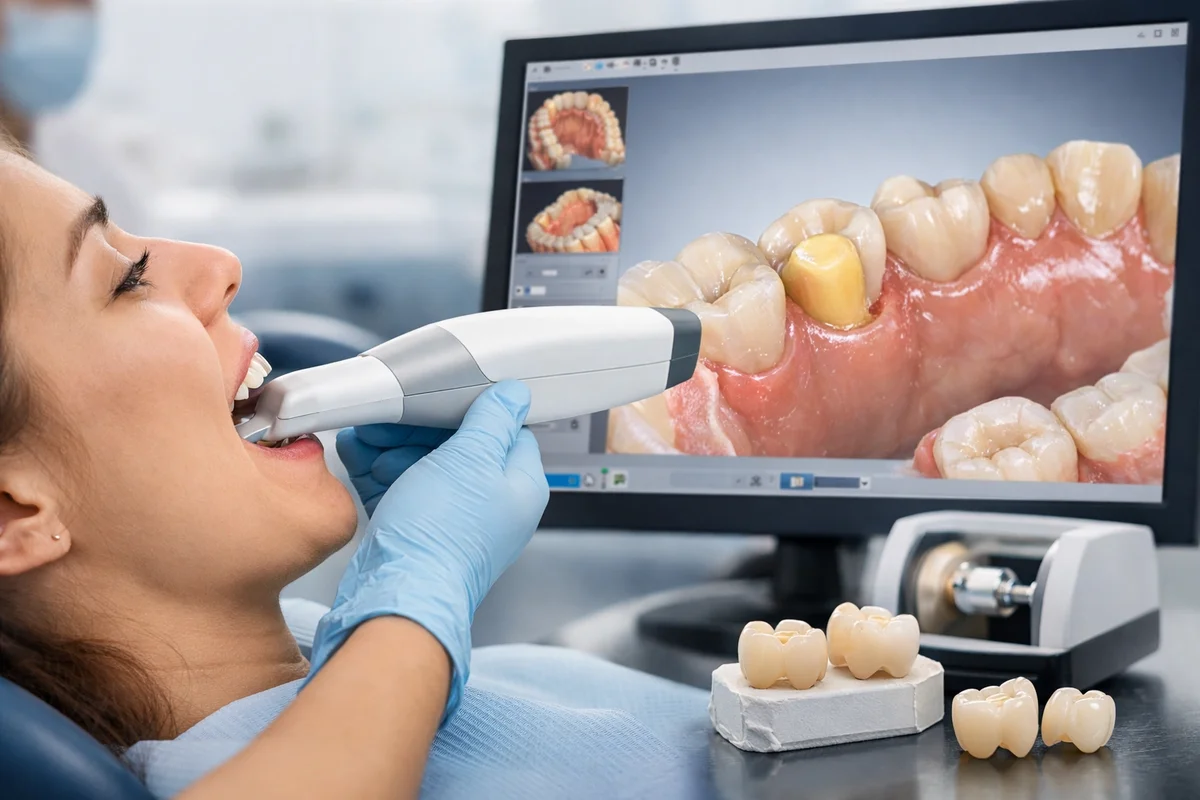
From a patient’s perspective, the experience is dramatically improved. Many people feel anxious or uncomfortable with impression trays and thick impression materials. A dental scanner for crowns eliminates this discomfort by using a small handheld wand that gently scans the teeth. The process is fast, non-invasive, and gag-reflex friendly 😌. Patients can even see their digital tooth model on the screen, which helps them better understand their treatment.
Clinically, the benefits go far beyond comfort. A dental scanner for crowns allows dentists to evaluate margins, contacts, and occlusion in real time. If an area is missed, it can be rescanned immediately—something that is impossible with traditional impressions. This real-time feedback ensures that the digital crown design is based on complete and accurate data from the very beginning.
Another major advantage of a dental scanner for crowns is its seamless integration with CAD/CAM (Computer-Aided Design and Computer-Aided Manufacturing) systems. Once the scan is complete, the digital file can be sent instantly to an in-house milling unit or a dental laboratory. This digital workflow speeds up crown production and, in many cases, enables same-day crown treatments. Patients no longer need to wear temporary crowns for weeks, which greatly improves satisfaction 😊.
Accuracy also plays a critical role in long-term oral health. A poorly fitting crown can lead to plaque accumulation, gum inflammation, and even secondary decay. By using a dental scanner for crowns, dentists can achieve better marginal integrity and a more predictable fit. This contributes to healthier gums, improved hygiene, and longer-lasting restorations.
For dental clinics aiming to follow international standards, digital scanning aligns with best practices promoted by trusted organizations such as the
American Dental Association. Digital dentistry is no longer considered a luxury—it is quickly becoming the standard of care for crown fabrication and restorative procedures.
From a practice-growth perspective, investing in a dental scanner for crowns also enhances a clinic’s professional image. Patients associate digital scanning with advanced care, precision, and modern technology. This trust often translates into higher case acceptance rates and stronger patient loyalty. Clinics that focus on international patients can further benefit by offering fast, predictable crown treatments. For professional consultations or treatment planning, patients can easily reach out via the
Redent Klinik Contact Page.
In summary, a dental scanner for crowns is not just a digital replacement for traditional impressions—it is a complete upgrade in how crowns are planned and delivered. By improving accuracy, enhancing patient comfort, streamlining workflows, and supporting long-term oral health, this technology plays a central role in modern restorative dentistry. As digital solutions continue to evolve, dental scanners will remain a cornerstone of high-quality crown treatments and confident, healthy smiles 😁.
What Is a Dental Scanner for Crowns and How Does It Work?
A dental scanner for crowns is a digital imaging device designed to capture precise, three-dimensional representations of a patient’s teeth, gums, and bite. Its primary role is to replace traditional physical impressions with a faster, cleaner, and significantly more accurate digital alternative. In modern restorative dentistry, especially crown treatments, this technology has become a cornerstone for predictable and high-quality results.
Understanding the Core Purpose of a Dental Scanner for Crowns
The main purpose of a dental scanner for crowns is to collect exact digital data that reflects the patient’s oral anatomy. When preparing a tooth for a crown, even the smallest discrepancy can affect fit, comfort, or longevity. Digital scanning allows dentists to record fine details such as preparation margins, contact points, and occlusal relationships with exceptional precision.
Unlike traditional impression methods that rely on trays and impression materials, a dental scanner for crowns uses optical technology. High-resolution cameras and light projection systems capture thousands of images per second. These images are instantly stitched together by specialized software to form a realistic 3D model. This model becomes the foundation for designing a crown that fits naturally and functions properly.
Step-by-Step: How a Dental Scanner for Crowns Works
1. Tooth Preparation and Isolation
Before using a dental scanner for crowns, the dentist prepares the tooth by shaping it to receive the crown. Proper isolation is essential to ensure clean data capture. Saliva control and retraction of the gums help the scanner accurately detect margins and contours.
2. Digital Scanning Process
The scanning process involves guiding a small handheld wand around the prepared tooth and surrounding areas. The dental scanner for crowns captures real-time images, allowing the dentist to see the digital model forming instantly on the screen. If any area is unclear or missing, it can be rescanned immediately—an advantage impossible with conventional impressions.
3. Bite and Occlusion Recording
A critical step in crown fabrication is ensuring proper bite alignment. A dental scanner for crowns records how the upper and lower teeth come together. This digital bite registration ensures the final crown does not interfere with chewing or cause discomfort after placement.
4. Digital File Creation and Transfer
Once scanning is complete, the data is converted into a digital file compatible with CAD/CAM systems. The dental scanner for crowns enables instant file transfer to in-house milling machines or dental laboratories, significantly reducing turnaround time.
Technology Behind a Dental Scanner for Crowns
Most systems use advanced optical technologies such as structured light or laser scanning. These technologies allow the dental scanner for crowns to capture surface geometry with extreme accuracy while remaining completely non-invasive. Because no radiation is involved, the process is safe for repeated use and suitable for patients of all ages.
Another key component is the software. Intelligent algorithms process the raw scan data, eliminate distortions, and enhance detail clarity. This ensures that the digital impression created by a dental scanner for crowns closely mirrors the patient’s real oral anatomy.
Why Digital Accuracy Matters for Crown Success
Crown success depends heavily on marginal fit and proper contact with adjacent teeth. A dental scanner for crowns excels in capturing these critical areas. Poorly fitting crowns can lead to food impaction, gum inflammation, and recurrent decay. Digital scanning significantly reduces these risks by providing dentists and technicians with highly reliable data.
Additionally, digital scans remain permanently stored and can be reused if needed. If a crown is damaged years later, the original dental scanner for crowns data may still be available, eliminating the need for a new impression in some cases. This long-term value benefits both patients and clinics.
Comparing Digital Scanning to Traditional Impressions
Traditional impressions are technique-sensitive and prone to errors caused by material distortion, temperature changes, or patient movement. A dental scanner for crowns removes many of these variables. Digital scanning provides consistency, reproducibility, and faster workflows, making it a preferred solution in modern practices.
From a patient standpoint, digital scanning is more comfortable and less stressful. The use of a dental scanner for crowns eliminates gag reflex triggers and reduces chair time. This improved experience often leads to higher patient satisfaction and trust.
In conclusion, a dental scanner for crowns is a sophisticated digital tool that fundamentally changes how crowns are planned and produced. By combining optical imaging, advanced software, and seamless integration with digital workflows, it delivers accuracy, efficiency, and comfort that traditional methods simply cannot match. Understanding how this technology works helps patients appreciate the value it brings to modern crown treatments and long-term oral health 🦷.
Why Dental Clinics Prefer Digital Scanning for Crown Procedures
Dental clinics around the world increasingly rely on a dental scanner for crowns because it fundamentally improves how crown treatments are planned, executed, and delivered. This preference is not driven by technology trends alone, but by measurable clinical advantages, smoother workflows, and higher patient satisfaction. Compared to traditional impression techniques, digital scanning offers predictability and efficiency that modern dental practices simply cannot ignore.
Clinical Precision as a Primary Reason
One of the strongest reasons clinics prefer a dental scanner for crowns is its unmatched precision. Crown treatments demand exact marginal accuracy; even a small error can lead to discomfort, improper bite, or future dental complications. Digital scanning captures fine anatomical details with remarkable clarity, allowing dentists to visualize preparation margins, undercuts, and occlusal surfaces in real time.
With a dental scanner for crowns, dentists can instantly verify scan quality on-screen. If a margin is unclear or a surface is missing, it can be rescanned immediately. This level of control dramatically reduces errors that would otherwise only be discovered days later when a lab reports an issue with a traditional impression.
Workflow Efficiency and Time Savings
Reduced Chair Time
Efficiency is another key reason clinics adopt a dental scanner for crowns. Digital scans are significantly faster than traditional impressions. Patients spend less time in the chair, and clinicians can complete procedures more efficiently without compromising quality.
Faster Laboratory Communication
A dental scanner for crowns allows instant digital file transfer to dental laboratories. There is no need for physical shipping, impression disinfection, or risk of damage during transport. This streamlined communication accelerates crown fabrication and shortens overall treatment timelines.
Improved Patient Experience and Satisfaction
Patient comfort plays a major role in why clinics choose a dental scanner for crowns. Traditional impression trays often cause gag reflex, discomfort, or anxiety—especially in sensitive patients. Digital scanning replaces this experience with a small, handheld device that gently captures images without invasive materials.
Patients also appreciate transparency. With a dental scanner for crowns, dentists can show patients a real-time 3D model of their teeth. This visual explanation helps patients understand why a crown is needed and how it will be designed, increasing trust and treatment acceptance 😊.
Consistency and Predictability in Crown Outcomes
Consistency is critical in restorative dentistry. A dental scanner for crowns provides standardized digital data that is not affected by temperature changes, material setting times, or operator variability. This consistency results in crowns that fit more predictably and require fewer adjustments.
Dental clinics value this predictability because it reduces remakes and follow-up visits. Fewer adjustments mean lower operational costs and a smoother schedule for both staff and patients. Over time, the reliability of a dental scanner for crowns directly improves a clinic’s overall efficiency.
Integration with Digital Dentistry Systems
CAD/CAM Compatibility
Modern clinics often use CAD/CAM systems for crown design and fabrication. A dental scanner for crowns integrates seamlessly with these systems, enabling a fully digital workflow from scan to final restoration. This integration supports same-day crowns in clinics equipped with in-house milling units.
Digital Record Keeping
Another advantage is long-term data storage. Digital impressions created by a dental scanner for crowns can be archived securely and accessed years later if needed. This is especially useful for repairs, replacements, or monitoring changes over time.
Enhanced Professional Image and Competitive Advantage
Clinics that use a dental scanner for crowns are often perceived as more advanced and patient-focused. Digital technology signals precision, innovation, and high standards of care. This perception is particularly important for clinics treating international or cosmetic dentistry patients.
By offering digital crown workflows, clinics differentiate themselves in a competitive market. Patients actively seek practices that use modern solutions like a dental scanner for crowns because they associate them with better outcomes and a more comfortable experience.
Risk Reduction and Quality Control
Errors in crown impressions can be costly. A dental scanner for crowns significantly reduces risks related to impression distortion, voids, or miscommunication with laboratories. Built-in software checks help identify potential issues before the case is sent for fabrication.
This proactive quality control ensures higher success rates and fewer complications after crown placement. For dental clinics, this reliability translates into stronger clinical outcomes and improved patient trust.
In summary, dental clinics prefer a dental scanner for crowns because it enhances precision, improves workflow efficiency, elevates patient comfort, and delivers consistent, high-quality crown results. As dentistry continues to evolve, digital scanning is no longer an optional upgrade—it is a strategic necessity for clinics committed to excellence 🦷✨.
Accuracy and Fit: How Digital Crown Scanning Improves Outcomes
Accuracy and fit are the foundation of every successful crown treatment, and this is where a dental scanner for crowns truly proves its value. A crown that fits precisely not only feels comfortable but also protects the tooth, supports gum health, and lasts significantly longer. Digital scanning technology has raised the standard of accuracy in restorative dentistry, helping dentists deliver consistently better outcomes for their patients.
Why Accuracy Is Critical in Crown Dentistry
When a crown is fabricated, even microscopic inaccuracies can lead to major clinical problems. Poor marginal fit may allow bacteria to penetrate beneath the crown, increasing the risk of secondary decay and gum inflammation. A dental scanner for crowns minimizes these risks by capturing extremely detailed digital impressions that reflect the true anatomy of the prepared tooth.
Traditional impressions depend heavily on materials that can shrink, tear, or distort. In contrast, a dental scanner for crowns records the tooth structure exactly as it is, without physical deformation. This level of accuracy directly impacts how well the final crown seals to the tooth.
How Digital Scanning Enhances Marginal Precision
Clear Visualization of Crown Margins
One of the biggest challenges in crown preparation is identifying and capturing the margin line. A dental scanner for crowns provides high-resolution visualization of the margin area, even when it is close to the gum line. Dentists can zoom in, rotate the model, and verify margin clarity before approving the scan.
Immediate Error Detection
With a dental scanner for crowns, inaccuracies are identified instantly. If a margin is unclear or incomplete, the dentist can rescan that specific area on the spot. This real-time feedback prevents errors from progressing to the laboratory stage, where corrections would be more time-consuming and costly.
Improved Contact Points and Bite Alignment
A crown must fit seamlessly between neighboring teeth and align correctly with the opposing bite. A dental scanner for crowns captures interproximal contacts and occlusal relationships with remarkable precision. This ensures that the crown does not feel too tight, too loose, or interfere with normal chewing.
Digital bite registration is a major advantage. The dental scanner for crowns records how the upper and lower teeth come together, helping technicians design crowns that integrate naturally into the patient’s bite. This reduces post-placement adjustments and enhances overall comfort.
Consistency Across Crown Materials
Whether the crown is made from zirconia, porcelain, or lithium disilicate, accuracy remains essential. A dental scanner for crowns provides consistent digital data regardless of material choice. This consistency allows dental laboratories to fabricate restorations with predictable results across different crown types.
Because the scan data is standardized, technicians can rely on the information provided by the dental scanner for crowns without compensating for impression distortions. This leads to crowns that require minimal finishing and polishing.
Long-Term Benefits of a Better Crown Fit
Reduced Risk of Secondary Decay
A precise crown fit reduces gaps where plaque and bacteria can accumulate. By using a dental scanner for crowns, dentists help protect the underlying tooth structure and extend the lifespan of the restoration.
Healthier Gums and Surrounding Tissue
Ill-fitting crowns can irritate the gums and cause chronic inflammation. The smooth margins achieved with a dental scanner for crowns promote healthier gum adaptation and easier oral hygiene maintenance for patients.
Predictable Outcomes for Dentists and Patients
Predictability is a major advantage of digital dentistry. A dental scanner for crowns reduces variability between cases, allowing dentists to deliver consistent quality across treatments. Patients benefit from fewer adjustments, fewer follow-up visits, and greater confidence in their restorations 😊.
From the dentist’s perspective, predictable fit means less chairside modification and higher efficiency. This reliability builds trust between the clinic, the laboratory, and the patient.
In conclusion, a dental scanner for crowns significantly improves accuracy and fit by capturing detailed digital impressions, enhancing margin clarity, optimizing bite alignment, and supporting long-term oral health. These improvements lead to crowns that feel natural, function properly, and last longer—making digital scanning an essential tool for modern, outcome-focused dentistry 🦷✨.
Patient Experience: Comfort and Speed with Intraoral Scanners
The patient experience has become a central focus in modern dentistry, and this is where a dental scanner for crowns delivers some of its most noticeable benefits. Beyond clinical accuracy and workflow efficiency, digital scanning dramatically changes how patients feel before, during, and after crown procedures. Comfort, speed, and transparency are key reasons why patients increasingly prefer clinics that use advanced digital technology.
Why Comfort Matters in Crown Treatments
Many patients associate crown procedures with discomfort, gag reflex, and long chair time—mostly due to traditional impression methods. A dental scanner for crowns eliminates these negative experiences by replacing bulky impression trays with a slim, handheld scanning wand. This alone transforms the emotional and physical comfort of the procedure.
Patients who previously avoided dental treatment due to anxiety often find digital scanning much easier to tolerate. The dental scanner for crowns does not require unpleasant materials, strong tastes, or extended waiting times while impressions set. This creates a calmer, more relaxed environment for both the patient and the dental team 😌.
How Intraoral Scanning Improves Patient Comfort
No Gag Reflex Triggers
Traditional impression trays frequently trigger gag reflex, especially in sensitive patients. A dental scanner for crowns avoids this entirely by using light-based scanning rather than physical molds. The scanning wand is small, smooth, and easy to maneuver, making it ideal even for patients with strong gag reflexes.
Shorter Time in the Dental Chair
Speed is another major comfort factor. A dental scanner for crowns captures detailed impressions within minutes. This significantly reduces the amount of time patients must remain still with their mouths open, which is particularly beneficial for elderly patients or those with jaw discomfort.
Real-Time Visualization Builds Trust
One of the most powerful patient-centered advantages of a dental scanner for crowns is real-time visualization. Patients can see a 3D digital model of their teeth immediately after scanning. This transparency helps patients understand why a crown is needed and how it will be designed.
When patients see their own dental anatomy on screen, they become more engaged in the treatment process. A dental scanner for crowns turns abstract explanations into clear visual information, increasing confidence and acceptance of the proposed treatment 😊.
Faster Appointments and Fewer Visits
Reduced Need for Repeat Appointments
Errors in traditional impressions often require patients to return for retakes. A dental scanner for crowns minimizes this risk by allowing immediate quality checks. If a scan is incomplete, it can be corrected instantly—without scheduling another visit.
Potential for Same-Day Crowns
In clinics equipped with CAD/CAM technology, a dental scanner for crowns enables same-day crown treatments. Patients can walk in with a damaged tooth and leave with a permanent crown in a single visit. This convenience is especially valuable for busy professionals and international patients.
Reduced Anxiety Through Predictability
Uncertainty often increases dental anxiety. A dental scanner for crowns provides predictable outcomes by reducing surprises during crown placement. Because digital scans are highly accurate, patients are less likely to experience discomfort, bite issues, or prolonged adjustments after the crown is fitted.
Knowing that the process is precise and efficient helps patients feel more at ease. The dental scanner for crowns supports a smoother treatment journey from start to finish, reducing stress and increasing overall satisfaction.
Enhanced Communication Between Dentist and Patient
Digital tools improve communication. With a dental scanner for crowns, dentists can explain treatment steps clearly using visual aids. Patients are no longer passive recipients of care; they become informed participants.
This improved communication leads to stronger dentist-patient relationships. Patients who understand their treatment are more likely to follow aftercare instructions and maintain long-term oral health.
Comfort After Crown Placement
Comfort does not end when the appointment is over. A dental scanner for crowns contributes to better-fitting crowns that feel natural from day one. Patients report fewer pressure points, smoother chewing, and less post-treatment sensitivity.
Because the crown fits accurately, the surrounding gums adapt more easily. This reduces inflammation and discomfort in the days following placement, further enhancing the overall experience.
In summary, a dental scanner for crowns significantly elevates the patient experience by improving comfort, reducing chair time, minimizing anxiety, and enhancing communication. From the first scan to the final crown placement, patients benefit from a faster, gentler, and more predictable process. This patient-centered approach is one of the strongest reasons digital scanning has become a defining feature of modern crown dentistry 🦷✨.
Dental Scanner for Crowns vs Traditional Impressions
When comparing modern digital dentistry to conventional methods, the contrast between a dental scanner for crowns and traditional impressions is striking. While both aim to capture the shape and structure of teeth for crown fabrication, the way they achieve this goal—and the outcomes they produce—are fundamentally different. Understanding these differences helps patients and dental professionals appreciate why digital scanning has become the preferred approach in contemporary crown treatments.
Overview of Traditional Crown Impression Techniques
Traditional impressions rely on physical materials such as alginate or polyvinyl siloxane placed into a tray and inserted into the patient’s mouth. The material sets around the teeth to create a mold, which is then sent to a dental laboratory. While this method has been used for decades, it comes with inherent limitations.
Factors like saliva contamination, patient movement, improper tray placement, or material shrinkage can compromise the impression. Even minor distortions may affect crown fit. Compared to a dental scanner for crowns, traditional impressions leave much more room for error at every step of the process.
Accuracy and Detail: Digital vs Physical Impressions
Precision of Digital Data
A dental scanner for crowns captures thousands of data points per second, creating a highly accurate 3D digital model. This level of detail allows dentists to identify preparation margins, surface anatomy, and occlusal relationships with exceptional clarity.
Limitations of Impression Materials
Traditional impression materials can distort during setting or removal from the mouth. Temperature changes and handling during transport to the lab may further affect accuracy. A dental scanner for crowns avoids these issues entirely by producing a digital file that remains unchanged from capture to crown fabrication.
Patient Comfort and Experience
Patient comfort is one of the most noticeable differences. Traditional impressions often cause gag reflex, discomfort, or anxiety due to bulky trays and unpleasant textures. A dental scanner for crowns replaces this experience with a small scanning wand and a quick, non-invasive procedure.
Many patients report feeling more relaxed during digital scanning. The absence of impression material and shorter chair time make a dental scanner for crowns especially beneficial for children, elderly patients, and those with dental anxiety 😌.
Time Efficiency and Workflow Speed
Chairside Efficiency
Traditional impressions require time for material mixing, setting, and verification. If an error occurs, the process must be repeated. A dental scanner for crowns captures impressions in minutes and allows immediate quality assessment, saving valuable chair time.
Laboratory Turnaround
Physical impressions must be disinfected, packaged, and shipped to a dental laboratory. This adds days to the workflow. With a dental scanner for crowns, digital files are sent instantly, enabling faster crown fabrication and, in some cases, same-day restorations.
Error Reduction and Predictability
Traditional impressions are highly technique-sensitive. Small mistakes during mixing, timing, or removal can compromise the final result. A dental scanner for crowns reduces these variables by standardizing the impression process through digital technology.
Because digital scans can be reviewed and corrected immediately, the risk of remakes is significantly lower. This predictability benefits both patients and clinics by reducing delays and additional appointments.
Communication with Dental Laboratories
Clear communication between dentist and lab is essential for successful crown fabrication. Traditional impressions rely on physical models and written instructions. A dental scanner for crowns enhances communication by providing precise digital data that technicians can view, rotate, and analyze in detail.
Digital files from a dental scanner for crowns can also include notes, margin markings, and bite information, reducing misunderstandings and improving crown quality.
Long-Term Data Storage and Reusability
Physical impressions and stone models require storage space and can degrade over time. In contrast, data from a dental scanner for crowns is stored digitally and can be retrieved instantly when needed.
This long-term accessibility is valuable if a crown needs replacement or adjustment years later. The original digital scan may eliminate the need for a new impression, saving time and improving convenience for the patient.
Cost Considerations Over Time
While traditional impressions may seem less expensive initially, hidden costs accumulate through remakes, shipping, and longer chair time. A dental scanner for crowns represents an upfront investment, but it often reduces long-term operational costs by improving efficiency and reducing errors.
For patients, this efficiency can translate into fewer visits and faster treatment completion—an important factor for busy schedules or international dental care.
In summary, the comparison between a dental scanner for crowns and traditional impressions clearly highlights why digital scanning has become the preferred choice in modern dentistry. Superior accuracy, improved comfort, faster workflows, better communication, and long-term reliability all contribute to better crown outcomes. While traditional impressions played an important role in the past, digital scanning now sets the standard for precision-driven, patient-centered crown treatments 🦷✨.
Types of Dental Scanners Used for Crown Fabrication
Choosing the right dental scanner for crowns plays a crucial role in the quality, efficiency, and predictability of crown fabrication. Not all dental scanners are the same, and different types are designed to meet specific clinical needs. Understanding the various scanner categories helps dentists select the most suitable technology for their workflow, while also helping patients appreciate how their crowns are created with such precision.
Intraoral Scanners: The Most Common Dental Scanner for Crowns
Intraoral scanners are the most widely used dental scanner for crowns in modern dental clinics. These handheld devices are designed to capture digital impressions directly from inside the patient’s mouth. Using advanced optical systems, they scan the prepared tooth, adjacent teeth, and bite relationship in real time.
The primary advantage of an intraoral dental scanner for crowns is convenience. Dentists can scan, review, and correct impressions instantly without removing trays or waiting for materials to set. This makes intraoral scanners ideal for single crowns, multiple restorations, and even full-arch treatments.
Key Benefits of Intraoral Scanners
• High patient comfort due to non-invasive scanning
• Immediate visualization and quality control
• Seamless integration with CAD/CAM systems
• Faster turnaround for crown fabrication
Desktop (Laboratory) Scanners in Crown Production
Another important category is the desktop or laboratory dental scanner for crowns. These scanners are used primarily in dental laboratories rather than chairside. They digitize physical models, impressions, or wax-ups that have already been created.
While desktop scanners do not replace intraoral scanning, they complement it. For example, if a clinic uses traditional impressions, the lab may use a desktop dental scanner for crowns to convert the physical model into a digital file for CAD/CAM design. This hybrid workflow bridges traditional and digital dentistry.
When Desktop Scanners Are Most Useful
Desktop scanners are especially helpful when:
• Working with legacy impressions or stone models
• Digitizing complex prosthetic designs
• Creating digital archives of physical cases
Open vs Closed System Dental Scanners
When selecting a dental scanner for crowns, clinics must also consider whether the system is open or closed. This distinction affects flexibility, compatibility, and long-term investment value.
Open System Dental Scanners
An open-system dental scanner for crowns allows digital files to be exported in standard formats. This gives dentists the freedom to work with multiple laboratories, milling machines, and CAD software platforms. Open systems are often preferred by clinics seeking flexibility and scalability.
Closed System Dental Scanners
Closed systems restrict file usage to specific software or hardware ecosystems. While a closed dental scanner for crowns may offer tightly integrated workflows and simplified support, it limits customization and lab choice.
Powder-Based vs Powder-Free Scanners
Earlier generations of scanners required reflective powder to be applied to teeth before scanning. Modern dental scanner for crowns systems are mostly powder-free, using advanced optics to capture accurate data without surface preparation.
Why Powder-Free Scanning Matters
Powder-free dental scanner for crowns systems improve patient comfort, reduce preparation time, and eliminate inconsistencies caused by uneven powder application. This results in cleaner data and more accurate crown designs.
Accuracy Levels and Scanning Speed
Not all dental scanners offer the same resolution or speed. High-end dental scanner for crowns models capture more data points per second, resulting in smoother surfaces and sharper margin detail.
Faster scanning speed also reduces the likelihood of motion artifacts. This is particularly important for patients who have difficulty staying still. A high-performance dental scanner for crowns ensures reliable results even in challenging clinical situations.
Choosing the Right Dental Scanner for Crowns
Selecting the ideal dental scanner for crowns depends on several factors, including practice size, case complexity, patient volume, and budget. Clinics offering same-day crowns often prioritize scanners with strong CAD/CAM integration, while referral-based practices may focus on open-system compatibility.
Training and usability are also important. A user-friendly dental scanner for crowns reduces learning curves and minimizes scanning errors, allowing the dental team to work more efficiently.
Future Trends in Dental Scanning Technology
Dental scanning technology continues to evolve rapidly. Artificial intelligence, improved color accuracy, and enhanced margin detection are becoming standard features in the latest dental scanner for crowns systems. These innovations further increase precision and reduce manual input.
As digital dentistry advances, the distinction between scanning, designing, and manufacturing continues to blur. The dental scanner for crowns is no longer just an impression tool—it is a central hub in the digital restorative workflow.
In conclusion, understanding the different types of dental scanner for crowns helps both dentists and patients appreciate the technology behind modern crown fabrication. Whether intraoral or laboratory-based, open or closed system, each scanner type plays a specific role in delivering accurate, comfortable, and long-lasting crown restorations. Choosing the right scanner ultimately leads to better outcomes, smoother workflows, and more confident smiles 🦷✨.
Integration with CAD/CAM Systems in Modern Dentistry
The true power of a dental scanner for crowns is fully realized when it is integrated with CAD/CAM systems. CAD/CAM, which stands for Computer-Aided Design and Computer-Aided Manufacturing, represents the digital backbone of modern restorative dentistry. When combined with high-precision digital scanning, this technology enables dentists to design, manufacture, and place crowns with unprecedented accuracy, speed, and predictability.
How a Dental Scanner for Crowns Fits into the CAD/CAM Workflow
A dental scanner for crowns is the starting point of the digital CAD/CAM workflow. Once the prepared tooth and surrounding structures are scanned, the resulting digital impression becomes the foundation for crown design. This data is immediately transferred to CAD software, where the crown is digitally modeled.
Unlike traditional workflows that rely on physical impressions and manual laboratory steps, the digital workflow driven by a dental scanner for crowns is seamless and continuous. Each step builds on accurate digital data, minimizing guesswork and human error.
Computer-Aided Design: Creating the Digital Crown
Precision Crown Design
In the CAD phase, the digital scan captured by the dental scanner for crowns is used to design the crown’s shape, contours, and contact points. The software analyzes the patient’s bite, adjacent teeth, and occlusion to create a restoration that fits naturally within the oral environment.
Dentists or dental technicians can adjust thickness, margin placement, and anatomy digitally. Because the design is based on highly accurate data from the dental scanner for crowns, these adjustments are precise and predictable.
Virtual Testing Before Manufacturing
One of the major advantages of CAD design is the ability to virtually test the crown. The crown can be evaluated for bite interference, contact pressure, and marginal accuracy before it is ever manufactured. This level of control would not be possible without the detailed data provided by a dental scanner for crowns.
Computer-Aided Manufacturing: From Digital Design to Physical Crown
Once the crown design is finalized, the digital file is sent to a CAM system. This is where the physical crown is created using milling machines or 3D printers. The accuracy of the final restoration depends heavily on the quality of the original scan, making the dental scanner for crowns a critical factor in manufacturing success.
High-quality digital scans ensure that the milled or printed crown matches the design precisely. This results in restorations that require minimal finishing and fit comfortably from the moment they are placed.
Same-Day Crowns: A Major Advantage of CAD/CAM Integration
Single-Visit Crown Treatments
One of the most patient-friendly benefits of integrating a dental scanner for crowns with CAD/CAM systems is the ability to deliver same-day crowns. In clinics equipped with in-house milling units, the entire process—from scanning to placement—can be completed in a single visit.
Patients no longer need temporary crowns or multiple appointments. The dental scanner for crowns enables a streamlined experience that saves time while maintaining high-quality results 😊.
Improved Accuracy Compared to Traditional Lab Crowns
Same-day crowns produced through CAD/CAM are often more accurate than traditional lab-fabricated crowns. This is because the digital workflow eliminates many intermediate steps where errors can occur. The dental scanner for crowns ensures that the digital data used for manufacturing is precise from the start.
Consistency and Standardization Across Cases
Another key advantage of CAD/CAM integration is consistency. A dental scanner for crowns provides standardized digital impressions that can be used across multiple cases with predictable results. This standardization helps clinics maintain uniform quality regardless of case complexity.
For dental groups or clinics with multiple locations, using the same dental scanner for crowns and CAD/CAM workflow ensures that patients receive the same level of care everywhere.
Reduced Dependence on External Laboratories
While many clinics still work with dental laboratories, CAD/CAM integration allows greater control over the crown fabrication process. A dental scanner for crowns enables dentists to decide whether to fabricate crowns in-house or send digital files to a lab.
This flexibility improves efficiency and reduces delays. Even when external labs are used, the digital data from a dental scanner for crowns ensures clear communication and fewer remakes.
Long-Term Benefits for Dental Practices
Integrating a dental scanner for crowns with CAD/CAM systems is not just a technological upgrade—it is a long-term investment in efficiency, quality, and patient satisfaction. Digital workflows reduce material waste, shorten treatment times, and improve overall case predictability.
As technology continues to evolve, CAD/CAM systems are becoming more intelligent, faster, and more affordable. The dental scanner for crowns remains the cornerstone of this digital ecosystem, ensuring that crown treatments meet the highest standards of modern dentistry.
In conclusion, the integration of a dental scanner for crowns with CAD/CAM systems transforms crown dentistry into a precise, efficient, and patient-centered process. From digital design to same-day manufacturing, this synergy defines the future of restorative care and sets a new benchmark for accuracy and convenience 🦷✨.
Clinical Workflow Benefits of Using a Dental Scanner for Crowns
A dental scanner for crowns does more than improve impressions—it reshapes the entire clinical workflow. From the first patient interaction to crown delivery, digital scanning streamlines processes, reduces bottlenecks, and enhances predictability. For modern dental practices focused on efficiency and quality, optimizing workflow is essential, and the dental scanner for crowns plays a central role in achieving that goal.
Streamlined Chairside Workflow
Chairside efficiency is one of the most immediate benefits of a dental scanner for crowns. Traditional impressions involve multiple steps—tray selection, material mixing, setting time, removal, inspection, and possible retakes. Digital scanning condenses these steps into a single, continuous process.
With a dental scanner for crowns, dentists capture the scan, assess quality instantly, and proceed without interruptions. This smooth flow reduces procedure time and keeps appointments on schedule, which is especially valuable in busy practices.
Immediate Quality Control
The ability to review scans in real time is a major workflow advantage. If an area is missing or unclear, the dental scanner for crowns allows immediate rescanning—without restarting the entire process. This prevents downstream delays and minimizes patient inconvenience.
Reduced Remakes and Adjustments
Remakes are costly in terms of time, resources, and patient satisfaction. A dental scanner for crowns significantly reduces remakes by providing accurate, consistent digital data to dental laboratories or in-house CAD/CAM systems.
Because margins, contacts, and occlusion are captured precisely, crowns fabricated from digital scans typically require fewer adjustments. This efficiency benefits clinicians by reducing chairside modification time and benefits patients by ensuring a smoother placement experience.
Enhanced Team Coordination
Improved Communication Between Dentist and Assistant
Digital scanning improves collaboration within the dental team. Assistants can monitor scan progress, prepare subsequent steps, and manage digital files efficiently. A dental scanner for crowns creates a shared visual reference that aligns the entire team.
Clear Communication with Dental Laboratories
When working with external labs, the dental scanner for crowns enhances clarity. Digital files can include margin markings, bite registrations, and notes, reducing misunderstandings. This clarity leads to fewer revisions and faster turnaround times.
Time Savings Across the Entire Treatment Cycle
Time savings extend beyond the appointment itself. A dental scanner for crowns eliminates shipping delays associated with physical impressions and reduces follow-up visits caused by impression errors. The cumulative effect is a shorter overall treatment timeline.
For patients, fewer visits and faster completion increase satisfaction. For clinics, optimized scheduling improves productivity and allows more efficient use of clinical hours.
Standardization and Consistency in Clinical Processes
Standardization is essential for maintaining quality across cases. A dental scanner for crowns provides consistent digital output regardless of operator or case complexity. This consistency helps practices establish repeatable protocols that deliver reliable results.
For multi-provider clinics, standardized scanning protocols ensure uniform quality. Each clinician using the same dental scanner for crowns produces comparable data, simplifying case management and lab communication.
Digital Documentation and Case Management
Efficient Record Keeping
Digital impressions are easy to store, retrieve, and share. A dental scanner for crowns integrates seamlessly with patient management systems, allowing clinicians to access scans instantly during future visits.
Long-Term Case Tracking
Digital records support long-term monitoring. If a crown requires repair or replacement years later, data from the original dental scanner for crowns may still be available, reducing the need for new impressions and saving time.
Support for Advanced Treatment Planning
Beyond single crowns, digital scans support comprehensive treatment planning. A dental scanner for crowns provides accurate data for evaluating occlusion, spacing, and restorative options. This information is valuable for complex cases involving multiple restorations.
By integrating scanning data into digital planning tools, dentists can simulate outcomes and plan restorations with greater confidence.
Improved Patient Flow and Satisfaction
Efficient workflows directly impact patient perception. Shorter appointments, fewer delays, and predictable outcomes contribute to a positive experience. A dental scanner for crowns helps clinics deliver care that feels modern, organized, and patient-centered 😊.
Satisfied patients are more likely to accept treatment plans and recommend the practice. In this way, the workflow advantages of a dental scanner for crowns support both clinical excellence and practice growth.
In conclusion, the clinical workflow benefits of using a dental scanner for crowns are extensive and impactful. By streamlining chairside procedures, reducing remakes, enhancing communication, standardizing processes, and improving documentation, digital scanning optimizes every stage of crown treatment. These efficiencies allow dental teams to focus more on patient care while delivering precise, reliable restorations that meet the demands of modern dentistry 🦷✨.
Cost, Investment, and Long-Term Value for Dental Practices
Adopting a dental scanner for crowns is a strategic decision that goes beyond technology—it is a financial and operational investment. While the upfront cost can seem significant, the long-term value often outweighs the initial expense through efficiency gains, reduced remakes, improved patient satisfaction, and expanded treatment capabilities. Understanding both the costs and the returns helps dental practices make informed, sustainable decisions.
Initial Investment: What Does a Dental Scanner for Crowns Cost?
The purchase price of a dental scanner for crowns varies depending on brand, features, accuracy level, and system openness. Entry-level intraoral scanners typically offer core functionality suitable for single-unit crowns, while advanced systems include enhanced speed, color accuracy, AI-assisted margin detection, and seamless CAD/CAM integration.
Typical Price Ranges (Approximate)
• Entry-level intraoral scanners: mid four-figure range
• Mid-range professional scanners: low five-figure range
• High-end scanners with advanced CAD/CAM integration: higher five-figure range
These figures reflect general market trends and may vary by region, service packages, and software licensing. While the upfront price of a dental scanner for crowns may appear high, it is important to evaluate what is included—training, updates, warranty, and technical support all add value.
Ongoing Costs and Maintenance Considerations
Beyond the initial purchase, a dental scanner for crowns may involve ongoing costs such as software updates, service agreements, or optional cloud storage. Compared to consumable-heavy traditional impressions, these costs are often more predictable and easier to manage.
Traditional impression workflows require trays, impression materials, disinfectants, shipping supplies, and storage. Over time, these recurring expenses add up. A dental scanner for crowns reduces or eliminates many of these consumables, helping balance long-term operational costs.
Return on Investment Through Efficiency
Reduced Chair Time
Time is one of the most valuable assets in a dental practice. A dental scanner for crowns shortens appointment durations by streamlining impressions and reducing retakes. Shorter appointments allow clinics to see more patients or dedicate time to higher-value procedures.
Fewer Remakes and Adjustments
Remakes cost money and damage patient trust. By improving impression accuracy, a dental scanner for crowns significantly reduces the likelihood of remakes. This saves laboratory fees, staff time, and additional appointments.
Financial Benefits of Same-Day Crowns
Practices that integrate a dental scanner for crowns with in-house CAD/CAM systems can offer same-day crowns. This capability can increase revenue per visit and differentiate the practice in a competitive market.
Same-day crowns also reduce dependency on external laboratories, keeping more of the treatment value in-house. Over time, this efficiency can substantially improve profitability.
Enhanced Case Acceptance and Patient Trust
Patients are more likely to accept treatment when they perceive value and modern care. A dental scanner for crowns enhances the patient experience through comfort, transparency, and speed. Higher acceptance rates directly impact revenue and practice growth.
Patients who experience efficient, high-tech care are also more likely to recommend the clinic. This organic growth further increases the long-term value of investing in a dental scanner for crowns.
Scalability and Future-Proofing the Practice
Digital dentistry continues to evolve, and a dental scanner for crowns positions a practice to adopt future innovations. Software updates, AI-assisted diagnostics, and expanded digital workflows can be added without replacing the entire system.
Practices that invest early in digital infrastructure often adapt more easily to industry changes. The dental scanner for crowns becomes a foundation for broader digital transformation rather than a standalone tool.
Comparing Short-Term Cost vs Long-Term Value
When viewed only as a purchase, a dental scanner for crowns may seem expensive. When evaluated as a long-term asset, it often proves cost-effective. Reduced material costs, fewer remakes, increased efficiency, and improved patient satisfaction all contribute to sustained returns.
Over several years, many practices find that the scanner effectively pays for itself through savings and increased productivity. This makes the dental scanner for crowns a financially sound decision rather than a luxury expense.
Investment Confidence for Modern Dental Practices
Dentistry is increasingly digital, and patient expectations continue to rise. A dental scanner for crowns aligns clinical excellence with business efficiency. Practices that embrace this technology demonstrate commitment to quality, innovation, and patient-centered care.
In conclusion, the cost of a dental scanner for crowns should be viewed in the context of long-term value. Through efficiency gains, reduced operational expenses, improved patient experiences, and future-ready workflows, digital scanning delivers returns that extend far beyond its initial price. For dental practices aiming for sustainable growth and clinical excellence, investing in a dental scanner is not just a cost—it is a smart, forward-looking strategy 🦷✨.