
Dentist notes are an essential part of modern dental care. Every time a patient visits a dental clinic, the dental professional records important information about the appointment, examination findings, treatment recommendations, procedures performed, and future care plans. These records, commonly known as dentist notes, serve as a detailed history of a patient’s oral health journey and help ensure continuity of care over time.
Many patients are unaware of the significance of dentist notes until they need copies of their dental records, switch dentists, submit insurance claims, or seek a second opinion. In reality, dentist notes are among the most valuable documents maintained by dental professionals because they provide a complete overview of diagnoses, treatments, and patient interactions. They also protect both patients and dental practitioners by creating an accurate record of what occurred during each appointment.
When a dentist examines a patient, numerous details may be recorded within the dentist notes. These details can include symptoms reported by the patient, visible signs of tooth decay, gum disease assessments, X-ray findings, treatment recommendations, oral hygiene evaluations, and discussions regarding risks and benefits of procedures. By documenting these details, dental professionals can monitor changes in oral health and make informed decisions about future treatment.
One of the primary reasons dentist notes matter is that oral health conditions often develop gradually. A small cavity today may become a serious dental issue in the future if left untreated. Through comprehensive dentist notes, dental teams can compare previous examinations with current findings and identify trends that may indicate worsening conditions or successful treatment outcomes. This historical perspective allows for more precise diagnosis and personalized care.
In addition to supporting clinical care, dentist notes play an important role in communication between healthcare providers. If a patient visits a specialist such as an oral surgeon, orthodontist, periodontist, or prosthodontist, their dental records can be shared to provide valuable context. Accurate dentist notes help specialists understand previous treatments, ongoing concerns, and overall oral health status, reducing the risk of misunderstandings and duplicated procedures.
Another important function of dentist notes is supporting informed consent. Before performing many dental procedures, dentists discuss treatment options, expected outcomes, potential risks, and alternative approaches with patients. These discussions are frequently documented within dentist notes. This documentation demonstrates that patients received appropriate information and had the opportunity to make educated decisions regarding their dental care.
Insurance providers often rely on dentist notes when reviewing claims for dental treatments. Detailed records can help justify the medical necessity of procedures and provide supporting evidence for reimbursement requests. Without complete and accurate dentist notes, insurance claims may face delays or denials because there is insufficient documentation to support the treatment performed.
From a legal perspective, dentist notes are considered official healthcare records. If questions arise regarding a diagnosis, treatment recommendation, or procedure, these records serve as a factual account of what occurred during patient visits. Well-maintained dentist notes help establish transparency and accountability while supporting professional standards of care.
Modern technology has significantly improved the management of dentist notes. Many dental clinics now use electronic health record systems that allow practitioners to create detailed digital documentation. Digital records make it easier to access patient information, update treatment histories, review diagnostic images, and coordinate care among multiple providers. Electronic dentist notes also reduce the likelihood of lost paperwork and improve record security.
Patients themselves can benefit greatly from understanding their dentist notes. Reviewing dental records may help individuals better understand their diagnoses, treatment plans, and oral health progress. Patients who actively participate in their care often feel more confident discussing concerns with their dentist and making informed decisions about treatment options.
Good documentation practices are recognized throughout the healthcare industry. Organizations such as the American Dental Association emphasize the importance of maintaining accurate clinical records as part of high-quality patient care. Comprehensive dentist notes contribute to safer treatment, improved communication, and better long-term outcomes for patients of all ages.
Whether someone is visiting a dentist for a routine cleaning, restorative treatment, cosmetic procedure, or emergency dental care, dentist notes remain a critical component of the experience. These records provide a detailed roadmap of a patient’s oral health history, helping dental professionals deliver consistent and effective care. If you have questions about your dental records or would like to discuss your oral health concerns with an experienced dental team, you can reach out through the Redent Klinik Contact Page.
Ultimately, dentist notes are far more than simple appointment records. They are comprehensive clinical documents that support diagnosis, treatment planning, patient safety, legal compliance, insurance processing, and long-term oral health management. Understanding the purpose and value of dentist notes can help patients appreciate the important role these records play in achieving and maintaining a healthy smile. 😊
What Are Dentist Notes and Why Do They Matter?
When people visit a dental clinic, they often focus on the examination, treatment, or recommendations they receive. However, behind every appointment is a detailed record that plays a critical role in maintaining quality care. These records are known as dentist notes. They document everything from a patient’s symptoms and medical history to diagnoses, treatment plans, and follow-up recommendations. Understanding the purpose of dentist notes helps patients appreciate how dental professionals monitor oral health and ensure safe, effective treatment.
At their core, dentist notes are clinical records created by dental professionals during or immediately after a patient visit. They serve as a written history of the care provided and help ensure that future treatments are based on accurate information. Whether a patient visits for a routine cleaning, a dental implant consultation, orthodontic treatment, or emergency care, dentist notes provide a reliable reference point for both current and future appointments.
The Basic Purpose of Dentist Notes
The primary purpose of dentist notes is documentation. Every healthcare provider, including dentists, must maintain accurate records of patient interactions and treatments. These records help create continuity of care, allowing dentists to review previous findings and make informed decisions about future treatment.
For example, if a dentist identifies a small cavity during a routine examination, that finding will be recorded in the patient’s dentist notes. At the next visit, the dentist can compare current findings with previous records to determine whether the cavity has progressed, remained stable, or been successfully treated.
This ability to track oral health changes over time is one of the most important benefits of maintaining comprehensive dentist notes. Dental conditions often develop gradually, and historical records provide valuable context that may not be obvious during a single appointment.
What Information Is Typically Included?
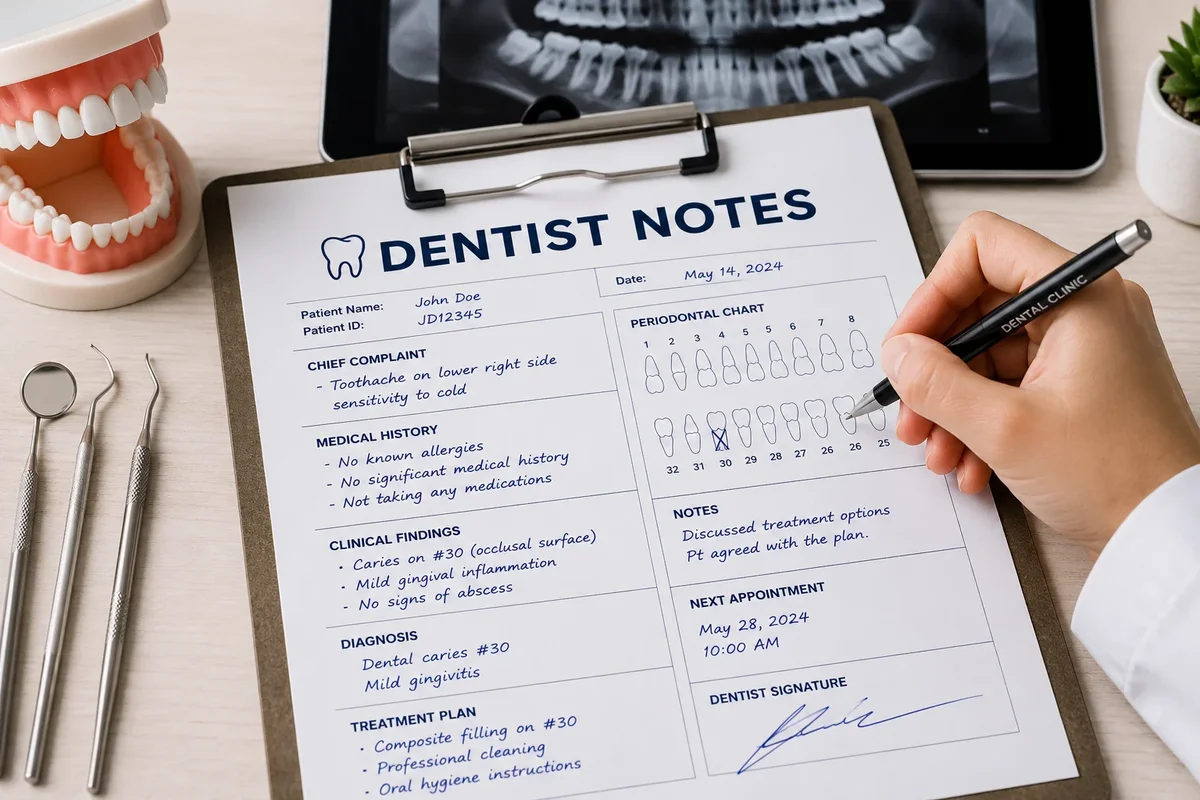
Modern dentist notes contain a wide range of information that helps dental teams understand a patient’s overall oral health status. Common elements include:
- Patient complaints and symptoms
- Medical and dental history updates
- Clinical examination findings
- Periodontal (gum) health assessments
- X-ray interpretations
- Diagnosis details
- Treatment recommendations
- Procedures performed
- Medication prescriptions
- Follow-up instructions
- Patient consent discussions
Because dentist notes capture these important details, they create a complete picture of a patient’s dental journey. This information helps ensure consistency in treatment even if multiple dental professionals are involved in a patient’s care.
Supporting Better Communication
One often overlooked benefit of dentist notes is improved communication. Many patients receive care from different dental specialists throughout their lives. General dentists, oral surgeons, orthodontists, periodontists, and prosthodontists may all contribute to treatment.
Accurate dentist notes allow these professionals to communicate effectively. Instead of relying solely on patient memory, specialists can review documented findings, previous procedures, and treatment objectives. This reduces misunderstandings and helps create a coordinated treatment approach.
Why Dentist Notes Matter for Patient Safety
Patient safety is one of the most important reasons why dentist notes are maintained. Dental treatment often requires careful consideration of a patient’s medical history, allergies, medications, and previous procedures.
If a patient is allergic to a specific medication or has a health condition that affects treatment decisions, these details will be recorded within the dentist notes. Future providers can review this information before recommending treatment, helping reduce potential risks and complications.
For example, a patient taking blood-thinning medication may require special precautions before undergoing tooth extraction. Thorough dentist notes help ensure that such critical information is readily available when treatment decisions are made.
How Dentist Notes Support Legal and Ethical Standards
Healthcare providers are expected to maintain accurate records as part of professional and ethical practice. In dentistry, dentist notes serve as official documentation of patient care. These records demonstrate what was discussed, diagnosed, recommended, and performed during each appointment.
If questions arise regarding treatment decisions, detailed dentist notes provide an objective account of events. They help protect both patients and dental professionals by creating transparency and accountability.
Ethically, maintaining complete dentist notes supports patient rights and informed decision-making. Documentation often includes records of treatment discussions, risks explained to patients, and consent obtained before procedures.
The Role of Dentist Notes in Long-Term Oral Health
Good oral health management requires long-term monitoring. Conditions such as gum disease, tooth wear, bite changes, and recurring decay may develop over many years. Comprehensive dentist notes allow dental professionals to track these changes and identify trends that might otherwise go unnoticed.
For example, periodontal disease often progresses slowly. By reviewing previous dentist notes, dentists can compare gum measurements, bone levels, and inflammation patterns to determine whether treatment is working or if adjustments are needed.
This historical perspective allows for more personalized treatment planning and better long-term outcomes.
Digital Evolution of Dentist Notes
Today, many dental clinics use electronic record systems instead of paper charts. Digital dentist notes offer several advantages, including easier access to records, improved organization, enhanced security, and better integration with digital imaging technologies.
Electronic systems allow dentists to instantly review previous examinations, radiographs, photographs, and treatment histories. This efficiency supports faster decision-making and improves the overall patient experience.
As technology continues to advance, digital dentist notes are becoming increasingly sophisticated, helping dental professionals deliver safer, more accurate, and more efficient care.
Why Patients Should Understand Their Dentist Notes
Patients who understand the purpose of dentist notes are often better equipped to participate actively in their dental care. Reviewing records can help individuals understand diagnoses, monitor treatment progress, and ask informed questions during appointments.
Ultimately, dentist notes are far more than administrative paperwork. They are comprehensive clinical records that support diagnosis, treatment planning, patient safety, communication, legal compliance, and long-term oral health management. By maintaining accurate and detailed dentist notes, dental professionals can provide consistent, evidence-based care while helping patients achieve healthier smiles for years to come. 😊
How Dentist Notes Help Track Your Oral Health History
Your oral health is not something that can be evaluated based on a single appointment alone. Dental conditions often develop gradually, and identifying patterns over time is one of the keys to successful prevention and treatment. This is where dentist notes become extremely valuable. By carefully documenting each visit, examination, diagnosis, and treatment, dental professionals create a detailed timeline of your oral health history that can guide care for years or even decades.
Every time you visit a dental clinic, new information is added to your record. These dentist notes help dentists compare current findings with previous observations, making it easier to identify changes that may require attention. Whether you are receiving preventive care, restorative treatment, cosmetic dentistry, or periodontal therapy, accurate documentation ensures that your oral health history remains complete and accessible.
Creating a Long-Term Record of Oral Health
One of the most important functions of dentist notes is creating a chronological history of your dental health. Unlike temporary symptoms that may come and go, oral health records provide a long-term perspective that helps dental professionals understand how your teeth and gums have changed over time.
For example, a dentist may notice a small area of enamel wear during an examination. This observation is recorded in the patient’s dentist notes. During a future visit, the dentist can compare current findings to previous records and determine whether the wear has progressed, stabilized, or improved. Without detailed documentation, it would be much more difficult to identify these gradual changes accurately.
This historical record becomes especially valuable for patients who receive dental care over many years. The ability to review past findings helps dentists make better-informed clinical decisions and create more personalized treatment plans.
Monitoring Tooth Decay and Restorations
Tooth decay is one of the most common dental conditions worldwide. Cavities often begin as small areas of demineralization before developing into larger problems that require restorative treatment. Comprehensive dentist notes help dental professionals monitor these changes and determine the most appropriate course of action.
When a cavity is detected, the dentist records its location, severity, and treatment recommendations within the dentist notes. Future examinations allow the dentist to assess whether the lesion has progressed or remained stable. This comparison supports evidence-based decision-making and helps avoid unnecessary procedures.
Similarly, previous restorations such as fillings, crowns, bridges, veneers, and dental implants are documented within dentist notes. Tracking these restorations over time allows dentists to evaluate their condition and identify any signs of wear, failure, or complications before major problems develop.
Following Changes in Gum Health
Periodontal disease is another condition that benefits greatly from detailed documentation. Gum disease typically progresses slowly, making long-term monitoring essential. During periodontal evaluations, measurements of gum pockets, bleeding points, inflammation levels, and bone support may be recorded within dentist notes.
By reviewing previous records, dentists can identify whether gum disease is improving, worsening, or remaining stable. These comparisons help determine whether current treatment strategies are effective or if adjustments are needed. In many cases, the ability to compare historical data is critical for preventing tooth loss and maintaining healthy gums.
Tracking Dental Treatments and Procedures
Over the course of a lifetime, many individuals undergo various dental procedures. These may include cleanings, fillings, root canal treatments, crowns, orthodontic therapy, extractions, implant placement, and cosmetic procedures. Detailed dentist notes create a comprehensive treatment history that allows future providers to understand exactly what has been done.
For example, if a patient experiences discomfort around a tooth that received root canal therapy several years earlier, reviewing the dentist notes can provide valuable insight into the original diagnosis, treatment details, and follow-up outcomes. This information often helps dentists identify the cause of current symptoms more efficiently.
Comprehensive treatment records also reduce the risk of duplicate procedures and unnecessary diagnostic testing, ultimately benefiting both patients and providers.
The Importance of Tracking Medical History Changes
Oral health and general health are closely connected. Many medical conditions can influence dental treatment decisions, healing responses, and long-term outcomes. As part of routine care, updates to medical history are frequently documented within dentist notes.
Conditions such as diabetes, cardiovascular disease, autoimmune disorders, osteoporosis, and thyroid disorders may affect oral health or require modifications to treatment plans. Similarly, medications can influence gum health, saliva production, bleeding risk, and healing capacity.
By maintaining accurate dentist notes, dental professionals can monitor these changes and ensure that treatment recommendations remain appropriate and safe.
Supporting Early Detection of Problems
One of the greatest advantages of maintaining detailed dentist notes is the ability to identify problems early. Small changes that might seem insignificant during a single appointment can become much more meaningful when compared to historical records.
For example, gradual tooth movement, increasing gum recession, recurring decay, bite changes, or persistent oral lesions may only become obvious when previous dentist notes are reviewed alongside current findings. Early detection often leads to less invasive treatment, lower costs, and better long-term outcomes.
Helping Patients Understand Their Oral Health Journey
Patients can also benefit directly from reviewing their dentist notes. These records provide valuable insight into treatment progress, oral health trends, and recommendations for future care. Individuals who understand their dental history are often more engaged in maintaining good oral hygiene and following professional advice.
When discussing treatment options, dentists frequently refer to previous dentist notes to explain how conditions have changed over time. This visual and documented evidence can help patients better understand the reasons behind specific recommendations.
Why Accurate Documentation Matters
The quality of dental care depends heavily on accurate documentation. Comprehensive dentist notes create a reliable record of examinations, diagnoses, treatments, and outcomes. These records support continuity of care, improve communication between providers, enhance patient safety, and contribute to more effective long-term oral health management.
Ultimately, dentist notes serve as the foundation of your dental history. They allow dentists to monitor changes, evaluate treatment success, identify emerging concerns, and provide personalized care based on years of documented information. By maintaining thorough and accurate dentist notes, dental professionals can help patients preserve healthy smiles and make informed decisions about their oral health for the future. 😊
Understanding the Information Included in Dentist Notes
Many patients hear the term dentist notes but are often unaware of what these records actually contain. While they may appear to be simple appointment summaries, modern dentist notes are detailed clinical documents that capture a wide range of information about a patient’s oral health, medical background, treatment history, and future care needs. These records help dental professionals provide accurate diagnoses, create effective treatment plans, monitor progress, and ensure continuity of care.
The quality of dental care often depends on the quality of documentation. Comprehensive dentist notes allow dentists to make informed decisions based on accurate historical information rather than relying solely on memory or patient recollection. Understanding the contents of these records can help patients better appreciate their importance and become more engaged in their own oral healthcare.
Patient Identification and Administrative Information
Every set of dentist notes begins with essential patient information. This section helps ensure that records are correctly associated with the appropriate individual and provides important administrative details.
Typical information may include:
- Patient name
- Date of birth
- Contact information
- Appointment date and time
- Dental provider information
- Insurance details
- Emergency contact information
Although this information may seem routine, it forms the foundation of accurate record-keeping. Proper identification ensures that all future updates to the dentist notes remain organized and accessible.
Medical History Documentation
One of the most important components of dentist notes is the medical history section. Oral health is closely connected to overall health, and many medical conditions can influence dental treatment decisions.
Dental professionals often record:
- Current medical conditions
- Past surgeries
- Medication usage
- Drug allergies
- Pregnancy status
- Cardiovascular conditions
- Diabetes management
- Autoimmune disorders
- Smoking and tobacco use
These details help dentists identify potential risks before treatment begins. Accurate medical information within dentist notes contributes significantly to patient safety and treatment planning.
Why Medical History Matters
Certain medications can affect bleeding, healing, saliva production, and infection risk. Similarly, health conditions such as diabetes or heart disease may require modifications to treatment protocols. By documenting these factors within dentist notes, dental professionals can make safer and more effective clinical decisions.
Chief Complaint and Patient Concerns
When patients visit a dental clinic, they often have a specific reason for the appointment. This concern is commonly documented within the dentist notes as the chief complaint.
Examples may include:
- Tooth pain
- Sensitivity to hot or cold foods
- Swollen gums
- Broken teeth
- Bleeding during brushing
- Jaw discomfort
- Cosmetic concerns
Recording the patient’s primary concern helps establish the focus of the examination and provides context for future visits. Reviewing previous dentist notes allows providers to track whether symptoms have improved, worsened, or resolved over time.
Clinical Examination Findings
A major portion of dentist notes is dedicated to documenting examination results. During a dental assessment, clinicians carefully evaluate the teeth, gums, soft tissues, jaw joints, and bite relationships.
Common findings recorded in dentist notes may include:
- Presence of cavities
- Tooth fractures
- Existing restorations
- Gum inflammation
- Plaque and tartar accumulation
- Oral lesions
- Tooth mobility
- Bite abnormalities
These observations provide an objective assessment of oral health status and create a baseline for future comparisons.
Periodontal Evaluations
Gum health is an essential aspect of oral care. Detailed periodontal assessments are frequently included within dentist notes. Dentists may record gum pocket depths, bleeding points, recession measurements, and bone support levels.
This information helps determine the presence and severity of periodontal disease. Comparing periodontal findings across multiple sets of dentist notes allows clinicians to monitor treatment effectiveness and disease progression.
Diagnostic Imaging and X-Ray Findings
Dental radiographs provide information that cannot always be observed during a visual examination. As a result, interpretations of X-rays and other diagnostic images are often included within dentist notes.
Documented findings may include:
- Interproximal decay
- Bone loss
- Impacted teeth
- Periapical infections
- Cysts or abnormalities
- Root conditions
- Implant evaluations
Including imaging interpretations within dentist notes creates a complete diagnostic record and supports evidence-based treatment planning.
Diagnosis and Treatment Planning
After gathering information from examinations and imaging, dentists formulate diagnoses and treatment recommendations. These professional assessments become a crucial part of the dentist notes.
Examples of diagnoses may include:
- Dental caries
- Gingivitis
- Periodontitis
- Tooth fracture
- Pulpal infection
- Malocclusion
- Temporomandibular joint disorders
Alongside the diagnosis, treatment plans are carefully documented. These plans outline recommended procedures, expected outcomes, alternative options, and future appointments.
Treatment Records and Procedures Performed
Whenever dental treatment is completed, detailed procedural information is added to the dentist notes. This documentation helps future providers understand exactly what care has been delivered.
Examples include:
- Professional cleanings
- Fillings
- Crown placement
- Root canal therapy
- Tooth extractions
- Dental implants
- Orthodontic adjustments
The records often include materials used, anesthesia administered, treatment outcomes, and any complications encountered.
Patient Instructions and Follow-Up Care
Another important section of dentist notes involves documenting instructions provided to patients. These may include oral hygiene recommendations, dietary guidance, medication instructions, and post-operative care directions.
Recording these discussions helps ensure continuity of care and confirms that patients received appropriate information regarding their treatment.
Why Comprehensive Dentist Notes Matter
The information contained within dentist notes extends far beyond basic appointment summaries. These records provide a complete overview of a patient’s oral health history, diagnostic findings, treatment progress, and future care needs. Comprehensive dentist notes support better communication, improve patient safety, enhance treatment planning, facilitate insurance documentation, and contribute to long-term oral health success.
Ultimately, understanding the information included in dentist notes helps patients recognize the vital role these records play in modern dentistry. From medical history and diagnostic findings to treatment planning and follow-up care, detailed dentist notes serve as the foundation for high-quality dental care and healthier smiles. 😊
Dentist Notes and Dental Insurance Documentation
Dental insurance can help reduce the financial burden of oral healthcare, but obtaining coverage for treatments often requires thorough documentation. One of the most important pieces of evidence used during the insurance process is dentist notes. These detailed clinical records help insurance providers understand a patient’s condition, evaluate treatment necessity, and determine whether a procedure qualifies for reimbursement. Without accurate and comprehensive dentist notes, many insurance claims may face delays, requests for additional information, or even denial.
For both patients and dental professionals, understanding the relationship between dentist notes and insurance documentation is essential. These records serve as a bridge between clinical care and administrative review, ensuring that treatments can be properly justified and documented according to insurance requirements.
Why Insurance Companies Review Dentist Notes
Insurance providers must verify that dental procedures are medically necessary and meet the conditions outlined in a patient’s policy. While procedure codes and billing forms provide basic information, they rarely tell the complete story. This is where dentist notes become invaluable.
Detailed records provide context regarding:
- The patient’s symptoms
- Clinical examination findings
- Diagnostic test results
- The severity of the condition
- Treatment recommendations
- Alternative treatment options discussed
- Procedures performed
- Expected outcomes
By reviewing comprehensive dentist notes, insurance companies can better understand why a particular treatment was necessary and whether coverage criteria have been met.
The Role of Dentist Notes in Claim Approval
When a dental office submits an insurance claim, supporting documentation is often required. In many situations, insurers request copies of dentist notes alongside X-rays, photographs, periodontal charts, and treatment plans.
For example, if a patient requires a crown, the insurer may want evidence that the tooth has significant structural damage. Detailed dentist notes describing fractures, decay, or previous restoration failure help justify the need for treatment.
Similarly, claims involving periodontal therapy, oral surgery, dental implants, or complex restorative procedures frequently rely on dentist notes to demonstrate medical necessity.
The more detailed and accurate the documentation, the greater the likelihood that the claim review process will proceed smoothly.
Examples of Information That Supports Claims
Insurance reviewers often look for specific information within dentist notes. This may include:
- Patient-reported symptoms
- Diagnostic findings
- Pain levels
- Tooth mobility measurements
- Gum pocket depths
- Evidence of infection
- Functional limitations
- Radiographic findings
When these details are clearly documented, insurance providers have stronger evidence to support reimbursement decisions.
How Dentist Notes Help Prevent Claim Denials
One of the most common reasons for claim denials is insufficient documentation. Even when treatment is appropriate, missing or incomplete records can create uncertainty during the review process.
Comprehensive dentist notes reduce this risk by providing a complete clinical picture. Rather than relying solely on billing codes, insurers can review the patient’s condition, treatment rationale, and documented findings.
For example, if periodontal treatment is submitted for reimbursement but the accompanying dentist notes lack probing measurements or evidence of gum disease, the insurer may question whether treatment was truly necessary. Detailed documentation helps eliminate such uncertainties.
By maintaining accurate dentist notes, dental practices improve the likelihood of timely claim approvals and reduce administrative complications.
Supporting Pre-Authorization Requests
Many insurance providers require pre-authorization before approving major dental procedures. During this process, the insurer evaluates proposed treatment before it is performed.
Pre-authorization requests often depend heavily on dentist notes. Dentists must provide documentation explaining why treatment is recommended and what benefits it is expected to provide.
Common procedures that may require pre-authorization include:
- Dental implants
- Bone grafting
- Orthodontic treatment
- Full-mouth rehabilitation
- Periodontal surgery
- Complex prosthetic work
Detailed dentist notes help insurance reviewers assess these cases more efficiently and make informed coverage decisions.
The Importance of Diagnostic Evidence
Insurance companies frequently request supporting diagnostic materials in addition to dentist notes. These may include:
- Dental radiographs
- Intraoral photographs
- Periodontal charts
- Cone beam CT scans
- Study models
However, diagnostic images alone are often insufficient. The accompanying dentist notes explain what the images reveal and why treatment is necessary. Together, these records create a complete clinical justification for the proposed procedure.
Protecting Patients and Dental Practices
Beyond claim approval, dentist notes provide important protection for both patients and dental providers. Detailed records demonstrate that proper examinations were performed, diagnoses were made appropriately, and treatment recommendations were based on clinical findings.
If questions arise regarding insurance coverage or treatment decisions, comprehensive dentist notes serve as an objective record of the patient’s condition and the care provided.
This transparency helps build trust between patients, providers, and insurance companies while supporting fair and accurate claim evaluations.
Digital Documentation and Modern Insurance Processes
Modern dental practices increasingly use electronic health record systems to manage dentist notes. Digital records offer several advantages when interacting with insurance providers.
Electronic systems allow dental offices to:
- Retrieve records quickly
- Attach images directly to claims
- Maintain consistent documentation standards
- Reduce paperwork errors
- Improve claim submission efficiency
These technological improvements help streamline insurance communication and support faster claim processing.
How Patients Benefit from Well-Documented Records
Patients often benefit directly when their dental providers maintain thorough dentist notes. Accurate documentation can help reduce claim delays, improve reimbursement outcomes, and provide stronger support when coverage questions arise.
Patients seeking second opinions, transferring care to another provider, or appealing denied claims may also find that detailed dentist notes provide valuable evidence regarding their diagnosis and treatment history.
Why Dentist Notes Are Essential for Insurance Documentation
The connection between dentist notes and dental insurance documentation cannot be overstated. These records provide the clinical foundation that supports claim approval, treatment justification, pre-authorization requests, and reimbursement decisions. Comprehensive dentist notes help insurers understand the patient’s condition, verify medical necessity, and evaluate treatment outcomes.
Ultimately, well-maintained dentist notes benefit everyone involved in the dental care process. Patients receive better support for insurance claims, providers maintain accurate treatment records, and insurance companies gain the information necessary to make informed coverage decisions. Through detailed documentation, dentist notes continue to play a vital role in ensuring efficient, transparent, and effective dental insurance administration. 😊
The Role of Dentist Notes in Treatment Planning
Successful dental treatment does not begin when a procedure starts. It begins much earlier, with careful evaluation, diagnosis, risk assessment, and strategic decision-making. One of the most valuable tools supporting this process is dentist notes. These detailed clinical records help dental professionals develop personalized treatment plans that address each patient’s unique oral health needs. Without accurate dentist notes, treatment planning would rely heavily on memory and incomplete information, increasing the risk of errors and less predictable outcomes.
Modern dentistry involves far more than simply treating visible dental problems. Dentists must consider a patient’s medical history, oral health history, diagnostic findings, treatment goals, and future risks before recommending care. Comprehensive dentist notes bring all of this information together, creating a reliable foundation for informed clinical decision-making.
Why Treatment Planning Requires Detailed Documentation
Every patient presents with a unique combination of oral health conditions, lifestyle factors, and treatment expectations. As a result, treatment planning must be individualized rather than based on a one-size-fits-all approach.
Comprehensive dentist notes allow clinicians to organize critical information gathered during examinations and consultations. These records help dentists understand:
- Current oral health conditions
- Past dental treatments
- Medical history considerations
- Patient concerns and goals
- Diagnostic findings
- Risk factors for future disease
- Treatment preferences
- Long-term maintenance requirements
By reviewing previous and current dentist notes, dental professionals can develop treatment plans that are both effective and tailored to the individual patient.
Creating a Complete Clinical Picture
Treatment planning requires a comprehensive understanding of the patient’s oral health status. A single examination may reveal cavities, gum disease, missing teeth, bite problems, or cosmetic concerns. However, these findings only become truly meaningful when considered alongside historical information documented within dentist notes.
For example, a dentist may observe mild gum recession during an examination. Previous dentist notes may reveal that the recession has been gradually progressing for several years. This historical context helps determine whether intervention is necessary and what treatment options should be considered.
Using Dentist Notes to Establish Diagnoses
Accurate diagnosis is the foundation of successful treatment planning. Before recommending any procedure, dentists must first identify the underlying condition affecting the patient.
Detailed dentist notes document examination findings, symptoms, radiographic interpretations, and clinical observations that contribute to diagnosis. These records allow dentists to compare current findings with historical data, helping distinguish between stable conditions and active disease processes.
For example, a tooth displaying mild sensitivity may not require immediate treatment if previous dentist notes show no progression over time. On the other hand, documented evidence of worsening symptoms or increasing decay may indicate the need for restorative intervention.
This evidence-based approach improves diagnostic accuracy and supports more appropriate treatment recommendations.
Supporting Preventive Treatment Strategies
One of the major goals of modern dentistry is prevention. Rather than waiting for severe problems to develop, dentists aim to identify risk factors early and intervene before significant damage occurs.
Comprehensive dentist notes help identify patterns that may increase a patient’s risk of future dental problems. These patterns may include:
- Frequent cavity formation
- Progressive gum disease
- Poor oral hygiene habits
- Tooth grinding
- Acid erosion
- Smoking-related complications
- Orthodontic concerns
When these risk factors are documented within dentist notes, dentists can create preventive treatment plans designed to reduce future complications and preserve long-term oral health.
Developing Personalized Care Plans
No two patients have identical treatment needs. Detailed dentist notes allow clinicians to create highly personalized care plans based on individual circumstances.
For example, two patients may both require dental crowns. However, one patient may have a history of tooth grinding while the other has severe decay. Reviewing prior dentist notes helps dentists customize treatment recommendations and select the most appropriate restorative materials and techniques.
Personalization improves treatment outcomes and helps ensure that care aligns with the patient’s long-term goals.
Coordinating Complex Dental Treatments
Many dental procedures involve multiple phases of care. Implant treatment, orthodontics, full-mouth rehabilitation, and periodontal therapy often require months or even years of planning and follow-up.
Detailed dentist notes play a critical role in coordinating these complex treatment processes. Each appointment contributes new information regarding progress, healing, treatment response, and future objectives.
By maintaining organized records, dentists can monitor every stage of care and make adjustments as necessary. This continuity is particularly important when multiple providers participate in treatment.
Specialists often rely on shared dentist notes to understand treatment goals, previous procedures, and current clinical status. This collaborative approach supports better communication and more consistent patient care.
Evaluating Treatment Outcomes
Treatment planning does not end once a procedure is completed. Dentists must also evaluate whether treatment achieved the desired results. Detailed dentist notes make outcome assessment possible by providing a clear record of baseline findings and subsequent changes.
For example, after periodontal treatment, dentists may compare current gum measurements to those documented in previous dentist notes. Improvements in pocket depths, inflammation, and bleeding can help determine whether therapy has been successful.
Similarly, restorative treatments can be monitored over time using information contained within dentist notes to identify any signs of failure, wear, or complications.
Improving Future Treatment Decisions
Each patient interaction generates valuable clinical information. Over time, accumulated dentist notes help dentists better understand how individual patients respond to different treatments.
This knowledge allows providers to refine future recommendations and make more informed decisions regarding preventive care, restorative procedures, and maintenance strategies.
The ability to learn from historical records is one of the reasons why comprehensive documentation remains a cornerstone of high-quality dental practice.
Why Dentist Notes Are Essential for Effective Treatment Planning
The connection between successful treatment planning and detailed dentist notes cannot be overstated. These records provide the information necessary to establish diagnoses, identify risk factors, develop personalized treatment strategies, coordinate complex care, and evaluate outcomes. Accurate dentist notes help dentists make evidence-based decisions that improve both patient safety and treatment effectiveness.
Ultimately, dentist notes serve as the roadmap guiding every stage of dental care. By documenting examinations, diagnoses, recommendations, and treatment progress, they allow dental professionals to deliver more precise, consistent, and patient-centered care. As dentistry continues to evolve, comprehensive dentist notes will remain one of the most important tools supporting successful treatment planning and long-term oral health. 😊
How Accurate Dentist Notes Improve Patient Safety
Patient safety is one of the most important priorities in modern healthcare, and dentistry is no exception. Every diagnosis, recommendation, medication, procedure, and follow-up decision must be based on reliable information. This is why accurate dentist notes are essential. These detailed clinical records help dental professionals provide safe, consistent, and effective care while minimizing the risk of errors, misunderstandings, and avoidable complications.
Although many patients may view dentist notes as routine paperwork, they actually play a critical role in protecting patient health. Every piece of information documented within these records contributes to safer treatment planning and better clinical outcomes. From recording allergies and medical conditions to tracking treatment history and documenting informed consent, comprehensive dentist notes support nearly every aspect of patient safety.
Why Accurate Documentation Matters in Dentistry
Dental treatment often involves complex decision-making. Dentists must evaluate a patient’s oral health condition, medical history, medication use, previous treatments, and risk factors before recommending care. Without complete and accurate dentist notes, important information may be overlooked.
For example, a patient who takes blood-thinning medication may require special precautions before undergoing oral surgery or tooth extraction. If this information is not properly recorded within the dentist notes, complications such as excessive bleeding could occur.
Similarly, undocumented allergies to medications or dental materials could increase the risk of adverse reactions. Accurate records help prevent these situations by ensuring that essential information remains readily available to the entire dental team.
Reducing the Risk of Treatment Errors
One of the primary safety benefits of comprehensive dentist notes is error prevention. Dental providers often manage multiple patients and treatment plans each day. Detailed documentation helps ensure that clinical decisions are based on verified information rather than memory alone.
Accurate dentist notes can help prevent:
- Incorrect treatment recommendations
- Medication errors
- Duplicate procedures
- Missed diagnoses
- Communication failures
- Incomplete follow-up care
- Incorrect tooth identification
By providing a clear and organized record of patient care, dentist notes significantly reduce the likelihood of preventable mistakes.
Supporting Safe Medication Management
Many dental procedures involve medications, including local anesthetics, antibiotics, pain relievers, and anti-inflammatory drugs. Safe prescribing requires a complete understanding of the patient’s medical profile.
Detailed dentist notes document important information such as:
- Current medications
- Drug allergies
- Previous adverse reactions
- Medical conditions
- Recent medication changes
When this information is accurately recorded, dentists can select medications that are appropriate and safe for the patient. Reviewing previous dentist notes also helps avoid potentially harmful drug interactions and ensures continuity of care.
Enhancing Communication Among Providers
Many patients receive care from multiple dental and medical professionals throughout their lives. General dentists, oral surgeons, orthodontists, periodontists, prosthodontists, and primary care physicians may all contribute to a patient’s overall healthcare journey.
Accurate dentist notes serve as a communication tool that helps providers share important clinical information. When specialists review a patient’s records, they gain valuable insight into previous diagnoses, treatment outcomes, and ongoing concerns.
This coordinated approach reduces the risk of misunderstandings and promotes safer treatment planning. Comprehensive dentist notes ensure that all providers involved in care have access to the same accurate information.
The Importance of Clear Clinical Observations
Patient safety depends not only on documenting treatments but also on recording clinical findings accurately. Detailed dentist notes describe examination results, symptoms, radiographic findings, and diagnostic observations.
For example, documenting subtle changes in gum health, tooth mobility, or oral lesions allows dentists to monitor progression over time. These observations may reveal developing problems before they become serious complications.
Without accurate dentist notes, important warning signs could be overlooked, delaying diagnosis and treatment.
Documenting Informed Consent
Patient safety also involves ensuring that individuals understand the treatments they receive. Before performing many dental procedures, dentists discuss treatment options, benefits, risks, and potential alternatives with patients.
These conversations are often documented within dentist notes. Recording informed consent discussions helps demonstrate that patients received appropriate information and had the opportunity to make educated decisions regarding their care.
Comprehensive dentist notes provide evidence that treatment recommendations were clearly communicated and understood. This transparency supports both ethical practice and patient safety.
Tracking Follow-Up Care and Treatment Outcomes
Many dental treatments require ongoing monitoring after the initial procedure. Implant therapy, periodontal treatment, orthodontics, root canal therapy, and restorative procedures often involve multiple follow-up appointments.
Detailed dentist notes help dental professionals track healing progress, treatment effectiveness, and potential complications. By comparing current findings with previous records, providers can identify issues early and intervene when necessary.
For example, post-operative dentist notes may document healing status, pain levels, swelling, and tissue response. This information helps determine whether recovery is progressing normally or if additional treatment is required.
Supporting Emergency Dental Care
In emergency situations, rapid access to accurate information can be extremely important. Patients experiencing severe pain, trauma, infection, or other urgent dental issues may require immediate treatment decisions.
Comprehensive dentist notes provide essential background information that supports safe emergency care. Providers can quickly review medical history, allergies, previous procedures, and recent treatments before making clinical decisions.
This ability to access reliable information improves response times and reduces the risk of complications during urgent care situations.
The Role of Digital Record Systems
Modern electronic record systems have enhanced the effectiveness of dentist notes in promoting patient safety. Digital records allow providers to access information quickly, update records efficiently, and integrate diagnostic images directly into patient files.
Electronic dentist notes also help reduce handwriting interpretation errors, improve record organization, and facilitate communication among healthcare providers. These technological improvements further strengthen patient safety initiatives within dental practices.
Why Accurate Dentist Notes Are Essential for Patient Safety
The importance of accurate dentist notes extends far beyond administrative documentation. These records support diagnosis, treatment planning, medication management, provider communication, informed consent, emergency care, and long-term monitoring. Every detail recorded within dentist notes contributes to safer and more effective patient care.
Ultimately, accurate dentist notes help dental professionals make informed decisions while protecting patients from avoidable risks. By maintaining comprehensive and up-to-date documentation, dental teams can deliver consistent, high-quality care that prioritizes safety at every stage of treatment. As dental technology and treatment methods continue to advance, the role of reliable dentist notes in safeguarding patient health will remain more important than ever. 😊
Can Patients Access Their Dentist Notes?
Many patients are surprised to learn that they often have the right to access their own dentist notes. These records contain important information about diagnoses, examinations, treatments, recommendations, and oral health history. As healthcare transparency continues to improve worldwide, patients are becoming more involved in their healthcare decisions, and access to dentist notes plays a significant role in that process.
Understanding how patients can obtain and use their dentist notes is important for anyone who wants to take a more active role in managing their oral health. Whether seeking a second opinion, transferring to a new dental provider, reviewing treatment history, or simply learning more about personal dental care, access to dental records can be extremely valuable.
Do Patients Have the Right to View Dentist Notes?
In many countries, healthcare privacy laws and patient rights regulations provide individuals with access to their medical and dental records. Since dentist notes are considered part of a patient’s healthcare documentation, patients are generally entitled to review and request copies of these records.
The exact process may vary depending on local regulations, healthcare systems, and individual dental practices. However, most clinics have established procedures that allow patients to obtain copies of their dentist notes upon request.
Patients may request records for various reasons, including:
- Seeking a second opinion
- Changing dental providers
- Reviewing treatment recommendations
- Preparing insurance claims
- Maintaining personal health records
- Monitoring long-term oral health progress
- Clarifying previous treatments
Access to dentist notes empowers patients by providing greater visibility into their dental care and treatment history.
Why Access Matters
Patient involvement is increasingly recognized as an important component of healthcare quality. When individuals can review their dentist notes, they often gain a better understanding of diagnoses, treatment plans, and preventive recommendations.
This knowledge can encourage stronger communication between patients and providers, leading to more informed healthcare decisions and improved treatment compliance.
What Information Can Patients Typically Access?
When patients request their dentist notes, they often receive a comprehensive collection of dental records. Depending on the clinic and applicable regulations, these records may include:
- Clinical examination findings
- Dental diagnoses
- Treatment plans
- Procedure documentation
- Medical history updates
- Medication records
- X-ray reports
- Periodontal charting
- Referral information
- Post-treatment instructions
These detailed dentist notes provide valuable insight into both current and past dental care. Patients can review these records to better understand the reasoning behind specific treatment recommendations and monitor changes in their oral health over time.
How to Request Dentist Notes
The process for obtaining dentist notes is generally straightforward. Most dental offices have established policies that explain how patients can request copies of their records.
Patients are typically asked to:
- Submit a written request.
- Verify their identity.
- Specify which records are needed.
- Provide authorization if records will be shared with another provider.
- Allow processing time for record preparation.
Some modern dental clinics offer patient portals that allow individuals to access portions of their dentist notes electronically. These systems improve convenience while enhancing patient engagement.
Digital Access to Records
As healthcare technology advances, digital access to dentist notes is becoming increasingly common. Electronic record systems allow patients to view treatment histories, appointment summaries, diagnostic reports, and educational materials through secure online platforms.
Digital access offers several advantages:
- Faster record retrieval
- Improved convenience
- Better record organization
- Enhanced patient engagement
- Easier sharing with specialists
These technological developments are helping make dentist notes more accessible than ever before.
Reasons Patients May Review Their Dentist Notes
There are many situations in which reviewing dentist notes can be beneficial. For example, patients considering major restorative procedures or dental implants may wish to review previous findings before making treatment decisions.
Similarly, individuals with chronic oral health concerns such as periodontal disease may use their dentist notes to monitor treatment progress and understand changes in their condition.
Reviewing records can also help patients:
- Track oral health improvements
- Understand treatment timelines
- Verify treatment history
- Prepare questions for future appointments
- Improve communication with providers
These benefits highlight why access to dentist notes is becoming an increasingly important aspect of patient-centered care.
Understanding Dental Terminology in Dentist Notes
Although patients can access their dentist notes, understanding the content may sometimes be challenging. Dental professionals often use clinical terminology, abbreviations, and charting systems that are unfamiliar to the average patient.
For this reason, patients should not hesitate to ask questions if they encounter confusing information within their dentist notes. Dentists and dental staff are typically happy to explain diagnoses, treatment recommendations, and technical terminology.
Improved understanding helps patients feel more confident and involved in their oral healthcare decisions.
Can Information Be Corrected?
In some situations, patients may notice inaccuracies within their dentist notes. Examples might include incorrect medication information, outdated contact details, or incomplete medical history records.
Most healthcare systems provide mechanisms for requesting corrections or amendments when appropriate. Patients should contact their dental provider if they believe information within their dentist notes requires review.
Accurate records benefit both patients and providers by supporting safer and more effective care.
Privacy and Security of Dentist Notes
While patients generally have access to their dentist notes, these records are also protected by privacy regulations. Dental providers are responsible for safeguarding patient information and ensuring that records are only shared with authorized individuals.
Modern electronic systems often include security measures such as encryption, secure authentication, and access controls to protect sensitive information contained within dentist notes.
These protections help maintain confidentiality while still allowing patients appropriate access to their healthcare information.
Why Access to Dentist Notes Benefits Patients
Access to dentist notes promotes transparency, improves communication, and encourages active participation in oral healthcare. By reviewing these records, patients gain a clearer understanding of their diagnoses, treatment history, and future care needs. Comprehensive dentist notes also support continuity of care when patients change providers or seek specialist consultations.
Ultimately, the ability to access dentist notes empowers patients to become informed partners in their dental care journey. Whether reviewing treatment recommendations, tracking progress, or preparing for future appointments, these records provide valuable information that supports healthier smiles and better long-term oral health outcomes. 😊
Common Terms and Abbreviations Found in Dentist Notes
For many patients, reviewing dentist notes for the first time can be confusing. Dental professionals often use specialized terminology, abbreviations, charting symbols, and clinical shorthand to efficiently document examinations, diagnoses, and treatments. While these terms help dentists communicate quickly and accurately, they can appear unfamiliar to patients who do not have a dental background.
Understanding the most common language found in dentist notes can help patients better interpret their dental records and become more involved in their oral healthcare decisions. By learning the meaning behind frequently used abbreviations and clinical terms, patients can gain valuable insight into their oral health status, treatment history, and future care recommendations.
Why Dentists Use Abbreviations in Dentist Notes
Dental appointments often involve documenting large amounts of information within a limited period of time. To improve efficiency and maintain consistency, dentists frequently use abbreviations when creating dentist notes.
These abbreviations help record:
- Clinical findings
- Treatment procedures
- Diagnostic observations
- Tooth locations
- Periodontal measurements
- Medical information
- Patient symptoms
Although shorthand documentation is common, modern electronic record systems often combine abbreviations with more detailed descriptions to improve clarity within dentist notes.
Benefits of Standardized Terminology
Using standardized terminology within dentist notes helps improve communication among dental professionals. Whether a patient is treated by a general dentist, orthodontist, oral surgeon, or periodontist, consistent language ensures that clinical information can be understood accurately across different providers.
This consistency supports continuity of care and reduces the risk of misunderstandings when records are shared between healthcare professionals.
Common Tooth Identification Terms
One of the first things patients may notice when reviewing dentist notes is the use of tooth numbers. Dentists identify individual teeth using standardized numbering systems rather than repeatedly writing tooth descriptions.
Examples include:
- Tooth #1–32 (permanent teeth in many numbering systems)
- Primary tooth lettering systems for children
- Quadrant designations
- Surface abbreviations
Common surface abbreviations found in dentist notes include:
- M = Mesial
- D = Distal
- O = Occlusal
- B = Buccal
- L = Lingual
- F = Facial
- I = Incisal
For example, a note stating “MO composite on #19” typically indicates a filling involving the mesial and occlusal surfaces of tooth number 19.
Common Diagnostic Abbreviations
Many diagnoses recorded within dentist notes are abbreviated to simplify documentation while maintaining accuracy.
Frequently used examples include:
- Dx = Diagnosis
- Caries = Tooth decay
- Perio = Periodontal condition
- Ging = Gingivitis
- Abs = Abscess
- Mob = Tooth mobility
- Fx = Fracture
- Lesion = Abnormal tissue finding
These abbreviations allow dentists to efficiently summarize clinical findings while maintaining comprehensive dentist notes.
Periodontal Charting Terminology
Patients undergoing gum evaluations may encounter several periodontal abbreviations within their dentist notes. Common examples include:
- PD = Pocket Depth
- CAL = Clinical Attachment Loss
- BOP = Bleeding on Probing
- GM = Gingival Margin
- REC = Recession
- FURC = Furcation Involvement
These measurements help dentists assess gum health and monitor periodontal disease progression over time.
Common Treatment Abbreviations
Dental procedures are also frequently abbreviated within dentist notes. Understanding these terms can help patients interpret treatment records more easily.
Examples include:
- RCT = Root Canal Treatment
- EXT = Extraction
- PROPHY = Professional Cleaning
- SRP = Scaling and Root Planing
- Crown = Dental Crown
- Impl = Implant Placement
- Veneer = Porcelain Veneer
- Ortho = Orthodontic Treatment
These abbreviations provide concise documentation while allowing dental professionals to maintain detailed dentist notes.
Medical Information Found in Dentist Notes
Many dentist notes also contain abbreviations related to medical history and systemic health. Since oral health and overall health are closely connected, this information helps guide treatment planning.
Examples may include:
- HTN = Hypertension
- DM = Diabetes Mellitus
- CAD = Coronary Artery Disease
- ASA = American Society of Anesthesiologists Classification
- NKA = No Known Allergies
- NKDA = No Known Drug Allergies
Documenting medical information within dentist notes supports safer treatment decisions and improved patient care.
Medication Documentation
Medication-related information is another important part of dentist notes. Dentists often record prescription details, allergies, and medication interactions using standardized terminology.
Common medication-related abbreviations include:
- Rx = Prescription
- PRN = As Needed
- PO = By Mouth
- BID = Twice Daily
- TID = Three Times Daily
- QID = Four Times Daily
These abbreviations help ensure that instructions are documented consistently and accurately.
How Patients Can Better Understand Their Dentist Notes
Although many terms used in dentist notes may initially seem complicated, patients should remember that these records are designed primarily as clinical communication tools. If any abbreviation or phrase appears unclear, patients should feel comfortable asking their dental provider for clarification.
Most dentists are happy to explain findings documented within dentist notes and discuss how those observations relate to oral health and treatment recommendations.
Understanding the terminology used in dental records can help patients become more engaged in their care and better prepared for future appointments.
The Value of Learning Dental Terminology
Learning common terms found in dentist notes can provide patients with greater insight into their oral health status, treatment history, and ongoing care needs. Familiarity with these abbreviations makes it easier to interpret records, discuss treatment options, and communicate effectively with dental professionals.
Ultimately, dentist notes are far more than technical documentation. They represent a detailed record of a patient’s oral healthcare journey. By understanding the language used within these records, patients can take a more active role in managing their dental health and making informed decisions about future treatment. As transparency and patient engagement continue to grow in healthcare, understanding dentist notes becomes an increasingly valuable skill for anyone seeking long-term oral health success. 😊
Best Practices for Maintaining High-Quality Dentist Notes
High-quality documentation is one of the cornerstones of effective dental care. While advanced technology, clinical expertise, and modern treatment methods are essential, none of these elements can fully support patient care without accurate records. This is why maintaining comprehensive dentist notes is considered a fundamental responsibility in every dental practice. Well-prepared dentist notes improve communication, enhance patient safety, support treatment planning, facilitate insurance processing, and provide a reliable record of clinical care.
As dentistry becomes increasingly complex, the importance of high-quality dentist notes continues to grow. Modern dental professionals must document a wide range of information, including examinations, diagnoses, procedures, informed consent discussions, follow-up recommendations, and treatment outcomes. Following established best practices helps ensure that these records remain accurate, useful, and legally defensible.
Why Documentation Quality Matters
The value of dentist notes depends largely on their accuracy and completeness. Incomplete or poorly written records may create confusion, hinder communication, and increase the risk of clinical errors.
High-quality dentist notes help dental professionals:
- Track oral health changes over time
- Coordinate care among providers
- Support diagnostic decisions
- Improve treatment planning
- Document informed consent
- Facilitate insurance claims
- Protect against legal disputes
When records are detailed and organized, they become a valuable resource that supports every stage of patient care.
Creating a Reliable Clinical History
Every appointment contributes new information to a patient’s oral health record. Accurate dentist notes allow clinicians to build a complete and reliable clinical history that can be referenced during future visits.
This historical record becomes especially important when monitoring chronic conditions such as periodontal disease, recurrent decay, tooth wear, or complex restorative treatments.
Document Information Promptly
One of the most important best practices for maintaining high-quality dentist notes is documenting information as soon as possible after patient interactions.
Prompt documentation helps ensure that details remain fresh and accurate. Waiting too long to complete records increases the likelihood of missing information or memory-related errors.
Many dental professionals create or update dentist notes immediately after examinations, consultations, and procedures. This approach promotes accuracy and reduces the risk of incomplete documentation.
Be Clear, Detailed, and Objective
Effective dentist notes should be clear, concise, and objective. Documentation should accurately describe observations, findings, and clinical decisions without unnecessary assumptions or vague language.
Examples of objective documentation include:
- Specific tooth numbers
- Measured periodontal pocket depths
- Documented radiographic findings
- Recorded symptoms reported by the patient
- Treatment procedures performed
Rather than writing general statements, detailed dentist notes should provide precise information that can be understood by other providers reviewing the record.
Avoid Ambiguity
Ambiguous language can reduce the usefulness of dentist notes. Terms such as “appears normal” or “looks fine” may be less helpful than detailed clinical descriptions.
Providing measurable findings and specific observations improves record quality and makes future comparisons more reliable.
Document Patient Communication
Patient communication is an essential component of comprehensive dentist notes. Dental records should include documentation of discussions regarding diagnoses, treatment options, risks, benefits, alternatives, and patient concerns.
Important conversations that may be documented include:
- Treatment recommendations
- Informed consent discussions
- Refusal of recommended treatment
- Post-operative instructions
- Home care recommendations
- Follow-up plans
Documenting these interactions helps ensure transparency while supporting patient understanding and engagement.
Use Standardized Terminology
Consistency is an important characteristic of effective dentist notes. Many dental practices use standardized terminology, abbreviations, and charting systems to improve communication and maintain documentation quality.
Standardized language allows different providers to interpret records consistently and reduces the risk of misunderstandings.
When abbreviations are used within dentist notes, they should be recognized and understood by all members of the dental team.
Maintain Consistent Formatting
Consistent formatting improves readability and organization. Many electronic record systems use templates that help structure dentist notes in a logical and standardized manner.
Well-organized records are easier to review, update, and share when necessary.
Include Relevant Diagnostic Information
High-quality dentist notes should include all relevant diagnostic information that supports clinical decision-making. This may involve documenting:
- Clinical examination findings
- Radiographic interpretations
- Periodontal measurements
- Photographic records
- Occlusal assessments
- Medical history considerations
Comprehensive documentation provides the evidence necessary to justify diagnoses and treatment recommendations.
Detailed diagnostic records within dentist notes also help future providers understand the reasoning behind clinical decisions.
Protect Patient Privacy and Confidentiality
Maintaining patient confidentiality is a critical aspect of managing dentist notes. Dental records contain sensitive health information that must be protected according to privacy regulations and professional standards.
Best practices include:
- Secure record storage
- Controlled access permissions
- Password-protected electronic systems
- Data encryption
- Staff privacy training
Protecting patient information helps maintain trust while ensuring compliance with legal and ethical requirements.
Benefits of Electronic Record Systems
Modern electronic health record systems have greatly improved the management of dentist notes. Digital documentation offers advantages such as:
- Improved accessibility
- Better organization
- Enhanced security
- Reduced handwriting errors
- Integration with imaging systems
- Faster record retrieval
These benefits support higher documentation quality and more efficient patient care.
Review and Update Records Regularly
Maintaining high-quality dentist notes is an ongoing process. Records should be reviewed and updated regularly to ensure accuracy and completeness.
Medical histories, medication lists, allergies, and treatment plans may change over time. Keeping dentist notes current helps ensure that future clinical decisions are based on the most accurate information available.
Regular review also helps identify documentation gaps that may need correction.
Why High-Quality Dentist Notes Matter
The quality of dental care is closely linked to the quality of documentation. Accurate and comprehensive dentist notes support diagnosis, treatment planning, patient safety, provider communication, legal compliance, and long-term oral health management. By following established best practices, dental professionals can create records that serve as reliable tools for both current and future care.
Ultimately, high-quality dentist notes benefit everyone involved in the dental care process. Patients receive safer and more personalized treatment, providers gain access to accurate clinical information, and healthcare systems function more efficiently. As dental practices continue to evolve and embrace new technologies, maintaining exceptional dentist notes will remain one of the most important foundations of professional dental care. 😊