
In today’s digital era, a dentist office website is more than just an online brochure — it’s the digital face of your dental practice. Patients now expect convenience, clarity, and trust before they ever step foot in your clinic. A well-designed, user-friendly, and SEO-optimized website can attract new patients, increase appointment bookings, and establish your authority in the dental field 🦷. This guide will walk you through how to build a dentist office website that stands out on Google and converts visitors into loyal patients.
Understanding the Purpose of a Dentist Office Website
A successful dentist office website has one primary goal — to connect your services with patients who need them. Whether they’re searching for “teeth whitening near me” or “emergency dentist in London,” your website should guide them smoothly from discovery to booking. This is why modern dental websites must combine functionality, aesthetics, and SEO precision.
Patients visiting your website are often anxious or unsure. A clean layout, calming colors, friendly imagery, and clear explanations can reduce their hesitation. Moreover, including online booking features, insurance details, and reviews increases credibility and encourages conversion. The keyword “dentist office website” must appear naturally in your site’s titles, meta descriptions, and throughout the content to ensure search engines understand your niche.
Key Components of a High-Converting Dentist Office Website
Your website should include essential sections such as:
- Home Page: A welcoming introduction that summarizes your services and highlights what makes your dental clinic unique.
- About Page: Introduce your dentists, credentials, and years of experience to build trust.
- Services Page: Detail your treatments — from implants to veneers — using patient-friendly language.
- Contact Page: Include a map, working hours, and a direct appointment booking form. You can also link to your Redent Klinik Contact Page as an example of an effective, well-structured contact layout.
- Testimonials and Reviews: Showcase real patient experiences and before/after photos.
- Blog Section: Publish informative articles like “How to Maintain Healthy Gums” or “What to Expect at Your First Dental Visit.”
Each of these components contributes to a seamless patient journey and supports your SEO efforts. Google rewards websites that provide valuable, well-organized information. By structuring your pages correctly, using descriptive headings, and maintaining a consistent keyword strategy, your dentist office website can dominate local search results.
SEO Optimization: The Backbone of Visibility
No matter how visually appealing your website is, it won’t perform well without proper SEO. The dentist office website must be optimized both on-page and off-page. Start by conducting keyword research — include local modifiers such as “dentist in Berlin” or “dental clinic in Miami.” Place these strategically within your meta titles, headings, and alt texts. Avoid keyword stuffing; instead, aim for a balanced keyword density of around 1.7%, which keeps your content natural and engaging.
Additionally, technical SEO plays a huge role. Your site should load in under three seconds, have mobile responsiveness, and use SSL encryption for patient data safety. Google’s Core Web Vitals also emphasize visual stability, interactivity, and loading speed — all critical for a strong dentist office website experience.
Building Trust Through Design and Transparency
Patients need to feel safe when choosing a dentist. High-quality photography of your clinic, smiling team members, and clean facilities can make a significant impression. Add short dentist bios and certifications from reputable organizations like the American Dental Association to establish authority.
Transparency also matters. Include pricing estimates, treatment durations, and explanations of dental procedures. Use simple language and avoid overly technical jargon. For example, instead of saying “periodontal therapy,” you might write “gum treatment to prevent tooth loss.” These subtle adjustments make your dentist office website more relatable and trustworthy.
Engaging User Experience (UX) and Navigation
Your visitors should find what they’re looking for in under three clicks. Keep navigation menus short and logical. Use call-to-action (CTA) buttons like “Book an Appointment” or “Call Now” that are easily visible on every page. Integrate an online calendar where patients can check available time slots directly. A well-structured UX not only pleases your users but also signals to Google that your dentist office website provides a positive experience — a factor that directly affects your ranking.
Content That Educates and Converts
Informative and SEO-driven content sets your dental website apart. Share guides, infographics, and preventive care tips. Patients often Google terms like “how to relieve tooth pain” or “best dental implants.” Creating educational blog posts on these topics positions your practice as an expert source of information. This builds long-term trust and supports organic growth through backlinks and shares.
For example, a 600-word blog post about “The Benefits of Regular Dental Cleaning” can include internal links to your service pages and external links to authoritative health sources. This strategy improves SEO signals and enhances reader trust.
Final Thoughts: Building a Winning Dentist Office Website
Creating an effective dentist office website requires a combination of design, technical precision, and empathy for your patients. From optimized images to strategic use of keywords, every element plays a role in attracting and retaining visitors. By combining SEO best practices, a smooth user interface, and authentic storytelling, your website becomes a powerful marketing tool that drives appointments and builds brand reputation.
Ultimately, your dental website isn’t just about looking good — it’s about being found, trusted, and chosen. When done right, it’s your clinic’s most valuable digital asset, turning first-time visitors into lifelong patients 💎.
Why a Professional Dentist Office Website Matters for Your Practice
Having a dentist office website is no longer optional — it’s an essential part of any successful dental practice. In the modern digital landscape, most patients turn to Google before scheduling an appointment. Whether they’re searching for “dentist near me,” “tooth implant cost,” or “emergency dental care,” the first impression they get is from your website. A well-designed dentist office website can significantly influence whether a potential patient chooses your clinic or moves on to a competitor’s page.
A professional dental website serves as your clinic’s online headquarters. It reflects your credibility, competence, and commitment to patient care. It’s not just about aesthetics — it’s about creating a platform that informs, educates, and converts visitors into booked appointments. 🦷
The Digital First Impression
Research shows that users form an opinion about a website in just 0.05 seconds. That means your dentist office website has only moments to make a positive impact. An outdated design, confusing navigation, or slow loading time can quickly discourage visitors. On the other hand, a clean, modern, and responsive design communicates trust, professionalism, and reliability.
Your website’s color palette, typography, and imagery should reflect the personality of your dental practice. Soft blues, whites, and light greens, for example, evoke cleanliness and calmness — feelings that reduce dental anxiety. High-quality images of your staff, treatment rooms, and smiling patients create an emotional connection. This helps patients feel more comfortable and confident about booking an appointment.
Building Trust Through Transparency and Credibility
In the healthcare sector, trust is everything. Patients are putting their oral health — and often their comfort — in your hands. A professional dentist office website communicates credibility through transparency. This can be achieved with:
- Professional biographies: Include dentist qualifications, years of experience, and professional affiliations such as membership in the American Dental Association.
- Real patient testimonials: Share reviews or before-and-after results to demonstrate success stories.
- Clear pricing and treatment explanations: Help patients understand what to expect financially and clinically before they contact you.
Transparency builds confidence. For instance, by linking your pricing structure and providing FAQs about common dental procedures, your dentist office website becomes a reliable educational resource. Patients appreciate honesty and clarity — especially in a field where fear and confusion are common barriers.
SEO: Making Your Dental Practice Visible Online
No matter how beautiful your design is, it won’t help your business if no one can find your site. That’s where SEO (Search Engine Optimization) comes into play. A professional dentist office website must be optimized for search engines like Google and Bing. This means integrating well-researched keywords, optimizing title tags, improving page load speeds, and structuring your site architecture for both users and crawlers.
Local SEO is especially vital. Most dental patients search within their area, so including local identifiers like “dentist in Miami” or “dental clinic in New York” improves your visibility. Register your practice with Google Business Profile and ensure your contact details — name, address, and phone number — match exactly across all platforms.
Technical SEO and Performance Optimization
Behind every great dentist office website is strong technical SEO. Search engines prioritize websites that are secure (HTTPS), fast-loading, and mobile-friendly. Your hosting provider, content delivery network (CDN), and image compression strategy all play a part in optimizing your performance. Use tools like Google PageSpeed Insights or GTmetrix to test and enhance your site’s performance regularly.
Another overlooked factor is structured data markup (Schema). By adding dental-specific schema markup, you can display rich snippets such as star ratings, treatment types, and working hours in search results. This not only increases click-through rates but also boosts your overall online authority.
User Experience (UX) and Accessibility
The best dentist office website is one that patients can easily use. Accessibility isn’t just about compliance — it’s about inclusivity. Make sure your site is readable for all audiences, including people with visual impairments. Use alt text for images, descriptive buttons, and large, legible fonts. A seamless UX includes clear call-to-action buttons like “Book an Appointment” or “Contact Our Team Today.” You can guide users directly to your Redent Klinik Contact Page as a great example of effective navigation and conversion design.
Interactive features such as live chat, online booking forms, and chatbot assistance can also improve engagement. These tools reduce barriers for patients who might feel anxious about calling or emailing directly. A professional dental website must make it as easy as possible for users to take the next step.
Brand Consistency Across All Platforms
Every digital interaction should feel unified. Your logo, color scheme, tone of voice, and even your content writing style must remain consistent across your dentist office website, social media, and online ads. This strengthens brand recall and creates a cohesive experience for patients who engage with your clinic across multiple channels.
Consistency also extends to educational messaging. For example, if you frequently share blog posts about dental hygiene, ensure your website’s advice aligns with your clinic’s real-world recommendations. This establishes authority and prevents confusion among your audience.
Analytics and Continuous Improvement
A professional dentist office website isn’t static — it evolves with your patients’ needs. Use Google Analytics and Search Console to monitor traffic, keyword rankings, and user behavior. Analyze which pages convert best, where users drop off, and what devices they use. This data helps you continuously improve your content, layout, and marketing strategy.
For instance, if your analytics reveal that most users access your site via mobile devices, consider prioritizing mobile-first design updates. Similarly, if your “About” page receives high engagement, you can add more personal storytelling and visual elements there to increase conversions.
Conclusion: Turning Visitors into Loyal Patients
In essence, a professional dentist office website is the heart of your digital marketing ecosystem. It showcases your values, expertise, and care philosophy while ensuring patients find and trust you. From technical SEO to patient-friendly design, every element plays a role in creating a seamless experience that converts curiosity into appointments.
By investing time and effort into crafting a powerful online presence, you’re not just building a website — you’re building a bridge between your clinic and the patients who need your help the most. A thoughtfully developed dentist office website doesn’t just promote services; it builds long-term trust, visibility, and success for your practice 🌟.
Essential Features Every Dentist Office Website Should Include
A well-structured dentist office website is the cornerstone of any modern dental marketing strategy. Beyond aesthetics, your site must deliver clarity, functionality, and user engagement. Patients visiting your website expect an easy way to find information, contact your clinic, and trust your expertise. To meet these expectations, every dentist office website must integrate essential features that ensure both usability and performance. Let’s explore these key components in detail.
1. A Clean and Modern Homepage That Builds First Impressions
The homepage is the virtual front door of your dental practice. Within seconds, visitors form an opinion about your credibility based on design, clarity, and organization. A professional dentist office website should use clean lines, calming color tones (like white, light blue, or green), and friendly visuals to create a welcoming feel. Avoid clutter — your homepage should immediately tell users who you are, what you do, and how they can contact you.
Key elements of an effective homepage include:
- Hero Section: A high-quality image of your clinic or smiling patients, paired with a concise tagline such as “Bringing Confidence Back to Your Smile.”
- Clear Call-to-Action (CTA): Prominent buttons like “Book an Appointment” or “Call Now.”
- Quick Navigation: Simple menu categories such as “About Us,” “Services,” and “Contact.”
Your homepage is also where Google evaluates your user experience and keyword relevance. Incorporate the term “dentist office website” naturally in your headings, metadata, and first paragraph for optimal SEO alignment.
2. Detailed Service Pages That Educate and Convert
Patients often search for specific treatments rather than general dental care. Therefore, your dentist office website should include individual service pages describing each treatment clearly — for example, “Teeth Whitening,” “Dental Implants,” and “Root Canal Therapy.” Each service page should answer common patient questions: What is the procedure? How long does it take? Is it painful? How much does it cost?
Use a friendly, educational tone. Avoid medical jargon and instead explain concepts in simple language. This makes your content approachable and builds trust. You can even include before-and-after photos and short videos showing the treatment process. Embedding these media elements enhances engagement and credibility.
Example Service Page Structure:
- Intro Paragraph: Define the treatment and its benefits.
- Procedure Overview: Step-by-step explanation in simple terms.
- FAQs: Address patient concerns such as pain, recovery, and insurance coverage.
- Pricing: Offer a transparent cost range, or include a CTA linking to your Redent Klinik Contact Page for personalized quotes.
Each service page should include one or two mentions of “dentist office website” and related LSI keywords like “dental clinic website” or “dental practice online presence.” This reinforces topical relevance without keyword stuffing.
3. A Strong About Page That Builds Human Connection
Your dentist office website should humanize your brand through an engaging “About Us” section. Patients want to know who will be taking care of their teeth. Include dentist bios, years of experience, specializations, and professional certifications. High-quality portraits, friendly smiles, and short team introductions make your clinic approachable.
Also, mention affiliations with professional organizations like the American Dental Association. This not only builds trust but also improves your site’s authority in the eyes of Google. Remember — trust equals conversions.
4. A Contact Page That Encourages Immediate Action
Every dentist office website needs a well-designed contact page that eliminates friction for the user. Include multiple ways to reach your clinic — phone number, email address, physical map, and an embedded booking form. Make sure the contact form is short and responsive on mobile devices. Add a link to Google Maps so users can easily navigate to your clinic.
Display your clinic hours clearly, and if possible, integrate an online booking tool. Many dental practices now use calendar widgets that sync with management software, allowing patients to reserve appointments 24/7. This convenience increases conversion rates and patient satisfaction.
5. Patient Testimonials and Reviews for Social Proof
Social proof plays a massive role in healthcare decisions. Include a section featuring testimonials, before-and-after transformations, and star ratings. A well-crafted dentist office website should highlight genuine patient feedback with permission. Showcase real names and, if possible, photos to enhance authenticity.
You can also embed Google Reviews or Trustpilot widgets. This not only builds trust but also helps with local SEO. Google’s algorithm values authentic reviews as an indicator of quality and reliability.
Tip:
Rotate testimonials periodically and categorize them by service type. This keeps your site dynamic and helps potential patients find experiences similar to their needs.
6. Blog Section for Ongoing SEO Growth
Adding a blog to your dentist office website strengthens SEO and establishes your authority. Regularly publish articles about dental hygiene, preventive care, and oral health tips. For example, topics like “How to Reduce Tooth Sensitivity” or “The Benefits of Regular Dental Checkups” attract organic traffic and improve your domain authority over time.
Each blog should include internal links to your service and contact pages, plus one or two authoritative external links. Keep the tone conversational, educational, and engaging. Consistency is key — posting at least twice a month keeps your site fresh in Google’s index.
7. Security, Speed, and Mobile Optimization
Performance affects perception. Your dentist office website must be secured with an SSL certificate to protect patient data. Speed is equally critical — studies show that websites loading in under three seconds see 50% higher conversion rates. Optimize your images, use caching plugins, and choose a reliable hosting provider.
Since over 70% of patients access healthcare websites from smartphones, mobile responsiveness is non-negotiable. Test your site on multiple devices and browsers to ensure consistent display and usability. Google also prioritizes mobile-friendly sites in its ranking system.
8. Clear Calls-to-Action (CTAs) That Convert
Each page on your dentist office website should guide visitors toward the next step. Whether it’s “Schedule Your Consultation” or “Download Our Free Dental Care Guide,” CTAs should stand out visually and emotionally appeal to users. Place CTAs strategically — at the top of the page, within the content, and at the end of sections.
Use action-oriented language and supportive visuals. For example, an image of a smiling dentist next to a “Book Appointment Now” button reinforces trust and action.
9. Integration with Analytics and Marketing Tools
To measure your website’s effectiveness, integrate analytics platforms like Google Analytics and Google Search Console. These tools help you track user behavior, traffic sources, and keyword rankings. If your dentist office website is connected to marketing tools such as Mailchimp or HubSpot, you can also manage newsletters and retargeting campaigns more effectively.
Conclusion: A Unified System for Digital Success
Building a successful dentist office website involves more than design — it’s about creating a system that attracts, informs, and converts. From a visually appealing homepage to detailed service pages, every element must support user needs and SEO goals. When done right, your dental website becomes a 24/7 marketing engine, guiding patients from curiosity to commitment and helping your clinic thrive in the digital landscape 🌐.
How to Design a Dentist Office Website That Builds Trust
Designing a dentist office website isn’t just about making something visually attractive — it’s about inspiring trust and comfort in potential patients from the very first click. In the dental industry, trust plays a critical role in converting visitors into loyal patients. A well-structured and user-friendly website communicates professionalism, reliability, and compassion — the values every dental clinic must convey online. In this section, we’ll explore how to design a website that not only looks great but also creates genuine trust with every visitor 🦷.
1. The Psychology of Trust in Dental Website Design
Before writing a single line of code or choosing a color scheme, it’s important to understand the psychology behind user trust. When someone visits your dentist office website, they are often anxious, in pain, or unsure about treatment options. Your design must immediately alleviate those concerns. Trust-based design is built through visual harmony, transparency, and emotional cues that reassure visitors they are in safe hands.
Studies show that users subconsciously assess credibility through visual elements such as color, spacing, and typography. For a dentist office website, using clean whites, calm blues, and natural greens creates a sense of cleanliness and professionalism — exactly what patients associate with good dental care. Overly dark or flashy designs can trigger skepticism or discomfort, so simplicity is key.
2. Choosing Colors, Fonts, and Layouts That Reflect Care
Color psychology plays a major role in establishing credibility. White conveys hygiene and transparency, blue represents trust and calmness, and green is associated with health and vitality. Combining these tones in a minimal, uncluttered layout ensures patients feel relaxed and focused.
Typography matters, too. Use modern, readable fonts like Lato, Open Sans, or Roboto for clarity. Avoid overly decorative or small fonts that can strain the eyes. Your dentist office website should make reading and navigation effortless — the smoother the experience, the more trustworthy it feels.
Layout and Navigation Principles:
- Consistency: Maintain a uniform layout for all pages — same header, footer, and navigation bar.
- Whitespace: Don’t cram too much information. Whitespace helps users breathe and process content comfortably.
- Visual Hierarchy: Use headings, subheadings, and icons to guide attention naturally.
- Responsiveness: Ensure the site displays perfectly on all devices, from smartphones to tablets and desktops.
3. Using Real Imagery to Build Emotional Connection
Stock photos might look polished, but they often feel impersonal. The best dentist office website designs use authentic images of real staff members, facilities, and satisfied patients (with consent). Human faces build emotional connection and reduce anxiety — especially in dentistry, where patients want reassurance that they’ll be cared for by professionals, not faceless institutions.
Consider hiring a professional photographer to capture your team in action — smiling dentists, friendly receptionists, and hygienic treatment rooms. Avoid heavily edited or staged imagery. The more genuine your visuals, the stronger your credibility.
4. Transparent Communication Through Content and Structure
Clarity builds trust. A dentist office website should present all necessary information without overwhelming users. For instance, explain procedures step-by-step, display before-and-after results, and provide clear pricing information whenever possible. Transparency about costs and treatment times prevents misunderstandings and positions your clinic as ethical and professional.
Include a detailed “Meet Our Dentists” section that features credentials, years of experience, and affiliations with reputable institutions like the American Dental Association. Patients are far more likely to trust a dentist with recognized qualifications and positive associations.
5. Establishing Trust with User Experience (UX)
Good UX design enhances credibility by eliminating frustration and confusion. A well-structured dentist office website must load quickly, provide intuitive navigation, and make booking an appointment effortless. Users should never have to “hunt” for information. Instead, every page should guide them gently toward a clear call to action.
UX Design Must-Haves:
- Quick Navigation: Keep the main menu simple — Home, About, Services, Testimonials, and Contact.
- Sticky CTA Buttons: Make “Book Appointment” visible as users scroll.
- Readable Content Layout: Use bullet points, short paragraphs, and descriptive subheadings.
- Mobile-Focused Interaction: Ensure forms, buttons, and menus are easy to use on touchscreens.
Remember, slow or confusing websites instantly reduce trust. Use tools like Google PageSpeed Insights or Lighthouse to ensure your pages perform efficiently.
6. Testimonials, Certifications, and Awards as Trust Signals
In dentistry, social proof is invaluable. Display patient testimonials and verified reviews on your dentist office website. Showcase photos of happy patients (with permission) alongside star ratings or quotes. Authentic stories build confidence in your practice. Likewise, any professional achievements — such as “Voted Best Dental Clinic 2024” or “Member of the American Academy of Cosmetic Dentistry” — should be displayed proudly.
Trust badges, SSL certificates, and privacy notices also reinforce professionalism. Patients need to know their data is secure when they fill out contact or booking forms.
7. Accessibility: Designing for Every Patient
Accessibility isn’t just an ethical consideration — it’s a trust-building factor. Your dentist office website should be fully accessible to all users, including those with disabilities. This means adding alt text for images, proper contrast ratios, and easy keyboard navigation. Implementing WCAG (Web Content Accessibility Guidelines) compliance not only helps users but also improves SEO performance.
For example, including captions on videos about dental procedures ensures hearing-impaired patients can still understand the content. This thoughtful design approach communicates care and inclusivity — key values in healthcare branding.
8. Content Tone: Friendly, Reassuring, and Expert
Language is another cornerstone of trust. The tone across your dentist office website should be warm, empathetic, and confident — like a friendly dentist speaking directly to the reader. Avoid overly technical language. Instead, explain treatments in plain English while maintaining authority. Sentences like “We make your dental experience gentle and stress-free” build comfort and approachability.
Additionally, maintain consistency in your writing voice. A consistent tone across your blog, homepage, and service pages helps patients feel they’re communicating with a cohesive team that cares about their well-being.
9. Conversion Elements That Reinforce Reliability
Every element of your website should guide users to take meaningful action. A conversion-optimized dentist office website incorporates clearly labeled forms, clickable phone numbers, and online appointment scheduling systems. Use secure payment gateways if you offer online deposits or virtual consultations.
Including a “Contact Our Team” section with direct links — for example, the Redent Klinik Contact Page — provides reassurance that users can easily reach you for any inquiry. Offering multiple communication channels (chat, email, phone) further increases reliability and comfort.
10. Continuous Improvement Through Analytics
Design is never “one and done.” Regularly analyze performance metrics to see how users interact with your dentist office website. Use tools like Google Analytics to identify bounce rates, heatmaps to track user attention, and conversion tracking to see which CTAs perform best. By refining weak points, you continuously enhance trust and usability.
Conclusion: Trust Is the Foundation of Every Dental Website
Designing a dentist office website that builds trust requires a thoughtful balance of aesthetics, usability, and human connection. Each design choice — from color to content — influences how patients perceive your professionalism and care quality. By blending clean visuals, transparent communication, social proof, and technical precision, your dental site becomes a powerful trust engine that turns visitors into lifelong patients 🌟.
Mobile Optimization Tips for Modern Dentist Office Websites
In today’s fast-paced digital world, mobile optimization is no longer optional — it’s essential. More than 70% of patients use their smartphones to search for healthcare providers, including dental clinics. Therefore, a dentist office website that isn’t optimized for mobile risks losing potential patients before they even engage with your content. Google’s mobile-first indexing means that your site’s mobile version is now the primary version used for ranking and indexing. To ensure success, your dental practice needs a responsive, fast, and user-friendly mobile website that delivers an exceptional experience across all devices 📱.
1. Why Mobile Optimization Matters for Dental Practices
When a potential patient searches for “dentist near me” or “tooth implant cost,” they’re likely doing it from a smartphone. If your dentist office website doesn’t load quickly or display properly, users will leave within seconds — and possibly head to a competitor’s site. Mobile optimization affects three critical factors: user experience (UX), search engine ranking, and conversion rate.
Google prioritizes mobile-friendly websites in its search results, meaning an unoptimized dental site could drop in rankings even if it performs well on desktop. Patients also tend to trust clinics with professional, responsive websites — poor design or formatting signals outdated practices. A mobile-optimized dentist office website enhances credibility and convenience, both of which directly influence appointment bookings.
2. Responsive Design: One Website for Every Device
A responsive design ensures that your website automatically adjusts to fit any screen size — smartphone, tablet, or desktop. Rather than building separate mobile and desktop versions, a responsive dentist office website uses flexible layouts and scalable images that adapt to each device. This ensures consistent performance and eliminates usability issues.
Responsive Design Best Practices:
- Fluid Grids: Use percentage-based widths rather than fixed pixels so content adjusts smoothly.
- Flexible Images: Optimize dental images and infographics to scale correctly on smaller screens.
- Media Queries: Use CSS breakpoints to tailor design elements for different screen resolutions.
- Touch-Friendly Elements: Buttons and links should be large enough for easy tapping without zooming.
When patients can effortlessly explore your dentist office website on any device, they’re more likely to stay, read, and book appointments. This seamless experience reflects the professionalism of your clinic.
3. Speed Optimization: The Key to Retaining Mobile Visitors
Website loading time is a crucial factor in mobile performance. A slow dentist office website leads to high bounce rates and lost conversions. Studies show that 53% of users abandon a site that takes more than three seconds to load. To keep visitors engaged, prioritize speed optimization using these techniques:
- Image Compression: Convert large PNGs or JPGs to WebP format for lightweight, fast-loading visuals.
- Browser Caching: Enable caching to store static resources like images and CSS files for repeat visitors.
- Minification: Compress HTML, CSS, and JavaScript files to remove unnecessary code.
- Content Delivery Network (CDN): Use a CDN to distribute your content globally for faster access.
Tools like Google PageSpeed Insights and GTmetrix can analyze your site’s speed and provide actionable improvement recommendations. Remember: a faster dentist office website equals a happier patient and better SEO performance.
4. Simplified Navigation and Layout for Smaller Screens
Mobile users need simplicity. Overly complex menus and dense paragraphs can frustrate visitors. Instead, design your dentist office website layout with minimalism in mind. Use short menus with essential categories like “Services,” “About Us,” and “Book Now.” Avoid dropdowns with multiple layers — instead, guide users through clear, easy-to-click buttons.
Keep your homepage concise and action-oriented. Avoid large sliders or pop-ups that slow down performance or cover key information. Patients should be able to find contact details, services, and pricing without scrolling endlessly. The easier the navigation, the higher your conversions.
5. Mobile-Friendly Forms and Booking Systems
Your contact and appointment forms are vital conversion points. However, they often fail on mobile if not properly optimized. Ensure that your dentist office website forms are short, simple, and mobile-responsive. Use auto-fill fields, larger text boxes, and click-to-call phone buttons for convenience.
Integrate online scheduling tools that sync with your clinic’s management system. Patients should be able to check available slots, book appointments, and even make deposits directly from their phones. Adding one-tap actions — such as “Call Now” or “Message via WhatsApp” — significantly boosts conversion rates.
Example:
Instead of asking for too much data upfront, keep your form simple:
Name: [__________]
Phone: [__________]
Preferred Appointment Date: [Calendar Selector]
[Submit Button]
This quick approach helps busy mobile users book appointments in seconds. You can always follow up for additional details later via email or phone.
6. Readability and Visual Clarity on Mobile
Small screens demand clean and readable typography. Choose legible fonts like Open Sans or Lato, and maintain a font size of at least 16px for body text. Break long paragraphs into smaller chunks and use spacing between sections. A well-formatted dentist office website allows patients to read easily without zooming or horizontal scrolling.
Use contrasting colors to ensure text stands out against backgrounds. Always test your pages in bright lighting conditions — since many users browse outdoors — to verify visibility. Include icons and bullet lists to summarize important dental service information clearly.
7. Incorporating Local SEO in Mobile Design
Most mobile dental searches include local intent — users are looking for nearby clinics. Therefore, your dentist office website must integrate local SEO features such as clickable addresses, Google Maps integration, and schema markup for your business location. Ensure your NAP (Name, Address, Phone Number) information is consistent across your website, Google Business Profile, and social media platforms.
Embedding a “Get Directions” button on your mobile contact page can make the difference between a potential lead and a lost opportunity. You can also link directly to your Redent Klinik Contact Page to showcase how professional contact layouts look when optimized for mobile users.
8. Testing and Continuous Improvement
Mobile optimization isn’t a one-time task — it’s an ongoing process. Regularly test your dentist office website across multiple devices (iPhone, Android, tablets) to ensure consistency. Use tools like BrowserStack or Google’s Mobile-Friendly Test to identify layout or functionality issues. Collect user feedback to understand pain points and make data-driven improvements.
Key Metrics to Monitor:
- Mobile bounce rate
- Average session duration
- Conversion rate on mobile forms
- Click-to-call engagement
Tracking these analytics allows you to refine design elements and improve performance over time.
9. Accessibility and Touch Optimization
Accessibility features enhance usability for everyone, including users with disabilities. A well-designed dentist office website should include alt tags for images, ARIA labels for navigation elements, and properly sized buttons. Avoid requiring pinch-zoom gestures — instead, ensure all text and images fit the viewport naturally.
Touch optimization goes beyond size — it also involves spacing. Buttons must have at least 48 pixels of padding to prevent accidental clicks. Dropdown menus should expand with a single tap, and interactive elements should provide visual feedback when pressed.
10. Conclusion: Mobile Experience Defines First Impressions
A mobile-optimized dentist office website is the gateway to your practice’s success. In an era where patients make instant decisions based on online impressions, your site must be responsive, fast, and intuitive. By combining speed optimization, responsive design, and accessible content, you create a smooth experience that strengthens your brand reputation and boosts patient trust.
Ultimately, mobile optimization isn’t just a technical necessity — it’s a patient-care strategy. When visitors can effortlessly browse your services, read reviews, and contact your clinic from their smartphones, you demonstrate reliability and modern professionalism. The result? More appointments, better engagement, and a thriving digital presence for your dental practice 🌟.
Best SEO Strategies for Ranking a Dentist Office Website on Google
In the competitive world of dental marketing, having a visually appealing dentist office website is not enough — it must also rank highly on Google to attract new patients. Search Engine Optimization (SEO) is the key to achieving this visibility. When properly implemented, SEO helps your dental clinic appear in front of users actively seeking services like “teeth cleaning,” “dental implants,” or “emergency dentist near me.” A well-optimized dentist office website ensures steady organic traffic, authority building, and more bookings without heavy advertising costs. Let’s explore the most effective SEO strategies to push your dental website to the top of search results 🦷.
1. Keyword Research: The Foundation of Dental SEO
Keyword research is the backbone of every successful dentist office website. Before you create content or optimize your pages, you must understand what potential patients are typing into Google. The goal is to find keywords with strong search intent — phrases that indicate someone is ready to book a dental appointment.
Effective Keyword Categories:
- Service-based keywords: “dental implants,” “root canal treatment,” “teeth whitening.”
- Location-based keywords: “dentist in New York,” “dental clinic in London.”
- Informational keywords: “how to relieve tooth pain,” “best toothpaste for sensitive teeth.”
Use SEO tools like Google Keyword Planner, Ahrefs, or SEMrush to discover search volume and competition levels. Incorporate long-tail keywords (3+ words) to target specific queries with lower competition. For example, instead of “dentist,” target “affordable cosmetic dentist in Miami.” These phrases are easier to rank for and attract motivated leads.
Your keyword strategy should maintain a natural density of around 1.5%–2%. Integrate the phrase “dentist office website” across major sections like meta titles, descriptions, and headings without overstuffing.
2. On-Page SEO Optimization
On-page SEO refers to all the elements within your dentist office website that you can control directly. Google uses these signals to determine the quality and relevance of your pages.
Core On-Page Elements:
- Title Tags: Include the primary keyword at the beginning of your title, such as “Top Dentist Office Website for Family Dental Care.”
- Meta Descriptions: Write compelling, keyword-rich meta descriptions that encourage clicks.
- Header Tags (H1–H4): Use structured hierarchy to organize information logically and improve readability.
- Alt Text: Add descriptive text to images with keywords to improve accessibility and search visibility.
- Internal Linking: Link related pages together, such as connecting your “Implant Services” page to your “About” section or Redent Klinik Contact Page.
Additionally, use schema markup for dentists to help Google understand your practice information, including services, operating hours, and reviews. This structured data can make your site eligible for rich results, increasing click-through rates dramatically.
3. Content Marketing for Dental SEO
Content is the heart of every dentist office website. Search engines love fresh, valuable, and well-organized content. Create blog posts, guides, and videos that educate patients about oral health, procedures, and aftercare. For example, posts like “10 Reasons You Need Regular Dental Cleanings” or “What to Expect from Your First Dental Visit” can attract large audiences.
Each piece of content should focus on a specific keyword while offering real value to the reader. Write naturally — your goal is to inform patients, not just please algorithms. Adding FAQs with schema markup helps target voice search queries such as “How much does a dental implant cost?” or “What’s the best way to whiten teeth safely?”
Include internal links between your blog posts and service pages. This keeps users on your dentist office website longer and signals authority to Google. External links to trustworthy sites like the American Dental Association also enhance your credibility.
4. Local SEO: The Secret to Attracting Nearby Patients
For dental practices, local SEO is a game-changer. Most patients prefer nearby clinics, so optimizing your dentist office website for local search terms ensures you appear in “map pack” results and local directories.
Local SEO Checklist:
- Google Business Profile: Claim and optimize your listing with accurate NAP (Name, Address, Phone) information.
- Localized Keywords: Include phrases like “dentist office in Chicago” or “family dental clinic near Los Angeles.”
- Customer Reviews: Encourage patients to leave honest reviews — they influence both rankings and trust.
- Citations: Ensure consistency across all directories (Yelp, Bing Places, Apple Maps, etc.).
Embedding a Google Map on your contact page also helps improve your local visibility. It signals to search engines that your practice serves a real geographical area, which is essential for location-based queries.
5. Technical SEO: The Hidden Backbone of Rankings
Technical SEO ensures that search engines can efficiently crawl and index your site. A technically optimized dentist office website eliminates errors that could hurt rankings or user experience.
Key Technical SEO Components:
- Mobile Optimization: Ensure your website adapts flawlessly to different devices.
- HTTPS Security: SSL encryption is non-negotiable for healthcare sites handling sensitive data.
- Fast Load Speed: Optimize images, leverage caching, and use a reliable hosting service.
- XML Sitemap & Robots.txt: Help search engines understand your site structure and index it efficiently.
Perform regular audits with tools like Screaming Frog or Google Search Console to identify broken links, duplicate content, and crawl errors. Fixing these issues improves your site’s health and ranking stability.
6. Backlink Building: Boosting Authority and Trust
High-quality backlinks act as votes of confidence from other websites. To rank your dentist office website effectively, you need links from authoritative sources in the healthcare or local industry.
Proven Link-Building Methods:
- Submit guest posts to dental blogs and local business directories.
- Collaborate with community events or charities and request backlinks from their websites.
- Publish case studies or dental success stories that others may cite.
- Get listed on professional associations like the American Dental Association.
Always prioritize quality over quantity. A few trusted backlinks from reputable domains are far more valuable than dozens of spammy links.
7. Analytics and Performance Tracking
SEO is a continuous process. Use analytics tools to monitor how users interact with your dentist office website. Google Analytics reveals user behavior, bounce rates, and conversion funnels, while Google Search Console provides insights into keyword rankings and crawl performance.
Evaluate metrics like:
- Organic traffic growth over time.
- Top-performing pages and keywords.
- Conversion rates from search queries.
- Click-through rates (CTR) on Google search results.
By identifying what works and what doesn’t, you can continually refine your SEO strategy for maximum impact.
8. Voice Search and AI Optimization
With smart devices becoming more popular, optimizing your dentist office website for voice search is a forward-thinking move. Voice search queries are typically conversational — for example, “Where is the nearest dental clinic?” Include natural language and FAQs in your content to align with this trend.
In addition, Google’s AI-driven algorithm (RankBrain) prioritizes user intent over keyword repetition. Focus on creating content that answers questions directly and clearly, rather than obsessing over exact keyword matches.
9. Conclusion: SEO Is the Lifeline of Your Dental Website
A strong SEO strategy ensures that your dentist office website not only exists but thrives online. From keyword research to local optimization and backlink building, every element contributes to your digital success. When executed correctly, SEO transforms your website into a powerful patient acquisition machine that works 24/7 — generating appointments, brand visibility, and long-term trust 🌟.
Investing in SEO is investing in your clinic’s future. With consistent optimization, valuable content, and technical excellence, your dental website will not only dominate search rankings but also become a trusted resource for patients seeking professional dental care.
Content Marketing Ideas That Attract New Dental Patients
When it comes to building a thriving dental practice, content marketing is one of the most effective ways to attract, educate, and convert potential patients. A dentist office website should do more than just list services — it should serve as a valuable information hub that builds trust and authority. By creating engaging, relevant, and educational content, you can connect with patients at every stage of their journey — from those researching dental hygiene tips to those ready to book an appointment. Let’s explore the best content marketing strategies to turn your dentist office website into a patient magnet 🦷.
1. Blogging: The Foundation of Dental Content Marketing
Blogging remains one of the most powerful content marketing tools for dentists. Regularly publishing high-quality blog posts helps your dentist office website rank for multiple keywords while establishing your practice as an expert in oral health. Topics should answer common patient questions, such as “How often should I visit the dentist?” or “What are the benefits of dental implants?”
Examples of Blog Topics:
- “10 Warning Signs You Might Need a Root Canal”
- “The Complete Guide to Teeth Whitening Treatments”
- “How to Help Children Overcome Fear of the Dentist”
- “5 Daily Habits That Improve Oral Hygiene”
Each blog should include engaging visuals, short paragraphs, and clear takeaways. Don’t forget to include a strong call-to-action (CTA) — such as inviting readers to schedule a consultation or contact your office. Linking to your Redent Klinik Contact Page can be an effective way to encourage immediate action.
2. Educational Videos and Visual Content
People love visual content, especially when it simplifies complex topics. Short, informative videos embedded on your dentist office website can significantly increase engagement and retention. A two-minute explainer video on “How Dental Implants Work” or “What to Expect During a Teeth Cleaning” can make your services more approachable and less intimidating.
Other visual ideas include:
- Before-and-after photos: Showcase the transformation your patients experience (with their permission).
- Infographics: Summarize oral hygiene tips, brushing techniques, or the importance of routine checkups.
- Virtual tours: Offer a 360° walkthrough of your clinic to make patients feel familiar before visiting.
Visual storytelling humanizes your practice and builds trust. The goal is to make dental care feel accessible and professional through clear, visually engaging communication.
3. Patient Testimonials and Case Studies
In the healthcare industry, trust is built through real results and authentic stories. A dentist office website should prominently feature testimonials and detailed case studies. Potential patients often want proof that your treatments are effective and your staff is compassionate. Highlighting success stories gives your clinic credibility.
How to Create Impactful Case Studies:
- Start with the problem: Describe the patient’s initial concern (e.g., missing teeth or gum disease).
- Show your solution: Explain the treatment process and how your dental team resolved the issue.
- End with the result: Include before-and-after images, quotes, and patient testimonials.
Authentic storytelling resonates deeply with readers and strengthens your online reputation. Displaying this type of content regularly keeps your dentist office website vibrant and credible.
4. Educational Guides and E-Books
Creating free downloadable resources is an excellent way to attract and nurture leads. Offer guides such as “The Ultimate Dental Implant Handbook” or “How to Maintain Oral Health After Orthodontic Treatment.” These in-depth resources establish your authority while building an email list for ongoing communication.
You can promote these guides through pop-ups or CTA banners across your dentist office website. For example, “Download Our Free Smile Care Guide” encourages visitors to share their email addresses, allowing you to follow up with personalized offers or reminders.
5. Social Media Integration and Blog Cross-Promotion
Content marketing doesn’t stop on your website. Amplify your reach by sharing your blog posts, videos, and guides across social media platforms like Instagram, Facebook, and LinkedIn. Each time you publish a new article on your dentist office website, create an engaging post that highlights a key takeaway or statistic from the article.
Consistency is vital. A regular posting schedule — even once or twice a week — helps you stay visible to both new and returning patients. Use social platforms to drive traffic back to your site, where users can learn more and book appointments.
Pro Tip:
Use branded hashtags (e.g., #HealthySmilesWithRedent) and encourage patients to share their positive experiences online. This builds a sense of community and reinforces trust in your brand.
6. Email Marketing: Nurturing Relationships Over Time
Email marketing remains one of the most cost-effective strategies for nurturing leads. Build a subscriber list from your dentist office website and send newsletters with dental care tips, promotions, and updates. For example, remind patients about seasonal offers like “20% Off Teeth Whitening in Spring” or share helpful reminders like “It’s Time for Your 6-Month Checkup!”
Use personalization to make emails more engaging. Address recipients by name and include links back to relevant service pages or blog posts. Over time, these communications build loyalty and encourage repeat visits.
7. SEO-Focused Content for Long-Term Growth
Every piece of content you publish should be SEO-optimized. Integrate keywords naturally within titles, headers, and body text. Include internal links to service pages and external links to authoritative resources like the American Dental Association. Optimize images with descriptive alt text such as “dentist office website consultation room” to boost rankings.
Consistency in publishing signals to Google that your website is active and trustworthy. The more quality content you produce, the greater your chances of ranking for a wide variety of search queries related to dental care.
8. Community-Focused and Localized Content
Patients value local engagement. Create content that highlights your involvement in the community — such as sponsoring local events, providing free dental checkups at schools, or supporting health fairs. A dentist office website that shows genuine community participation fosters connection and encourages locals to choose your clinic over national chains.
Local Content Ideas:
- Blog about “Best Oral Health Practices in [City Name].”
- Highlight team members’ volunteer work or awards.
- Feature interviews with local partners or dental suppliers.
Such content appeals to both search engines and human readers, enhancing visibility while building local trust.
9. Measuring Content Performance and ROI
Effective content marketing requires data-driven evaluation. Use Google Analytics to monitor which blog posts attract the most traffic, how long users stay on pages, and what drives conversions. Your dentist office website should have clear metrics for engagement, such as form submissions, clicks on CTAs, and email sign-ups.
Adjust your strategy based on insights. If “How to Prevent Gum Disease” drives significant traffic, consider expanding it into a video series or guide. Continual refinement ensures that your content remains relevant and impactful.
Conclusion: Turning Content into Conversions
When executed strategically, content marketing transforms your dentist office website into a powerful patient-acquisition engine. By combining informative blog posts, compelling visuals, and community engagement, you not only boost your search visibility but also build lasting trust with your audience. Every piece of content — from testimonials to educational videos — reinforces your clinic’s authority and patient-first philosophy.
Ultimately, content marketing is about storytelling. By consistently sharing valuable and authentic stories through your dental website, you create a brand that people trust, recommend, and return to — the true hallmark of long-term success 🌟.
Cost Breakdown: How Much Does a Dentist Office Website Really Cost?
When planning to establish a strong digital presence for your clinic, one of the most common questions is: “How much does a dentist office website cost?” The answer depends on several factors — design quality, SEO setup, content creation, integrations, and ongoing maintenance. A well-built dentist office website is an investment in patient acquisition and long-term brand trust. This section provides a transparent, detailed cost breakdown to help dental professionals make informed financial decisions 🦷.
1. The True Value of a Professional Dental Website
Before diving into numbers, it’s essential to understand that a dentist office website is more than just a digital brochure. It’s your 24/7 marketing engine, lead-generation platform, and patient education hub. The cost you pay directly reflects the site’s performance, design quality, and ability to attract new patients. Cheap, template-based websites often lack SEO optimization and security features, which can harm rankings and credibility in the long run.
Average Website Investment Ranges:
- Basic Starter Website: $500 – $1,500 (template design, minimal customization)
- Professional Website: $2,000 – $5,000 (custom design, SEO setup, mobile responsiveness)
- Premium Website with Integrations: $6,000 – $10,000+ (online booking, content marketing, automation tools)
Keep in mind that these are rough estimates — exact prices vary depending on the agency, developer, and the scope of services. Investing wisely ensures your dentist office website stands out in search results and delivers measurable ROI.
2. Domain, Hosting, and SSL Certificate Costs
The first step in launching your dentist office website is purchasing a domain name — typically around $10–$20 per year. Choose a domain that reflects your clinic’s name and location, such as www.citynamedental.com. Hosting services, on the other hand, can range from $10/month for basic shared hosting to $50–$100/month for premium managed hosting optimized for WordPress.
SSL certificates are non-negotiable, especially in healthcare. They encrypt patient data and build trust. Most hosting providers now include SSL for free, but premium options may cost $100–$300 annually. Without SSL, Google marks your site as “Not Secure,” which can scare potential patients away and damage SEO performance.
3. Design and User Experience (UX) Expenses
A professionally designed dentist office website should be clean, modern, and user-friendly. Design costs depend on whether you use pre-built templates or custom layouts. Templates are cheaper but often look generic and lack personality. Custom designs are tailored to your brand identity, using your color palette, logo, and photography to create a cohesive visual experience.
Design Cost Averages:
- Template-Based Design: $300 – $800
- Custom Design (with branding): $1,000 – $3,000
- High-End UX/UI Design: $3,000 – $5,000+
Investing in a good UX design ensures that patients can easily navigate your site, access information, and book appointments seamlessly. A positive browsing experience increases engagement and conversion rates dramatically.
4. Content Creation and SEO Copywriting
Quality content is the heart of your dentist office website. Professionally written copy explains your services, builds authority, and improves SEO performance. You’ll need well-crafted service pages, homepage content, blog posts, and educational articles tailored to both search engines and patients.
Estimated Content Costs:
- Basic Copywriting (5–7 pages): $400 – $800
- SEO-Optimized Copy (with keyword research): $800 – $1,500
- Premium Content Strategy (including blogs, guides, and visuals): $1,500 – $3,000+
Well-optimized content not only educates patients but also helps your dentist office website rank higher in Google search results. Remember to include authoritative outbound links — for example, linking to trusted organizations like the American Dental Association — to improve SEO credibility.
5. Functionality and Custom Integrations
The functionality of your dentist office website determines how interactive and efficient it will be. Essential integrations include online booking systems, live chat, review widgets, and CRM (Customer Relationship Management) tools that store patient inquiries. These features improve the overall patient experience while automating administrative tasks.
Integration Cost Estimates:
- Online Booking System: $100 – $400 (one-time or plugin-based)
- Live Chat and Chatbot Setup: $50 – $300/month depending on provider
- Patient Review Platform Integration: $200 – $500
- CRM Integration (e.g., HubSpot, Zoho): $500 – $1,000 setup
These tools make your website interactive, functional, and engaging — transforming casual visitors into loyal patients.
6. SEO Setup and Marketing Services
Even the best-looking website won’t bring results without SEO. A strong dentist office website needs on-page optimization, local SEO targeting, and technical setup. Hiring SEO experts ensures your website structure, meta data, and content strategy are aligned with Google’s latest ranking factors.
Typical SEO Costs:
- Initial SEO Setup: $500 – $1,000
- Monthly SEO Maintenance: $300 – $1,000+
- Content Marketing & Backlink Building: $1,000 – $3,000+
Local SEO is especially crucial for dental practices since most patients search for nearby providers. Include your address, map, and consistent NAP details across all pages — especially your Redent Klinik Contact Page or equivalent contact section.
7. Maintenance, Updates, and Security
A dentist office website isn’t a one-time project; it requires ongoing maintenance. Regular updates keep your site secure, functional, and optimized for performance. Maintenance may include plugin updates, backup management, malware scanning, and speed optimization.
Maintenance and Security Costs:
- DIY Maintenance: Minimal direct cost, but time-intensive.
- Professional Maintenance Plan: $50 – $200/month.
- Security Monitoring Tools: $100 – $300/year.
Neglecting maintenance can lead to security vulnerabilities and reduced performance. A professional maintenance plan ensures your site remains compliant with privacy laws like HIPAA or GDPR, depending on your region.
8. Optional Features: Branding and Marketing Enhancements
Beyond technical and design costs, many dental practices invest in branding and promotional tools. These include logo design, brand photography, video production, and PPC campaigns. While optional, these elements can dramatically enhance your dentist office website’s conversion potential.
Average Add-On Costs:
- Logo & Brand Kit: $300 – $1,000
- Professional Photography: $500 – $2,000
- Introductory Video or Ad Campaign: $1,000 – $5,000
Combining these with ongoing digital marketing efforts ensures continuous traffic and patient engagement.
9. Summary: Estimated Total Investment
Combining all the factors above, here’s an estimated cost breakdown for different types of dental websites:
| Website Type | Estimated Cost Range (USD) |
|---|---|
| Basic Dentist Office Website | $800 – $2,000 |
| Mid-Level Professional Site | $3,000 – $6,000 |
| Premium Custom Site with Integrations | $7,000 – $12,000+ |
While these figures might seem significant, they represent an investment in credibility, visibility, and patient trust. A fully optimized dentist office website can generate dozens of patient inquiries per month, making it one of the most cost-effective marketing channels available to dental professionals.
10. Conclusion: Viewing Your Website as an Investment
A successful dentist office website isn’t just an expense — it’s a strategic asset. By budgeting for high-quality design, SEO, and ongoing maintenance, you set your practice up for sustainable growth. Avoid the temptation to cut corners; instead, choose reputable developers and content creators who understand dental marketing inside out.
Ultimately, your website is your clinic’s digital handshake. Investing in it wisely ensures you make a lasting impression on every visitor — turning curiosity into confidence, and clicks into loyal, smiling patients 😁.
The Role of Reviews and Testimonials in Dental Website Success
In today’s digital-first world, patient trust is earned online long before a phone call or clinic visit ever happens. Reviews and testimonials play a powerful role in shaping the credibility and visibility of your dentist office website. They serve as social proof — the psychological phenomenon where people rely on others’ experiences to make decisions. For dental practices, positive reviews can increase appointment bookings, boost local SEO rankings, and create a strong reputation for quality care. A well-optimized dentist office website that showcases genuine patient feedback becomes a magnet for new patients 🦷.
1. Why Reviews Are Crucial for Dental Practices
Over 90% of consumers read online reviews before visiting a local business, and the same applies to dental clinics. For a potential patient, a dentist office website with transparent, authentic testimonials signals reliability and professionalism. Reviews act as the modern equivalent of word-of-mouth marketing — except now, they’re amplified through search engines and social media.
Google also rewards websites that display active, verified reviews. They contribute to local search ranking factors, helping your practice appear in the “map pack” results for queries like “best dentist near me” or “family dental care in [city name].” In essence, strong review management not only builds credibility but directly supports SEO growth.
Key Benefits of Having Reviews on Your Website:
- Builds emotional trust and patient confidence.
- Improves Google search rankings through fresh, user-generated content.
- Increases conversion rates — visitors are 70% more likely to book after reading positive reviews.
- Creates long-term brand loyalty by highlighting real success stories.
2. Types of Reviews and Testimonials to Include
Not all testimonials have equal impact. The most effective ones on a dentist office website are specific, relatable, and verifiable. Consider integrating multiple types of reviews to cater to different audience preferences:
Popular Review Formats:
- Written Testimonials: Short quotes or paragraphs from patients describing their experience.
- Video Testimonials: Recorded patient stories that capture emotion and authenticity.
- Star Ratings: Simple 1–5 rating systems that visually demonstrate satisfaction levels.
- Case Studies: Detailed stories showing how a treatment solved a specific dental issue.
Displaying multiple formats makes your dentist office website more engaging while helping visitors connect with stories that mirror their own situations.
3. How Reviews Influence Search Engine Rankings
Google’s local ranking algorithm heavily relies on review signals. The quantity, quality, and recency of reviews all impact how your dentist office website performs in local search results. A clinic with consistent five-star feedback is far more likely to appear in Google’s local listings than one with outdated or few reviews.
Each review adds user-generated content — fresh keywords and natural language patterns that help Google better understand your business relevance. For example, if multiple reviews mention “dental implants” or “teeth whitening,” Google associates your website with those keywords, indirectly improving your SEO score.
SEO Tip:
Encourage patients to use treatment-specific keywords in their reviews (e.g., “I had a dental implant procedure at Dr. Smith’s clinic”) to strengthen your site’s contextual authority.
4. Encouraging Patients to Leave Positive Reviews
One of the biggest challenges for dentists is motivating patients to leave feedback. Many are satisfied but simply forget to review. You can overcome this by integrating review reminders directly into your dentist office website and communication channels.
Practical Methods to Gather Reviews:
- Send automated follow-up emails with links to Google or Facebook review pages.
- Include QR codes on invoices or appointment cards that lead to your review form.
- Politely ask for reviews right after successful treatments — timing is crucial.
- Embed a “Share Your Experience” form directly on your website.
Make the process simple — the easier it is for patients to leave feedback, the more likely they are to do so. Adding a dedicated “Testimonials” or “Patient Reviews” section within your dentist office website makes it convenient and visible.
5. Managing Negative Reviews Professionally
No clinic is immune to occasional negative feedback, but how you respond defines your brand. Addressing complaints respectfully demonstrates professionalism and care. Always reply to negative reviews publicly, thank the reviewer for sharing feedback, and offer to resolve the issue privately.
Responding appropriately can even turn criticism into a positive signal — both for potential patients and Google. Transparency shows that your dental office values improvement and patient satisfaction. Avoid deleting negative comments unless they are fraudulent or violate platform policies.
Example of a Professional Response:
“Thank you for your feedback, [Name]. We’re sorry your experience wasn’t ideal. We value your input and would love the chance to discuss this further. Please contact our office directly through our Redent Klinik Contact Page so we can make things right.”
6. Integrating Reviews into Website Design
Placement matters. Strategically displaying testimonials across your dentist office website enhances engagement and trust. The homepage should feature a few key reviews, while detailed case studies can appear on service pages. Video testimonials work best on landing pages or the “About” section to humanize your practice.
Best Placement Practices:
- Homepage: Use a rotating slider showcasing 3–5 top testimonials.
- Service Pages: Add treatment-specific testimonials near relevant content.
- Contact Page: Combine reviews with calls-to-action like “Book Your Appointment Today.”
- Footer: Display a live feed of your latest Google reviews for credibility.
Adding schema markup for reviews (JSON-LD) also allows star ratings to appear directly in Google’s search results, increasing click-through rates. This small technical enhancement can have a big impact on visibility.
7. Leveraging Third-Party Review Platforms
Integrating trusted third-party review sources enhances transparency. Embedding widgets from Google, Yelp, or Facebook lets patients verify the authenticity of your testimonials. Tools like Birdeye, Trustpilot, or RateMDs also offer automated review collection and management systems that synchronize with your dentist office website.
For dental professionals in the United States, linking to reputable organizations such as the American Dental Association can further strengthen trust signals and SEO authority. These external references validate your expertise while ensuring compliance with ethical marketing standards.
8. Measuring the Impact of Reviews
Tracking review performance helps you understand how they affect conversions. Use analytics to monitor which testimonials pages attract the most traffic, how long users stay, and what percentage proceed to contact forms or appointment bookings.
Key Metrics to Evaluate:
- Click-through rates (CTR) on testimonial sections.
- Conversion rate increases after adding reviews.
- SEO ranking improvements for local keywords.
- Sentiment analysis of overall patient feedback.
By regularly updating testimonials and tracking data, you can fine-tune your dentist office website to better engage potential patients and improve conversion efficiency.
9. Conclusion: Building Long-Term Trust Through Testimonials
Authentic patient feedback is the lifeblood of online credibility. A dentist office website that integrates real testimonials and verified reviews establishes emotional trust, enhances SEO visibility, and drives higher conversion rates. More than just words, reviews are the digital representation of your clinic’s reputation.
In a world where patients often choose healthcare providers based on online perception, prioritizing reputation management is non-negotiable. By collecting, displaying, and responding to feedback strategically, your dental practice can turn reviews into one of its most powerful growth tools — creating a legacy of trust, satisfaction, and excellence 🌟.
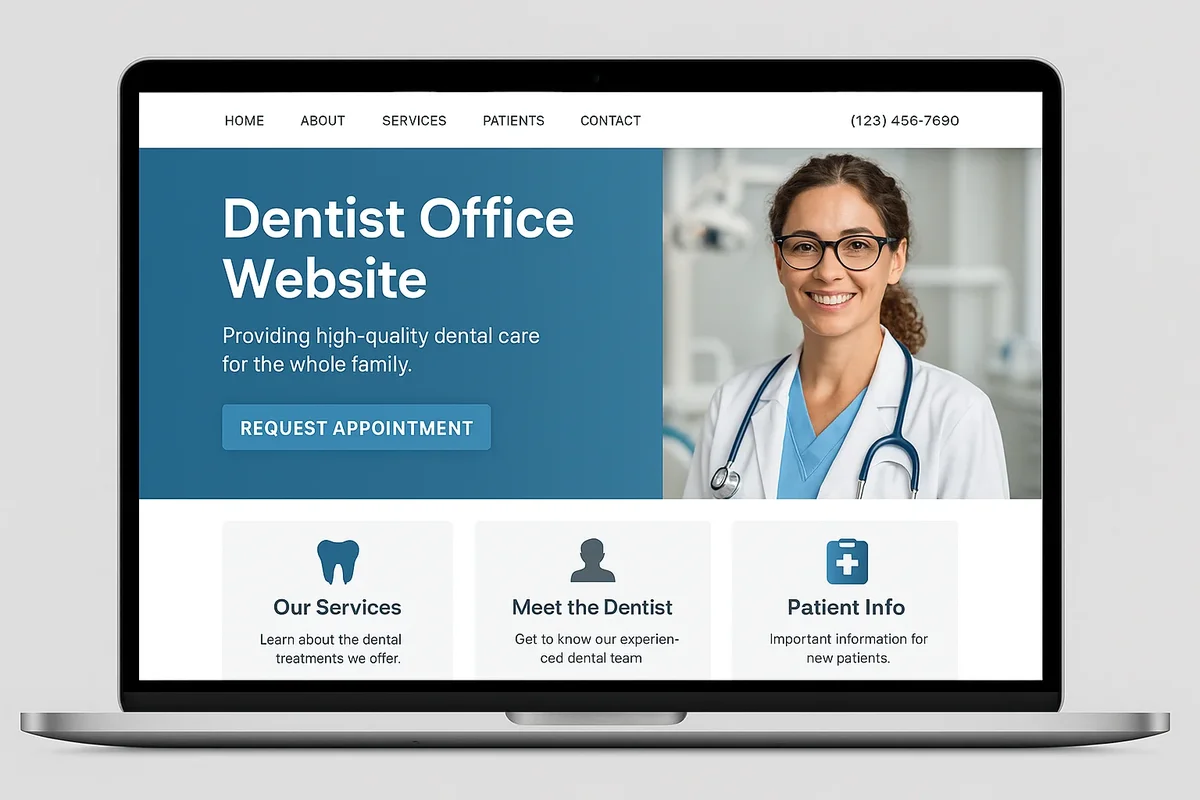
Advanced Tools and Integrations for a High-Converting Dentist Office Website
In today’s digital age, a dentist office website must do more than simply provide information — it should act as a patient acquisition machine. Advanced tools and integrations transform a basic website into a high-performing platform that attracts, engages, and converts visitors into loyal patients. From smart appointment schedulers to AI-powered chatbots, these technologies streamline user experience and maximize your marketing ROI. Let’s explore the most effective digital tools every modern dentist office website should implement 🦷.
1. Online Appointment Booking Systems
One of the most critical features for a dentist office website is an intuitive online booking system. Patients increasingly prefer digital convenience — they want to schedule, modify, or cancel appointments directly from their smartphones. An integrated booking tool eliminates the need for phone calls, reduces administrative workload, and provides real-time availability.
Key Benefits of Online Booking:
- 24/7 patient access to scheduling without staff involvement.
- Automated confirmation emails and reminders to reduce no-shows.
- Integration with Google Calendar and your clinic management software.
- Instant synchronization with staff schedules and treatment rooms.
Platforms such as Zocdoc, Calendly, and SimplyBook.me offer seamless embedding on your dentist office website. By reducing friction in the booking process, these tools can increase your conversion rate by up to 30%.
2. Live Chat and AI Chatbots
Instant communication builds trust and keeps potential patients engaged. Integrating a live chat or AI-powered chatbot on your dentist office website allows you to answer inquiries in real time, improving customer satisfaction. Chatbots can handle common questions about services, pricing, and office hours, while also guiding users toward booking an appointment.
Example Features of Dental Chatbots:
- AI-driven conversation flows for FAQs like “Do you accept insurance?” or “How much is a cleaning?”
- 24/7 instant replies, ensuring no patient inquiry is missed.
- Appointment booking integration with your calendar.
- Automatic data collection for follow-up emails or promotions.
By automating responses, your team can focus on in-office patient care while your dentist office website manages digital engagement around the clock.
3. Secure Patient Forms and Digital Records
Modern dental practices benefit greatly from secure digital forms that allow patients to fill out information before arriving. Embedding HIPAA-compliant online forms on your dentist office website improves efficiency and reduces paperwork errors. Patients can complete intake forms, consent agreements, and medical history submissions remotely, saving valuable chair time.
Integrating with software like JotForm HIPAA or Formstack ensures encrypted data storage and secure transmission. Always include SSL certification to maintain compliance and protect patient confidentiality.
4. CRM Integration (Customer Relationship Management)
A CRM system is the backbone of effective patient relationship management. When connected to your dentist office website, it tracks patient interactions, appointment history, and communication preferences. This allows you to deliver personalized experiences that increase retention.
Popular CRM Options for Dental Clinics:
- HubSpot: Offers automated email marketing and lead nurturing workflows.
- Zoho CRM: Ideal for managing patient inquiries and segmenting follow-up campaigns.
- Salesforce Health Cloud: Advanced analytics and patient engagement tools.
By integrating CRM software, your dental practice can analyze conversion data, improve response times, and measure marketing effectiveness — all directly linked to your dentist office website.
5. Review Management and Reputation Tools
Positive online reviews drive credibility and influence patient decisions. Using reputation management tools helps automate the process of collecting and displaying feedback on your dentist office website. These systems can request reviews after appointments and publish them directly to your website or Google Business Profile.
Top Tools for Dental Review Management:
- Birdeye: Automates SMS and email review requests after visits.
- Podium: Centralizes communication and gathers patient reviews.
- RateMDs & Healthgrades: Integrate verified healthcare reviews directly into your site.
Adding authentic testimonials boosts SEO and trust simultaneously. Include a link to your Redent Klinik Contact Page to encourage visitors to reach out after reading positive feedback.
6. Analytics and Heat Mapping Tools
Understanding how users interact with your dentist office website is key to ongoing improvement. Analytical tools provide valuable insights into user behavior — where visitors click, how long they stay, and which pages lead to conversions. This data allows you to refine your design and content for maximum engagement.
Essential Analytics Tools:
- Google Analytics 4 (GA4): Monitors user demographics, traffic sources, and behavior flow.
- Hotjar: Tracks click heatmaps and session recordings for UX optimization.
- Microsoft Clarity: Provides scroll depth and visual engagement analysis.
By studying heatmaps, you can see whether users scroll to key CTAs (calls-to-action) or abandon forms early. This information helps you fine-tune your dentist office website layout to guide visitors smoothly toward booking or contacting you.
7. Marketing Automation Tools
Automating your marketing tasks saves time and keeps your brand consistently visible. With marketing automation software linked to your dentist office website, you can send targeted email sequences, manage ad campaigns, and track ROI — all from a single dashboard.
Recommended Automation Tools:
- Mailchimp: Automates newsletters and promotional emails.
- ActiveCampaign: Combines CRM, email automation, and analytics.
- Google Ads Integration: Allows remarketing campaigns to re-engage site visitors.
These integrations help maintain patient engagement even after they leave your website, bringing them back through retargeting or follow-up offers.
8. Social Media and Blogging Integrations
Social proof and ongoing education are vital in dentistry. Embedding your social media feeds and blog posts within your dentist office website helps maintain freshness and visibility. Regularly updated content shows Google that your site is active and authoritative.
Best Practices:
- Embed Instagram or Facebook feeds to showcase clinic updates or patient success stories.
- Use a blog integration tool like WordPress or Ghost for SEO-optimized publishing.
- Enable easy sharing buttons to amplify your reach across networks.
Social integrations turn your website into a community hub where patients can connect, learn, and engage continuously.
9. Advanced SEO and Schema Markup Tools
SEO tools ensure your dentist office website stays competitive in search results. Integrating software like Rank Math or Yoast SEO helps optimize meta tags, content readability, and schema markup. Schema enhances Google’s understanding of your content, improving visibility in local search and featured snippets.
Essential Schema Types for Dental Websites:
- LocalBusiness: Highlights address, phone, and hours of operation.
- Service: Defines treatment types such as “Teeth Whitening” or “Dental Implants.”
- Review: Displays star ratings in search results.
SEO plugins also offer structured data suggestions, helping your dentist office website meet technical search requirements effortlessly. When combined with backlinks from trusted domains like the American Dental Association, these integrations boost both authority and visibility.
10. Tele-Dentistry and Virtual Consultation Tools
Post-pandemic, virtual consultations have become a valuable addition for dental practices. Integrating tele-dentistry solutions directly into your dentist office website allows patients to schedule video consultations for initial assessments or follow-ups.
Platforms like Doxy.me or Zoom for Healthcare provide secure, HIPAA-compliant video conferencing. Offering this service expands your reach, especially for patients who prefer remote interactions before committing to an in-person visit.
11. Conclusion: The Power of Smart Integrations
Every digital tool you integrate enhances patient experience, clinic efficiency, and marketing effectiveness. A well-equipped dentist office website functions as a full-service digital ecosystem — booking appointments, engaging visitors, and managing reviews automatically.
By combining automation, analytics, and personalization, your website evolves from a static information page into a dynamic growth engine. Investing in the right integrations not only boosts conversions but also builds long-term trust with patients, ensuring your dental practice stays ahead in an ever-evolving digital landscape 🌟.