
If you are searching for a dentist that makes dentures, you are most likely looking for someone who can restore your smile, improve oral function, and help you regain confidence. Choosing the right professional is essential because dentures are not merely artificial teeth—they are custom-designed prosthetics that must match your gums, facial structure, bite, and aesthetic goals. In this detailed guide, we will explore everything patients need to know before visiting a specialist, including how dentures are made, what to expect at your appointments, how to prepare, and how to ensure long-term comfort. 😄
A dentist that makes dentures specializes in evaluating tooth loss, examining jawbone support, and crafting replacements that mimic natural teeth in appearance and function. Many people are surprised to learn that creating dentures is a complex blend of medical expertise, digital design, and artistic craftsmanship. The goal is not only to restore a smile but to restore quality of life. This includes better chewing ability, clearer speech, facial support, and improved oral health. A denture dentist—sometimes referred to as a prosthetic dental specialist—uses modern technologies such as 3D oral scanning, digital bite analysis, and high-strength materials to ensure the best results.
When selecting a dentist that makes dentures, patients often focus on appearance alone. However, a great result requires much more than aesthetics. Comfort is equally important. Poorly fitting dentures can cause sore spots, difficulty chewing, and changes in speech. A specialized dentist understands how to shape the denture base, measure vertical dimension, and adjust occlusion to ensure proper bite alignment. This is what separates an average experience from an exceptional one. Modern clinics like Redent Klinik Contact Page offer advanced diagnostic tools that help dentists create dentures with remarkable precision.
For many patients, one of the most important aspects of choosing a dentist that makes dentures is understanding the step-by-step treatment journey. The process typically begins with an oral evaluation, followed by impressions, digital design, wax try-ins, and final placement. Each stage is essential because dentures must be created with millimeter-level accuracy. Even slight misalignment can affect biting force, comfort, and wearability. Skilled professionals also take into account gum health, bone resorption rates, and facial muscle tone. This attention to detail ensures dentures remain stable and natural-looking over time.
Another reason to visit a qualified dentist that makes dentures is the ability to personalize every detail. Today’s denture technology allows patients to select tooth shape, size, color, translucency, and alignment. This means your final results can closely resemble your original smile—or even improve it. Some individuals request a brighter, more uniform look, while others prefer a more natural, varied appearance. A knowledgeable denture dentist can guide patients through these choices. Additionally, trusted organizations such as the American Dental Association recommend working with professionals who stay up-to-date with current prosthodontic standards.
Visiting a dentist that makes dentures also ensures long-term follow-up care. Just like natural teeth, dentures require routine maintenance, adjustments, and professional inspections. Over time, changes in gum shape, bone structure, or bite pressure may require relining or rebasing. A specialist understands how these changes affect fit and comfort, and can make necessary adjustments quickly. This ongoing support prevents complications such as mouth sores, jaw pain, or functional difficulties.
Finally, patients should remember that choosing the right dentist that makes dentures is a long-term investment. While dentures themselves play a crucial role, the skill of the provider often determines how natural, comfortable, and durable the final result will be. Whether you are missing a few teeth or an entire arch, a trained specialist can dramatically improve your oral health and overall wellbeing. With modern materials, precise digital scanning, and personalized craftsmanship, today’s dentures are more realistic and functional than ever. 🌟
What Does a Dentist That Makes Dentures Really Do?
A dentist that makes dentures is a highly trained oral health professional who focuses on restoring missing teeth using custom-made prosthetics. Although many people assume dentures are simple devices, modern denture fabrication involves advanced digital technology, biomedical understanding, precise measurements, and artistic skill. The main goal of this type of specialist is to ensure that the patient leaves with a functional, comfortable, and natural-looking smile. This includes addressing both aesthetic goals and essential oral functions such as chewing, speaking, and maintaining proper facial structure. 😄
While general dentists can offer dentures, a dedicated dentist that makes dentures—often called a prosthodontic-oriented dentist—has deeper expertise in oral anatomy, denture biomechanics, materials science, digital scanning, and bite correction. This broader skill set is crucial because each denture must be custom-fit to the unique shape of the patient’s gums, jawbone, facial proportions, and bite pattern. No two dentures are alike, and achieving long-term comfort requires exceptional precision at every stage.
The Core Responsibilities of a Specialist Denture Dentist
The responsibilities of a dentist that makes dentures extend far beyond taking impressions and placing false teeth. The specialist begins by performing a complete oral examination, which may include digital X-rays, bite assessments, gum health evaluation, and an analysis of bone structure. These findings allow the dentist to determine the best type of denture—full, partial, implant-supported, or immediate dentures. They also consider lifestyle factors, age, facial muscle strength, and patient expectations. Because dentures must mimic natural oral function, precise planning is essential.
During the diagnostic stage, the dentist also identifies any issues that may affect the success of the final prosthetic, such as gum disease, bone loss, oral infections, or TMJ dysfunction. Addressing these problems first ensures better outcomes and greater long-term comfort. This holistic approach highlights why choosing an experienced dentist that makes dentures is so important.
How Denture Dentists Use Technology for Better Results
Modern dentistry has evolved dramatically, and today’s denture specialists use state-of-the-art technology to create highly accurate and comfortable prosthetics. Many clinics use 3D intraoral scanners instead of traditional molds, which allows for more precise digital imaging of the gums and jaw. The digital model can be adjusted on-screen to refine bite alignment, tooth shape, and fit. This significantly reduces errors and improves patient satisfaction.
A skilled dentist that makes dentures also uses digital articulators that replicate jaw movement, helping predict how the dentures will perform during chewing and speaking. This prevents common issues like slipping, clicking noises, or uneven pressure on the gums. With digital workflow systems, adjustments can be made even before the dentures are fabricated, saving time and improving accuracy.
Material Selection and Customization
The creation of dentures involves carefully choosing materials such as acrylic resin, porcelain, or hybrid composites. A dentist that makes dentures evaluates which materials best match the patient’s needs—considering durability, comfort, translucency, and natural appearance. Advanced materials can mimic the reflectivity and color patterns of natural enamel, giving patients a beautiful and realistic smile.
Customization is equally important. The dentist collaborates with laboratory technicians to choose tooth shapes, gum shading, and alignment patterns that suit the patient’s facial symmetry. In some cases, patients may bring old photos showing their natural teeth to help recreate their original smile. This level of personalization is only possible when working with a trained denture specialist.
The Clinical Process Behind Creating Dentures
Once diagnostic information is gathered, the next step involves taking precise impressions or digital scans. These serve as the blueprint for crafting the denture base and arranging artificial teeth. The dentist then conducts a wax try-in session, allowing the patient to preview the fit, shape, and appearance of the dentures before final fabrication. This stage is critical because any adjustments—bite correction, height modifications, or aesthetic improvements—can be made easily at this point.
After the wax model is perfected, the final dentures are fabricated in a dental laboratory. A dentist that makes dentures then performs multiple fitting sessions to ensure proper suction, comfort, and stability. The dentist evaluates how the dentures interact with the lips, cheeks, and tongue and makes fine adjustments to eliminate any potential discomfort. The goal is to create dentures that feel like natural extensions of the patient’s mouth.
Post-Delivery Care and Long-Term Adjustments
A reputable dentist that makes dentures provides ongoing care even after the dentures are delivered. This includes follow-up appointments to refine the fit, evaluate gum adaptation, and address any minor irritation. Over time, the shape of the gums and jawbone can change, so adjustments, relining, or rebasing may be necessary. Long-term maintenance ensures that dentures remain functional, stable, and comfortable.
Patients are also educated on cleaning techniques, storage methods, handling instructions, and how to adapt to speaking and eating with new dentures. Clinics like Redent Klinik Contact Page support patients through ongoing care and checkups, ensuring durable and reliable results.
Dentures are more than prosthetics—they are essential tools for restoring confidence, function, and wellbeing. Choosing a qualified dentist that makes dentures ensures that each step—from diagnosis to fabrication to long-term care—is handled with expert precision. For trusted dental standards, patients may also refer to resources from the American Dental Association.
Types of Dentures Offered by Expert Denture Dentists
A highly skilled dentist that makes dentures offers a wide variety of denture types designed to meet different anatomical needs, lifestyle preferences, and long-term oral health goals. Contrary to common belief, dentures are not “one size fits all.” The materials, structure, thickness, bite alignment, tooth shape, and gum base design must all be tailored specifically to each patient. Modern dentistry provides several types of dentures—from traditional removable models to advanced implant-supported systems—ensuring that every patient can regain a functional and natural-looking smile. 😄
Understanding the options available is essential before choosing the right denture style. With the guidance of a professional dentist that makes dentures, patients can make informed decisions based on comfort, budget, aesthetic expectations, and bone structure. In this section, we will explore the main denture categories, how they differ, and why a personalized approach is so important for long-term success.
Full Dentures: Complete Smile Restoration
Full dentures, also known as complete dentures, replace an entire upper or lower arch of missing teeth. They are ideal for patients who have lost most or all teeth due to decay, gum disease, trauma, or age-related dental deterioration. A dentist that makes dentures designs full dentures to fit snugly on the gum tissues, often using suction, natural anatomy, or denture adhesive for stabilization.
Benefits of Full Dentures
- Restore facial structure and prevent a sunken appearance.
- Improve chewing ability and speech clarity.
- Offer an affordable, non-surgical solution.
- Can be customized for highly natural aesthetics.
The process involves creating detailed impressions, testing bite height, and selecting tooth shapes and shades that match the patient’s natural look. The expertise of a dentist that makes dentures ensures that the teeth are aligned correctly to maintain healthy jaw function.
Partial Dentures: For Patients Missing Several Teeth
Partial dentures are ideal when some natural teeth remain. These dentures use a combination of a gum-colored base and replacement teeth attached to a metal or flexible framework. A dentist that makes dentures designs partials to clasp securely around existing teeth, restoring gaps while preventing natural teeth from drifting out of position.
Why Choose Partial Dentures?
- Preserve remaining natural teeth.
- Provide excellent stability and support.
- Improve bite alignment and chewing function.
Flexible partial dentures—made of lightweight thermoplastic materials—are especially popular for patients seeking a more comfortable and discreet option. Because flexible bases mimic gum texture and adapt to mouth movements, they are often recommended by a specialized dentist that makes dentures.
Immediate Dentures: Walk Out With Teeth the Same Day
Immediate dentures are created prior to tooth extraction so the patient never has to go without teeth. After extractions, the denture is placed immediately. This approach offers both aesthetic and psychological benefits, especially for patients concerned about appearing toothless during healing.
However, because gum tissues shrink naturally after extraction, the denture will require relining or replacement after healing. A seasoned dentist that makes dentures closely monitors healing progression to adjust the fit for maximum comfort.
Overdentures: Added Stability With Dental Implants
Overdentures are removable prosthetics that “snap” onto dental implants or natural tooth roots. This hybrid solution provides the security of implants with the convenience of removability.
Advantages of Overdentures
- Significantly improved stability and chewing power.
- Reduced gum irritation due to less movement.
- Better long-term bone preservation.
A dentist that makes dentures often recommends overdentures to patients who struggle with loose traditional dentures or who want more confidence when speaking and eating.
Implant-Supported Fixed Dentures: The Most Secure Option
Implant-supported dentures are permanently attached to dental implants using screws or bar systems. They do not move or shift, making them the closest alternative to natural teeth. Although more advanced, many patients choose this option for maximum comfort, long-term durability, and improved oral function.
A specialized dentist that makes dentures works closely with implant surgeons to ensure precise placement and optimal bite alignment. This approach offers superior stability and can dramatically improve quality of life.
Cosmetic Dentures: Designed for Natural Aesthetics
Cosmetic dentures focus on achieving the most natural appearance possible. Using custom tooth shapes, layered composite materials, realistic translucency, and gum shading, these dentures can dramatically enhance a smile.
A highly experienced dentist that makes dentures incorporates digital photography, facial symmetry analysis, and patient preferences to create a smile that complements facial structure. These dentures are ideal for patients who value aesthetics as much as oral function.
Whether you require full dentures, partials, implant-supported dentures, or cosmetic enhancements, choosing an expert dentist that makes dentures ensures personalized care and long-lasting results. Patients looking for further guidance can contact modern clinics such as Redent Klinik Contact Page or refer to trusted organizations like the American Dental Association for professional insights.
How a Skilled Dentist Designs Custom-Fit Dentures
A highly trained dentist that makes dentures follows a meticulous step-by-step process to design custom-fit dentures that feel natural, look realistic, and function like real teeth. Unlike mass-produced dental prosthetics, true custom dentures require precision, advanced technology, artistic detail, and a deep understanding of oral biomechanics. Every element—from bite alignment to gum contouring—plays a critical role in comfort and long-term durability. In this comprehensive section, we will explore exactly how a specialist evaluates, designs, and fabricates dentures tailored uniquely to each patient’s anatomy. 😄
For a dentist that makes dentures, the design process begins long before the dentures are actually fabricated. It requires understanding the patient’s oral structure, bone levels, facial symmetry, smile line, gum health, and chewing patterns. High-quality dentures are not created by guesswork; they are engineered through data, measurements, and digital customization. When done properly, dentures support facial features, improve speech, enhance chewing power, and restore confidence in everyday life.
Step 1: Comprehensive Oral and Facial Evaluation
The first step taken by a dentist that makes dentures is a thorough examination of the patient’s teeth (if any remain), gums, bone condition, and oral musculature. The dentist also evaluates the patient’s facial proportions, as dentures play a significant role in shaping the cheeks, jawline, and lips. This evaluation includes:
- Measuring vertical dimension — the distance between the upper and lower jaws at rest.
- Assessing lip support and smile symmetry.
- Checking for oral lesions, infections, or sore spots.
- Evaluating bone resorption patterns.
A dentist that makes dentures must also determine how much bone density is available, especially if implant-supported dentures are being considered. Understanding the structural foundation is essential because it affects how the denture will sit, how stable it will feel, and how well it will perform during speaking and chewing.
Step 2: High-Precision Impressions or Digital Scans
Once the evaluation is complete, the next step involves capturing exact details of the mouth. Traditional impressions use dental putty, but many advanced clinics now use 3D intraoral scanners. A dentist that makes dentures relies on these impressions to create a highly accurate model of the gum tissues and ridges.
Digital scans offer several advantages:
- Greater precision in capturing gum contours.
- Reduced discomfort for patients.
- Instant digital modeling for faster adjustments.
- Lower risk of distortion compared to physical impressions.
These detailed models serve as the foundation for all future steps. Without accurate impressions or scans, dentures cannot achieve long-term comfort or proper bite alignment.
Step 3: Bite Registration and Occlusal Analysis
A dentist that makes dentures must ensure the new dentures harmonize with the patient’s natural jaw movement. Bite registration records how the upper and lower jaws come together. This helps the dentist determine:
- Correct occlusal plane alignment.
- Proper chewing patterns.
- Vertical dimension of occlusion.
- Preventive adjustments to avoid jaw strain or TMJ discomfort.
Digital articulators—specialized devices that simulate jaw movement—allow the dentist to predict how the dentures will function under real chewing conditions. This reduces the risk of clicking, slipping, or uneven pressure points.
Step 4: Wax Try-In for Aesthetic and Functional Testing
Before the final dentures are created, a wax prototype is made. This is a crucial phase because both the dentist and patient evaluate the look, feel, and function of the future dentures. During this stage, a dentist that makes dentures carefully checks:
- Tooth color and shade.
- Tooth arrangement and angulation.
- Smile height and gum visibility.
- Speech clarity and pronunciation.
Patients can request adjustments, such as reshaping the teeth, changing the shade, or modifying the smile line. The wax try-in prevents errors before the final fabrication and ensures patient satisfaction.
Why the Wax Try-In Matters
A wax prototype also allows the dentist that makes dentures to evaluate lip support, cheek contour, and facial harmony. Small changes at this stage can significantly improve the overall appearance and comfort of the final prosthetic.
Step 5: Final Fabrication and Denture Customization
After adjustments are approved, the denture is crafted using durable materials such as acrylic resin, composite resin, or porcelain. The dentist collaborates closely with laboratory technicians to ensure the final dentures match all design specifications. High-end dentures may include layered composite materials, textured gum surfaces, and natural translucency to mimic real enamel.
A dentist that makes dentures performs multiple quality checks during fabrication, ensuring the prosthetic fits the digital model precisely. Any imperfections, rough edges, or subtle alignment issues are corrected before delivery.
Step 6: Placement, Adjustments, and Long-Term Follow-Up
When the final dentures are placed, the dentist carefully checks friction points, suction levels, bite accuracy, and soft tissue interaction. It’s normal for small adjustments to be needed; a qualified dentist that makes dentures knows how to fine-tune comfort over the first few weeks of wear.
Patients also receive detailed instructions on cleaning, storage, and daily adaptation techniques. Regular checkups allow the dentist to reline or adjust the dentures as oral anatomy changes over time. Clinics such as Redent Klinik Contact Page provide ongoing care to ensure long-lasting comfort.
For trusted guidance regarding denture standards and material safety, patients may refer to the American Dental Association. With the expertise of a professional dentist that makes dentures, custom-fit dentures can provide years of confidence, comfort, function, and natural beauty.
The Step-by-Step Process of Getting Dentures Made
Visiting a dentist that makes dentures involves a carefully structured process designed to ensure the final prosthetic fits comfortably, functions properly, and looks as natural as possible. Each stage requires precision, communication, and collaboration between the dentist and the patient. While many believe the procedure is quick, creating high-quality dentures is actually a multi-step journey that may take several appointments. This is because the dentist must collect detailed measurements, evaluate facial proportions, design a custom bite, and ensure that the dentures integrate naturally with the patient’s oral anatomy. In this section, we break down the entire process so patients know exactly what to expect from start to finish. 😄
A highly skilled dentist that makes dentures views denture creation as an art as well as a science. Each denture set is personalized for color, shape, gum tone, alignment, and bite function. The better the preparation and design, the more comfortable and durable the final result. Let’s explore each phase in detail.
Step 1: Initial Consultation and Oral Examination
Your journey begins with a comprehensive oral examination. A dentist that makes dentures evaluates your mouth, remaining teeth (if any), gum condition, bone structure, and jaw alignment. Digital X-rays or 3D scans may be taken to assess hidden issues such as underlying bone loss or infection.
During this stage, the dentist will:
- Discuss your medical and dental history.
- Evaluate your facial profile and smile dynamics.
- Check for gum disease, inflammation, or lesions.
- Determine whether you need full or partial dentures.
This appointment helps the dentist create a tailored treatment plan. Patients can also ask questions, review denture options, and set realistic expectations regarding comfort, adaptation time, and maintenance.
Step 2: Tooth Extractions (If Needed)
Some patients require tooth removal before receiving dentures. A dentist that makes dentures coordinates this phase carefully to ensure minimal discomfort and proper healing. Extractions are performed when remaining teeth are too damaged or unstable to support dentures.
Depending on the case, the dentist may provide:
- Immediate dentures placed right after extraction.
- Temporary healing dentures.
- A healing period before final impressions (if bone reshaping is needed).
Immediate dentures allow patients to maintain aesthetics and function while healing. However, since gums shrink after extraction, relining or adjustment is required later.
Step 3: Taking Impressions or Digital Scans
The next phase involves creating a roadmap for the dentures. A dentist that makes dentures captures highly accurate impressions using dental putty or state-of-the-art 3D scanners. The goal is to record tiny details of the gum tissue, ridge form, and palate shape.
Digital scanning is especially beneficial because it allows:
- More precise customization.
- Less discomfort compared to traditional molds.
- Instant digital preview models.
These impressions are used to create wax models and preliminary denture bases used in the next stages.
Step 4: Bite Registration and Jaw Alignment
A dentist that makes dentures must determine how the jaws come together to ensure proper bite. This is done using bite blocks or digital occlusion tools. Accurate bite registration prevents future issues such as jaw pain, slippage, or difficulty chewing.
Key measurements include:
- Vertical dimension (space between upper and lower jaws).
- Centric relation (jaw position during normal biting).
- Smile line and midline orientation.
These metrics help the dentist arrange teeth realistically in the next phase.
Step 5: Wax Try-In Appointment
One of the most important steps in the process is the wax try-in. At this stage, the dentist that makes dentures presents a prototype of the dentures made from wax, with artificial teeth set in place. This allows the patient to preview the appearance and feel before the final fabrication.
During this appointment, the dentist evaluates:
- Tooth color and size.
- Face shape compatibility.
- Bite alignment.
- Speech clarity.
Patients can request adjustments to improve aesthetics or comfort. The wax try-in ensures the final product meets expectations without costly or time-consuming revisions later.
Step 6: Final Fabrication of the Dentures
Once the design is approved, the wax model is sent to a dental laboratory. A specialized dentist that makes dentures collaborates with technicians to craft the final set using premium materials such as acrylic resin, porcelain, or composite resins.
Modern manufacturing techniques create highly realistic gum textures and tooth translucency, enhancing the natural appearance of the dentures.
Quality Control During Fabrication
Each denture undergoes multiple quality checks for:
- Material strength.
- Edge smoothness.
- Fit accuracy to the cast model.
- Color consistency and shading.
The dentist verifies the laboratory work before scheduling the delivery appointment.
Step 7: Delivery and Final Adjustments
When the dentures are ready, the patient returns for placement. The dentist that makes dentures examines how the dentures rest on the gums, evaluates suction, and tests bite alignment. Minor adjustments are made to eliminate pressure points or discomfort.
Patients receive detailed instructions on:
- Cleaning and soaking procedures.
- Adaptation tips for speech and eating.
- How to store dentures safely.
Adaptation time varies, but consistent wear and follow-up visits ensure long-term comfort.
Step 8: Ongoing Care and Relining
Denture care does not end with delivery. Over time, gum tissue and bone shape change naturally. A dentist that makes dentures periodically evaluates fit and recommends relining or rebasing to restore comfort and stability.
Regular checkups are essential to prevent issues such as mouth sores, chewing discomfort, or shifting dentures. Patients can schedule follow-ups through clinics such as Redent Klinik Contact Page.
For additional professional guidance, the American Dental Association provides valuable resources on denture care and standards. With the help of a qualified dentist that makes dentures, the step-by-step journey becomes smooth, predictable, and deeply rewarding—leading to a confident, functional smile that lasts for years.
Benefits of Choosing a Specialist Dentist for Dentures
Selecting a dentist that makes dentures is one of the most important decisions a patient can make when dealing with tooth loss. Dentures are far more than simple replacements for missing teeth—they are functional, aesthetic, and biomechanical devices that must integrate seamlessly with your oral tissues, facial structure, and daily habits. A specialist with advanced training in prosthodontics or denture design understands these complexities and delivers precise, comfortable, and long-lasting solutions. In this comprehensive section, we will explore the many benefits of choosing a dedicated denture expert rather than relying on generalized dental care. 😄
A dentist that makes dentures provides not only technical expertise but also a personalized approach that considers your lifestyle, facial proportions, medical history, and expectations. Patients who work with specialists often experience better comfort, more natural aesthetics, longer-lasting dentures, and fewer adjustments over time. Let’s break down the advantages of selecting a true expert for denture fabrication.
Benefit 1: Highly Accurate Fit and Stability
One of the greatest benefits of working with a dentist that makes dentures is the accuracy of the fit. Ill-fitting dentures can cause irritation, slipping, difficulty chewing, and long-term damage to the gums. A specialist uses advanced techniques such as 3D scanning, digital bite analysis, and precision wax try-ins to ensure the dentures sit comfortably on the gums.
Why Fit Matters
Proper fit determines:
- Chewing efficiency
- Speech clarity
- Prevention of mouth sores
- Long-term gum and bone health
A skilled dentist that makes dentures knows how to contour the denture base to match the unique structure of the gums, ensuring excellent suction and stability.
Benefit 2: Natural Aesthetic Design
Dentures should look indistinguishable from natural teeth. A specialist dedicates significant effort to selecting tooth shapes, sizes, colors, and translucency levels that best match your facial features. This ensures your smile appears bright, healthy, and authentic—not artificial or generic.
A dentist that makes dentures also evaluates:
- Your smile line and lip curvature.
- Natural gum pigmentation and shape.
- Tooth visibility when talking or smiling.
These details contribute to a final result that enhances your facial harmony and boosts confidence.
Benefit 3: Expertise in Complex Cases
Some patients require advanced denture solutions due to bone loss, uneven gum surfaces, or medical conditions. A dentist that makes dentures is experienced in treating these more complex scenarios. They can recommend specialized options such as overdentures, implant-supported dentures, or bone-supported prosthetics.
For patients with severe resorption, specialists can modify the denture design to distribute pressure evenly and minimize discomfort.
Customized Solutions for Unique Needs
Benefits of this expertise include:
- Improved stability for patients with low bone density.
- Personalized bite adjustments for TMJ issues.
- Advanced measurement techniques for asymmetrical jaws.
General dentists may struggle with such cases, but a seasoned specialist excels at tailoring the perfect solution.
Benefit 4: Long-Lasting Materials and Durability
A dentist that makes dentures uses premium materials such as high-density acrylics, composite resins, or porcelain options. These materials are more durable, stain-resistant, and aesthetically superior compared to lower-cost alternatives. By investing in higher-quality denture construction, patients enjoy longer-lasting results and fewer breakages.
Advanced materials also provide:
- Improved chewing function
- Natural gum appearance
- Greater resistance to wear
Cheaper dentures may look acceptable initially but often fail prematurely, requiring frequent repairs. Specialists avoid this pitfall by prioritizing longevity and strength.
Benefit 5: Enhanced Comfort and Functionality
Comfort is one of the top concerns among denture patients. A dentist that makes dentures understands how to shape denture bases, correct bite alignment, and design tooth placement to maximize comfort. The result is a smooth adaptation process and dentures that feel like a natural part of the mouth.
Patients report improved:
- Bite force
- Chewing efficiency
- Speech clarity
- Confidence in social interactions
Specialists also provide detailed instructions and follow-ups to ensure long-term comfort.
Benefit 6: Personalized Follow-Up and Adjustments
The relationship doesn’t end once the dentures are delivered. A professional dentist that makes dentures establishes a long-term care plan, including periodic adjustments, relining, and evaluations of gum health. As your oral anatomy changes, your dentures must evolve too.
Why Follow-Up Care Matters
Without regular professional care, patients may experience:
- Loose dentures
- Gum irritation
- Difficulty chewing
- Accelerated bone resorption
Specialists ensure your dentures remain effective and comfortable for years. Patients can easily schedule follow-ups using the Redent Klinik Contact Page.
Benefit 7: Access to Modern Technology and Proven Standards
Dentists specializing in dentures often invest in advanced technologies such as digital scanners, 3D modeling, and pressure-mapping systems. These innovations enhance precision and lead to faster, more predictable results.
Patients can also trust that a dentist that makes dentures follows evidence-based guidelines provided by institutions such as the American Dental Association, ensuring safety and high-quality standards.
Choosing a specialist ensures that every detail—fit, function, durability, and aesthetics—is handled expertly. With the care of a proficient dentist that makes dentures, patients enjoy improved quality of life, greater confidence, and a beautifully restored smile that lasts for years.
Common Problems Denture Patients Face and How Dentists Fix Them
Even with the expertise of a skilled dentist that makes dentures, many patients experience certain challenges when adapting to new dentures. This is completely normal and expected, especially during the first few weeks of wear. Dentures must harmonize with the gums, tongue, chewing muscles, and facial structure—all of which may take time to adjust. Fortunately, most denture-related issues are temporary and easily corrected when treated by an experienced specialist. In this detailed section, we examine the most common denture problems, why they occur, and exactly how dentists resolve them. 😄
A knowledgeable dentist that makes dentures plays a crucial role in helping patients overcome these issues. Proper adjustments, professional guidance, and personalized treatment strategies ensure long-term comfort and functionality. Let’s break down the most frequently encountered denture problems and the solutions that bring relief.
Sore Spots and Gum Irritation
One of the most common complaints among new denture wearers is sore spots on the gums. This happens when certain areas of the denture apply too much pressure. Even a slight irregularity in denture alignment can cause discomfort because gum tissues are highly sensitive.
Why It Happens
A dentist that makes dentures explains that soreness is often caused by:
- Uneven pressure distribution along the denture base.
- Gum shrinkage over time, altering the fit.
- Incorrect bite alignment causing pressure points.
New dentures always require several adjustment sessions as the gums adapt. This is part of the normal healing and fitting process.
How Dentists Fix It
Dentists use pressure-indicating pastes to identify high-pressure areas. They then trim or smooth the denture base until it conforms properly to the gums. A dentist that makes dentures performs these refinements with precision, ensuring soreness resolves quickly.
Difficulty Chewing and Eating
Many patients struggle with chewing efficiency when they first start wearing dentures. Foods may feel harder to break down, or chewing may feel uneven. This happens because dentures alter bite mechanics and require the muscles of the mouth to relearn functional patterns.
Why It Happens
A skilled dentist that makes dentures understands that chewing difficulties result from:
- Insufficient stability of the lower denture.
- Incorrect occlusal (bite) alignment.
- Weakening of chewing muscles after tooth loss.
It may take several weeks of practice for the jaw muscles to adjust to new forces.
How Dentists Fix It
Dentists improve chewing comfort by making bite adjustments, refining tooth angulation, or adjusting the thickness of the denture base. They also teach patients chewing techniques that improve stability, such as biting down evenly on both sides of the mouth.
Slipping or Moving Dentures
Another common concern is dentures that slip during speaking or eating. This is especially true for lower dentures, which lack the natural suction support available in the upper arch.
Why It Happens
A dentist that makes dentures notes that denture slippage occurs because:
- Gum tissues change shape after extractions.
- The tongue pushes against the denture during speech.
- Insufficient suction or support for the denture base.
How Dentists Fix It
Dentists correct slippage by adjusting the denture borders, refining the internal fit, or performing relining procedures. In persistent cases, they may recommend implant-supported solutions such as overdentures, which provide exceptional stability.
Speech Difficulties
Some sounds—especially “s,” “f,” and “th”—can be challenging when adjusting to new dentures. Dentures slightly change tongue posture, which temporarily affects pronunciation.
Why It Happens
A dentist that makes dentures explains that speech challenges occur because:
- The tongue needs to adapt to new contours inside the mouth.
- Minor misalignment of teeth affects airflow.
- Excess saliva production occurs initially.
How Dentists Fix It
Dentists resolve speech issues by adjusting tooth placement, refining the thickness of the denture base, or modifying the palatal surface. They may also give patients speech exercises to accelerate adaptation.
Excess Saliva or Dry Mouth
New dentures often stimulate the salivary glands, leading to excess saliva. Conversely, some patients experience dry mouth, which can affect suction and comfort.
How Dentists Fix It
A dentist that makes dentures may recommend hydration techniques, saliva substitutes, or adjustments to the denture surface to reduce friction. If medications contribute to dry mouth, patients are advised to consult their physician.
Denture Cracks, Breaks, and Wear
Accidents, aging denture material, and heavy chewing can cause cracks or fractures.
How Dentists Fix It
A professional dentist that makes dentures repairs fractures by bonding the damaged sections or creating replacement components. Severe damage may require fabrication of a new denture. Stronger materials such as high-impact acrylics are recommended for long-term durability.
Patients experiencing any of these issues should seek help promptly. Clinics such as Redent Klinik Contact Page provide follow-up appointments and personalized adjustments. For safety guidelines, patients may consult the American Dental Association.
With the expertise of a trained dentist that makes dentures, common denture problems can be quickly resolved, ensuring long-term comfort, stability, and confidence.
How Long Dentures Last and When to Visit Your Denture Dentist
Understanding the lifespan of dentures and knowing when to seek professional care is essential for maintaining comfort, oral health, and long-term functionality. A highly trained dentist that makes dentures not only fabricates custom prosthetics but also monitors their performance over time. Dentures, like natural teeth, undergo wear, pressure, and environmental changes in the mouth. These factors affect how long they last and how well they continue to function. In this comprehensive section, we explain the typical lifespan of different denture types, what signs indicate it’s time for adjustment or replacement, and how ongoing professional care keeps your smile healthy and stable. 😄
Although high-quality dentures are crafted with durable materials, they are not permanent devices. A dentist that makes dentures educates patients on what to expect throughout their denture journey—from initial placement to long-term maintenance. Understanding these details helps patients plan for future care and avoid discomfort or complications.
The Average Lifespan of Dentures
Most dentures last between 5 and 10 years, depending on material quality, oral habits, and bone structure changes. Even the most expertly crafted denture experiences natural wear over time. Acrylic bases gradually loosen as the gums reshape, while artificial teeth flatten due to repeated chewing. A dentist that makes dentures monitors these changes to determine whether a reline, rebasing, or full replacement is needed.
Factors Affecting Denture Longevity
- Material Quality: Premium acrylics and composite resins last longer than low-grade alternatives.
- Chewing Pressure: Heavy bite force accelerates tooth wear and crack formation.
- Gum and Bone Changes: Natural resorption impacts denture stability and suction.
- Cleaning Habits: Proper care reduces plaque buildup and prevents warping.
- Fit Accuracy: Well-fitting dentures experience less friction and strain.
A skilled dentist that makes dentures tailors the denture design to minimize long-term wear and ensure the prosthetic withstands daily use comfortably.
Signs Your Dentures Need Adjustment
Even with excellent manufacturing quality, dentures eventually require professional adjustments. Recognizing the early symptoms helps prevent injury, gum irritation, and long-term oral health issues.
Common Warning Signs
- Frequent slipping or shifting when speaking or eating
- Sore spots on the gums or irritation along the denture base
- Difficulty chewing foods that were previously manageable
- Changes in speech clarity
- Visible cracks or thinning areas on the denture
- Clicking sounds while chewing
A dentist that makes dentures uses diagnostic tools to analyze the denture fit and identify the root cause of discomfort. Early intervention prevents worsening issues and restores stability.
When Dentures Need Relining
Relining involves reshaping the underside of the denture base to match the current contour of the gums. Since the gums naturally shrink over time, relining is an essential part of maintaining comfortable and stable dentures.
Types of Relining
- Soft Reline: A cushion-like material added for patients with sensitive gums.
- Hard Reline: Permanent acrylic replacement for long-term durability.
- Temporary Reline: Used when gums need time to heal after extractions or irritation.
A dentist that makes dentures determines the appropriate relining option based on gum condition, bone levels, and the patient’s comfort needs.
When Dentures Should Be Replaced
Even with excellent care, dentures reach a point where replacement is unavoidable. Typically, full replacement is recommended every 7–10 years to ensure optimal function and aesthetics.
Replacement Indicators
- Significant wear on artificial teeth
- Changes in facial structure or jaw alignment
- Persistent slippage despite adjustments
- Cracks or broken components
- Outdated aesthetics or desire for improved appearance
A professional dentist that makes dentures evaluates these factors and discusses whether relining or full replacement is the better option.
Why Regular Denture Checkups Matter
Routine dental visits are crucial even for patients with full dentures. Oral tissues continue to change, and hidden issues—such as fungal infections, bone resorption, or uneven pressure distribution—must be detected early.
During checkups, a dentist that makes dentures will:
- Examine gum health and bone levels
- Inspect dentures for cracks, wear, and distortion
- Evaluate suction and stability
- Adjust bite patterns and tooth angulation if necessary
Regular monitoring prevents complications that lead to discomfort or denture failure. Patients can conveniently schedule maintenance visits through the Redent Klinik Contact Page.
Caring for Dentures to Extend Their Lifespan
Proper home care dramatically increases denture lifespan. A dentist that makes dentures typically recommends:
- Daily soaking in non-abrasive cleaning solutions
- Brushing dentures gently to remove plaque and stains
- Avoiding hot water to prevent warping
- Storing dentures in water to maintain shape
- Keeping gums and tongue clean to reduce bacterial buildup
Patients should never attempt to adjust dentures on their own, as even small errors can create significant discomfort.
For professional standards and safety guidelines, patients can refer to the American Dental Association. With expert care from a qualified dentist that makes dentures, patients can maintain durable, comfortable dentures that support a confident, healthy lifestyle for many years.
Dentures vs. Dental Implants: What Your Dentist Recommends
Many patients deciding how to replace missing teeth find themselves comparing traditional dentures with modern dental implants. Both solutions aim to restore function, appearance, and oral comfort, but they differ significantly in terms of durability, stability, cost, and long-term oral health benefits. A skilled dentist that makes dentures is uniquely qualified to guide patients through this comparison because they understand the biomechanics of dentures as well as the advantages and limitations of implant-based restorations. In this in-depth section, we explore the pros and cons of each option, reveal who makes the best candidate for dentures or implants, and explain how a dentist helps patients choose the right solution. 😄
While dentures remain a widely used and affordable option, dental implants are increasingly popular due to their natural feel and long-term stability. A dentist that makes dentures examines your bone level, gum condition, bite alignment, lifestyle, and medical history to recommend the most suitable choice. Understanding the differences between these two restorative approaches will help you make a confident and well-informed decision.
Understanding Traditional Dentures
Dentures have been used for centuries to restore full or partial tooth loss. Modern dentures created by a dentist that makes dentures are far more comfortable, realistic, and durable than earlier versions. They are removable prosthetic devices designed to mimic natural teeth and gums, resting on the gum tissues for support.
Advantages of Dentures
- Cost-Effective: Dentures are more affordable than implants, making them accessible for most patients.
- Non-Surgical: No surgical procedure is required, ideal for patients with medical limitations.
- Customizable Appearance: A specialist can tailor tooth shape, color, and gum shading for natural aesthetics.
- Immediate Options Available: Dentures can be placed immediately after extractions.
A dentist that makes dentures creates partial, full, or implant-supported overdentures based on the patient’s level of tooth loss and oral structure.
Limitations of Dentures
- May shift or move without proper fit.
- Require ongoing adjustments due to gum changes.
- Do not prevent bone loss.
- May reduce chewing efficiency compared to natural teeth or implants.
Despite these limitations, dentures remain an excellent solution for many individuals—especially when crafted by a specialist who can optimize fit and stability.
Understanding Dental Implants
Dental implants are titanium posts surgically inserted into the jawbone to replace missing tooth roots. They provide a stable foundation for single crowns, bridges, or implant-supported dentures. A dentist that makes dentures often collaborates with implant surgeons to ensure seamless integration between the prosthetic design and the implant placement.
Advantages of Dental Implants
- Superior Stability: Implants integrate with bone, preventing movement or slipping.
- Natural Chewing Power: Patients enjoy nearly full bite strength.
- Long-Term Durability: Implants can last decades with proper care.
- Bone Preservation: Stimulate the jawbone to prevent bone loss.
- Low Maintenance: Similar care to natural teeth.
For patients seeking maximum stability and performance, implants are often the preferred choice. A dentist that makes dentures can design implant-supported dentures that “snap” into place, combining security with removability.
Limitations of Dental Implants
- Higher cost compared to traditional dentures.
- Requires adequate jawbone volume for support.
- Involves surgical placement and healing time.
- Not always suitable for patients with uncontrolled medical conditions.
A specialist evaluates these factors thoroughly before recommending implants.
Denture Candidates vs. Implant Candidates
Choosing between dentures and implants depends heavily on the patient’s oral anatomy, overall health, and lifestyle. A dentist that makes dentures conducts a full assessment that includes bone measurements, gum analysis, medical review, and aesthetic goals.
Best Candidates for Dentures
- Patients missing most or all teeth.
- Individuals seeking a quick and affordable solution.
- Older adults with minimal bone density.
- Those unable to undergo surgery.
Best Candidates for Implants
- Patients with strong jawbone support.
- Those wanting maximum chewing efficiency.
- Healthy individuals without systemic conditions impacting healing.
- Patients seeking long-term stability.
The evaluation provided by a dentist that makes dentures ensures that you receive the safest and most functional restoration for your unique oral condition.
The Role of a Denture Specialist in Treatment Planning
An expert who understands both dentures and implants can provide a balanced, unbiased recommendation. They may even suggest hybrid solutions such as implant-retained overdentures—an option that combines affordability with enhanced stability.
A dentist that makes dentures will also:
- Compare long-term costs and benefits.
- Explain aesthetic differences.
- Evaluate facial support and jaw alignment.
- Create a customized treatment plan tailored to your goals.
How Cost Influences the Decision
While dentures are generally more affordable, implants may offer better long-term value due to their durability and maintenance benefits. A specialist will outline the expected lifetime cost of each option.
Patients seeking consultations can schedule an appointment through the Redent Klinik Contact Page.
To ensure safe and evidence-based care, patients may also review guidelines from the American Dental Association. With the guidance of a qualified dentist that makes dentures, choosing between dentures and implants becomes a clear and confident decision grounded in personalized care and long-term oral health success.
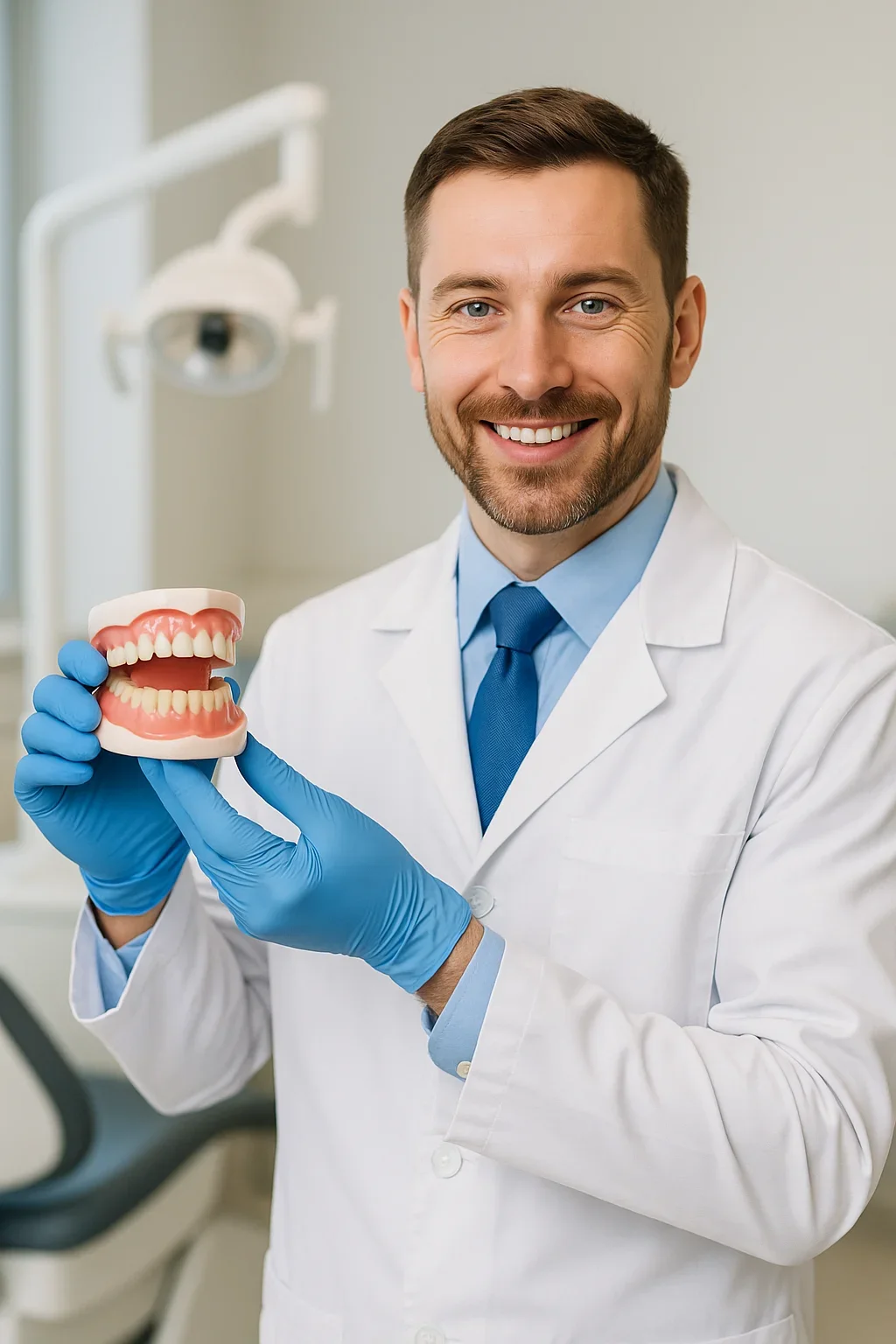
How to Maintain Dentures for Long-Term Comfort and Function
Proper maintenance is essential for ensuring that dentures remain comfortable, functional, and visually natural over many years. Even the most expertly crafted prosthetics from a skilled dentist that makes dentures require consistent care. Without proper cleaning, storage, and handling, dentures can warp, accumulate bacteria, develop odors, or lose their ideal fit. In this comprehensive guide, we provide a full breakdown of how patients can maintain their dentures effectively while preserving gum health, fresh breath, and long-term oral hygiene. 😄
A dentist that makes dentures educates every patient on the importance of daily cleaning routines, periodic adjustments, and protective care habits. Inadequate maintenance can lead to irritation, infections such as denture stomatitis, early wear of the denture material, and reduced stability. With proper attention and professional guidance, however, dentures can remain in excellent condition for many years.
Daily Cleaning Techniques for Dentures
Dentures should be cleaned every day to remove plaque, food particles, and bacteria. Proper cleaning preserves the denture surface and prevents stains and odors. A dentist that makes dentures typically advises patients to follow a step-by-step cleaning routine for optimal hygiene.
Recommended Cleaning Steps
- Rinse after meals: Helps remove debris and prevent buildup.
- Brush gently: Use a soft denture brush and non-abrasive cleanser.
- Soak nightly: Keep dentures in a cleaning solution or water to prevent drying.
- Avoid harsh chemicals: Bleach or abrasive toothpaste can damage the material.
A dentist that makes dentures emphasizes brushing both the dentures and gums to reduce bacterial growth and stimulate blood circulation.
Proper Storage to Prevent Damage
Dentures must remain moist to maintain their shape. Exposure to air for long periods causes acrylic dentures to warp, leading to discomfort and poor fit. The safest method is to store dentures in water or a designated denture-soaking solution.
Tips for Safe Denture Storage
- Use a covered container to prevent contamination.
- Keep dentures out of reach of children and pets.
- Change soaking solutions daily.
A reliable dentist that makes dentures also recommends never placing dentures in hot water, as it can warp the material.
Maintaining Gum and Oral Tissue Health
The tissues underneath dentures need care, too. Even though dentures replace missing teeth, they do not replace proper oral hygiene. A dentist that makes dentures instructs patients to clean their gums, tongue, and palate daily to prevent infection and maintain healthy tissues.
Oral Hygiene Steps
- Brush gums gently using a soft toothbrush.
- Use alcohol-free mouthwash to avoid dryness.
- Massage gums to improve circulation.
Healthy gums help dentures maintain better suction and stability.
Routine Checkups and Professional Care
Even with excellent home care, dentures must be reviewed regularly by a professional. A dentist that makes dentures can detect early signs of wear, misalignment, or tissue irritation long before the patient notices symptoms.
What Happens During a Denture Checkup?
- Evaluation of denture fit and comfort.
- Inspection of cracks, wear, or staining.
- Assessment of gum health and bone levels.
- Professional cleaning to remove deep-set plaque.
If adjustments are needed, minor corrections can prevent bigger issues down the line.
Preventing Stains and Odors
Dentures can develop stains over time from beverages like coffee, tea, and red wine. Lifestyle habits such as smoking also contribute to discoloration. A dentist that makes dentures teaches patients how to minimize staining while preserving the denture’s natural appearance.
Tips to Avoid Odor and Discoloration
- Rinse dentures thoroughly after drinking staining beverages.
- Avoid smoking to prevent persistent yellowing.
- Brush with a denture-specific cleanser daily.
- Use ultrasonic cleaners for deep cleaning (optional).
Maintaining cleanliness improves confidence and prevents bacterial issues that cause unpleasant smells.
Protecting Dentures From Damage
Dentures can break if dropped or exposed to sudden pressure. Protecting them properly reduces the risk of expensive repairs or replacements. A dentist that makes dentures reminds patients to handle dentures with care.
Protection Tips
- Always clean dentures over a soft towel or water-filled sink.
- Avoid biting into extremely hard foods.
- Store dentures safely when not in use.
If a crack or break occurs, patients should never attempt self-repair. Instead, they should contact a professional for proper restoration.
When to See Your Denture Specialist
Regular professional visits ensure long-term success. A dentist that makes dentures generally recommends checkups every 6 to 12 months, or sooner if the patient notices discomfort, looseness, or unexpected changes.
Signs You Need a Professional Evaluation
- Persistent mouth sores or irritation
- Difficulty chewing or speaking
- Denture slippage or instability
- Cracks, chips, or warping
- Changes in bite alignment
Timely intervention prevents complications and maintains comfort. Patients can schedule a convenient appointment using the Redent Klinik Contact Page.
For additional guidance on proper denture care, patients may review best practices provided by the American Dental Association. With consistent care, routine checkups, and the support of a qualified dentist that makes dentures, dentures can deliver years of reliable function, comfort, and a beautiful natural smile.