
In today’s digital-first world, dentist websites are no longer optional marketing tools—they are the foundation of a successful dental practice. When potential patients search online for dental services, your website is often their very first impression of your clinic. Within just a few seconds, visitors decide whether they trust you, understand your services, and feel confident enough to book an appointment. A well-structured, informative, and user-friendly website can be the difference between a booked schedule and an empty chair. 🦷
At their core, dentist websites serve multiple purposes at once. They educate patients, build credibility, showcase expertise, and guide visitors toward taking action. Unlike social media platforms or third-party directories, your website is a digital asset you fully control. This makes it the most powerful long-term investment for attracting patients, strengthening your brand, and improving visibility on search engines like Google.
Search intent plays a crucial role here. Most users visiting dentist websites are not just browsing casually; they are actively looking for solutions. They want to know what treatments you offer, whether you are trustworthy, how experienced your team is, and how easily they can contact you. If your website answers these questions clearly and professionally, Google rewards it with higher rankings—and patients reward it with appointments.
From an SEO perspective, dentist websites must be structured in a way that search engines can easily understand. This includes clean HTML markup, logical heading hierarchy, fast loading times, and high-quality written content. Google’s algorithms increasingly prioritize websites that provide genuine value to users, especially in the healthcare field. Thin or poorly written content can harm rankings, while comprehensive, well-researched pages help establish authority and trust.
Another essential role of dentist websites is patient education. Modern patients want to understand procedures before committing to treatment. Explaining services such as dental implants, cosmetic dentistry, or preventive care in simple, reassuring language helps reduce anxiety and builds confidence. When patients feel informed, they are far more likely to choose your clinic over competitors with vague or outdated websites. 😊
Trust signals are also a major factor in successful dentist websites. Elements such as professional design, real clinic photos, clear contact information, and transparent explanations all contribute to credibility. Linking to authoritative organizations like the American Dental Association further reinforces reliability and demonstrates alignment with recognized dental standards. These details matter not only to users but also to search engines evaluating the quality of your site.
Equally important is conversion-focused design. Effective dentist websites guide visitors naturally toward booking an appointment, making a call, or filling out a contact form. Clear calls to action, intuitive navigation, and accessible contact details all work together to reduce friction. For example, directing patients to the Redent Klinik Contact Page at the right moment can significantly increase inquiries and bookings.
In addition, modern dentist websites must cater to mobile users. A large percentage of patients search for dental services on their smartphones, often while on the go. If your site is not mobile-friendly, slow, or difficult to navigate on smaller screens, visitors will leave quickly—and Google will notice. Responsive design is no longer a luxury; it is a ranking and usability requirement.
Finally, the long-term value of dentist websites lies in scalability. As your clinic grows, your website can expand with new service pages, blog content, patient resources, and educational guides. This ongoing content development strengthens topical authority and helps your practice rank for a wider range of dental-related search terms. Over time, a well-optimized website becomes a consistent source of high-quality patient leads without relying heavily on paid advertising.
In summary, dentist websites are the digital backbone of modern dental clinics. They combine marketing, education, trust-building, and SEO into one powerful platform. When built correctly, they do far more than look good—they actively work for your practice 24/7, attracting patients, improving visibility, and supporting sustainable growth. 🚀
Why Dentist Websites Matter for Modern Dental Practices
In the modern healthcare landscape, dentist websites play a critical role in how dental clinics attract, educate, and convert patients. The way people search for healthcare has fundamentally changed. Instead of relying solely on recommendations or physical directories, patients now turn to Google to research dentists, compare clinics, and evaluate credibility before ever making contact. This shift makes professionally built dentist websites one of the most powerful growth tools for any dental practice.
When someone searches for a dentist online, they are usually experiencing a real need—pain, discomfort, cosmetic concerns, or preventive care. In that moment, your website becomes your digital front desk. If your site is clear, informative, and trustworthy, it reassures the patient instantly. If it is outdated, confusing, or incomplete, that potential patient will simply move on to a competitor. This is why dentist websites directly influence patient acquisition and long-term clinic success.
First Impressions and Patient Trust
Trust is especially important in healthcare, and dentist websites are often the first place where trust is formed. Before a patient meets a dentist in person, they evaluate professionalism through design, tone, and content quality. A clean layout, well-written explanations, and transparent communication signal competence and care. Poor grammar, broken pages, or vague service descriptions can quickly undermine confidence.
Modern dentist websites must clearly communicate who you are, what you offer, and why patients should choose you. This includes introducing the dental team, explaining treatment philosophies, and highlighting experience in a calm and reassuring manner. Patients are not just choosing a service—they are choosing a healthcare partner. Your website must reflect that responsibility.
How Dentist Websites Influence Patient Decisions
Most patients compare multiple options before making a decision. During this comparison process, dentist websites act as decision-making tools. Patients look for answers to specific questions: Do you offer the treatment I need? Are you experienced? Is the clinic modern and safe? Can I contact you easily? Websites that answer these questions clearly reduce hesitation and speed up the decision process.
Educational content is particularly influential. When dentist websites explain procedures in simple language, patients feel more comfortable and informed. This is especially true for treatments that may cause anxiety, such as implants or cosmetic procedures. Clear explanations, structured content, and patient-focused language help build emotional reassurance and rational confidence at the same time.
The Role of Authority and Credibility
Authority is another reason why dentist websites matter so much. Google evaluates healthcare websites with higher scrutiny, especially when they affect user well-being. Clinics that demonstrate expertise, accuracy, and alignment with professional standards are more likely to rank well. Referencing respected organizations such as the American Dental Association reinforces credibility both for users and search engines.
Patients may not consciously analyze authority signals, but they feel them intuitively. Accurate medical information, consistent terminology, and confident explanations all contribute to a sense of professionalism. Over time, this authority builds brand recognition and positions your clinic as a reliable choice in a competitive market.
Visibility, SEO, and Long-Term Growth
From a marketing perspective, dentist websites are essential for organic visibility. Search engine optimization allows clinics to attract patients without relying solely on paid ads. A well-optimized website continues to generate traffic month after month, making it one of the most cost-effective marketing channels in dentistry.
Unlike social media posts that disappear quickly, content published on dentist websites compounds in value. Blog articles, service pages, and educational resources help your clinic rank for multiple search terms over time. This consistent visibility supports steady patient flow and reduces dependency on external platforms.
Patient Convenience and Accessibility
Modern patients value convenience, and dentist websites provide it around the clock. Clear contact information, easy navigation, and direct links—such as the Redent Klinik Contact Page—make it simple for patients to take action whenever they are ready. This accessibility is especially important for international patients or busy professionals who may browse outside of office hours.
In addition, dentist websites support inclusivity by offering clear language, logical structure, and mobile-friendly layouts. Patients of all ages and backgrounds should be able to understand your content without confusion. Accessibility is not just ethical—it also improves engagement metrics that influence Google rankings.
Competitive Advantage in a Crowded Market
Finally, dentist websites provide a clear competitive advantage. In many regions, dental services are highly competitive, and clinics often offer similar treatments. A strong website helps differentiate your practice through messaging, patient-focused content, and professional presentation. It allows you to highlight what makes your clinic unique without being sales-driven or aggressive.
In summary, dentist websites matter because they shape trust, visibility, education, and patient decisions all at once. They are not just digital brochures—they are active business tools that support growth, credibility, and patient satisfaction in the modern dental industry.
Essential Features Every High-Performing Dentist Website Must Have
To succeed in today’s competitive healthcare environment, dentist websites must go far beyond basic design. A high-performing dental website is a carefully structured digital system that informs patients, builds trust, and encourages action. Every feature should serve a clear purpose: improving usability, strengthening credibility, or guiding visitors toward booking an appointment. When these elements work together, dentist websites become powerful growth engines rather than static online brochures.
Patients visiting dentist websites are usually looking for fast, clear answers. They want to know who you are, what you offer, and how they can reach you. If your website fails to deliver this information smoothly, users will leave—often within seconds. That is why feature selection and implementation are critical to performance, SEO, and patient satisfaction.
Clear Navigation and Logical Structure
One of the most important features of effective dentist websites is intuitive navigation. Visitors should be able to find key information—services, contact details, and clinic background—without effort. A simple menu structure with clearly labeled sections reduces confusion and improves engagement. When navigation is logical, users stay longer, explore more pages, and develop trust in your clinic.
Search engines also benefit from clear structure. Well-organized dentist websites make it easier for Google to understand page relationships and content hierarchy. This directly supports better indexing and higher rankings, especially for competitive dental keywords.
Service Pages That Explain Treatments Clearly
Every high-quality dentist website must include dedicated service pages. These pages explain treatments in detail and help patients understand what to expect. Clear explanations reduce anxiety and position your clinic as transparent and patient-focused. Strong dentist websites avoid vague descriptions and instead use simple, reassuring language that speaks to real patient concerns.
Service pages also play a major SEO role. By focusing each page on a specific treatment, dentist websites can rank for more targeted search terms. This allows clinics to attract patients who are actively searching for specific dental solutions rather than general information.
Educational Content That Builds Confidence
Education is a powerful feature on modern dentist websites. Patients appreciate websites that explain procedures, benefits, risks, and aftercare in a balanced and honest way. Educational sections help reduce fear and increase acceptance of treatment plans. They also signal expertise, which is essential for building trust in healthcare.
From Google’s perspective, educational content improves topical authority. Websites that provide in-depth, accurate explanations are more likely to be viewed as reliable sources, which supports long-term ranking stability.
Strong Calls to Action and Easy Contact Options
Even the most informative dentist websites fail if users do not know what to do next. Clear calls to action guide visitors toward booking appointments, making calls, or sending inquiries. Buttons, contact forms, and prominent links—such as the Redent Klinik Contact Page—should be visible without overwhelming the user.
Effective calls to action are calm, supportive, and patient-focused. Instead of aggressive sales language, dentist websites should encourage action by emphasizing care, accessibility, and support. This approach aligns better with patient expectations in healthcare.
Mobile Responsiveness and Fast Loading Speed
A critical feature of modern dentist websites is full mobile optimization. Many patients search for dental services on their phones, often during urgent moments. If your site does not load quickly or display correctly on mobile devices, users will leave almost immediately.
Google prioritizes mobile-friendly websites in its rankings, making responsiveness essential for SEO. Fast-loading dentist websites also improve user satisfaction and reduce bounce rates, which are key engagement signals for search engines.
Visual Design That Supports Professionalism
Visual presentation plays a subtle but powerful role in how dentist websites are perceived. Clean layouts, consistent colors, readable fonts, and balanced spacing all contribute to a professional image. Patients associate visual quality with clinical quality, even subconsciously.
However, design should never overwhelm functionality. The best dentist websites use visuals to support clarity, not distract from it. Every design choice should reinforce trust, calmness, and ease of use.
Trust Signals and Professional Validation
Trust signals are essential features that distinguish strong dentist websites from average ones. These include professional affiliations, accurate medical information, and references to recognized authorities such as the American Dental Association. These elements reassure patients that your clinic follows accepted standards of care.
Trust signals also help Google evaluate quality. Healthcare websites that demonstrate professionalism and accuracy are more likely to rank well, especially in competitive search results.
Scalability for Long-Term Content Growth
Finally, high-performing dentist websites are built to grow. As your clinic expands, your website should easily accommodate new services, blog content, and patient resources. Scalable structure ensures that future updates do not disrupt performance or SEO.
In conclusion, dentist websites succeed when essential features work together seamlessly. Clear navigation, educational service pages, mobile optimization, trust signals, and strong calls to action transform a website into a reliable patient acquisition platform. When these elements are implemented correctly, your website becomes one of your clinic’s most valuable long-term assets. 🚀
User Experience Design Principles for Successful Dentist Websites
User experience (UX) is one of the most decisive factors behind the success of modern dentist websites. While design aesthetics matter, true UX goes much deeper. It focuses on how easily visitors can understand your content, navigate your pages, and achieve their goals without frustration. In healthcare, where trust, clarity, and emotional comfort are essential, user experience can directly influence whether a visitor becomes a patient.
Successful dentist websites are designed around real human behavior. Patients often arrive with concerns, anxiety, or urgency. A well-designed user experience acknowledges these emotions and responds with simplicity, reassurance, and guidance. When users feel comfortable and in control, they are far more likely to stay on the site, engage with the content, and take action.
Simplicity and Clarity Above All
One of the most important UX principles for dentist websites is simplicity. Patients should never feel overwhelmed by excessive text, cluttered layouts, or confusing menus. Clean design, clear headings, and logical spacing allow users to process information calmly and confidently.
Clarity also applies to language. Medical terminology should be explained in plain English whenever possible. Dentist websites that communicate complex treatments in simple, reassuring terms are more accessible and trustworthy. This approach reduces cognitive load and helps users feel understood rather than intimidated.
Logical Content Flow and Visual Hierarchy
Visual hierarchy guides users naturally through a page, and it is a cornerstone of effective dentist websites. Headings, subheadings, bullet points, and spacing all work together to signal importance and structure. When content flows logically, users can scan quickly or read deeply depending on their needs.
Search engines also benefit from strong hierarchy. Proper use of H2, H3, and H4 tags helps Google understand content relationships, which supports better indexing and ranking. User experience and SEO are closely linked, and dentist websites that serve users well tend to perform better in search results.
Reducing Cognitive Load for Patients
Patients visiting dentist websites may already be stressed or in pain. Reducing cognitive load means making decisions easy and information digestible. Short paragraphs, clear calls to action, and predictable layouts help users focus on what matters most without mental fatigue.
For example, placing contact options consistently across pages reassures users that help is always within reach. Linking clearly to important pages such as the Redent Klinik Contact Page removes hesitation and supports a smooth user journey.
Consistency Across the Entire Website
Consistency is a subtle but powerful UX principle for dentist websites. Fonts, colors, button styles, and navigation patterns should remain uniform across all pages. Inconsistency creates confusion and can make a site feel unprofessional or unreliable.
Consistent design also builds familiarity. When users know what to expect, they feel more comfortable exploring the site. Over time, this familiarity strengthens trust and brand recognition, which are especially important in healthcare environments.
Mobile-First User Experience
A large portion of traffic to dentist websites comes from mobile devices. Designing with a mobile-first mindset ensures that content remains readable, buttons are easy to tap, and navigation works smoothly on smaller screens. Mobile UX is no longer optional—it is a core requirement.
Mobile-friendly dentist websites also align with Google’s ranking systems, which prioritize mobile usability. Poor mobile experience leads to higher bounce rates, lower engagement, and reduced visibility in search results.
Speed and Responsiveness as UX Signals
Page speed is a crucial UX factor. Slow-loading dentist websites frustrate users and erode trust before content is even seen. Fast load times signal professionalism, reliability, and technical competence.
Responsiveness—how quickly a site reacts to user input—is equally important. Buttons should respond instantly, menus should open smoothly, and pages should feel stable. These small details greatly influence perceived quality and user satisfaction.
Emotional Design and Patient Comfort
Healthcare decisions are emotional, and dentist websites must acknowledge that reality. Calming colors, friendly imagery, and reassuring language help reduce anxiety. Emotional design does not mean being flashy; it means being empathetic and patient-centered.
By combining emotional awareness with clear UX principles, dentist websites can create an environment where patients feel safe, informed, and respected. This emotional comfort often becomes the deciding factor in choosing one clinic over another.
Accessibility and Inclusivity
Accessibility is an essential part of good UX and a growing priority for dentist websites. Content should be readable for users of different ages, abilities, and backgrounds. Clear contrast, readable font sizes, and logical structure help ensure inclusivity.
Accessible websites also perform better overall. When more users can comfortably engage with your content, engagement metrics improve—sending positive signals to search engines and supporting long-term SEO success.
Building Trust Through UX Best Practices
Ultimately, user experience design exists to build trust. When dentist websites feel easy, clear, and supportive, users associate those qualities with the clinic itself. UX becomes an extension of patient care, even before the first appointment.
In conclusion, successful dentist websites are built on strong user experience principles. Simplicity, clarity, consistency, mobile optimization, emotional design, and accessibility all work together to create websites that patients trust and search engines reward. A great UX does not just look good—it actively supports patient confidence and clinic growth. 😊
SEO Foundations: How Dentist Websites Rank on Google
Search engine optimization is the backbone of visibility for modern dentist websites. No matter how well-designed a site may be, it cannot attract patients if it does not appear in search results. SEO foundations determine whether your dental clinic is discovered organically by people actively searching for dental care. Understanding how Google evaluates and ranks dentist websites is essential for building long-term, sustainable traffic.
At its core, SEO is about relevance, quality, and trust. Google’s goal is to deliver the most helpful and reliable results to users, especially in healthcare. Because dental services directly affect user well-being, dentist websites fall under higher scrutiny. This means shortcuts do not work. Only well-structured, informative, and patient-focused websites achieve consistent rankings.
Keyword Targeting and Search Intent Alignment
Effective SEO for dentist websites begins with understanding search intent. Patients search with specific goals in mind: finding a clinic, learning about a treatment, or deciding whether to book an appointment. Your content must align with these intentions clearly and naturally.
Using the primary keyword dentist websites strategically—without overstuffing—is crucial. The keyword should appear naturally in headings, paragraphs, and contextual explanations. At the same time, supporting phrases such as dental clinic websites or dental practice sites help strengthen semantic relevance without repeating the same wording excessively.
High-Quality Content as a Ranking Signal
Content quality is one of the strongest ranking factors for dentist websites. Google favors pages that provide thorough, accurate, and helpful information. Thin content, generic text, or copied material can significantly harm rankings, especially in medical-related searches.
High-quality content answers patient questions fully. It explains procedures, benefits, risks, and expectations in a balanced way. Well-written content also improves user engagement metrics such as time on page and scroll depth, which indirectly support SEO performance.
Expertise, Authority, and Trustworthiness (E-A-T)
E-A-T principles are especially important for dentist websites. Google evaluates whether content demonstrates expertise, aligns with authoritative standards, and appears trustworthy. Accurate dental information, professional tone, and references to recognized institutions such as the American Dental Association help reinforce credibility.
Trustworthiness is also influenced by transparency. Clear contact details, clinic information, and honest explanations signal legitimacy. These elements reassure both users and search engines that your website represents a real, reliable dental practice.
Technical SEO Foundations
Behind the scenes, technical SEO plays a critical role in how dentist websites rank. Clean HTML structure, proper heading hierarchy, fast page speed, and mobile responsiveness all help search engines crawl and index content efficiently.
Issues such as broken links, duplicate pages, or slow-loading assets can negatively impact rankings. Well-maintained dentist websites avoid these problems and provide a stable technical foundation for long-term SEO growth.
Internal Linking and Site Structure
Internal linking helps both users and search engines navigate dentist websites. Logical internal links guide visitors toward relevant pages and distribute SEO value across the site. This improves crawlability and strengthens important service and contact pages.
For example, linking naturally to the Redent Klinik Contact Page within relevant content helps users take action while signaling page importance to Google. Internal links should always feel helpful, not forced.
URL Structure and On-Page Optimization
Clean, readable URLs are another foundational element for dentist websites. URLs should clearly reflect page topics and avoid unnecessary parameters. Combined with optimized title tags and meta descriptions, clean URLs improve click-through rates from search results.
On-page optimization also includes proper use of headings, descriptive alt text for images, and semantic HTML. These details help Google understand page content while improving accessibility for users.
User Engagement and Behavioral Signals
Google pays close attention to how users interact with dentist websites. If visitors stay on the site, read content, and navigate multiple pages, it signals satisfaction. High bounce rates or short visits may indicate that content does not meet expectations.
Improving engagement means focusing on clarity, relevance, and usability. Content should be easy to read, well-structured, and genuinely helpful. When users feel their questions are answered, they naturally stay longer and engage more deeply.
Local SEO and Geographic Relevance
For dental clinics, local SEO is a major ranking factor. dentist websites must clearly communicate geographic relevance through content, structure, and metadata. Location-based signals help Google match your site with nearby patients searching for dental care.
Accurate clinic information, consistent naming, and clear service areas all contribute to stronger local visibility. Local optimization ensures that dentist websites appear when patients need care most—close to home.
Long-Term SEO Sustainability
SEO is not a one-time task. Successful dentist websites are built for long-term sustainability. Regular content updates, technical maintenance, and alignment with evolving search guidelines keep rankings stable over time.
In conclusion, dentist websites rank on Google through a combination of quality content, technical excellence, trust signals, and user satisfaction. Strong SEO foundations ensure that your clinic remains visible, credible, and competitive in an increasingly digital healthcare landscape. 🚀
Content Strategy That Builds Trust on Dentist Websites
A strong content strategy is one of the most influential factors behind successful dentist websites. While design and technical SEO create the framework, content is what truly connects with patients. In healthcare, content is not just about ranking—it is about reassurance, clarity, and credibility. Patients want to feel informed, understood, and confident before choosing a dental clinic, and your content plays a central role in shaping that experience.
Effective dentist websites use content to answer real patient questions honestly and thoroughly. Instead of focusing solely on promotion, they prioritize education and transparency. This approach aligns perfectly with both user expectations and Google’s quality guidelines, making content strategy a long-term asset rather than a short-term tactic.
Understanding Patient Intent and Concerns
Every successful content strategy for dentist websites begins with understanding patient intent. Patients are not searching randomly; they are often dealing with pain, cosmetic concerns, fear, or uncertainty. Content must acknowledge these emotions while providing clear, calm, and reliable information.
For example, patients researching treatments want to know what will happen, whether it will hurt, and what results to expect. Dentist websites that address these concerns directly build emotional trust, not just informational value. This trust significantly increases the likelihood of conversion.
Educational Content as a Trust Builder
Educational content is the cornerstone of trust on dentist websites. When clinics explain procedures, preventive care, and oral health concepts in accessible language, they position themselves as patient advocates rather than sales-driven providers. This educational approach reduces anxiety and empowers patients to make informed decisions.
Well-written educational sections also signal expertise to search engines. Google favors healthcare websites that demonstrate accuracy and depth. Referencing established standards and aligning explanations with authoritative sources such as the American Dental Association strengthens both perceived and algorithmic trust.
Balancing Simplicity and Accuracy
One of the biggest challenges in content strategy for dentist websites is balancing simplicity with medical accuracy. Content should avoid unnecessary jargon, but it must remain precise and truthful. Over-simplification can feel dismissive, while excessive technical language can overwhelm patients.
The most effective dentist websites explain concepts step by step, using analogies and clear structure. This approach ensures accessibility without compromising credibility.
Showcasing Expertise Without Overpromotion
Patients want to know they are in capable hands, but aggressive self-promotion can feel uncomfortable in healthcare. Successful dentist websites showcase expertise subtly through content quality rather than bold claims.
Detailed explanations, consistent terminology, and confident tone naturally convey professionalism. Instead of stating expertise outright, dentist websites demonstrate it by providing answers that patients cannot easily find elsewhere.
Consistency and Tone of Voice
Consistency is essential for building trust through content. dentist websites should maintain a calm, reassuring, and professional tone across all pages. Sudden shifts in style or messaging can create confusion or reduce credibility.
A consistent voice helps patients feel they are communicating with the same clinic throughout their journey. This familiarity strengthens emotional connection and supports long-term brand trust.
Human-Centered Language and Empathy
Empathy is a powerful but often overlooked element of content strategy for dentist websites. Acknowledging patient fears, concerns, and expectations makes content feel human rather than clinical. Simple phrases that validate emotions can dramatically improve user comfort.
Empathetic language does not reduce professionalism—it enhances it. Patients are more likely to trust clinics that show understanding alongside expertise.
Content Depth and Topical Authority
Depth matters when building trust on dentist websites. Shallow content may answer basic questions, but it rarely establishes authority. Comprehensive explanations demonstrate commitment to patient education and signal seriousness to search engines.
By covering topics thoroughly, dentist websites can become trusted resources rather than simple service listings. This topical authority supports stronger rankings and repeat visits.
Strategic Internal Linking for Trust and Guidance
Internal linking is an important but subtle trust-building tool. When dentist websites guide users logically from informational content to action-oriented pages, the journey feels natural rather than forced.
For instance, after educating a patient about treatments, linking them gently to the Redent Klinik Contact Page provides a clear next step without pressure. This guidance reinforces trust and usability at the same time.
Keeping Content Updated and Relevant
Outdated content can harm trust quickly. Successful dentist websites regularly review and update their information to reflect current practices and standards. Fresh, accurate content signals ongoing care and professionalism.
Regular updates also support SEO by showing search engines that the site is active and maintained, which contributes to ranking stability.
Long-Term Relationship Building Through Content
Ultimately, content strategy on dentist websites is about building relationships, not just attracting clicks. Trust grows over time as patients repeatedly encounter helpful, consistent, and empathetic information.
In conclusion, a thoughtful content strategy transforms dentist websites into trusted digital healthcare partners. By focusing on education, empathy, accuracy, and consistency, clinics can build lasting trust with patients while supporting strong SEO performance and sustainable growth. 😊
Mobile Optimization and Page Speed for Dentist Websites
Mobile optimization and page speed are no longer optional technical upgrades for dentist websites; they are core requirements for usability, SEO performance, and patient satisfaction. A large percentage of people searching for dental services do so on their smartphones, often in moments of urgency or discomfort. If a website loads slowly, displays incorrectly, or feels difficult to use on mobile, potential patients will leave immediately—and likely never return.
Google fully recognizes this behavior. That is why mobile usability and loading performance are major ranking factors. Dentist websites that fail to meet these expectations are not only frustrating for users but also disadvantaged in search results. In contrast, fast and mobile-friendly websites create a seamless experience that supports trust, engagement, and conversions.
Why Mobile-First Matters for Dentist Websites
Google now uses mobile-first indexing, which means it primarily evaluates the mobile version of dentist websites when determining rankings. If the mobile experience is poor, the entire site’s visibility can suffer—even if the desktop version looks perfect.
Patients browsing on mobile devices expect simplicity. They want to scroll easily, tap buttons without zooming, and read text comfortably. Dentist websites designed with mobile-first principles prioritize these expectations from the very beginning, rather than treating mobile as an afterthought.
Responsive Design and Layout Adaptability
Responsive design allows dentist websites to adapt automatically to different screen sizes. Whether a user is on a phone, tablet, or desktop, the layout adjusts to provide the best possible experience. This consistency builds trust and reduces frustration.
A responsive layout ensures that navigation menus remain accessible, images scale correctly, and content flows logically on smaller screens. Without responsive design, users may struggle to find information, leading to higher bounce rates and lower engagement.
Touch-Friendly Navigation and Buttons
Mobile users interact with dentist websites using their fingers, not a mouse. Buttons and links must be large enough to tap easily, spaced appropriately, and clearly labeled. Touch-friendly design reduces errors and makes interaction feel effortless.
Important actions—such as calling the clinic or visiting the Redent Klinik Contact Page—should be instantly accessible on mobile. The fewer steps required, the higher the likelihood of conversion.
Page Speed as a Trust and Ranking Signal
Page speed has a direct impact on how users perceive dentist websites. Slow-loading pages create frustration and reduce credibility before content is even read. In healthcare, where trust is essential, speed plays an outsized role in first impressions.
From an SEO perspective, Google explicitly rewards faster websites. Even small delays can reduce rankings, especially in competitive local searches. Dentist websites that load quickly provide a better user experience and send positive signals to search engines.
Optimizing Images and Media Files
Images are important for visual trust, but they are also one of the most common causes of slow dentist websites. Large, unoptimized images increase load times and consume unnecessary bandwidth. Proper compression and modern formats significantly improve performance without sacrificing quality.
Optimized media ensures that pages load quickly even on slower mobile connections. This is especially important for international patients or users browsing on limited data plans.
Reducing Unnecessary Scripts and Plugins
Many performance issues on dentist websites come from excessive scripts, plugins, or third-party tools. While some features are useful, unnecessary additions can slow down the entire site.
A streamlined approach—keeping only essential functionalities—results in faster load times and greater stability. Clean, efficient code benefits both users and search engine crawlers.
Core Web Vitals and User Experience Metrics
Google uses Core Web Vitals to measure real-world user experience on dentist websites. These metrics evaluate loading speed, visual stability, and responsiveness. Poor scores can negatively affect rankings, even if content quality is high.
Improving Core Web Vitals means ensuring pages load quickly, content does not shift unexpectedly, and interactions feel smooth. These improvements enhance usability while aligning with Google’s technical expectations.
Mobile UX and Patient Behavior
Mobile optimization directly influences patient behavior on dentist websites. When users can quickly find information, read comfortably, and take action without friction, they are more likely to trust the clinic and proceed with contact.
Conversely, poor mobile experience often leads to abandonment. Patients in need rarely tolerate inconvenience, especially when alternatives are just one tap away.
Speed, Accessibility, and Inclusivity
Fast-loading dentist websites are also more inclusive. Not all users have the latest devices or fastest connections. Optimized performance ensures accessibility for a wider audience, improving engagement and satisfaction across demographics.
Accessibility and speed together reinforce professionalism and patient-centered care—values that matter deeply in healthcare decision-making.
SEO Benefits of Mobile and Speed Optimization
When dentist websites excel in mobile usability and page speed, SEO benefits follow naturally. Improved engagement metrics, lower bounce rates, and better crawl efficiency all contribute to stronger rankings.
Search engines aim to recommend websites that users enjoy using. Fast, mobile-friendly dentist websites align perfectly with that goal.
Long-Term Performance and Maintenance
Mobile optimization is not a one-time task. Successful dentist websites continuously monitor performance and adjust as technology evolves. Regular testing ensures that updates do not introduce new speed or usability issues.
In conclusion, mobile optimization and page speed are essential pillars of effective dentist websites. They influence trust, usability, SEO visibility, and patient conversions all at once. By prioritizing fast, responsive, and mobile-first design, dental clinics position themselves for sustained digital success in an increasingly mobile world. 📱🚀
Local SEO Tactics That Help Dentist Websites Attract Patients
Local search visibility is one of the most powerful growth drivers for dentist websites. Most patients are looking for dental care near them, often with immediate intent. When someone searches for a dentist, Google prioritizes geographically relevant results. This makes local SEO essential for turning online visibility into real appointments. Dentist websites that are optimized for local intent consistently outperform those that rely only on generic SEO strategies.
Local SEO is not a single tactic—it is a system. It combines accurate business information, location-focused content, user signals, and technical consistency. When these elements work together, dentist websites become highly discoverable to nearby patients at the exact moment they need care.
Google Business Profile and NAP Consistency
A foundational local SEO element for dentist websites is accurate and consistent business information. Your clinic’s name, address, and phone number (NAP) must match exactly across your website and all relevant listings. Even small inconsistencies can confuse search engines and weaken local rankings.
Your Google Business Profile acts as a primary local signal. While it exists outside the website itself, dentist websites must align perfectly with it. Consistent NAP details, operating hours, and service descriptions reinforce trust and help Google confidently display your clinic in local results.
Location-Focused Content That Feels Natural
Effective local SEO content goes beyond simply mentioning a city name. dentist websites should integrate location context naturally within service explanations, patient guidance, and contact information. This helps Google understand where services are provided while keeping content readable and helpful.
For example, discussing how patients can reach the clinic, what neighborhoods are served, or how local factors influence care adds genuine value. Artificial keyword insertion should be avoided; authenticity always performs better.
Dedicated Location Signals on Key Pages
Important pages on dentist websites—such as service descriptions and contact sections—should clearly communicate geographic relevance. Address details, embedded maps, and clear directions help users and search engines alike.
Providing a clear path to contact, such as linking to the Redent Klinik Contact Page, supports both usability and local SEO by reinforcing location intent and encouraging real-world interaction.
Reviews, Reputation, and User Trust
Patient reviews are powerful local ranking factors for dentist websites. While reviews themselves often appear on third-party platforms, the website plays a role by reinforcing credibility and transparency. Encouraging satisfied patients to share their experiences supports visibility and trust.
Search engines interpret strong review signals as indicators of relevance and quality. Clinics with consistent, positive feedback are more likely to appear prominently in local results.
Local Link Building and Authority Signals
Local authority strengthens the visibility of dentist websites. Links from regionally relevant sources—such as local organizations, professional associations, or community resources—help establish geographic credibility.
References to recognized authorities, including the American Dental Association, further support trust and professionalism. These connections show that the clinic operates within accepted standards and participates in the broader dental community.
Avoiding Low-Quality Local Citations
Not all local links are beneficial. Dentist websites should avoid spammy directories or low-quality listings that offer little real value. Quality matters far more than quantity when building local authority.
A selective approach focused on relevance and legitimacy produces stronger, more sustainable results.
On-Page Optimization for Local Intent
On-page SEO plays a key role in how dentist websites perform locally. Page titles, headings, and structured content should reflect local relevance without becoming repetitive. Clear headings help users quickly identify whether a clinic serves their area.
Schema markup for local businesses can also enhance visibility by helping search engines interpret clinic details more accurately. While users may not see this directly, it improves how information is presented in search results.
Mobile Local Searches and “Near Me” Behavior
Many local searches happen on mobile devices, often using phrases like “near me.” dentist websites optimized for mobile and location context are more likely to capture this traffic.
Fast loading times, readable layouts, and quick access to contact options are especially important for mobile local searches. When urgency is high, convenience becomes a deciding factor.
Converting Local Traffic Into Appointments
Local SEO success is not just about rankings—it is about conversions. Dentist websites must make it easy for local visitors to take action. Clear calls to action, accessible contact details, and reassuring content all support this goal.
When local visitors feel confident and supported, they are far more likely to book an appointment rather than continue searching.
Measuring and Improving Local SEO Performance
Tracking local performance helps refine strategy over time. Successful dentist websites monitor local traffic, engagement, and conversion patterns to identify strengths and gaps.
Ongoing optimization ensures that the website remains competitive as search behavior and algorithms evolve.
Long-Term Local Visibility Strategy
Local SEO is an ongoing process, not a one-time setup. Dentist websites that maintain accurate information, fresh content, and strong user experience continue to attract nearby patients consistently.
In conclusion, local SEO tactics transform dentist websites into patient magnets within their communities. By focusing on geographic relevance, trust signals, and user convenience, dental clinics can connect with patients at the most critical moments and build lasting local visibility. 📍😊
Security, Compliance, and Patient Privacy on Dentist Websites
Security and patient privacy are non-negotiable requirements for modern dentist websites. Because dental clinics handle sensitive personal and health-related information, their websites must meet high standards of protection and compliance. Patients need to feel confident that their data is safe, and search engines expect healthcare websites to follow strict security best practices. A failure in this area can damage trust instantly and have long-term consequences for both reputation and rankings.
For dentist websites, security is not just a technical concern—it is a core component of patient care. A secure website communicates professionalism, responsibility, and respect for patient privacy. In contrast, visible security issues or outdated practices can create fear and hesitation, even if the clinic itself is highly reputable.
Why Security Is Critical for Dentist Websites
Patients often interact with dentist websites by submitting contact forms, appointment requests, or personal inquiries. These interactions may include names, phone numbers, email addresses, and sometimes health-related details. Protecting this information is essential for ethical, legal, and practical reasons.
Search engines also prioritize secure websites. Google has confirmed that HTTPS encryption is a ranking signal. Dentist websites that lack proper security certificates may be flagged as unsafe by browsers, discouraging users before they even read the content.
HTTPS, SSL Certificates, and Data Encryption
One of the most fundamental security requirements for dentist websites is HTTPS encryption. An SSL certificate ensures that data exchanged between the user and the website is encrypted and protected from interception. This is especially important for contact forms and appointment requests.
Without HTTPS, browsers display warning messages that immediately reduce trust. Patients are unlikely to share personal information on websites that appear insecure, regardless of how professional the clinic may be offline.
Trust Signals Visible to Patients
Security is not only about backend protection—it is also about perception. Secure dentist websites display subtle trust signals, such as secure connection indicators in the browser. These signals reassure patients that their information is handled responsibly.
When patients feel safe, they are more likely to complete forms, explore services, and proceed to pages such as the Redent Klinik Contact Page without hesitation.
Compliance with Privacy Regulations
Compliance is a critical aspect of security for dentist websites. Depending on the region, clinics may be required to follow data protection regulations that govern how personal information is collected, stored, and processed. Clear privacy policies help demonstrate transparency and responsibility.
Even when specific regulations vary by country, the underlying principle remains the same: patients have the right to know how their data is used. Dentist websites that clearly explain this build trust and reduce legal risk.
Secure Forms and Patient Communication
Contact and appointment forms are common entry points for security vulnerabilities on dentist websites. These forms must be protected against spam, misuse, and unauthorized access. Secure handling of form submissions ensures that patient data does not fall into the wrong hands.
Limiting the amount of information requested also improves security. Dentist websites should collect only what is necessary, reducing exposure while still meeting patient needs.
Protecting Email and Backend Access
Security extends beyond what users see. The administrative areas of dentist websites must be protected with strong passwords, access controls, and regular updates. Weak backend security can compromise the entire website, even if the front end appears secure.
Regular monitoring and maintenance help prevent vulnerabilities from being exploited. Secure dentist websites are actively managed, not left unattended.
Content Accuracy and Ethical Responsibility
Security and trust also relate to content integrity. dentist websites must provide accurate, responsible information that does not mislead patients. Incorrect or exaggerated claims can harm patients and damage credibility.
Aligning content with recognized standards and organizations, such as the American Dental Association, reinforces ethical responsibility and professional integrity.
How Google Evaluates Trust and Safety
Google evaluates healthcare websites with a strong focus on safety and trust. dentist websites that demonstrate secure infrastructure, transparent policies, and responsible content are more likely to be viewed favorably by search algorithms.
Websites with security warnings, outdated software, or unclear privacy practices risk lower rankings and reduced visibility. Trustworthiness is a long-term ranking factor, not a short-term optimization trick.
User Confidence and Behavioral Signals
Security directly influences user behavior. When visitors feel safe on dentist websites, they stay longer, interact more, and complete actions. These positive engagement signals support SEO and reinforce overall performance.
Conversely, security concerns often lead to immediate exits, increasing bounce rates and weakening search visibility.
Ongoing Security Maintenance
Security is not a one-time setup. Successful dentist websites require continuous monitoring, updates, and improvements. Software updates, plugin maintenance, and regular reviews help prevent vulnerabilities from emerging.
Proactive maintenance ensures that the website remains compliant, secure, and trustworthy as technology and threats evolve.
Building Long-Term Trust Through Protection
Ultimately, security and privacy are about trust. Patients entrust dental clinics with their health, and that trust begins online. Dentist websites that prioritize protection show respect for patient well-being beyond clinical treatment.
In conclusion, security, compliance, and patient privacy are foundational pillars of effective dentist websites. By implementing strong encryption, transparent policies, secure communication, and ongoing maintenance, dental clinics protect patients, strengthen trust, and support sustainable SEO success in a highly sensitive healthcare environment. 🔒😊
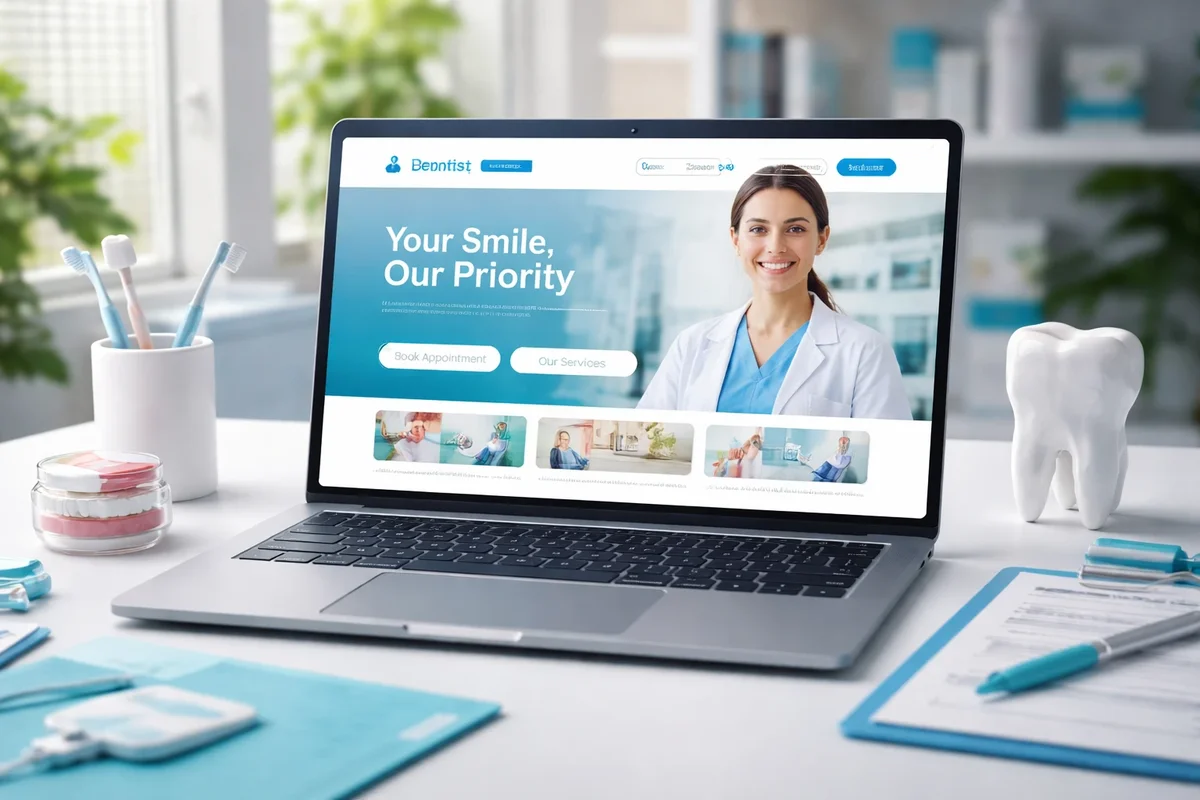
Conversion Optimization: Turning Dentist Websites into Appointment Machines
Attracting visitors is only half the battle. The true success of dentist websites lies in their ability to convert visitors into real patients. Conversion optimization focuses on guiding users toward meaningful actions—booking appointments, making calls, or submitting inquiries—without pressure or confusion. In healthcare, conversion must feel supportive and trustworthy, not aggressive. When done correctly, dentist websites become reliable appointment-generation systems that work around the clock.
Patients visiting dentist websites often arrive with a specific need and limited patience. They want reassurance, clarity, and an easy next step. Conversion optimization removes obstacles from that journey and replaces them with gentle guidance. Every design choice, content element, and interaction should support this goal.
Understanding Conversion Goals on Dentist Websites
The primary conversion goal for most dentist websites is appointment booking. Secondary goals may include phone calls, contact form submissions, or requests for additional information. Clear prioritization helps shape page structure and calls to action.
Successful conversion optimization starts with understanding patient mindset. Users are not just clicking—they are deciding who to trust with their health. Dentist websites that respect this decision-making process perform far better than those that rely on urgency or sales tactics.
Clear and Reassuring Calls to Action
Calls to action (CTAs) are critical conversion elements on dentist websites. They should be visible, concise, and reassuring. Phrases that emphasize care, availability, and support resonate better than pushy language.
Placement matters just as much as wording. CTAs should appear naturally after informative sections, guiding users when they are ready. For example, linking gently to the Redent Klinik Contact Page after educational content provides a logical and comfortable next step.
Reducing Friction in the Conversion Path
Friction is anything that slows or complicates user action. On dentist websites, friction often comes from long forms, unclear instructions, or hidden contact information. Reducing friction improves conversion rates dramatically.
Short, simple forms with clear explanations encourage completion. Patients should understand why information is requested and how it will be used, reinforcing trust and transparency.
Trust Signals That Support Conversion
Trust is the most powerful conversion driver on dentist websites. Visual cues, professional tone, and accurate information all contribute to a sense of safety. When patients trust a website, they feel comfortable taking action.
Referencing professional standards and organizations such as the American Dental Association reinforces legitimacy. These signals reassure users that the clinic operates according to recognized best practices.
Page Layout and Conversion Flow
Effective dentist websites are designed with a clear conversion flow. Content introduces the clinic, educates the patient, addresses concerns, and then invites action. This progression mirrors natural decision-making and feels intuitive rather than forced.
Cluttered layouts disrupt this flow. Clean design, logical spacing, and visual hierarchy help guide attention toward key conversion points without overwhelming users.
Above-the-Fold Optimization
The area visible without scrolling—known as above the fold—plays a major role in conversion. On dentist websites, this space should communicate value immediately. Clear messaging, supportive visuals, and an obvious next step help capture attention quickly.
While not all users convert instantly, a strong first impression encourages them to explore further rather than leave.
Mobile Conversion Optimization
Mobile users behave differently than desktop users, and dentist websites must adapt accordingly. On smaller screens, simplicity is even more important. Click-to-call buttons, short forms, and easy navigation significantly improve mobile conversions.
Mobile-optimized conversion paths reduce effort during moments of urgency. Patients searching on their phones often want immediate contact, and dentist websites should make that effortless.
Using Content to Support Decisions
Conversion does not happen in isolation—it is supported by content. dentist websites that answer common questions, explain processes clearly, and acknowledge concerns reduce hesitation at the moment of decision.
Educational content builds confidence, making patients more comfortable reaching out. When users feel informed, they are far more likely to convert.
Internal Linking as Conversion Guidance
Internal links help guide users toward action without pressure. Strategically placed links on dentist websites move visitors from information to engagement smoothly.
This guidance feels supportive rather than sales-driven, which aligns better with healthcare expectations.
Measuring and Improving Conversion Performance
Conversion optimization is an ongoing process. Successful dentist websites track user behavior to understand what works and what does not. Metrics such as form completion rates, call clicks, and time on page provide valuable insight.
Regular testing and refinement ensure that conversion elements remain effective as user behavior evolves.
Long-Term Value of Conversion-Focused Design
When dentist websites are optimized for conversion, every visitor becomes more valuable. Higher conversion rates mean better return on SEO efforts and more consistent patient flow without increasing traffic volume.
In conclusion, conversion optimization transforms dentist websites from informational platforms into active appointment machines. By focusing on trust, clarity, reduced friction, and patient-centered design, dental clinics can turn online visibility into real-world growth—ethically, effectively, and sustainably. 🦷📅