
Tooth loss can significantly affect your oral health, appearance, and confidence. Fortunately, modern dentistry offers reliable solutions to restore missing teeth and bring back a healthy smile. Two of the most common options are dental implants and dentures. Many patients researching tooth replacement treatments often ask about the difference between dental implants and dentures before making a decision. Understanding this difference is crucial because each option has unique advantages, costs, maintenance requirements, and long-term outcomes.
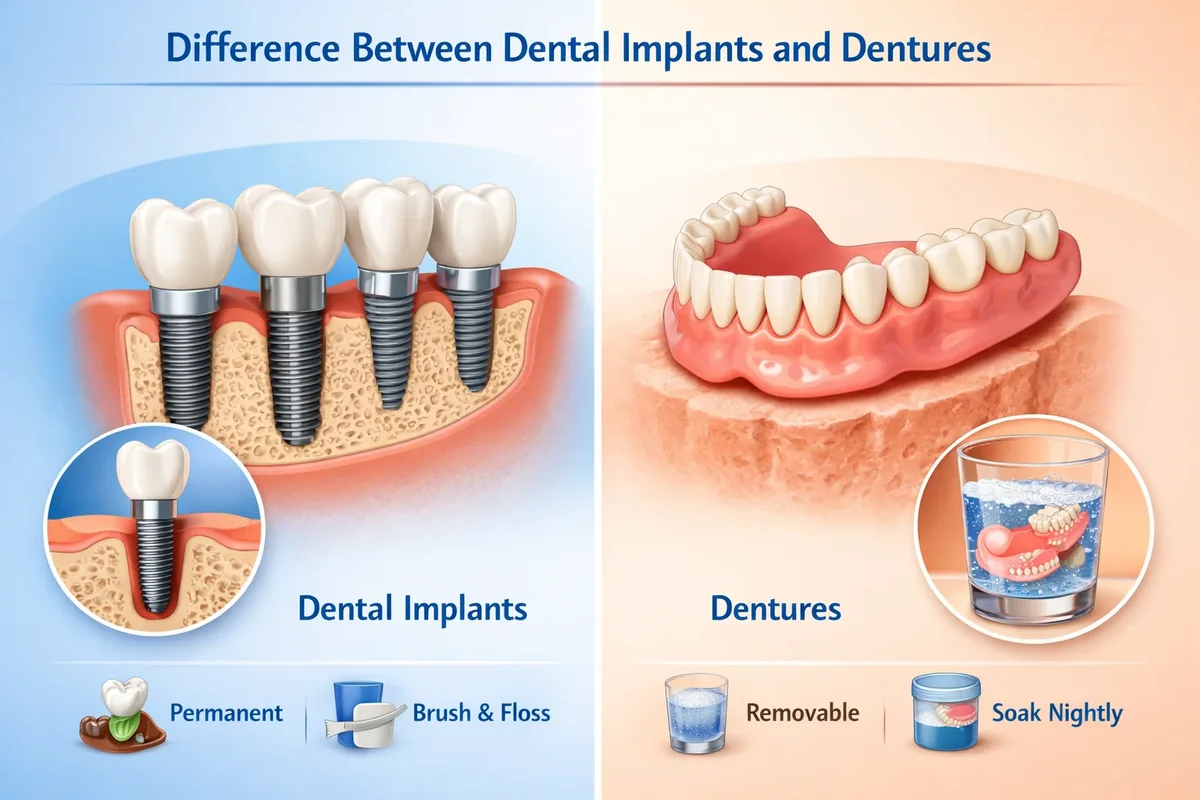
The difference between dental implants and dentures begins with how each solution replaces missing teeth. Dental implants are permanent titanium posts that are surgically inserted into the jawbone. These posts act as artificial tooth roots and support crowns, bridges, or full-arch restorations. Dentures, on the other hand, are removable prosthetic devices designed to replace multiple missing teeth and rest on top of the gums.
When discussing the difference between dental implants and dentures, stability is one of the first aspects patients notice. Dental implants fuse with the jawbone through a biological process known as osseointegration. This integration allows implants to function similarly to natural tooth roots, providing exceptional stability and chewing power. Dentures do not integrate with the bone. Instead, they rely on suction, adhesives, or the shape of the jaw to stay in place. While modern dentures have improved significantly, they may still shift slightly during eating or speaking.
Another important aspect of the difference between dental implants and dentures relates to bone health. When a tooth is lost, the surrounding jawbone gradually begins to shrink because it no longer receives stimulation from a tooth root. Dental implants help prevent this bone loss because they replace the root structure and stimulate the jawbone during chewing. Dentures, however, do not provide this stimulation. Over time, patients who wear dentures may experience gradual bone resorption, which can cause changes in facial appearance and require denture adjustments.
Comfort and natural appearance also highlight the difference between dental implants and dentures. Dental implants feel much closer to natural teeth because they are fixed in the jawbone. Patients can eat, speak, and smile with confidence without worrying about movement. Dentures are designed to mimic the look of natural teeth as well, but some individuals may initially find them bulky or less natural. Over time, most patients adapt well to dentures, but the adjustment period can vary.
The difference between dental implants and dentures is also noticeable in daily maintenance routines. Dental implants are cared for much like natural teeth. Regular brushing, flossing, and routine dental checkups are typically sufficient to maintain them. Dentures require additional care because they must be removed for cleaning and soaked overnight to maintain their shape and hygiene. Some patients prefer the simplicity of removable dentures, while others appreciate the convenience of fixed implant restorations.
Cost is another factor that often influences the decision when considering the difference between dental implants and dentures. Dentures usually have a lower initial cost, making them more accessible for many patients. Dental implants involve surgical placement, advanced materials, and additional procedures such as bone grafting in some cases, which can increase the initial investment. However, implants often last significantly longer and may require fewer replacements over time, which can make them more cost-effective in the long run.
It is also important to consider lifestyle when evaluating the difference between dental implants and dentures. Dental implants offer a fixed solution that allows patients to eat most foods without restriction. Crunchy vegetables, nuts, and tougher foods are usually easier to chew with implants. Denture wearers may need to avoid very sticky or hard foods to prevent discomfort or dislodgement. This dietary flexibility is one of the main reasons many people prefer implants when they are suitable candidates.
The difference between dental implants and dentures also includes treatment time. Dentures can often be created and fitted within several weeks. Dental implant treatment usually takes longer because it involves surgery and a healing period that allows the implant to integrate with the jawbone. This process can take several months, but the long-term stability and durability often make the wait worthwhile for many patients.
If you are still unsure about the difference between dental implants and dentures, consulting a qualified dental professional is the best next step. A dentist will evaluate your oral health, bone structure, medical history, and lifestyle to determine which treatment option best suits your needs. For personalized advice or to discuss your options in detail, you can visit the Redent Klinik Contact Page and schedule a consultation with experienced dental specialists.
Reliable information about tooth replacement options can also be found through professional dental organizations such as the American Dental Association. These organizations provide trusted educational resources about dental implants, dentures, and overall oral health.
Ultimately, understanding the difference between dental implants and dentures empowers patients to make confident decisions about their dental care. Both options can restore function, aesthetics, and self-confidence after tooth loss. The best choice depends on individual factors such as oral health, budget, treatment goals, and personal preferences. By learning how these two solutions compare, patients can choose the path that leads to a healthier smile and improved quality of life. 😊
What Is the Difference Between Dental Implants and Dentures?
When patients begin researching tooth replacement options, one of the most common questions they ask is about the difference between dental implants and dentures. Losing one or more teeth can affect chewing ability, speech clarity, facial appearance, and overall confidence. Modern dentistry provides several effective solutions, but dental implants and dentures remain the most widely used treatments worldwide.
Understanding the difference between dental implants and dentures helps patients make informed decisions about restoring their smile and protecting their long-term oral health. While both options are designed to replace missing teeth, they differ significantly in structure, stability, maintenance, cost, and long-term outcomes.
Basic Definition of Dental Implants
Dental implants are considered one of the most advanced tooth replacement solutions available today. A dental implant consists of a small titanium post that is surgically placed into the jawbone to replace the root of a missing tooth. After healing, a crown, bridge, or full-arch restoration is attached to the implant.
The key point when examining the difference between dental implants and dentures is that implants function as artificial tooth roots. Because they integrate with the jawbone through a process called osseointegration, implants become extremely stable and durable. Once fully healed, they feel very similar to natural teeth.
Dental implants can replace:
- A single missing tooth
- Several missing teeth using implant-supported bridges
- All teeth in a jaw using full-arch implant systems such as All-on-4 or All-on-6
This versatility plays a major role in the difference between dental implants and dentures, because implants can be customized for many different levels of tooth loss.
Basic Definition of Dentures
Dentures are removable prosthetic devices designed to replace missing teeth and surrounding gum tissue. They have been used for centuries and remain a reliable solution for patients who cannot undergo implant surgery or prefer a more affordable treatment.
When discussing the difference between dental implants and dentures, dentures stand out because they rest on the gums rather than being anchored in the jawbone. Dentures can be categorized into two main types:
- Complete dentures – used when all teeth in the upper or lower jaw are missing.
- Partial dentures – used when some natural teeth remain.
Although dentures are removable, modern designs have improved significantly. Many dentures today offer better aesthetics, improved comfort, and stronger materials than older models.
Key Structural Differences
The structural design is one of the most important factors when analyzing the difference between dental implants and dentures. Dental implants replace both the tooth root and the visible crown. Dentures replace only the visible part of the tooth and rely on the gums for support.
Implants Replace the Tooth Root
A major advantage in the difference between dental implants and dentures is that implants act like natural roots. Because they are anchored into the jawbone, they provide excellent stability and chewing strength. Patients with implants can usually eat a wide variety of foods without restrictions.
Dentures Sit on Top of the Gums
Dentures, by contrast, rest on the gums and are typically supported by suction, adhesives, or metal clasps. This structural difference explains why dentures sometimes move slightly while eating or speaking. For many patients, however, dentures still provide acceptable functionality and aesthetic improvement.
Bone Preservation and Oral Health
Another essential factor in understanding the difference between dental implants and dentures is how each treatment affects the jawbone.
When a tooth is lost, the surrounding bone gradually begins to shrink due to lack of stimulation. Dental implants prevent this process because they transfer chewing forces to the bone, just like natural teeth. This stimulation helps maintain bone density and facial structure.
Dentures do not provide the same stimulation. Over time, the jawbone beneath dentures may slowly resorb, which can lead to changes in facial appearance and require denture relining or replacement.
This bone preservation aspect is one of the most significant long-term differences between these treatments.
Comfort and Natural Feel
Comfort is another key area where patients often notice the difference between dental implants and dentures. Dental implants are fixed in the mouth, so they feel stable and natural. Most patients quickly forget they even have implants.
Dentures, however, require an adjustment period. Because they rest on soft gum tissue, they may initially feel bulky or unfamiliar. Over time, many patients adapt successfully, but some may still experience occasional discomfort or movement.
Appearance and Smile Aesthetics
Aesthetics also contribute to the difference between dental implants and dentures. Both options are designed to restore a natural-looking smile. Modern dental materials allow dentists to match tooth color, shape, and size to a patient’s facial features.
Dental implants often provide the most natural appearance because the restoration emerges directly from the gum line like a real tooth. Dentures can also look highly realistic, but they may require adjustments over time as the jawbone changes.
Which Option Is Better?
Determining which option is best requires a clear understanding of the difference between dental implants and dentures and how each treatment fits a patient’s individual needs. Factors such as bone density, general health, budget, and lifestyle preferences all influence the final decision.
Patients who want a permanent, stable, and long-lasting solution often prefer implants. Those seeking a faster or more affordable option may choose dentures. Both solutions can significantly improve quality of life, restore chewing function, and enhance confidence.
If you want professional advice about the difference between dental implants and dentures and which treatment may suit you best, you can reach out through the Redent Klinik Contact Page. Dental professionals can evaluate your oral health and recommend the most appropriate solution.
For additional trusted dental information, patients can also consult resources from the American Dental Association, which provides educational guidance on tooth replacement treatments and oral health care.
Ultimately, the difference between dental implants and dentures lies in their design, stability, longevity, and overall impact on oral health. By understanding these distinctions clearly, patients can make informed choices that support both their dental function and their long-term smile confidence. 😊
How Dental Implants Work Compared to Traditional Dentures
To truly understand the difference between dental implants and dentures, it is essential to examine how each treatment actually works inside the mouth. While both options aim to replace missing teeth and restore oral function, their mechanisms, stability, and long-term impact on oral health are very different. Patients researching tooth replacement often discover that the difference between dental implants and dentures becomes much clearer when they understand the structural and biological processes involved in each treatment.
Dental implants function as artificial tooth roots that integrate directly with the jawbone, while dentures are removable appliances that rest on the gums. This core mechanical distinction explains much of the difference between dental implants and dentures in terms of chewing strength, comfort, durability, and long-term oral health outcomes. By examining how each option works step by step, patients can better evaluate which solution may suit their needs and lifestyle.
How Dental Implants Function in the Jawbone
Dental implants work by replacing both the visible tooth and the root structure that normally anchors a tooth in the jawbone. The implant itself is usually made from medical-grade titanium, a material that is highly biocompatible and capable of bonding with bone tissue. This bonding process is known as osseointegration, and it is one of the main factors behind the difference between dental implants and dentures.
The Implant Placement Process
The dental implant process typically begins with a surgical procedure in which the titanium implant is carefully placed into the jawbone. Over the following months, the bone grows around the implant surface and secures it firmly in place. Once healing is complete, a connector piece called an abutment is attached, and a dental crown is placed on top to restore the appearance and function of a natural tooth.
This process explains a major part of the difference between dental implants and dentures. Because implants are anchored in the bone, they provide stability similar to natural teeth. Patients can bite, chew, and speak without worrying about movement or slipping.
Bone Stimulation and Jaw Health
Another critical factor in the difference between dental implants and dentures is bone preservation. When natural teeth are present, chewing forces stimulate the jawbone and maintain bone density. After tooth loss, the bone begins to shrink due to lack of stimulation. Dental implants restore this stimulation because chewing forces are transferred through the implant into the jawbone.
This stimulation helps maintain facial structure and prevent the sunken appearance that sometimes develops after long-term tooth loss. Because dentures do not stimulate the bone in the same way, the difference between dental implants and dentures becomes especially important for patients concerned about long-term jaw health.
How Traditional Dentures Work
Dentures operate in a completely different way compared to dental implants. Instead of being anchored inside the jawbone, dentures are removable prosthetic appliances designed to sit on top of the gums. They are carefully shaped to fit the contours of the mouth and restore the appearance of missing teeth.
Understanding this structural design helps clarify the difference between dental implants and dentures. Dentures rely on soft tissue support and sometimes adhesives, rather than bone integration.
Support and Retention of Dentures
Traditional dentures stay in place using suction between the denture base and the gum tissue. In some cases, patients may also use dental adhesives to improve stability. Partial dentures may include metal clasps that attach to remaining natural teeth for additional support.
Because dentures rely on these external retention methods, the difference between dental implants and dentures is often noticeable when eating certain foods. Dentures may shift slightly during chewing, particularly when consuming sticky or hard foods. However, modern denture technology has improved comfort and fit compared to older designs.
Denture Adjustment Over Time
Another aspect of the difference between dental implants and dentures is the need for periodic adjustments. As the jawbone gradually changes shape after tooth loss, dentures may become loose or uncomfortable. Dentists often recommend relining or replacing dentures every few years to maintain proper fit.
Dental implants usually do not require this type of adjustment because the implant remains fixed within the bone. This long-term stability highlights an important functional difference between these two treatments.
Chewing Strength and Function
Chewing efficiency is another important factor when evaluating the difference between dental implants and dentures. Dental implants allow patients to exert nearly the same biting force as natural teeth. This means patients can eat a wide range of foods, including vegetables, nuts, and meats, without significant limitations.
Dentures provide improved chewing ability compared to having no teeth at all, but they typically offer less biting strength than implants. Many denture wearers learn to adapt their diet and chewing technique over time. Even so, this difference in chewing performance remains one of the most noticeable aspects of the difference between dental implants and dentures.
Speech and Stability
Speech clarity is another area where patients observe the difference between dental implants and dentures. Because dental implants are fixed in place, they do not interfere with tongue movement or pronunciation. Most patients speak normally immediately after treatment.
Dentures may require a short adjustment period while patients learn how to speak comfortably with the appliance. Some individuals initially experience minor pronunciation difficulties, but these usually improve as they become accustomed to wearing the dentures.
Long-Term Performance
The long-term performance of each treatment further highlights the difference between dental implants and dentures. Dental implants are designed to last many years and often several decades with proper care. Regular brushing, flossing, and professional dental checkups help maintain their function.
Dentures typically require replacement every 5–10 years due to wear and changes in jaw structure. While dentures remain an effective solution, their lifespan and maintenance requirements illustrate another practical difference between these two treatments.
Patients interested in exploring treatment options or learning more about the difference between dental implants and dentures can contact dental professionals directly through the Redent Klinik Contact Page. Personalized consultations allow dentists to evaluate oral health conditions and recommend the most suitable solution.
Reliable educational resources about dental treatments can also be found through professional organizations such as the American Dental Association, which provides trusted information on oral health and modern dental procedures.
In summary, the difference between dental implants and dentures is closely tied to how each solution functions inside the mouth. Implants integrate with the bone to provide stability and long-term support, while dentures offer a removable alternative that replaces missing teeth without surgical placement. Understanding these mechanisms allows patients to make confident decisions about restoring their smiles and improving their overall quality of life. 😊
Pros and Cons: Difference Between Dental Implants and Dentures Explained
When choosing a tooth replacement solution, patients often focus on the advantages and disadvantages of each option. Understanding the difference between dental implants and dentures becomes much easier when comparing their pros and cons side by side. Both treatments are designed to restore missing teeth, improve oral function, and enhance appearance, but they work in very different ways and offer different long-term benefits.
Many patients researching tooth replacement options quickly discover that the difference between dental implants and dentures affects daily comfort, long-term oral health, chewing ability, and overall lifestyle convenience. While dental implants are widely considered a modern and permanent solution, dentures remain a reliable and accessible alternative for millions of people worldwide.
By carefully evaluating the strengths and limitations of each treatment, patients can better understand the difference between dental implants and dentures and make a confident decision about which option best fits their needs.
Advantages of Dental Implants
Dental implants offer several major advantages that highlight the difference between dental implants and dentures. Because implants are anchored directly into the jawbone, they provide stability that closely resembles natural teeth.
1. Exceptional Stability and Function
One of the biggest benefits that defines the difference between dental implants and dentures is stability. Dental implants fuse with the jawbone through osseointegration, creating a strong and permanent foundation for replacement teeth.
This means patients with implants can:
- Chew most foods comfortably
- Speak clearly without fear of movement
- Enjoy a natural biting force
Compared to dentures, implants allow patients to eat foods such as apples, nuts, and meat with much greater ease.
2. Long-Term Durability
Another important point in the difference between dental implants and dentures is longevity. Dental implants are designed to last many years and sometimes several decades with proper care. The implant itself often remains stable for life, while the crown attached to it may need replacement after 10–15 years.
This durability makes implants an attractive long-term investment for many patients.
3. Bone Preservation
A major health advantage in the difference between dental implants and dentures is bone preservation. Dental implants stimulate the jawbone during chewing, preventing the bone shrinkage that commonly occurs after tooth loss.
This stimulation helps maintain facial structure and reduces the risk of a sunken appearance over time.
4. Natural Appearance
Implants are also known for their natural aesthetics. Because they emerge directly from the gum line like real teeth, they often provide the most realistic-looking tooth replacement available in modern dentistry.
This cosmetic benefit further emphasizes the difference between dental implants and dentures, particularly for patients concerned about smile aesthetics.
Disadvantages of Dental Implants
Although implants offer many benefits, the difference between dental implants and dentures also includes certain limitations.
1. Higher Initial Cost
The most common disadvantage of implants is the higher upfront cost. Implant treatment involves surgery, advanced materials, and specialized dental procedures. As a result, implants typically require a larger financial investment than dentures.
However, when evaluating the difference between dental implants and dentures, it is important to remember that implants often last significantly longer and may require fewer replacements.
2. Surgical Procedure Required
Dental implant placement requires minor oral surgery. While the procedure is generally safe and routine, some patients may prefer a non-surgical solution.
This treatment requirement represents another key aspect of the difference between dental implants and dentures.
Advantages of Dentures
Dentures continue to be a widely used treatment option because they provide several practical benefits. Understanding these advantages helps clarify the difference between dental implants and dentures from a patient perspective.
1. Lower Initial Cost
One of the main reasons patients choose dentures is affordability. Dentures generally cost significantly less than implants, making them accessible to a broader range of patients.
For individuals with budget limitations, this financial factor often becomes the deciding point in the difference between dental implants and dentures.
2. Faster Treatment Process
Dentures can typically be fabricated and fitted within a few weeks. Implant treatment, by contrast, may require several months due to healing time.
This faster treatment timeline is another notable element of the difference between dental implants and dentures.
3. Non-Surgical Solution
Because dentures do not require surgery, they may be suitable for patients who cannot undergo implant procedures due to certain medical conditions or insufficient bone density.
This accessibility explains why dentures remain a valuable option despite the many advantages of implants.
Disadvantages of Dentures
Despite their benefits, dentures also have several limitations that highlight the difference between dental implants and dentures.
1. Reduced Stability
Dentures rest on the gums rather than being anchored into the jawbone. As a result, they may shift slightly during eating or speaking.
This reduced stability is one of the most noticeable differences between the two treatments.
2. Bone Loss Over Time
Unlike implants, dentures do not stimulate the jawbone. Over time, bone resorption may occur, causing the jaw to gradually shrink.
This bone change can lead to loose dentures and may require adjustments or replacements.
3. Ongoing Maintenance
Dentures require daily removal, cleaning, and overnight soaking. While this routine is manageable for most patients, some individuals prefer the simplicity of fixed dental implants.
This difference in maintenance routines represents another important aspect of the difference between dental implants and dentures.
Making the Right Choice
Ultimately, the best treatment depends on each patient’s individual circumstances. Factors such as oral health, jawbone density, lifestyle preferences, and financial considerations all play a role in determining the most suitable option.
If you would like professional guidance regarding the difference between dental implants and dentures, you can consult dental specialists through the Redent Klinik Contact Page. A personalized evaluation can help determine which treatment offers the best results for your situation.
Patients seeking reliable dental information can also consult resources provided by the American Dental Association, which offers trusted guidance about modern dental treatments.
In conclusion, understanding the pros and cons clearly reveals the difference between dental implants and dentures. Dental implants provide a long-lasting, stable, and natural-feeling solution, while dentures offer an affordable and non-surgical alternative. By weighing these advantages and limitations carefully, patients can choose the tooth replacement option that best supports their oral health, comfort, and long-term quality of life. 😊
Cost Comparison: Dental Implants vs Dentures
One of the most common questions patients ask when considering tooth replacement options is about the cost. Understanding the financial aspect is essential when evaluating the difference between dental implants and dentures. While both treatments restore missing teeth and improve quality of life, the investment required for each option can vary significantly. Patients often weigh long-term value, durability, and maintenance costs when deciding between these solutions.
The difference between dental implants and dentures becomes particularly noticeable when examining initial treatment costs, long-term maintenance expenses, and overall value over time. Dentures typically require a lower upfront investment, whereas dental implants often involve a higher initial cost but may provide better durability and long-term benefits. To make an informed decision, patients should consider both the immediate financial commitment and the potential costs associated with maintenance and replacement.
Initial Cost of Dental Implants
Dental implants are considered a premium tooth replacement solution due to their advanced technology and surgical placement. The procedure includes several components, such as the implant post, abutment, and dental crown. Additionally, diagnostic imaging, surgical planning, and follow-up visits contribute to the overall cost.
Typical Dental Implant Price Range
The cost of dental implants can vary depending on the clinic, geographic location, and complexity of the case. Based on general dental research and international averages, the following estimates are commonly seen:
- Single dental implant: $1,500 – $3,000 (implant only)
- Implant with crown: $3,000 – $5,500 per tooth
- Full mouth implant restoration (All-on-4 or similar systems): $15,000 – $30,000 per arch
These numbers highlight one major factor in the difference between dental implants and dentures: the upfront cost of implants is significantly higher. However, many patients find that the long-term durability and stability justify the investment.
Additional Procedures That May Affect Cost
Some patients may require additional treatments before implant placement. These procedures help create a stable foundation for the implant and can influence the overall price.
- Bone grafting
- Sinus lift procedures
- Tooth extractions
- Advanced imaging such as 3D scans
These potential procedures illustrate another aspect of the difference between dental implants and dentures. Implant treatment is more complex and may require additional preparation to ensure long-term success.
Cost of Traditional Dentures
Dentures remain a more affordable option for replacing missing teeth. They are custom-made prosthetic devices that fit over the gums and restore both appearance and basic chewing function. Because dentures do not require surgical placement, the treatment process is generally faster and less expensive.
Average Denture Price Range
The cost of dentures varies based on materials, design, and whether the denture is partial or full. Typical price estimates include:
- Basic full dentures: $600 – $1,500 per arch
- Mid-range dentures: $1,500 – $3,000 per arch
- Premium dentures: $3,000 – $8,000 per arch
- Partial dentures: $700 – $2,500 depending on design
These price differences clearly demonstrate part of the difference between dental implants and dentures. Dentures are often chosen by patients who want a faster and more budget-friendly tooth replacement option.
Long-Term Replacement Costs
While dentures have a lower upfront cost, they typically need replacement every 5–10 years. Over time, the jawbone gradually changes shape after tooth loss, which can affect denture fit. Adjustments, relining, or replacement may be necessary to maintain comfort and functionality.
This maintenance cycle is another factor that contributes to the difference between dental implants and dentures. Although dentures start at a lower price, their long-term replacement costs can accumulate over time.
Long-Term Value Comparison
When evaluating the difference between dental implants and dentures, it is important to consider the long-term financial perspective. Dental implants often last decades when properly maintained. Some implants remain functional for a lifetime, although the crown may require replacement after many years.
Dentures, on the other hand, generally require periodic replacement due to wear and changes in jaw structure. When patients compare the lifetime costs of both treatments, they sometimes find that implants offer greater value despite the higher initial investment.
Insurance and Financing Options
Another aspect of the difference between dental implants and dentures involves insurance coverage. Many dental insurance plans partially cover dentures because they are considered a traditional restorative treatment. Implant coverage varies depending on the insurance provider and policy details.
Many dental clinics now offer financing plans that allow patients to spread implant costs over time. Payment plans and dental financing programs can make implant treatment more accessible for patients who prefer a permanent solution.
Cost vs Quality of Life
Ultimately, the decision between implants and dentures often extends beyond cost alone. The difference between dental implants and dentures also includes factors such as comfort, chewing ability, stability, and long-term oral health.
Dental implants typically provide greater stability and allow patients to eat a wider variety of foods without restrictions. Dentures still offer a practical solution for restoring smiles but may require adjustments and adaptation over time.
Patients who want a personalized evaluation and professional guidance regarding the difference between dental implants and dentures can reach dental experts through the Redent Klinik Contact Page. A dental consultation helps determine the most suitable option based on oral health, lifestyle, and financial considerations.
For additional trustworthy information about dental treatments and oral health, patients can consult the American Dental Association. This organization provides educational resources that help individuals better understand treatment options such as dental implants and dentures.
In summary, the difference between dental implants and dentures in terms of cost reflects not only the initial price but also long-term value. Dentures offer an affordable starting point, while dental implants provide a more durable and stable solution that may deliver greater benefits over time. By considering both short-term affordability and long-term outcomes, patients can choose the treatment that best fits their needs and expectations. 💡
Comfort and Stability: Which Option Feels More Natural?
For many patients exploring tooth replacement solutions, comfort and stability are among the most important deciding factors. When evaluating the difference between dental implants and dentures, these two elements often play a central role. While both treatments are designed to restore oral function and improve aesthetics, the experience of wearing dental implants versus dentures can feel very different in daily life.
The difference between dental implants and dentures becomes especially noticeable when patients eat, speak, laugh, and perform everyday activities. Dental implants are fixed directly into the jawbone, creating a secure foundation similar to natural teeth. Dentures, however, sit on top of the gums and rely on suction or adhesives for support. These structural differences significantly influence comfort levels and overall stability.
Understanding how each option feels and performs during daily activities can help patients determine which solution aligns best with their lifestyle and expectations.
How Stability Affects Daily Life
One of the most significant aspects of the difference between dental implants and dentures is the level of stability they provide. Stability directly impacts chewing efficiency, speech clarity, and overall confidence.
Dental Implants Offer Fixed Support
Dental implants are surgically anchored into the jawbone, making them extremely stable. Once the healing process is complete and osseointegration occurs, the implant becomes a permanent part of the oral structure. Because of this integration, the difference between dental implants and dentures is immediately noticeable when patients chew food or speak.
Patients with dental implants often report that their replacement teeth feel very similar to natural teeth. They can bite into foods with confidence and do not need to worry about the restoration moving out of place.
- No slipping or shifting during meals
- Improved speech clarity
- Better chewing strength
- Greater confidence in social situations
This stability is one of the main reasons many dentists recommend implants when patients are suitable candidates.
Dentures May Move Slightly
In contrast, dentures rest on the gums and rely on physical suction or adhesives for retention. Because they are removable appliances, some degree of movement may occur, particularly while eating certain foods.
This characteristic highlights another aspect of the difference between dental implants and dentures. Denture wearers may initially experience minor slipping or shifting, especially during the early adjustment period. However, with proper fitting and practice, many patients learn to manage their dentures comfortably.
Comfort During Eating
Eating comfortably is one of the main goals of tooth replacement treatments. The difference between dental implants and dentures becomes particularly clear when patients begin chewing different types of foods.
Implants Restore Natural Bite Force
Dental implants allow patients to regain a large portion of their natural biting strength. Because the implant is anchored to the jawbone, chewing forces are distributed similarly to natural teeth. This allows patients to enjoy a wider variety of foods.
Many implant patients can comfortably eat foods such as:
- Crunchy vegetables
- Nuts and seeds
- Steak and firm meats
- Apples and other crisp fruits
This improved chewing ability demonstrates another practical difference between dental implants and dentures. Implant-supported restorations provide the stability needed to handle tougher foods without discomfort.
Dentures Require Dietary Adjustments
Dentures also restore chewing ability but may require patients to adjust their eating habits. Hard, sticky, or chewy foods can sometimes dislodge dentures or create pressure on the gums.
For this reason, some denture wearers prefer softer foods and may cut meals into smaller pieces. While many patients adapt well, this dietary adjustment illustrates another key difference between dental implants and dentures.
Speech and Pronunciation
Speech clarity is another factor that can highlight the difference between dental implants and dentures. Missing teeth can affect pronunciation, particularly for certain sounds such as “s,” “f,” and “th.” Both implants and dentures can help restore proper speech patterns, but the experience may differ slightly.
Implants Feel Like Natural Teeth
Because dental implants are permanently fixed, they do not interfere with tongue movement or oral muscle coordination. Most patients speak normally almost immediately after treatment.
This natural feeling contributes significantly to the perceived difference between dental implants and dentures. Patients often forget they even have implants after a short period of adaptation.
Dentures May Require an Adjustment Period
Dentures can initially feel bulky or unfamiliar in the mouth. Some patients may notice slight pronunciation changes during the first few days or weeks of wearing them. Practicing speaking and reading aloud often helps accelerate the adjustment process.
Over time, most denture wearers regain clear speech, but the initial adaptation phase represents another aspect of the difference between dental implants and dentures.
Long-Term Comfort and Gum Health
Comfort over many years is another key factor in understanding the difference between dental implants and dentures. Dental implants transfer chewing forces directly into the jawbone, reducing pressure on the gums.
Dentures, however, rest entirely on gum tissue. Over time, this pressure can sometimes cause irritation or sore spots if the denture fit changes due to bone resorption.
Regular dental visits allow dentists to adjust dentures and ensure continued comfort. Even so, this structural distinction further explains the difference between dental implants and dentures in long-term wearability.
Confidence and Psychological Comfort
Beyond physical comfort, psychological confidence also reflects the difference between dental implants and dentures. Many implant patients report feeling more secure in social situations because their teeth are fixed and stable.
Denture wearers may occasionally feel concerned about movement while speaking or eating in public. Modern denture technology has improved greatly, but this psychological factor still influences patient preferences.
Patients seeking professional guidance about the difference between dental implants and dentures can consult experienced dental specialists through the Redent Klinik Contact Page. Personalized evaluations help determine which treatment option will provide the best comfort and stability for each individual case.
Additional trustworthy dental education can also be found through organizations such as the American Dental Association, which provides reliable information about tooth replacement treatments and oral health.
In conclusion, the difference between dental implants and dentures becomes especially clear when considering comfort and stability. Dental implants offer a fixed, natural-feeling solution that closely mimics real teeth, while dentures provide a removable alternative that may require an adjustment period. By understanding these differences, patients can choose the treatment that best supports their lifestyle, comfort, and long-term oral health. 😊
Longevity and Durability of Dental Implants and Dentures
When patients explore long-term tooth replacement options, durability and lifespan become critical considerations. Understanding the difference between dental implants and dentures in terms of longevity helps patients evaluate which treatment offers the most lasting value. While both options restore missing teeth and improve oral function, they differ significantly in how long they last and how well they withstand daily use.
The difference between dental implants and dentures is especially noticeable when examining their structural design and materials. Dental implants are engineered to function as permanent tooth replacements anchored into the jawbone, while dentures are removable prosthetic devices that may require replacement or adjustment over time. Because of these fundamental differences, their expected lifespan and durability can vary considerably.
For many patients, long-term reliability plays a major role when deciding between treatment options. By examining durability, maintenance needs, and resistance to wear, the difference between dental implants and dentures becomes clearer.
Lifespan of Dental Implants
Dental implants are widely known for their exceptional longevity. With proper care and professional dental maintenance, implants can last decades and sometimes even a lifetime. This long-term durability is one of the most important aspects of the difference between dental implants and dentures.
Implant Structure and Materials
Dental implants are typically made from titanium or titanium alloys, materials known for their strength and biocompatibility. Titanium integrates with the jawbone through osseointegration, creating a stable and durable foundation for replacement teeth.
This structural integration explains much of the difference between dental implants and dentures. Because implants become part of the jawbone structure, they are less likely to shift, loosen, or wear out compared to removable prosthetics.
The implant system generally consists of three components:
- The implant post (artificial tooth root)
- The abutment connector
- The dental crown or prosthetic tooth
While the crown portion may eventually require replacement after many years of use, the implant itself often remains stable for decades.
Factors That Affect Implant Longevity
Several factors influence the lifespan of dental implants. These factors also illustrate the practical difference between dental implants and dentures in long-term performance.
- Good oral hygiene practices
- Regular dental checkups and professional cleanings
- Adequate bone density and jaw health
- Healthy lifestyle habits such as avoiding smoking
Patients who maintain excellent oral care often experience extremely long implant lifespans. This durability is one of the main reasons implants are considered a long-term solution for tooth replacement.
Lifespan of Dentures
Dentures also provide reliable tooth replacement, but their lifespan is generally shorter compared to dental implants. Most dentures require replacement or significant adjustment every 5 to 10 years.
This expected replacement timeline highlights another important difference between dental implants and dentures. Because dentures sit on the gums and are not anchored into the bone, they are more affected by changes in the jaw structure over time.
Changes in Jawbone Structure
After tooth loss, the jawbone gradually shrinks due to lack of stimulation. Dentures do not replace the tooth root, so they cannot prevent this natural bone resorption process. As the bone changes shape, the denture fit may become loose.
This ongoing bone change represents a key part of the difference between dental implants and dentures. Dentures may require periodic relining or replacement to maintain proper fit and comfort.
Wear and Tear Over Time
Dentures are typically made from acrylic resin, porcelain, or other dental materials designed to simulate natural teeth. Although durable, these materials gradually wear down from chewing forces and daily use.
Cracks, chips, or discoloration can also occur over time. Because dentures are removable appliances, they are more vulnerable to accidental damage compared to fixed implants. This difference in material durability further emphasizes the difference between dental implants and dentures.
Maintenance and Long-Term Repairs
Maintenance requirements also illustrate the difference between dental implants and dentures. Dental implants are maintained similarly to natural teeth, with daily brushing, flossing, and professional dental care.
Dentures require additional steps, including:
- Daily removal and cleaning
- Soaking overnight in a cleaning solution
- Periodic denture relining or adjustments
While denture care is manageable for most patients, it involves a more complex routine compared to the relatively simple maintenance of dental implants.
Durability During Daily Activities
The difference between dental implants and dentures is also evident in daily functionality. Dental implants provide strong biting force and stability, allowing patients to eat a wide variety of foods without concern.
Dentures restore chewing ability but may not provide the same level of durability during certain activities. Hard or sticky foods can place additional stress on dentures, and some patients prefer to avoid these foods.
This difference in chewing strength highlights another practical distinction between the two treatments.
Long-Term Value
When evaluating the difference between dental implants and dentures, many patients consider long-term value rather than just initial cost. Although dental implants often require a higher upfront investment, their durability and extended lifespan can make them more cost-effective over time.
Dentures may have a lower initial cost but typically require replacement or adjustment several times throughout a patient’s lifetime. These repeated treatments can gradually increase overall costs.
For patients seeking guidance on the difference between dental implants and dentures and which solution offers the best long-term results, professional consultation is recommended. Dental specialists can evaluate individual oral health conditions and recommend the most appropriate treatment plan.
If you would like personalized advice about tooth replacement options, you can contact dental professionals through the Redent Klinik Contact Page. A comprehensive consultation helps determine which treatment best suits your oral health needs.
Patients can also access trusted dental information through the American Dental Association, which provides reliable resources about modern dental treatments and oral care practices.
In summary, the difference between dental implants and dentures becomes particularly clear when examining longevity and durability. Dental implants offer a long-lasting, stable solution that can remain functional for decades, while dentures provide a practical but shorter-term option that may require replacement over time. By understanding these differences, patients can choose the treatment that best supports their long-term oral health and lifestyle. 😊
Maintenance and Daily Care Requirements
Proper oral care plays a vital role in the long-term success of any tooth replacement treatment. When patients compare restoration options, one of the most practical aspects to consider is daily maintenance. Understanding the difference between dental implants and dentures in terms of care routines helps patients prepare for the responsibilities associated with each solution. While both implants and dentures require attention to hygiene, the methods and daily routines involved can differ significantly.
The difference between dental implants and dentures becomes especially clear when examining cleaning procedures, oral hygiene habits, and professional dental care requirements. Dental implants function similarly to natural teeth and therefore follow a relatively familiar cleaning routine. Dentures, however, require removal, soaking, and specialized cleaning products to maintain hygiene and structural integrity.
By understanding these care requirements in detail, patients can determine which option better fits their lifestyle and daily habits.
Daily Care Routine for Dental Implants
Dental implants are designed to mimic natural teeth as closely as possible, both in function and maintenance. Because implants are permanently fixed into the jawbone, they can be cleaned using many of the same techniques used for natural teeth. This maintenance similarity is one of the most practical aspects of the difference between dental implants and dentures.
Brushing and Flossing
Patients with dental implants should brush at least twice a day using a soft-bristled toothbrush and fluoride toothpaste. Flossing is equally important because plaque can accumulate around the gum line and the implant crown.
Regular brushing and flossing help prevent gum inflammation and peri-implantitis, a condition that affects the tissues around implants. Maintaining proper hygiene ensures that implants remain stable for many years. This daily routine further illustrates the difference between dental implants and dentures, as implant care closely resembles natural oral hygiene habits.
Special Cleaning Tools
Some dentists recommend additional tools to improve implant hygiene, including:
- Interdental brushes
- Water flossers
- Low-abrasive toothpaste
- Antibacterial mouth rinses
These tools help remove plaque from hard-to-reach areas around the implant restoration. Although these steps require attention, they are generally simple and convenient for most patients.
Professional Dental Maintenance for Implants
Professional dental visits are an essential part of maintaining implants. Regular checkups allow dentists to monitor implant stability, examine gum health, and perform professional cleanings.
This professional care helps maintain the long-term success of implants and further highlights the difference between dental implants and dentures. Because implants integrate with the jawbone, maintaining healthy surrounding tissues is essential.
Routine Checkups
Most dentists recommend visiting the dental clinic every six months for routine examinations and professional cleanings. These visits help detect potential issues early and ensure the implant remains secure.
For patients who want guidance regarding the difference between dental implants and dentures and the maintenance required for each treatment, dental professionals can provide personalized care recommendations.
Daily Care Routine for Dentures
Denture care differs significantly from implant maintenance. Because dentures are removable prosthetic appliances, they require a specialized cleaning routine to maintain hygiene and durability.
This care routine represents one of the clearest examples of the difference between dental implants and dentures.
Removing and Cleaning Dentures
Dentures should be removed daily for cleaning. Patients are typically advised to rinse dentures after eating to remove food particles and prevent plaque buildup.
Proper denture cleaning involves:
- Using a soft denture brush
- Cleaning with denture-specific solutions
- Avoiding regular toothpaste, which may be too abrasive
These additional cleaning steps highlight another aspect of the difference between dental implants and dentures. Dentures require more manual handling and attention compared to fixed implant restorations.
Overnight Soaking
Many dentures must be soaked overnight in a denture-cleaning solution or water. This soaking process helps maintain moisture and prevents the denture material from warping.
Patients should always follow their dentist’s instructions regarding soaking solutions and storage methods. These extra steps illustrate another practical difference between dental implants and dentures.
Oral Hygiene for Denture Wearers
Even though dentures replace teeth, maintaining oral hygiene remains essential. The gums, tongue, and remaining natural teeth still require daily cleaning.
Denture wearers should gently brush their gums and tongue each day to remove bacteria and stimulate circulation. This step helps maintain oral health and prevent irritation beneath the denture base.
These hygiene requirements highlight the ongoing care responsibilities that accompany dentures and further demonstrate the difference between dental implants and dentures.
Common Maintenance Challenges
Each treatment option presents unique maintenance challenges. Understanding these challenges helps clarify the difference between dental implants and dentures from a practical perspective.
Implant Maintenance Challenges
Implants are relatively easy to maintain, but patients must remain consistent with oral hygiene. Neglecting implant care can lead to gum disease or inflammation around the implant.
Fortunately, with proper hygiene and regular dental visits, implant complications are relatively uncommon.
Denture Maintenance Challenges
Dentures require more handling and may occasionally cause minor issues such as:
- Denture staining
- Odor buildup if not cleaned properly
- Loose fit due to jawbone changes
These challenges highlight another dimension of the difference between dental implants and dentures. While dentures are effective tooth replacements, they often demand a more involved care routine.
Which Option Is Easier to Maintain?
When evaluating the difference between dental implants and dentures, many patients find that implants are easier to maintain because they function similarly to natural teeth. Dentures require more daily attention, including removal, cleaning, and soaking.
However, both options can provide excellent long-term results when patients follow proper care instructions.
Patients seeking expert guidance regarding the difference between dental implants and dentures and the maintenance required for each option can contact dental professionals through the Redent Klinik Contact Page. Personalized consultations allow dentists to recommend the most suitable treatment plan based on oral health conditions and lifestyle needs.
For additional reliable dental information, patients can consult the American Dental Association, which provides educational resources on oral hygiene practices and dental restoration treatments.
In conclusion, the difference between dental implants and dentures extends beyond appearance and cost. Daily maintenance routines also vary significantly. Dental implants offer a convenient, natural-care routine similar to brushing and flossing real teeth, while dentures require removal, soaking, and specialized cleaning. By understanding these maintenance differences, patients can choose the solution that best fits their lifestyle and oral health goals. 😊
Who Is a Good Candidate for Dental Implants or Dentures?
Choosing the right tooth replacement solution is not only about cost or aesthetics—it also depends on a patient’s oral health, bone structure, medical history, and lifestyle. Understanding the difference between dental implants and dentures becomes especially important when determining which treatment is most suitable for a specific individual. While both options can effectively restore missing teeth, not every patient is automatically a candidate for dental implants, and some individuals may benefit more from dentures.
The difference between dental implants and dentures becomes clearer when dentists evaluate clinical factors such as jawbone density, gum health, and overall medical condition. Dental implants require sufficient bone support and surgical placement, while dentures are removable prosthetic appliances that can often be used even when bone loss has already occurred.
By examining the characteristics that make someone a good candidate for each treatment, patients can better understand the difference between dental implants and dentures and which option may offer the most successful long-term outcome.
Ideal Candidates for Dental Implants
Dental implants are considered one of the most advanced and durable tooth replacement treatments available. However, because they involve surgical placement into the jawbone, certain health conditions and anatomical factors must be evaluated carefully.
Healthy Jawbone Density
A critical factor when assessing the difference between dental implants and dentures is bone availability. Dental implants rely on the jawbone for support. Patients must have sufficient bone volume and density to anchor the implant securely.
If the jawbone has deteriorated due to long-term tooth loss, dentists may recommend procedures such as bone grafting before implant placement. These procedures rebuild bone structure and allow implants to be placed successfully.
Healthy Gums and Oral Tissues
Another key requirement for dental implant candidates is healthy gum tissue. Gum disease can weaken the structures that support implants and may compromise healing after surgery.
Patients with periodontal disease may first need treatment to restore gum health before implant placement. This clinical requirement highlights another aspect of the difference between dental implants and dentures.
Good Overall Health
Because implant placement involves a minor surgical procedure, candidates should generally be in good overall health. Conditions such as uncontrolled diabetes, certain immune disorders, or heavy smoking may affect healing and implant success.
That said, many patients with medical conditions can still receive implants with proper evaluation and planning. Dentists carefully review each patient’s medical history before recommending treatment.
Ideal Candidates for Dentures
Dentures remain an excellent solution for many individuals who cannot undergo implant treatment or who prefer a non-surgical option. When examining the difference between dental implants and dentures, dentures are often the preferred choice for patients who need a simpler or faster treatment process.
Patients With Significant Bone Loss
One of the biggest advantages of dentures is that they do not require strong bone support in the same way implants do. Because dentures sit on top of the gums rather than being anchored into the bone, they can still function even when the jawbone has experienced significant shrinkage.
This structural characteristic highlights a major difference between dental implants and dentures. Dentures may be recommended for patients who are not candidates for implant surgery due to bone loss.
Patients Seeking a Non-Surgical Option
Some individuals prefer to avoid surgery entirely. In these cases, dentures provide a practical and effective solution for restoring missing teeth without surgical intervention.
This preference-based factor is another important consideration when evaluating the difference between dental implants and dentures.
Patients With Budget Limitations
Cost is often an important factor when selecting a tooth replacement option. Dentures generally have a lower upfront cost compared to implants, making them more accessible for many patients.
Although dentures may require periodic replacement or adjustment, they remain an affordable solution that restores both appearance and basic chewing function.
Hybrid Options: Implant-Supported Dentures
For some patients, the best solution may combine elements of both treatments. Implant-supported dentures are a hybrid option that further illustrates the difference between dental implants and dentures. In this approach, a small number of implants are placed in the jawbone to stabilize a removable or fixed denture.
Improved Stability
Implant-supported dentures provide significantly more stability than traditional dentures. The implants act as anchors that prevent the denture from slipping or moving while eating or speaking.
Better Comfort
Because implant-supported dentures distribute pressure more evenly across the jaw, many patients experience improved comfort compared to traditional dentures.
This hybrid approach bridges the gap in the difference between dental implants and dentures, offering a balance between affordability and stability.
Personalized Treatment Planning
Determining the most appropriate treatment option requires a professional dental evaluation. Dentists assess multiple factors, including:
- Jawbone structure and density
- Overall oral health
- Medical history
- Lifestyle and dietary habits
- Budget considerations
These clinical assessments help dentists explain the difference between dental implants and dentures and recommend the most suitable treatment plan for each patient.
If you are considering tooth replacement and want professional guidance regarding the difference between dental implants and dentures, you can schedule a consultation through the Redent Klinik Contact Page. Experienced dental professionals can evaluate your oral health and recommend the most appropriate solution.
Patients seeking reliable dental information can also consult resources from the American Dental Association, which provides trusted guidance on dental treatments and oral health care.
In conclusion, the difference between dental implants and dentures becomes clearer when considering patient eligibility. Dental implants are ideal for individuals with sufficient bone support and good overall health who want a permanent solution. Dentures provide a practical alternative for patients seeking a non-surgical or more affordable option. By understanding these candidacy factors, patients can make informed decisions that support both their oral health and long-term comfort. 😊
Choosing the Best Tooth Replacement Option for Your Smile
Deciding how to replace missing teeth is an important step toward restoring both oral health and confidence. Many patients researching tooth replacement options focus heavily on the difference between dental implants and dentures because each treatment offers unique advantages. While both options can effectively restore function and appearance, the right choice ultimately depends on individual factors such as oral health, lifestyle, expectations, and budget.
The difference between dental implants and dentures becomes clearer when patients evaluate how each solution fits into their daily lives. Dental implants provide a fixed, long-term restoration that closely mimics natural teeth, while dentures offer a removable and often more affordable option for replacing multiple missing teeth. Understanding these distinctions allows patients to choose a treatment that supports both comfort and long-term oral health.
In modern dentistry, both treatments are widely used and have helped millions of patients restore their smiles. The key is determining which option best aligns with a patient’s individual needs and priorities.
Factors to Consider When Choosing a Treatment
Before deciding between treatment options, dentists evaluate several clinical and lifestyle factors. These considerations highlight the practical difference between dental implants and dentures and help determine which option will produce the best long-term outcome.
1. Oral Health and Bone Structure
One of the most important factors affecting the difference between dental implants and dentures is the condition of the jawbone. Dental implants require sufficient bone density to support the titanium post that acts as an artificial tooth root.
If bone loss has occurred due to prolonged tooth loss, dentists may recommend bone grafting procedures before implant placement. Dentures, however, do not require bone integration and can often be used even when bone density has decreased.
This structural requirement is one of the main clinical differences between these treatments.
2. Lifestyle and Daily Comfort
Lifestyle preferences also play an important role in understanding the difference between dental implants and dentures. Patients who prefer a fixed solution that behaves like natural teeth often favor implants. These restorations remain permanently in the mouth and do not need to be removed for cleaning.
Dentures, on the other hand, are removable appliances that require daily cleaning and overnight soaking. Some patients appreciate the flexibility of removable dentures, while others prefer the convenience of fixed implants.
3. Chewing Ability and Food Choices
Another key factor in the difference between dental implants and dentures is chewing performance. Dental implants provide strong bite force and allow patients to enjoy a wide range of foods without significant restrictions.
Dentures restore chewing ability but may require patients to avoid certain foods that are extremely hard or sticky. For individuals who prioritize maximum chewing strength and dietary freedom, implants are often the preferred option.
4. Budget Considerations
Financial considerations also influence treatment decisions. The difference between dental implants and dentures is particularly noticeable when comparing upfront costs.
Dentures generally have a lower initial cost, making them accessible for many patients. Dental implants involve surgical placement and advanced materials, which can increase the initial investment. However, implants may offer better long-term value due to their durability and reduced replacement frequency.
Long-Term Oral Health Benefits
Long-term oral health is another crucial factor when examining the difference between dental implants and dentures. Dental implants help preserve jawbone structure by stimulating the bone during chewing. This stimulation prevents the gradual bone shrinkage that occurs after tooth loss.
Dentures do not provide this same stimulation because they sit on top of the gums rather than integrating with the bone. Over time, this can lead to gradual changes in jaw shape, which may require denture adjustments.
These biological differences often influence patients who want a long-term solution that supports both oral function and facial structure.
Psychological and Social Confidence
Confidence and quality of life also reflect the difference between dental implants and dentures. Dental implants are permanently fixed in the mouth, allowing patients to speak, laugh, and eat without worrying about movement.
Dentures can also restore confidence and improve appearance, but some individuals initially feel concerned about possible movement or shifting during meals or conversations. Modern denture technology has improved stability significantly, but this psychological factor still influences many treatment decisions.
Consulting a Dental Professional
The best way to fully understand the difference between dental implants and dentures is through a professional dental consultation. Dentists perform a comprehensive examination that includes digital imaging, oral health assessment, and evaluation of medical history.
During this consultation, patients can discuss:
- The number of missing teeth
- Jawbone condition
- Desired treatment timeline
- Budget considerations
- Long-term treatment goals
Based on these factors, the dentist can recommend the most suitable solution for restoring the patient’s smile.
If you would like personalized advice about the difference between dental implants and dentures, you can contact experienced dental professionals through the Redent Klinik Contact Page. A consultation will allow specialists to evaluate your oral health and recommend the best treatment plan.
Patients can also learn more about tooth replacement treatments and oral health recommendations from trusted organizations such as the American Dental Association. These resources provide valuable educational guidance for individuals considering restorative dental procedures.
Making an Informed Decision
Ultimately, understanding the difference between dental implants and dentures empowers patients to make confident choices about their dental care. Both treatments can successfully restore missing teeth, improve chewing ability, and enhance smile aesthetics.
Dental implants provide a durable, stable, and natural-feeling solution for patients seeking a long-term restoration. Dentures offer an accessible and effective alternative for those who prefer a removable option or want to avoid surgical procedures.
By carefully evaluating the advantages of each treatment and consulting with qualified dental professionals, patients can select the option that best supports their oral health, lifestyle, and long-term comfort. 😊