
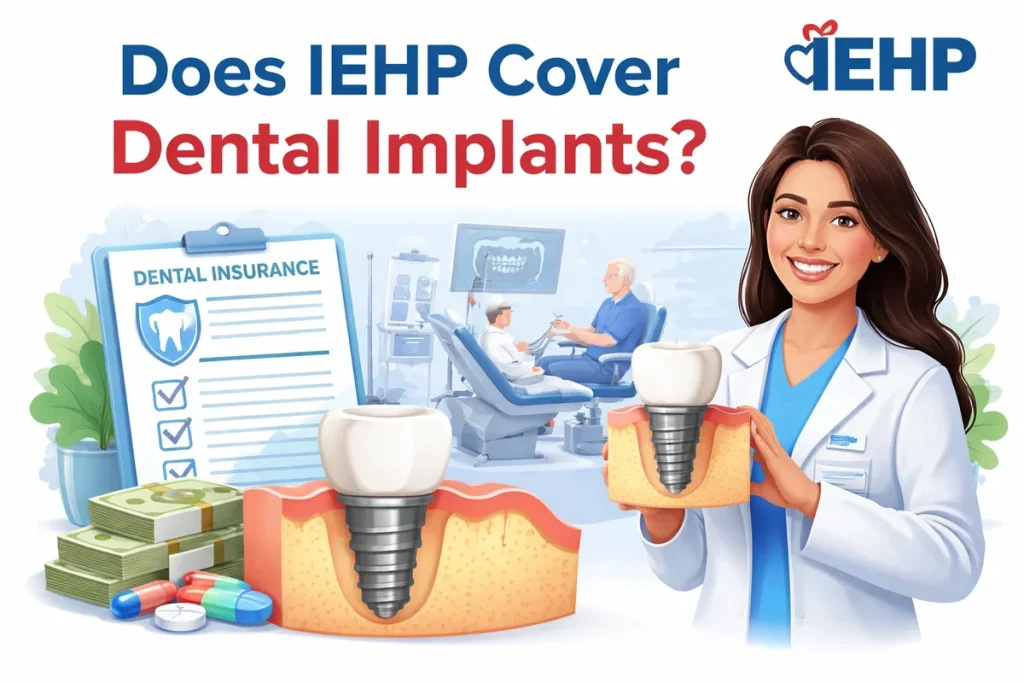
If you are searching for a clear, honest answer to the question does IEHP cover dental implants, you are not alone. Dental implants are one of the most effective long-term solutions for missing teeth, but they are also among the most expensive dental procedures. For patients insured under Inland Empire Health Plan (IEHP), understanding what is covered — and what is not — can be confusing, frustrating, and sometimes misleading. This guide is designed to fully answer the core question does IEHP cover dental implants in a simple, accurate, and user-friendly way.
IEHP is a Medi-Cal managed care health plan serving residents of Riverside and San Bernardino counties in California. While IEHP does offer dental benefits through Denti-Cal, those benefits are structured around basic and medically necessary dental care. This distinction is extremely important when evaluating whether dental implants are included. Many patients assume that if a treatment restores function, it must be covered — but insurance policies do not always work that way.
So, does IEHP cover dental implants in general terms? In most adult cases, the answer is no. Dental implants are typically classified as an elective or advanced restorative procedure rather than a basic dental necessity. IEHP, through Medi-Cal dental coverage, prioritizes preventive care such as exams, cleanings, X-rays, fillings, and extractions. Implants usually fall outside this scope.
However, the topic of does IEHP cover dental implants is not black and white. Coverage decisions often depend on age, medical necessity, and whether the tooth loss is connected to a broader health condition. For example, adults over the age of 21 are subject to stricter limitations, whereas children and adolescents may qualify for expanded benefits under the EPSDT (Early and Periodic Screening, Diagnostic, and Treatment) program.
Another critical factor is how IEHP defines medical necessity. Dental implants are often viewed as cosmetic or optional because alternative treatments — such as dentures or partial dentures — are considered sufficient to restore basic function. From an insurance perspective, if a lower-cost option exists, it is usually favored. This is one of the main reasons the question does IEHP cover dental implants so often leads to disappointment.
That said, there are rare situations where dental implants may be approved when they are directly tied to a serious medical condition. Examples can include congenital defects, traumatic facial injuries, or jawbone issues caused by disease or surgery. In such cases, implants may be reviewed under medical coverage rather than dental coverage. Even then, prior authorization and extensive documentation are required.
It is also important to understand that IEHP does not make these decisions arbitrarily. Coverage policies are influenced by state Medi-Cal regulations and clinical guidelines supported by organizations such as the American Dental Association. These guidelines shape what is considered essential versus elective care. Unfortunately for patients asking does IEHP cover dental implants, implants remain categorized as non-essential in most routine cases.
Because of these limitations, many IEHP patients explore alternative solutions, including treatment abroad or private dental clinics that offer advanced care at more affordable rates. Clinics specializing in international patients often provide comprehensive implant solutions with transparent pricing and modern technology. If you are considering discussing your options with a dental professional, you may find it helpful to reach out via the Redent Klinik Contact Page for personalized guidance.
In summary, when evaluating does IEHP cover dental implants, patients should be prepared for a complex answer. Standard IEHP dental plans generally do not cover implants for adults, and approvals are rare unless there is a documented medical necessity. Understanding these limitations early can save time, reduce frustration, and help you plan the most realistic path toward restoring your smile 😊.
As you continue reading this guide, we will break down coverage rules by age, explain why implants are excluded, explore exceptions, and present practical alternatives. By the end, you will have a complete and confident understanding of does IEHP cover dental implants and what steps you can take next.
What Is IEHP and How Does Dental Coverage Work?
To truly understand the answer to does IEHP cover dental implants, it is essential to first understand what IEHP is and how its dental coverage system operates. Many misunderstandings come from assuming IEHP works like private dental insurance, but IEHP follows a very different structure governed by California’s Medi-Cal rules.
IEHP (Inland Empire Health Plan) is a publicly funded managed care health plan serving eligible residents of Riverside and San Bernardino counties. It operates under Medi-Cal, California’s Medicaid program, which means coverage is designed around basic health needs, not elective or premium treatments. This foundational concept explains much of the confusion surrounding whether IEHP covers advanced dental procedures.
How IEHP Dental Benefits Are Structured
Dental services under IEHP are provided through Denti-Cal, the dental component of Medi-Cal. Denti-Cal focuses on preventive and restorative care that is considered essential for maintaining oral health. When patients ask does IEHP cover dental implants, they are often surprised to learn that implants are not categorized as essential within this system.
Covered dental services typically include routine exams, cleanings, X-rays, fillings, root canals (with limitations), extractions, and dentures. These treatments aim to eliminate pain, infection, and functional impairment at the lowest reasonable cost. Dental implants, while clinically excellent, are viewed as a higher-cost alternative rather than a necessity.
This cost-based framework is one of the core reasons the answer to does IEHP cover dental implants is usually negative for adult patients. IEHP’s mandate is to provide adequate care to as many people as possible, which requires prioritizing affordability and medical necessity.
Medical Coverage vs Dental Coverage Under IEHP
Another important distinction lies between medical coverage and dental coverage. IEHP provides both, but they are evaluated separately. Dental implants almost always fall under dental benefits, not medical ones. Since dental benefits under Medi-Cal are limited, this creates a major barrier.
In very rare cases, implants may be reviewed under medical coverage if they are directly related to trauma, congenital defects, or jaw reconstruction following disease or surgery. However, these cases require extensive documentation, specialist referrals, and prior authorization. Even then, approval is not guaranteed, which again affects how does IEHP cover dental implants is answered.
Why Alternative Treatments Matter in Coverage Decisions
IEHP’s coverage decisions are heavily influenced by whether a lower-cost alternative exists. For missing teeth, dentures and partial dentures are considered sufficient to restore chewing function and appearance. Because these alternatives are covered, implants are classified as optional rather than required.
This explains why patients who feel implants are necessary for comfort or confidence still receive a denial. From the insurance perspective, the availability of dentures eliminates the medical necessity argument. This policy logic plays a central role in shaping the response to does IEHP cover dental implants.
Age-Based Differences in IEHP Dental Coverage
Age is another critical factor. Children and adolescents under 21 are covered under the EPSDT program, which mandates broader coverage if a service is necessary to correct or improve a health condition. In these cases, the question does IEHP cover dental implants may have a different answer, especially when implants are required due to developmental or congenital issues.
For adults aged 21 and over, coverage becomes far more limited. Adult dental benefits are capped, restricted, and strictly reviewed. This is why most adult patients searching for does IEHP cover dental implants discover that implants are excluded from standard coverage.
Why Policy Awareness Saves Time and Stress
Understanding how IEHP dental coverage works can save patients months of frustration. Many individuals spend time gathering documents, visiting multiple providers, and submitting appeals without realizing that implants are fundamentally excluded. Knowing the system upfront allows patients to focus on realistic options.
For those determined to pursue implant treatment, exploring alternatives such as private clinics, payment plans, or treatment abroad may be more effective. Some patients choose internationally accredited dental clinics that offer implant procedures at significantly lower costs while maintaining high clinical standards. If you are considering professional guidance on implant options, you can reach out through the Redent Klinik Contact Page for individualized assistance.
In conclusion, understanding IEHP’s structure makes the answer to does IEHP cover dental implants much clearer. IEHP is designed to deliver essential dental care through Medi-Cal, prioritizing cost-effective solutions over advanced procedures. Dental implants, while highly effective, do not align with this framework in most adult cases. Recognizing this reality empowers patients to make informed decisions and plan their next steps with confidence 😊.
Does IEHP Cover Dental Implants for Adults?
For adult patients, the question does IEHP cover dental implants is one of the most searched and most misunderstood topics in dental insurance. Adults covered under IEHP often assume that tooth replacement automatically qualifies for coverage, especially when missing teeth affect chewing, speech, or confidence. Unfortunately, IEHP adult dental benefits follow strict Medi-Cal guidelines that significantly limit access to dental implants.
In general, for adults aged 21 and older, the answer to does IEHP cover dental implants is no. Dental implants are not included as a standard benefit under IEHP’s adult dental coverage. Even though implants are considered the gold standard in modern dentistry, IEHP classifies them as non-essential when other lower-cost alternatives exist.
Why Adult Dental Benefits Are More Limited
Adult dental coverage under IEHP is designed to address pain relief, infection control, and basic oral function. This includes services such as examinations, cleanings, fillings, extractions, and in some cases dentures. The primary goal is to maintain oral health at a population level, not to provide premium restorative solutions.
This framework directly affects how does IEHP cover dental implants is answered for adults. Since dentures and partial dentures can restore basic chewing ability, IEHP considers them sufficient. Implants, which offer superior comfort, stability, and bone preservation, are viewed as an upgrade rather than a necessity.
Medical Necessity vs Functional Improvement
One of the most common points of confusion lies in the concept of medical necessity. Many adults argue that implants are medically necessary because they improve function and prevent bone loss. While this is clinically true, IEHP defines medical necessity more narrowly.
From IEHP’s perspective, if a patient can eat and speak using dentures, then the condition is considered adequately treated. This policy interpretation is a major reason why does IEHP cover dental implants typically results in a denial for adults, even when implants would clearly improve quality of life.
Bone Loss and Jaw Health: Not Enough for Approval
Bone loss following tooth loss is a well-documented medical issue. Dental implants help preserve jawbone density, while dentures do not. However, IEHP does not usually consider bone preservation alone as sufficient justification for implant coverage.
This is often frustrating for patients who understand the long-term health benefits of implants. Still, under current Medi-Cal dental rules, preventive bone preservation does not override cost-based decision-making. As a result, does IEHP cover dental implants remains a negative answer for most adult cases.
Prior Authorization and Appeals: What to Expect
Some adults attempt to pursue implant coverage through prior authorization or appeals. While IEHP allows appeals, success rates for implant approval in adults are extremely low unless extraordinary medical circumstances are involved.
Appeals typically require detailed documentation, specialist evaluations, radiographic evidence, and proof that no alternative treatment is viable. Even with extensive records, IEHP often maintains its original decision. This reinforces why patients researching does IEHP cover dental implants should have realistic expectations.
Special Medical Conditions and Rare Exceptions
There are rare scenarios where adult implants may be considered under medical benefits rather than dental benefits. These include severe facial trauma, cancer-related jaw surgery, or congenital conditions affecting oral structure. In such cases, implants may be part of reconstructive treatment rather than cosmetic dentistry.
However, these situations are exceptions, not the rule. They require coordination between medical specialists, oral surgeons, and IEHP case managers. For the vast majority of adults, these exceptions do not apply, which is why the general answer to does IEHP cover dental implants remains unchanged.
What Adults Can Do If Implants Are Not Covered
When adults learn that IEHP does not cover implants, many feel discouraged. However, understanding this limitation early allows patients to explore alternative solutions proactively. Some choose removable or fixed dentures, while others seek implant treatment through private clinics or dental tourism.
International dental clinics often provide high-quality implant care at a fraction of U.S. prices, using internationally recognized materials and protocols. Patients interested in learning more about these options can consult with experienced providers through the Redent Klinik Contact Page to better understand costs, timelines, and treatment plans.
In conclusion, for adults aged 21 and older, the answer to does IEHP cover dental implants is almost always no. IEHP’s adult dental benefits are structured around basic care and cost containment, not advanced restorative solutions. While implants offer unmatched benefits, they fall outside the scope of standard coverage. Knowing this helps adult patients make informed, confident decisions about their oral health journey 😊.
Dental Implant Coverage for Children Under IEHP
When families ask does IEHP cover dental implants, the answer can be very different depending on the patient’s age. While adult coverage is highly restricted, children and adolescents under the age of 21 may have broader access to dental services through special Medi-Cal provisions. Understanding these distinctions is essential for parents seeking the best possible care for their children.
IEHP follows California Medi-Cal rules, which include a federally mandated program called EPSDT (Early and Periodic Screening, Diagnostic, and Treatment). Under EPSDT, children are entitled to receive any medically necessary service that corrects or improves a health condition — even if that service would not normally be covered for adults. This is why the question does IEHP cover dental implants can sometimes have a more hopeful answer for younger patients.
What Is EPSDT and Why It Matters
EPSDT exists to ensure that children receive comprehensive healthcare during critical developmental years. Dental health is considered a key component of overall health, especially because untreated dental issues can affect nutrition, speech, jaw development, and self-esteem.
Under EPSDT, IEHP must cover dental services if they are deemed medically necessary, even if those services are not part of standard adult dental benefits. This policy creates a possible pathway when evaluating does IEHP cover dental implants for children and teens.
When Dental Implants May Be Approved for Children
Dental implants for children are not routine, but they may be considered in specific circumstances. These typically include congenital conditions (such as missing teeth due to genetic disorders), traumatic injuries, or severe developmental abnormalities affecting the jaw or teeth.
In these cases, implants may be required not for cosmetic reasons, but to support proper oral development, facial symmetry, or long-term function. When no alternative treatment can adequately address the condition, IEHP may consider implant coverage under EPSDT guidelines. This is one of the few scenarios where the question does IEHP cover dental implants may receive a conditional “yes.”
Medical Necessity Is the Key Factor
Even under EPSDT, implants are not automatically approved. Medical necessity must be clearly demonstrated. This often involves evaluations by pediatric dentists, orthodontists, oral surgeons, and sometimes medical specialists.
Documentation must show that the implant is essential to correct or improve a condition and that less invasive or lower-cost alternatives are not sufficient. Without this level of justification, IEHP is unlikely to approve implant coverage, even for children.
Age, Growth, and Timing Considerations
Another important factor is physical growth. Dental implants are usually postponed until jaw growth is complete, as placing implants too early can interfere with natural development. For this reason, even when a child qualifies medically, IEHP may delay implant approval until the appropriate age.
During this waiting period, temporary solutions such as space maintainers or removable prosthetics may be used. Parents researching does IEHP cover dental implants should understand that timing plays a major role in coverage decisions for younger patients.
Authorization Process for Children’s Implants
The approval process for pediatric dental implants is complex. It requires prior authorization, extensive documentation, and often multiple reviews. IEHP carefully evaluates whether the implant is truly necessary under EPSDT standards.
Families should be prepared for a lengthy process and should work closely with experienced dental providers who understand Medi-Cal requirements. Proper guidance can make a significant difference in outcomes when navigating whether does IEHP cover dental implants for a child.
What Parents Should Realistically Expect
While EPSDT offers broader protection, approvals for dental implants in children are still relatively rare. IEHP remains cautious due to cost, long-term outcomes, and growth-related factors. Most children receive alternative treatments unless implants are clearly unavoidable.
For parents who are denied coverage or prefer additional options, exploring private care or international dental clinics may be worthwhile. Some families choose high-quality clinics abroad that specialize in complex pediatric and adolescent cases. If you want expert guidance on implant options and treatment planning, you can contact specialists through the Redent Klinik Contact Page.
In summary, when it comes to children and adolescents, the answer to does IEHP cover dental implants is more nuanced than for adults. Coverage is possible under EPSDT when implants are medically necessary and no adequate alternatives exist. However, approvals require strong documentation, careful timing, and realistic expectations. Understanding these factors empowers parents to make informed decisions and advocate effectively for their child’s oral health 😊.
Medical vs Dental Necessity: How IEHP Makes Decisions
One of the most important concepts behind the question does IEHP cover dental implants is how IEHP distinguishes between medical necessity and dental necessity. Many patients believe that if a treatment improves daily life, restores confidence, or prevents future problems, it should be covered. However, IEHP applies a much narrower definition when evaluating coverage requests.
Understanding this distinction is critical because it explains why so many implant requests are denied, even when dentists strongly recommend them. The way IEHP interprets necessity is rooted in Medi-Cal regulations, cost-control principles, and standardized clinical guidelines.
What IEHP Means by “Medical Necessity”
From IEHP’s perspective, a service is medically necessary only if it is required to diagnose, treat, or manage a condition that threatens basic health or bodily function. The key word here is required. If a condition can be managed adequately with a simpler or less expensive treatment, IEHP usually considers that sufficient.
This definition plays a major role in shaping the answer to does IEHP cover dental implants. Even though implants may be the best long-term solution, they are rarely considered the only solution. Because alternatives exist, implants are often excluded.
Dental Necessity Is Not the Same as Medical Necessity
Dental necessity focuses on oral function, comfort, and aesthetics. Dentists often view implants as necessary to prevent bone loss, stabilize bite alignment, and improve chewing efficiency. Clinically, these benefits are well supported.
However, IEHP does not automatically equate dental necessity with medical necessity. If dentures or partial dentures can restore basic chewing ability, IEHP considers the dental issue adequately addressed. This policy difference is a core reason why the question does IEHP cover dental implants so often leads to confusion and frustration.
Quality of Life Improvements Are Not Enough
Many patients argue that implants dramatically improve quality of life, self-esteem, and comfort. While this is true, IEHP does not usually factor quality-of-life improvements into coverage decisions unless they directly affect medical health.
For example, difficulty chewing that can be managed with dentures does not meet the threshold for medical necessity, even if implants would perform far better. As a result, does IEHP cover dental implants remains a negative answer in most quality-of-life-driven cases.
Cost-Effectiveness and Public Health Policy
IEHP operates as a publicly funded health plan, which means it must allocate resources across a very large population. Coverage decisions are heavily influenced by cost-effectiveness. Treatments that deliver acceptable outcomes at lower costs are prioritized.
Dental implants are significantly more expensive than dentures. Because dentures restore basic function at a fraction of the cost, IEHP policies favor them. This economic reality is a major factor behind how does IEHP cover dental implants is evaluated.
When Medical Necessity Can Override Dental Limitations
There are rare situations where dental implants cross into the realm of medical necessity. These typically involve severe trauma, cancer-related jaw reconstruction, or congenital defects that impair normal function or development.
In such cases, implants may be considered part of reconstructive medical treatment rather than routine dental care. When this happens, coverage may be evaluated under medical benefits instead of dental benefits. However, these cases are uncommon and require extensive documentation.
Documentation Requirements Are Extremely Strict
To even be considered, providers must demonstrate that no alternative treatment can reasonably address the condition. This includes detailed imaging, specialist reports, and a clear explanation of why dentures or other prosthetics are insufficient.
Even with strong documentation, approval is not guaranteed. This reinforces why most patients researching does IEHP cover dental implants are advised to prepare for denial unless their case is extraordinary.
Why Appeals Often Fail
Appeals are an option, but they are rarely successful for implant coverage. Appeals reviewers typically uphold original decisions unless new, compelling medical evidence is presented.
Many appeals fail because they emphasize comfort, longevity, or preference rather than strict medical necessity. While these arguments make sense clinically, they do not align with IEHP’s coverage criteria. This disconnect further explains why does IEHP cover dental implants usually results in a no for most applicants.
Planning Ahead With Realistic Expectations
Understanding how IEHP defines necessity allows patients to plan more effectively. Instead of spending months pursuing unlikely approvals, patients can explore alternatives sooner.
Some patients choose to save for private implant care, while others consider high-quality clinics abroad that offer comprehensive implant treatments at lower costs. If you are looking for professional guidance on implant options and treatment planning, you can reach out through the Redent Klinik Contact Page for detailed support.
In summary, the distinction between medical and dental necessity is central to understanding does IEHP cover dental implants. IEHP prioritizes treatments that address essential health needs at the lowest effective cost. While dental implants offer superior outcomes, they rarely meet IEHP’s strict definition of medical necessity. Recognizing this helps patients set realistic expectations and make informed decisions about their oral health journey 😊.
Which Dental Procedures Are Typically Covered by IEHP?
To fully understand the answer to does IEHP cover dental implants, it is helpful to clearly outline which dental procedures IEHP does routinely cover. Many patients assume implants are excluded simply because they are expensive, but the real reason lies in how IEHP defines “essential” dental care under Medi-Cal guidelines.
IEHP dental coverage focuses on maintaining basic oral health, relieving pain, preventing infection, and restoring minimal function. By knowing what is typically included, patients can better understand why implants are excluded and avoid confusion when researching does IEHP cover dental implants.
Preventive Dental Services Covered by IEHP
Preventive care is the foundation of IEHP dental coverage. These services aim to stop dental problems before they become severe or costly.
Common preventive procedures covered by IEHP include:
- Routine dental exams
- Professional cleanings
- Dental X-rays
- Fluoride treatments for eligible patients
- Sealants for children and adolescents
These services are widely accessible and designed to support long-term oral health at a population level. Because preventive care is low-cost and highly effective, it fits well within IEHP’s public health mission. This contrasts sharply with implants, which explains part of why does IEHP cover dental implants is usually answered negatively.
Basic Restorative Treatments Covered by IEHP
When dental issues go beyond prevention, IEHP also covers basic restorative treatments. These procedures are meant to repair damage, eliminate pain, and maintain function without exceeding cost thresholds.
Covered restorative services often include:
- Fillings (amalgam or composite, depending on location)
- Simple and surgical tooth extractions
- Limited root canal therapy (primarily for front teeth)
- Emergency dental services for pain or infection
These treatments are considered medically and dentally necessary because they directly address disease or discomfort. In contrast, implants are viewed as a replacement option rather than a treatment for active disease, which strongly influences how does IEHP cover dental implants is decided.
Dentures and Partial Dentures: The Key Alternative
One of the most important factors affecting implant coverage is the availability of dentures. IEHP covers full dentures and partial dentures for adults when teeth are missing and function needs to be restored.
From IEHP’s standpoint, dentures fulfill the essential purpose of tooth replacement: allowing patients to chew and speak. Because this need is met, implants are classified as optional. This is perhaps the single most important reason the answer to does IEHP cover dental implants is usually no.
Why Dentures Are Preferred Over Implants
Dentures are significantly less expensive, easier to approve, and quicker to deliver. While they may not provide the same comfort or stability as implants, they meet IEHP’s criteria for adequate care.
Even when patients struggle with dentures, IEHP typically considers adjustments or replacements rather than approving implants. This policy reinforces the exclusion of implants from routine coverage.
Services That Are Commonly Not Covered
In addition to implants, IEHP generally does not cover procedures considered cosmetic or premium in nature. These may include:
- Dental implants
- Implant-supported dentures
- Porcelain veneers
- Cosmetic whitening
- Elective orthodontics for adults
Understanding this list helps patients set realistic expectations. When people ask does IEHP cover dental implants, they are often unaware that implants fall into the same category as other elective services.
How Clinical Guidelines Influence Coverage
IEHP dental policies are informed by state Medi-Cal regulations and evidence-based guidelines supported by professional organizations such as the American Dental Association. These guidelines help define what is considered standard care versus advanced treatment.
While the ADA recognizes dental implants as a highly effective solution, it does not classify them as universally necessary. This distinction allows IEHP to exclude implants while still aligning with accepted dental standards.
What This Means for Patients Considering Implants
For patients researching does IEHP cover dental implants, understanding covered procedures provides clarity. IEHP is not denying care; it is offering what it defines as sufficient care under public insurance rules.
Patients who desire implant treatment often explore private clinics, financing options, or international dental centers that provide comprehensive implant care at lower costs. If you are seeking expert advice on implant solutions and treatment planning, you can connect with experienced professionals through the Redent Klinik Contact Page.
In summary, IEHP covers a wide range of preventive and basic restorative dental services, including dentures as the primary tooth replacement option. Dental implants fall outside this scope due to cost, classification, and policy guidelines. Recognizing what is covered makes the answer to does IEHP cover dental implants far easier to understand and helps patients move forward with informed expectations 😊.
Why Dental Implants Are Often Considered Non-Covered
Many patients feel confused or frustrated when they discover that the answer to does IEHP cover dental implants is usually no. From a clinical standpoint, implants are durable, functional, and widely recommended by dentists. So why are they excluded? The explanation lies in how public insurance programs evaluate value, necessity, and alternatives.
Understanding why implants are considered non-covered helps patients set realistic expectations and avoid spending months pursuing approvals that are unlikely to happen. This section explains the policy logic, cost considerations, and structural reasons behind the answer to does IEHP cover dental implants.
Dental Implants Are Classified as Advanced Restorative Care
IEHP categorizes dental services into tiers. Preventive and basic restorative care sits at the core, while advanced restorative and elective procedures sit outside standard coverage.
Dental implants fall into the advanced restorative category. They are not designed to treat active infection or pain directly; instead, they replace missing teeth after those problems have already been addressed. Because of this classification, IEHP does not consider implants essential in most cases, which strongly influences how does IEHP cover dental implants is answered.
Lower-Cost Alternatives Drive Coverage Decisions
One of the most decisive factors in IEHP policy is whether a lower-cost alternative can achieve an acceptable outcome. For missing teeth, dentures and partial dentures are widely accepted as adequate solutions.
Even though dentures are less comfortable and less stable than implants, they allow patients to eat and speak. From an insurance standpoint, this satisfies the minimum functional requirement. As long as dentures are an option, implants are viewed as optional — which is central to why does IEHP cover dental implants usually results in a denial.
“Adequate Function” vs “Optimal Function”
This distinction is critical. IEHP aims to provide adequate function, not optimal function. Dental implants clearly offer optimal outcomes, but adequacy is the benchmark for coverage.
Patients often misunderstand this difference and assume that the best treatment should be covered. Unfortunately, public insurance systems rarely operate this way, which explains the persistent negative answer to does IEHP cover dental implants.
Cost and Public Health Resource Allocation
IEHP serves a large population with limited public funds. Every coverage decision must consider sustainability and fairness across millions of members.
Dental implants can cost several thousand dollars per tooth in the United States. Covering implants routinely would significantly strain Medi-Cal budgets and reduce the plan’s ability to fund essential care for others. This economic reality plays a major role in shaping the answer to does IEHP cover dental implants.
Implants Are Often Viewed as Elective, Not Essential
Even when implants are recommended by a dentist, IEHP often categorizes them as elective because they are not the only way to restore oral function.
This does not mean implants are cosmetic in the traditional sense, but it does mean they are not considered strictly necessary. As long as pain is controlled and basic chewing is possible, IEHP views the treatment goal as achieved. This philosophy directly impacts whether does IEHP cover dental implants can ever be answered positively.
Long-Term Benefits Are Not Weighted Heavily
Dental implants offer long-term advantages such as bone preservation, improved bite stability, and reduced need for future procedures. However, IEHP coverage decisions focus more on immediate outcomes than long-term optimization.
Preventing future bone loss or denture discomfort is not typically enough to justify implant coverage. This short- to mid-term evaluation framework further explains why does IEHP cover dental implants remains a no for most members.
Administrative Complexity and Risk Considerations
Implant treatment involves multiple stages, surgical procedures, healing periods, and potential complications. From an administrative standpoint, this increases oversight complexity and financial risk.
Public insurance programs tend to favor simpler, standardized treatments with predictable costs. Dentures fit this model far better than implants, reinforcing the non-covered status that shapes the answer to does IEHP cover dental implants.
What This Means for Patients Seeking Implants
For patients determined to pursue implant treatment, understanding these policy realities is empowering. Rather than feeling denied or overlooked, patients can shift focus toward practical alternatives.
Many patients explore private dental clinics, payment plans, or internationally accredited dental centers that offer high-quality implant care at lower costs. If you would like professional guidance on implant options, timelines, and realistic expectations, you can reach out through the Redent Klinik Contact Page for personalized support.
In summary, dental implants are often considered non-covered because they are classified as advanced restorative care, have lower-cost alternatives, and exceed IEHP’s definition of essential treatment. Understanding these reasons clarifies why the answer to does IEHP cover dental implants is typically no — and helps patients move forward with clarity, confidence, and informed decision-making 😊.
Exceptions and Special Authorization Scenarios
Although the general answer to does IEHP cover dental implants is no, there are limited and highly specific situations where exceptions may apply. These cases are rare, carefully reviewed, and require extensive documentation. Understanding these exception pathways helps patients determine whether pursuing authorization is realistic or whether alternative options should be considered instead.
IEHP does not offer blanket exceptions for implants, but it does allow for special authorization scenarios when implants are directly tied to serious medical conditions rather than routine tooth replacement. This distinction is critical when evaluating does IEHP cover dental implants beyond standard policy rules.
Implants Related to Severe Trauma
One of the most recognized exception scenarios involves severe facial or jaw trauma. This may include injuries from car accidents, workplace incidents, or violent trauma that result in significant tooth loss and structural damage.
In these cases, dental implants may be considered part of reconstructive treatment rather than elective dental care. If implants are necessary to restore basic oral function following trauma, IEHP may review the request under medical benefits instead of dental benefits. This is one of the few situations where does IEHP cover dental implants may receive a conditional approval.
Documentation Requirements for Trauma Cases
Approval requires detailed medical records, imaging studies, specialist evaluations, and a clear treatment plan showing that implants are essential for functional recovery. Simply losing teeth due to an accident is not enough; providers must demonstrate that alternative treatments such as dentures are insufficient.
Cancer Treatment and Jaw Reconstruction
Patients who have undergone oral cancer treatment or jaw surgery may also qualify for special consideration. When sections of the jaw are removed or reconstructed due to cancer, implants may be required to restore chewing, speech, or facial structure.
In these medically complex cases, implants are sometimes viewed as reconstructive medical devices rather than dental enhancements. This creates another narrow pathway where the question does IEHP cover dental implants may be answered differently.
Congenital and Developmental Conditions
Certain congenital conditions, such as cleft lip and palate or genetic disorders causing missing teeth, may qualify for implant consideration—particularly in children and adolescents under EPSDT rules.
For adults, congenital cases are more difficult to approve, but they are not impossible. The key factor remains whether implants are necessary to correct a functional impairment rather than improve appearance. This distinction heavily influences whether does IEHP cover dental implants can shift from no to a rare yes.
When Dentures Truly Cannot Work
Another rare scenario involves patients who cannot physically tolerate dentures due to anatomical limitations, severe gag reflex, or extreme bone loss that prevents stable denture placement.
Even in these cases, IEHP often requires evidence that multiple denture attempts have failed. Only after proving that no conventional prosthetic option can function may implants be reviewed as a last resort. This high threshold explains why approvals remain uncommon and why does IEHP cover dental implants usually remains unanswered in the negative.
The Prior Authorization Process Explained
Special authorization requests for implants must be submitted by qualified providers and include comprehensive justification. This process often takes weeks or months and involves multiple layers of review.
IEHP reviewers evaluate whether the request aligns with Medi-Cal regulations, medical necessity definitions, and cost-effectiveness standards. Even well-documented cases may be denied if reviewers determine that alternative treatments could reasonably suffice.
Why Most Special Requests Are Denied
Denials often occur because requests emphasize long-term benefits, comfort, or preference rather than strict medical necessity. While these arguments are valid clinically, they do not meet IEHP’s coverage criteria.
This reality underscores why patients researching does IEHP cover dental implants should approach special authorization with realistic expectations.
Appeals: A Second Review, Not a Guarantee
Patients have the right to appeal denials, but appeal success rates for implant coverage are very low. Appeals must present new evidence, not just restate previous arguments.
Without new medical findings or specialist opinions, appeals rarely change outcomes. This reinforces why understanding the limits behind does IEHP cover dental implants is so important before investing time and energy.
Planning Ahead If You Do Not Qualify
For most patients, special authorization is not a viable path. Recognizing this early allows individuals to explore alternative solutions without delay.
Many patients choose private implant care or internationally accredited dental clinics that offer advanced implant treatments at significantly lower costs. If you want expert guidance on whether implants are right for you and how to pursue them realistically, you can consult experienced professionals through the Redent Klinik Contact Page.
In conclusion, while exceptions to implant coverage exist, they are rare and highly specific. Severe trauma, cancer-related reconstruction, and certain congenital conditions may qualify, but approval is never guaranteed. Understanding these special authorization scenarios provides a complete and honest perspective on does IEHP cover dental implants and helps patients move forward with clarity and confidence 😊.
Alternative Options If IEHP Does Not Cover Dental Implants
For most patients, the final answer to does IEHP cover dental implants is disappointing. However, a denial does not mean you are out of options. Understanding realistic alternatives allows you to regain control of your dental health and choose a solution that fits your needs, timeline, and budget.
Because IEHP prioritizes basic dental care, many patients successfully pursue implant treatment outside their insurance plan. This section explores the most practical and commonly used alternatives once does IEHP cover dental implants results in a no.
Option 1: Dentures and Partial Dentures Through IEHP
The most immediate alternative offered by IEHP is dentures or partial dentures. These prosthetics are designed to restore basic chewing and speaking function and are fully covered when medically indicated.
While dentures are not comparable to implants in stability or comfort, they do meet IEHP’s criteria for adequate function. For patients who need a quick, no-cost solution, dentures can be a reasonable short-term or long-term option after learning that does IEHP cover dental implants is negative.
Limitations of Dentures
Patients should be aware that dentures may cause sore spots, reduced bite force, and ongoing adjustments. Bone loss continues under dentures, which can affect fit over time. These drawbacks are often why patients continue exploring alternatives after IEHP treatment.
Option 2: Paying Privately for Dental Implants in the U.S.
Some patients choose to pay out of pocket for implant treatment in the United States. This option offers convenience and continuity of care but comes with significant cost.
Typical U.S. dental implant costs (per tooth):
- Implant screw: $1,500 – $3,000
- Abutment: $300 – $800
- Crown: $1,000 – $2,500
Total estimated cost per implant: $3,000 – $6,500+
For multiple teeth or full-mouth restoration, costs can easily exceed $25,000–$40,000. This financial reality is why so many patients searching does IEHP cover dental implants begin looking for more affordable solutions.
Option 3: Dental Tourism and International Clinics
One increasingly popular alternative is dental tourism. Many internationally accredited clinics offer the same implant brands and clinical protocols used in the U.S. at a fraction of the cost.
Countries with strong reputations in dental tourism often provide comprehensive packages that include consultation, imaging, surgery, prosthetics, and follow-up care.
Estimated International Implant Costs
- Single dental implant: $600 – $1,200
- Implant + crown package: $900 – $1,500
- Full-arch implant solutions: $6,000 – $10,000 per arch
These savings explain why many patients move beyond the question does IEHP cover dental implants and instead focus on where they can receive high-quality care affordably.
If you are considering international implant treatment and want professional guidance on safety, planning, and suitability, you can reach out through the Redent Klinik Contact Page to explore your options in detail.
Option 4: Financing and Payment Plans
Some private dental clinics offer financing plans that allow patients to spread implant costs over time. While this does not reduce the total cost, it can make treatment more accessible.
However, interest rates and eligibility requirements vary. Patients should carefully review terms before committing, especially after already discovering that does IEHP cover dental implants is not in their favor.
Option 5: Hybrid Approaches
In some cases, patients combine IEHP-covered services with private care. For example, extractions and initial treatment may be done under IEHP, while implants are placed privately later.
This approach can reduce overall costs and streamline treatment, but it requires careful coordination between providers.
Making an Informed Decision
Once patients understand that IEHP will not fund implants, the key is choosing the alternative that aligns with long-term health goals. Factors to consider include durability, comfort, bone preservation, total cost, and personal lifestyle.
Organizations such as the American Dental Association recognize dental implants as a reliable and evidence-based solution, even though public insurance plans do not routinely cover them.
In summary, when does IEHP cover dental implants leads to a denial, patients still have multiple viable paths forward. Dentures provide an immediate covered solution, while private care, financing, and international clinics offer access to implant treatment. Understanding these alternatives empowers you to move past insurance limitations and make the best decision for your oral health and quality of life 😊.
Key Takeaways: Understanding Does IEHP Cover Dental Implants
After reviewing all aspects of coverage, eligibility, exceptions, and alternatives, it becomes much easier to answer the central question: does IEHP cover dental implants? For most patients, especially adults, the answer is no — but understanding why leads to better planning, less frustration, and more confident decision-making.
This final section brings together the most important insights so you can walk away with a clear, realistic understanding of does IEHP cover dental implants and what steps make the most sense for your situation.
The Short Answer Most Patients Need to Hear
For adults aged 21 and over, IEHP does not routinely cover dental implants. This is not because implants are ineffective or unnecessary from a dental perspective, but because IEHP follows Medi-Cal rules that prioritize basic, lower-cost dental solutions.
As long as alternatives like dentures can restore basic function, IEHP considers the dental issue adequately treated. This single principle explains the majority of outcomes behind the question does IEHP cover dental implants.
Why Confusion Around Implant Coverage Is So Common
Many patients assume that modern, long-lasting solutions should be covered simply because they are widely recommended by dentists. Dental implants are often described as the “gold standard,” which creates an expectation of coverage.
However, public insurance does not operate on “best available treatment.” It operates on “minimum effective treatment.” This mismatch between patient expectations and insurance policy is why does IEHP cover dental implants is searched so frequently.
Key Factors That Determine Coverage Decisions
When IEHP evaluates implant-related requests, several factors consistently influence the outcome:
- Is the patient over or under 21?
- Is the request dental or medical in nature?
- Are lower-cost alternatives available?
- Is there documented medical necessity?
- Is the case routine or highly exceptional?
In routine adult cases, these factors almost always lead to a denial. That is why understanding does IEHP cover dental implants early can save months of unnecessary appeals.
Children and Rare Exceptions Are the Only Gray Areas
Children under 21 may qualify for broader coverage under EPSDT, but approvals still require strong medical justification. Severe trauma, cancer-related reconstruction, or congenital conditions represent the narrowest pathways where implants may be considered.
Even in these cases, approval is never guaranteed. This reinforces the importance of realistic expectations when evaluating does IEHP cover dental implants.
Appeals Are Possible, But Success Rates Are Low
While IEHP allows appeals, most implant-related appeals fail unless new, compelling medical evidence is introduced. Appeals based on comfort, durability, or preference rarely succeed.
This is why many experts advise patients to focus on alternative solutions rather than prolonged appeals once does IEHP cover dental implants becomes clear.
What Patients Should Do Next
Once you understand that IEHP will likely not fund implant treatment, the most productive step is to explore realistic alternatives. These may include:
- IEHP-covered dentures as an immediate solution
- Private implant treatment in the U.S.
- International dental clinics offering affordable implant care
- Financing or hybrid treatment approaches
Dental implants remain a clinically proven, reliable solution recognized by organizations such as the American Dental Association, even though they are not covered by most public insurance plans.
If you want professional guidance on implant options, treatment planning, or affordable alternatives, you can reach out through the Redent Klinik Contact Page for personalized support.
The Most Important Takeaway
The most important takeaway is this: IEHP’s decision not to cover implants is a policy limitation, not a reflection of the value or effectiveness of dental implants.
Once patients separate insurance rules from clinical reality, they can make empowered choices that prioritize long-term oral health and quality of life. Understanding does IEHP cover dental implants is not the end of the journey — it is the starting point for making informed, confident decisions 😊.
By now, you should have a complete, transparent, and accurate understanding of does IEHP cover dental implants. With this knowledge, you are far better equipped to choose the path that best fits your health needs, financial situation, and future goals.
Disclosure: this page may contain affiliate links. We may earn a commission if you use them, at no extra cost to you.