
A common question patients ask before starting clear aligner treatment is: does medical cover Invisalign? The short answer is that medical insurance usually does not cover Invisalign in the same way it covers treatment for illnesses or injuries. In most cases, Invisalign is considered an orthodontic treatment, which means any available benefits are more likely to come from dental insurance rather than standard medical insurance. However, there are exceptions, and understanding those exceptions can help you make a more informed decision before beginning treatment.
If you are wondering does medical cover Invisalign, the answer often depends on why treatment is needed. When Invisalign is used primarily to improve tooth alignment, bite function, or appearance, medical insurers frequently classify it as a dental or orthodontic service. Because of this classification, coverage may be limited or unavailable under a traditional medical plan. That does not automatically mean you must pay the entire cost yourself. Some dental plans include orthodontic benefits, and some employers offer supplemental coverage that may help reduce out-of-pocket expenses.
For certain patients, the question of does medical cover Invisalign becomes more complex. Severe bite problems, jaw-related conditions, trauma-related dental issues, or medically necessary orthodontic treatment may sometimes qualify for partial assistance under specific insurance policies. Every insurance provider uses its own criteria, and approval often requires documentation from dental professionals, treatment records, and evidence showing why the treatment is necessary.
This distinction matters because many patients assume that all insurance coverage works the same way. In reality, a person with a comprehensive dental plan may receive orthodontic benefits, while another individual with strong medical insurance may receive little or no support for Invisalign treatment. Therefore, when asking does medical cover Invisalign, it is important to review both your medical and dental policies rather than relying on assumptions.
Another factor to consider is age. Some insurance plans offer orthodontic benefits primarily for children and teenagers, while adult orthodontic coverage can be more limited. Adults searching online for answers to does medical cover Invisalign often discover that coverage rules are different from those that apply to younger patients. This is one reason why a personalized review of benefits is often more valuable than general information found online.
Beyond insurance considerations, it is also important to determine whether Invisalign is the right treatment for your specific needs. Invisalign can effectively address many alignment concerns, including crowding, spacing, and certain bite issues. However, treatment recommendations depend on factors such as oral health, bone support, existing dental restorations, and the complexity of tooth movement required. Before focusing exclusively on the question does medical cover Invisalign, patients should first confirm that Invisalign is an appropriate treatment option for their situation.
A professional consultation can help answer several questions at once. During an examination, a dentist or orthodontic provider can evaluate your teeth, discuss treatment goals, estimate potential treatment timelines, and help identify whether insurance benefits may apply. Clinics that routinely work with orthodontic cases can often assist patients in understanding available coverage and documentation requirements.
At Redent Klinik, patients frequently ask whether insurance can help reduce Invisalign-related expenses. While no clinic can guarantee insurance approval, a detailed examination and treatment plan can provide the information needed to communicate with insurance providers more effectively. Patients who want personalized guidance can contact the clinic through the Redent Klinik Contact Page to discuss their situation and schedule an evaluation.
Reliable information is also available from professional organizations such as the American Dental Association, which offers educational resources about oral health and dental care decisions.
So, does medical cover Invisalign? For many patients, the answer is “not usually,” but there are situations where partial coverage or related benefits may be available. The most accurate answer depends on your insurance policy, your oral condition, and the reason treatment is being recommended. Rather than relying on general assumptions, the smartest approach is to combine a professional dental evaluation with a review of your insurance benefits.
Practical next step: Gather your medical and dental insurance information, schedule a consultation with an experienced dental professional, and request a personalized treatment assessment. This approach can help you determine whether Invisalign is suitable for your needs and whether any insurance benefits may contribute to the overall cost.
When Medical Insurance May Help Pay for Invisalign
Many patients begin their research with a simple question: does medical cover Invisalign? While the answer is often “not typically,” there are situations where medical insurance may contribute to treatment costs. Understanding these situations can help you make better financial decisions, avoid unrealistic expectations, and identify the most appropriate path before starting orthodontic treatment.
In most cases, Invisalign is classified as an orthodontic treatment rather than a medical treatment. Because of this distinction, dental insurance is generally more relevant than medical insurance. However, there are circumstances where the question does medical cover Invisalign deserves a closer look. Certain conditions may involve functional problems that affect overall health, jaw function, speech, chewing efficiency, or recovery from injury. In these cases, insurers may evaluate treatment differently than they would for purely cosmetic tooth alignment.
Medical Necessity Can Change Coverage Decisions
One of the most important factors influencing whether medical insurance contributes to treatment is medical necessity. Insurance companies often distinguish between procedures performed for appearance and procedures performed to improve function. If a patient asks does medical cover Invisalign because of severe bite issues, jaw problems, or treatment related to trauma, the insurer may require additional documentation before making a decision.
Medical necessity does not automatically guarantee approval. Instead, it creates a reason for the insurance company to review the case more carefully. Documentation may include clinical examinations, digital scans, X-rays, photographs, treatment plans, and professional recommendations from dentists, orthodontists, or other healthcare providers.
For example, a patient who struggles with chewing due to a significant bite discrepancy may have a different coverage evaluation than someone seeking mild cosmetic alignment improvements. The specific details of the case matter far more than the treatment name itself.
Examples of Situations That May Receive Additional Review
- Orthodontic treatment connected to facial trauma.
- Severe bite abnormalities affecting oral function.
- Certain congenital or developmental conditions.
- Cases involving multidisciplinary medical treatment.
- Jaw-related concerns that require comprehensive evaluation.
Even in these circumstances, the answer to does medical cover Invisalign remains dependent on policy rules, exclusions, and insurer requirements.
Why Many Claims Are Not Approved Under Medical Insurance
Patients are often surprised to learn that insurance providers use very specific definitions when evaluating treatment. Even when teeth are visibly crowded or misaligned, insurers may still classify Invisalign as an orthodontic service rather than a medically necessary procedure.
This is one reason why people searching for does medical cover Invisalign frequently encounter conflicting information online. Different insurance plans apply different standards. A benefit available under one policy may not exist under another policy from the same provider.
Some plans specifically exclude orthodontic treatment unless it meets strict requirements. Others may provide limited benefits for related medical procedures while excluding the aligners themselves. Understanding these distinctions before treatment begins can help prevent unexpected financial surprises later.
How to Determine Whether Your Situation Qualifies
If you are wondering does medical cover Invisalign in your particular situation, the best approach is to gather information before making assumptions. Start by reviewing your medical insurance policy and looking for references to orthodontics, medically necessary treatment, congenital conditions, trauma-related care, or jaw disorders.
Next, schedule a consultation with an experienced dental professional. A thorough examination can identify whether your concerns are primarily cosmetic, functional, or a combination of both. This distinction often influences insurance evaluations.
During the consultation, ask for documentation that explains:
- Your diagnosis.
- The reason treatment is recommended.
- Potential functional concerns being addressed.
- Alternative treatment options.
- Expected treatment objectives.
Having this information available can make discussions with insurance providers much more productive.
Comparing Medical Coverage and Dental Coverage
For many patients, dental insurance ultimately provides more practical benefits than medical insurance. While people frequently ask does medical cover Invisalign, the better question may be whether orthodontic benefits are available through their dental plan.
Dental insurance policies sometimes include orthodontic allowances, lifetime maximums, age-specific benefits, or partial reimbursement options. These benefits vary widely, but they often represent the most realistic source of insurance assistance for Invisalign treatment.
Because coverage structures differ significantly, patients should review both policies rather than focusing on only one type of insurance.
Why a Professional Assessment Matters Before Making Financial Decisions
Many patients delay consultations because they want insurance answers first. In reality, insurance providers often require a treatment plan before they can evaluate benefits accurately. Without a diagnosis and supporting records, it can be difficult to determine whether coverage is possible.
At Redent Klinik, patients who ask does medical cover Invisalign are encouraged to begin with a professional assessment. A personalized evaluation helps identify treatment needs, clarify whether Invisalign is appropriate, and provide documentation that may be useful during insurance discussions. Patients seeking individual guidance can contact the clinic through the Redent Klinik Contact Page.
Additional educational resources about oral health and treatment planning are available through the American Dental Association.
Decision Guidance: What Should You Do Next?
If your primary concern is whether insurance can reduce treatment costs, do not rely solely on general internet answers. The response to does medical cover Invisalign depends on your diagnosis, your insurance contract, and the clinical reasons for treatment.
Before moving forward, check:
- Whether your medical policy includes medically necessary orthodontic benefits.
- Whether your dental policy includes orthodontic coverage.
- Whether your condition involves functional concerns rather than cosmetic goals alone.
- Whether your provider can supply supporting documentation.
- Whether alternative treatment options may qualify for different benefits.
Request professional advice whenever you have significant bite problems, jaw discomfort, functional chewing concerns, previous facial trauma, or uncertainty about insurance eligibility. A personalized consultation is often the fastest way to understand both your treatment options and potential coverage opportunities.
When Invisalign Is Usually Considered a Dental or Cosmetic Expense
One of the biggest reasons patients become confused about insurance benefits is that they assume all oral health treatments fall under medical insurance. In reality, the answer to does medical cover Invisalign often depends on how the treatment is classified. In most situations, Invisalign is viewed as an orthodontic service and is therefore considered a dental expense rather than a medical expense. Understanding this distinction can help you make better financial decisions and avoid unexpected costs later in the treatment process.
When people search online for does medical cover Invisalign, they are often trying to determine whether their health insurance will pay for clear aligners. Unfortunately, many insurance providers categorize Invisalign similarly to braces. Since orthodontic treatment focuses on improving tooth alignment and bite relationships, insurers frequently place it within dental benefits rather than general medical benefits.
This classification does not mean Invisalign lacks health benefits. Properly aligned teeth can contribute to improved oral hygiene, better chewing efficiency, and reduced strain on certain areas of the mouth. However, insurance companies often separate these potential benefits from what they define as medically necessary treatment.
Why Invisalign Is Commonly Classified as a Dental Treatment
To understand why the answer to does medical cover Invisalign is often limited, it helps to look at how insurers evaluate treatment goals. Medical insurance generally focuses on diagnosing and treating illnesses, injuries, diseases, and conditions that affect overall health. Dental insurance, meanwhile, focuses on oral health services such as preventive care, restorative treatment, and orthodontics.
Invisalign is designed to move teeth into improved positions through a series of custom aligners. Since this process falls under orthodontic care, insurers frequently place it within dental benefit categories. Even when patients experience functional improvements, the treatment itself may still be classified as dental rather than medical.
As a result, individuals asking does medical cover Invisalign often discover that the more important question is whether their dental insurance includes orthodontic coverage.
Common Reasons Patients Seek Invisalign
- Crowded teeth.
- Spacing between teeth.
- Overbite correction.
- Underbite improvement.
- Crossbite management.
- Cosmetic smile enhancement.
- Improved oral hygiene access.
While these goals may positively affect quality of life, they do not automatically qualify as medically necessary services under most insurance policies.
When Invisalign Is Viewed as a Cosmetic Choice
Many adults seek Invisalign because they want a straighter smile without the appearance of traditional braces. In these situations, the question does medical cover Invisalign often receives a straightforward answer: medical insurance typically does not cover treatments performed primarily for cosmetic reasons.
Insurance companies frequently differentiate between treatments that improve appearance and treatments that address documented health concerns. If a patient’s primary motivation is cosmetic enhancement, coverage through medical insurance is generally less likely.
That does not mean cosmetic goals are unimportant. Increased confidence, improved self-image, and greater comfort when smiling can be meaningful benefits. However, insurers may not consider these factors sufficient justification for medical reimbursement.
How Dental Insurance May Be More Relevant Than Medical Insurance
Patients who repeatedly ask does medical cover Invisalign sometimes overlook the potential value of their dental insurance. Depending on the policy, orthodontic benefits may cover a portion of treatment expenses. Some plans provide fixed allowances, while others reimburse a percentage of approved orthodontic costs.
Coverage details vary significantly between providers. Factors that may influence benefits include:
- Patient age.
- Waiting periods.
- Lifetime orthodontic maximums.
- Network requirements.
- Policy exclusions.
- Employer-sponsored plan features.
Because of these differences, reviewing policy details before treatment begins is often more useful than relying on general assumptions about insurance coverage.
Should Cost Influence Your Treatment Decision?
Cost is one of the main reasons patients investigate whether does medical cover Invisalign. While insurance benefits can certainly affect affordability, treatment decisions should not be based solely on coverage availability.
The most appropriate treatment is not always the treatment that receives the greatest insurance contribution. Some patients may benefit significantly from Invisalign because of convenience, appearance, comfort, or lifestyle factors. Others may be better candidates for alternative orthodontic approaches depending on the complexity of their case.
Before making a decision, it is important to balance several factors:
- Treatment goals.
- Expected timeline.
- Complexity of tooth movement.
- Insurance benefits.
- Budget considerations.
- Long-term oral health outcomes.
A comprehensive evaluation helps place insurance considerations within the broader context of overall treatment planning.
Why Professional Evaluation Matters Before Assuming Coverage Limitations
Even though Invisalign is often considered a dental expense, individual cases vary. Patients searching for answers to does medical cover Invisalign should avoid assuming they have no potential benefits available. Some plans include orthodontic assistance, while others may offer reimbursement options that are not immediately obvious.
At Redent Klinik, patients frequently seek clarification regarding insurance benefits before beginning treatment. A professional consultation can help determine whether Invisalign is appropriate, estimate treatment complexity, and identify documentation that may be useful when discussing benefits with insurance providers. Patients interested in a personalized assessment can visit the Redent Klinik Contact Page.
Additional educational resources are available through the American Dental Association, which provides information about oral health care and treatment planning.
Decision Guidance: What Should You Check Next?
If you are asking does medical cover Invisalign, remember that Invisalign is most commonly classified as a dental or orthodontic treatment rather than a medical service. This means your dental benefits may be more important than your medical benefits when estimating costs.
Before moving forward, check the following:
- Whether your dental plan includes orthodontic coverage.
- Whether age restrictions apply to benefits.
- Whether lifetime orthodontic maximums exist.
- Whether waiting periods affect eligibility.
- Whether alternative treatment options are available.
- Whether your case involves functional concerns that deserve further review.
Request professional advice if you are uncertain about your treatment options, have significant bite problems, experience difficulty chewing, or want a clearer understanding of insurance benefits before making a financial commitment. A personalized consultation remains the most reliable way to determine both treatment suitability and potential coverage opportunities.
How Insurance Companies Decide Whether Invisalign Is Covered
Many patients assume that insurance coverage decisions are based solely on the treatment itself. In reality, insurers usually focus on why treatment is needed, how it is classified, and whether it meets the policy’s eligibility requirements. This is why the question does medical cover Invisalign rarely has a simple yes-or-no answer. Coverage decisions often involve multiple factors, including diagnosis, treatment objectives, policy language, age restrictions, and documentation requirements.
If you are trying to determine does medical cover Invisalign, understanding how insurance companies evaluate orthodontic treatment can help you avoid misunderstandings and prepare for conversations with both your provider and your insurer. Rather than making assumptions based on online discussions or experiences shared by other patients, it is usually better to understand the actual decision-making process used by insurance companies.
The First Question Insurers Ask: Is the Treatment Medical or Dental?
One of the most important steps in the evaluation process is classification. When reviewing claims, insurers often begin by deciding whether the treatment belongs under medical benefits or dental benefits. Because Invisalign is an orthodontic treatment, many insurance providers place it under dental coverage rather than medical coverage.
This classification explains why so many people searching for does medical cover Invisalign receive conflicting information. Some individuals focus on medical insurance, while others receive assistance through orthodontic benefits included in a dental plan.
In most situations, insurance companies view Invisalign similarly to traditional braces. The aligners are designed to move teeth and improve bite relationships, which places them within the orthodontic category. Once treatment is classified this way, medical coverage may become more limited unless additional circumstances are involved.
Typical Classification Factors
- Purpose of treatment.
- Type of condition being treated.
- Policy definitions.
- Medical necessity requirements.
- Orthodontic benefit provisions.
The specific wording of the policy often has a greater impact than the treatment name itself.
Medical Necessity Often Plays a Major Role
When asking does medical cover Invisalign, many patients overlook the importance of medical necessity. Insurance providers frequently distinguish between treatments that improve appearance and treatments that address documented functional concerns.
Medical necessity generally refers to treatment that is considered appropriate for diagnosing, managing, or improving a health-related condition. Each insurance company defines this concept differently. Some plans apply strict criteria, while others allow more flexibility when significant functional concerns are present.
If Invisalign is recommended because of severe bite issues, trauma-related problems, developmental abnormalities, or other significant functional concerns, the insurer may review the case more carefully. However, medical necessity alone does not guarantee coverage approval.
The question does medical cover Invisalign therefore depends not only on the diagnosis but also on how well the clinical documentation supports the need for treatment.
Documentation Is Often More Important Than Patients Realize
Insurance decisions are usually based on evidence rather than patient preference. Even if a patient believes treatment is necessary, the insurer may require professional documentation before making a determination.
Patients researching does medical cover Invisalign should understand that supporting records can significantly influence the review process. Depending on the policy, insurers may request:
- Clinical examination findings.
- Digital scans.
- X-rays.
- Photographs.
- Treatment plans.
- Orthodontic assessments.
- Letters explaining medical necessity.
Without proper documentation, coverage requests may be difficult to evaluate. This is one reason why a professional consultation often becomes an important first step.
Age Restrictions and Benefit Limitations
Another factor affecting the answer to does medical cover Invisalign is age. Some insurance plans offer orthodontic benefits primarily for children and adolescents. Adult coverage may be more limited or subject to different reimbursement structures.
Patients are sometimes surprised to discover that eligibility rules vary significantly between policies. Two individuals with similar orthodontic needs may receive different benefit decisions simply because their insurance plans contain different age-related provisions.
In addition to age restrictions, insurers may apply:
- Lifetime orthodontic maximums.
- Annual benefit limits.
- Waiting periods.
- Network restrictions.
- Coverage exclusions.
These limitations can influence overall affordability even when some form of coverage is available.
Pre-Authorization and Insurance Reviews
Some insurance companies encourage or require pre-authorization before treatment begins. During this process, the insurer reviews clinical information and determines whether benefits may apply.
For patients asking does medical cover Invisalign, pre-authorization can provide valuable insight before committing to treatment. While it may not represent a final payment guarantee, it often helps clarify what portion of treatment may qualify for benefits under the policy.
Obtaining this information before starting treatment can make financial planning easier and reduce uncertainty regarding expected expenses.
How a Dental Consultation Supports Better Insurance Decisions
Many people spend hours researching does medical cover Invisalign online without receiving a personalized answer. This happens because coverage decisions depend heavily on individual circumstances.
A professional examination can identify the severity of alignment concerns, determine whether functional issues are present, and provide documentation that insurers may request during the review process. It also helps patients understand whether Invisalign is the most appropriate treatment option or whether alternative approaches should be considered.
At Redent Klinik, patients frequently seek guidance regarding insurance questions before beginning orthodontic treatment. A personalized assessment can help clarify treatment objectives and provide information that may assist when discussing benefits with insurance providers. Patients can learn more through the Redent Klinik Contact Page.
Additional educational information about oral health care and treatment planning can be found through the American Dental Association.
Decision Guidance: What Should You Verify Before Starting Treatment?
If you are still wondering does medical cover Invisalign, remember that insurance companies usually evaluate much more than the treatment name. Classification, documentation, medical necessity, age requirements, and policy limitations all influence the final decision.
Before proceeding, check the following:
- Whether Invisalign is covered under your dental plan.
- Whether your policy includes orthodontic benefits.
- Whether pre-authorization is recommended.
- Whether age restrictions apply.
- Whether documentation of functional concerns is available.
- Whether benefit limits or waiting periods affect eligibility.
Request professional advice if you have significant bite issues, concerns about treatment suitability, uncertainty regarding insurance eligibility, or questions about the documentation needed for coverage review. A comprehensive consultation is often the most reliable way to understand both treatment recommendations and potential insurance opportunities.
Cost Factors That Influence Invisalign Coverage and Out-of-Pocket Expenses
For many patients, the question does medical cover Invisalign is ultimately about cost. While improving a smile and correcting alignment are important goals, understanding the financial side of treatment often plays a major role in the decision-making process. The reality is that Invisalign costs can vary significantly from one patient to another, and insurance coverage can also differ depending on individual circumstances, policy details, and treatment complexity.
If you have been researching does medical cover Invisalign, it is important to recognize that insurance is only one part of the overall financial picture. Even when some benefits are available, factors such as case complexity, treatment duration, provider experience, geographic location, and additional procedures may influence the total amount a patient pays.
Rather than focusing exclusively on whether insurance covers treatment, patients often benefit from understanding all the factors that contribute to overall treatment costs. This broader perspective can help create realistic expectations and support more informed decisions.
Why Invisalign Costs Are Different for Every Patient
One reason there is no universal answer to does medical cover Invisalign is that no two treatment plans are exactly alike. Some patients require relatively minor corrections involving only a few teeth, while others need comprehensive orthodontic treatment addressing multiple alignment and bite concerns.
Because Invisalign treatment is customized, costs typically reflect the amount of tooth movement required and the complexity of the treatment plan. A straightforward case may involve fewer aligners and a shorter treatment timeline, while a more advanced case may require additional planning, refinement stages, or extended monitoring.
As treatment complexity increases, overall costs may also change. This is why professional evaluation is an essential part of obtaining an accurate estimate.
Factors That May Affect Treatment Costs
- Severity of crowding or spacing.
- Bite correction requirements.
- Number of aligners needed.
- Treatment duration.
- Additional refinement stages.
- Retention requirements after treatment.
- Provider expertise and technology used.
Each of these factors may influence the final treatment plan and associated expenses.
How Insurance Benefits Affect Out-of-Pocket Costs
Patients asking does medical cover Invisalign are often hoping insurance will reduce the amount they need to pay themselves. While that may be possible in some situations, coverage levels vary considerably.
In many cases, orthodontic benefits are more likely to come from dental insurance than medical insurance. Some dental plans provide partial reimbursement, fixed orthodontic allowances, or lifetime benefit maximums. Others may exclude orthodontic treatment entirely.
Even when benefits are available, patients should remember that insurance contributions rarely eliminate all treatment expenses. Deductibles, co-payments, annual maximums, and policy limitations can influence the final amount owed.
This means that when considering does medical cover Invisalign, it is equally important to ask how much of the treatment cost insurance may realistically contribute.
Additional Expenses Patients Sometimes Overlook
Insurance discussions often focus on the aligners themselves, but treatment planning may involve additional components. Depending on individual needs, some patients may require diagnostic imaging, dental restorations, periodontal care, retainers, or follow-up appointments that influence overall expenses.
Understanding these possibilities helps prevent surprises later in the process. Patients who only focus on the answer to does medical cover Invisalign may overlook other treatment-related costs that should be considered when budgeting.
During a consultation, it is often helpful to ask for a detailed explanation of what is included in the proposed treatment plan. Clear communication helps patients understand expected expenses and compare options more effectively.
Should Cost Be the Main Factor in Your Decision?
Financial considerations are important, but treatment decisions should not be based exclusively on cost. Some patients choose Invisalign because of convenience, aesthetics, comfort, or lifestyle flexibility. Others may find alternative orthodontic approaches more appropriate depending on their clinical needs.
When evaluating does medical cover Invisalign, it is useful to consider treatment value rather than focusing only on immediate expenses. A treatment option that aligns well with your goals, schedule, and oral health needs may provide greater long-term satisfaction than selecting an option based solely on insurance reimbursement.
Important decision factors often include:
- Treatment effectiveness.
- Comfort and convenience.
- Expected treatment timeline.
- Maintenance requirements.
- Insurance benefits.
- Long-term oral health objectives.
Balancing these considerations can help patients make more confident choices.
Financing and Payment Planning Considerations
Even when insurance benefits are limited, patients may have additional options available. Many dental practices offer structured payment arrangements designed to help patients spread treatment expenses over time.
Individuals researching does medical cover Invisalign should remember that financing availability varies by provider and region. While financing does not reduce treatment costs, it may make treatment more manageable by improving payment flexibility.
Patients should review all available options carefully and ensure they fully understand payment terms before beginning treatment.
Why a Personalized Cost Assessment Matters
Because Invisalign treatment is highly individualized, online estimates and generalized insurance information can only provide limited guidance. A comprehensive examination allows dental professionals to assess treatment needs, estimate complexity, and identify factors that may affect both costs and potential insurance benefits.
At Redent Klinik, patients frequently ask does medical cover Invisalign while exploring treatment possibilities. A personalized consultation can help clarify treatment goals, identify factors affecting costs, and provide information that may be useful when discussing benefits with insurance providers. Patients interested in individualized guidance can visit the Redent Klinik Contact Page.
Educational information regarding oral health and treatment planning is also available through the American Dental Association.
Decision Guidance: What Should You Check Before Budgeting for Treatment?
If you are evaluating does medical cover Invisalign, remember that insurance is only one factor influencing total expenses. Treatment complexity, policy limitations, and additional clinical requirements may all affect what you ultimately pay.
Before making a financial decision, check:
- Whether orthodontic benefits exist within your dental plan.
- Whether annual or lifetime benefit limits apply.
- Whether deductibles affect reimbursement.
- What treatment services are included in your estimate.
- Whether retainers and follow-up care are included.
- Whether financing options are available if needed.
Request professional advice whenever you need a personalized cost estimate, have questions about insurance benefits, or want to compare Invisalign with alternative treatment options. A detailed consultation is often the most reliable way to understand both financial expectations and treatment suitability before moving forward.
Who Is a Good Candidate When Asking Does Medical Cover Invisalign?
Many people begin their Invisalign journey by asking a financial question: does medical cover Invisalign? While understanding insurance benefits is important, another critical question deserves equal attention: are you actually a suitable candidate for Invisalign treatment? The answer can influence not only treatment success but also whether pursuing insurance evaluations and financial planning makes sense in the first place.
Patients sometimes focus so heavily on coverage that they overlook treatment suitability. In reality, even if someone receives insurance assistance, Invisalign must still be the right solution for their specific dental needs. Before spending time investigating whether does medical cover Invisalign, it is wise to understand who typically benefits most from this orthodontic approach and when alternative treatments may be more appropriate.
Invisalign uses a series of custom-made clear aligners designed to gradually move teeth into improved positions. It can effectively address many orthodontic concerns, but not every case is identical. Some patients achieve excellent results with clear aligners, while others may require different treatment methods depending on complexity, compliance, and overall oral health.
Patients Who Often Benefit From Invisalign
Many adults and teenagers are good candidates for Invisalign because the system can address a wide range of mild to moderate orthodontic issues. Patients who have realistic expectations, maintain good oral hygiene, and are willing to wear aligners consistently often experience positive treatment outcomes.
If you are researching does medical cover Invisalign, you may already be considering treatment for concerns such as:
- Crowded teeth.
- Small gaps between teeth.
- Mild to moderate overbites.
- Certain underbite situations.
- Crossbite concerns.
- Relapse after previous orthodontic treatment.
- General alignment improvements.
Many of these conditions can potentially be treated with Invisalign, but suitability must be determined through a professional examination rather than online self-assessment.
Characteristics of Strong Invisalign Candidates
- Healthy teeth and gums.
- Good oral hygiene habits.
- Commitment to wearing aligners as instructed.
- Realistic treatment expectations.
- Willingness to attend follow-up appointments.
- Motivation to maintain long-term results.
These factors often contribute significantly to treatment success regardless of insurance coverage considerations.
Why Compliance Matters More Than Many Patients Expect
One of the unique aspects of Invisalign is that treatment success depends heavily on patient participation. Unlike fixed braces, aligners can be removed. While this flexibility is one of Invisalign’s biggest advantages, it also creates additional responsibility.
Patients wondering does medical cover Invisalign should understand that financial planning is only one part of the process. Aligners generally need to be worn for most of the day to achieve planned tooth movements. Inconsistent use can affect progress, extend treatment time, and potentially reduce the effectiveness of treatment.
For this reason, a patient’s lifestyle, habits, and willingness to follow instructions are important considerations during treatment planning.
When Invisalign May Not Be the Best Option
Although Invisalign can treat many orthodontic concerns, some cases require additional evaluation. Patients with more complex bite issues, severe tooth movement requirements, advanced periodontal disease, or significant oral health concerns may need alternative treatment approaches.
This does not automatically mean Invisalign is unsuitable. Rather, it highlights the importance of a thorough assessment before making assumptions. Patients frequently search for does medical cover Invisalign before learning whether Invisalign is even the recommended treatment option for their situation.
Potential concerns that may require closer evaluation include:
- Severe bite discrepancies.
- Untreated gum disease.
- Significant jaw-related issues.
- Extensive restorative needs.
- Complex orthodontic movements.
- Poor compliance expectations.
A professional examination helps determine whether Invisalign, traditional braces, or another treatment approach may be more appropriate.
How Age Can Influence Treatment Planning
Patients often assume Invisalign is designed exclusively for adults. In reality, both teenagers and adults may be candidates depending on their dental development and treatment needs.
Age can also influence insurance considerations. Some patients researching does medical cover Invisalign discover that orthodontic benefits differ between younger and older individuals. Certain insurance plans may provide broader orthodontic benefits for children and adolescents than for adults.
However, treatment suitability is determined primarily by oral health conditions and orthodontic needs rather than age alone. Adults can frequently achieve successful outcomes when treatment is carefully planned and monitored.
Why Oral Health Evaluation Comes Before Insurance Evaluation
Many patients spend considerable time trying to answer does medical cover Invisalign before scheduling an examination. While understanding costs is understandable, treatment suitability should generally be confirmed first.
A dental professional can identify issues that may need attention before orthodontic treatment begins, such as cavities, gum disease, damaged restorations, or other oral health concerns. Addressing these problems early may help support better treatment outcomes and reduce complications during the alignment process.
Once suitability is confirmed, discussions regarding insurance, financing, and treatment timelines become much more meaningful.
Personalized Evaluation and Treatment Planning
Because every patient presents unique clinical circumstances, personalized assessment remains one of the most important steps in the decision-making process. Patients researching does medical cover Invisalign often discover that their final treatment recommendation depends on factors that cannot be evaluated through online information alone.
At Redent Klinik, consultations are designed to assess alignment concerns, oral health status, treatment objectives, and potential treatment options. This allows patients to receive individualized guidance rather than relying solely on generalized information. Those interested in learning more can visit the Redent Klinik Contact Page.
Patients may also benefit from educational resources available through the American Dental Association, which provides information about oral health care and orthodontic treatment considerations.
Decision Guidance: What Should You Check Before Choosing Invisalign?
If you are asking does medical cover Invisalign, remember that insurance questions should be considered alongside treatment suitability. Even generous coverage provides little value if Invisalign is not the most appropriate solution for your needs.
Before making a treatment decision, check:
- Whether your teeth and gums are healthy enough for orthodontic treatment.
- Whether your alignment concerns are suitable for Invisalign.
- Whether you can commit to wearing aligners consistently.
- Whether alternative treatment options should be considered.
- Whether insurance benefits apply to your situation.
- Whether additional dental treatment is needed before starting.
Request professional advice if you have significant bite problems, previous orthodontic relapse, jaw-related concerns, gum disease, or uncertainty about whether Invisalign is the right choice. A comprehensive examination provides the most reliable foundation for making both treatment and financial decisions with confidence.
The Invisalign Treatment Process and Insurance Documentation Requirements
Many patients begin their research by asking does medical cover Invisalign, but insurance eligibility is often only one part of the overall treatment journey. Before any insurance provider can evaluate benefits, there must typically be a diagnosis, treatment recommendation, and supporting documentation. Understanding how the Invisalign process works can help patients prepare for both treatment and insurance-related discussions.
Whether you are primarily concerned about costs, suitability, or coverage, knowing what happens during each stage of treatment can make decision-making easier. Patients who understand the process often find it easier to communicate with insurance companies, evaluate treatment recommendations, and plan financially.
Although many people search online for does medical cover Invisalign, coverage reviews frequently depend on documentation generated during the treatment planning process itself. This means the clinical evaluation usually comes before any meaningful insurance determination can occur.
Step 1: The Initial Consultation
The Invisalign process typically begins with a comprehensive consultation. During this appointment, the dental professional evaluates your teeth, bite relationship, oral health status, and treatment goals.
This first step is important because it helps determine whether Invisalign is appropriate for your specific needs. Patients sometimes assume they are ideal candidates based on information they have read online, but professional evaluation remains essential.
If your primary concern is does medical cover Invisalign, the consultation may also provide information that helps support future insurance inquiries. Clinical findings collected during this stage often become part of the documentation used during insurance reviews.
Information Commonly Collected During Consultation
- Medical and dental history.
- Clinical examination findings.
- Bite analysis.
- Discussion of treatment goals.
- Evaluation of oral health conditions.
- Assessment of orthodontic concerns.
This information helps create a personalized treatment strategy rather than relying on generalized assumptions.
Step 2: Digital Imaging and Diagnostic Records
Modern Invisalign treatment typically involves advanced digital technology. Diagnostic records help providers understand tooth positioning and plan tooth movement with greater precision.
Patients researching does medical cover Invisalign should understand that these records often play an important role in insurance reviews as well. Insurance companies may request evidence supporting the need for treatment, especially when questions regarding medical necessity arise.
Diagnostic records may include:
- Digital scans.
- Intraoral photographs.
- X-rays.
- Bite analysis records.
- Treatment simulation models.
These materials help both clinicians and insurers understand the nature and severity of the orthodontic concerns being addressed.
Step 3: Customized Treatment Planning
After diagnostic information is collected, a personalized treatment plan is developed. This stage outlines how teeth are expected to move, estimates treatment duration, and identifies the number of aligners that may be required.
Patients often focus heavily on the question does medical cover Invisalign, but understanding the proposed treatment plan is equally important. Coverage discussions become much more meaningful when patients understand exactly what treatment is being recommended and why.
During treatment planning, patients should ask questions about:
- Treatment objectives.
- Expected timeline.
- Potential limitations.
- Alternative treatment options.
- Monitoring appointments.
- Retention requirements after treatment.
Clear communication at this stage can improve both treatment satisfaction and financial planning.
Step 4: Insurance Submission and Documentation Review
Once a treatment plan exists, insurance discussions become more productive. Patients wondering does medical cover Invisalign frequently discover that insurers require documentation before making coverage determinations.
The exact requirements vary by provider and policy, but insurers commonly review clinical information to determine whether any benefits may apply.
Documents Insurance Companies May Request
- Treatment plans.
- Diagnostic records.
- X-rays.
- Clinical photographs.
- Letters explaining treatment necessity.
- Provider recommendations.
- Insurance claim forms.
Some insurers may also offer pre-authorization reviews. While pre-authorization does not necessarily guarantee payment, it can provide helpful insight regarding potential coverage before treatment begins.
Step 5: Active Invisalign Treatment
After treatment begins, patients receive a series of aligners that gradually guide teeth toward planned positions. Regular follow-up visits allow the provider to monitor progress and make adjustments when necessary.
Although patients may initially focus on does medical cover Invisalign, treatment success ultimately depends on compliance and proper monitoring. Aligners generally need to be worn consistently according to professional instructions in order to achieve planned results.
During active treatment, patients should maintain good oral hygiene and attend scheduled review appointments. These visits help identify concerns early and support efficient treatment progression.
Step 6: Retention and Long-Term Maintenance
Orthodontic treatment does not end when teeth reach their intended positions. Retention is an important part of maintaining results over time.
Patients asking does medical cover Invisalign sometimes overlook this phase when considering overall treatment planning. Retainers may be recommended to help reduce the likelihood of teeth shifting after active treatment is completed.
Long-term maintenance often contributes significantly to preserving treatment outcomes and protecting the investment made during orthodontic care.
Why Professional Guidance Matters Throughout the Process
The Invisalign journey involves more than simply receiving aligners. Diagnosis, treatment planning, insurance documentation, progress monitoring, and retention all play important roles.
At Redent Klinik, patients frequently seek guidance regarding both treatment suitability and insurance-related questions. A professional evaluation can help clarify clinical needs, provide supporting documentation, and explain available treatment options. Patients who would like personalized assistance can visit the Redent Klinik Contact Page.
Additional educational information regarding oral health care is available through the American Dental Association.
Decision Guidance: What Should You Check Before Starting?
If you are asking does medical cover Invisalign, remember that insurance decisions usually depend on documentation generated during the treatment planning process. Understanding the steps involved can help you prepare more effectively.
Before moving forward, check:
- Whether a comprehensive examination has been completed.
- Whether diagnostic records are available.
- Whether your treatment plan is clearly documented.
- Whether pre-authorization is recommended by your insurer.
- Whether orthodontic benefits exist within your policy.
- Whether retention and follow-up care are included in planning discussions.
Request professional advice if you are uncertain about treatment suitability, insurance documentation requirements, expected timelines, or available alternatives. A personalized consultation can provide valuable clarity before both financial and treatment commitments are made.
Potential Risks, Limitations, and Coverage Challenges
When researching orthodontic treatment, many patients focus first on a financial question: does medical cover Invisalign? While insurance considerations are important, understanding the potential risks, limitations, and coverage challenges associated with Invisalign is equally valuable. A treatment decision should never be based solely on insurance eligibility. Instead, patients should evaluate whether Invisalign is suitable for their needs, what limitations may exist, and how those factors affect overall expectations.
Although Invisalign has become a popular orthodontic option for many adults and teenagers, it is not a perfect solution for every situation. Like all dental treatments, it involves advantages, limitations, responsibilities, and potential complications. Understanding these factors can help patients make more informed decisions before committing to treatment.
Individuals who repeatedly ask does medical cover Invisalign often discover that coverage questions are easier to answer once treatment suitability and expectations have been fully discussed. Knowing the possible challenges in advance helps create realistic goals and supports better treatment planning.
Understanding the Limitations of Invisalign
Invisalign can effectively address many orthodontic concerns, but not every case can be managed in exactly the same way. Some complex orthodontic situations may require additional procedures, alternative treatment methods, or a combination of approaches.
Patients searching for does medical cover Invisalign sometimes assume that Invisalign automatically replaces traditional braces in every circumstance. While clear aligners are highly versatile, certain tooth movements may be more challenging depending on the complexity of the case.
This does not mean Invisalign is ineffective. Rather, it highlights the importance of individualized treatment planning. A professional assessment helps determine whether Invisalign can realistically achieve the desired outcome.
Situations That May Require Additional Evaluation
- Severe bite discrepancies.
- Significant tooth rotations.
- Complex jaw-related issues.
- Advanced periodontal concerns.
- Extensive restorative dental needs.
- Cases requiring multidisciplinary treatment.
Patients with these concerns may still qualify for Invisalign, but they often benefit from a comprehensive evaluation before treatment begins.
The Risk of Inconsistent Aligner Wear
One of the most common challenges associated with Invisalign is patient compliance. Unlike fixed braces, aligners can be removed for eating, drinking, and oral hygiene. This flexibility is often considered a major advantage, but it also creates responsibility.
Patients who focus only on does medical cover Invisalign may underestimate how important consistent aligner wear is to treatment success. If aligners are not worn as recommended, tooth movement may not progress according to plan.
Potential consequences of inconsistent wear may include:
- Extended treatment time.
- Reduced treatment efficiency.
- Need for additional aligners.
- Unexpected treatment adjustments.
- Difficulty achieving planned results.
For patients who struggle with routine compliance, alternative orthodontic approaches may sometimes be worth discussing.
Oral Health Risks During Treatment
Invisalign treatment generally allows easier oral hygiene compared with fixed braces because aligners can be removed during brushing and flossing. However, patients still need to maintain proper oral health habits throughout treatment.
Individuals asking does medical cover Invisalign should remember that untreated dental problems can affect treatment outcomes regardless of insurance coverage. For example, existing gum disease, untreated decay, or poor oral hygiene may complicate orthodontic treatment.
Potential oral health concerns during treatment may include:
- Plaque accumulation.
- Gum inflammation.
- Tooth decay if hygiene is neglected.
- Temporary discomfort during tooth movement.
- Minor irritation from attachments or aligner edges.
Most concerns can often be managed effectively when patients follow professional instructions and attend regular follow-up appointments.
Insurance Challenges Patients Frequently Encounter
Even when patients are suitable candidates, insurance-related challenges can create frustration. This is one reason why so many people search for does medical cover Invisalign before beginning treatment.
Coverage challenges commonly include:
- Orthodontic exclusions.
- Age restrictions.
- Benefit limitations.
- Waiting periods.
- Documentation requirements.
- Medical necessity reviews.
- Pre-authorization requests.
These factors can influence reimbursement decisions even when treatment is clinically appropriate.
Patients should also understand that coverage policies can change over time. Information received from friends, family members, or online forums may not accurately reflect current policy rules or individual eligibility requirements.
Why Cosmetic Expectations Should Be Realistic
Many individuals pursue Invisalign because they want a more attractive smile. While aesthetic improvements are often a meaningful benefit, treatment goals should remain realistic.
Patients asking does medical cover Invisalign sometimes focus heavily on financial considerations without fully discussing expected outcomes. Orthodontic treatment aims to improve alignment and function, but every patient’s anatomy and treatment response are unique.
A realistic understanding of treatment possibilities can help prevent disappointment and support greater satisfaction throughout the process.
The Importance of Monitoring and Follow-Up
Successful Invisalign treatment depends not only on the aligners themselves but also on ongoing monitoring. Regular appointments allow providers to evaluate progress, identify concerns, and make adjustments when necessary.
Individuals researching does medical cover Invisalign should consider follow-up care as an essential part of treatment planning rather than an optional extra. Monitoring appointments help ensure treatment remains on track and allow early intervention if problems arise.
Long-term retention planning is equally important because teeth naturally have a tendency to shift over time. Retainers may help support treatment stability after active orthodontic care is completed.
How Professional Guidance Helps Reduce Uncertainty
Patients often feel overwhelmed when balancing treatment suitability, costs, insurance questions, and potential risks. A professional consultation can provide clarity by evaluating individual circumstances and discussing realistic expectations.
At Redent Klinik, patients frequently seek answers to questions such as does medical cover Invisalign while also exploring treatment options and insurance considerations. A personalized evaluation can help identify potential challenges, discuss alternatives, and support informed decision-making. Patients can learn more through the Redent Klinik Contact Page.
Additional oral health information is available through the American Dental Association.
Decision Guidance: What Should You Evaluate Before Starting Treatment?
If you are asking does medical cover Invisalign, remember that insurance is only one aspect of the decision. Treatment suitability, compliance requirements, oral health status, and realistic expectations are equally important.
Before moving forward, check:
- Whether Invisalign is appropriate for your specific orthodontic concerns.
- Whether you can consistently wear aligners as instructed.
- Whether your teeth and gums are healthy enough for treatment.
- Whether insurance limitations may affect affordability.
- Whether alternative treatment options should be considered.
- Whether long-term retention planning has been discussed.
Request professional advice if you have complex bite problems, concerns about treatment expectations, uncertainty regarding insurance eligibility, or questions about alternative orthodontic options. A comprehensive evaluation can help you balance benefits, limitations, and financial considerations before making a final decision.
Alternatives, Financing Options, FAQ, and Your Next Step
By the time patients reach this stage of their research, they have usually asked the same question multiple times: does medical cover Invisalign? While understanding insurance coverage is important, making a confident treatment decision often requires looking beyond insurance alone. Patients should also consider alternative treatment options, available financing methods, frequently asked questions, and the practical steps needed to move forward.
The reality is that the answer to does medical cover Invisalign may vary from one individual to another. Some patients may receive partial insurance assistance, while others may need to rely primarily on dental benefits, financing solutions, or self-payment arrangements. Because of these differences, understanding all available options can help you choose the most suitable path for your oral health goals.
Alternative Orthodontic Treatments to Consider
Invisalign is a popular treatment choice, but it is not the only orthodontic option available. Depending on your diagnosis, treatment objectives, and budget, alternative approaches may also be worth discussing with a dental professional.
Patients researching does medical cover Invisalign sometimes become so focused on one treatment method that they overlook other potentially effective solutions. A comprehensive consultation can help determine which option best matches your clinical needs and personal preferences.
Potential Alternatives to Invisalign
- Traditional metal braces.
- Ceramic braces.
- Lingual braces.
- Limited orthodontic treatment.
- Combined restorative and orthodontic approaches.
- Observation when treatment is not immediately necessary.
Each treatment option has unique advantages, limitations, maintenance requirements, and cost considerations. The most appropriate solution depends on individual circumstances rather than popularity alone.
When Invisalign May Still Be the Preferred Choice
Even when alternatives exist, many patients continue to prefer Invisalign because of its appearance, convenience, and flexibility. Removable aligners allow patients to eat normally and maintain oral hygiene more easily than some fixed orthodontic appliances.
If you are asking does medical cover Invisalign, it is worth considering whether the benefits of clear aligners align with your lifestyle and priorities. Some patients value discretion during treatment, while others prioritize convenience during work, social events, or professional activities.
The ideal choice is not necessarily the least expensive option or the treatment with the greatest insurance contribution. Instead, it is often the treatment that best balances effectiveness, comfort, affordability, and long-term oral health objectives.
Financing Options When Insurance Is Limited
One of the most common concerns behind the question does medical cover Invisalign is affordability. Even when insurance benefits are unavailable or limited, patients may still have options for managing treatment expenses.
Many dental providers offer structured payment arrangements that allow treatment costs to be spread over time. Financing availability varies by provider, region, and patient eligibility, but it can help reduce the financial burden associated with larger treatment expenses.
Before selecting a financing solution, patients should review:
- Payment schedules.
- Administrative fees.
- Financing terms.
- Eligibility requirements.
- Total repayment expectations.
Careful review of these details helps support informed financial decisions.
Frequently Asked Questions About Invisalign Coverage
Does medical cover Invisalign if I have severe bite problems?
Possibly, but not automatically. Coverage decisions depend on the specific insurance policy, clinical diagnosis, documentation, and medical necessity requirements. A professional evaluation is typically required.
Does medical cover Invisalign for adults?
Some plans may provide limited benefits, but many insurance policies place orthodontic treatment under dental coverage rather than medical coverage. Adult orthodontic benefits vary considerably.
Can dental insurance help if medical insurance does not?
Yes. In many cases, orthodontic benefits available through dental insurance are more relevant than medical insurance when evaluating Invisalign coverage.
Is Invisalign always the best option?
Not necessarily. Treatment suitability depends on the complexity of the case, patient preferences, oral health status, and treatment objectives.
Should I check insurance before scheduling a consultation?
Insurance information is useful, but a consultation often provides the clinical documentation needed for meaningful insurance discussions.
How to Make the Right Decision for Your Situation
Many people spend weeks researching does medical cover Invisalign because they want certainty before moving forward. While insurance information is valuable, treatment decisions are strongest when based on a combination of clinical evaluation, financial planning, and realistic expectations.
Rather than focusing exclusively on coverage, consider asking:
- Is Invisalign appropriate for my condition?
- What are my alternative treatment options?
- How important is treatment visibility to me?
- Can I commit to aligner wear requirements?
- What financial resources are available?
- What long-term results am I hoping to achieve?
Answering these questions often provides more clarity than insurance information alone.
Why a Personalized Consultation Remains the Most Valuable Next Step
Every patient’s oral health needs, insurance benefits, and treatment goals are different. This is why there is rarely a universal answer to does medical cover Invisalign. Personalized evaluation remains the most reliable way to understand your options and identify the most appropriate path forward.
At Redent Klinik, patients frequently seek guidance regarding treatment suitability, costs, and insurance-related questions before beginning orthodontic care. A consultation can help clarify available options and provide individualized recommendations based on clinical findings. Patients who wish to explore their options can visit the Redent Klinik Contact Page.
For additional educational resources related to oral health and orthodontic treatment, patients may also visit the American Dental Association.
Your Final Decision Checklist
If you are still asking does medical cover Invisalign, remember that insurance is only one part of the overall decision. A successful treatment journey begins with understanding your needs, evaluating available options, and creating a realistic financial plan.
Before making a final decision, check:
- Whether Invisalign is clinically appropriate for your situation.
- Whether dental or medical insurance benefits may apply.
- Whether alternative orthodontic options should be considered.
- Whether financing solutions are available if needed.
- Whether treatment expectations are realistic.
- Whether long-term retention and maintenance have been discussed.
Request professional advice if you have questions about insurance eligibility, treatment suitability, costs, alternatives, or expected outcomes. A comprehensive consultation provides the most reliable foundation for making a well-informed and confident decision regarding Invisalign treatment.
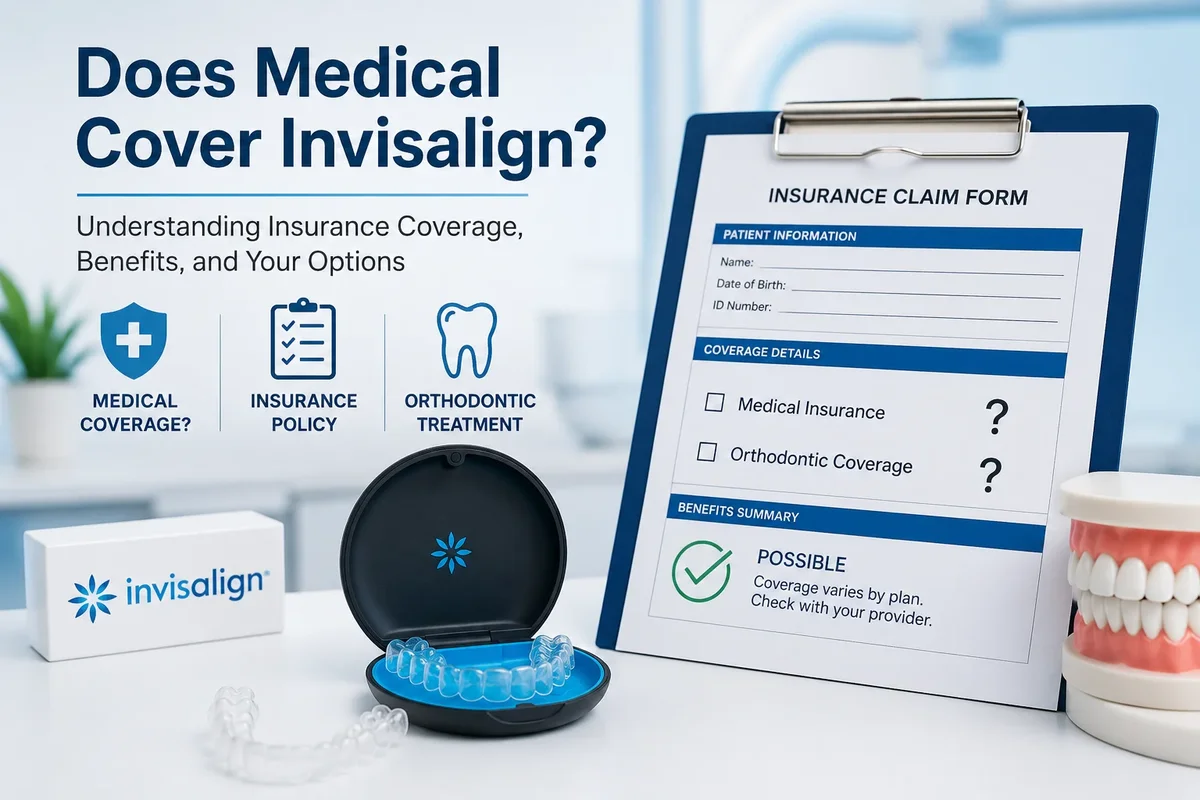
Final Next Step: How to Find Out Whether Medical Insurance Covers Your Invisalign Treatment
After researching costs, insurance policies, treatment suitability, risks, and alternatives, many patients still come back to one central question: does medical cover Invisalign? The reason this question remains difficult to answer is that coverage depends on several factors that are unique to each patient. Insurance providers evaluate policies differently, treatment plans vary significantly, and orthodontic needs are rarely identical from one person to another.
If you have reached this point in your decision-making process, the goal should no longer be finding a general answer online. Instead, the focus should be obtaining a personalized answer that applies to your own situation. The most effective next step is combining a professional dental evaluation with a detailed review of your insurance benefits.
While many articles attempt to provide a universal answer to does medical cover Invisalign, the reality is that individualized assessment remains far more valuable than generalized information. A patient with mild cosmetic concerns may receive a completely different insurance response than someone with significant bite issues or medically relevant functional concerns.
Why Online Answers Have Limitations
The internet can be useful for understanding general concepts, but it cannot evaluate your oral health, review your insurance policy, or determine whether your treatment needs meet specific coverage requirements.
This is why patients often become frustrated when searching for does medical cover Invisalign. One website may suggest coverage is possible, while another may indicate that coverage is unlikely. In many cases, both statements can be true depending on the circumstances.
Rather than relying entirely on broad online information, patients should view internet research as a starting point rather than a final answer.
Questions the Internet Cannot Fully Answer
- How severe are your orthodontic concerns?
- Is Invisalign the most appropriate treatment?
- Do functional bite issues exist?
- Does your insurance policy include orthodontic benefits?
- Are there age-related coverage restrictions?
- What documentation will your insurer require?
Only a personalized review can address these questions accurately.
The Most Practical Step: Schedule a Professional Evaluation
Patients often spend weeks investigating does medical cover Invisalign without first confirming whether treatment is appropriate. A comprehensive examination provides information that online research simply cannot offer.
During an evaluation, a dental professional can:
- Assess your oral health.
- Evaluate alignment concerns.
- Review bite relationships.
- Identify functional issues.
- Discuss treatment options.
- Estimate treatment complexity.
- Explain documentation requirements.
This information becomes valuable not only for treatment planning but also for insurance discussions.
Without a professional diagnosis and treatment recommendation, insurance providers may have limited information available for evaluating benefits.
How to Prepare for an Insurance Review
If your primary concern remains does medical cover Invisalign, preparation can improve the quality of information you receive from both your dental provider and insurance company.
Before contacting your insurer, gather:
- Your insurance policy details.
- Member identification information.
- Any orthodontic benefit summaries.
- Diagnostic records if available.
- Treatment recommendations.
- Questions regarding exclusions and limitations.
Having these materials ready can help insurance representatives provide more specific guidance regarding eligibility and potential benefits.
Balancing Cost With Treatment Value
Cost is often the driving force behind the question does medical cover Invisalign, but treatment decisions should be based on more than financial considerations alone.
The most appropriate treatment is not always the one with the highest insurance contribution. Some patients prioritize convenience and appearance. Others focus on correcting bite function or improving long-term oral health.
Before making a final decision, consider:
- Your treatment goals.
- Your daily lifestyle.
- Your commitment to aligner wear.
- Your budget.
- Your long-term oral health priorities.
- Available alternative treatments.
Balancing these factors often leads to more satisfying treatment decisions than focusing solely on insurance reimbursement.
Common Mistakes Patients Should Avoid
Individuals researching does medical cover Invisalign sometimes make avoidable mistakes that can delay treatment or create confusion.
Mistake 1: Assuming Coverage Without Verification
Never assume that coverage exists based on information from friends, family members, or online forums.
Mistake 2: Focusing Only on Medical Insurance
Many patients overlook orthodontic benefits available through dental insurance plans.
Mistake 3: Delaying Evaluation Until Insurance Questions Are Answered
Insurance providers often need clinical information before they can evaluate benefits properly.
Mistake 4: Ignoring Treatment Suitability
Even if coverage exists, Invisalign must still be the right treatment for your individual needs.
Creating a Personalized Action Plan
If you still find yourself asking does medical cover Invisalign, the best approach is to create a step-by-step plan rather than continuing to search for generic answers.
- Schedule a professional consultation.
- Obtain diagnostic records and a treatment recommendation.
- Review both medical and dental insurance policies.
- Request clarification regarding orthodontic benefits.
- Discuss alternative treatment options if appropriate.
- Compare financial solutions if insurance is limited.
- Make a decision based on clinical needs and personal goals.
This process helps transform uncertainty into practical decision-making.
Where to Get Personalized Guidance
Because every patient’s situation is different, personalized advice remains essential. At Redent Klinik, patients frequently seek answers regarding treatment suitability, insurance questions, and orthodontic options before making a commitment. A consultation can provide individualized guidance based on clinical findings and personal objectives. To learn more or schedule an appointment, visit the Redent Klinik Contact Page.
Patients seeking additional oral health information may also consult resources provided by the American Dental Association.
Final Decision Checklist
If your main concern remains does medical cover Invisalign, use the following checklist before moving forward:
- Have you completed a professional orthodontic evaluation?
- Have you reviewed both medical and dental insurance benefits?
- Have you confirmed whether Invisalign is suitable for your case?
- Have you discussed alternative treatment options?
- Have you reviewed financing possibilities if needed?
- Have you received answers regarding treatment timelines and expectations?
Request professional advice whenever you have uncertainty about treatment suitability, insurance eligibility, treatment costs, documentation requirements, or available alternatives. A personalized consultation remains the most reliable way to determine whether Invisalign is the right solution and whether insurance benefits may contribute to your treatment expenses.
Disclosure: this page may contain affiliate links. We may earn a commission if you use them, at no extra cost to you.