
If you are researching orthodontic treatment, one of the first questions you may ask is: does private health cover Invisalign? The answer is sometimes yes, sometimes no, and often somewhere in between. Private health insurance can help reduce Invisalign costs in certain situations, but coverage depends on your specific policy, your insurer’s orthodontic benefits, waiting periods, annual limits, lifetime maximums, and the clinical reason for treatment.
Many people assume that having dental insurance automatically means Invisalign treatment will be covered. Unfortunately, that is not always the case. When asking does private health cover Invisalign, it is important to understand that Invisalign is usually classified as orthodontic treatment rather than routine dental care. Because of this distinction, insurers may apply different rules than they would for cleanings, fillings, root canals, crowns, or other common dental procedures.
In practical terms, the answer to does private health cover Invisalign depends on what your policy specifically includes. Some private health plans offer orthodontic benefits that can contribute toward Invisalign treatment. Others may cover only traditional braces, while some exclude orthodontics entirely. Even when Invisalign is included, coverage often represents a partial contribution rather than full payment of treatment costs.
For example, a policy may include an annual orthodontic allowance or a lifetime orthodontic maximum. Once that limit is reached, any remaining treatment costs become the patient’s responsibility. This is why people researching does private health cover Invisalign should look beyond the simple yes-or-no answer and focus on the actual financial support available through their plan.
Another factor to consider is age. Some insurance providers offer stronger orthodontic benefits for children and teenagers than for adults. As a result, an adult patient searching for information about does private health cover Invisalign may discover that their benefits are different from those available to younger family members. Policies vary considerably, making individual verification essential.
The reason treatment is being recommended may also influence coverage decisions. Certain insurance companies may evaluate whether Invisalign is being used primarily for cosmetic improvement or to address functional concerns such as bite problems, crowding, spacing issues, or alignment conditions that may affect long-term oral health. While this does not guarantee approval, it can sometimes play a role in benefit assessments.
It is also important to remember that insurance coverage should not be the only factor influencing your treatment decision. Even if the answer to does private health cover Invisalign is favorable for your plan, you still need to determine whether Invisalign is the right solution for your specific dental needs. Treatment success depends on many factors, including the complexity of tooth movement required, overall oral health, commitment to wearing aligners as directed, and realistic treatment expectations.
During a professional consultation, a dentist or orthodontic provider can assess your teeth, bite, and jaw relationships to determine whether Invisalign is suitable. They can also prepare a treatment plan and estimate that may help you understand potential insurance reimbursement opportunities. This step often provides much clearer answers than reviewing insurance documents alone.
Patients frequently delay treatment because they are uncertain about costs and coverage. However, if you are asking does private health cover Invisalign, scheduling an evaluation can often save time and reduce uncertainty. A treatment provider can explain your options, discuss estimated costs, identify any clinical concerns, and help you understand what information your insurer may require.
At Redent Klinik, patients are encouraged to obtain a personalized assessment before making treatment decisions. Every smile is different, and insurance benefits can vary significantly between providers and policy types. Rather than relying on assumptions, obtaining a professional evaluation allows you to make decisions based on accurate clinical findings and realistic financial information.
Reliable oral health information can also be found through the American Dental Association. If you would like to discuss your individual situation, request an evaluation, or learn more about treatment options, you can visit the Redent Klinik Contact Page.
What does this mean for you? If you are wondering does private health cover Invisalign, the most practical next step is to review your orthodontic benefits, check for waiting periods and coverage limits, and arrange a professional consultation. This combination of insurance verification and clinical assessment provides the clearest picture of whether Invisalign is suitable for your needs and what financial assistance may be available through your private health plan.
Does Private Health Cover Invisalign? A Quick Answer
For most people researching clear aligner treatment, the first question is simple: does private health cover Invisalign? The quick answer is that private health insurance may contribute toward Invisalign treatment in some cases, but coverage is highly dependent on the specific policy, insurer rules, orthodontic benefits, age requirements, waiting periods, and annual or lifetime limits. There is no universal answer because every insurance provider structures benefits differently.
If you are trying to determine whether does private health cover Invisalign applies to your situation, it is important to understand that Invisalign is generally categorized as orthodontic treatment rather than routine dental care. This distinction matters because many policies separate orthodontic benefits from standard dental benefits. As a result, having private health insurance does not automatically mean Invisalign costs will be covered.
Why the Answer Is Different for Every Patient
One reason people receive different answers when asking does private health cover Invisalign is that insurance plans vary significantly. Two individuals insured by the same company may have completely different levels of coverage because they selected different policy tiers or benefit packages.
Some plans include orthodontic benefits that may partially contribute to Invisalign treatment. Other plans may provide coverage only for traditional braces, while some exclude orthodontic treatment altogether. Before making assumptions, patients should carefully review their policy documents and request written confirmation whenever possible.
Even when the answer to does private health cover Invisalign is yes, coverage often represents a contribution rather than full payment. Patients may still be responsible for deductibles, co-payments, treatment planning costs, retainers, or expenses that exceed policy limits.
What Insurance Companies Often Look At
When evaluating claims related to orthodontics, insurance providers frequently review several factors. Understanding these considerations can help patients better predict what may happen during the approval process.
Policy Benefits
The first consideration is whether orthodontic treatment is included in the policy. If orthodontics are excluded, the answer to does private health cover Invisalign may unfortunately be no regardless of treatment need.
Waiting Periods
Many policies require a waiting period before orthodontic benefits become available. Starting treatment before the waiting period is completed could affect reimbursement eligibility. This is why checking policy details before beginning treatment is often a wise decision.
Age Restrictions
Some plans provide orthodontic benefits primarily for children and teenagers. Adults asking does private health cover Invisalign may discover different benefit structures than those available for younger family members.
Annual and Lifetime Limits
Even if coverage exists, many insurers place maximum limits on orthodontic benefits. Once those limits are reached, additional treatment expenses typically become the patient’s responsibility.
Should Insurance Determine Your Treatment Decision?
While insurance can influence affordability, it should not be the only factor when deciding whether to pursue Invisalign. A more important question may be whether Invisalign is clinically appropriate for your situation.
Patients with crowding, spacing issues, bite irregularities, or alignment concerns often benefit from a professional evaluation. The answer to does private health cover Invisalign can affect budgeting, but it does not determine whether treatment is suitable from a dental perspective.
Some patients delay treatment for months while trying to understand insurance benefits. During that time, dental alignment issues may remain unchanged or, in certain cases, become more complicated. Seeking professional advice early can help you understand both your clinical needs and your financial options.
When Invisalign May Be Worth Considering Even With Limited Coverage
Even if your insurance contribution is small, Invisalign may still be worth exploring depending on your goals. Many patients choose clear aligners because they are removable, discreet, and compatible with many professional and social lifestyles.
When considering whether does private health cover Invisalign should be the deciding factor, it may help to compare the expected benefits of treatment against potential out-of-pocket expenses. Some patients prioritize aesthetics and convenience, while others are primarily focused on correcting functional bite concerns.
Financial planning options may also be available through dental providers, allowing patients to spread treatment costs over time. This can sometimes make treatment more manageable even when insurance benefits are limited.
Practical Steps Before Starting Treatment
If you are actively researching does private health cover Invisalign, there are several practical actions you can take before committing to treatment:
- Review your insurance policy’s orthodontic section carefully.
- Ask your insurer specifically whether Invisalign is eligible for benefits.
- Verify waiting periods, annual limits, and lifetime maximums.
- Request a professional Invisalign assessment.
- Compare treatment recommendations with your available benefits.
- Discuss financing options if coverage is limited.
Many patients find that combining insurance verification with a professional consultation provides the clearest path forward. A dental team can assess treatment suitability while helping you understand what documentation may be needed for insurance purposes.
For personalized guidance, patients may contact a qualified provider through the Redent Klinik Contact Page. Additional educational information regarding oral health and orthodontic care can also be found through the American Dental Association.
What should you check next? Before making a treatment decision, confirm whether your policy includes orthodontic benefits, verify any waiting periods and coverage limits, and schedule a professional consultation if you have alignment concerns. Professional advice is especially important if you are unsure whether Invisalign is appropriate for your specific dental condition or if insurance coverage details remain unclear.
When Private Health Insurance May Help Pay for Invisalign
After learning the basic answer to the question does private health cover Invisalign, the next step is understanding when private health insurance is most likely to contribute toward treatment costs. Many patients discover that coverage is not simply a matter of having insurance or not having insurance. Instead, reimbursement often depends on several specific conditions that insurance providers use when evaluating orthodontic treatment.
If you are trying to determine whether does private health cover Invisalign applies to your own situation, it helps to think of insurance coverage as a combination of eligibility, policy design, and clinical circumstances. Understanding these factors before starting treatment can help you avoid surprises and make a more informed financial decision.
Orthodontic Benefits Are Usually the Key Factor
The most important element affecting whether does private health cover Invisalign results in a positive outcome is the presence of orthodontic benefits within your policy. Many people review their dental coverage and assume orthodontics are automatically included. However, insurers frequently separate orthodontic benefits from general dental benefits.
For example, your plan may cover preventive care, examinations, fillings, and crowns while offering little or no assistance for orthodontic treatment. In other cases, orthodontic coverage may exist but be limited by annual maximums or lifetime caps.
Before scheduling treatment, patients should carefully review policy documents and ask insurers specific questions regarding Invisalign eligibility. Receiving clear information in advance can help prevent misunderstandings later in the process.
Situations Where Coverage May Be More Likely
Although every insurer has its own rules, there are several circumstances in which patients may find a more favorable answer when asking does private health cover Invisalign.
Policies With Dedicated Orthodontic Coverage
Some premium insurance plans include orthodontic benefits specifically designed to help with alignment treatments. In these situations, Invisalign may qualify under the same category as traditional braces, subject to policy conditions.
Patients with comprehensive dental and orthodontic plans often have a better chance of receiving partial reimbursement than those with basic dental-only policies.
Active Policies Beyond Waiting Periods
Waiting periods are a common feature of orthodontic coverage. If treatment begins before the waiting period has been completed, reimbursement opportunities may be reduced or unavailable.
Patients researching does private health cover Invisalign should verify whether waiting periods apply and whether they have already satisfied those requirements before starting treatment.
Policies With Remaining Orthodontic Limits
Even when orthodontic benefits exist, insurers frequently impose financial limits. Patients who have not previously used orthodontic benefits may have greater reimbursement potential than individuals who have already exhausted annual or lifetime maximums.
Why Clinical Need Can Matter
Another factor that may influence how insurers evaluate treatment is the reason Invisalign is being recommended. While insurance policies vary considerably, some providers review whether treatment addresses functional dental concerns rather than purely cosmetic goals.
When people ask does private health cover Invisalign, they often focus entirely on the insurance side of the equation. However, clinical documentation may also play a role. A professional assessment can identify crowding, spacing, bite irregularities, or alignment concerns that may affect oral health and treatment planning.
This does not mean treatment will automatically qualify for reimbursement. Rather, it highlights why professional records and diagnostic findings can be valuable when discussing coverage with an insurer.
Coverage Does Not Always Mean Low Cost
One common misunderstanding about does private health cover Invisalign is the assumption that insurance approval automatically makes treatment inexpensive. In reality, even generous policies may leave patients responsible for a portion of treatment expenses.
Coverage limits, deductibles, co-payments, treatment upgrades, and retainers may all influence final out-of-pocket costs. Because Invisalign treatment is personalized, costs can vary according to the complexity of tooth movement, treatment duration, and individual treatment goals.
For this reason, patients should focus on total treatment value rather than simply asking whether coverage exists. Understanding both insurance benefits and expected personal expenses creates a more realistic financial picture.
Should You Wait for Better Coverage?
Some patients postpone orthodontic treatment while searching for a policy that offers stronger benefits. Although insurance considerations are important, waiting solely for coverage may not always be the best decision.
If alignment issues are affecting oral hygiene, tooth wear, bite function, or long-term dental health, delaying treatment could potentially prolong those concerns. The answer to does private health cover Invisalign should be considered alongside professional recommendations regarding timing and treatment necessity.
A consultation can help determine whether treatment should begin now or whether postponement is unlikely to affect long-term outcomes.
How to Improve Your Chances of Understanding Coverage Correctly
Many patients receive conflicting information when researching does private health cover Invisalign online. The most reliable approach is to gather information directly from both your insurer and your treatment provider.
- Request a copy of your orthodontic benefits.
- Ask whether Invisalign is specifically eligible.
- Verify waiting periods and exclusions.
- Confirm annual and lifetime reimbursement limits.
- Obtain a professional treatment estimate.
- Ask whether pre-authorization is recommended.
These steps can significantly reduce uncertainty and help you plan treatment more effectively.
Making the Right Decision for Your Situation
Ultimately, the question does private health cover Invisalign should be viewed as one part of a larger decision-making process. Insurance can influence affordability, but treatment suitability, long-term oral health goals, convenience, and expected outcomes are equally important considerations.
Patients considering Invisalign should balance financial factors with clinical recommendations. A treatment that fits your dental needs and personal circumstances may still be worthwhile even if insurance coverage is limited.
For personalized guidance, patients may seek an assessment through the Redent Klinik Contact Page. Educational resources about orthodontic care and oral health can also be found through the American Dental Association.
What should you check next? Review your policy’s orthodontic section, verify any waiting periods and benefit limits, and request a professional Invisalign evaluation if you are considering treatment. Professional advice is particularly important if you are uncertain whether your alignment concerns require treatment or if your insurer’s coverage rules are difficult to interpret.
Understanding Invisalign Costs and Insurance Limitations
For many patients, the question is not simply does private health cover Invisalign, but rather how much financial assistance may actually be available and what expenses they may still need to pay themselves. Understanding the relationship between Invisalign costs and insurance limitations is one of the most important steps in making a confident treatment decision.
Even when the answer to does private health cover Invisalign is yes, that does not necessarily mean all treatment expenses will be covered. Private health insurance policies often include restrictions, benefit caps, waiting periods, and exclusions that can significantly influence the final amount paid by the patient. Knowing how these limitations work before treatment begins can help you avoid unexpected financial surprises.
Why Invisalign Costs Vary Between Patients
One reason there is no universal answer to Invisalign pricing is that every treatment plan is personalized. The complexity of tooth movement, the severity of alignment concerns, treatment duration, and the number of aligners required can all influence overall costs.
When patients search for information about does private health cover Invisalign, they often hope to find a standard treatment price. However, Invisalign treatment is rarely identical from one patient to another. A minor alignment correction may require a different level of treatment than a more complex case involving crowding, spacing, or bite correction.
This is why dental providers typically recommend a professional assessment before discussing detailed cost expectations. Treatment planning plays a major role in determining the resources and time required to achieve the desired outcome.
Common Insurance Limitations Patients Should Know
Many people receive a positive answer when asking does private health cover Invisalign, only to discover later that the coverage comes with important limitations. Understanding these restrictions in advance can help you evaluate treatment affordability more accurately.
Annual Benefit Maximums
Some insurance plans place a yearly cap on orthodontic benefits. Once this maximum amount has been reached, any additional expenses become the patient’s responsibility. Even if Invisalign treatment extends beyond one year, reimbursement may still be subject to annual limits.
Lifetime Orthodontic Limits
Many orthodontic benefits include a lifetime maximum. This means there is a total amount that an insurer may contribute throughout a person’s life for orthodontic treatment. Patients asking does private health cover Invisalign should always verify whether a lifetime cap applies to their policy.
Waiting Period Requirements
Insurance companies frequently require policyholders to complete a waiting period before orthodontic benefits become available. Beginning treatment before satisfying this requirement may affect reimbursement eligibility.
For this reason, reviewing policy details before scheduling treatment is often a financially responsible step.
Age-Based Restrictions
Some plans provide more extensive orthodontic benefits for younger patients than for adults. If you are an adult researching does private health cover Invisalign, age restrictions may be one of the factors influencing your available benefits.
What Costs May Not Be Covered?
Even if your insurance provider contributes toward Invisalign treatment, certain expenses may still remain outside the scope of coverage.
- Deductibles and co-payments.
- Retainers following treatment completion.
- Additional aligners required due to treatment modifications.
- Replacement aligners if original aligners are lost or damaged.
- Certain diagnostic or administrative fees.
Coverage policies differ significantly, so patients should obtain a detailed explanation of benefits whenever possible.
How to Estimate Your Potential Out-of-Pocket Costs
When evaluating whether does private health cover Invisalign makes treatment financially manageable, it can be helpful to calculate estimated personal expenses rather than focusing solely on insurance reimbursement.
A practical approach involves comparing:
- The estimated total treatment fee.
- The amount potentially covered by insurance.
- Any applicable deductibles.
- Annual or lifetime coverage limits.
- Available financing options.
This method provides a more realistic understanding of affordability than simply asking whether coverage exists.
Should Cost Be the Main Decision Factor?
Financial considerations are important, but cost alone should rarely determine whether treatment is appropriate. Patients who focus exclusively on the question does private health cover Invisalign sometimes overlook other critical factors such as treatment suitability, oral health goals, and long-term benefits.
For example, if alignment concerns are affecting oral hygiene, chewing efficiency, or tooth wear patterns, delaying treatment solely because insurance coverage is limited may not always be the most beneficial long-term decision.
Conversely, some patients may have mild cosmetic concerns and choose to postpone treatment until they better understand available insurance benefits. The right choice depends on individual circumstances and professional recommendations.
Financing and Payment Flexibility
Many dental practices understand that insurance coverage does not always cover the full cost of orthodontic treatment. As a result, flexible payment arrangements may be available in some cases.
Patients researching does private health cover Invisalign should ask about payment plans in addition to insurance benefits. Combining insurance contributions with structured payment options may make treatment more accessible without requiring full payment at the beginning of treatment.
However, financing terms vary between providers and should always be reviewed carefully before making commitments.
Making an Informed Financial Decision
The most successful treatment decisions usually result from balancing clinical needs with financial realities. While understanding does private health cover Invisalign is important, patients should also consider treatment goals, expected outcomes, convenience, and long-term oral health benefits.
A personalized consultation provides the most accurate information regarding both treatment requirements and potential insurance considerations. At Redent Klinik, patients can discuss their individual circumstances and receive guidance tailored to their specific dental needs.
Additional information about oral health and orthodontic treatment can be found through the American Dental Association. Patients seeking individualized support may also visit the Redent Klinik Contact Page.
What should you check next? Review your insurance policy for orthodontic benefit limits, waiting periods, age restrictions, and exclusions. If cost estimates remain unclear, request a professional consultation and a personalized treatment plan before making financial decisions. Professional advice is particularly valuable when comparing treatment options or evaluating the true out-of-pocket cost of Invisalign treatment.
Who Is a Good Candidate If Does Private Health Cover Invisalign Matters to You?
Many people begin their research by asking does private health cover Invisalign, but coverage is only one part of the decision-making process. Even if your insurance policy provides orthodontic benefits, the next question is whether Invisalign is actually the right treatment option for your dental needs. Understanding candidacy is important because insurance support is only valuable if the treatment itself is appropriate for your specific situation.
Patients often focus heavily on the financial aspect of treatment and spend weeks comparing policies, benefits, and reimbursement limits. While this is understandable, the answer to does private health cover Invisalign should be considered alongside a professional evaluation of your oral health, alignment concerns, treatment goals, and lifestyle factors.
In many cases, the most successful treatment outcomes occur when clinical suitability and financial planning are evaluated together rather than separately.
What Makes Someone a Good Invisalign Candidate?
Invisalign is designed to correct a wide range of orthodontic issues, but it may not be the ideal solution for every patient. Before deciding whether insurance coverage makes treatment worthwhile, it is important to determine whether Invisalign is likely to meet your needs.
Mild to Moderate Crowding
Many patients with mild or moderate crowding are considered suitable candidates for Invisalign. Crowded teeth can make oral hygiene more difficult because plaque and food debris may be harder to remove effectively.
If you are researching does private health cover Invisalign because crowding affects your confidence or oral hygiene routine, a professional assessment can help determine whether aligners may be beneficial.
Spacing Between Teeth
Small or moderate gaps between teeth can often be treated with clear aligners. While some patients seek treatment for aesthetic reasons, spacing issues may also affect bite function and food retention in certain cases.
The answer to does private health cover Invisalign becomes more meaningful when treatment addresses a specific concern rather than being viewed solely as a cosmetic enhancement.
Certain Bite Problems
Many bite irregularities can be managed with Invisalign, depending on their complexity. Examples may include certain forms of overbite, underbite, crossbite, or open bite.
However, not all bite conditions respond equally well to aligner treatment. This is why professional diagnosis is essential before assuming Invisalign is the best option.
When Invisalign May Not Be the Best Choice
Even if the answer to does private health cover Invisalign is favorable, some patients may be better suited to alternative orthodontic approaches.
Complex Orthodontic Cases
Severe alignment issues or complicated bite discrepancies may require alternative treatment strategies. In some situations, traditional braces or multidisciplinary treatment approaches may provide greater predictability.
This does not mean Invisalign is ineffective. Rather, it highlights the importance of individualized treatment planning.
Poor Compliance Risk
Unlike fixed braces, Invisalign aligners are removable. This provides convenience but also creates responsibility. Patients must typically wear aligners for the recommended number of hours each day to support treatment progress.
Individuals who believe they may struggle with consistent wear should discuss this openly during consultation. Treatment success often depends heavily on patient cooperation.
Active Dental Problems
Untreated gum disease, significant tooth decay, or certain oral health conditions may need attention before orthodontic treatment begins. Patients asking does private health cover Invisalign should understand that oral health stabilization is often a priority before tooth movement is considered.
Should Adults Consider Invisalign?
Many adults assume orthodontic treatment is primarily intended for teenagers. In reality, adults represent a large percentage of Invisalign patients worldwide.
Adults frequently investigate does private health cover Invisalign because they are balancing treatment goals with work responsibilities, family commitments, and financial considerations. Clear aligners are often attractive because they are discreet and removable.
However, adult patients may encounter different insurance limitations than younger individuals. Some policies provide reduced orthodontic benefits for adults or apply age-related restrictions. Understanding these details before starting treatment is important.
Lifestyle Factors That Influence Suitability
Beyond clinical considerations, lifestyle can play a major role in determining whether Invisalign is a practical option.
Professional Appearance
Many working professionals prefer Invisalign because aligners are generally less noticeable than traditional braces. This may be particularly appealing for individuals who regularly interact with clients, patients, or colleagues.
Flexibility During Meals
Since aligners are removable, patients can eat many foods without the restrictions commonly associated with braces. However, this convenience also requires discipline regarding wear time and aligner maintenance.
Commitment to Instructions
Patients researching does private health cover Invisalign should recognize that treatment effectiveness depends not only on insurance support but also on following professional instructions consistently.
Balancing Coverage and Clinical Need
A common mistake is making a treatment decision based entirely on insurance eligibility. While understanding does private health cover Invisalign is important, insurance coverage alone does not determine whether treatment is appropriate.
For example, a patient with strong insurance benefits may not be an ideal candidate for Invisalign, while another patient with limited benefits may still achieve significant value from treatment due to clinical needs and personal goals.
The most informed decisions are usually based on both clinical recommendations and financial considerations rather than either factor alone.
How a Consultation Helps Clarify Your Options
A professional consultation allows a dentist or orthodontic provider to evaluate tooth alignment, bite relationships, oral health status, and treatment objectives. This assessment can help determine whether Invisalign is suitable and what alternatives may exist if it is not.
Patients can also use the consultation to discuss insurance concerns and ask practical questions about treatment planning, timing, and expected commitments.
For personalized guidance, patients may contact a qualified provider through the Redent Klinik Contact Page. Additional oral health information is available through the American Dental Association.
What should you check next? If you are evaluating whether Invisalign is right for you, verify your orthodontic insurance benefits, review any age restrictions or waiting periods, and schedule a professional consultation. Professional advice is especially important if you have significant crowding, bite concerns, gum health issues, or uncertainty about whether Invisalign is the most appropriate treatment option for your situation.
The Invisalign Treatment Process and What Insurance Providers Review
Many patients begin their journey by asking does private health cover Invisalign, but understanding the treatment process itself is equally important. Insurance providers often evaluate more than just the name of the treatment when determining eligibility for benefits. They may review clinical records, treatment plans, policy requirements, waiting periods, and orthodontic coverage rules before deciding whether reimbursement applies.
If you are considering treatment, knowing how Invisalign works and what insurers typically review can help you make better decisions before committing financially. The answer to does private health cover Invisalign often becomes much clearer once a professional treatment plan has been prepared.
Step 1: The Initial Consultation
The Invisalign process usually begins with a comprehensive dental evaluation. During this appointment, a dentist or orthodontic provider assesses tooth alignment, bite relationships, oral health status, and treatment objectives.
Many patients researching does private health cover Invisalign focus primarily on insurance questions before obtaining a professional examination. However, insurers often require treatment documentation, meaning a consultation is frequently the first practical step toward understanding potential coverage.
What Happens During the Assessment?
- Review of dental and medical history.
- Clinical examination of teeth and gums.
- Assessment of bite function and alignment.
- Discussion of treatment goals.
- Evaluation of potential treatment options.
This appointment helps determine whether Invisalign is likely to be appropriate for your individual circumstances.
Step 2: Digital Scans and Diagnostic Records
If Invisalign appears suitable, diagnostic records are typically collected. Modern treatment planning often involves digital scans rather than traditional dental impressions.
These records provide detailed information regarding tooth position and alignment. They also help create a customized treatment plan that outlines projected tooth movement throughout the course of treatment.
For patients asking does private health cover Invisalign, these diagnostic records can be important because insurance providers may request supporting documentation before evaluating orthodontic benefits.
Why Diagnostic Records Matter
Insurance companies generally prefer objective information when reviewing treatment requests. Diagnostic records help establish the clinical basis for treatment recommendations and provide evidence supporting the proposed plan.
Although records alone do not guarantee reimbursement, they often play a role in the review process.
Step 3: Personalized Treatment Planning
After scans and records are reviewed, a customized treatment plan is created. This plan estimates how teeth may move over time and provides a roadmap for treatment progression.
Patients evaluating does private health cover Invisalign should understand that treatment complexity can influence both clinical recommendations and financial considerations. More complex cases may require additional aligners, longer treatment durations, or more frequent monitoring.
This stage also provides an opportunity to discuss estimated treatment costs and potential insurance documentation requirements.
Step 4: Insurance Verification and Documentation
One of the most important stages for patients asking does private health cover Invisalign is insurance verification. At this point, treatment providers may help patients understand what information insurers require.
Information Insurers May Review
- Policy eligibility.
- Orthodontic benefit availability.
- Waiting period completion.
- Age-related restrictions.
- Annual reimbursement limits.
- Lifetime orthodontic maximums.
- Treatment documentation.
Because every insurer operates differently, requirements can vary considerably between providers.
Pre-Authorization Considerations
Some insurance plans may allow or encourage pre-authorization before treatment begins. This process helps clarify whether benefits may apply under the policy.
While pre-authorization can provide useful information, it should not be viewed as an absolute guarantee of reimbursement. Final decisions may still depend on policy conditions and claim processing procedures.
Step 5: Receiving Your Aligners
Once treatment planning is complete, Invisalign aligners are manufactured and delivered. Patients receive a series of custom-made aligners designed to gradually move teeth according to the approved treatment plan.
Individuals researching does private health cover Invisalign often reach this stage only after they feel comfortable with both treatment recommendations and financial expectations.
Aligners are typically changed according to professional instructions throughout treatment.
Step 6: Ongoing Monitoring and Progress Reviews
Regular follow-up appointments are an important part of Invisalign treatment. These visits allow providers to evaluate tooth movement, monitor progress, and make adjustments if necessary.
From an insurance perspective, maintaining appropriate records and following professional recommendations can be beneficial if questions arise regarding treatment progress or reimbursement documentation.
Patients should attend scheduled appointments and communicate any concerns promptly.
Why Understanding the Process Helps Financial Planning
Many people searching online for does private health cover Invisalign focus solely on reimbursement percentages or benefit limits. However, understanding the treatment process itself can be equally valuable.
Knowing when insurance verification occurs, what records may be required, and how treatment progresses allows patients to make more informed financial decisions. It also reduces uncertainty and helps establish realistic expectations.
Patients who combine professional treatment planning with insurance verification generally have a clearer understanding of potential costs than those who rely exclusively on policy summaries.
Balancing Coverage, Timing, and Treatment Goals
The best treatment decisions are usually based on a combination of clinical suitability, financial planning, and long-term oral health goals. While the question does private health cover Invisalign remains important, it should be considered alongside professional recommendations regarding timing and treatment needs.
In some cases, delaying treatment while waiting for insurance changes may not significantly affect outcomes. In other situations, earlier intervention may be beneficial. A personalized assessment can help clarify these considerations.
Patients seeking guidance may contact a qualified provider through the Redent Klinik Contact Page. Additional oral health information can be found through the American Dental Association.
What should you check next? Confirm whether your insurance policy includes orthodontic benefits, ask whether pre-authorization is available, and request a professional Invisalign consultation if you have alignment concerns. Professional advice is particularly important when treatment complexity, insurance eligibility, or expected costs remain unclear after reviewing your policy documents.
Risks, Exclusions, and Common Reasons Claims Are Denied
When researching orthodontic treatment, many patients focus on the question does private health cover Invisalign and assume that having insurance automatically means a claim will be approved. In reality, insurance coverage decisions can be influenced by numerous factors, including policy exclusions, benefit limitations, waiting periods, documentation requirements, and eligibility criteria. Understanding these risks before treatment begins can help patients avoid unexpected financial challenges and make more informed decisions.
Even when the answer to does private health cover Invisalign appears positive, there may still be circumstances that reduce reimbursement or result in claim denial. For this reason, reviewing policy details and seeking clarification from both the insurer and treatment provider is often a valuable step before committing to treatment.
Why Insurance Claims Are Sometimes Denied
Insurance claim denials are not always the result of mistakes or administrative errors. In many situations, claims are denied because policy conditions were not met or because the treatment falls outside the scope of covered benefits.
Patients asking does private health cover Invisalign should recognize that insurance companies evaluate claims according to written policy rules rather than individual treatment preferences. Understanding these rules in advance can reduce frustration later in the process.
Orthodontic Benefits Are Not Included
One of the most common reasons for denial is the absence of orthodontic coverage within the policy. Some plans provide general dental benefits but exclude orthodontic treatment entirely.
In these situations, the answer to does private health cover Invisalign may effectively be no, even though other dental services are covered under the same policy.
Waiting Period Requirements Have Not Been Met
Many insurers require policyholders to complete a waiting period before orthodontic benefits become available. Beginning treatment before this requirement has been satisfied can affect reimbursement eligibility.
This is one reason why verifying policy timelines before starting treatment is often recommended.
Age Restrictions Apply
Some insurance plans provide orthodontic benefits primarily for children or teenagers. Adults researching does private health cover Invisalign may discover that age-related limitations affect available benefits.
Because age rules vary significantly between insurers, patients should verify eligibility directly rather than relying on assumptions.
Common Policy Exclusions
Insurance policies frequently contain exclusions that limit reimbursement opportunities. Understanding these exclusions can help patients evaluate their financial responsibilities more accurately.
Cosmetic Treatment Exclusions
Certain insurers may distinguish between treatment considered cosmetic and treatment intended to address functional concerns. Although orthodontic classifications vary, cosmetic exclusions can sometimes influence coverage decisions.
Patients asking does private health cover Invisalign should carefully review policy language to understand how treatment is categorized by their insurer.
Pre-Existing Treatment Issues
In some situations, policies may contain restrictions related to pre-existing conditions or previously initiated treatment plans. Coverage rules differ between insurers, making individual policy review essential.
Benefit Maximums Already Reached
Even if coverage exists, annual or lifetime orthodontic maximums may limit reimbursement. Patients who have already used orthodontic benefits may have reduced coverage available for additional treatment.
For this reason, understanding prior benefit usage is an important part of evaluating whether does private health cover Invisalign will result in meaningful financial assistance.
Clinical Risks Patients Should Consider
While insurance questions are important, treatment decisions should also account for clinical considerations. Some patients become so focused on whether does private health cover Invisalign that they overlook the importance of evaluating treatment suitability.
Not Every Case Is Ideal for Invisalign
Although Invisalign can effectively address many alignment concerns, certain complex orthodontic conditions may require alternative treatment approaches. A professional assessment is necessary to determine whether Invisalign is likely to be appropriate.
Compliance Is Essential
Unlike traditional braces, Invisalign aligners are removable. This provides flexibility but also creates responsibility. Failure to wear aligners according to professional instructions may affect treatment progress and overall results.
Patients should honestly assess whether they can maintain consistent aligner use before beginning treatment.
Oral Health Issues May Require Attention First
Untreated gum disease, active decay, or other oral health concerns may need to be addressed before orthodontic treatment begins. Insurance coverage does not eliminate the need for proper treatment sequencing.
Financial Risks Beyond Insurance Approval
Even when a claim is approved, patients may still face financial obligations. The answer to does private health cover Invisalign should therefore be viewed as one part of the financial picture rather than the entire picture.
Potential expenses may include deductibles, co-payments, retainers, replacement aligners, and costs that exceed policy limits. Understanding these possibilities before treatment begins can help patients budget more effectively.
How to Reduce the Risk of Coverage Problems
Patients can often minimize reimbursement issues by taking several proactive steps before starting treatment.
- Review orthodontic coverage details carefully.
- Verify waiting periods and eligibility requirements.
- Request written clarification from the insurer when needed.
- Confirm annual and lifetime benefit limits.
- Discuss insurance documentation requirements with the provider.
- Ask whether pre-authorization is recommended.
These measures do not guarantee approval, but they can significantly improve transparency and reduce misunderstandings.
Balancing Insurance Benefits With Treatment Goals
Many patients become discouraged when they discover limitations affecting the question does private health cover Invisalign. However, insurance coverage should be viewed as one factor among many. Treatment suitability, oral health goals, convenience, and long-term dental considerations remain equally important.
In some situations, limited insurance coverage may still leave Invisalign as a worthwhile option. In other cases, alternative orthodontic treatments may better align with both clinical needs and financial preferences.
A professional consultation can help patients understand these trade-offs and make more informed decisions based on their individual circumstances.
For personalized guidance, patients may consult a qualified dental provider through the Redent Klinik Contact Page. Additional educational resources regarding oral health and orthodontic treatment are available through the American Dental Association.
What should you check next? Review your insurance policy for exclusions, waiting periods, age restrictions, and orthodontic benefit limits. If you are unsure whether Invisalign is suitable for your dental condition or whether your policy requirements are being interpreted correctly, request professional advice before beginning treatment. A consultation can help clarify both clinical and financial considerations.
Alternatives to Invisalign When Private Health Coverage Is Limited
Many patients begin their orthodontic research by asking does private health cover Invisalign. After reviewing their insurance policy, some discover that coverage is limited, subject to strict benefit caps, or unavailable altogether. While this can initially feel discouraging, it does not necessarily mean orthodontic treatment is out of reach. Understanding alternative treatment options can help patients make practical decisions based on both clinical needs and financial circumstances.
If you have learned that the answer to does private health cover Invisalign is not as favorable as you hoped, it may be useful to focus on a broader question: which orthodontic treatment provides the best balance between effectiveness, convenience, aesthetics, and affordability for your situation?
In many cases, patients find that several treatment paths may be available, each with different advantages and limitations.
Why Looking Beyond Invisalign Can Be Helpful
Invisalign is a popular orthodontic solution, but it is not the only method available for correcting alignment concerns. Some patients become so focused on whether does private health cover Invisalign that they overlook other treatment options that may achieve similar goals.
A professional evaluation can identify which approaches are clinically appropriate and help determine whether alternative treatments might better align with your budget, lifestyle, or insurance benefits.
Rather than viewing limited coverage as the end of the decision-making process, many patients use it as an opportunity to compare multiple orthodontic solutions.
Traditional Metal Braces
Traditional braces remain one of the most commonly used orthodontic treatments worldwide. They are often recommended for a wide range of alignment and bite issues, including more complex cases.
Potential Advantages
- Suitable for many mild, moderate, and complex orthodontic conditions.
- Fixed design eliminates the need for daily removal and reinsertion.
- May be eligible for orthodontic benefits under some insurance plans.
- Long history of clinical use.
Potential Considerations
- More visible than clear aligners.
- May require dietary modifications.
- Oral hygiene routines can become more demanding.
Patients asking does private health cover Invisalign should verify whether their insurer provides different reimbursement rules for traditional braces. In some cases, orthodontic benefits may apply similarly to multiple treatment types.
Ceramic Braces
Ceramic braces function similarly to traditional braces but use tooth-colored or translucent materials designed to reduce visibility.
For patients who are concerned about aesthetics but have limited Invisalign coverage, ceramic braces may represent a middle-ground solution.
Benefits of Ceramic Braces
- Less noticeable than metal braces.
- Can address many orthodontic conditions.
- Fixed treatment option that does not depend on aligner wear compliance.
Factors to Consider
- May be more visible than clear aligners.
- Certain components can stain if not maintained properly.
- Costs may vary depending on treatment complexity.
Patients comparing options should evaluate both clinical suitability and insurance benefits rather than focusing exclusively on whether does private health cover Invisalign.
Other Clear Aligner Systems
Although Invisalign is one of the most recognized clear aligner brands, other aligner systems may also be available depending on the provider and region.
Some patients discover that alternative aligner solutions better match their financial preferences while still addressing their treatment goals.
Questions to Ask
- How does treatment complexity affect pricing?
- What monitoring process is involved?
- What are the expected maintenance requirements?
- How does the provider evaluate treatment suitability?
If your primary concern is whether does private health cover Invisalign, it may also be worth asking whether insurance benefits apply differently to alternative aligner systems.
Limited Orthodontic Correction Options
Not every patient requires comprehensive orthodontic treatment. Some individuals have relatively minor concerns involving only a few teeth.
In specific situations, providers may discuss limited treatment approaches designed to address selected alignment concerns. However, suitability depends entirely on clinical findings and treatment objectives.
A professional assessment is necessary before assuming a limited treatment approach will be appropriate.
Should You Delay Treatment Until Coverage Improves?
Some patients decide to postpone orthodontic treatment while searching for stronger insurance benefits. Although this may seem reasonable, the decision should be made carefully.
The answer to does private health cover Invisalign should be considered alongside oral health needs, treatment complexity, and long-term goals. Waiting for improved coverage may be appropriate in certain situations, but in others it may simply delay a beneficial treatment without significantly improving financial outcomes.
A consultation can help clarify whether postponement is likely to affect treatment planning.
Comparing Treatment Value Instead of Coverage Alone
Insurance coverage is important, but it should not be the sole factor used to compare treatment options. Patients often achieve better long-term satisfaction when they evaluate overall value rather than focusing exclusively on reimbursement.
When considering alternatives to Invisalign, think about:
- Clinical effectiveness.
- Aesthetic preferences.
- Lifestyle compatibility.
- Maintenance requirements.
- Treatment duration.
- Insurance contributions.
- Out-of-pocket costs.
This broader perspective often leads to more balanced decision-making.
How a Professional Consultation Can Help
Many people researching does private health cover Invisalign spend considerable time comparing insurance plans online without first determining which treatment options are actually suitable for their dental condition.
A professional consultation allows a dentist or orthodontic provider to evaluate alignment concerns, discuss treatment alternatives, explain expected commitments, and review financial considerations.
At Redent Klinik, patients can receive individualized guidance regarding available orthodontic options and factors that may influence treatment planning. Additional oral health information is available through the American Dental Association. Patients interested in discussing their specific situation may also visit the Redent Klinik Contact Page.
What should you check next? If your insurance provides limited Invisalign coverage, compare alternative orthodontic treatments before making a decision. Review clinical suitability, expected costs, and insurance eligibility for each option. Professional advice is especially important if you are uncertain whether Invisalign, braces, or another treatment approach is most appropriate for your alignment concerns and long-term oral health goals.
Financing Options If Does Private Health Cover Invisalign Is Not Fully Covered
One of the most common situations patients encounter is discovering that the answer to does private health cover Invisalign is technically yes, but the insurance contribution is not enough to cover the entire treatment cost. In other cases, patients find that their policy offers little or no orthodontic reimbursement. Fortunately, limited insurance coverage does not automatically mean Invisalign treatment is financially unattainable.
Understanding available financing strategies can help patients make more informed decisions and avoid delaying treatment solely because of concerns about upfront expenses. When evaluating whether does private health cover Invisalign provides sufficient financial support, it is often helpful to look at the bigger picture rather than focusing exclusively on insurance reimbursement.
Many patients combine insurance benefits with structured payment arrangements, personal budgeting strategies, or alternative financial planning methods to make treatment more manageable.
Why Financing Matters Even When Insurance Helps
A common misconception is that once the answer to does private health cover Invisalign is positive, financial planning is no longer necessary. In reality, many insurance policies provide only partial reimbursement.
Patients may still encounter expenses related to deductibles, co-payments, annual benefit limits, lifetime orthodontic caps, retainers, or treatment components that exceed policy allowances.
Because of these factors, financing considerations remain relevant regardless of whether insurance contributes toward treatment.
Understanding Your Estimated Out-of-Pocket Costs
Before exploring payment options, it is important to understand what portion of treatment costs may remain your responsibility.
Patients researching does private health cover Invisalign often focus entirely on reimbursement percentages without calculating their likely personal expenses. A more practical approach is to estimate:
- Total projected treatment costs.
- Expected insurance contribution.
- Applicable deductibles.
- Remaining balance after insurance payments.
- Potential costs associated with retainers or follow-up care.
This information provides a clearer foundation for financial planning.
Payment Plans Offered by Dental Providers
Many dental practices understand that orthodontic treatment represents a significant investment. As a result, some providers offer structured payment plans that allow patients to spread treatment expenses over time.
Potential Benefits
- Reduced need for large upfront payments.
- Predictable monthly budgeting.
- Greater flexibility when insurance coverage is limited.
- Opportunity to begin treatment without waiting to save the full amount.
Patients asking does private health cover Invisalign should inquire about payment arrangements during their consultation rather than assuming only a single payment option is available.
Important Considerations
Payment structures vary between providers. Patients should carefully review all terms and conditions before entering any financing arrangement.
Understanding repayment schedules and overall financial commitments is an important part of responsible treatment planning.
Using Insurance and Financing Together
Many patients achieve the best financial outcome by combining available insurance benefits with a payment plan.
For example, if the answer to does private health cover Invisalign results in partial reimbursement, insurance benefits may reduce the overall balance while financing helps manage the remaining costs.
This combined approach can make treatment more accessible without requiring full payment at the start of care.
Health Savings and Personal Budgeting Strategies
Depending on local regulations and individual financial circumstances, some patients use dedicated healthcare savings accounts or structured budgeting approaches to prepare for treatment expenses.
While not every patient has access to these options, they can provide additional flexibility when insurance benefits are limited.
Individuals evaluating does private health cover Invisalign should consider both immediate affordability and long-term financial planning when assessing treatment feasibility.
Should You Wait Until You Can Pay Everything Upfront?
Some patients postpone orthodontic treatment because they believe full payment must be available before treatment begins. However, this assumption is not always accurate.
When the answer to does private health cover Invisalign reveals limited coverage, it may still be worthwhile to discuss available payment arrangements with a provider. Depending on the practice and treatment plan, flexible options may exist.
That said, every patient should ensure that treatment expenses fit comfortably within their financial situation. Orthodontic treatment should be planned responsibly and realistically.
Comparing Cost With Long-Term Value
Financial decisions are often easier when treatment is viewed in terms of long-term value rather than short-term expense alone.
Patients asking does private health cover Invisalign sometimes focus entirely on insurance reimbursement while overlooking factors such as convenience, confidence, oral hygiene improvements, and potential long-term dental benefits.
This does not mean treatment is automatically the right choice. Rather, it highlights the importance of balancing financial considerations with personal goals and professional recommendations.
Questions to Ask Before Committing Financially
Before beginning treatment, patients may benefit from asking several practical questions:
- What orthodontic benefits are available under my policy?
- What costs are likely to remain after insurance reimbursement?
- Are payment plans available?
- How are treatment fees structured?
- What expenses may occur after active treatment ends?
- Are retainers included in the quoted treatment plan?
Clear answers to these questions can help reduce uncertainty and support better financial decision-making.
Making a Balanced Treatment Decision
The answer to does private health cover Invisalign is important, but it should not be the sole factor influencing your treatment choice. A successful decision typically considers clinical suitability, oral health goals, lifestyle preferences, treatment expectations, and financial realities together.
Patients who take time to understand both treatment requirements and payment options are often better positioned to make confident choices.
At Redent Klinik, patients can discuss treatment options, financial considerations, and insurance-related questions during a personalized consultation. Additional oral health information is available through the American Dental Association. Patients interested in learning more may also visit the Redent Klinik Contact Page.
What should you check next? Review your insurance reimbursement limits, calculate your estimated out-of-pocket expenses, and ask your provider about available payment arrangements. Professional advice is particularly valuable if you are uncertain whether treatment costs fit your budget or if you need help comparing financing options with alternative orthodontic solutions.
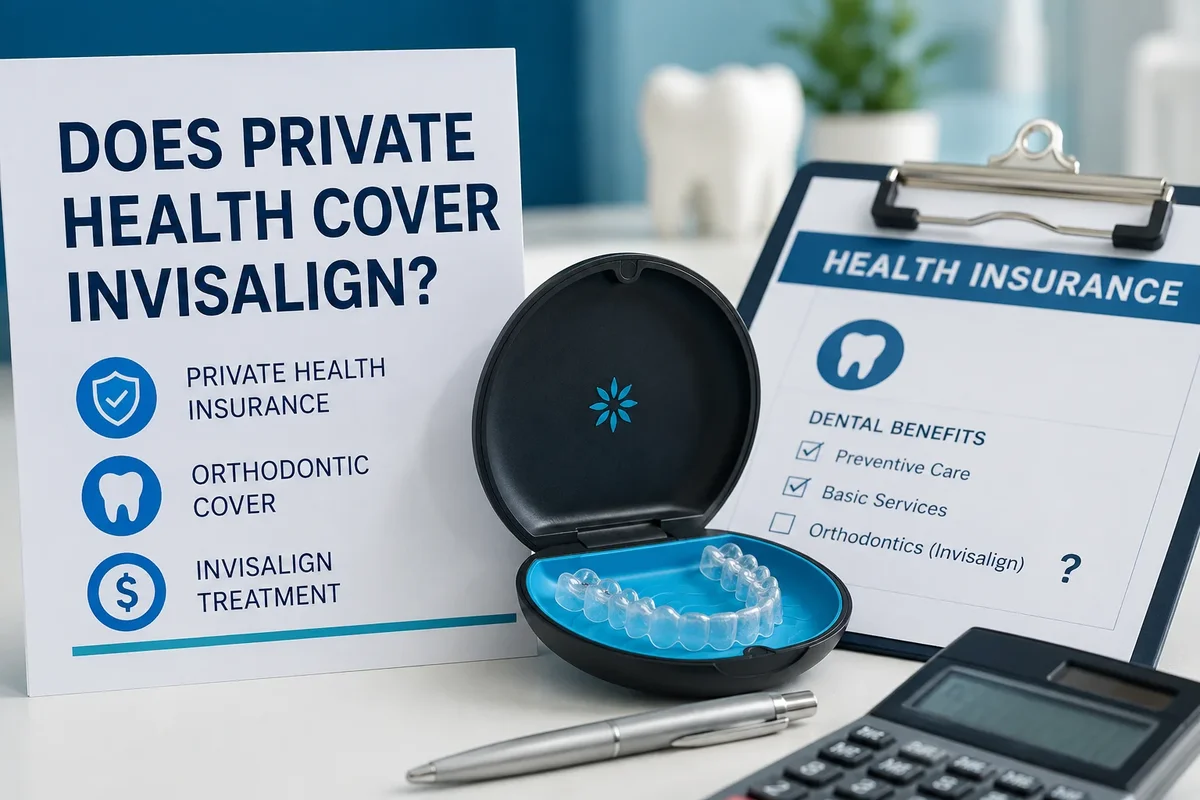
Your Next Step: How to Get a Personalized Invisalign Coverage Assessment
After researching insurance policies, treatment options, costs, risks, and alternatives, many patients eventually reach the same question: what should I do next? Understanding does private health cover Invisalign is an important part of treatment planning, but the most valuable information often comes from a personalized assessment rather than from general online research alone.
Every patient has unique dental needs, treatment goals, insurance benefits, and financial circumstances. Because of these differences, two people asking does private health cover Invisalign may receive very different answers regarding eligibility, reimbursement potential, treatment suitability, and expected costs. This is why a personalized evaluation is usually the most effective way to move from uncertainty to informed decision-making.
Rather than relying solely on general information, a structured assessment allows you to evaluate your individual situation with professional guidance.
Why Online Research Has Limits
Online resources can provide useful background information, but they cannot evaluate your specific dental condition or insurance policy. Patients often spend weeks researching does private health cover Invisalign and still feel uncertain because the information available online is often broad and generalized.
Insurance providers may offer multiple policy levels, each with different orthodontic benefits. At the same time, Invisalign treatment plans vary according to alignment complexity, bite relationships, treatment duration, and individual oral health factors.
Without a clinical examination and policy review, it can be difficult to determine how general information applies to your particular circumstances.
What a Personalized Assessment Typically Includes
A comprehensive evaluation is designed to answer both clinical and financial questions. This approach allows patients to understand not only whether treatment may be appropriate but also how insurance benefits may affect affordability.
Clinical Examination
The first component usually involves an assessment of your teeth, gums, bite, and overall oral health. This examination helps determine whether Invisalign may be a suitable treatment option.
Patients asking does private health cover Invisalign often focus on insurance first, but treatment suitability remains the foundation of any successful orthodontic plan.
Diagnostic Records
Digital scans, photographs, and other diagnostic tools may be used to evaluate alignment concerns more accurately. These records help create a personalized treatment strategy and can also support insurance-related documentation when required.
Insurance Review
A detailed review of your policy may help clarify orthodontic benefits, waiting periods, exclusions, annual maximums, and lifetime limits. Understanding these details is essential when evaluating whether does private health cover Invisalign provides meaningful financial assistance.
Questions You Should Ask During Your Consultation
Patients often achieve better outcomes when they arrive prepared with questions. A consultation is an opportunity to gather information that directly relates to your treatment goals and financial considerations.
Clinical Questions
- Am I a suitable candidate for Invisalign?
- Are there alternative treatments I should consider?
- How complex is my case?
- What oral health issues should be addressed first?
Insurance and Financial Questions
- What orthodontic benefits may apply?
- Are there waiting periods or exclusions?
- What documentation might my insurer require?
- What expenses may remain after insurance contributions?
- Are payment options available?
These questions can provide a clearer picture of both treatment feasibility and financial planning.
How to Compare Different Treatment Recommendations
In some cases, patients receive multiple opinions regarding orthodontic treatment. This can create confusion, particularly when insurance considerations are involved.
When comparing recommendations, avoid focusing exclusively on the question does private health cover Invisalign. Instead, evaluate:
- Treatment suitability.
- Expected treatment goals.
- Estimated treatment duration.
- Insurance eligibility.
- Long-term maintenance requirements.
- Potential alternatives.
A balanced comparison often leads to more confident decision-making.
When It May Be Worth Seeking Professional Advice Promptly
While some patients can comfortably take time to evaluate their options, others may benefit from seeking professional advice sooner rather than later.
You may wish to arrange a consultation if:
- You have noticeable crowding or spacing issues.
- You experience bite-related concerns.
- You are uncertain whether Invisalign is suitable.
- You are confused by insurance policy terminology.
- You are comparing multiple treatment options.
- You want a realistic understanding of costs.
Early assessment can help clarify priorities and reduce uncertainty.
Making a Decision Based on Facts Rather Than Assumptions
One of the most valuable benefits of a personalized assessment is the ability to replace assumptions with individualized information. Patients often make financial or treatment decisions based on incomplete interpretations of insurance policies.
The answer to does private health cover Invisalign can vary dramatically depending on policy details, clinical findings, and insurer requirements. Professional evaluation helps ensure that decisions are based on accurate information rather than general estimates.
This approach can be particularly important when significant financial planning is involved.
Creating a Practical Action Plan
Once your assessment is complete, the next step is developing a realistic action plan. This may include:
- Confirming treatment suitability.
- Reviewing insurance benefits.
- Understanding estimated out-of-pocket expenses.
- Comparing available treatment options.
- Planning treatment timing.
- Considering financing arrangements if needed.
Patients who follow a structured process often feel more confident about their final treatment decision.
Moving Forward With Confidence
The question does private health cover Invisalign is an important starting point, but it should not be the final factor determining your decision. The most effective treatment choices are usually based on a combination of clinical suitability, insurance considerations, financial planning, and personal goals.
At Redent Klinik, patients can receive individualized guidance tailored to their specific dental and financial circumstances. Professional consultation helps transform general information into a personalized treatment strategy. Additional educational resources regarding oral health are available through the American Dental Association. Patients interested in arranging a consultation may visit the Redent Klinik Contact Page.
What should you check next? Gather your insurance policy information, review any orthodontic benefits, and schedule a professional consultation if you are seriously considering treatment. Professional advice is especially important when treatment suitability, insurance eligibility, expected costs, or alternative treatment options remain unclear after your initial research.
Disclosure: this page may contain affiliate links. We may earn a commission if you use them, at no extra cost to you.