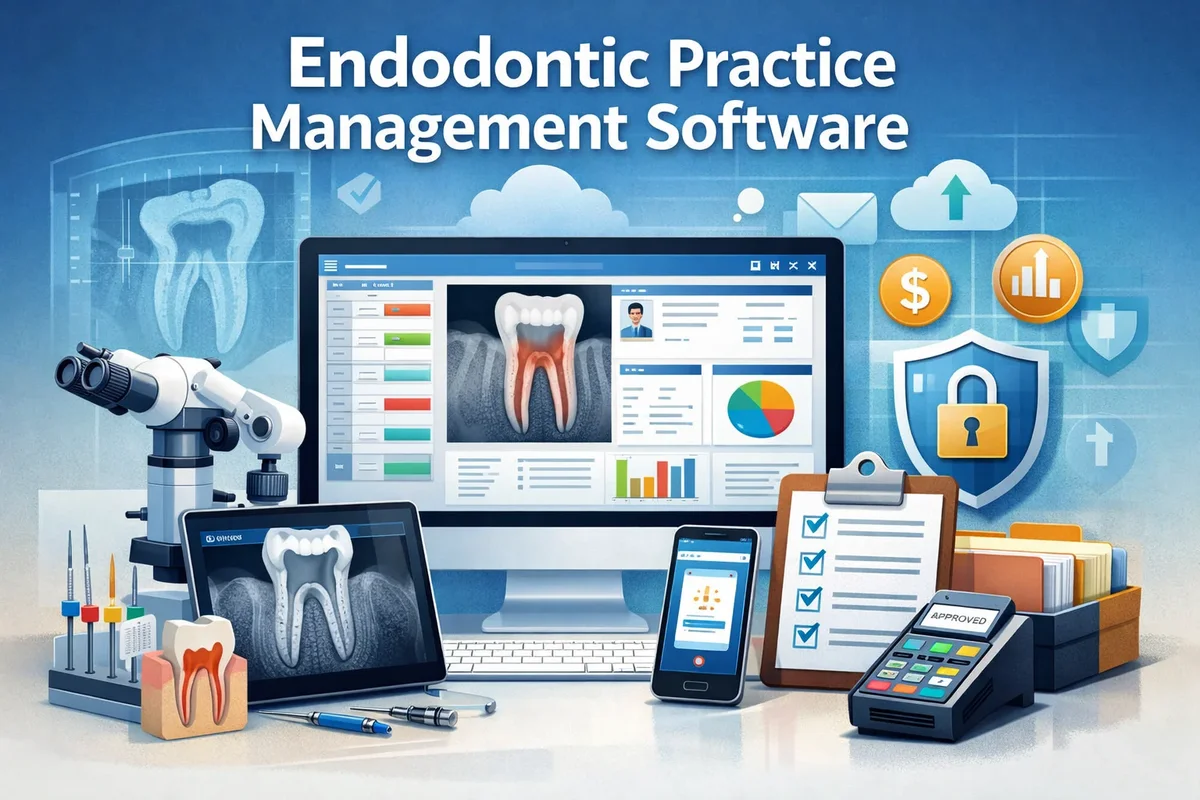
In today’s highly competitive dental landscape, technology is no longer optional—it is essential. For specialists focused on root canal treatments and advanced pulp therapy, endodontic practice management software plays a central role in improving efficiency, patient communication, compliance, and long-term profitability. Unlike general dental systems, endodontic practice management software is specifically designed to support the clinical workflows, documentation needs, diagnostic imaging integration, and referral-based structure that define modern endodontic practices.
At its core, endodontic practice management software is a digital platform that streamlines administrative and clinical processes within an endodontic clinic. It centralizes scheduling, billing, insurance verification, treatment planning, imaging, patient records, and reporting into one cohesive system. Instead of juggling spreadsheets, paper charts, and disconnected software tools, an endodontic team can operate efficiently from a single dashboard.
For endodontists, time is extremely valuable. Procedures such as root canal therapy, retreatments, and apical surgery require precision and concentration. By using advanced endodontic practice management software, clinicians can reduce administrative distractions and focus on delivering high-quality patient care. Automated appointment reminders, digital intake forms, electronic health records (EHR), and real-time insurance processing help eliminate bottlenecks in the front office.
One of the most important aspects of endodontic practice management software is its ability to manage referrals. Endodontic practices often rely heavily on general dentists who refer patients for specialized procedures. The software allows seamless referral tracking, digital case updates, and secure communication between providers. This strengthens professional relationships and increases repeat referrals, which directly impacts clinic growth.
Another major benefit of endodontic practice management software is its integration with diagnostic tools. Endodontists frequently use digital radiography, CBCT imaging, apex locators, and microscopy. A robust system ensures these tools integrate smoothly into the patient record, enabling easy access to images and clinical notes during consultations. This level of integration enhances case presentation and improves patient trust.
Financial management is another critical function. Modern endodontic practice management software includes billing automation, insurance claim submission, payment tracking, and revenue reporting. Instead of manually calculating fees or following up on unpaid claims, the system automates much of the workflow. Some platforms even provide analytics dashboards that show production, collections, and profitability trends in real time.
From a compliance standpoint, endodontic practice management software helps clinics meet regulatory requirements. Secure data encryption, role-based access controls, and audit trails protect sensitive patient information. In the United States, practices must align with standards outlined by the American Dental Association and HIPAA regulations. A properly configured system ensures documentation accuracy and reduces legal risks.
Patient experience is also significantly enhanced with endodontic practice management software. Online booking options, digital forms, automated reminders, and post-treatment follow-ups create a seamless journey from consultation to recovery. Patients appreciate efficiency and transparency, especially when dealing with procedures that may cause anxiety. Clear treatment plans, visual case presentations, and easy payment options improve satisfaction and case acceptance.
Additionally, cloud-based endodontic practice management software offers flexibility for multi-location clinics. Providers can securely access patient records from different offices, monitor performance remotely, and manage operations in real time. This level of accessibility supports scalability and long-term expansion strategies.
For clinics aiming to modernize their systems, improve operational control, and elevate patient care, investing in endodontic practice management software is a strategic decision. Whether you are launching a new specialty practice or upgrading from outdated systems, choosing the right platform can significantly impact productivity and profitability.
If you are exploring advanced digital solutions or seeking expert guidance in optimizing your dental operations, you can always connect with our team through the Redent Klinik Contact Page. Our specialists understand both clinical excellence and digital efficiency, helping practices transition smoothly into modern practice management systems.
Ultimately, endodontic practice management software is not just an administrative tool—it is the operational backbone of a successful specialty clinic. By integrating scheduling, clinical documentation, imaging, billing, referral tracking, compliance, and analytics into one intelligent system, endodontists can focus on what truly matters: delivering precise, high-quality treatment while building a sustainable and profitable practice. 🚀
What Is Endodontic Practice Management Software?
Endodontic practice management software is a specialized digital system designed to manage the clinical, administrative, financial, and communication workflows of an endodontic clinic. While general dental software platforms exist, endodontic practice management software focuses specifically on the needs of root canal specialists, retreatment experts, and microsurgical endodontists. It brings together appointment scheduling, digital records, imaging integration, insurance processing, referral coordination, compliance tracking, and reporting into a unified system.
Unlike basic scheduling tools, endodontic practice management software is built to handle the complexity of specialty procedures. Endodontic treatments often involve advanced diagnostics, multi-visit workflows, emergency cases, and strong referral networks. A standard dental office management system may not fully support these specialized requirements. That is why choosing purpose-built endodontic practice management software can dramatically improve efficiency and clinical precision.
Core Purpose of Endodontic Practice Management Software
The primary purpose of endodontic practice management software is to centralize operations and eliminate fragmentation. In a busy endodontic clinic, there are multiple moving parts: front desk coordination, treatment planning, radiographic imaging, billing, insurance claims, patient follow-ups, and communication with referring dentists. When these tasks are managed through separate systems or manual processes, errors and inefficiencies increase.
With endodontic practice management software, everything operates within a single digital ecosystem. Patient charts are updated in real time, imaging files are directly attached to cases, billing is synchronized with treatment codes, and reports are generated instantly. This integration reduces human error and enhances workflow continuity.
Clinical Workflow Management
Digital Charting and Treatment Documentation
Endodontic procedures require highly detailed documentation. Endodontic practice management software allows clinicians to record pulpal diagnoses, periapical findings, treatment notes, obturation details, and follow-up recommendations within structured digital templates. This improves documentation accuracy and ensures medico-legal protection.
Additionally, advanced endodontic practice management software platforms allow integration with digital radiography and CBCT systems. Images can be stored directly within the patient record, eliminating the need for external storage solutions. This creates a seamless diagnostic workflow that supports better case planning and patient communication.
Emergency Case Handling
Endodontic clinics frequently handle urgent pain cases. Endodontic practice management software enables quick appointment slot adjustments, automated waitlist management, and instant patient intake forms. This helps the practice respond rapidly to emergencies without disrupting the entire schedule.
Administrative and Financial Capabilities
Beyond clinical tasks, endodontic practice management software plays a critical role in financial performance. It manages treatment codes, fee schedules, insurance claims, and payment tracking. Many systems provide automated claim submission features that reduce processing errors and accelerate reimbursement timelines.
Financial reporting dashboards within endodontic practice management software allow practice owners to monitor production, collections, overhead, and case acceptance rates. This real-time visibility empowers endodontists to make data-driven decisions rather than relying on guesswork.
Referral Management System
One defining feature of endodontic practice management software is its ability to manage referrals effectively. Since endodontists depend heavily on general dentists for patient referrals, maintaining strong professional relationships is essential. The software allows automated case updates, secure document sharing, and referral tracking analytics.
With integrated communication tools, endodontic practice management software ensures referring dentists receive timely updates about treatment outcomes. This transparency strengthens trust and increases referral loyalty.
Compliance and Data Security
Patient data protection is a top priority in healthcare. Modern endodontic practice management software includes encrypted storage, user access controls, and detailed audit logs. These features help clinics comply with regulatory standards and maintain patient confidentiality.
By following industry guidelines provided by the American Dental Association, practices can ensure their digital systems align with professional standards. Reliable endodontic practice management software simplifies this process by embedding compliance features directly into its architecture.
Cloud-Based vs Traditional Systems
Today, many providers offer cloud-based endodontic practice management software. Cloud solutions allow remote access, automatic updates, and reduced hardware costs. On-premise systems, on the other hand, store data locally and may provide more direct control but require ongoing IT maintenance.
The choice between these models depends on the clinic’s size, security preferences, and growth plans. However, cloud-based endodontic practice management software is increasingly popular due to scalability and flexibility.
Enhancing Patient Experience
Modern patients expect convenience and transparency. Endodontic practice management software supports online booking, automated reminders, digital consent forms, and secure payment portals. These features reduce administrative friction and enhance the overall patient journey. 😊
Clear communication, efficient scheduling, and streamlined billing all contribute to higher satisfaction levels. When patients feel informed and supported, case acceptance rates improve naturally.
In summary, endodontic practice management software is far more than a scheduling tool. It is a comprehensive operational platform that integrates clinical documentation, imaging, billing, referral coordination, compliance, and analytics into one structured environment. For endodontists seeking efficiency, accuracy, and sustainable growth, implementing the right endodontic practice management software is a foundational step toward long-term success.
Key Features Every Endodontic Clinic Should Look For
Choosing the right endodontic practice management software is one of the most important strategic decisions an endodontic clinic can make. Not all systems are created equal, and while many platforms claim to support specialty dentistry, only truly specialized endodontic practice management software solutions address the unique clinical and operational demands of root canal treatment, retreatment cases, microsurgery, and referral-driven workflows. Understanding the essential features ensures your investment leads to measurable efficiency, improved patient satisfaction, and sustainable revenue growth.
When evaluating endodontic practice management software, it is critical to look beyond basic scheduling and billing. A comprehensive system should support clinical documentation, imaging integration, referral management, analytics, automation, compliance, and scalability. Let’s explore the most important features in detail.
Advanced Scheduling and Workflow Optimization
Efficient scheduling is the backbone of a successful endodontic practice. A strong endodontic practice management software system should include intelligent scheduling tools that allow color-coded procedure blocks, emergency case prioritization, and real-time chair availability tracking.
Emergency Appointment Management
Endodontic clinics frequently manage urgent pain cases. The right endodontic practice management software should offer built-in emergency scheduling features, including quick booking templates and waitlist automation. This allows staff to accommodate urgent patients without disrupting pre-planned procedures.
Automated Reminders and Confirmations
Missed appointments directly impact revenue. Automated SMS and email reminders within endodontic practice management software reduce no-show rates significantly. Confirmation tracking ensures that the front desk team can proactively follow up when necessary.
Comprehensive Clinical Documentation
Detailed charting is essential in endodontics due to the technical nature of treatments. High-quality endodontic practice management software must provide customizable digital templates tailored specifically to pulp diagnosis, periapical pathology, obturation techniques, and follow-up protocols.
Integrated Imaging and Radiography
Endodontists rely heavily on digital radiographs and CBCT scans. The best endodontic practice management software integrates directly with imaging systems, allowing X-rays and 3D scans to be stored within the patient record. This eliminates the need for external image storage and streamlines case presentation.
Electronic Consent and Documentation Storage
Digital consent forms and electronic signatures are essential for compliance. Reliable endodontic practice management software includes secure document storage and timestamped consent tracking to protect both the patient and the provider.
Referral Tracking and Communication Tools
Since endodontic practices depend on general dentist referrals, strong referral management features are non-negotiable. Effective endodontic practice management software allows automated case updates, secure communication portals, and referral performance reporting.
With centralized referral tracking, clinics can identify top referring providers, monitor case volume trends, and strengthen professional partnerships. This capability transforms endodontic practice management software from a simple administrative tool into a strategic growth engine.
Financial Management and Insurance Automation
Financial clarity drives long-term stability. Advanced endodontic practice management software should include automated insurance verification, electronic claim submission, and payment tracking features. These tools reduce claim rejections and speed up reimbursement cycles.
Real-Time Reporting and Analytics
Modern endodontic practice management software includes reporting dashboards that display key performance indicators such as production, collections, case acceptance rates, and overhead percentages. Data-driven insights allow practice owners to make informed decisions about staffing, marketing, and pricing strategies.
Transparent Patient Payment Options
Integrated payment processing, installment plan management, and digital invoicing enhance the patient experience. When endodontic practice management software simplifies billing transparency, patients are more likely to accept recommended treatment plans.
Compliance, Security, and Data Protection
Patient data protection is critical in healthcare. Secure endodontic practice management software must include encryption protocols, role-based user access, audit logs, and secure cloud hosting. These safeguards ensure compliance with regulatory standards and protect sensitive information.
Following guidelines from the American Dental Association, clinics should ensure that their endodontic practice management software aligns with best practices in digital record keeping and privacy protection.
Cloud Accessibility and Scalability
Cloud-based endodontic practice management software offers flexibility for multi-location practices and remote management. Automatic updates, reduced hardware dependency, and secure remote access make cloud systems increasingly popular among modern specialty clinics.
Scalability is equally important. As your clinic grows, your endodontic practice management software should grow with you—supporting additional providers, expanded services, and increased patient volume without performance limitations.
User-Friendly Interface and Staff Training
Even the most advanced endodontic practice management software will fail if it is too complicated for daily use. A clean, intuitive interface reduces training time and minimizes user errors. Look for systems that offer onboarding support, tutorial resources, and responsive customer service.
Ultimately, selecting the right endodontic practice management software means prioritizing efficiency, integration, security, and growth potential. By focusing on these key features—advanced scheduling, integrated imaging, referral tracking, financial automation, compliance tools, and cloud scalability—endodontic clinics can build a streamlined, high-performance operational foundation. 🚀
Investing in comprehensive endodontic practice management software is not merely a technological upgrade; it is a strategic move toward long-term clinical excellence, financial transparency, and patient-centered care.
How Endodontic Practice Management Software Improves Patient Experience
In modern specialty dentistry, patient experience is just as important as clinical precision. While endodontic treatment focuses on eliminating pain and saving natural teeth, the overall journey—from the first phone call to post-treatment follow-up—strongly influences patient satisfaction and long-term trust. This is where endodontic practice management software plays a transformative role. By streamlining communication, reducing waiting times, improving transparency, and enhancing convenience, endodontic practice management software directly elevates the patient journey.
Patients who require root canal therapy are often anxious. Many arrive in discomfort or distress. A smooth, organized, and reassuring process supported by advanced endodontic practice management software helps reduce stress and builds confidence from the very first interaction. When administrative friction is minimized, patients feel that the clinic is professional, modern, and attentive to their needs.
Seamless Appointment Scheduling and Communication
One of the most noticeable improvements delivered by endodontic practice management software is simplified appointment booking. Many platforms allow online scheduling, real-time availability viewing, and instant confirmation. This convenience eliminates long phone calls and scheduling errors.
Automated Reminders and Reduced No-Shows
Missed appointments disrupt both clinic efficiency and patient care continuity. Endodontic practice management software automatically sends reminders via SMS or email, reducing no-show rates significantly. Patients appreciate timely reminders, especially when they are managing pain or juggling busy schedules.
Two-Way Messaging Capabilities
Modern endodontic practice management software often includes secure messaging systems that allow patients to confirm appointments, ask follow-up questions, or receive post-treatment instructions digitally. This enhances accessibility while maintaining privacy and professionalism.
Digital Intake Forms and Paperless Experience
First impressions matter. Instead of filling out paper forms in the waiting room, patients can complete digital intake documents before arrival using endodontic practice management software. This reduces waiting time and accelerates the check-in process.
Paperless workflows not only increase efficiency but also demonstrate that the clinic invests in advanced systems. By using endodontic practice management software to manage medical histories, consent forms, and insurance information electronically, errors are minimized and data is stored securely.
Clear Treatment Presentation and Transparency
Many patients fear root canal procedures because they do not fully understand them. Integrated imaging tools within endodontic practice management software allow clinicians to show radiographs and CBCT images directly on-screen. Visual explanations increase understanding and reduce anxiety.
Visual Case Presentation Tools
With integrated diagnostics, endodontic practice management software enables practitioners to present findings clearly. Patients can see the infected pulp, periapical lesions, or structural damage in real time. This clarity improves case acceptance rates and strengthens trust.
Transparent Cost Estimates
Financial transparency is a major factor in patient satisfaction. Many endodontic practice management software systems generate instant treatment estimates based on procedure codes and insurance coverage. Clear, printed or digital breakdowns eliminate confusion and prevent billing surprises.
Streamlined Insurance and Payment Processing
Insurance processing can be frustrating for patients. By using endodontic practice management software, clinics can verify coverage instantly, submit claims electronically, and track reimbursements. Patients benefit from faster processing and fewer administrative complications.
Integrated payment portals within endodontic practice management software also allow patients to pay securely online or in-office with multiple options. Flexible payment plans can be managed digitally, improving affordability perception.
Efficient Check-In and Reduced Waiting Time
Long waiting times negatively impact satisfaction. Because endodontic practice management software synchronizes scheduling, charting, and clinical workflows, patient flow becomes more predictable. Staff can anticipate appointment durations and avoid overbooking.
Real-time chair management within endodontic practice management software ensures smooth transitions between procedures, improving overall clinic efficiency. Patients notice when appointments start on time—it reinforces professionalism and reliability. 😊
Post-Treatment Follow-Up and Care Continuity
Follow-up communication is essential in endodontics. After root canal treatment, patients may require monitoring or instructions regarding sensitivity and restoration. Endodontic practice management software automates post-operative messages and follow-up appointment scheduling.
Automated Follow-Up Reminders
Automated recall systems within endodontic practice management software ensure patients return for evaluation when needed. This supports long-term treatment success and prevents complications.
Secure Data Storage and Patient Confidence
Patients want assurance that their health data is protected. Secure encryption and compliance protocols built into endodontic practice management software help clinics align with professional standards such as those outlined by the American Dental Association. Knowing that their information is safe enhances trust.
Building Long-Term Patient Loyalty
Ultimately, endodontic practice management software supports consistency and personalization. Detailed digital records allow providers to remember patient preferences, previous treatments, and communication history. Personalized care strengthens relationships and encourages positive reviews and referrals.
When patients experience organized scheduling, transparent billing, visual case explanations, efficient check-ins, and reliable follow-ups—all powered by endodontic practice management software—their perception of the clinic improves dramatically. The technology operates behind the scenes, but its impact is highly visible.
In conclusion, endodontic practice management software enhances patient experience by combining efficiency, transparency, communication, and security into one integrated system. For endodontic practices aiming to deliver not only clinical excellence but also exceptional service, investing in advanced endodontic practice management software is a strategic step toward patient-centered growth and long-term success. 🚀
Boosting Revenue and Case Acceptance with Smart Automation
Financial sustainability is essential for any specialty clinic, and endodontic practices are no exception. While clinical expertise drives treatment success, operational efficiency and strategic automation determine long-term profitability. This is where endodontic practice management software becomes a powerful growth engine. By automating repetitive administrative tasks, improving case presentation, optimizing billing workflows, and delivering actionable analytics, endodontic practice management software directly contributes to higher revenue and improved case acceptance rates.
Many endodontists underestimate how much revenue is lost due to inefficient systems, delayed claims, missed follow-ups, or incomplete case presentations. Properly configured endodontic practice management software minimizes these gaps by transforming manual processes into streamlined digital workflows.
Improving Case Acceptance Through Clear Communication
Case acceptance is strongly influenced by patient understanding and trust. When patients clearly see the diagnosis, understand the procedure, and receive transparent financial information, they are more likely to proceed with treatment. Modern endodontic practice management software integrates imaging, digital charting, and cost estimation tools to create structured case presentations.
Visual Treatment Explanations
Integrated radiographs and CBCT scans displayed within endodontic practice management software allow clinicians to visually demonstrate infection, structural damage, or periapical pathology. When patients see the problem clearly, hesitation decreases. Visual engagement builds confidence and strengthens decision-making.
Instant Financial Estimates
Financial uncertainty is a major barrier to case acceptance. With automated fee calculations and insurance verification, endodontic practice management software provides immediate cost breakdowns. Transparent digital estimates eliminate confusion and build trust.
Automation of Billing and Insurance Workflows
Delayed insurance claims and billing errors directly affect cash flow. Advanced endodontic practice management software automates claim submission, verifies insurance eligibility in real time, and tracks outstanding payments. This reduces administrative burden while accelerating reimbursement cycles.
Electronic Claims Submission
Manual claims increase the risk of rejection. By using endodontic practice management software, clinics can submit electronic claims instantly with proper coding validation. Fewer claim errors mean faster approvals and improved financial predictability.
Automated Payment Reminders
Outstanding balances can accumulate if follow-ups are inconsistent. Automated reminder systems within endodontic practice management software notify patients about pending payments, reducing collection delays without uncomfortable phone calls.
Reducing No-Shows and Increasing Chair Utilization
Empty chair time is one of the most significant hidden revenue losses in any dental specialty. Smart scheduling features in endodontic practice management software reduce no-show rates and improve chair utilization efficiency.
Automated SMS and email reminders, confirmation tracking, and waitlist automation ensure appointment slots are filled. If a patient cancels, endodontic practice management software can immediately notify patients on the waiting list, maximizing productivity.
Data-Driven Decision Making with Analytics
Revenue growth requires measurable insights. Advanced endodontic practice management software includes reporting dashboards that track production, collections, referral patterns, case acceptance rates, and overhead costs.
Identifying Revenue Trends
Through real-time reporting, endodontic practice management software allows practice owners to identify seasonal trends, procedure popularity, and referral performance. This enables proactive business adjustments rather than reactive corrections.
Monitoring Referral Sources
Since endodontic practices rely heavily on referrals, tracking referring dentists is crucial. Endodontic practice management software provides referral analytics that show which providers generate the most cases. This data supports targeted relationship-building efforts and marketing strategies.
Optimizing Treatment Planning Efficiency
Time efficiency directly correlates with revenue potential. When administrative tasks consume clinical hours, productivity declines. By automating documentation, charting, and follow-up scheduling, endodontic practice management software frees clinicians to focus on patient care.
Integrated digital records within endodontic practice management software reduce duplication and eliminate manual data entry errors. Faster workflows mean more cases completed per day without compromising quality.
Enhancing Patient Retention and Reputation
Revenue growth is not solely about attracting new patients—it is also about maintaining trust and generating referrals. Positive patient experiences supported by endodontic practice management software lead to better reviews and stronger word-of-mouth marketing.
Efficient follow-ups, transparent billing, and organized scheduling reinforce professionalism. Patients who experience smooth processes are more likely to recommend the clinic to family and friends.
Long-Term Return on Investment
Although investing in endodontic practice management software involves upfront costs, the long-term return on investment can be substantial. Increased case acceptance, faster claims processing, reduced no-shows, and improved workflow efficiency collectively boost overall profitability.
Furthermore, aligning digital operations with standards recommended by the American Dental Association ensures compliance while maintaining professional credibility.
In summary, endodontic practice management software is not merely an administrative tool—it is a strategic revenue optimization system. Through automation, analytics, streamlined billing, referral tracking, and enhanced case presentation, endodontic practice management software empowers endodontic clinics to increase production, improve financial stability, and strengthen long-term growth. 🚀
When implemented thoughtfully, endodontic practice management software transforms everyday operations into a high-performance ecosystem where clinical excellence and financial success work together seamlessly.
Integration with Imaging, Billing, and Insurance Systems
For an endodontic clinic to operate efficiently, its digital systems must communicate seamlessly. One of the most critical advantages of modern endodontic practice management software is its ability to integrate with imaging platforms, billing modules, and insurance processing tools. Without proper integration, clinics face duplicated data entry, fragmented records, billing errors, and workflow delays. When fully synchronized, endodontic practice management software becomes the central operational hub that connects clinical diagnostics, financial transactions, and administrative processes into a unified ecosystem.
Endodontics is a highly diagnostic-driven specialty. From periapical radiographs to CBCT imaging, clinicians rely heavily on precise visuals to diagnose and treat pulpal and periradicular conditions. Integration between imaging tools and endodontic practice management software ensures that diagnostic data flows directly into patient records without manual uploads or external storage systems.
Imaging System Integration
Imaging is fundamental in endodontics. A high-performing endodontic practice management software platform should integrate directly with digital radiography systems, CBCT scanners, and intraoral cameras.
Seamless Radiograph Synchronization
When radiographs are captured, integrated endodontic practice management software automatically stores them within the patient’s electronic chart. This eliminates the need to switch between software platforms. Clinicians can access X-rays, annotate findings, and compare pre- and post-treatment images in real time.
CBCT and 3D Imaging Compatibility
Advanced endodontic procedures frequently require CBCT analysis. Modern endodontic practice management software supports large imaging files and allows side-by-side diagnostic review. This integration improves treatment planning accuracy and enhances patient education during consultations.
Improved Case Documentation
By embedding images directly into clinical notes, endodontic practice management software strengthens documentation quality. Detailed visual records provide medico-legal protection and improve communication with referring dentists.
Billing and Financial System Integration
Financial accuracy is equally important. Endodontic practice management software integrates with billing modules to ensure that treatment codes, procedure details, and patient balances are automatically synchronized.
Procedure Code Automation
Manual coding errors can lead to claim rejections or underpayments. Integrated endodontic practice management software links clinical documentation directly to billing codes. When a root canal or retreatment is recorded, the corresponding code is automatically generated.
Real-Time Payment Tracking
With built-in financial dashboards, endodontic practice management software tracks payments, outstanding balances, and daily collections in real time. Front desk staff can instantly access financial data without switching systems.
Insurance Processing Integration
Insurance management is one of the most time-consuming administrative tasks in specialty dentistry. Properly integrated endodontic practice management software simplifies eligibility verification, electronic claim submission, and reimbursement tracking.
Instant Eligibility Verification
Instead of calling insurance providers manually, endodontic practice management software allows instant digital verification of patient benefits. This reduces front desk workload and improves transparency for patients.
Electronic Claims Submission
Integrated claim submission within endodontic practice management software reduces processing errors and speeds up reimbursement cycles. Claims are transmitted electronically with attached diagnostic documentation, increasing approval rates.
Reimbursement Monitoring
Advanced endodontic practice management software includes tracking tools that monitor claim status and flag delayed payments. Automated alerts help administrative teams follow up proactively.
Referral and Communication Synchronization
Integration extends beyond clinical and financial systems. Endodontic practice management software also synchronizes communication with referring dentists. Diagnostic images, treatment summaries, and post-operative notes can be securely shared directly from the platform.
This integrated communication improves referral relationships and supports coordinated patient care. Referring providers receive accurate updates without delays, enhancing professional collaboration.
Compliance and Data Security Considerations
Integrated systems must also meet strict security standards. High-quality endodontic practice management software includes encrypted data transfer between imaging, billing, and insurance modules. This ensures patient confidentiality and regulatory compliance.
Clinics should align digital systems with professional standards recommended by the American Dental Association. Secure integration within endodontic practice management software helps meet documentation and privacy requirements while maintaining operational efficiency.
Operational Efficiency Through Centralization
The true power of integration lies in centralization. When imaging, billing, and insurance systems operate independently, inefficiencies multiply. With unified endodontic practice management software, clinics reduce duplicate data entry, minimize human error, and improve workflow continuity.
Centralized dashboards allow clinicians and administrators to view patient diagnostics, treatment notes, financial details, and insurance status in one place. This unified approach enhances productivity and supports data-driven decision-making.
Long-Term Strategic Advantages
Fully integrated endodontic practice management software not only improves daily operations but also strengthens long-term scalability. As clinics expand or adopt new technologies, integrated systems adapt without requiring complete infrastructure replacement.
In summary, integration with imaging, billing, and insurance systems transforms endodontic practice management software into a comprehensive operational command center. By connecting diagnostics, financial workflows, and administrative processes, endodontic practice management software enhances accuracy, efficiency, compliance, and patient satisfaction. 🚀
For endodontic clinics seeking operational excellence and seamless workflow coordination, investing in well-integrated endodontic practice management software is not merely a technological upgrade—it is a strategic necessity for sustainable growth and clinical precision.
Data Security, HIPAA Compliance, and Legal Considerations
In an era where healthcare data breaches are increasingly common, protecting patient information is not optional—it is mandatory. For specialty clinics handling sensitive diagnostic images, treatment records, insurance details, and financial information, robust security infrastructure is essential. This is where endodontic practice management software plays a critical role. Beyond improving scheduling and billing, endodontic practice management software must provide strong data protection mechanisms, regulatory compliance tools, and legal safeguards to ensure that patient information remains secure and confidential.
Endodontic clinics store highly detailed clinical data, including radiographs, CBCT scans, medical histories, and treatment documentation. Without properly secured endodontic practice management software, this data becomes vulnerable to unauthorized access, cyberattacks, and compliance violations. Implementing a secure system protects both the patient and the practice.
HIPAA Compliance and Regulatory Standards
In the United States, healthcare providers must comply with the Health Insurance Portability and Accountability Act (HIPAA). Modern endodontic practice management software is designed to support HIPAA compliance by incorporating encryption, access control, and secure communication protocols.
Encrypted Data Storage
One of the most essential features of secure endodontic practice management software is encryption. Data should be encrypted both at rest and during transmission. This ensures that even if data is intercepted, it cannot be easily accessed or interpreted.
Role-Based Access Controls
Not every staff member requires access to all patient information. Advanced endodontic practice management software includes customizable permission settings, allowing administrators to assign access levels based on job roles. This limits internal security risks and ensures compliance with privacy standards.
Audit Trails and Activity Logs
Reliable endodontic practice management software automatically records system activity, creating audit trails that track who accessed or modified patient records. These logs provide transparency and serve as critical documentation in the event of a compliance review or legal dispute.
Secure Communication and Data Sharing
Endodontic practices frequently share treatment summaries and diagnostic images with referring dentists. Secure data exchange is essential. High-quality endodontic practice management software includes encrypted messaging systems and secure file-sharing portals.
This ensures that clinical data is transmitted safely without relying on unsecured email platforms. Secure communication within endodontic practice management software strengthens professional collaboration while maintaining patient confidentiality.
Cloud Security vs On-Premise Security
When selecting endodontic practice management software, clinics must evaluate cloud-based and on-premise security structures. Cloud-based systems typically include enterprise-level encryption, automatic updates, and professional monitoring. On-premise systems offer direct control but require in-house IT management.
Automatic Security Updates
Cloud-based endodontic practice management software often provides automatic security patches and software updates. This reduces the risk of vulnerabilities caused by outdated systems.
Disaster Recovery and Backup Protocols
Data loss can have devastating consequences. Comprehensive endodontic practice management software includes automated backups and disaster recovery plans. Secure cloud hosting ensures that patient data remains protected even in cases of hardware failure or natural disasters.
Legal Risk Mitigation
Proper documentation is a primary defense in malpractice claims or insurance disputes. Structured digital records within endodontic practice management software ensure that treatment notes, radiographic findings, and consent forms are timestamped and securely stored.
Accurate documentation supported by endodontic practice management software demonstrates clinical transparency and adherence to professional standards. Aligning digital record practices with guidelines from the American Dental Association further strengthens legal protection.
Patient Consent and Digital Documentation
Electronic consent management is another critical component of secure endodontic practice management software. Digital signature capture ensures that patients formally acknowledge treatment plans, risks, and financial agreements.
Storing consent documents within endodontic practice management software provides quick access during audits or legal reviews. Timestamped records help verify that appropriate patient education was provided before procedures.
Cybersecurity Threat Awareness
Healthcare organizations are frequent targets for ransomware and phishing attacks. Clinics using outdated systems face increased risk. Modern endodontic practice management software incorporates firewalls, intrusion detection systems, and multi-factor authentication to reduce vulnerability.
Multi-Factor Authentication
Adding multi-factor authentication within endodontic practice management software significantly strengthens account security. Even if login credentials are compromised, additional verification steps prevent unauthorized access.
Staff Training and System Protocols
Security is not solely technological—it also involves staff awareness. Leading providers of endodontic practice management software offer training resources to educate teams about phishing threats, password management, and secure data handling practices.
Building Patient Trust Through Security
Patients expect their personal and medical information to remain confidential. Demonstrating that your clinic uses secure endodontic practice management software reinforces professionalism and credibility. When patients trust that their data is protected, their confidence in your clinical services increases.
In conclusion, data security and legal compliance are foundational pillars of responsible specialty dentistry. High-quality endodontic practice management software integrates encryption, role-based access, audit trails, secure communication, automated backups, and regulatory compliance features into one secure infrastructure. By investing in properly protected endodontic practice management software, endodontic clinics safeguard patient trust, reduce legal risk, and maintain operational stability in an increasingly digital healthcare environment. 🔒
Ultimately, secure endodontic practice management software does more than protect data—it protects your reputation, your patients, and the long-term sustainability of your practice.
Cloud-Based vs On-Premise Endodontic Practice Management Software
When selecting the right endodontic practice management software, one of the most important strategic decisions involves choosing between a cloud-based system and an on-premise solution. Both models offer distinct advantages and limitations, and understanding the differences is essential for aligning technology with your clinic’s long-term goals. Because endodontic practice management software serves as the operational backbone of a specialty practice, infrastructure decisions directly influence efficiency, security, scalability, and financial planning.
Traditionally, dental offices relied on locally installed systems hosted on in-house servers. However, technological advancements have led to widespread adoption of cloud-based endodontic practice management software, which stores data securely on remote servers and allows access through internet-connected devices. Each model impacts workflow, cost structure, maintenance requirements, and growth potential in different ways.
What Is Cloud-Based Endodontic Practice Management Software?
Cloud-based endodontic practice management software operates on remote servers maintained by the software provider. Users access the platform through a secure web browser or dedicated application without needing physical server hardware in the clinic.
Remote Accessibility and Flexibility
One of the biggest advantages of cloud-based endodontic practice management software is remote access. Endodontists can securely log in from multiple locations, monitor schedules, review patient records, and analyze financial reports in real time. This flexibility supports multi-location practices and modern hybrid work models.
Automatic Updates and Maintenance
Cloud-based endodontic practice management software typically includes automatic updates and security patches managed by the provider. This eliminates the need for in-house IT teams to manually update systems, reducing downtime and security risks.
Lower Upfront Hardware Costs
Because cloud solutions do not require large local servers, initial hardware investment is significantly lower. Subscription-based pricing models make endodontic practice management software more accessible to new or expanding clinics.
What Is On-Premise Endodontic Practice Management Software?
On-premise endodontic practice management software is installed locally on clinic-owned servers and computers. All patient data is stored physically within the practice’s infrastructure.
Direct Data Control
Some clinics prefer on-premise endodontic practice management software because it provides direct physical control over patient data. This may offer a sense of security for practices with strict internal IT protocols.
Customization Capabilities
On-premise systems sometimes allow deeper customization options. Certain large specialty clinics with advanced IT resources may find this beneficial when tailoring endodontic practice management software to specific operational needs.
Maintenance Responsibility
However, on-premise endodontic practice management software requires regular hardware maintenance, manual updates, and dedicated IT support. This increases operational responsibility and can lead to higher long-term maintenance costs.
Security Comparison
Security is often a primary concern when choosing endodontic practice management software. Cloud providers typically use enterprise-level encryption, continuous monitoring, and secure backup systems. Data centers are protected by advanced cybersecurity protocols.
On-premise endodontic practice management software security depends heavily on internal IT management. Without regular updates and monitoring, vulnerabilities may increase. Both models can meet compliance standards when properly configured, especially when aligned with guidelines from the American Dental Association.
Scalability and Growth Potential
For expanding practices, scalability is critical. Cloud-based endodontic practice management software allows easy addition of new users, locations, and storage capacity without significant hardware upgrades. This flexibility supports long-term expansion strategies.
On-premise endodontic practice management software may require additional server installations and IT configuration when scaling operations, increasing infrastructure complexity.
Cost Structure and Budget Planning
Cloud-based endodontic practice management software typically operates on monthly or annual subscription models. While recurring costs exist, upfront capital investment is lower.
On-premise endodontic practice management software often involves higher initial purchase costs, including servers and installation fees. Ongoing maintenance expenses must also be considered.
Hidden Cost Considerations
When evaluating total cost, clinics should account for IT support, hardware replacement cycles, backup systems, and downtime risks. Comprehensive cost analysis ensures that endodontic practice management software aligns with financial goals.
Performance and Reliability
Modern cloud infrastructure provides high uptime guarantees and automated backups. Cloud-based endodontic practice management software minimizes data loss risks through redundant storage systems.
On-premise endodontic practice management software performance depends on internal hardware reliability. Power outages, hardware failures, or insufficient backup systems can disrupt operations if not properly managed.
Which Option Is Right for Your Practice?
The choice between cloud-based and on-premise endodontic practice management software depends on practice size, budget, IT expertise, and growth plans. Small to mid-sized specialty clinics often benefit from the flexibility and lower maintenance demands of cloud solutions. Larger organizations with dedicated IT teams may consider on-premise systems for greater control.
Ultimately, both options can provide secure, efficient, and compliant digital operations when implemented properly. The key is selecting endodontic practice management software that aligns with clinical workflow, financial strategy, and long-term expansion objectives.
In conclusion, understanding the differences between cloud-based and on-premise endodontic practice management software empowers endodontic clinics to make informed technology decisions. By evaluating security, scalability, cost structure, maintenance responsibilities, and performance reliability, practices can choose a system that supports operational excellence and sustainable growth. 🚀
Cost Breakdown and ROI of Endodontic Practice Management Software
Investing in endodontic practice management software is a major strategic decision for any specialty clinic. While the benefits of efficiency, automation, and integration are clear, understanding the full cost structure and long-term return on investment (ROI) is essential before implementation. A well-chosen endodontic practice management software system should not be viewed as an expense alone—it should be evaluated as a growth-driving asset that improves profitability, reduces administrative waste, and enhances patient satisfaction.
The financial impact of endodontic practice management software depends on several factors, including clinic size, provider count, feature requirements, hosting model (cloud vs on-premise), and customization needs. To make an informed decision, practice owners must analyze both upfront costs and long-term operational returns.
Initial Setup Costs
The initial investment in endodontic practice management software varies depending on the provider and deployment model.
Cloud-Based Pricing Model
Cloud-based endodontic practice management software typically operates on a subscription model. Average pricing in the U.S. market ranges between $200 to $600 per provider per month, depending on included features such as imaging integration, referral tracking, and analytics dashboards. Setup fees may range from $1,000 to $5,000, covering onboarding, data migration, and training.
On-Premise System Costs
On-premise endodontic practice management software often requires higher upfront investment. Licensing fees may range from $5,000 to $20,000 depending on system complexity. Additionally, server hardware, backup infrastructure, and IT installation costs can add another $3,000 to $10,000. Ongoing maintenance contracts may also apply.
Ongoing Operational Costs
Beyond initial purchase, endodontic practice management software involves recurring expenses.
Subscription and Maintenance Fees
Cloud-based endodontic practice management software includes maintenance and updates within monthly subscriptions. On-premise systems may require annual support contracts ranging from 15% to 25% of the original license cost.
Training and Staff Adaptation
Implementing new endodontic practice management software requires staff training. Although this may involve temporary productivity adjustments, proper onboarding ensures smoother long-term adoption.
Revenue Growth Through Efficiency
The ROI of endodontic practice management software becomes evident when analyzing revenue improvements. Automation reduces administrative time, enabling staff to focus on patient care and production.
Reduced No-Show Rates
Automated reminders within endodontic practice management software significantly reduce missed appointments. Even a 5–10% decrease in no-shows can translate into thousands of dollars in additional annual production.
Faster Insurance Reimbursements
Electronic claims submission integrated into endodontic practice management software accelerates payment cycles. Faster reimbursements improve cash flow and financial predictability.
Improved Case Acceptance Rates
Clear treatment presentations and transparent cost breakdowns generated by endodontic practice management software positively impact case acceptance. When patients understand both the clinical necessity and financial structure, they are more likely to proceed with treatment.
Even a modest 5% improvement in case acceptance, supported by structured workflows within endodontic practice management software, can significantly increase annual revenue.
Operational Cost Reduction
Administrative inefficiencies create hidden costs. Manual billing errors, duplicated data entry, and inefficient referral tracking reduce profitability. Implementing advanced endodontic practice management software minimizes these losses.
Lower Paper and Storage Costs
Digital records eliminate physical storage expenses. Secure cloud hosting within endodontic practice management software reduces printing and archiving costs.
Reduced IT Infrastructure Expenses
Cloud-based endodontic practice management software eliminates large hardware investments and reduces reliance on in-house IT management.
Long-Term Strategic Value
ROI extends beyond immediate financial gains. Endodontic practice management software enhances data-driven decision-making through detailed reporting dashboards. Clinics can monitor production, referral trends, and performance metrics in real time.
By aligning digital workflows with standards recommended by the American Dental Association, practices also strengthen compliance and professional credibility.
Estimated ROI Timeline
Most specialty clinics report that properly implemented endodontic practice management software begins generating measurable ROI within 6 to 18 months. Increased operational efficiency, reduced claim rejections, improved patient retention, and optimized scheduling contribute to long-term profitability.
Is Endodontic Practice Management Software Worth the Investment?
When evaluated comprehensively, endodontic practice management software delivers both direct and indirect financial returns. While initial costs may appear significant, the long-term benefits in productivity, reduced administrative errors, faster reimbursements, improved case acceptance, and enhanced patient experience often outweigh the investment.
In conclusion, understanding the full cost breakdown and ROI potential of endodontic practice management software empowers endodontic practice owners to make informed decisions. By balancing upfront investment with long-term efficiency gains, endodontic practice management software becomes a strategic asset that supports sustainable growth, financial stability, and operational excellence. 🚀
How to Choose the Best Endodontic Practice Management Software for Your Clinic
Selecting the right endodontic practice management software is one of the most important long-term decisions an endodontic clinic can make. Because endodontic practice management software directly impacts scheduling efficiency, clinical documentation, billing accuracy, referral coordination, compliance, and patient satisfaction, the selection process must be strategic and data-driven. A poorly chosen system can create workflow bottlenecks and financial losses, while the right endodontic practice management software becomes a powerful engine for growth and operational stability.
Choosing the best endodontic practice management software is not simply about price or popularity. It requires a structured evaluation of your clinic’s size, goals, technical capacity, and long-term expansion strategy. Below is a comprehensive guide to making an informed decision.
Assess Your Clinic’s Operational Needs
Before evaluating vendors, clearly define what your clinic requires from endodontic practice management software. Consider your daily workflow, number of providers, referral volume, imaging systems, and insurance complexity.
Clinical Workflow Analysis
Determine whether your current documentation, imaging integration, and case presentation processes are efficient. The ideal endodontic practice management software should align with how your clinicians diagnose, plan, and document treatments.
Administrative Bottlenecks
Identify recurring administrative challenges such as claim rejections, scheduling conflicts, or referral miscommunication. Choosing endodontic practice management software that directly addresses these pain points ensures measurable improvements.
Evaluate Feature Compatibility
Not all systems offer the same functionality. When reviewing endodontic practice management software, ensure it includes:
- Integrated digital imaging compatibility
- Electronic claims submission
- Automated appointment reminders
- Referral tracking dashboards
- Comprehensive reporting and analytics
- Secure document storage and consent management
Specialty-focused endodontic practice management software should specifically support root canal documentation templates, CBCT integration, and structured case tracking.
Consider Scalability and Future Growth
Your chosen endodontic practice management software should not only meet present needs but also support future expansion. If you plan to add providers, expand locations, or increase referral partnerships, scalability is essential.
Cloud Flexibility
Cloud-based endodontic practice management software often provides easier scalability, remote access, and lower hardware dependency. Growing practices benefit from the flexibility to add users without complex infrastructure upgrades.
Multi-Location Management
If your clinic operates or plans to operate multiple offices, ensure your endodontic practice management software allows centralized reporting and cross-location scheduling visibility.
Analyze Security and Compliance Standards
Data security must be a top priority. The selected endodontic practice management software should include encryption, role-based permissions, audit logs, and secure backup systems.
Ensure the system aligns with regulatory standards recommended by the American Dental Association. Compliance-ready endodontic practice management software reduces legal risks and protects patient trust.
Request Demonstrations and Trial Periods
Never select endodontic practice management software without a live demonstration. During the demo, evaluate interface usability, workflow navigation, reporting clarity, and integration smoothness.
Staff Involvement
Involve both clinical and administrative staff during testing. Since everyone will use endodontic practice management software, their feedback is critical to ensuring smooth adoption.
Customer Support Evaluation
Reliable technical support is essential. Assess the vendor’s training programs, onboarding assistance, and response time. Effective support ensures that your endodontic practice management software continues functioning optimally long after installation.
Compare Pricing Models and ROI Potential
While cost is important, focus on overall value rather than the lowest price. Evaluate subscription fees, setup costs, maintenance charges, and included features.
High-quality endodontic practice management software should deliver measurable ROI through improved scheduling efficiency, reduced claim rejections, higher case acceptance, and enhanced patient communication.
Check Vendor Reputation and Industry Experience
Research the provider’s track record. Established vendors specializing in dental or specialty-focused systems are more likely to offer reliable endodontic practice management software tailored to your needs.
Read reviews, request client references, and examine how long the vendor has supported endodontic practices specifically. Experience within specialty dentistry is a strong indicator of system reliability.
Implementation and Transition Planning
Switching to new endodontic practice management software requires careful planning. Data migration, staff training, and phased rollouts reduce disruption.
Data Migration Strategy
Ensure your vendor provides secure and accurate data transfer services. Proper migration protects patient history and financial records during the transition to new endodontic practice management software.
Staff Training and Adaptation
Structured training sessions accelerate adoption. When staff feel confident using endodontic practice management software, productivity increases quickly.
Final Decision-Making Framework
Ultimately, selecting the best endodontic practice management software requires balancing functionality, scalability, security, cost, vendor reliability, and long-term growth potential. A thoughtful evaluation ensures that your investment enhances efficiency rather than creating operational strain.
In conclusion, choosing the right endodontic practice management software is a strategic process that should align with your clinic’s workflow, compliance requirements, financial objectives, and expansion plans. When selected carefully, endodontic practice management software becomes the technological foundation that supports clinical excellence, financial stability, and sustainable specialty growth. 🚀