
If you have ever been told that dental implants take months or even a full year to complete, you are not alone. Traditional implant treatments often involve long healing periods, multiple surgeries, and extended waiting times. However, thanks to modern dentistry, fastest dental implants have completely changed this narrative. Today, it is possible to restore missing teeth in a fraction of the time, sometimes even within a single day, without compromising strength, aesthetics, or long-term success.
Fastest dental implants are designed for patients who want immediate function, faster recovery, and fewer dental visits. These advanced implant solutions focus on efficiency while maintaining the biological principles necessary for successful osseointegration. Instead of waiting months between implant placement and crown attachment, the fastest dental implant techniques allow patients to walk out with fixed teeth much sooner, often on the same day.
The concept behind fastest dental implants is not about rushing treatment blindly. Instead, it relies on precise planning, digital diagnostics, and advanced surgical protocols. Technologies such as 3D cone beam CT scans, guided implant surgery, and immediate loading protocols make it possible to place implants with exceptional accuracy. This precision allows dentists to attach a temporary or even permanent crown immediately after implant placement, eliminating long waiting periods.
One of the most common forms of fastest dental implants is known as immediate load implants. In this approach, the implant is placed into the jawbone and fitted with a temporary crown within 24 hours. Unlike traditional implants that require months of healing before restoration, immediate load systems allow patients to regain chewing function, speech clarity, and confidence almost instantly 😊. This is especially beneficial for individuals who do not want to live with missing teeth or removable dentures.
Another important factor that makes fastest dental implants possible is bone quality. Patients with sufficient bone density can often qualify for same-day implants without the need for bone grafting. Since bone grafting significantly increases treatment time, avoiding it plays a major role in achieving faster results. In cases where bone loss exists, specialized implant designs or angled implant placement techniques can still enable rapid treatment in many situations.
From a patient’s perspective, the appeal of fastest dental implants goes beyond speed alone. Faster treatment means fewer appointments, reduced anxiety, and a quicker return to normal life. Many patients report that having fixed teeth immediately after surgery improves their emotional well-being and overall satisfaction. Being able to smile, eat, and speak confidently without waiting months can be truly life-changing 😁.
It is important to understand that fastest dental implants are not a one-size-fits-all solution. Proper case selection is critical. Dentists evaluate gum health, bone structure, bite force, and overall oral hygiene before recommending immediate implant placement. When performed on the right candidates, success rates for fastest dental implants are comparable to, and sometimes even match, traditional implant success rates.
Scientific studies and clinical guidelines supported by organizations such as the
American Dental Association emphasize that speed should never compromise safety. For this reason, experienced clinics combine speed with meticulous planning. Digital impressions, virtual implant simulations, and guided surgery ensure that the fastest dental implants are placed in optimal positions, minimizing risks and maximizing longevity.
For patients considering treatment abroad or seeking expert consultation, reaching out to a professional clinic is essential. You can always get personalized guidance and evaluation by visiting the
Redent Klinik Contact Page. A proper consultation helps determine whether fastest dental implants are suitable for your specific needs.
In summary, fastest dental implants represent a major advancement in modern dentistry. They combine cutting-edge technology, refined surgical techniques, and patient-centered care to deliver rapid yet reliable results. When planned correctly and performed by experienced professionals, fastest dental implants offer a safe, effective, and time-saving solution for replacing missing teeth — allowing patients to restore their smiles faster than ever before 🚀.
What Are Fastest Dental Implants and How Do They Work?
Fastest dental implants refer to advanced implant techniques designed to replace missing teeth in the shortest possible time while maintaining safety, durability, and natural aesthetics. Unlike traditional dental implants that may require several months between surgical stages, fastest dental implants focus on immediate or accelerated treatment protocols that dramatically reduce waiting periods for patients.
At their core, fastest dental implants are not a separate “type” of implant material, but rather a modern approach that combines precise diagnostics, specialized implant designs, and immediate loading techniques. The goal is simple: place the implant securely and restore function as quickly as the patient’s biology allows 😊.
Understanding the Core Principle Behind Fastest Dental Implants
The success of fastest dental implants depends on a concept called primary stability. This refers to how firmly the implant is anchored in the jawbone at the time of placement. When high primary stability is achieved, the implant can safely support a temporary or even permanent tooth almost immediately.
Modern implant surfaces are engineered to enhance bone contact from day one. These surfaces promote faster osseointegration, which is the biological process where the bone bonds with the implant. Thanks to this innovation, fastest dental implants can integrate more efficiently without increasing complication risks.
Immediate Loading: The Key to Speed
One of the defining features of fastest dental implants is immediate loading. This means that a crown, bridge, or fixed prosthesis is attached to the implant within 24 to 72 hours after placement. In some cases, this restoration is placed on the same day.
Immediate loading works best when the bite forces are carefully controlled. Dentists often design temporary teeth that look natural but place minimal pressure on the implant during early healing. This strategic balance allows patients to enjoy the benefits of fastest dental implants without interfering with bone healing 😌.
Temporary vs Permanent Restorations
In many fastest dental implant cases, patients receive a temporary crown first. This crown is fully functional and aesthetic but lighter than the final restoration. After full healing is confirmed, the dentist replaces it with a permanent crown designed for long-term durability.
Some advanced cases allow for immediate placement of permanent teeth, especially in full-arch treatments. These scenarios require exceptional planning and surgical expertise, but they highlight just how effective fastest dental implants can be.
Digital Planning and Guided Surgery
Another essential component of fastest dental implants is digital treatment planning. Using 3D imaging and computer-guided software, dentists can virtually place implants before surgery even begins. This allows them to choose the ideal angle, depth, and position for maximum stability.
Guided surgery reduces surgical time, minimizes tissue trauma, and significantly improves accuracy. Less trauma means less swelling, faster healing, and a smoother overall experience for patients seeking fastest dental implants.
Bone Quality and Anatomical Considerations
Not every patient automatically qualifies for fastest dental implants. Bone density and volume play a crucial role. Patients with healthy, dense jawbone are ideal candidates because the implant can achieve strong initial fixation.
However, even patients with moderate bone loss may still benefit from fastest dental implants thanks to innovative solutions such as angled implants, short implants, or zygomatic implants. These techniques bypass areas of low bone density and anchor implants in stronger bone structures.
How Fastest Dental Implants Differ From Traditional Implants
Traditional implant treatments often follow a delayed protocol. After implant placement, patients wait three to six months before receiving a crown. With fastest dental implants, this waiting period is drastically reduced or eliminated entirely.
This difference is not about cutting corners. Instead, it reflects decades of research, improved materials, and refined surgical methods. When performed correctly, fastest dental implants offer comparable success rates to conventional implants while providing a much faster path to restored oral function.
In conclusion, fastest dental implants work by combining immediate stability, advanced surface technology, digital planning, and careful patient selection. They represent a patient-focused evolution in implant dentistry, allowing individuals to regain their smiles, confidence, and quality of life in record time 🚀. When evaluated and performed by experienced professionals, fastest dental implants are a safe and highly effective solution for modern tooth replacement.
Who Is a Good Candidate for Fastest Dental Implants?
While fastest dental implants offer remarkable speed and convenience, not every patient is an automatic candidate for this advanced treatment. Successful outcomes depend on a combination of oral health, bone quality, lifestyle factors, and careful clinical evaluation. Understanding who qualifies helps set realistic expectations and ensures that fastest dental implants deliver both immediate and long-term benefits.
General Health Requirements for Fastest Dental Implants
Overall health plays a critical role in determining eligibility for fastest dental implants. Patients should be in reasonably good systemic health, as certain medical conditions can affect healing and implant integration. Controlled diabetes, for example, is often acceptable, while uncontrolled diabetes may increase the risk of complications.
Smoking is another important factor. Heavy smoking can slow down healing and interfere with bone integration. While smokers are not always excluded from fastest dental implants, dentists typically recommend reducing or quitting smoking before and after the procedure to improve success rates 😬.
Bone Density and Jaw Structure
One of the most crucial criteria for fastest dental implants is sufficient bone density. Because these implants rely on immediate stability, the jawbone must be strong enough to anchor the implant firmly from the start. Patients with healthy bone volume often qualify for same-day or immediate-load implants.
That said, modern dentistry has expanded options even for patients with bone loss. Advanced techniques such as angled implants or longer implants placed in denser bone regions can still make fastest dental implants possible in many cases.
Do You Need Bone Grafting?
Bone grafting usually adds months to implant treatment time, which conflicts with the concept of fastest dental implants. Patients who can avoid grafting are ideal candidates. However, in select cases, specialized implant designs can bypass the need for grafting altogether, preserving the speed advantage.
Gum Health and Oral Hygiene
Healthy gums are essential for the success of fastest dental implants. Active gum disease must be treated before implant placement, as infection can compromise both healing and long-term stability. Dentists carefully assess gum condition and may recommend periodontal treatment before proceeding.
Patients who maintain good oral hygiene are far more likely to succeed with fastest dental implants. Daily brushing, flossing, and regular dental checkups help protect the implant site and surrounding tissues 😊.
Bite Force and Occlusion Considerations
Excessive bite force, teeth grinding (bruxism), or misaligned bites can affect candidacy for fastest dental implants. Because immediate-load implants begin functioning right away, controlling bite pressure is essential during early healing.
In some cases, dentists design temporary restorations that limit chewing forces while the implant integrates. This approach allows more patients to benefit from fastest dental implants without increasing risk.
Single Tooth vs Full-Arch Candidates
Patients missing a single tooth often make excellent candidates for fastest dental implants, especially in visible areas where aesthetics matter most. Immediate replacement helps preserve gum shape and bone structure while restoring confidence quickly.
Full-arch patients, such as those missing all teeth in the upper or lower jaw, can also qualify for fastest dental implants. Advanced full-arch techniques use strategically placed implants to support a fixed bridge in as little as one day 😄.
Age Is Not a Limiting Factor
Age alone does not disqualify someone from fastest dental implants. Both younger adults and seniors can be suitable candidates as long as bone health and general health requirements are met. In fact, many older patients prefer fastest dental implants because they reduce treatment time and eliminate removable dentures.
Who May Not Be an Ideal Candidate?
Patients with severe untreated gum disease, advanced bone loss without alternative implant options, or certain medical conditions affecting bone healing may not be ideal candidates for fastest dental implants. In these cases, a more traditional implant approach or preparatory treatment may be recommended.
It is important to understand that choosing not to rush treatment can sometimes lead to better outcomes. A responsible clinic will always prioritize safety over speed.
In summary, fastest dental implants are best suited for patients with good general health, sufficient bone quality, healthy gums, and realistic expectations. Through thorough evaluation and personalized planning, many patients who believe they are not candidates may still qualify for fastest dental implants. A professional consultation is the key step in determining whether this rapid, life-changing solution is right for you 🚀.
Immediate Load vs Traditional Implants: Speed Comparison
When patients begin researching fastest dental implants, one of the first comparisons they encounter is immediate load implants versus traditional implant protocols. While both methods aim to replace missing teeth effectively, the difference in treatment duration, patient experience, and overall convenience is significant. Understanding how these two approaches compare helps patients make informed decisions based on their expectations, lifestyle, and oral health needs.
What Are Traditional Dental Implants?
Traditional dental implants follow a delayed loading protocol. After the implant is surgically placed into the jawbone, a healing period of three to six months is typically required before attaching the crown. This waiting time allows for complete osseointegration, ensuring the implant is fully bonded to the bone.
Although traditional implants have an excellent long-term success rate, the extended timeline can be challenging for patients. Living with missing teeth, temporary dentures, or gaps for months may affect chewing, speech, confidence, and quality of life. This is where fastest dental implants provide a compelling alternative.
What Makes Immediate Load Implants Faster?
Immediate load implants are the foundation of fastest dental implants. Instead of waiting months to restore the tooth, the implant and a temporary restoration are placed within the same day or within 24–72 hours. This drastically shortens the treatment timeline without sacrificing safety when performed on suitable candidates.
The key difference lies in achieving strong primary stability at the time of implant placement. When the implant is stable enough, it can support a temporary tooth immediately. This is why careful planning, bone quality assessment, and precise surgical execution are critical to the success of fastest dental implants 😊.
Timeline Comparison at a Glance
Traditional implants:
- Implant placement
- 3–6 months healing period
- Abutment placement
- Crown placement
Fastest dental implants (Immediate Load):
- Implant placement
- Temporary crown placed same day or within days
- Permanent crown after healing
This streamlined approach is the primary reason patients choose fastest dental implants over traditional methods.
Patient Experience and Comfort
From a patient’s perspective, fastest dental implants often feel less disruptive. Fewer appointments, reduced total treatment time, and immediate visual results create a more positive experience. Patients can smile confidently right after surgery, which has a powerful psychological impact 😁.
Traditional implants, while reliable, often require temporary removable dentures during healing. These can feel unstable, uncomfortable, and inconvenient. Fastest dental implants eliminate or minimize the need for removable solutions, offering a fixed and natural-feeling alternative.
Healing and Osseointegration: Is Speed Risky?
A common concern is whether fastest dental implants compromise healing. Modern research shows that when immediate loading protocols are properly followed, osseointegration can occur just as successfully as with traditional implants.
The difference is not biological shortcuts, but smarter biomechanics. Bite forces are carefully managed, temporary restorations are designed to minimize stress, and implant surfaces are optimized for faster bone response. As a result, fastest dental implants maintain high success rates comparable to traditional methods.
When Traditional Implants May Be the Better Choice
Despite the advantages of fastest dental implants, traditional implants still have an important role. Patients with severe bone loss, active infections, or complex medical conditions may benefit from a slower, staged approach. In these cases, allowing more time for healing can reduce risks and improve long-term outcomes.
Additionally, patients who require extensive bone grafting may not be suitable for immediate loading. Since grafted bone needs time to integrate, traditional implant timelines are often more appropriate.
Cost vs Value Considerations
While fastest dental implants may sometimes have a higher upfront cost due to advanced technology and planning, many patients find the overall value superior. Fewer appointments, reduced time off work, and faster functional results often offset the initial investment.
Traditional implants may appear less expensive initially, but extended treatment timelines, temporary restorations, and additional visits can increase indirect costs over time.
Final Comparison: Which Is Right for You?
The choice between immediate load and traditional implants depends on individual circumstances. Fastest dental implants are ideal for patients who prioritize speed, aesthetics, and convenience and who meet clinical requirements. Traditional implants remain a reliable solution for more complex cases where slower healing is beneficial.
In conclusion, fastest dental implants represent a modern evolution in implant dentistry, offering dramatically reduced treatment times without compromising safety or success. When compared directly, immediate load implants clearly outperform traditional protocols in speed and patient satisfaction — making fastest dental implants the preferred choice for many patients seeking rapid, life-enhancing results 🚀.
Technologies That Make Dental Implants Faster Than Ever
The rapid success of fastest dental implants is not accidental. It is the direct result of powerful technological advancements that have transformed implant dentistry over the last decade. These innovations allow dentists to diagnose, plan, and execute implant procedures with unmatched precision, significantly reducing treatment time while improving safety and predictability.
Rather than relying on manual estimations and extended healing periods, modern clinics now use advanced digital tools to streamline every step of the implant process. This technology-driven approach is the backbone of fastest dental implants and is what makes same-day and immediate-load solutions possible today 😊.
3D Cone Beam CT Scanning
One of the most important technologies behind fastest dental implants is cone beam computed tomography (CBCT). Unlike traditional two-dimensional X-rays, CBCT provides a detailed 3D image of the jawbone, nerves, sinuses, and surrounding structures.
This level of detail allows dentists to assess bone density, bone volume, and anatomical limitations before surgery even begins. By identifying the strongest areas of bone in advance, implants can be placed with maximum primary stability — a critical requirement for fastest dental implants.
Why 3D Imaging Saves Time
Because CBCT eliminates guesswork, it reduces surgical surprises and minimizes the need for additional procedures. Faster diagnosis means faster treatment planning, fewer complications, and a smoother path to immediate implant placement.
Digital Treatment Planning Software
Digital planning software is another cornerstone of fastest dental implants. Using CBCT data combined with digital impressions, dentists can virtually place implants on a computer before touching the patient.
This virtual simulation determines the ideal implant size, angle, and depth for optimal stability. The result is a highly predictable procedure that reduces chair time and enhances accuracy. For patients, this means faster surgery, less discomfort, and quicker recovery 😌.
Computer-Guided Implant Surgery
Guided implant surgery takes digital planning one step further. Based on the virtual plan, a custom surgical guide is created to direct the implant placement with millimeter precision. This guide ensures the implant is placed exactly where it needs to be.
For fastest dental implants, guided surgery is a game-changer. It reduces surgical time, minimizes tissue trauma, and increases the likelihood of immediate loading. Less trauma also translates into reduced swelling and faster healing.
Advanced Implant Surface Technology
The surface of the implant itself plays a major role in how quickly it integrates with bone. Modern implant surfaces are engineered at the microscopic level to promote faster bone attachment.
These bioactive surfaces accelerate osseointegration, allowing fastest dental implants to achieve strong bonding in a shorter period. Faster integration supports early loading and long-term stability without compromising success rates.
Digital Impressions and CAD/CAM Restorations
Traditional impressions using trays and putty are time-consuming and uncomfortable. Digital impression systems use intraoral scanners to capture highly accurate images of the teeth and gums in minutes.
These digital files are then used in CAD/CAM systems to design and manufacture crowns, bridges, and full-arch restorations quickly. This seamless workflow is essential for fastest dental implants, as it allows temporary or permanent restorations to be created rapidly without delays.
Same-Day Teeth Through Digital Manufacturing
In many cases, patients receiving fastest dental implants can have their temporary teeth designed and fabricated on the same day as surgery. This eliminates waiting periods and ensures immediate aesthetic and functional results 😁.
Minimally Invasive Surgical Techniques
Modern implant dentistry emphasizes minimally invasive procedures. Smaller incisions, flapless surgery, and precise placement reduce trauma to surrounding tissues.
For fastest dental implants, minimally invasive techniques mean less pain, faster healing, and a lower risk of complications. Patients can often return to daily activities much sooner compared to traditional implant surgery.
Smart Occlusion and Bite Management
Immediate-load implants require careful control of bite forces. Advanced digital bite analysis tools help dentists design restorations that distribute pressure evenly across the implant.
This controlled loading is essential for the long-term success of fastest dental implants, ensuring that speed does not compromise stability during the critical early healing phase.
Technology as the Foundation of Speed
In summary, the rise of fastest dental implants is driven by a powerful combination of 3D imaging, digital planning, guided surgery, advanced implant surfaces, and rapid restoration technologies. These tools work together to reduce treatment time while increasing precision and predictability.
By leveraging modern dental technology, experienced clinics can safely deliver faster results without cutting corners. Fastest dental implants are not about rushing treatment — they are about using smarter, more efficient systems to restore smiles in record time 🚀.
Step-by-Step Timeline of the Fastest Dental Implant Procedure
One of the biggest reasons patients choose fastest dental implants is the dramatically shortened treatment timeline. Unlike traditional implants that stretch over several months, fastest dental implants follow a highly optimized, step-by-step process designed to deliver rapid yet reliable results. Understanding this timeline helps patients feel confident, prepared, and informed about what to expect at each stage 😊.
Step 1: Initial Consultation and Digital Evaluation
The journey toward fastest dental implants begins with a comprehensive consultation. During this visit, the dentist evaluates your oral health, medical history, and aesthetic goals. Advanced diagnostic tools such as 3D cone beam CT scans and digital impressions are used to assess bone quality, nerve positioning, and anatomical structures.
This digital evaluation is critical for speed. By identifying potential challenges early, the dentist can determine whether you qualify for immediate loading and same-day restoration. Accurate diagnostics eliminate delays and allow fastest dental implants to move forward without unnecessary waiting.
Step 2: Personalized Treatment Planning
Once diagnostic data is collected, the dentist creates a customized treatment plan specifically designed for fastest dental implants. Using digital planning software, the implant position, size, and angle are virtually mapped before surgery.
This planning phase ensures that the implant will achieve strong primary stability — the foundation for immediate loading. At this stage, the dentist also plans the temporary restoration, allowing it to be fabricated quickly after implant placement.
Why Planning Saves Time
Meticulous planning reduces surgical surprises, minimizes complications, and shortens chair time. For patients, this means fewer appointments and a smoother overall experience 😌.
Step 3: Implant Placement Surgery
The surgical phase of fastest dental implants is often quicker and less invasive than traditional implant surgery. Guided implant techniques allow the dentist to place the implant with extreme precision, often through minimally invasive or flapless methods.
Because the implant is placed exactly where planned, trauma to surrounding tissues is reduced. This leads to less swelling, minimal discomfort, and faster healing — all essential components of the fastest dental implant protocol.
Step 4: Immediate or Same-Day Restoration
This is the defining moment of fastest dental implants. If sufficient stability is achieved, a temporary crown, bridge, or full-arch prosthesis is attached within hours or days of implant placement.
Patients leave the clinic with fixed teeth that look natural and function effectively. Although the restoration is usually temporary, it allows patients to smile, speak, and eat soft foods immediately 😁.
Temporary Teeth Are Not “Placeholders”
Temporary restorations used in fastest dental implants are carefully designed to protect the implant during healing while providing excellent aesthetics. They play a vital role in shaping the gums and maintaining comfort.
Step 5: Healing and Osseointegration Phase
After surgery, the implant begins bonding with the jawbone through osseointegration. With fastest dental implants, this process occurs while the temporary teeth are already in place.
Dentists carefully manage bite forces during this phase to avoid excessive pressure. Patients are usually advised to follow a soft-food diet for a short period to support healing.
Step 6: Monitoring and Follow-Up Visits
Regular follow-up visits ensure that fastest dental implants are healing properly. The dentist monitors bone integration, gum health, and bite alignment. Any necessary adjustments to the temporary restoration are made during this stage.
These check-ups are essential for long-term success and help prevent complications early.
Step 7: Final Restoration Placement
Once healing is complete, the temporary teeth are replaced with permanent restorations. These crowns or bridges are custom-made for durability, comfort, and natural appearance.
At this point, the fastest dental implants have fully transitioned from rapid treatment to long-term tooth replacement, offering both speed and stability.
Why This Timeline Matters
The streamlined timeline of fastest dental implants transforms the patient experience. Instead of waiting months to restore function and aesthetics, patients achieve immediate results without compromising safety.
In summary, fastest dental implants follow a carefully structured process that prioritizes precision, efficiency, and patient comfort. Each step builds upon the previous one, ensuring rapid results with lasting success 🚀. This timeline is the reason why fastest dental implants have become one of the most sought-after solutions in modern implant dentistry.
Benefits of Choosing the Fastest Dental Implants
Choosing fastest dental implants is about far more than saving time. While speed is a major advantage, the benefits extend into comfort, confidence, oral health, and overall quality of life. Modern patients are increasingly drawn to fastest dental implants because they offer a comprehensive solution that aligns with busy lifestyles and high aesthetic expectations.
Immediate Restoration of Smile and Confidence
One of the most powerful benefits of fastest dental implants is the ability to restore a natural-looking smile almost immediately. Missing teeth can significantly impact self-esteem, social interactions, and even mental well-being. With immediate or same-day restorations, patients no longer have to hide their smiles or feel self-conscious for months.
Walking out of the clinic with fixed teeth on the same day can be a life-changing experience 😁. This instant transformation is one of the main reasons fastest dental implants are so highly valued by patients.
Faster Return to Normal Eating and Speaking
Traditional implant timelines often force patients to rely on temporary dentures or avoid certain foods for extended periods. Fastest dental implants allow patients to regain functional chewing ability much sooner.
Although a soft-food diet may be recommended initially, patients can typically eat and speak comfortably right away. This rapid functional recovery improves daily comfort and reduces frustration during the healing phase.
Stable Alternative to Removable Dentures
Unlike removable dentures, fastest dental implants provide a fixed solution. There is no slipping, clicking, or discomfort during speech or eating. This stability significantly enhances patient satisfaction and confidence.
Reduced Overall Treatment Time
Perhaps the most obvious advantage of fastest dental implants is the shortened treatment duration. Instead of spreading treatment over several months, the process is streamlined into fewer visits and faster results.
This reduced timeline is especially beneficial for patients with busy schedules, international patients traveling for dental care, or anyone who wants efficient treatment without compromising quality 😊.
Preservation of Jawbone and Facial Structure
When teeth are missing, the jawbone begins to shrink over time. Fastest dental implants help preserve bone by stimulating it almost immediately after placement.
Immediate loading encourages bone maintenance and supports natural facial contours. This helps prevent the sunken appearance that can develop with prolonged tooth loss or long-term denture use.
Improved Gum Health and Aesthetics
Fast restoration with fastest dental implants helps maintain healthy gum contours. When implants are placed and restored quickly, the gums adapt naturally around the restoration, creating a more aesthetic and natural appearance.
This is particularly important for front teeth, where gum shape plays a major role in smile aesthetics.
Fewer Appointments and Less Disruption
Because fastest dental implants consolidate treatment steps, patients typically require fewer dental visits. Digital planning, guided surgery, and same-day restorations reduce chair time and eliminate unnecessary follow-ups.
This efficiency is ideal for patients who want effective treatment with minimal disruption to their work or personal life.
High Success Rates with Proper Case Selection
A common misconception is that speed compromises safety. In reality, fastest dental implants offer success rates comparable to traditional implants when performed on suitable candidates.
Advances in implant design, surface technology, and surgical planning ensure that speed does not come at the expense of long-term stability.
Psychological and Emotional Benefits
Beyond physical advantages, fastest dental implants provide significant emotional benefits. Avoiding months of visible tooth loss or temporary dentures reduces stress, embarrassment, and anxiety.
Patients often report feeling more positive and motivated after immediate restoration — a benefit that should not be underestimated 😊.
Long-Term Value and Satisfaction
While fastest dental implants may involve advanced technology and expertise, many patients find them to be a worthwhile investment. The combination of speed, comfort, aesthetics, and durability delivers exceptional long-term value.
In summary, fastest dental implants offer a unique blend of immediate results and lasting benefits. From restored confidence and improved function to preserved oral health and reduced treatment time, they represent one of the most patient-centered advancements in modern dentistry 🚀.
Potential Risks and Limitations of Same-Day Implants
Although fastest dental implants offer impressive speed and convenience, it is essential to understand that no medical procedure is completely without risk. Same-day and immediate-load implant treatments are highly advanced, but they require precise execution, careful patient selection, and strict adherence to clinical protocols. Being aware of the potential risks and limitations helps patients make informed decisions and sets realistic expectations.
Primary Stability Is Not Guaranteed in Every Case
The foundation of fastest dental implants is strong primary stability at the time of implant placement. Without sufficient stability, immediate loading is not recommended. Patients with low bone density or compromised bone structure may not achieve the level of fixation needed for same-day restorations.
In such cases, dentists may need to switch to a delayed loading protocol, even if the original plan involved fastest dental implants. This is not a failure but a responsible clinical decision prioritizing long-term success over speed.
Bone Quality and Quantity Limitations
One of the main limitations of fastest dental implants is bone availability. Severe bone loss can reduce the chances of achieving immediate stability. While advanced techniques can overcome moderate bone deficiencies, extreme cases may still require bone grafting.
Since bone grafts need time to heal, this can extend the overall treatment timeline and reduce the possibility of same-day implant placement.
Why Bone Grafting Slows Down Treatment
Bone grafting introduces a healing phase that cannot be rushed. Even with modern materials, the grafted bone needs months to integrate before it can support an implant. This biological reality limits the application of fastest dental implants in certain situations.
Higher Technique Sensitivity
Fastest dental implants are more technique-sensitive than traditional implant procedures. Immediate loading leaves little room for error. Implant positioning, angulation, and bite design must be exact to avoid overloading the implant during early healing.
This means that experience and expertise of the dental team are critical. Clinics without sufficient training or advanced technology may increase the risk of complications when attempting fastest dental implants.
Risk of Implant Micromovement
One of the biggest concerns with fastest dental implants is micromovement during the healing phase. Excessive movement can interfere with osseointegration and lead to implant failure.
To minimize this risk, dentists carefully design temporary restorations to reduce bite pressure. Patients are also advised to follow dietary restrictions and avoid chewing hard foods during the early weeks 😊.
Temporary Restorations Have Functional Limits
Although temporary teeth used in fastest dental implants look natural, they are not designed for heavy chewing. Patients must understand that these restorations are transitional and require care.
Ignoring post-operative instructions or applying excessive force can compromise implant stability. Patient cooperation is therefore a key factor in success.
Medical and Lifestyle Risk Factors
Certain medical conditions can limit candidacy for fastest dental implants. Uncontrolled diabetes, immune disorders, and conditions affecting bone metabolism may slow healing and increase complication risks.
Smoking is another major risk factor. Nicotine restricts blood flow and impairs healing, which can reduce implant success rates. While smokers may still receive fastest dental implants, strict guidelines are usually recommended to improve outcomes.
Not Ideal for Every Clinical Scenario
While fastest dental implants are excellent for many patients, they are not suitable for every situation. Complex bite issues, severe infections, or active gum disease must be addressed before implant placement.
In these cases, attempting immediate loading may increase the risk of failure. A staged approach may ultimately provide better long-term results.
Managing Patient Expectations
A common misconception is that fastest dental implants mean instant, permanent teeth with no limitations. In reality, the speed applies mainly to initial restoration. Full biological healing still takes time.
Patients must understand that even though they receive teeth quickly, the implant continues to integrate beneath the surface. Respecting this healing period is crucial for long-term success 😌.
How Risks Are Minimized in Expert Clinics
Experienced clinics reduce risks associated with fastest dental implants through meticulous planning, advanced diagnostics, guided surgery, and strict patient selection. Digital workflows and controlled loading protocols significantly improve predictability.
Regular follow-up visits also play a key role in identifying and managing potential issues early.
Balancing Speed and Safety
The key to successful fastest dental implants lies in balancing speed with biological principles. When performed responsibly, same-day implants can deliver excellent outcomes. When rushed or improperly planned, risks increase.
In conclusion, fastest dental implants offer remarkable advantages, but they are not universally applicable. Understanding the potential risks and limitations empowers patients to make confident, informed decisions. With the right case selection, professional expertise, and patient cooperation, fastest dental implants remain a safe, effective, and transformative solution 🚀.
Fastest Dental Implants Cost, Pricing Factors, and Global Options
One of the most common questions patients ask about fastest dental implants is how much they cost and what influences the final price. While speed is a major advantage, the pricing of fastest dental implants reflects advanced technology, expert planning, and high-quality materials. Understanding the cost structure helps patients evaluate value rather than focusing on price alone.
Average Cost of Fastest Dental Implants
The cost of fastest dental implants can vary widely depending on location, clinic expertise, and treatment complexity. On average:
- United States: $3,500 – $6,500 per implant with crown
- United Kingdom: £2,500 – £4,500 per implant
- Western Europe: €2,800 – €5,000 per implant
- Turkey: €900 – €1,500 per implant (often including consultation and temporary crown)
These ranges reflect typical pricing for fastest dental implants that include immediate loading or same-day restoration. Full-arch treatments naturally cost more but often provide better value per tooth.
Why Prices Differ So Much
Cost differences are influenced by labor expenses, clinic infrastructure, technology investment, and regional healthcare economics. Lower prices do not necessarily mean lower quality when treatment is performed in accredited clinics with experienced specialists.
What Is Included in the Price?
When evaluating fastest dental implants, it is important to understand what the quoted price includes. A comprehensive treatment package often covers:
- Initial consultation and digital diagnostics
- 3D CBCT scans and treatment planning
- Implant surgery
- Temporary same-day restoration
- Follow-up visits and monitoring
Some clinics may charge separately for crowns, scans, or temporary restorations, which can significantly affect the final cost.
Technology and Expertise as Cost Drivers
Fastest dental implants rely heavily on advanced technology such as guided surgery, digital impressions, and high-performance implant surfaces. These tools require significant investment and specialized training.
Clinics offering fastest dental implants typically employ highly experienced implantologists, which also influences pricing. Expertise reduces risks and increases success rates — an important factor when speed is involved 😊.
Single Tooth vs Full-Arch Pricing
The cost of fastest dental implants differs depending on whether you are replacing a single tooth or an entire arch.
Single implant: Ideal for replacing one missing tooth with immediate aesthetics.
Full-arch implants: Use fewer implants to support a fixed bridge, often restoring an entire jaw in one day.
Although full-arch treatments have a higher upfront cost, they are often more economical than replacing each tooth individually.
Global Options and Dental Tourism
Many patients explore treatment abroad to access high-quality fastest dental implants at more affordable prices. Countries like Turkey have become global hubs for implant dentistry, offering modern clinics, internationally trained dentists, and significant cost savings.
Dental tourism patients often receive comprehensive packages that include accommodation, transfers, and post-treatment care. This makes fastest dental implants more accessible without sacrificing quality 😁.
Is Traveling for Treatment Safe?
When choosing a reputable clinic with proper certifications and transparent treatment plans, receiving fastest dental implants abroad can be both safe and effective. Patients should always verify credentials and request detailed treatment information.
Insurance and Financing Considerations
In many countries, dental implants are not fully covered by insurance. However, some plans may partially cover diagnostic procedures or restorations.
Many clinics offering fastest dental implants provide flexible payment plans or financing options, making treatment more manageable for patients.
Cost vs Long-Term Value
While fastest dental implants may seem expensive initially, their long-term value is significant. Faster treatment means fewer visits, reduced time off work, and immediate functional benefits.
High-quality implants can last decades with proper care, making them a durable and cost-effective solution over time.
Making an Informed Financial Decision
The true cost of fastest dental implants should be evaluated based on quality, expertise, technology, and long-term outcomes — not price alone. Choosing a clinic that prioritizes safety, precision, and patient care ensures the best return on investment.
In conclusion, fastest dental implants offer a powerful combination of speed, reliability, and long-term value. Whether treated locally or abroad, understanding pricing factors empowers patients to make confident, informed decisions and achieve rapid, life-changing results 🚀.
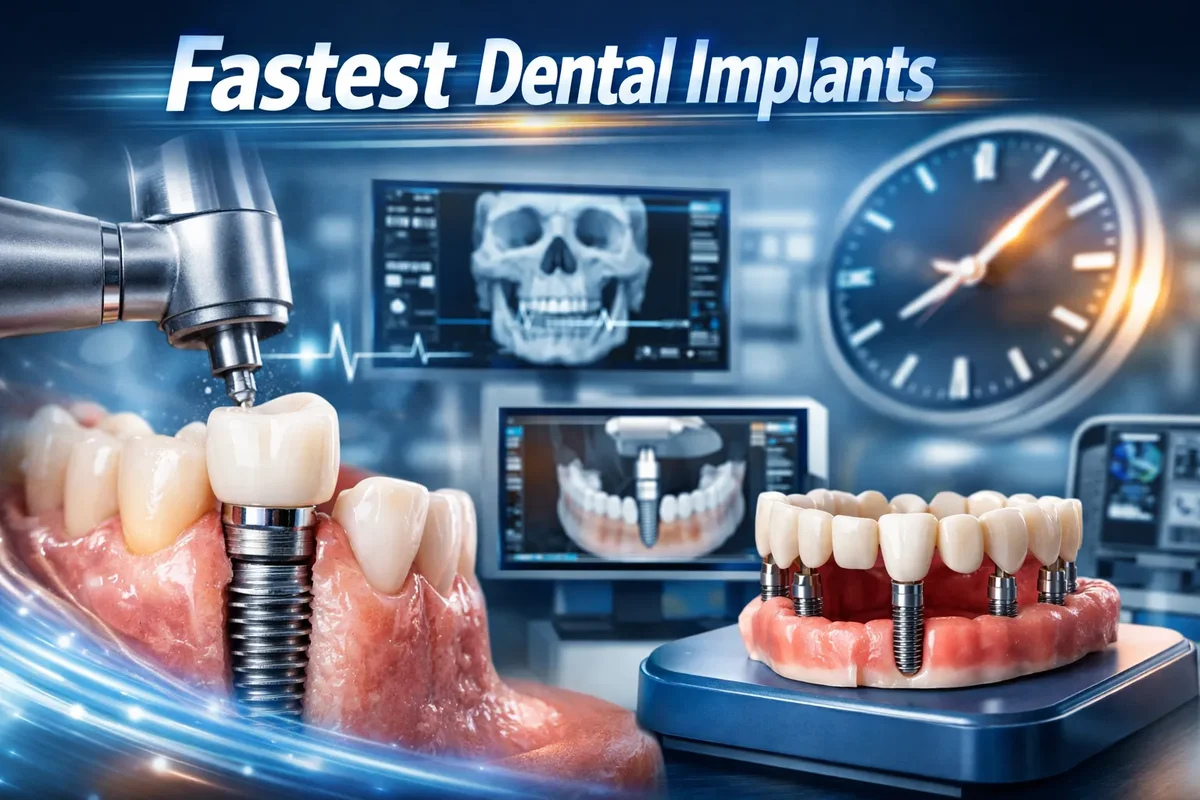
Recovery Time and Aftercare for Fastest Dental Implants
Recovery is a crucial part of the success of fastest dental implants. While these advanced treatments significantly reduce waiting time for visible and functional results, the body still needs proper care and support to ensure long-term stability. Understanding the recovery timeline and following correct aftercare instructions help patients protect their investment and enjoy lasting outcomes 😊.
What to Expect Immediately After the Procedure
One of the advantages of fastest dental implants is that recovery often feels easier compared to traditional implant surgery. Because minimally invasive and guided techniques are commonly used, patients usually experience less swelling and discomfort.
In the first 24–72 hours, mild swelling, tenderness, or slight bruising may occur. These are normal responses and typically subside quickly. Most patients can return to light daily activities within a day, which is one reason fastest dental implants are so appealing.
Pain Management and Comfort Tips
Discomfort after fastest dental implants is usually manageable with prescribed or over-the-counter pain relievers. Applying cold compresses during the first day can help reduce swelling. Resting and avoiding strenuous activity for a short period supports faster healing.
Short-Term Healing Phase (First 2–4 Weeks)
During the early healing phase, the implant begins integrating with the jawbone. With fastest dental implants, this integration happens while the temporary restoration is already in place.
Patients are often advised to follow a soft-food diet during this time. Foods like yogurt, eggs, soups, and soft vegetables reduce pressure on the implant and help protect stability 😌.
Oral Hygiene After Fastest Dental Implants
Maintaining excellent oral hygiene is essential for the success of fastest dental implants. Gentle brushing around the implant area should begin as instructed by the dentist, usually within the first day.
Antibacterial mouth rinses may be recommended to reduce infection risk. Flossing and interdental cleaning should be done carefully to avoid irritating the healing gums.
Why Hygiene Matters More With Immediate Loading
Because fastest dental implants are restored immediately, bacteria control is especially important. Clean gums and implant surfaces support healthy osseointegration and prevent complications.
Dietary Guidelines for Optimal Healing
Although fastest dental implants allow immediate function, patients should avoid hard, sticky, or crunchy foods during early healing. Excessive biting force can cause micromovement, which may interfere with bone integration.
Gradually reintroducing firmer foods is usually possible as healing progresses and under professional guidance 😊.
Activity Restrictions and Lifestyle Considerations
Patients receiving fastest dental implants are typically encouraged to avoid heavy exercise for a few days. Increased blood pressure can worsen swelling or discomfort.
Smoking should be avoided, especially during the first few weeks. Nicotine restricts blood flow and can significantly slow healing, reducing implant success rates.
Follow-Up Appointments and Monitoring
Regular follow-up visits are an essential part of aftercare for fastest dental implants. During these visits, the dentist monitors healing progress, checks implant stability, and ensures the temporary restoration is functioning correctly.
Any bite adjustments needed to reduce pressure on the implant are made during this stage.
Transition to the Final Restoration
Once the implant has fully integrated with the bone, the temporary restoration is replaced with a permanent crown or bridge. This usually occurs a few months after placement.
The final restoration is designed for durability, aesthetics, and comfort, completing the fastest dental implant journey from rapid placement to long-term success 😁.
Long-Term Care for Fastest Dental Implants
With proper care, fastest dental implants can last many years or even decades. Long-term success depends on consistent oral hygiene, regular dental checkups, and avoiding habits such as teeth grinding.
Professional cleanings help maintain gum health and protect the implant from peri-implant disease.
Why Aftercare Is Just as Important as Speed
While fastest dental implants deliver immediate results, recovery and aftercare determine their longevity. Speed does not replace the need for biological healing; it simply allows patients to enjoy restored function during that process.
In conclusion, recovery from fastest dental implants is generally smooth and manageable when patients follow professional guidance. Proper aftercare, smart lifestyle choices, and regular monitoring ensure that fastest dental implants remain stable, healthy, and beautiful for years to come 🚀.