
Dental implants are one of the most effective, long-lasting, and natural-looking solutions for tooth loss. However, the high cost of treatment often leads patients to search for financial assistance with dental implants, hoping to find realistic ways to reduce expenses without compromising quality. This comprehensive guide explains every major support channel, funding option, and savings strategy—helping you make an informed decision with confidence. 😊
Before diving into specific programs, it’s crucial to understand why dental implants can be expensive. Implant treatment involves advanced materials, surgical expertise, precision placement, and multiple clinical stages. These elements significantly improve long-term oral health but can also increase overall treatment fees. That’s why many people actively research financial assistance with dental implants and related support terms such as “implant financing programs” or “dental treatment funding support,” hoping for practical solutions tailored to their needs.
What many patients don’t realize is that a wide network of accessible resources actually does exist—ranging from dental financing plans to government-backed programs, and from nonprofit assistance to low-income clinic opportunities. Some of these avenues may reduce the total cost, while others can break payments into manageable monthly amounts. In either case, the goal is to make dental implant treatment more reachable, whether you’re covering a single implant or a full-mouth reconstruction.
A great starting point for understanding available options is professional dental guidance. Clinics with experience in patient financing often offer detailed support in navigating which financial path makes the most sense for your situation. You may contact dental providers directly for personalized insights—for example, the
Redent Klinik Contact Page provides a convenient way to connect with experts who can evaluate your needs and walk you through applicable financial solutions.
To further strengthen your research, it’s also helpful to verify treatment standards and care recommendations through trusted, authoritative sources such as the
American Dental Association. These organizations offer guidelines and educational materials that ensure patients understand both the medical and financial aspects of implant dentistry.
When exploring financial assistance with dental implants, consider the importance of long-term value. Implants are an investment not only in aesthetics but also in oral function, comfort, digestion, speech, and confidence. Many patients find that spreading the cost over time makes the treatment manageable and avoids the ongoing expenses associated with dentures or bridges. Even better, proper implant care can help the results last a lifetime.
Below are some core insights patients often overlook when researching funding options:
- Implant treatment is customizable — the number of implants, bone grafting needs, and crown materials all influence the overall budget.
- Assistance programs vary by location — some states or regions offer unique community-based implant funding.
- Nonprofit and charity resources exist — though competitive, they are legitimate paths worth trying.
- Financing plans are widely available — many offer 0% interest promotional periods when used responsibly.
- Income-based programs can lower costs dramatically — particularly for medically necessary cases.
As you continue reading, each upcoming heading will explore the specifics of insurance coverage, government support, nonprofit programs, payment plans, grants, and low-income care options. These resources are essential for anyone trying to obtain reliable financial assistance with dental implants while maintaining treatment quality. Additionally, we’ll discuss how long-term savings and cost reductions can be achieved through smart planning—helping you take full advantage of both financial and clinical opportunities.
With rising awareness about oral health and the increasing need for durable tooth replacement solutions, the demand for implant financial support is higher than ever. The good news? Whether through structured funding programs, flexible financing, or community resources, there are multiple pathways to make implants more affordable. By understanding your options in detail, you can take control of your oral health journey and move one step closer to a functional, confident smile. 😄
Understanding Financial Assistance Options for Dental Implants
When people begin searching for financial assistance with dental implants, the first challenge they usually face is understanding the wide variety of funding, support, and payment pathways available. Dental implants are recognized as one of the most advanced solutions for tooth replacement, but their cost can become a barrier without proper planning. This section breaks down every essential option, explains how each one works, and helps you identify which type of support fits your financial profile best. 😊
Why Dental Implants Are a Significant Investment
It’s important to understand exactly why dental implants come with a higher price tag compared to conventional dentures or bridges. Implant procedures require multiple stages including consultation, imaging, bone assessment, surgical placement, healing time, and the final prosthetic attachment. Each phase involves specialized expertise and premium materials such as titanium implants and custom-made crowns. This complexity is the primary reason so many individuals turn to financial assistance with dental implants to help manage their total treatment cost.
Beyond the clinical procedure itself, implants offer long-term benefits that justify the investment: increased chewing power, long-lasting durability, improved facial structure, and enhanced confidence. These health and lifestyle benefits make people more determined to secure funding through available financial pathways.
Main Types of Financial Assistance Options
When evaluating the best forms of financial assistance with dental implants, patients can explore several major categories of support. Each type has its own conditions, requirements, and application steps, making it crucial to understand their differences. Below is a detailed breakdown of all available assistance routes:
1. Dental Insurance Contribution
Although traditional dental insurance rarely covers the full cost of implants, newer policies and premium plans often include partial benefits. Insurance may pay for consultations, X-rays, bone grafting, or even a percentage of the implant itself. This partial support can dramatically reduce out-of-pocket expenses.
Patients should review their insurance documents carefully and ask providers whether upgrades or supplemental policies support implant-related treatments.
2. In-Clinic Financing and Payment Plans
Most modern dental clinics offer in-house payment plans designed specifically for patients seeking financial assistance with dental implants. These plans may offer:
- 0% interest for a specific promotional period
- Extended long-term payment options
- Customized monthly installments based on the total treatment cost
Financing plans allow individuals to distribute the cost monthly, making high-quality treatment accessible without requiring a large upfront payment. Some clinics also collaborate with third-party medical financing companies offering flexible credit options.
3. Government Programs and Public Aid
Depending on your region or eligibility, certain government-backed programs may provide aid for medically necessary implant treatments. While coverage varies, these programs are often designed for seniors, veterans, individuals with disabilities, or low-income families.
Such initiatives can significantly lower implant expenses and often include evaluations to ensure the treatment is medically justified.
4. Nonprofit and Charity Organizations
Several nonprofit organizations provide financial assistance with dental implants on a limited basis. These programs typically focus on:
- Victims of trauma or medical conditions
- Low-income individuals needing essential dental care
- Senior citizens or disabled individuals
Although competition is high and waiting lists are common, nonprofit programs are a valuable resource for those who meet the criteria. These initiatives often partner with licensed dentists to deliver treatment at reduced or no cost.
5. Community Clinics and University Dental Programs
Community health centers and university dental schools provide cost-effective treatment because procedures are performed by supervised dental students or residents. These services may reduce implant prices significantly while maintaining high clinical standards.
For patients searching for affordable implant care, this route can be an excellent form of financial assistance with dental implants, especially when combined with financing or partial insurance benefits.
How to Choose the Best Assistance Option
Choosing the right financial path depends on your income, credit score, insurance coverage, and overall treatment needs. A comprehensive evaluation with a professional dental clinic can help you determine which option fits your budget. Reaching out to specialists through contact pages such as the
Redent Klinik Contact Page ensures you receive expert guidance tailored to your situation.
In addition, staying informed through trustworthy dental organizations like the
American Dental Association allows you to verify that your chosen assistance option aligns with professional standards and ethical guidelines.
Putting Everything Together
Understanding the landscape of financial assistance with dental implants is the first step toward making treatment affordable and achievable. Whether you rely on insurance contributions, government support, nonprofit programs, community clinics, or structured payment plans, each option brings you closer to restoring your smile with confidence.
As costs continue to rise in traditional dentistry, exploring hybrid financial solutions—such as combining partial insurance reimbursement with clinic-based financing—can help maximize savings and reduce stress throughout the treatment journey.
With the right knowledge, strategic planning, and professional guidance, you can successfully navigate the financial aspects of implant treatment and enjoy the long-term benefits of a healthier, stronger, and more functional smile. 😄
How Dental Insurance Covers Implant Costs
Understanding how dental insurance contributes to implant expenses is a crucial part of exploring financial assistance with dental implants. In many cases, patients assume that insurance does not cover implants at all, but modern policies are evolving rapidly. Today, a growing number of insurers recognize the long-term medical value of implants, and some plans offer partial or even significant coverage. This section explains how insurance works, what it typically includes, and how you can maximize your benefits. 😄
The Evolving Role of Insurance in Implant Dentistry
Historically, dental insurance providers considered implants an “elective” or “cosmetic” procedure, offering minimal or no coverage. However, advances in implant technology and research from reputable organizations like the
American Dental Association have helped shift perspectives. Implants are increasingly recognized as essential for oral health, especially for patients suffering from severe tooth loss, bone resorption, and functional impairments such as difficulty chewing.
With this new understanding, many insurance providers now offer partial reimbursement, especially for components of the procedure such as diagnostic imaging, extractions, or crowns. This makes insurance a valuable source of financial assistance with dental implants for many individuals seeking a more affordable path to long-term oral rehabilitation.
What Insurance Typically Covers
Insurance coverage varies widely between plans, but there are consistent patterns in how providers structure implant-related benefits. Below is a detailed breakdown of the most common coverage categories:
1. Diagnostic Exams and Imaging
Most insurance plans cover evaluations, X-rays, CT scans, and periodontal assessments. These tools help determine whether the patient is a good candidate for implants. While the coverage may not apply directly to the implant itself, these diagnostic steps significantly reduce upfront costs.
2. Tooth Extractions
If the implant replaces a damaged or decayed tooth, many policies fully or partially cover tooth extraction. This is often categorized separately from implant coverage, allowing patients to save a considerable amount.
3. Bone Grafting and Sinus Lifts
Some plans cover bone grafting when it is medically necessary. For example, if severe bone loss prevents implant placement, supplemental bone procedures may be eligible for partial reimbursement. This area of coverage can be a major source of financial assistance with dental implants, especially for complex cases.
4. Implant Crown Coverage
The crown—the final, visible part of the implant—is often eligible for coverage, even in plans that exclude the implant post or abutment. Depending on your plan, the crown may be covered similarly to traditional dental restorations such as bridges or dentures.
5. Medical Insurance Crossover Scenarios
In rare cases, medical insurance may step in to cover portions of implant treatment when the procedure is medically necessary. Common qualifying scenarios include:
- Loss of teeth due to trauma or accident
- Congenital disorders affecting oral structure
- Surgical removal of tumors or cysts
- Jawbone deterioration tied to chronic medical conditions
Although these cases are less frequent, they can provide significant financial assistance with dental implants when they do apply.
How to Maximize Your Insurance Benefits
To get the most from your dental insurance, you must approach the process strategically. Many people overlook key steps that could substantially increase their reimbursement potential. Consider the following strategies:
- Request a pre-authorization: This ensures that you know exactly what your insurer will cover before treatment begins.
- Review your annual maximum: Implant treatment may span multiple calendar years, allowing you to maximize your coverage by scheduling procedures strategically.
- Ask your dentist to submit detailed documentation: Thorough notes, X-rays, clinical photos, and medical justification improve the likelihood of approval.
- Check if your employer offers supplemental dental policies: Some allow upgrades during open enrollment that include implant benefits.
Many dental clinics have insurance coordinators who specialize in helping patients navigate their benefits. Connecting directly through trusted channels such as the
Redent Klinik Contact Page can help you understand your eligibility and find additional avenues for savings.
Limitations and Exclusions to Be Aware Of
Despite improvements, insurance coverage still has limitations. Many plans apply waiting periods, pre-existing condition exclusions, or lifetime maximums for implants. Additionally, cosmetic enhancements or premium prosthetic materials may not be covered.
Understanding these limitations helps patients plan more effectively and explore backup sources of financial assistance with dental implants such as financing plans, nonprofit support, or income-based programs.
Blending Insurance with Other Financial Solutions
Many patients achieve the best savings by combining insurance benefits with financing or alternative assistance programs. For example, partial insurance coverage for the crown, plus an in-house payment plan for the implant post, can make overall treatment far more manageable. This multi-source approach is one of the most effective ways to reduce total implant expenses.
Insurance may not cover everything, but by understanding its structure and taking advantage of every available benefit, patients can dramatically decrease their out-of-pocket costs. With careful planning and proper guidance, insurance can become one of the strongest pillars supporting your journey toward high-quality dental implants and restored oral function. 😁
Government Programs That Support Dental Implant Financing
Government-backed programs play a vital role in helping individuals obtain financial assistance with dental implants, especially for those who meet specific medical, income, or age-related criteria. Although full implant coverage is rare, many agencies and public resources offer partial assistance, subsidies, or cost-reduction pathways that significantly ease the financial burden. Understanding how these programs work—and whether you qualify—is essential for reducing treatment expenses and gaining access to high-quality oral rehabilitation. 😄
The Importance of Public Support for Implant Treatment
Tooth loss affects millions of people, and untreated dental issues can lead to additional physical and psychological harm. Public health institutions understand the long-term benefits of restoring oral function and preventing further complications. As a result, several government programs offer targeted forms of financial assistance with dental implants when circumstances justify medical necessity. These programs are diverse, ranging from federal initiatives to state-supported healthcare systems, and each one has unique eligibility rules.
While these programs may not fully cover implant surgery, they often reduce the overall cost by supporting diagnostic imaging, surgical preparation, or medically essential components of the treatment. This partial coverage can be combined with other financing methods, allowing patients to build a full funding strategy.
Major Government Programs That May Offer Implant Assistance
Below is an extensive breakdown of the most well-known public programs that potentially contribute to dental implant financing. Coverage availability varies depending on geographic location, disability status, age, and overall health needs.
1. Medicaid (Limited but Valuable Support)
Medicaid coverage differs across states, but some offer benefits for medically necessary dental procedures. While routine implants are rarely covered, Medicaid may support implant costs when they are essential for:
- Rehabilitating severe oral trauma
- Treating congenital abnormalities
- Supporting jaw reconstruction after surgery
- Restoring function due to medical conditions such as oral cancer
Medicaid commonly covers related procedures such as extractions, periodontal therapy, and diagnostic tests. Patients who successfully receive authorization may secure crucial financial assistance with dental implants, especially in cases tied to trauma or severe disease.
2. Medicare (Specific Circumstances Only)
Traditional Medicare generally excludes routine dental treatments, including implants. However, Medicare Part A or Part B may offer coverage when implants are required as part of a medical procedure—rather than a dental one. Examples include:
- Jaw reconstruction after an accident
- Surgical tumor removal impacting oral structures
- Hospitalization for complex oral surgeries
Although coverage is limited, Medicare beneficiaries may apply the available support to reduce costs for hospital-related implant procedures. This can substantially assist elderly patients who require financial assistance with dental implants but lack private insurance coverage.
3. Veterans Affairs (VA) Dental Benefits
U.S. veterans may qualify for comprehensive dental benefits depending on their service-connected disability status. The VA sometimes covers dental implants when they are necessary for restoring oral function related to military-related injuries. Eligibility is assessed case-by-case, but many veterans receive substantial or full coverage.
This is an excellent pathway for those who served in the military and now require financial assistance with dental implants.
4. State and Local Health Department Programs
State-run dental programs may offer reduced-cost or subsidized dental services for low-income residents. These services may include support for procedures related to implant candidacy such as:
- Extractions
- Bone assessments
- Periodontal treatments
- Referrals to low-cost dental specialists
Although implants themselves may not be fully funded, these programs reduce preparatory costs, lowering the overall financial load. For patients seeking multi-layered financial assistance with dental implants, combining state-funded services with private financing can be a strong strategy.
5. Social Services and Disability Programs
Social service agencies occasionally provide dental support for people with qualified disabilities, chronic health conditions, or significant functional impairment. In cases where teeth are lost due to illness or disability-related deterioration, implants may be considered medically necessary.
This category of government-backed support can be especially valuable for individuals who require specialized care but cannot afford full treatment fees.
How to Qualify for Government Assistance
Each government program has specific eligibility requirements. Qualifying factors may include:
- Income level or financial hardship
- Age (e.g., seniors qualifying for Medicare)
- Disability status
- Medical necessity determined by a dental or medical professional
- Geographic location and state coverage rules
To improve your chances of approval, ensure you:
- Submit thorough medical documentation
- Provide imaging such as X-rays or CT scans
- Obtain detailed letters from your dentist
- Demonstrate how implants improve health and functionality
Working closely with experienced professionals can help streamline the process. Reaching out through platforms like the
Redent Klinik Contact Page allows patients to get expert guidance about available public aid options.
Combining Government Aid with Other Assistance Programs
One of the most effective ways to reduce overall implant costs is by combining public support with other forms of financial assistance with dental implants, such as nonprofit aid, clinic financing, insurance reimbursement, or dental school clinics. Multi-layered funding strategies help offset a large portion of the cost, especially for complex or medically demanding cases.
While government programs alone may not fully cover implants, they serve as a powerful foundation when blended with additional aid. By understanding eligibility rules, preparing strong documentation, and exploring every available option, patients can dramatically reduce their total financial commitment and access high-quality implant treatment that restores long-term function, health, and confidence. 😁
Charity and Nonprofit Programs Offering Implant Assistance
For many individuals, securing financial assistance with dental implants is challenging due to the high cost of treatment and limited insurance coverage. Fortunately, charity organizations and nonprofit foundations play a powerful role in bridging this gap, offering free or low-cost dental services to qualified applicants. These programs often target vulnerable populations such as low-income families, seniors, disabled individuals, and those affected by trauma or medical hardship. This section explains how nonprofit support works, who qualifies, how to apply, and how to increase your chances of receiving aid. 😊
Why Nonprofits Provide Dental Implant Support
Dental nonprofits exist because oral health is directly linked to overall well-being. Untreated tooth loss can cause difficulty chewing, bone deterioration, malnutrition, and psychological stress. However, implants remain financially inaccessible for many people.
Nonprofit organizations step in by offering specialized forms of financial assistance with dental implants, often funded through donations, volunteer networks, and dental partnerships. Their mission is grounded in public health, equality, and restoring dignity through better smiles and improved function.
These charitable organizations work closely with dentists, oral surgeons, and local clinics to deliver life-changing care. In some cases, treatments may be provided at little or no cost, depending on available funding and the applicant’s level of need. This makes nonprofit aid an essential resource for those who cannot afford dental implants through traditional financing or government support.
Major Nonprofit Organizations That May Help
Several large, reputable nonprofits operate across the U.S. and internationally, providing essential dental care including partial support for implants. Though availability varies, the following organizations are known for offering substantial help.
1. Dental Lifeline Network (DLN)
The Dental Lifeline Network is one of the most recognized charitable dental organizations. Their Donated Dental Services (DDS) program connects patients with volunteer dentists who provide treatment at no cost.
DLN typically assists individuals who are:
- Medically fragile
- Living with lifelong disabilities
- Over 65 years old with very low income
While implants may not be available in every region, DLN programs sometimes include implant support when medically necessary. For patients meeting strict eligibility criteria, this can be a significant source of financial assistance with dental implants.
2. Missions of Mercy (MOM)
Missions of Mercy hosts large dental care events nationwide, offering free services to thousands of patients each year. Their community-based clinics provide extractions, cleanings, fillings, and occasionally advanced procedures depending on volunteer availability.
Although full implant surgery is limited in temporary event settings, some MOM events partner with local specialists who may assist with implant-related treatments.
3. Smiles for Everyone Foundation
Focused on restoring oral health to underserved populations, this foundation organizes free dental days and ongoing care programs worldwide. Their support includes basic restorative care and occasionally implant treatment when cases are connected to trauma or severe functional impairment.
4. Local Nonprofit Dental Clinics
Many communities have nonprofit-run dental clinics supported by grants, donations, and volunteer dentists. These clinics commonly offer:
- Reduced-cost evaluations
- Affordable implant consultations
- Basic surgical support
- Referrals to partnering implant specialists
While availability differs between regions, these local clinics are often the most accessible way to receive partial financial assistance with dental implants without lengthy approval processes.
How to Qualify for Nonprofit Dental Assistance
Nonprofit programs usually have strict eligibility guidelines to ensure that support reaches those who need it most. Common qualification factors include:
- Income level below federal poverty guidelines
- Documentation of medical or disability status
- Evidence of financial hardship
- Inability to access dental care through insurance or public programs
- Detailed explanation of why implants are medically or functionally necessary
Because demand is high and funding is limited, applicants must provide clear and compelling documentation. Including dental X-rays, medical histories, referral letters, and proof of hardship can significantly improve the likelihood of approval.
How to Apply for Nonprofit or Charity Support
Application processes vary, but most nonprofits follow these general steps:
- Submit an online or paper application with personal, financial, and dental information.
- Provide supporting documents such as medical reports, income statements, and dentist evaluations.
- Wait for eligibility review—this may take several weeks or months depending on demand.
- Attend evaluation appointments with volunteer dentists if preselected.
- Receive treatment scheduling if accepted into the program.
To strengthen your application—even for charity-based financial assistance with dental implants—it helps to have your clinical situation well documented. Reaching out to professional clinics, such as through the
Redent Klinik Contact Page, can provide the preliminary assessments you may need before applying.
Limitations of Nonprofit Implant Programs
While nonprofit assistance is invaluable, applicants should understand its limitations:
- Long waiting lists are common
- Implants may only be offered for specific medical conditions
- Funding availability changes year to year
- Eligibility requirements may exclude certain applicants
Despite these limitations, nonprofits provide one of the most compassionate and meaningful ways to obtain dental care, especially for those without financial resources.
Combining Nonprofit Support with Other Aid Options
Applicants who secure partial nonprofit support often supplement it with payment plans, insurance contributions, and government programs. This multi-strategy approach helps cover remaining costs and makes implants far more attainable.
When combined with other financial paths, nonprofit assistance can dramatically lessen the burden of implant treatment and help individuals regain functional, confident smiles.
Overall, charity and nonprofit programs are an essential lifeline for many people seeking financial assistance with dental implants. By understanding how these programs work and applying strategically, patients can access life-changing care that restores oral health and enhances quality of life. 😁
Low-Income Dental Implant Solutions and Community Clinics
For individuals and families living on limited income, the cost of dental implants can feel overwhelming. Fortunately, there are multiple pathways specifically designed to help low-income patients access financial assistance with dental implants. Community clinics, dental schools, nonprofit centers, and income-based programs all play essential roles in making advanced implant treatment more affordable. In this comprehensive guide, we explore how these life-changing resources work and how you can successfully qualify for them. 😊
Why Low-Income Programs Exist for Implant Support
Tooth loss affects millions of people, yet traditional dental implant treatment remains far outside the financial reach of many low-income households. Tooth loss not only affects appearance—it impacts chewing, nutrition, speech, bone health, and emotional well-being. Public health research has repeatedly shown that untreated oral problems are directly linked to overall health complications, including heart disease and chronic inflammation.
As a result, various community resources and low-income programs exist to help ensure that everyone has access to basic—and in many cases, advanced—oral healthcare. These programs offer different forms of financial assistance with dental implants, including significantly reduced fees, sliding-scale pricing, and supervised treatment by dental students or residents.
Key Low-Income Solutions for Affordable Dental Implants
There are several major types of programs that support low-income patients seeking implant treatment. Each has unique benefits, cost ranges, and eligibility requirements. Understanding these programs can help you choose the most accessible option for your financial and medical needs.
1. Federally Qualified Health Centers (FQHC)
Federally Qualified Health Centers are nonprofit health clinics funded by the U.S. government to provide affordable healthcare to underserved communities. While many FQHCs focus on primary medical care, a growing number now offer dental services—including implant-related treatments in some locations.
FQHCs operate on a sliding fee scale, meaning your treatment cost is based on your income level. This approach provides crucial financial assistance with dental implants for individuals who otherwise could not afford it.
2. Community Dental Clinics
Community dental clinics are local, nonprofit centers that deliver affordable oral healthcare. These clinics are supported by grants, donations, and state funding, and they typically offer:
- Low-cost dental exams
- Discounted implant consultations
- Reduced-cost extractions and surgical services
- Payment plans for complex implant procedures
Not all clinics provide full implant services, but many partner with outside specialists who offer reduced rates for low-income patients. This partnership model ensures expanded financial assistance with dental implants while maintaining high-quality care.
3. Dental School Clinics
Dental schools are one of the most cost-effective resources for implant treatment. Students in their final years of clinical education perform procedures under the supervision of licensed dentists and oral surgeons. This means patients receive high-level care at a significantly lower price—sometimes 50–70% less than private practices.
For low-income patients, dental schools are often the most reliable long-term method of securing financial assistance with dental implants without sacrificing treatment quality.
4. Hospital Dental Residency Programs
Teaching hospitals with dental residency programs often provide comprehensive oral surgery services at reduced prices. Residents are licensed dentists undergoing advanced specialty training in oral and maxillofacial surgery, prosthodontics, or periodontics.
Hospital dental residency clinics may offer:
- Implant placement
- Bone grafting
- Sinus lift procedures
- Full-mouth implant rehabilitation plans
These hospital-based programs deliver excellent financial assistance with dental implants for medically complex or low-income patients needing advanced surgical planning.
Income-Based and Sliding-Scale Dental Programs
Some clinics use income-based pricing to make implants accessible. This system adjusts treatment costs based on household income, family size, and financial hardship level. Sliding-scale programs may cover:
- Initial consultations
- Diagnostics (X-rays, CT scans)
- Surgical support services
- Post-operative care
By significantly reducing preliminary costs, patients can obtain essential financial assistance with dental implants and pay only a fraction of the standard implant fee.
How to Qualify for Low-Income Implant Programs
Qualifying requirements vary by clinic, but most programs consider the following factors:
- Household income below a certain threshold
- Lack of dental insurance or limited coverage
- Medical necessity (e.g., severe tooth loss, trauma)
- Proof of residency in the clinic’s service area
- Documentation of financial hardship
For best results, gather supporting documents such as pay stubs, tax returns, disability letters, and dental imaging. Clinics appreciate well-prepared applicants, as this speeds up the eligibility review process.
How to Apply for Community-Based Dental Assistance
The application process generally involves:
- Locating clinics or dental schools in your region
- Completing an online or in-person application form
- Submitting financial and medical documentation
- Undergoing a preliminary dental evaluation
- Receiving treatment recommendations or fee estimates
If you need professional guidance before applying, you can contact experienced implant providers through resources like the
Redent Klinik Contact Page. They can help assess your oral health needs and advise which assistance programs are appropriate for your case.
Using Low-Income Programs Alongside Other Aid Options
One of the best strategies for reducing implant costs is combining different types of support. Patients often blend low-income clinic pricing with:
- Payment plans
- Charity programs
- Insurance contributions
- Dental school treatment plans
This multi-layered approach maximizes financial assistance with dental implants and ensures treatment remains as affordable as possible.
Ultimately, low-income dental solutions and community clinics provide hope for individuals seeking high-quality implant treatment without an overwhelming financial burden. With the right information, documentation, and planning, even patients with limited income can access the life-changing benefits of dental implants and achieve long-term oral health and confidence. 😁
Financing Plans and Payment Options for Dental Implants
Many patients searching for financial assistance with dental implants discover that one of the most flexible and accessible solutions is financing. Rather than paying the full cost upfront, financing plans allow you to divide implant expenses into predictable monthly payments. This approach makes advanced dental care achievable for people who may not qualify for government aid or nonprofit assistance. In this detailed guide, we explore every major financing option available, how each one works, and how to choose the most cost-effective plan for your needs. 😊
Why Financing Is One of the Most Popular Implant Funding Methods
Dental implants offer lifelong benefits, but they require a significant initial investment due to their surgical complexity and premium materials. Financing plans help patients overcome this barrier by offering structured payment schedules that fit within a monthly budget. This makes financing one of the most widely used forms of financial assistance with dental implants, especially for patients with stable income but limited savings.
Additionally, many clinics partner with third-party financing companies to provide low-interest or even 0% interest promotional plans. These options reduce financial stress and allow patients to proceed with treatment without long-term debt.
Main Types of Dental Implant Financing Options
There are several financing models available today. Each comes with unique features, eligibility requirements, and cost advantages. Understanding these models helps you select the best plan based on your financial situation.
1. In-House Clinic Payment Plans
Many dental clinics offer their own financing options directly to patients. These plans typically require no third-party involvement and may include:
- Zero-interest monthly payments
- Extended payment periods of 6–24 months
- Customizable installment schedules
In-house plans are ideal for patients with average to strong credit who want simple, predictable payment terms. These programs often provide flexible financial assistance with dental implants without lengthy approval processes.
2. Third-Party Medical Financing Companies
Companies such as CareCredit, LendingPoint, and Proceed Finance specialize in healthcare loans that help patients pay for treatment over time. These financing solutions may offer:
- 0% APR promotional periods (often 6–12 months)
- Low-interest, long-term dental loans
- High approval rates
- Flexible repayment schedules
Third-party financing is one of the most reliable and accessible ways to secure financial assistance with dental implants, particularly for patients without insurance coverage.
3. Personal Loans for Dental Treatment
Some patients prefer to take out personal loans through banks or credit unions to finance their implant treatment. These loans may offer:
- Fixed interest rates
- Predictable monthly payments
- Fast approval times
- No restrictions on how funds are used
Because personal loans are not tied to the dental provider, they allow patients to shop for the best loan rates and maintain full control over how funds are allocated. This can make personal loans a useful form of financial assistance with dental implants when clinic-based financing is unavailable.
4. Credit Cards with Low APR Promotions
Some credit cards offer promotional APR periods, such as 0% interest for 12–18 months. Patients can use these cards to cover implant costs upfront and repay the balance at no interest if payments are made on time.
This strategy works best for patients with strong credit history and disciplined financial habits.
Using credit cards wisely can provide temporary financial assistance with dental implants—but only if the balance is paid before the promotional period expires.
How Financing Approval Works
Financing applications generally require:
- Basic personal information
- Income verification
- Credit score checks
- Employment details
Patients with strong credit scores receive the best interest rates and longest repayment terms. However, many financing companies offer options for individuals with moderate or borderline credit, making financing accessible to a broad range of applicants.
Using Financing Alongside Other Assistance Programs
Financing can be combined with other support systems to reduce overall expenses. Many patients blend financing with:
- Insurance reimbursements
- Charity-based assistance
- Low-income clinic discounts
- Dental school treatment plans
This hybrid approach provides stronger financial assistance with dental implants and ensures patients don’t postpone critical treatment due to financial stress.
How to Choose the Best Implant Financing Plan
When evaluating financing opportunities, consider the following factors carefully:
- Interest rate: Lower interest leads to significant long-term savings.
- Repayment term: Longer terms reduce monthly payments but increase total interest paid.
- Fees: Look for plans with no application, origination, or prepayment fees.
- Credit impact: Understand how applications affect your credit score.
- Payment flexibility: Some plans allow early repayment without penalties.
Consulting with implant specialists can help you compare financing options realistically. Reaching out through the
Redent Klinik Contact Page allows you to discuss financing structures tailored to your specific treatment needs.
Benefits and Risks of Financing Dental Implants
Financing provides incredible benefits, including immediate treatment access, predictable monthly payments, and improved quality of life. However, patients should also be aware of potential risks such as accumulating interest or missing promotional deadlines.
Still, when used responsibly, financing offers one of the most effective forms of financial assistance with dental implants and helps patients move forward with essential oral health treatment without overwhelming upfront costs.
Overall, financing plans empower patients to take control of their dental health journey. By choosing the right plan and understanding all related terms, you can secure dental implants affordably and enjoy long-lasting confidence, function, and well-being. 😁
Grants and Special Funds for Implant Treatment Support
Many patients exploring financial assistance with dental implants are surprised to learn that grants and special funding programs exist specifically to help reduce or eliminate treatment costs. Unlike loans or financing, grants do not require repayment, making them one of the most valuable forms of financial help available. While these programs are often competitive and require detailed applications, they offer significant opportunities for individuals facing medical, financial, or social hardship. This section provides a detailed breakdown of how dental grants work, who qualifies, how to apply, and how to maximize your chances of approval. 😊
Understanding How Dental Grants Work
Dental grants are typically offered by charitable foundations, nonprofit organizations, research groups, and private institutions. These programs are designed to help individuals who cannot afford essential dental treatments—including implants—due to financial limitations or medical conditions. Although grants rarely cover the full cost of treatment, they provide essential financial assistance with dental implants by reducing fees for diagnostics, surgery, crowns, and follow-up care.
Some grants require participants to contribute a portion of the cost, while others may fully sponsor qualifying applicants. Funding amounts may vary depending on the program’s financial capacity, the applicant’s needs, and the complexity of the case.
Major Dental Implant Grant Programs
Below are some of the most trusted and reputable grant programs that may provide partial or full assistance for implant treatment. While availability varies by region, these programs represent some of the most significant opportunities for patients seeking help.
1. The Cosmetic Dentistry Grants Program (CDG)
The CDG program provides grants for a wide range of dental procedures, including implants, dental crowns, and full-mouth reconstruction when medically necessary. Although the program does not automatically cover the entire cost, it helps reduce treatment expenses by covering a portion of the fees.
To receive support, applicants must undergo an initial evaluation at a participating dental clinic. If deemed a suitable candidate, a portion of the treatment cost may be subsidized through the grant. This makes CDG a powerful source of financial assistance with dental implants for individuals committed to improving their oral health.
2. The American Academy of Cosmetic Dentistry (AACD) “Give Back a Smile” Program
The AACD’s Give Back a Smile program provides restorative dental care for survivors of domestic abuse, including procedures such as implants, crowns, and veneers. To qualify, applicants must meet specific criteria and submit proof of their situation.
Although this program focuses primarily on victims of violence, it stands as one of the most impactful sources of compassionate financial assistance with dental implants for eligible individuals.
3. The Dental Lifeline Network (DLN) Grants
While DLN is primarily known for its volunteer-based dental programs, it also administers grant-supported services for people with disabilities, seniors, and medically fragile individuals. Some DLN-supported cases may include implant treatment when critically necessary.
Due to limited funding, these grants are highly competitive, but they provide substantial help for those who need advanced restorative care.
4. State-Specific Dental Grant Programs
Some states offer grant-based dental support funded through health departments, local nonprofits, or dental associations. These programs may:
- Reduce implant consultation fees
- Cover partial implant surgery costs
- Support medically necessary implant treatments
State-specific grants are especially useful when combined with additional support programs such as community dental clinics, insurance contributions, and financing plans.
Who Qualifies for Dental Implant Grants?
Grant eligibility varies by program, but most applicants must demonstrate clear financial or medical need. Common qualification requirements include:
- Low income or financial hardship
- Lack of insurance or insufficient dental benefits
- Medical conditions requiring implant treatment
- Functional impairment caused by missing teeth
- Senior or disability status
- History of trauma or abuse (for specialty programs)
Applicants must typically provide financial documents, dental imaging, medical history reports, and personal statements explaining their situation. These documents help grant committees evaluate the urgency and significance of the need.
How to Apply for Implant Grants Successfully
Because grants offer free or reduced-cost treatment, the application process can be competitive. Here are the essential steps:
- Locate suitable grant programs based on your medical and financial situation.
- Complete the application with accurate and detailed information.
- Prepare supporting documentation, including financial statements, referrals, and medical justification.
- Attend required dental evaluations with program-approved clinics.
- Follow up regularly to stay informed about your application status.
Many applicants find it helpful to undergo a preliminary dental evaluation before applying for grants. Clinics with implant experience—accessible through platforms such as the
Redent Klinik Contact Page—can provide essential documentation to strengthen your grant submission.
Tips to Increase Your Chances of Being Awarded a Grant
To improve your success rate, consider the following strategies:
- Submit applications early, as grant cycles often close quickly
- Provide thorough documentation to demonstrate medical necessity
- Write a compelling personal statement explaining your hardship
- Apply to multiple programs simultaneously
- Follow instructions carefully to avoid disqualification
These steps help demonstrate your commitment and need, increasing your odds of receiving financial assistance with dental implants through grant-funded programs.
Combining Grants with Other Support Options
Grants rarely cover 100% of implant costs, so combining grant support with:
- Financing plans
- Insurance reimbursement
- Low-income clinic pricing
- Nonprofit assistance
- Dental school treatment programs
This multi-layered approach can reduce total expenses dramatically. Many patients secure partial funding from grants and then blend the remaining cost into manageable monthly payments, maximizing financial assistance with dental implants.
Ultimately, grants and special funding programs offer life-changing access to implant treatment for individuals facing financial or medical hardship. With thorough preparation, strategic applications, and professional guidance, patients can secure meaningful support and restore their oral health with confidence. 😄
Private Loans and Medical Credit Cards for Implant Procedures
When exploring financial assistance with dental implants, many patients discover that private loans and medical credit cards can be highly effective tools for managing treatment costs. These financing options offer flexibility, immediate access to funds, and predictable repayment plans. They are particularly useful when insurance coverage is limited, nonprofit programs are unavailable, or government support does not apply. In this section, we explain how private dental loans and medical credit cards work, who qualifies, how to compare lenders, and how to integrate these tools into a complete financial strategy for implant treatment. 😊
Why Private Loans and Medical Credit Cards Are Popular Choices
Dental implants are often a significant investment, and many patients need additional resources to cover upfront fees. Private loans and medical credit cards are appealing because they provide fast approval and allow individuals to proceed with treatment without delaying essential care. These financing tools offer structured repayment terms that align with a patient’s budget, making them an important part of modern financial assistance with dental implants.
Unlike nonprofit aid or grant-based programs—which may involve long waiting lists—private financing solutions provide immediate access to funds. This allows patients to begin treatment right away, improving oral function, comfort, and confidence without financial bottlenecks.
Private Dental Loans: How They Work
Private loans for dental implants are typically offered by banks, credit unions, online lenders, and financial institutions specializing in healthcare lending. These loans allow patients to borrow a specific amount of money and repay it over a fixed period—usually 12 to 60 months.
1. Types of Private Loans Available
There are three main types of private loans used to secure financial assistance with dental implants:
- Unsecured personal loans: No collateral required; approval is based on credit score and income.
- Secured loans: Require collateral such as a vehicle or savings account, often resulting in lower interest rates.
- Specialized dental loans: Offered by lenders focusing solely on dental or medical procedures.
Unsecured loans tend to be the most common for implant patients, as they do not require assets to be pledged and have straightforward approval criteria.
2. Interest Rates and Loan Terms
Interest rates vary widely depending on credit score, debt-to-income ratio, loan amount, and lender reputation. Common terms include:
- Interest rates between 6% and 30%
- Repayment periods of 12–60 months
- No prepayment penalties with most lenders
Patients with strong credit can secure low interest rates, making private loans a competitive option for financial assistance with dental implants.
3. Advantages of Private Loans
Private loans offer several benefits:
- Fast approval, often within 24–48 hours
- Predictable monthly payments
- Fixed interest rates that never change
- Flexibility to choose any dental provider
Additionally, loan funds can be used for any part of implant treatment, including diagnostics, bone grafting, sinus lifts, and final prosthetics.
Medical Credit Cards: Flexible Funding for Implant Procedures
Medical credit cards are another important resource for patients seeking financial assistance with dental implants. These specialized credit cards are designed specifically for healthcare expenses and often come with promotional interest-free periods.
1. Popular Medical Credit Card Options
The two most commonly used medical credit cards include:
- CareCredit – Accepted by thousands of dental clinics worldwide.
- Alphaeon Credit – Offers financing for cosmetic and restorative treatments.
These cards may provide 6–18 months of interest-free financing if payments are made on time. After the promotional period ends, standard interest rates apply.
2. Key Features of Medical Credit Cards
Medical credit cards provide:
- Immediate approval for qualified applicants
- Flexible payment options depending on your budget
- High spending limits for advanced procedures like implants
- Dedicated support for healthcare-related expenses
This makes them a highly convenient option for individuals needing fast and manageable financial assistance with dental implants.
3. Benefits and Risks
Medical credit cards offer excellent benefits—especially 0% APR promotional windows—but they must be used responsibly. If the balance is not paid before the promotional period ends, interest may be applied retroactively.
However, for disciplined patients, these credit cards provide one of the easiest ways to access implant financing without the need for traditional loans.
How to Qualify for Private Loans or Medical Credit Cards
Most lenders and medical credit card providers evaluate:
- Your credit score
- Your employment status
- Your monthly income and expenses
- Your repayment history
Applicants with strong credit profiles generally receive the best terms, including lower interest rates and higher credit limits.
Tips for Choosing the Best Financing Option
When comparing private loans and medical credit cards, consider:
- Interest rates and APR: Lower rates lead to major long-term savings.
- Repayment flexibility: Choose a plan that fits comfortably within your monthly budget.
- Fees: Avoid lenders with high origination or processing fees.
- Promotional periods: Take advantage of 0% interest offers when possible.
- Provider acceptance: Ensure your dental clinic accepts your chosen payment method.
If you are unsure which option suits your needs, consulting with an implant specialist may help. You can seek guidance through the
Redent Klinik Contact Page to compare financing tools more effectively.
Combining Private Loans with Other Assistance Sources
Private loans and medical credit cards can be combined with:
- Insurance coverage
- Nonprofit program benefits
- Grants or partial subsidy programs
- Dental school treatment pricing
This blended approach allows patients to maximize financial assistance with dental implants and ensure treatment remains affordable without excessive financial strain.
Ultimately, private loans and medical credit cards offer flexible, immediate, and customizable funding options for implant procedures. When used wisely, they make life-changing dental treatment accessible and help patients regain full oral function, confidence, and quality of life. 😁
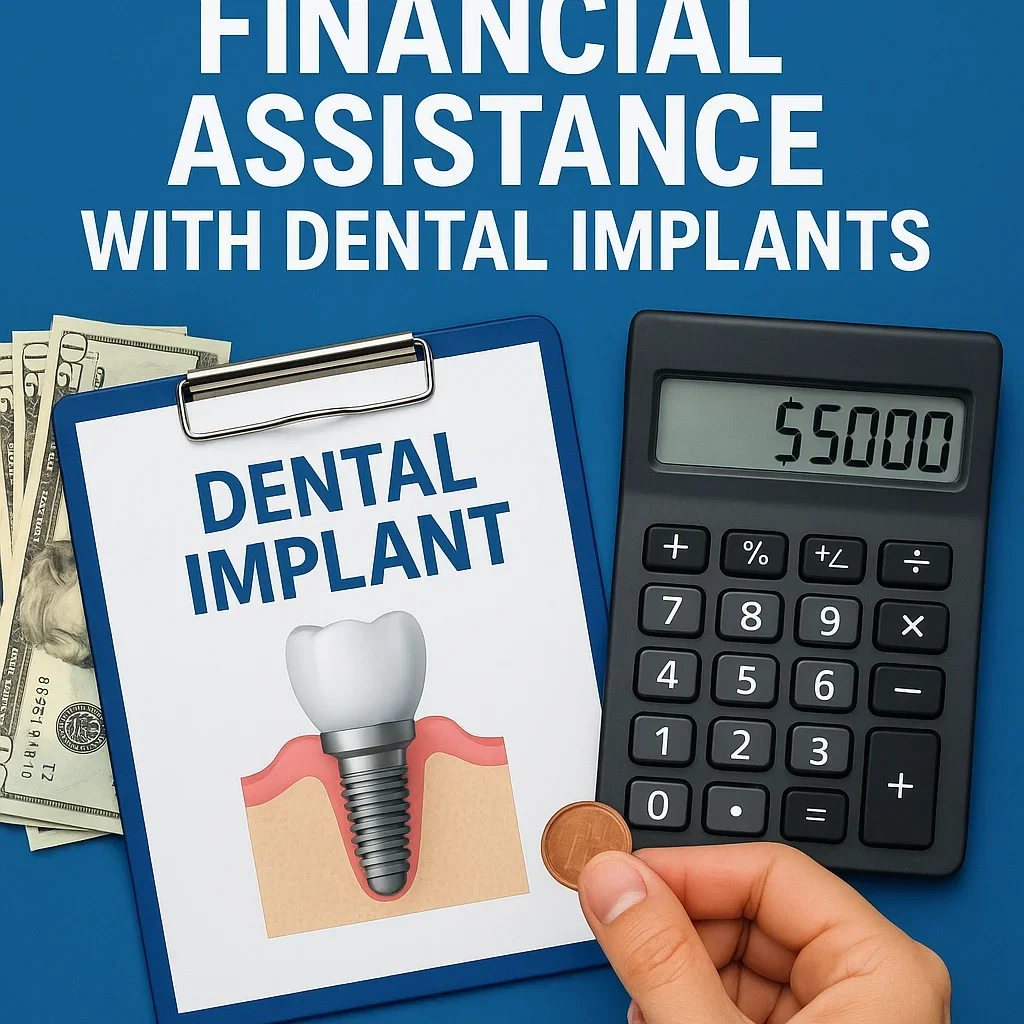
Tips to Reduce Dental Implant Costs Without Compromising Quality
Many individuals searching for financial assistance with dental implants want to know how to reduce costs without sacrificing safety, comfort, or long-term durability. While implants are a significant investment, there are numerous evidence-based strategies that can help you save money and still receive high-quality, long-lasting treatment. This section provides a deeply detailed guide to practical cost-reduction methods, professional negotiation tips, and smart planning strategies that dental patients can use before, during, and after implant treatment. 😄
Why Cost-Reduction Matters in Implant Dentistry
Dental implants offer exceptional long-term value, but the upfront costs may be difficult to manage for individuals without insurance or access to affordable financing. Reducing expenses intelligently can help patients avoid unsafe shortcuts or low-quality providers. The goal is not to choose the cheapest option, but rather to find sustainable, medically sound ways to lower the financial burden while maintaining treatment excellence.
Patients who utilize the following strategies often lower their overall costs by 15–40%, making implants far more accessible. These savings can work alongside other forms of financial assistance with dental implants, such as grants, nonprofit support, financing, and low-income clinic programs.
Smart Ways to Reduce Dental Implant Costs
Success in cost reduction requires a combination of research, negotiation, timing, and strategic decision-making. The following are the most effective and reliable ways to save money on implant treatment.
1. Compare Multiple Treatment Plans
Every dental provider uses different materials, brands, and surgical techniques. These differences directly affect cost. Obtaining at least 2–3 treatment plans helps you compare:
- The type and brand of the implant used
- The need for bone grafting or sinus lift procedures
- The type of crown (zirconia, porcelain, or hybrid materials)
- Additional surgical steps
This comparison allows you to identify overpriced services and choose the provider who offers the best value—not just the lowest cost. This is one of the most effective ways to secure financial assistance with dental implants indirectly by reducing unnecessary expenses.
2. Explore Dental Schools and Residency Clinics
Dental school clinics and hospital residency programs offer significantly reduced prices because treatments are performed by supervised dental students or residents. These clinics maintain high clinical standards while charging only a fraction of private practice costs. In many cases, patients save 50–70% on implant-related procedures.
This makes academic clinics a key source of practical financial assistance with dental implants for patients seeking affordable, high-quality care.
3. Choose Cost-Effective Treatment Alternatives When Appropriate
In some cases, alternative implant approaches can reduce costs without compromising treatment success. Examples include:
- Mini implants for patients with limited bone
- Same-day implant systems in appropriate cases
- Overdentures supported by 2–4 implants instead of full-arch restorations
These options may provide the same functional improvements at a lower price point. However, suitability depends on bone structure, bite alignment, and overall oral health.
Strategic Planning to Lower Implant Expenses
Beyond direct discounts or alternative procedures, strategic treatment planning can significantly reduce total costs.
1. Schedule Your Treatment Across Two Benefit Years
If you have dental insurance, spreading implant treatment across two calendar years may allow you to use your annual maximum twice. This strategy can potentially double the insurance contribution and lower out-of-pocket costs substantially.
This approach blends insurance optimization with other forms of financial assistance with dental implants to create a balanced funding strategy.
2. Ask About Clinic Membership Plans
Many dental clinics offer yearly membership programs that include:
- Discounted restorative procedures
- Reduced implant consultation fees
- Lower prices on CT scans or imaging
- Special implant package pricing
These membership plans can reduce thousands of dollars in total treatment costs and provide predictable pricing for follow-up care.
3. Avoid Unnecessary Add-On Procedures
Some treatment plans include optional components that may not be medically required. Ask your dentist which steps are essential and which ones are enhancements. Removing optional add-ons such as premium crown upgrades or complex grafting (when not needed) can meaningfully control overall costs.
Negotiation Techniques That Frequently Save Patients Money
Patients often underestimate how much power they have when discussing treatment pricing. Using the right approach can lead to meaningful savings.
- Ask about cash discounts: Some clinics reduce prices for upfront payments.
- Request bundled pricing: Full-mouth or multi-implant cases often qualify for package discounts.
- Bring competing quotes: Clinics frequently match or beat competitor pricing.
- Discuss staged treatment: Completing implants in phases can reduce immediate financial pressure.
These negotiation methods function as practical financial assistance with dental implants, allowing patients to lower expenses while maintaining top-tier care.
Additional Practical Tips to Minimize Implant Costs
Here are several more ways to reduce the financial burden without compromising treatment quality:
- Consider generic implant brands with proven success rates instead of premium-name brands.
- Ensure proper oral hygiene to prevent complications requiring additional procedures.
- Select biocompatible but cost-effective crown materials when appropriate.
- Combine multiple procedures in one surgical visit to reduce anesthesia and facility fees.
These strategies complement other forms of financial assistance with dental implants by emphasizing efficiency, prevention, and value-based decision-making.
Get Professional Guidance Before Making Financial Decisions
Cost-reduction is not just about comparing prices—it requires understanding your treatment needs and selecting the safest, most appropriate solutions. For accurate advice and personalized planning, consider consulting directly with professionals. You may contact experienced implant providers through the
Redent Klinik Contact Page, where you can receive tailored guidance and explore affordable treatment options with confidence.
In summary, reducing implant costs is possible with careful research, strategic planning, and thoughtful financial choices. By combining smart budgeting with professional advice, you can achieve transformative oral health while keeping expenses manageable and sustainable. 😁