
Have you ever dreamed of regaining your confident smile but felt discouraged by the high cost of dental implants? You’re not alone. For many patients, the idea of getting dental implants feels financially out of reach — but with financing implants options now widely available, achieving a beautiful, functional smile is easier and more accessible than ever before. 🦷💳
Dental implants are one of the most effective, long-lasting solutions for replacing missing teeth. They restore not only your appearance but also your ability to eat, speak, and smile without hesitation. However, the initial cost can be intimidating for many people. That’s why understanding financing implants options is essential. Instead of paying thousands of dollars upfront, you can break the cost into smaller, manageable monthly payments that fit your budget — making dental care more inclusive for everyone.
At its core, financing implants means spreading out the cost of dental implant treatment over time, similar to how car loans or mortgages work. This allows patients to begin treatment immediately without waiting years to save up. Many dental clinics, including specialized centers like Redent Klinik Contact Page, offer in-house payment plans or partner with third-party financing companies to make the process smooth and stress-free. With flexible options, low interest rates, and fast approval, financing ensures that cost doesn’t stand in the way of oral health.
One of the key reasons people choose financing implants is because dental implants aren’t just a cosmetic choice — they’re a medical necessity in many cases. Missing teeth can lead to bone loss, jaw misalignment, and even digestive issues. By opting for a payment plan, patients can act quickly to preserve oral structure and avoid further complications. 🦷 This proactive approach doesn’t just save money in the long term; it enhances overall health and confidence.
Let’s break down how much implants typically cost and how financing can help. On average, a single dental implant in the United States costs between $2,000 and $6,000, depending on factors such as bone grafting, abutments, and crown materials. For full-mouth restorations, prices can rise to $20,000–$45,000. Without financing, many patients would need to delay or forego treatment entirely. But with a financing plan, the cost can be divided into monthly installments ranging from $100 to $400 — depending on the term length and interest rate. This transforms what was once a daunting investment into a realistic and achievable goal.
Moreover, the benefits of financing implants extend beyond affordability. It also provides patients the ability to choose higher-quality materials and advanced procedures. Instead of settling for less durable solutions like dentures or bridges, financing allows you to invest in premium implant systems that last a lifetime. Think of it as a long-term investment in yourself — your smile, your health, and your self-esteem. 🌟
In recent years, the dental industry has embraced modern financial solutions, making it easier for everyone to access care. Many clinics now use digital approval systems where patients can apply for financing online and get a decision in minutes. Options such as CareCredit, LendingClub, and Proceed Finance offer zero-interest promotional periods, helping patients pay over time without extra costs. Additionally, some financing programs even accommodate lower credit scores, ensuring inclusivity for all demographics.
To ensure your financing experience goes smoothly, it’s important to research your options and ask questions before committing. Find out the interest rates, loan duration, and any hidden fees. The best financing implants programs are transparent, flexible, and designed to work in your favor. A trustworthy dental provider will also guide you through each step — explaining your treatment plan, payment schedule, and expected outcomes clearly.
For those who prefer additional support, organizations such as the American Dental Association provide resources about implant safety, dental standards, and patient financing rights. Using these resources can help you make informed decisions and ensure you’re partnering with reputable providers.
Ultimately, financing implants isn’t just about paying for dental care — it’s about reclaiming quality of life. Whether you’re replacing one tooth or a full arch, financial accessibility ensures you no longer have to choose between your health and your wallet. By spreading payments over time, you can enjoy the confidence of a natural smile today while paying comfortably tomorrow. 😁
So, if you’ve been delaying your implant treatment due to cost concerns, it’s time to rethink your options. Explore financing opportunities, consult trusted clinics, and take control of your oral health journey. With the right plan, you can make your dream smile a reality — without breaking the bank. 💙
Understanding the True Cost of Dental Implants 💰
Many patients hesitate to undergo dental implant treatment because they believe it’s too expensive. However, understanding the true cost of implants — and how financing implants can make them affordable — is the first step toward achieving lasting oral health and confidence. Dental implants are not merely cosmetic; they are a medical necessity for anyone suffering from missing teeth, bone loss, or bite issues. By breaking down the costs and exploring financing options, you can make an informed, financially smart decision. 🦷
What Determines the Cost of Dental Implants?
The total cost of a dental implant procedure can vary significantly based on several factors. The complexity of the surgery, the quality of materials, and the expertise of the dental team all play important roles. For example, a single titanium implant post typically costs between $1,500 and $3,000, while the abutment and crown can add another $1,000–$2,500. If bone grafting or sinus lift surgery is required, that can increase costs further.
Other variables that influence price include:
- Location: Dental clinics in major cities usually charge more than those in smaller towns.
- Technology: Clinics using 3D imaging, digital scanners, and guided implant surgery may have higher fees due to advanced equipment costs.
- Experience of the dentist: Specialists with advanced training often command higher fees, but their precision and long-term success rates justify the cost.
Once you understand what goes into the pricing, you can evaluate whether financing implants is the right choice to make these advanced treatments accessible without delay.
Average Price Breakdown by Procedure Type
Let’s explore the typical price ranges you might encounter in the U.S. and Europe. This table provides a general overview:
| Treatment Type | Average Cost (USD) | Estimated Monthly Payment (With Financing) |
|---|---|---|
| Single Tooth Implant | $2,500 – $4,000 | $100 – $150/month |
| Multiple Implants | $7,000 – $15,000 | $250 – $400/month |
| Full Mouth Restoration (All-on-4 or All-on-6) | $20,000 – $45,000 | $400 – $800/month |
With these estimates, it’s clear why financing implants has become such a crucial solution for patients. Instead of saving for years or sacrificing quality, you can enjoy top-tier dental care immediately and pay over time. Clinics like Redent Klinik Contact Page specialize in offering flexible payment plans tailored to each patient’s needs.
Hidden Costs to Consider
One common mistake patients make is focusing only on the implant itself while overlooking associated costs. These may include:
- Initial consultation and 3D scans: $100–$300
- Bone graft or sinus lift: $500–$2,500
- Temporary dentures or healing caps: $200–$600
- Aftercare and maintenance visits: $100–$300 per visit
These additional services can add up, but they’re essential for long-term success. By opting for financing implants, patients can cover these expenses gradually without overwhelming their budget.
Why Dental Implants Are Worth the Investment
Although implants may seem expensive initially, they offer unparalleled long-term value. Unlike dentures or bridges, which often need replacement every 5–10 years, dental implants can last a lifetime with proper care. They also preserve bone density, improve chewing efficiency, and prevent facial sagging — benefits that are priceless over time.
Here’s why the investment pays off:
- Durability: Implants integrate with the jawbone, creating a permanent and stable foundation.
- Functionality: They restore natural bite force, allowing you to eat comfortably and enjoy your favorite foods.
- Confidence boost: No more worries about slipping dentures or self-conscious smiles.
- Health preservation: They prevent bone loss and maintain facial structure.
When viewed over decades, financing implants becomes one of the most cost-effective health investments you can make. Instead of paying repeatedly for replacements, you invest once and enjoy lifelong benefits. 🌟
Comparison: Dental Implants vs. Other Restorations
| Feature | Dental Implants | Bridges | Dentures |
|---|---|---|---|
| Durability | 20+ years to lifetime | 5–10 years | 3–7 years |
| Bone Preservation | ✅ Excellent | ⚠️ Limited | ❌ None |
| Comfort | Feels natural | Moderate | Often uncomfortable |
| Cost Over Time | Affordable with financing | Frequent replacements | High maintenance |
This comparison demonstrates why financing implants can be more practical in the long term than choosing temporary solutions. Patients who commit to implants often experience improved oral health, better digestion, and increased self-confidence — benefits that justify every dollar spent.
Expert Insights and Reliable Sources
According to the American Dental Association, dental implants are among the most reliable procedures in modern dentistry, with success rates exceeding 95%. Their research also emphasizes that financing options allow broader access to essential treatments, helping patients avoid the long-term costs of neglecting oral health. Understanding these facts gives you a clearer view of why affordable plans are key to sustainable dental care.
Final Thoughts: Making the Right Financial Decision
When you understand the true cost of dental implants and the benefits of flexible payment plans, the decision becomes clear. Rather than viewing implants as an expense, think of them as an investment in your well-being. By leveraging financing implants, you can restore your smile, boost your confidence, and enjoy a higher quality of life without financial strain. The key is to partner with a reputable clinic that offers transparency, reasonable rates, and expert care — ensuring your journey toward a perfect smile is as smooth and rewarding as possible. 😁
How Financing Implants Makes Dental Care Accessible to Everyone
For many people, the dream of having a beautiful and healthy smile feels financially impossible. Dental implants, while offering unmatched durability and aesthetics, often come with a significant price tag. However, the emergence of financing implants options has completely changed the landscape of modern dentistry. By offering flexible payment plans and affordable financing terms, dental clinics are now helping patients from all financial backgrounds access top-quality treatment without delay. 💳🦷
Breaking Down Financial Barriers to Oral Health
Historically, dental implants were considered a luxury that only high-income individuals could afford. The high upfront costs made many patients settle for temporary solutions such as dentures or bridges. Today, the availability of financing implants means that anyone — from students and retirees to working professionals — can begin treatment immediately and pay gradually. This shift has made oral health far more inclusive and equitable across different income groups.
The fundamental purpose of implant financing is to reduce the burden of paying the full amount upfront. Most dental practices now collaborate with specialized lenders that provide low-interest or even 0% interest plans for qualified applicants. Some clinics even offer in-house payment systems, allowing patients to bypass banks entirely and pay directly through the dental office over 6–36 months. This flexibility empowers patients to make decisions based on health needs, not financial limitations.
The Emotional and Social Impact of Accessible Financing
It’s important to understand that the benefits of financing implants extend beyond finances. The ability to restore a natural-looking smile can drastically improve self-esteem, confidence, and mental well-being. People who have been hiding their smiles for years suddenly rediscover joy in social interactions, work presentations, and daily life. 😁
According to multiple studies published by the American Dental Association, individuals who replace missing teeth with dental implants often experience better emotional health and career success. Accessibility through financing ensures that everyone, regardless of income, can enjoy these life-changing advantages. It transforms oral healthcare from being a privilege into a basic, attainable necessity.
How Financing Programs Work in Dental Clinics
The process of applying for financing implants is generally straightforward and quick. After your initial consultation, the dental office provides a cost estimate and financing options. You’ll typically fill out a short online application that checks your credit history and income. Many financing companies provide instant approvals, meaning you can start your dental procedure immediately. 🖊️
Common Types of Financing Options
- In-house payment plans: Offered directly by the dental clinic, these are ideal for patients who want to avoid third-party lenders. They usually involve a small down payment and fixed monthly installments.
- Healthcare credit cards: Companies such as CareCredit and Alphaeon Credit offer revolving credit lines specifically for medical and dental expenses, often with promotional zero-interest periods.
- Personal loans: For patients with established credit, personal loans can cover the cost of implants and allow flexible repayment terms of up to 60 months.
- Third-party financing providers: Lenders like LendingClub, Proceed Finance, and Sunbit partner directly with clinics to offer customized implant payment plans.
Each of these options can be tailored to your personal financial situation, ensuring that cost is never a reason to delay crucial oral care. By using financing implants responsibly, patients can manage treatment expenses just like any other monthly bill — predictably, safely, and efficiently.
Accessibility for Patients with Low or Moderate Income
One of the most powerful aspects of modern dental financing is inclusivity. Clinics and lenders have recognized that not everyone has perfect credit, so many now provide subprime options with flexible approval standards. Patients with limited income or credit history can still qualify for financing implants through programs that evaluate employment status, steady income, or co-signers rather than relying solely on credit scores.
Some public organizations and nonprofit initiatives even assist with partial grants or subsidized financing programs for dental treatments. These initiatives ensure that financial hardship doesn’t lead to compromised oral health. For instance, community clinics and dental schools often provide affordable implant services with extended payment plans to make the process even more accessible. 🌍
Case Example: Real-Life Affordability
Imagine a patient who needs two dental implants priced at $8,000 total. Without financing, this patient would need to pay the full amount upfront — an impossible task for most families. But through a 24-month financing plan with 0% interest, the patient would pay roughly $333 per month, turning an overwhelming cost into a manageable, realistic goal. This example illustrates how financing implants bridges the gap between necessity and affordability.
The Role of Dental Clinics in Promoting Accessibility
Forward-thinking clinics, such as Redent Klinik Contact Page, actively educate patients about financing opportunities. They believe everyone deserves access to high-quality implants, regardless of budget. By offering transparent pricing, pre-approval support, and interest-free options, they ensure that treatment plans fit seamlessly into the patient’s financial comfort zone.
Additionally, many dental offices now provide free financial consultations alongside treatment assessments. During these sessions, coordinators help patients compare interest rates, terms, and payment durations. This guidance builds trust and ensures that patients understand every aspect of their commitment before signing. Transparency and compassion have made financing implants one of the most appreciated innovations in modern dentistry.
Why Accessibility Equals Better Public Health
When dental care becomes financially accessible, communities thrive. Affordable implant options encourage patients to address oral issues early, preventing serious health complications like infections or bone deterioration. Accessibility leads to increased awareness about oral hygiene, routine checkups, and overall wellness. In this sense, financing implants doesn’t just help individuals — it supports public health at large.
By breaking down cost barriers, society benefits from fewer oral diseases, improved nutrition, and better psychological well-being. The transformation from a high-cost, exclusive procedure to an inclusive, accessible treatment marks a major milestone in healthcare equality. 🌟
Final Thoughts: A Smile Within Everyone’s Reach
Dental implants have revolutionized restorative dentistry, but financing implants has revolutionized access to that transformation. By enabling patients to pay over time, these financial solutions make sure no one has to compromise on health or confidence. Whether you’re a student, a parent, or a retiree, flexible financing empowers you to invest in yourself — one affordable payment at a time. With proper guidance, transparent terms, and supportive clinics, achieving your dream smile is not a privilege anymore; it’s a possibility for everyone. 💙
Top Financing Options for Dental Implants in 2025
As dental technology continues to evolve, the financial tools that support treatment have also become more sophisticated. Today, there are more ways than ever to make your dream smile affordable through financing implants. Whether you’re looking for zero-interest plans, low monthly payments, or government-supported programs, 2025 offers a variety of solutions tailored to every patient’s needs and budget. 💳🦷
Understanding these options allows you to make the best financial decision without compromising the quality of care. In this section, we’ll explore the most effective and trusted financing implants programs available in 2025 — from in-house dental office plans to third-party credit providers and specialized healthcare loans.
1. In-House Dental Financing Plans
Many dental clinics now provide direct, in-house financing solutions to help patients start their treatments right away. With these plans, you make payments directly to the clinic, bypassing banks or third-party lenders. The main advantage is flexibility — most in-house plans have minimal credit requirements, lower interest rates, and easy approval processes.
Advantages of In-House Financing
- 🦷 Instant approval: No long credit checks — you can often get approved during your consultation visit.
- 💰 Low or no interest: Many dental offices offer 0% interest for short-term payment plans.
- 📅 Customizable schedules: You can choose monthly, biweekly, or even quarterly payments.
- 💳 No third-party involvement: You deal directly with your dentist, simplifying the process.
For example, clinics like Redent Klinik Contact Page offer personalized plans designed to match your treatment cost and income level. This ensures that high-quality dental care is accessible to all, making financing implants stress-free and transparent.
2. Healthcare Credit Cards
Healthcare credit cards have become one of the most popular options for financing implants in 2025. Companies such as CareCredit, Alphaeon Credit, and Wellness Financing specialize in medical and dental expenses, offering exclusive terms and 0% promotional periods.
How They Work
After applying online or in the dental office, you receive a credit line dedicated to healthcare. You can then use the card to cover all implant-related costs, including surgery, anesthesia, follow-up visits, and maintenance. Repayment terms vary, but most cards offer 6–24 months of interest-free financing, followed by standard low-interest rates.
These cards are ideal for patients with moderate to good credit who prefer predictable monthly payments and flexibility. Using such cards also helps you build a positive credit history while managing dental expenses responsibly.
3. Third-Party Financing Companies
Specialized third-party financing providers are another excellent choice for patients seeking tailored financing implants options. Companies like Proceed Finance, LendingClub Patient Solutions, Sunbit, and GreenSky collaborate directly with dental clinics to offer fixed-rate, long-term installment loans.
Key Benefits
- 📈 High approval rates: Even patients with lower credit scores can qualify for flexible terms.
- 🕐 Extended payment periods: Terms can range from 12 to 72 months, depending on your preference.
- 💵 Large loan amounts: Suitable for full-mouth restorations or advanced procedures costing $20,000 or more.
- 🔒 Transparent contracts: No hidden fees or prepayment penalties.
These lenders are designed to make dental financing as easy as auto loans or mortgages, ensuring patients can undergo treatment without financial strain. By leveraging financing implants programs from trusted providers, you gain both affordability and peace of mind.
4. Personal Loans for Dental Treatments
For patients who prefer full control over their financial arrangements, personal loans can be a great option. Many banks and online lenders now categorize dental and medical treatments as eligible loan purposes, allowing borrowers to access competitive interest rates and quick funding. 🏦
The best part is flexibility — personal loans don’t require clinic partnerships, meaning you can shop for the best rates and apply independently. Depending on your credit score, you can secure rates as low as 6% APR with repayment terms up to 60 months. These loans are especially useful for patients undergoing comprehensive implant treatments costing over $10,000.
5. Government and Community Support Programs
Government-backed healthcare programs and nonprofit organizations have also begun recognizing the importance of financing implants as part of broader healthcare accessibility. While dental implants are not always covered under traditional insurance, some countries and states provide partial subsidies or low-interest loans for essential oral surgeries.
Additionally, dental schools and community health centers often offer low-cost implant programs supervised by licensed professionals. Patients receive care at a reduced price and can still use financing options to spread the cost further. These initiatives have become a lifeline for individuals with limited income or medical coverage. 🌍
6. Insurance-Linked Financing Plans
While most insurance plans don’t fully cover implants, some now include special partnerships with financing providers to make treatments more manageable. Patients can combine insurance reimbursements with financing implants to minimize upfront costs. For instance, your insurance might pay 30% of the total, while a financing plan covers the remaining 70% through affordable monthly payments.
Example Breakdown
If your total treatment cost is $9,000, insurance might contribute $2,700. The remaining $6,300 could then be financed over 24 months for approximately $262 per month — transforming an overwhelming lump sum into an easy, structured payment plan.
7. Online Pre-Approval and Instant Decision Tools
In 2025, the digitalization of financing implants has made the process faster and more transparent than ever. Many providers offer online pre-approval tools where patients can check eligibility and estimate payments without affecting their credit score. These tools also compare multiple lenders, giving you the power to choose the most competitive option in minutes.
Such systems provide clarity, convenience, and confidence — ensuring you can make an informed decision before stepping into the dental office. 🖥️
8. Comparing the Options: Which One Is Best for You?
| Financing Type | Interest Rate | Approval Speed | Best For |
|---|---|---|---|
| In-House Plans | 0% – 6% | Instant | Low credit or flexible terms |
| Healthcare Credit Cards | 0% (promo) – 18% | 1–2 days | Short-term, smaller treatments |
| Third-Party Lenders | 5% – 14% | Same day | Comprehensive implant treatments |
| Personal Loans | 6% – 12% | 1–3 days | Patients with strong credit |
Final Thoughts: The Future of Dental Financing
The future of financing implants is bright, with more clinics and lenders collaborating to make life-changing dental care attainable for everyone. Whether through in-house plans, healthcare credit cards, or digital lenders, patients now have full control over how they pay for treatment. This shift represents a fundamental change in healthcare accessibility — one where your smile is no longer limited by your financial situation.
Before choosing a plan, consult your dental provider and compare multiple options to find the best balance between affordability, flexibility, and transparency. With smart financial planning and professional guidance, you can achieve the perfect smile you deserve — without financial stress. 😁
Monthly Payment Plans: Budget-Friendly Ways to Restore Your Smile
For many patients, the biggest obstacle to getting dental implants is the high upfront cost. However, modern financing implants solutions have introduced flexible monthly payment plans that allow you to pay for your treatment gradually — without sacrificing quality or comfort. These plans are designed to make world-class dental care attainable for everyone, turning what was once an expensive procedure into an affordable, step-by-step journey toward a healthy and confident smile. 🦷💳
Understanding Monthly Payment Plans for Dental Implants
Monthly payment plans operate similarly to any installment-based financing system. Instead of paying the full amount upfront, you divide the total cost of your dental implant treatment into smaller, fixed payments over several months or years. Depending on your financial situation and credit history, payment periods can range from 6 to 72 months, allowing complete control over your budget. The flexibility of these plans is the cornerstone of financing implants — they empower patients to access essential care without delay or financial strain.
For example, if your total treatment cost is $6,000, you could opt for a 24-month payment plan at 0% interest, paying just $250 per month. Some clinics even allow for customized schedules that align with paydays or seasonal income variations, ensuring that dental care fits naturally into your lifestyle. By making treatment affordable and predictable, monthly payment systems have become the preferred approach for millions of implant patients worldwide.
Types of Monthly Payment Plans Available
There are several structures for monthly implant financing, and understanding their differences helps you choose the best option. Let’s break them down:
1. Fixed-Rate Installment Plans
These are the most common type of financing implants payment plans. You agree on a fixed monthly payment, and your interest rate remains constant throughout the term. This predictability ensures there are no surprises — you always know how much you owe and when it’s due. It’s ideal for patients who prefer stability and clear budgeting.
2. Deferred-Interest Plans
Deferred-interest plans are great for short-term financing. They allow you to pay no interest if the full balance is settled within a promotional period, usually 6 to 18 months. However, if the balance isn’t fully paid off by the deadline, interest applies retroactively from the purchase date. These plans are best suited for patients confident they can pay off the balance quickly.
3. Income-Based Payment Programs
Some modern clinics and financing partners offer payment programs that scale according to your income. If you experience financial difficulties, your payments can be adjusted temporarily, preventing default or penalty fees. This compassionate approach has made financing implants more inclusive for individuals with varying financial situations.
Example Payment Schedule for a Single Dental Implant
| Financing Term | Interest Rate | Monthly Payment | Total Cost |
|---|---|---|---|
| 12 Months (0% Interest) | 0% | $416 | $5,000 |
| 24 Months (Low Interest) | 6% | $221 | $5,304 |
| 36 Months (Standard Plan) | 9% | $159 | $5,724 |
This sample table shows how monthly payments can be adapted to your preferred pace and financial situation. As seen, spreading the cost across several months makes high-quality dental implants far more accessible without overwhelming your budget.
Benefits of Monthly Payment Plans
Monthly payment systems are at the heart of why financing implants is such a powerful option for patients. Here are the most significant advantages:
- Affordability: Small, fixed payments make it easy to plan finances without large upfront costs.
- Immediate treatment: You can start your procedure right away instead of waiting to save enough money.
- Flexible options: Plans are customizable according to treatment length, interest rate, and income level.
- No compromise on quality: Financing enables access to premium implant systems and materials that last a lifetime.
- Improved credit score: Consistent, timely payments can positively impact your credit history.
Monthly installment plans are also psychologically easier to manage. Paying $200 per month feels much lighter than committing to a $5,000 lump sum — and this mental comfort often motivates patients to complete their treatment confidently and on time. 😁
Choosing the Right Financing Partner
When selecting a provider for your monthly payment plan, it’s crucial to compare terms, interest rates, and hidden fees. Some dental clinics partner with well-known third-party lenders like CareCredit, Sunbit, and LendingClub, while others offer in-house financing. Clinics such as Redent Klinik Contact Page are excellent examples of dental offices that make financing implants simple and transparent through flexible, patient-friendly systems.
Key Factors to Evaluate Before Signing
- 📜 Check for any origination or processing fees.
- 💡 Ask about penalties for early repayment or missed payments.
- 🔎 Review the total interest cost over time — sometimes, low monthly payments can mean higher overall expenses.
- 🗓️ Ensure the payment term aligns with your income cycle and lifestyle.
Combining Insurance and Financing
If your dental insurance covers part of the implant procedure, you can combine it with a monthly payment plan to minimize costs. For example, insurance might cover the crown and abutment, while the implant post is financed through a payment plan. This hybrid approach reduces both upfront expenses and total monthly obligations, offering the best of both worlds.
Additionally, financing providers may allow you to prepay certain portions of your treatment after receiving insurance reimbursements — effectively shortening the repayment term and saving on interest. This level of flexibility is another reason why financing implants has become the most practical option for patients worldwide.
Why Monthly Plans Are the Future of Dental Financing
In 2025 and beyond, the rise of digital approval systems and AI-driven financial assessments has made monthly dental financing faster and smarter. Patients can now apply online, receive instant approval, and begin treatment on the same day. The seamless integration of healthcare and fintech has redefined patient accessibility and convenience. 🌐
Ultimately, monthly payment plans eliminate financial hesitation and open the door to better oral health for all. They ensure that no one has to compromise on comfort, confidence, or care due to cost. By leveraging financing implants strategically, you can restore your smile, improve your quality of life, and enjoy peace of mind knowing your payments are predictable, fair, and within reach. 💙
Whether you choose an in-house plan or a trusted third-party lender, remember that your smile is an investment — not an expense. Monthly payment systems make that investment easier, smarter, and more achievable than ever.
Insurance Coverage and Financing Implants: What You Need to Know
When planning for dental implants, one of the most common questions patients ask is, “Will my insurance cover it?” Unfortunately, the answer isn’t always straightforward. Dental insurance policies vary widely, and most traditional plans still categorize implants as elective procedures rather than essential ones. However, with the rise of financing implants options, patients now have far more flexibility in managing their dental expenses — even when insurance coverage is limited or nonexistent. Understanding how insurance interacts with financing plans can help you make informed decisions that balance cost, quality, and convenience. 🦷💡
Why Insurance Rarely Covers Full Implant Costs
Traditional dental insurance is designed primarily to cover preventive and basic restorative care, such as cleanings, fillings, and extractions. High-value procedures like implants, bone grafts, or sinus lifts often exceed policy limits or are excluded altogether. This is because many insurance providers still consider dental implants as a “cosmetic” solution, despite their functional and health benefits.
For instance, while an insurance policy may cover a bridge or denture replacement, it may deny coverage for a titanium implant post or crown. The good news is that partial coverage is becoming more common. Some insurers are beginning to recognize the medical necessity of implants, particularly when tooth loss affects jawbone stability or speech. In such cases, insurance may reimburse a portion of the treatment — typically between 10% and 50% of eligible costs. The rest can be managed through financing implants programs, ensuring that your out-of-pocket expenses remain manageable.
How to Check Your Implant Coverage
Before starting treatment, it’s crucial to review your dental insurance policy carefully. Here are some practical steps to take:
- 📜 Request a pre-authorization: Your dentist can submit a treatment plan to your insurance company to determine which parts of the implant procedure are covered.
- 💰 Check annual maximums: Many plans cap dental benefits at $1,000–$2,000 per year, which may not cover even a single implant fully.
- 🦷 Ask about alternative procedure coverage: Some insurers reimburse the equivalent cost of a bridge or denture instead of a full implant.
- 🏥 Review medical insurance overlap: In cases of trauma or disease-related tooth loss, your medical insurance might contribute as well.
Once you’ve determined your benefits, you can then calculate the remaining amount and explore financing implants options for the uncovered portion. Combining both resources can drastically reduce financial pressure and allow you to start treatment without delay.
Combining Insurance and Financing: The Smart Way
One of the best strategies for managing dental implant costs is to blend insurance coverage with a structured financing plan. Here’s how this hybrid approach works:
- Insurance pays the covered portion. For example, if your implant treatment costs $6,000 and your insurer covers $1,500, the remaining $4,500 becomes your responsibility.
- Financing implants covers the balance. You can apply for a low-interest or zero-interest payment plan to divide the remaining balance into manageable monthly installments.
- Enjoy complete treatment without financial stress. Instead of delaying your procedure, you can proceed immediately with confidence and comfort.
For example, suppose your insurance covers $1,500 and you finance the remaining $4,500 over 24 months with a 6% interest rate. Your monthly payment would be approximately $199, making premium dental care affordable and predictable. This synergy between insurance and financing is why patients today are choosing financing implants more than ever before.
Understanding Partial Coverage Options
Even when your insurance doesn’t fully cover the implant itself, certain stages of the treatment may still qualify for reimbursement. These can include:
- 📋 Diagnostic tests such as X-rays, CT scans, and oral exams
- 🧩 Bone grafts or sinus lifts (when medically necessary)
- 🧠 Surgical procedures related to tooth loss from accidents or disease
- 💎 Custom crowns, abutments, or prosthetic adjustments
While the implant post itself may not be reimbursed, these partial benefits can still significantly lower total costs. The remaining balance can then be handled through financing implants programs that align with your financial situation. This integrated approach ensures you maximize insurance benefits while minimizing out-of-pocket payments.
HSA, FSA, and Tax Advantages for Implant Financing
In addition to insurance, patients can utilize tax-advantaged accounts such as Health Savings Accounts (HSA) or Flexible Spending Accounts (FSA) to cover implant-related expenses. Contributions to these accounts are made pre-tax, which effectively reduces your total cost. For example, if you use $2,000 from an HSA to pay for part of your implants, you save the equivalent of your income tax on that amount — often 20–30% depending on your tax bracket. 🧾
Many patients use these funds in combination with financing implants to lower monthly payments further. This strategy provides triple benefits — insurance contribution, tax savings, and flexible payment management.
Pro Tip:
If your insurance plan renews annually, schedule your implant treatment strategically. For multi-stage procedures, start one phase late in the year and continue the next in the new year to maximize two annual coverage limits. Pairing this tactic with financing gives you the best cost efficiency possible.
Choosing the Right Clinic for Insurance-Friendly Financing
It’s essential to work with dental clinics that understand both insurance billing and patient financing systems. Clinics such as Redent Klinik Contact Page are excellent examples of providers that streamline this process. Their staff helps patients navigate coverage details, handle claim submissions, and connect them with financing options that fit perfectly with insurance reimbursements.
Additionally, reputable clinics provide transparency about what insurance will or won’t cover, ensuring there are no hidden surprises. They also partner with trusted financing platforms that allow patients to apply online and get instant decisions. This integration of care, insurance, and payment flexibility represents the future of patient-centered dentistry.
When Financing Is a Better Option Than Insurance
In some cases, relying solely on insurance may not be the most practical approach. When coverage is minimal or reimbursement delays are long, it’s often more efficient to move forward using financing implants. Financing allows immediate access to treatment, especially in cases of urgent tooth replacement or severe bone loss that could worsen with time. By acting promptly, you avoid further dental complications and potential additional costs in the future.
Final Thoughts: The Perfect Balance Between Coverage and Care
Navigating dental insurance can be complex, but with the right combination of insurance benefits and financing implants programs, high-quality dental care becomes both attainable and affordable. The goal is not just to find coverage — it’s to create a strategy that minimizes financial stress while ensuring the best treatment outcome. By leveraging all available resources — from insurance reimbursements to flexible financing plans and tax advantages — you can protect your oral health without overextending your finances.
And remember, dental implants aren’t just about restoring your smile; they’re about restoring your quality of life. Combining smart financial planning with professional care ensures you can enjoy lasting comfort, confidence, and peace of mind — one manageable payment at a time. 💙
Comparing Personal Loans vs. In-House Financing for Implants
When it comes to paying for dental implants, one of the most common dilemmas patients face is choosing between personal loans and in-house payment plans. Both options can help make your dream smile affordable, but they work in very different ways. Understanding how each system functions, what their advantages are, and when to use them will help you make the best decision for your financial situation. This section will explore how financing implants through personal loans compares to in-house dental financing, ensuring you select the most cost-effective and stress-free route. 🏦🦷
How Personal Loans Work for Dental Implants
Personal loans are among the most flexible and widely available forms of financing. You borrow a specific amount from a bank, credit union, or online lender and repay it over a fixed period with interest. The loan funds are usually deposited directly into your bank account, allowing you to pay your dentist in full. This means you can shop around for the best rates and work with any dental clinic you prefer. Many patients choose personal loans as their primary method of financing implants because of the autonomy and transparency they offer.
Advantages of Using Personal Loans
- 💳 Freedom of choice: You can use the funds at any dental clinic or for any part of your implant treatment — surgery, crowns, or follow-ups.
- 📈 Predictable repayment: Fixed interest rates and monthly payments make it easy to budget.
- 🕒 Fast approval process: Many lenders offer same-day or next-day funding after approval.
- 🏦 No clinic involvement: You negotiate directly with the lender, ensuring privacy and control.
Personal loans are particularly suitable for patients undergoing extensive dental work, such as full-mouth restorations or multiple implants, which can range from $10,000 to $40,000. Because they can cover large sums, they provide financial independence while allowing you to spread costs over 24 to 60 months.
How In-House Financing Works
In-house financing is a direct arrangement between the dental clinic and the patient. Instead of working with banks or third-party lenders, the clinic offers you a customized payment plan, often with little or no interest. These plans are typically simpler to obtain and more flexible, especially for patients with low or moderate credit scores. Clinics like Redent Klinik Contact Page are excellent examples of providers that make financing implants accessible through such internal systems.
Advantages of In-House Financing
- ✅ Easy approval: Most clinics approve patients without a strict credit check.
- 💰 Low or zero interest: Many dental offices offer 0% interest for short-term repayment (6–18 months).
- 🤝 Personalized terms: Payment schedules can be adjusted to your financial situation.
- 🦷 Convenient management: Payments are made directly to your clinic, simplifying communication and record-keeping.
However, in-house plans may have limits on the total amount you can finance. Larger treatments, such as multiple implants, might require external financing or a combination of both systems. This is why understanding your total treatment cost is critical before committing to any plan.
Key Differences Between Personal Loans and In-House Financing
While both methods fall under the umbrella of financing implants, their structures and benefits differ considerably. Let’s compare them side by side to help you choose wisely:
| Feature | Personal Loans | In-House Financing |
|---|---|---|
| Credit Check | Usually required | Often not required |
| Interest Rates | 6% – 15% (fixed) | 0% – 6% (clinic-dependent) |
| Loan Amount | Up to $50,000+ | Usually under $10,000 |
| Approval Time | 1–3 days | Same day |
| Payment Management | Through bank or lender | Directly with dental clinic |
| Flexibility | High (can use anywhere) | Moderate (clinic-specific) |
When to Choose Personal Loans
Personal loans are ideal if you want to maintain flexibility and potentially borrow a larger sum. They are particularly advantageous for patients who:
- Are planning extensive implant work or full-mouth restoration.
- Have a strong credit score and can qualify for low-interest rates.
- Prefer to separate financial dealings from the dental office.
- Wish to pay over an extended period (36–60 months).
For example, if your total treatment cost is $20,000 and your credit score qualifies you for an 8% APR loan over 60 months, you’ll pay around $406 monthly. This long-term structure makes financing implants more manageable and provides room for financial planning.
When to Choose In-House Financing
In-house financing, on the other hand, is the best choice if you want a fast, simple, and interest-free solution. It’s particularly suitable for:
- Patients needing a single implant or small-scale treatment under $7,000.
- Individuals with limited or no credit history.
- Those who value convenience and direct clinic communication.
- Patients seeking short-term plans of 6–24 months.
For example, a $5,000 treatment can be divided into 12 monthly payments of about $416 with 0% interest — a clear, stress-free way to handle costs. This straightforward model of financing implants gives peace of mind to patients who prioritize simplicity over complex bank procedures.
Combining Both Options for Maximum Benefit
Sometimes, the smartest financial move is to combine both approaches. Patients often finance part of their procedure through in-house plans while using a personal loan to cover the remainder. This hybrid approach helps balance convenience, approval speed, and repayment flexibility.
Example Hybrid Plan
Imagine your total implant treatment cost is $12,000. You could finance $6,000 through your clinic’s in-house plan (0% interest, 12 months) and the remaining $6,000 via a personal loan (8% interest, 36 months). This combination ensures affordable monthly payments while minimizing total interest costs. It’s an advanced form of financing implants that maximizes accessibility without overwhelming your finances. 💡
How to Evaluate Your Best Option
Before making a decision, compare the total cost of each method, including interest, fees, and payment duration. Consider questions such as:
- Is my credit score high enough to qualify for low-interest personal loans?
- Does the clinic’s in-house financing offer 0% interest or flexible terms?
- What happens if I miss a payment in either system?
- Will I benefit more from long-term stability or short-term savings?
By evaluating these factors, you can select the approach that best fits your financial goals and treatment timeline. Clinics like Redent Klinik Contact Page provide guidance sessions to help patients compare these options side-by-side and choose the most advantageous path.
Final Thoughts: Personalization Is Key
There’s no universal answer when it comes to financing implants. Every patient’s financial situation, credit score, and treatment plan are unique. Some may find personal loans more flexible, while others prefer the simplicity of in-house financing. The key is to analyze your circumstances, use available tools like online payment calculators, and consult both your dentist and a financial advisor.
Ultimately, the goal is not just to pay for implants — it’s to do so wisely and comfortably. By understanding the pros and cons of each financing method, you can restore your smile confidently, knowing you made the best possible financial choice. 💙
Government and Non-Profit Programs That Help Finance Dental Implants
Dental implants have become the gold standard for restoring missing teeth — but their high cost remains a barrier for many patients. Thankfully, a growing number of government and non-profit programs are stepping in to make implant treatment more affordable. Through grants, subsidies, and low-interest loans, these organizations aim to ensure that everyone has access to the life-changing benefits of modern dental care. Understanding how financing implants through public or non-profit initiatives works can open doors to treatment options that might otherwise seem out of reach. 🏛️💙
Government Assistance Programs for Dental Implants
In several countries, public health agencies recognize the importance of oral health in overall well-being. While traditional healthcare systems rarely cover full dental implant costs, new government initiatives are evolving to fill that gap. These programs often provide partial funding or interest-free payment assistance for medically necessary dental treatments — including implants for those who’ve lost teeth due to injury, disease, or birth defects.
1. Medicaid and Public Health Coverage
In the United States, Medicaid may cover part of implant costs, depending on the state. While implants are often categorized as elective, some states allow coverage when implants are medically essential — for example, when missing teeth affect nutrition, speech, or jawbone structure. For low-income individuals, this partial coverage can be combined with financing implants plans to minimize expenses.
Additionally, senior citizens can benefit from programs like PACE (Program of All-Inclusive Care for the Elderly), which occasionally includes dental restoration benefits. Veterans, too, can apply for implant coverage through the U.S. Department of Veterans Affairs (VA), particularly if their tooth loss is service-related.
2. Federal and State Dental Grant Programs
Several public grants offer financial aid to qualifying patients who cannot afford implants. For example, the Dental Lifeline Network provides free or reduced-cost dental care to seniors, veterans, and individuals with disabilities. These grants do not always cover the full cost, but when combined with financing implants options, they make treatments much more accessible.
Similarly, state-level programs often partner with dental schools or community clinics to deliver implant procedures at reduced costs. Patients can apply by submitting medical records, income statements, and proof of residency. Approval is typically based on need and availability of funds.
Non-Profit Organizations Offering Dental Assistance
Non-profit groups play a critical role in expanding dental care access for underprivileged communities. These organizations often collaborate with volunteer dentists, dental schools, and corporate sponsors to offer discounted or free services. In 2025, several reputable charities and community programs continue to lead the way in supporting financing implants for those in need.
1. Dental Lifeline Network (DLN)
One of the most recognized organizations, the Dental Lifeline Network, operates nationwide to connect patients with volunteer dentists. The DLN focuses on seniors, medically fragile individuals, and veterans. While not every applicant receives full implant coverage, the program’s subsidized care significantly lowers overall costs. Applicants are encouraged to use financing implants programs to cover remaining expenses after receiving partial grants.
2. America’s Dentists Care Foundation (ADCF)
ADCF runs large-scale “Mission of Mercy” events across the country, where volunteer dentists provide thousands of free treatments each year. Though these events focus primarily on emergency care and extractions, some also include implant procedures and restorative treatments. Patients who qualify can later pursue financing implants through local clinics partnered with ADCF to complete their restoration process.
3. Smile for a Lifetime Foundation
While primarily focused on orthodontics, Smile for a Lifetime has expanded its reach to include restorative dentistry partnerships. Their pilot programs in select regions now include implant funding for patients affected by congenital defects or trauma. These collaborations often pair charitable funding with flexible dental payment options, reducing the long-term cost burden.
Dental Schools and Community Clinics
Another excellent resource for affordable implants is dental schools and community health centers. Many dental universities operate teaching clinics where supervised students perform implant procedures at a fraction of the regular cost. Patients still receive high-quality treatment since licensed instructors oversee every stage of care.
Community clinics, especially those funded by government or NGO grants, also offer discounted or income-based pricing models. When combined with financing implants through local lenders or charity-supported credit programs, these facilities provide comprehensive and affordable treatment plans. 🏫
Example Cost Comparison
| Provider Type | Average Implant Cost (Per Tooth) | Estimated Cost with Assistance |
|---|---|---|
| Private Clinic | $3,000 – $6,000 | $2,500 – $5,000 |
| Dental School | $1,500 – $3,000 | $1,000 – $2,000 |
| Community Health Program | $2,000 – $4,000 | $800 – $2,500 |
As seen above, government and non-profit involvement can reduce implant costs by up to 60%. Patients can then manage the remaining amount through tailored financing implants plans, achieving full oral restoration without overwhelming debt.
International and Humanitarian Initiatives
Globally, numerous humanitarian organizations extend dental assistance to low-income individuals. Programs in Europe, Canada, and Australia often provide subsidized implant treatments for the elderly or medically vulnerable. Organizations like Health Volunteers Overseas and Doctors Without Borders even collaborate with local clinics to deliver free dental restorations in underserved regions. These partnerships often use community-based financing implants models to ensure sustainability beyond the initial treatment phase.
How to Apply for Assistance
Each government or non-profit program has specific eligibility criteria. To apply, patients typically need to:
- Provide proof of income or financial hardship documentation.
- Submit dental X-rays, medical history, and a letter of need.
- Be willing to participate in educational or follow-up evaluations.
- Apply directly through the organization’s website or via partner clinics.
Patience is key — while funding may take weeks or months to approve, combining these opportunities with financing implants ensures you can move forward with treatment while waiting for grant approval.
Partnering Clinics That Accept Assistance Programs
Not all dental offices work with government or non-profit programs, so choosing the right provider is essential. Reputable clinics such as Redent Klinik Contact Page offer patient support for coordinating grant applications, documentation, and financing solutions. These clinics often have staff dedicated to helping patients navigate financial aid, ensuring every opportunity for support is explored.
Final Thoughts: Equal Access to a Better Smile
Government and non-profit programs have transformed the landscape of dental care accessibility. Through combined efforts of public funding, charitable donations, and strategic financing implants programs, even the most financially challenged patients can achieve full dental restoration. These initiatives not only restore smiles but also rebuild confidence, improve nutrition, and enhance overall health.
Remember: dental implants are more than just a cosmetic upgrade — they are an investment in long-term wellness. By taking advantage of all available public and non-profit resources, you can make that investment realistic, affordable, and life-changing. 🌟
Tips to Improve Your Credit Score for Better Implant Financing Rates
One of the most powerful ways to reduce the cost of your dental treatment is to qualify for lower interest rates through a strong credit score. When it comes to financing implants, your credit profile plays a decisive role in determining your approval odds, loan limits, and repayment terms. A better credit score can help you secure 0% interest plans or extended repayment periods — turning high-quality dental implants into an affordable investment rather than an overwhelming expense. In this section, you’ll learn proven, actionable strategies to improve your credit score before applying for any dental financing plan. 💳✨
Understanding the Role of Credit Scores in Implant Financing
Your credit score is a reflection of how reliably you manage debt. Lenders and financing companies use this number — typically ranging from 300 to 850 — to assess your risk level. A higher score signals financial responsibility, meaning you’re more likely to receive favorable loan terms. When applying for financing implants, most lenders categorize credit as follows:
- 📈 Excellent (750–850): Qualifies for 0% or low-interest implant financing options.
- 👍 Good (700–749): Eligible for moderate interest rates and flexible repayment terms.
- ⚖️ Fair (650–699): Approved but with slightly higher interest rates.
- ⚠️ Poor (below 650): Limited approval chances; may require co-signer or higher down payment.
Many patients underestimate how much a credit score impacts their dental financing opportunities. For example, someone with a 780 score might pay 6% interest on a $6,000 implant loan, while another with a 640 score could pay 18% for the same amount — adding over $1,200 in extra cost. This is why taking steps to boost your credit before applying for financing implants can make a massive difference in your total expenditure.
Key Factors That Influence Your Credit Score
To strategically improve your score, you first need to understand what determines it. The five major components of credit scoring are:
- Payment History (35%): On-time payments show lenders you’re reliable.
- Credit Utilization (30%): The ratio of your used credit to your available credit limit.
- Credit Age (15%): Older accounts positively affect your score.
- New Credit Inquiries (10%): Too many recent applications can lower your score temporarily.
- Credit Mix (10%): A combination of revolving credit (credit cards) and installment loans strengthens your profile.
Improving each of these areas gradually builds a strong foundation for better financing implants opportunities and overall financial stability.
Actionable Steps to Boost Your Credit Score
1. Pay Bills and Credit Cards on Time
Even a single missed payment can significantly drop your credit score. Set up automatic payments or reminders to ensure every bill — including utilities, phone, and credit cards — is paid on time. Payment consistency is the fastest way to demonstrate reliability to lenders offering financing implants.
2. Lower Your Credit Utilization Ratio
Try to use less than 30% of your available credit at any time. If your total credit limit is $10,000, keeping your balance under $3,000 signals good management. You can achieve this by paying down balances twice a month or requesting a credit limit increase (without overspending). Low utilization directly translates to better financing implants rates because it reflects financial discipline.
3. Avoid Opening Too Many New Accounts
Each new credit inquiry temporarily reduces your score. When preparing to apply for dental financing, avoid applying for multiple credit cards or loans in a short period. Lenders view too many inquiries as risky behavior. Focus on maintaining stable credit activity for at least 90 days before submitting your application for financing implants.
4. Correct Errors on Your Credit Report
According to the Federal Trade Commission, one in five Americans has a mistake on their credit report that affects their score. Visit AnnualCreditReport.com to review your reports from all three bureaus — Equifax, Experian, and TransUnion. If you spot errors such as duplicate accounts or inaccurate late payments, dispute them immediately. Correcting even one major error can raise your score by 30 points or more, making a huge difference when financing implants.
5. Keep Old Credit Accounts Open
Closing older accounts shortens your credit history and can hurt your score. Even if you no longer use a particular card, consider keeping it active with small recurring payments. Long-term account activity proves financial stability — a major factor in securing the best implant financing terms.
Using Credit-Building Tools
If your score is currently low, credit-building tools can accelerate improvement:
- 💳 Secured Credit Cards: Deposit-based cards help rebuild credit safely with regular use.
- 📈 Credit Builder Loans: Small installment loans specifically designed to demonstrate repayment consistency.
- 📞 Authorized User Accounts: Being added to a family member’s long-standing credit card can boost your score quickly.
- 📊 Rental and Utility Reporting: Adding rent and utility payments to your credit history builds positive payment data.
By integrating these tools into your financial strategy, you can strengthen your profile and unlock lower-interest financing implants programs within a few months.
Working with Dental Clinics That Offer Flexible Credit Options
Some dental clinics understand that not all patients have perfect credit scores and collaborate with multiple lenders to accommodate different credit ranges. For instance, Redent Klinik Contact Page offers a personalized consultation process where patients with low credit can still qualify for customized financing implants options, sometimes with co-signers or reduced initial deposits.
These partnerships with lenders such as CareCredit, Sunbit, and LendingClub allow clinics to cater to a wider patient base. Even if your credit score isn’t ideal, you may still secure an affordable plan with flexible terms — especially if you’ve demonstrated consistent payment history or stable income.
Improving Credit Before Major Dental Work: Timeline and Strategy
Improving your credit doesn’t happen overnight, but even small changes can yield visible results in as little as 30 to 90 days. Here’s a realistic improvement roadmap before applying for financing implants:
| Timeframe | Action Step | Expected Outcome |
|---|---|---|
| Month 1 | Check credit reports and dispute any errors. | Potential +20 points increase. |
| Month 2 | Reduce utilization below 30% and pay bills early. | Improved credit behavior pattern. |
| Month 3 | Establish a small secured loan or maintain low balances. | Visible score improvement (+40–60 points). |
By the end of this 3-month plan, most individuals can significantly improve their creditworthiness and qualify for better interest rates, extending their budget for premium implant materials and long-lasting results.
Final Thoughts: Strong Credit, Strong Smile
Raising your credit score isn’t just about better borrowing terms — it’s about financial empowerment and long-term savings. The difference between a 9% and 0% interest loan could mean saving hundreds or even thousands of dollars on your dental treatment. By proactively improving your credit health, you position yourself to access the best financing implants programs available, turning your dental goals into reality without financial strain.
Remember: consistent habits, smart credit management, and careful planning are your strongest tools. With a solid credit foundation, you can confidently restore your smile — knowing every payment not only enhances your oral health but also strengthens your financial future. 🌟
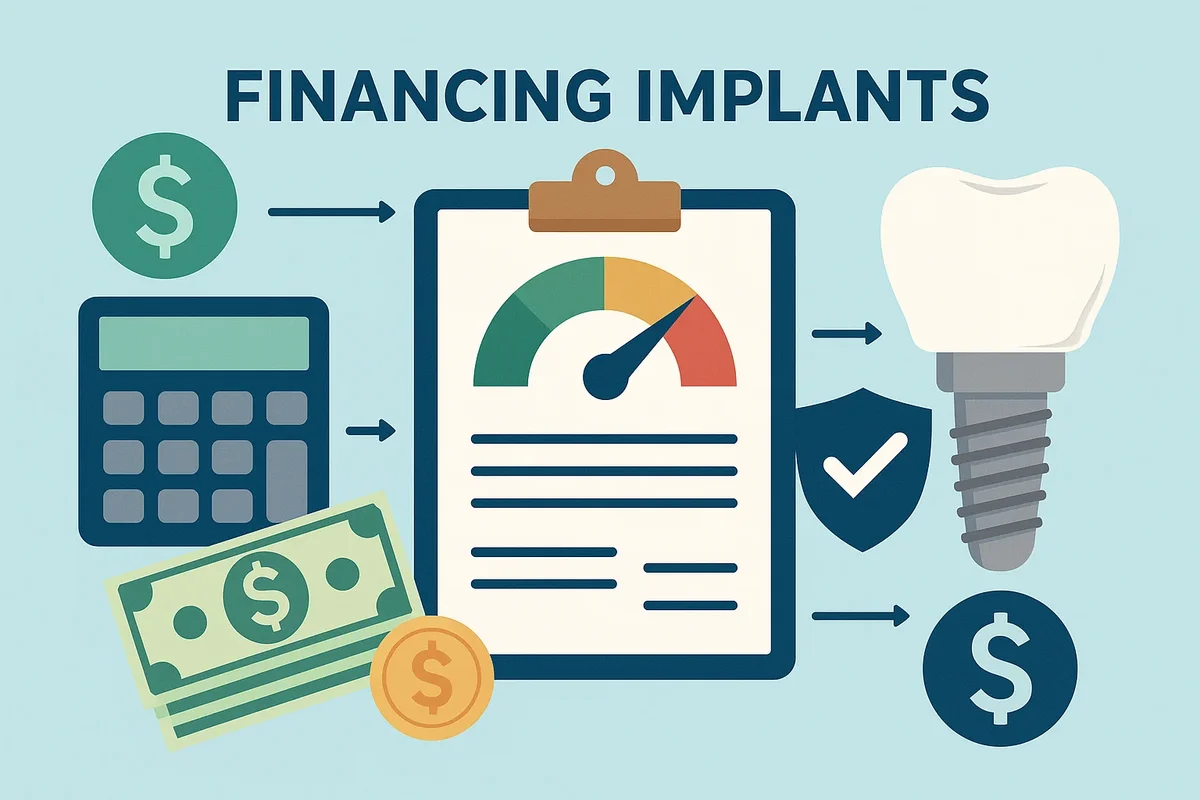
Common Mistakes to Avoid When Applying for Implant Financing
Choosing the right payment plan can make your dental treatment smooth and stress-free, but many patients unknowingly make financial missteps that lead to higher costs or even loan rejection. Understanding these pitfalls is crucial to making the most of financing implants programs available today. Whether you’re applying for a personal loan, using in-house financing, or working with a third-party lender, avoiding common mistakes ensures you get the best possible terms for your budget and long-term financial health. 🦷💳
Why Mistakes in Dental Financing Happen
Dental financing involves multiple moving parts — lenders, clinics, insurance providers, and sometimes even credit bureaus. Small errors during the application or repayment stages can snowball into significant problems. Many patients rush the process, overlook details in the fine print, or fail to compare all available options. Since financing implants can involve thousands of dollars, taking a strategic, informed approach is essential. Let’s explore the most frequent errors and how to avoid them.
1. Ignoring Total Treatment Costs
One of the biggest mistakes patients make is focusing solely on the quoted implant price without considering the full treatment plan. Dental implants often require preparatory and follow-up procedures — such as bone grafting, sinus lifts, or custom abutments — which can significantly increase the final bill. Failing to account for these extras leads to underfinancing and unexpected out-of-pocket payments later on.
How to Avoid: Ask your dental provider for a detailed written treatment plan outlining all associated costs. This includes consultation fees, implant posts, surgical supplies, anesthesia, and follow-up visits. Once you know the exact amount, you can accurately structure your financing implants plan to avoid last-minute financial stress.
2. Applying Without Checking Credit Status
Many patients apply for financing without reviewing their credit history first. If your credit report contains errors, outdated information, or a low score, lenders may either deny your application or offer high-interest rates. This mistake can cost you hundreds or even thousands of dollars over the loan term.
How to Avoid:
Before applying for any dental financing, check your credit report through AnnualCreditReport.com. Dispute inaccuracies and pay off small balances to improve your score. By taking these proactive steps, you can position yourself to qualify for better financing implants terms, such as 0% introductory interest or extended payment schedules.
3. Not Comparing Multiple Lenders
Another frequent mistake is accepting the first financing offer that comes along. Many clinics partner with specific lenders, but that doesn’t mean you’re required to use them. Different financial institutions — including banks, online lenders, and specialized medical credit providers — offer varying rates and benefits. Failing to compare these options can result in overpaying interest or missing out on promotional deals.
How to Avoid:
Collect at least three offers before committing. Compare not just interest rates but also additional factors such as processing fees, payment flexibility, and prepayment penalties. Some lenders, like CareCredit or LendingClub, specialize in financing implants and may offer interest-free periods or discounts for early repayment. Taking an hour to research can save you years of unnecessary expenses.
4. Overextending Your Budget
Excitement about getting a new smile sometimes leads patients to take on payment plans that are too aggressive for their financial reality. Missing payments can damage your credit score and lead to late fees or collections. Since financing implants typically lasts from 12 to 60 months, setting realistic monthly payments is vital for maintaining both financial and emotional well-being.
How to Avoid:
Use a dental financing calculator to determine what monthly amount fits comfortably within your income. A good rule of thumb: your total dental payments should not exceed 10% of your monthly take-home pay. If the amount is higher, discuss adjusting the treatment timeline or choosing a longer-term plan with your clinic.
5. Overlooking Hidden Fees and Fine Print
Contracts for dental financing can be lengthy and filled with complex terms. Some lenders include origination fees, late-payment penalties, or deferred-interest clauses that dramatically raise your overall cost if not managed properly. Ignoring these terms is one of the most expensive mistakes when financing implants.
How to Avoid:
Read every section of the contract, and ask your provider to explain any unclear terms. Look out for “retroactive interest” clauses that apply interest to the entire loan if you miss a promotional deadline. Ensure you understand the total amount payable — not just the monthly installment. Clinics like Redent Klinik Contact Page provide transparent financing agreements with no hidden fees, making them a trustworthy choice for patients seeking clarity.
6. Failing to Account for Insurance Reimbursements
Sometimes patients secure financing before confirming their insurance coverage, leading to overlapping payments or missed reimbursements. Since dental insurance may cover crowns, abutments, or preliminary diagnostics, failing to integrate these benefits with your financing implants plan can mean paying more than necessary.
How to Avoid:
Always coordinate with both your insurance provider and your dental clinic before signing financing contracts. Request pre-authorization from your insurer, then finance only the remaining amount. This hybrid approach minimizes debt and helps you optimize your insurance benefits.
7. Missing or Late Payments
Missing even a single payment can negatively impact your credit score and result in penalties. In addition, defaulting on your financing implants plan could disqualify you from future promotions or low-interest programs. Lenders view consistency as a sign of trustworthiness, so maintaining punctuality is essential.
How to Avoid:
Set up automatic payments or calendar reminders to ensure you never miss a due date. If you anticipate difficulty paying, contact your lender early — many offer hardship programs or deferment options. Responsible communication can prevent unnecessary credit damage.
8. Ignoring the Importance of Prequalification
Prequalification allows you to see potential loan offers without affecting your credit score. Skipping this step and submitting multiple full applications can lead to several hard inquiries, which temporarily lower your score and make future approvals harder.
How to Avoid:
Before applying officially, use prequalification tools offered by lenders like CareCredit, Sunbit, or LendingPoint. These soft inquiries provide insight into likely approval amounts and interest rates, helping you choose the best financing implants option confidently.
9. Not Building a Relationship with Your Dental Clinic
Communication with your dental provider can significantly influence your financing experience. Many clinics have flexibility in terms or partnerships with different lenders. Patients who maintain open dialogue often receive access to special plans, loyalty discounts, or temporary payment adjustments during financial hardship.
How to Avoid:
Discuss your budget openly with your dentist before beginning treatment. Clinics like Redent Klinik are known for personalized financial planning that integrates patient needs into their financing implants programs, ensuring smoother management and peace of mind throughout treatment.
10. Forgetting to Reevaluate or Refinance
Even after your financing begins, you can sometimes improve your terms later. Many patients overlook the option to refinance their existing dental loan, which can lower interest rates and shorten repayment time. Forgetting to review your financing status annually can mean missing out on significant savings.
How to Avoid:
Revisit your loan once your credit score improves or if better offers become available. Some lenders allow refinancing without penalties. This proactive step keeps your financing implants strategy optimized for long-term affordability.
Final Thoughts: Be an Informed Borrower
Applying for dental financing doesn’t have to be stressful or risky. By avoiding these common mistakes, you ensure that every decision supports your financial health and oral well-being. Take time to research, verify information, and read every clause carefully. When done correctly, financing implants empowers you to achieve a healthy, confident smile without compromising your financial stability. 🌟
With careful planning, transparent communication, and responsible repayment, your dental investment becomes not just an expense — but a smart step toward long-term health and happiness.