
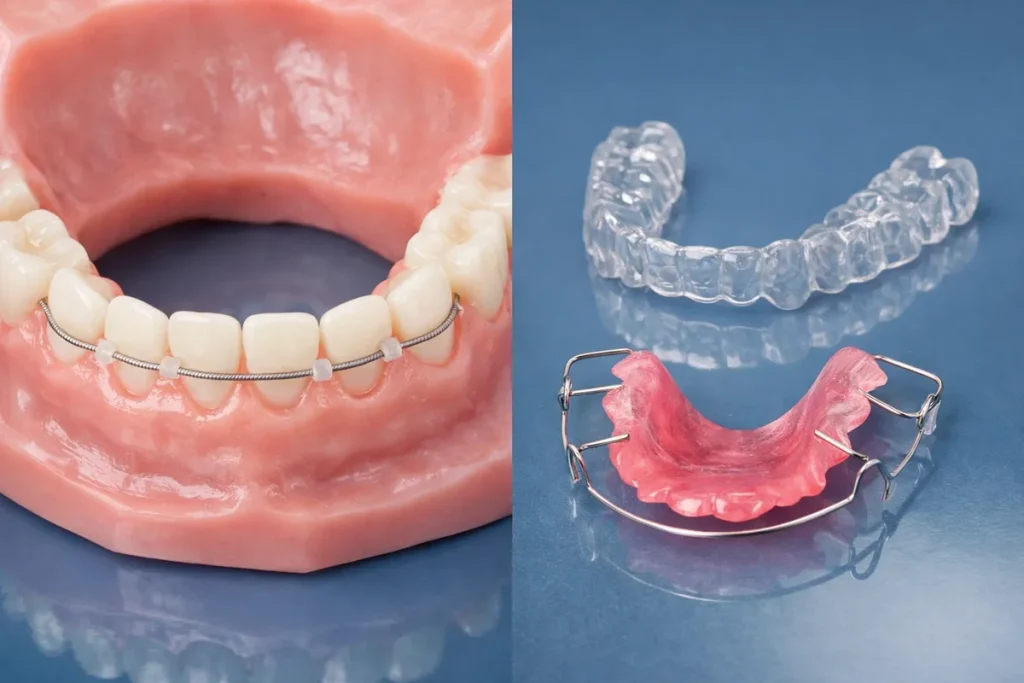
Orthodontic treatment does not truly end when braces or clear aligners are removed. In fact, this is the stage where long-term success is decided. Teeth naturally tend to shift back toward their original positions, and without proper retention, months or even years of orthodontic work can be compromised. This is exactly where fixed and removable retainers play a critical role. Understanding how they work, why they are necessary, and how to use them correctly is essential for anyone who wants to protect their new smile 😁.
Fixed and removable retainers are orthodontic devices designed to maintain tooth alignment after active treatment. While braces and aligners move teeth into ideal positions, retainers ensure that the surrounding bone, gums, and ligaments adapt and stabilize. Without retention, relapse can occur, sometimes within weeks. For this reason, most orthodontists consider retention a lifelong commitment rather than a temporary phase.
Patients often ask whether they really need to wear retainers if their teeth already look straight. The short answer is yes. Teeth are not set in stone; they are held in place by living tissues that respond to pressure, aging, and daily habits like chewing or grinding. Fixed and removable retainers provide the stability needed during this vulnerable post-treatment phase and help preserve both function and aesthetics.
There are two main categories of retainers: fixed retainers, which are bonded to the teeth and remain in place permanently or semi-permanently, and removable retainers, which can be taken out by the patient. Each option has its own advantages, limitations, and ideal use cases. Choosing between fixed and removable retainers depends on factors such as age, bite complexity, oral hygiene habits, and long-term compliance.
From a medical perspective, retention is not optional. Studies referenced by professional organizations like the American Dental Association emphasize that teeth continue to shift throughout life. This means that even patients who completed orthodontic treatment years ago may benefit from ongoing use of fixed and removable retainers. The goal is not only to maintain straight teeth but also to protect jaw alignment and bite balance.
Another important consideration is patient lifestyle. Some individuals prefer the convenience of bonded solutions that require no daily reminders, while others favor removable options that allow easier cleaning. Regardless of preference, fixed and removable retainers must be used correctly to avoid complications such as unwanted tooth movement, gum irritation, or hygiene challenges.
It is also worth noting that retainers are not “one-size-fits-all.” Materials, design, and wearing schedules vary based on individual needs. Clear plastic retainers, traditional Hawley retainers, and bonded wire retainers all fall under the broader category of fixed and removable retainers. Each type is designed with a specific purpose, whether that is long-term stabilization or short-term adjustment.
Patients who neglect retainer use often return to their dentist with concerns about shifting teeth, bite discomfort, or crowding. In many cases, these issues could have been prevented with consistent use of fixed and removable retainers. Retreatment can be costly and time-consuming, making prevention the smarter choice.
For those unsure about which option is right for them, professional guidance is essential. A qualified dental team can assess your bite, dental history, and lifestyle to recommend the most suitable retention strategy. If you are looking for personalized advice or follow-up care, you can always reach out through the Redent Klinik Contact Page to discuss your options with experienced professionals.
In summary, fixed and removable retainers are not merely accessories after orthodontic treatment; they are a vital part of maintaining oral health and smile aesthetics over the long term. By understanding their purpose and importance, patients can make informed decisions and protect the investment they made in their orthodontic journey 🦷. In the next sections, we will explore how these retainers work, how to choose between them, and how to care for them properly.
What Are Fixed and Removable Retainers?
After orthodontic treatment is completed, the teeth may look perfectly aligned, but biologically, they are still unstable. This is because teeth are held in place by periodontal ligaments and surrounding bone that need time—often years—to fully adapt. This is where fixed and removable retainers become essential. They are orthodontic appliances specifically designed to hold teeth in their corrected positions and prevent relapse.
Fixed and removable retainers are not treatment tools like braces or aligners; instead, they are stabilization tools. Their sole purpose is to maintain results. Without them, teeth can gradually shift due to muscle pressure, natural aging, chewing forces, or habits such as clenching and grinding. Understanding what these retainers are and how they function helps patients take long-term ownership of their oral health 🦷.
Understanding the Concept of Dental Retention
Dental retention refers to the phase following active orthodontic treatment. During this phase, the goal is to “retain” the teeth in their new positions. Even though teeth may feel solid, microscopic movement is always possible. Fixed and removable retainers counteract these forces by applying gentle resistance that keeps teeth stable while tissues reorganize.
Retention is especially important in the first 6–12 months after braces or aligners are removed, but it does not stop there. Research and clinical experience show that teeth continue to shift throughout life. For this reason, many orthodontists recommend lifelong use of fixed and removable retainers, either full-time or at night.
What Are Fixed Retainers?
Fixed retainers are thin metal wires bonded to the inner (tongue-side) surfaces of the teeth, most commonly the lower front teeth. Once placed, they remain in the mouth at all times and work passively in the background. Patients cannot remove them on their own, which makes fixed retainers an excellent option for those who may forget or neglect wearing removable appliances.
One of the biggest advantages of fixed retainers is compliance. Since they are always in place, they provide continuous retention without relying on patient discipline. However, they require meticulous oral hygiene. Food and plaque can accumulate around the wire, so patients with fixed and removable retainers—especially fixed ones—must be diligent with brushing, flossing, and regular dental check-ups.
Common Materials Used in Fixed Retainers
Fixed retainers are typically made of stainless steel or flexible braided wire. These materials are strong, durable, and designed to withstand daily biting forces. When properly maintained, fixed retainers can last for many years, making them a long-term component of fixed and removable retainers strategies.
What Are Removable Retainers?
Removable retainers are appliances that patients can take out and put back in themselves. They are usually worn full-time initially and then transitioned to nighttime use. Popular types include clear plastic retainers and traditional wire-and-acrylic designs. These devices are custom-made to fit snugly over the teeth and hold them in place.
The main benefit of removable options within fixed and removable retainers is flexibility. Patients can remove them for eating, brushing, and special occasions. This makes oral hygiene easier and reduces the risk of plaque buildup. However, the effectiveness of removable retainers depends heavily on consistent use. Skipping nights or losing the retainer can quickly lead to unwanted tooth movement.
Clear vs. Traditional Removable Retainers
Clear retainers are nearly invisible and popular among adults who value aesthetics. Traditional retainers, often called Hawley retainers, are more adjustable and durable. Both types are effective when used correctly and are common components of fixed and removable retainers treatment plans.
Why Dentists Often Combine Fixed and Removable Retainers
In many cases, orthodontists recommend a combination approach. For example, a fixed retainer may be bonded behind the lower teeth, while a removable retainer is worn at night for the upper arch. This hybrid strategy maximizes stability while offering flexibility. It also addresses different risk levels for relapse across the mouth.
Using both types of fixed and removable retainers allows dentists to customize retention based on individual needs. Teeth that are more prone to shifting receive constant support, while others are maintained with removable devices. This personalized approach leads to better long-term outcomes 😊.
The Long-Term Role of Fixed and Removable Retainers
It is important to understand that retainers are not a short-term solution. Teeth can move decades after orthodontic treatment, especially as facial muscles change and bone density decreases with age. Long-term or lifelong use of fixed and removable retainers is often the best way to ensure that your smile remains straight and functional.
Patients who stay committed to retention typically avoid the need for retreatment. By understanding what fixed and removable retainers are and how they work, individuals can make informed decisions and protect the results they worked hard to achieve.
Why Retainers Are Essential After Orthodontic Treatment
Many patients believe that once braces or clear aligners are removed, their orthodontic journey is complete. In reality, this is only the beginning of a critical phase known as retention. Without proper retention, teeth have a natural tendency to move back toward their original positions. This is why fixed and removable retainers are not optional accessories but essential tools for protecting the results of orthodontic treatment.
Orthodontic treatment moves teeth through bone using controlled force. While teeth can be repositioned relatively quickly, the surrounding bone, gums, and ligaments adapt much more slowly. Fixed and removable retainers provide the stability needed while these tissues remodel and strengthen around the new tooth positions. Skipping this phase significantly increases the risk of relapse 😬.
The Biology Behind Tooth Relapse
Teeth are held in place by periodontal ligaments, which act like elastic bands. During orthodontic treatment, these ligaments are stretched and compressed. After treatment ends, they naturally try to return to their original shape. Without resistance, this biological memory can pull teeth out of alignment. Fixed and removable retainers counteract this force and give the mouth time to adapt.
Bone remodeling is another key factor. The bone surrounding the teeth must harden in the new positions, a process that can take months or even years. During this time, teeth are especially vulnerable to movement. Consistent use of fixed and removable retainers helps stabilize teeth until the bone fully matures.
Why the First Year Is the Most Critical
The highest risk of relapse occurs within the first 6–12 months after orthodontic appliances are removed. During this period, tissues are still highly flexible. Orthodontists often recommend full-time or nightly wear of fixed and removable retainers to prevent even minor shifts that can snowball into noticeable misalignment.
Functional Reasons Retainers Matter
Retention is not just about aesthetics. Teeth that shift can affect bite alignment, chewing efficiency, and even jaw comfort. A misaligned bite may lead to uneven tooth wear, jaw strain, or headaches. By maintaining proper alignment, fixed and removable retainers help preserve healthy oral function as well as appearance.
Speech can also be affected by tooth movement. Minor shifts in the front teeth may alter tongue placement and airflow, leading to subtle speech changes. Long-term use of fixed and removable retainers helps ensure stable positioning that supports normal speech patterns.
Aging, Habits, and Long-Term Tooth Movement
Even people who never had orthodontic treatment experience tooth movement over time. Aging, changes in jawbone density, and daily habits such as chewing, grinding, or clenching all contribute to gradual shifts. For patients who have invested in orthodontic care, fixed and removable retainers act as insurance against these lifelong changes.
Wisdom teeth, although not always the direct cause of crowding, can contribute to pressure in the dental arch. Additionally, habits like nail biting or using teeth as tools can create forces that slowly move teeth. Retainers help neutralize these influences and maintain alignment.
Nighttime Retention as a Lifelong Strategy
Many orthodontists now recommend wearing removable retainers at night indefinitely, even years after treatment. This low-effort habit can dramatically reduce the risk of relapse. When combined with bonded options, fixed and removable retainers provide a robust, long-term solution for maintaining results.
The Cost of Not Wearing Retainers
Patients who neglect retainer use often experience gradual shifting that may initially go unnoticed. Over time, these changes can become significant enough to require retreatment. This may involve aligners, braces, or additional dental procedures. Compared to retreatment, maintaining fixed and removable retainers is far more cost-effective and less time-consuming.
Beyond financial cost, retreatment also involves inconvenience and frustration. Many patients regret not following retainer instructions once they see their teeth moving again. Consistent use of fixed and removable retainers helps avoid this common and preventable situation.
Professional Consensus on Retention
Dental professionals worldwide agree that retention is a lifelong responsibility. Organizations such as the American Dental Association emphasize that teeth can shift at any age. This consensus reinforces the importance of long-term use of fixed and removable retainers as part of comprehensive orthodontic care.
Ultimately, orthodontic treatment is an investment in both health and confidence. Protecting that investment requires commitment. By understanding why fixed and removable retainers are essential, patients are more likely to follow retention protocols and enjoy stable, healthy smiles for years to come 😊.
Fixed Retainers: How They Work and Who They Are Best For
Fixed retainers are a cornerstone of modern orthodontic retention, especially for patients at higher risk of relapse. As part of a comprehensive retention strategy, fixed and removable retainers are often recommended together—but fixed retainers play a unique role because they work continuously without relying on patient compliance. Understanding how fixed retainers function and who benefits most from them can help patients make informed, long-term decisions about their oral health.
A fixed retainer typically consists of a thin metal wire bonded to the inner (lingual) surfaces of the teeth, most commonly the lower front teeth. Because it is hidden behind the teeth, it does not affect appearance or speech once the patient adapts. Within the broader category of fixed and removable retainers, fixed retainers are considered a “set-and-forget” option that provides constant stabilization.
How Fixed Retainers Actually Work
Fixed retainers work by physically preventing teeth from shifting out of alignment. After orthodontic treatment, teeth are vulnerable to forces from the tongue, lips, chewing, and natural aging. The bonded wire acts as a passive barrier, holding teeth in their corrected positions while surrounding tissues stabilize. This constant support is a key advantage of fixed solutions within fixed and removable retainers.
Because the retainer is permanently attached, it provides 24/7 retention. There is no risk of forgetting to wear it, losing it, or wearing it inconsistently. For patients who struggled with compliance during treatment, fixed retainers offer peace of mind and reliable protection against relapse 😊.
The Bonding Process Explained
The placement of a fixed retainer is a precise but straightforward procedure. After cleaning and drying the teeth, the orthodontist applies a dental adhesive and carefully bonds the wire to each tooth. The process is painless and usually completed in a single visit. Once bonded, the retainer becomes an integral part of the patient’s fixed and removable retainers plan.
Who Is an Ideal Candidate for Fixed Retainers?
Fixed retainers are especially beneficial for patients whose teeth were severely crowded or rotated before treatment. These teeth have a higher tendency to relapse due to stronger elastic memory in the periodontal ligaments. In such cases, fixed options within fixed and removable retainers provide the constant control needed to maintain alignment.
They are also commonly recommended for younger patients and teenagers. Since compliance can be challenging at a young age, fixed retainers remove the responsibility of daily wear. Adults who prefer a low-maintenance solution may also find fixed retainers appealing.
High-Risk Relapse Cases
Patients with a history of spacing issues, midline shifts, or bite corrections often benefit from fixed retention. Orthodontists may advise keeping the retainer in place indefinitely to protect results. In these situations, fixed devices are a critical component of fixed and removable retainers strategies designed for long-term success.
Advantages of Fixed Retainers
The most significant advantage of fixed retainers is reliability. Because they are always in place, they eliminate user error. This makes them one of the most effective tools in preventing relapse. Additionally, they are invisible from the outside, which is a major aesthetic benefit.
Another advantage is longevity. With proper care and regular dental check-ups, fixed retainers can last many years. When combined with removable options, fixed and removable retainers together create a layered defense against tooth movement.
Limitations and Responsibilities
Despite their benefits, fixed retainers are not completely maintenance-free. Oral hygiene becomes even more important, as plaque and food particles can accumulate around the wire. Patients must use floss threaders or interdental brushes to clean effectively. Poor hygiene can lead to gum inflammation or decay, even when using fixed and removable retainers.
Another limitation is that fixed retainers can occasionally break or detach. This may happen due to biting hard foods or natural wear over time. Regular dental visits are essential to monitor the condition of the retainer and address issues early.
Fixed Retainers vs. Removable Support
While fixed retainers offer continuous control, they do not always stabilize every tooth. This is why many orthodontists recommend pairing them with removable devices worn at night. This combined approach strengthens the effectiveness of fixed and removable retainers and provides comprehensive retention across the entire dental arch.
Long-Term Outlook With Fixed Retainers
For many patients, fixed retainers become a long-term or even lifelong part of oral care. When properly maintained, they provide unmatched stability and significantly reduce the risk of relapse. Patients who understand their role within fixed and removable retainers plans are more likely to maintain excellent results and avoid retreatment.
In summary, fixed retainers are an excellent choice for patients seeking reliable, continuous retention. When chosen appropriately and maintained well, they form a powerful foundation within fixed and removable retainers systems, helping patients protect their smiles for years to come 😁.
Removable Retainers Explained: Types, Benefits, and Limits
Removable retainers are one of the most commonly prescribed tools for maintaining orthodontic results after braces or aligners. Within a complete retention strategy, fixed and removable retainers often work together, but removable retainers play a distinct role because they rely on patient participation. Understanding how these retainers work, the different types available, and their advantages and limitations helps patients use them correctly and avoid relapse.
Unlike bonded options, removable retainers can be taken in and out by the patient. This flexibility makes them appealing to many people, especially adults who value convenience and hygiene. However, their effectiveness depends heavily on consistent use. When worn as prescribed, removable retainers are a powerful component of fixed and removable retainers systems designed for long-term stability 😊.
Main Types of Removable Retainers
There are two primary categories of removable retainers commonly used in orthodontics: clear plastic retainers and traditional wire-and-acrylic retainers. Both are custom-made to fit the patient’s teeth precisely and are effective when used correctly.
Clear Plastic Retainers
Clear retainers are made from transparent thermoplastic material and fit snugly over the teeth, similar in appearance to clear aligners. Their biggest advantage is aesthetics—they are nearly invisible when worn. For many patients, especially adults, this makes them a popular choice within fixed and removable retainers treatment plans.
Clear retainers are easy to wear and generally comfortable. However, they can wear out over time and may need replacement if they crack or lose their shape. Because they fully cover the teeth, proper cleaning is essential to prevent odor or bacterial buildup.
Traditional Wire-and-Acrylic Retainers
Often referred to as Hawley retainers, these consist of a metal wire that runs across the front teeth and an acrylic base that sits against the roof of the mouth or behind the lower teeth. While more visible, they are highly durable and adjustable. Orthodontists can fine-tune them if minor tooth movement occurs, which adds flexibility within fixed and removable retainers approaches.
How Removable Retainers Work
Removable retainers hold teeth in place by applying gentle, consistent pressure that counteracts natural shifting forces. After orthodontic treatment, teeth are still influenced by muscles, chewing forces, and biological memory. Wearing removable retainers as instructed ensures that these forces do not undo the alignment achieved through treatment.
Most orthodontists recommend full-time wear initially, followed by a transition to nighttime-only use. This gradual reduction allows tissues to stabilize while still benefiting from the protection provided by fixed and removable retainers.
Benefits of Removable Retainers
One of the biggest advantages of removable retainers is ease of oral hygiene. Because they can be taken out, patients can brush and floss normally, reducing the risk of plaque buildup and gum issues. This makes them an excellent complement to fixed options within fixed and removable retainers plans.
Another benefit is comfort and adaptability. If a retainer feels tight or uncomfortable, orthodontists can often adjust or replace it. Removable retainers also allow patients to remove them during meals or special occasions, adding lifestyle flexibility 😌.
Limitations and Common Challenges
The primary limitation of removable retainers is compliance. If a patient forgets to wear the retainer, skips nights, or stops using it altogether, teeth can shift surprisingly fast. Even short breaks in wear can compromise results, especially in the first year after treatment. This is why removable options are often paired with bonded devices in fixed and removable retainers strategies.
Another challenge is loss or damage. Because removable retainers are taken out regularly, they can be misplaced or accidentally thrown away. Heat exposure—such as leaving them in a hot car—can also warp clear retainers, making them ineffective.
Maintenance and Replacement Needs
Removable retainers require regular cleaning using lukewarm water and non-abrasive cleaners. Over time, normal wear may necessitate replacement. Understanding these responsibilities is key to successfully using fixed and removable retainers long term.
Who Benefits Most From Removable Retainers?
Patients with good compliance, strong oral hygiene habits, and mild-to-moderate relapse risk are often ideal candidates for removable retainers. Adults who want discreet retention and flexibility also tend to prefer this option. When used correctly, removable retainers are a reliable and effective part of fixed and removable retainers systems.
In conclusion, removable retainers offer flexibility, comfort, and excellent hygiene benefits, but they demand consistency and responsibility. When patients understand their role within fixed and removable retainers plans and commit to proper use, removable retainers can successfully preserve orthodontic results for many years 🦷.
Fixed vs. Removable Retainers: Key Differences Compared
Choosing between fixed and removable options is one of the most common questions patients ask after orthodontic treatment. While both serve the same core purpose—maintaining tooth alignment—the way they function, feel, and fit into daily life can differ significantly. Understanding these differences is essential for making an informed decision. This is why comparing fixed and removable retainers side by side helps patients clearly see which option, or combination, best suits their needs.
It is important to note that this is not always an “either-or” decision. In many treatment plans, orthodontists intentionally combine fixed and removable retainers to maximize long-term stability. Still, knowing how they differ in terms of effectiveness, comfort, hygiene, and responsibility allows patients to actively participate in their retention strategy 😊.
Retention Effectiveness and Reliability
One of the most significant differences between fixed and removable options is reliability. Fixed retainers are bonded to the teeth and work continuously, providing constant retention without relying on patient behavior. This makes them highly effective, particularly for teeth that are prone to relapse. Within fixed and removable retainers systems, fixed options are often considered the most dependable for long-term stabilization.
Removable retainers, on the other hand, are only effective when worn consistently. When patients follow instructions carefully, removable retainers perform very well. However, missed nights or inconsistent wear can reduce their effectiveness. This difference in reliability is a key factor when orthodontists decide how to balance fixed and removable retainers for each patient.
Compliance vs. Automation
Fixed retainers remove the compliance factor entirely, while removable retainers demand discipline. Patients who know they may forget or neglect daily wear often benefit more from fixed solutions within fixed and removable retainers plans.
Comfort and Daily Experience
Comfort is another area where differences become noticeable. Fixed retainers usually require a short adjustment period, during which the tongue may feel the bonded wire. Once adapted, most patients forget they are even there. Removable retainers, especially clear ones, are generally comfortable but may feel tight when first worn or after skipped use.
Some patients prefer removable retainers because they can take them out for meals and special events. Others appreciate the “invisible effort” of fixed retainers. Comfort preferences play a big role in how patients experience fixed and removable retainers over time.
Oral Hygiene and Cleaning Requirements
Hygiene is one of the most practical differences between the two options. Removable retainers are easier to clean because they can be taken out, allowing for normal brushing and flossing. This simplicity makes them appealing for patients who prioritize ease of maintenance within fixed and removable retainers systems.
Fixed retainers, while convenient in other ways, require more meticulous oral hygiene. Food particles and plaque can accumulate around the bonded wire, increasing the risk of gum inflammation if not cleaned properly. Special flossing tools or interdental brushes are often necessary.
Hygiene Responsibility Comparison
With removable options, cleaning the appliance is the main responsibility. With fixed options, cleaning around the appliance becomes the challenge. Understanding this trade-off is crucial when selecting between fixed and removable retainers.
Durability and Risk of Damage
Fixed retainers are designed to last for many years but can occasionally detach or break, especially if patients bite hard foods. When this happens, professional repair is required. Removable retainers are more vulnerable to loss, cracking, or warping, particularly clear plastic types.
From a durability standpoint, both options have risks, but they are different in nature. This is why orthodontists often recommend combining fixed and removable retainers to offset the weaknesses of each.
Lifestyle Flexibility and Aesthetics
Removable retainers offer greater flexibility. Patients can remove them temporarily, which is useful for eating, public speaking, or special occasions. Clear retainers are also nearly invisible, making them a discreet option within fixed and removable retainers choices.
Fixed retainers are completely hidden behind the teeth, offering permanent discretion. However, they cannot be removed at will. Patients who value total freedom may lean toward removable options, while those who prefer simplicity may favor fixed ones.
Why Many Patients Benefit From Both
Modern orthodontic practice increasingly favors hybrid retention plans. For example, a fixed retainer may stabilize the lower front teeth, while a removable retainer supports the upper arch at night. This approach combines reliability with flexibility and represents the most comprehensive use of fixed and removable retainers.
In summary, fixed retainers excel in reliability and low maintenance, while removable retainers offer flexibility and easier hygiene. There is no universal “best” choice—only the best choice for each patient. Understanding the key differences between fixed and removable retainers empowers patients to protect their smiles confidently and long term 😁.
How Long Should You Wear Fixed and Removable Retainers?
One of the most common and important questions patients ask after orthodontic treatment is how long retainers need to be worn. The honest and evidence-based answer is: longer than most people expect. Retention is not a short-term phase but an ongoing process that protects the results achieved through braces or aligners. This is why understanding the timeline for fixed and removable retainers is essential for maintaining a healthy, straight smile over the long term.
Teeth are dynamic structures influenced by muscles, chewing forces, and biological changes throughout life. Even after years of stability, teeth can shift due to aging or habits such as clenching. Because of this, modern orthodontics views fixed and removable retainers as long-term or even lifelong tools rather than temporary appliances 😊.
The Immediate Post-Treatment Phase (First 6–12 Months)
The first year after orthodontic treatment is the most critical period for retention. During this time, the bone and periodontal ligaments surrounding the teeth are still adapting to their new positions. Without consistent support, relapse can occur quickly. Orthodontists typically recommend full-time wear of removable appliances or continuous support from bonded options during this phase.
In many cases, fixed and removable retainers are used together at this stage. A fixed retainer provides constant stabilization, while a removable retainer adds additional control, especially for teeth not covered by the bonded wire. Skipping wear during this phase significantly increases the risk of early relapse.
Why Early Consistency Matters
Minor tooth movement early on can lead to larger alignment issues later. Wearing fixed and removable retainers exactly as prescribed during the first year sets the foundation for long-term success.
The Transition Phase (After the First Year)
After the initial high-risk period, many patients transition to a reduced wearing schedule. Removable retainers are often worn only at night, while fixed retainers continue to work passively. This phase can last several years and is where many patients become less consistent, sometimes leading to gradual shifting.
Orthodontists often emphasize that just because the teeth look stable does not mean they are fully secure. Continued use of fixed and removable retainers during this phase helps reinforce alignment while allowing for a more flexible routine.
Long-Term and Lifelong Retention
Research and clinical experience strongly support long-term retention. Teeth can move at any age due to natural changes in jaw structure, muscle tone, and bone density. For this reason, many professionals recommend wearing removable retainers at night indefinitely and maintaining bonded retainers as long as they remain healthy.
In this context, fixed and removable retainers act as preventive tools. Nighttime wear requires minimal effort but offers significant protection against crowding and bite changes later in life 🌙.
Is Lifelong Retention Really Necessary?
While the idea of lifelong retention may sound overwhelming, it is often compared to wearing a seatbelt—it is a small habit that prevents major problems. Patients who commit to long-term use of fixed and removable retainers are far less likely to need retreatment.
Factors That Influence Retainer Duration
Not every patient follows the same retention timeline. Several factors influence how long retainers should be worn, including the severity of the original orthodontic problem, age at treatment completion, bite type, and oral habits. Teeth that were severely crowded or rotated typically require longer retention.
Patients with strong tongue pressure, grinding habits, or a history of relapse may be advised to rely more heavily on fixed and removable retainers for extended periods. Personalized recommendations from a dental professional are crucial.
What Happens If You Stop Wearing Retainers Too Soon?
Stopping retainer use prematurely is one of the most common reasons for orthodontic relapse. Teeth may begin to shift subtly at first, but over time these changes can become noticeable and frustrating. Once movement occurs, retainers may no longer fit, making correction more difficult.
In many cases, patients who stop using fixed and removable retainers too early require additional orthodontic treatment to restore alignment. This reinforces the importance of viewing retainers as a long-term commitment rather than a temporary obligation.
Following Your Dentist’s Guidance
There is no universal timeline that applies to everyone. Your dentist or orthodontist will assess your bite stability and recommend a wearing schedule tailored to your needs. Regular follow-ups ensure that fixed and removable retainers continue to function properly and support your smile.
In summary, the safest and most effective approach is long-term retention. By committing to appropriate use of fixed and removable retainers, patients can enjoy stable, healthy smiles for decades and avoid the disappointment of relapse 😁.
Cleaning and Caring for Fixed and Removable Retainers
Proper cleaning and daily care are essential for maintaining the effectiveness and longevity of orthodontic retention. No matter how well orthodontic treatment was performed, poor retainer hygiene can lead to oral health problems and reduce the lifespan of the appliance. This is why learning how to correctly clean and care for fixed and removable retainers is just as important as wearing them consistently.
Retainers sit in close contact with teeth and gums, making them prone to plaque, bacteria, and food buildup. Without appropriate care, retainers can contribute to bad breath, gum inflammation, and even tooth decay. A well-maintained routine ensures that fixed and removable retainers remain safe, comfortable, and effective over time 🦷.
Daily Care for Fixed Retainers
Fixed retainers require special attention because they are bonded to the teeth and cannot be removed. While they offer continuous retention, they also create small areas where plaque and food particles can accumulate. Patients with fixed and removable retainers that include bonded wires must be especially diligent with oral hygiene.
Brushing at least twice a day is essential, with extra focus on the area around the wire. Using a soft-bristled toothbrush and fluoride toothpaste helps remove plaque without damaging the adhesive. Electric toothbrushes can also be effective in cleaning around fixed retainers.
Flossing Techniques for Fixed Retainers
Traditional flossing can be challenging with a bonded wire, but it is still necessary. Floss threaders, super floss, or interdental brushes allow patients to clean between teeth and under the wire. Neglecting this step can lead to gum inflammation or calculus buildup, even when using fixed and removable retainers correctly.
Cleaning Removable Retainers Properly
Removable retainers offer the advantage of easy cleaning, but they still require a consistent routine. Retainers should be rinsed with lukewarm water every time they are removed to prevent saliva and bacteria from drying on the surface. Hot water should always be avoided, as it can warp plastic retainers.
At least once a day, removable retainers should be gently brushed using a soft toothbrush. Mild soap or non-abrasive retainer cleaners are preferred. Regular toothpaste can be too abrasive and may cause scratches, which can harbor bacteria. Proper cleaning helps ensure that fixed and removable retainers remain hygienic and odor-free.
Soaking and Deep Cleaning
In addition to daily brushing, removable retainers benefit from periodic soaking. Effervescent retainer-cleaning tablets or dentist-recommended solutions can help remove stubborn deposits. However, overuse of harsh chemicals should be avoided to protect the material. Balanced care extends the life of fixed and removable retainers and keeps them comfortable to wear.
What to Avoid When Caring for Retainers
Certain habits can damage retainers or reduce their effectiveness. Biting hard objects, chewing on pens, or using teeth as tools can weaken fixed retainers. Similarly, placing removable retainers in napkins or pockets increases the risk of loss or breakage.
Another common mistake is skipping cleaning sessions. Even missing a few days can allow bacteria to multiply. Maintaining discipline with fixed and removable retainers care prevents long-term oral health issues.
Monitoring Wear and Tear
Over time, all retainers experience some degree of wear. Fixed retainers may loosen or detach, while removable retainers can crack or lose their shape. Patients should regularly inspect their appliances and note any changes in fit or comfort.
If a retainer feels loose, tight, or uncomfortable, professional evaluation is necessary. Continuing to wear a damaged appliance may lead to unintended tooth movement. Prompt attention helps ensure that fixed and removable retainers continue to perform as intended.
Regular Dental Check-Ups
Routine dental visits play a vital role in retainer maintenance. Dentists can professionally clean around fixed retainers, check bonding integrity, and assess overall oral health. These visits also allow for early detection of problems related to fixed and removable retainers.
Travel and Storage Tips
When traveling, removable retainers should always be stored in a protective case. This prevents accidental damage and contamination. Fixed retainers require no special storage but should be monitored for damage after eating hard or sticky foods.
Establishing good habits at home and on the go ensures consistent care. A small effort each day goes a long way in preserving the benefits of fixed and removable retainers 😊.
Long-Term Benefits of Proper Retainer Care
Patients who clean and maintain their retainers properly enjoy better oral health, fresher breath, and longer-lasting appliances. Good hygiene also improves comfort and confidence, making it easier to stay consistent with retention.
In conclusion, cleaning and caring for fixed and removable retainers is a daily responsibility that directly impacts orthodontic success. With the right techniques and habits, patients can protect their smiles and ensure their retainers remain effective for many years.
Choosing the Right Retainer With Your Dentist
Selecting the most suitable retention method is one of the most important decisions made after orthodontic treatment. While many patients assume there is a single “best” option, the reality is far more personalized. The choice between fixed and removable retainers depends on clinical factors, lifestyle habits, and long-term goals. This is why working closely with your dentist or orthodontist is essential for lasting success.
Your dentist does not simply choose a retainer based on preference. Instead, they evaluate how your teeth moved during treatment, how stable the final result is, and how likely relapse may be. Understanding how professionals assess these factors helps patients appreciate why fixed and removable retainers are often recommended differently from one person to another 😊.
Clinical Factors Dentists Consider
One of the first elements your dentist evaluates is the original orthodontic condition. Teeth that were severely crowded, rotated, or spaced have a higher tendency to shift back. In such cases, dentists often recommend stronger or continuous retention, frequently involving fixed options as part of fixed and removable retainers strategies.
Bite type is another critical factor. Patients with deep bites, open bites, or crossbites may need more precise control to maintain alignment. A fixed retainer can stabilize high-risk teeth, while a removable retainer supports overall arch stability.
Age and Growth Considerations
Age plays an important role in retainer selection. Younger patients may still be experiencing jaw growth, which can influence tooth position. Dentists often favor fixed options for younger individuals to reduce reliance on compliance, while adults may successfully manage removable devices within fixed and removable retainers plans.
Lifestyle and Compliance Assessment
Beyond clinical factors, dentists also consider how likely a patient is to follow instructions. Removable retainers are highly effective—but only if worn consistently. Patients who travel frequently, have busy schedules, or admit they may forget nightly wear often benefit more from fixed solutions.
On the other hand, patients who value flexibility, aesthetics, and ease of cleaning may prefer removable options. Open communication allows the dentist to tailor fixed and removable retainers to match real-life habits rather than ideal scenarios.
Oral Hygiene and Maintenance Ability
Oral hygiene is another key consideration. Fixed retainers require meticulous cleaning around the bonded wire. Patients with excellent hygiene habits usually manage this well, but those with a history of gum issues may struggle. In such cases, removable retainers may be easier to maintain.
Dentists carefully balance hygiene risks when recommending fixed and removable retainers. The goal is to protect alignment without compromising gum health or increasing decay risk.
Combining Fixed and Removable Retainers
Many modern retention plans use a combination approach. For example, a fixed retainer may be bonded behind the lower front teeth, while a removable retainer is worn at night for the upper arch. This approach provides continuous support where it is most needed while maintaining flexibility elsewhere.
Discussing Long-Term Expectations
A critical part of choosing the right retainer is understanding that retention is long-term. Dentists increasingly explain that teeth can shift throughout life due to aging, muscle changes, and bone remodeling. Patients who accept this reality are more likely to commit to ongoing use of fixed and removable retainers.
Your dentist will also explain what signs to watch for, such as tightness when inserting a retainer or changes in fit. These early indicators can signal tooth movement and should be addressed promptly.
Cost, Repairs, and Follow-Up Care
While retainers are generally less costly than active orthodontic treatment, maintenance and replacement should still be considered. Fixed retainers may require occasional rebonding, while removable retainers may need replacement due to wear or loss.
Regular follow-up visits allow dentists to monitor the condition of fixed and removable retainers, ensure proper fit, and make adjustments as needed. This ongoing care helps prevent small issues from becoming major problems.
Shared Decision-Making Leads to Better Results
The most successful retention outcomes occur when patients actively participate in decision-making. Asking questions, expressing concerns, and discussing lifestyle preferences help dentists design retention plans that patients can realistically follow.
When patients understand why a specific combination of fixed and removable retainers is recommended, they are more likely to remain consistent and proactive. This partnership between patient and dentist is key to long-term stability 😁.
Final Thoughts on Choosing the Right Retainer
There is no universal solution that works for everyone. The “right” retainer is the one that balances biological stability, personal habits, and long-term commitment. With professional guidance and honest communication, choosing between fixed and removable retainers becomes a clear and confident decision.
Ultimately, orthodontic treatment is an investment in health, function, and confidence. Protecting that investment requires the right retention plan and the willingness to follow it. By working closely with your dentist and committing to proper use of fixed and removable retainers, you can enjoy a stable, healthy smile for a lifetime.

Common Problems, Risks, and How to Avoid Them
While orthodontic retention is highly effective, it is not completely free of challenges. Like any dental appliance, retainers can come with certain problems and risks if they are not used, cleaned, or monitored properly. Understanding the most common issues associated with fixed and removable retainers helps patients recognize early warning signs and take preventive action before small problems become serious.
The good news is that most retainer-related complications are preventable. With proper education, routine dental visits, and consistent care, patients can use fixed and removable retainers safely and comfortably for many years 😊.
Common Problems With Fixed Retainers
Fixed retainers are highly reliable, but because they are permanently bonded, problems may go unnoticed if patients are not attentive. One of the most common issues is partial debonding, where the wire becomes loose on one or more teeth. This can allow teeth to shift slightly without the patient realizing it.
Another frequent concern is plaque and tartar buildup around the bonded wire. Since the retainer creates small hard-to-clean areas, inadequate hygiene can lead to gum inflammation, bleeding, or bad breath. These risks make proper cleaning especially important when using fixed and removable retainers.
Early Warning Signs of Fixed Retainer Issues
Patients should contact their dentist if they feel sharp edges, notice movement in the wire, experience gum soreness, or see redness around the retainer. Early intervention prevents unwanted tooth movement and protects gum health.
Common Problems With Removable Retainers
Removable retainers come with a different set of challenges, most of which are related to compliance and handling. The most common issue is inconsistent wear. Even missing a few nights—especially early on—can cause the retainer to feel tight or no longer fit properly.
Loss and damage are also frequent problems. Removable retainers are often misplaced, accidentally thrown away, or damaged by heat. Clear retainers, in particular, can warp if exposed to hot water or left in a warm environment. These issues can reduce the effectiveness of fixed and removable retainers strategies.
Fit Changes and What They Mean
If a removable retainer suddenly feels tight or uncomfortable, it may indicate tooth movement. Continuing to wear it and scheduling a dental visit promptly can sometimes reverse minor shifts.
Health Risks Linked to Poor Retainer Care
When retainers are not cleaned properly, they can harbor bacteria and fungi. This may lead to oral infections, persistent bad breath, or gum disease. Over time, poor hygiene around retainers can even increase the risk of cavities.
Both types of fixed and removable retainers require daily attention to prevent these health risks. The appliance itself is not harmful, but neglecting hygiene can compromise overall oral health.
How to Prevent Retainer-Related Problems
Prevention starts with education and consistency. Patients should follow cleaning instructions exactly as provided and never skip dental check-ups. Routine examinations allow dentists to detect early signs of trouble and correct them before they affect alignment.
Using the right tools—such as floss threaders, interdental brushes, and retainer cleaning solutions—makes caring for fixed and removable retainers much easier and more effective.
Protective Habits That Make a Difference
Avoid biting hard foods, chewing on pens, or using teeth as tools. Always store removable retainers in a protective case when not in use. These simple habits significantly reduce damage risk.
Psychological and Compliance Challenges
Some patients struggle not because of physical issues, but because of motivation. Over time, retainers may feel unnecessary once teeth appear stable. This false sense of security is one of the leading causes of relapse.
Understanding that fixed and removable retainers protect a long-term investment helps reinforce compliance. Patients who stay informed are far more likely to remain consistent.
When to Seek Professional Help
Any sudden discomfort, visible damage, or change in how a retainer fits should prompt a dental visit. Delaying care can allow teeth to move or gums to become inflamed.
Dentists are trained to manage retainer-related issues quickly and effectively. Regular monitoring ensures that fixed and removable retainers continue to function safely and correctly.
Long-Term Safety and Success
When used as directed, retainers are extremely safe and well tolerated. Millions of patients worldwide rely on them daily without complications. The key is awareness, maintenance, and timely professional care.
In conclusion, while problems and risks can occur, they are largely avoidable. By understanding potential issues and adopting preventive habits, patients can confidently use fixed and removable retainers to maintain healthy, stable smiles for life 😁.
Disclosure: this page may contain affiliate links. We may earn a commission if you use them, at no extra cost to you.