
Four in one dental implants are one of the most advanced and patient-friendly solutions for people who suffer from severe tooth loss, loose dentures, or failing dental restorations. This modern implant technique is designed to restore an entire dental arch using only four strategically placed implants, providing a fixed, natural-looking smile in a much shorter time compared to traditional methods. 😊
Unlike conventional approaches that may require 6–10 implants per jaw, bone grafting, and months of healing, four in one dental implants focus on efficiency, stability, and immediate functionality. The implants are placed at precise angles to maximize contact with available bone, allowing patients to receive a full set of fixed teeth often on the same day as surgery. This is why the method is sometimes referred to as “same-day teeth” or “full-arch implant restoration.”
From a patient’s perspective, four in one dental implants solve several common problems at once. They eliminate the discomfort of removable dentures, prevent bone loss in the jaw, and restore proper chewing ability. Patients can eat, speak, and smile with confidence again, without worrying about dentures slipping or clicking. 😁 This approach is especially popular among individuals who have been told they are not suitable candidates for traditional implants due to bone loss.
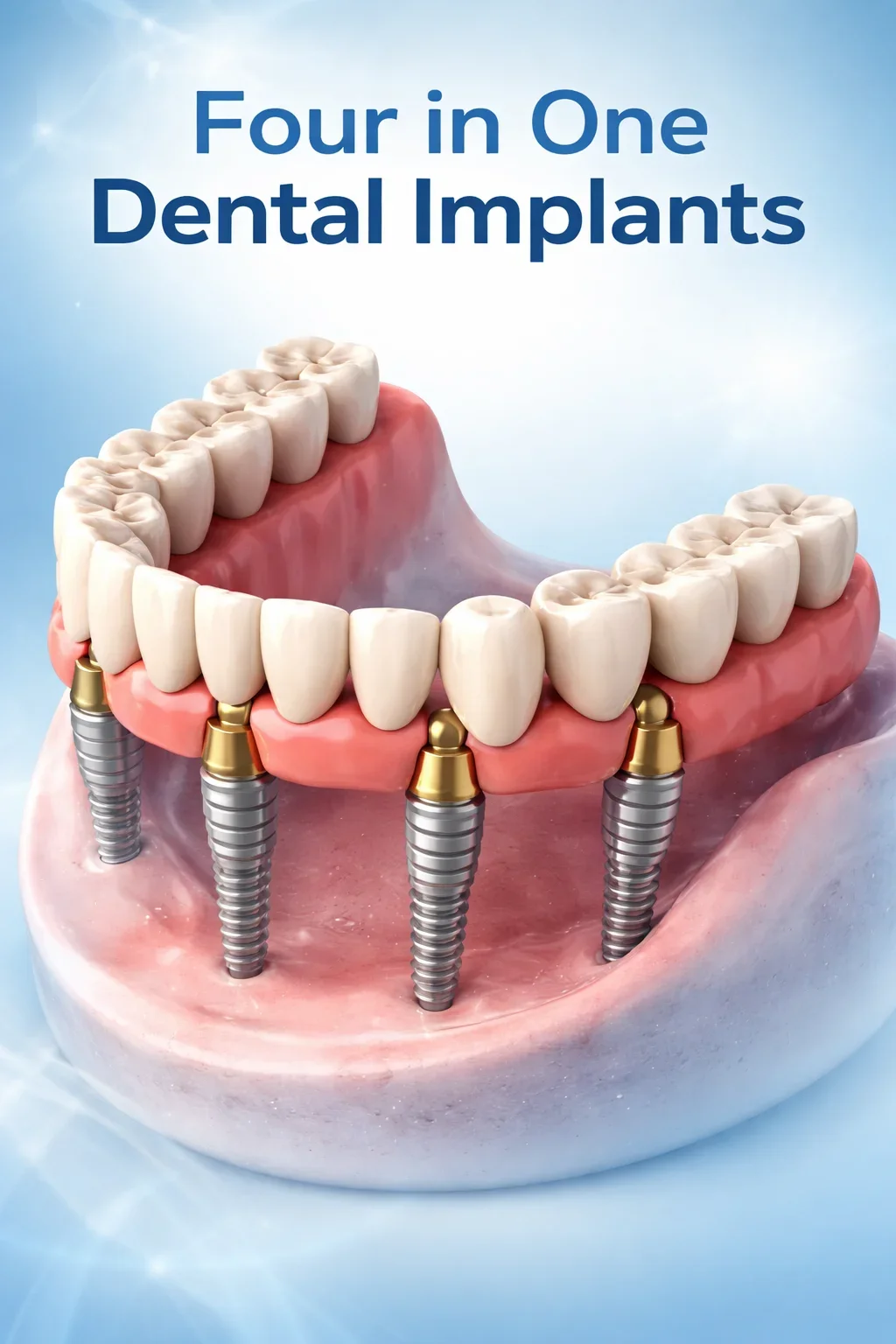
The concept behind four in one dental implants is based on sound biomechanical principles. Two implants are placed vertically in the front of the jaw where bone density is typically higher, while the remaining two implants are angled toward the back. This angled placement avoids sensitive anatomical structures such as the sinus cavities and nerves, while also increasing implant stability. Because of this design, bone grafting is often unnecessary, making the treatment less invasive and more accessible.
One of the most attractive features of four in one dental implants is the immediate loading protocol. In many cases, patients leave the clinic with a temporary fixed prosthesis attached to the implants on the same day. This means no waiting months with missing teeth or uncomfortable temporary dentures. Over time, once the implants fully integrate with the jawbone, the temporary teeth are replaced with a permanent, highly durable prosthesis designed for long-term use.
From a health standpoint, four in one dental implants contribute to overall oral and systemic well-being. Tooth loss can negatively impact digestion, nutrition, speech, and even self-esteem. By restoring proper bite alignment and chewing efficiency, this treatment helps patients maintain a balanced diet and supports better long-term oral health. According to trusted organizations such as the
American Dental Association, implant-supported restorations are among the most reliable options for replacing missing teeth.
Another important advantage of four in one dental implants is their predictable success rate. When performed by experienced implantologists using modern imaging and planning technologies, success rates can exceed 95%. This makes the technique a dependable option for patients seeking a permanent solution rather than temporary fixes. Proper diagnosis, precise surgical execution, and good oral hygiene habits all play a role in achieving these excellent outcomes.
It is also worth noting that four in one dental implants are highly customizable. The shape, color, and alignment of the prosthetic teeth are carefully designed to match the patient’s facial features and aesthetic expectations. The result is not only a functional smile but also a natural and youthful appearance that can significantly improve confidence and quality of life. 🌟
For patients considering this treatment, professional consultation is essential. A detailed examination, including 3D scans and oral health evaluation, helps determine whether four in one dental implants are the right choice. If you would like personalized guidance or wish to discuss your treatment options in detail, you can reach out directly through the
Redent Klinik Contact Page.
In summary, four in one dental implants represent a powerful combination of advanced technology, efficiency, and patient comfort. They offer a long-lasting solution for full-arch tooth replacement, reduce treatment time, and restore both function and aesthetics. For many patients, this technique is not just a dental procedure but a life-changing investment in health, confidence, and everyday comfort.
What Are Four in One Dental Implants and How Do They Work?
Four in one dental implants are an advanced full-arch tooth replacement solution designed for patients who have lost most or all of their teeth in one jaw. Instead of placing a separate implant for each missing tooth, this technique uses exactly four dental implants to support an entire fixed prosthetic arch. The goal of four in one dental implants is to provide maximum stability, functionality, and aesthetics with minimal surgical intervention. 🦷✨
This treatment approach is especially valuable for patients who want a permanent alternative to removable dentures. Traditional dentures may shift, cause sore spots, and fail to stimulate the jawbone. In contrast, four in one dental implants anchor directly into the jawbone, creating a solid foundation that closely mimics natural teeth both in appearance and performance.
The Core Concept Behind Four in One Dental Implants
The foundation of four in one dental implants lies in strategic implant placement rather than quantity. Two implants are placed vertically in the front of the jaw, where bone density is usually highest. The remaining two implants are placed at an angle in the back of the jaw. This angulation is a key innovation that allows the implants to utilize available bone more effectively and avoid areas with insufficient bone volume.
By tilting the posterior implants, four in one dental implants reduce or completely eliminate the need for bone grafting. This is particularly important for patients who have experienced bone loss over time due to missing teeth, periodontal disease, or long-term denture use. Fewer surgical procedures mean lower risk, reduced cost, and faster overall treatment time.
How Four in One Dental Implants Support a Full Arch
Once the implants are placed, they act as anchors for a full-arch prosthetic bridge. The prosthesis is carefully designed to distribute biting forces evenly across all four implants. This balanced load distribution is a critical reason why four in one dental implants are so durable and long-lasting. 🧠
The fixed bridge is usually attached to the implants using specialized connectors, allowing it to remain firmly in place at all times. Unlike removable dentures, patients cannot take the prosthesis out themselves, which contributes to a more natural chewing experience and greater confidence during daily activities such as speaking and eating.
Immediate Loading: Same-Day Functionality
One of the most impressive features of four in one dental implants is the possibility of immediate loading. In many cases, patients receive a temporary fixed prosthesis on the same day as implant surgery. This means they do not leave the clinic without teeth, which is a major emotional and practical benefit for many individuals. 😊
The temporary prosthesis allows patients to function normally while the implants integrate with the jawbone, a process known as osseointegration. After a healing period, the temporary teeth are replaced with a permanent prosthetic arch that offers superior strength, aesthetics, and longevity.
The Role of Advanced Technology in Four in One Dental Implants
Modern four in one dental implants rely heavily on digital planning and 3D imaging technologies. Cone beam computed tomography (CBCT) scans are used to analyze bone density, nerve positions, and anatomical structures in detail. This allows clinicians to plan implant placement with exceptional precision and safety.
Digital smile design and computer-guided surgery further enhance the predictability of four in one dental implants. These tools help ensure that both the surgical and aesthetic outcomes meet the patient’s expectations while minimizing complications.
How Four in One Dental Implants Differ From Dentures
While dentures rest on the gums, four in one dental implants are firmly embedded in the jawbone. This fundamental difference leads to better chewing efficiency, improved speech, and greater comfort. Dentures can accelerate bone loss over time, whereas implants actively help preserve jawbone structure.
Patients who switch from dentures to four in one dental implants often report a dramatic improvement in quality of life. Foods that were once difficult or impossible to eat become manageable again, and social confidence increases significantly.
In essence, four in one dental implants work by combining smart biomechanics, advanced materials, and modern surgical techniques into a single, efficient solution. They are not merely a cosmetic upgrade but a comprehensive oral rehabilitation method designed to restore function, health, and confidence for the long term.
Who Is an Ideal Candidate for Four in One Dental Implants?
Four in one dental implants are designed to help a wide range of patients, but like any advanced dental treatment, they are not suitable for everyone without proper evaluation. Understanding who qualifies as an ideal candidate is essential for achieving long-term success, comfort, and satisfaction. This treatment is primarily intended for individuals who have lost most or all of their teeth in one jaw and are seeking a stable, permanent alternative to removable dentures. 🦷
In many cases, patients who believe they are “not eligible” for implants are pleasantly surprised to learn that four in one dental implants may still be an option. Thanks to the angled implant technique and efficient use of available bone, this method often works even when traditional implant treatments are not feasible.
Patients With Significant Tooth Loss
The most common candidates for four in one dental implants are individuals who are completely edentulous (missing all teeth) or nearly edentulous in the upper or lower jaw. These patients often struggle with loose dentures, reduced chewing efficiency, and declining confidence. A full-arch implant solution provides them with fixed teeth that look and function like natural ones.
Patients who still have a few remaining teeth but suffer from severe decay, gum disease, or failing restorations may also qualify. In such cases, the remaining teeth are typically removed, and four in one dental implants are placed to support a brand-new, healthy dental arch.
Individuals With Bone Loss
Bone loss in the jaw is one of the main reasons patients are told they cannot receive implants. However, four in one dental implants were specifically developed to address this issue. By angling the posterior implants and placing them in areas of higher bone density, this technique often avoids the need for bone grafting altogether.
This makes four in one dental implants an excellent option for long-term denture wearers and patients who have experienced bone resorption due to missing teeth or periodontal disease. Less invasive surgery means faster healing and fewer complications. 😊
Patients Seeking a Faster Solution
People who want to restore their smile quickly often find four in one dental implants particularly appealing. Traditional implant methods can take many months or even over a year to complete. In contrast, this technique frequently allows for immediate loading, meaning patients can leave the clinic with fixed temporary teeth on the same day.
This makes four in one dental implants ideal for individuals with busy lifestyles, professionals who cannot afford long downtime, or patients traveling from abroad for dental treatment.
General Health Requirements
While four in one dental implants are highly versatile, candidates must still meet certain general health criteria. Patients should be in reasonably good overall health and able to undergo minor oral surgery. Chronic conditions such as diabetes or heart disease do not automatically disqualify someone, but they must be well-managed and closely monitored.
Smoking is another important consideration. Heavy smokers may experience slower healing and higher implant failure rates. For optimal outcomes with four in one dental implants, patients are often advised to quit or significantly reduce smoking before and after treatment.
Oral Hygiene and Commitment to Care
Successful outcomes with four in one dental implants depend heavily on proper oral hygiene and long-term maintenance. Ideal candidates are those who are committed to daily cleaning routines and regular dental check-ups. Although implants cannot decay like natural teeth, the surrounding gums and bone still require care to prevent infection.
Patients who are motivated to follow professional guidance and attend follow-up appointments tend to enjoy the highest success rates and longest-lasting results.
Psychological and Lifestyle Factors
Beyond physical health, emotional readiness is also important. Four in one dental implants are a life-changing investment, and ideal candidates understand the process, benefits, and responsibilities involved. Patients who are frustrated with dentures or embarrassed by missing teeth often experience a dramatic improvement in self-esteem after treatment. 🌟
In summary, ideal candidates for four in one dental implants include individuals with extensive tooth loss, those with mild to moderate bone loss, patients seeking faster results, and people committed to long-term oral care. A comprehensive dental examination is the only way to determine eligibility, but thanks to modern techniques, this solution is accessible to more patients than ever before.
Four in One Dental Implants vs Traditional Implants: Key Differences
When patients explore full-mouth restoration options, one of the most common questions is how four in one dental implants compare to traditional dental implant treatments. While both aim to replace missing teeth permanently, they differ significantly in technique, timeline, cost structure, and patient experience. Understanding these differences is essential for making an informed, confident decision. 🦷
At their core, four in one dental implants were developed to simplify complex implant treatments while maintaining high success rates and long-term functionality. Traditional implants, on the other hand, follow a more segmented and often lengthy approach that may not be ideal for every patient.
Number of Implants and Surgical Complexity
One of the most obvious differences lies in the number of implants used. Traditional full-arch restorations typically require between 6 and 10 implants per jaw. Each implant is placed vertically and often requires sufficient bone volume at every site. This can lead to additional procedures such as bone grafting or sinus lifting.
In contrast, four in one dental implants rely on just four strategically positioned implants to support an entire arch of teeth. Two implants are placed in the front, and two are angled at the back to maximize bone contact. This strategic angulation reduces the need for additional surgeries and makes the overall procedure less invasive.
Treatment Time and Healing Process
Traditional implant treatments are known for their extended timelines. After implant placement, patients often wait 3 to 6 months for osseointegration before receiving their final teeth. If bone grafting is required, the total treatment time can extend to 9–18 months.
Four in one dental implants significantly shorten this process. In many cases, patients receive a fixed temporary prosthesis on the same day as surgery. This immediate loading approach allows patients to leave the clinic with functional teeth, avoiding long periods of toothlessness. 😊
Impact on Daily Life
The shorter timeline of four in one dental implants is especially beneficial for patients who want minimal disruption to their daily routines. Professionals, retirees, and international patients often prefer this approach because it reduces time off work, travel requirements, and overall stress.
Bone Grafting Requirements
Bone availability is one of the most decisive factors in implant dentistry. Traditional implants usually require a certain amount of vertical bone at each implant site. If bone loss is present, grafting becomes necessary, adding cost, healing time, and surgical risk.
Four in one dental implants were specifically designed to overcome this limitation. By angling the posterior implants and using denser bone regions, this method often eliminates the need for bone grafts altogether. This makes it an excellent option for long-term denture wearers and patients with moderate bone loss.
Cost Structure and Overall Value
While individual traditional implants may appear less expensive at first glance, the total cost can increase significantly when multiple implants, grafting procedures, and extended treatment times are considered. Each additional step adds to the overall financial burden.
Four in one dental implants typically offer a more predictable and transparent cost structure. Because fewer implants are used and fewer surgeries are required, patients often find this approach more cost-effective for full-arch restoration. 💡
Long-Term Maintenance and Durability
Both traditional implants and four in one dental implants can last many years when properly maintained. However, full-arch prostheses supported by four implants are designed to distribute biting forces evenly, reducing stress on individual implants. This balanced load contributes to long-term stability and durability.
Maintenance routines are similar for both options and include daily oral hygiene, professional cleanings, and regular check-ups. The key difference is that four in one dental implants often provide easier access for cleaning compared to bridges supported by many individual implants.
Aesthetic and Functional Outcomes
From an aesthetic standpoint, both methods can deliver excellent results. However, four in one dental implants are often planned using digital smile design, allowing for precise control over tooth shape, alignment, and facial harmony. Patients frequently report a more natural feel and appearance compared to removable dentures or segmented implant bridges.
Functionally, four in one dental implants restore up to 90% of natural chewing efficiency, far surpassing traditional dentures. This improvement supports better nutrition, clearer speech, and enhanced overall quality of life. 🌟
In summary, while traditional implants remain a reliable solution for replacing individual teeth, four in one dental implants stand out as a faster, less invasive, and more efficient option for full-arch restoration. For patients seeking a comprehensive solution with fewer surgeries and quicker results, this modern technique offers clear and compelling advantages.
The Step-by-Step Four in One Dental Implants Procedure
Understanding the full treatment journey helps patients feel confident and prepared. The four in one dental implants procedure is carefully structured to deliver predictable, long-lasting results while minimizing discomfort and downtime. Unlike fragmented traditional treatments, this approach follows a streamlined, clearly defined process from consultation to final restoration. 🦷✨
Although the technique is efficient, every stage of four in one dental implants is critical. Proper planning, precise execution, and controlled healing all work together to ensure implant stability and patient satisfaction.
Initial Consultation and Diagnosis
The first step in the four in one dental implants process is a comprehensive clinical evaluation. During this visit, the dentist assesses oral health, gum condition, bite alignment, and medical history. Advanced 3D imaging such as CBCT scans are used to evaluate bone density and identify anatomical structures like nerves and sinuses.
This diagnostic phase is essential because four in one dental implants rely on precise implant angulation. Digital planning software allows the dental team to determine the optimal implant positions, ensuring maximum bone contact and long-term stability. Patients also discuss expectations, aesthetic goals, and lifestyle considerations at this stage.
Treatment Planning and Smile Design
Once diagnostics are complete, a personalized treatment plan is created. This includes the exact positioning of each implant and the design of the temporary and permanent prosthetic teeth. With four in one dental implants, digital smile design tools help customize tooth size, shape, and color to complement the patient’s facial features.
This planning stage ensures that the final outcome is not only functional but also natural-looking and aesthetically pleasing. 😊
Preparation and Tooth Extraction (If Needed)
If damaged or failing teeth are still present, they are removed before implant placement. In many cases, extractions and four in one dental implants placement are performed on the same day. This reduces the number of surgical appointments and shortens overall treatment time.
Any existing infection or inflammation is carefully managed to create a clean, healthy foundation for the implants. This step is crucial for preventing complications and ensuring successful osseointegration.
Surgical Placement of Four in One Dental Implants
The surgical phase is the core of the treatment. Four titanium implants are placed into the jawbone under local anesthesia or conscious sedation. Two implants are positioned vertically in the front of the jaw, while the remaining two are placed at carefully calculated angles in the posterior regions.
This angled placement is what makes four in one dental implants unique. It allows the implants to engage dense bone areas while avoiding anatomical limitations. As a result, implant stability is achieved immediately, which is essential for same-day loading. 🧠
Immediate Stability and Safety Measures
Primary stability is measured during surgery to confirm that the implants can support a temporary prosthesis. Modern surgical protocols and guided implant systems ensure accuracy and minimize trauma to surrounding tissues. Patients are closely monitored throughout the procedure for comfort and safety.
Immediate Temporary Prosthesis
One of the defining advantages of four in one dental implants is the immediate attachment of a fixed temporary bridge. This prosthesis is securely connected to the implants on the same day, allowing patients to leave the clinic with a full set of teeth.
The temporary teeth are designed for aesthetics and light function during healing. Patients are advised to follow a soft-food diet initially to protect the implants while osseointegration takes place. 😊
Healing and Osseointegration Phase
Over the next 3 to 6 months, the implants integrate with the jawbone through a biological process called osseointegration. During this period, the bone grows around the implants, creating a strong and permanent bond. This phase is vital for the long-term success of four in one dental implants.
Regular follow-up appointments ensure healing is progressing as expected. Any minor adjustments to the temporary prosthesis can be made for comfort and bite balance.
Final Prosthetic Placement
Once healing is complete, the temporary bridge is replaced with a permanent prosthetic arch. This final restoration is crafted from high-quality materials designed for durability, stain resistance, and natural appearance. With four in one dental implants, the final prosthesis is precisely fitted to ensure optimal bite function and comfort.
At this stage, patients can return to a normal diet and enjoy the full benefits of their new smile. 🌟
In summary, the four in one dental implants procedure is a carefully coordinated process that combines advanced diagnostics, precise surgery, and immediate functionality. Each step is designed to minimize treatment time while maximizing comfort, stability, and long-term success.
Healing Time and Recovery After Four in One Dental Implants
The healing and recovery phase is a crucial part of the overall success of four in one dental implants. While this treatment is known for its speed and efficiency, proper healing ensures long-term implant stability, comfort, and functionality. Understanding what to expect during recovery helps patients feel more confident and prepared throughout the process. 😊
One of the major advantages of four in one dental implants is that patients do not have to wait months without teeth. Even though healing continues beneath the surface, daily life can often resume much sooner compared to traditional implant treatments.
Immediate Post-Surgery Recovery (First 72 Hours)
The first few days after surgery are focused on initial healing. Following the placement of four in one dental implants, it is normal to experience mild swelling, tenderness, and minor bruising around the jaw and gums. These symptoms are temporary and usually peak within the first 48 hours.
Pain is generally well controlled with prescribed or over-the-counter medication. Because fewer implants are placed and bone grafting is often avoided, recovery after four in one dental implants is typically faster and more comfortable than traditional full-mouth implant procedures.
Tips for Early Healing
Patients are advised to rest, apply cold compresses, and avoid strenuous physical activity during the initial recovery period. Maintaining oral hygiene is essential, but brushing should be gentle and focused on non-surgical areas for the first few days. These precautions support proper healing around the four in one dental implants.
The First Few Weeks: Adapting to Your Temporary Teeth
One of the most exciting aspects of four in one dental implants is leaving the clinic with fixed temporary teeth. During the first few weeks, patients gradually adapt to speaking and chewing with their new prosthesis. Some mild pressure sensations are normal as the mouth adjusts.
A soft-food diet is recommended during this phase. Foods such as soups, yogurt, eggs, fish, and soft vegetables help protect the implants while still allowing comfortable nutrition. Avoiding hard or sticky foods is critical to prevent excessive force on the healing four in one dental implants.
Osseointegration: The Foundation of Long-Term Success
Osseointegration is the biological process where the jawbone bonds with the titanium implants. This phase typically takes between 3 and 6 months. During this time, the implants become a permanent part of the jaw, providing the strength and stability needed to support the final prosthesis.
With four in one dental implants, implant placement angles and bone engagement are optimized to promote strong osseointegration. Regular follow-up visits allow the dental team to monitor healing and ensure that the implants remain stable and infection-free. 🧠
Why Patience Matters During Healing
Although patients feel functional quickly, full bone integration takes time. Respecting dietary and hygiene guidelines during the osseointegration period is essential. Rushing the process or ignoring professional advice can compromise the success of four in one dental implants.
Long-Term Recovery and Lifestyle Normalization
As healing progresses, most patients return to their normal routines within a few days to a week. Speech clarity improves, chewing efficiency increases, and confidence grows steadily. By the time the final prosthesis is placed, patients often forget they ever had missing teeth.
Compared to removable dentures, four in one dental implants offer superior comfort and stability during recovery. There are no sore spots caused by denture movement, and the fixed prosthesis allows patients to speak and smile naturally. 🌟
Follow-Up Care and Monitoring
Post-treatment check-ups are an essential part of recovery. During these visits, the dentist evaluates gum health, implant stability, and bite alignment. Minor adjustments may be made to the temporary prosthesis to improve comfort and balance.
Maintaining good oral hygiene and attending scheduled appointments significantly increases the long-term success of four in one dental implants. Patients who follow professional recommendations typically enjoy excellent outcomes with minimal complications.
In summary, healing after four in one dental implants is generally smooth, predictable, and patient-friendly. With immediate function, controlled recovery, and structured follow-up care, this treatment allows patients to regain comfort, confidence, and quality of life faster than traditional implant methods.
Benefits of Choosing Four in One Dental Implants for Full Arch Restoration
Choosing four in one dental implants for full-arch restoration offers a wide range of clinical, functional, and lifestyle benefits. This treatment was developed to address the most common challenges faced by patients with extensive tooth loss—such as unstable dentures, bone loss, long treatment times, and compromised aesthetics—by providing a streamlined, reliable solution. 😊
Unlike temporary or removable options, four in one dental implants are designed to restore the entire dental arch with fixed teeth that look, feel, and function like natural teeth. For many patients, the advantages go far beyond oral health and extend into overall quality of life.
Immediate Improvement in Function and Comfort
One of the most noticeable benefits of four in one dental implants is the immediate improvement in chewing ability. Traditional dentures can reduce chewing efficiency by up to 70%, making it difficult to enjoy many foods. Implant-supported full arches restore up to 90% of natural chewing power, allowing patients to eat a more balanced and satisfying diet.
Because the prosthesis is fixed in place, patients experience no slipping, clicking, or movement while eating or speaking. This stability is a key reason why four in one dental implants feel far more natural than removable dentures.
Same-Day Teeth and Faster Results
Another major advantage of four in one dental implants is the possibility of immediate loading. In many cases, patients receive fixed temporary teeth on the same day as implant placement. This eliminates the emotional and social discomfort of being without teeth during healing.
Compared to traditional implant treatments that can take many months, four in one dental implants dramatically shorten the treatment timeline. This is especially beneficial for patients who want fast results or those traveling internationally for dental care. 🌍
Reduced Need for Bone Grafting
Bone grafting can be expensive, invasive, and time-consuming. Thanks to angled implant placement, four in one dental implants often avoid the need for grafting altogether. This reduces surgical complexity, lowers overall cost, and shortens recovery time.
Patients with moderate bone loss—who may have been told they are not candidates for implants—often qualify for four in one dental implants, making this technique far more accessible.
Preservation of Jawbone and Facial Structure
Tooth loss leads to progressive jawbone resorption, which can cause facial collapse and premature aging. Dentures do not prevent this process. In contrast, four in one dental implants stimulate the jawbone just like natural tooth roots, helping preserve bone volume and facial contours.
This bone preservation supports a more youthful appearance and prevents the sunken look commonly associated with long-term denture use. 🌟
Long-Term Reliability and High Success Rates
When placed by experienced clinicians, four in one dental implants have documented success rates exceeding 95%. The strategic distribution of biting forces across four implants reduces stress on individual implants, enhancing durability and long-term stability.
With proper oral hygiene and routine dental check-ups, four in one dental implants can last for decades, making them a dependable long-term investment rather than a short-term fix.
Improved Confidence and Quality of Life
The psychological benefits of four in one dental implants are just as important as the physical ones. Patients often report increased self-confidence, improved social interactions, and greater willingness to smile and speak freely.
Because the teeth are fixed and natural-looking, patients no longer worry about embarrassing denture mishaps. This renewed confidence can positively affect personal relationships, professional life, and overall well-being.
Simplified Maintenance Compared to Dentures
Caring for four in one dental implants is straightforward. Daily brushing, flossing with specialized tools, and regular professional cleanings are typically sufficient. There is no need for adhesives, soaking solutions, or nightly removal.
This ease of maintenance makes four in one dental implants particularly appealing to patients who want a low-maintenance, hassle-free solution that integrates seamlessly into their daily routine.
In summary, four in one dental implants provide a powerful combination of speed, stability, aesthetics, and long-term health benefits. For patients seeking a comprehensive full-arch restoration that restores function, preserves bone, and enhances confidence, this treatment stands out as one of the most advanced solutions in modern dentistry.
Potential Risks and Disadvantages of Four in One Dental Implants
While four in one dental implants are widely regarded as a safe and effective solution for full-arch tooth replacement, it is important for patients to understand that no medical or dental procedure is completely without risk. Being well-informed about potential disadvantages helps patients set realistic expectations and make confident, educated decisions. 🦷
Most complications associated with four in one dental implants are rare and often preventable when treatment is planned and performed by experienced professionals. However, understanding these possibilities allows patients to actively participate in their own care and recovery.
Surgical Risks and Short-Term Complications
As with any surgical procedure, the placement of four in one dental implants carries some inherent risks. These may include temporary swelling, bruising, bleeding, or discomfort around the implant sites. In most cases, these symptoms are mild and resolve within a few days.
In rare situations, infection can occur if post-operative care instructions are not followed. Maintaining proper oral hygiene and attending follow-up appointments significantly reduces this risk. When managed early, infections related to four in one dental implants are usually treatable without long-term consequences.
Nerve and Sinus Considerations
Improper implant placement may affect nearby nerves or sinus cavities. However, modern diagnostic imaging and digital planning greatly minimize these risks. One advantage of four in one dental implants is the angled placement of posterior implants, which helps avoid sensitive anatomical structures.
Choosing an experienced implant specialist is essential to ensure accurate placement and minimize complications.
Implant Failure and Osseointegration Issues
Although success rates for four in one dental implants exceed 95%, implant failure can still occur in rare cases. Failure usually happens when the implant does not properly integrate with the jawbone. Factors such as poor bone quality, uncontrolled systemic conditions, or excessive biting forces during healing may contribute.
Smoking is a significant risk factor for implant failure. Patients who smoke heavily may experience reduced blood flow to the gums, which can interfere with healing around four in one dental implants. Reducing or quitting smoking greatly improves outcomes.
Prosthetic Limitations and Adjustments
Although the prosthetic arch used in four in one dental implants is highly durable, it is not indestructible. Excessive force, teeth grinding (bruxism), or accidental trauma can cause wear or damage over time. In such cases, repairs or adjustments may be necessary.
Patients with severe bruxism may require a protective night guard to prevent excessive stress on the implants and prosthetic teeth. This precaution helps extend the lifespan of four in one dental implants.
Aesthetic Expectations and Adaptation
While most patients are extremely satisfied with the appearance of their new teeth, some may require time to adjust to the feel and look of a full-arch prosthesis. The temporary teeth provided immediately after surgery may not perfectly reflect the final aesthetic result.
The final prosthesis for four in one dental implants is custom-designed after healing is complete, allowing for refinements in color, shape, and bite. Clear communication with the dental team helps align expectations with outcomes. 😊
Financial Considerations
Although four in one dental implants are often more cost-effective than traditional full-arch implant treatments, they still represent a significant financial investment. The upfront cost may be higher than removable dentures, which can be a concern for some patients.
However, it is important to consider long-term value. Dentures often require frequent replacements, relines, and adhesives, while four in one dental implants offer long-term stability and durability, potentially reducing future expenses.
Not Suitable for Every Patient
Certain medical conditions may affect eligibility for four in one dental implants. Patients with uncontrolled diabetes, advanced osteoporosis, or compromised immune systems may face higher risks. A thorough medical evaluation is essential to determine suitability.
In some cases, alternative treatments may be recommended to ensure patient safety and predictable outcomes.
In conclusion, while four in one dental implants offer numerous benefits, they also come with potential risks and limitations that must be carefully considered. With proper planning, expert execution, and patient commitment to aftercare, most disadvantages can be effectively managed, allowing patients to enjoy the long-term advantages of this advanced dental solution. 🌟
Cost of Four in One Dental Implants and What Affects Pricing
The cost of four in one dental implants is one of the most common and important concerns for patients considering this life-changing treatment. While this advanced solution may appear expensive at first glance, understanding what the price includes—and what factors influence it—helps patients evaluate the true value rather than focusing only on the initial number. 💡
Unlike single-tooth implants or removable dentures, four in one dental implants are a comprehensive full-arch restoration. This means the treatment cost typically covers multiple clinical steps, advanced technology, and long-term functional benefits, making direct price comparisons with simpler treatments misleading.
Average Cost Range of Four in One Dental Implants
Globally, the cost of four in one dental implants can vary significantly depending on the country, clinic, and materials used. On average:
- United States: $20,000 – $30,000 per jaw
- Western Europe: €15,000 – €25,000 per jaw
- Turkey and medical tourism destinations: $5,000 – $9,000 per jaw
These figures are general estimates and may change based on individual clinical needs. Many patients choose to travel abroad because four in one dental implants can be delivered at a significantly lower cost without compromising quality when performed by experienced professionals.
What Is Usually Included in the Price?
One key advantage of four in one dental implants is that pricing is often bundled rather than fragmented. A comprehensive treatment package may include:
- Initial consultation and diagnostics (including 3D scans)
- Tooth extractions if necessary
- Surgical placement of four implants
- Temporary fixed prosthesis (same-day teeth)
- Final permanent prosthetic arch
- Follow-up visits and adjustments
This bundled approach provides transparency and helps patients better plan their investment in four in one dental implants.
Key Factors That Affect the Cost
Several variables influence the final price of four in one dental implants. Understanding these factors explains why costs can differ even within the same country.
1. Implant Brand and Materials
High-quality, internationally recognized implant systems tend to cost more but offer superior long-term reliability. The materials used for the final prosthesis—such as zirconia or reinforced acrylic—also affect pricing. Premium materials improve durability, aesthetics, and longevity of four in one dental implants.
2. Experience of the Dental Team
Clinics with experienced implant surgeons, prosthodontists, and digital planning specialists may charge higher fees. However, expertise directly impacts success rates and reduces the risk of complications. When it comes to four in one dental implants, professional skill is a critical investment, not an optional luxury.
3. Need for Additional Procedures
Although bone grafting is often avoided, some patients may still require minor preparatory treatments such as infection management or gum therapy. These additional procedures can slightly increase the total cost of four in one dental implants.
Cost vs Long-Term Value
It is essential to view four in one dental implants as a long-term investment rather than a short-term expense. Removable dentures may seem cheaper initially, but they often require frequent replacements, relines, adhesives, and ongoing maintenance costs.
In contrast, four in one dental implants are designed to last for decades with proper care. Their durability, stability, and ability to preserve jawbone structure often make them more cost-effective over time.
Insurance and Financing Considerations
Dental insurance coverage for four in one dental implants varies widely. Some plans may cover portions of diagnostics, extractions, or prosthetics, while others classify implants as elective treatment.
Many clinics offer flexible payment plans or financing options to make four in one dental implants more accessible. Discussing these options during consultation helps patients plan their treatment without unnecessary financial stress. 😊
Why a Personalized Quote Matters
Every patient’s oral health, anatomy, and expectations are unique. For this reason, the most accurate cost assessment for four in one dental implants can only be provided after a comprehensive clinical evaluation.
If you are considering this treatment and want a personalized consultation, detailed cost breakdown, and professional guidance, you can contact the clinic directly via the
Redent Klinik Contact Page.
In summary, the cost of four in one dental implants reflects advanced technology, expert care, and long-term benefits. When evaluated in terms of durability, comfort, and quality of life, this treatment often represents exceptional value for patients seeking a permanent full-arch solution. 🌟
Long-Term Results, Maintenance, and Success Rates of Four in One Dental Implants
When patients choose four in one dental implants, they are not only investing in immediate function and aesthetics but also in a long-term solution designed to last for decades. Understanding the expected results, daily maintenance requirements, and documented success rates helps patients protect their investment and enjoy a healthy, confident smile well into the future. 😊
One of the defining strengths of four in one dental implants is their predictability over time. When properly planned, placed, and maintained, this treatment consistently delivers stable, reliable outcomes that rival or exceed traditional full-arch restoration methods.
Expected Long-Term Results
The long-term results of four in one dental implants are centered around stability, comfort, and natural function. Once osseointegration is complete and the final prosthesis is in place, patients can expect their implants to function much like natural teeth. Chewing efficiency, speech clarity, and bite balance are typically restored to near-normal levels.
Aesthetically, four in one dental implants maintain facial structure by preserving jawbone volume. This prevents the sunken facial appearance often associated with long-term denture use and supports a more youthful, natural look over time. 🌟
Longevity of Implants and Prosthetics
The titanium implants used in four in one dental implants are designed to be permanent. With proper care, they can last a lifetime. The prosthetic arch, while extremely durable, may require replacement or refurbishment after many years due to normal wear, especially in patients with strong biting forces.
Regular dental evaluations help identify early signs of wear, ensuring that minor adjustments can extend the lifespan of the prosthesis.
Daily Maintenance and Oral Hygiene
Maintaining four in one dental implants is straightforward but essential. Although implants cannot develop cavities, the surrounding gum tissue and bone must remain healthy to prevent peri-implant diseases.
Daily oral hygiene should include thorough brushing at least twice a day, focusing on the gum line where the prosthesis meets the gums. Specialized floss, interdental brushes, or water flossers are often recommended to clean underneath the fixed bridge. 🪥
Professional Care and Follow-Up
Routine professional cleanings and check-ups play a vital role in the long-term success of four in one dental implants. During these visits, the dental team assesses implant stability, gum health, bite alignment, and prosthetic condition.
Most clinicians recommend professional maintenance visits every 6 months, although some patients may benefit from more frequent monitoring depending on their oral health history.
Success Rates and Clinical Evidence
Clinical studies consistently show success rates exceeding 95% for four in one dental implants when proper protocols are followed. Success is defined by stable implants, healthy surrounding tissues, and patient satisfaction with function and aesthetics.
Several factors contribute to these high success rates, including strategic implant placement, even distribution of biting forces, and advances in digital planning and guided surgery. Compared to traditional dentures, four in one dental implants demonstrate significantly lower long-term complication rates.
Factors That Influence Long-Term Success
While four in one dental implants are highly reliable, certain factors influence outcomes over time. Smoking, poor oral hygiene, unmanaged systemic conditions, and untreated teeth grinding can negatively affect implant health.
Patients who follow professional recommendations, attend regular check-ups, and maintain good oral habits enjoy the best long-term results and the lowest risk of complications.
Lifestyle Impact and Patient Satisfaction
Beyond clinical measures, patient satisfaction is one of the strongest indicators of long-term success with four in one dental implants. Most patients report dramatic improvements in comfort, confidence, and quality of life.
The freedom to eat a wide variety of foods, speak clearly, and smile without hesitation contributes to both physical and emotional well-being. Many patients describe their decision to choose four in one dental implants as transformative, particularly after years of struggling with dentures or missing teeth. 😁
In conclusion, four in one dental implants offer outstanding long-term results when combined with proper care and professional oversight. Their high success rates, ease of maintenance, and lasting functional and aesthetic benefits make them one of the most dependable full-arch tooth replacement solutions available in modern dentistry.