
Understanding the four on four dental implants cost is one of the most common priorities for patients seeking a stable, long-term solution for missing teeth. This treatment replaces an entire arch of teeth using four strategically placed implants, offering a strong, natural-looking smile 😄. In this comprehensive guide, you’ll learn how the treatment works, why it’s preferred by many patients, and how pricing is calculated across different dental markets. The goal is to provide a complete, user-friendly explanation that answers all questions someone may have before scheduling a consultation.
The concept behind four-on-four systems is both simple and highly advanced. By placing two implants vertically at the front of the jaw and two angled implants at the back, dentists can achieve maximum support even when bone density is limited. This makes the procedure ideal for individuals who may have been told they are not good candidates for traditional implants. Because of this engineering advantage, the four on four dental implants cost is often lower than full-mouth rehabilitation procedures requiring 6–8 implants per arch.
Another reason patients frequently research four on four dental implants cost is that this treatment provides immediate aesthetic results. Most clinics offer same-day temporary prosthetics, allowing patients to walk out with a functional smile on the day of their surgery. This combination of efficiency, comfort, and visual transformation makes the procedure one of the most in-demand solutions in modern implant dentistry. According to leading clinical standards published by organizations like the
American Dental Association, implant-supported restorations remain the gold standard for long-term oral health and function.
When evaluating whether the four on four dental implants cost is right for you, it’s essential to understand what is included. Typically, pricing covers the surgical procedure, implant materials, abutments, temporary teeth, final prosthetics, medical imaging, and clinical follow-up visits. Some clinics also include sedation, bone grafting (if needed), and additional comfort treatments. Because packages vary widely, patients should ask for a detailed breakdown during their consultation. If you want to communicate with a clinic directly, you can use the
Redent Klinik Contact Page to request a personalized cost assessment.
While searching for four on four dental implants cost, many users also discover related terminology such as “full arch implant pricing” or “hybrid implant bridge cost.” These LSI terms point to similar treatment concepts and can help patients compare different restoration designs. Comparisons are beneficial because materials such as titanium, zirconia, and advanced polymer-based prosthetics may influence final pricing. In high-end dental centers, customized prosthetics manufactured with digital CAD/CAM technology may carry a slightly higher fee—but they often offer superior comfort, precision, and long-term durability.
Another aspect that affects the four on four dental implants cost is the clinician’s expertise. Implant dentistry is a highly specialized field, requiring advanced training and surgical experience. Centers with experienced implantologists, state-of-the-art surgical suites, and digital imaging systems usually offer more predictable results. While this may influence the total price, it also increases the success rate and reduces long-term complications—ultimately saving patients money over time.
From a patient perspective, investing in four-on-four implants provides life-changing advantages that go far beyond aesthetics. Improved chewing efficiency, enhanced speech, fixed (non-removable) teeth, and restored facial support are major quality-of-life benefits. This is why many people consider the four on four dental implants cost to be a long-term investment rather than a short-term expense. Longevity studies show that well-maintained implants can last decades, offering better value than traditional dentures or temporary restorations.
In summary, thoroughly understanding the four on four dental implants cost requires evaluating multiple factors: the materials used, the technology involved, the surgeon’s expertise, and the overall treatment package. When all elements are considered together, most patients find the investment worthwhile due to the durability, comfort, and confidence the treatment provides. If you want a predictable, long-lasting solution that restores your smile beautifully, the four-on-four system is one of the most efficient and popular choices available today.
How Four on Four Dental Implants Work and Why They’re Popular
Understanding the structure, mechanics, and benefits of this treatment is essential for anyone researching the four on four dental implants cost. The four-implant full-arch system has rapidly become one of the most sought-after smile restoration procedures worldwide. Its success is rooted in both engineering efficiency and a patient-friendly treatment timeline, making it far more appealing than traditional dentures or older multi-implant techniques. In this section, you’ll discover in clear detail exactly how the procedure works, why it delivers such strong and lasting results, and what makes it such an attractive choice for patients of all ages. 😄
The Biomechanics Behind the Four-on-Four System
The core principle of the treatment lies in placing two implants vertically in the anterior region (front) of the jaw and two implants angled in the posterior (back) region. This strategic distribution maximizes bone contact and stability, even in cases of reduced bone density. Many clinics rely on this method because it eliminates the need for excessive bone grafting, which would otherwise increase the four on four dental implants cost and extend recovery time.
The angled posterior implants—typically positioned at 30–45 degrees—help bypass sinus cavities in the upper jaw or avoid nerve structures in the lower jaw. This allows the dentist to anchor a full-arch prosthetic securely without requiring complex anatomical modifications. As a result, patients enjoy a predictable and stable bite that closely mimics natural teeth. This engineering precision is one of the biggest reasons the treatment delivers exceptionally high success rates worldwide.
Immediate Load Benefits: A Same-Day Smile Solution
One of the main advantages patients appreciate—beyond the four on four dental implants cost—is the ability to receive temporary teeth on the same day as the surgery. This is called “immediate loading,” and it is a transformative milestone in modern dentistry. Rather than waiting months to regain chewing function or aesthetic confidence, patients walk out of the clinic with a functional, natural-looking smile.
Immediate load prosthetics are carefully designed using digital impressions and CAD/CAM technology. These tools ensure that the temporary teeth fit precisely, distribute bite forces evenly, and protect the implants during the initial healing stage. This same-day improvement is not just cosmetic—it dramatically enhances psychological well-being, especially for patients who have struggled with missing or damaged teeth for years.
Why the Technique Is Preferred Over Traditional Dentures
When considering the four on four dental implants cost, many patients compare the benefits of implants with conventional dentures. The difference is significant:
- Stability: Implants anchor the prosthetic firmly in place, preventing slippage and removing the need for adhesives.
- Bone preservation: Implants stimulate the jawbone, preventing bone loss—a problem dentures cannot solve.
- Improved chewing efficiency: Patients regain up to 80–90% of natural bite force.
- Enhanced confidence: Fixed teeth look and feel natural with no risk of embarrassing movement.
Traditional dentures often require frequent adjustments, relining, or replacement—costs that add up significantly over time. Meanwhile, four-on-four implants are designed to last decades, making the four on four dental implants cost a long-term investment rather than a recurring expense.
Digital Dentistry and Modern Technology
Advanced dental imaging—such as CBCT scans, intraoral scans, and 3D modeling—plays a major role in the success of treatment. These technologies allow dentists to plan implant placement with near-perfect precision, which not only increases success rates but also enhances comfort and minimizes complications.
Digital workflows also streamline the fabrication of the prosthesis, making the overall treatment faster and more predictable. Clinics that offer high-tech digital planning often provide clearer pricing breakdowns, helping patients better understand how the four on four dental implants cost is determined.
The Popularity of the Procedure Worldwide
The four-on-four method is now globally recognized as a preferred full-arch restoration technique. Countries with advanced dental tourism—such as Turkey, Mexico, and Spain—perform thousands of these procedures each year because of their high success rates and accessible pricing.
As the treatment’s popularity increases, more patients are actively researching four on four dental implants cost and comparing their options internationally. Many also encounter related LSI terms like “full arch implant restoration price” or “fixed bridge implant treatment cost,” which describe similar solutions.
Clinical Standards and Global Acceptance
Leading organizations, including the American Dental Association, continue to emphasize the benefits of implant-supported restorations. Their guidelines reinforce the fact that fixed implant systems significantly improve oral health outcomes when compared to removable prosthetics.
Research consistently shows that implant-supported bridges improve chewing efficiency, speech, facial symmetry, and overall patient satisfaction. This widespread clinical support contributes to the global rise in demand, making the four on four dental implants cost a key topic of inquiry among patients seeking permanent solutions.
Why Patients Choose This Treatment
Patients select the four-on-four system for a variety of reasons:
- Fast and predictable results
- High long-term durability
- Natural aesthetics with strong chewing capacity
- Elimination of removable dentures
- Strong value compared to long-term denture expenses
All these benefits make the procedure highly attractive, especially when patients calculate the lifetime financial advantages of implants versus removable options. With long-lasting materials and minimal maintenance requirements, the perceived value of the four on four dental implants cost continues to rise year after year.
Overall, understanding how the treatment works sheds light on why it has become such a globally trusted solution. Its engineering, efficiency, and life-changing results place it among the most innovative treatments in modern dentistry.
Average Four on Four Dental Implants Cost in Different Countries
When researching the four on four dental implants cost, one of the first things patients realize is how dramatically prices vary from one country to another. This variation can seem confusing at first, but it becomes much clearer once you understand how national healthcare pricing, labor costs, material availability, implant brands, taxes, and clinic standards all influence the final cost. In this section, we will compare global price ranges in detail to help you understand what to expect and how to identify the best value for your dental investment. 🌍
Understanding international pricing is especially important because four-on-four implant treatments involve surgical skill, premium materials, and advanced digital dentistry technology. These elements are priced differently around the world. As a result, the four on four dental implants cost can range widely—even when the procedure, implants, and prosthetic designs are almost identical in quality.
Why Prices Vary Between Countries
The factors contributing to international pricing differences include:
- Local labor costs — Countries with higher cost of living naturally have higher clinic expenses.
- Implant brand pricing — Premium brands such as Nobel Biocare and Straumann cost more in Western countries.
- Regulatory fees and taxes — Medical devices may carry import fees or government-approved pricing.
- Clinic infrastructure — Digital scanners, CBCT imaging, and CAD/CAM systems increase operating costs.
- Demand and specialization — Countries with high dental tourism offer competitive pricing without compromising quality.
These factors help explain why the four on four dental implants cost varies between $3,000 in some countries and more than $30,000 in others.
Price Comparison by Region
United States
In the U.S., the four-on-four treatment is considered a premium surgical service. Clinics often use top-tier implant brands, employ skilled specialists, and operate in facilities with high operating costs. As a result, the four on four dental implants cost is typically:
USA Average Price (per arch): $20,000 – $35,000+
This range includes implants, surgery, temporary teeth, and final prosthetics. However, sedation, bone grafting, and follow-up visits may increase the total. Many patients in the United States actively search for lower-cost alternatives abroad due to this high price point.
Canada
Canada shares similar pricing with the U.S. due to similar equipment costs and a comparable dental market structure. The four on four dental implants cost in Canada averages:
Canada Average Price (per arch): $22,000 – $32,000
Although sometimes slightly more affordable than the U.S., the difference is small, causing many Canadian patients to also explore dental tourism destinations.
United Kingdom
The UK dental market has seen rising interest in four-on-four implants, especially as private clinics expand their implant services. The typical four on four dental implants cost in the UK is:
UK Average Price (per arch): £12,000 – £18,000
The National Health Service (NHS) does not cover implant treatments for most patients, making private care the only option.
Europe (Spain, Hungary, Poland, Germany)
Europe is a diverse dental market. Some countries specialize in affordable dental tourism, while others maintain premium pricing comparable to Western nations.
- Spain: €7,000 – €12,000
- Hungary: €5,000 – €9,000
- Poland: €5,000 – €8,000
- Germany: €14,000 – €20,000
Hungary and Poland are among Europe’s most popular destinations because of their excellent balance of quality and affordability. Germany, on the other hand, is known for premium technology and pricing.
Mexico
Mexico is one of the top global hubs for affordable dental tourism. Many U.S. and Canadian patients travel to cities like Tijuana, Cancun, and Los Algodones for significantly cheaper care—without sacrificing quality. The average four on four dental implants cost in Mexico is:
Mexico Average Price (per arch): $6,000 – $10,000
Clinics with internationally trained surgeons offer excellent value, especially when using the same implant brands found in higher-priced countries.
Turkey
Turkey has become a world leader in dental tourism thanks to its advanced implantology centers, experienced specialists, and competitive pricing. The four on four dental implants cost in Turkey typically ranges between:
Turkey Average Price (per arch): $4,000 – $7,000
Turkey offers one of the best cost-to-quality ratios globally. Many clinics use high-end brands and advanced digital dentistry equipment while still maintaining affordable pricing. Patients often schedule consultations directly through platforms like the
Redent Klinik Contact Page for accurate quotes.
Australia
Australia maintains some of the highest dental costs in the world due to high labor costs and limited competition. The four on four dental implants cost usually falls between:
Australia Average Price (per arch): $18,000 – $28,000
This drives many Australian patients to consider traveling overseas for more budget-friendly treatment options.
Why Dental Tourism Reduces Costs
Countries like Turkey, Mexico, and Spain attract patients globally because they offer first-class materials, experienced implantologists, and digital dentistry—all at significantly lower prices. Lower labor costs and competitive markets allow these countries to reduce the four on four dental implants cost without reducing quality.
Are Lower Prices Lower Quality?
Absolutely not—if you choose accredited clinics. Many international centers follow protocols approved by global authorities, including the
American Dental Association. Lower pricing is usually due to economic differences, not lower clinical standards.
Understanding international pricing empowers patients to make informed decisions about their health, budget, and long-term satisfaction. Comparing global costs is the first real step to deciding where to receive treatment—and whether traveling abroad is worth the savings.
Factors That Influence Four on Four Dental Implants Cost
Understanding the variables that affect the four on four dental implants cost is crucial for anyone considering this life-changing procedure. Many patients initially expect a fixed price, but implant dentistry involves multiple components—materials, surgical expertise, diagnostic imaging, prosthetic design, and post-operative maintenance. Each of these elements contributes to pricing in different ways. In this section, we will examine all the factors that determine the final treatment cost so you can make informed, confident decisions about your dental investment.
Because the treatment uses advanced digital dentistry and premium surgical tools, the four on four dental implants cost reflects a combination of medical technology, labor, and clinical skill. By understanding each cost component in detail, you’ll have a clearer picture of why prices vary from one clinic or country to another, and what you’re truly paying for when you choose a full-arch implant restoration. 🦷
Type and Brand of Dental Implants Used
One of the most important factors affecting the four on four dental implants cost is the implant brand itself. Premium implant systems—such as Nobel Biocare, Straumann, or Zimmer Biomet—are backed by decades of research, clinical success data, and global availability of replacement parts. These brands are often used in high-end implant clinics, which naturally increases the total price.
Mid-range implant brands still offer excellent quality but at a more affordable cost. Some clinics also use locally manufactured implants, which reduce expenses without sacrificing performance. However, premium implants typically offer superior longevity, advanced connection systems, and higher precision.
Why Implant Brand Matters
- Longevity: Premium implants last several decades if properly maintained.
- Material strength: Titanium and zirconia quality differs between brands.
- Global availability: Replacements and parts are easier to obtain.
- Prosthetic compatibility: Some systems integrate better with CAD/CAM prosthetics.
Because of these advantages, implant brand selection can increase or decrease the four on four dental implants cost by several hundred or even several thousand dollars.
The Dentist’s Experience and Qualifications
Implant dentistry requires significant expertise, and the surgeon’s credentials play a major role in determining overall treatment success. An experienced implantologist not only ensures accurate implant placement but also minimizes complications, accelerates healing, and improves long-term outcomes.
Naturally, highly skilled specialists tend to charge more. Their fees reflect years of training, surgical mastery, and extensive knowledge of full-arch reconstruction. While this can raise the four on four dental implants cost, many patients consider it a worthwhile investment for long-term durability and aesthetics.
Clinical Technology and Diagnostic Imaging
Modern full-arch implant procedures rely heavily on digital dentistry. Clinics equipped with advanced imaging and scanning technologies provide more precise and predictable outcomes. Examples include:
- CBCT 3D scanning for bone density evaluation
- Intraoral scanning for digital impressions
- CAD/CAM milling machines for custom prosthetics
- Digital surgical guides for accurate implant placement
These technologies significantly impact the four on four dental implants cost because they require expensive equipment and specialized training. However, they improve comfort, accuracy, and treatment longevity—ultimately saving patients money by reducing complications and remakes.
Materials Used for the Final Prosthesis
The material chosen for the final bridge or prosthesis also influences pricing. Patients may choose from:
- Acrylic resin — most affordable but less durable.
- Porcelain fused to titanium — strong, aesthetic, mid-range cost.
- Zirconia prosthetics — premium, ultra-strong, natural-looking.
Zirconia, being the most advanced material available, is often associated with a higher four on four dental implants cost due to its durability, natural shine, and resistance to wear. Acrylic, while cheaper, may require replacement sooner, which can increase lifetime costs.
Need for Bone Grafting or Preparatory Procedures
Although the four-on-four technique usually avoids excessive bone grafting, some patients still require preparatory treatments such as:
- Sinus lifting
- Minor bone grafting
- Tooth extractions
- Gum disease treatment
Each of these can increase the four on four dental implants cost depending on complexity. Fortunately, many patients avoid bone grafting entirely thanks to the angled implant approach, which maximizes existing bone support.
Geographic Location of the Clinic
Where you receive treatment significantly affects pricing. Countries with high labor costs or strict medical pricing structures naturally have higher dental fees. Conversely, dental tourism destinations offer equally high-quality care at lower cost due to lower operational expenses.
This is why many patients choose countries like Turkey or Mexico, where the four on four dental implants cost is dramatically lower but still meets international clinical standards—including protocols approved by organizations such as the
American Dental Association.
Clinic Reputation and Included Services
Finally, what’s included in the treatment package can significantly change the price. Some clinics charge one all-inclusive fee, while others itemize each service. Packages may include:
- Temporary teeth
- Final prosthesis
- All imaging
- Sedation
- Follow-up appointments
- Medication and aftercare
A clinic may appear more expensive at first, but if it includes more services, the four on four dental implants cost may actually be more economical than a place with cheaper base pricing.
By analyzing these factors carefully, patients can better understand what they are paying for, compare clinics fairly, and make informed decisions. Whether you choose treatment locally or abroad, knowing what drives the cost ensures you invest in a long-lasting, high-quality solution that transforms your smile and confidence.
Four on Four vs. All-on-4 Implants: Cost, Benefits, and Differences
When researching the four on four dental implants cost, many patients come across similar full-arch solutions—especially the widely known All-on-4 implant system. Although both procedures share foundational concepts, there are important functional, structural, and cost-related differences that impact long-term satisfaction. In this in-depth comparison, you’ll learn how the two systems differ in design, materials, procedural complexity, longevity, cost ranges, and suitability for various patient profiles. This information will help you make an informed decision about which treatment provides the best value for your specific dental goals.
Both systems aim to restore a full arch of teeth using four implants, but the engineering, pricing strategy, and prosthetic design may vary from clinic to clinic. Because of this, the four on four dental implants cost becomes a crucial point of comparison—especially when evaluating overall return on investment and long-term health benefits.
Understanding the Two Systems
To fully understand the differences between the four-on-four method and the All-on-4® system, it’s essential to start with a clear explanation of how each works. Both involve placing two vertical implants in the front of the jaw and two angled implants in the back. However, technology, branding, and prosthetic design often differ.
What Is the Four-on-Four System?
The “four-on-four” approach is a general term used by dental clinics worldwide to describe the placement of four implants supporting a complete arch of fixed teeth. It is not tied to a single implant brand and may use various advanced implant systems depending on the clinic’s expertise. This flexibility can significantly influence the four on four dental implants cost because it allows patients to choose implant brands and prosthetic materials according to their budget and treatment goals.
What Is the All-on-4® System?
The All-on-4® concept is a proprietary technique developed by Nobel Biocare, one of the most reputable implant manufacturers globally. It uses specific implant designs, components, and surgical protocols that have been extensively researched and clinically validated. Because it is a branded system, the All-on-4® treatment often comes with a higher baseline price due to premium materials and exclusive implant components. This can create a noticeable difference when comparing the All-on-4® price to the four on four dental implants cost.
Cost Differences Between the Two Treatments
The cost of both procedures can vary widely based on materials, technology, and surgical fees. However, there are clear patterns in global pricing:
- All-on-4® generally costs more because it uses Nobel Biocare implants, which are considered a premium brand.
- Four-on-four pricing is often more flexible because clinics may use a wider range of implant brands, from mid-tier to high-end systems.
This means the four on four dental implants cost can be more accessible to patients seeking high-quality restorations without the premium brand surcharge. In many cases, the clinical results between the two systems are very similar—especially when the procedure is performed by an experienced implantologist using digital planning tools.
Typical Price Ranges
Below is a simplified comparison of average worldwide prices per arch:
Four-on-Four (General System): $4,000 – $15,000 (depending on country)
All-on-4® (Branded System):   $8,000 – $30,000+
These ranges demonstrate that the All-on-4® system may cost significantly more, often due to branding and licensing. For many patients, the four on four dental implants cost offers a more budget-friendly alternative without compromising treatment quality.
Implant Design and Materials
While both systems support a full arch of fixed teeth, the implant designs used in each treatment may differ.
- Four-on-four: Can use titanium, zirconia, or hybrid designs from numerous manufacturers.
- All-on-4®: Uses Nobel Biocare’s specialized implant lines designed specifically for angled placement and immediate loading.
The choice of material directly affects prosthetic longevity, aesthetic quality, and the four on four dental implants cost. Zirconia, for example, is stronger and more aesthetic but also more expensive than acrylic or composite hybrid restorations.
Longevity and Clinical Success Rates
Both systems offer excellent long-term success rates, especially when combined with digital planning and high-quality prosthetics. Most studies report long-term success rates above 95%.
The All-on-4® system features more published clinical research because it has been extensively studied by Nobel Biocare and academic centers. However, modern four-on-four techniques—using reliable implant brands and digital workflows—also deliver predictable, durable outcomes.
Many clinics worldwide use high-quality protocols aligned with standards promoted by global authorities like the
American Dental Association, ensuring that patients receive safe, effective treatment regardless of the chosen system.
Which Option Offers Better Value?
Overall value depends on your priorities:
- If you prefer well-established branding and specific implant systems → All-on-4® may be ideal.
- If you want flexibility and a potentially lower total cost → four-on-four often provides the best balance of quality and affordability.
Both solutions are excellent, but the final decision may come down to the four on four dental implants cost and whether the clinic provides a comprehensive, all-inclusive surgical and prosthetic package.
To get a personalized recommendation and cost estimate, many patients contact clinics directly. If you want to speak with a specialist, you can reach out via the
Redent Klinik Contact Page for more detailed guidance and treatment planning.
Ultimately, both systems provide transformative results—restoring chewing power, facial symmetry, and overall quality of life. By understanding how each option differs, you can confidently choose the treatment that aligns with your dental goals, lifestyle, and budget.
What to Expect During the Four on Four Dental Implant Procedure
Understanding each stage of the treatment process is essential for anyone researching the four on four dental implants cost and seeking to prepare for a full-arch restoration. The procedure is carefully designed to be efficient, predictable, and minimally invasive while delivering a beautiful, functional smile in a short period of time. In this section, you’ll learn what happens before, during, and after surgery—including diagnostics, anesthesia, implant placement, temporary teeth, healing, and final prosthetic delivery. This detailed guide will help you feel prepared and confident about your upcoming treatment.
Because the four-on-four method relies heavily on precise planning and advanced surgical techniques, understanding each step clarifies why the four on four dental implants cost includes specific clinical services like 3D imaging, digital impression-taking, and high-end prosthetic materials. Knowing these details empowers patients to appreciate the value of the treatment and make fully informed decisions.
Initial Consultation and Digital Planning
The first phase of the procedure involves diagnostics and personalized treatment planning. Modern clinics use sophisticated tools to evaluate bone structure, gum health, and bite alignment.
- Comprehensive oral examination
- Full-mouth X-rays
- CBCT (3D Cone Beam Computed Tomography) scan for bone analysis
- Digital impressions using intraoral scanners
- Custom treatment simulation to show the expected final results
This diagnostic phase has a direct impact on the four on four dental implants cost, as high-resolution imaging systems and 3D software are essential for precise implant placement. However, they also significantly reduce the risk of complications and shorten the overall treatment timeline.
Evaluating Bone Density
One of the biggest milestones during planning is determining whether existing bone is sufficient for implant placement. Fortunately, the angled posterior implants used in the four-on-four method often eliminate the need for bone grafting—one of the reasons patients find the four on four dental implants cost more appealing compared to traditional multi-implant procedures.
The Day of Surgery: Step-by-Step Overview
The surgical procedure typically takes 2–4 hours per arch and is performed under local anesthesia, sedation, or general anesthesia depending on the patient’s comfort level. Clinics often explain all anesthesia options in advance, as sedation choice can slightly influence the total four on four dental implants cost.
Step 1: Anesthesia and Comfort Preparation
Your dentist will ensure you are fully comfortable before beginning surgery. Sedation options include:
- Local anesthesia
- Oral sedation
- IV sedation
- General anesthesia (in some clinics)
IV sedation is the most commonly preferred method due to its comfort and safety, especially during longer procedures.
Step 2: Tooth Extractions (If Required)
If the patient still has remaining teeth that cannot be saved, these are gently extracted. Because implants provide immediate stability, extractions and implant placement can usually be completed on the same day. Combining these steps helps minimize trauma and optimize the value of the four on four dental implants cost.
Step 3: Implant Placement
The dentist strategically places four titanium implants into the jawbone:
- Two vertical implants in the front of the arch
- Two angled implants at the back for added support
The angled implants avoid anatomical structures like the sinus or nerve canal, making the procedure safe and efficient. Precise placement supports the biomechanics necessary for long-term stability and immediate load capability.
Step 4: Placement of Temporary Teeth
One of the most exciting parts of the procedure is receiving your temporary fixed teeth on the same day. These are custom-made to provide excellent aesthetics and functional chewing ability.
Patients often report improved speech, confidence, and comfort almost immediately—one of the main reasons many find the four on four dental implants cost worthwhile.
The Healing Phase
During the healing period—typically three to six months—the implants integrate with the jawbone through a process called osseointegration. This biological bonding ensures long-term stability and durability.
Patients must follow a soft-food diet initially and attend scheduled follow-up appointments. Most clinics include these follow-ups in their treatment packages, which may influence the overall four on four dental implants cost.
Final Prosthetic Delivery
After full healing, the temporary teeth are replaced with durable, highly aesthetic permanent restorations. Material options include acrylic, hybrid composite, titanium-supported resin, and full-contour zirconia. Zirconia offers the most natural-looking and longest-lasting solution, though it can increase the four on four dental implants cost.
Before finalizing the prosthetic, the dentist checks:
- Bite alignment
- Speech patterns
- Gum adaptation
- Smile line and aesthetic harmony
With the final prosthesis in place, patients enjoy full chewing power, facial support, and a permanent, natural-looking smile.
Post-Procedure Support and Maintenance
Quality aftercare is essential to ensure long-term success. Most clinics provide a post-surgical care kit, instructional guidelines, and scheduled check-ups. Some include lifetime warranty options depending on the implant system used.
International clinics following global guidelines—such as those promoted by the
American Dental Association—also provide detailed maintenance instructions to help patients preserve their results.
To request personalized guidance or to schedule a consultation, consider using the
Redent Klinik Contact Page.
Overall, the four-on-four procedure is streamlined, predictable, and life-changing. Understanding each phase not only prepares you mentally but also allows you to appreciate why the four on four dental implants cost reflects a comprehensive, technologically advanced, and medically sophisticated full-arch restoration system.
Long-Term Maintenance and Additional Costs to Consider
When evaluating the four on four dental implants cost, it’s important to understand that the investment does not end with the surgery and the placement of your final prosthetic. Dental implants are long-lasting and highly reliable, but like any medical restoration, they require proper maintenance, routine care, and occasional professional adjustments. This section explains every long-term cost and responsibility associated with keeping your implants healthy and functional for many years. By understanding these additional expenses, you can better plan your dental budget and protect your smile for life.
While the upfront four on four dental implants cost includes most essential components—surgery, temporary teeth, final prosthetics, imaging, and consultations—patients should also be aware of minor ongoing costs that ensure the system stays healthy. Fortunately, maintenance requirements are generally simple, predictable, and significantly less than the long-term costs of removable dentures.
Routine Dental Checkups
Even though full-arch implant systems are designed to be durable and low-maintenance, you still need regular dental visits to protect your oral health. Most implant specialists recommend follow-up appointments:
- Every 6 months for professional cleaning
- Every 12 months for a comprehensive exam and X-ray
- As needed for adjustments or repairs
These visits help ensure your implants are functioning correctly and that no gum inflammation, plaque buildup, or prosthetic wear is occurring. While these maintenance visits may add a small recurring cost, they also protect the long-term value of the four on four dental implants cost by preventing avoidable complications.
Daily Cleaning and At-Home Maintenance
Maintaining implants is easier than caring for dentures, but daily cleaning is still essential. Most clinics recommend the following routine:
- Use an extra-soft toothbrush to clean around the gumline
- Rinse daily with an antibacterial mouthwash
- Use a water flosser to reach areas under the bridge
- Clean around implant abutments thoroughly
These simple steps help extend the longevity of your prosthesis and protect the success of your treatment. Good daily habits ensure that your four on four dental implants cost continues to provide value for many years without the need for premature repairs.
Replacing the Temporary Prosthesis
Most clinics provide temporary teeth immediately after surgery. These temporary restorations are strong enough for everyday use but are not designed to be permanent. They often last between 3 and 12 months.
Replacement or upgrading from the temporary bridge to the final prosthesis is typically included in the original pricing, but in some cases—especially when patients request premium materials like zirconia—additional charges may apply. Understanding whether your final bridge is included in the initial four on four dental implants cost is an important question to ask during your consultation.
Premium Material Upgrades
Some clinics allow patients to upgrade their final prosthesis to:
- Full-contour zirconia (strongest + most aesthetic)
- Porcelain-fused-to-metal
- Hybrid composite zirconia blends
These materials offer excellent durability but typically increase the total cost by $500–$2,500 depending on the region.
Potential Repair Costs Over Time
Although full-arch implant systems are extremely durable, the prosthetic teeth may experience the occasional chip, fracture, or wear—especially if made from acrylic or composite materials. Zirconia prosthetics are far more resistant to damage, but they also come at a higher initial price.
Here are some typical repair costs patients may encounter:
- Minor acrylic repairs: $50–$200
- Prosthetic reshaping or polishing: $100–$300
- Replacement of damaged teeth: $200–$600
- Complete bridge replacement (rare): $1,500–$4,000+
These occasional adjustments do not significantly impact the overall value of the four on four dental implants cost, especially when compared to the continual expenses of removable dentures—such as adhesives, relines, or frequent replacements.
Implant and Gum Health Monitoring
The titanium implants themselves rarely fail, but gum inflammation or bone loss can occur if oral hygiene is not maintained. Your dentist will monitor:
- Implant stability
- Soft tissue health
- Bone density around the implant
- Bite alignment
These check-ins ensure long-term success and protect your investment by catching issues early. A stable and healthy oral environment ensures that the four on four dental implants cost remains an excellent long-term value.
Possible Long-Term Upgrades
Some patients choose to upgrade their prosthetic years later to improve aesthetics or durability. For example, a patient who initially started with an acrylic bridge may decide to upgrade to zirconia after several years.
While this upgrade increases total lifetime cost, it significantly enhances chewing strength, stain resistance, and longevity—giving patients a stronger return on their original four on four dental implants cost.
Periodic X-Rays and Imaging
Many dental clinics perform X-rays or CBCT scans every one to two years to ensure implant stability and bone integration. These diagnostic images are essential for long-term monitoring and usually cost between $50 and $250 depending on the country.
Clinics that use advanced imaging protocols—aligned with the recommendations of the
American Dental Association—often provide the most accurate and reliable long-term maintenance strategies.
Travel and Follow-Up Visits (For Dental Tourism Patients)
If you undergo treatment abroad, you may need to account for travel-related costs during follow-up visits. Although not a direct part of the four on four dental implants cost, travel expenses such as flights and lodging should be considered.
To simplify long-term care, many clinics offer remote follow-up support or coordinate with local dentists for routine maintenance.
If you’re considering treatment abroad and want personalized guidance, you can reach out through the
Redent Klinik Contact Page to get updated support options and long-term care instructions.
In summary, while the four on four dental implants cost represents a significant initial investment, maintenance requirements are minimal and long-term expenses are predictable. With proper care, your implants can last decades—providing exceptional value, stability, and confidence throughout your life.
Financing Options That Can Reduce Your Four on Four Dental Implants Cost
For many patients, understanding how to reduce or manage the four on four dental implants cost is just as important as researching the treatment itself. Dental implants are an investment in long-term oral health, confidence, and quality of life. Yet, because they require advanced surgical expertise and high-tech materials, the total cost can feel overwhelming at first. Fortunately, there are a variety of financing options, payment plans, insurance considerations, and medical travel strategies that can make full-arch implants significantly more affordable.
This comprehensive guide covers everything you need to know about financial planning—from third-party lenders and interest-free payment structures to dental tourism and long-term value calculations. By exploring these options, patients can confidently move forward with treatment without compromising their financial well-being.
In-Clinic Payment Plans
Many implant clinics offer flexible in-house payment plans to help patients distribute the four on four dental implants cost over several months. These plans are designed to make treatment accessible to more patients and often include:
- Interest-free installment plans (commonly 6–12 months)
- Extended payment plans (12–36 months, sometimes with minimal interest)
- Down payment options to reduce the monthly rate
- Multi-arch discounts when treating both upper and lower jaws
Because clinics want to help patients move forward confidently, in-house financing is often the simplest and most flexible method. When comparing clinics, it is helpful to ask whether the four on four dental implants cost can be divided into stage-based payments—for example, paying separately for diagnostics, surgery, and final prosthetics.
Third-Party Medical Financing Companies
Specialized lending companies offer medical and dental financing services with flexible terms and fast approvals. These third-party providers can break the four on four dental implants cost into manageable monthly payments—often with low or zero interest if paid within a certain promotional period.
Common Features of Medical Financing
- No upfront payment required in many cases
- Startup loans with repayment periods of 6–60 months
- High approval rates even for individuals with moderate credit
- Co-signer options for improved approval chances
Popular financing providers (depending on region) include CareCredit, LendingClub Patient Solutions, and similar companies that specialize in healthcare lending. These companies often offer personalized plans tailored to the patient’s financial situation and help reduce barriers to accessing implant treatment.
Dental Insurance and Implant Coverage
Insurance coverage for implants varies significantly across countries and providers. While many dental insurance plans do not fully cover implants, some policies offer partial coverage for:
- Diagnostic imaging
- Extractions
- Bone grafting (if medically necessary)
- Temporary prosthetics
- Portions of the final prosthesis
Patients should consult their insurance provider to determine how much of the four on four dental implants cost may be reimbursed. Younger patients and those with supplemental insurance may receive higher compensation.
Dental Savings Plans
Dental discount plans are a membership-based system that provides reduced pricing for elective dental services. These plans typically require an annual membership fee and offer 10–50% discounts on various treatments.
Though they don’t replace insurance, dental savings plans may help reduce the total four on four dental implants cost by lowering fees for consultations, X-rays, and certain restorative components.
Medical Tourism: A Growing Financial Strategy
One of the most effective ways to significantly reduce the four on four dental implants cost is to undergo treatment in a country known for high-quality yet affordable dental care. Turkey, Mexico, Spain, Hungary, and Thailand are among the top destinations for dental tourism.
These countries offer world-class treatment using the same premium implant brands found in the U.S. or UK but at a fraction of the price due to lower operating costs, competitive markets, and favorable currency exchange rates.
Why Medical Tourism Saves Money
- Lower labor and operational expenses
- High availability of specialized implant surgeons
- Advanced clinics using international protocols
- All-inclusive packages covering accommodation and transportation
For example, Turkey is widely recognized for delivering high-end care with transparent pricing, modern clinics, and seamless patient coordination. To request a personalized quote, you can contact an experienced clinic directly at the
Redent Klinik Contact Page.
Health Savings Accounts (HSAs) and Flexible Spending Accounts (FSAs)
In some countries, patients can use HSA or FSA funds to offset the four on four dental implants cost. These accounts allow individuals to save pre-tax money for medical expenses, reducing the overall financial burden of treatment.
- HSAs: Funds roll over yearly and can accumulate long-term.
- FSAs: Funds must typically be used within the plan year.
Patients should confirm eligibility with their healthcare provider or employer to maximize savings.
Clinic Promotions and Seasonal Discounts
Some dental centers offer promotional discounts during specific times of the year or for patients who book both arches together. Common promotions include:
- Multi-arch discounts
- Holiday pricing
- Referral bonuses
- Reduced diagnostic package fees
These offers can reduce the total four on four dental implants cost significantly, especially when combined with financing.
Long-Term Value vs. Short-Term Cost
While affordability is important, it’s equally crucial to consider long-term value when evaluating the four on four dental implants cost. Unlike dentures, implants do not require regular adhesives, relines, replacements, or frequent repairs. Over 10–20 years, implants usually cost less than removable options—even if the initial cost is higher.
A durable implant system delivers:
- Stronger chewing function
- Improved nutrition
- Better long-term oral health
- More stable facial aesthetics
- Reduced need for future dental work
High-quality implant treatments follow international protocols promoted by global authorities such as the
American Dental Association, ensuring long-term safety and success.
By combining financing options, strategic planning, and available discounts, patients can significantly reduce their four on four dental implants cost and receive life-changing restorative care in a financially manageable way.
Recovery Timeline and Aftercare Tips for Best Results
Understanding the recovery process is essential for anyone evaluating the four on four dental implants cost and preparing for full-arch restoration. While the procedure is designed to be minimally invasive, proper aftercare ensures long-term success, reduces discomfort, and protects your investment. In this section, you’ll learn what to expect immediately after surgery, during the first few weeks, and in the months that follow. You’ll also receive detailed instructions on oral hygiene, diet, follow-up visits, and lifestyle adjustments to help you achieve the best possible results.
Recovery is typically smooth and shorter than traditional implant procedures thanks to the angled implant technique and immediate-load design of the four-on-four system. However, every patient heals differently, and the level of aftercare you commit to will directly influence the long-term value of your four on four dental implants cost.
Immediate Post-Surgery Phase (First 24–72 Hours)
The immediate recovery period is usually quite manageable. Most patients experience mild swelling, slight discomfort, and tenderness around the surgical area. These are normal responses to implant placement. During the first few days, your dentist will recommend important steps to support healing:
- Apply cold compresses to reduce swelling
- Use prescribed pain relievers and anti-inflammatory medication
- Rest as much as possible
- Sleep with your head elevated to reduce pressure
Following this guidance helps ensure the implants remain stable during the crucial early healing window. Carefully following these instructions ensures the four on four dental implants cost continues to deliver the best possible results from day one.
Diet and Nutrition During the Healing Phase
A carefully controlled diet is a vital part of the recovery process. Because the implants require time to osseointegrate (bond with the bone), excessive pressure from chewing must be avoided.
Soft-Food Diet Recommendation (First 4–6 Weeks)
During the first month, your diet should consist of:
- Mashed vegetables
- Scrambled eggs
- Soups and broths
- Smoothies and protein shakes
- Yogurt and pudding
- Soft pasta and rice
Avoid crunchy, chewy, or sticky foods that may exert too much force on your new temporary teeth. This precaution helps protect the implants while they integrate, maximizing the value and longevity of your four on four dental implants cost.
Gradual Return to Normal Foods
Most patients can slowly return to a normal diet after 8–12 weeks, depending on healing progress. However, hard foods like nuts, tough meats, and raw vegetables should still be eaten with caution until your dentist confirms full healing.
Oral Hygiene After the Procedure
Proper hygiene is crucial for ensuring long-term implant stability. While implants do not develop cavities, the surrounding gum tissue can still become inflamed if not cleaned properly. Here are standard aftercare recommendations:
Daily Hygiene Routine
- Brush gently with an extra-soft toothbrush twice a day
- Use a non-alcoholic antibacterial mouthwash
- Clean around the gumline thoroughly
- Use a water flosser to remove debris under the bridge
Consistent hygiene routines help protect your investment and ensure that the four on four dental implants cost continues to deliver long-term value and performance.
Follow-Up Appointments and Monitoring
Your dentist will schedule follow-up visits to monitor healing, adjust your temporary prosthesis, and verify implant stability. These appointments are essential to ensure that osseointegration is progressing properly.
- First follow-up: 1–2 weeks after surgery
- Second follow-up: 1 month post-surgery
- Routine visits: every 2–3 months until final prosthesis
These visits help protect the long-term success of your treatment and significantly reduce the risk of complications. Many clinics include these follow-ups in the initial pricing package, which enhances the long-term value of the four on four dental implants cost.
Final Prosthesis Placement Timeline
While temporary teeth are placed on the same day as your surgery, your final set of permanent teeth is typically fitted after 3–6 months. This is because the implants need adequate time to fully bond with the jawbone.
Steps Before Final Prosthesis Delivery
- Impression-taking using digital scanners
- Bite alignment and speech adjustment evaluations
- Smile design consultation
- Material selection (zirconia, titanium-supported, hybrid, etc.)
This process ensures your final prosthesis fits perfectly, looks natural, and provides long-term durability—maximizing your return on the four on four dental implants cost.
Potential Side Effects and How to Manage Them
Most side effects are mild and temporary. Common symptoms include:
- Swelling
- Bruising
- Mild bleeding
- Sensitivity near the gumline
- Tightness in the jaw
Your dentist will provide medication and instructions to help manage these symptoms. If anything feels unusual, follow up immediately—quick communication helps protect your long-term results and the overall value of your four on four dental implants cost.
Long-Term Maintenance After Recovery
Once fully healed, maintaining your implants becomes simple and routine. Regular hygiene, checkups, and occasional polishing are typically all that’s needed. Most patients enjoy decades of stability and function without major complications.
Leading dental authorities—including the
American Dental Association—emphasize the importance of long-term oral care to ensure implant success.
If you need personalized aftercare guidance, support, or follow-up recommendations, you can reach out to a specialist through the
Redent Klinik Contact Page.
With proper aftercare and a commitment to healthy habits, your recovery will be smooth, predictable, and highly rewarding—allowing you to enjoy the full benefits of your investment in the four on four dental implants cost for many years to come.
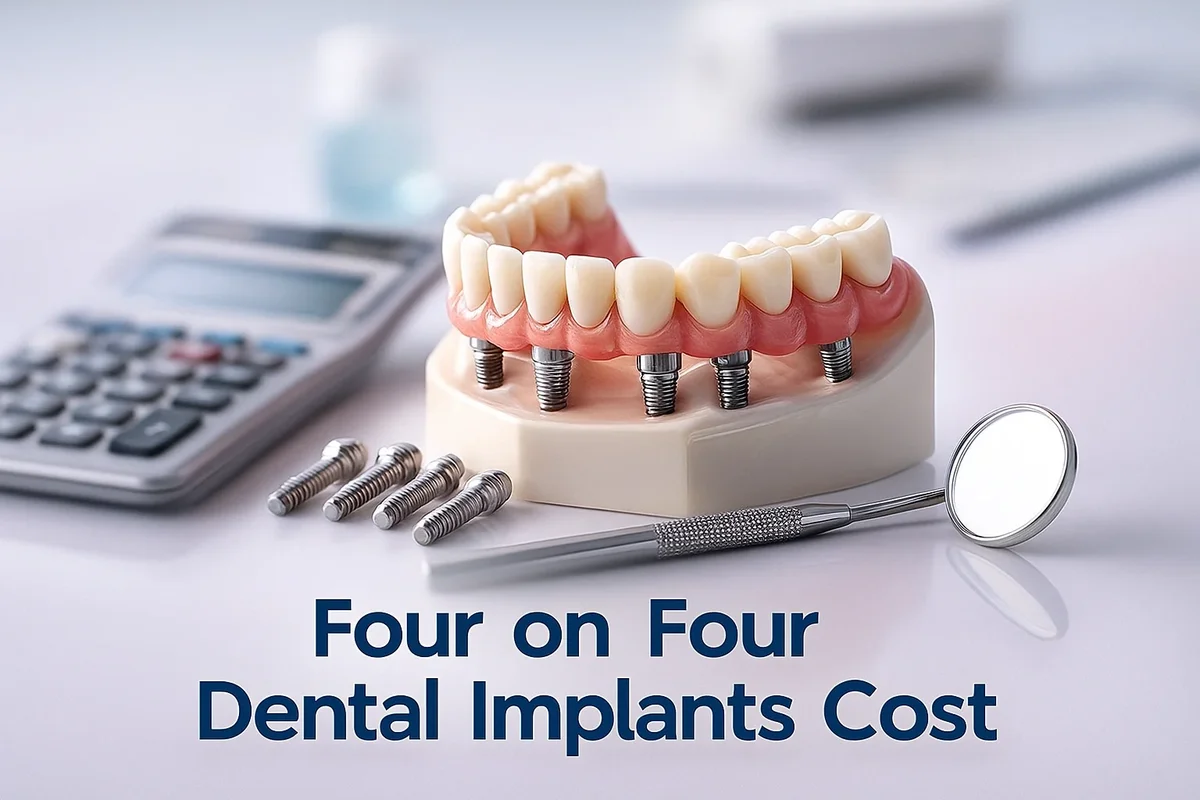
Are Four on Four Dental Implants Worth the Cost? Expert Insights
Many patients researching the four on four dental implants cost wonder whether the investment truly delivers long-term value. This is an understandable question—full-arch implant rehabilitation represents a significant financial commitment. However, when evaluated from clinical, functional, aesthetic, and psychological perspectives, the four-on-four system consistently demonstrates impressive long-term benefits that often surpass traditional dental restoration methods. In this comprehensive section, we will analyze expert perspectives, real patient outcomes, long-term financial efficiency, and the scientific evidence supporting this advanced treatment.
Dental implants have revolutionized modern dentistry, providing a permanent, natural-feeling solution for individuals with extensive tooth loss. The four-on-four method stands out because it maximizes stability, minimizes surgical complexity, and delivers immediate cosmetic improvement. When these factors are weighed together, the overall value of the four on four dental implants cost becomes much clearer.
Clinical Benefits That Justify the Investment
One of the strongest arguments supporting the value of the four-on-four system is its clinical success rate. Numerous studies demonstrate success rates of over 95% when implants are placed by trained professionals under proper diagnostic guidance. This high predictability is a major part of why experts often recommend the procedure for full-arch rehabilitation.
Biomechanical Stability
The use of angled posterior implants allows the system to bypass anatomical limitations, providing exceptional stability without the need for extensive bone grafting. This optimized engineering reduces recovery time and minimizes additional costs—adding tremendous long-term value to the four on four dental implants cost.
Immediate Functionality
Patients receive temporary prosthetic teeth on the day of surgery, restoring aesthetics and function immediately. This same-day transformation is one of the most compelling aspects of the treatment. Individuals can smile, speak, and eat soft foods within hours—a dramatic improvement compared to the long waiting periods required for traditional implant methods.
Aesthetic and Emotional Advantages
Restoring an entire arch with fixed teeth dramatically improves self-esteem, facial harmony, and social confidence. Many patients report feeling years younger with their new smile. These non-physical benefits are often overlooked when assessing the four on four dental implants cost, yet they significantly enhance quality of life.
Improved Facial Structure
Missing teeth contribute to facial collapse, sagging cheeks, and premature aging. Implants restore natural facial support, leading to a fuller, more youthful appearance. Patients frequently describe this improvement as one of the most rewarding outcomes of the procedure.
Natural Aesthetics
Modern prosthetics, especially zirconia and high-quality hybrid materials, closely mimic the appearance of natural teeth. Digital smile design techniques also allow patients to preview their new smile before treatment, ensuring predictable, beautiful results.
Financial Value Compared to Alternatives
While the four on four dental implants cost may seem higher upfront, it often becomes more economical over time. Traditional dentures require constant maintenance, adhesives, relines, and eventual replacement—costs that accumulate heavily over the years.
In contrast, implant-supported teeth require minimal maintenance and deliver long-term stability. When amortized over decades, the cost per year of full-arch implants is significantly lower than removable dentures.
Cost Comparison Over 10–20 Years
Here is a simplified breakdown to illustrate long-term value:
- Dentures: Replacements every 5–7 years, adhesive expenses, reduced chewing efficiency, potential bone loss treatment.
- Four-on-four implants: One-time surgical investment, minimal repairs, long-term bone preservation, superior function.
Because implants stimulate the jawbone and prevent bone loss, they offer health benefits that dentures cannot—further increasing the value of the four on four dental implants cost.
Expert Opinions and Scientific Endorsement
Dental experts worldwide recognize the four-on-four method as one of the most efficient and predictable full-arch solutions. Its popularity continues to grow among implantologists due to its success rate and patient satisfaction levels.
Global authorities—including the
American Dental Association—support dental implants as a long-term, biologically compatible solution for missing teeth, emphasizing their role in maintaining oral health and functionality.
Patient Satisfaction and Real-Life Outcomes
Patient testimonials consistently highlight the positive transformation brought about by four-on-four implants. Common benefits mentioned include:
- Dramatic improvement in chewing ability
- Better speech clarity
- A natural-looking smile
- Freedom from dentures and adhesives
- Long-term confidence and comfort
Many patients report that the treatment exceeded their expectations and delivered significant improvements in both lifestyle and overall well-being.
Are There Situations Where It May Not Be Ideal?
While the procedure is highly effective, certain medical conditions—such as uncontrolled diabetes, active gum disease, or insufficient bone structure—may require preparatory treatment before performing the four-on-four procedure. These additional steps can increase the four on four dental implants cost, but they are crucial for ensuring long-term success.
In rare cases, patients with extremely reduced bone volume may require alternative full-arch solutions, such as zygomatic implants.
Final Verdict: Is It Worth the Investment?
Yes—according to both experts and patients, the benefits overwhelmingly justify the four on four dental implants cost. The procedure restores function, comfort, aesthetics, and oral health in ways that no removable alternative can achieve. It is a long-term investment in your physical health, confidence, and daily quality of life.
For those seeking a personalized assessment or customized treatment plan, you can reach out to a specialist through the
Redent Klinik Contact Page.
Ultimately, four-on-four dental implants offer lasting value that extends far beyond the initial expense. With proper care, they can provide decades of stability, comfort, and natural beauty—making them one of the most rewarding dental investments available today.