
Losing multiple teeth or an entire arch of teeth can have a profound impact on a person’s oral health, confidence, appearance, and overall quality of life. Modern dentistry has introduced highly effective solutions that allow patients to regain a natural-looking smile and restore full dental function. One of the most advanced and reliable treatment options available today is full arch restoration. This comprehensive procedure is specifically designed to replace all missing or severely damaged teeth within a dental arch using implant-supported restorations that closely replicate the appearance, feel, and functionality of natural teeth.
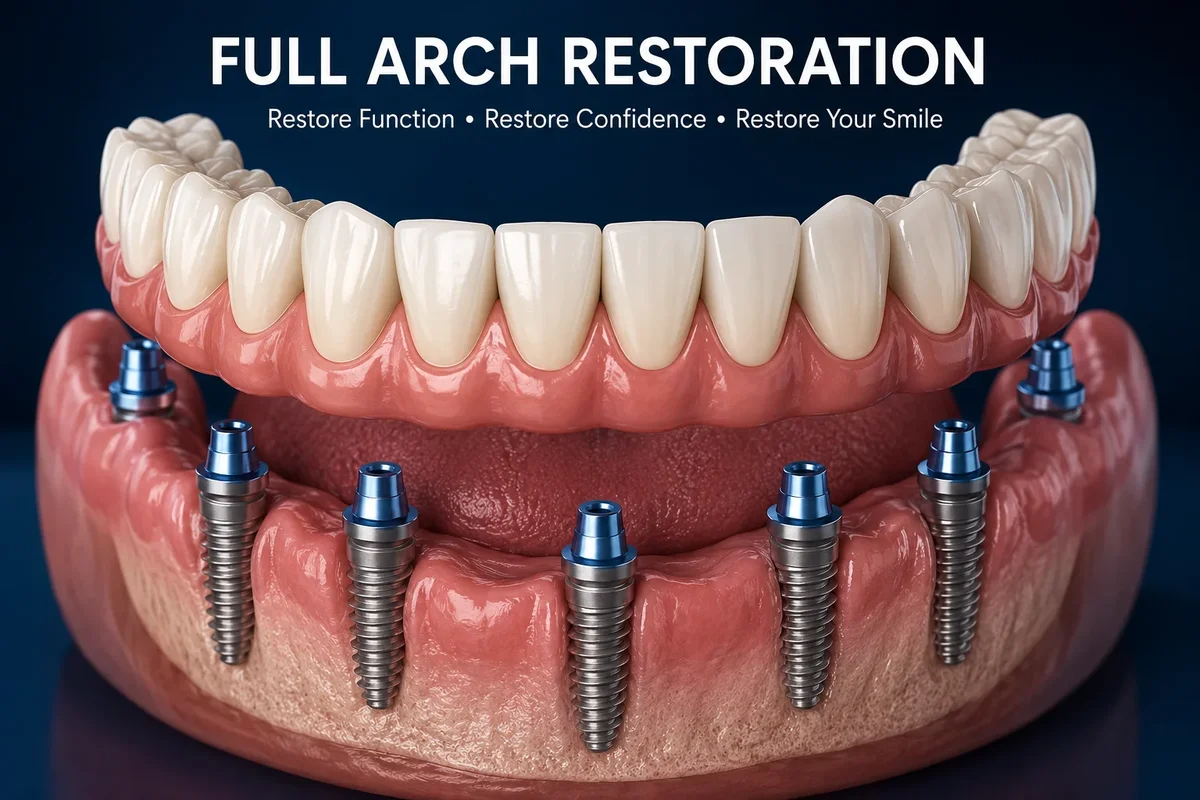
Full arch restoration has revolutionized the treatment of extensive tooth loss. Unlike traditional dentures that rest on the gums and may shift during eating or speaking, a modern full arch restoration is anchored securely to dental implants placed within the jawbone. This stable foundation allows patients to enjoy greater comfort, improved chewing efficiency, and enhanced confidence in their daily lives.
The primary objective of full arch restoration is to restore both function and aesthetics. Tooth loss can occur due to various factors, including severe tooth decay, advanced periodontal disease, facial trauma, genetic conditions, or long-term neglect of oral health. Regardless of the cause, full arch restoration provides a long-lasting solution that addresses both the visible and functional consequences of missing teeth.
One of the most significant benefits of full arch restoration is the ability to restore normal chewing function. Individuals who wear conventional dentures often struggle to eat harder foods such as apples, nuts, steak, or crusty bread. Because dental implants are integrated directly into the jawbone, a full arch restoration provides exceptional stability and allows patients to enjoy a wider variety of foods with confidence. Improved chewing ability can also contribute to better nutrition and overall health.
Another important advantage of full arch restoration is jawbone preservation. When natural teeth are lost, the jawbone gradually begins to shrink due to a lack of stimulation. This process, known as bone resorption, can lead to facial sagging and an aged appearance over time. Dental implants used in full arch restoration mimic natural tooth roots and help stimulate the bone, reducing bone loss and maintaining facial structure for many years.
From a cosmetic perspective, full arch restoration offers remarkable results. Modern dental materials and digital treatment planning allow clinicians to create restorations that closely resemble natural teeth. Every aspect of the smile can be customized, including tooth shape, size, color, alignment, and gum aesthetics. As a result, patients who undergo full arch restoration often experience dramatic improvements in self-esteem and social confidence.
The treatment process for full arch restoration typically begins with a comprehensive consultation and examination. Dentists use advanced diagnostic technologies such as digital scans, panoramic radiographs, and cone beam computed tomography (CBCT) imaging to evaluate bone density, oral health, and treatment suitability. These detailed assessments enable clinicians to develop a personalized full arch restoration plan tailored to each patient’s unique needs.
Depending on the clinical situation, a full arch restoration may be supported by four, five, six, or more dental implants strategically positioned throughout the jaw. Popular treatment concepts such as All-on-4 and All-on-6 are examples of implant-supported approaches that can effectively support a complete dental arch. These techniques maximize implant stability while minimizing the need for extensive surgical procedures.
Patients frequently wonder whether they are suitable candidates for full arch restoration. In general, individuals who have lost most or all teeth in one or both arches may benefit from this treatment. Even patients who have experienced some degree of bone loss may still qualify, as modern implant dentistry often includes bone grafting and advanced surgical techniques to create a stable foundation for implants.
Comfort during treatment is another common concern. Fortunately, modern full arch restoration procedures are performed using advanced anesthesia and sedation techniques that significantly enhance patient comfort. Many individuals report that the procedure is far less uncomfortable than they initially anticipated. Following treatment, temporary restorations may be provided while the implants heal and integrate with the jawbone.
Long-term success is one of the defining characteristics of full arch restoration. With proper care and maintenance, implant-supported restorations can provide decades of reliable function. Daily brushing, flossing, professional cleanings, and regular dental examinations are essential for preserving the health of the implants and surrounding tissues. Patients who follow recommended maintenance protocols often enjoy excellent long-term outcomes.
In addition to restoring oral function, full arch restoration can significantly improve speech. Missing teeth and unstable dentures frequently affect pronunciation and communication. Because implant-supported restorations remain securely fixed in place, patients often notice clearer speech and increased confidence during conversations, presentations, and social interactions.
The term full arch restoration may also encompass related concepts such as implant-supported full-mouth rehabilitation, complete arch replacement, and full-mouth dental reconstruction. While treatment details vary among patients, the overall objective remains consistent: replacing missing teeth with a durable, attractive, and functional solution that enhances oral health and quality of life.
Individuals considering full arch restoration should seek evaluation from experienced implant professionals who can provide personalized recommendations. Organizations such as the American Dental Association emphasize the importance of comprehensive diagnosis, individualized treatment planning, and ongoing oral healthcare. Patients seeking professional guidance can also visit the Redent Klinik Contact Page to learn more about treatment options and schedule a consultation.
Ultimately, full arch restoration represents one of the most transformative advances in modern restorative dentistry. By replacing an entire arch of missing teeth with stable, natural-looking implant-supported prosthetics, patients can regain their ability to eat comfortably, speak clearly, smile confidently, and enjoy a higher quality of life. For individuals struggling with extensive tooth loss, full arch restoration offers a reliable pathway toward renewed oral health, improved function, and long-lasting confidence. 🦷✨😁
What Is Full Arch Restoration and How Does It Work?
Who Is a Good Candidate for Full Arch Restoration?
Benefits of Choosing Full Arch Restoration Over Traditional Dentures
Types of Full Arch Restoration Treatment Options Available
The Step-by-Step Full Arch Restoration Procedure Explained
Recovery Timeline and Aftercare Following Full Arch Restoration
Full Arch Restoration Cost Factors and Long-Term Value
Potential Risks, Complications, and How to Avoid Them
How to Maintain Your Full Arch Restoration for Lifelong Results
Disclosure: this page may contain affiliate links. We may earn a commission if you use them, at no extra cost to you.