
The question of full jaw dental implants cost is one of the most common and important concerns for patients considering a complete smile restoration. Whether you have lost most or all of your teeth due to decay, gum disease, trauma, or long-term dental issues, understanding the real full jaw dental implants cost helps you make an informed, confident decision. This guide explains what you are truly paying for, what influences the final price, and why this treatment is considered a long-term investment rather than a short-term expense.
When people search for full jaw dental implants cost, they are not only looking for a number. They want clarity, transparency, and reassurance. They want to know if the treatment is worth it, how it compares to dentures, and whether there are hidden expenses. In reality, the full jaw dental implants cost reflects a complex medical procedure that replaces an entire upper or lower arch of teeth using strategically placed dental implants that support a fixed prosthesis.
Unlike removable dentures, full jaw implants are anchored directly into the jawbone. This means the full jaw dental implants cost includes surgical placement, high-quality implant materials (often titanium or zirconia), custom-designed prosthetic teeth, laboratory work, digital imaging, and follow-up appointments. Each of these elements contributes to both function and aesthetics. Patients are not simply paying for teeth; they are investing in restored chewing ability, facial structure support, and renewed self-confidence. 😊
Another critical factor in understanding full jaw dental implants cost is the type of system used. Treatments such as All-on-4 or All-on-6 are common solutions for full-arch rehabilitation. These techniques use four to six implants per jaw to support a full set of fixed teeth. While the structure may vary slightly, the full jaw dental implants cost generally includes consultation, 3D imaging (CBCT scans), surgical planning, implant placement, temporary prosthesis, and final permanent teeth.
Many patients are surprised to learn that the full jaw dental implants cost can vary significantly depending on individual conditions. For example, if bone loss is present, bone grafting or sinus lifting procedures may be required. These additional treatments naturally influence the total full jaw dental implants cost. However, they are often necessary to ensure long-term stability and success.
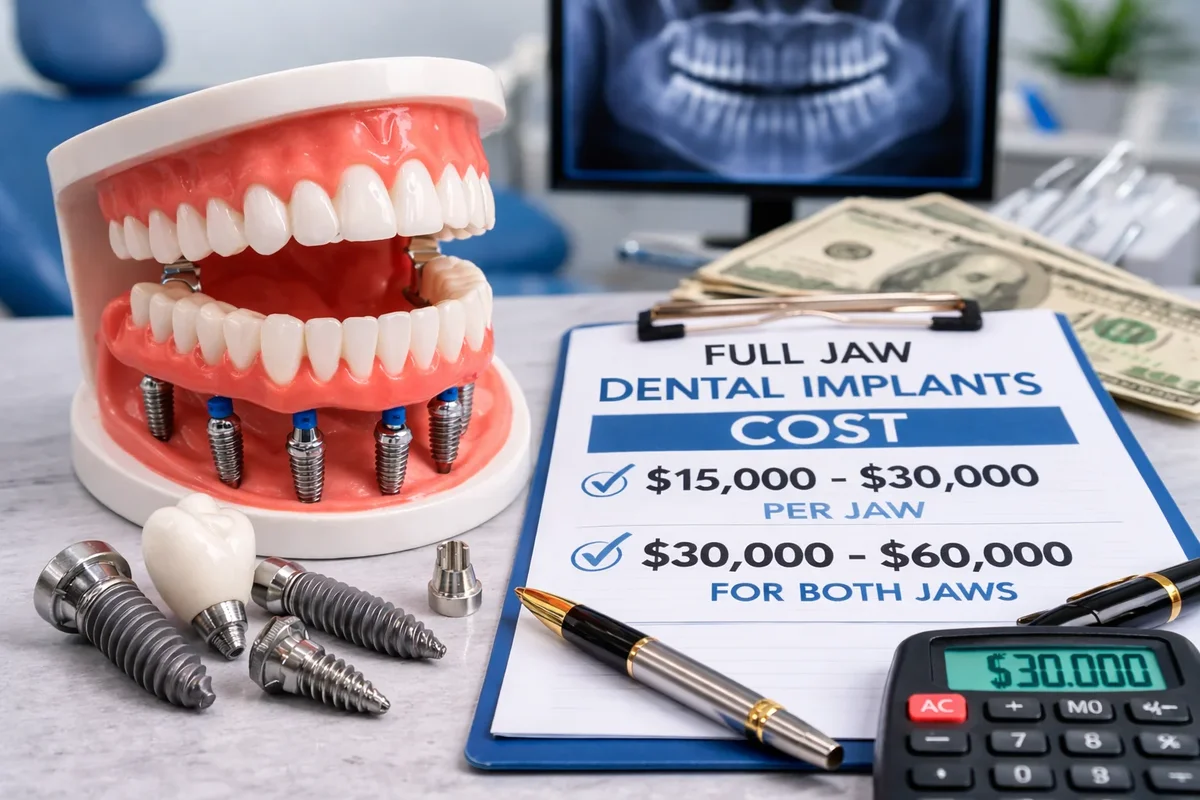
In the United States, the average full jaw dental implants cost for one arch typically ranges between $15,000 and $30,000. For both upper and lower jaws, the total may range from $30,000 to $60,000 depending on complexity, materials, and clinic location. These figures usually include surgical and prosthetic components, but it is always essential to confirm exactly what is covered in your treatment plan.
It is also important to understand that full jaw dental implants cost reflects long-term durability. Traditional dentures may initially appear more affordable, but they often require adjustments, relining, or replacement over time. By contrast, implant-supported restorations are designed for longevity. With proper care and routine dental visits, implants can last decades. According to professional guidelines shared by the American Dental Association, implant-supported restorations have high long-term success rates when maintained correctly.
Patients evaluating full jaw dental implants cost should also consider quality of life improvements. Full-arch implants restore bite force, allowing patients to eat foods they may have avoided for years. They prevent jawbone shrinkage, which typically occurs after tooth loss. Additionally, they eliminate the inconvenience and discomfort often associated with removable dentures. From a functional and psychological perspective, the value often extends far beyond the initial full jaw dental implants cost.
If you are considering treatment and want a personalized estimate, the best step is to schedule a professional consultation. At that stage, your dentist will assess your oral health, bone density, medical history, and aesthetic goals. For direct communication with experienced professionals, you can visit the Redent Klinik Contact Page to request detailed information tailored to your case.
Ultimately, understanding full jaw dental implants cost requires looking at the complete picture: surgical precision, advanced materials, laboratory craftsmanship, and long-term oral health benefits. While the initial figure may seem substantial, many patients view it as an investment in comfort, stability, and confidence. When evaluated over decades of use, the overall value of full-arch restoration often outweighs the upfront full jaw dental implants cost, making it one of the most transformative procedures in modern dentistry. 🦷
What Determines Full Jaw Dental Implants Cost?
Understanding what determines full jaw dental implants cost is essential for anyone considering a full-arch restoration. While many patients search for a simple price range, the reality is that full jaw dental implants cost is influenced by multiple clinical, technical, and geographic factors. Each patient’s oral condition is unique, and this individuality directly affects the total full jaw dental implants cost. Below, we break down the primary elements that shape pricing so you can clearly see where your investment goes. 😊
1. Number of Implants Used Per Jaw
The number of implants placed plays a major role in full jaw dental implants cost. Most full-arch solutions use four to six implants to support a fixed prosthesis. An All-on-4 approach typically requires four implants, while All-on-6 uses six for additional support and stability.
More implants generally increase the full jaw dental implants cost because each implant involves surgical placement, high-quality materials, and laboratory precision. However, in some cases, using more implants can improve long-term durability and load distribution, which may reduce complications in the future. The decision is based on bone density, bite force, and structural needs—not simply price.
2. Type and Quality of Implant Materials
The materials used significantly affect full jaw dental implants cost. Most implants are made from medical-grade titanium, known for its biocompatibility and strength. Some patients opt for zirconia implants, which can influence the overall full jaw dental implants cost due to manufacturing complexity.
Premium Implant Brands
High-end implant systems from internationally recognized manufacturers often increase full jaw dental implants cost. These brands invest heavily in research, long-term clinical studies, and technological innovation. While this may raise the initial price, it often provides predictable success rates and long-term reliability.
Prosthetic Materials
The final teeth (prosthesis) can be made from acrylic, porcelain fused to metal, or full zirconia. Zirconia full-arch restorations typically increase full jaw dental implants cost due to their durability, aesthetics, and resistance to wear. Acrylic solutions may reduce the full jaw dental implants cost, but they may not offer the same long-term lifespan.
3. Bone Condition and Additional Procedures
Your existing jawbone health is one of the most influential factors in determining full jaw dental implants cost. If bone loss has occurred due to prolonged tooth absence, additional treatments may be required before implants can be placed.
Bone Grafting
Bone grafting procedures increase full jaw dental implants cost because they involve surgical preparation and healing time. Grafts ensure that implants are securely anchored and stable for years to come.
Sinus Lifting (Upper Jaw Cases)
For upper jaw restorations, a sinus lift may be necessary if bone height is insufficient. This additional surgical step directly impacts full jaw dental implants cost, but it improves implant stability and long-term success.
4. Diagnostic Technology and Digital Planning
Modern dentistry relies on advanced imaging and digital planning systems. 3D CBCT scans, digital impressions, and computer-guided surgery all contribute to precise outcomes. These technologies enhance accuracy but also influence full jaw dental implants cost.
Although digital planning may slightly raise full jaw dental implants cost, it minimizes surgical risks, reduces complications, and ensures better prosthetic alignment. In most cases, this precision ultimately saves time and potential corrective expenses.
5. Clinic Location and Surgeon Expertise
Geographic location significantly affects full jaw dental implants cost. Clinics in major metropolitan areas often have higher operational expenses, which can raise pricing. Additionally, the experience and specialization of the implant surgeon play a critical role.
A highly trained oral surgeon or prosthodontist may charge more, increasing full jaw dental implants cost, but their expertise can reduce the risk of complications and improve long-term success rates. In complex procedures like full-arch rehabilitation, experience matters greatly.
6. Temporary vs Permanent Prosthesis
Many full-arch treatments include a temporary fixed bridge placed immediately after surgery. This provisional solution allows patients to function while healing. The inclusion of temporary teeth is factored into full jaw dental implants cost.
The final prosthesis, placed after healing, represents a major portion of full jaw dental implants cost. Custom design, laboratory artistry, and bite calibration all influence the final pricing.
7. Aftercare, Follow-Ups, and Warranty
Comprehensive aftercare is another factor shaping full jaw dental implants cost. Follow-up appointments, adjustments, and warranty coverage may be included in some treatment plans. Clinics that offer structured maintenance programs may present slightly higher full jaw dental implants cost, but they provide additional peace of mind.
Ultimately, full jaw dental implants cost reflects more than just the surgical procedure. It includes advanced diagnostics, precision engineering, high-quality materials, surgical expertise, and long-term care planning. When evaluating the total full jaw dental implants cost, patients should focus not only on price but also on safety, durability, and overall treatment quality. 🦷
Average Full Jaw Dental Implants Cost in 2026
One of the most common questions patients ask is: what is the average full jaw dental implants cost in 2026? While there is no single universal price, understanding current market ranges helps you evaluate whether a treatment quote is realistic, fair, and comprehensive. The full jaw dental implants cost varies depending on clinical complexity, materials, country, and the expertise of the surgical team. However, general price benchmarks provide clarity for anyone researching full-arch restoration.
In 2026, the average full jaw dental implants cost for a single arch (either upper or lower jaw) in the United States typically ranges between $15,000 and $30,000. When both jaws require treatment, the total full jaw dental implants cost may range from $30,000 to $60,000. These figures often include surgical placement of implants, temporary teeth, final prosthesis, digital imaging, and follow-up visits. However, not every clinic structures pricing the same way, which is why transparency is essential. 😊
Single Arch vs Double Arch Pricing
The most significant factor influencing full jaw dental implants cost is whether you are restoring one jaw or both. A single arch procedure involves placing implants and attaching a fixed prosthesis for either the upper or lower jaw. In this case, the full jaw dental implants cost reflects only one surgical and prosthetic cycle.
For patients requiring both upper and lower restorations, the full jaw dental implants cost naturally doubles or slightly increases due to surgical time, laboratory fabrication, and material expenses. However, some clinics offer package pricing when treating both arches simultaneously, slightly optimizing the overall full jaw dental implants cost.
Cost Breakdown by Treatment Components
To better understand average full jaw dental implants cost, it helps to break the price into components:
1. Consultation and Diagnostic Imaging
Initial evaluation, CBCT 3D scans, and digital treatment planning may range between $300 and $1,000. These diagnostics are essential and included in many comprehensive full jaw dental implants cost packages.
2. Surgical Placement of Implants
The surgical phase is one of the largest contributors to full jaw dental implants cost. Placing four to six implants per jaw can range between $8,000 and $18,000 depending on complexity and brand selection.
3. Temporary Prosthesis
Many full-arch treatments include a fixed temporary bridge placed on the same day or shortly after surgery. This provisional restoration may account for $2,000 to $5,000 within the overall full jaw dental implants cost.
4. Final Permanent Teeth
The permanent prosthesis—often made from zirconia or porcelain—typically represents $5,000 to $15,000 of the total full jaw dental implants cost. High-end zirconia restorations are more expensive but offer superior strength and aesthetics.
How Full Arch Implant Price Compares Internationally
The full jaw dental implants cost differs significantly across countries. For example:
- United States: $15,000 – $30,000 per jaw
- United Kingdom: £12,000 – £25,000 per jaw
- Germany: €14,000 – €28,000 per jaw
- Turkey: $6,000 – $12,000 per jaw
Medical tourism has become increasingly popular because the full jaw dental implants cost in certain countries can be significantly lower while maintaining high clinical standards. However, patients should evaluate surgeon qualifications, clinic reputation, and follow-up care before choosing based solely on full jaw dental implants cost.
Why Prices Vary So Widely
Several factors explain the variation in full jaw dental implants cost. Operating expenses, laboratory partnerships, implant brand selection, and clinician expertise all influence pricing. Additionally, cases involving bone grafting, sinus lifts, or complex bite reconstruction increase full jaw dental implants cost beyond average estimates.
Another element impacting full jaw dental implants cost is the warranty or maintenance package offered by the clinic. Some providers include structured follow-up visits and long-term guarantees, which may slightly increase upfront full jaw dental implants cost but add long-term value.
Is the Average Cost Worth It?
While the numbers may seem substantial, it is important to compare full jaw dental implants cost with alternative treatments. Removable dentures may initially cost between $2,000 and $5,000, but over 10–15 years, replacement, relining, and adhesives can add up significantly. When viewed over decades, the long-term value of implant-supported teeth often balances the higher initial full jaw dental implants cost.
Beyond finances, the functional and psychological benefits are profound. Full-arch implants restore chewing power, prevent bone resorption, and eliminate denture instability. For many patients, the improvement in quality of life justifies the full jaw dental implants cost as a long-term investment rather than an expense.
Ultimately, the average full jaw dental implants cost in 2026 reflects advanced surgical precision, premium materials, and customized prosthetic design. When considering treatment, focus not only on the total full jaw dental implants cost but also on clinical expertise, long-term durability, and overall treatment transparency. 🦷
Full Jaw Dental Implants Cost vs Traditional Dentures
When patients research full jaw dental implants cost, they often compare it directly with the price of traditional removable dentures. At first glance, dentures appear far more affordable. However, a deeper evaluation reveals that full jaw dental implants cost reflects a completely different level of stability, function, durability, and long-term value. To truly understand whether the higher investment makes sense, it is essential to examine how these two treatment options differ in structure, performance, maintenance, and overall lifetime expense. 🦷
Initial Price Comparison
Traditional full dentures typically cost between $2,000 and $5,000 per arch in the United States. In contrast, the average full jaw dental implants cost ranges between $15,000 and $30,000 per arch. This large difference often causes hesitation. However, the reason for the higher full jaw dental implants cost lies in the surgical component, implant materials, laboratory fabrication, and long-term structural support.
Dentures sit on top of the gums and rely on suction or adhesives for stability. Meanwhile, implant-supported restorations are anchored directly into the jawbone. This surgical anchoring explains why full jaw dental implants cost includes implant placement, digital planning, anesthesia, and prosthetic engineering. You are paying for permanent structural integration—not just replacement teeth.
Long-Term Financial Perspective
Although dentures are cheaper initially, they often require ongoing maintenance. Relining, adjustments, repairs, and eventual replacement can accumulate significant costs over time. Many dentures need replacement every 5 to 8 years due to wear and bone shrinkage. Over 15 to 20 years, cumulative denture expenses may approach or even exceed the original full jaw dental implants cost.
Hidden Costs of Dentures
There are also hidden costs associated with dentures. Adhesives, cleaning solutions, repair visits, and occasional emergency fixes add to total lifetime spending. Additionally, bone resorption (jawbone shrinkage) continues under dentures, potentially leading to facial collapse and further treatment expenses. By contrast, the full jaw dental implants cost includes a solution that helps preserve jawbone density, reducing long-term complications.
Durability and Longevity
Implants are designed to last decades when properly maintained. While the prosthetic teeth may eventually need replacement, the implants themselves can remain stable for 20+ years. This durability helps justify the higher full jaw dental implants cost. Dentures, on the other hand, typically require more frequent replacement due to material wear and changes in gum structure.
Function and Bite Strength
Functionality is one of the biggest differences impacting the perceived value of full jaw dental implants cost. Dentures restore only about 20–30% of natural chewing power. This limitation forces patients to avoid hard or fibrous foods.
Implant-supported restorations restore up to 80–90% of natural bite force. This dramatic improvement in chewing ability is a major reason why many patients accept the higher full jaw dental implants cost. Being able to eat confidently without fear of slipping or discomfort significantly improves quality of life. 😊
Comfort and Stability
Removable dentures can shift, rub against gums, and cause sore spots. Even well-fitted dentures may loosen over time due to bone shrinkage. Implant-supported restorations eliminate this issue because they are fixed securely in place. The enhanced stability is a primary factor that differentiates full jaw dental implants cost from denture pricing.
Patients who upgrade from dentures often describe implant-supported teeth as feeling closer to natural teeth. This improved comfort directly correlates with the perceived value of full jaw dental implants cost.
Aesthetic and Facial Structure Support
Another important consideration is facial aesthetics. Dentures do not prevent bone loss, which can cause a sunken facial appearance over time. Implants stimulate the jawbone, maintaining facial volume and structure. Preserving bone density is one of the strongest arguments supporting the long-term value of full jaw dental implants cost.
From a cosmetic perspective, implant-supported teeth often look more natural and stable. The customization of shape, color, and alignment included in full jaw dental implants cost contributes to a more lifelike smile.
Psychological and Lifestyle Benefits
Beyond financial comparisons, emotional well-being matters. Denture wearers sometimes experience embarrassment when speaking or eating in public due to fear of slipping. Implant-supported teeth remove that anxiety. Many patients feel that the confidence gained is worth the full jaw dental implants cost alone.
In professional and social settings, stability and confidence can influence overall quality of life. When considering the full picture—function, comfort, durability, aesthetics, and emotional security—the difference between dentures and the full jaw dental implants cost becomes clearer.
Ultimately, while dentures may appear more affordable initially, the long-term value, durability, and functional advantages of implant-supported restorations often justify the higher full jaw dental implants cost. The decision should not be based solely on upfront pricing but on long-term oral health, lifestyle improvement, and overall satisfaction. 💡
Are Full Jaw Dental Implants Worth the Cost?
When evaluating full jaw dental implants cost, one of the most important questions patients ask is whether the investment is truly worth it. Because the full jaw dental implants cost can appear significant at first glance, it is natural to compare it with alternative treatments and consider long-term value. However, determining whether the full jaw dental implants cost is justified requires examining durability, functionality, aesthetics, oral health benefits, and overall quality of life.
Unlike temporary or removable solutions, full-arch implant restorations are designed as a long-term or even lifelong treatment. This is a major reason why full jaw dental implants cost is structured differently from other dental procedures. The investment covers not only the surgical phase but also the advanced technology, custom laboratory work, and long-term structural support that implants provide. 😊
Long-Term Durability and Lifespan
One of the strongest arguments supporting full jaw dental implants cost is durability. Dental implants are made from medical-grade titanium or zirconia and integrate directly with the jawbone through a process called osseointegration. Once healed, the implants function as artificial tooth roots.
With proper care, implants can last 20 years or more, and in many cases, they last a lifetime. While the prosthetic bridge may need replacement after 10–15 years due to normal wear, the implant foundation typically remains stable. When patients consider this longevity, the overall full jaw dental implants cost becomes more understandable as a long-term investment rather than a short-term expense.
Improved Function and Chewing Power
Another reason patients find value in full jaw dental implants cost is the dramatic improvement in chewing ability. Removable dentures often restore only limited bite force, restricting diet choices. Implant-supported restorations can restore up to 80–90% of natural chewing strength.
This functional advantage means patients can comfortably eat foods like steak, apples, and nuts—items that are often avoided with dentures. The ability to eat confidently and without discomfort plays a major role in why many individuals consider the full jaw dental implants cost worthwhile.
Speech Stability
Loose dentures can sometimes shift during speech, causing embarrassment or difficulty pronouncing certain words. Implant-supported restorations eliminate movement, improving speech clarity. For many patients, this added confidence reinforces the value of the full jaw dental implants cost.
Preservation of Jawbone and Facial Structure
One hidden but critical benefit included in full jaw dental implants cost is jawbone preservation. After tooth loss, the jawbone begins to shrink due to lack of stimulation. Dentures do not stop this process.
Implants, however, stimulate the bone just like natural tooth roots. This stimulation helps prevent bone resorption and maintains facial structure. Over time, this preservation reduces the likelihood of a sunken facial appearance. When factoring in long-term oral health, the full jaw dental implants cost includes protection against structural deterioration.
Psychological and Emotional Benefits
The emotional impact of missing teeth should not be underestimated. Many individuals experience reduced self-esteem, social anxiety, or hesitation to smile. The stability and natural appearance provided through full jaw dental implants cost often restore confidence.
Patients frequently report feeling younger, more secure, and more comfortable in social and professional settings after treatment. These psychological benefits are intangible but powerful factors when assessing whether the full jaw dental implants cost is justified.
Cost Compared Over Time
While the initial full jaw dental implants cost is higher than traditional dentures, long-term comparisons often show a different picture. Dentures may require replacement every 5–8 years, along with relining, adhesives, and adjustments. These cumulative expenses can become substantial.
When evaluating expenses over 15–20 years, the total lifetime cost of dentures may approach or even rival the original full jaw dental implants cost. In contrast, implants offer stability with fewer recurring adjustments.
Maintenance and Care
Maintaining implant-supported teeth is straightforward: brushing, flossing, and regular dental check-ups. Unlike dentures, there is no need for adhesives or nightly removal. The simplicity of maintenance further supports the long-term value of full jaw dental implants cost.
Medical and Quality-of-Life Considerations
Full-arch implant restoration improves nutritional intake by allowing patients to eat a broader variety of foods. This contributes to better overall health. Additionally, eliminating chronic denture irritation can improve daily comfort.
From a medical standpoint, the investment in full jaw dental implants cost supports both oral and systemic well-being. Improved chewing efficiency contributes to digestion and nutritional balance, while stable teeth reduce gum irritation and inflammation.
Ultimately, determining whether full jaw dental implants cost is worth it depends on personal priorities. For patients seeking long-term stability, improved function, preserved bone structure, enhanced aesthetics, and restored confidence, the value often far outweighs the initial financial commitment. When viewed over decades of use and daily comfort, many patients conclude that full jaw dental implants cost represents one of the most transformative investments in modern dentistry. 🦷
Factors That Increase or Decrease Full Jaw Dental Implants Cost
The full jaw dental implants cost is not a fixed number because every patient’s clinical situation is different. While average price ranges provide a helpful starting point, the final full jaw dental implants cost can increase or decrease depending on medical, technical, and logistical factors. Understanding these variables allows patients to interpret treatment quotes more accurately and avoid surprises during the planning process. 😊
Some factors may raise the full jaw dental implants cost due to additional surgical steps or premium material choices. Other elements can help reduce the overall full jaw dental implants cost without compromising quality, depending on the clinic and treatment approach. Below is a detailed breakdown of the most important influences.
1. Bone Density and Jaw Condition
One of the primary elements that affects full jaw dental implants cost is bone health. Patients who have experienced long-term tooth loss often suffer from bone resorption. When the jawbone lacks sufficient density or volume, additional procedures may be required before implant placement.
Bone Grafting Procedures
If bone grafting is necessary, this will increase full jaw dental implants cost because it involves additional materials, surgical time, and healing phases. Grafting can add anywhere from $1,000 to $5,000 per arch depending on complexity.
Sinus Lift Surgery
For upper jaw cases with insufficient bone height, a sinus lift may be required. This advanced surgical step increases full jaw dental implants cost, but it ensures proper implant stability and long-term success.
2. Number of Implants Placed
The quantity of implants used per arch directly influences full jaw dental implants cost. All-on-4 systems use four implants, while All-on-6 or custom plans may use six or more. More implants mean higher surgical and material costs, which raises the overall full jaw dental implants cost.
However, in some cases, fewer implants may be clinically appropriate, which can slightly reduce full jaw dental implants cost. The correct number is determined by bone quality, bite force, and prosthetic design.
3. Type of Prosthetic Material
The material used for the final teeth plays a major role in determining full jaw dental implants cost. Acrylic prostheses are generally more affordable, while zirconia bridges are more expensive due to their durability and natural appearance.
Acrylic Hybrid Bridges
Acrylic solutions may reduce full jaw dental implants cost initially, making them an attractive option for budget-conscious patients. However, they may require earlier replacement compared to zirconia.
Full Zirconia Bridges
Zirconia restorations increase full jaw dental implants cost, but they provide superior strength, stain resistance, and longevity. Many patients view this upgrade as worthwhile due to its long-term durability.
4. Technology and Digital Planning
Clinics that use advanced digital imaging, CBCT scans, intraoral scanners, and computer-guided surgery often reflect these technologies in the full jaw dental implants cost. While this may slightly increase pricing, it improves precision and reduces surgical risks.
In some cases, clinics without advanced digital workflows may offer lower full jaw dental implants cost, but patients should carefully evaluate the trade-offs between price and technological accuracy.
5. Geographic Location
Location significantly impacts full jaw dental implants cost. Clinics in major metropolitan areas with higher operating expenses typically charge more. Conversely, some countries offer lower full jaw dental implants cost due to reduced labor and operational costs.
Medical tourism has become increasingly common because the full jaw dental implants cost in certain countries can be 40–60% lower than in the United States or Western Europe. However, travel, accommodation, and follow-up logistics must be considered when comparing total expenses.
6. Surgeon Experience and Specialization
The expertise of the dental surgeon or prosthodontist is another factor affecting full jaw dental implants cost. Highly experienced specialists with advanced training may charge more, increasing the full jaw dental implants cost. However, this experience often reduces the risk of complications and improves long-term success.
Choosing a provider based solely on lower full jaw dental implants cost may not always be advisable. Skill, reputation, and case experience should carry significant weight in decision-making.
7. Inclusion of Temporary Prosthesis
Some clinics include an immediate temporary bridge in the total full jaw dental implants cost, while others price it separately. Immediate loading increases convenience and aesthetics during healing but can raise the overall full jaw dental implants cost.
8. Aftercare and Warranty Coverage
Comprehensive aftercare plans, maintenance visits, and prosthetic warranties may increase upfront full jaw dental implants cost, but they add long-term security. Clinics that offer structured maintenance programs may present slightly higher full jaw dental implants cost, yet they provide reassurance against unexpected expenses.
In summary, full jaw dental implants cost is shaped by bone condition, implant quantity, prosthetic material, technology, location, surgeon expertise, and post-treatment support. While some factors may increase the total full jaw dental implants cost, they often enhance durability and clinical success. Patients should evaluate both cost and quality together to ensure that their investment delivers long-term comfort, stability, and confidence. 🦷
Full Jaw Dental Implants Cost by Country
The full jaw dental implants cost can vary dramatically depending on the country where the procedure is performed. For many patients, understanding international price differences helps them evaluate whether traveling abroad for treatment is financially reasonable. While the core surgical principles remain similar worldwide, factors such as labor expenses, regulatory standards, clinic overhead, currency differences, and healthcare systems all influence full jaw dental implants cost.
When comparing countries, it is important not to focus only on the lowest full jaw dental implants cost. Instead, patients should evaluate surgeon expertise, clinic accreditation, implant brand quality, follow-up care, and overall treatment transparency. Below is a detailed breakdown of how full jaw dental implants cost differs globally. 🌍
United States
In the United States, the average full jaw dental implants cost ranges between $15,000 and $30,000 per arch. For both jaws, patients may expect to pay between $30,000 and $60,000. The higher full jaw dental implants cost in the U.S. reflects strict regulatory standards, higher operational expenses, advanced digital technology, and specialist fees.
While the American market offers cutting-edge facilities and highly trained surgeons, the elevated full jaw dental implants cost may not be financially accessible for all patients.
United Kingdom
In the UK, the full jaw dental implants cost typically ranges from £12,000 to £25,000 per arch. Pricing can vary significantly between London and smaller cities. Similar to the U.S., the full jaw dental implants cost reflects high regulatory standards and operational costs.
Although slightly lower than American prices in some cases, the overall full jaw dental implants cost in the UK remains among the higher ranges globally.
Germany
Germany is known for precision dentistry and strong implant systems. The full jaw dental implants cost generally ranges between €14,000 and €28,000 per arch. German clinics often use premium implant brands and advanced prosthetic laboratories, which influences the full jaw dental implants cost.
Patients choosing Germany may pay a moderate-to-high full jaw dental implants cost, but they benefit from rigorous clinical standards and engineering quality.
Turkey
Turkey has become a leading destination for dental tourism due to its competitive full jaw dental implants cost. Prices typically range from $6,000 to $12,000 per arch, significantly lower than Western Europe or the United States.
The lower full jaw dental implants cost in Turkey is largely due to reduced operational expenses rather than lower quality. Many clinics use internationally recognized implant systems and advanced digital technology. However, patients should thoroughly research clinic credentials when evaluating full jaw dental implants cost abroad.
Mexico
Mexico is another popular option for patients seeking reduced full jaw dental implants cost, especially for individuals traveling from the United States. The average full jaw dental implants cost in Mexico ranges between $8,000 and $15,000 per arch.
Border cities often specialize in dental tourism, offering competitive full jaw dental implants cost while maintaining international standards. Still, it is crucial to verify implant brands and clinic certifications.
Eastern Europe
Countries such as Hungary and Poland offer full jaw dental implants cost ranging between €7,000 and €15,000 per arch. These nations are well-known for high-quality dental tourism services, combining affordable full jaw dental implants cost with experienced implantologists.
Why the Differences Exist
Operational and Labor Costs
One of the primary reasons full jaw dental implants cost differs by country is labor and facility expense. Countries with higher wages and stricter insurance structures naturally have higher full jaw dental implants cost.
Regulatory Standards
National healthcare regulations, licensing requirements, and liability insurance policies also affect full jaw dental implants cost. Countries with strict compliance systems may reflect these standards in pricing.
Implant Brand Selection
Premium international implant systems increase full jaw dental implants cost compared to lesser-known brands. The choice of brand often impacts both price and long-term predictability.
Is Traveling for Lower Cost Worth It?
Traveling for a lower full jaw dental implants cost can be financially beneficial, but it requires careful planning. Patients must consider travel expenses, accommodation, recovery time, and potential return visits. Even if the initial full jaw dental implants cost is lower, logistical costs may narrow the price gap.
Ultimately, while full jaw dental implants cost varies widely by country, the most important factors remain clinical expertise, material quality, safety standards, and long-term support. Patients should balance affordability with quality to ensure their investment in full jaw dental implants cost results in lasting comfort, function, and confidence. 🦷
Does Insurance Cover Full Jaw Dental Implants Cost?
One of the most frequently asked financial questions patients have is whether insurance helps reduce full jaw dental implants cost. Because full jaw dental implants cost can represent a significant investment, understanding how dental insurance, medical insurance, and alternative reimbursement options apply is essential before beginning treatment. The answer, however, is not always straightforward. Coverage depends on your insurance provider, policy structure, and the medical necessity of the procedure.
In general, traditional dental insurance plans provide limited coverage for implant procedures. While insurance rarely covers the entire full jaw dental implants cost, partial reimbursement may be available for specific components of the treatment. Let’s explore how insurance interacts with full jaw dental implants cost in detail. 😊
Dental Insurance Coverage
Most standard dental insurance plans categorize implants as a major procedure. Many policies cover preventive care at 100%, basic procedures at 70–80%, and major treatments at 40–50%. However, some older plans still exclude implant coverage entirely. This directly impacts how much of the full jaw dental implants cost may be reimbursed.
What Dental Insurance May Cover
Even if implants themselves are excluded, parts of the full jaw dental implants cost may still be covered. For example:
- Tooth extractions prior to implant placement
- Diagnostic imaging such as X-rays
- Anesthesia (in some cases)
- Portions of the prosthetic restoration
While these elements may slightly reduce full jaw dental implants cost, patients should be aware that annual maximum limits often cap benefits at $1,000–$2,000 per year. This means insurance may only cover a small percentage of the total full jaw dental implants cost.
Medical Insurance Possibilities
In certain situations, medical insurance may contribute toward full jaw dental implants cost. This typically applies when tooth loss is related to trauma, cancer treatment, congenital defects, or significant medical conditions.
When Medical Insurance Applies
If tooth loss occurred due to an accident or reconstructive necessity, part of the surgical phase of full jaw dental implants cost may be classified as medically necessary. In such cases, medical insurance might cover hospital fees, anesthesia, or surgical expenses. However, prosthetic components are often billed separately under dental insurance.
Because policies vary widely, patients should always verify eligibility directly with their provider when assessing potential reductions in full jaw dental implants cost.
Flexible Spending Accounts (FSA) and Health Savings Accounts (HSA)
FSAs and HSAs are commonly used to offset full jaw dental implants cost. These tax-advantaged accounts allow patients to use pre-tax income for eligible medical and dental expenses. Since implants are considered a qualified medical expense, funds from these accounts can significantly reduce the effective full jaw dental implants cost.
Using FSA or HSA funds does not lower the listed full jaw dental implants cost, but it reduces the overall financial burden through tax savings.
Payment Plans and In-House Financing
Many clinics recognize that full jaw dental implants cost may not be fully covered by insurance and therefore offer financing options. Monthly installment plans allow patients to distribute the full jaw dental implants cost over time instead of paying the entire amount upfront.
Third-Party Financing Providers
Healthcare financing companies frequently partner with dental clinics to provide structured payment plans. Depending on approval, patients may qualify for low-interest or interest-free installment options. This makes managing full jaw dental implants cost more accessible without compromising treatment quality.
Why Insurance Coverage Is Limited
Dental implants were once considered elective procedures. Although they are now widely recognized as a gold standard for tooth replacement, some insurance policies still categorize them as non-essential. This classification affects how much of the full jaw dental implants cost insurance companies are willing to reimburse.
However, professional organizations such as the American Dental Association recognize implants as a highly effective and long-term solution for tooth loss. As implant dentistry becomes more mainstream, insurance policies continue evolving, which may influence future full jaw dental implants cost coverage structures.
Steps to Maximize Coverage
To reduce your personal full jaw dental implants cost, consider the following steps:
- Request a detailed pre-treatment estimate from your dentist
- Submit a pre-authorization request to your insurance provider
- Confirm annual maximum limits and coverage percentages
- Ask about staging treatment across calendar years to maximize benefits
Although insurance rarely covers the full full jaw dental implants cost, combining partial reimbursement, FSA/HSA funds, and structured financing can significantly reduce the immediate financial burden.
In conclusion, while insurance coverage for full jaw dental implants cost is often limited, strategic planning and careful review of benefits can help minimize out-of-pocket expenses. Patients should communicate directly with both their dental clinic and insurance provider to fully understand how their policy applies to full jaw dental implants cost. With the right approach, this transformative treatment can become more financially manageable. 🦷
Financing Options for Full Jaw Dental Implants Cost
Because full jaw dental implants cost can represent a significant financial commitment, many patients explore structured financing options before beginning treatment. While the long-term benefits often justify the investment, managing the upfront full jaw dental implants cost requires careful planning. Fortunately, modern dental clinics offer multiple payment solutions designed to make full jaw dental implants cost more accessible and manageable.
Understanding available financing strategies allows patients to move forward confidently without delaying treatment due to budget concerns. Below, we explore the most effective ways to manage full jaw dental implants cost responsibly and strategically. 😊
1. In-House Payment Plans
Many dental clinics provide internal financing programs specifically designed to spread out full jaw dental implants cost over several months. Instead of paying the entire full jaw dental implants cost upfront, patients can divide payments into manageable installments.
Short-Term Installments
Some clinics offer short-term installment plans (3–12 months) with little or no interest. This approach allows patients to manage full jaw dental implants cost without involving external lenders.
Extended Payment Programs
For larger treatment plans, extended payment schedules may be available. These structured programs make full jaw dental implants cost more predictable and less financially overwhelming.
2. Third-Party Healthcare Financing
Many dental providers partner with healthcare financing companies that specialize in medical and dental loans. These lenders allow patients to finance full jaw dental implants cost over extended terms such as 24, 36, or even 60 months.
Approval typically depends on credit evaluation. Depending on eligibility, patients may qualify for low-interest or promotional zero-interest plans. This option makes large full jaw dental implants cost payments more manageable by converting them into fixed monthly installments.
3. Health Savings Accounts (HSA) and Flexible Spending Accounts (FSA)
Using pre-tax medical savings accounts can significantly reduce the effective burden of full jaw dental implants cost. Because implants qualify as a medical expense, HSA and FSA funds can be applied directly toward full jaw dental implants cost.
While these accounts do not lower the listed full jaw dental implants cost, they reduce taxable income, effectively lowering overall financial impact.
4. Staged Treatment Planning
Another strategy to manage full jaw dental implants cost involves dividing treatment into phases. In some cases, patients may restore one arch first and schedule the second arch later. This staged approach spreads full jaw dental implants cost across a longer time period.
Although this does not reduce total full jaw dental implants cost, it can make budgeting more realistic for some individuals.
5. Medical Loans and Personal Financing
Traditional personal loans from banks or credit unions may also be used to cover full jaw dental implants cost. Depending on credit score and financial profile, patients may secure competitive interest rates.
When comparing financing options for full jaw dental implants cost, it is important to evaluate interest rates, repayment duration, and total repayment amount to avoid unnecessary financial strain.
6. Comparing Financing vs Delaying Treatment
Some patients consider postponing treatment due to full jaw dental implants cost. However, delaying care may lead to progressive bone loss, additional grafting procedures, or more complex surgical interventions in the future. These complications can ultimately increase full jaw dental implants cost.
Financing options allow patients to address dental issues promptly while maintaining manageable payments. In many cases, early treatment prevents future increases in full jaw dental implants cost.
7. Evaluating Total Cost Transparency
Before selecting a financing plan, patients should request a comprehensive treatment breakdown that clearly outlines total full jaw dental implants cost. The estimate should include:
- Surgical fees
- Implant components
- Temporary prosthesis
- Final restoration
- Follow-up visits
Full transparency ensures that financing arrangements accurately reflect the true full jaw dental implants cost without unexpected additions later.
Is Financing a Smart Choice?
For many patients, structured financing transforms full jaw dental implants cost from a barrier into a manageable long-term investment. Instead of focusing solely on the total number, patients can evaluate monthly affordability and long-term benefits.
When considering quality-of-life improvements—enhanced chewing ability, restored confidence, preserved jawbone, and improved aesthetics—the value provided by treatment often justifies the financed full jaw dental implants cost. 🦷
Ultimately, financing options empower patients to pursue life-changing dental care without compromising financial stability. By carefully reviewing repayment terms and selecting a structured plan, managing full jaw dental implants cost becomes both realistic and sustainable.
How to Get an Accurate Quote for Full Jaw Dental Implants Cost
If you are seriously considering treatment, one of the most important steps is learning how to obtain an accurate and transparent estimate for full jaw dental implants cost. Because full jaw dental implants cost varies depending on clinical condition, materials, and location, online averages can only provide rough guidance. A personalized consultation is essential to determine the true full jaw dental implants cost for your specific case.
Many patients make the mistake of comparing advertised prices without understanding what is included. A low advertised full jaw dental implants cost may exclude imaging, temporary prosthetics, bone grafting, or follow-up care. To avoid confusion, it is critical to follow a structured process when requesting your estimate. 😊
1. Schedule a Comprehensive Consultation
The first step toward understanding your full jaw dental implants cost is a detailed clinical examination. During this visit, the dentist will evaluate oral health, gum condition, bone density, and overall suitability for implants.
Digital Imaging and CBCT Scans
Advanced 3D imaging is typically required to calculate full jaw dental implants cost accurately. CBCT scans allow the dentist to assess bone volume and determine whether additional procedures are necessary. Without this imaging, any estimate of full jaw dental implants cost remains incomplete.
2. Request a Detailed Written Treatment Plan
An accurate full jaw dental implants cost quote should be provided in writing and include a clear breakdown of each component. Patients should ask whether the following elements are included in the total full jaw dental implants cost:
- Initial consultation and diagnostics
- Implant placement surgery
- Temporary fixed bridge
- Final permanent prosthesis
- Anesthesia and surgical supplies
- Follow-up appointments
A transparent breakdown ensures that the proposed full jaw dental implants cost reflects the complete treatment rather than partial pricing.
3. Clarify Additional Procedure Costs
Sometimes, the initial evaluation reveals that supplementary procedures are required. Bone grafting, sinus lifting, or extractions can influence full jaw dental implants cost. Patients should confirm whether these procedures are already included or billed separately.
Ask About Potential Variables
Some clinics provide a base full jaw dental implants cost and adjust pricing if additional treatments become necessary. Understanding these variables in advance helps prevent unexpected increases in full jaw dental implants cost.
4. Confirm Implant Brand and Prosthetic Material
The implant system and prosthetic material significantly impact full jaw dental implants cost. Premium implant brands and full zirconia bridges typically raise the full jaw dental implants cost, while hybrid acrylic restorations may lower it.
Patients should ask which brand is used, whether it is internationally recognized, and how long the prosthetic is expected to last. This clarity ensures the quoted full jaw dental implants cost aligns with quality expectations.
5. Evaluate Surgeon Experience
The expertise of the treating dentist or oral surgeon directly influences full jaw dental implants cost. Highly experienced specialists may charge more, which increases full jaw dental implants cost, but their skill often reduces risk and enhances long-term success.
When comparing quotes, patients should balance affordability with professional qualifications rather than choosing solely based on the lowest full jaw dental implants cost.
6. Compare Multiple Clinics Carefully
It is wise to obtain at least two or three consultations before finalizing your decision. However, comparisons should focus on value, not just full jaw dental implants cost. A lower quote may exclude important services, while a higher full jaw dental implants cost may include comprehensive aftercare and warranties.
7. Ask About Warranty and Maintenance Plans
Some clinics offer warranties for implants and prosthetics. If warranty coverage is included, it may slightly increase full jaw dental implants cost, but it provides long-term peace of mind. Patients should confirm what is covered and for how long.
8. Understand Payment and Financing Options
Before committing, clarify payment terms associated with full jaw dental implants cost. Ask whether installment plans, third-party financing, or staged treatment options are available. Understanding these details ensures that the agreed full jaw dental implants cost fits your financial plan.
9. Avoid Unrealistic Advertisements
Be cautious of unusually low advertised full jaw dental implants cost. Some promotions may represent only the surgical placement without including the final prosthesis. A complete and transparent estimate is the only reliable way to understand the true full jaw dental implants cost.
In conclusion, obtaining an accurate quote for full jaw dental implants cost requires a structured consultation, detailed written breakdown, clarification of additional procedures, and confirmation of materials and warranties. By asking the right questions and reviewing comprehensive documentation, patients can confidently evaluate full jaw dental implants cost and move forward with clarity. 🦷