
Welcome to this comprehensive guide to dental implants—your all-in-one resource to understand one of the most advanced and reliable solutions for replacing missing teeth. Whether you’ve recently lost a tooth or have been considering long-term restoration options, this guide to dental implants will walk you through everything you need to know in a clear, patient-friendly way. 😊
Dental implants have revolutionized modern dentistry by offering a permanent, natural-looking solution that mimics real teeth both in function and appearance. Unlike dentures or bridges, implants are surgically placed into the jawbone, providing a stable foundation that helps preserve bone structure and facial aesthetics. This guide to dental implants is designed to answer your most important questions and help you make an informed decision.
What Makes This Guide to Dental Implants Important?
If you’re researching tooth replacement options, you’ve likely come across multiple treatments—but few offer the durability and long-term success of implants. This guide to dental implants stands out because it simplifies complex dental concepts and presents them in a way that anyone can understand.
Dental implants are not just about aesthetics—they also play a crucial role in oral health. Missing teeth can lead to bone loss, shifting of adjacent teeth, and even changes in your bite. By following this guide to dental implants, you will understand how implants help prevent these issues and restore full functionality to your mouth.
Key Components of Dental Implants
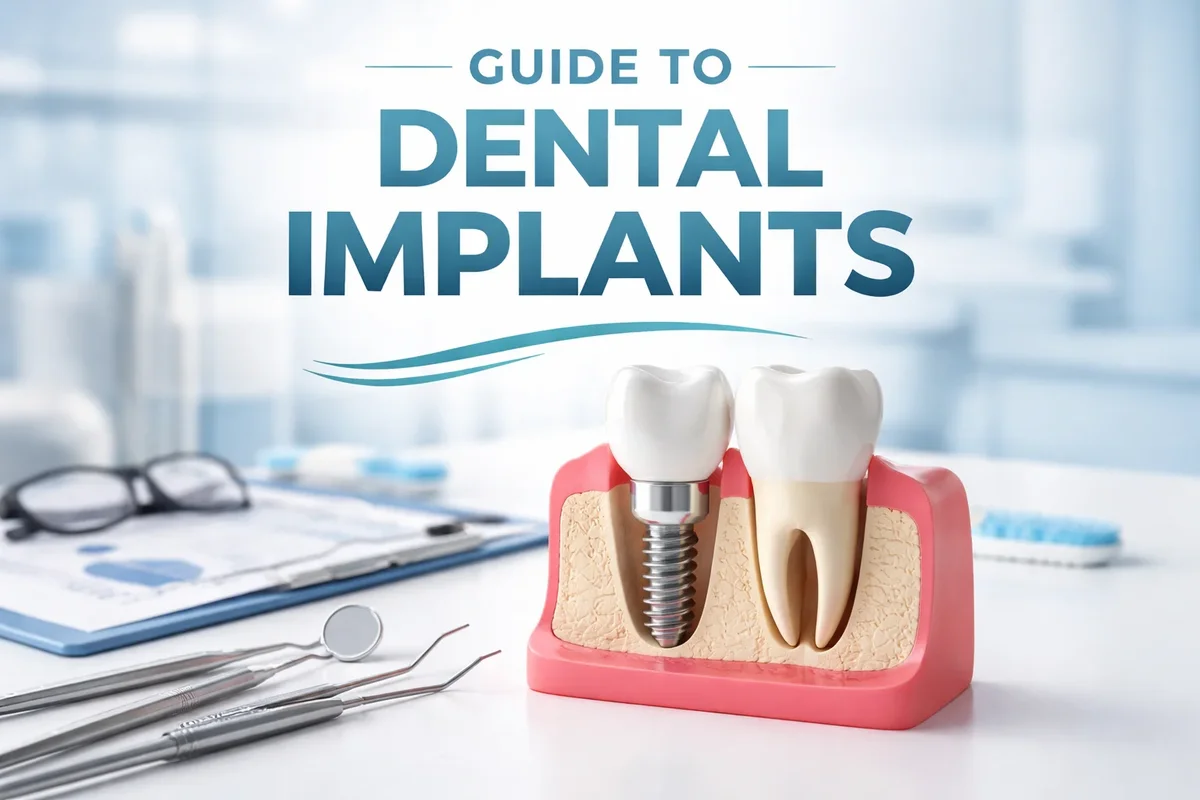
To better understand this guide to dental implants, it’s important to know the three main parts of an implant system:
- Implant Post: A titanium screw that is surgically placed into the jawbone and acts as the root of the tooth.
- Abutment: A connector that links the implant post to the crown.
- Dental Crown: The visible part that looks and functions like a natural tooth.
This structure ensures that dental implants are strong, durable, and capable of lasting for decades when properly maintained. That’s why many professionals consider implants the gold standard in tooth replacement, as emphasized throughout this guide to dental implants.
Why Choose Dental Implants?
One of the most common questions patients ask when reading a guide to dental implants is: “Why should I choose implants over other options?” The answer lies in their unmatched benefits.
Dental implants provide a permanent solution that feels and functions like natural teeth. Unlike removable dentures, implants stay securely in place, allowing you to eat, speak, and smile with confidence. This guide to dental implants highlights how implants improve quality of life by eliminating discomfort and restoring self-esteem. 😁
Top Benefits Covered in This Guide to Dental Implants
- Natural appearance and feel
- Long-lasting durability (often 20+ years)
- Prevention of bone loss
- No impact on neighboring teeth
- Improved speech and chewing ability
By understanding these advantages, this guide to dental implants helps you see why millions of patients worldwide are choosing implants as their preferred solution.
Are Dental Implants Safe?
Safety is another major concern addressed in this guide to dental implants. Dental implant procedures have been extensively researched and are considered highly safe when performed by qualified professionals. According to the American Dental Association, dental implants have a success rate of up to 98%.
Modern technology, including 3D imaging and guided surgery, has significantly improved the precision and outcomes of implant treatments. This guide to dental implants ensures that you understand the importance of choosing an experienced dental clinic for optimal results.
When Should You Consider Dental Implants?
This guide to dental implants also explains when implants are the best option. You may be a suitable candidate if you:
- Have one or more missing teeth
- Have healthy gums and sufficient jawbone
- Want a long-term solution instead of temporary fixes
- Are tired of uncomfortable dentures
If you meet these criteria, this guide to dental implants suggests consulting a dental professional for a personalized treatment plan. For expert consultation, you can visit the Redent Klinik Contact Page to get started.
What to Expect from This Guide to Dental Implants
This article is structured to give you a complete understanding of dental implants—from basic concepts to advanced insights. As you continue reading this guide to dental implants, you will learn about types of implants, the surgical process, recovery timelines, costs, and maintenance tips.
Think of this guide to dental implants as your roadmap to achieving a healthy, confident smile. By the end of this section, you should have a solid foundation to move forward with confidence and clarity. 🌟
In the next sections of this guide to dental implants, we will dive deeper into the technical aspects, helping you understand every stage of the journey—from consultation to final results.
What Are Dental Implants and How Do They Work?
In this detailed guide to dental implants, understanding what dental implants are and how they function is essential before moving forward with treatment. Dental implants are advanced tooth replacement solutions designed to mimic the structure and function of natural teeth. Unlike traditional dentures or bridges, implants are anchored directly into the jawbone, making them a permanent and highly stable option. This guide to dental implants will help you clearly understand their structure, functionality, and why they are considered the gold standard in modern dentistry. 😊
At their core, dental implants consist of a small titanium post that acts as an artificial tooth root. Titanium is used because it is biocompatible, meaning it integrates safely with the human body. This integration process is one of the most important aspects explained in this guide to dental implants, as it ensures long-term stability and durability.
Understanding the Structure of Dental Implants
To fully grasp this guide to dental implants, it is important to break down the implant into its three main components. Each part plays a critical role in restoring both aesthetics and function.
1. Implant Post (Artificial Root)
The implant post is a small screw-like structure made of titanium. It is surgically inserted into the jawbone and serves as the foundation for the replacement tooth. This guide to dental implants emphasizes that this part is what makes implants so strong and long-lasting compared to other options.
2. Abutment (Connector Piece)
The abutment is placed on top of the implant post once healing has occurred. It connects the implant to the crown. In this guide to dental implants, the abutment is described as the bridge between the internal structure and the visible tooth.
3. Dental Crown (Visible Tooth)
The crown is the part that looks like a natural tooth. It is custom-made to match the shape, size, and color of your existing teeth. According to this guide to dental implants, modern crowns are so realistic that they are nearly indistinguishable from natural teeth. 😁
How Dental Implants Work Step by Step
This guide to dental implants explains that dental implants work through a biological process called osseointegration. This is where the implant fuses with the jawbone, creating a strong and stable base.
Step 1: Implant Placement
The dentist surgically inserts the titanium post into the jawbone. This is done under local anesthesia, ensuring minimal discomfort. This guide to dental implants highlights that precision during this step is critical for long-term success.
Step 2: Healing and Osseointegration
Over the next few months, the implant integrates with the bone. This process is what sets implants apart from other treatments. As explained in this guide to dental implants, successful osseointegration ensures that the implant functions like a natural tooth root.
Step 3: Abutment Placement
Once healing is complete, the abutment is attached to the implant. This stage prepares the implant for the final crown. This guide to dental implants emphasizes that proper alignment at this stage is essential for aesthetics and function.
Step 4: Crown Placement
The final step involves placing the custom-made crown. Once attached, the implant looks and feels like a real tooth. This guide to dental implants ensures that patients understand that after this step, normal eating and speaking functions are fully restored.
Why Dental Implants Feel Like Natural Teeth
One of the most impressive aspects covered in this guide to dental implants is how closely implants replicate natural teeth. Because they are anchored in the jawbone, they provide the same level of stability and strength.
- They do not slip or move like dentures
- They allow you to chew all types of food comfortably
- They maintain jawbone density and facial structure
This guide to dental implants also highlights that implants stimulate the jawbone just like natural roots, preventing bone loss over time. This is a key advantage that other tooth replacement options cannot provide.
How Long Do Dental Implants Last?
Durability is another major focus in this guide to dental implants. With proper care, dental implants can last 20 years or more, and in many cases, they last a lifetime. The crown may need replacement after 10–15 years due to normal wear, but the implant itself remains intact.
Regular dental check-ups and good oral hygiene are essential for maintaining implants. This guide to dental implants strongly recommends brushing twice daily, flossing, and visiting your dentist regularly.
Are Dental Implants Better Than Other Options?
This guide to dental implants compares implants with other solutions like bridges and dentures. While those options may be suitable in some cases, implants offer unmatched stability and longevity.
- Compared to Dentures: Implants are fixed and do not require adhesives
- Compared to Bridges: Implants do not damage neighboring teeth
- Compared to Both: Implants prevent bone loss
Because of these benefits, this guide to dental implants confirms that implants are often the most recommended solution by dental professionals worldwide.
Final Thoughts in This Guide to Dental Implants Section
By now, this guide to dental implants should have given you a clear understanding of what dental implants are and how they work. From their structure to their function, implants provide a reliable and long-term solution for missing teeth.
As you continue through this guide to dental implants, you will discover even more detailed insights about types of implants, candidacy, costs, and care. Each section is designed to help you make a confident and informed decision. 🌟
Types of Dental Implants Explained in This Guide to Dental Implants
In this comprehensive guide to dental implants, understanding the different types of dental implants is essential before choosing the right treatment. Not all dental implants are the same, and selecting the correct type depends on factors such as bone density, oral health, and the number of missing teeth. This guide to dental implants will walk you through each type in detail so you can make an informed and confident decision. 😊
Dental implant technology has evolved significantly over the years, offering multiple solutions tailored to individual patient needs. Whether you are missing a single tooth or require full-mouth restoration, this guide to dental implants ensures that you understand the available options and how each one works.
Main Categories of Dental Implants
This guide to dental implants divides dental implants into two primary categories based on how they are placed in the jaw:
1. Endosteal Implants (Most Common Type)
Endosteal implants are the most widely used type, as highlighted in this guide to dental implants. These implants are surgically inserted directly into the jawbone and are typically made of titanium. They are shaped like small screws and act as artificial tooth roots.
- Ideal for patients with healthy jawbone density
- Provides strong and stable support
- Suitable for single, multiple, or full-arch replacements
This guide to dental implants emphasizes that endosteal implants are considered the gold standard because of their high success rate and long-term durability.
2. Subperiosteal Implants (Alternative Option)
Subperiosteal implants are placed on top of the jawbone but beneath the gum tissue. This guide to dental implants explains that these implants are typically recommended for patients who do not have enough bone height and cannot undergo bone grafting.
- Less invasive than traditional implants
- Suitable for patients with bone loss
- Faster recovery in some cases
Although less common today, this guide to dental implants includes them as an alternative for specific clinical situations.
Specialized Types of Dental Implants
Beyond the main categories, this guide to dental implants also introduces specialized implant types designed for unique needs and conditions.
3. Zygomatic Implants
Zygomatic implants are longer implants anchored in the cheekbone (zygoma) rather than the jawbone. This guide to dental implants explains that they are used in cases of severe bone loss in the upper jaw.
- Eliminates the need for bone grafting
- Ideal for advanced cases
- Requires highly skilled specialists
This guide to dental implants highlights that while zygomatic implants are complex, they offer life-changing results for patients who otherwise have limited options.
4. All-on-4 Dental Implants
The All-on-4 technique is one of the most popular full-mouth restoration methods discussed in this guide to dental implants. It uses four strategically placed implants to support a full arch of teeth.
- Faster treatment process
- Immediate function in many cases
- Cost-effective compared to individual implants
This guide to dental implants emphasizes that All-on-4 is ideal for patients who want a fixed solution without placing an implant for every missing tooth.
5. Mini Dental Implants
Mini implants are smaller in diameter than traditional implants. This guide to dental implants explains that they are often used for stabilizing dentures or in areas with limited space.
- Less invasive procedure
- Shorter healing time
- Lower cost compared to standard implants
However, this guide to dental implants also notes that mini implants may not be suitable for heavy chewing forces or long-term full restorations.
Single Tooth vs Multiple Tooth Implants
This guide to dental implants also categorizes implants based on the number of teeth being replaced.
Single Tooth Implant
Used when only one tooth is missing. This guide to dental implants highlights that this option preserves surrounding teeth and provides a natural look.
Implant-Supported Bridge
Used when multiple teeth are missing. Instead of placing an implant for each tooth, a bridge is supported by a few implants. This guide to dental implants explains that this method is both efficient and cost-effective.
Full Mouth Implants
For patients missing all teeth, full-mouth implants provide a permanent solution. This guide to dental implants emphasizes that options like All-on-4 or All-on-6 are commonly used.
How to Choose the Right Type
Choosing the right implant type is a critical decision covered in this guide to dental implants. Factors that influence this decision include:
- Bone density and quality
- Number of missing teeth
- Overall oral health
- Budget and treatment goals
A professional consultation is essential to determine the best option. This guide to dental implants recommends visiting a trusted clinic for a personalized treatment plan. You can start by contacting experts through the Redent Klinik Contact Page.
Final Insights from This Guide to Dental Implants
As explained in this guide to dental implants, there is no one-size-fits-all solution. Each type of implant serves a specific purpose and is designed to meet different patient needs.
By understanding these options, this guide to dental implants empowers you to make an informed decision that aligns with your oral health goals. In the next section of this guide to dental implants, we will explore who is a good candidate for dental implants and what factors determine eligibility. 🌟
Who Is an Ideal Candidate in a Guide to Dental Implants?
When following a comprehensive guide to dental implants, one of the most important steps is determining whether a patient is an ideal candidate for the procedure. A well-structured guide to dental implants always emphasizes that not everyone automatically qualifies, but many patients can become eligible with proper preparation. Understanding candidacy criteria helps ensure long-term success and patient satisfaction. In this guide to dental implants, we will explore all key factors that influence eligibility, including oral health, bone density, lifestyle habits, and medical conditions.
General Health Requirements in a Guide to Dental Implants
A reliable guide to dental implants highlights that overall health plays a crucial role in implant success. Patients should generally be in good physical condition to undergo minor oral surgery. Chronic illnesses such as uncontrolled diabetes or autoimmune disorders may interfere with healing, which is why any professional guide to dental implants recommends medical evaluation beforehand. Additionally, patients undergoing chemotherapy or radiation therapy should consult their healthcare providers before proceeding.
Impact of Systemic Conditions
According to a detailed guide to dental implants, systemic diseases can affect osseointegration, the process where the implant fuses with the jawbone. Conditions like osteoporosis or immune deficiencies may slow healing, but modern advancements discussed in any advanced guide to dental implants show that many patients can still receive implants with proper planning and monitoring.
Oral Health Assessment in a Guide to Dental Implants
Another critical factor in any guide to dental implants is the condition of the patient’s oral health. Healthy gums are essential because periodontal disease can compromise implant stability. A thorough guide to dental implants explains that gum infections must be treated before implant placement to reduce the risk of failure. Dentists typically perform detailed examinations, including X-rays and digital scans, to evaluate the mouth.
Role of Gum Health
A high-quality guide to dental implants stresses that gum tissue must be free of inflammation and infection. Patients with gingivitis or periodontitis may need scaling, root planing, or other treatments before proceeding. Following this step in the guide to dental implants significantly increases the chances of long-term implant success.
Bone Density and Jaw Structure in a Guide to Dental Implants
Bone density is one of the most important criteria outlined in any guide to dental implants. Dental implants require sufficient jawbone volume to provide stability. If the bone is too thin or weak, the implant may not integrate properly. However, a modern guide to dental implants explains that bone grafting procedures can often resolve this issue, making implants accessible to more patients.
Bone Grafting Options
According to a complete guide to dental implants, bone grafting involves adding bone material to the jaw to create a strong foundation. This process may extend the treatment timeline, but it significantly improves success rates. A professional guide to dental implants ensures patients understand that even those with bone loss are not automatically excluded from treatment.
Lifestyle Factors in a Guide to Dental Implants
A comprehensive guide to dental implants also examines lifestyle habits that may impact healing and implant longevity. Smoking, for example, is a major risk factor that can reduce blood flow to the gums and delay healing. Many sections in a guide to dental implants strongly advise patients to quit smoking before and after the procedure to improve outcomes.
Smoking and Alcohol Use
In every professional guide to dental implants, smoking is identified as one of the leading causes of implant failure. Excessive alcohol consumption can also interfere with healing. Therefore, following lifestyle recommendations in a guide to dental implants is essential for achieving the best results.
Age Considerations in a Guide to Dental Implants
A well-detailed guide to dental implants explains that age itself is not a limiting factor. Dental implants can be suitable for both younger adults and older individuals, provided their oral and general health meet the necessary criteria. However, a guide to dental implants typically advises against placing implants in patients whose jawbones are still developing, usually under the age of 18.
Implants for Older Adults
According to an expert guide to dental implants, older adults often benefit greatly from implants because they provide stability and improve quality of life. As long as health conditions are managed, age should not be seen as a barrier in any guide to dental implants.
Psychological Readiness in a Guide to Dental Implants
Another often overlooked aspect in a guide to dental implants is psychological readiness. Patients must be committed to maintaining oral hygiene and attending follow-up appointments. A successful guide to dental implants emphasizes patient cooperation as a key factor in long-term success.
Commitment to Aftercare
A trusted guide to dental implants highlights that implants require consistent care, including brushing, flossing, and regular dental visits. Patients who follow aftercare instructions outlined in a guide to dental implants are far more likely to enjoy long-lasting results.
Final Evaluation in a Guide to Dental Implants
In conclusion, a complete guide to dental implants shows that candidacy depends on multiple factors, including general health, oral condition, bone density, lifestyle, and commitment to care. While some patients may initially not qualify, advancements described in a modern guide to dental implants make it possible for many to become suitable candidates through preparatory treatments. Consulting with a qualified dental professional ensures that each step in the guide to dental implants is followed correctly, leading to safe and successful outcomes.
Step-by-Step Procedure Explained in a Guide to Dental Implants
A comprehensive guide to dental implants must clearly explain the step-by-step procedure so patients know exactly what to expect. Understanding each stage helps reduce anxiety and ensures better preparation. In this detailed guide to dental implants, we will walk through the entire process—from the initial consultation to the final placement of the crown. Each phase in this guide to dental implants plays a critical role in achieving long-term success and durability.
Initial Consultation and Planning in a Guide to Dental Implants
The first step in any professional guide to dental implants is the consultation phase. During this stage, the dentist evaluates the patient’s oral health, medical history, and specific needs. A thorough guide to dental implants emphasizes the importance of diagnostic tools such as X-rays and 3D imaging to assess bone structure and identify potential issues.
Digital Imaging and Treatment Planning
Modern advancements highlighted in a guide to dental implants include digital scans and computer-guided planning. These technologies allow for precise implant placement and minimize risks. A reliable guide to dental implants ensures that every detail is carefully mapped before surgery begins.
Tooth Extraction (If Required) in a Guide to Dental Implants
In many cases outlined in a guide to dental implants, damaged or decayed teeth must be removed before implant placement. This step ensures a clean and healthy environment for the implant. A complete guide to dental implants explains that extractions may be done on the same day as implant placement or as a separate procedure, depending on the condition of the site.
Healing After Extraction
According to a detailed guide to dental implants, some patients require a healing period after extraction to allow the gums and bone to recover. This period can vary, and a personalized guide to dental implants approach ensures optimal timing for the next step.
Bone Grafting (If Needed) in a Guide to Dental Implants
A critical stage in many cases described in a guide to dental implants is bone grafting. If the jawbone lacks sufficient density, grafting material is added to strengthen the area. This step, emphasized in every advanced guide to dental implants, helps create a stable foundation for the implant.
Types of Bone Grafts
A comprehensive guide to dental implants outlines various grafting options, including autografts, allografts, and synthetic materials. Each option is chosen based on the patient’s needs. Following this part of the guide to dental implants improves implant success rates significantly.
Implant Placement Surgery in a Guide to Dental Implants
The core stage in any guide to dental implants is the surgical placement of the implant. During this procedure, a titanium post is inserted into the jawbone, acting as an artificial tooth root. A precise guide to dental implants ensures that the implant is positioned correctly to support the final restoration.
What Happens During Surgery
According to a professional guide to dental implants, the procedure is typically performed under local anesthesia and is relatively comfortable for most patients. The dentist makes a small incision in the gum, drills into the bone, and places the implant. This step in the guide to dental implants is crucial for long-term stability.
Osseointegration Process in a Guide to Dental Implants
One of the most important phases explained in a guide to dental implants is osseointegration. This is the process where the implant fuses with the jawbone, creating a strong and stable base. A detailed guide to dental implants highlights that this process can take several weeks to several months, depending on individual healing rates.
Why Osseointegration Matters
Every reliable guide to dental implants emphasizes that successful osseointegration is essential for the implant’s durability. Without proper fusion, the implant may fail. Following guidelines in a guide to dental implants ensures optimal healing conditions.
Abutment Placement in a Guide to Dental Implants
After osseointegration, the next step in a guide to dental implants is placing the abutment. This small connector piece attaches the implant to the final crown. A complete guide to dental implants explains that this step may require a minor procedure to expose the implant.
Healing After Abutment Placement
A professional guide to dental implants notes that the gums need time to heal around the abutment. This ensures a natural appearance and proper fit for the crown. Careful adherence to this stage in the guide to dental implants improves aesthetic outcomes.
Final Crown Placement in a Guide to Dental Implants
The final stage in any guide to dental implants is the placement of the custom-made crown. This crown is designed to match the patient’s natural teeth in color, shape, and size. A high-quality guide to dental implants ensures that the final restoration looks and functions like a real tooth.
Customization and Fit
According to an expert guide to dental implants, the crown is carefully crafted using impressions or digital scans. Proper alignment and bite adjustment are essential. Following this final step in the guide to dental implants ensures comfort and long-term functionality.
Post-Procedure Care in a Guide to Dental Implants
No guide to dental implants is complete without discussing aftercare. Patients must maintain excellent oral hygiene and attend regular dental check-ups. A detailed guide to dental implants emphasizes that proper care significantly extends the lifespan of implants.
Long-Term Maintenance
A trusted guide to dental implants highlights daily brushing, flossing, and avoiding harmful habits as essential practices. With consistent care, patients can enjoy their implants for many years. Following every step in this guide to dental implants ensures a successful and lasting outcome.
Recovery Process and Aftercare in a Guide to Dental Implants
A complete guide to dental implants must include a detailed explanation of the recovery process and proper aftercare, as these factors directly influence the long-term success of the treatment. Many patients focus only on the surgical phase, but a professional guide to dental implants emphasizes that healing and maintenance are equally important. Understanding what happens after the procedure helps patients avoid complications and ensures optimal results. In this section of the guide to dental implants, we will explore every stage of recovery, from the first 24 hours to long-term care practices.
Immediate Post-Surgery Care in a Guide to Dental Implants
The first 24–48 hours after implant surgery are critical, as highlighted in any reliable guide to dental implants. During this period, patients may experience mild swelling, discomfort, or slight bleeding, all of which are normal. A well-prepared guide to dental implants advises patients to follow their dentist’s instructions carefully to minimize these effects and promote faster healing.
Managing Pain and Swelling
According to a detailed guide to dental implants, pain can usually be managed with prescribed or over-the-counter medications. Applying cold compresses to the affected area can help reduce swelling. Every effective guide to dental implants recommends avoiding strenuous activities during this initial phase to prevent complications.
Diet and Nutrition During Recovery in a Guide to Dental Implants
A comprehensive guide to dental implants explains that diet plays a significant role in recovery. Patients are advised to stick to soft foods such as yogurt, soup, mashed vegetables, and smoothies during the early healing phase. Following dietary recommendations in a guide to dental implants helps protect the surgical site and ensures proper healing.
Foods to Avoid
Every professional guide to dental implants warns against consuming hard, crunchy, or sticky foods immediately after surgery. These can irritate the implant site or cause damage. A careful approach to eating, as outlined in a guide to dental implants, supports a smoother recovery process.
Oral Hygiene Practices in a Guide to Dental Implants
Maintaining oral hygiene is one of the most important aspects discussed in a guide to dental implants. While brushing and flossing are essential, patients must be gentle around the surgical area. A high-quality guide to dental implants recommends using a soft-bristled toothbrush and antimicrobial mouthwash to keep the area clean without causing irritation.
Cleaning Around the Implant
According to a thorough guide to dental implants, keeping the implant site free from bacteria is crucial to prevent infection. Patients should follow specific cleaning techniques provided by their dentist. Consistent hygiene practices, as emphasized in a guide to dental implants, significantly improve healing outcomes.
Healing Timeline in a Guide to Dental Implants
The healing timeline varies from patient to patient, but a detailed guide to dental implants provides general expectations. Initial healing of the gums may take a few weeks, while full osseointegration can take several months. A well-structured guide to dental implants ensures patients understand that patience is key to achieving successful results.
Stages of Healing
A professional guide to dental implants divides recovery into stages: immediate healing, soft tissue healing, and bone integration. Each stage requires specific care. Following every step outlined in a guide to dental implants helps avoid complications and supports long-term stability.
Activity Restrictions in a Guide to Dental Implants
Another essential topic covered in a guide to dental implants is activity limitation. Patients should avoid heavy exercise, bending, or lifting during the initial recovery phase. A responsible guide to dental implants highlights that excessive physical activity can increase bleeding and delay healing.
Returning to Normal Routine
According to a complete guide to dental implants, most patients can gradually return to normal activities within a few days. However, full recovery requires continued caution. Adhering to recommendations in a guide to dental implants ensures a smooth transition back to daily life.
Potential Complications and How to Avoid Them in a Guide to Dental Implants
A reliable guide to dental implants always addresses possible complications, even though they are rare. These may include infection, implant movement, or delayed healing. A thorough guide to dental implants teaches patients how to recognize warning signs such as persistent pain, swelling, or unusual discharge.
When to Contact Your Dentist
Every expert guide to dental implants advises patients to contact their dentist immediately if they notice severe symptoms. Early intervention can prevent serious issues. Following this advice in a guide to dental implants ensures quick resolution of potential problems.
Long-Term Care and Maintenance in a Guide to Dental Implants
Long-term success is a key focus of any guide to dental implants. Once healing is complete, patients must continue practicing excellent oral hygiene and attend regular dental check-ups. A detailed guide to dental implants explains that implants, while durable, still require proper care to maintain their condition.
Daily Care Routine
A trusted guide to dental implants recommends brushing twice daily, flossing, and using specialized tools such as interdental brushes. Avoiding harmful habits like smoking or grinding teeth is also essential. By following long-term care instructions in a guide to dental implants, patients can enjoy their implants for decades.
Final Thoughts on Recovery in a Guide to Dental Implants
In conclusion, a complete guide to dental implants demonstrates that recovery and aftercare are just as important as the surgical procedure itself. By understanding each stage of healing, following professional advice, and maintaining consistent oral hygiene, patients can achieve excellent results. This section of the guide to dental implants reinforces that proper care leads to long-lasting, functional, and aesthetically pleasing dental implants.
Costs, Factors, and Value Explained in a Guide to Dental Implants
A comprehensive guide to dental implants must clearly explain the cost structure and the factors that influence pricing. Many patients considering implants want to understand not only the total investment but also what they are paying for. A well-prepared guide to dental implants highlights that costs can vary widely depending on individual needs, materials used, and the complexity of the procedure. In this section of the guide to dental implants, we will explore all aspects of pricing, what determines the final cost, and why dental implants are considered a long-term investment rather than a short-term expense.
Main Cost Components in a Guide to Dental Implants
A detailed guide to dental implants explains that the total cost is made up of several components, not just the implant itself. These include consultation fees, imaging, surgical procedures, implant materials, abutments, and crowns. Each part plays a role in the overall success of the treatment. A professional guide to dental implants ensures patients understand that high-quality materials and experienced professionals contribute to better outcomes.
Breakdown of Individual Costs
According to a complete guide to dental implants, patients should expect separate charges for diagnostics such as X-rays or 3D scans, the implant fixture, the abutment, and the final crown. Additional procedures like bone grafting or sinus lifts may increase the total cost. A transparent guide to dental implants helps patients plan financially by outlining these elements in advance.
Factors That Influence Pricing in a Guide to Dental Implants
A reliable guide to dental implants highlights that several factors influence the final price. These include the number of implants needed, the condition of the patient’s oral health, the type of implant system used, and the location of the dental clinic. A thorough guide to dental implants also notes that more complex cases requiring additional procedures will naturally involve higher costs.
Experience and Technology
In any advanced guide to dental implants, the experience of the dental professional is emphasized as a key factor. Clinics using advanced technology and highly skilled specialists may charge more, but they often provide more predictable and successful results. A trustworthy guide to dental implants encourages patients to prioritize quality over cost alone.
Single Tooth vs Full Mouth Costs in a Guide to Dental Implants
A comprehensive guide to dental implants distinguishes between single tooth implants and full mouth restorations. A single implant typically costs less than full mouth solutions, which may involve multiple implants or techniques like All-on-4 or All-on-6. A detailed guide to dental implants explains that full mouth treatments offer greater functional and aesthetic benefits but require a larger investment.
Comparing Treatment Options
According to a professional guide to dental implants, patients should compare different treatment plans to find the most suitable option. Some solutions may reduce the number of implants needed while still providing excellent results. A balanced guide to dental implants helps patients make informed decisions based on both cost and effectiveness.
Insurance and Financing in a Guide to Dental Implants
Another important topic covered in a guide to dental implants is payment options. While dental implants are sometimes considered elective procedures, some insurance plans may cover part of the treatment. A complete guide to dental implants also highlights financing options such as installment plans, which make treatment more accessible.
Flexible Payment Solutions
A well-structured guide to dental implants explains that many clinics offer payment plans to help patients manage costs over time. This allows individuals to receive necessary treatment without financial strain. Understanding these options is essential in any guide to dental implants.
Cost vs Value in a Guide to Dental Implants
A key concept emphasized in every guide to dental implants is the difference between cost and value. While implants may have a higher initial price compared to other dental solutions, they offer long-term benefits such as durability, functionality, and improved quality of life. A detailed guide to dental implants highlights that implants can last decades with proper care, making them a cost-effective solution over time.
Long-Term Benefits
According to an expert guide to dental implants, implants help preserve jawbone structure, prevent shifting of surrounding teeth, and restore natural chewing ability. These advantages make them a worthwhile investment. A complete guide to dental implants encourages patients to consider long-term outcomes rather than focusing solely on upfront costs.
Hidden Costs to Consider in a Guide to Dental Implants
A transparent guide to dental implants also discusses potential hidden costs. These may include follow-up visits, maintenance, or replacement of components over time. A thorough guide to dental implants ensures patients are fully informed and prepared for all aspects of the treatment.
Maintenance Expenses
Every reliable guide to dental implants emphasizes that while implants are durable, they still require care. Regular dental visits and proper hygiene are essential to avoid complications. Including these considerations in a guide to dental implants helps patients maintain their investment effectively.
Final Thoughts on Costs in a Guide to Dental Implants
In conclusion, a comprehensive guide to dental implants shows that pricing depends on multiple factors, including treatment complexity, materials, and expertise. While the initial cost may seem high, the long-term benefits make implants a valuable solution for tooth replacement. By understanding every detail outlined in this guide to dental implants, patients can make informed decisions and choose the best treatment plan for their needs.
Risks, Complications, and Safety Measures in a Guide to Dental Implants
A complete guide to dental implants must address not only the benefits and procedures but also the potential risks and complications associated with treatment. While dental implants have a high success rate, no surgical procedure is entirely risk-free. A professional guide to dental implants ensures that patients are fully informed about possible challenges so they can make confident and educated decisions. In this section of the guide to dental implants, we will explore common risks, rare complications, and the safety measures that significantly reduce these risks.
Common Risks in a Guide to Dental Implants
Every reliable guide to dental implants explains that some risks are considered normal and manageable. These include minor swelling, bruising, and temporary discomfort following the procedure. A well-prepared guide to dental implants reassures patients that these effects typically subside within a few days and can be controlled with proper aftercare.
Post-Surgical Discomfort
According to a detailed guide to dental implants, mild pain is expected after surgery and can usually be managed with medication. Following instructions provided in a guide to dental implants helps minimize discomfort and promotes faster healing.
Infection Risks in a Guide to Dental Implants
Infection is one of the most discussed concerns in any guide to dental implants. Although rare, infections can occur if bacteria enter the surgical site. A comprehensive guide to dental implants emphasizes the importance of maintaining proper oral hygiene and following post-operative instructions to reduce this risk.
Signs of Infection
A trustworthy guide to dental implants highlights symptoms such as persistent swelling, redness, pain, or discharge. Early detection is key, and any concerns should be addressed promptly. Adhering to advice in a guide to dental implants significantly lowers the likelihood of infection.
Implant Failure in a Guide to Dental Implants
Although uncommon, implant failure is a possibility discussed in every guide to dental implants. Failure may occur if the implant does not properly integrate with the jawbone or if excessive pressure is applied during healing. A detailed guide to dental implants explains that factors such as smoking, poor oral hygiene, or insufficient bone density can increase this risk.
Preventing Implant Failure
According to an expert guide to dental implants, following all pre- and post-operative instructions is essential. Choosing an experienced dental professional and maintaining healthy habits greatly improve success rates. A comprehensive guide to dental implants ensures patients understand their role in preventing complications.
Nerve Damage and Sinus Issues in a Guide to Dental Implants
A complete guide to dental implants also discusses less common but more serious complications, such as nerve damage or sinus problems. These risks are typically associated with implants placed in specific areas of the mouth. A professional guide to dental implants highlights that proper planning and imaging significantly reduce these risks.
Symptoms to Watch For
A reliable guide to dental implants advises patients to monitor for numbness, tingling, or unusual sensations, which may indicate nerve involvement. Sinus complications may present as discomfort in the upper jaw. Immediate consultation, as recommended in a guide to dental implants, ensures timely management.
Allergic Reactions and Material Sensitivity in a Guide to Dental Implants
Although rare, a thorough guide to dental implants mentions the possibility of allergic reactions to implant materials. Most implants are made of titanium, which is generally well tolerated. However, a careful guide to dental implants ensures that patients disclose any known allergies before treatment.
Alternative Materials
According to a modern guide to dental implants, alternative materials such as zirconia implants may be considered for patients with sensitivities. Discussing options with a dental professional is an important step outlined in any guide to dental implants.
Safety Measures in a Guide to Dental Implants
A key focus of every guide to dental implants is the implementation of safety measures to minimize risks. These include thorough pre-treatment evaluations, advanced imaging, sterile surgical techniques, and personalized treatment planning. A high-quality guide to dental implants ensures that every precaution is taken to protect patient health.
Role of Modern Technology
Advanced tools such as 3D imaging and computer-guided surgery, highlighted in a guide to dental implants, improve precision and reduce complications. These innovations allow dentists to plan procedures with remarkable accuracy. Incorporating technology into a guide to dental implants enhances both safety and outcomes.
Patient Responsibility in a Guide to Dental Implants
A comprehensive guide to dental implants emphasizes that patients also play a crucial role in minimizing risks. Following instructions, maintaining oral hygiene, and attending follow-up appointments are essential responsibilities. A detailed guide to dental implants makes it clear that successful outcomes depend on both the dentist and the patient.
Importance of Follow-Up Visits
Every professional guide to dental implants recommends regular check-ups to monitor healing and detect potential issues early. Consistent follow-up care ensures long-term success and stability, as outlined in a guide to dental implants.
Final Thoughts on Risks in a Guide to Dental Implants
In conclusion, a complete guide to dental implants shows that while risks and complications exist, they are generally rare and manageable with proper care. By understanding potential challenges and following recommended safety measures, patients can significantly reduce risks and achieve excellent results. This section of the guide to dental implants reinforces the importance of informed decision-making and careful planning for a safe and successful dental implant journey.
Advantages and Long-Term Benefits in a Guide to Dental Implants
A complete guide to dental implants would not be sufficient without clearly explaining the advantages and long-term benefits of this treatment. Dental implants are widely considered one of the most effective solutions for replacing missing teeth, and a professional guide to dental implants highlights that their benefits go far beyond aesthetics. Patients who follow a detailed guide to dental implants often discover improvements in oral health, confidence, and overall quality of life. In this section of the guide to dental implants, we will explore why implants are a preferred option and how they provide lasting value over time.
Natural Appearance and Function in a Guide to Dental Implants
One of the most significant benefits discussed in any guide to dental implants is their natural look and feel. Implants are designed to mimic the structure of real teeth, including the root and crown. A reliable guide to dental implants explains that this allows patients to speak, eat, and smile with confidence.
Improved Speech and Comfort
According to a detailed guide to dental implants, implants eliminate the slipping or discomfort often associated with removable dentures. This stability improves speech clarity and comfort in daily life. Following a guide to dental implants ensures patients understand how this stability contributes to overall satisfaction.
Preservation of Jawbone in a Guide to Dental Implants
A major advantage emphasized in every guide to dental implants is the preservation of jawbone structure. When a tooth is lost, the underlying bone can begin to deteriorate over time. A comprehensive guide to dental implants explains that implants stimulate the bone, preventing this loss and maintaining facial structure.
Prevention of Bone Loss
In a professional guide to dental implants, bone preservation is described as a key factor in maintaining long-term oral health. Unlike other tooth replacement options, implants integrate with the bone, ensuring stability. This feature, highlighted in any guide to dental implants, helps prevent changes in facial appearance.
Durability and Longevity in a Guide to Dental Implants
Another essential point in a guide to dental implants is their durability. With proper care, implants can last for decades, making them a long-term solution. A thorough guide to dental implants explains that this longevity often makes implants more cost-effective over time compared to other treatments.
Long-Term Investment
A trusted guide to dental implants highlights that while the initial cost may be higher, the long lifespan of implants reduces the need for frequent replacements. This makes them a valuable investment in oral health. Following a guide to dental implants ensures patients understand the financial and practical benefits.
Improved Oral Health in a Guide to Dental Implants
A complete guide to dental implants also emphasizes how implants contribute to better oral health. Unlike bridges, implants do not require adjacent teeth to be altered. A professional guide to dental implants explains that this preserves the natural structure of surrounding teeth.
Protection of Adjacent Teeth
According to a detailed guide to dental implants, maintaining the integrity of neighboring teeth reduces the risk of future dental issues. This benefit, outlined in a guide to dental implants, supports long-term oral stability.
Enhanced Confidence and Quality of Life in a Guide to Dental Implants
A significant advantage covered in every guide to dental implants is the boost in self-confidence. Missing teeth can affect a person’s appearance and self-esteem, but implants restore a natural smile. A comprehensive guide to dental implants explains that this improvement often leads to better social interactions and overall well-being.
Psychological Benefits
A reliable guide to dental implants highlights that patients often feel more confident in both personal and professional settings after treatment. This psychological benefit is an important aspect of any guide to dental implants.
Convenience and Ease of Maintenance in a Guide to Dental Implants
A practical guide to dental implants explains that implants are easy to care for. Unlike removable dentures, they do not require special adhesives or removal for cleaning. A detailed guide to dental implants emphasizes that regular brushing and flossing are sufficient to maintain implants.
Simple Daily Care
According to an expert guide to dental implants, maintaining implants is similar to caring for natural teeth. This convenience makes them a preferred choice for many patients. Following advice in a guide to dental implants ensures long-lasting results.
Stability Compared to Other Options in a Guide to Dental Implants
A comprehensive guide to dental implants compares implants with other tooth replacement options such as dentures and bridges. Implants provide superior stability because they are anchored directly into the jawbone. A professional guide to dental implants explains that this stability allows for better chewing efficiency and overall comfort.
Comparison with Dentures
In any guide to dental implants, dentures are often noted as less stable and more prone to movement. Implants, on the other hand, remain fixed and secure. This advantage, highlighted in a guide to dental implants, improves both function and confidence.
Final Thoughts on Benefits in a Guide to Dental Implants
In conclusion, a complete guide to dental implants demonstrates that implants offer numerous advantages, including natural appearance, durability, improved oral health, and enhanced quality of life. These benefits make them one of the most effective solutions for tooth replacement. By understanding the long-term value outlined in this guide to dental implants, patients can make informed decisions and enjoy lasting results from their treatment.
Frequently Asked Questions in a Guide to Dental Implants
A comprehensive guide to dental implants should always conclude with a detailed FAQ section that addresses the most common concerns patients have before starting treatment. Even after reading a full guide to dental implants, many individuals still have specific questions about pain, duration, safety, and long-term expectations. This section of the guide to dental implants is designed to provide clear, accurate, and practical answers that help patients feel more confident and prepared. By covering frequently asked questions, a complete guide to dental implants ensures that no important detail is overlooked.
Are Dental Implants Painful According to a Guide to Dental Implants?
One of the most common questions in any guide to dental implants is about pain. Many patients worry that the procedure will be uncomfortable, but a professional guide to dental implants explains that implant placement is typically performed under local anesthesia, making the process relatively painless. Most patients report only mild discomfort during recovery.
Managing Discomfort
A detailed guide to dental implants highlights that post-operative pain can usually be managed with medication and proper care. Following recommendations in a guide to dental implants ensures a smooth and comfortable recovery experience.
How Long Does the Entire Process Take in a Guide to Dental Implants?
Another frequently asked question in a guide to dental implants concerns the timeline. The full process can take several months, depending on individual factors such as healing time and the need for additional procedures. A reliable guide to dental implants explains that patience is essential for achieving successful results.
Factors Affecting Duration
According to a comprehensive guide to dental implants, factors such as bone density, overall health, and whether bone grafting is required can influence the timeline. Each case is unique, and a personalized guide to dental implants approach ensures optimal outcomes.
How Successful Are Dental Implants in a Guide to Dental Implants?
A key topic in every guide to dental implants is success rate. Dental implants have a very high success rate, often exceeding 95% when placed by experienced professionals. A complete guide to dental implants emphasizes that proper care and patient cooperation are essential for maintaining this success.
Ensuring Long-Term Success
A professional guide to dental implants advises patients to follow all aftercare instructions and attend regular check-ups. These steps, outlined in a guide to dental implants, significantly improve long-term results.
Who Is Not Suitable According to a Guide to Dental Implants?
While many people can benefit from implants, a thorough guide to dental implants explains that certain conditions may require additional evaluation. Patients with uncontrolled medical conditions, severe bone loss, or poor oral hygiene may need preparatory treatments before proceeding.
Improving Eligibility
According to an expert guide to dental implants, advancements in dental technology allow many patients to become eligible through procedures such as bone grafting. A complete guide to dental implants reassures patients that options are often available.
How Do You Care for Dental Implants in a Guide to Dental Implants?
A common concern addressed in a guide to dental implants is maintenance. Dental implants require regular oral hygiene practices similar to natural teeth. A detailed guide to dental implants explains that brushing, flossing, and routine dental visits are essential.
Daily Maintenance Tips
A trusted guide to dental implants recommends using soft-bristled toothbrushes and interdental cleaning tools. Consistent care ensures longevity, as emphasized in every guide to dental implants.
Are Dental Implants Safe in a Guide to Dental Implants?
Safety is a major topic in any guide to dental implants. Dental implants are considered a safe and well-established procedure when performed by qualified professionals. A comprehensive guide to dental implants highlights that modern technology and strict protocols further enhance safety.
Minimizing Risks
According to a professional guide to dental implants, careful planning, proper hygiene, and follow-up care significantly reduce risks. This reassurance is a key part of any guide to dental implants.
Can Dental Implants Fail in a Guide to Dental Implants?
Another frequently asked question in a guide to dental implants is about failure. While rare, implants can fail due to factors such as infection, poor bone integration, or lifestyle habits. A detailed guide to dental implants explains that following professional advice greatly reduces this risk.
Preventing Failure
A reliable guide to dental implants emphasizes the importance of maintaining oral hygiene and avoiding smoking. These steps, outlined in a guide to dental implants, are essential for long-term success.
Do Dental Implants Look Natural in a Guide to Dental Implants?
Aesthetic concerns are also addressed in every guide to dental implants. Implants are designed to match natural teeth in appearance and function. A complete guide to dental implants ensures that patients understand the customization process involved.
Customization Process
According to an expert guide to dental implants, crowns are carefully crafted to blend seamlessly with surrounding teeth. This ensures a natural smile, as highlighted in any guide to dental implants.
Final Thoughts in a Guide to Dental Implants
In conclusion, this FAQ section of the guide to dental implants addresses the most important questions patients may have. By understanding the answers provided in this guide to dental implants, individuals can approach treatment with confidence and clarity. A well-informed patient is more likely to achieve successful and satisfying results, making this final section an essential part of any comprehensive guide to dental implants.