
Running a small business comes with countless responsibilities — from managing operations and payroll to ensuring employee satisfaction and growth. Among the most pressing concerns for entrepreneurs is securing reliable health and dental insurance for small business owners. Health coverage is not only a necessity for entrepreneurs themselves but also a crucial factor in attracting and retaining top talent. Without adequate coverage, medical and dental expenses can create unexpected financial strain on both the business owner and employees. 🏥
For many small business owners, the challenge lies in balancing affordability with comprehensive coverage. Unlike large corporations that can leverage economies of scale to negotiate lower insurance rates, small enterprises often face higher per-person costs. However, advances in insurance programs, government initiatives, and flexible group health options are bridging this gap, making it easier than ever for small businesses to provide essential health and dental benefits.
One of the major reasons why health and dental insurance for small business owners is so important lies in its dual function: it safeguards the well-being of employees while protecting the business itself from the hidden costs of absenteeism, reduced productivity, and staff turnover. Employees with access to affordable health and dental plans are more likely to seek preventive care, reducing the risk of chronic illness and emergency treatments. This leads to a healthier, more reliable workforce, which directly contributes to business growth and stability.
Dental coverage is particularly crucial and often underestimated. Oral health is deeply connected to overall health, with poor dental care linked to conditions such as heart disease and diabetes. Offering dental insurance shows employees that their employer cares about holistic well-being. Moreover, regular dental check-ups help prevent costly interventions later, which translates into financial savings for both employees and employers in the long run.
Another factor that makes health and dental insurance for small business owners indispensable is employee recruitment. In today’s competitive labor market, candidates are not only evaluating salaries but also benefits packages. For small businesses trying to compete with larger corporations, providing solid insurance options is a way to level the playing field. Employees often see health and dental coverage as a form of financial security, which gives smaller companies an edge when appealing to skilled workers who value stability.
From a financial perspective, the cost of offering insurance can initially appear daunting. However, there are several strategies to make it more manageable. Group insurance pools, health reimbursement arrangements (HRAs), and tax incentives can significantly reduce out-of-pocket expenses for business owners. In fact, many small businesses may be eligible for tax credits under federal or state programs if they provide insurance to employees. These incentives not only make the coverage more affordable but also position the company as an attractive and socially responsible employer.
For the business owner themselves, having access to comprehensive health and dental coverage provides peace of mind. Entrepreneurs often put their personal health on the back burner while focusing on their business. Yet, without adequate insurance, an unexpected medical emergency or dental procedure can have catastrophic effects on personal finances. Insurance acts as a safety net, allowing business owners to focus on growth without the looming fear of overwhelming medical bills.
When researching the best policies, small business owners should consider both short-term and long-term needs. Short-term plans may offer immediate savings but might lack comprehensive coverage for complex procedures. On the other hand, long-term policies that include preventive care, orthodontics, vision add-ons, and prescription coverage can provide a more holistic safety net. Working with an experienced insurance broker or consulting organizations like the American Dental Association can help small businesses find tailored plans that balance cost with coverage.
Additionally, businesses that want to make informed decisions should not overlook expert guidance and consultation. Clinics that specialize in dental care, such as Redent Klinik Contact Page, often provide resources and advice on how oral health benefits contribute to overall well-being. By understanding the broader impact of oral health on physical health, small business owners can make smarter insurance choices that serve both themselves and their employees.
Ultimately, health and dental insurance for small business owners is far more than just a line item expense — it is an investment in people, productivity, and long-term growth. By prioritizing comprehensive coverage, small business leaders protect not only their teams but also their own financial futures. In an increasingly health-conscious society, the ability to offer reliable insurance benefits is no longer optional; it is a defining factor that determines the resilience and competitiveness of any small enterprise. 🌟
Why Small Business Owners Need Health and Dental Insurance
For entrepreneurs and self-employed individuals, providing health and dental insurance for small business owners is not just a financial decision—it is a strategic necessity. Running a small business requires focus, energy, and stability. Without adequate insurance, unexpected medical or dental issues can quickly drain resources, disrupt daily operations, and place a heavy burden on both the business owner and their employees. In this section, we will explore why prioritizing health and dental coverage is vital for every small enterprise striving for long-term success.
Protecting the Financial Stability of Entrepreneurs
Medical and dental emergencies are unpredictable and can lead to overwhelming expenses. For small business owners who often invest personal capital into their companies, a single medical crisis could jeopardize both personal finances and the business itself. Having health and dental insurance for small business owners acts as a financial buffer, covering large portions of hospital bills, dental surgeries, and preventive care. This ensures that entrepreneurs can maintain financial stability while continuing to grow their businesses without fear of bankruptcy caused by medical debt.
Boosting Employee Satisfaction and Loyalty
Employees value benefits as much as salary. In fact, many workers are more willing to accept a slightly lower wage if comprehensive health and dental coverage is provided. Offering insurance helps small businesses compete with larger corporations that typically have robust benefit packages. When employees feel protected through quality coverage, they tend to show greater loyalty and commitment, reducing turnover rates and fostering a more positive workplace culture. Investing in health and dental insurance for small business owners is therefore an investment in employee morale and retention. 💼
Preventive Care and Long-Term Savings
Preventive care is a cornerstone of long-term health. Regular check-ups, screenings, and cleanings prevent serious illnesses from developing. Dental care, in particular, plays a critical role: gum disease and untreated cavities can lead to systemic issues like cardiovascular disease and diabetes. By ensuring employees have access to both medical and dental check-ups, small businesses reduce sick days, minimize medical claims, and lower overall costs. The savings generated through preventive care ultimately outweigh the initial investment in insurance premiums.
Meeting Legal and Ethical Responsibilities
While not all small businesses are legally required to provide health and dental coverage, doing so demonstrates a strong sense of responsibility. In some regions, offering insurance may be mandatory if a business exceeds a certain number of employees. Regardless of legal requirements, business owners who proactively provide insurance create a reputation for ethical leadership. Clients, partners, and communities increasingly respect companies that prioritize the health of their workforce. This improves brand image and strengthens professional relationships.
Improving Productivity and Reducing Absenteeism
Healthy employees are productive employees. Workers with access to quality health and dental insurance for small business owners are more likely to seek timely treatment, avoid long-term illnesses, and maintain consistent attendance. On the other hand, uninsured employees may delay care, which often results in more severe health problems requiring extended time off. By investing in comprehensive coverage, business owners indirectly boost efficiency, team output, and overall business performance. 🚀
Mental Health and Dental Wellness
Mental health is another area where insurance makes a critical difference. Stress, anxiety, and depression are increasingly common among employees, especially in small business environments with tight deadlines and limited resources. Quality insurance plans often include counseling and therapy sessions, which support mental well-being. Similarly, dental coverage reduces anxiety by making dental visits accessible and affordable. Together, these benefits help foster a healthier, more resilient workforce.
Attracting Skilled Talent in a Competitive Market
Top professionals evaluate job offers based on the total compensation package, not just salary. Small businesses that provide health and dental coverage gain a competitive edge when hiring. Offering health and dental insurance for small business owners sends a strong message to potential candidates: the company values its people. This can be the deciding factor for skilled workers choosing between a startup and a well-established corporation.
Safeguarding the Owner’s Health for Business Longevity
Entrepreneurs often overlook their own health, focusing all energy on running their companies. Unfortunately, neglecting preventive care increases the risk of serious illnesses that can disrupt operations. By investing in health and dental insurance for small business owners, entrepreneurs ensure their own well-being, allowing them to remain actively involved in business activities. A healthy leader is more capable of guiding the business through challenges and securing long-term success.
Enhancing Business Reputation and Trust
Customers and partners prefer working with businesses that demonstrate care for their employees. Offering reliable health and dental coverage reflects positively on company values, showing that it prioritizes people over short-term profits. This reputation for responsibility can open doors to partnerships, collaborations, and customer loyalty, which are invaluable for small business growth.
In conclusion, the need for health and dental insurance for small business owners extends far beyond compliance or convenience. It ensures financial protection, improves employee satisfaction, enhances productivity, strengthens recruitment efforts, and safeguards the entrepreneur’s own health. By viewing insurance not as an expense but as an essential investment, small businesses position themselves for resilience, growth, and success in an increasingly competitive marketplace. 🌟
Affordable Insurance Options for Small Businesses 🏥
Finding affordable health and dental insurance for small business owners is often one of the biggest challenges entrepreneurs face. Unlike large corporations, small businesses don’t always have the bargaining power to negotiate lower premiums or extensive coverage plans. However, thanks to evolving insurance markets, government programs, and creative plan structures, there are now many solutions available to make coverage both accessible and budget-friendly. In this section, we will examine the different types of affordable options, practical strategies to save money, and tips to ensure that small business owners and their employees still receive quality care without breaking the bank.
Group Health Insurance Plans
Group health insurance is one of the most common and affordable solutions for small businesses. These plans allow the risk to be spread across multiple employees, lowering the cost per person. Many providers offer small group plans tailored for businesses with as few as 2–50 employees. Some states even mandate insurers to provide affordable small group coverage, making it easier for entrepreneurs to comply. Offering group health and dental insurance for small business owners not only lowers costs but also strengthens employee loyalty and boosts morale.
Advantages of Group Plans
- Lower per-person premiums compared to individual policies
- Better access to networks of doctors, dentists, and specialists
- Tax incentives for the employer
- Improved employee satisfaction and retention
Health Maintenance Organizations (HMO) and Preferred Provider Organizations (PPO)
For cost-conscious businesses, HMO and PPO plans are two popular choices. HMOs typically offer lower premiums but limit employees to a specific network of providers, requiring referrals for specialists. PPOs, on the other hand, provide more flexibility in choosing doctors and dentists but usually come with slightly higher premiums. Small businesses can choose based on whether they prioritize lower costs (HMO) or greater flexibility (PPO). Both options can be included in health and dental insurance for small business owners packages, ensuring employees have coverage that meets their needs.
Health Reimbursement Arrangements (HRAs)
Another affordable solution is the Health Reimbursement Arrangement (HRA). This allows business owners to reimburse employees tax-free for medical and dental expenses, including premiums. Employers decide the contribution amount, giving them flexibility to manage costs. The Qualified Small Employer HRA (QSEHRA), specifically designed for businesses with fewer than 50 employees, enables owners to provide coverage without the high expense of traditional group plans. This is an excellent alternative for entrepreneurs who want to offer health and dental insurance for small business owners without committing to full group coverage.
Why HRAs Work for Small Businesses
HRAs empower employers to set predictable budgets while still providing valuable benefits. Employees can select their own insurance plans, which adds personalization and satisfaction. This approach also reduces administrative burdens compared to managing a group plan.
Government Programs and Tax Credits
Many small businesses overlook the fact that government subsidies and tax credits can make insurance more affordable. In the United States, the Small Business Health Options Program (SHOP) marketplace offers insurance tailored for small enterprises. Eligible companies may also qualify for the Small Business Health Care Tax Credit, which covers up to 50% of employer-paid premiums. Taking advantage of these programs makes health and dental insurance for small business owners significantly more budget-friendly, while simultaneously helping companies remain competitive in attracting skilled employees.
Bundled Health and Dental Coverage
Bundling health and dental coverage is another strategy for lowering costs. Many insurers offer discounts when small businesses purchase both health and dental plans together. Dental care is often less expensive than medical coverage, but bundling ensures comprehensive care and makes benefits more attractive to employees. Preventive dental visits reduce the risk of costly procedures in the future, creating long-term savings. Offering bundled health and dental insurance for small business owners is a win-win for both the employer and the workforce.
High-Deductible Health Plans (HDHP) with HSAs
Some businesses opt for high-deductible health plans (HDHPs) paired with Health Savings Accounts (HSAs). HDHPs have lower monthly premiums but higher out-of-pocket costs. To balance this, employees can contribute pre-tax dollars into HSAs to cover medical and dental expenses. For small businesses, this setup minimizes premium costs while still giving employees a valuable benefit. HSAs also carry long-term advantages, as funds roll over year to year and can grow tax-free. This combination is increasingly popular among health and dental insurance for small business owners seeking affordability with flexibility.
Benefits of HSAs for Employers and Employees
- Lower monthly insurance premiums
- Tax-free savings for employees
- Encourages proactive health spending
- Portable accounts employees can take with them
Direct Primary Care (DPC) Memberships
Some innovative small businesses turn to Direct Primary Care (DPC) memberships, where employees pay a flat monthly fee for unlimited access to a primary care physician. While DPCs don’t replace full insurance, they drastically reduce out-of-pocket costs for routine medical visits. Paired with a low-cost insurance plan for emergencies and dental coverage, DPC models help lower overall healthcare expenses for small businesses. This hybrid approach is becoming a cost-effective way to provide comprehensive health and dental insurance for small business owners.
Shopping Around and Negotiating Rates
Finally, one of the simplest ways to secure affordable coverage is by comparing multiple insurers and negotiating rates. Brokers who specialize in small business plans can identify the most cost-effective policies while ensuring compliance with regulations. Regularly reviewing insurance policies also prevents overpaying for outdated or unnecessary benefits. By strategically shopping around, business owners can secure quality health and dental insurance for small business owners at a price point that aligns with their budget.
In conclusion, affordable health and dental insurance for small business owners is not out of reach. From group plans and HRAs to bundled coverage and government tax credits, there are numerous strategies to balance quality and cost. By carefully assessing their workforce needs, budget, and long-term goals, entrepreneurs can select an insurance solution that safeguards employee health, boosts retention, and sustains business growth—all without overwhelming financial strain. 🌟
Comparing Group vs. Individual Health and Dental Plans
One of the most important decisions small business owners face when exploring health and dental insurance for small business owners is choosing between group plans and individual coverage. Each option carries unique benefits and challenges, and the right choice depends largely on the size of the business, budget, and the needs of employees. Understanding the differences between group and individual plans allows entrepreneurs to make informed decisions that protect both the workforce and the financial stability of the business. In this section, we’ll compare the two approaches in detail, highlighting costs, flexibility, coverage levels, and long-term implications.
What Are Group Health and Dental Insurance Plans?
Group insurance is a single policy purchased by a business to cover all eligible employees (and often their dependents). The risk is spread across the group, which typically results in lower premiums per person. Group health and dental insurance for small business owners is designed to make coverage affordable and accessible to teams of varying sizes, even for companies with as few as 2–50 employees.
Advantages of Group Coverage
- Lower premiums per person due to risk pooling
- More comprehensive benefits, including preventive dental care and wellness programs
- Employer contributions make the plans more attractive to employees
- Increased employee satisfaction and retention
Group plans also offer significant tax advantages. Employers may qualify for credits when they provide group coverage, further offsetting costs. Additionally, offering group insurance makes a business more competitive in recruiting talent since many job seekers consider benefits just as important as salary.
What Are Individual Health and Dental Insurance Plans?
Individual insurance refers to policies purchased by employees or business owners directly from the marketplace or insurers. Unlike group plans, the risk is not spread across a business’s workforce, meaning premiums are calculated based on each individual’s health profile, age, and location. While individual health and dental insurance for small business owners can be flexible, it often comes with higher per-person costs unless government subsidies apply.
Advantages of Individual Coverage
- Flexibility for employees to select plans that best meet their personal needs
- Access to government subsidies through health insurance marketplaces
- Less administrative responsibility for employers
- Suitable for very small businesses or solo entrepreneurs
Individual coverage works especially well for freelancers, consultants, or sole proprietors who don’t have a team of employees. For these entrepreneurs, investing in their own insurance ensures protection without the complexities of administering group plans.
Cost Comparison: Group vs. Individual Plans
When it comes to cost, group insurance tends to offer better value for businesses with several employees, while individual plans may be cheaper for solo entrepreneurs. According to market data, the average annual group health insurance premium for a small business employer contribution ranges between $6,000 and $7,500 per employee. Individual plans, however, may cost slightly more out-of-pocket for employees, but subsidies can bring prices down significantly.
Example Pricing (U.S. Averages, 2024):
- Group Health & Dental Plan Premiums: $550–$650 per employee per month
- Individual Health & Dental Plan Premiums: $400–$500 per person per month (with subsidies, as low as $250)
These figures highlight the importance of evaluating workforce size and budget before committing to either option. Group plans become more cost-effective as the number of employees grows, while individual policies are practical for very small teams or sole proprietors.
Flexibility and Coverage Options
Group plans typically offer broad coverage that includes preventive care, major medical, and dental services. They may also include extras like orthodontics, vision care, or mental health services. In contrast, individual policies allow employees to tailor plans to their unique health needs, which can be attractive to a diverse workforce. However, flexibility in individual plans often comes at the cost of higher premiums.
Employee Preferences Matter
Employees’ preferences should also guide the choice. Some may prefer the simplicity of employer-sponsored group plans, while others value the independence of selecting their own policies. Small business owners must weigh these preferences carefully to ensure their decision aligns with employee expectations and company resources.
Administrative Considerations
Group insurance requires more administration, including enrollment, compliance, and premium contributions. Many insurers and brokers simplify this with digital platforms, but it still requires oversight. Individual insurance, on the other hand, shifts administrative responsibility to the employee, reducing the employer’s workload. However, this may lead to frustration if employees struggle to navigate complex marketplaces without guidance.
Long-Term Business Implications
Providing group health and dental insurance for small business owners often pays off in the long run by improving employee loyalty, reducing turnover, and creating a healthier workforce. Individual plans may be cheaper upfront for the employer but may not carry the same long-term retention benefits. A balanced approach, such as offering a stipend for employees to purchase individual plans or implementing Health Reimbursement Arrangements (HRAs), can provide a middle ground.
Making the Right Choice
The decision between group and individual coverage ultimately depends on the business’s size, financial capacity, and goals. For companies with more than a handful of employees, group coverage often delivers better value and loyalty benefits. For solo entrepreneurs or micro-businesses, individual policies may be more practical. Consulting with an insurance broker or exploring government resources like the Small Business Health Options Program (SHOP) can help business owners make the best choice.
In conclusion, both group and individual plans have their place in the world of health and dental insurance for small business owners. Group coverage offers lower costs and better retention benefits for growing teams, while individual policies provide flexibility and autonomy for entrepreneurs and micro-businesses. By carefully weighing the pros and cons of each, small business leaders can make informed decisions that support both their workforce and their long-term business goals. 🌟
Tax Benefits of Offering Insurance to Employees
Providing health and dental insurance for small business owners is often seen as an expense, but what many entrepreneurs don’t realize is that it also comes with significant tax advantages. By offering insurance to employees, small businesses can lower taxable income, access valuable credits, and even reduce payroll-related costs. These financial incentives not only make coverage more affordable but also strengthen the company’s long-term stability. In this section, we’ll explore the tax benefits in detail, covering deductions, credits, and compliance strategies that help maximize savings while delivering value to employees.
Employer Tax Deductions for Insurance Premiums
One of the most direct benefits for small businesses is the ability to deduct insurance premiums as a business expense. This includes both health and dental coverage. When entrepreneurs provide health and dental insurance for small business owners through group plans or reimbursement arrangements, the costs are fully deductible from federal business taxes. This significantly reduces the overall tax burden, allowing businesses to reallocate funds toward growth and operations.
How It Works
- Premiums paid by employers are classified as a deductible expense.
- Deductions apply to medical, dental, and vision coverage.
- This reduces taxable income, lowering federal and state tax obligations.
For example, if a small business spends $50,000 annually on employee health and dental coverage, that entire amount may be deducted, potentially saving thousands in taxes depending on the business’s tax bracket.
Small Business Health Care Tax Credit
Another major advantage is the Small Business Health Care Tax Credit, designed specifically to help companies with fewer than 25 full-time employees. This credit can cover up to 50% of the premiums paid by the employer, making insurance substantially more affordable. By leveraging this program, companies offering health and dental insurance for small business owners can reduce expenses while still delivering strong benefits to their workforce.
Eligibility Criteria
- Business must have fewer than 25 full-time equivalent employees.
- Average wages must be under a certain threshold (around $56,000 annually as of 2024).
- Employer must contribute at least 50% toward employee premiums.
This credit is particularly valuable for very small businesses, where every dollar saved can make a significant difference. Entrepreneurs should consult a tax professional to ensure eligibility and maximize the benefits of this program.
Pre-Tax Contributions and Employee Savings
Offering insurance doesn’t just save employers money—it also creates tax advantages for employees. Premiums deducted from employee paychecks can often be taken pre-tax through a Section 125 cafeteria plan. This reduces employees’ taxable income, lowering their federal and state tax obligations. When workers see that their employer’s health and dental insurance for small business owners plan also helps them save money on taxes, the benefit becomes even more attractive.
Employee Example
Consider an employee earning $45,000 per year who contributes $200 monthly to insurance premiums through a pre-tax plan. Over the course of a year, that employee reduces taxable income by $2,400, saving hundreds in taxes. This makes employer-sponsored insurance a financial win for both sides.
Payroll Tax Reductions
Employers also save on payroll taxes by offering pre-tax premium deductions. Because employee contributions are taken out before payroll taxes are calculated, employers may owe less in Social Security and Medicare taxes. Over time, these savings add up significantly, making health and dental insurance for small business owners more cost-effective than it initially appears.
Self-Employed Tax Deductions
Self-employed entrepreneurs who purchase their own coverage can also benefit. While they can’t claim the same credits as businesses with employees, they can typically deduct 100% of their health and dental insurance premiums from their personal taxable income. This ensures that even sole proprietors investing in health and dental insurance for small business owners don’t miss out on tax advantages.
Important Note for Sole Proprietors
These deductions are taken “above the line,” meaning they reduce adjusted gross income (AGI), which may also lower overall tax liability and improve eligibility for other credits or deductions.
Health Savings Accounts (HSAs) and Flexible Spending Accounts (FSAs)
HSAs and FSAs add another layer of tax benefits. Employers can contribute to these accounts on behalf of employees, and both contributions and withdrawals (for qualified medical expenses) are tax-advantaged. Pairing HSAs with high-deductible health plans or offering FSAs alongside dental insurance provides flexibility and extra savings for both employers and employees. These accounts align perfectly with the broader goal of making health and dental insurance for small business owners more affordable.
Tax Benefits of HSAs and FSAs
- Employer contributions are tax-deductible.
- Employees’ contributions reduce taxable income.
- Withdrawals for qualified expenses are tax-free.
State-Level Incentives and Credits
Beyond federal benefits, many states offer their own credits or deductions for small businesses that provide insurance. For example, certain states provide tax breaks for businesses that include preventive dental coverage or wellness programs in their plans. By researching state-level incentives, small business owners can maximize the value of offering comprehensive insurance.
Long-Term Financial Advantages
The long-term financial advantages of these tax benefits go beyond annual savings. Businesses that invest in health and dental insurance for small business owners reduce turnover, improve employee retention, and create a healthier workforce. Lower turnover means reduced hiring and training costs, while a healthier team leads to fewer sick days and higher productivity. These indirect financial benefits compound with the direct tax savings to make offering insurance an investment in growth rather than a simple expense.
In summary, providing health and dental insurance for small business owners is not only about supporting employee well-being but also about maximizing financial efficiency. From premium deductions and payroll tax reductions to federal credits and employee savings, the tax advantages are numerous. By carefully structuring their insurance offerings and consulting with tax professionals, small business owners can unlock powerful financial incentives that strengthen both their workforce and their bottom line. 💡
How to Choose the Right Insurance Provider
Selecting the right insurance provider is one of the most critical steps when offering health and dental insurance for small business owners. The provider you choose not only determines the cost of premiums but also impacts the quality of care, accessibility of services, and overall employee satisfaction. With so many options available—ranging from large national carriers to local specialists—small business owners must carefully evaluate which provider aligns with their goals, budget, and workforce needs. This section outlines the key factors to consider and offers practical guidance to ensure a well-informed decision.
Evaluating Provider Networks
One of the first elements to review is the provider’s network of doctors, hospitals, and dental specialists. A broad network ensures employees have access to the care they need without excessive travel or long wait times. For example, a strong dental network should include general dentists, orthodontists, and oral surgeons. Without this, employees may face out-of-pocket expenses for out-of-network providers. When choosing health and dental insurance for small business owners, always ask about the size and reputation of the provider’s network.
Questions to Ask About Networks
- Are the most reputable local hospitals and clinics included?
- Does the dental network cover preventive, restorative, and orthodontic care?
- How many in-network providers are within a 20-mile radius of your business?
- Are telehealth services included in the plan?
Comparing Costs and Premiums
Affordability is often the deciding factor for small businesses. It’s essential to compare not just monthly premiums but also deductibles, copays, and coinsurance rates. A plan with low premiums may have high deductibles, which can be burdensome for employees. On the other hand, slightly higher premiums with lower out-of-pocket costs may encourage employees to actually use their benefits. When investing in health and dental insurance for small business owners, finding the right balance between employer costs and employee affordability is key.
Hidden Costs to Consider
Don’t forget to factor in hidden costs, such as fees for out-of-network services or limited coverage for specialized dental procedures. These costs can undermine the affordability of an otherwise attractive plan. Small business owners should request a detailed breakdown of all potential expenses before making a final decision.
Quality of Customer Service
Customer service is a critical but often overlooked factor. Insurance can be complex, and employees will inevitably have questions about claims, coverage, and billing. A provider with strong customer service ensures that these issues are resolved quickly and efficiently, reducing stress for both employees and employers. Reliable support reflects positively on the business as well, as employees associate their benefits with the overall workplace experience.
Signs of Excellent Customer Service
- 24/7 customer support lines
- Dedicated account managers for small businesses
- User-friendly online portals for claims and billing
- Clear communication about policy updates and changes
Reputation and Financial Stability
Before committing, research the insurance provider’s reputation and financial standing. Established providers with strong financial stability are less likely to face disruptions that could impact coverage. Online reviews, Better Business Bureau ratings, and industry reports provide valuable insights. A reputable insurer gives peace of mind to entrepreneurs who invest in health and dental insurance for small business owners with confidence that the coverage will remain reliable long-term.
Customization and Flexibility of Plans
Every small business has unique needs, so flexibility is vital. Some providers offer modular plans that allow employers to mix and match coverage options, such as bundling dental, vision, and wellness programs. Customizable plans ensure you’re not paying for unnecessary features while still covering essential services. Providers who specialize in working with small businesses typically understand these needs and can build tailored solutions.
Examples of Customization
- Adding orthodontic coverage for employees with children
- Including mental health support in medical plans
- Offering tiered dental coverage options
- Flexible contribution models (employer-paid, employee-shared, or hybrid)
Compliance and Legal Considerations
The right provider must also ensure compliance with federal and state regulations. Non-compliance can lead to penalties and damage to the business’s reputation. Providers that specialize in small business coverage often include compliance support, making it easier to navigate complex laws like the Affordable Care Act (ACA). Choosing a provider with strong compliance expertise protects your business legally and financially while providing reliable health and dental insurance for small business owners.
Value-Added Services
Some insurers go beyond basic coverage to offer value-added services that enhance employee well-being. Examples include wellness programs, telemedicine, dental check-up reminders, or discounts on fitness memberships. While not essential, these perks increase the attractiveness of the insurance plan and can boost employee satisfaction. For small businesses competing with larger companies, these extras may help level the playing field.
Steps to Choosing the Right Provider
- Assess your workforce needs: age, family status, and health priorities.
- Set a realistic budget that balances employer contributions and employee affordability.
- Request quotes and compare multiple providers side by side.
- Evaluate the provider’s network, customer service, and reputation.
- Seek advice from an experienced insurance broker specializing in small businesses.
In conclusion, choosing the right provider for health and dental insurance for small business owners requires careful evaluation of costs, networks, customer service, compliance, and flexibility. By conducting thorough research and comparing options, small business owners can select a provider that meets both their financial constraints and their employees’ health needs. The right choice not only ensures long-term stability but also positions the business as an attractive and responsible employer in today’s competitive market. 🌟
Common Challenges in Health and Dental Insurance for Entrepreneurs
While offering health and dental insurance for small business owners has many advantages, it also comes with a unique set of challenges. Entrepreneurs often find themselves navigating high costs, complex regulations, and administrative hurdles while trying to balance employee satisfaction and business sustainability. Understanding these obstacles in advance helps business owners develop strategies to overcome them and ensure that their insurance programs remain effective and affordable. In this section, we will break down the most common challenges faced by entrepreneurs and small business owners, providing clarity and solutions to address them.
Rising Premium Costs
One of the most significant hurdles is the rising cost of premiums. Health and dental insurance premiums increase annually due to inflation, medical advancements, and higher demand for care. For small businesses with limited budgets, these increases can strain finances. Unlike large corporations that can negotiate better rates, small enterprises often pay more per employee. Managing the long-term affordability of health and dental insurance for small business owners requires proactive planning and exploring cost-sharing models.
Strategies to Manage Premiums
- Consider high-deductible health plans paired with Health Savings Accounts (HSAs).
- Explore Health Reimbursement Arrangements (HRAs) to control employer spending.
- Bundle health and dental plans for lower combined costs.
- Work with brokers who specialize in small business insurance.
Regulatory and Compliance Complexity
Navigating legal requirements is another challenge. In the U.S., small businesses must comply with the Affordable Care Act (ACA) if they exceed 50 full-time employees, while other countries have similar regulations. Understanding tax credits, mandatory reporting, and compliance guidelines requires time and expertise. Failing to comply can result in fines or legal consequences. Entrepreneurs who provide health and dental insurance for small business owners often need expert advice to stay compliant without overwhelming administrative costs.
How to Simplify Compliance
Partnering with an insurance provider that offers compliance support or hiring a third-party administrator can ease the burden. Many insurers provide online portals to manage reporting requirements, track employee eligibility, and ensure regulatory updates are communicated clearly.
Administrative Burden
Managing insurance programs requires substantial administrative work, from enrolling employees to handling claims and renewals. For small business owners who already juggle multiple responsibilities, this can feel overwhelming. Entrepreneurs without a dedicated HR team often find it difficult to manage the daily tasks of maintaining health and dental insurance for small business owners.
Solutions for Administrative Workload
- Use digital HR software to automate enrollments and payroll deductions.
- Rely on insurance brokers to handle paperwork and negotiations.
- Offer stipends or HRAs instead of full group plans to reduce complexity.
Limited Plan Options for Small Groups
Insurance companies often design their most attractive plans for larger groups, leaving small businesses with limited choices. This can result in higher premiums, fewer benefits, or restricted provider networks. Employees may become frustrated if they feel their insurance options are inadequate compared to those offered by larger employers. This disparity makes it harder for entrepreneurs to remain competitive in recruiting and retaining top talent while providing health and dental insurance for small business owners.
Employee Expectations vs. Budget Constraints
Another frequent challenge is balancing what employees expect with what the business can realistically afford. Employees may want comprehensive coverage, including orthodontics, vision, and mental health services. However, these additions raise costs significantly. Business owners must find a balance, ensuring employees feel valued without jeopardizing financial stability.
Finding the Right Balance
Employers can survey employees to understand their top priorities, then choose plans that cover essential needs while offering voluntary add-ons employees can pay for themselves. This approach makes health and dental insurance for small business owners more sustainable while still meeting employee expectations.
Cash Flow and Predictability Issues
Insurance premiums represent a recurring expense that can be difficult to manage during months when cash flow is unpredictable. Seasonal businesses, in particular, struggle with paying premiums during slower periods. Entrepreneurs need to budget carefully to ensure that their commitment to health and dental insurance for small business owners doesn’t disrupt overall financial stability.
Difficulty in Educating Employees
Many employees don’t fully understand the value of the benefits offered to them. They may underutilize preventive services or fail to grasp how dental coverage supports long-term health. This lack of understanding reduces the perceived value of employer-sponsored coverage. Educating employees about their plans is essential for maximizing both satisfaction and health outcomes.
Ways to Improve Employee Education
- Provide informational sessions or webinars during open enrollment.
- Create easy-to-read handbooks that explain benefits in simple terms.
- Highlight preventive care benefits and cost savings of early treatment.
Uncertainty in Future Policy Changes
Health and insurance regulations are subject to frequent changes depending on political climates and economic conditions. Small business owners face uncertainty about how new laws might impact premiums, tax credits, or compliance obligations. This makes long-term planning for health and dental insurance for small business owners more complicated.
In conclusion, entrepreneurs providing health and dental insurance for small business owners encounter numerous challenges, from rising costs and compliance burdens to employee expectations and administrative demands. By recognizing these obstacles and adopting proactive solutions, small businesses can design sustainable insurance programs that protect employees, comply with regulations, and support long-term business growth. Tackling these challenges head-on ensures that insurance remains an asset rather than a liability in the journey of business ownership. 🌟
Employee Retention Through Better Health and Dental Coverage
One of the biggest challenges small business owners face today is retaining top talent. While salary plays a role, benefits are increasingly seen as equally important in job satisfaction. Offering health and dental insurance for small business owners is not just about compliance or meeting basic needs—it is a strategic investment in employee loyalty, productivity, and retention. In this section, we will explore how comprehensive coverage directly impacts employee retention, why it matters for long-term business stability, and what strategies small businesses can adopt to keep their workforce engaged and motivated.
The Link Between Benefits and Retention
Modern employees evaluate job opportunities based on the total compensation package, not just wages. Benefits such as health and dental insurance create a sense of security and stability, signaling that the employer values their well-being. Studies consistently show that businesses offering strong insurance plans experience lower turnover rates than those that don’t. For small enterprises, where replacing an employee can cost between 30% and 50% of annual salary, offering health and dental insurance for small business owners is one of the most cost-effective retention strategies.
Key Statistics
- 78% of employees say they are more likely to stay with an employer that offers comprehensive health and dental benefits.
- Nearly 50% of workers consider benefits more important than pay when evaluating job offers.
- Retention improves by up to 40% in companies that expand dental and preventive care coverage.
Boosting Employee Morale and Engagement
When employees feel that their health needs are covered, they are more engaged and motivated at work. This sense of security translates into greater loyalty toward the company. Offering comprehensive health and dental insurance for small business owners helps foster a culture of care, where employees know their employer prioritizes their well-being. In turn, they are more likely to go above and beyond in their roles, which strengthens overall business performance.
Psychological Impact of Benefits
Insurance coverage reduces stress for employees who might otherwise worry about affording medical or dental bills. Lower stress levels improve mental health, which leads to higher productivity, creativity, and better collaboration among team members. This makes benefits a crucial component of employee wellness and engagement strategies.
Reducing Absenteeism and Improving Productivity
One overlooked aspect of employee retention is absenteeism. Employees without adequate coverage may skip preventive care, leading to serious health issues that cause extended absences. By providing health and dental insurance for small business owners, entrepreneurs ensure their teams receive regular check-ups and early treatment, minimizing downtime. Fewer sick days mean greater output and consistency, which are vital for small businesses that rely heavily on each team member.
Competing With Larger Corporations
Small businesses often struggle to compete with the benefits packages offered by large corporations. However, tailored health and dental coverage can help level the playing field. While small companies may not provide every perk, a strong insurance plan demonstrates commitment to employees’ well-being. This helps smaller firms attract and retain talent that might otherwise be drawn to larger employers. When positioned effectively, health and dental insurance for small business owners becomes a powerful recruiting and retention tool.
Strategies for Competing With Bigger Companies
- Focus on flexible plans that allow employees to choose coverage levels.
- Highlight personalized care and direct communication that small businesses can offer.
- Include dental benefits, which are often underemphasized by larger companies.
The Role of Dental Coverage in Retention
Dental insurance is sometimes seen as optional, but it plays a crucial role in retention. Poor oral health can impact overall wellness and job performance. Employees highly value dental coverage for themselves and their families, especially parents with children who may need orthodontic care. Offering comprehensive dental benefits as part of health and dental insurance for small business owners not only meets these needs but also signals attention to holistic well-being, which strengthens loyalty.
Tailoring Benefits to Employee Needs
No two workforces are the same, and retention strategies should reflect this reality. Small businesses can conduct surveys or hold discussions with employees to determine which benefits matter most to them. Some employees may prioritize orthodontics, while others value mental health or vision coverage. Adapting health and dental insurance for small business owners to meet these diverse needs shows employees that their input is valued, increasing satisfaction and retention.
Examples of Tailored Benefits
- Providing family-friendly plans with pediatric dental coverage.
- Including wellness programs alongside medical and dental benefits.
- Offering mental health support through counseling or therapy add-ons.
Long-Term Business Benefits of Retention
High turnover is costly for small businesses, both financially and operationally. Recruiting, training, and onboarding new employees consumes resources that could otherwise be directed toward growth. Retained employees, on the other hand, contribute to institutional knowledge, customer satisfaction, and long-term stability. By offering health and dental insurance for small business owners, companies build a foundation for loyalty that directly translates into growth, stability, and reduced operating costs.
In conclusion, investing in health and dental insurance for small business owners is more than just a benefit—it is a strategic retention tool. By improving morale, reducing absenteeism, enhancing productivity, and competing with larger corporations, comprehensive coverage ensures employees remain loyal to their employer. Small business owners who prioritize robust health and dental plans not only retain top talent but also cultivate a healthier, more stable, and more successful workplace for the future. 🌟
Legal Requirements and Compliance for Small Business Insurance ⚖️
Providing health and dental insurance for small business owners is not only a strategic choice but, in many cases, also a legal responsibility. Governments set specific regulations to ensure that employees receive fair access to healthcare and that businesses remain compliant with national and state laws. For entrepreneurs, understanding these requirements is essential to avoid fines, lawsuits, or reputational damage. This section breaks down the key compliance issues, outlines mandatory rules for employers of different sizes, and highlights strategies for staying compliant while still maintaining affordability.
Understanding the Affordable Care Act (ACA)
In the United States, the Affordable Care Act (ACA) plays a pivotal role in shaping employer obligations. Under ACA guidelines, businesses with 50 or more full-time equivalent employees must provide health insurance that meets minimum essential coverage requirements. While dental coverage is not mandated for adults, many businesses add it to attract and retain employees. For smaller businesses with fewer than 50 employees, offering health and dental insurance for small business owners is voluntary, but it comes with significant advantages, including access to tax credits under certain conditions.
ACA Key Requirements
- Employers with 50+ employees must offer affordable coverage or face penalties.
- Coverage must meet minimum value standards, covering at least 60% of medical costs.
- Employees cannot be charged more than a set percentage of household income for premiums.
- Annual reporting of insurance offerings is required to the IRS.
State-Specific Mandates
Beyond federal requirements, many states enforce their own insurance regulations. For instance, some states mandate that small businesses include preventive dental services in employee coverage, while others require employers to provide access to state-run health insurance marketplaces. Small business owners must stay informed about local laws to ensure compliance and avoid penalties. Partnering with an insurance provider that understands both federal and state regulations is crucial for businesses offering health and dental insurance for small business owners.
Employee Rights and Protections
Compliance isn’t only about employer obligations—it also involves respecting employee rights. Workers have the right to clear communication about their coverage, reasonable waiting periods, and nondiscriminatory access to benefits. Employers must ensure that health and dental insurance is offered fairly across all eligible employees, avoiding favoritism or exclusion. Adhering to these protections is vital for both legal compliance and maintaining trust within the workplace.
Examples of Employee Rights
- Equal access to coverage regardless of age, gender, or health status.
- Clear communication about eligibility, enrollment deadlines, and benefits.
- Reasonable waiting periods (often capped at 90 days for new hires).
Reporting and Documentation
Another major compliance challenge involves reporting. Employers are required to document the details of their insurance offerings for both employees and regulatory bodies. For example, in the U.S., IRS forms 1094-C and 1095-C are used to report coverage information. Small businesses offering health and dental insurance for small business owners must maintain accurate records to prove compliance and to protect themselves in the event of audits or disputes.
Penalties for Non-Compliance
Failing to meet insurance obligations can result in steep financial penalties. For businesses with 50+ employees, penalties may be triggered if even one full-time employee receives subsidized coverage through a government marketplace because the employer did not provide affordable insurance. State-level penalties may also apply, such as fines for failing to offer preventive dental benefits where required. Beyond financial costs, non-compliance can severely damage a business’s reputation.
Special Considerations for Dental Insurance
While dental coverage is often voluntary, some states and industries encourage or incentivize it. Employers who integrate dental coverage into their benefits package often find it easier to stay compliant with overall wellness requirements. Additionally, employees perceive dental coverage as a valuable part of holistic care, making health and dental insurance for small business owners more competitive and compliant with evolving workplace expectations.
Global Perspective on Compliance
Outside the U.S., compliance requirements vary widely. In many European countries, employers are legally obligated to contribute to national health insurance schemes. In Canada, businesses typically provide supplemental benefits, including dental coverage, since core healthcare is already government-funded. Small business owners operating internationally must research the specific rules in each jurisdiction to ensure that their health and dental insurance for small business owners programs remain lawful and effective.
Examples of International Requirements
- United Kingdom: Employers pay National Insurance contributions and may offer supplemental health benefits.
- Germany: Employers split health insurance premiums 50/50 with employees through statutory funds.
- France: Employers must provide complementary health insurance, often including dental benefits.
Staying Ahead of Legal Changes
Insurance laws are subject to frequent updates, influenced by political, economic, and healthcare trends. Small businesses must monitor these changes and adjust their offerings accordingly. Partnering with knowledgeable insurance brokers, subscribing to regulatory newsletters, and consulting legal advisors are practical ways to stay compliant. Proactive monitoring ensures that entrepreneurs providing health and dental insurance for small business owners avoid disruptions and maintain trust with their workforce.
In conclusion, compliance is not optional when it comes to health and dental insurance for small business owners. From ACA requirements to state mandates and international laws, entrepreneurs must remain vigilant and informed. By prioritizing compliance, documenting offerings, respecting employee rights, and preparing for policy changes, small business owners can confidently offer valuable coverage without fear of legal repercussions. Compliance not only protects the business legally but also strengthens its credibility as a responsible and trustworthy employer. ⚖️
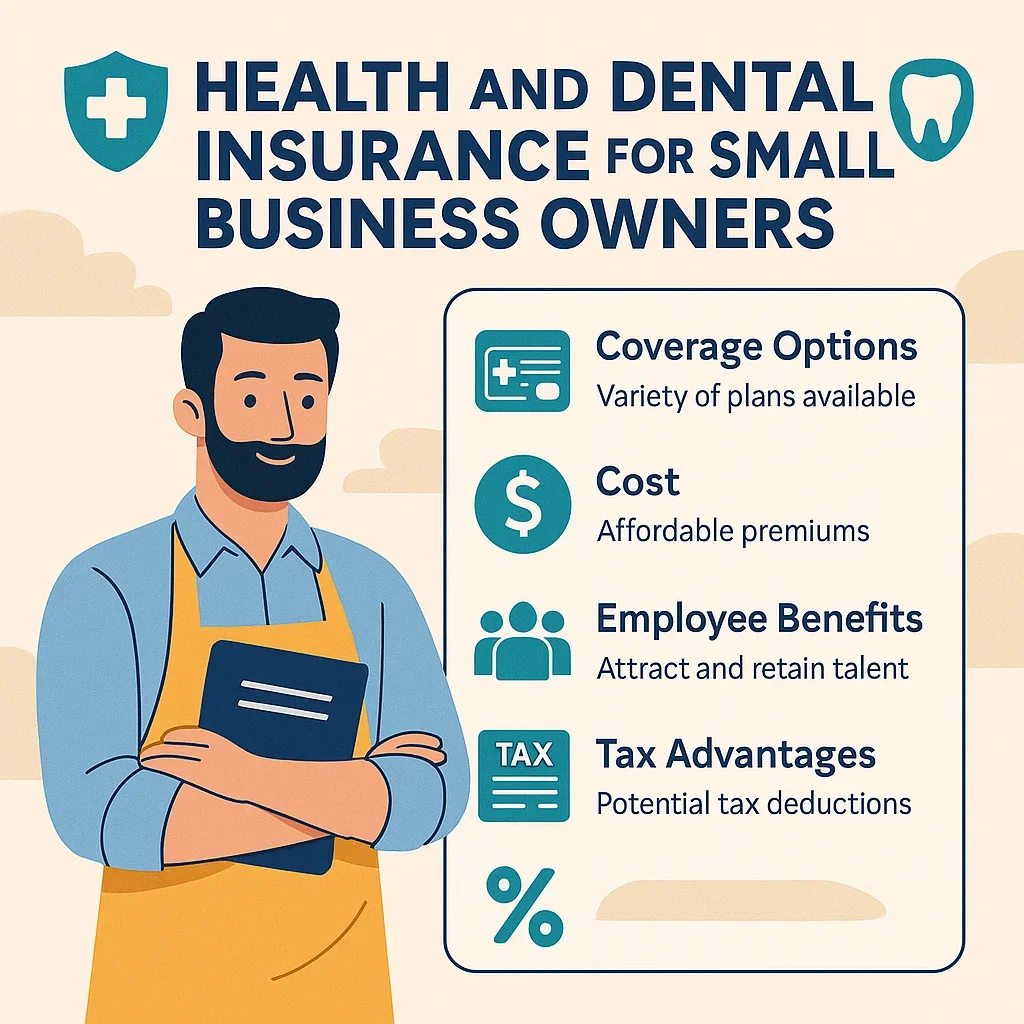
Future Trends in Health and Dental Insurance for Small Business Owners
The landscape of health and dental insurance for small business owners is rapidly evolving. Changing employee expectations, advances in technology, rising healthcare costs, and regulatory reforms are reshaping how small businesses approach insurance. Entrepreneurs who understand these trends and prepare proactively will be in a better position to offer competitive, affordable, and sustainable benefits. This section explores the most important future developments, from digital health tools to personalized coverage, and how they impact small business owners and their employees.
Increased Adoption of Telehealth and Teledentistry
The COVID-19 pandemic accelerated the adoption of telehealth, and its popularity shows no signs of slowing down. Small businesses increasingly look for insurance providers that offer virtual doctor visits, mental health consultations, and even teledentistry services. This shift makes health and dental insurance for small business owners more affordable and accessible, as employees can receive care without missing work or traveling long distances.
Benefits of Telehealth for Small Businesses
- Lower costs compared to in-person visits
- Increased employee productivity by reducing time away from work
- Access to specialists regardless of geographic location
- Convenient dental consultations for preventive care
Personalized and Flexible Coverage
Employees are no longer satisfied with one-size-fits-all plans. Future insurance offerings will focus on personalization, where workers can choose add-ons like orthodontics, vision, or mental health services. Small businesses adopting customizable health and dental insurance for small business owners will stand out in attracting and retaining talent. Flexible options also allow employers to manage costs by paying for core coverage while letting employees upgrade if they wish.
Examples of Flexible Coverage
- Tiered dental coverage (basic preventive vs. advanced orthodontic plans)
- Wellness add-ons such as gym memberships or nutritional counseling
- Mental health support as an optional benefit
Integration of Preventive and Wellness Programs
Preventive care will play an even bigger role in future insurance strategies. Employers are realizing that encouraging healthy lifestyles reduces long-term costs. Insurance providers are now offering integrated wellness programs, including dental check-up reminders, chronic disease management, and preventive screenings. By emphasizing wellness, health and dental insurance for small business owners shifts from being reactive to proactive, improving employee health while lowering claims.
Technology-Driven Insurance Management
Digital tools are revolutionizing how businesses manage insurance. Online dashboards, mobile apps, and AI-driven claims processing streamline administration for small business owners who may lack dedicated HR departments. Employees also benefit from easier access to their benefits information. The future of health and dental insurance for small business owners will likely include personalized portals where employees can track dental appointments, request telehealth visits, and review coverage in real-time.
Key Technological Innovations
- AI-driven chatbots for answering employee benefit questions
- Blockchain for secure medical records
- Mobile apps for scheduling dental check-ups and preventive screenings
- Wearable integration for wellness incentives
Rising Importance of Mental Health Benefits
The conversation around employee well-being increasingly includes mental health. Insurance providers are expanding their offerings to include therapy, counseling, and stress management programs. For small businesses, including mental health services in health and dental insurance for small business owners ensures a more resilient workforce. Given the high levels of stress entrepreneurs and their teams face, mental health coverage is becoming a non-negotiable benefit.
Focus on Affordability and Cost-Sharing Models
As healthcare costs continue to rise, small businesses will need innovative cost-sharing models to remain competitive. Options like Health Reimbursement Arrangements (HRAs), Health Savings Accounts (HSAs), and association health plans will gain more popularity. These solutions provide flexibility while keeping expenses predictable. The future of health and dental insurance for small business owners will involve creative funding mechanisms that balance employer affordability with employee satisfaction.
Regulatory Changes and Government Support
Governments are expected to play a more active role in supporting small businesses. This may include expanded tax credits, subsidies for dental care, and simplified compliance requirements. Keeping up with these changes will be crucial for entrepreneurs to maximize benefits. Regulatory reforms will also push insurance providers to make coverage more transparent and equitable, further shaping health and dental insurance for small business owners in the coming years.
Globalization and Remote Work Impact
As remote and hybrid work models expand, small businesses must consider employees located in different states or countries. This adds complexity to insurance offerings, as coverage requirements differ by region. Insurance providers are already developing global plans or flexible coverage that adapts to a distributed workforce. Future health and dental insurance for small business owners will need to accommodate this new reality to remain competitive.
Emphasis on Dental Innovations
Dental care is evolving with new technologies such as 3D-printed crowns, AI-based diagnostics, and minimally invasive treatments. Insurance providers will increasingly incorporate coverage for these advancements, making dental benefits more valuable. For small businesses, offering up-to-date dental coverage shows commitment to employee well-being and aligns with broader health strategies. This ensures that health and dental insurance for small business owners remains comprehensive and future-proof.
In conclusion, the future of health and dental insurance for small business owners is moving toward greater flexibility, affordability, and technology-driven solutions. From telehealth and personalized plans to mental health and global workforce coverage, entrepreneurs must stay ahead of these trends to remain competitive. By adapting to innovations and evolving employee expectations, small business owners can provide insurance that not only meets today’s needs but also supports long-term growth and workforce stability. 🌟
Disclosure: this page may contain affiliate links. We may earn a commission if you use them, at no extra cost to you.