If you are asking yourself, how do I become a orthodontist, you are already taking the first meaningful step toward a highly respected and rewarding dental career. Orthodontics is a specialized branch of dentistry focused on diagnosing, preventing, and correcting misaligned teeth and jaws. Orthodontists help patients achieve healthier bites, improved oral function, and confident smiles 😁. But the journey from curious student to licensed orthodontic specialist requires years of education, training, dedication, and strategic planning.
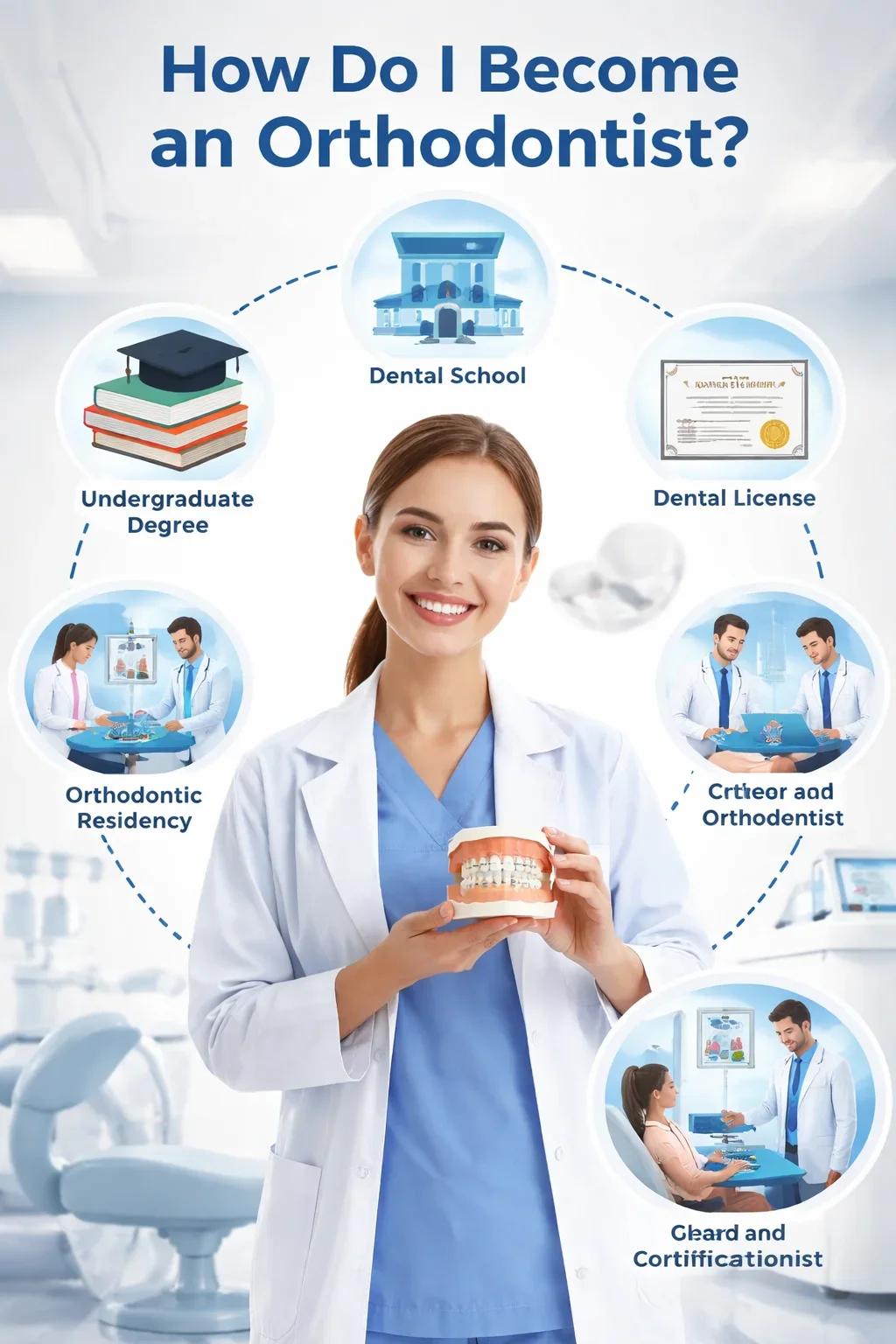
When people search “how do I become a orthodontist,” they usually want a clear, step-by-step roadmap. The path typically includes completing high school with strong science grades, earning a bachelor’s degree, passing the Dental Admission Test (DAT), graduating from dental school, obtaining a dental license, and completing an orthodontic residency program. Each stage builds the scientific knowledge, clinical skills, and professional discipline required in this competitive field.
Understanding how do I become a orthodontist also means understanding what makes orthodontics different from general dentistry. While general dentists handle cleanings, fillings, crowns, and preventive care, orthodontists specialize in correcting bite irregularities using braces, aligners, retainers, and other advanced appliances. They study facial growth patterns, jaw alignment, and long-term stability of tooth movement. This additional expertise requires 2–3 years of specialized residency training after dental school.
Many aspiring students wonder, “How long does it take if I am serious about how do I become a orthodontist?” On average, the full journey takes about 10–11 years after high school. This usually includes four years of undergraduate study, four years of dental school, and two to three years of orthodontic residency. While that timeline may seem long, it ensures that every orthodontist is thoroughly trained to provide safe and effective treatment.
Another important aspect of how do I become a orthodontist is academic performance. Dental schools and orthodontic residency programs are extremely competitive. Maintaining a high GPA, excelling in biology, chemistry, physics, and anatomy, and gaining volunteer or shadowing experience in dental clinics significantly improves your chances of acceptance. Strong communication skills are also essential because orthodontists work closely with patients of all ages.
Financial planning is also part of understanding how do I become a orthodontist. Dental education can be expensive. In the United States, according to data frequently referenced by institutions aligned with the American Dental Association, annual dental school tuition may range from $40,000 to $80,000 depending on whether the institution is public or private. Orthodontic residency programs may add additional costs, although some programs provide stipends. Planning scholarships, grants, or loan repayment strategies early can reduce stress later.
When researching how do I become a orthodontist, it is also important to evaluate whether the profession fits your personality and strengths. Orthodontists need patience, attention to detail, and strong problem-solving skills. Treatments often last 18–24 months, so building long-term relationships with patients is common. If you enjoy working with teenagers and adults, love precision-based healthcare, and appreciate artistic aspects of smile design, orthodontics may be ideal for you.
Clinical experience is another major factor in answering how do I become a orthodontist. During dental school, students gain hands-on training in diagnosing malocclusion (misaligned bites) and planning orthodontic cases. However, true specialization begins during residency, where future orthodontists treat complex cases under supervision. This is where theoretical knowledge transforms into real-world expertise.
If you are considering international opportunities, asking how do I become a orthodontist may also involve licensing requirements in different countries. Some nations require additional examinations or credential verification. If you aim to practice abroad or collaborate with international clinics, understanding regulatory frameworks early will save time.
Beyond technical qualifications, developing a professional network is crucial. Joining dental associations, attending conferences, and connecting with mentors can significantly influence your success. Many successful orthodontists recommend shadowing specialists during your undergraduate years to confirm your passion before committing to the long educational journey.
Ultimately, the question how do I become a orthodontist is not just about education—it is about commitment to lifelong learning. Orthodontic technology constantly evolves. Clear aligner systems, 3D digital scanning, and AI-driven treatment planning are reshaping the field. Staying updated with continuing education ensures long-term career growth and patient trust.
If you are seriously planning your future and want guidance from experienced dental professionals, you can reach out through the Redent Klinik Contact Page for professional insight and career-related discussions. Learning directly from practicing clinicians can clarify expectations and provide practical advice.
In summary, if you keep asking yourself how do I become a orthodontist, the answer is clear: build a strong science foundation, complete rigorous dental education, specialize through accredited residency training, obtain proper licensure, and continuously improve your skills. It is a demanding but deeply rewarding path that combines science, artistry, and patient care. With determination, strategic planning, and passion for dentistry, your journey from student to orthodontic specialist can absolutely become reality. 🌟
1. What Does an Orthodontist Really Do?
If you are seriously asking, how do I become a orthodontist, the first thing you must clearly understand is what an orthodontist actually does on a daily basis. Many people assume orthodontists only “put braces on teeth.” In reality, orthodontics is a highly specialized field within dentistry that focuses on diagnosing, preventing, and correcting irregularities in teeth alignment and jaw structure. Before you continue researching how do I become a orthodontist, you need to know whether the responsibilities, challenges, and clinical focus of this profession truly match your interests and skills.
Orthodontics vs. General Dentistry
When students explore how do I become a orthodontist, they often confuse orthodontists with general dentists. While both complete dental school, orthodontists undergo additional specialized training after earning their dental degree. A general dentist treats cavities, performs cleanings, handles root canals, and manages overall oral health. An orthodontist, however, concentrates specifically on malocclusion (misaligned bites), jaw discrepancies, and tooth positioning.
If you are wondering how do I become a orthodontist because you enjoy the technical and aesthetic side of dentistry, orthodontics may be ideal for you. Orthodontists design treatment plans that gradually move teeth into ideal alignment using braces, clear aligners, retainers, expanders, and other orthodontic appliances. Their work combines biomechanics, facial growth analysis, and long-term stability planning.
Diagnosis and Treatment Planning
Understanding diagnosis is essential when thinking about how do I become a orthodontist. Orthodontists do not simply apply braces—they perform detailed examinations. This includes digital X-rays, 3D scans, photographs, bite analysis, and facial symmetry assessments. They evaluate jaw growth patterns, skeletal discrepancies, and airway considerations.
One of the most intellectually demanding parts of the profession—and a major reason students ask how do I become a orthodontist—is treatment planning. Each patient’s case is unique. Orthodontists must calculate how much force to apply, which teeth to move first, how long treatment will last, and how to ensure stability after appliances are removed. Precision is critical because incorrect force or planning can cause root damage or bite instability.
Common Conditions Treated by Orthodontists
When exploring how do I become a orthodontist, it is helpful to understand the common clinical problems you will treat:
- Overbites and underbites
- Crossbites
- Crowded teeth
- Spacing issues
- Jaw misalignment
- Impacted teeth
- Facial growth irregularities in adolescents
These conditions are not purely cosmetic. Many bite problems affect chewing, speech, oral hygiene, and even jaw joint health (TMJ). So when you ask how do I become a orthodontist, you are really asking how to become a specialist who improves both function and aesthetics.
Working With Modern Technology
Another important aspect of how do I become a orthodontist involves understanding technological advancements. Today’s orthodontists rely heavily on digital tools. Intraoral scanners replace traditional impressions. Software simulates tooth movement. 3D printing creates custom aligners and appliances. Artificial intelligence assists in treatment prediction.
If you are passionate about innovation and precision-based healthcare, this is a strong reason to continue exploring how do I become a orthodontist. Orthodontics is one of the most technologically advanced specialties in dentistry. Continuous learning is essential because systems evolve rapidly.
Patient Interaction and Communication Skills
When researching how do I become a orthodontist, many students overlook the human aspect of the profession. Orthodontists frequently treat teenagers and young adults, though adult patients are increasingly common. Treatment can last 18–24 months, meaning you build long-term relationships with patients and their families.
Strong communication skills are critical. You must explain treatment plans, discuss expectations, manage discomfort concerns, and motivate patients to maintain oral hygiene during orthodontic care. If you are asking how do I become a orthodontist but dislike frequent patient interaction, this specialty may feel challenging.
Emotional Impact of Orthodontic Treatment
One of the most rewarding aspects of asking how do I become a orthodontist is realizing the emotional transformation involved. A corrected smile can significantly boost self-confidence, especially in adolescents. Orthodontists often witness dramatic improvements in patient self-esteem. Seeing a patient smile confidently after treatment is one of the most fulfilling experiences in dental healthcare 😊.
Daily Responsibilities in an Orthodontic Practice
To fully answer how do I become a orthodontist, you should understand daily workflows. A typical day may include:
- Reviewing patient records and radiographs
- Adjusting braces and archwires
- Monitoring aligner progress
- Taking digital impressions
- Consulting with new patients
- Collaborating with dental assistants and lab technicians
Orthodontists also manage business operations if they own a private clinic. That means leadership, scheduling, financial planning, and compliance with healthcare regulations. When students ask how do I become a orthodontist, they rarely consider the entrepreneurial side—but it is often part of the profession.
Professional Standards and Ethics
Understanding ethical responsibilities is another critical part of how do I become a orthodontist. Orthodontists must follow professional guidelines set by regulatory bodies and professional organizations such as the American Dental Association. Maintaining high ethical standards ensures patient safety and long-term professional credibility.
If you aspire to work internationally or collaborate with clinics abroad, you may also explore professional networks and mentorship opportunities. For example, clinics such as Redent Klinik Contact Page provide opportunities to connect with experienced dental professionals who understand both clinical and patient-centered perspectives.
Is Orthodontics the Right Career for You?
Ultimately, before continuing your research on how do I become a orthodontist, ask yourself these questions:
- Do I enjoy detailed, precision-based clinical work?
- Am I comfortable committing to 10+ years of education?
- Do I enjoy long-term patient relationships?
- Am I interested in combining science and aesthetics?
If your answers are mostly yes, then your question—how do I become a orthodontist—is not just curiosity. It may be the beginning of a clear professional direction. Orthodontics demands dedication, but it offers intellectual challenge, financial stability, and the opportunity to transform lives through improved smiles and healthier bites.
2. High School Preparation: The First Step Toward Your Goal
If you are seriously asking, how do I become a orthodontist, your journey actually begins much earlier than college or dental school. High school is the foundation stage where you start building the academic discipline, scientific curiosity, and long-term planning skills necessary for this competitive profession. Many students underestimate this phase, but if you truly want a clear answer to how do I become a orthodontist, you must start preparing strategically during your teenage years.
Choosing the Right High School Courses
When exploring how do I become a orthodontist, your focus in high school should be on science and mathematics. Orthodontics is deeply rooted in biology, physics, and chemistry. Taking advanced placement (AP) or honors courses in these subjects will not only strengthen your academic profile but also prepare you for the intensity of pre-dental university programs.
Key subjects to prioritize include:
- Biology (especially human anatomy and physiology basics)
- Chemistry (general and, if available, introductory organic concepts)
- Physics (forces and mechanics relate to orthodontic tooth movement)
- Mathematics (algebra, statistics, and calculus)
If you are wondering how do I become a orthodontist and whether grades really matter at this stage, the answer is yes. Strong academic performance demonstrates discipline and builds habits that will be essential during dental school and residency.
Developing Study Discipline Early
Another important factor in how do I become a orthodontist is long-term academic consistency. Orthodontic training is demanding. Students who struggle with time management in high school often face difficulties later in university and dental school.
Develop structured study routines, practice active note-taking, and learn how to balance coursework with extracurricular activities. The habits you form now will directly influence your success when pursuing the longer path required for how do I become a orthodontist.
Time Management and Academic Balance
Orthodontics requires patience and attention to detail. Start developing these traits early. Balance school assignments, exam preparation, and extracurricular commitments efficiently. If you can master your schedule now, you will be far better prepared for the demanding years ahead while pursuing how do I become a orthodontist.
Gaining Early Exposure to Dentistry
If you are truly serious about how do I become a orthodontist, exposure to the dental field during high school is extremely valuable. Shadowing a general dentist or orthodontist can give you realistic insight into daily responsibilities. This experience confirms whether your interest is genuine or simply based on perception.
Contact local clinics and ask about observation opportunities. Some dental practices allow motivated students to observe consultations or assist with non-clinical tasks. This early exposure helps you understand the professional environment you may eventually enter.
For example, reaching out through professional clinic platforms like the Redent Klinik Contact Page can provide guidance about clinical environments and expectations in modern dental practices.
Building Communication and Leadership Skills
When students ask how do I become a orthodontist, they often focus only on science. However, orthodontics is also about patient interaction. High school is the ideal time to strengthen communication and leadership abilities.
Join debate clubs, student councils, science clubs, or volunteer organizations. Orthodontists regularly explain treatment plans to patients and families, especially teenagers. Being able to communicate clearly and confidently will significantly enhance your professional effectiveness in the future.
Volunteering in Healthcare Settings
Community service in hospitals, clinics, or health-related organizations strengthens your university applications and demonstrates genuine interest in healthcare. Volunteer experience also shows admissions committees that your interest in how do I become a orthodontist is supported by real-world engagement.
Understanding the Long-Term Commitment
One critical reality about how do I become a orthodontist is the length of education required. The full journey typically includes:
- 4 years of undergraduate education
- 4 years of dental school
- 2–3 years of orthodontic residency
That means around 10–11 years of higher education after high school. Being mentally prepared for this commitment is essential. High school is the time to ask yourself whether you are ready for this level of dedication.
Researching Professional Standards Early
Students serious about how do I become a orthodontist should begin exploring professional organizations such as the American Dental Association. Learning about ethical guidelines, educational standards, and career expectations provides clarity and motivation.
Reading professional articles, watching educational videos, and attending career fairs can help you better understand the realities of dental specialization.
Strengthening Your University Application Profile
If your ultimate goal is answering how do I become a orthodontist successfully, you must enter a strong undergraduate program. Universities look for well-rounded applicants. Maintain high GPAs, participate in extracurricular activities, volunteer consistently, and develop strong recommendation relationships with teachers.
Advanced coursework in science combined with leadership and service involvement creates a competitive academic profile. This early preparation directly supports your long-term objective of how do I become a orthodontist.
Final Thoughts on High School Preparation
High school may seem like an early stage to think seriously about how do I become a orthodontist, but it is actually where the journey truly begins. Academic excellence, disciplined study habits, healthcare exposure, leadership skills, and long-term commitment all start developing during these formative years.
If you approach high school strategically—with clear goals and consistent effort—you will build a powerful foundation for undergraduate success, dental school admission, and eventually orthodontic specialization. Asking how do I become a orthodontist is not just about future education; it is about making smart decisions today that support your professional ambitions tomorrow. 🌟
3. Choosing the Right Undergraduate Degree
If you are still asking yourself, how do I become a orthodontist, your undergraduate education is one of the most critical stages in the entire journey. While high school builds the foundation, your bachelor’s degree shapes your academic profile for dental school admission. Choosing the right major, maintaining a strong GPA, and completing required prerequisite courses are all essential steps when planning how do I become a orthodontist successfully.
Is There a Required Major for Orthodontists?
One of the most common questions students have while researching how do I become a orthodontist is whether they must choose a specific undergraduate major. The simple answer is no—there is no mandatory “pre-orthodontics” degree. However, most students choose science-based majors because dental schools require certain prerequisite courses.
Popular undergraduate majors for students pursuing how do I become a orthodontist include:
- Biology
- Biochemistry
- Chemistry
- Biomedical Sciences
- Health Sciences
These majors naturally include the core coursework needed for dental school admission, such as general biology, organic chemistry, physics, and anatomy. Selecting a science-focused major often makes preparing for the Dental Admission Test (DAT) easier, which is another key milestone in how do I become a orthodontist.
Dental School Prerequisites You Must Complete
Understanding prerequisite requirements is crucial when answering how do I become a orthodontist. While specific requirements may vary by institution, most accredited dental schools require:
- Two semesters of general biology with laboratory
- Two semesters of general chemistry with laboratory
- Two semesters of organic chemistry with laboratory
- Two semesters of physics with laboratory
- English composition courses
- Biochemistry (increasingly required)
If you fail to complete these courses during your undergraduate degree, your path toward how do I become a orthodontist may be delayed. Therefore, planning your course schedule carefully with an academic advisor is extremely important.
Maintaining a Competitive GPA
Another critical factor in how do I become a orthodontist is academic performance. Dental schools are highly competitive, and orthodontic residency programs are even more selective. Most successful applicants maintain a GPA above 3.5, especially in science coursework.
Strong grades demonstrate your ability to handle rigorous scientific material. Since orthodontics involves biomechanics, craniofacial growth, and advanced dental anatomy, strong undergraduate performance is a strong predictor of future success.
Preparing for the Dental Admission Test (DAT)
While pursuing your undergraduate degree and continuing to research how do I become a orthodontist, you must prepare for the Dental Admission Test (DAT). The DAT evaluates academic ability, scientific understanding, perceptual ability, and reading comprehension.
Students typically take the DAT during their junior year of college. A competitive DAT score significantly increases your chances of entering dental school, which is the next major step in how do I become a orthodontist. Preparation usually requires several months of structured study, practice exams, and review courses.
Gaining Clinical and Volunteer Experience
Academic performance alone is not enough when pursuing how do I become a orthodontist. Dental schools also look for applicants who demonstrate real-world exposure to dentistry. Shadowing dentists, volunteering in clinics, or assisting in dental offices strengthens your application.
Shadowing an orthodontist specifically is especially beneficial. Observing consultations, appliance adjustments, and treatment planning gives you deeper insight into what your future career might involve. This hands-on exposure reinforces your commitment to how do I become a orthodontist.
Research Experience and Leadership
Participating in undergraduate research—especially in biology, biomechanics, or craniofacial studies—can significantly enhance your profile. Orthodontics is evidence-based and research-driven. Demonstrating research involvement shows that your interest in how do I become a orthodontist extends beyond basic curiosity.
Additionally, leadership roles in student organizations demonstrate responsibility and teamwork—qualities essential in managing patients and clinical staff in the future.
Understanding the Financial Commitment
When seriously evaluating how do I become a orthodontist, you must also consider financial planning. Undergraduate education costs vary depending on whether you attend a public or private university. After college, dental school tuition in the United States can range between $40,000 and $80,000 per year, according to data often referenced by organizations such as the American Dental Association.
Planning early for scholarships, grants, or loan programs reduces financial stress later. Many students pursuing how do I become a orthodontist research federal aid options and state-supported dental programs.
Building Professional Connections Early
Networking is another overlooked but important component of how do I become a orthodontist. Connecting with professors, dental mentors, and practicing clinicians can lead to strong recommendation letters—an essential part of dental school applications.
You may also explore professional dental clinics and reach out to experienced practitioners through platforms such as the Redent Klinik Contact Page to better understand clinical expectations and career pathways.
Choosing a University with Strong Pre-Dental Support
If you are fully committed to how do I become a orthodontist, consider selecting a university that offers strong pre-dental advising programs. Institutions with dedicated pre-health advisors can help you select the right courses, prepare for the DAT, and navigate application timelines effectively.
Some universities also have dental school affiliations or partnerships, which may provide additional mentorship or research opportunities.
Final Thoughts on Undergraduate Preparation
Choosing the right undergraduate degree is not simply about picking a major—it is about strategically building your profile for dental school admission. If you consistently focus on strong academics, DAT preparation, clinical experience, leadership, and financial planning, you significantly strengthen your pathway toward answering how do I become a orthodontist.
Your undergraduate years are where ambition transforms into structured preparation. With careful planning, discipline, and consistent performance, you move one major step closer to achieving your goal of becoming an orthodontic specialist. 🌟
4. Taking the Dental Admission Test (DAT)
If you are seriously committed to answering the question, how do I become a orthodontist, then taking the Dental Admission Test (DAT) is one of the most decisive milestones in your journey. The DAT is a standardized exam required for admission to dental schools in the United States and is often considered one of the biggest academic hurdles for pre-dental students. Performing well on this exam significantly strengthens your application and moves you closer to your ultimate goal of how do I become a orthodontist.
What Is the DAT and Why Is It Important?
When students research how do I become a orthodontist, they quickly learn that dental school admission is highly competitive. The DAT is designed to assess whether applicants possess the scientific knowledge, analytical reasoning, and perceptual ability necessary for dental training. Dental schools use DAT scores alongside GPA, recommendation letters, and clinical experience to evaluate candidates.
Scoring competitively on the DAT is critical because orthodontic residency programs are even more selective later on. If your long-term objective is truly how do I become a orthodontist, then building a strong academic profile begins with a strong DAT performance.
Sections of the DAT Exam
Understanding the structure of the exam is essential when planning for how do I become a orthodontist. The DAT includes four major sections:
- Survey of the Natural Sciences: Biology, General Chemistry, Organic Chemistry
- Perceptual Ability Test (PAT): Spatial reasoning and visual perception
- Reading Comprehension: Analysis of scientific passages
- Quantitative Reasoning: Mathematical problem-solving
The Perceptual Ability Test is particularly important for students pursuing how do I become a orthodontist, as orthodontics requires strong spatial visualization skills. Orthodontists must mentally predict how teeth will move over time, making spatial awareness an essential ability.
When Should You Take the DAT?
Timing is another key factor when asking how do I become a orthodontist. Most students take the DAT during the spring or summer of their junior year in college. This timing allows you to submit dental school applications early in your senior year, improving your chances of acceptance.
Taking the DAT too late can delay your dental school entry and ultimately postpone your timeline for how do I become a orthodontist. Planning your undergraduate coursework so that all prerequisite science classes are completed before taking the exam is crucial.
How to Prepare Effectively
If your goal is truly how do I become a orthodontist, casual preparation is not enough. Most successful candidates dedicate three to six months of structured study. Preparation strategies typically include:
- Using official DAT preparation materials
- Enrolling in DAT prep courses
- Completing full-length practice exams
- Reviewing weak subject areas intensively
- Creating a consistent daily study schedule
Consistency is more important than cramming. Since how do I become a orthodontist involves long-term academic endurance, developing disciplined study habits during DAT preparation prepares you for dental school’s demanding workload.
Average Competitive Scores
While minimum requirements vary, competitive applicants often score 19–22 or higher on the Academic Average section. However, if your long-term plan is how do I become a orthodontist, aiming for scores above the national average strengthens your future residency applications as well.
Higher DAT scores may also increase your eligibility for scholarships, reducing financial pressure during dental school.
Registration and Costs
Another practical aspect of how do I become a orthodontist is understanding exam logistics. As of recent data, the DAT registration fee is approximately $525 in the United States. Additional costs may apply for study materials or retakes.
Although this may seem expensive, remember that it is an investment in your professional future. Considering that dental school tuition can range between $40,000 and $80,000 annually—according to data often referenced by organizations such as the American Dental Association—the DAT is a relatively small but critical step in the larger journey of how do I become a orthodontist.
Retaking the DAT: Is It Allowed?
Students often worry about performance and ask, if I do not score well, can I still pursue how do I become a orthodontist? The answer is yes, but retakes are limited. Candidates must wait 90 days before retaking the exam, and multiple attempts may be viewed critically by admissions committees.
Therefore, thorough preparation before your first attempt is strongly recommended. A strong first performance supports your long-term vision of how do I become a orthodontist without unnecessary delays.
How the DAT Impacts Your Orthodontic Career
It is important to understand that the DAT is not just about dental school admission—it indirectly influences your future specialization. Orthodontic residency programs often consider dental school academic performance, which begins with gaining admission into a strong dental program. Therefore, performing well on the DAT creates a ripple effect that supports your eventual goal of how do I become a orthodontist.
Building Confidence Through Preparation
Preparing for the DAT is mentally demanding. However, the process itself strengthens your academic discipline. If you can successfully prepare for and pass the DAT, you demonstrate readiness for the even more challenging phases ahead in how do I become a orthodontist.
Seeking mentorship from practicing dentists can also provide motivation. You may consider connecting with experienced professionals through resources such as the Redent Klinik Contact Page to gain insights into the academic journey and clinical expectations.
Final Thoughts on the DAT
If you are truly determined to answer how do I become a orthodontist, the DAT is not just an exam—it is a gateway. It evaluates your readiness for dental education and sets the stage for future specialization. With strategic preparation, disciplined study habits, and strong time management, you can perform competitively and move one step closer to achieving your goal.
Mastering the DAT demonstrates that you are prepared for the long educational path ahead. It marks a major turning point in your journey toward becoming a skilled orthodontic specialist. 🎓
5. Completing Dental School Successfully
After passing the DAT and gaining admission, the next major milestone in answering how do I become a orthodontist is successfully completing dental school. Dental school is where theoretical science transforms into clinical expertise. It is an intense, four-year professional program that builds the foundation necessary before pursuing orthodontic specialization. If you are serious about how do I become a orthodontist, understanding what happens in dental school is essential.
Structure of Dental School (DMD or DDS)
Dental school typically awards either a Doctor of Dental Medicine (DMD) or Doctor of Dental Surgery (DDS) degree. Both degrees are equivalent in curriculum and professional recognition. When students ask how do I become a orthodontist, they must first earn one of these degrees from an accredited dental school.
The first two years of dental school are generally focused on foundational sciences, including:
- Oral anatomy
- Physiology
- Biochemistry
- Microbiology
- Pathology
- Pharmacology
These subjects are crucial for understanding oral health, systemic connections, and craniofacial development—core knowledge areas that directly relate to how do I become a orthodontist.
Clinical Training and Hands-On Experience
In the third and fourth years, students transition into clinical practice under supervision. This is where the journey toward how do I become a orthodontist becomes more practical and patient-centered. You will treat real patients, perform procedures, develop treatment plans, and learn patient communication skills.
Although dental students are trained as general dentists, exposure to orthodontic cases often occurs during this phase. You may assist with simple orthodontic treatments or observe specialists. If your goal remains how do I become a orthodontist, you should actively seek mentorship from orthodontic faculty members.
Building a Strong Academic Record
Orthodontic residency programs are highly competitive. Therefore, if you are committed to how do I become a orthodontist, maintaining top academic performance in dental school is critical. Residency admissions committees evaluate class rank, GPA, clinical evaluations, and faculty recommendations.
Students aiming for orthodontics often graduate in the top 10–20% of their class. Strong performance demonstrates mastery of dental principles and readiness for specialized training.
Developing Essential Clinical Skills
Dental school is where you refine manual dexterity and precision—skills absolutely necessary when considering how do I become a orthodontist. Orthodontics requires delicate wire adjustments, bracket placement accuracy, and careful force application. Even though you are not yet a specialist, mastering restorative and diagnostic procedures strengthens your overall clinical foundation.
Communication skills are also heavily emphasized. Since orthodontic treatment often lasts two years or more, building long-term patient relationships becomes part of your professional identity when pursuing how do I become a orthodontist.
Participating in Research and Extracurricular Activities
If you are fully committed to how do I become a orthodontist, dental school research involvement can significantly strengthen your residency application. Orthodontics is evidence-based and continuously evolving. Participating in craniofacial research, growth studies, or biomechanics projects demonstrates academic dedication.
Joining orthodontic interest groups within your dental school is another strategic step. These organizations often host seminars, workshops, and networking events with practicing orthodontists.
Letters of Recommendation
Strong letters of recommendation from orthodontic faculty members are vital when applying for residency programs. If you consistently demonstrate professionalism and academic excellence during dental school, you improve your credibility in the competitive pathway of how do I become a orthodontist.
Understanding Financial Considerations
Dental school is a major financial investment. Tuition in the United States can range from $40,000 to $80,000 per year, depending on whether the institution is public or private, according to data often referenced by organizations such as the American Dental Association. When planning how do I become a orthodontist, budgeting and loan management become part of your long-term strategy.
Some students pursue scholarships, service-based repayment programs, or military dental pathways to reduce debt. Planning ahead ensures financial stability as you move toward orthodontic residency.
Licensing Exams During Dental School
Before graduating, students must pass national and regional licensing examinations. These exams assess clinical competency and theoretical knowledge. Successfully passing them is essential before practicing dentistry—and a mandatory step in how do I become a orthodontist.
Licensure ensures that you meet professional standards and ethical responsibilities. Organizations like the American Dental Association provide guidance on licensing frameworks and professional conduct.
Networking and Professional Exposure
During dental school, networking becomes increasingly important. Attend conferences, connect with orthodontic specialists, and explore clinical environments. Reaching out through professional platforms such as the Redent Klinik Contact Page may offer insight into real-world orthodontic practice.
Building relationships with mentors can provide valuable advice on residency applications, case presentations, and career planning—all critical components of how do I become a orthodontist.
Preparing for Orthodontic Residency Applications
As you approach graduation, your focus shifts toward residency applications. Preparing case presentations, updating your CV, attending interviews, and demonstrating a strong academic portfolio are essential steps. If you are persistent in your goal of how do I become a orthodontist, this phase requires exceptional preparation and confidence.
Final Thoughts on Dental School
Completing dental school successfully is more than earning a degree—it is about proving that you are ready for advanced specialization. Dental school builds scientific knowledge, clinical competence, ethical responsibility, and patient management skills. Each exam passed, each patient treated, and each skill mastered moves you closer to fully answering how do I become a orthodontist.
With dedication, strong academic performance, financial planning, and mentorship, dental school becomes the bridge between aspiration and specialization. It is a demanding but essential stage in your journey toward becoming a skilled orthodontic specialist. 🎓
6. Earning Your Dental License
After completing dental school, the next essential step in answering how do I become a orthodontist is obtaining your dental license. Without a valid license to practice dentistry, you cannot legally treat patients or apply to most orthodontic residency programs. Licensure confirms that you meet the professional, clinical, and ethical standards required to practice safely. If you are fully committed to how do I become a orthodontist, understanding the licensing process is absolutely critical.
Why Dental Licensure Is Mandatory
Many students assume that graduating from dental school automatically allows them to practice. However, when researching how do I become a orthodontist, it is important to understand that graduation is only part of the process. You must pass national and regional licensing examinations to legally practice dentistry.
Licensure protects patients by ensuring that every practicing dentist has demonstrated clinical competence. Since orthodontics is a recognized specialty within dentistry, you must first qualify as a licensed general dentist before you can specialize. Therefore, licensure is a non-negotiable milestone in how do I become a orthodontist.
National Board Dental Examinations
In the United States, dental students must pass the Integrated National Board Dental Examination (INBDE). This exam assesses applied clinical knowledge rather than simple memorization. When asking how do I become a orthodontist, passing the INBDE is one of the most important academic validations of your dental education.
The INBDE evaluates:
- Diagnosis and treatment planning
- Patient management
- Clinical judgment
- Ethics and professionalism
Strong performance on national board exams also strengthens your orthodontic residency application. Since orthodontic programs are highly competitive, excelling at this stage supports your long-term plan of how do I become a orthodontist.
Regional or State Clinical Licensing Exams
In addition to national board exams, most regions require a clinical licensing examination. These exams evaluate hands-on skills in real or simulated patient scenarios. If you are determined to achieve how do I become a orthodontist, successfully completing these exams proves that you can deliver safe dental care independently.
Requirements vary by state or country. Some jurisdictions use live patient examinations, while others use simulated manikin-based assessments. It is essential to research your intended practice location early while planning how do I become a orthodontist.
Licensing Costs and Application Fees
Another practical aspect of how do I become a orthodontist is understanding financial requirements. Licensing exams can cost between $1,000 and $3,000 depending on location and examination type. Additionally, state application fees and background checks may apply.
Although these costs may seem high, they are relatively small compared to dental school tuition, which can range from $40,000 to $80,000 annually according to data often referenced by organizations such as the American Dental Association. Planning ahead financially ensures smoother progression toward how do I become a orthodontist.
Ethical and Legal Responsibilities
Licensure is not only about passing exams—it also involves committing to ethical and legal standards. When pursuing how do I become a orthodontist, you must demonstrate professionalism, integrity, and adherence to regulatory guidelines.
Professional organizations such as the American Dental Association provide ethical frameworks and continuing education resources. Understanding these standards early strengthens your readiness for orthodontic specialization.
Applying for an Orthodontic Residency After Licensure
Once licensed, you are officially eligible to apply for orthodontic residency programs. This is the stage where how do I become a orthodontist transitions from general dentistry to specialized training. Most residency programs require proof of licensure before enrollment.
During the application process, residency committees evaluate:
- Dental school academic performance
- National board exam results
- Letters of recommendation
- Clinical experience
- Research involvement
Therefore, excelling during licensure examinations not only allows you to practice but also strengthens your candidacy in the competitive path of how do I become a orthodontist.
International Licensing Considerations
If you plan to practice internationally, understanding credential transfer requirements is essential. Some countries require additional exams or verification processes for foreign-trained dentists. If your long-term vision of how do I become a orthodontist includes global opportunities, research regulatory requirements early to avoid delays.
Continuing Education Requirements
After receiving your license, most states require continuing education (CE) credits to maintain active status. This reinforces the idea that how do I become a orthodontist is not just about initial training—it is about lifelong learning.
Orthodontics evolves rapidly with advances in digital scanning, aligner systems, and 3D imaging. Maintaining licensure ensures you remain current with clinical best practices.
Professional Networking After Licensure
Once licensed, expanding your professional network becomes even more important. Connecting with practicing orthodontists can provide mentorship and application guidance. You may consider reaching out to established clinics through platforms such as the Redent Klinik Contact Page to better understand clinical workflows and residency preparation.
Mentorship often plays a decisive role in successfully navigating how do I become a orthodontist.
Final Thoughts on Dental Licensure
Earning your dental license is a defining moment in your professional journey. It marks the transition from student to qualified dental practitioner. More importantly, it unlocks the door to orthodontic specialization. Without licensure, the pathway of how do I become a orthodontist cannot progress.
By passing national and regional exams, meeting ethical standards, and maintaining professional competence, you solidify your position in the dental field. This milestone brings you one significant step closer to entering orthodontic residency and ultimately achieving your goal of becoming a certified orthodontic specialist. 🌟
7. Applying for an Orthodontic Residency Program
At this stage in your journey, if you are still asking how do I become a orthodontist, you are now approaching the most competitive and specialized phase of the process: applying for an orthodontic residency program. Completing dental school and earning your license qualifies you as a general dentist, but it does not yet make you an orthodontist. To fully answer how do I become a orthodontist, you must gain admission into and complete an accredited orthodontic residency program.
What Is an Orthodontic Residency?
An orthodontic residency is an advanced specialty training program that typically lasts 24 to 36 months. During this period, licensed dentists receive intensive education focused exclusively on orthodontics and dentofacial orthopedics. If your long-term goal is how do I become a orthodontist, this is the stage where you transition from general dentistry into true specialization.
Residency programs combine classroom instruction, research, and supervised clinical practice. You will study craniofacial growth and development, biomechanics of tooth movement, advanced orthodontic appliances, digital treatment planning, and complex case management. This is where your theoretical understanding becomes highly refined clinical expertise.
How Competitive Are Orthodontic Programs?
When students seriously explore how do I become a orthodontist, they often underestimate how competitive orthodontic residencies are. Orthodontics is one of the most sought-after dental specialties. Programs may receive hundreds of applications for a small number of available seats.
Successful applicants typically demonstrate:
- High class rank in dental school (often top 10–20%)
- Strong national board examination scores
- Excellent letters of recommendation
- Research experience
- Demonstrated interest in orthodontics
If you are truly committed to how do I become a orthodontist, your preparation must begin early—often during your first year of dental school.
The Application Process
The application process for orthodontic residency is centralized in many countries. In the United States, most programs participate in the Postdoctoral Application Support Service (PASS) and the Match system. Understanding deadlines and documentation requirements is essential when planning how do I become a orthodontist.
Applications typically require:
- Official dental school transcripts
- National board exam scores
- Curriculum vitae (CV)
- Personal statement
- Letters of recommendation (often from orthodontic faculty)
- Proof of dental licensure
Your personal statement is especially important. This is where you clearly explain your motivation and commitment to how do I become a orthodontist. Admissions committees look for genuine passion, maturity, and long-term professional goals.
Preparing a Strong Personal Statement
Your personal statement should clearly describe why you are pursuing orthodontics, what experiences shaped your interest, and how you plan to contribute to the field. Avoid generic explanations. Instead, demonstrate insight into the profession and articulate why how do I become a orthodontist is more than just a career goal—it is a professional calling.
Interview Stage
If selected for interviews, this is your opportunity to demonstrate communication skills and professionalism. Residency interviews often include case discussions, ethical scenarios, and faculty panels. Since orthodontists work closely with patients for extended periods, strong interpersonal skills are crucial.
Programs want to see that your understanding of how do I become a orthodontist is realistic and well-informed. They may ask about difficult cases you handled in dental school or your understanding of biomechanics and facial growth principles.
Financial Considerations of Residency
Another critical part of how do I become a orthodontist involves understanding residency costs. Some orthodontic programs charge tuition, which can range from $20,000 to over $70,000 per year depending on the institution. Other programs provide stipends, especially hospital-based residencies.
According to information often aligned with data from organizations like the American Dental Association, specialty training costs vary significantly across institutions. Careful financial planning is necessary to avoid overwhelming debt while pursuing how do I become a orthodontist.
Balancing Debt and Long-Term Income
Although residency can be costly, orthodontics is generally one of the higher-earning dental specialties. Long-term income potential often offsets initial educational investment. However, responsible budgeting remains essential while completing your training.
Clinical Training During Residency
Residency is where your skills become specialized. You will treat patients with complex malocclusions, skeletal discrepancies, impacted teeth, and interdisciplinary cases involving oral surgeons and prosthodontists. Digital treatment planning, aligner therapy, and advanced bracket systems are emphasized.
If you are serious about how do I become a orthodontist, residency is where you master:
- Bracket placement precision
- Wire bending techniques
- Growth modification in adolescents
- Adult orthodontic treatment planning
- Retention and relapse prevention
This intensive training ensures that when you complete the program, you are fully capable of independent orthodontic practice.
Research and Thesis Requirements
Many orthodontic residency programs require completion of a research project or thesis. This strengthens your understanding of evidence-based dentistry and supports innovation in the field. Research participation reinforces your credibility when pursuing how do I become a orthodontist at the highest professional level.
Professional Networking and Mentorship
During residency, mentorship plays a powerful role. Experienced orthodontists guide your clinical decisions and professional development. Connecting with established clinics, including professional environments such as the Redent Klinik Contact Page, can offer insight into real-world orthodontic practice.
Networking during residency may also open doors for job opportunities after graduation.
Final Thoughts on Residency Applications
Applying for and completing an orthodontic residency program is the defining step in answering how do I become a orthodontist. It is competitive, demanding, and academically intense—but it is also transformative. This stage shapes you into a specialist capable of correcting complex dental and facial alignment issues.
If you have reached this phase, your question—how do I become a orthodontist—is no longer theoretical. You are actively stepping into specialization. With determination, preparation, and excellence, residency training brings you closer to achieving your ultimate goal of becoming a certified orthodontic specialist. 🎓✨
8. Board Certification and Professional Recognition
After completing residency training, many professionals believe they have fully answered the question, how do I become a orthodontist. While finishing an accredited orthodontic program qualifies you to practice as a specialist, pursuing board certification and professional recognition can further strengthen your credibility and career opportunities. If you are committed to excellence and long-term success, understanding this final stage is essential in completing your journey of how do I become a orthodontist.
What Is Board Certification in Orthodontics?
Board certification is a voluntary process that demonstrates advanced knowledge, clinical skill, and commitment to high professional standards. In the United States, orthodontists may pursue certification through the American Board of Orthodontics (ABO). Although certification is not legally required to practice, it represents a higher level of professional achievement.
If you are asking how do I become a orthodontist at the highest level, board certification is often considered the gold standard. It signals to patients, colleagues, and employers that you have met rigorous evaluation standards beyond residency graduation.
The Board Certification Process
Understanding the steps involved is important when exploring how do I become a orthodontist with advanced credentials. The certification process typically includes:
- A written examination assessing orthodontic knowledge
- Submission of treated case reports
- Oral examination and case defense before a board panel
This process evaluates diagnostic skills, treatment planning accuracy, case execution, and long-term stability outcomes. Preparing for board certification requires careful documentation of clinical cases and a strong understanding of orthodontic biomechanics and growth patterns.
Is Board Certification Mandatory?
No, board certification is not mandatory in most regions. However, when professionals consider how do I become a orthodontist with competitive distinction, certification significantly enhances professional reputation. Many patients actively seek board-certified orthodontists because it reflects commitment to excellence.
Continuing Education and Lifelong Learning
Even after achieving specialization, your journey does not stop. One of the most important aspects of how do I become a orthodontist is understanding that dentistry evolves continuously. New aligner technologies, digital workflows, 3D imaging systems, and artificial intelligence-driven planning tools are reshaping orthodontic practice.
Most licensing authorities require continuing education (CE) credits to maintain active licensure. Professional organizations, including the American Dental Association, provide educational resources and conferences to support ongoing development.
Committing to lifelong learning ensures that your answer to how do I become a orthodontist includes not only qualification but sustained excellence.
Joining Professional Associations
Professional membership strengthens networking, education, and recognition. Orthodontists often join national and international associations to stay informed about research, treatment innovations, and regulatory updates.
If your long-term goal in how do I become a orthodontist includes leadership or academic involvement, professional associations offer opportunities for committee participation, speaking engagements, and research collaboration.
Building Your Professional Reputation
Reputation is built through consistent clinical quality, ethical practice, and patient satisfaction. Board certification and professional involvement reinforce trust. Patients are more confident when they know their orthodontist maintains high standards and remains updated with the latest techniques.
Ethical Standards and Patient Trust
Professional recognition goes beyond certificates. Ethical responsibility is central to how do I become a orthodontist in a meaningful way. Transparent communication, realistic treatment expectations, and patient-centered care define long-term success.
Adhering to professional codes of conduct protects both patients and practitioners. Regulatory bodies and associations emphasize ethical guidelines that support high-quality care.
Global Opportunities and Recognition
Orthodontics is recognized worldwide, but licensing and certification standards vary by country. If you envision international practice while exploring how do I become a orthodontist, you may need additional credential evaluations or examinations.
Networking with established clinics and professionals can provide valuable insights. For example, connecting through platforms such as the Redent Klinik Contact Page may offer perspective on international dental practice environments.
Academic and Teaching Opportunities
Many board-certified orthodontists choose to teach in dental schools or participate in research. If you aspire to combine clinical work with academic involvement, board certification strengthens your eligibility for faculty positions.
Teaching also reinforces your expertise. Sharing knowledge with future dentists and specialists reflects a complete and mature understanding of how do I become a orthodontist—not just for yourself, but as a mentor to others.
Long-Term Career Impact of Certification
While not mandatory, board certification often influences job prospects, partnership opportunities, and patient referrals. Orthodontic practices may prioritize certified specialists for leadership roles.
If you aim to establish your own clinic, certification can differentiate you in competitive markets. Patients increasingly research credentials before selecting healthcare providers.
Final Thoughts on Professional Recognition
Achieving board certification and professional recognition represents the final refinement of your journey. At this point, your question—how do I become a orthodontist—has evolved into how do I excel as a orthodontist.
Residency provides specialization; certification provides distinction. Continuing education ensures relevance; ethical practice builds trust. Together, these elements define a complete and successful orthodontic career.
If you pursue excellence beyond minimum requirements, your path in how do I become a orthodontist will not only lead to qualification but to respected professional leadership within the dental community. 🌟
9. Career Paths, Salary Expectations, and Long-Term Growth
By the time you reach this stage, your question how do I become a orthodontist has shifted from education and licensing to real-world practice. After completing residency and, if desired, board certification, you officially enter the professional workforce. However, understanding your career options, income potential, and long-term growth opportunities is essential for fully answering how do I become a orthodontist in a practical sense.
Where Can an Orthodontist Work?
When exploring how do I become a orthodontist, many students imagine opening a private clinic immediately. While private practice is common, it is not the only career path available. Orthodontists can work in:
- Private orthodontic practices
- Multi-specialty dental clinics
- Hospitals and academic institutions
- Corporate dental service organizations (DSOs)
- University teaching positions
Each pathway offers different advantages. Private practice provides autonomy and potentially higher income, while academic roles offer stability and research opportunities. If you are still asking how do I become a orthodontist with flexibility, know that the field offers diverse career models.
Starting Your Own Orthodontic Practice
Opening your own clinic is a major milestone for many professionals who pursue how do I become a orthodontist. However, running a practice requires more than clinical expertise. You must understand business management, marketing, staff leadership, patient scheduling, and financial planning.
Initial Investment Costs
Starting a new orthodontic clinic can require significant investment. Estimated startup costs may range between $250,000 and $500,000 depending on location, equipment, and office size. Expenses may include:
- Dental chairs and orthodontic equipment
- Digital scanners and imaging systems
- 3D printers and aligner software
- Office leasing and renovation
- Staff salaries
While these numbers may seem high, orthodontics is generally one of the higher-earning dental specialties, making the long-term return on investment attractive for those who fully commit to how do I become a orthodontist.
Salary Expectations
Income is often a motivating factor when students ask how do I become a orthodontist. According to industry data and reports often aligned with professional organizations such as the American Dental Association, orthodontists in the United States frequently earn between $200,000 and $350,000 annually. Experienced practitioners or successful practice owners may earn significantly more depending on patient volume and location.
Factors influencing income include:
- Geographic location
- Years of experience
- Type of practice model
- Patient demand
- Operational efficiency
If financial stability is part of your motivation behind how do I become a orthodontist, it is important to balance income expectations with the educational investment and time commitment required.
Work-Life Balance
Another consideration in how do I become a orthodontist is lifestyle. Orthodontists typically maintain more predictable schedules than some other dental specialists. Most practices operate during standard weekday hours, with limited emergency cases compared to oral surgery.
This structured schedule allows many orthodontists to achieve a healthy work-life balance. However, practice owners may initially work longer hours while building their patient base.
Long-Term Career Growth
Orthodontics is a field driven by innovation. As digital orthodontics, clear aligner systems, and artificial intelligence continue to evolve, long-term growth opportunities expand. If you are committed to excellence in how do I become a orthodontist, ongoing education and adaptation to new technologies are essential.
Expanding Services
Many orthodontists expand their services over time to include:
- Clear aligner therapy
- Interceptive orthodontics for children
- Adult cosmetic orthodontics
- Collaboration with maxillofacial surgeons
Offering diverse treatment options increases patient demand and professional fulfillment.
Teaching and Academic Careers
Some specialists choose to enter academia after completing the journey of how do I become a orthodontist. Teaching at dental schools or supervising residents allows experienced professionals to mentor the next generation.
Academic careers also provide opportunities for research publication and innovation in orthodontic techniques.
International Practice Opportunities
If you envision working internationally while pursuing how do I become a orthodontist, research licensing requirements carefully. Some countries require additional credential evaluations or board examinations.
Connecting with international clinics and professionals can provide valuable perspective. For example, reaching out through the Redent Klinik Contact Page may offer insight into global dental practice environments.
Reputation and Patient Trust
Long-term growth in orthodontics depends heavily on reputation. Positive patient outcomes, ethical treatment planning, and strong communication build sustainable referral networks. Even after completing all educational steps in how do I become a orthodontist, your career success depends on maintaining patient trust.
Adapting to Technological Innovation
Digital scanning, 3D modeling, and aligner-based treatments are reshaping orthodontic care. Specialists who stay updated remain competitive in evolving markets. Continuing education courses, conferences, and professional seminars help maintain expertise.
Final Thoughts on Career Development
When you first asked how do I become a orthodontist, you were likely focused on education. Now, the answer includes career strategy, financial planning, professional reputation, and long-term adaptability. Orthodontics offers strong income potential, intellectual challenge, and the opportunity to transform patients’ confidence through improved smiles.
Ultimately, fully answering how do I become a orthodontist means not only completing academic requirements but building a sustainable, ethical, and forward-thinking professional life. With dedication, strategic planning, and lifelong learning, orthodontics can provide both personal fulfillment and long-term career success. 🌟