
Many people who are passionate about dentistry and helping others achieve confident smiles eventually ask an important question: how do you become an orthodontist? Orthodontists are highly trained dental specialists who focus on diagnosing, preventing, and correcting misaligned teeth and jaw structures. Their work improves not only the appearance of a person’s smile but also overall oral health, bite function, and long-term dental stability. Because orthodontics requires advanced expertise, the journey to becoming an orthodontist involves several years of education, clinical training, and professional development.
Understanding how do you become an orthodontist is essential for students, dental professionals, or anyone considering a career in the dental field. Orthodontics is considered one of the most respected and rewarding dental specialties. It combines science, healthcare, aesthetics, and patient communication. Patients often see orthodontists regularly for months or even years during treatments such as braces or clear aligners, which means orthodontists build strong relationships with their patients while transforming their smiles. 😊
When people search for information about how do you become an orthodontist, they usually want to understand the full educational path and professional requirements involved. Unlike general dentists, orthodontists must complete additional specialized training after dental school. This advanced education allows them to treat complex issues like overcrowded teeth, overbites, underbites, jaw alignment problems, and spacing issues. Their expertise is crucial for treatments using braces, retainers, clear aligners, and other orthodontic appliances.
The process of learning how do you become an orthodontist typically begins with a strong academic foundation in science during high school and undergraduate studies. Students interested in orthodontics usually focus on subjects such as biology, chemistry, anatomy, and physics. These courses build the scientific knowledge required to understand dental structures and facial development. Universities often expect aspiring dental students to maintain high academic performance while gaining volunteer experience in healthcare environments.
After completing an undergraduate degree, the next major step in understanding how do you become an orthodontist is gaining admission to dental school. Dental school programs generally take four years to complete and provide comprehensive education in oral health, dental procedures, and patient care. During dental school, students study anatomy, pathology, radiology, oral surgery, and restorative dentistry. Clinical practice is also an important part of the training, allowing students to work directly with patients under supervision.
However, graduating from dental school does not mean someone automatically becomes an orthodontist. To fully answer the question how do you become an orthodontist, it is important to understand the role of orthodontic residency programs. After dental school, dentists must apply to a competitive orthodontic residency program. These programs typically last two to three years and provide advanced education specifically focused on tooth movement, facial growth, bite correction, and orthodontic technologies.
Orthodontic residency programs include both academic instruction and hands-on clinical training. Residents learn how to evaluate complex orthodontic cases, develop treatment plans, and apply orthodontic appliances effectively. They also gain experience with modern orthodontic technologies such as digital imaging, 3D treatment planning, and clear aligner systems. This stage is where dentists transform into orthodontic specialists.
Professional organizations also play an important role in the orthodontic profession. For example, the American Dental Association supports dentists and specialists by promoting high standards in dental education, ethics, and patient care. Membership in such organizations helps orthodontists stay informed about new research, technological advancements, and best practices in dental medicine.
Another important aspect of understanding how do you become an orthodontist is recognizing the responsibility that comes with the profession. Orthodontists must combine technical knowledge with excellent communication skills. They guide patients through treatment plans, explain procedures clearly, and monitor progress over time. Many orthodontic treatments last between 12 and 24 months, requiring ongoing patient care and follow-up visits.
For patients seeking orthodontic treatment or advice, contacting a professional clinic can be a helpful first step. If you are interested in learning more about orthodontic care or exploring treatment options, visiting the Redent Klinik Contact Page can provide access to expert dental professionals who specialize in smile transformation and advanced orthodontic care.
Another common question related to how do you become an orthodontist involves the time commitment required for the profession. In total, the path to becoming an orthodontist usually takes around 10 to 11 years of education and training. This includes undergraduate studies, dental school, and orthodontic residency. Although the journey is long, many professionals find it extremely rewarding because orthodontists have the opportunity to significantly improve patients’ lives through better oral health and confidence.
People exploring how do you become an orthodontist often discover that orthodontics blends science, art, and healthcare. Designing a beautiful smile requires understanding facial aesthetics, tooth positioning, and jaw alignment. Orthodontists carefully plan treatments that create harmony between teeth, lips, and facial structure. This artistic aspect of orthodontics is one reason why many dental professionals choose to specialize in this field.
In addition to clinical expertise, orthodontists must commit to lifelong learning. Dental technology evolves rapidly, and new treatment methods appear frequently. Continuing education courses, professional conferences, and research publications help orthodontists stay updated with the latest advancements in the field.
Ultimately, the question how do you become an orthodontist reflects more than just an educational pathway. It represents a long-term dedication to healthcare, patient well-being, and professional excellence. Orthodontists play a vital role in modern dentistry by correcting dental irregularities, improving oral function, and giving patients the confidence that comes with a healthy, beautiful smile. 😁
What Does an Orthodontist Do in Modern Dentistry?
To fully understand how do you become an orthodontist, it is important to first understand what orthodontists actually do in modern dentistry. Orthodontists are dental specialists who focus on diagnosing, preventing, and correcting irregularities in teeth and jaw alignment. Their work goes far beyond simply straightening teeth. Orthodontists play a crucial role in improving oral health, bite function, facial symmetry, and patient confidence. Because orthodontic treatment often lasts months or even years, orthodontists must combine technical skill with excellent patient communication and long-term treatment planning. 😊
When people begin researching how do you become an orthodontist, they often imagine orthodontists primarily placing braces. While braces are certainly one of the most well-known orthodontic tools, modern orthodontists use a wide range of technologies and treatment approaches to correct dental alignment issues. Their work includes evaluating jaw growth, planning tooth movement, using digital scanning technologies, and monitoring treatment progress over time.
The Core Responsibilities of an Orthodontist
One of the first things to understand when learning how do you become an orthodontist is the daily responsibilities associated with this profession. Orthodontists perform specialized evaluations of dental and facial structures to determine the best treatment approach for each patient. Every patient has unique dental anatomy, meaning orthodontic treatment must always be personalized.
Typical responsibilities of orthodontists include:
- Examining teeth and jaw alignment
- Diagnosing bite problems such as overbite, underbite, and crossbite
- Designing orthodontic treatment plans
- Applying braces, clear aligners, or other orthodontic devices
- Monitoring tooth movement throughout treatment
- Adjusting orthodontic appliances during follow-up visits
- Ensuring long-term stability with retainers
These tasks require advanced training and precision. That is why the path explained in how do you become an orthodontist involves many years of education and specialized residency training beyond dental school.
Common Orthodontic Problems Treated by Specialists
Another key aspect of understanding how do you become an orthodontist involves recognizing the types of dental conditions orthodontists treat. Misaligned teeth are not only cosmetic concerns; they can also lead to functional issues, difficulty chewing, speech problems, and increased risk of tooth decay or gum disease.
Orthodontists commonly treat conditions such as:
- Crowded teeth
- Gaps between teeth
- Overbite (upper teeth overlapping lower teeth)
- Underbite (lower teeth positioned in front of upper teeth)
- Crossbite
- Open bite
- Jaw misalignment
Correcting these issues improves both dental health and facial balance. As you explore how do you become an orthodontist, you will see that orthodontic specialists are responsible for helping patients achieve healthier smiles that function properly.
Braces and Orthodontic Appliances
A large part of orthodontic practice involves orthodontic appliances. When researching how do you become an orthodontist, it becomes clear that orthodontists must master a variety of treatment tools designed to gradually move teeth into their ideal positions.
Some of the most common orthodontic appliances include:
- Traditional metal braces
- Ceramic braces
- Lingual braces (placed behind teeth)
- Clear aligners such as Invisalign-style systems
- Palatal expanders
- Retainers
Each appliance works by applying controlled pressure that gradually shifts teeth into proper alignment. Orthodontists carefully monitor treatment progress and make adjustments when necessary to ensure optimal results.
The Role of Technology in Modern Orthodontics
Another fascinating element to consider when studying how do you become an orthodontist is the rapid advancement of orthodontic technology. Modern orthodontists rely heavily on digital tools to improve treatment accuracy and patient experience.
Today’s orthodontic practices often include:
- 3D dental scanning technology
- Digital treatment planning software
- Computer-guided aligner design
- Advanced orthodontic imaging
- Artificial intelligence in treatment prediction
These innovations allow orthodontists to simulate treatment results before treatment even begins. This helps patients visualize their future smile and understand the expected timeline for improvement.
Professional dental organizations also support orthodontists by promoting research, education, and ethical standards. For example, the American Dental Association provides valuable guidance and resources for dental professionals worldwide.
Why Orthodontists Are Essential for Oral Health
People who search for how do you become an orthodontist often focus on the career path, but it is equally important to understand the value orthodontists provide to patients. Properly aligned teeth are easier to clean, reducing the risk of cavities and gum disease. A balanced bite also prevents excessive wear on teeth and reduces strain on jaw joints.
Orthodontists help patients achieve:
- Improved chewing and speaking ability
- Better long-term oral health
- Enhanced facial aesthetics
- Higher self-confidence
- Reduced risk of dental complications
Because orthodontic treatment can dramatically improve a patient’s quality of life, orthodontists hold a respected position within the dental profession.
Orthodontists vs General Dentists
Another common question related to how do you become an orthodontist is the difference between orthodontists and general dentists. All orthodontists are dentists, but not all dentists are orthodontists. After completing dental school, orthodontists receive additional specialized training focused entirely on tooth movement and jaw alignment.
This extra education allows orthodontists to handle complex orthodontic cases that require advanced expertise. For patients considering orthodontic treatment or consultation, professional clinics can provide guidance. Visiting the Redent Klinik Contact Page is one way to connect with dental professionals who can help evaluate orthodontic needs.
Understanding the responsibilities of orthodontists makes it easier to appreciate the long journey behind how do you become an orthodontist. The profession requires years of dedication, scientific knowledge, and patient-focused care. Orthodontists ultimately combine medical expertise, technical precision, and aesthetic understanding to create healthy, confident smiles that last a lifetime.
Why Understanding “How Do You Become an Orthodontist” Matters Before Starting
Before committing to a demanding healthcare career, many aspiring dental professionals ask a fundamental question: how do you become an orthodontist, and why is it important to understand the journey before beginning? Orthodontics is one of the most specialized and respected branches of dentistry. While the career offers rewarding opportunities, excellent income potential, and the ability to transform patients’ smiles, the path requires dedication, patience, and long-term academic commitment.
Understanding how do you become an orthodontist early in your career planning helps you make informed decisions about education, finances, and long-term professional goals. Many students are attracted to orthodontics because it blends science, healthcare, technology, and aesthetics. However, the process of becoming an orthodontist is complex and highly competitive. By understanding the requirements and expectations ahead of time, aspiring professionals can better prepare themselves for success.
The Importance of Career Awareness in Dentistry
One of the first reasons to study how do you become an orthodontist is career awareness. Orthodontics differs significantly from general dentistry. While general dentists provide routine dental care such as fillings, cleanings, and preventive treatments, orthodontists specialize in correcting alignment issues related to teeth and jaw structure.
This specialization means orthodontists must complete additional training beyond dental school. Students researching how do you become an orthodontist quickly discover that the journey includes multiple educational stages, licensing requirements, and specialized residency programs. Knowing this early helps students mentally and academically prepare for the long educational path ahead.
Career awareness also allows students to evaluate whether orthodontics aligns with their interests. Orthodontists must enjoy working with patients over long treatment periods, analyzing dental structures, and using precise orthodontic techniques to move teeth gradually.
Understanding the Time Commitment
Another major reason to learn how do you become an orthodontist before pursuing the profession is understanding the time investment required. Becoming an orthodontist is not a short process. The full pathway typically requires approximately 10 to 11 years of higher education and clinical training.
Typical Timeline to Become an Orthodontist
- 4 years of undergraduate education
- 4 years of dental school
- 2–3 years of orthodontic residency training
This timeline means students must be prepared for over a decade of rigorous academic study and practical training. While this may sound demanding, many professionals find the process rewarding because orthodontics offers excellent career stability and the ability to make meaningful improvements in patients’ lives.
Students who fully understand how do you become an orthodontist are more likely to stay motivated during challenging academic periods. Having a clear vision of the final goal often helps aspiring orthodontists remain focused throughout their studies.
Financial Planning and Education Costs
Learning how do you become an orthodontist is also important for financial planning. Dental education can be expensive, and orthodontic specialization adds additional training costs. Prospective orthodontists should understand tuition costs, student loans, and possible financial aid options before beginning their academic journey.
Average education costs may include:
- Undergraduate degree tuition
- Dental school tuition and clinical training costs
- Orthodontic residency program tuition or training fees
- Licensing exams and professional certification expenses
Although the educational investment is significant, orthodontists often earn high professional salaries due to their specialized expertise. This makes orthodontics one of the most financially stable careers in the dental field.
Competitive Nature of Orthodontic Specialization
Another reason why understanding how do you become an orthodontist is important involves the competitive nature of orthodontic residency programs. After dental school, many dentists apply to orthodontic programs, but only a limited number of positions are available each year.
This means dental students must maintain excellent academic performance, strong clinical skills, and positive professional recommendations to secure admission to a residency program. Students who understand how do you become an orthodontist early can focus on building strong academic records and gaining relevant experience during dental school.
Professional organizations help guide dentists through education and career development. For example, the American Dental Association provides resources, continuing education opportunities, and professional standards that support dental professionals throughout their careers.
Personal Qualities Needed for the Profession
Exploring how do you become an orthodontist also helps students evaluate whether they possess the personal qualities necessary for the profession. Orthodontists must combine technical expertise with interpersonal communication skills.
Key personal traits for orthodontists include:
- Strong attention to detail
- Excellent manual dexterity
- Patience for long treatment processes
- Strong communication skills
- Problem-solving ability
- Scientific curiosity
Orthodontists work with patients of all ages, including children, teenagers, and adults. Because orthodontic treatments often last months or years, orthodontists must build trust and maintain positive relationships with their patients throughout treatment.
The Long-Term Rewards of Orthodontic Careers
When researching how do you become an orthodontist, many people are motivated by the long-term rewards of the profession. Orthodontists have the opportunity to dramatically improve patients’ confidence and oral health. A corrected smile can improve chewing function, speech clarity, and facial symmetry.
Additionally, orthodontists often enjoy:
- High professional respect within the dental field
- Strong job stability and career demand
- Opportunities to open private practices
- The ability to specialize in advanced orthodontic technologies
Patients seeking orthodontic guidance or consultation can always connect with dental professionals through trusted clinics. For example, visiting the Redent Klinik Contact Page allows patients to learn more about orthodontic treatment options and expert dental care.
Making an Informed Career Decision
Ultimately, understanding how do you become an orthodontist helps students make informed career decisions before committing to the demanding educational journey. Orthodontics is not only about straightening teeth; it is about improving oral health, restoring function, and enhancing patients’ quality of life.
By studying the full pathway involved in how do you become an orthodontist, aspiring dental professionals can evaluate whether the profession aligns with their academic strengths, personal interests, and long-term career goals. For those who are passionate about dentistry, science, and helping people smile with confidence, orthodontics can be an incredibly fulfilling and impactful career path. 😊
Education Requirements: The First Step in How Do You Become an Orthodontist
Understanding the educational pathway is one of the most important parts of answering the question how do you become an orthodontist. Orthodontics is a specialized branch of dentistry that requires extensive academic training, clinical experience, and scientific knowledge. Unlike many other healthcare careers, orthodontists must first become licensed dentists before continuing with advanced orthodontic specialization.
The educational process behind how do you become an orthodontist is long and demanding, but it ensures that orthodontists develop the expertise necessary to diagnose and treat complex dental and facial alignment problems. Because orthodontists work with precise tooth movement, jaw positioning, and facial balance, their training must be extremely thorough.
Most orthodontists spend more than a decade studying and training before they begin practicing independently. This educational journey begins long before dental school, starting with strong academic preparation during undergraduate studies.
Step 1: Undergraduate Education (Bachelor’s Degree)
The first major stage in understanding how do you become an orthodontist is completing an undergraduate degree. Most future orthodontists earn a bachelor’s degree in a science-related field such as biology, chemistry, biochemistry, or health sciences. These programs provide the scientific foundation required for dental school.
Although dental schools do not always require a specific major, students pursuing orthodontics typically focus on courses that strengthen their knowledge of human biology and medical sciences. Undergraduate programs usually take four years to complete.
Key courses that help prepare students for the journey of how do you become an orthodontist include:
- General Biology
- Human Anatomy and Physiology
- Organic Chemistry
- Physics
- Biochemistry
- Microbiology
- Statistics
These subjects help students understand the biological processes behind tooth development, bone structure, and oral health. Maintaining a strong GPA is essential because dental school admission is highly competitive.
Dental Admission Test (DAT)
During undergraduate studies, students preparing for how do you become an orthodontist must also complete the Dental Admission Test (DAT). This standardized exam evaluates a student’s academic readiness for dental school.
The DAT typically measures knowledge in several areas:
- Natural sciences
- Perceptual ability
- Reading comprehension
- Quantitative reasoning
High DAT scores significantly improve a student’s chances of acceptance into a reputable dental school, which is a critical milestone in the journey of how do you become an orthodontist.
Step 2: Admission to Dental School
After completing an undergraduate degree and passing the DAT, the next step in how do you become an orthodontist is gaining admission to dental school. Dental schools are highly selective, often admitting only a small percentage of applicants each year.
Dental school programs usually last four years and provide comprehensive training in oral health care. Students learn how to diagnose dental conditions, perform procedures, and treat patients safely.
Dental education includes both classroom instruction and hands-on clinical practice. Students study subjects such as:
- Dental anatomy
- Oral pathology
- Dental radiology
- Periodontology
- Restorative dentistry
- Oral surgery
- Prosthodontics
Clinical training is an essential component of dental school. Students work directly with patients under supervision, gaining real-world experience in diagnosing and treating oral health problems.
Successfully graduating from dental school earns students either a Doctor of Dental Surgery (DDS) degree or a Doctor of Dental Medicine (DMD) degree. Both degrees qualify graduates to practice general dentistry.
Step 3: Licensing as a Dentist
Another critical step in understanding how do you become an orthodontist is obtaining a dental license. After graduating from dental school, dentists must pass national and regional licensing examinations before they can practice.
Licensing requirements usually include:
- National Board Dental Examinations
- Clinical licensing exams
- State-specific requirements
Once licensed, dentists are legally allowed to practice dentistry. However, dentists who want to specialize must pursue additional training.
Professional organizations help guide dentists through licensing and professional development. For example, the American Dental Association provides resources, guidelines, and educational support for dental professionals.
Step 4: Preparing for Orthodontic Specialization
Once dentists complete their basic education and licensing requirements, they can apply for orthodontic residency programs. This stage is where dentists begin transitioning into orthodontic specialists.
Students interested in orthodontics often strengthen their applications by:
- Maintaining excellent academic performance
- Participating in orthodontic research
- Gaining clinical experience with orthodontic procedures
- Building professional relationships with orthodontic mentors
These experiences help dentists stand out when applying to orthodontic residency programs. Because orthodontic residencies are extremely competitive, preparation is essential.
The Importance of Education in Orthodontics
The reason the pathway of how do you become an orthodontist includes so many years of education is simple: orthodontists must possess highly specialized knowledge. Tooth movement involves complex biological processes involving bone remodeling, muscle forces, and jaw growth.
Orthodontists must also understand facial aesthetics and how dental alignment affects overall appearance. This combination of science and artistry makes orthodontics one of the most fascinating specialties in dentistry.
Patients who want to explore orthodontic treatments or receive professional dental advice can contact experienced clinics. For example, visiting the Redent Klinik Contact Page allows patients to connect with dental professionals who can evaluate orthodontic needs and provide personalized treatment options.
Ultimately, education forms the foundation of how do you become an orthodontist. From undergraduate science courses to dental school and specialized training, each step builds the expertise required to correct dental misalignments and create healthy, confident smiles. For students passionate about dentistry, science, and patient care, the educational journey toward orthodontics is challenging but incredibly rewarding. 🦷
Orthodontic Residency Programs and Specialized Training
Once a dentist completes dental school and obtains a professional license, the next critical step in the journey of how do you become an orthodontist is entering an orthodontic residency program. This stage represents the transition from general dentistry to advanced orthodontic specialization. Residency programs provide the focused education, research experience, and clinical training required to diagnose and treat complex orthodontic cases.
Understanding the role of orthodontic residency is essential when exploring how do you become an orthodontist. While dental school provides broad training in oral healthcare, orthodontic residency programs concentrate specifically on tooth movement, facial growth, bite correction, and orthodontic appliance therapy. These programs transform dentists into specialists capable of treating severe malocclusions, jaw irregularities, and advanced orthodontic cases.
What Is an Orthodontic Residency Program?
An orthodontic residency program is a postgraduate training program designed specifically for dentists who want to specialize in orthodontics. Residency programs typically last between two and three years. During this time, dentists receive intensive academic instruction combined with hands-on patient care.
The residency stage is one of the most important answers to the question how do you become an orthodontist because it provides the specialized expertise required for the profession. Without completing an accredited orthodontic residency, dentists cannot legally or professionally present themselves as orthodontic specialists.
Residency programs are usually offered by universities, dental schools, or teaching hospitals. Admission to these programs is extremely competitive, meaning applicants must demonstrate excellent academic performance, clinical ability, and professional dedication.
Core Areas of Orthodontic Residency Training
Orthodontic residency programs cover a wide range of advanced topics. Dentists studying how do you become an orthodontist will learn that these programs are designed to deepen knowledge of dental biomechanics, facial growth patterns, and treatment planning.
Advanced Orthodontic Diagnostics
Residents learn how to evaluate complex orthodontic problems using advanced diagnostic techniques. This includes interpreting dental radiographs, analyzing jaw alignment, and studying facial symmetry. Proper diagnosis is essential for developing successful orthodontic treatment plans.
Tooth Movement and Biomechanics
Understanding the science of tooth movement is a key part of how do you become an orthodontist. Residents study how controlled forces applied by braces or aligners cause teeth to move gradually through bone. This involves understanding biological processes such as bone remodeling and periodontal response.
Orthodontic Appliance Design
Orthodontists must master various orthodontic devices used to correct dental alignment. During residency training, dentists gain experience working with:
- Traditional metal braces
- Ceramic braces
- Lingual braces
- Clear aligner systems
- Palatal expanders
- Orthodontic retainers
Residents learn when each appliance is appropriate and how to adjust devices throughout treatment.
Clinical Training and Patient Care
One of the most valuable aspects of orthodontic residency training is direct patient care. While studying how do you become an orthodontist, many students are surprised by how much hands-on clinical experience is required.
Residents work closely with patients under the supervision of experienced orthodontists. They diagnose orthodontic conditions, create treatment plans, place braces or aligners, and monitor treatment progress over time. Because orthodontic treatment typically takes months or years, residents learn how to manage long-term patient care effectively.
This experience prepares residents for real-world orthodontic practice. By the time they complete the program, they have treated a wide variety of orthodontic cases.
Research and Academic Development
Research is another important part of orthodontic residency programs. Dentists learning how do you become an orthodontist often participate in clinical studies or academic research during their residency training.
Research topics may include:
- Innovations in orthodontic treatment technology
- Digital orthodontic planning systems
- Clear aligner effectiveness
- Facial growth and jaw development
- Long-term stability of orthodontic treatment
Many residency programs require residents to complete a research project or thesis before graduating. This contributes to the advancement of orthodontic science and improves treatment methods for future patients.
Learning Modern Orthodontic Technologies
Modern orthodontics relies heavily on digital technology. As part of understanding how do you become an orthodontist, residency programs train dentists to use advanced digital tools that improve treatment precision.
Common technologies used in orthodontic training include:
- 3D digital scanning
- Computerized treatment planning
- 3D printing of orthodontic models
- Digital imaging systems
- Artificial intelligence-assisted orthodontic planning
These tools allow orthodontists to design treatment plans with exceptional accuracy and predict treatment outcomes more effectively.
Professional organizations such as the American Dental Association support research and continuing education in dentistry, helping orthodontists remain updated with the latest innovations.
Why Residency Training Is Essential
When discussing how do you become an orthodontist, residency training is often considered the most transformative stage. During this period, dentists refine their skills and develop the specialized expertise required to treat orthodontic patients successfully.
Orthodontists must analyze facial growth, tooth positioning, jaw structure, and patient-specific factors before beginning treatment. Residency training ensures they can handle complex cases safely and effectively.
Preparing for Professional Orthodontic Practice
After completing residency training, dentists officially become orthodontic specialists. At this stage in the journey of how do you become an orthodontist, professionals are prepared to begin practicing in clinics, hospitals, or private orthodontic practices.
Some orthodontists choose to join established dental clinics, while others eventually open their own orthodontic practices. Patients seeking orthodontic evaluation or treatment can connect with dental professionals through trusted clinics such as the Redent Klinik Contact Page, where experienced specialists can provide guidance on orthodontic care.
Ultimately, orthodontic residency programs represent the final academic step in the process of how do you become an orthodontist. This intensive training equips dentists with the knowledge, clinical expertise, and confidence required to correct dental misalignments and create healthier, more balanced smiles for their patients. 🦷
Licensing and Certification Requirements for Orthodontists
After completing years of academic study and specialized training, the final step in the journey of how do you become an orthodontist involves obtaining the proper professional licenses and certifications. Licensing ensures that orthodontists meet national and regional standards for patient safety, professional ethics, and clinical competence. Without proper licensing, even highly trained dental specialists cannot legally practice orthodontics.
Understanding licensing requirements is essential when exploring how do you become an orthodontist. Each country and region may have slightly different regulations, but the overall process typically includes passing national dental examinations, completing clinical competency assessments, and meeting ongoing continuing education requirements. These steps guarantee that orthodontists are qualified to provide safe and effective care.
The Role of Dental Licensing
Dental licensing is the legal authorization required for dentists and specialists to practice. Since orthodontists are first trained as general dentists, the first licensing milestone in how do you become an orthodontist involves becoming a licensed dentist.
After graduating from dental school, dentists must pass national board examinations and clinical assessments. These exams evaluate a candidate’s knowledge of dental science, patient care, oral pathology, and treatment planning.
Typical licensing steps include:
- Passing written national board dental examinations
- Completing a clinical competency exam
- Meeting regional licensing requirements
- Submitting professional documentation and applications
Once these requirements are fulfilled, dentists receive a license to practice dentistry. However, this is not the final step in how do you become an orthodontist, because orthodontic specialists must complete additional certification and specialty recognition.
Specialty Recognition in Orthodontics
After dental licensing, orthodontists must demonstrate specialized training in orthodontics. This usually occurs after completing an accredited orthodontic residency program.
Specialty recognition is a critical component of how do you become an orthodontist because it confirms that a dental professional has advanced expertise in orthodontic diagnosis, treatment planning, and corrective procedures.
Specialist recognition may involve:
- Verification of orthodontic residency completion
- Submission of clinical case documentation
- Specialty board examinations
- Professional peer review
These requirements ensure that orthodontists have mastered the scientific principles and clinical techniques necessary to treat complex orthodontic conditions.
Board Certification for Orthodontists
Although not always mandatory in every region, many orthodontists pursue board certification to demonstrate the highest level of professional expertise. Board certification is considered a prestigious achievement in the orthodontic profession.
Board certification generally requires orthodontists to:
- Pass rigorous written examinations
- Present clinical cases for evaluation
- Demonstrate advanced treatment planning skills
- Maintain professional development through continuing education
This stage further strengthens the professional journey behind how do you become an orthodontist, proving that a specialist has met the highest standards of orthodontic care.
Continuing Education Requirements
Licensing does not end once an orthodontist begins practicing. In fact, continuing education is an ongoing requirement for dental professionals. Orthodontists must regularly update their knowledge and skills to maintain their licenses.
This requirement is another important aspect of how do you become an orthodontist because dental technology, treatment methods, and research continue to evolve. Continuing education ensures orthodontists stay informed about the latest innovations in orthodontics.
Continuing education activities may include:
- Attending dental conferences and workshops
- Completing accredited orthodontic training courses
- Participating in professional seminars
- Studying new orthodontic technologies
Professional organizations play a significant role in supporting continuing education. For example, the American Dental Association provides educational resources, professional guidelines, and research updates for dental professionals.
Ethical and Professional Standards
Another essential element in understanding how do you become an orthodontist involves maintaining high ethical standards. Orthodontists are responsible for the health and safety of their patients, which means they must follow strict ethical and professional guidelines.
Professional standards include:
- Providing accurate diagnoses
- Recommending appropriate treatments
- Maintaining patient confidentiality
- Practicing evidence-based dentistry
- Ensuring patient safety during procedures
Ethical conduct is closely monitored by licensing boards and professional dental associations. Orthodontists who fail to meet these standards may face disciplinary action or license suspension.
Global Variations in Licensing
While the core steps behind how do you become an orthodontist are similar worldwide, licensing regulations can vary by country. Some countries require additional specialty exams or certification processes.
In general, international orthodontists must verify their credentials and meet local licensing requirements before practicing in another country. This ensures that orthodontic professionals meet regional healthcare standards.
Building Trust Through Professional Certification
Licensing and certification do more than satisfy legal requirements—they build patient trust. When patients visit an orthodontist, they want to know that the professional treating them has the appropriate qualifications and training.
This is why the licensing stage of how do you become an orthodontist is so important. Proper certification confirms that orthodontists have the knowledge, skills, and clinical experience required to treat dental alignment problems safely.
Patients seeking orthodontic consultation or treatment can connect with experienced professionals through trusted dental clinics. Visiting the Redent Klinik Contact Page allows patients to reach qualified dental experts who can evaluate orthodontic conditions and recommend appropriate treatment options.
Final Step Toward Independent Practice
Ultimately, licensing and certification represent the final stage in the journey of how do you become an orthodontist. After completing undergraduate education, dental school, orthodontic residency training, and licensing exams, orthodontists are fully qualified to begin their professional careers.
With proper certification in place, orthodontists can work in hospitals, dental clinics, orthodontic practices, or open their own specialized orthodontic offices. Their expertise allows them to transform patients’ smiles while improving oral health and long-term dental function.
The licensing process ensures that every orthodontist practicing today has met strict professional standards—making orthodontics one of the most trusted and respected specialties in modern dentistry. 🦷
Skills and Qualities Needed to Become a Successful Orthodontist
While education and licensing form the foundation of the profession, understanding the personal skills required is another crucial part of answering the question how do you become an orthodontist. Orthodontics is not only about academic knowledge and technical training. It also requires a unique combination of interpersonal skills, analytical thinking, patience, and precision.
When students research how do you become an orthodontist, they often focus primarily on education and residency programs. However, the most successful orthodontists also develop strong professional traits that help them deliver exceptional patient care. Because orthodontic treatment often lasts many months or even several years, orthodontists must build trust with patients and maintain excellent communication throughout the treatment process.
Developing the right combination of clinical skills and personal qualities is essential for anyone pursuing the long educational pathway of how do you become an orthodontist.
Strong Attention to Detail
One of the most important skills required in orthodontics is attention to detail. Orthodontic treatment involves moving teeth in small, controlled increments over time. Even tiny adjustments can influence the final results.
As part of the journey of how do you become an orthodontist, dental professionals must learn how to carefully analyze dental structures, evaluate bite relationships, and monitor treatment progress. Orthodontists regularly review dental scans, X-rays, and digital models to determine how teeth should move during treatment.
Precision is critical because improper adjustments can affect bite alignment or extend treatment duration. Successful orthodontists consistently pay close attention to every stage of the treatment plan.
Excellent Communication Skills
Communication is another essential skill for orthodontists. Patients often feel anxious about orthodontic procedures or may not fully understand how braces or aligners work. Orthodontists must explain treatment plans clearly and help patients feel comfortable throughout the process.
Understanding how do you become an orthodontist also means recognizing that orthodontists spend a significant portion of their time interacting with patients and families. Clear communication helps patients understand treatment timelines, care instructions, and expected outcomes.
Good communication skills allow orthodontists to:
- Explain treatment options clearly
- Answer patient questions confidently
- Provide reassurance during long treatment periods
- Build trust with patients and parents
Orthodontists who communicate effectively often build strong patient relationships and positive reputations within their communities.
Manual Dexterity and Precision
Manual dexterity is another critical quality for professionals studying how do you become an orthodontist. Orthodontic procedures require precise hand movements when placing braces, adjusting wires, or fitting orthodontic appliances.
Orthodontists frequently work with very small dental instruments inside the patient’s mouth. This requires steady hands, strong coordination, and the ability to perform delicate procedures with accuracy.
Examples of Precision Tasks
- Placing orthodontic brackets on teeth
- Adjusting orthodontic wires
- Designing aligner treatment plans
- Installing orthodontic appliances
- Evaluating tooth movement progress
Because orthodontic treatment affects both dental function and aesthetics, precision plays a vital role in achieving optimal results.
Problem-Solving Ability
Another key quality involved in how do you become an orthodontist is strong problem-solving ability. Each orthodontic patient presents unique dental characteristics, meaning treatment plans must be customized for every case.
Orthodontists regularly analyze complex dental structures, jaw relationships, and growth patterns. They must determine how to move teeth safely while maintaining healthy bone structure and bite alignment.
For example, orthodontists may need to:
- Correct severe crowding without damaging surrounding teeth
- Manage jaw growth issues in younger patients
- Plan treatment for adults with complex dental histories
- Adjust treatment plans if teeth move unexpectedly
This level of decision-making requires critical thinking and clinical expertise developed through years of education and experience.
Patience and Long-Term Focus
Patience is another essential trait for orthodontists. When learning how do you become an orthodontist, students discover that orthodontic treatment rarely produces instant results. Teeth move gradually, often requiring treatment periods of 12 to 24 months.
Orthodontists must monitor progress carefully and make gradual adjustments throughout the treatment process. This requires patience, persistence, and careful observation.
Patients also rely on orthodontists for guidance throughout the treatment timeline. Maintaining a calm and patient-focused approach helps orthodontists support patients through long-term orthodontic care.
Commitment to Lifelong Learning
Dental science continues to evolve rapidly. New orthodontic technologies, digital treatment planning systems, and innovative materials are constantly being introduced. Understanding how do you become an orthodontist also involves recognizing the importance of continuous learning.
Orthodontists regularly participate in continuing education programs, research seminars, and professional conferences to stay updated with new treatment techniques.
Organizations such as the American Dental Association provide valuable educational resources and research updates that help orthodontists maintain professional excellence.
Empathy and Patient Care
Another quality that defines successful orthodontists is empathy. Orthodontists treat patients of all ages, including children, teenagers, and adults. Some patients may feel nervous about orthodontic treatment or self-conscious about their dental appearance.
When exploring how do you become an orthodontist, it becomes clear that emotional intelligence and compassion play an important role in patient care. Orthodontists must create a welcoming environment that helps patients feel confident and supported throughout treatment.
Providing reassurance, answering patient concerns, and celebrating treatment progress all contribute to positive patient experiences.
Professional Collaboration
Orthodontists frequently collaborate with other dental specialists such as oral surgeons, periodontists, and prosthodontists. This teamwork ensures that patients receive comprehensive dental care.
Understanding how do you become an orthodontist also means recognizing the importance of professional collaboration within the dental field. Complex orthodontic cases may require coordination between multiple specialists.
Patients seeking orthodontic consultation or treatment options can connect with dental professionals through trusted clinics. For example, visiting the Redent Klinik Contact Page allows individuals to speak with experienced dental professionals about orthodontic care.
Combining Science, Art, and Patient Care
Ultimately, the skills involved in how do you become an orthodontist go beyond academic training. Orthodontics combines science, artistry, technical skill, and compassionate patient care. Orthodontists design smiles that are both functional and aesthetically pleasing.
By developing strong communication skills, technical precision, problem-solving ability, and empathy, orthodontists can build successful careers that transform patients’ oral health and self-confidence. These personal qualities complement the years of education and training required to master orthodontics, making the profession both challenging and deeply rewarding. 😊
Career Opportunities and Work Environments for Orthodontists
After completing the demanding education, residency training, and licensing stages described earlier, the final question many professionals ask is what career opportunities exist after learning how do you become an orthodontist. Orthodontics offers a wide range of professional paths and work environments. Because orthodontists specialize in correcting dental alignment and bite problems, they are in high demand in many healthcare systems around the world.
Understanding career possibilities is an important part of exploring how do you become an orthodontist. The profession offers both clinical and academic opportunities, allowing orthodontists to choose work environments that match their interests, professional goals, and lifestyle preferences.
Orthodontists can work in private practices, multidisciplinary dental clinics, hospitals, universities, or even international healthcare organizations. Each career path provides unique professional experiences and opportunities for growth.
Private Orthodontic Practice
One of the most common career paths for orthodontists is opening or joining a private orthodontic practice. Many professionals studying how do you become an orthodontist aim to eventually operate their own specialized orthodontic clinic.
Private practices focus primarily on orthodontic treatments such as braces, clear aligners, retainers, and jaw alignment correction. Orthodontists who own their own practice manage both clinical care and business operations.
Advantages of Private Practice
- Greater independence in treatment planning
- Opportunity to build a personal brand and reputation
- Higher potential income
- Flexible scheduling options
- Long-term patient relationships
Running a private practice allows orthodontists to develop strong connections with their communities while providing specialized orthodontic care.
Working in Multidisciplinary Dental Clinics
Another common work environment for orthodontists involves joining multidisciplinary dental clinics. These clinics include several dental specialists working together to provide comprehensive dental care.
Professionals who explore how do you become an orthodontist often discover that teamwork plays a significant role in modern dentistry. In multidisciplinary clinics, orthodontists collaborate with general dentists, oral surgeons, prosthodontists, and periodontists.
This collaboration helps patients receive coordinated treatment plans that address both orthodontic and general dental concerns.
Orthodontists in these environments may treat patients referred by general dentists who identify alignment issues during routine dental visits.
Hospital-Based Orthodontic Careers
Although less common than private practice, some orthodontists work in hospital settings. Hospital-based orthodontists often treat complex cases involving jaw deformities, craniofacial conditions, or severe bite problems.
Students researching how do you become an orthodontist sometimes overlook hospital-based opportunities, but these roles can be extremely rewarding for professionals interested in advanced clinical care.
Hospital orthodontists may work closely with oral and maxillofacial surgeons to correct severe jaw misalignments through surgical orthodontics.
Examples of Hospital Orthodontic Cases
- Craniofacial abnormalities
- Severe jaw growth problems
- Trauma-related dental misalignment
- Orthodontic preparation for jaw surgery
These cases often require interdisciplinary collaboration and advanced treatment planning.
Academic and Research Careers
Some orthodontists choose careers in education and research rather than full-time clinical practice. Universities and dental schools employ orthodontists as professors, lecturers, and clinical instructors.
Understanding how do you become an orthodontist also includes recognizing opportunities to contribute to dental research and education. Academic orthodontists train future dental professionals and conduct research that advances orthodontic science.
Academic responsibilities may include:
- Teaching orthodontic courses in dental schools
- Supervising orthodontic residency programs
- Conducting orthodontic research studies
- Publishing scientific papers
- Presenting research at professional conferences
Professional organizations such as the American Dental Association support research and continuing education that help orthodontists remain informed about advancements in dental science.
International and Public Health Opportunities
Orthodontists may also pursue international healthcare careers or participate in public health programs. Many global health organizations provide dental services in underserved communities where orthodontic treatment may not otherwise be available.
When studying how do you become an orthodontist, some professionals discover opportunities to volunteer or work with nonprofit healthcare organizations that provide orthodontic treatment for children and adults who cannot afford care.
Public health orthodontists may focus on:
- Improving access to orthodontic care
- Educating communities about oral health
- Providing preventive dental care
- Supporting dental outreach programs
These roles allow orthodontists to use their expertise to improve global oral health.
Orthodontic Technology and Innovation Careers
Another emerging career path related to how do you become an orthodontist involves working with dental technology companies. Orthodontists often collaborate with companies that develop orthodontic appliances, digital scanning technologies, and aligner systems.
Orthodontists may contribute their clinical expertise to:
- Design new orthodontic treatment systems
- Develop digital orthodontic software
- Test new orthodontic materials
- Provide training for dental professionals
Technology companies value orthodontists who understand both clinical orthodontics and modern digital treatment planning.
Growing Demand for Orthodontists
The demand for orthodontists continues to grow globally. As awareness of dental aesthetics and oral health increases, more patients seek orthodontic treatment to improve their smiles and bite function.
When evaluating how do you become an orthodontist, it becomes clear that orthodontics offers strong long-term job stability. Many orthodontists enjoy successful careers that span several decades.
Patients seeking orthodontic treatment often consult specialized dental clinics for expert advice. For example, individuals interested in orthodontic care can visit the Redent Klinik Contact Page to connect with experienced dental professionals and learn about available treatment options.
A Profession with Diverse Career Paths
Ultimately, understanding career opportunities is an important part of answering the question how do you become an orthodontist. Orthodontists are not limited to a single work environment. They can choose from private practice, clinical teamwork, hospital care, academic research, public health initiatives, or dental technology innovation.
This flexibility makes orthodontics one of the most versatile and rewarding careers within dentistry. Orthodontists combine scientific knowledge, advanced technical skills, and patient-focused care to create healthier smiles and improve overall oral health. For professionals who enjoy helping people while working in a highly respected medical field, orthodontics offers an exciting and fulfilling career path. 🦷
Salary Expectations and Career Growth in Orthodontics
When exploring the question how do you become an orthodontist, many people are also interested in understanding the financial rewards and career growth opportunities associated with this profession. Orthodontics is widely recognized as one of the most financially rewarding specialties within dentistry. Due to the advanced training required and the high demand for orthodontic services, orthodontists often enjoy strong income potential, long-term job stability, and significant career development opportunities.
Understanding salary expectations helps students evaluating how do you become an orthodontist decide whether the long educational journey is worth the investment of time, effort, and financial resources. Although becoming an orthodontist requires more than a decade of training, many professionals find the career extremely rewarding both professionally and financially.
Average Orthodontist Salary Worldwide
Orthodontist salaries vary depending on geographic location, years of experience, type of workplace, and reputation within the dental industry. However, orthodontists generally rank among the highest-paid dental specialists.
Estimated Annual Orthodontist Salaries
- United States: $200,000 – $350,000+ per year
- United Kingdom: £80,000 – £150,000+ per year
- Canada: $180,000 – $300,000+ per year
- Australia: AUD $200,000 – $350,000+ per year
- Europe (average): €100,000 – €250,000+ per year
These estimates demonstrate why many students researching how do you become an orthodontist view orthodontics as a highly attractive career path. Income potential increases as orthodontists gain experience, develop patient networks, and establish successful practices.
Factors That Influence Orthodontist Income
While orthodontics offers strong earning potential, several factors influence how much an orthodontist earns. Understanding these factors helps provide a realistic perspective for students asking how do you become an orthodontist.
Experience Level
New orthodontists often start with lower salaries while they build experience and patient trust. Over time, as their reputation grows and their clinical expertise expands, their earning potential typically increases significantly.
Practice Ownership
Orthodontists who own private practices usually earn more than those working as employees. Practice owners control treatment pricing, patient volume, and clinic operations.
However, private practice ownership also involves responsibilities such as business management, staff supervision, marketing, and financial planning.
Location and Demand
Geographic location also affects orthodontist income. Urban areas with high demand for orthodontic care may offer higher earnings due to larger patient populations.
Similarly, regions with fewer orthodontic specialists may provide strong career opportunities for new professionals exploring how do you become an orthodontist.
Orthodontic Treatment Costs and Revenue Potential
Orthodontic treatment typically involves long-term care and specialized appliances such as braces or aligners. This allows orthodontic practices to generate stable revenue streams.
Typical orthodontic treatment costs may include:
- Traditional braces treatment: $3,000 – $7,000
- Ceramic braces treatment: $4,000 – $8,000
- Clear aligner systems: $3,500 – $8,500
- Retainer treatment: $150 – $600
Because orthodontic treatments usually last between 12 and 24 months, orthodontists maintain long-term relationships with patients. This creates stable income opportunities and recurring patient visits.
Students researching how do you become an orthodontist should understand that financial success in orthodontics often depends on maintaining high-quality patient care, building a strong reputation, and establishing trust within the community.
Career Growth Opportunities
Another advantage of the orthodontic profession is the wide range of career growth opportunities. After completing the pathway of how do you become an orthodontist, professionals can pursue several long-term career directions.
Opening a Private Orthodontic Practice
Many orthodontists eventually open their own clinics. Private practice allows orthodontists to manage their own patient schedules, treatment philosophy, and business strategies.
Expanding to Multiple Clinics
Experienced orthodontists may expand their businesses by opening multiple clinic locations. This allows them to serve larger patient populations and increase overall practice revenue.
Academic and Research Careers
Some orthodontists choose academic careers where they teach orthodontics at dental schools or conduct research into new orthodontic technologies and treatment techniques.
Professional organizations such as the American Dental Association support orthodontic research and continuing education that helps professionals advance their careers.
Work-Life Balance in Orthodontics
Another important factor students consider when evaluating how do you become an orthodontist is work-life balance. Compared with some other healthcare professions, orthodontists often enjoy relatively predictable working hours.
Most orthodontic clinics operate during standard business hours, which allows orthodontists to maintain healthy work-life balance while running successful practices.
This balance contributes to high job satisfaction among orthodontic professionals.
Long-Term Job Stability
Orthodontics is expected to remain a stable and growing profession in the coming decades. As dental awareness increases worldwide, more people seek orthodontic treatment to improve their smiles and oral health.
This rising demand ensures strong job security for professionals who complete the pathway of how do you become an orthodontist.
Patients seeking orthodontic care often rely on specialized clinics for professional evaluation and treatment planning. For example, individuals interested in orthodontic consultation can visit the Redent Klinik Contact Page to connect with dental professionals who provide orthodontic services and personalized treatment plans.
A Rewarding Financial and Professional Future
Ultimately, salary expectations and career growth opportunities are key factors that motivate many students to pursue orthodontics. The journey behind how do you become an orthodontist is long and academically challenging, but the rewards are substantial.
Orthodontists benefit from strong earning potential, stable demand for their services, and the satisfaction of transforming patients’ smiles and confidence. With dedication, skill development, and professional commitment, orthodontists can build successful careers that combine financial stability with meaningful contributions to oral healthcare. 🦷
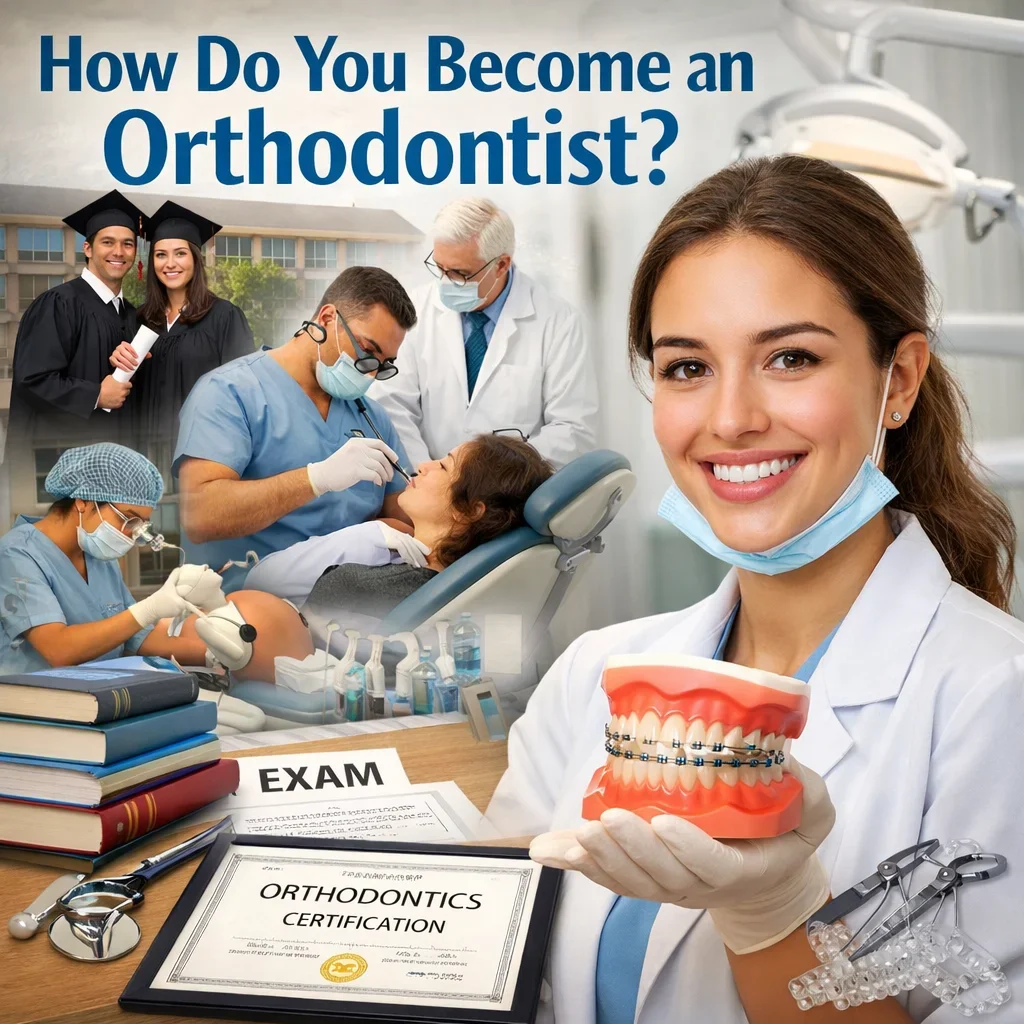
Is Becoming an Orthodontist the Right Career Path for You?
After exploring the education requirements, residency training, licensing, and career opportunities, many students reach the final and most personal question: how do you become an orthodontist, and is it truly the right career path for you? Orthodontics is a highly respected specialty within dentistry, but it requires dedication, patience, and long-term commitment. Before starting this journey, it is important to carefully evaluate your interests, strengths, and long-term professional goals.
Understanding how do you become an orthodontist helps you evaluate whether the profession aligns with your personality, academic abilities, and desire to work in healthcare. Orthodontists combine science, artistry, patient care, and technology to improve oral health and create confident smiles. For individuals who enjoy helping people while working with advanced medical technology, orthodontics can be an incredibly fulfilling profession.
Passion for Dentistry and Healthcare
One of the most important factors to consider when asking how do you become an orthodontist is whether you have a genuine passion for dentistry and healthcare. Orthodontists work closely with patients for extended periods of time, often guiding them through treatments that last months or even years.
People who succeed in orthodontics usually enjoy:
- Helping patients improve their oral health
- Working in a healthcare environment
- Learning about dental science and anatomy
- Using technology to solve medical problems
- Building long-term relationships with patients
If you enjoy science, healthcare, and patient interaction, the pathway behind how do you become an orthodontist may be a perfect fit for your career goals.
Interest in Precision and Detail
Orthodontics requires precision and attention to detail. Small adjustments in orthodontic appliances can significantly affect tooth movement and treatment outcomes. Professionals studying how do you become an orthodontist must be comfortable performing detailed work and carefully monitoring patient progress.
Why Precision Matters in Orthodontics
Orthodontists must analyze dental structures, jaw alignment, and facial balance when designing treatment plans. Precision ensures that treatments improve both function and aesthetics. Patients rely on orthodontists to deliver results that not only straighten teeth but also enhance overall facial harmony.
For individuals who enjoy detailed work and careful problem-solving, orthodontics can be an intellectually stimulating career.
Commitment to Long-Term Education
Another critical factor in deciding whether orthodontics is the right path involves education. As discussed throughout this guide, the process behind how do you become an orthodontist typically requires more than ten years of academic study and clinical training.
This timeline includes:
- Four years of undergraduate education
- Four years of dental school
- Two to three years of orthodontic residency training
Students must be prepared for rigorous coursework, clinical training, and competitive residency programs. While the educational commitment is significant, it ensures that orthodontists develop the expertise required to treat complex dental conditions safely.
For individuals who enjoy continuous learning and professional development, the educational journey behind how do you become an orthodontist can be both exciting and rewarding.
Strong Communication and Patient Skills
Orthodontists spend a large portion of their time interacting with patients and their families. Effective communication is essential for explaining treatment plans, answering patient questions, and guiding individuals through long-term orthodontic care.
When considering how do you become an orthodontist, it is important to recognize that successful orthodontists possess strong interpersonal skills. They create supportive environments where patients feel comfortable discussing concerns and asking questions.
Because orthodontic treatments often last between 12 and 24 months, orthodontists build strong relationships with patients over time. This makes communication and empathy essential qualities in the profession.
Professional Growth and Lifelong Learning
Another factor to consider when evaluating how do you become an orthodontist is the importance of lifelong learning. Orthodontics is constantly evolving as new technologies and treatment methods emerge.
Modern orthodontists use advanced tools such as digital scanning, 3D treatment planning, and clear aligner systems. Staying updated with these innovations requires ongoing professional education.
Professional organizations like the American Dental Association provide resources that help orthodontists remain informed about new research, treatment techniques, and industry standards.
Personal Fulfillment in Orthodontics
Many orthodontists find their careers deeply fulfilling because they can transform patients’ lives. Straightening teeth and correcting bite problems often improves both oral health and self-confidence.
Patients frequently report increased confidence after completing orthodontic treatment. Seeing these positive changes is one of the most rewarding aspects of understanding how do you become an orthodontist and pursuing the profession.
Orthodontists also benefit from strong career stability and the opportunity to build successful private practices. This combination of professional satisfaction and financial stability makes orthodontics an appealing career path.
When Orthodontics Might Not Be the Right Choice
Although orthodontics offers many advantages, it may not be the right career for everyone. Students researching how do you become an orthodontist should carefully consider whether they are prepared for the academic intensity and long training period involved.
Orthodontics may not be the best choice if someone:
- Prefers shorter educational pathways
- Dislikes detailed clinical procedures
- Does not enjoy working closely with patients
- Is not interested in medical or dental science
Understanding these challenges helps students make realistic career decisions.
Exploring Orthodontic Treatment as a Patient
For individuals interested in orthodontic treatment or consultations, professional dental clinics provide expert evaluation and care. Patients who want to learn more about orthodontic options can visit the Redent Klinik Contact Page to connect with dental professionals and receive personalized treatment advice.
Seeing orthodontic treatment firsthand can also inspire students who are considering the journey behind how do you become an orthodontist.
Making the Final Decision
Ultimately, deciding whether orthodontics is the right path depends on your passion for dentistry, dedication to education, and interest in improving patients’ lives. The journey of how do you become an orthodontist requires commitment, perseverance, and continuous learning.
For those who are passionate about dental science and patient care, orthodontics offers a career that combines medical expertise, advanced technology, and artistic precision. Orthodontists play a vital role in modern dentistry by helping patients achieve healthier bites, improved oral function, and confident smiles.
If you are willing to invest the time and effort required, pursuing the pathway behind how do you become an orthodontist can lead to a rewarding career that positively impacts countless lives. 🦷