
One of the most common questions patients ask after losing a tooth is: how long after extraction can you get an implant? The answer is not the same for everyone. It depends on your oral health, bone condition, infection status, and overall healing response. Understanding how long after extraction can you get an implant is essential because timing directly affects success rates, aesthetics, comfort, and long-term stability.
In general, there are three main timelines when considering how long after extraction can you get an implant: immediate placement (same day), early placement (within a few weeks), and delayed placement (after several months of healing). Each option has advantages and clinical indications. Your dentist evaluates bone density, gum health, and whether there was infection before deciding how long after extraction you can get an implant safely and predictably.
For some patients, the implant can be placed immediately after the tooth is removed. In this scenario, the dentist extracts the tooth and inserts the implant into the same socket during the same appointment. This approach can shorten treatment time significantly. However, not everyone qualifies for immediate placement. If there is severe infection, insufficient bone, or gum damage, immediate placement may not be recommended. In such cases, determining how long after extraction can you get an implant requires a healing period first.
Another common scenario involves waiting approximately 6 to 8 weeks. This is known as early implant placement. During this time, the soft tissues begin to heal, inflammation reduces, and the extraction site stabilizes. Many clinicians prefer this method because it balances healing and treatment efficiency. If you are wondering how long after extraction can you get an implant in a moderately complex case, this early window is often ideal.
In situations where bone loss is present or infection was severe, delayed placement may be necessary. This means waiting 3 to 6 months after extraction. During this period, bone regeneration occurs naturally. Sometimes a bone graft is placed at the time of extraction to preserve volume. If grafting is required, the timeline for how long after extraction can you get an implant may extend to ensure the graft fully integrates.
Healing plays a crucial role in determining how long after extraction can you get an implant. After a tooth is removed, the body begins forming a blood clot, followed by soft tissue closure and gradual bone remodeling. The implant must be placed into stable, healthy bone to allow osseointegration — the biological process where the implant fuses with the jawbone. Rushing the procedure before the site is ready can compromise stability and long-term success.
It is also important to consider systemic health factors. Conditions such as uncontrolled diabetes, smoking habits, immune disorders, or poor oral hygiene can influence how long after extraction can you get an implant. A personalized consultation allows your dentist to evaluate risks and recommend the safest timeline.
Financial planning and lifestyle factors may also affect your decision. Some patients prefer immediate implants to avoid wearing temporary dentures. Others may need time for financial preparation. Regardless of preference, the biological requirements ultimately determine how long after extraction can you get an implant.
Modern dental imaging, including 3D cone beam scans, allows clinicians to assess bone volume accurately. This technology improves predictions regarding how long after extraction can you get an implant and increases procedural success rates. According to professional guidelines from the American Dental Association, proper case selection and timing significantly improve implant longevity.
For patients seeking professional guidance, a personalized evaluation is essential. If you would like to discuss your specific case, you can schedule an appointment through the Redent Klinik Contact Page. A comprehensive clinical examination will determine precisely how long after extraction you can get an implant based on your individual oral condition.
In summary, the question how long after extraction can you get an implant does not have a one-size-fits-all answer. It may be immediate, a few weeks, or several months depending on clinical findings. The safest and most successful approach is always personalized treatment planning supported by modern diagnostics and evidence-based dentistry. Understanding how long after extraction you can get an implant empowers you to make informed decisions and achieve a long-lasting, natural-looking smile. 😊
Why Timing Matters After Tooth Extraction
Understanding how long after extraction can you get an implant is not just about scheduling convenience — it is about biology, bone preservation, infection control, and long-term implant success. The timing of implant placement directly influences healing quality, stability, aesthetics, and overall treatment outcome. When patients ask how long after extraction can you get an implant, they are essentially asking about the ideal biological window for safe and predictable tooth replacement.
The Healing Process After Tooth Removal
To understand how long after extraction can you get an implant, it is essential to know what happens inside the socket after a tooth is removed. Immediately after extraction, a blood clot forms inside the socket. This clot protects the bone and nerve endings while initiating tissue regeneration. Within the first 1–2 weeks, soft tissue begins closing over the socket. Over the next several weeks, new bone gradually forms beneath the gum surface.
If implant placement is considered too early, before sufficient bone stability is present, the risk of implant failure increases. On the other hand, waiting too long without preservation techniques may lead to bone shrinkage. Therefore, determining how long after extraction can you get an implant requires balancing natural healing with bone preservation strategies.
Bone Resorption: Why Waiting Too Long Can Be Risky
One major reason timing matters when deciding how long after extraction can you get an implant is bone resorption. After a tooth is removed, the jawbone in that area no longer receives stimulation from chewing forces. As a result, the body begins to resorb, or shrink, the unused bone. Studies show that significant bone loss can occur within the first three months after extraction.
This bone loss may complicate future implant placement. If too much bone volume is lost, a bone graft may become necessary before implant surgery. That is why evaluating how long after extraction can you get an implant early helps prevent additional procedures and reduces treatment time.
How Fast Does Bone Shrink?
In the first 8–12 weeks after extraction, horizontal bone width can reduce significantly. Vertical bone height may also decrease over time. Because of this natural remodeling, your dentist must carefully evaluate radiographs and 3D imaging to determine exactly how long after extraction can you get an implant without risking inadequate support.
Immediate vs. Delayed Placement: Clinical Considerations
When discussing how long after extraction can you get an implant, dentists typically consider three categories:
- Immediate placement: Implant inserted on the same day as extraction.
- Early placement: Implant placed 4–8 weeks after extraction.
- Delayed placement: Implant placed 3–6 months or more after extraction.
Immediate placement may be possible if there is no infection and sufficient bone is present. Early placement allows soft tissue healing while preserving bone volume. Delayed placement may be necessary if infection was present or if bone grafting is required. Each scenario directly answers the question how long after extraction can you get an implant based on clinical findings rather than guesswork.
Infection and Its Impact on Implant Timing
If a tooth was extracted due to severe infection or abscess, the timing changes. Active infection can compromise implant stability and healing. In such cases, antibiotics and healing time are required before implant placement. This means the answer to how long after extraction can you get an implant may extend to several months to ensure full resolution of inflammation.
Placing an implant into an infected site increases failure risk. Therefore, infection control is one of the most critical factors when determining how long after extraction can you get an implant.
Soft Tissue Health and Aesthetic Outcomes
Another reason timing matters when evaluating how long after extraction can you get an implant is gum contour preservation. In the front tooth region, aesthetics are especially important. Immediate or early placement may help preserve natural gum shape. Delayed placement without preservation may result in gum recession or black triangles.
Careful timing ensures that the final crown appears natural and symmetrical. This is particularly important for visible teeth where cosmetic outcomes matter just as much as function.
Systemic Health and Healing Capacity
Your overall health also affects how long after extraction can you get an implant. Smoking, uncontrolled diabetes, autoimmune disorders, and certain medications can slow healing. Patients with compromised immune systems may require extended healing time before implant surgery.
A thorough medical evaluation allows clinicians to personalize the timeline for how long after extraction can you get an implant safely.
The Importance of Professional Evaluation
Modern dental technology, including CBCT 3D scans, helps dentists precisely measure bone density and volume. This allows for accurate planning regarding how long after extraction can you get an implant. Professional organizations like the American Dental Association emphasize individualized treatment planning for optimal implant success.
If you are unsure about your specific situation and want expert guidance on how long after extraction can you get an implant, scheduling a consultation is essential. You can reach out through the Redent Klinik Contact Page for a personalized assessment.
In summary, timing matters because it directly affects bone preservation, infection control, aesthetic outcomes, and long-term implant success. The question how long after extraction can you get an implant must always be answered based on biological healing principles, not just convenience. A carefully planned timeline ensures stability, durability, and a confident smile that lasts for years. 😊
Immediate Dental Implants: Can You Place Them the Same Day?
When patients ask how long after extraction can you get an implant, many are surprised to learn that in certain cases, the answer can be “the same day.” Immediate dental implants are placed directly into the extraction socket right after the tooth is removed. This approach can significantly shorten overall treatment time and reduce the number of surgical appointments. However, understanding how long after extraction can you get an implant in an immediate placement scenario requires careful clinical evaluation.
What Is Immediate Implant Placement?
Immediate implant placement means the dentist removes the damaged tooth and inserts the implant fixture into the jawbone during the same visit. Instead of waiting weeks or months, the implant is positioned while the extraction site is still fresh. For patients researching how long after extraction can you get an implant, this method represents the fastest possible timeline.
However, not every patient qualifies. The bone surrounding the extracted tooth must be strong, intact, and free from severe infection. If these conditions are met, immediate placement can provide excellent results and preserve natural gum contours.
Clinical Requirements for Same-Day Implants
Determining how long after extraction can you get an implant depends heavily on bone quality and infection status. For same-day placement, the following conditions are typically required:
- Sufficient bone volume and density
- No uncontrolled infection at the site
- Healthy surrounding gum tissue
- Stable implant primary fixation
If these criteria are not satisfied, the dentist may recommend waiting. The decision about how long after extraction can you get an implant must prioritize long-term success over speed.
The Role of Primary Stability
Primary stability refers to how firmly the implant anchors into the bone at the time of placement. Without strong initial stability, the risk of implant failure increases. Even if a patient hopes for a quick solution to how long after extraction can you get an implant, stability cannot be compromised.
Advantages of Immediate Implant Placement
For suitable candidates, immediate implants offer several benefits:
- Reduced total treatment time
- Fewer surgical procedures
- Preservation of bone structure
- Better maintenance of natural gum shape
- Improved patient comfort and convenience 😊
When the conditions are ideal, the answer to how long after extraction can you get an implant can truly be “today.” This efficiency appeals to patients who want minimal disruption to their daily lives.
Potential Risks and Limitations
Despite its advantages, immediate placement is not risk-free. If infection is present or bone support is inadequate, placing an implant too early may lead to complications. Patients often focus on speed when asking how long after extraction can you get an implant, but rushing the process can compromise osseointegration — the biological fusion between implant and bone.
Additionally, gaps between the implant and socket walls may require bone graft material to ensure proper healing. Even in immediate cases, healing time for full integration usually takes several months before placing the final crown.
Immediate Placement in the Aesthetic Zone
Front teeth require special attention. When patients lose a visible tooth, they often urgently ask how long after extraction can you get an implant to avoid cosmetic concerns. Immediate implants in the front area can preserve gum architecture and prevent collapse of soft tissue. However, this region also demands high precision to achieve natural-looking results.
Advanced 3D imaging and digital planning help dentists determine accurately how long after extraction can you get an implant in aesthetic cases while maintaining symmetry and appearance.
Cost Considerations for Immediate Implants
While pricing varies by country and clinic, immediate implant procedures in the United States typically range between $3,000 and $5,000 per tooth, including surgery and implant placement. According to general industry data referenced by the American Dental Association, additional procedures such as bone grafting may increase total costs.
Although patients may want the fastest answer to how long after extraction can you get an implant, financial planning should also consider long-term value rather than just initial speed.
Is Immediate Implant Placement Right for You?
Ultimately, deciding how long after extraction can you get an implant depends on your specific oral condition. A comprehensive examination, including radiographic imaging and medical history review, is essential before confirming eligibility for same-day placement.
If you are considering immediate implants and want personalized advice about how long after extraction can you get an implant, scheduling a professional consultation is the safest approach. You can reach out through the Redent Klinik Contact Page to receive a tailored treatment plan.
In summary, immediate dental implants offer a rapid solution for tooth replacement, and in select cases, the answer to how long after extraction can you get an implant truly can be “immediately.” However, biological readiness, bone stability, and infection control must always guide the final decision. Proper evaluation ensures that speed does not compromise long-term implant success. 😊
Early Implant Placement: 2–8 Weeks After Extraction
For many patients who are not ideal candidates for same-day implant surgery, the next most common timeline is early implant placement. When discussing how long after extraction can you get an implant, the 2–8 week window often provides an excellent balance between healing and efficiency. This approach allows soft tissues to recover while preventing excessive bone loss. If you are wondering how long after extraction can you get an implant without waiting several months, early placement may be the optimal solution.
Why 2–8 Weeks Is a Strategic Healing Window
Immediately after a tooth is removed, the body begins a natural healing cascade. During the first two weeks, the extraction site forms a stable blood clot and soft tissue begins closing over the socket. By weeks 4–8, inflammation significantly reduces, and the gum tissue becomes more mature. At this stage, dentists often reassess how long after extraction can you get an implant because the risk of active infection is lower and tissue quality is improved.
This early phase offers advantages. The socket has not yet undergone significant bone resorption, which means there is still adequate volume for implant stability. When evaluating how long after extraction can you get an implant, early placement can help preserve both hard and soft tissues while minimizing additional surgical interventions.
Clinical Benefits of Early Implant Placement
Choosing early placement provides several measurable benefits:
- Reduced risk of implant placement in inflamed tissue
- Better soft tissue management and gum contour control
- Lower likelihood of severe bone shrinkage
- Improved predictability of osseointegration
- Shorter overall treatment timeline compared to delayed placement 😊
For many patients researching how long after extraction can you get an implant, early placement represents the most practical and biologically sound compromise between speed and safety.
Soft Tissue Maturity and Stability
Soft tissue health is critical when deciding how long after extraction can you get an implant. By waiting several weeks, gum tissue becomes thicker and more resilient. This helps create a better seal around the implant, reducing the risk of bacterial infiltration and long-term complications.
Bone Remodeling During the First 8 Weeks
One important factor in determining how long after extraction can you get an implant is bone remodeling. During the first 8 weeks, the jawbone undergoes natural changes. While some shrinkage occurs, the bone volume is often still adequate for implant placement without extensive grafting. Dentists frequently use 3D imaging to evaluate bone density at this stage before confirming how long after extraction you can get an implant safely.
Placing the implant within this window may reduce the need for complex augmentation procedures later. If too much time passes, bone grafting may become necessary, which extends the answer to how long after extraction can you get an implant by several additional months.
Infection Control and Early Placement
If the extracted tooth had a mild infection, waiting 2–8 weeks allows the area to heal fully. This waiting period ensures that any residual bacteria are eliminated before implant placement. In these cases, the decision about how long after extraction can you get an implant prioritizes long-term integration rather than rushing the process.
Placing an implant too soon in a previously infected site increases the risk of peri-implantitis and early failure. Therefore, early placement offers a safer timeline when infection was present but not severe.
Cost Considerations for Early Implant Placement
From a financial perspective, early implant placement costs are generally similar to immediate placement. In the United States, a single implant including surgery typically ranges from $3,000 to $5,500 depending on location and materials. If bone grafting is avoided due to timely placement, patients may reduce additional expenses. According to general industry data referenced by the American Dental Association, proper timing improves success rates and reduces long-term corrective costs.
When evaluating how long after extraction can you get an implant, it is important to consider not only surgical timing but also overall treatment value.
Who Is an Ideal Candidate for Early Placement?
Early implant placement is often recommended for:
- Patients with moderate bone preservation
- Cases where mild infection has resolved
- Individuals seeking shorter treatment duration
- Patients concerned about gum aesthetics
If you are unsure how long after extraction can you get an implant in your specific case, a personalized consultation is essential. Professional evaluation ensures that early placement is both safe and predictable.
You can request a detailed assessment through the Redent Klinik Contact Page to determine precisely how long after extraction you can get an implant based on your bone condition and healing response.
Balancing Speed and Biological Readiness
Ultimately, the question how long after extraction can you get an implant must align with biological healing principles. Early implant placement between 2–8 weeks provides an excellent compromise for many patients. It allows inflammation to resolve while preventing excessive bone loss. By carefully selecting this window, dentists maximize implant stability and long-term success.
In summary, if immediate placement is not suitable, early placement often answers the question of how long after extraction can you get an implant effectively and safely. With proper clinical planning, patients can achieve durable, aesthetic, and functional results without unnecessary delays. 😊
Delayed Implant Placement: 3–6 Months Healing Period
For many patients, the safest and most predictable answer to the question how long after extraction can you get an implant is between three and six months. This approach is known as delayed implant placement. While some individuals qualify for immediate or early placement, others require a longer healing phase to ensure proper bone regeneration and infection control. Understanding how long after extraction can you get an implant in delayed cases helps patients set realistic expectations and prioritize long-term success over speed.
Why Would You Need to Wait 3–6 Months?
The primary reason for delayed placement is biological readiness. After extraction, the jawbone undergoes a remodeling process. In cases of severe infection, abscess formation, cyst removal, or advanced periodontal disease, the surrounding bone may be weakened or damaged. In these situations, rushing to answer how long after extraction can you get an implant with a short timeline could compromise stability.
Waiting three to six months allows the socket to fully heal, inflammation to subside, and new bone to form. This period ensures that the implant can be placed into healthy, mature bone capable of supporting osseointegration. When patients ask how long after extraction can you get an implant in complex cases, delayed placement is often the safest recommendation.
Bone Regeneration During the Healing Phase
After a tooth is removed, the body gradually replaces the empty socket with new bone. This process takes time. During the first few weeks, soft tissue closes over the site. Over the next several months, deeper bone remodeling occurs. Determining how long after extraction can you get an implant depends heavily on this regeneration process.
By month three, substantial bone fill typically develops. By month six, the bone becomes denser and more stable. Dentists use 3D imaging to evaluate whether the bone has reached adequate volume and density before confirming exactly how long after extraction can you get an implant safely.
When Bone Grafting Is Required
If significant bone loss occurred before or during extraction, a bone graft may be placed to preserve the socket. In grafted cases, the answer to how long after extraction can you get an implant may extend to six months or longer. The graft must integrate fully with the natural bone before implant surgery can proceed.
Advantages of Delayed Implant Placement
Although waiting may feel inconvenient, delayed placement offers several important benefits:
- Reduced risk of implant failure
- Improved bone stability
- Lower likelihood of infection-related complications
- More predictable long-term success rates 😊
- Better management of complex surgical cases
For patients concerned about durability, the extended healing period provides reassurance. When evaluating how long after extraction can you get an implant, delayed placement often yields the most stable foundation for long-lasting results.
Infection Resolution and Tissue Health
If the extracted tooth had severe infection, placing an implant too early may lead to complications such as peri-implantitis. By waiting several months, the body clears residual bacteria and inflammation. This healing window plays a critical role in determining how long after extraction can you get an implant in cases involving abscesses or advanced gum disease.
Proper infection control improves osseointegration, which is the process by which the implant fuses to the jawbone. Successful integration directly depends on timing, reinforcing why the question how long after extraction can you get an implant must be answered individually.
Cost Considerations During Delayed Treatment
Delayed implant placement does not necessarily increase the base implant cost, which in the United States generally ranges between $3,000 and $5,500 per tooth. However, additional procedures such as bone grafting may add $500 to $3,000 depending on complexity. According to general guidance referenced by the American Dental Association, proper planning and healing significantly improve implant longevity and reduce the likelihood of corrective procedures later.
When deciding how long after extraction can you get an implant, it is important to weigh the short-term waiting period against long-term stability and reduced complication risk.
Who Typically Needs Delayed Placement?
Delayed implant placement is often recommended for:
- Patients with severe bone infection
- Cases involving large cyst removal
- Advanced periodontal disease
- Extensive bone loss requiring grafting
- Medical conditions that slow healing
If you are uncertain how long after extraction can you get an implant in your situation, a comprehensive consultation is essential. Clinical evaluation ensures that healing is complete before proceeding.
You can schedule a personalized assessment through the Redent Klinik Contact Page to determine exactly how long after extraction you can get an implant based on imaging and medical history.
Patience Leads to Long-Term Success
While some patients prefer immediate results, the safest answer to how long after extraction can you get an implant is sometimes three to six months. This timeline prioritizes biological readiness, infection resolution, and bone maturity. Delayed placement may require patience, but it significantly enhances implant stability and longevity.
In summary, if immediate or early placement is not suitable, delayed implant placement provides a reliable and evidence-based solution. Understanding how long after extraction can you get an implant in complex cases empowers patients to make informed decisions focused on durability, safety, and long-term oral health. 😊
Bone Healing and Osseointegration Explained
To truly understand how long after extraction can you get an implant, you must first understand how bone healing works and what osseointegration means. Dental implants are not simply placed into the jaw and left there; they must biologically fuse with the surrounding bone in a process called osseointegration. The success of this fusion directly determines whether the implant will function like a natural tooth for many years. That is why the question how long after extraction can you get an implant is fundamentally connected to bone biology rather than just scheduling convenience.
What Happens to the Bone After Tooth Extraction?
When a tooth is removed, the body immediately begins a healing response. A blood clot forms inside the socket, protecting the bone and initiating tissue repair. Within the first week, soft tissue starts to close over the area. Over the next several weeks, new bone gradually replaces the clot. This transformation is essential in determining how long after extraction can you get an implant because the implant requires solid, healthy bone for support.
Bone healing occurs in stages. Initially, woven bone (immature bone) fills the socket. Over time, this woven bone remodels into stronger lamellar bone. Dentists evaluate these stages carefully before deciding exactly how long after extraction can you get an implant safely.
Bone Remodeling Timeline
- Week 1–2: Blood clot stabilization and early tissue formation
- Week 3–4: Soft tissue closure and early bone deposition
- Month 2–3: Significant bone fill in the socket
- Month 4–6: Bone maturation and strengthening
This biological timeline is one of the primary reasons why how long after extraction can you get an implant varies between individuals.
What Is Osseointegration?
Osseointegration is the direct structural and functional connection between living bone and the titanium implant surface. Once placed, the implant must integrate with the jawbone to become stable enough to support a crown. The success of this process determines the long-term durability of treatment.
If an implant is placed too early, before adequate bone quality exists, osseointegration may fail. That is why dentists carefully evaluate how long after extraction can you get an implant before proceeding. Proper timing maximizes bone-to-implant contact and ensures predictable healing.
Why Bone Density Matters
Bone density plays a crucial role when determining how long after extraction can you get an implant. The jawbone varies in density depending on location. The lower jaw (mandible) typically has denser bone than the upper jaw (maxilla). Patients with softer bone may require longer healing time before implant placement.
Advanced imaging such as CBCT scans allows clinicians to measure bone density accurately. This technology helps answer the question how long after extraction can you get an implant with greater precision and safety.
Factors That Influence Bone Healing Speed
Not all patients heal at the same rate. Several factors influence how long after extraction can you get an implant, including:
- Age
- Smoking habits 🚬
- Diabetes control
- Nutritional status
- Oral hygiene practices
- Presence of infection at extraction time
For example, smokers often experience slower bone healing due to reduced blood supply. In such cases, the timeline for how long after extraction can you get an implant may need to be extended to reduce failure risk.
How Dentists Evaluate Healing Progress
Before placing an implant, dentists assess healing both clinically and radiographically. They check gum tissue health, absence of inflammation, and bone formation through imaging. According to general professional standards referenced by the American Dental Association, proper evaluation significantly increases implant success rates.
These assessments help determine exactly how long after extraction can you get an implant in your specific case. Personalized planning ensures that the implant is placed at the optimal moment for integration.
Healing vs. Rushing: The Long-Term Perspective
Many patients want the fastest answer possible to how long after extraction can you get an implant. However, rushing the process may compromise osseointegration. An implant that fails due to insufficient healing often requires removal, additional grafting, and further waiting — extending the overall timeline significantly.
Patience during bone healing ensures that once the implant is placed, it integrates successfully and lasts for decades. In the long run, careful timing often shortens total treatment duration by preventing complications.
When to Schedule a Consultation
If you are uncertain about your healing progress or wondering how long after extraction can you get an implant, a professional evaluation is essential. A dentist can examine your extraction site and determine whether bone maturity is sufficient for placement.
You can schedule a personalized consultation through the Redent Klinik Contact Page to receive a detailed treatment timeline based on your individual bone healing status.
Final Thoughts on Bone Healing and Implant Timing
Ultimately, bone healing and osseointegration are the biological foundations behind the question how long after extraction can you get an implant. Every extraction site follows a natural regeneration process, and successful implant placement depends on respecting that timeline. By understanding how bone heals and how implants integrate, patients can make informed decisions that prioritize durability, stability, and long-term oral health. 😊
Factors That Affect How Long After Extraction Can You Get an Implant
When patients ask how long after extraction can you get an implant, the most accurate answer is: it depends on several clinical and personal factors. While general timelines such as immediate, early, or delayed placement provide guidance, individual circumstances ultimately determine how long after extraction can you get an implant safely and successfully. Every mouth heals differently, and multiple biological, medical, and lifestyle variables influence implant timing.
1. Bone Quality and Quantity
The most critical factor in deciding how long after extraction can you get an implant is the condition of the jawbone. Dental implants require sufficient bone volume and density for stability. If the bone surrounding the extracted tooth is thick and healthy, implant placement may occur sooner. However, if bone loss occurred due to infection or gum disease, waiting longer may be necessary.
After extraction, bone naturally shrinks over time. This process, called resorption, can reduce the available space for implant placement. Dentists use CBCT imaging to measure bone thickness and density before determining how long after extraction can you get an implant. If bone is insufficient, grafting procedures may extend the timeline.
Upper Jaw vs. Lower Jaw Differences
The upper jaw (maxilla) typically has softer bone than the lower jaw (mandible). Softer bone may require additional healing time to ensure proper integration. Therefore, the answer to how long after extraction can you get an implant may vary depending on the tooth location.
2. Presence of Infection
If the extracted tooth was infected, healing becomes more complex. Severe abscesses or periodontal infections can damage surrounding bone tissue. In such cases, dentists often delay implant placement to ensure full infection resolution. Rushing implant surgery in an infected site increases the risk of failure.
This is why infection status plays a major role in deciding how long after extraction can you get an implant. Sometimes antibiotics and several months of healing are required before safe placement can occur.
3. Need for Bone Grafting
Bone grafting is another important factor affecting how long after extraction can you get an implant. If bone volume is inadequate, a graft may be placed either at the time of extraction or afterward. Grafts require time to integrate with natural bone, typically between three and six months.
In grafted cases, the timeline for how long after extraction can you get an implant is extended to allow complete healing and stabilization. While this may seem like a delay, it significantly improves long-term implant success rates. 😊
4. Overall Health Conditions
Your general health also impacts how long after extraction can you get an implant. Conditions such as uncontrolled diabetes, autoimmune disorders, osteoporosis, or compromised immune function can slow healing. Smokers also experience reduced blood flow, which delays bone regeneration.
Before confirming how long after extraction can you get an implant, your dentist will review your medical history carefully. Controlled systemic conditions typically allow for predictable healing, while uncontrolled conditions may require additional waiting time.
5. Age and Healing Capacity
Although age alone is not a strict limitation, healing capacity tends to decrease with advanced age. Younger patients often experience faster bone regeneration. However, many older adults successfully receive implants when proper planning is followed.
Therefore, age may influence how long after extraction can you get an implant, but it is rarely the only determining factor.
6. Gum Tissue Condition
Healthy gum tissue is essential for implant success. If significant gum inflammation or recession is present, treatment may be required before implant placement. The quality of soft tissue helps determine how long after extraction can you get an implant because strong gum support protects the implant from bacterial invasion.
7. Oral Hygiene and Patient Compliance
Good oral hygiene practices directly affect healing speed. Patients who maintain excellent oral hygiene often heal faster and experience fewer complications. Conversely, poor hygiene may delay healing and extend the timeline for how long after extraction can you get an implant.
Following post-extraction care instructions carefully helps ensure that the site heals properly and allows implant placement at the earliest safe opportunity.
Professional Evaluation Is Essential
Because so many variables influence how long after extraction can you get an implant, individualized assessment is critical. Modern diagnostic tools allow dentists to evaluate bone density, gum condition, and healing progress accurately. Professional organizations such as the American Dental Association emphasize evidence-based treatment planning for optimal outcomes.
If you are unsure about your specific timeline and want expert advice regarding how long after extraction can you get an implant, scheduling a consultation is the best step. You can request an evaluation through the Redent Klinik Contact Page to receive a personalized treatment plan.
Conclusion
The question how long after extraction can you get an implant does not have a universal answer because each patient’s biological and medical circumstances are unique. Bone condition, infection status, grafting needs, overall health, and healing capacity all play critical roles. By carefully evaluating these factors, dentists determine the safest and most predictable timeline for implant placement.
Ultimately, understanding the factors that affect how long after extraction can you get an implant empowers patients to make informed decisions and prioritize long-term oral health. With proper planning and professional guidance, dental implants can provide a stable, natural-looking solution that lasts for decades. 😊
Bone Grafting and Its Impact on Implant Timing
One of the most important variables influencing how long after extraction can you get an implant is whether bone grafting is required. After a tooth is removed, the jawbone naturally begins to shrink due to lack of stimulation. In many cases, this shrinkage is mild. However, when significant bone loss is present, a grafting procedure becomes necessary before placing a dental implant. Understanding how grafting affects how long after extraction can you get an implant is essential for realistic treatment planning.
Why Bone Grafting May Be Necessary
Bone grafting is recommended when there is insufficient bone volume or density to support an implant securely. If a tooth was extracted due to severe infection, trauma, or advanced periodontal disease, surrounding bone may already be compromised. In such situations, determining how long after extraction can you get an implant depends on rebuilding the bone foundation first.
Without adequate bone support, implant stability cannot be achieved. Since implants rely on osseointegration — the fusion between titanium and bone — grafting ensures that enough healthy structure is available. This additional step directly influences how long after extraction can you get an implant because the graft must integrate fully before implant placement.
Types of Bone Grafts
- Autograft: Bone taken from the patient’s own body
- Allograft: Donor bone material
- Xenograft: Animal-derived bone substitute
- Synthetic graft: Laboratory-made bone material
The choice of graft material does not change the biological principle behind how long after extraction can you get an implant, but it may influence healing speed and integration quality.
Socket Preservation at the Time of Extraction
In many modern practices, dentists perform socket preservation immediately after extraction. This involves placing graft material directly into the empty socket to prevent excessive bone loss. When socket preservation is performed, the timeline for how long after extraction can you get an implant may become more predictable, typically ranging between three and four months.
By proactively protecting the bone structure, dentists reduce the likelihood of future complex grafting. This preventive approach often shortens the total treatment timeline when evaluating how long after extraction can you get an implant.
Healing Timeline After Bone Grafting
Once a bone graft is placed, the body needs time to regenerate and integrate the material. In most cases, healing takes between 3–6 months. During this period, the graft gradually becomes part of the natural jawbone. Only after sufficient integration can the implant be placed safely.
This means that if grafting is required, the answer to how long after extraction can you get an implant often extends beyond the standard early placement window. While this may feel like a delay, it significantly improves long-term success rates and implant stability. 😊
How Dentists Monitor Graft Healing
Dentists use radiographic imaging, including CBCT scans, to evaluate graft maturation. They assess bone density, volume, and structural integrity before determining how long after extraction can you get an implant. Clinical examination of gum health also plays a critical role in confirming readiness for surgery.
Cost Considerations of Bone Grafting
Bone grafting can add additional costs to the overall implant treatment. In the United States, minor socket preservation grafts may cost between $300 and $800. More extensive grafting procedures can range from $1,000 to $3,000 depending on complexity and material used. According to general professional standards referenced by the American Dental Association, grafting improves implant success and long-term durability.
Although grafting increases short-term expense and may extend how long after extraction can you get an implant, it often prevents more complicated and costly procedures later.
Sinus Lift and Advanced Grafting Procedures
For upper back teeth, bone height may be limited due to proximity to the sinus cavity. In such cases, a sinus lift procedure may be necessary before implant placement. This advanced grafting method can extend the timeline for how long after extraction can you get an implant to six months or longer.
While advanced grafting procedures require patience, they create a stable foundation for implants that can last decades.
Is Bone Grafting Always Required?
Not every patient needs bone grafting. If the bone is healthy and sufficient after extraction, implant placement may proceed earlier. However, careful evaluation is necessary before confirming how long after extraction can you get an implant. Skipping grafting when it is needed may compromise implant stability and increase failure risk.
If you are unsure whether grafting is required in your case, a professional assessment is essential. You can schedule a personalized consultation through the Redent Klinik Contact Page to determine exactly how long after extraction you can get an implant based on your bone condition.
Conclusion
Bone grafting plays a significant role in determining how long after extraction can you get an implant. While it may extend the treatment timeline, grafting strengthens the foundation for long-term implant success. By rebuilding lost bone and ensuring proper integration, patients gain improved stability, durability, and aesthetic outcomes.
Ultimately, understanding how grafting affects how long after extraction can you get an implant helps patients set realistic expectations and prioritize lasting oral health over immediate convenience. With proper planning and expert care, implants placed after successful grafting can function like natural teeth for many years. 😊
Risks of Waiting Too Long After Extraction
When patients ask how long after extraction can you get an implant, they often focus on not placing the implant too early. However, waiting too long can also create complications. While proper healing is essential, excessive delay may lead to bone loss, gum changes, bite problems, and the need for more complex procedures. Understanding the risks of postponing treatment helps clarify why the timing behind how long after extraction can you get an implant must be carefully balanced.
Bone Resorption Accelerates Over Time
After a tooth is extracted, the surrounding jawbone no longer receives stimulation from chewing forces. This lack of stimulation triggers bone resorption — a natural process where the body gradually breaks down unused bone tissue. Research shows that the most significant bone shrinkage occurs within the first three to six months after extraction.
If you delay too long when considering how long after extraction can you get an implant, you may lose both bone width and height. Reduced bone volume can make implant placement more challenging and may require bone grafting. In severe cases, advanced grafting procedures such as sinus lifts may be necessary before proceeding.
How Much Bone Can Be Lost?
Studies indicate that up to 50% of horizontal bone width can be lost within the first year following extraction, with the majority occurring in the first few months. This is why the question how long after extraction can you get an implant should not be postponed indefinitely without professional guidance.
Changes in Gum Contour and Aesthetics
Waiting too long also affects soft tissue. As bone shrinks, the gum tissue collapses inward. This can create aesthetic challenges, especially in the front teeth area. Patients who delay treatment often notice changes in their smile appearance.
When determining how long after extraction can you get an implant, preserving natural gum contours is particularly important in visible areas. Early intervention can help maintain a natural-looking gum line and prevent black triangles or asymmetry.
Shifting of Adjacent Teeth
Another risk of waiting too long involves movement of neighboring teeth. When a tooth is missing, adjacent teeth may drift into the empty space. Opposing teeth may also over-erupt due to lack of contact.
This shifting can complicate implant placement and alter bite alignment. If you delay excessively while asking how long after extraction can you get an implant, orthodontic correction may become necessary before implant surgery can proceed.
Increased Complexity and Cost
Delaying implant placement often leads to additional procedures. Bone grafting, soft tissue grafting, and orthodontic adjustments increase both treatment time and financial cost. In the United States, implant placement typically ranges between $3,000 and $5,500 per tooth, while grafting procedures may add $500 to $3,000 or more depending on complexity.
According to general standards referenced by the American Dental Association, early evaluation and treatment planning improve long-term success and may reduce the need for corrective procedures. Therefore, understanding how long after extraction can you get an implant early can help avoid unnecessary expenses.
Functional Problems and Bite Imbalance
When a missing tooth is left untreated, chewing efficiency decreases. Over time, bite imbalance can develop. This imbalance places additional stress on remaining teeth and may contribute to wear, fractures, or temporomandibular joint (TMJ) discomfort.
Delaying too long before resolving how long after extraction can you get an implant may allow these functional issues to worsen. Replacing the tooth within a reasonable timeframe helps maintain proper bite alignment and jaw stability. 😊
Psychological and Quality-of-Life Impact
Beyond physical consequences, missing teeth can affect confidence and social comfort. Some patients feel self-conscious about gaps in their smile. Others experience difficulty speaking clearly or chewing comfortably.
Addressing how long after extraction can you get an implant proactively supports not only oral health but also emotional well-being. Timely implant placement restores function and aesthetics, improving overall quality of life.
Finding the Right Balance
It is important to clarify that waiting a short, medically appropriate healing period is often beneficial. The goal is not to rush implant placement prematurely. Instead, the objective is to avoid unnecessary delays beyond what healing requires.
The safest way to determine how long after extraction can you get an implant is through professional evaluation. Dentists use imaging and clinical assessment to identify the optimal timing that balances healing with bone preservation.
If you are unsure about your specific situation and want personalized guidance regarding how long after extraction can you get an implant, you can schedule a consultation through the Redent Klinik Contact Page. A detailed examination will help determine the ideal treatment timeline for your case.
Conclusion
While proper healing is essential, excessive delay can create additional complications. Bone loss, gum recession, tooth shifting, increased costs, and functional problems are all potential risks of waiting too long. The key is to evaluate how long after extraction can you get an implant based on clinical evidence rather than postponing treatment indefinitely.
By seeking timely professional advice and planning strategically, patients can preserve bone structure, maintain smile aesthetics, and achieve long-lasting implant success. 😊
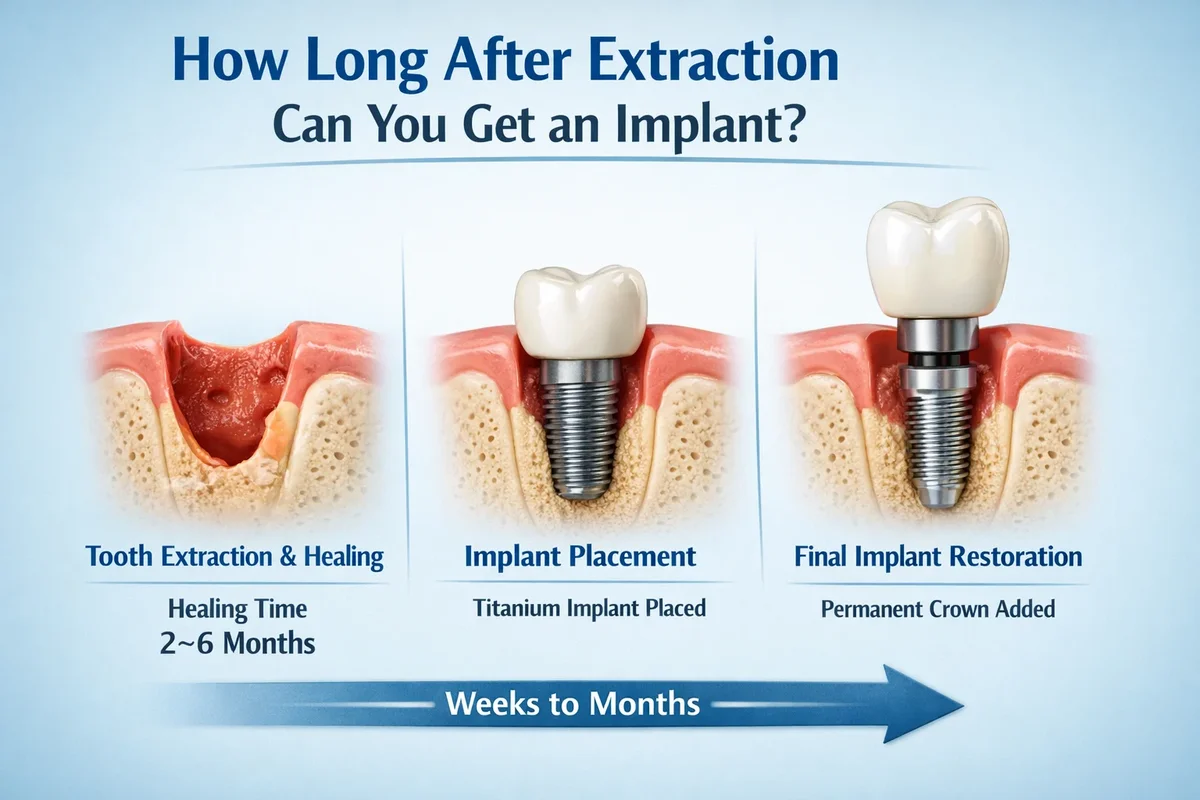
Step-by-Step Timeline: From Extraction to Final Crown
To fully understand how long after extraction can you get an implant, it helps to look at the complete treatment journey from start to finish. Dental implant therapy is not a single appointment procedure in most cases. Instead, it involves carefully planned stages that ensure proper healing, stability, and long-term function. When patients ask how long after extraction can you get an implant, they are often referring only to the surgical placement. However, the full timeline includes extraction, healing, implant placement, osseointegration, and final crown delivery.
Stage 1: Tooth Extraction
The process begins with the removal of the damaged or infected tooth. Depending on the condition of the tooth, this may be a simple extraction or a surgical procedure. Immediately after extraction, the dentist evaluates the socket and determines preliminary guidance regarding how long after extraction can you get an implant.
If the bone is healthy and no infection is present, immediate placement may be possible. If infection or bone loss exists, a healing period is required. This first stage sets the foundation for deciding how long after extraction can you get an implant safely.
Socket Preservation (If Needed)
In many cases, bone graft material is placed into the socket immediately after extraction to minimize shrinkage. This procedure, called socket preservation, helps control how long after extraction you can get an implant by protecting bone volume.
Stage 2: Healing Period
The healing phase varies depending on the individual case. If immediate placement is not performed, the waiting period may range from 2 weeks to 6 months. This period allows gum tissue to close and bone to regenerate.
For early placement cases, the answer to how long after extraction can you get an implant may be around 4–8 weeks. For delayed placement, it may extend to 3–6 months. During this time, the dentist monitors healing progress through clinical examination and imaging.
Stage 3: Implant Placement Surgery
Once the bone is ready, the implant fixture is surgically inserted into the jawbone. This procedure is typically performed under local anesthesia and is generally well tolerated by patients. At this stage, the question how long after extraction can you get an implant transitions into the next phase: integration.
The implant must achieve primary stability at placement. If stability is insufficient, the healing process may take longer before moving forward.
Stage 4: Osseointegration (3–6 Months)
After placement, the implant undergoes osseointegration — the biological fusion with bone. This process usually takes between 3 and 6 months. Even if the implant was placed early, full integration cannot be rushed.
Patients often misunderstand how long after extraction can you get an implant by assuming that implant placement equals treatment completion. In reality, successful integration is critical for long-term durability. According to general professional standards referenced by the American Dental Association, proper healing significantly improves implant longevity.
Temporary Restorations
In some cases, a temporary crown may be placed during integration. However, it is usually designed to avoid excessive biting force to protect healing.
Stage 5: Abutment Placement
Once osseointegration is confirmed, a small connector piece called an abutment is attached to the implant. This component connects the implant to the final crown. Gum tissue may require minor reshaping during this stage to ensure proper contour.
Although patients focus heavily on how long after extraction can you get an implant, this restorative stage is equally important for achieving aesthetic and functional success.
Stage 6: Final Crown Placement
The final step is placing the custom-designed crown onto the abutment. The crown is shaped and shaded to match surrounding teeth for a natural appearance. Once secured, the implant functions like a natural tooth.
At this point, the full journey that began with asking how long after extraction can you get an implant reaches completion. From extraction to final crown, the entire process may take anywhere from 3 to 9 months depending on case complexity. 😊
Total Estimated Timeline Overview
- Immediate Placement: Same-day implant, 3–6 months integration
- Early Placement: 4–8 weeks healing + 3–6 months integration
- Delayed Placement: 3–6 months healing + 3–6 months integration
These ranges demonstrate why how long after extraction can you get an implant varies significantly between individuals.
Financial Considerations
The total cost of the implant process typically ranges between $3,000 and $5,500 per tooth in the United States, depending on materials and complexity. Additional procedures such as bone grafting may increase the total cost. While pricing is important, focusing solely on speed when asking how long after extraction can you get an implant may compromise long-term success.
Personalized Planning Is Essential
Every patient’s oral condition is unique. The safest way to determine how long after extraction can you get an implant is through individualized consultation and imaging. If you would like a professional assessment of your treatment timeline, you can schedule an appointment through the Redent Klinik Contact Page.
In conclusion, the journey from extraction to final crown involves multiple carefully timed stages. Understanding the full process clarifies that how long after extraction can you get an implant depends on healing biology, bone condition, and clinical planning. With proper evaluation and patience, dental implants provide a durable, natural-looking solution that can last for decades. 😊