
Clear aligners have become one of the most popular orthodontic treatments in modern dentistry because they offer a discreet and comfortable way to straighten teeth. One of the first questions patients ask before beginning treatment is: how long do aligners take to work? The answer depends on several factors, including the severity of tooth misalignment, patient compliance, oral health condition, and the specific treatment plan created by the dentist or orthodontist. However, most people begin noticing visible improvements within a few weeks of wearing aligners consistently. 😊
If you are researching how long do aligners take to work, it is important to understand that clear aligners work gradually by applying controlled pressure to the teeth. Unlike traditional braces that use metal brackets and wires, aligners are custom-made transparent trays designed to move teeth little by little over time. Every new aligner tray continues the movement process until the teeth reach their desired positions.
For mild orthodontic problems, patients may see noticeable changes in as little as 6 to 8 weeks. More moderate cases often require 6 to 12 months of treatment, while severe crowding or bite problems may take 18 to 24 months. This wide timeline is why understanding how long do aligners take to work requires a personalized evaluation from a dental professional.
Most dentists recommend wearing aligners for 20 to 22 hours daily. Patients who remove their trays too frequently often delay results significantly. One of the biggest reasons treatment slows down is inconsistent usage. If aligners are not worn properly, teeth may fail to shift according to schedule, requiring additional trays or refinements.
People searching for how long do aligners take to work are usually curious about when they will notice the first visible difference. In many cases, the front teeth begin showing subtle movement after the first few aligner sets. Small gaps may close, crowded teeth may become straighter, and overall alignment starts improving gradually. Although these changes can seem minor at first, they indicate that the aligners are functioning correctly.
Another important factor influencing how long do aligners take to work is age. Teenagers often experience faster tooth movement because their jaws and bone structures are still developing. Adults can still achieve excellent results, but tooth movement may progress slightly slower due to denser bone tissue. Fortunately, modern clear aligner systems are highly advanced and can successfully treat patients of many age groups.
Patients with complex bite problems such as overbite, underbite, crossbite, or severe crowding usually need longer treatment periods. In these situations, attachments or elastics may be added to increase aligner efficiency. These additional tools help improve tooth control and accelerate certain movements. Understanding how long do aligners take to work also means recognizing that every smile responds differently to orthodontic pressure.
Clear aligner treatment is usually divided into stages. Each aligner tray is worn for approximately 1 to 2 weeks before switching to the next set. Every tray moves the teeth slightly closer to their ideal positions. Patients who follow instructions carefully often stay on schedule and avoid unnecessary delays. Regular dental checkups are also essential because they allow the dentist to monitor progress and make adjustments if needed.
Many patients compare clear aligners to traditional braces when asking how long do aligners take to work. In mild and moderate cases, aligners can sometimes work faster than braces because treatment is digitally planned with highly precise tooth movements. However, severe orthodontic problems may still require similar timelines to braces depending on complexity.
According to the American Dental Association, orthodontic treatments should always be supervised by qualified dental professionals to ensure safe and predictable results. Attempting unsupervised treatment may increase the risk of poor outcomes, gum issues, or unstable tooth movement.
Patients often wonder whether aligner treatment is painful. Mild pressure or tightness is common during the first few days of a new tray because the teeth are actively shifting. This discomfort is usually temporary and considered a positive sign that the treatment is progressing. Most patients describe aligners as significantly more comfortable than traditional braces.
Another major concern related to how long do aligners take to work involves treatment cost. Prices vary depending on country, clinic, complexity, and treatment duration. In the United States, clear aligners may range between $3,000 and $8,000. In countries such as Turkey, high-quality aligner treatments are often more affordable while still maintaining international standards of care. Patients seeking professional consultation can visit the Redent Klinik Contact Page for more information about personalized treatment plans.
Maintaining good oral hygiene also impacts how efficiently aligners work. Teeth and aligners should be cleaned regularly to prevent plaque buildup and gum inflammation. Healthy gums allow smoother tooth movement and reduce the risk of complications during treatment. Dentists also advise avoiding smoking and limiting sugary drinks while wearing aligners.
People frequently search terms such as “clear aligner treatment timeline,” “how fast do aligners straighten teeth,” and “when do aligners start working.” These LSI keywords all relate closely to the central question of how long do aligners take to work. The answer always depends on consistency, case complexity, and professional supervision.
In conclusion, patients usually notice early improvements within a few weeks, while full treatment commonly takes several months to two years depending on individual needs. The key to achieving faster and more predictable results is wearing aligners consistently, attending regular dental appointments, and following all professional instructions carefully. If you are considering clear aligners, a personalized consultation can provide the most accurate estimate for your smile transformation journey. 😁
How Long Do Aligners Take to Work for Most Patients?
One of the most common questions patients ask before starting orthodontic treatment is how long do aligners take to work. Clear aligners are designed to gradually move teeth into their ideal positions using controlled pressure and customized treatment planning. While every patient’s smile is different, most individuals begin seeing noticeable improvements within a few weeks of consistent aligner use. However, the total treatment time can vary depending on several important factors such as tooth alignment severity, oral health condition, patient compliance, and treatment goals. 😊
Understanding how long do aligners take to work requires realistic expectations. Clear aligners do not produce instant results overnight. Instead, they work step by step, slowly shifting teeth with each new aligner tray. Most treatment plans involve changing trays every one to two weeks, allowing the teeth to continue moving gradually and safely.
Average Treatment Timeline for Clear Aligners
For many patients, mild alignment issues may be corrected in approximately 4 to 6 months. Moderate crowding or spacing often requires 6 to 12 months, while more complex orthodontic problems can take 18 months or longer. When asking how long do aligners take to work, it is important to remember that the treatment timeline is highly individualized.
Here is a general overview of common aligner timelines:
- Mild crowding or spacing: 4–6 months
- Moderate orthodontic issues: 6–12 months
- Severe crowding or bite problems: 12–24 months
- Minor cosmetic corrections: 2–4 months
These timelines can change depending on how well the patient follows instructions. People who wear aligners consistently for the recommended 20 to 22 hours daily usually achieve faster and more predictable results.
When Do Patients First Notice Results?
Many people researching how long do aligners take to work are especially curious about the first visible changes. In most cases, patients begin noticing small improvements after the first few trays. Front teeth often show movement first because they are easier to reposition than molars.
Patients may notice:
- Slightly straighter front teeth
- Reduced crowding
- Small gaps beginning to close
- Improved bite alignment
- Better smile symmetry
Although these changes may appear subtle initially, they indicate that the aligners are functioning properly. Some patients even compare weekly photos and become surprised by the gradual improvements over time. 📸
Why Tooth Movement Happens Gradually
Teeth move because aligners apply gentle and continuous pressure to specific areas. The bone surrounding the teeth slowly remodels, allowing the teeth to shift into new positions. This biological process takes time and cannot be rushed excessively without risking damage to the teeth or gums.
This is why understanding how long do aligners take to work also involves understanding how orthodontic movement occurs naturally inside the mouth. Safe tooth movement requires patience and professional supervision.
Factors That Influence How Fast Aligners Work
Several variables can affect how long do aligners take to work for individual patients. Some of the most important factors include:
1. Consistency of Wear
The biggest factor affecting treatment speed is aligner wear time. Aligners should remain in the mouth for at least 20 to 22 hours daily. Removing trays too often can significantly delay results and may even require additional refinement trays.
2. Complexity of the Case
Simple cosmetic corrections usually move faster than complicated bite adjustments. Severe overbites, underbites, crossbites, and rotated teeth often require longer treatment plans.
3. Age of the Patient
Younger patients may experience faster movement because their jawbones are still developing. Adults can still achieve excellent outcomes, but tooth movement may progress slightly slower.
4. Oral Health Condition
Healthy gums and bone structures support efficient tooth movement. Gum disease or untreated dental issues may slow down treatment progress.
Are Clear Aligners Faster Than Braces?
Another common question related to how long do aligners take to work is whether aligners are faster than traditional braces. In many mild and moderate cases, aligners can produce results faster because treatment planning is digitally customized with highly precise tooth movements.
However, complex orthodontic problems may still require similar treatment durations as braces. In some severe situations, braces may even provide better control for difficult movements. A professional orthodontic evaluation is necessary to determine the best option for each patient.
How to Help Aligners Work More Efficiently
Patients can improve treatment efficiency by following several important habits:
- Wear aligners for the recommended daily hours
- Switch trays according to schedule
- Attend all dental checkups
- Maintain excellent oral hygiene
- Use aligner chewies if recommended
- Avoid losing or damaging trays
People asking how long do aligners take to work should understand that patient cooperation plays a major role in overall success. Following instructions carefully often reduces delays and minimizes the need for additional correction phases.
Professional Monitoring Is Essential
According to the American Dental Association, orthodontic treatment should always be monitored by qualified dental professionals. Regular evaluations ensure that teeth are moving safely and according to plan.
If aligners stop fitting properly, feel excessively loose, or cause unusual discomfort, patients should contact their dental provider immediately. Early intervention can prevent complications and keep treatment on track.
Patients considering treatment and wondering how long do aligners take to work can also seek personalized guidance through the Redent Klinik Contact Page to receive a customized smile assessment.
Final Thoughts on Treatment Expectations
Ultimately, the answer to how long do aligners take to work depends on the individual patient and the complexity of their orthodontic needs. While many people begin seeing improvements within weeks, complete treatment usually requires several months of consistent aligner use.
Clear aligners remain one of the most effective and discreet orthodontic solutions available today. With patience, proper wear habits, and professional supervision, patients can achieve healthier and straighter smiles with highly predictable outcomes. 😁
What Affects How Long Aligners Take to Work?
Many patients begin orthodontic treatment excited about improving their smile, but one of the biggest concerns they have is how long do aligners take to work. While clear aligners are highly effective for correcting many dental alignment problems, treatment time can vary greatly from one person to another. Some individuals complete treatment within a few months, while others may require more than a year to achieve ideal results. Understanding the factors that influence treatment duration can help patients set realistic expectations and achieve better outcomes. 😊
When discussing how long do aligners take to work, dentists evaluate several important variables including the complexity of the orthodontic issue, patient compliance, oral health condition, age, lifestyle habits, and the quality of treatment planning. Each factor contributes directly to how efficiently teeth move throughout the aligner process.
Severity of Tooth Misalignment
The complexity of the dental problem is one of the biggest influences on how long do aligners take to work. Mild spacing or minor crowding can often be corrected relatively quickly because the teeth only require small adjustments. However, severe orthodontic issues require more extensive movement and therefore longer treatment periods.
Mild Cases
Patients with small gaps, slight crowding, or minimal cosmetic concerns may finish treatment in approximately 4 to 6 months. Since only limited tooth movement is needed, aligners can produce visible improvements rapidly.
Moderate Cases
Moderate alignment issues such as overlapping teeth or mild bite irregularities typically require 6 to 12 months of treatment. These situations involve more controlled tooth movement and careful monitoring.
Complex Cases
Severe overbites, underbites, crossbites, and major crowding may require 12 to 24 months or longer. Patients asking how long do aligners take to work should understand that more complicated tooth movement naturally requires additional time to protect oral health and ensure stability.
Patient Compliance and Daily Wear Time
One of the most critical factors affecting how long do aligners take to work is patient cooperation. Clear aligners are removable, which gives patients more flexibility compared to braces. However, this convenience also means treatment success depends heavily on consistent usage.
Most orthodontists recommend wearing aligners for 20 to 22 hours every day. Removing aligners too often can slow tooth movement significantly and may even reverse progress. Patients who fail to wear their trays consistently often require additional aligners or extended treatment periods.
Common Mistakes That Delay Treatment
- Removing aligners for long periods
- Forgetting to switch trays on schedule
- Sleeping without aligners
- Misplacing or damaging trays
- Ignoring dentist instructions
Patients who strictly follow instructions usually experience smoother progress and more predictable timelines. Therefore, when evaluating how long do aligners take to work, compliance is often just as important as the orthodontic condition itself.
Age and Bone Structure
Age also influences how long do aligners take to work. Teenagers often experience faster tooth movement because their jaws and bones are still developing. Younger patients generally respond more quickly to orthodontic pressure.
Adults can still achieve excellent aligner results, but treatment may progress slightly slower due to denser bone tissue. Adult patients may also have existing dental restorations, gum issues, or previous orthodontic relapse that can affect movement speed.
Teen Aligners vs Adult Aligners
Teen aligner systems often include wear indicators and eruption tabs designed for growing mouths. Adult treatment plans are usually more focused on long-term bite correction and aesthetic improvements.
Despite these differences, clear aligners remain highly effective across many age groups when properly supervised by dental professionals.
Oral Health and Gum Condition
Healthy gums and bone structures are essential for efficient orthodontic movement. Gum disease, untreated cavities, or inflammation may interfere with treatment progress. Patients researching how long do aligners take to work should understand that poor oral health can slow down or complicate tooth movement.
Why Healthy Gums Matter
Teeth rely on surrounding bone and gum tissue for support. If these tissues are unhealthy, aligners may not move teeth safely or effectively. Dentists often recommend treating gum disease or decay before beginning orthodontic care.
Maintaining excellent oral hygiene during treatment is equally important. Patients should brush after meals, floss daily, and clean aligners regularly to prevent plaque buildup and bacterial growth.
Type of Tooth Movement Needed
Different orthodontic movements require different amounts of time. Simple movements such as closing small gaps usually occur faster than rotating teeth or correcting bite alignment.
Faster Tooth Movements
- Closing small spaces
- Minor crowding correction
- Small cosmetic adjustments
Slower Tooth Movements
- Rotating teeth
- Correcting deep bites
- Moving molars
- Fixing jaw alignment problems
This explains why the answer to how long do aligners take to work differs significantly among patients.
Technology and Treatment Planning
Modern digital orthodontic technology has improved treatment precision dramatically. Advanced 3D scanning and computer-guided planning allow dentists to create highly customized aligner sequences.
Professional monitoring also plays a major role in treatment success. According to the American Dental Association, orthodontic care should always be supervised by qualified dental professionals to ensure safe tooth movement and proper bite function.
Patients looking for professional aligner consultation and customized treatment planning can visit the Redent Klinik Contact Page for more information.
Lifestyle Habits and Daily Routine
Everyday habits can also influence how long do aligners take to work. Smoking, excessive sugary drink consumption, poor hygiene habits, and inconsistent aligner cleaning may negatively affect oral health and treatment efficiency.
Patients who stay organized, maintain healthy oral habits, and follow their treatment schedule carefully often achieve faster and more successful outcomes.
Final Thoughts on Treatment Duration Factors
Ultimately, several interconnected factors determine how long do aligners take to work. The severity of the orthodontic issue, patient cooperation, oral health condition, age, and treatment planning all contribute to overall treatment speed.
Although timelines vary, most patients begin seeing visible changes within weeks and continue progressing steadily throughout treatment. With proper care, consistent aligner wear, and professional supervision, clear aligners can successfully create healthier, straighter, and more confident smiles. 😁
Weekly Progress: How Teeth Move with Clear Aligners
Many patients begin orthodontic treatment feeling excited but also curious about the exact process behind tooth movement. One of the most frequently searched questions is how long do aligners take to work, especially when patients want to understand what happens week by week during treatment. Clear aligners are carefully designed to move teeth gradually using controlled pressure over time. Every aligner tray is part of a customized sequence that slowly guides the teeth toward better alignment and improved bite function. 😊
Understanding how long do aligners take to work becomes easier when patients learn how teeth shift throughout each stage of treatment. Unlike traditional braces that use fixed wires and brackets, aligners use removable trays created from digital treatment planning. Each tray applies slight force to specific teeth, encouraging movement in small and safe increments.
How Clear Aligners Create Tooth Movement
Clear aligners work by applying constant pressure to selected areas of the teeth. This pressure stimulates biological changes in the bone surrounding the roots. As bone tissue remodels, teeth gradually shift into new positions.
The process happens slowly because the body needs time to adapt safely. Moving teeth too quickly may increase the risk of root damage, gum problems, or discomfort. This is why understanding how long do aligners take to work requires patience and realistic expectations.
The Role of Bone Remodeling
Bone remodeling is the biological process that allows teeth to move. When aligners push against a tooth, one side of the bone begins breaking down while new bone forms on the opposite side. This gradual remodeling supports safe orthodontic movement.
Because this process takes time, most patients switch to a new aligner tray every 7 to 14 days depending on their dentist’s recommendations.
Week 1: Initial Pressure and Adjustment
During the first week, many patients notice pressure or tightness after inserting their first aligner trays. This sensation is normal and usually indicates that the aligners are actively beginning tooth movement.
Patients asking how long do aligners take to work are often surprised that treatment begins immediately after wearing the first set. Even though visible changes may not appear instantly, microscopic tooth movement starts within the first days.
Common Experiences During Week 1
- Mild pressure or soreness
- Increased saliva production
- Speech adjustments
- Tight feeling when inserting trays
- Slight gum sensitivity
Most patients adapt to these sensations within several days. Following aligner instructions carefully helps minimize discomfort and maintain steady progress.
Weeks 2 to 4: Early Tooth Movement
By the second or third week, patients may begin noticing subtle improvements in tooth alignment. Front teeth often show movement first because they are smaller and easier to reposition.
People researching how long do aligners take to work frequently become encouraged during this stage because visible progress starts becoming easier to notice in photos and mirrors.
Early Signs Aligners Are Working
- Small gaps beginning to close
- Crowded teeth appearing straighter
- Improved bite contact
- Reduced overlapping
- Better smile symmetry
Even minor improvements indicate successful tooth movement. Patients should continue wearing aligners consistently for at least 20 to 22 hours daily to maintain progress.
Months 2 to 3: Noticeable Improvements
After several months, many patients experience more obvious changes in their smile appearance. Moderate crowding often improves significantly during this phase, and teeth begin aligning more evenly.
At this point, many patients asking how long do aligners take to work feel motivated because friends and family may start noticing the transformation as well. 😁
Why Consistency Matters During This Phase
Consistent aligner wear becomes especially important during the middle stages of treatment. Skipping trays or failing to wear aligners long enough can interrupt movement and cause teeth to fall behind schedule.
Dentists may need to adjust treatment plans or order refinement trays if teeth do not track correctly. Patients who follow instructions carefully usually maintain predictable progress throughout treatment.
Middle Treatment Stages: Bite Adjustments
As treatment continues, aligners often begin correcting more complex bite relationships. These movements may involve molars, jaw positioning, or rotational adjustments that require additional precision.
People wondering how long do aligners take to work should understand that bite corrections often take longer than cosmetic front-tooth alignment. While the smile may appear straighter early on, deeper bite adjustments continue behind the scenes.
Complex Movements That Take Longer
- Correcting overbites
- Fixing crossbites
- Rotating teeth
- Aligning molars
- Adjusting jaw relationships
These movements require careful monitoring by orthodontic professionals to ensure safe and stable outcomes.
Final Months: Refinement and Finishing
During the final treatment phase, aligners focus on small finishing adjustments. Dentists carefully evaluate bite function, spacing, and tooth positioning to perfect the final smile appearance.
Some patients may require additional refinement trays to correct minor imperfections. Refinements are common and help improve overall treatment precision.
Patients asking how long do aligners take to work should know that refinements do not necessarily mean treatment failure. Instead, they are part of achieving highly accurate orthodontic results.
How to Monitor Weekly Progress
Tracking progress helps patients stay motivated throughout treatment. Many orthodontists recommend taking weekly photos to compare changes over time.
Helpful Progress Monitoring Tips
- Take photos in consistent lighting
- Save each aligner tray for comparison
- Attend regular checkups
- Report fitting problems immediately
- Follow tray schedules carefully
According to the American Dental Association, professional supervision is essential during orthodontic treatment to ensure teeth move safely and effectively.
Patients seeking expert aligner consultation can also visit the Redent Klinik Contact Page for personalized treatment information and smile evaluations.
Final Thoughts on Weekly Tooth Movement
Understanding the weekly stages of orthodontic progress helps answer the common question: how long do aligners take to work. While visible changes may begin within weeks, full smile transformation takes time, consistency, and professional care.
Each aligner tray plays an important role in gradually moving teeth into healthier and more attractive positions. Patients who stay committed to their treatment plan often achieve outstanding long-term results with clear aligners. ✨
How Long Do Aligners Take to Work for Mild Crowding?
Mild dental crowding is one of the most common orthodontic issues treated with clear aligners today. Patients with slightly overlapping teeth, minor spacing problems, or small cosmetic concerns often choose aligners because they provide a discreet and comfortable alternative to traditional braces. One of the first questions these patients ask is how long do aligners take to work when treating mild crowding. Fortunately, mild orthodontic cases usually respond very well to aligner therapy and often require shorter treatment timelines compared to severe bite problems. 😊
When discussing how long do aligners take to work for mild crowding, dentists generally estimate treatment durations between 4 and 8 months for most patients. Some individuals may notice visible changes within the first few weeks, especially when crowding affects the front teeth. However, every smile is unique, and the exact timeline depends on several biological and behavioral factors.
What Is Mild Crowding?
Mild crowding occurs when there is not enough space in the jaw for all teeth to align properly. This causes certain teeth to overlap, rotate slightly, or sit unevenly in the dental arch.
Common Signs of Mild Crowding
- Slightly overlapping front teeth
- Minor tooth rotation
- Small alignment irregularities
- Difficulty flossing between crowded teeth
- Cosmetic concerns about smile symmetry
Patients searching how long do aligners take to work often fall into this category because mild crowding is one of the most suitable conditions for clear aligner treatment.
Why Mild Crowding Responds Faster to Aligners
One reason mild cases improve relatively quickly is that the teeth require less movement overall. Small adjustments are easier for aligners to control compared to major bite corrections or severe jaw discrepancies.
People asking how long do aligners take to work for minor crowding are often pleased to learn that many cosmetic improvements appear early in treatment. Since front teeth are more visible and easier to reposition, noticeable changes may occur faster than expected.
Minimal Bone Remodeling Required
Mild crowding usually involves smaller orthodontic movements, meaning less bone remodeling is necessary. Because the surrounding bone and gum tissue adapt more easily, teeth can shift more efficiently.
This allows aligners to work predictably while maintaining patient comfort throughout treatment.
Typical Timeline for Mild Crowding Cases
The exact answer to how long do aligners take to work depends on the severity of crowding and patient cooperation. However, most mild cases follow a relatively straightforward treatment timeline.
First Month
During the first few weeks, patients often feel mild pressure as aligners begin moving teeth into better positions. Small improvements in alignment may become visible, especially in the upper front teeth.
Months 2 to 4
This period usually produces the most noticeable cosmetic changes. Teeth become visibly straighter, overlapping decreases, and smile symmetry improves significantly.
Months 5 to 8
Final refinements and bite adjustments are completed during this stage. Some patients may require additional trays for fine-tuning minor details.
Overall, people researching how long do aligners take to work for mild crowding often complete active treatment within less than one year.
Factors That Can Speed Up Treatment
Several habits and conditions can help accelerate aligner progress in mild cases.
Consistent Wear Time
Aligners should remain in the mouth for 20 to 22 hours daily. Patients who follow this recommendation usually stay on schedule and avoid delays.
Good Oral Hygiene
Healthy gums support efficient tooth movement. Brushing, flossing, and cleaning aligners regularly reduce inflammation and improve treatment conditions.
Following Tray Schedules Correctly
Switching aligners according to the dentist’s instructions ensures smooth and continuous tooth movement.
Attending Regular Checkups
Routine evaluations allow orthodontists to monitor progress and address issues early before they delay treatment.
What Can Slow Down Mild Crowding Treatment?
Although mild crowding generally responds quickly, certain factors may still increase treatment duration.
Inconsistent Aligner Use
One of the biggest reasons patients experience delays is failure to wear aligners long enough each day. Teeth may stop tracking properly if trays are removed too often.
Poor Oral Health
Untreated gum disease or cavities can interfere with orthodontic movement and may require additional dental care before treatment can continue.
Smoking and Poor Lifestyle Habits
Smoking and inadequate oral hygiene may increase inflammation, slow healing, and negatively affect treatment outcomes.
Patients asking how long do aligners take to work should understand that successful orthodontic treatment requires cooperation and proper oral care.
Do Mild Cases Need Attachments?
Some mild crowding cases may still require small tooth-colored attachments placed on certain teeth. These attachments help aligners grip teeth more effectively and improve movement precision.
Although attachments may slightly increase treatment complexity, they often improve efficiency and help maintain predictable progress.
Comparing Mild Crowding Treatment to Braces
Patients often compare aligners with traditional braces when considering treatment options. In many mild cases, aligners can produce results as quickly as braces while offering additional comfort and aesthetics.
Unlike braces, aligners are removable, making eating and oral hygiene easier. This convenience is one reason why patients frequently choose aligners for cosmetic corrections.
According to the American Dental Association, orthodontic treatment should always be supervised by qualified dental professionals to ensure safe and effective tooth movement.
Cost Expectations for Mild Crowding Cases
Many patients searching how long do aligners take to work also wonder about treatment costs. Mild crowding cases are often less expensive because they require fewer aligner trays and shorter treatment times.
- United States: Approximately $3,000–$5,000
- Turkey: Approximately $1,500–$3,500 depending on clinic and treatment complexity
Patients interested in personalized treatment evaluations can visit the Redent Klinik Contact Page for professional consultation.
Final Thoughts on Mild Crowding Treatment
For patients with mild orthodontic issues, clear aligners can provide fast, comfortable, and highly effective results. The answer to how long do aligners take to work in mild crowding cases is often encouraging because many patients see improvements within weeks and complete treatment within several months.
With proper aligner wear, good oral hygiene, and regular professional supervision, patients can achieve straighter teeth and improved smile confidence without the appearance of traditional metal braces. 😁
How Long Do Aligners Take to Work for Severe Cases?
Patients with significant orthodontic problems often wonder whether clear aligners can successfully correct their teeth and bite alignment. One of the most common concerns is how long do aligners take to work for severe crowding, major bite issues, or complex dental movements. While mild cases may improve relatively quickly, severe orthodontic problems naturally require more time, planning, and precision to achieve safe and stable results. Fortunately, modern clear aligner systems have advanced significantly and can now treat many complicated cases effectively. 😊
Understanding how long do aligners take to work in severe situations requires recognizing that complex tooth movement involves larger structural changes within the mouth. Severe crowding, overbites, underbites, crossbites, and rotated teeth often require extensive correction, which increases treatment duration compared to simple cosmetic alignment.
What Is Considered a Severe Orthodontic Case?
Severe orthodontic cases involve substantial alignment or bite problems that affect both appearance and oral function. These issues may interfere with chewing, speaking, oral hygiene, or jaw comfort.
Examples of Severe Orthodontic Problems
- Major tooth crowding
- Large gaps between teeth
- Severe overbite or underbite
- Crossbite issues
- Rotated or impacted teeth
- Jaw alignment irregularities
- Relapse after previous orthodontic treatment
Patients asking how long do aligners take to work in these cases often require a detailed orthodontic assessment before receiving an accurate treatment timeline.
Average Timeline for Severe Cases
For severe orthodontic problems, aligner treatment commonly lasts between 12 and 24 months. Some highly complex cases may even require additional refinement phases beyond the initial treatment plan.
Typical Severe Case Timeline
- Moderately severe cases: 12–18 months
- Complex bite corrections: 18–24 months
- Advanced jaw or spacing issues: 24+ months in some situations
The answer to how long do aligners take to work depends heavily on the specific orthodontic movements required. Severe cases usually involve both cosmetic alignment and functional bite correction, which naturally increases treatment complexity.
Why Severe Cases Require More Time
Complex orthodontic movement requires careful biological adaptation. Teeth cannot safely move large distances too quickly because the surrounding bone and gum tissues need time to remodel gradually.
Larger Tooth Movements
In severe cases, teeth often need to move farther within the jawbone. This increases the number of aligner trays needed throughout treatment.
Bite Correction Complexity
Correcting jaw alignment and bite relationships takes longer than straightening visible front teeth alone. Functional improvements require highly controlled movement of multiple teeth simultaneously.
Rotated Teeth and Molars
Teeth that are severely rotated or located further back in the mouth are often more difficult to move. Molars especially require stronger and more precise orthodontic force.
Because of these factors, patients researching how long do aligners take to work for severe cases should expect a more gradual treatment process.
Attachments and Elastics in Severe Cases
Many severe aligner treatments involve additional orthodontic tools that improve movement control and treatment efficiency.
Tooth-Colored Attachments
Small composite attachments are often bonded to teeth to help aligners grip more effectively. These attachments allow better control over difficult movements such as rotations or vertical adjustments.
Elastics for Bite Correction
Rubber bands may also be used to improve jaw alignment and bite relationships. Elastics are especially common in severe overbite or underbite treatments.
Although these tools increase treatment complexity slightly, they often improve success rates and reduce the risk of treatment delays.
Can Severe Cases Be Treated Without Braces?
Years ago, many severe orthodontic problems required traditional braces. Today, advanced digital treatment planning allows aligners to correct many complicated cases that were previously difficult to manage.
However, not every severe case is ideal for aligners alone. Some patients may require:
- Combination treatment with braces
- Tooth extractions
- Jaw surgery in extreme cases
- Additional orthodontic appliances
Patients asking how long do aligners take to work should always undergo professional evaluation to determine whether aligners are the best option for their specific condition.
Importance of Patient Compliance in Severe Cases
Patient cooperation becomes even more important during complex treatment. Severe cases involve highly controlled tooth movements that depend on consistent aligner wear.
Recommended Daily Wear Time
Aligners should remain in place for 20 to 22 hours per day. Failing to wear trays consistently may delay progress and cause teeth to stop tracking properly.
Missed Wear Can Extend Treatment
Patients who frequently remove aligners or forget to switch trays on schedule often require additional refinement trays. This may increase the total treatment time significantly.
Therefore, when evaluating how long do aligners take to work, patient discipline is a major factor in overall success.
What Patients Can Expect During Treatment
Although severe cases require longer timelines, many patients begin noticing visible improvements within the first few months. Front teeth often align earlier, while deeper bite corrections continue gradually throughout treatment.
Early Improvements
- Reduced crowding
- Improved smile appearance
- Better tooth spacing
- Straighter front teeth
Long-Term Improvements
- Improved bite function
- Better jaw alignment
- Enhanced chewing comfort
- Long-term oral health benefits
Even though severe cases require patience, the final results can dramatically improve both aesthetics and oral function. 😁
Monitoring and Professional Supervision
According to the American Dental Association, orthodontic treatment should always be supervised by qualified professionals to ensure safe and predictable outcomes.
Regular appointments allow dentists to monitor tooth movement, adjust treatment plans if necessary, and identify potential complications early. Severe cases especially require careful supervision because of the complexity involved.
Patients interested in personalized aligner treatment evaluations can visit the Redent Klinik Contact Page for professional consultation and detailed smile assessments.
Final Thoughts on Severe Aligner Cases
Patients with severe orthodontic issues often worry about how long do aligners take to work, but modern aligner systems are capable of achieving impressive results even in complex situations. While severe cases usually require longer treatment periods, the combination of advanced digital planning, patient compliance, and professional supervision can create highly successful smile transformations.
Although treatment may take one to two years or more in some situations, clear aligners remain a comfortable, discreet, and effective orthodontic solution for many patients with advanced alignment concerns. ✨
Tips to Make Aligners Work Faster and More Effectively
Many patients starting orthodontic treatment want to achieve visible results as quickly as possible. One of the most common questions people ask is how long do aligners take to work, and more importantly, whether there are safe ways to improve treatment efficiency. While clear aligners already provide highly predictable tooth movement, certain habits and behaviors can significantly influence how smoothly and quickly treatment progresses. 😊
Understanding how long do aligners take to work involves more than simply counting months or aligner trays. Patient cooperation, oral hygiene, lifestyle choices, and consistent wear habits all play major roles in determining treatment speed. Fortunately, there are many effective ways patients can support faster and healthier orthodontic progress without compromising safety.
Wear Aligners for the Recommended Daily Hours
The most important factor affecting how long do aligners take to work is daily wear time. Most orthodontists recommend wearing aligners for 20 to 22 hours every day. Removing trays too frequently slows down tooth movement and may cause treatment delays.
Why Consistent Wear Is Critical
Clear aligners work by applying continuous pressure to the teeth. If the trays are removed for long periods, the teeth may begin shifting back toward their previous positions. This interrupts progress and reduces treatment efficiency.
Best Practices for Daily Wear
- Only remove aligners for eating and drinking
- Wear trays while sleeping
- Insert aligners immediately after brushing
- Track wear time using mobile apps if needed
Patients who follow these recommendations carefully usually experience smoother progress and shorter treatment timelines.
Switch Trays Exactly on Schedule
Every aligner tray is designed to create specific tooth movements over a planned period. Delaying tray changes unnecessarily can slow down overall treatment progress.
People researching how long do aligners take to work should understand that tray schedules are customized according to each patient’s biology and orthodontic needs.
Typical Tray Change Schedule
- Every 7 days for some patients
- Every 10 to 14 days for others
- Adjusted based on treatment complexity
Patients should never change trays too early without professional approval because the teeth and surrounding bone tissue require time to adapt safely.
Maintain Excellent Oral Hygiene
Good oral hygiene directly affects how efficiently teeth move during aligner treatment. Healthy gums and clean teeth create an ideal environment for orthodontic movement.
Why Gum Health Matters
Inflamed gums or untreated gum disease can interfere with tooth movement and increase treatment complications. Poor oral health may also cause discomfort and increase the risk of cavities during treatment.
Daily Hygiene Tips
- Brush after every meal
- Floss at least once daily
- Clean aligners regularly
- Use antibacterial mouthwash if recommended
- Avoid placing dirty aligners back into the mouth
Patients asking how long do aligners take to work should remember that oral hygiene plays a major role in maintaining steady orthodontic progress.
Use Aligner Chewies for Better Fit
Aligner chewies are small soft cylinders that help seat aligners properly against the teeth. They improve tray contact and support more accurate tooth movement.
Benefits of Using Chewies
- Improve aligner fit
- Reduce air gaps between teeth and trays
- Enhance tracking accuracy
- Support more efficient tooth movement
Many orthodontists recommend chewies especially during the first few days after switching to a new aligner tray.
Avoid Damaging or Losing Aligners
Damaged or missing aligners can interrupt treatment progress and increase overall treatment time. Patients wondering how long do aligners take to work should understand that replacing lost trays may cause delays.
Common Causes of Aligner Damage
- Wrapping trays in napkins during meals
- Leaving aligners exposed to heat
- Improper cleaning methods
- Pets chewing on trays
Always store aligners in their protective case when not in use to reduce the risk of loss or damage.
Attend Regular Orthodontic Checkups
Routine dental appointments are essential for monitoring treatment progress and identifying problems early. Dentists evaluate how teeth are tracking and make adjustments if needed.
Why Professional Monitoring Matters
Even small issues such as poor aligner fit or delayed tooth movement can affect the overall timeline. Early intervention helps keep treatment on schedule.
According to the American Dental Association, professional supervision is important throughout orthodontic treatment to ensure safe and predictable outcomes.
Maintain a Healthy Lifestyle
General health habits can influence orthodontic progress as well. Healthy bone and gum tissue respond better to orthodontic forces.
Healthy Habits That Support Faster Progress
- Drink plenty of water
- Maintain balanced nutrition
- Avoid smoking
- Reduce sugary drink consumption
- Get adequate sleep
Smoking in particular may negatively affect gum health and healing, potentially slowing orthodontic movement.
Be Patient with Complex Tooth Movements
Some tooth movements naturally take longer than others. Rotations, bite corrections, and molar adjustments often progress more slowly compared to simple cosmetic alignment.
Patients asking how long do aligners take to work should understand that treatment speed is not always the best measure of success. Safe and stable movement is far more important than rushing results.
Movements That Often Require More Time
- Rotating severely turned teeth
- Correcting deep overbites
- Moving molars
- Aligning bite relationships
Even if visible changes seem slow temporarily, consistent progress is usually occurring beneath the surface.
Understand the Role of Refinements
Some patients require additional refinement trays near the end of treatment. Refinements help perfect alignment and bite details.
People researching how long do aligners take to work sometimes become concerned when refinements are recommended. However, refinement trays are very common and often improve final treatment quality significantly.
Professional Support and Personalized Treatment
Every smile responds differently to orthodontic treatment. Personalized evaluations help determine the most effective aligner strategy for each patient.
Patients interested in customized aligner treatment plans can visit the Redent Klinik Contact Page for professional consultation and detailed orthodontic assessments.
Final Thoughts on Making Aligners Work Efficiently
Understanding how long do aligners take to work depends greatly on patient habits and treatment consistency. While biology and case complexity influence treatment duration, patients can actively support faster and more effective progress through proper aligner wear, excellent hygiene, and regular professional monitoring.
By following orthodontic instructions carefully and maintaining healthy daily habits, patients can maximize the effectiveness of clear aligners and achieve straighter, healthier smiles with greater confidence. ✨
Signs Your Aligners Are Working Correctly
Many patients beginning clear aligner treatment feel excited but also slightly anxious about whether their trays are functioning properly. One of the most common questions people ask during the first weeks of orthodontic treatment is how long do aligners take to work and how they can tell if the treatment is progressing as expected. Fortunately, there are several visible and physical signs that indicate aligners are successfully moving teeth according to the treatment plan. 😊
Understanding the normal signs of aligner progress can help patients feel more confident throughout the process. While tooth movement often happens gradually, consistent improvements usually indicate that the aligners are working effectively. Patients researching how long do aligners take to work should understand that subtle changes are often the first evidence of successful treatment.
Mild Pressure After Switching Trays
One of the clearest signs aligners are working correctly is mild pressure or tightness after changing to a new tray. This sensation occurs because the aligners are applying controlled force to the teeth.
Why Pressure Is Normal
Clear aligners are designed to move teeth gradually. When a new tray is inserted, it slightly differs from the previous one, encouraging the teeth to shift into new positions. The pressure patients feel is a sign that movement is actively occurring.
How Long the Pressure Usually Lasts
- Typically 1 to 3 days
- More noticeable with new trays
- Usually mild and manageable
- Often decreases after consistent wear
Patients asking how long do aligners take to work often mistakenly worry that pressure means something is wrong. In reality, mild soreness usually indicates the aligners are functioning properly.
Visible Tooth Movement Over Time
Another important sign aligners are working is gradual visible improvement in tooth alignment. Although dramatic changes rarely occur overnight, small weekly improvements can become noticeable surprisingly quickly.
Early Visual Changes
- Front teeth becoming straighter
- Reduced overlapping
- Closing small gaps
- Improved smile symmetry
- Better tooth spacing
People researching how long do aligners take to work often begin noticing these subtle changes within several weeks, especially when crowding affects the front teeth.
Using Progress Photos
Weekly progress photos can help patients recognize gradual improvements that may otherwise be difficult to notice daily. Comparing photos over several months often reveals significant changes in smile appearance.
Aligners Continue Fitting Properly
Well-fitting aligners are one of the strongest indicators that treatment is progressing according to plan. Trays should fit snugly around the teeth without large gaps or looseness.
What Proper Fit Looks Like
- Aligners sit flush against the teeth
- No major spaces between tray and teeth
- Minimal movement when speaking
- Comfortable but secure fit
If trays suddenly stop fitting properly, this may indicate delayed tracking or inconsistent wear. Patients wondering how long do aligners take to work should contact their dentist if aligners no longer fit correctly.
Teeth Feel Slightly Loose
Some patients notice minor tooth looseness during treatment. This sensation is often temporary and normal because the teeth are actively moving through the bone.
Why Teeth May Feel Loose
Orthodontic movement temporarily changes the support structures around the teeth. As the surrounding bone remodels, slight mobility may occur.
This mild looseness usually resolves once teeth settle into their new positions. However, severe pain or excessive movement should always be evaluated professionally.
Improved Bite Alignment
As treatment progresses, patients may notice their bite fitting together more comfortably. This is another strong sign aligners are functioning correctly.
Common Bite Improvements
- Better chewing comfort
- Reduced jaw strain
- Improved tooth contact
- Less pressure on certain teeth
People asking how long do aligners take to work often focus mainly on cosmetic changes, but bite improvements are equally important for long-term oral health.
Reduced Crowding and Spacing
One of the easiest signs to observe is gradual reduction in crowding or gaps between teeth. Teeth begin aligning more evenly as treatment continues.
What Patients Often Notice First
- Easier flossing between teeth
- Smoother tooth alignment
- More symmetrical smile appearance
- Reduced overlap in front teeth
These improvements usually become more visible after several aligner changes.
No Severe Pain or Gum Damage
While mild discomfort is common, severe pain is not considered normal during aligner treatment. Healthy orthodontic movement should occur gradually and safely.
Signs of Healthy Treatment Progress
- Mild temporary pressure only
- Healthy gum appearance
- No severe bleeding
- No major sores or injuries
- Controlled tooth movement
Patients researching how long do aligners take to work should understand that successful treatment balances efficiency with safety.
Attachments and Elastics Function Properly
Some aligner patients use attachments or elastics to improve movement control. Proper function of these additional tools often indicates treatment is progressing correctly.
Signs Attachments Are Helping
- Aligners fit more securely
- Teeth move according to schedule
- Bite gradually improves
- Complex movements become more controlled
Attachments may feel unusual initially, but they often improve treatment efficiency significantly.
Regular Dental Checkups Confirm Progress
Professional evaluations remain one of the best ways to confirm aligners are working correctly. Orthodontists monitor tracking, bite relationships, and overall movement throughout treatment.
According to the American Dental Association, orthodontic treatment should always be supervised professionally to ensure safe and predictable tooth movement.
What Dentists Evaluate During Checkups
- Tray fit and tracking
- Bite alignment
- Tooth movement accuracy
- Gum and bone health
- Need for refinements
Patients who want personalized aligner evaluations or orthodontic consultations can visit the Redent Klinik Contact Page for professional guidance.
Warning Signs That May Require Attention
While many symptoms are normal, certain issues may indicate a problem with treatment progression.
Potential Signs of Delayed Progress
- Aligners no longer fitting properly
- Severe pain or swelling
- Broken trays
- Teeth not moving as expected
- Persistent gum irritation
If these issues occur, patients should contact their orthodontist promptly rather than attempting self-correction.
Final Thoughts on Recognizing Aligner Progress
Patients asking how long do aligners take to work often feel reassured when they understand the normal signs of successful orthodontic movement. Mild pressure, visible tooth alignment improvements, proper tray fit, and gradual bite correction all indicate that treatment is progressing effectively.
Although clear aligner treatment requires patience and consistency, most patients begin seeing encouraging changes within weeks. With proper wear habits and professional supervision, aligners can safely create healthier, straighter, and more confident smiles over time. 😁
Clear Aligners vs Braces: Which Works Faster?
Many patients considering orthodontic treatment compare clear aligners and traditional braces before making a final decision. One of the most frequently asked questions is how long do aligners take to work compared to metal braces. Since both treatments aim to straighten teeth and improve bite alignment, patients naturally want to know which option can produce results more quickly and effectively. 😊
The answer depends on several factors including the severity of the orthodontic issue, patient compliance, treatment goals, and the type of tooth movement required. In many mild and moderate cases, clear aligners can work as quickly as braces or even faster. However, severe orthodontic conditions may still require braces for maximum control and efficiency.
How Clear Aligners and Braces Work
Before comparing timelines, it is important to understand how each treatment system moves teeth.
How Clear Aligners Move Teeth
Clear aligners use custom-made transparent trays that apply controlled pressure to the teeth. Patients switch trays every 1 to 2 weeks as the teeth gradually move into better positions.
People researching how long do aligners take to work often appreciate that aligners use digital treatment planning, allowing orthodontists to map tooth movement very precisely.
How Traditional Braces Work
Braces use brackets, wires, and elastics to apply continuous force to the teeth. Orthodontists periodically tighten or adjust the wires to guide tooth movement over time.
Unlike aligners, braces remain fixed on the teeth throughout treatment.
Average Treatment Time Comparison
The timeline for both treatments varies based on case complexity, but there are general averages that help answer the question of how long do aligners take to work compared to braces.
Typical Clear Aligner Timelines
- Mild cases: 4–6 months
- Moderate cases: 6–12 months
- Complex cases: 12–24 months
Typical Braces Timelines
- Mild cases: 6–12 months
- Moderate cases: 12–24 months
- Complex cases: 18–36 months
In mild cosmetic cases, aligners may provide faster results because they focus on targeted tooth movements with digitally planned precision.
Why Aligners Can Be Faster in Some Cases
Patients asking how long do aligners take to work are often surprised that aligners can sometimes outperform braces in specific situations.
Digital Treatment Planning
Modern aligner systems use advanced 3D scanning and computer simulations to plan each tooth movement carefully. This precision can improve efficiency and reduce unnecessary adjustments.
Controlled Cosmetic Movements
Aligners are especially effective for:
- Mild crowding
- Minor spacing issues
- Front tooth alignment
- Cosmetic smile improvements
These simpler movements often progress quickly because they require less force and less complex jaw correction.
Fewer Emergency Visits
Unlike braces, aligners do not involve broken wires or detached brackets that may interrupt treatment progress.
Why Braces May Be Better for Severe Cases
Although aligners are highly advanced today, braces still provide advantages for certain severe orthodontic problems.
Continuous Force Application
Because braces remain attached to the teeth 24 hours a day, they continuously apply pressure without depending on patient cooperation.
Better Control for Complex Movements
Braces may handle difficult movements more efficiently such as:
- Severe rotations
- Large bite corrections
- Significant jaw alignment issues
- Impacted teeth
In these situations, the answer to how long do aligners take to work may involve longer timelines compared to braces.
The Role of Patient Compliance
One major difference between aligners and braces is patient responsibility. Braces work continuously because they cannot be removed. Aligners, however, require strong patient discipline.
Aligner Compliance Requirements
- Wear trays 20–22 hours daily
- Switch trays according to schedule
- Maintain proper cleaning habits
- Avoid losing aligners
Patients who fail to wear aligners consistently often extend treatment time significantly. This is one of the biggest factors influencing how long do aligners take to work.
Comfort Comparison
Many patients choose aligners because they are generally more comfortable than braces.
Advantages of Aligners
- No metal brackets
- Less gum irritation
- Removable for eating
- Easier brushing and flossing
- More discreet appearance
Advantages of Braces
- No need to remember wear time
- Suitable for severe cases
- Constant orthodontic force
Comfort may not directly affect how long do aligners take to work, but it often improves patient satisfaction and treatment consistency.
Oral Hygiene and Lifestyle Differences
Aligners are removable, making oral hygiene easier during treatment. Patients can brush and floss normally after removing trays.
Braces, however, may trap food around brackets and wires, increasing the risk of plaque buildup if hygiene is neglected.
Foods Restricted with Braces
- Sticky candy
- Hard nuts
- Chewing gum
- Crunchy foods
Aligner patients can generally eat normally after removing their trays.
Cost Comparison
People researching how long do aligners take to work are often also interested in treatment cost differences.
Average Clear Aligner Costs
- United States: $3,000–$8,000
- Turkey: $1,500–$4,500 depending on complexity
Average Braces Costs
- Metal braces: $3,000–$7,000
- Ceramic braces: $4,000–$8,500
The final cost depends on treatment duration, complexity, and clinic location.
Professional Evaluation Is Essential
According to the American Dental Association, orthodontic treatment should always be supervised by qualified dental professionals to ensure safe and effective results.
Patients considering aligners or braces can receive personalized treatment recommendations through the Redent Klinik Contact Page.
Final Thoughts on Aligners vs Braces
When comparing braces and aligners, the answer to how long do aligners take to work depends largely on the patient’s orthodontic condition and treatment consistency. For mild and moderate cases, aligners often provide faster and more discreet results. However, severe orthodontic problems may still benefit from the stronger control offered by traditional braces.
Both systems can produce excellent long-term outcomes when supervised professionally. The best treatment option is the one that matches the patient’s dental needs, lifestyle preferences, and commitment to orthodontic care. 😁
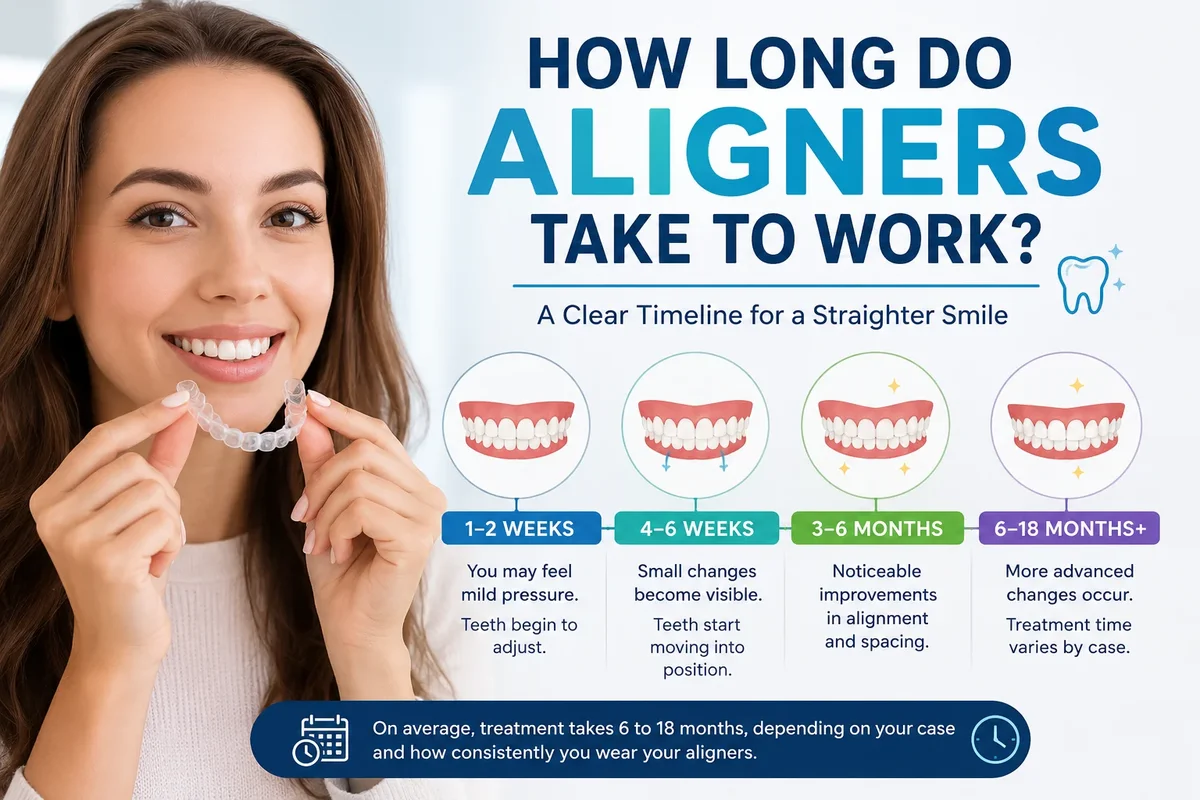
When to Contact a Dentist About Slow Aligner Progress
Clear aligners are designed to move teeth gradually and predictably, but some patients become concerned when they feel their treatment is progressing too slowly. One of the most common orthodontic questions is how long do aligners take to work, and while every treatment timeline is different, there are situations where delayed progress may require professional attention. Understanding the difference between normal treatment pace and potential problems can help patients protect their oral health and achieve better orthodontic outcomes. 😊
Many people researching how long do aligners take to work expect dramatic changes immediately after beginning treatment. In reality, orthodontic movement happens gradually. Some movements are visible quickly, while others occur more slowly beneath the surface. However, there are certain warning signs that may indicate aligners are not working correctly or treatment adjustments are needed.
Normal vs Delayed Aligner Progress
Before worrying about treatment delays, patients should understand what normal aligner progress usually looks like.
Normal Treatment Progress
- Mild pressure after new trays
- Gradual tooth movement over weeks
- Minor discomfort during tray changes
- Steady improvement in alignment
- Aligners fitting snugly on the teeth
Patients asking how long do aligners take to work should know that subtle movement is often a positive sign even if dramatic visual changes are not yet obvious.
Possible Signs of Delayed Progress
- Aligners no longer fitting properly
- No visible movement after months
- Severe pain or swelling
- Teeth shifting incorrectly
- Persistent looseness or discomfort
These symptoms may indicate that professional evaluation is necessary.
When Aligners Stop Fitting Correctly
One of the clearest reasons to contact a dentist is poor aligner fit. Clear aligners should fit securely against the teeth without large gaps.
Signs of Poor Tracking
- Air gaps between aligners and teeth
- Aligners lifting away from molars
- Trays feeling excessively loose
- Difficulty inserting new trays
Poor tracking often occurs when teeth are not moving according to the planned schedule. Patients wondering how long do aligners take to work should understand that inconsistent wear is one of the most common causes of tracking problems.
What Dentists May Do
If tracking problems occur, orthodontists may:
- Recommend additional wear time
- Provide chewies for better tray seating
- Adjust the treatment plan
- Order refinement aligners
No Visible Progress After Several Months
Although some movements are gradual, patients usually notice at least small improvements within the first few months of treatment.
Possible Reasons for Limited Progress
- Insufficient aligner wear time
- Complex tooth movement
- Biological differences in tooth movement
- Undiagnosed dental issues
- Incorrect aligner fit
People researching how long do aligners take to work sometimes compare themselves to others online, but orthodontic timelines vary greatly between individuals.
If absolutely no changes are noticeable after several months despite proper aligner use, professional reassessment is recommended.
Persistent or Severe Pain
Mild soreness during aligner treatment is normal, especially when switching trays. However, severe or prolonged pain may indicate a problem.
Normal Discomfort
- Mild pressure for several days
- Temporary sensitivity
- Minor gum irritation initially
Abnormal Symptoms
- Sharp pain
- Swelling
- Bleeding gums
- Difficulty biting
- Pain lasting more than several days
Patients asking how long do aligners take to work should remember that orthodontic treatment should not cause severe or unbearable pain.
Broken or Damaged Aligners
Damaged aligners may interfere with proper tooth movement and delay progress.
Common Causes of Damage
- Heat exposure
- Improper cleaning methods
- Biting down forcefully
- Accidental bending or cracking
If aligners become cracked or warped, patients should contact their provider rather than continuing treatment with damaged trays.
Loose Attachments or Missing Buttons
Many aligner treatments include attachments or elastics that improve movement precision. If these components become loose or detached, treatment efficiency may decrease.
Why Attachments Matter
Attachments help aligners grip the teeth more effectively during difficult movements such as rotations or bite corrections.
Patients researching how long do aligners take to work should know that missing attachments can affect tooth tracking and prolong treatment if not repaired promptly.
Changes in Bite or Jaw Comfort
As teeth move, bite relationships naturally change throughout treatment. Some temporary bite changes are normal, but major discomfort should be evaluated professionally.
Normal Bite Changes
- Temporary uneven bite contact
- Slight chewing adjustments
- Gradual improvement over time
Concerning Symptoms
- Jaw locking
- Persistent chewing difficulty
- Severe jaw pain
- Clicking with discomfort
These issues may indicate the need for orthodontic adjustment or additional evaluation.
Oral Health Problems During Treatment
Good oral health is essential for successful aligner treatment. Gum disease or tooth decay can interfere with orthodontic progress.
Warning Signs to Watch For
- Swollen gums
- Persistent bad breath
- Bleeding during brushing
- Tooth sensitivity
- Visible plaque buildup
People asking how long do aligners take to work should understand that untreated oral health issues may slow tooth movement significantly.
The Importance of Professional Monitoring
According to the American Dental Association, orthodontic treatment should always be supervised by qualified dental professionals to ensure safe and predictable outcomes.
Routine dental visits allow providers to monitor progress, adjust treatment plans, and identify complications early before they become serious problems.
Patients seeking personalized orthodontic evaluations or aligner consultations can visit the Redent Klinik Contact Page for professional assistance.
How Dentists Correct Slow Progress
If aligner treatment slows down, orthodontists have several tools available to improve efficiency.
Possible Solutions
- Refinement trays
- Additional attachments
- Longer tray wear periods
- Elastics for bite correction
- Updated digital treatment scans
Most treatment delays can be corrected successfully when addressed early.
Final Thoughts on Slow Aligner Progress
Patients often worry about how long do aligners take to work, especially when changes seem slower than expected. While orthodontic movement naturally requires time and patience, certain warning signs should not be ignored.
Poor tray fit, severe discomfort, damaged aligners, or lack of visible progress may indicate the need for professional evaluation. With regular monitoring, proper aligner wear, and timely dental support, most patients can successfully overcome delays and continue progressing toward healthier and straighter smiles. 😁