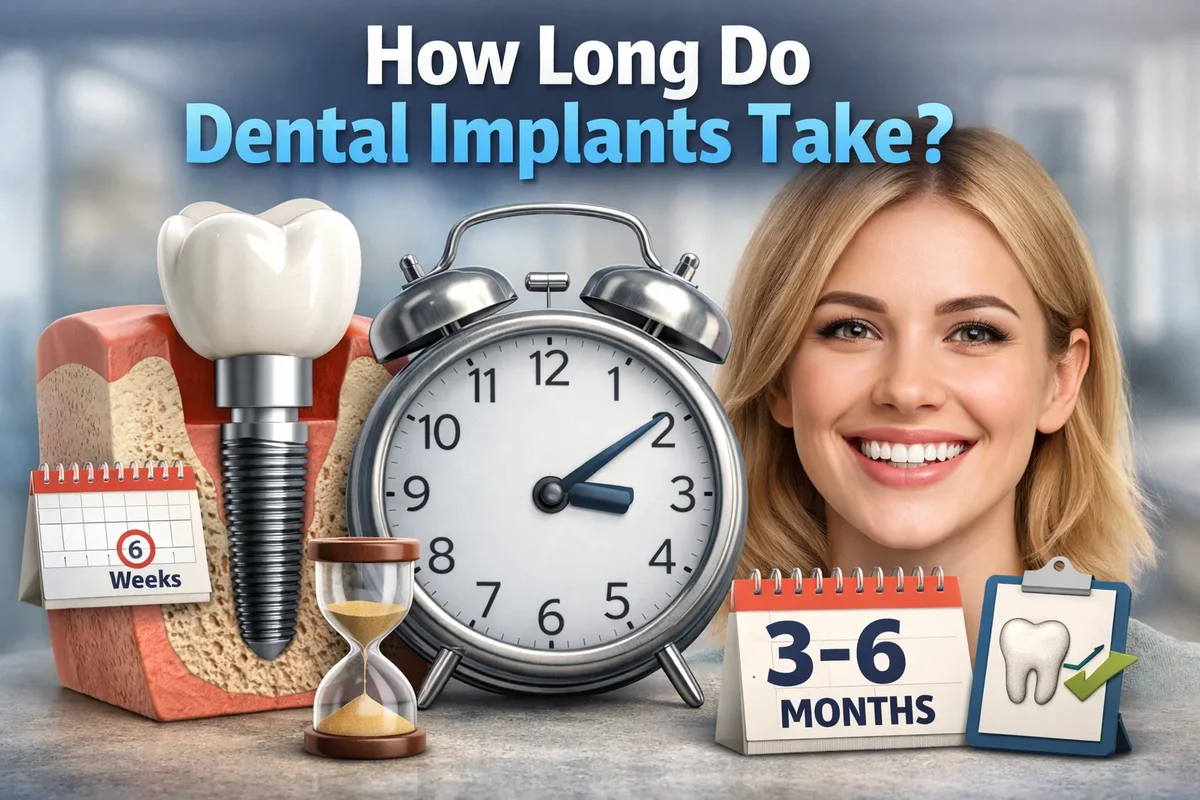
How Long Do Dental Implants Take? A Complete Timeline Guide

how long do dental implants take

If you are considering replacing a missing tooth, one of the first questions you will likely ask is: how long do dental implants take? This is a completely natural concern. Dental implants are a long-term investment in your oral health, comfort, and confidence, so understanding the timeline helps you plan both mentally and financially. The honest answer is that the full process can take anywhere from a few weeks to several months, depending on your individual situation. However, the reason behind this timeline is rooted in biology, safety, and long-term success.

To truly understand how long do dental implants take, you need to look at the entire journey, not just the surgery itself. The process usually includes consultation, imaging, possible tooth extraction, bone healing, implant placement, osseointegration, and final crown placement. Each step plays a critical role in ensuring your implant lasts for decades. According to the American Dental Association, proper planning and healing are essential for predictable outcomes and long-term stability.

In general, when patients ask how long do dental implants take, they are often surprised to learn that the surgical appointment itself may only last one to two hours. The real time factor comes from healing. After the titanium implant is placed into the jawbone, the body needs time to form a strong bond between the implant and the bone. This biological fusion process, called osseointegration, typically takes three to six months. Without this step, the implant would not be stable enough to support a crown.

So, how long do dental implants take from start to finish in a straightforward case? If no bone grafting is required and the jawbone is healthy, the full treatment may take around three to six months. However, if additional procedures such as bone grafting are necessary, the timeline may extend to six to nine months or longer. Bone grafting itself can require three to four months of healing before the implant can even be placed.

Another key factor in determining how long do dental implants take is whether the implant is placed immediately after tooth extraction or after a healing period. In some cases, an implant can be placed the same day a tooth is removed, reducing the overall treatment time. These are often referred to as “immediate implants” or “same-day implants.” However, not everyone is a candidate for this accelerated approach. The dentist must evaluate bone density, infection risk, and gum health before deciding.

When patients ask, “how long does the dental implant process last?” they are often really asking how soon they can return to normal life. The good news is that most people resume daily activities within a day or two after surgery. Mild swelling and discomfort are normal, but these symptoms usually subside quickly. The longer waiting period is not about pain — it is about allowing your body to heal properly and integrate the implant securely.

It is also important to understand that asking how long do dental implants take should not only focus on speed but also on durability. Rushing the process can compromise results. A properly integrated implant can last 20 years or more, and in many cases, a lifetime. That long-term success depends on careful timing, healthy healing, and proper follow-up care.

Your personal health plays a major role in answering how long do dental implants take. Factors such as smoking, uncontrolled diabetes, gum disease, and insufficient bone can extend the timeline. On the other hand, patients with strong bone structure and good oral hygiene may experience a smoother and faster treatment process. Every mouth is unique, which is why a personalized consultation is essential.

If you would like a professional evaluation to determine exactly how long do dental implants take in your case, you can schedule an appointment through the Redent Klinik Contact Page. A detailed examination, including digital scans and X-rays, allows your dentist to create a precise treatment timeline tailored to your needs.

In summary, when asking how long do dental implants take, the typical answer ranges from three to six months for standard cases, and up to nine months or more if additional procedures are required. The surgical procedure itself is relatively quick, but healing and bone integration require patience. Understanding the full timeline helps you set realistic expectations and make an informed decision about restoring your smile. Dental implants are not just about replacing a tooth — they are about restoring function, aesthetics, and long-term oral health with a solution designed to last. 😊

1. How Long Do Dental Implants Take From Start to Finish?

One of the most common questions patients ask during their first consultation is: how long do dental implants take from the very beginning to the final crown placement? Understanding the full timeline helps you set realistic expectations and plan your treatment with confidence. The total duration depends on several factors, including your oral health, bone quality, need for additional procedures, and healing capacity. In general, the complete dental implant process can take anywhere from 3 months to 9 months, and in more complex cases, even up to a year.

Breaking Down the Full Treatment Timeline

To truly answer the question how long do dental implants take, we need to examine each stage of the journey. The process is not just about placing a screw in the jawbone. It is a carefully planned medical procedure designed to create a stable, long-lasting tooth replacement.

1️⃣ Initial Consultation and Diagnostic Planning (1–2 Weeks)

The first step in determining how long do dental implants take begins with a comprehensive consultation. During this visit, your dentist performs digital X-rays, 3D CBCT scans, and a full oral examination. These diagnostics help evaluate bone density, gum health, and overall suitability for implants. Treatment planning may take one to two weeks, especially if additional procedures are required.

2️⃣ Tooth Extraction (If Needed) – Healing: 6–10 Weeks

If the damaged tooth is still present, extraction may be necessary before implant placement. In some cases, the implant can be placed immediately. However, if infection or bone damage exists, the dentist may recommend allowing the area to heal for 6 to 10 weeks. This stage directly influences how long do dental implants take, as proper healing ensures long-term success.

3️⃣ Bone Grafting (If Required) – Healing: 3–4 Months

Bone grafting significantly impacts the answer to how long do dental implants take. If the jawbone lacks sufficient density, grafting material is added to strengthen the area. This procedure requires approximately 3 to 4 months of healing before implant placement can proceed. While this extends the overall timeline, it greatly improves stability and long-term outcomes.

4️⃣ Implant Placement Surgery – 1 Day Procedure

The surgical placement of the implant itself usually takes 1 to 2 hours per implant. Many patients are surprised that the surgery is not the longest part of the process. When asking how long do dental implants take, it is important to understand that the surgery is relatively quick compared to the biological healing phase that follows.

The Critical Healing Phase: Osseointegration (3–6 Months)

The most important factor in answering how long do dental implants take is osseointegration. This is the process where the titanium implant fuses naturally with the jawbone. It typically takes between 3 and 6 months. During this period, the implant becomes a stable foundation capable of supporting a crown. Rushing this stage can compromise the success of the treatment, so patience is essential. 😊

Abutment and Crown Placement (2–4 Weeks)

After successful osseointegration, a small connector called an abutment is attached to the implant. The gums usually need about 1 to 2 weeks to heal around it. Once healed, impressions are taken for the final crown. Fabrication and placement of the crown may take another 1 to 2 weeks. At this stage, the journey of how long do dental implants take reaches its final step.

Average Total Time Frame

So, when patients ask again, how long do dental implants take from start to finish, here is a simplified overview:

  • Simple case without grafting: 3–6 months
  • Case with bone grafting: 6–9 months
  • Complex cases: up to 12 months

It is also important to understand that individual healing speeds vary. Smokers, patients with uncontrolled diabetes, or those with gum disease may experience longer healing periods. On the other hand, healthy individuals with strong bone structure may complete treatment faster.

Can the Process Be Shortened?

Modern dentistry offers options like immediate implants and same-day temporary crowns. However, these options are not suitable for everyone. When evaluating how long do dental implants take, your dentist must prioritize bone stability and long-term durability over speed. The goal is not just to replace a tooth quickly, but to ensure it functions naturally for decades.

According to the American Dental Association, proper case selection and careful healing significantly improve implant success rates, which are typically above 95% when performed under ideal conditions.

Why Patience Leads to Better Results

Understanding how long do dental implants take helps reduce frustration during the waiting period. The months between surgery and crown placement are not inactive time; they are essential biological stages that allow your body to create a strong foundation. Dental implants are designed to last 20 years or more — sometimes a lifetime — and that longevity depends on respecting the healing timeline.

If you would like a personalized assessment to determine exactly how long do dental implants take in your situation, you can schedule a consultation via the Redent Klinik Contact Page. A customized treatment plan ensures clarity, safety, and predictable results.

In conclusion, the answer to how long do dental implants take varies from patient to patient, but typically ranges between 3 and 9 months. While the surgery itself is brief, the healing phases require time and patience. By understanding each stage, you can approach the implant journey confidently, knowing that every step is designed to deliver a stable, functional, and beautiful smile. 😊

2. Initial Consultation and Planning: The First Step in the Timeline

Before answering in detail how long do dental implants take, it is essential to understand that the entire journey begins with a thorough consultation and strategic treatment planning. This first phase may seem simple compared to surgery, but it is actually one of the most critical steps in determining the overall timeline. The precision of this stage directly influences how smoothly the rest of the procedure progresses.

Why the Consultation Matters So Much

Many patients focus only on the surgical day when asking how long do dental implants take. However, the planning phase sets the foundation for everything that follows. A properly executed consultation reduces complications, prevents delays, and ensures predictable healing.

During the initial visit, your dentist evaluates:

  • Overall oral health
  • Bone density and jaw structure
  • Gum condition
  • Medical history
  • Lifestyle factors such as smoking

All these factors directly impact how long do dental implants take in your specific case. For example, untreated gum disease must be resolved before implant placement, which can extend the timeline.

Advanced Imaging and Diagnostic Technology

Modern implant dentistry relies heavily on digital technology. When determining how long do dental implants take, dentists use tools such as:

✔️ 3D CBCT Scans

These scans provide a three-dimensional view of the jawbone, allowing precise measurement of bone height, width, and density. If bone volume is insufficient, additional procedures like grafting may be necessary, which naturally affects how long do dental implants take.

✔️ Digital X-Rays

Digital X-rays help identify hidden infections, impacted teeth, or structural concerns that could delay implant placement.

✔️ Intraoral Scanners

These scanners create accurate digital impressions, which streamline the treatment process and reduce unnecessary delays.

This comprehensive evaluation ensures that when patients ask how long do dental implants take, the answer is based on accurate clinical data rather than estimates.

Medical History and Risk Assessment

Your general health plays a significant role in determining how long do dental implants take. Conditions such as diabetes, autoimmune disorders, or osteoporosis may slow healing. Certain medications can also influence bone integration. A detailed review of your medical history allows the dentist to adjust the treatment plan accordingly.

For example:

  • Smokers may experience slower osseointegration.
  • Patients with controlled diabetes may heal normally but require close monitoring.
  • Individuals with active periodontal disease may need preliminary treatment.

All of these factors help refine the timeline when evaluating how long do dental implants take.

Creating a Personalized Treatment Plan

After diagnostics and evaluation, the dentist creates a customized treatment roadmap. This plan outlines every stage, including:

  • Tooth extraction (if needed)
  • Bone grafting requirements
  • Implant placement timing
  • Healing duration
  • Final crown fabrication

At this stage, patients receive a clearer estimate of how long do dental implants take in their unique situation. In straightforward cases with healthy bone, treatment may proceed quickly. In more complex scenarios, preparatory procedures may extend the timeline.

Can the Consultation Phase Shorten the Overall Timeline?

Absolutely. A well-structured planning phase can actually reduce complications and unexpected delays later. When properly executed, this initial stage ensures that how long do dental implants take remains predictable and controlled. Rushed or incomplete evaluations often result in setbacks that prolong treatment.

According to the American Dental Association, comprehensive diagnostic planning significantly improves implant success rates and reduces postoperative complications.

Patient Preparation Before Surgery

Another often overlooked aspect of how long do dental implants take involves patient preparation. Before surgery, patients may need:

  • Professional dental cleaning
  • Antibiotic therapy (if infection is present)
  • Improved oral hygiene routines
  • Lifestyle adjustments such as reducing smoking

Proper preparation ensures smoother healing and may even shorten how long do dental implants take overall.

How Long Does the Consultation Stage Itself Take?

Typically, the consultation appointment lasts between 45 and 90 minutes. However, finalizing diagnostics, reviewing scans, and approving the treatment plan may take one to two weeks. While this may seem like added time, it is essential for answering accurately how long do dental implants take in your case.

If you would like a detailed evaluation and personalized timeline, you can schedule an appointment through the Redent Klinik Contact Page. A comprehensive consultation ensures clarity, safety, and a structured treatment journey.

Why This First Step Determines Everything

When patients ask repeatedly how long do dental implants take, they often overlook that the consultation stage determines whether the process will be smooth or complicated. Careful planning reduces surgical surprises, improves healing outcomes, and increases long-term implant stability.

In summary, the initial consultation and planning phase may take one to two weeks, but it plays a crucial role in defining how long do dental implants take overall. By investing time in diagnostics and preparation, patients increase their chances of a successful, durable implant that can last for decades. 😊

3. Tooth Extraction and Healing Period Explained

When patients ask how long do dental implants take, they often focus on the implant surgery itself. However, in many cases, the timeline actually begins with tooth extraction. If a damaged, decayed, or infected tooth is still present, it must be removed before implant placement. The healing period after extraction plays a significant role in determining exactly how long do dental implants take from start to finish.

Do All Patients Need a Tooth Extraction?

Not every implant case begins with extraction. Some patients are already missing a tooth, which can shorten the overall process. However, if a tooth is severely compromised, fractured below the gum line, or affected by advanced decay or periodontal disease, extraction is the safest first step. In these situations, the dentist must evaluate bone condition and infection risk before deciding how long do dental implants take in your specific case.

Immediate Implant vs Delayed Implant After Extraction

One major factor influencing how long do dental implants take is whether the implant can be placed immediately after extraction or if a delayed approach is necessary.

Immediate Implant Placement

In certain cases, the implant can be placed on the same day as the extraction. This approach can reduce the overall timeline and may answer the question how long do dental implants take with a shorter estimate. However, immediate placement is only possible when:

  • There is no active infection
  • The bone structure is strong and intact
  • The gums are healthy

If these conditions are met, the dentist may combine extraction and implant placement in one appointment.

Delayed Implant Placement

More commonly, the extraction site requires healing before implant surgery. This healing period typically lasts 6 to 10 weeks. During this time, the gum tissue closes and the bone begins to remodel. This waiting period directly affects how long do dental implants take overall, but it significantly improves long-term implant stability.

Why Healing After Extraction Is Crucial

After a tooth is removed, the body initiates a natural healing process. The socket fills with a blood clot, new bone forms, and the gum tissue seals the area. Rushing this stage can compromise osseointegration later. When evaluating how long do dental implants take, dentists prioritize proper healing to prevent complications such as infection or implant failure.

Healing speed varies depending on factors such as:

  • Age
  • Immune system strength
  • Smoking habits
  • Presence of systemic conditions like diabetes

All these elements influence how long do dental implants take in your case.

What If Infection Was Present?

If the extracted tooth had an active infection, the dentist may prescribe antibiotics and allow additional healing time. In such cases, the timeline extends slightly, but this precaution ensures a safer implant environment. When patients ask how long do dental implants take after infection, the answer typically includes extra weeks for monitoring and stabilization.

Bone Preservation After Extraction

Another critical consideration when determining how long do dental implants take is bone preservation. After a tooth is removed, the surrounding bone may begin to shrink. To prevent this, dentists sometimes perform a socket preservation graft immediately after extraction. This minor bone graft helps maintain jaw structure and may actually shorten the implant timeline later by reducing the need for larger grafting procedures.

According to the American Dental Association, preserving bone volume after extraction improves long-term implant success rates.

Discomfort and Recovery Expectations

Patients are often relieved to learn that extraction recovery is usually mild. Swelling and discomfort typically subside within a few days. Most people return to normal activities within 24 to 48 hours. While the biological healing takes several weeks, daily life is rarely disrupted. This distinction is important when discussing how long do dental implants take — the waiting time does not mean prolonged pain or disability.

Temporary Tooth Options During Healing

During the healing phase, temporary solutions such as removable partial dentures or temporary bridges may be provided. These options help maintain aesthetics and function while the extraction site heals. Although they do not affect how long do dental implants take biologically, they improve comfort and confidence during the process. 😊

Average Timeline After Extraction

In straightforward cases without infection or bone loss, the typical healing time after extraction is around 6 to 8 weeks. Once adequate bone healing is confirmed through X-rays, implant placement can proceed. Therefore, if you are asking how long do dental implants take when extraction is required, you should expect this initial healing stage to add approximately 1.5 to 2.5 months to the overall timeline.

When to Seek Professional Guidance

Because every case is unique, a personalized evaluation is essential. If you want to know exactly how long do dental implants take in your situation, scheduling a consultation through the Redent Klinik Contact Page allows a dentist to assess your bone health and determine whether immediate or delayed implant placement is appropriate.

In summary, tooth extraction and the subsequent healing period are fundamental in determining how long do dental implants take. While this stage may add several weeks to the process, it ensures a healthier foundation for the implant. Proper healing after extraction significantly increases long-term implant success, stability, and durability. By understanding this phase, patients can approach treatment with realistic expectations and greater confidence in the final outcome. 😊

4. Bone Grafting and Its Impact on How Long Dental Implants Take

When evaluating how long do dental implants take, one of the most significant variables is whether bone grafting is required. Bone grafting is a preparatory procedure performed when the jawbone lacks sufficient density or volume to securely support a dental implant. Because implants rely on a strong and stable bone foundation, this step can extend the overall treatment timeline—but it also dramatically increases long-term success rates.

Many patients are surprised to learn that bone health plays such a critical role in determining how long do dental implants take. After tooth loss, the jawbone naturally begins to shrink due to lack of stimulation. Over time, this bone resorption can make implant placement impossible without reinforcement. Therefore, bone grafting is not a delay—it is an investment in stability and durability. 😊

Why Bone Grafting Is Sometimes Necessary

Understanding how long do dental implants take requires first understanding the biology of bone loss. When a tooth root is no longer present, the jawbone does not receive the mechanical stimulation it needs. As a result, the bone gradually becomes thinner and weaker.

Common reasons bone grafting may be required include:

  • Long-term tooth loss
  • Advanced gum disease (periodontitis)
  • Trauma or injury
  • Infection around the extraction site

If any of these factors are present, they directly influence how long do dental implants take, because additional healing time must be included before implant placement.

Types of Bone Grafting Procedures

1️⃣ Socket Preservation Grafting

This procedure is performed immediately after tooth extraction to preserve bone volume. It may add minimal time to the treatment process and can sometimes prevent larger grafts later. In such cases, how long do dental implants take may only increase slightly.

2️⃣ Minor Localized Bone Graft

If bone loss is moderate, a small graft may be placed in the deficient area. Healing typically requires 3 to 4 months before implant placement. This healing phase directly affects how long do dental implants take, extending the timeline by several months.

3️⃣ Sinus Lift Procedure

For implants in the upper back jaw, a sinus lift may be necessary if bone height is insufficient. This specialized graft adds bone beneath the sinus cavity and usually requires 4 to 6 months of healing. Patients asking how long do dental implants take for upper molar implants often encounter this additional stage.

Healing Timeline After Bone Grafting

The healing period after grafting is critical. During this time, the graft material integrates with your natural bone, creating a solid base for the implant. On average, healing lasts between 3 and 6 months. In more complex cases, it may extend up to 9 months.

Therefore, when calculating how long do dental implants take, patients requiring bone grafting should expect the total process to range between 6 and 12 months, depending on individual healing speed.

Does Bone Grafting Increase Discomfort?

One concern patients often have while asking how long do dental implants take is whether grafting significantly increases discomfort. Fortunately, most bone graft procedures are minimally invasive and performed under local anesthesia. Post-operative discomfort is typically mild and manageable with prescribed medication.

The recovery period usually involves:

  • Mild swelling for a few days
  • Soft diet recommendations
  • Avoiding pressure on the treated area

Importantly, while graft healing takes months biologically, daily life is rarely interrupted for long periods.

Success Rates and Long-Term Stability

According to the American Dental Association, properly executed bone grafting significantly improves implant success rates. When evaluating how long do dental implants take, it is essential to prioritize quality over speed. A well-integrated bone graft provides a foundation that can support implants for decades.

Cost Considerations

Bone grafting may add to the total treatment cost. While prices vary by region and complexity, typical estimates are:

  • Minor bone graft: $300 – $800
  • Major grafting procedure: $1,000 – $3,000
  • Sinus lift: $1,500 – $4,000

Although these additional costs can influence the decision-making process, they ensure long-term implant stability. When considering how long do dental implants take, remember that investing time and proper preparation reduces the risk of implant failure.

Can Bone Grafting Be Avoided?

Early intervention is key. Replacing a missing tooth soon after extraction often prevents severe bone loss. Patients who delay treatment for years are more likely to require grafting, which inevitably affects how long do dental implants take. Acting early can significantly shorten the overall timeline.

Personalized Assessment Is Essential

Every patient’s jawbone condition is different. If you are wondering exactly how long do dental implants take in your situation and whether bone grafting is necessary, a detailed evaluation is required. You can request a consultation through the Redent Klinik Contact Page to receive a personalized treatment plan and timeline estimate.

In conclusion, bone grafting is one of the most influential factors in determining how long do dental implants take. While it can extend the timeline by several months, it dramatically increases implant stability and long-term success. By allowing adequate healing and following professional recommendations, patients ensure their dental implants remain secure, functional, and aesthetically pleasing for many years. 😊

5. Implant Placement Surgery: What Happens and How Long It Lasts

When patients ask how long do dental implants take, they often imagine the surgical procedure as the longest and most complicated part of the process. In reality, implant placement surgery is usually the shortest phase in terms of appointment time. However, it plays a crucial role in determining the overall success and stability of the implant. Understanding what happens during surgery helps clarify expectations and gives a more complete answer to the question: how long do dental implants take?

Preparation Before Implant Surgery

Before the procedure begins, your dentist will review your treatment plan, confirm imaging results, and ensure that the surgical site is healthy. If you have followed all preparatory instructions, such as maintaining good oral hygiene and taking prescribed medications, the surgery can proceed smoothly. Proper preparation ensures that how long do dental implants take remains predictable and complication-free.

Anesthesia and Comfort Measures

Most implant procedures are performed under local anesthesia. In some cases, conscious sedation may be offered for anxious patients. The goal is to ensure a pain-free experience. Many people are surprised to learn that discomfort during surgery is minimal, which often changes their perception of how long do dental implants take and how invasive the procedure truly is.

Step-by-Step Surgical Procedure

The implant placement itself typically follows a structured and precise sequence:

1️⃣ Gum Incision

The dentist gently opens the gum tissue to expose the underlying jawbone.

2️⃣ Bone Preparation

A small channel is created in the bone using specialized instruments. This step is carefully measured to match the implant size.

3️⃣ Implant Insertion

The titanium implant post is placed into the prepared site. Titanium is biocompatible and integrates naturally with bone.

4️⃣ Closure

The gum tissue is repositioned and sutured around or over the implant, depending on the treatment approach.

In most cases, this entire procedure takes between 60 and 120 minutes per implant. So, when evaluating how long do dental implants take for the surgical appointment itself, the answer is often just a few hours.

Is Implant Surgery Painful?

One of the biggest concerns patients have while wondering how long do dental implants take is whether the surgery will be painful. Thanks to modern anesthesia and minimally invasive techniques, most patients report only mild discomfort afterward. Swelling and tenderness typically subside within a few days.

Post-surgical recovery usually involves:

  • Mild swelling for 2–3 days
  • Soft food diet for about a week
  • Avoiding heavy physical activity for a short period

Importantly, the surgical recovery does not represent the full answer to how long do dental implants take. The biological healing phase is what truly determines the timeline.

Healing After Surgery: The Beginning of Osseointegration

Immediately after the implant is placed, the body begins a process called osseointegration. This is when bone cells attach to and fuse with the implant surface. Although the surgery may only take a few hours, the integration process takes several months. This phase is essential in answering how long do dental implants take from start to finish.

On average, osseointegration requires:

  • 3 months for lower jaw implants
  • 4–6 months for upper jaw implants

The upper jaw often takes longer because the bone is generally softer and less dense.

Same-Day Temporary Teeth

In selected cases, a temporary crown may be placed immediately after surgery. This approach can improve aesthetics and function while healing occurs underneath. However, it does not shorten the biological integration period. Even with immediate loading, how long do dental implants take biologically remains the same because bone healing cannot be rushed.

Factors That Influence Surgical Duration

While the average surgical time is short, certain factors can affect how long do dental implants take during placement:

  • Number of implants placed
  • Need for simultaneous bone grafting
  • Complexity of the case
  • Patient’s anatomical structure

For example, full-arch implant cases may take several hours, whereas a single implant can often be completed quickly.

Success Rates and Safety

According to the American Dental Association, dental implant success rates typically exceed 95% when proper planning and surgical protocols are followed. When considering how long do dental implants take, it is reassuring to know that the procedure is both predictable and safe when performed by experienced professionals.

When to Seek a Personalized Timeline

Because every patient’s anatomy and health condition differ, the best way to determine exactly how long do dental implants take for you is through professional evaluation. You can schedule a consultation via the Redent Klinik Contact Page to receive a customized treatment timeline.

In conclusion, implant placement surgery itself is relatively quick, often lasting one to two hours per implant. However, the real answer to how long do dental implants take extends beyond the operating room. While surgical recovery is typically brief and manageable, the essential bone integration phase requires patience. By understanding both the surgical and healing aspects, patients can approach treatment with realistic expectations and confidence in long-term results. 😊

6. Osseointegration: The Critical Healing Phase

When discussing how long do dental implants take, the most important and time-dependent stage is osseointegration. This biological process is the reason dental implants are so strong and long-lasting. While the surgery itself may only take a couple of hours, osseointegration requires patience. It is during this phase that the titanium implant fuses with your natural jawbone, creating a stable and permanent foundation for the final crown.

If you are wondering how long do dental implants take, understanding osseointegration will give you the clearest answer. This stage usually lasts between 3 and 6 months, depending on bone quality, overall health, and implant location. The lower jaw typically heals faster than the upper jaw because the bone is denser.

What Is Osseointegration?

Osseointegration is a natural biological process where bone cells grow and attach directly to the surface of the titanium implant. Titanium is biocompatible, meaning the body accepts it without rejection. Over time, the implant becomes firmly anchored within the jawbone. This is why dental implants feel and function like natural teeth.

Without proper osseointegration, the implant cannot support chewing forces safely. Therefore, when asking how long do dental implants take, the answer largely depends on how long your body needs to complete this integration process.

Average Healing Timeline During Osseointegration

Lower Jaw Implants

The lower jaw (mandible) generally has stronger, denser bone. Because of this, osseointegration may take approximately 3 months. In these cases, how long do dental implants take may be on the shorter end of the spectrum.

Upper Jaw Implants

The upper jaw (maxilla) has softer bone. As a result, integration may require 4 to 6 months. If bone grafting was previously performed, this healing period may extend further. This variation explains why the answer to how long do dental implants take differs from patient to patient.

What Happens During These Months?

Even though you may not see visible changes, a great deal is happening beneath the gum surface. Bone tissue gradually grows around microscopic textures on the implant surface. This biological bonding transforms the implant into a functional part of your jaw structure.

Many patients mistakenly believe that if they feel fine after surgery, the implant is ready immediately. However, the true stability develops over time. This is why dentists emphasize patience when explaining how long do dental implants take. Rushing this phase can compromise long-term success.

Can Osseointegration Fail?

Although rare, implant failure can occur if osseointegration does not complete successfully. Factors that can interfere include:

  • Smoking
  • Uncontrolled diabetes
  • Poor oral hygiene
  • Excessive pressure on the implant too soon
  • Untreated gum disease

These risk factors directly influence how long do dental implants take and whether healing proceeds smoothly. Maintaining excellent oral hygiene and following your dentist’s post-operative instructions significantly improves success rates.

What Can You Expect During the Healing Period?

One reassuring aspect when patients ask how long do dental implants take is that the osseointegration phase is usually comfortable. After the initial post-surgical recovery (which lasts only a few days), most patients experience little to no discomfort during the following months.

You may:

  • Eat normally after the initial soft-diet phase
  • Return to work within 1–2 days after surgery
  • Continue daily activities without interruption

Regular follow-up appointments allow your dentist to monitor healing and confirm that osseointegration is progressing as expected.

Does Immediate Loading Change the Timeline?

In some cases, a temporary crown may be placed shortly after implant surgery. This approach is known as immediate loading. However, even if a temporary tooth is visible right away, the biological answer to how long do dental implants take does not change. Bone still needs several months to integrate fully with the implant.

The visible restoration may give the appearance of faster treatment, but internally, healing continues at its natural pace.

Scientific Evidence and Success Rates

According to the American Dental Association, dental implant success rates exceed 95% when proper healing protocols are followed. This high success rate is directly linked to allowing adequate time for osseointegration. Therefore, when evaluating how long do dental implants take, remember that this waiting period protects your long-term investment.

How to Support Faster and Healthier Integration

While you cannot drastically shorten the biological healing process, you can optimize it by:

  • Avoiding smoking
  • Maintaining excellent oral hygiene
  • Attending scheduled follow-ups
  • Following dietary recommendations
  • Managing systemic health conditions

These habits contribute to smoother healing and may help ensure that how long do dental implants take remains within the expected timeframe.

Personalized Timeline Assessment

Because bone density and healing capacity vary between individuals, the best way to determine precisely how long do dental implants take for you is through professional evaluation. You can request a consultation through the Redent Klinik Contact Page to receive a personalized treatment timeline based on your specific oral condition.

In conclusion, osseointegration is the cornerstone of implant success. Although this stage requires several months, it is the reason implants can last decades. When asking how long do dental implants take, understand that this healing phase is not a delay—it is a critical biological process that ensures strength, durability, and natural function. With patience and proper care, you can look forward to a secure, long-lasting smile. 😊

7. Abutment Placement and Gum Healing Time

After the osseointegration phase is successfully completed, patients often ask again: how long do dental implants take before the final tooth is attached? At this stage, the implant has fused securely with the jawbone, but there is still one essential step before the crown can be placed — the abutment placement. This stage may seem minor compared to surgery, yet it plays a crucial role in shaping the gums and preparing the implant for the permanent restoration.

Understanding this phase helps provide a clearer and more realistic answer to the question how long do dental implants take from start to finish. Although abutment placement is a shorter procedure, proper gum healing afterward is vital for both aesthetics and long-term stability.

What Is an Abutment?

An abutment is a small connector piece that attaches to the top of the dental implant. It acts as a bridge between the implant post (embedded in the bone) and the final crown. Without this component, the crown cannot be securely attached.

When evaluating how long do dental implants take, the abutment phase usually adds approximately 2 to 4 weeks to the overall timeline. This time allows the gum tissue to heal and form naturally around the abutment, creating a healthy and aesthetic contour.

The Abutment Placement Procedure

Step 1: Reopening the Gum Tissue

If the implant was placed beneath the gum during the initial surgery, a small incision is made to expose the implant. This minor procedure is typically performed under local anesthesia and takes less than 30 minutes.

Step 2: Attaching the Abutment

The dentist connects the abutment securely to the implant. Once in place, the surrounding gum tissue begins adapting to the new structure.

Step 3: Healing Period

The gums require about 1 to 2 weeks to heal properly. In some cases, this may extend to 3 weeks depending on individual healing capacity. This healing phase directly contributes to the total answer of how long do dental implants take.

Is Abutment Placement Painful?

Most patients report minimal discomfort during this stage. Because osseointegration has already occurred, the implant itself is stable and secure. Mild tenderness or slight swelling may occur for a few days, but it is usually much less intense than the original implant surgery. When people ask how long do dental implants take, it is reassuring to know that this phase is relatively quick and comfortable.

Why Gum Healing Is So Important

Proper gum healing around the abutment ensures:

  • Healthy tissue contour around the crown
  • Protection against bacterial invasion
  • Natural aesthetic appearance
  • Long-term implant stability

If the gums do not heal properly, complications such as inflammation or peri-implantitis can develop. This could extend the timeline of how long do dental implants take and affect the final result. Therefore, dentists closely monitor this stage before proceeding to crown fabrication.

Impression Taking for the Final Crown

Once the gum tissue has healed, impressions or digital scans are taken. These measurements are sent to a dental laboratory where the permanent crown is custom-made. Fabrication typically takes 1 to 2 weeks. During this time, patients may wear a temporary crown for aesthetic purposes.

This laboratory phase adds slightly to how long do dental implants take, but it ensures that the final crown fits precisely and matches the natural color of surrounding teeth.

Factors That May Influence Healing Time

Several factors can affect how long do dental implants take at this stage:

  • Gum thickness and health
  • Oral hygiene practices
  • Smoking habits
  • Systemic health conditions

Patients who maintain excellent oral hygiene and follow post-operative care instructions typically experience smooth healing and remain within the expected timeline.

Scientific Perspective on Healing and Stability

According to the American Dental Association, careful management of soft tissue around implants significantly improves long-term outcomes. This is why dentists do not rush the abutment and healing phase when calculating how long do dental implants take. Proper gum adaptation supports decades of stable implant function.

What Happens If Healing Is Delayed?

In rare cases, gum healing may take longer due to inflammation or infection. If this occurs, the dentist may delay crown placement until the tissue is fully healthy. While this slightly extends how long do dental implants take, it prevents long-term complications.

Personalized Evaluation and Timeline

If you want to know exactly how long do dental implants take in your specific case, a detailed assessment is essential. You can request an appointment through the Redent Klinik Contact Page to receive a customized timeline based on your oral health condition.

In summary, abutment placement and gum healing typically add 2 to 4 weeks to the dental implant process. Although this stage is shorter compared to osseointegration, it is essential for achieving natural aesthetics and long-term stability. When considering how long do dental implants take, remember that each phase serves a specific purpose in ensuring strength, function, and durability. With proper care and patience, you are only one step away from completing your restored smile. 😊

8. Final Crown Placement: Completing Your Smile

After months of planning, healing, and integration, patients naturally ask once again: how long do dental implants take until the final tooth is in place? The final crown placement is the last major step in the dental implant journey. Although it is usually the shortest appointment in the entire process, it represents the completion of a carefully structured treatment plan designed for long-term success.

Understanding this final stage helps clarify the full answer to how long do dental implants take. While most of the timeline is determined by biological healing, the crown placement itself typically requires only one or two appointments over a period of one to two weeks.

What Is the Final Crown?

The crown is the visible, tooth-shaped restoration that sits on top of the implant. It is custom-designed to match the color, size, and shape of your natural teeth. Once attached to the abutment, it restores both appearance and function. When patients ask how long do dental implants take, they are often referring to the moment when this final restoration is secured in place.

The Steps Before Crown Placement

1️⃣ Final Impressions or Digital Scans

After the gum tissue has healed around the abutment, your dentist takes detailed impressions or digital scans. These measurements ensure that the crown fits precisely. This step usually takes one appointment and is essential in determining how long do dental implants take from this point forward.

2️⃣ Laboratory Fabrication

The impressions are sent to a dental laboratory where skilled technicians craft your custom crown. Depending on materials and laboratory workload, fabrication typically takes 7 to 14 days. This short waiting period adds slightly to how long do dental implants take but ensures a perfect aesthetic result.

3️⃣ Crown Placement Appointment

During the final appointment, the dentist secures the crown to the abutment using either dental cement or a small screw. The bite is carefully adjusted to ensure proper alignment and comfort. This appointment often lasts less than an hour.

Materials Used for Implant Crowns

Several materials may be used for the final crown, including:

  • Porcelain fused to metal
  • Zirconia (highly durable and aesthetic)
  • All-ceramic crowns

The choice of material does not significantly change how long do dental implants take, but it can influence durability, aesthetics, and cost.

How Long Does It Take to Adjust to the Crown?

Most patients adapt to their new crown within a few days. Because the implant is firmly integrated into the bone, it feels stable and natural. When discussing how long do dental implants take, it is reassuring to know that once the crown is placed, normal chewing and speaking functions are quickly restored.

You may experience:

  • Minor sensitivity for a few days
  • Slight bite adjustments during the first week
  • Rapid return to normal eating habits

Longevity of the Final Crown

The final crown is designed to last many years. With proper oral hygiene and regular dental check-ups, implant crowns can last 10 to 15 years or longer. The implant post itself may last a lifetime. This long-term durability explains why dentists carefully manage each phase when determining how long do dental implants take.

Cost of the Final Crown

While prices vary depending on region and material, average costs for implant crowns in the United States typically range between:

  • $1,000 – $2,500 per crown

This cost is separate from the surgical implant procedure. Although cost does not directly affect how long do dental implants take, laboratory fabrication time is included in the overall treatment duration.

Why Precision Matters at This Stage

Rushing the final stage could compromise bite alignment and long-term stability. According to the American Dental Association, accurate crown fit and proper occlusion significantly improve implant longevity. This is why the final step, although short, is handled with meticulous care.

Completion of the Full Timeline

When the crown is successfully placed, the full journey of how long do dental implants take reaches completion. For most patients, the entire process — including consultation, healing, and crown placement — ranges between 3 and 9 months, depending on complexity.

If you would like a personalized evaluation to determine exactly how long do dental implants take in your situation, you can schedule a consultation through the Redent Klinik Contact Page. A customized treatment plan ensures clarity and predictable outcomes.

Enjoying Your New Smile 😊

Once the final crown is secured, you can smile, eat, and speak with renewed confidence. At this point, the question how long do dental implants take becomes part of your journey rather than your concern. The waiting period has led to a stable, functional, and natural-looking tooth replacement that can serve you for decades.

In summary, final crown placement is the concluding step in the dental implant process. Although it requires only one or two appointments, it completes months of preparation and healing. By understanding each phase, patients gain a realistic and comprehensive perspective on how long do dental implants take and why each stage contributes to long-term success.

how long do dental implants take

9. Factors That Can Speed Up or Delay the Implant Process

By now, you understand the clinical stages involved in answering the question: how long do dental implants take? However, beyond the standard treatment steps, several individual factors can significantly speed up or delay the overall timeline. No two patients are exactly alike, and personalized health conditions, habits, and anatomical differences all influence how long do dental implants take from consultation to final crown placement.

Understanding these variables helps you set realistic expectations and potentially optimize your treatment timeline. Let’s explore the most important factors that affect how long do dental implants take.

1️⃣ Bone Quality and Density

Bone health is one of the most decisive elements in determining how long do dental implants take. Strong, dense bone allows faster osseointegration, while weaker bone may require grafting and extended healing.

Healthy Bone Structure

Patients with sufficient jawbone density often complete the implant process within 3 to 6 months. In such cases, how long do dental implants take tends to fall on the shorter end of the spectrum.

Bone Loss or Atrophy

If bone grafting or sinus lift procedures are necessary, the timeline can extend to 6 to 12 months. This preparatory stage adds healing time but improves long-term implant stability.

2️⃣ Location of the Implant

The jaw location also affects how long do dental implants take.

  • Lower Jaw: Typically heals faster (around 3 months).
  • Upper Jaw: May require 4–6 months due to softer bone structure.

This anatomical difference explains why some patients complete treatment sooner than others.

3️⃣ Smoking and Lifestyle Habits

Smoking is one of the biggest risk factors influencing how long do dental implants take. Nicotine reduces blood flow to the gums and slows bone healing. Smokers may experience delayed osseointegration or higher complication risks.

Other lifestyle factors include:

  • Poor oral hygiene
  • Excessive alcohol consumption
  • Inadequate nutrition

Maintaining a healthy lifestyle can positively influence how long do dental implants take and improve overall success rates. 😊

4️⃣ Systemic Health Conditions

Certain medical conditions can affect healing speed. Patients with controlled diabetes may heal normally, but uncontrolled diabetes can delay integration. Autoimmune disorders, osteoporosis, or immune-compromising conditions may also influence how long do dental implants take.

Before treatment begins, your dentist will review your medical history to estimate how long do dental implants take in your case and adjust the plan accordingly.

5️⃣ Immediate vs Traditional Implants

Immediate implant placement may reduce the overall timeline if conditions are ideal. However, not every patient qualifies for this approach. While immediate implants can shorten visible treatment time, the biological process remains similar. Therefore, how long do dental implants take internally may not change significantly, even if a temporary tooth is placed early.

6️⃣ Number of Implants Needed

A single implant typically requires less surgical time than full-mouth reconstruction. Multiple implants or full-arch restorations increase procedure duration and healing complexity. Consequently, how long do dental implants take may vary significantly depending on treatment scope.

7️⃣ Patient Compliance and Follow-Up Care

Post-operative care plays a vital role in ensuring smooth healing. Patients who follow their dentist’s instructions carefully often remain within the expected timeline. Failure to attend follow-up visits or neglect oral hygiene can delay healing and extend how long do dental implants take.

Recommended post-surgery habits include:

  • Maintaining excellent oral hygiene
  • Avoiding smoking
  • Eating a soft diet during early healing
  • Attending all scheduled appointments

Scientific Support and Predictability

According to the American Dental Association, dental implant procedures have success rates exceeding 95% when performed under proper conditions. This high predictability helps dentists estimate how long do dental implants take with reasonable accuracy. However, biological healing cannot be rushed.

Can You Shorten the Timeline?

While you cannot dramatically speed up bone integration, you can optimize healing by maintaining good systemic health and oral hygiene. Acting promptly after tooth loss also reduces the risk of bone resorption, which may shorten how long do dental implants take by eliminating the need for grafting.

When to Seek Professional Evaluation

If you are still wondering exactly how long do dental implants take in your specific situation, the best approach is a personalized assessment. You can request an appointment through the Redent Klinik Contact Page to receive a detailed treatment plan and timeline estimate.

In conclusion, multiple factors influence how long do dental implants take, including bone quality, overall health, lifestyle habits, and treatment complexity. While the average timeline ranges between 3 and 9 months, individual variations are normal. By understanding these influencing factors and following professional guidance, patients can achieve predictable, stable, and long-lasting implant results. 😊

Disclosure: this page may contain affiliate links. We may earn a commission if you use them, at no extra cost to you.