
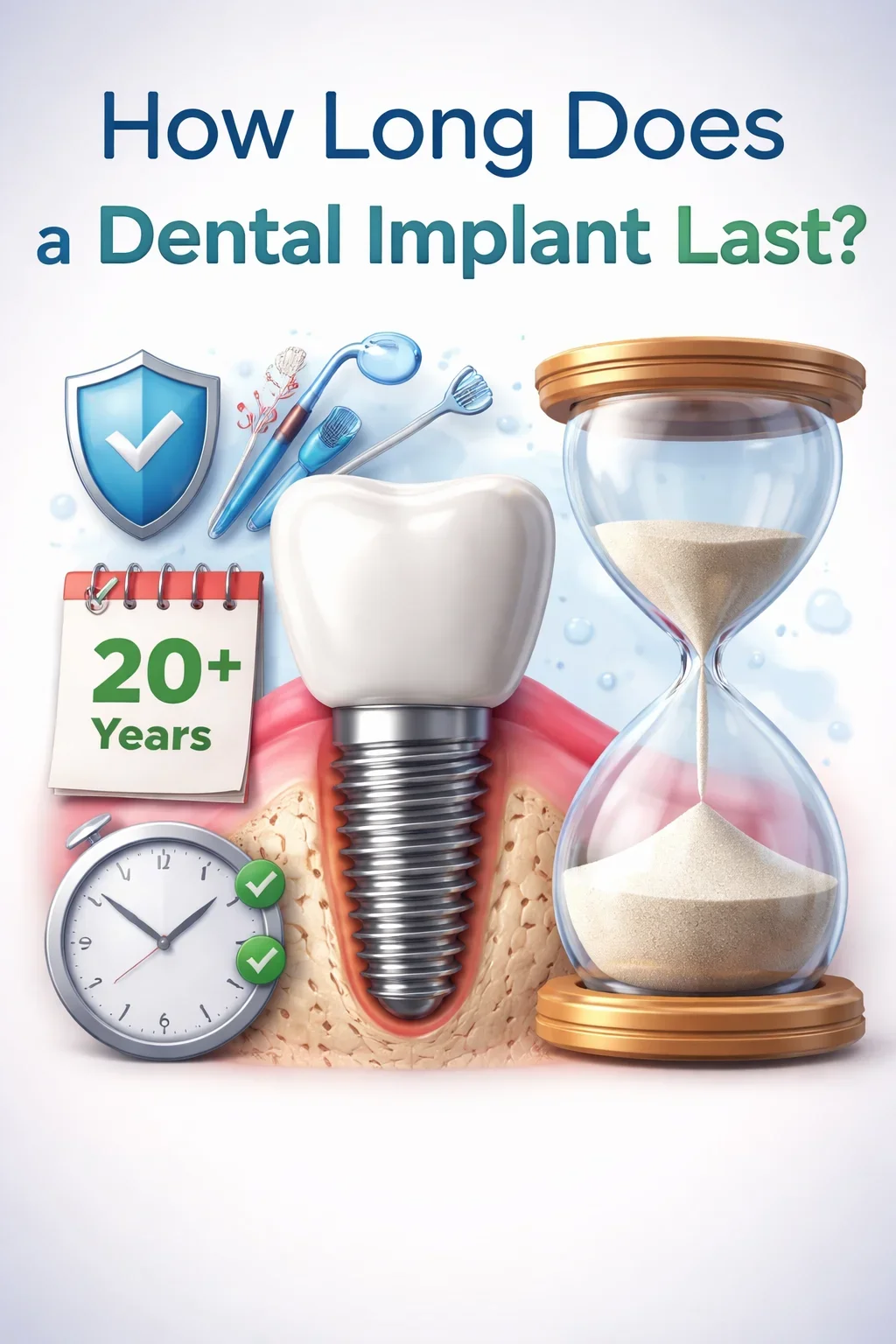
If you are considering dental implants, one of the first questions that naturally comes to mind is: how long does a implant last? This is an important and completely valid concern. Dental implants are a long-term investment in your oral health, confidence, and quality of life. Understanding the lifespan of an implant helps you make an informed decision and set realistic expectations.
So, how long does a implant last in real-world conditions? In most healthy patients, a dental implant can last 20 years or more, and in many cases, it can last a lifetime. However, the complete answer to how long does a implant last depends on multiple factors, including oral hygiene, bone quality, lifestyle habits, and regular dental care. While the titanium implant post is designed to be permanent, the crown attached to it may need replacement after 10–15 years due to normal wear.
To better understand how long does a implant last, it is important to know how implants work. A dental implant consists of three main parts: the titanium post that integrates with your jawbone, the abutment that connects the post to the crown, and the visible crown itself. The titanium post undergoes a biological process called osseointegration, where it fuses with the jawbone. Once this fusion is successful, the implant becomes extremely stable and functions much like a natural tooth root.
Clinical research supports the durability of dental implants. According to data frequently referenced by the American Dental Association, dental implants have a success rate of over 95% when placed under proper conditions. This high success rate strongly supports the expectation that the answer to how long does a implant last is measured in decades rather than years.
However, there is an important distinction to make. When patients ask how long does a implant last, they often mean the entire restoration. The titanium implant itself can last 25 years or longer, often for life. The crown, on the other hand, may experience wear from chewing forces and may require replacement after a decade or more. This does not mean the implant has failed; it simply means the visible portion may need renewal.
Another key factor influencing how long does a implant last is oral hygiene. 🪥 Just like natural teeth, implants require daily brushing, flossing, and professional cleanings. Poor hygiene can lead to peri-implantitis, an inflammatory condition similar to gum disease that affects the tissue around the implant. If left untreated, it can compromise implant stability. Therefore, maintaining excellent oral care significantly increases how long does a implant last.
Bone density also plays a major role. Strong, healthy jawbone provides the necessary support for the implant. If bone loss occurs due to untreated gum disease or other health conditions, it may affect how long does a implant last. In some cases, bone grafting procedures are recommended before implant placement to ensure long-term success.
Lifestyle habits matter too. Smoking 🚬 is one of the biggest risk factors that can negatively influence how long does a implant last. Smoking reduces blood flow to the gums, impairs healing, and increases the risk of infection. Patients who quit smoking before and after implant surgery dramatically improve the longevity of their implants.
Chronic conditions such as uncontrolled diabetes can also impact healing and long-term success. Proper medical management helps ensure that how long does a implant last remains a positive outcome rather than a concern. Patients with well-controlled systemic conditions can still enjoy excellent long-term results.
Many patients are relieved to learn that dental implants are designed to be a permanent solution. Unlike traditional bridges or dentures that may need replacement every 5–10 years, implants are built for durability. When people search how long does a implant last, they are often comparing it to other tooth replacement options. In comparison, implants consistently outperform alternatives in longevity and stability.
It is also important to understand that implant failure is rare but possible. Early failures may occur due to poor osseointegration, while late failures are usually related to infection or excessive force. Fortunately, with modern technology, careful planning, and experienced clinicians, the long-term prognosis remains excellent.
If you are still wondering how long does a implant last in your specific case, the best approach is a personalized consultation. Every patient’s oral anatomy, health history, and lifestyle are unique. For a detailed assessment and professional guidance, you can visit the Redent Klinik Contact Page to schedule a consultation.
In summary, the answer to how long does a implant last is encouraging. With proper placement, good oral hygiene, healthy lifestyle habits, and regular dental check-ups, a dental implant can last decades — often a lifetime. While the crown may require replacement after years of function, the implant post itself is designed to remain stable and secure for the long term. Investing in implants means investing in a durable, reliable, and natural-looking solution that restores both function and confidence. 😊
1. What Determines How Long Does a Implant Last?
When patients ask, how long does a implant last, they are often looking for a simple number. However, the true answer is influenced by several critical factors that work together to determine implant longevity. While many dental implants can last 20 years or more—and often a lifetime—the outcome depends on biological, mechanical, and behavioral elements. Understanding these variables helps you actively protect your investment and maximize how long does a implant last in your specific case.
Biological Factors That Influence How Long Does a Implant Last
The first major factor affecting how long does a implant last is your body’s biological response to the implant. Dental implants are typically made from medical-grade titanium, which is highly biocompatible. After placement, the implant integrates with the jawbone through a process called osseointegration. This fusion creates a stable and long-lasting foundation.
If osseointegration occurs successfully, the implant becomes as secure as a natural tooth root. However, conditions such as poor bone density, untreated periodontal disease, or uncontrolled diabetes may interfere with healing. When evaluating how long does a implant last, dentists always assess bone volume and overall health before proceeding.
Bone Density and Jaw Structure
Healthy bone is essential for implant stability. Patients with strong jawbone structure typically experience better long-term outcomes. If bone loss has occurred due to missing teeth or gum disease, bone grafting may be recommended before implant placement. This preparatory step significantly improves how long does a implant last by ensuring proper support.
Oral Hygiene and Daily Care
One of the most important determinants of how long does a implant last is oral hygiene. 🪥 Even though implants cannot develop cavities like natural teeth, the surrounding gum tissue can become infected. Peri-implantitis is an inflammatory condition similar to gum disease and is one of the leading causes of late implant failure.
Brushing twice daily, flossing carefully around the implant, and using antibacterial mouthwash when recommended all help extend how long does a implant last. Professional cleanings every six months are equally essential. Dentists monitor the health of the gum tissue and ensure there is no hidden inflammation.
Lifestyle Choices and Habits
Your daily habits directly influence how long does a implant last. Smoking is a major risk factor because it reduces blood flow to the gums and impairs healing. Studies show that smokers experience higher implant failure rates compared to non-smokers. Quitting smoking before and after implant placement can dramatically increase how long does a implant last.
Teeth grinding (bruxism) is another concern. Excessive force placed on the implant crown can weaken components over time. If you grind your teeth at night, your dentist may recommend a custom night guard to protect the implant and extend how long does a implant last.
Quality of Materials and Clinical Expertise
Not all implants are created equal. The brand of implant system, the design of the components, and the experience of the dental surgeon all play major roles in determining how long does a implant last. High-quality implant systems have decades of clinical research supporting their durability.
Additionally, precise surgical placement is critical. Poor positioning can lead to uneven force distribution and long-term complications. Choosing an experienced implant specialist significantly improves how long does a implant last and reduces the risk of mechanical failure.
Regular Dental Check-Ups
Ongoing maintenance is essential for maximizing how long does a implant last. Routine dental visits allow early detection of any potential problems. Dentists evaluate gum health, check bite alignment, and ensure the crown remains intact. Small issues addressed early prevent larger complications later.
The American Dental Association emphasizes the importance of regular dental examinations for maintaining oral health, including implant-supported restorations. Preventive care is one of the strongest predictors of how long does a implant last over decades.
Systemic Health Conditions
Medical conditions such as osteoporosis or autoimmune disorders may influence bone healing and long-term stability. However, many patients with well-managed health conditions still experience excellent outcomes. Proper coordination between your dentist and physician helps ensure that how long does a implant last remains a positive long-term result.
The Crown vs. The Implant Post
It is also important to distinguish between the implant post and the crown. When discussing how long does a implant last, many patients are surprised to learn that the titanium post often lasts significantly longer than the crown. The crown, being the visible chewing surface, may require replacement after 10–15 years due to normal wear.
This does not mean the implant has failed. In most cases, replacing only the crown restores full function while the original implant remains firmly integrated in the bone. Understanding this distinction helps clarify realistic expectations regarding how long does a implant last overall.
Patient Commitment Matters
Ultimately, how long does a implant last is not determined by a single factor but by a combination of professional care and patient responsibility. Proper hygiene, healthy habits, routine check-ups, and choosing a qualified implant provider all contribute to long-term success.
If you want a personalized evaluation of your implant longevity potential, you can consult directly through the Redent Klinik Contact Page. A professional assessment ensures that your treatment plan is optimized for maximum durability.
In summary, the question how long does a implant last depends on bone health, hygiene, lifestyle, systemic health, material quality, and ongoing dental maintenance. With proper care and expert placement, dental implants are designed to provide decades of stability, comfort, and confidence. 😊
2. Average Lifespan of Dental Implants: 10, 20, or 30 Years?
One of the most common questions patients ask before starting treatment is: how long does a implant last on average? While individual outcomes vary, clinical research and long-term studies consistently show that dental implants are among the most durable tooth replacement options available today. In many cases, patients can expect their implants to function successfully for 20 years or more, and quite often, for a lifetime.
However, to fully understand how long does a implant last, it is important to separate expectations from myths. Some people believe implants last only 10 years, while others assume they are guaranteed forever. The truth lies in understanding both the implant post and the prosthetic crown attached to it.
What Do Long-Term Studies Say?
Scientific data provides reassuring answers to the question how long does a implant last. Studies published over the last three decades show survival rates of approximately 95–98% over 10 years. Even more impressive, 20-year follow-up studies demonstrate survival rates above 90% in well-maintained patients.
Organizations like the American Dental Association recognize dental implants as a safe and predictable treatment with excellent long-term outcomes. These numbers strongly support the idea that how long does a implant last is measured in decades rather than just a few years.
10-Year Expectation: The Conservative Estimate
If you are asking how long does a implant last with a conservative expectation, 10 years is a very realistic and achievable benchmark. In fact, most implants function perfectly well at the 10-year mark without any complications.
During this period, the titanium implant post remains integrated in the bone, and the crown typically maintains its structure and aesthetics. Minor adjustments may be needed over time, but implant failure at 10 years is uncommon when proper care is maintained.
20 Years and Beyond: The Standard Outcome
For most healthy individuals, the more accurate answer to how long does a implant last is 20 years or longer. With good oral hygiene, non-smoking habits, and routine dental visits, implants routinely surpass the 20-year milestone.
The implant itself, being made of medical-grade titanium, is highly resistant to decay and structural breakdown. Once fully integrated into the jawbone, it becomes part of the body’s functional anatomy. This strong biological bond is the reason how long does a implant last often exceeds expectations.
Why the Implant Post Often Lasts a Lifetime
The titanium post is designed to withstand chewing forces similar to natural teeth. Unlike bridges or removable dentures, it does not rely on neighboring teeth for support. Because of this independent structure, how long does a implant last can extend throughout a patient’s lifetime if no biological complications arise.
30 Years or Lifetime: Is It Possible?
Yes, it is entirely possible. Many patients who received implants in the 1980s and 1990s still have fully functioning implants today. When asking how long does a implant last, it is important to understand that implant dentistry has evolved significantly. Modern techniques, improved materials, and advanced imaging have further increased long-term success rates.
However, even if the implant post remains stable for 30 years or more, the crown may require replacement. Normal wear and tear from chewing, grinding, or accidental trauma can cause crown deterioration. Replacing the crown does not mean the implant has failed; it simply refreshes the visible part of the restoration.
Factors That Influence the Average Lifespan
Although averages suggest impressive longevity, how long does a implant last ultimately depends on individual factors:
- Oral hygiene quality 🪥
- Smoking status 🚬
- Systemic health conditions
- Bone quality at placement
- Professional maintenance and check-ups
Patients who maintain excellent oral hygiene and attend regular dental appointments significantly increase how long does a implant last. Conversely, neglecting oral care can shorten the lifespan due to peri-implant inflammation.
Implant vs. Other Tooth Replacement Options
When comparing alternatives, the question how long does a implant last becomes even more meaningful. Traditional dental bridges typically last 7–15 years. Removable dentures often require replacement or relining every 5–10 years. In contrast, implants provide a stable, long-term solution that outperforms most alternatives in durability and function.
This long lifespan makes implants not only a health investment but also a cost-effective solution over time. Although the initial placement may seem higher in cost, the extended durability often reduces the need for repeated replacement procedures.
Setting Realistic Expectations
So, how long does a implant last for you specifically? The honest answer depends on your commitment to oral health and the quality of the procedure. Most patients can confidently expect at least 20 years of function, with many enjoying lifetime results.
If you want a personalized estimate tailored to your bone condition and oral health status, you can consult directly through the Redent Klinik Contact Page. A professional evaluation will provide a clearer understanding of how long does a implant last in your individual case.
In summary, the average lifespan of dental implants ranges from 20 years to a lifetime. While the crown may need replacement over time, the implant post itself is designed for long-term stability. When properly cared for, the answer to how long does a implant last is reassuring: it can last decades and often a lifetime, restoring both function and confidence for years to come. 😊
3. Does Implant Material Affect How Long Does a Implant Last?
When patients research dental implants, one important but often overlooked question is whether the material itself influences longevity. In other words, does the type of implant used change the answer to how long does a implant last? The short answer is yes—implant material plays a significant role in durability, integration with bone, resistance to corrosion, and long-term success.
Although many factors determine how long does a implant last, the material of the implant post and crown can directly affect strength and biological compatibility. Modern implant systems are carefully engineered to provide decades of stability. However, not all materials perform equally, and understanding these differences helps patients make informed decisions.
Titanium Implants: The Gold Standard
Titanium has been the primary material used in dental implants for more than 40 years. If you are wondering how long does a implant last when made of titanium, the data is extremely reassuring. Titanium implants have documented survival rates exceeding 95% over 10 years and strong performance even beyond 20–30 years.
The reason titanium influences how long does a implant last so positively lies in its biocompatibility. Titanium bonds naturally with bone through osseointegration. This process creates a stable and secure anchor that can withstand normal chewing forces for decades.
Why Titanium Is So Durable
Titanium resists corrosion, fracture, and structural degradation. Unlike other metals, it does not easily react with bodily fluids. This chemical stability is a major reason how long does a implant last when made of titanium is often measured in decades. Additionally, titanium’s flexibility is similar to natural bone, reducing stress on surrounding tissue.
Zirconia Implants: A Metal-Free Alternative
Some patients prefer metal-free solutions, leading to the development of zirconia (ceramic) implants. These implants offer excellent aesthetics and biocompatibility. But how does zirconia impact how long does a implant last?
Zirconia implants show promising durability, particularly in patients with metal sensitivities. They are highly resistant to corrosion and plaque accumulation. However, long-term data extending beyond 20–30 years is still more limited compared to titanium. While zirconia performs well, titanium remains the most extensively researched material when evaluating how long does a implant last.
Implant Surface Technology
Material alone is not the only factor. Surface treatment of the implant also influences how long does a implant last. Modern implants often feature specially treated surfaces designed to enhance osseointegration. These micro-textured surfaces encourage faster bone growth and stronger bonding.
Improved surface engineering increases initial stability, which significantly supports long-term outcomes. A well-integrated implant is less likely to fail, directly impacting how long does a implant last in real-life conditions.
The Crown Material Matters Too
When patients ask how long does a implant last, they often focus only on the implant post. However, the visible crown also affects overall longevity. Crowns can be made of porcelain-fused-to-metal, full ceramic, or zirconia.
High-quality zirconia or ceramic crowns offer exceptional strength and wear resistance. They maintain their shape and appearance for many years. However, even the strongest crowns may need replacement after 10–15 years due to natural wear. This does not mean the implant has failed—it simply means the prosthetic component requires renewal.
Mechanical Stress and Material Fatigue
Chewing exerts significant force—sometimes up to 200 pounds of pressure in molar regions. The material must withstand repeated stress cycles daily. Premium implant systems are tested extensively to ensure they can handle these forces long-term. The better the material quality, the more predictable how long does a implant last becomes.
Cost vs. Longevity
Material quality can also influence cost. On average in the United States, a single dental implant (including post, abutment, and crown) ranges from:
- $3,000 – $4,500 per implant
- Full-arch implant restoration: $20,000 – $30,000+
While premium materials may increase the initial investment, they often enhance how long does a implant last, making the procedure more cost-effective over time. Cheaper alternatives may reduce upfront expenses but could compromise durability and long-term stability.
Clinical Research and Material Reliability
Research supported by institutions like the American Dental Association emphasizes the importance of evidence-based implant systems. Choosing materials backed by decades of clinical studies significantly increases confidence in how long does a implant last.
Implant brands with extensive long-term research provide predictable performance. This scientific validation gives patients peace of mind when investing in implant treatment.
Does Material Alone Guarantee Longevity?
Although material quality strongly influences how long does a implant last, it is not the only factor. Surgical technique, bone health, oral hygiene, and lifestyle habits all contribute to success. Even the highest-quality implant material requires proper placement and maintenance.
For personalized guidance about implant materials and their expected lifespan, you can consult through the Redent Klinik Contact Page. An experienced dental professional can evaluate which material best suits your needs.
In conclusion, implant material absolutely affects how long does a implant last. Titanium remains the gold standard due to its unmatched research history and durability, while zirconia offers promising aesthetic and metal-free alternatives. Combined with proper care and expert placement, high-quality materials help ensure that the answer to how long does a implant last remains reassuring: decades of reliable function and often a lifetime of confident smiles. 😊