
One of the most common questions patients ask before choosing implant treatment is simple yet very important: how long does it take for dental implants? Dental implants are widely considered the most reliable and natural-looking solution for replacing missing teeth, but the treatment process involves several stages that require time, precision, and proper healing. Understanding the complete timeline helps patients prepare mentally, physically, and financially for the procedure. 🦷
When discussing how long does it take for dental implants, it is important to know that the process is not a single appointment procedure. Instead, it is a carefully planned medical treatment designed to ensure long-term stability and oral health. The full dental implant process typically takes anywhere from 3 months to 9 months, depending on the patient’s bone condition, healing ability, and the complexity of the treatment plan.
To understand how long does it take for dental implants, we must break the procedure down into several stages. Each stage has a specific purpose in ensuring the implant integrates correctly with the jawbone and functions like a natural tooth. Dental professionals follow a structured protocol because rushing any step can increase the risk of implant failure.
The journey usually begins with a comprehensive consultation. During this visit, the dentist performs digital scans, X-rays, and sometimes 3D imaging to evaluate bone density and gum health. This diagnostic phase usually takes only one appointment, but it plays a critical role in determining how long does it take for dental implants in each individual case. Patients with healthy bone structures often proceed faster, while those requiring bone grafts may need additional healing time.
After the evaluation stage, the next step may involve tooth extraction if the damaged tooth is still present. In some situations, the implant can be placed immediately after extraction. However, in many cases dentists recommend waiting for the socket to heal for about 6–8 weeks. This waiting period directly affects how long does it take for dental implants, but it greatly improves the success rate of the treatment.
The most critical stage in the implant process is the surgical placement of the implant itself. During this procedure, a titanium post is carefully inserted into the jawbone to act as the root of the new tooth. The surgery usually takes 1 to 2 hours per implant and is typically performed under local anesthesia or sedation for patient comfort. However, even though the surgery itself is relatively quick, the healing process afterward determines how long does it take for dental implants overall.
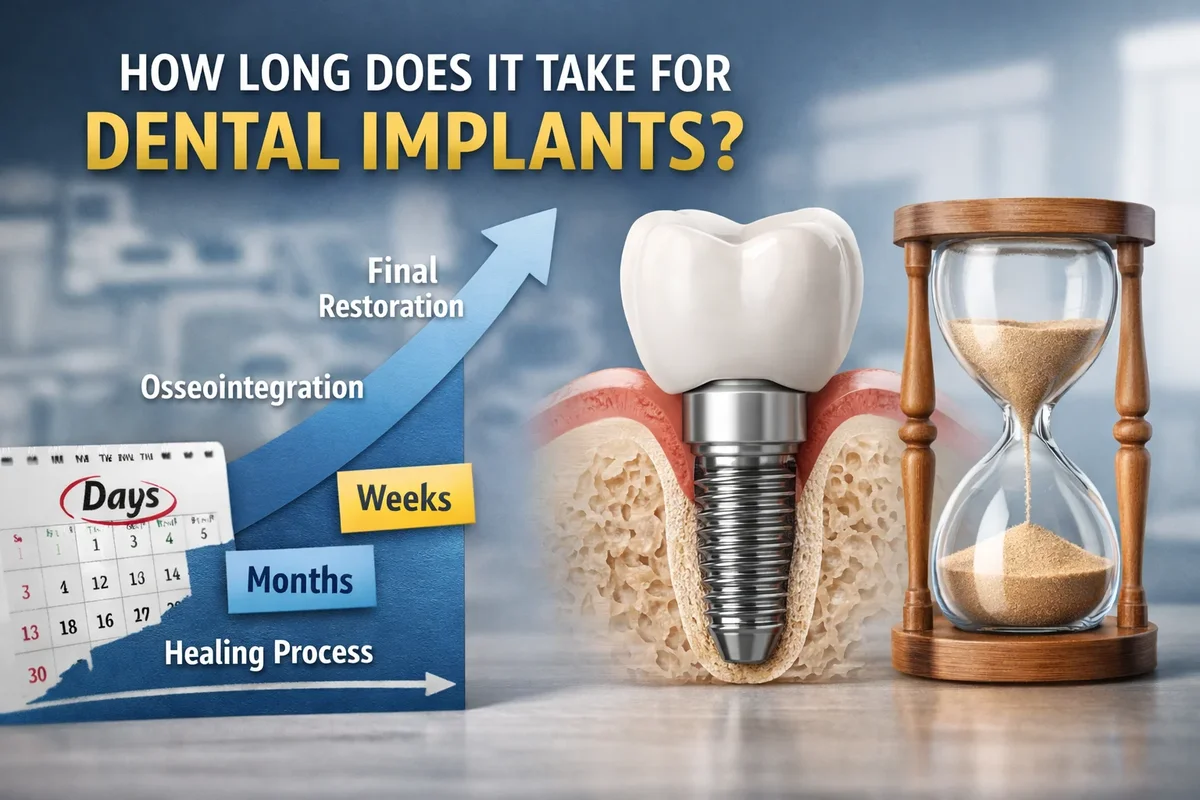
Once the implant is placed, the body begins a natural biological process called osseointegration. During this phase, the bone gradually fuses with the titanium implant, creating a stable foundation for the artificial tooth. This healing stage is the longest part of the treatment timeline. On average, osseointegration takes 3 to 6 months. Because this step is essential for long-term success, dentists carefully monitor healing before moving forward.
Another important factor influencing how long does it take for dental implants is whether additional procedures are required. Some patients need bone grafting or sinus lift surgery to strengthen the jawbone before implant placement. These procedures may add several months to the treatment timeline. However, they dramatically improve implant stability and longevity.
After the implant has fully integrated with the bone, the dentist places an abutment, which is a small connector that holds the final crown. This step usually requires a minor procedure and a short healing period of about 1–2 weeks. Once the gums heal properly, the permanent dental crown is attached, completing the treatment.
At this point, patients often realize that understanding how long does it take for dental implants involves more than just counting weeks. The timeline reflects the body’s natural healing process and the dentist’s commitment to creating a durable and natural-looking restoration.
Patients considering dental implants should always consult experienced professionals who follow internationally recognized guidelines. Organizations such as the American Dental Association emphasize the importance of proper diagnosis, planning, and healing time to ensure long-term success.
If you are considering dental implants and want a personalized treatment plan, speaking directly with a qualified dental team is essential. Every patient’s situation is unique, which means the answer to how long does it take for dental implants may vary slightly from person to person. For detailed consultation and expert guidance, you can visit the Redent Klinik Contact Page to speak with specialists who can evaluate your specific case.
In summary, the complete process typically ranges from 3 to 9 months, depending on bone health, healing speed, and whether additional procedures are needed. While this may seem like a long journey, the result is a permanent, natural-looking tooth replacement that can last decades with proper care. Understanding how long does it take for dental implants helps patients set realistic expectations and appreciate the precision involved in modern implant dentistry.
Dental implants are not just about replacing missing teeth—they are about restoring confidence, improving chewing function, and protecting overall oral health. By following the correct treatment timeline and working with experienced professionals, patients can achieve a strong, beautiful smile that feels just like natural teeth. 😊
1. How Long Does It Take for Dental Implants from Start to Finish?
Many patients researching tooth replacement ask the same essential question: how long does it take for dental implants from start to finish? Dental implants are considered the gold standard in modern dentistry because they provide a long-lasting, stable, and natural-looking solution for missing teeth. However, unlike simple dental treatments, implant procedures follow a structured medical process that includes planning, surgery, healing, and restoration.
Understanding how long does it take for dental implants requires looking at the complete treatment journey rather than focusing on a single appointment. While the surgical placement of the implant itself may take only a couple of hours, the entire process usually takes between 3 and 9 months. In more complex cases involving bone grafting or additional healing steps, the timeline may extend slightly longer.
The Complete Dental Implant Timeline Explained
When evaluating how long does it take for dental implants, dentists typically divide the procedure into several important stages. Each stage ensures the implant becomes stable and functions like a natural tooth root.
The typical dental implant process includes:
- Initial consultation and diagnostic imaging
- Preparation procedures such as tooth extraction or bone grafting
- Implant placement surgery
- Healing period called osseointegration
- Placement of the abutment
- Attachment of the permanent dental crown
These steps are necessary to ensure long-term success. Because the implant must fuse with the jawbone naturally, the body needs time to heal. This biological healing period is one of the main reasons why how long does it take for dental implants varies among patients.
Stage 1: Consultation and Treatment Planning
The first stage in determining how long does it take for dental implants begins with a detailed consultation. During this appointment, the dentist evaluates the patient’s oral health, bone density, and gum condition using digital X-rays and 3D scans.
This step usually takes only one appointment but is extremely important. A precise treatment plan helps prevent complications and ensures that the dental implant procedure progresses smoothly. Dentists may also review medical history, discuss sedation options, and explain the expected timeline.
For patients with healthy gums and sufficient jawbone, the process can move forward quickly. However, if bone loss is detected, the dentist may recommend a bone graft, which may extend the timeline.
Bone Grafting and Additional Preparation
Some patients require bone grafting before implants can be placed. This procedure rebuilds the jawbone structure so it can securely support the implant. If bone grafting is necessary, the healing period may add 3 to 6 months before implant placement.
This additional healing period is one reason why how long does it take for dental implants differs between individuals. However, bone grafting significantly increases implant stability and long-term success.
Stage 2: Implant Placement Surgery
The surgical placement of the implant is surprisingly quick compared to the overall timeline. In most cases, the procedure takes 60 to 120 minutes per implant. During the surgery, the dentist places a titanium implant post into the jawbone, which acts as an artificial tooth root.
Although the surgery itself is relatively short, the healing phase afterward plays a major role in answering how long does it take for dental implants. Patients usually experience mild swelling or discomfort for a few days, but most return to normal daily activities within 24 to 48 hours.
Stage 3: Osseointegration (Bone Healing)
The most important phase in determining how long does it take for dental implants is osseointegration. This biological process occurs when the jawbone naturally bonds with the titanium implant. The implant becomes firmly anchored in the bone, creating a stable base for the final restoration.
On average, osseointegration takes:
- 3 to 4 months for the lower jaw
- 4 to 6 months for the upper jaw
During this period, dentists monitor healing carefully to ensure the implant integrates correctly. Rushing this stage can compromise implant stability, which is why dentists emphasize patience during treatment.
Stage 4: Abutment and Crown Placement
Once the implant has successfully fused with the bone, the dentist attaches a small connector piece called an abutment. The gums need approximately 1 to 2 weeks to heal around this component.
After healing, the final dental crown is custom designed to match the color, shape, and alignment of the patient’s natural teeth. This crown is then attached to the abutment, completing the restoration.
At this point, the patient finally sees the result of the treatment and understands why how long does it take for dental implants involves several months of careful preparation.
Typical Time Range for Dental Implants
For most patients, the overall timeline looks like this:
- Consultation and planning: 1–2 weeks
- Extraction healing (if needed): 6–8 weeks
- Implant placement surgery: 1 appointment
- Osseointegration healing: 3–6 months
- Abutment and crown placement: 2–3 weeks
This means that the average total timeline for patients asking how long does it take for dental implants is approximately 4 to 8 months. Some modern techniques, such as immediate load implants, may shorten this time in selected cases.
Why Patience Leads to Better Results
While some patients wish the procedure could be completed faster, the gradual timeline ensures the implant integrates fully with the bone. This process allows implants to function like natural teeth and last for decades.
According to guidelines published by the American Dental Association, proper healing time significantly improves the long-term success of dental implants. Rushing treatment could lead to complications or implant failure.
If you are considering dental implant treatment and want personalized guidance, you can contact specialists directly through the Redent Klinik Contact Page. Professional consultation helps determine your exact treatment timeline and answer questions about how long does it take for dental implants based on your specific dental condition.
Ultimately, although the process requires several months, dental implants offer one of the most durable and natural tooth replacement solutions available in modern dentistry. Understanding how long does it take for dental implants allows patients to plan confidently and appreciate the careful steps required to achieve a healthy, long-lasting smile. 😁
2. Initial Consultation: The First Step in the Dental Implant Timeline
Before the actual implant procedure begins, every successful treatment starts with a comprehensive consultation. Many patients asking how long does it take for dental implants are often surprised to learn that the timeline begins long before the surgery itself. The consultation phase is essential because it allows the dentist to carefully evaluate oral health, bone structure, and overall suitability for implants. Although this step may only take one appointment, it plays a crucial role in determining how long does it take for dental implants in your specific case.
This first stage is where the dental team gathers all the necessary information to design a personalized treatment plan. Dental implants are highly predictable when properly planned, and this consultation ensures that every step of the process—from implant placement to final restoration—proceeds safely and efficiently.
What Happens During the Dental Implant Consultation?
During the initial visit, the dentist performs a detailed oral examination and collects diagnostic information. These evaluations help determine whether you are a suitable candidate and estimate how long does it take for dental implants based on your oral health condition.
The consultation typically includes the following steps:
- Comprehensive dental examination
- Digital X-rays and 3D scans
- Assessment of gum health
- Evaluation of jawbone density
- Review of medical history
- Discussion of treatment expectations
These diagnostic procedures allow the dentist to determine whether additional treatments—such as bone grafting or tooth extraction—are required before implant placement. Such factors directly influence how long does it take for dental implants, as additional healing time may be necessary.
Advanced Imaging and Diagnostic Technology
Modern implant dentistry relies heavily on digital technology. Advanced imaging tools provide precise insights into bone structure, nerve positioning, and sinus location. This detailed planning significantly improves implant accuracy and long-term success.
During the consultation, dentists often use:
- 3D cone beam CT scans
- Digital intraoral scanners
- Panoramic X-rays
- Computer-guided implant planning software
These technologies help determine implant placement angles, implant size, and optimal positioning. This information is essential when answering the question how long does it take for dental implants, because a well-planned procedure reduces complications and shortens recovery time.
Why Bone Density Matters
Bone density plays one of the biggest roles in determining how long does it take for dental implants. Dental implants must fuse with the jawbone through a process called osseointegration. If the bone is too thin or weak, additional procedures may be necessary before implant placement.
In cases of bone loss, dentists may recommend:
- Bone grafting
- Sinus lift surgery
- Guided bone regeneration
While these treatments may add a few months to the timeline, they significantly improve implant stability and long-term durability. Patients with strong bone structures often move directly to implant placement, reducing the overall answer to how long does it take for dental implants.
Reviewing Your Medical History
Another important part of the consultation involves reviewing your medical history. Certain medical conditions can influence healing time and implant success. Dentists carefully evaluate factors such as:
- Diabetes
- Smoking habits
- Autoimmune conditions
- Medications affecting bone healing
- Previous dental procedures
Understanding these factors helps dentists provide a realistic timeline for how long does it take for dental implants. In many cases, patients with controlled health conditions can still receive implants successfully, but additional precautions may be recommended.
Creating a Personalized Treatment Plan
After collecting all diagnostic data, the dentist develops a customized treatment plan. This plan outlines every stage of the procedure and provides a clearer answer to the question how long does it take for dental implants.
A typical treatment plan includes:
- Number of implants required
- Implant placement locations
- Need for bone grafting
- Estimated healing time
- Final restoration design
- Total treatment timeline
At this stage, patients can ask detailed questions about the procedure, recovery process, and expected results. Understanding the full timeline helps patients feel confident and prepared for treatment.
Discussing Treatment Costs
During the consultation, the dentist also explains the cost structure of implant treatment. Pricing varies depending on location, number of implants, and additional procedures required.
Typical dental implant cost ranges may include:
- Single dental implant: $1,500 – $3,000
- Implant abutment and crown: $1,000 – $2,500
- Bone graft procedure: $300 – $3,000
- Full implant restoration: $3,000 – $6,000 per tooth
Although the consultation itself may not directly determine how long does it take for dental implants, it provides the roadmap for the entire process.
Why This Step Is Essential for Success
The consultation stage may seem simple, but it significantly impacts the overall implant timeline and treatment success. Careful planning allows dentists to minimize complications and ensure the implant integrates properly with the jawbone.
According to recommendations from the American Dental Association, thorough diagnostic evaluation and treatment planning are critical for achieving predictable and long-lasting implant outcomes.
Patients interested in dental implant treatment can also speak directly with specialists for a personalized evaluation through the Redent Klinik Contact Page. Professional consultation helps determine your individual treatment plan and provide an accurate estimate of how long does it take for dental implants based on your specific dental condition.
Ultimately, the consultation stage lays the foundation for the entire implant journey. By carefully evaluating oral health, bone structure, and treatment goals, dentists can create a safe and effective treatment plan. Understanding this first step helps patients better appreciate why answering how long does it take for dental implants involves more than just the surgery—it begins with careful planning and expert evaluation. 🦷
3. Tooth Extraction and Healing Period Before Implant Placement
When patients ask how long does it take for dental implants, one of the most important phases that influences the timeline is the period between tooth extraction and implant placement. In many situations, the damaged or decayed tooth must first be removed before a dental implant can be placed. This step is necessary because the implant must be inserted into healthy bone tissue, and a compromised tooth structure cannot support the implant process.
To fully understand how long does it take for dental implants, it is important to realize that tooth extraction is not simply a preliminary step—it plays a major role in preparing the mouth for successful implant integration. The healing time after extraction ensures the gum tissue and jawbone are healthy enough to support the implant post.
Why Tooth Extraction Is Sometimes Necessary
Before placing an implant, dentists must ensure the existing tooth or root does not interfere with the procedure. Teeth may require extraction for several reasons, including:
- Severe tooth decay that cannot be restored
- Advanced periodontal (gum) disease
- Fractured or broken teeth below the gum line
- Failed root canal treatment
- Trauma or injury to the tooth
Once the damaged tooth is removed, the body begins a natural healing process. This healing stage is one of the factors that influence how long does it take for dental implants, since the bone and gums must stabilize before the implant is placed.
Immediate Implant Placement vs Delayed Placement
Modern dentistry sometimes allows implants to be placed immediately after tooth extraction. This approach is called immediate implant placement. However, it is not suitable for every patient.
Dentists decide whether immediate placement is possible by evaluating:
- Bone quality around the extracted tooth
- Absence of infection
- Gum health
- Overall oral hygiene
If conditions are ideal, the implant can be inserted during the same appointment as the extraction. This can significantly shorten the timeline when discussing how long does it take for dental implants. However, many cases still require a delayed approach for optimal healing.
Typical Healing Time After Tooth Extraction
In most cases, dentists recommend allowing the extraction site to heal before implant placement. This healing period allows the bone to regenerate and the gum tissue to close properly.
The typical healing timeline after extraction includes:
- Initial gum healing: 1–2 weeks
- Bone healing phase: 6–8 weeks
- Full bone remodeling: up to 3 months
This stage directly impacts how long does it take for dental implants because implant placement is safest when the bone structure has stabilized.
Bone Preservation After Tooth Removal
One challenge dentists face after tooth extraction is bone loss. When a tooth is removed, the surrounding bone no longer receives stimulation from the tooth root. This can cause the jawbone to shrink over time.
To prevent this problem, dentists often perform a procedure called socket preservation. During this treatment, bone graft material is placed into the extraction site to maintain bone volume.
Socket preservation may slightly extend the timeline when evaluating how long does it take for dental implants, but it greatly improves the long-term success of the implant.
Bone Grafting and Its Impact on Implant Timing
If the bone surrounding the extracted tooth is too thin or weak, bone grafting may be necessary before implant placement. This procedure strengthens the jawbone so it can securely hold the implant.
Common bone graft healing times include:
- Minor bone graft: 2–3 months healing
- Moderate grafting procedures: 3–4 months
- Major bone reconstruction: up to 6 months
While bone grafting adds time to the treatment process, it significantly improves the success rate of dental implants. For patients wondering how long does it take for dental implants, this step ensures the implant will remain stable for many years.
Healing Symptoms After Tooth Extraction
Patients often experience mild symptoms after tooth extraction, which are part of the natural healing process. These symptoms typically include:
- Minor swelling
- Light bleeding during the first 24 hours
- Mild discomfort
- Temporary sensitivity in surrounding teeth
These symptoms usually improve within a few days. Following the dentist’s post-operative instructions helps accelerate healing and supports the overall implant timeline.
Factors That Influence Healing Speed
The healing period after extraction varies between individuals. Several factors influence how long does it take for dental implants, including:
- Age of the patient
- Bone density
- Smoking habits
- Oral hygiene
- Presence of gum disease
- General health conditions
Patients who maintain good oral hygiene and follow recovery instructions typically heal faster and move to the next stage of implant placement sooner.
Why Dentists Do Not Rush This Stage
Although some patients want implants placed immediately, dentists prioritize long-term stability. Allowing sufficient healing time reduces the risk of implant failure and ensures proper bone integration.
According to guidelines from the American Dental Association, proper healing and bone preparation are essential for successful implant outcomes.
If you are considering dental implants and want to understand your personal treatment timeline, you can consult specialists through the Redent Klinik Contact Page. Professional evaluation helps determine the safest treatment plan and gives a clearer answer to how long does it take for dental implants based on your individual oral health.
The Role of This Stage in the Overall Implant Timeline
Ultimately, tooth extraction and healing represent a critical preparation phase. While this step may add several weeks to the treatment process, it creates the ideal environment for implant placement.
When patients ask how long does it take for dental implants, dentists often explain that successful implant treatment depends on patience. The time invested in proper healing ensures that the implant can integrate securely with the jawbone and function like a natural tooth for decades.
By allowing adequate healing after tooth extraction, patients significantly improve the chances of long-term implant success, making this stage an essential part of the entire dental implant journey. 🦷
4. Implant Surgery Procedure: How Long Does the Operation Take?
When patients research how long does it take for dental implants, they often focus on the surgical procedure itself. Many people imagine that the implant operation is long and complicated, but in reality, the surgery is usually one of the shortest stages of the entire treatment process. The implant placement procedure is highly precise, carefully planned, and typically completed within a single appointment.
Understanding the surgical stage is essential when discussing how long does it take for dental implants, because although the operation may take only a couple of hours, it plays a critical role in the overall success of the implant treatment. The procedure involves placing a titanium implant post into the jawbone, which will later function as the artificial root for the replacement tooth.
Preparation Before Implant Surgery
Before the implant surgery begins, the dentist ensures that every detail has been carefully prepared. Pre-surgical planning helps minimize complications and allows the implant to be placed with maximum accuracy.
The preparation stage typically includes:
- Reviewing digital scans and X-rays
- Confirming implant position and angle
- Administering local anesthesia or sedation
- Ensuring sterile surgical conditions
This preparation stage does not significantly change how long does it take for dental implants, but it helps ensure that the surgical procedure proceeds smoothly and efficiently.
Step-by-Step Dental Implant Surgery
The surgical placement of a dental implant follows a precise sequence. Even though the process is straightforward for experienced implant specialists, each step must be performed carefully to ensure long-term stability.
The typical implant surgery includes the following steps:
1. Local Anesthesia or Sedation
The procedure begins with local anesthesia to numb the treatment area. Some patients may also choose sedation dentistry to reduce anxiety and improve comfort during the procedure.
This step ensures that the patient feels little to no discomfort during the implant surgery. It does not affect how long does it take for dental implants, but it makes the experience much more comfortable.
2. Small Incision in the Gum
The dentist makes a small incision in the gum tissue to expose the underlying jawbone. This allows access to the bone where the implant will be placed.
Because modern dental techniques are minimally invasive, the incision is usually small and heals quickly.
3. Preparing the Implant Site
Using specialized surgical drills, the dentist carefully creates a small channel in the jawbone. This channel is precisely measured to match the size and shape of the titanium implant.
This step requires extreme precision because the implant must be placed at the correct angle and depth. Proper placement greatly influences how long does it take for dental implants to heal successfully.
4. Inserting the Titanium Implant
Once the implant site is prepared, the dentist gently inserts the titanium implant post into the bone. Titanium is used because it is highly biocompatible and integrates naturally with human bone.
The implant now acts as an artificial tooth root. Although the implant is placed in one appointment, the body needs time to bond with the titanium surface through a process known as osseointegration.
5. Closing the Gum Tissue
After the implant is placed, the gum tissue is repositioned and stitched closed. In some cases, a healing cap is placed on top of the implant to guide gum healing.
The surgical site typically heals within one to two weeks.
How Long Does Implant Surgery Usually Take?
Patients are often relieved to learn that the surgical stage of the procedure is relatively quick. For a single implant, the surgery usually takes:
- 60 to 90 minutes for a straightforward implant
- 90 to 120 minutes for more complex cases
- Additional time if multiple implants are placed
Although the surgery itself may be completed within a few hours, it represents only one step in answering the question how long does it take for dental implants. The most time-consuming phase is the healing period that follows.
What Patients Feel During the Procedure
Because of local anesthesia and modern surgical techniques, most patients report minimal discomfort during implant surgery. In fact, many patients say the experience is easier than a tooth extraction.
During the procedure, patients may feel:
- Light pressure
- Vibration from dental instruments
- No sharp pain due to anesthesia
These sensations are normal and temporary.
Immediate Recovery After Implant Surgery
After surgery, patients are usually able to go home the same day. Recovery is generally mild compared to many other surgical procedures.
Common short-term symptoms include:
- Mild swelling
- Slight bleeding during the first day
- Minor soreness for 2–3 days
- Temporary sensitivity in surrounding teeth
Most patients return to normal daily activities within 24 to 48 hours. However, even though recovery from the surgery is relatively quick, the overall answer to how long does it take for dental implants still depends on the healing phase that follows.
Why Implant Surgery Is Only One Part of the Timeline
The surgical procedure may seem like the most significant step, but the true success of dental implants depends on the healing process. After surgery, the implant must fuse with the jawbone to become stable enough to support the final crown.
This biological process, called osseointegration, usually takes several months. This is why the complete timeline for patients asking how long does it take for dental implants extends far beyond the surgery itself.
According to clinical guidelines provided by the American Dental Association, careful implant placement combined with adequate healing time significantly improves long-term success rates.
If you want to learn more about your personalized implant treatment timeline, you can consult implant specialists through the Redent Klinik Contact Page. A professional evaluation can help determine your exact treatment plan and answer questions about how long does it take for dental implants based on your oral health condition.
The Surgical Step in the Overall Implant Journey
Ultimately, implant surgery is a precise yet relatively quick procedure that lays the foundation for a durable and natural-looking tooth replacement. Although the operation may take only a few hours, it begins a healing process that ensures the implant becomes securely integrated with the jawbone.
Understanding this stage helps patients realize that the answer to how long does it take for dental implants is not determined by the surgery alone, but by the body’s natural healing and integration process that follows. 🦷
5. Osseointegration Explained: The Healing Phase of Dental Implants
When discussing how long does it take for dental implants, the most important stage is the healing period known as osseointegration. While the surgical placement of the implant is relatively quick, the body must undergo a biological process that allows the implant to fuse with the jawbone. This healing phase determines the long-term stability of the implant and plays a major role in the overall timeline of implant treatment.
Osseointegration is the process where the jawbone gradually grows around the titanium implant and permanently anchors it in place. Titanium is used because it is highly biocompatible, meaning the body accepts it and allows bone cells to attach directly to its surface. This natural bonding process is the reason dental implants feel and function like real teeth. However, it also explains why patients asking how long does it take for dental implants must allow several months for healing before the final tooth restoration is placed.
What Exactly Is Osseointegration?
Osseointegration is a natural biological process in which bone tissue grows and integrates with the implant surface. Once the implant is placed in the jawbone, the body treats it as part of the skeletal structure. Over time, bone cells attach to the titanium surface and create a solid bond.
This process is essential for implant success because it allows the implant to:
- Function as a stable artificial tooth root
- Support chewing pressure
- Prevent bone loss in the jaw
- Provide long-term durability
Because osseointegration requires time for bone cells to grow and stabilize, it significantly influences how long does it take for dental implants. Rushing this stage can increase the risk of implant failure.
How Long Does Osseointegration Take?
The healing timeline for osseointegration varies from patient to patient, but there are general timeframes that dentists typically follow. For most individuals, the process takes:
- 3 to 4 months for implants in the lower jaw
- 4 to 6 months for implants in the upper jaw
The upper jaw usually takes longer because the bone there tends to be softer than the lower jaw. This healing phase is the primary reason dentists explain that how long does it take for dental implants can range from several months to nearly a year in complex cases.
Why Healing Time Cannot Be Rushed
Many patients hope the dental implant process can be completed quickly, but the body needs time to regenerate bone tissue around the implant. Attempting to place the final crown too early could disrupt the implant before the bone has fully integrated.
Dentists carefully monitor healing through follow-up appointments and imaging scans. Only when the implant is fully stable will the next stage of treatment begin.
What Happens Inside the Jawbone During Healing?
After the implant is placed, the body begins a natural healing response. Bone cells migrate to the implant surface and start forming microscopic connections with the titanium. Over time, these connections strengthen and create a firm bond between the implant and the surrounding bone.
The biological process typically follows these phases:
1. Initial Healing (First 1–2 Weeks)
The gums heal around the implant and inflammation decreases. Patients may experience mild swelling and sensitivity during this period.
2. Bone Regeneration (2–6 Weeks)
New bone cells begin forming around the implant surface. This stage is critical for implant stability.
3. Bone Integration (6 Weeks to Several Months)
The bone becomes denser and stronger around the implant, locking it securely in place.
These phases are essential in determining how long does it take for dental implants, as each patient’s healing speed varies depending on biological factors.
Factors That Influence Osseointegration Speed
Several factors can affect how quickly the implant integrates with the bone. Understanding these variables helps explain why the answer to how long does it take for dental implants differs between individuals.
- Bone density and jawbone health
- Age of the patient
- Smoking habits
- Oral hygiene practices
- Presence of gum disease
- Overall health and immune system
Patients who maintain excellent oral hygiene and avoid smoking typically experience faster healing and stronger implant integration.
Signs That Osseointegration Is Successful
Dentists evaluate implant stability during follow-up visits. Successful osseointegration usually presents several positive signs:
- No pain or discomfort around the implant
- Healthy gum tissue surrounding the implant
- No implant movement
- Strong bone attachment visible on imaging scans
Once these signs are confirmed, the dentist can proceed to the next stage of treatment, which involves attaching the abutment and the final crown.
How to Support Healing During Osseointegration
Patients play an important role in ensuring successful healing. Following post-operative instructions helps improve implant stability and may shorten the overall timeline when evaluating how long does it take for dental implants.
Helpful recovery tips include:
- Maintaining excellent oral hygiene
- Avoiding smoking and alcohol
- Eating soft foods during early healing
- Attending all follow-up appointments
- Following medication instructions
These habits protect the implant site and allow the bone to heal without complications.
Why Osseointegration Determines Implant Success
The long-term durability of dental implants depends almost entirely on successful osseointegration. Once the bone and implant are fully integrated, the implant becomes as strong as a natural tooth root.
This stability allows dental implants to support crowns, bridges, or even full-arch restorations. It is also the reason implants can last for decades when properly maintained.
Dental experts and organizations such as the American Dental Association emphasize that proper healing time is essential to achieving predictable implant outcomes.
If you want a personalized treatment plan or need professional guidance about implant timelines, you can consult specialists through the Redent Klinik Contact Page. A detailed examination will help determine your individual case and provide a clearer answer to how long does it take for dental implants based on your oral health.
The Key Phase in the Dental Implant Timeline
In summary, osseointegration is the most critical stage of dental implant treatment. Although it requires patience, this healing phase ensures the implant becomes permanently anchored within the jawbone.
Understanding this process helps patients realize that the answer to how long does it take for dental implants depends not only on the surgery itself but also on the body’s natural ability to heal and integrate the implant successfully. With proper care and professional guidance, this phase leads to a stable, long-lasting replacement tooth that restores both function and confidence. 😊
6. Abutment Placement and Crown Attachment Timeline
After the healing phase known as osseointegration is complete, the dental implant process moves to the restorative stage. Patients who research how long does it take for dental implants often focus on the surgical procedure, but the final steps—abutment placement and crown attachment—are equally important. These steps transform the implant from a hidden titanium post into a fully functional tooth replacement.
The abutment and crown stage is typically one of the last phases in determining how long does it take for dental implants. Once the implant has fused successfully with the jawbone, the dentist can begin building the visible part of the tooth restoration. Although this phase is shorter than the healing stage, it requires precision to ensure the new tooth fits comfortably, looks natural, and functions properly.
What Is an Abutment?
An abutment is a small connector piece that attaches to the dental implant and supports the final crown. It serves as the bridge between the implant embedded in the jawbone and the visible artificial tooth.
The abutment plays a critical role in the implant structure because it:
- Connects the implant to the crown
- Supports chewing forces
- Ensures the crown sits properly above the gum line
- Helps maintain natural tooth alignment
When patients ask how long does it take for dental implants, the abutment stage usually adds only a few weeks to the overall timeline. However, careful placement ensures that the final tooth restoration looks natural and blends seamlessly with surrounding teeth.
The Abutment Placement Procedure
Abutment placement is typically a minor procedure compared to the implant surgery. It may be performed under local anesthesia and generally takes less than an hour.
The steps involved include:
1. Reopening the Gum Tissue
If the implant was placed beneath the gum during surgery, the dentist will reopen the gum tissue to expose the top of the implant. This allows the abutment to be attached.
2. Attaching the Abutment
The abutment is carefully secured onto the implant using a specialized screw. This connector now becomes the visible portion of the implant that extends slightly above the gum line.
3. Closing and Healing
After the abutment is attached, the gum tissue is allowed to heal around it. This healing stage helps shape the gum line so the final crown will appear natural.
This procedure is relatively quick and does not significantly extend how long does it take for dental implants, but it is necessary for proper restoration placement.
Healing After Abutment Placement
Once the abutment is attached, the gums require time to heal and adapt around the connector. This healing period typically lasts 1 to 2 weeks.
During this stage, patients may experience:
- Mild gum sensitivity
- Minor swelling around the implant site
- Temporary discomfort when chewing
These symptoms usually resolve quickly as the gums heal and stabilize. This short healing phase contributes slightly to the overall timeline when evaluating how long does it take for dental implants.
Creating the Custom Dental Crown
Once the gums have healed properly around the abutment, the dentist can begin designing the final dental crown. The crown is the visible tooth-shaped restoration that completes the implant treatment.
To create a natural-looking crown, the dentist takes detailed impressions or digital scans of the patient’s teeth. These impressions are sent to a dental laboratory where technicians design a custom crown that matches the surrounding teeth.
Materials Used for Implant Crowns
Dental crowns are typically made from high-quality materials designed to mimic the appearance and strength of natural teeth. Common materials include:
- Porcelain
- Zirconia
- Porcelain fused to metal
These materials are durable, stain-resistant, and capable of withstanding normal chewing forces.
The laboratory process typically takes 1 to 2 weeks, which contributes slightly to the total timeline of how long does it take for dental implants.
Final Crown Placement
Once the custom crown is ready, the dentist attaches it to the abutment. This is the final step that completes the dental implant restoration.
The crown placement appointment usually involves:
- Testing the crown’s fit and alignment
- Checking bite balance
- Ensuring the crown color matches surrounding teeth
- Permanently securing the crown to the abutment
After this appointment, the dental implant becomes a fully functional tooth replacement.
Patients who previously wondered how long does it take for dental implants often feel relief and excitement at this stage because they can finally see the completed result.
How the Final Restoration Feels
Once the crown is placed, the implant should feel very similar to a natural tooth. Patients can typically resume normal eating and speaking without difficulty.
Benefits of the completed implant restoration include:
- Improved chewing ability
- Natural-looking appearance
- Stability without slipping or movement
- Protection against jawbone loss
This stage marks the completion of the journey for patients asking how long does it take for dental implants.
Long-Term Maintenance After Crown Placement
Although the treatment is complete, maintaining proper oral hygiene is essential for implant longevity. Dental implants can last decades when properly cared for.
Recommended maintenance habits include:
- Brushing twice daily
- Flossing around the implant
- Regular dental checkups
- Avoiding excessive pressure on the implant
Professional dental organizations such as the American Dental Association emphasize the importance of routine dental care to ensure implant longevity.
Patients who want expert guidance or a personalized treatment evaluation can contact dental professionals through the Redent Klinik Contact Page. A consultation can provide a detailed answer to how long does it take for dental implants based on individual dental conditions.
The Final Step in the Implant Journey
The abutment placement and crown attachment stage completes the dental implant process. Although it may add a few additional weeks to the treatment timeline, it ensures that the implant looks natural, functions properly, and integrates seamlessly with the patient’s smile.
For individuals researching how long does it take for dental implants, understanding this final step highlights the importance of precision and customization in modern implant dentistry. Once completed, the implant restoration provides a durable, natural-looking solution that can last for many years with proper care. 😊
7. Factors That Affect How Long It Takes for Dental Implants
Many patients searching for implant treatment want a clear answer to the question how long does it take for dental implants. While general timelines exist, the exact duration varies widely from patient to patient. The reason is that dental implant treatment depends on several biological, medical, and procedural factors. These factors influence how quickly the body heals, how stable the implant becomes, and how smoothly the treatment progresses.
Understanding the variables that influence how long does it take for dental implants helps patients set realistic expectations and prepare for the treatment journey. While some patients may complete the entire process within a few months, others may require additional procedures that extend the timeline.
Bone Quality and Jawbone Density
One of the most significant factors influencing how long does it take for dental implants is the quality and density of the patient’s jawbone. Dental implants rely on strong bone tissue to remain stable and function like natural tooth roots.
If the jawbone is dense and healthy, the implant can integrate more quickly during the osseointegration phase. However, if bone loss has occurred due to missing teeth, gum disease, or trauma, additional procedures may be required before implant placement.
When Bone Grafting Is Needed
Patients with insufficient bone volume often require bone grafting to strengthen the jawbone. This procedure involves placing bone graft material into the jaw so new bone tissue can grow.
Bone graft healing timelines may include:
- Minor grafts: 2–3 months
- Moderate grafting: 3–4 months
- Major graft reconstruction: up to 6 months
This additional healing period can extend the timeline when evaluating how long does it take for dental implants, but it significantly improves implant stability and long-term success.
Patient Age and Healing Ability
The body’s natural healing ability also influences how long does it take for dental implants. Younger patients often heal faster because their bone regeneration and tissue repair processes are more active.
Older adults can still receive implants successfully, but healing may take slightly longer due to slower bone metabolism. Dentists carefully evaluate overall health to determine the safest treatment timeline.
Overall Health and Medical Conditions
Medical conditions can influence the speed of healing and the success of osseointegration. Dentists review the patient’s medical history carefully before implant treatment.
Conditions that may affect how long does it take for dental implants include:
- Diabetes
- Autoimmune disorders
- Osteoporosis
- Cardiovascular conditions
- Medications that affect bone healing
Patients with controlled medical conditions can still receive implants, but dentists may adjust the treatment plan to allow additional healing time.
Smoking and Lifestyle Habits
Lifestyle choices can significantly impact how long does it take for dental implants. Smoking is one of the most important risk factors for delayed healing and implant complications.
Smoking reduces blood flow to the gums and bone, which can slow down the osseointegration process. For this reason, dentists strongly recommend avoiding smoking during the implant healing period.
Other lifestyle habits that influence healing include:
- Alcohol consumption
- Diet and nutrition
- Stress levels
- Oral hygiene habits
Maintaining healthy habits can help the body heal faster and improve the success rate of implant treatment.
Number of Implants Being Placed
The number of implants required also affects how long does it take for dental implants. A single implant may be completed faster than full-mouth implant reconstruction.
Examples include:
- Single tooth implant
- Multiple implants for several missing teeth
- Implant-supported bridges
- Full-arch implant restorations
More complex procedures require additional planning and healing time.
Full-Mouth Implant Procedures
Patients who need full-mouth restorations often receive multiple implants to support a complete set of replacement teeth. These procedures may involve additional planning and surgical stages.
Although the timeline may be longer, modern implant techniques allow dentists to restore an entire arch of teeth efficiently and safely.
Experience of the Dental Implant Specialist
The skill and experience of the implant dentist also influence how long does it take for dental implants. Experienced specialists can perform precise implant placement and create efficient treatment plans.
Advanced techniques such as computer-guided implant surgery and digital treatment planning help reduce complications and improve treatment efficiency.
Immediate vs Traditional Implant Techniques
Some patients qualify for immediate implant placement or immediate loading techniques, where the implant and temporary crown are placed on the same day.
However, these techniques are only appropriate for patients with excellent bone health and ideal conditions. Traditional implant procedures remain the most reliable method for long-term success.
This is another reason why the answer to how long does it take for dental implants can vary depending on the chosen treatment method.
Importance of Follow-Up Appointments
Regular dental visits during the implant process ensure that healing progresses correctly. Dentists monitor the implant site and verify that the bone is integrating properly with the implant.
These follow-up appointments help detect potential issues early and protect the long-term success of the implant.
Organizations such as the American Dental Association recommend routine dental evaluations during implant treatment to maintain optimal oral health.
Personalized Implant Treatment Plans
Because every patient has a unique oral health profile, the exact timeline for implants differs. The most accurate way to determine how long does it take for dental implants is through a professional dental consultation.
Patients interested in implant treatment can speak directly with specialists through the Redent Klinik Contact Page. A detailed examination allows the dentist to assess bone condition, health factors, and treatment needs to create a personalized timeline.
Why Each Implant Timeline Is Unique
Although general estimates exist, no two dental implant treatments are identical. Factors such as bone density, healing ability, medical history, and treatment complexity all contribute to the overall timeline.
Understanding these variables helps patients realize that the answer to how long does it take for dental implants depends on individual circumstances rather than a single fixed timeframe.
With proper planning, experienced dental care, and good oral hygiene habits, most patients can successfully complete implant treatment and enjoy a strong, natural-looking smile for many years. 😊
8. Immediate vs Traditional Implants: Which Is Faster?
Patients researching dental implant treatment often ask not only how long does it take for dental implants, but also whether there are faster treatment options available. Modern implant dentistry offers several techniques, including traditional implants and immediate implants. Each method has its own advantages, healing timelines, and clinical requirements.
Understanding the differences between these two approaches helps patients make informed decisions about their treatment plan. While immediate implants may shorten certain stages of treatment, traditional implant methods remain the most widely used and predictable solution for long-term success. The choice between these methods can significantly influence how long does it take for dental implants.
What Are Traditional Dental Implants?
Traditional dental implants follow a multi-stage treatment process designed to maximize implant stability and long-term success. This approach allows sufficient healing time between each stage of the procedure.
The traditional implant process usually includes:
- Initial consultation and treatment planning
- Tooth extraction if necessary
- Healing period before implant placement
- Implant surgery
- Osseointegration healing phase
- Abutment placement
- Final crown restoration
Because each step requires healing time, the total treatment timeline for traditional implants typically ranges from 4 to 8 months. This timeline is often the standard reference when dentists answer the question how long does it take for dental implants.
Advantages of the Traditional Implant Method
The traditional approach remains the most common technique because it prioritizes long-term stability. Allowing the bone and gums to heal properly before each step reduces complications and increases the likelihood of successful implant integration.
Benefits of traditional implants include:
- High long-term success rates
- Predictable healing process
- Reduced risk of implant failure
- Stronger bone integration
Although the timeline may be longer, dentists often recommend this approach when discussing how long does it take for dental implants because it ensures the implant becomes securely anchored in the jawbone.
What Are Immediate Dental Implants?
Immediate implants are a newer technique that allows the implant to be placed immediately after tooth extraction. In some cases, a temporary crown may also be attached during the same appointment.
This method can significantly shorten the treatment process, which is appealing for patients concerned about how long does it take for dental implants. However, not every patient is a suitable candidate for this procedure.
Conditions Required for Immediate Implants
For immediate implant placement to be successful, certain conditions must be present:
- Healthy surrounding bone structure
- No active infection at the extraction site
- Strong gum tissue
- Good overall oral hygiene
- Sufficient bone density to support the implant
If these conditions are met, dentists may recommend immediate implant placement to reduce treatment time.
Timeline Comparison: Immediate vs Traditional Implants
The primary difference between these two techniques lies in the timing of implant placement and restoration.
Traditional Implant Timeline
- Extraction healing: 6–8 weeks
- Implant surgery
- Osseointegration healing: 3–6 months
- Abutment and crown placement
Total treatment duration typically ranges between 4 and 8 months.
Immediate Implant Timeline
- Tooth extraction and implant placement in one visit
- Temporary crown placement (in some cases)
- Osseointegration healing period
- Permanent crown placement
Immediate implant procedures can shorten the overall treatment timeline, but the osseointegration phase still requires several months. Therefore, even with immediate implants, the complete healing process still affects how long does it take for dental implants.
Are Immediate Implants Always Faster?
Although immediate implants may reduce the number of surgical appointments, they do not always shorten the entire healing process. The body still needs time for bone integration.
For this reason, the difference between immediate and traditional implants may only reduce the total timeline by several weeks rather than several months. Dentists carefully evaluate whether immediate placement is appropriate before recommending it.
Which Option Is Safer?
Both implant techniques can be highly successful when performed by experienced professionals. However, traditional implants remain the safest option for many patients because they allow controlled healing before implant placement.
Immediate implants require ideal conditions and careful case selection. Patients with bone loss or gum disease may not qualify for this technique.
When evaluating how long does it take for dental implants, dentists typically recommend the treatment method that provides the best long-term outcome rather than simply the fastest timeline.
Factors That Determine the Best Implant Method
Several factors influence whether immediate or traditional implants are the best option:
- Jawbone density
- Location of the missing tooth
- Patient’s oral hygiene habits
- Overall health condition
- Presence of infection
A thorough consultation allows dentists to determine which approach will provide the most reliable result.
Professional Guidelines and Safety Standards
Dental implant procedures must follow strict safety protocols to ensure predictable results. Organizations such as the American Dental Association emphasize careful treatment planning and proper healing time for implant success.
Choosing the right technique is an important part of determining how long does it take for dental implants, and professional evaluation ensures the treatment plan is safe and effective.
Consultation for Personalized Implant Treatment
Because every patient has unique oral health conditions, the best way to determine the appropriate implant method is through a professional dental consultation. Specialists can evaluate bone structure, gum health, and treatment goals to create a personalized plan.
Patients interested in implant treatment can contact specialists through the Redent Klinik Contact Page to receive expert guidance and learn exactly how long does it take for dental implants in their specific case.
Choosing the Right Implant Approach
Ultimately, both immediate and traditional dental implants offer reliable solutions for replacing missing teeth. While immediate implants may shorten certain stages of treatment, traditional implants often provide the most predictable and stable results.
Understanding the differences between these approaches helps patients better understand how long does it take for dental implants and choose the treatment option that best fits their dental health and lifestyle needs. With proper planning and professional care, both methods can restore a natural-looking smile and improve long-term oral health. 😊
9. Recovery Time After Dental Implant Surgery
One of the most common concerns for patients considering implants is recovery. Many people researching how long does it take for dental implants want to know how long they will need to rest after the surgical procedure and when they can return to normal activities. While the entire implant process may take several months from consultation to final crown placement, the recovery period after the surgery itself is usually much shorter than many patients expect.
Dental implant surgery is considered a minimally invasive procedure, and most patients recover quickly. However, proper healing after surgery is critical for successful osseointegration, which ultimately determines how long does it take for dental implants. Understanding the recovery process helps patients prepare for the healing period and avoid complications.
What Happens Immediately After Implant Surgery?
Immediately after the dental implant is placed, the body begins a natural healing response. The gum tissue starts to close around the implant, and the bone begins forming microscopic connections with the titanium surface.
Patients typically experience mild post-surgical symptoms such as:
- Minor swelling around the implant site
- Light bleeding during the first 24 hours
- Mild soreness or discomfort
- Temporary jaw stiffness
These symptoms are normal and usually subside within a few days. Although this early recovery phase is relatively short, it still contributes to the overall timeline when evaluating how long does it take for dental implants.
Typical Recovery Timeline After Implant Surgery
Recovery after implant surgery generally follows a predictable healing pattern. Most patients are able to return to daily activities within a very short period.
First 24 Hours
During the first day after surgery, patients are advised to rest and avoid strenuous physical activity. Swelling and mild bleeding may occur, but these symptoms are usually manageable with prescribed medications and cold compresses.
Days 2–3
Swelling typically begins to decrease, and most patients feel significantly better. Soft foods are recommended to avoid pressure on the implant site.
First Week
The gum tissue begins healing around the implant. Stitches, if used, may be removed after about one week. Most patients resume normal daily routines during this stage.
Even though patients feel better quickly, the deeper healing process continues inside the jawbone. This internal healing phase is a key factor when discussing how long does it take for dental implants.
Diet During Recovery
Eating the right foods after implant surgery helps promote healing and reduces the risk of irritation. Dentists typically recommend soft foods during the first few days of recovery.
Recommended foods include:
- Yogurt
- Mashed potatoes
- Scrambled eggs
- Smoothies
- Soup (lukewarm)
Avoiding hard, crunchy, or extremely hot foods helps protect the surgical site and supports the healing process that determines how long does it take for dental implants.
Oral Hygiene During Healing
Maintaining good oral hygiene after implant surgery is essential for preventing infection and promoting proper healing.
Patients are usually advised to:
- Brush gently around the implant area
- Use antimicrobial mouthwash if prescribed
- Avoid touching the surgical site
- Follow all post-operative care instructions
Proper oral hygiene helps ensure the implant heals correctly and does not delay the timeline associated with how long does it take for dental implants.
Activities to Avoid During Recovery
During the early healing period, certain activities should be avoided to protect the implant site.
Patients should temporarily avoid:
- Smoking
- Heavy exercise
- Alcohol consumption
- Chewing hard foods near the implant
Smoking is particularly harmful because it reduces blood flow to the gums and can slow the osseointegration process. Avoiding these habits helps ensure the implant heals efficiently and does not extend how long does it take for dental implants.
When Can You Return to Normal Activities?
Most patients can return to work and daily routines within 24 to 48 hours after implant surgery. However, intense physical activities should be avoided for at least a few days.
Although daily activities can resume quickly, the internal healing process continues for several months. This ongoing healing is the primary reason the overall timeline for how long does it take for dental implants extends beyond the initial recovery period.
Signs of Healthy Implant Recovery
During follow-up visits, dentists monitor healing progress to ensure the implant is integrating correctly with the bone.
Healthy recovery signs include:
- Reduced swelling within a few days
- No persistent pain
- Stable implant with no movement
- Healthy gum tissue around the implant
If these conditions are present, the implant is likely progressing well toward successful osseointegration.
Importance of Follow-Up Appointments
Regular follow-up appointments allow the dentist to check the healing process and confirm that the implant is integrating properly with the jawbone.
These visits help ensure the treatment stays on schedule and that the expected timeline for how long does it take for dental implants remains accurate.
Professional organizations such as the American Dental Association recommend regular dental monitoring after implant procedures to maintain long-term oral health.
Getting Professional Guidance During Recovery
If patients experience unusual symptoms such as severe pain, prolonged swelling, or implant movement, they should contact their dentist immediately. Early intervention prevents complications and protects the implant.
Patients interested in dental implant treatment or post-surgical guidance can reach experienced dental professionals through the Redent Klinik Contact Page. Professional consultation can help clarify treatment expectations and provide personalized information about how long does it take for dental implants.
The Role of Recovery in the Implant Timeline
While recovery after implant surgery is relatively quick compared to many medical procedures, it remains an essential step in the implant process. The early healing period prepares the implant for the longer osseointegration phase, which ensures long-term stability.
Understanding recovery expectations allows patients to better appreciate the overall timeline for how long does it take for dental implants. With proper care, good oral hygiene, and professional monitoring, most patients experience smooth recovery and successful implant integration that leads to a durable and natural-looking smile. 😊