
One of the most common questions patients ask before starting dental implant treatment is
how long does it take to get an implant. This question is completely natural,
especially for people who want to restore their smile as soon as possible while also planning
work, travel, or important life events. The truth is that the timeline for dental implants is not
the same for everyone. It depends on several medical, anatomical, and procedural factors that must
be carefully evaluated to ensure long-term success 😊.
To fully understand how long does it take to get an implant, it’s important to know
that dental implants are not a single-day procedure. Instead, they are a multi-stage treatment
designed to mimic the function and structure of a natural tooth. Rushing this process can lead to
implant failure, bone loss, or aesthetic issues. For this reason, reputable dental clinics follow a
step-by-step protocol that prioritizes healing, stability, and durability.
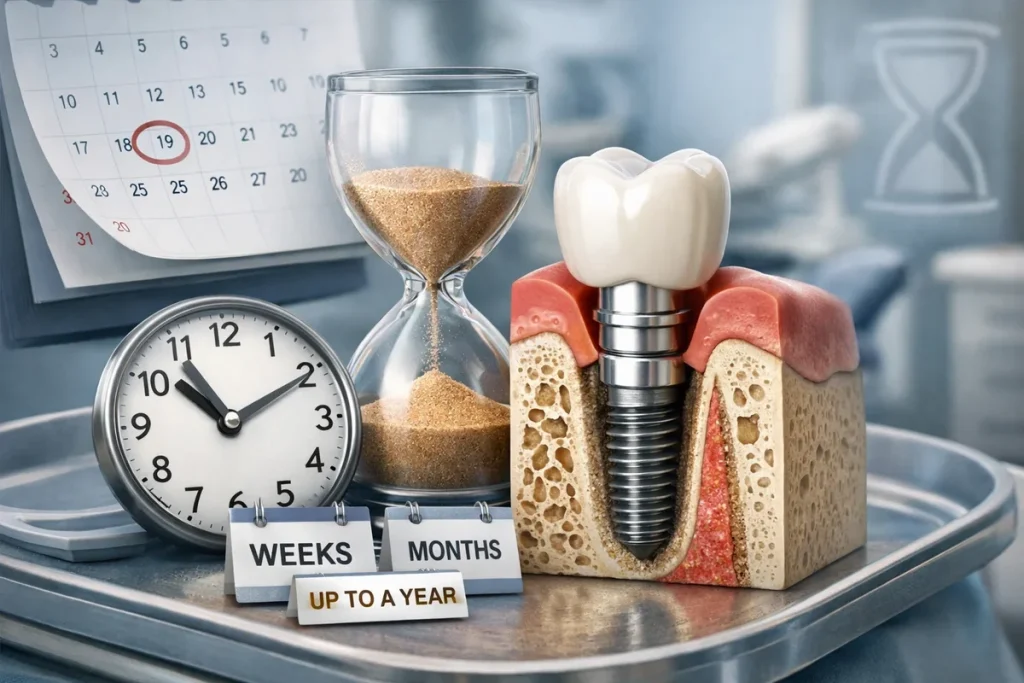
In general, the complete implant process can take anywhere from 3 to 9 months, and
in more complex cases, even up to 12 months. When patients ask how long does it take to get an implant,
they are often surprised to learn that the longest part of the journey is not the surgery itself,
but the healing phase that follows. This healing period allows the implant to fuse with the jawbone,
creating a strong foundation for the final crown.
From a patient’s perspective, understanding how long does it take to get an implant
helps reduce anxiety and sets realistic expectations. Many people imagine that an implant is similar
to getting a filling or a crown, but it is actually closer to a minor surgical treatment. The goal is
not speed, but predictability and safety. According to the
American Dental Association, dental implants have
one of the highest success rates in modern dentistry when proper healing time is respected.
Another key reason why how long does it take to get an implant varies is the condition
of the jawbone. Patients with healthy, dense bone and good oral hygiene may qualify for faster
treatment protocols, sometimes even same-day implants. However, patients who have experienced bone
loss, gum disease, or long-term tooth loss often need additional preparatory treatments, which
naturally extend the overall timeline ⏳.
It’s also important to consider that dental implants are a long-term investment in oral health. When
asking how long does it take to get an implant, patients should think beyond the final
crown placement. The goal is a restoration that can last 20 years or more with proper care. Taking a
few extra months during treatment is a small price to pay for decades of comfort, confidence, and
function.
Many patients worry that a longer timeline means more pain or discomfort, but this is not the case.
Most people report that the surgical phase is quick and manageable, often completed in under an hour
per implant. The waiting periods are primarily for healing and are usually symptom-free. So when
evaluating how long does it take to get an implant, remember that “longer” does not
mean “harder” or “more painful.”
Another aspect that influences how long does it take to get an implant is the level
of planning involved. Advanced 3D imaging, digital scans, and personalized treatment plans allow
dentists to place implants with extreme precision. This preparation may add time at the beginning,
but it significantly reduces complications and delays later in the process.
If you are still unsure about how long does it take to get an implant in your specific
case, the best step is a professional consultation. A qualified dental team can assess your bone
structure, oral health, and expectations to provide a personalized timeline. You can easily schedule
a consultation through the
Redent Klinik Contact Page, where experienced
implant specialists guide patients through every stage of the process 🤝.
In summary, how long does it take to get an implant depends on your oral health, bone
quality, and treatment needs. While the process may take several months, the result is a stable,
natural-looking tooth replacement that restores both function and confidence. Understanding the
timeline is the first step toward making an informed and stress-free decision.
What Is a Dental Implant and Why Timing Matters
To truly understand how long does it take to get an implant, it’s essential to first
understand what a dental implant actually is and why the timing of each step matters so much. A
dental implant is not just a cosmetic solution; it is a medical-grade tooth replacement designed to
function like a natural tooth root. Because it interacts directly with the jawbone and surrounding
tissues, the treatment must follow biological healing principles rather than rushed schedules 🦷.
What Exactly Is a Dental Implant?
A dental implant is a small titanium or titanium-alloy post that is surgically placed into the
jawbone. This post acts as an artificial tooth root. Over time, it bonds with the bone through a
natural process called osseointegration. When patients ask how long does it take to get an implant,
they are often referring to the entire journey—from diagnosis to the moment they can chew and smile
comfortably again.
Unlike dentures or bridges, dental implants do not rely on neighboring teeth for support. This is
why they are considered the gold standard for tooth replacement. However, this independence also
means that the body must fully accept the implant before the final tooth can be placed. This is one
of the main reasons how long does it take to get an implant cannot be reduced to a
single appointment.
Why Dental Implants Cannot Be Rushed
One of the most important reasons timing matters is bone healing. After implant placement, the bone
needs time to grow around and fuse with the implant surface. This biological process cannot be
accelerated without risking failure. If patients try to shorten this phase, the implant may not
stabilize properly. Therefore, when dentists explain how long does it take to get an implant,
they emphasize patience as a key part of success ⏳.
Another factor is gum tissue healing. Healthy gums protect the implant from bacteria and inflammation.
Allowing enough time for soft tissue healing significantly reduces the risk of infection or
peri-implantitis. This is another reason why how long does it take to get an implant
is closely linked to long-term oral health, not just immediate results.
The Three Main Components of a Dental Implant
Understanding the components also clarifies how long does it take to get an implant:
- Implant Post: Placed in the jawbone and requires months to integrate.
- Abutment: Connects the implant to the crown and needs gum healing time.
- Crown: The visible tooth, placed only after full stability is achieved.
Each of these components depends on the previous one being fully healed. Skipping or shortening any
stage can compromise the final outcome, which is why reputable clinics never rush implant timelines.
How Oral Health Affects Implant Timing
Another critical element in how long does it take to get an implant is the patient’s
overall oral health. Patients with healthy gums, sufficient bone volume, and good hygiene habits
often move through the process faster. On the other hand, untreated gum disease, smoking, or chronic
conditions like uncontrolled diabetes can extend healing time significantly.
This does not mean implants are impossible for these patients, but it does mean that additional
pre-treatment steps may be necessary. Scaling, periodontal therapy, or lifestyle adjustments may be
recommended before implant surgery. These preparatory steps add time but greatly improve success
rates 😊.
Why Timing Impacts Long-Term Implant Success
When discussing how long does it take to get an implant, the ultimate goal is not
speed—it is longevity. Dental implants are designed to last decades. Studies referenced by the
American Dental Association consistently show that
implants placed with proper healing intervals have significantly higher survival rates.
From a functional standpoint, correct timing ensures that the implant can handle normal chewing
forces without micro-movement. From an aesthetic standpoint, it allows the gums and bone to form a
natural contour around the crown. Both outcomes are only possible when the timeline is respected.
Setting Realistic Expectations as a Patient
Many patients feel anxious when they hear that how long does it take to get an implant
may involve several months. However, most of this time requires no active treatment. You live your
normal life while your body heals naturally. In most cases, temporary solutions can be provided so
you are never left without a tooth during the process.
Understanding why timing matters helps patients feel more confident and committed to the process.
Instead of focusing on how fast the treatment can be completed, it’s far more beneficial to focus on
how well it will perform for years to come.
In summary, a dental implant is a precision-based medical procedure that depends heavily on proper
timing. When patients ask how long does it take to get an implant, the most accurate
answer is: as long as your body needs to heal correctly. This careful approach is what makes dental
implants one of the most reliable and satisfying solutions in modern dentistry.
Initial Consultation and Treatment Planning Timeline
When patients ask how long does it take to get an implant, the timeline actually begins
long before any surgical procedure takes place. The initial consultation and treatment planning
phase is one of the most important steps in the entire implant journey. Although this stage may seem
simple, it plays a critical role in determining both the total duration and the long-term success of
the implant treatment 🦷.
This phase is where your dentist evaluates whether you are a suitable candidate for dental implants
and outlines a personalized roadmap for your treatment. Skipping or rushing this step can lead to
unexpected delays later, which is why it directly affects how long does it take to get an implant.
What Happens During the Initial Implant Consultation?
The first appointment usually lasts between 30 and 60 minutes, but its impact on how long does it take to get an implant
is significant. During this visit, the dentist performs a comprehensive oral examination that
includes checking your teeth, gums, bite alignment, and jawbone condition.
Advanced imaging technologies such as digital X-rays or 3D CBCT scans are often used. These scans
allow the dentist to measure bone density and identify critical anatomical structures like nerves and
sinuses. This level of precision helps prevent complications and ensures the implant can be placed
safely and accurately.
Key Assessments Performed During Consultation
- Overall oral and gum health evaluation
- Jawbone volume and density measurement
- Assessment of missing tooth duration
- Review of medical history and medications
Each of these assessments contributes to a more accurate estimate of how long does it take to get an implant
in your specific case.
Medical History and Its Impact on Implant Timing
Your general health plays a major role in determining how long does it take to get an implant.
Conditions such as diabetes, osteoporosis, or autoimmune disorders do not automatically disqualify
you from implants, but they may require additional planning and healing time.
Lifestyle factors like smoking are also discussed during this phase. Smoking can slow down healing
and increase the risk of implant failure. As a result, dentists may recommend reducing or stopping
smoking before surgery, which can slightly extend the preparation phase but greatly improve outcomes 😊.
Creating a Personalized Treatment Plan
Once all evaluations are complete, the dentist creates a customized treatment plan. This plan
outlines every step of the process, from tooth extraction (if necessary) to final crown placement.
At this point, patients usually receive their first realistic answer to how long does it take to get an implant.
The treatment plan also determines whether additional procedures such as bone grafting or sinus
lifting are needed. If no preparatory treatments are required, the overall timeline may be shorter.
However, if extra steps are necessary, they are scheduled strategically to minimize delays while
maintaining safety.
Timeframe of the Planning Phase
In most straightforward cases, the consultation and planning phase can be completed within
1 to 2 weeks. This includes diagnostic imaging, treatment plan approval, and scheduling
the surgical appointment. While this may seem like a short period, it has a major influence on
how long does it take to get an implant overall.
For more complex cases involving multiple implants or full-mouth rehabilitation, this phase may
take several weeks. Although this adds time upfront, it often reduces complications later and
prevents treatment interruptions.
Why Proper Planning Can Actually Save Time
Many patients assume that more planning means a longer process, but the opposite is often true.
Accurate planning reduces surgical errors, minimizes healing complications, and lowers the risk of
implant failure. All of these factors ultimately shorten how long does it take to get an implant
from start to finish.
Digital planning also allows dentists to prepare surgical guides, which make implant placement more
efficient and less invasive. This can result in faster healing and a smoother transition to the next
phases of treatment.
Patient Involvement During the Planning Stage
This phase is also when patients can ask detailed questions about how long does it take to get an implant,
pain management, aesthetics, and long-term care. Being actively involved helps patients feel more
comfortable and committed to the process.
Patients are also given pre-operative instructions during this stage, such as medication guidelines
and oral hygiene tips. Following these instructions closely can prevent delays and ensure the
treatment stays on schedule.
In summary, the initial consultation and treatment planning phase lays the foundation for the entire
implant process. While it may only take a short amount of time, it has a powerful influence on
how long does it take to get an implant and on the final success of the treatment. A
well-planned start leads to fewer surprises, faster healing, and long-lasting results.
Tooth Extraction and Healing Period Before Implant
For many patients, the journey to understanding how long does it take to get an implant
begins with tooth extraction. While some people still have a missing tooth when they seek implant
treatment, others need to have a damaged or non-restorable tooth removed first. This step is a
critical part of the overall timeline and can significantly influence how long does it take to get an implant
from start to finish 🦷.
Tooth extraction is not always a delay—it is often a necessary preparation to ensure the implant is
placed into a healthy, infection-free environment. Proper healing after extraction creates the ideal
conditions for long-term implant success.
When Is Tooth Extraction Necessary Before an Implant?
A tooth may need to be extracted if it is severely decayed, fractured below the gum line, infected,
or affected by advanced gum disease. In these cases, placing an implant immediately without
addressing the problem can lead to complications. Therefore, extraction becomes a planned step that
directly affects how long does it take to get an implant.
Dentists carefully evaluate whether a tooth can be saved or must be removed. When extraction is
required, it is performed as gently as possible to preserve the surrounding bone, which plays a key
role in determining how soon an implant can be placed.
Healing After Tooth Extraction: Why It Matters
Once a tooth is removed, the body needs time to heal the extraction site. This healing period allows
the gum tissue to close and the bone to begin remodeling. On average, this stage takes
6 to 12 weeks, depending on individual healing capacity. This waiting time is one of
the reasons patients often ask how long does it take to get an implant.
Skipping or shortening this healing phase can compromise implant stability. Healthy bone and gum
tissue are essential for successful osseointegration later in the process. Although waiting may feel
frustrating, it greatly improves long-term outcomes 😊.
Typical Healing Stages After Extraction
- First 1–2 weeks: Gum tissue begins closing the socket
- Weeks 3–6: Early bone formation starts
- Weeks 6–12: Bone matures and stabilizes
Each stage contributes to determining how long does it take to get an implant in a safe
and predictable way.
Immediate Implant Placement: Is It Always Possible?
Some patients may qualify for immediate implant placement, where the implant is inserted at the same
appointment as the tooth extraction. This approach can shorten how long does it take to get an implant,
but it is not suitable for everyone.
Immediate placement is only recommended when there is no active infection, sufficient bone volume,
and good gum health. Even in these cases, careful case selection is essential. While this method can
save time, it still requires proper healing afterward and does not eliminate the osseointegration
phase.
Delayed Implant Placement: The Most Common Approach
In most cases, dentists prefer delayed implant placement. This means allowing the extraction site to
heal fully before placing the implant. Although this extends how long does it take to get an implant,
it significantly reduces risks such as implant failure or bone loss.
Delayed placement is especially important when extractions involve infection, cysts, or significant
bone damage. Giving the body time to heal creates a stable foundation for the implant and improves
success rates over the long term.
Factors That Influence Healing Speed
Healing time after extraction varies from person to person. Factors that can affect how long does it take to get an implant
during this stage include age, overall health, smoking habits, oral hygiene, and bone quality.
Patients who follow post-extraction instructions carefully—such as avoiding smoking, maintaining
excellent oral hygiene, and attending follow-up visits—often heal faster and experience fewer
complications. This proactive approach can prevent unnecessary delays in the implant timeline ⏳.
Temporary Tooth Solutions During the Healing Phase
Many patients worry about aesthetics and function while waiting for implant placement. Fortunately,
temporary solutions such as removable partial dentures or temporary crowns can be used during the
healing period. These options ensure you are not left with a visible gap while progressing toward
your final implant restoration.
While these temporary solutions do not affect how long does it take to get an implant,
they greatly improve comfort and confidence during the waiting phase.
In summary, tooth extraction and the subsequent healing period are essential steps in the implant
process for many patients. Although this phase adds time, it plays a crucial role in determining
how long does it take to get an implant safely and successfully. Allowing the body to
heal properly sets the stage for a strong, stable implant that can last for decades.
Bone Grafting: Does It Extend How Long It Takes to Get an Implant?
One of the most important factors that can significantly influence how long does it take to get an implant
is whether bone grafting is required. Bone grafting is a common and well-established procedure in
implant dentistry, yet many patients are unfamiliar with what it involves and why it is sometimes
necessary. Understanding this step is essential for setting realistic expectations about the overall
implant timeline 🦷.
Simply put, dental implants need a strong and stable jawbone to succeed. If the bone is too thin, too
soft, or has resorbed over time, placing an implant without preparation would increase the risk of
failure. In such cases, bone grafting becomes a critical step that directly affects how long does it take to get an implant.
Why Bone Loss Happens After Tooth Loss
After a tooth is lost or extracted, the jawbone no longer receives stimulation from chewing forces.
As a result, the body gradually begins to break down and reabsorb the unused bone. This process can
start within months and continue over years. When patients delay treatment, they often unknowingly
extend how long does it take to get an implant due to progressive bone loss.
Bone loss may also occur due to gum disease, trauma, poorly fitting dentures, or long-standing
infections. By the time a patient seeks implant treatment, there may no longer be enough bone to
secure an implant safely without additional support.
What Is Bone Grafting and How Does It Work?
Bone grafting is a procedure where new bone material is added to the jaw to rebuild lost volume and
density. The graft acts as a scaffold that encourages the body to grow new natural bone over time.
This healing and regeneration phase is one of the main reasons how long does it take to get an implant
can vary significantly between patients.
Common Types of Bone Graft Materials
- Autograft: Bone taken from the patient’s own body
- Allograft: Processed donor bone
- Xenograft: Bone derived from animal sources
- Synthetic grafts: Biocompatible lab-created materials
Your dentist selects the graft type based on your needs, bone condition, and treatment goals. All
options are safe and widely used in modern implant dentistry.
How Much Time Does Bone Grafting Add?
This is where many patients become concerned about how long does it take to get an implant.
After bone grafting, the grafted area must heal and integrate with the existing bone before an
implant can be placed. On average, this healing phase takes 3 to 6 months.
In minor grafting cases, such as small socket preservation procedures, implant placement may be
possible sooner. In more extensive grafts involving major bone loss, additional healing time may be
required. While this does extend the timeline, it dramatically improves the chances of implant
success 😊.
Can Bone Grafting and Implant Placement Be Done Together?
In some situations, bone grafting and implant placement can be performed at the same appointment.
This approach may help shorten how long does it take to get an implant, but it is only
possible when the existing bone provides enough initial stability for the implant.
Your dentist will carefully assess whether simultaneous placement is safe. If there is any doubt, a
staged approach is preferred. While staged treatment adds time, it reduces the risk of complications
and implant failure.
Does Bone Grafting Affect Pain or Recovery?
Many patients worry that bone grafting will significantly increase discomfort. In reality, most
people report mild to moderate soreness that is well-managed with medication. The recovery period is
generally smooth and does not drastically affect daily activities.
Importantly, although bone grafting may extend how long does it take to get an implant,
it does not usually make the process more difficult for the patient. The added time is largely
passive healing time while your body regenerates bone.
Why Bone Grafting Is Worth the Extra Time
From a long-term perspective, bone grafting is an investment in implant durability. Skipping this
step to save time can lead to poor implant stability, gum recession, or failure years later. When
patients ask how long does it take to get an implant, the most responsible answer
always prioritizes success over speed.
According to guidance supported by organizations such as the
American Dental Association, proper bone support is
one of the most critical factors in implant longevity. Taking a few extra months at this stage can
add decades to the lifespan of your implant.
In summary, bone grafting can extend how long does it take to get an implant, but it is
often essential for safe and predictable results. By rebuilding the jawbone properly, this step
creates the foundation for a strong, stable, and natural-looking implant that performs like a real
tooth for many years to come ⏳.
Implant Placement Surgery: What Happens and How Long It Takes
Once all preparatory steps are complete, patients often feel both relieved and nervous about the next
phase: implant placement surgery. This is the stage most people think of when they ask
how long does it take to get an implant. While it is a crucial milestone, the surgery
itself is usually much quicker and easier than expected 🦷.
Understanding what happens during implant placement—and how it fits into the overall timeline—helps
patients feel more confident and informed. Although this step is essential, it typically represents
only a small portion of how long does it take to get an implant from start to finish.
What Is Implant Placement Surgery?
Implant placement surgery involves inserting the titanium implant post into the jawbone. This post
will later support the abutment and crown. The procedure is performed under local anesthesia, and in
some cases, mild sedation may be offered for anxious patients.
When people ask how long does it take to get an implant, they are often surprised to
learn that the actual surgical appointment is usually quite short. In most single-implant cases,
the procedure takes 30 to 60 minutes.
Step-by-Step Overview of the Implant Surgery
Preparation and Anesthesia
Before the surgery begins, the dentist numbs the area thoroughly. This ensures that patients feel no
pain during the procedure. Comfort and precision are priorities, which is why careful preparation is
essential—even though it adds only minimal time to how long does it take to get an implant.
Implant Insertion
The dentist creates a small opening in the gum and prepares the bone to receive the implant. The
implant post is then gently placed into the jawbone at a precise angle and depth. Advanced planning
and digital guides often make this step faster and more accurate.
Closing the Surgical Site
After the implant is placed, the gum tissue is closed over or around it, depending on the technique
used. In some cases, a small healing cap may be attached. Stitches are typically minimal and
dissolvable.
Does Implant Placement Hurt?
Pain is a common concern related to how long does it take to get an implant, but most
patients report that implant surgery is less uncomfortable than a tooth extraction. During the
procedure, anesthesia prevents pain entirely. Afterward, mild soreness or swelling may occur for a
few days.
This post-operative discomfort is usually manageable with over-the-counter pain medication and
simple aftercare instructions. Importantly, this brief recovery period does not significantly extend
how long does it take to get an implant.
Recovery Time After Implant Placement
Initial healing after implant placement typically takes 7 to 10 days. During this
time, the gums begin to heal, and any swelling gradually subsides. Most patients return to normal
daily activities within 24 to 48 hours.
Although the surgical recovery is short, it’s important to remember that this is not the end of the
implant process. The implant must now undergo osseointegration—a biological process that largely
determines how long does it take to get an implant overall ⏳.
Single Implant vs. Multiple Implants
The number of implants placed can also influence surgical time. A single implant usually requires
less than an hour, while multiple implants may take longer. However, placing several implants in one
session can be more time-efficient than spacing them out across multiple appointments.
Even in full-arch cases, the surgical phase remains only one step in answering
how long does it take to get an implant. The majority of the timeline still involves
healing and integration.
Immediate Temporary Teeth After Surgery
In some cases, patients may receive a temporary crown or bridge shortly after implant placement.
This does not mean the implant process is complete, but it can improve aesthetics and function during
the healing phase.
While immediate temporary restorations may enhance comfort, they do not eliminate the need for
proper healing. Therefore, they do not significantly shorten how long does it take to get an implant.
Why Precision Matters More Than Speed
It’s natural to want the procedure completed as quickly as possible, but precision is far more
important than speed. Correct placement ensures that the implant can withstand chewing forces and
support a natural-looking crown.
When dentists focus on accuracy rather than rushing, they improve long-term success and reduce the
risk of complications. This careful approach is a key reason why how long does it take to get an implant
varies between patients and clinics.
In summary, implant placement surgery is a relatively quick and well-tolerated procedure. While it
represents a major milestone in the treatment journey, it accounts for only a small portion of
how long does it take to get an implant. The real work happens afterward, as the body
begins the critical process of healing and integration that ensures lasting results 😊.
Osseointegration Process: The Longest Phase Explained
When discussing how long does it take to get an implant, the osseointegration phase is
by far the most important and time-consuming part of the entire process. Osseointegration is the
biological process in which the dental implant fuses with the surrounding jawbone. Without successful
osseointegration, a dental implant cannot function properly or last long term 🦷.
Although patients often focus on surgery time, the real answer to how long does it take to get an implant
largely depends on how long osseointegration takes. This phase cannot be rushed, accelerated, or
skipped without seriously compromising implant success.
What Is Osseointegration?
Osseointegration is a natural healing process where bone cells grow and attach directly to the
surface of the implant. Modern implants are made from biocompatible titanium, which the body readily
accepts. Over time, the implant becomes a stable and permanent part of the jawbone.
This biological bonding is the foundation of implant stability. When patients ask
how long does it take to get an implant, dentists emphasize that this phase is what
transforms the implant from a foreign object into a functional tooth root.
How Long Does Osseointegration Take?
On average, osseointegration takes between 3 and 6 months. This period accounts for a
large portion of how long does it take to get an implant overall. The exact duration
depends on factors such as bone quality, implant location, and the patient’s healing capacity.
Implants placed in the lower jaw often integrate faster because the bone is denser. Upper jaw implants
may require more time due to softer bone. These anatomical differences help explain why
how long does it take to get an implant varies from one patient to another ⏳.
Typical Osseointegration Timeline
- Weeks 1–4: Early bone healing begins around the implant
- Months 2–3: Bone cells actively attach to the implant surface
- Months 4–6: Implant achieves full stability
Each of these stages must be completed before moving to the next step in the implant process.
Why Osseointegration Is So Critical
Without proper osseointegration, an implant cannot support a crown safely. Chewing forces would cause
movement, leading to pain, bone loss, or implant failure. This is why dentists never shorten this
phase when determining how long does it take to get an implant.
Successful osseointegration ensures that the implant feels and functions like a natural tooth. It
also protects surrounding bone from deterioration, preserving facial structure and oral health 😊.
What Patients Experience During Osseointegration
One reassuring aspect of this phase is that it usually involves little to no discomfort. After the
initial surgical recovery, most patients feel completely normal. Daily life continues without
interruption while the implant quietly integrates beneath the gums.
During this time, patients may wear temporary restorations if needed. These do not interfere with
osseointegration when properly designed. While this waiting period extends
how long does it take to get an implant, it is generally stress-free for the patient.
Factors That Can Slow Down Osseointegration
Several factors can influence how efficiently the implant integrates with bone. Smoking, poor oral
hygiene, uncontrolled diabetes, and certain medications can slow bone healing. These factors are
carefully evaluated when estimating how long does it take to get an implant.
Following your dentist’s post-operative instructions closely—especially regarding oral hygiene and
lifestyle habits—can help ensure timely and successful integration.
Can Osseointegration Fail?
While rare, osseointegration failure can occur if the implant does not bond properly with the bone.
Early signs may include discomfort, mobility, or inflammation. This is why follow-up visits during
this phase are crucial.
Modern success rates are extremely high when protocols are followed correctly. According to data
supported by the
American Dental Association, dental implants have
success rates exceeding 95% in healthy patients. These outcomes are directly linked to respecting
osseointegration timelines rather than shortening how long does it take to get an implant.
Why Patience Leads to Long-Term Success
It’s understandable to want the final crown as soon as possible, but patience during this phase is
essential. The months spent on osseointegration are what allow implants to last decades without
issues.
In summary, osseointegration is the longest and most crucial phase in determining
how long does it take to get an implant. While it requires time, it involves minimal
effort from the patient and delivers maximum long-term benefits. Respecting this process ensures a
strong, stable, and natural-feeling implant that truly becomes part of your body 🦷.
Abutment Placement and Gum Healing Duration
After the long and crucial osseointegration phase, many patients feel they are finally nearing the
end of the journey and again ask how long does it take to get an implant. The next key
step is abutment placement, a smaller but essential procedure that prepares the implant for the final
crown. While this stage is shorter than previous phases, it still plays an important role in the
overall timeline and long-term success of the implant 🦷.
The abutment is the connector piece that links the dental implant embedded in the jawbone to the
visible crown. Without proper abutment placement and gum healing, the final restoration cannot be
secure, functional, or aesthetically pleasing.
What Is an Abutment and Why Is It Needed?
An abutment is a small metal or ceramic component that attaches directly to the implant post. It
extends slightly above the gum line and serves as the anchor for the crown. When patients ask
how long does it take to get an implant, they often overlook this step, but it is vital
for ensuring a natural-looking and stable result.
In some cases, the abutment is placed at the same time as the implant surgery. In others, especially
when the implant is buried under the gums during healing, a separate appointment is required after
osseointegration is complete.
The Abutment Placement Procedure
Abutment placement is typically a quick and minimally invasive procedure. It is usually performed
under local anesthesia and often takes less than 30 minutes. Compared to implant surgery, discomfort
is minimal, and recovery is much faster.
Step-by-Step Abutment Placement
- Small opening is made in the gum tissue if the implant was covered
- Healing cap or cover screw is removed
- Abutment is securely attached to the implant
- Gum tissue is shaped around the abutment
Although this step is quick, it still affects how long does it take to get an implant
because gum tissue must heal properly before the final crown can be placed.
Gum Healing After Abutment Placement
Once the abutment is in place, the surrounding gum tissue needs time to heal and adapt. This healing
period typically lasts 1 to 2 weeks. During this time, the gums form a natural seal
around the abutment, which helps protect the implant from bacteria and irritation.
This soft tissue healing phase is essential for both health and aesthetics. Rushing it can lead to
gum inflammation or uneven gum lines, which may compromise the final appearance of the crown. For
this reason, dentists carefully factor this stage into estimates of how long does it take to get an implant ⏳.
What Patients Experience During This Phase
Most patients experience very mild discomfort or sensitivity after abutment placement. Swelling is
usually minimal and subsides quickly. Normal daily activities can often be resumed the same or next
day.
During this phase, patients are advised to maintain excellent oral hygiene and avoid excessive
pressure on the area. Following these instructions helps ensure smooth healing and prevents delays
in the implant timeline.
Aesthetic Importance of Gum Healing
Healthy gum contours are critical for a natural-looking implant. The way the gums heal around the
abutment determines how the final crown will emerge from the gum line. This is especially important
for front teeth, where aesthetics play a major role.
By allowing adequate healing time, dentists can shape the gum tissue to closely mimic a natural
tooth. This attention to detail reinforces why how long does it take to get an implant
is not just about functionality, but also about achieving a seamless, confident smile 😊.
Factors That Can Affect Gum Healing Time
Several factors can influence how quickly gums heal after abutment placement. Smoking, poor oral
hygiene, and certain medical conditions can slow healing and extend
how long does it take to get an implant.
On the other hand, patients with healthy gums, good oral care habits, and regular follow-up visits
often heal faster and proceed smoothly to the final restoration stage.
Why This Stage Should Not Be Skipped or Rushed
Some patients are eager to move directly to crown placement, but skipping proper gum healing can
lead to long-term issues. Inflammation, recession, or poor crown fit may result if this phase is
rushed.
Dental professionals follow evidence-based protocols supported by organizations like the
American Dental Association, which emphasize the
importance of soft tissue health around implants. Respecting this stage ensures both comfort and
durability.
In summary, abutment placement and gum healing represent a short but essential phase in determining
how long does it take to get an implant. While this step adds only a small amount of
time, it plays a major role in protecting the implant, shaping the gums, and ensuring a natural,
long-lasting final result 🦷.
Final Crown Placement: Completing the Implant Process
For many patients, the moment the final crown is placed is when the question
how long does it take to get an implant finally reaches its answer. This stage marks
the completion of the dental implant journey, transforming a healed implant into a fully functional
and natural-looking tooth. While this phase is relatively quick compared to earlier steps, it is
critically important for comfort, aesthetics, and long-term success 🦷.
The final crown is the visible part of the implant—the part that restores your smile and chewing
ability. Even though it is the last step, careful planning and precision are still required to ensure
the implant performs like a natural tooth for many years.
What Is a Dental Crown in Implant Treatment?
A dental crown is a custom-made restoration that sits on top of the abutment. It is designed to match
the color, shape, and size of your natural teeth. When patients reflect on
how long does it take to get an implant, they often realize that this final piece is
what makes the entire process worthwhile.
Crowns are typically made from materials such as porcelain, ceramic, zirconia, or a combination of
materials. These options are chosen for durability and aesthetics, ensuring the implant blends
seamlessly with the surrounding teeth.
The Crown Fabrication Process
Before the crown can be placed, impressions or digital scans of your mouth are taken. These records
allow dental laboratories to design a crown that fits precisely on the abutment and aligns correctly
with your bite.
Steps Involved in Crown Preparation
- Digital or physical impressions are taken
- Crown shade and shape are selected
- Laboratory fabrication begins
- Final adjustments are planned
This fabrication process usually takes 1 to 2 weeks. Although this adds a small amount
of time, it ensures the final result is both comfortable and durable. It is another factor in
determining how long does it take to get an implant accurately.
Final Crown Placement Appointment
Once the crown is ready, the placement appointment is typically quick and painless. The dentist
checks the fit, bite alignment, and aesthetics before securely attaching the crown to the abutment.
This visit often takes less than an hour, and patients can usually eat and speak normally almost
immediately. Compared to earlier stages, this is the easiest step in answering
how long does it take to get an implant 😊.
How the Crown Affects Implant Function
The crown plays a major role in how the implant functions in daily life. A properly fitted crown
distributes chewing forces evenly, protects the implant, and prevents excessive stress on the
jawbone.
This is why dentists take great care during this stage. Even though it is the final step, mistakes
here could compromise the entire process and impact how long does it take to get an implant
to truly be successful.
Aesthetic Considerations for the Final Crown
For front teeth, aesthetics are just as important as function. The crown must blend seamlessly with
your natural smile. Dentists consider gum contours, tooth proportions, and color harmony to achieve
a natural appearance.
Taking the time to perfect these details ensures that the implant does not look artificial. This
attention to detail reinforces why how long does it take to get an implant is about
quality, not speed.
Life After Crown Placement
Once the crown is placed, patients can enjoy the full benefits of their implant. Normal eating,
speaking, and smiling resume without restrictions. With proper care, implants can last decades or
even a lifetime.
Good oral hygiene, regular dental check-ups, and avoiding harmful habits like teeth grinding all
contribute to implant longevity. These habits ensure that the time invested in
how long does it take to get an implant pays off long-term.
Long-Term Maintenance and Follow-Up
Even though the implant process is complete, ongoing care is essential. Dentists typically schedule
follow-up visits to ensure the crown and implant remain stable and healthy.
Professional organizations such as the
American Dental Association emphasize the importance
of routine maintenance to protect implant investments and prevent complications.
Why the Final Step Brings Everything Together
The final crown placement represents the culmination of months of careful planning, healing, and
precision. When patients look back and ask how long does it take to get an implant,
they often realize that each phase played a vital role in achieving a strong, natural, and lasting
result.
In summary, final crown placement is the moment when a dental implant truly becomes a tooth. While it
adds only a small amount of time, it completes the process and delivers the full benefits of implant
treatment. By respecting each stage, patients gain a restoration that looks, feels, and functions
like a natural tooth—making every step in how long does it take to get an implant
absolutely worth it 🦷.
Factors That Can Speed Up or Delay How Long It Takes to Get an Implant
Even after understanding every clinical step, many patients still ask
how long does it take to get an implant in real life. The reason is simple: no two
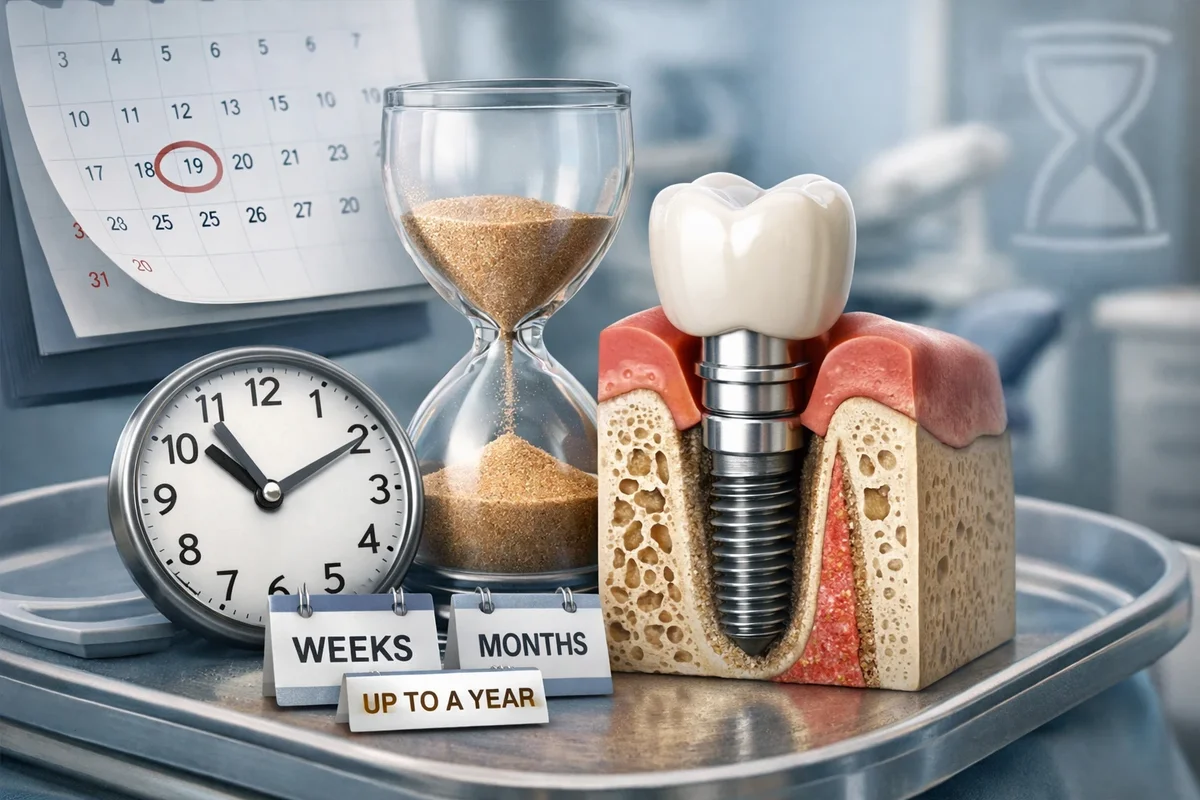
patients are exactly the same. While the general timeline may range from a few months to nearly a
year, individual factors can significantly speed up or delay the process. Knowing these variables
helps patients set realistic expectations and actively contribute to a smoother, faster implant
journey 🦷.
This section brings everything together by explaining the most important factors that influence
how long does it take to get an implant, from biological conditions to lifestyle
choices and clinical planning.
Bone Quality and Quantity
One of the most decisive factors affecting how long does it take to get an implant is
the quality and volume of the jawbone. Patients with dense, healthy bone may qualify for faster
protocols, including immediate or early implant placement.
In contrast, patients with bone loss due to long-term tooth absence or gum disease often require
bone grafting. As explained in earlier sections, this can add several months to the overall timeline.
Bone health alone can mean the difference between a 3–4 month process and a 9–12 month journey ⏳.
Location of the Implant in the Mouth
The position of the implant also influences how long does it take to get an implant.
Implants in the lower jaw often heal faster because the bone is denser and more stable. Upper jaw
implants, especially in the molar area near the sinuses, may require additional procedures such as
sinus lifting, which adds healing time.
Front teeth implants may also involve additional aesthetic planning and gum shaping, which can
extend the process slightly but improve the final appearance significantly.
Overall Health and Medical Conditions
General health plays a major role in healing speed. Conditions such as uncontrolled diabetes, immune
system disorders, or osteoporosis can slow bone regeneration and gum healing. As a result,
how long does it take to get an implant may be longer for patients with these
conditions.
That said, many medically compromised patients still receive successful implants with proper
planning and medical coordination. The key is transparency during consultation and adherence to
professional guidance 😊.
Lifestyle Habits That Affect Healing
Smoking
Smoking is one of the most significant factors that can delay
how long does it take to get an implant. Nicotine restricts blood flow, which slows
healing and increases the risk of implant failure. Dentists often recommend quitting or reducing
smoking before and after implant surgery.
Oral Hygiene
Poor oral hygiene increases the risk of infection and inflammation, which can interrupt healing and
cause delays. Patients who maintain excellent oral hygiene often move through the implant process
more smoothly and efficiently.
Experience and Technology of the Dental Clinic
The expertise of the dental team and the technology they use also influence
how long does it take to get an implant. Clinics that use digital planning, 3D
imaging, and guided surgery techniques can reduce complications and unnecessary delays.
Experienced implant dentists are better equipped to anticipate challenges and create efficient,
customized treatment plans. This often results in fewer interruptions and a more predictable
timeline.
Single Implant vs. Multiple Implants
The number of implants being placed can also affect the timeline. A single implant is usually more
straightforward and faster. Multiple implants or full-arch restorations may take longer due to
additional planning, healing considerations, and laboratory work.
However, placing multiple implants in a single surgical session can sometimes reduce the total
treatment time compared to staging them over several appointments.
Patient Compliance and Follow-Up Visits
One often overlooked factor in how long does it take to get an implant is patient
compliance. Following post-operative instructions, attending follow-up visits, and reporting any
issues early can prevent setbacks.
Patients who actively participate in their care tend to experience fewer complications and faster
progress through each stage of treatment.
When Speed Is Possible—and When It Is Not
Some clinics advertise extremely fast implant treatments, but speed is only safe in carefully
selected cases. Immediate implants and same-day crowns are not suitable for everyone. When dentists
recommend a longer timeline, it is usually to protect the implant’s long-term success.
Organizations such as the
American Dental Association emphasize that proper
healing and case selection are far more important than speed. A few extra months can mean decades of
reliable function.
Getting a Personalized Timeline
The most accurate way to determine how long does it take to get an implant for you is
through a personalized consultation. A professional evaluation considers all the factors discussed
above and provides a realistic, customized timeline.
If you would like a clear and honest assessment of your situation, you can reach out through the
Redent Klinik Contact Page. A tailored plan helps
you move forward with confidence and clarity 🤝.
In conclusion, how long does it take to get an implant is influenced by a combination
of biological, technical, and personal factors. While some elements are beyond control, many—such as
oral hygiene, lifestyle choices, and clinic selection—are not. Understanding these factors empowers
patients to make informed decisions and achieve the best possible implant outcome.
Disclosure: this page may contain affiliate links. We may earn a commission if you use them, at no extra cost to you.