
If you are considering dental implants, one of the very first and most important questions you are likely asking is how long does it take to install dental implants. This is a completely valid concern because dental implant treatment is not a single appointment but a carefully planned medical process designed to ensure long-term success, comfort, and durability 😊. Unlike traditional crowns or dentures, dental implants require time for healing, bone integration, and precise customization.
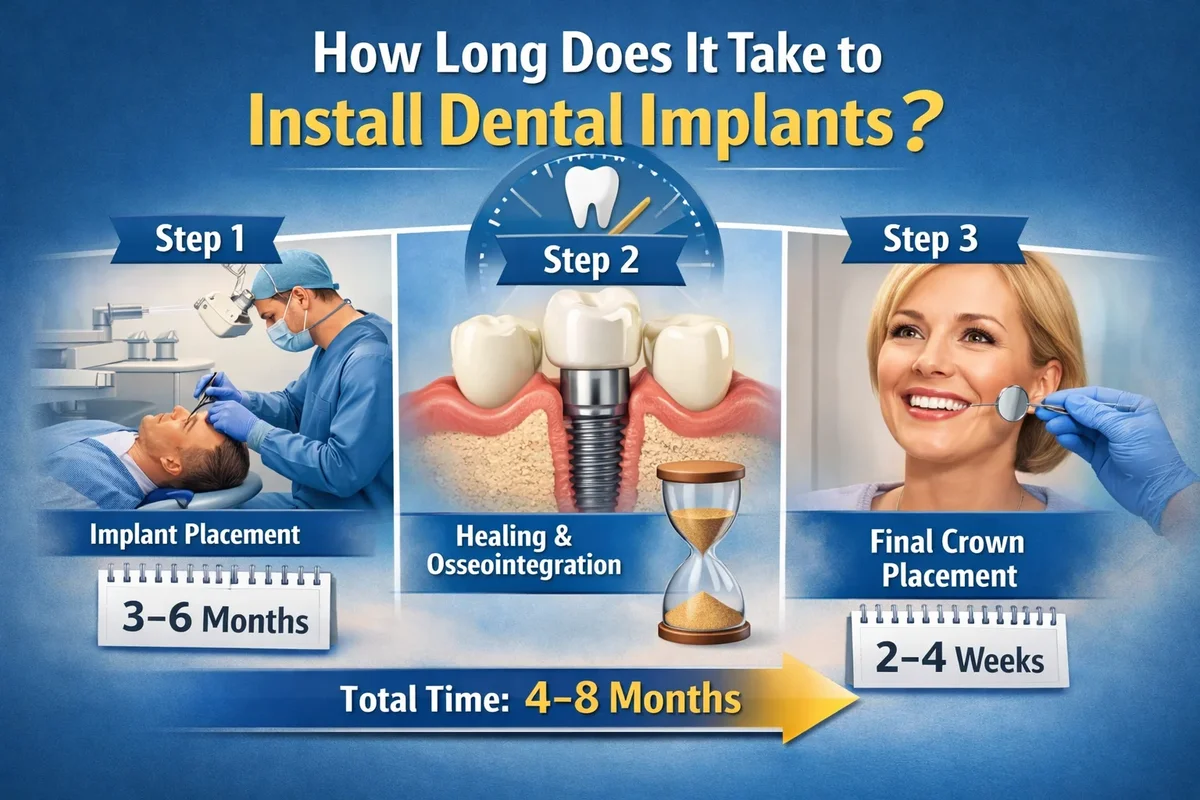
To clearly answer the question how long does it take to install dental implants, it is important to understand that the total timeline can range from 3 months to over 9 months, depending on individual factors. The process is broken into several stages, each with a specific medical purpose. While this may seem lengthy at first, every step is essential to ensure that the implant functions like a natural tooth and lasts for decades.
Many patients mistakenly believe that dental implants are placed and completed in one visit. In reality, when dentists explain how long does it take to install dental implants, they are referring to a complete journey that includes consultation, surgery, healing, and final restoration. The good news is that most of this time is passive healing, meaning you are not constantly visiting the clinic or undergoing procedures.
The first component affecting how long does it take to install dental implants is your initial oral health condition. Patients with healthy gums, adequate jawbone density, and no need for additional treatments often complete the process faster. In ideal cases, dental implants may be fully completed in approximately 3 to 4 months. However, if procedures such as bone grafting or sinus lifting are required, the timeline may extend to 6 to 9 months or more.
Another key point when discussing how long does it take to install dental implants is the difference between the surgical appointment and the full treatment duration. The implant surgery itself is relatively short. In most cases, placing a single dental implant takes 30 to 60 minutes. Even multiple implants can often be placed in one session. What takes time is the biological healing process known as osseointegration, during which the implant fuses with the jawbone.
Osseointegration is the foundation of implant success and plays a major role in determining how long does it take to install dental implants. This healing phase typically lasts between 8 and 16 weeks. During this time, the implant becomes stable enough to support a crown. Rushing this stage can compromise the implant, which is why experienced dentists always prioritize proper healing over speed.
It is also important to understand that how long does it take to install dental implants varies depending on whether you are replacing one tooth, several teeth, or a full arch. A single implant generally requires less time overall, while full-mouth implant solutions involve more planning, multiple implants, and extended healing periods. Despite this, modern techniques now allow some patients to receive temporary teeth on the same day as surgery, improving comfort and aesthetics during healing.
From a patient perspective, asking how long does it take to install dental implants is not just about months on a calendar. It is also about how quickly you can return to normal life. Most patients resume daily activities within 24 to 48 hours after implant surgery. Mild swelling or discomfort is normal but typically subsides within a few days. This means the treatment timeline rarely interferes significantly with work or social life.
Professional dental organizations such as the American Dental Association emphasize that dental implants are a medically proven, long-term solution when placed following proper clinical timelines. Dentists follow evidence-based protocols to ensure safety, longevity, and patient satisfaction. This structured approach is precisely why the answer to how long does it take to install dental implants cannot be rushed or simplified.
If you are considering dental implant treatment and want a personalized timeline based on your oral health, bone structure, and aesthetic goals, speaking directly with an experienced dental team is essential. You can easily schedule a consultation through the Redent Klinik Contact Page to receive a detailed treatment plan tailored specifically to you 🦷.
In summary, how long does it take to install dental implants depends on multiple medical and individual factors, but the result is a permanent, natural-looking tooth replacement that can last a lifetime. While the process requires patience, the long-term benefits in comfort, function, and confidence make the timeline more than worthwhile.
Understanding the Dental Implant Procedure Timeline
To fully understand how long does it take to install dental implants, it is essential to look at the complete dental implant procedure timeline rather than focusing on a single appointment. Dental implants are a medical and restorative process that unfolds in carefully planned stages. Each stage serves a specific biological and functional purpose, ensuring that the implant integrates successfully with your jawbone and functions like a natural tooth 🦷.
Many patients searching for how long does it take to install dental implants are surprised to learn that the total duration is influenced more by healing and biology than by the actual dental work. While the hands-on procedures performed by the dentist are relatively short, the body’s natural healing response determines the overall pace of treatment.
Why Dental Implants Require a Multi-Stage Timeline
The reason how long does it take to install dental implants cannot be answered with a single number is because implants rely on a biological process called osseointegration. This process allows the titanium implant to fuse directly with the jawbone, creating a stable foundation for chewing, speaking, and smiling confidently.
Unlike traditional dental restorations that sit on top of the gums, implants become part of your jaw. This is what makes them so durable—but also why time is a critical factor. Skipping or shortening any stage increases the risk of implant failure, which is why reputable dental clinics always follow a structured timeline.
Overview of the Dental Implant Timeline Stages
When dentists explain how long does it take to install dental implants, they typically divide the process into the following phases:
- Initial consultation and diagnostics
- Preparatory treatments (if needed)
- Dental implant placement surgery
- Healing and osseointegration period
- Abutment placement
- Final crown or prosthetic attachment
Each of these phases contributes to the total answer to how long does it take to install dental implants, and not every patient requires every step. For example, patients with sufficient bone volume may skip preparatory procedures, shortening the timeline significantly.
Consultation and Diagnostic Phase Duration
The first stage affecting how long does it take to install dental implants is the diagnostic phase. This typically takes one or two appointments over 1–2 weeks. During this time, dentists perform X-rays, 3D scans, and clinical examinations to assess bone density, gum health, and bite alignment.
This planning stage is critical because accurate diagnostics allow the dentist to predict treatment duration more precisely. A well-planned case often results in a smoother, faster overall implant journey.
Surgical Placement vs Total Treatment Time
A common misunderstanding about how long does it take to install dental implants is confusing surgical time with total treatment time. The actual implant placement surgery is usually quick. In most cases, placing one implant takes 30–60 minutes. Multiple implants may take longer but are often completed in a single session.
However, this surgical appointment represents only a small fraction of the full timeline. What follows is a healing phase that can last several months, during which the implant stabilizes within the bone.
The Role of Healing in the Implant Timeline
Healing is the most time-consuming factor when determining how long does it take to install dental implants. After surgery, the body needs time to regenerate bone cells around the implant surface. This process usually takes between 8 and 16 weeks, though it can vary based on age, bone quality, and overall health.
During this period, patients are typically able to live normally. There is no ongoing pain or repeated dental visits, making the waiting time much easier than most people expect 😊.
How Individual Factors Influence the Timeline
No two patients are exactly alike, which is why how long does it take to install dental implants differs from one individual to another. Factors that influence the timeline include:
- Jawbone density and volume
- Smoking habits
- Chronic health conditions such as diabetes
- Oral hygiene practices
- The number of implants being placed
Patients with strong bone structure and good oral health often move through the process more quickly, while those requiring additional treatments may need extra healing time.
Why Patience Leads to Better Implant Results
When patients ask how long does it take to install dental implants, they often hope for the fastest possible solution. However, the most successful implant treatments prioritize stability and longevity over speed. Allowing each phase to fully heal significantly increases the chances that the implant will last for decades.
Dental implants are designed to be a lifelong solution, and the carefully structured timeline is what makes that possible. Understanding the procedure timeline helps patients feel more confident, informed, and prepared for the journey ahead.
In short, understanding the dental implant procedure timeline provides a clear and realistic answer to how long does it take to install dental implants. While the process requires patience, it delivers unmatched strength, comfort, and natural aesthetics—making the time investment well worth it.
Initial Consultation and Treatment Planning Phase
When patients ask how long does it take to install dental implants, the answer always begins with the initial consultation and treatment planning phase. This stage sets the foundation for the entire implant journey and directly influences how smoothly, safely, and efficiently the rest of the process unfolds 🦷. While this phase does not involve surgery, it is one of the most critical parts of determining the overall timeline.
Understanding how long does it take to install dental implants requires recognizing that no two mouths are the same. The consultation phase allows the dental team to evaluate your unique oral anatomy, medical history, and aesthetic goals. Skipping or rushing this step can lead to complications later, which is why experienced implant dentists invest significant time in planning.
What Happens During the Initial Dental Implant Consultation?
The first appointment is where the dentist begins to calculate how long does it take to install dental implants specifically for you. This visit typically lasts between 45 and 90 minutes and includes a comprehensive oral examination. The dentist checks your teeth, gums, jaw alignment, and bite function to ensure implants are a suitable option.
During this appointment, patients often discuss concerns such as pain, recovery, and total treatment duration. This is also when dentists explain the full process in clear terms, helping patients understand why how long does it take to install dental implants varies from person to person.
Advanced Imaging and Diagnostic Scans
One of the most important elements affecting how long does it take to install dental implants is diagnostic imaging. Dentists typically use panoramic X-rays and 3D cone beam CT scans to evaluate bone volume and density. These images reveal whether the jawbone can securely support an implant.
If sufficient bone is present, the treatment timeline may be significantly shorter. If bone loss is detected, additional procedures may be required, which can extend how long it takes to install dental implants. Identifying these factors early prevents unexpected delays later in the process.
Bone Density Evaluation and Its Impact on Timing
Bone density plays a major role in determining how long does it take to install dental implants. Strong, healthy bone allows for faster healing and may even qualify some patients for immediate implant placement. In contrast, insufficient bone may require grafting procedures that add several months to the timeline.
This evaluation ensures that implants are placed in the safest and most predictable manner possible, protecting both the patient’s health and the long-term success of the implant.
Medical History and Lifestyle Assessment
Another factor that influences how long does it take to install dental implants is the patient’s overall health. During the consultation, dentists review medical conditions such as diabetes, osteoporosis, or autoimmune disorders. These conditions do not automatically disqualify patients from implants, but they may affect healing speed.
Lifestyle habits such as smoking are also discussed. Smoking can slow down healing and increase implant failure risk, potentially extending how long it takes to install dental implants. Patients are often advised to quit or reduce smoking before and during treatment.
Personalized Treatment Planning
After all examinations and diagnostics are complete, the dentist creates a personalized treatment plan. This plan provides a clear, realistic answer to how long does it take to install dental implants in your specific case. It outlines each step, from surgery to final crown placement, along with estimated timeframes.
This planning stage typically takes a few days to one week after the initial consultation. In more complex cases, multiple specialists may collaborate, which can slightly extend this phase but ultimately improves outcomes.
Single Tooth vs Multiple Implants Planning
The number of implants needed also affects how long does it take to install dental implants. Planning a single implant is usually faster than planning multiple implants or full-mouth restorations. However, even complex cases benefit from detailed upfront planning, which often reduces delays later in treatment.
For patients replacing multiple teeth, the dentist may coordinate implant placement to minimize surgical visits while still allowing proper healing time.
How Long Does This Phase Usually Take?
On average, the consultation and treatment planning phase adds about 1 to 3 weeks to the overall timeline. While this may seem like a delay, it actually streamlines the rest of the process. A well-planned case often shortens the total time it takes to install dental implants by preventing complications and unnecessary procedures.
From a patient’s perspective, this phase provides clarity, confidence, and peace of mind 😊. Knowing exactly what to expect makes the entire implant journey far less stressful.
In conclusion, the initial consultation and treatment planning phase is a vital step in answering how long does it take to install dental implants. By thoroughly evaluating oral health, bone structure, and personal needs, dentists ensure a safe, efficient, and successful implant experience that delivers long-lasting results.
Tooth Extraction and Pre-Implant Healing Time
When evaluating how long does it take to install dental implants, one often overlooked but critical phase is tooth extraction and the pre-implant healing period. Not every patient needs a tooth extracted before implant placement, but for those who do, this step can significantly influence the overall treatment timeline. Understanding what happens during this phase helps set realistic expectations and reduces uncertainty 😊.
If a damaged, decayed, or non-restorable tooth is still present, it must usually be removed before an implant can be placed. This extraction is not merely a preparatory step; it directly affects how long does it take to install dental implants because the jawbone and surrounding tissues need adequate time to heal before they can safely support an implant.
When Is Tooth Extraction Necessary Before Implants?
Tooth extraction is required when a tooth is severely compromised by decay, infection, fracture, or advanced gum disease. In such cases, placing an implant immediately without addressing the unhealthy tooth would increase the risk of failure. Dentists carefully evaluate whether extraction is needed as part of determining how long does it take to install dental implants.
In some situations, a tooth may have been missing for years. In these cases, extraction is not necessary, but bone quality must still be assessed. Conversely, if a tooth is extracted due to infection, additional healing time is often required to allow inflammation to fully resolve.
Immediate Extraction vs Delayed Implant Placement
One key factor affecting how long does it take to install dental implants is whether implants are placed immediately after extraction or delayed. Immediate implant placement means the implant is inserted during the same appointment as the tooth removal. This approach can shorten the overall timeline but is only suitable for select cases with healthy bone and no active infection.
Delayed implant placement, on the other hand, allows the extraction site to heal first. This is the more common and safer approach, especially when infection, bone loss, or gum disease is present. While this adds time, it significantly improves long-term implant success.
Healing Time After Tooth Extraction
After a tooth is removed, the body begins healing immediately. Soft tissue healing usually takes about 2 to 4 weeks, but complete bone healing takes longer. When considering how long does it take to install dental implants, dentists typically wait 6 to 12 weeks after extraction before placing an implant.
This waiting period allows the bone to stabilize and regenerate, creating a more predictable environment for implant placement. Rushing this phase can lead to poor osseointegration and implant failure.
The Role of Bone Preservation Techniques
To reduce how long it takes to install dental implants, dentists often use bone preservation techniques at the time of extraction. Socket preservation involves placing bone graft material into the extraction site to prevent bone collapse and volume loss.
By preserving the bone structure, this technique can shorten the waiting period before implant placement and improve implant stability. Although it adds a small step to the extraction process, it often saves time in the long run.
Bone Grafting and Its Impact on the Timeline
If significant bone loss is present, bone grafting may be required after extraction. This procedure adds several months to how long does it take to install dental implants, typically extending the timeline by 3 to 6 months. While this may seem like a long delay, it is essential for creating a strong foundation for the implant.
Patients should view bone grafting not as a setback, but as an investment in the long-term success of their implant.
Patient Experience During the Healing Phase
From a patient’s perspective, the healing phase after extraction is usually straightforward. Mild swelling, tenderness, and discomfort are normal for a few days and are easily managed with prescribed or over-the-counter medication. This healing period rarely disrupts daily life, even though it contributes to how long it takes to install dental implants.
During this time, patients are encouraged to maintain excellent oral hygiene, avoid smoking, and follow dietary recommendations. These actions can significantly improve healing speed and reduce overall treatment time.
How This Phase Affects the Total Implant Timeline
Tooth extraction and pre-implant healing typically add 2 to 4 months to the overall process. While this may extend how long it takes to install dental implants, skipping or rushing this phase greatly increases the risk of complications.
In summary, tooth extraction and pre-implant healing play a crucial role in determining how long does it take to install dental implants. Proper healing ensures that the jawbone is healthy, stable, and capable of supporting an implant for decades. Though patience is required, this step lays the groundwork for a successful, long-lasting dental implant outcome 🦷.
The Dental Implant Surgery: How Long the Procedure Takes
One of the most common concerns patients have when researching how long does it take to install dental implants is the actual length of the surgical procedure itself. Many people imagine a long, painful operation, but in reality, dental implant surgery is usually far quicker and more comfortable than expected 😊. Understanding what happens during surgery helps separate the short procedure time from the longer overall treatment timeline.
It is important to clarify that when dentists discuss how long does it take to install dental implants, they distinguish between the time spent in the dental chair and the total healing and restoration period. The surgery itself is only one small but crucial part of the entire implant journey.
How Long Does Dental Implant Surgery Usually Take?
For most patients, the surgical placement of a single dental implant takes approximately 30 to 60 minutes. Even when multiple implants are placed, the procedure often remains efficient. For example, placing two or three implants may take 90 minutes or less. This means that the surgical phase rarely defines how long does it take to install dental implants on its own.
Advanced planning, digital imaging, and guided implant techniques allow dentists to place implants with high precision in a relatively short amount of time. As a result, the surgery is predictable and minimally invasive.
What Happens During the Implant Placement Surgery?
Understanding the steps involved helps patients feel more comfortable about how long does it take to install dental implants during surgery. The procedure typically includes the following stages:
- Local anesthesia or sedation for comfort
- Preparation of the implant site in the jawbone
- Placement of the titanium implant into the bone
- Closure of the gum tissue over or around the implant
Thanks to modern anesthesia techniques, patients usually feel no pain during the procedure. Many are surprised by how quick and smooth the experience is.
Local Anesthesia vs Sedation and Time Considerations
The type of anesthesia used does not significantly change how long does it take to install dental implants, but it can affect patient comfort. Local anesthesia is sufficient for most cases and keeps the procedure efficient. Sedation may be used for anxious patients or complex cases, slightly extending appointment time but not the surgery itself.
Regardless of the anesthesia method, the implant placement remains a precise and controlled procedure.
Single Implant vs Multiple Implant Surgery Time
The number of implants placed during one session directly influences how long does it take to install dental implants in terms of surgical duration. A single implant is the quickest scenario. Multiple implants, such as those used for bridges or full-arch restorations, require more time but are often completed in one visit.
For full-arch solutions, surgeons may place four to six implants per arch in one session. While this can take several hours, it eliminates the need for multiple surgeries, ultimately saving time in the overall treatment plan.
Same-Day Implants and Immediate Loading
Some patients qualify for same-day implants, also known as immediate loading. This technique can influence perceptions of how long does it take to install dental implants because temporary teeth are placed on the same day as surgery.
It is important to note that even with same-day teeth, the implant still requires months of healing before the final crown is attached. Immediate loading improves aesthetics and function during healing but does not eliminate the biological timeline.
Post-Surgery Recovery Time
Although the surgery itself is short, recovery is part of understanding how long does it take to install dental implants. Most patients experience mild swelling, soreness, or bruising for a few days. These symptoms typically peak within 48 hours and then gradually subside.
Patients usually return to work and normal activities within 1 to 2 days. This quick recovery surprises many people and reinforces that implant surgery is far less disruptive than expected.
What Can Affect Surgical Duration?
Several factors may slightly increase surgical time and influence how long does it take to install dental implants during the procedure:
- Bone density and hardness
- Need for minor bone grafting at placement
- Complex implant positioning
- Multiple implant placement
Even in complex cases, implant surgery remains efficient due to careful pre-surgical planning.
Putting Surgical Time Into Perspective
When patients ask how long does it take to install dental implants, it helps to separate perception from reality. The surgery itself is often shorter than having a wisdom tooth removed. What truly defines the timeline is the healing that follows—not the procedure.
In conclusion, dental implant surgery is a fast, precise, and highly controlled procedure. While it plays a vital role in answering how long does it take to install dental implants, the surgical appointment itself is only a small fraction of the total process. With modern techniques and expert care, implant placement is efficient, comfortable, and designed for long-term success 🦷.
Osseointegration: The Healing Process After Implant Placement
When people ask how long does it take to install dental implants, the most important phase to understand is osseointegration. This stage is not visible, does not involve active dental procedures, yet it determines whether the implant will succeed or fail in the long term. Osseointegration is the biological healing process during which the dental implant fuses with the jawbone, creating a stable and permanent foundation 🦷.
Although implant surgery itself is relatively quick, osseointegration accounts for the largest portion of how long does it take to install dental implants. This phase cannot be rushed, because it relies on the body’s natural ability to regenerate bone tissue around the implant surface.
What Is Osseointegration and Why Is It So Important?
Osseointegration refers to the direct structural and functional connection between living bone and the surface of a dental implant. In simple terms, the jawbone grows tightly around the titanium implant, locking it into place. This process is the reason dental implants feel and function like natural teeth.
When evaluating how long does it take to install dental implants, dentists emphasize osseointegration because it is the stage that ensures stability for chewing, speaking, and long-term oral health. Without successful osseointegration, an implant cannot support a crown or prosthetic tooth.
How Long Does the Osseointegration Process Take?
For most patients, osseointegration takes between 8 and 16 weeks. In some cases, particularly when bone quality is excellent, healing may be closer to 8 weeks. In others, especially when bone density is lower or grafting was required, it may extend to 4–6 months.
This healing period plays a decisive role in determining how long does it take to install dental implants. While patients often feel fully recovered within days of surgery, the bone continues strengthening silently beneath the gums for months.
Upper Jaw vs Lower Jaw Healing Time
The location of the implant can affect how long does it take to install dental implants. Implants placed in the lower jaw often integrate faster because the bone is denser. Upper jaw implants, especially in the molar region near the sinuses, may require more healing time due to softer bone structure.
This difference is completely normal and is accounted for during treatment planning.
What Happens During Osseointegration?
Once the implant is placed, the surrounding bone begins forming new cells that attach directly to the implant surface. Modern implant designs are engineered to encourage this process through specialized surface textures.
Throughout osseointegration, patients typically experience little to no discomfort. This surprises many people who worry about how long does it take to install dental implants being physically demanding. In reality, this phase requires patience rather than endurance.
Patient Experience During the Healing Period
From the patient’s perspective, life largely returns to normal during osseointegration. Most people eat soft foods initially, then gradually resume a regular diet. There are no repeated procedures, no ongoing pain, and no disruption to daily routines.
This is why understanding how long does it take to install dental implants requires separating active treatment time from passive healing time. Although months may pass, they do not feel medically intense.
Do Temporary Teeth Affect Healing?
Some patients receive temporary crowns or dentures during osseointegration. These do not shorten how long does it take to install dental implants, but they significantly improve comfort and appearance while healing occurs.
Temporary restorations are carefully designed to avoid placing pressure on the implant, allowing uninterrupted bone integration.
Factors That Influence Osseointegration Speed
Several factors influence how quickly osseointegration occurs and therefore affect how long does it take to install dental implants:
- Bone density and quality
- Smoking or tobacco use
- Overall health and immune response
- Oral hygiene habits
- Implant material and surface design
Patients who follow post-operative instructions carefully often heal faster and more predictably.
Why Dentists Never Rush Osseointegration
Rushing osseointegration is one of the biggest risks in implant dentistry. Even though patients are eager to complete treatment, skipping healing time compromises implant stability. This is why experienced clinicians never shorten this phase when explaining how long does it take to install dental implants.
The long-term success of dental implants—often lasting 20 years or more—depends entirely on this healing process.
How Osseointegration Defines the Overall Timeline
When all phases are considered, osseointegration typically represents the longest portion of how long does it take to install dental implants. While it requires patience, it demands no ongoing effort from the patient beyond good oral care and healthy habits.
In summary, osseointegration is the silent hero of dental implant treatment. It is the biological process that transforms a titanium post into a permanent tooth root. Understanding this phase provides clarity, reassurance, and realistic expectations about how long does it take to install dental implants, making the entire journey feel far more manageable and worthwhile 😊.
Abutment Placement and Gum Healing Duration
After the implant has successfully fused with the jawbone, many patients believe the process is nearly finished. However, to fully understand how long does it take to install dental implants, it is essential to examine the abutment placement and gum healing phase. This step connects the implant beneath the gums to the visible tooth above it, making it a critical transition between healing and final restoration 🦷.
Although this phase is shorter than osseointegration, it still plays an important role in determining how long does it take to install dental implants. Proper gum healing ensures that the final crown fits naturally, looks aesthetic, and remains easy to clean.
What Is an Abutment and Why Is It Necessary?
An abutment is a small connector placed on top of the dental implant. It acts as the bridge between the implant and the final crown. Without an abutment, the implant cannot support a tooth restoration.
When dentists explain how long does it take to install dental implants, they often highlight that the abutment phase allows the gums to shape themselves naturally around the implant. This creates a realistic gum line and prevents food traps or irritation later on.
How Is the Abutment Placement Procedure Performed?
Abutment placement is a minor procedure compared to implant surgery. In many cases, it is performed under local anesthesia and takes about 15 to 30 minutes. This brief appointment does not significantly increase how long does it take to install dental implants, but it is essential for the final outcome.
During the procedure, the dentist gently exposes the implant (if it was covered by gum tissue), attaches the abutment, and allows the gums to heal around it. Discomfort is usually minimal, and most patients return to normal activities the same day.
One-Stage vs Two-Stage Implant Systems
The number of steps involved in abutment placement can influence how long does it take to install dental implants. In one-stage implant systems, the abutment is placed at the same time as the implant surgery. In two-stage systems, the abutment is placed after osseointegration is complete.
Both approaches are clinically effective. The choice depends on bone quality, gum thickness, and aesthetic considerations.
Gum Healing Time After Abutment Placement
After the abutment is placed, the gums need time to heal and contour around it. This healing phase typically lasts 1 to 3 weeks. While short, it is a necessary part of answering how long does it take to install dental implants accurately.
During this period, the soft tissue adapts to the abutment shape, forming a natural seal around the implant. This seal protects the underlying bone and implant from bacteria.
What Patients Experience During Gum Healing
Most patients experience very mild soreness or tenderness for a day or two after abutment placement. Swelling is minimal, and pain is usually controlled with over-the-counter medication. This phase is often described as easier than a routine dental filling.
From a lifestyle perspective, this stage adds little inconvenience, even though it contributes to how long does it take to install dental implants.
Why Proper Gum Healing Matters
Healthy gum healing is essential for both function and appearance. Poorly healed gums can lead to inflammation, discomfort, or aesthetic issues around the final crown. This is why dentists do not rush this phase when discussing how long does it take to install dental implants.
Allowing the gums to fully mature around the abutment ensures that the final crown looks natural and remains stable over time.
Factors That Can Affect Abutment Healing Time
Several factors can influence how quickly gums heal and therefore affect how long does it take to install dental implants:
- Gum thickness and quality
- Oral hygiene practices
- Smoking or tobacco use
- Systemic health conditions
- Precision of implant placement
Patients who follow post-procedure care instructions carefully usually experience smooth and predictable healing.
How This Phase Fits Into the Overall Timeline
Abutment placement and gum healing typically add 2 to 4 weeks to the overall treatment timeline. While this may seem minor compared to other stages, it plays a crucial role in determining how long does it take to install dental implants from start to finish.
In summary, the abutment placement and gum healing phase is the final preparation before receiving the permanent tooth. Though relatively short, it is essential for comfort, hygiene, and aesthetics. Understanding this stage provides a clearer, more complete picture of how long does it take to install dental implants and why every step matters for long-term success 😊.
Final Crown Placement: Completing the Dental Implant Process
The final stage that answers how long does it take to install dental implants is the placement of the permanent crown. This is the moment most patients eagerly anticipate because it completes the transformation from a surgical implant to a fully functional, natural-looking tooth 😊. While this phase is shorter than healing stages, it is just as important for comfort, aesthetics, and long-term success.
Understanding how long does it take to install dental implants requires recognizing that the implant itself is only the foundation. The final crown is what restores your smile, bite, and confidence. This step is carefully timed to ensure the implant and surrounding gums are fully stable before any pressure is applied.
What Is the Final Dental Implant Crown?
The final crown is the visible part of the dental implant—the tooth-shaped restoration that sits on top of the abutment. It is custom-made to match the color, shape, and size of your natural teeth. When patients ask how long does it take to install dental implants, they often focus on this stage because it represents the true completion of treatment.
Crowns are typically made from durable materials such as zirconia or porcelain, which offer excellent strength and natural aesthetics. Once placed, the crown allows you to eat, speak, and smile normally.
The Crown Design and Fabrication Process
Before the crown can be placed, impressions or digital scans of your mouth are taken. These scans capture precise details of your bite, gum line, and neighboring teeth. This design phase contributes slightly to how long does it take to install dental implants, but it ensures a perfect fit.
The crown is then fabricated in a dental laboratory. This process typically takes 1 to 2 weeks. During this time, some patients may wear a temporary crown for comfort and appearance.
Why Customization Takes Time
Customization is one reason why how long does it take to install dental implants cannot be rushed. A well-designed crown prevents bite problems, protects the implant, and blends seamlessly with your smile. Poorly fitted crowns can lead to discomfort or excessive wear, which is why dentists prioritize precision over speed.
The Crown Placement Appointment
The appointment to place the final crown is simple and painless. It usually takes about 30 to 45 minutes. During this visit, the dentist checks the fit, bite alignment, and appearance before securing the crown to the abutment.
This appointment does not significantly extend how long does it take to install dental implants, but it marks the official end of active treatment. Once the crown is placed, the implant is considered fully restored.
What Patients Experience After Crown Placement
After the crown is attached, most patients feel immediate improvement in function. Chewing feels natural, speech is unaffected, and the tooth blends in visually. Minor sensitivity or bite awareness may occur for a day or two, but this resolves quickly.
From a lifestyle perspective, this is the most rewarding phase of how long does it take to install dental implants, as patients finally enjoy the full benefits of their treatment.
Eating and Daily Activities
Patients can usually resume normal eating within 24 hours after crown placement. Dentists may advise avoiding extremely hard foods briefly, but there are no long-term restrictions. This ease of recovery reinforces why dental implants are considered the gold standard for tooth replacement.
How the Final Crown Affects Long-Term Success
The final crown does more than restore appearance—it protects the implant from excessive force and bacterial exposure. Properly fitted crowns distribute chewing forces evenly, preserving bone health and implant stability.
This is why the final stage plays a crucial role in determining how long does it take to install dental implants effectively and safely. A rushed or poorly designed crown can compromise years of healing and planning.
Total Time Added by the Crown Phase
From impressions to final placement, the crown phase typically adds 2 to 3 weeks to the overall timeline. While relatively short, it is an essential part of the full answer to how long does it take to install dental implants.
In summary, final crown placement is the moment when the dental implant truly becomes a tooth. This phase completes the journey that began with consultation and surgery. Understanding this step provides a satisfying and realistic conclusion to the question how long does it take to install dental implants, highlighting why patience throughout the process results in a strong, natural, and long-lasting smile 🦷.
Factors That Can Shorten or Extend Dental Implant Treatment Time
When patients search for how long does it take to install dental implants, they often hope for a fixed, universal timeline. In reality, dental implant treatment is highly individualized. While the core stages of implant placement are similar for everyone, several personal, medical, and procedural factors can significantly shorten or extend the total treatment duration 🦷.
Understanding these factors provides a more accurate and realistic answer to how long does it take to install dental implants. It also helps patients actively participate in decisions and habits that may positively influence their treatment speed and success.
Bone Quality and Jaw Structure
One of the most influential factors in determining how long does it take to install dental implants is the quality and quantity of jawbone. Dense, healthy bone allows implants to stabilize more quickly, often reducing healing time during osseointegration.
Patients with bone loss due to long-term tooth loss, gum disease, or trauma may require bone grafting. This additional procedure can extend the timeline by several months but is essential for long-term implant stability.
Upper Jaw vs Lower Jaw Differences
The location of the implant also affects how long does it take to install dental implants. Implants placed in the lower jaw typically integrate faster due to denser bone. Upper jaw implants, especially in the molar area, may need longer healing periods or sinus lift procedures.
Need for Additional Procedures
Some patients require preparatory treatments before implant placement. These procedures can significantly affect how long does it take to install dental implants:
- Bone grafting
- Sinus lift surgery
- Gum disease treatment
- Tooth extractions with delayed healing
While these steps extend the timeline, they dramatically improve implant success rates. Skipping necessary preparatory treatments often leads to complications and implant failure.
Overall Health and Medical Conditions
A patient’s general health plays a critical role in how long does it take to install dental implants. Conditions such as uncontrolled diabetes, autoimmune disorders, or osteoporosis can slow healing and require extended monitoring.
This does not mean implants are impossible for these patients. Instead, timelines are adjusted to allow safe, predictable healing. Well-managed medical conditions often result in outcomes similar to those of healthy individuals.
Lifestyle Habits That Affect Healing
Lifestyle choices have a surprisingly strong impact on how long does it take to install dental implants. Smoking, in particular, is known to reduce blood flow to the gums and slow bone healing. Smokers may experience longer osseointegration periods and higher complication risks.
Good oral hygiene, a balanced diet, and following post-operative instructions can significantly shorten recovery times and improve overall outcomes.
Patient Compliance and Aftercare
Patients who carefully follow aftercare guidelines often heal faster. Proper brushing, flossing, avoiding excessive pressure on implants, and attending follow-up visits all contribute to reducing how long does it take to install dental implants.
Number of Implants Being Placed
The number of implants also influences how long does it take to install dental implants. A single implant usually requires less planning and healing time than multiple implants or full-mouth restorations.
However, advanced techniques allow multiple implants to be placed during a single surgical session, which can actually shorten the overall timeline when compared to staged procedures.
Experience of the Dental Team
The skill and experience of the implant dentist significantly affect how long does it take to install dental implants. Experienced clinicians use precise planning, advanced imaging, and guided surgery techniques to minimize complications and delays.
A well-coordinated dental team also ensures that each phase transitions smoothly into the next, preventing unnecessary waiting periods.
Immediate vs Traditional Implant Protocols
Some patients qualify for immediate implant placement or same-day teeth. These protocols can improve aesthetics and function early but do not eliminate the biological healing required. Even in these cases, how long does it take to install dental implants biologically remains similar, as bone still needs time to integrate.
Why Longer Timelines Often Mean Better Results
While many patients hope to shorten how long does it take to install dental implants, longer timelines often indicate careful planning and proper healing. Dental implants are designed to last decades, and allowing sufficient time at each stage greatly improves longevity.
In summary, there is no single answer to how long does it take to install dental implants because each patient’s situation is unique. Bone health, medical conditions, lifestyle habits, and treatment complexity all play a role. By understanding these factors, patients gain realistic expectations and confidence in a process designed for long-term success and satisfaction 😊.
Single Implant vs Full Mouth Implants: Time Differences Explained
One of the most important distinctions patients must understand when asking how long does it take to install dental implants is whether they need a single implant or a full-mouth implant solution. These two treatments differ greatly in complexity, planning, surgical approach, and healing time. While both follow the same biological principles, the overall timeline can vary significantly 🦷.
By comparing single implants and full-mouth implants side by side, patients gain a clearer, more realistic answer to how long does it take to install dental implants in their specific situation.
Timeline for a Single Dental Implant
A single dental implant is the most straightforward scenario and often represents the shortest answer to how long does it take to install dental implants. In ideal conditions—healthy gums, sufficient bone, and no need for additional procedures—the entire process may take approximately 3 to 5 months.
This timeline typically includes:
- Consultation and planning (1–2 weeks)
- Implant placement surgery (single visit)
- Osseointegration (8–12 weeks)
- Abutment and crown placement (2–3 weeks)
Because only one implant site is involved, healing is often faster and more predictable. This makes single implants a popular choice for patients replacing one missing tooth.
Timeline for Multiple or Full Mouth Dental Implants
Full-mouth implant treatments, such as replacing all teeth in the upper or lower jaw, require more extensive planning and surgical precision. As a result, how long does it take to install dental implants for full-mouth cases is typically longer.
On average, full-mouth implant treatment takes between 6 and 9 months, and sometimes longer if bone grafting or sinus lift procedures are required. Despite the longer timeline, these treatments often replace an entire arch of teeth with just four to six implants, making them remarkably efficient given the scope.
Why Full Mouth Implants Take Longer
Several factors explain why full-mouth cases extend how long does it take to install dental implants:
- More extensive diagnostics and planning
- Multiple implant placement sites
- Higher demands on bite balance and aesthetics
- Greater healing requirements
Each of these elements requires precision and careful timing to ensure long-term success.
Same-Day Teeth in Full Mouth Implant Cases
Many full-mouth implant patients receive temporary teeth on the same day as surgery. This often creates confusion about how long does it take to install dental implants, as patients appear to have “instant” results.
While same-day teeth dramatically improve appearance and comfort, they are not the final restorations. The implants still require months of healing before permanent prosthetic teeth are placed.
Healing and Recovery Comparison
From a recovery standpoint, both single and full-mouth implant surgeries are surprisingly manageable. Most patients resume daily activities within a few days. However, full-mouth cases may involve slightly more swelling and a longer soft-tissue healing period.
Even so, the extended timeline does not mean extended discomfort. Understanding this helps patients better evaluate how long does it take to install dental implants beyond just calendar months.
Cost vs Time Perspective
Although this section focuses on time rather than cost, it is worth noting that full-mouth implants consolidate treatment. Replacing many teeth individually with single implants would dramatically increase how long does it take to install dental implants compared to modern full-arch techniques.
In this sense, full-mouth implants are often more time-efficient for extensive tooth loss.
Which Option Is Right for You?
The choice between a single implant and full-mouth implants depends on the number of missing teeth, bone health, and personal goals. What matters most is not finding the fastest option, but the most appropriate one.
Dentists evaluate these factors carefully to provide the most accurate answer to how long does it take to install dental implants for each patient.
Final Comparison Summary
In summary:
- Single implant: Approximately 3–5 months total
- Full mouth implants: Approximately 6–9 months or more
Both options require patience, but both deliver long-lasting, life-changing results.
Ultimately, understanding the time differences between single and full-mouth implants provides clarity and confidence. Whether replacing one tooth or an entire smile, knowing how long does it take to install dental implants helps patients plan realistically and move forward with trust in a proven, durable solution 😊.