
If you are considering a career in dentistry, one of the very first questions you will naturally ask is how long is it to become a dentist. This is a smart and essential question, because dentistry is not a short-term commitment—it is a structured, multi-stage professional journey that requires time, dedication, and long-term planning. In this guide, we will break down the full timeline in a clear, realistic, and easy-to-understand way so you know exactly what to expect.
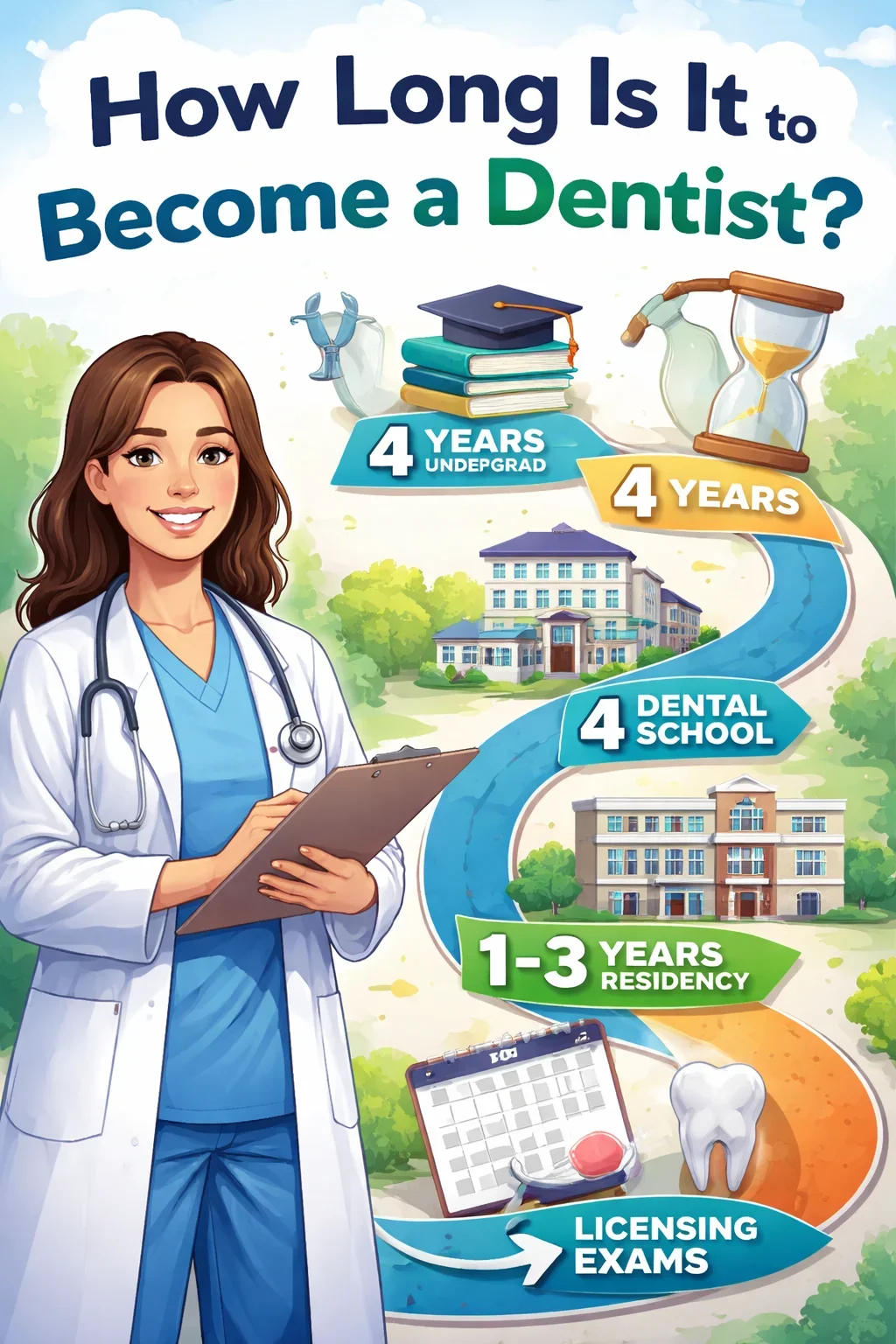
At its core, the answer to how long is it to become a dentist depends on several factors: your country, your educational path, whether you pursue specialization, and how quickly you progress through each academic and clinical stage. For most students in the United States and many other countries, the journey takes 8 to 12 years from the start of undergraduate education to full licensure. Let’s walk through this step by step.
The typical pathway begins after high school. Students do not enter dental school directly; instead, they must first complete an undergraduate degree. This phase alone usually takes four years. During this time, aspiring dentists focus on pre-dental coursework such as biology, chemistry, anatomy, and physics. So when asking how long is it to become a dentist, those first four years of foundational education must always be included.
After completing a bachelor’s degree, students must apply to dental school. Dental school itself usually lasts another four years. These years are intense and highly structured, combining classroom-based learning with hands-on clinical training. When people search online for how long is it to become a dentist, they often underestimate this phase, but it is the most critical part of the process. Students learn diagnosis, patient care, restorative dentistry, oral surgery fundamentals, and preventive treatment techniques.
By the time dental school is completed, most students have already invested eight full years into education. However, becoming a licensed dentist does not stop there. Graduates must pass national and state licensing exams. Preparing for and completing these exams can add several months to a year, depending on the region and individual circumstances. This is another reason why the answer to how long is it to become a dentist is rarely a simple number.
Some dentists choose to begin practicing immediately after licensure, while others continue into specialization programs. If you pursue orthodontics, oral surgery, periodontics, or pediatric dentistry, you will need an additional two to six years of residency training. For those asking how long is it to become a dentist with a specialty, the total timeline can extend to 10–14 years.
It is also important to understand that the timeline can vary internationally. In some countries, dental education begins immediately after high school and may take five to six years total. However, in countries like the United States, Canada, and parts of Europe, the longer pathway is standard. This is why many people researching how long is it to become a dentist see different answers online and feel confused.
Beyond time, commitment is equally important. Dentistry requires continuous education even after you begin practicing. While this does not extend the official timeline, it does reinforce that dentistry is a lifelong learning profession. Understanding how long is it to become a dentist also means understanding the long-term responsibility that comes with the title.
For students exploring dental careers abroad or seeking professional guidance, reaching out to experienced clinics can be helpful. You may find useful guidance on the process by visiting the Redent Klinik Contact Page, especially if you are considering international dental education or career options.
Additionally, authoritative organizations such as the American Dental Association provide valuable resources on dental education pathways, licensing, and professional standards. These sources help clarify how long is it to become a dentist and ensure your expectations are realistic.
In summary, how long is it to become a dentist is best answered as a journey rather than a fixed number. For most students, it means eight years at minimum, with additional time for licensing or specialization. Understanding this timeline early allows you to plan confidently, avoid surprises, and decide whether dentistry aligns with your long-term personal and professional goals.
How Long Is It to Become a Dentist After High School?
For students at the very beginning of their journey, the most common and important question is how long is it to become a dentist after finishing high school. This stage sets the foundation for everything that follows, and understanding it clearly helps avoid confusion, unrealistic expectations, and poor planning. Dentistry is not a career you enter immediately after secondary education; instead, it requires a structured academic path that begins with undergraduate studies.
When evaluating how long is it to become a dentist after high school, the minimum timeline usually starts with a four-year undergraduate degree. This applies to countries such as the United States, Canada, and many parts of Europe. During these four years, students are not studying dentistry directly but are instead completing pre-dental education requirements that prepare them for dental school.
Undergraduate Degree: The First Major Time Commitment
The undergraduate phase is a critical part of answering how long is it to become a dentist. Most dental schools require a bachelor’s degree or at least three to four years of university-level coursework. Common majors include biology, chemistry, health sciences, or biochemistry, although dental schools generally accept students from various academic backgrounds as long as prerequisite courses are completed.
These prerequisites typically include general biology, organic chemistry, inorganic chemistry, physics, and sometimes anatomy or microbiology. Completing these courses successfully takes time and academic discipline. This is why the undergraduate phase alone accounts for nearly half of the total timeline when calculating how long is it to become a dentist.
Pre-Dental Coursework and Academic Performance
Academic performance during undergraduate education plays a major role in determining how smoothly the dental journey progresses. High grades, strong science foundations, and extracurricular involvement all impact dental school acceptance. Poor planning or failed courses can extend the timeline, directly affecting how long is it to become a dentist in real-world terms.
Additionally, many students must prepare for and take dental school entrance exams during this period. Studying for these exams often requires several months of focused preparation, which should be factored into the overall timeline.
Application Process: An Often Overlooked Time Factor
Another important yet frequently underestimated part of how long is it to become a dentist after high school is the dental school application process. Applications are competitive and often take an entire year from preparation to acceptance. This includes gathering transcripts, letters of recommendation, personal statements, interviews, and exam scores.
Some students are accepted immediately, while others may need to reapply, which can add an extra year to the timeline. This is a key reason why the theoretical timeline and the actual timeline for how long is it to become a dentist can differ significantly.
Direct-Entry Programs in Certain Countries
In some regions, particularly outside North America, students can enter dental programs directly after high school. These programs typically last five to six years and combine undergraduate and dental education into a single track. In these cases, the answer to how long is it to become a dentist after high school may be shorter overall, but the academic intensity is significantly higher from the beginning.
However, for students planning to practice in countries like the United States, direct-entry programs abroad may still require additional licensing steps, which again impacts how long is it to become a dentist in practical terms.
Personal Choices That Affect the Timeline
Individual decisions also influence how long is it to become a dentist after high school. Taking gap years, switching majors, retaking courses, or balancing work and study can all extend the timeline. While these choices are sometimes necessary or beneficial, they should be made with full awareness of how they affect the total duration.
Students who seek guidance early—whether from academic advisors or professional clinics—often navigate the process more efficiently. If you are exploring international options or long-term planning, the Redent Klinik Contact Page can be a helpful starting point for professional insight.
Reliable Educational Standards and Professional Guidance
Authoritative institutions such as the American Dental Association outline clear educational standards and timelines that help students realistically assess how long is it to become a dentist. Reviewing such resources early can prevent misinformation and unrealistic expectations.
In conclusion, when asking how long is it to become a dentist after high school, the most accurate answer begins with four years of undergraduate education, followed by dental school and licensing. This early phase is not just about time—it is about preparation, discipline, and building the academic foundation necessary for a successful dental career.
Undergraduate Education Timeline for Future Dentists
When exploring how long is it to become a dentist, the undergraduate education phase deserves special attention because it forms the academic and scientific backbone of a future dental career. Many people mistakenly believe dental school is the starting point, but in reality, undergraduate education is where the journey truly begins. This stage typically lasts four years and plays a decisive role in determining how smoothly a student progresses toward becoming a dentist.
The undergraduate timeline is not only about time spent in university but also about strategic course selection, academic performance, and preparation for dental school admission. Understanding this phase helps clarify how long is it to become a dentist in real-world conditions rather than ideal scenarios.
Typical Length of Undergraduate Studies
In most countries that follow the North American education model, undergraduate education lasts four academic years. This duration is a fixed component of the answer to how long is it to become a dentist. Students are required to complete a bachelor’s degree or equivalent coursework before applying to dental school.
While some highly motivated students attempt to accelerate their studies, most dental schools still expect a full undergraduate academic record. Completing this stage too quickly can sometimes weaken an application, which may ultimately delay acceptance and extend how long is it to become a dentist overall.
Choosing the Right Major for Dental School
Your choice of undergraduate major significantly influences your experience during this phase but does not usually change how long is it to become a dentist in terms of years. Common majors include biology, chemistry, biomedical sciences, and health sciences. These programs naturally align with dental school prerequisites and make the academic transition smoother.
However, dental schools do not strictly require a science major. Students from non-science backgrounds can still succeed as long as they complete all prerequisite courses. That said, balancing a non-science major with demanding science coursework may increase workload and stress, indirectly affecting how long is it to become a dentist if additional semesters are needed.
Required Pre-Dental Courses
Regardless of major, students must complete a standard set of pre-dental courses. These usually include general biology, organic chemistry, inorganic chemistry, physics, and sometimes biochemistry or anatomy. Completing these courses typically spans multiple semesters, reinforcing why undergraduate education is such a major part of how long is it to become a dentist.
Failing or withdrawing from prerequisite courses can delay graduation and dental school applications. As a result, careful planning is essential to keep how long is it to become a dentist within the expected timeline.
Extracurricular Activities and Clinical Exposure
Dental schools value more than academic performance. Shadowing dentists, volunteering, and participating in health-related activities are often expected. While these activities do not add formal years, they demand time and commitment throughout undergraduate studies.
Students who neglect these experiences may face rejection or reapplication, which directly extends how long is it to become a dentist. Strategic planning during undergraduate years helps avoid unnecessary delays.
Dental School Entrance Exams and Preparation Time
Another critical factor in the undergraduate timeline is preparation for dental school entrance exams. Studying for these exams often takes several months of focused effort. Many students begin preparing in their third year and sit for the exam in their fourth year.
Poor exam performance can result in retakes, adding months or even a full year to the process. This is yet another reason why the undergraduate phase is central to understanding how long is it to become a dentist.
Application Cycles and Waiting Periods
Dental school applications typically follow annual cycles. Missing a deadline or applying late can delay enrollment by an entire year. Even strong candidates may experience waiting periods due to competitive admissions.
This waiting period is often overlooked when people estimate how long is it to become a dentist, yet it is one of the most common causes of timeline extensions.
Academic Guidance and Professional Resources
Seeking guidance during undergraduate education can significantly improve efficiency. Academic advisors, mentors, and professional clinics can help students avoid missteps. For those considering international education or long-term planning, the Redent Klinik Contact Page can offer valuable insight.
Additionally, professional organizations such as the American Dental Association provide clear educational frameworks and expectations, helping students realistically assess how long is it to become a dentist.
In summary, undergraduate education typically accounts for four years of the total timeline. However, academic performance, exam preparation, extracurricular involvement, and application timing all influence whether how long is it to become a dentist stays within the expected range or extends beyond it. This phase is not merely a prerequisite—it is a decisive stage that shapes the entire dental career path.
Dental School Duration and What to Expect
Once undergraduate education is completed, the next major milestone in understanding how long is it to become a dentist is dental school itself. This phase is often the most demanding, both academically and emotionally, and it plays a decisive role in shaping a student into a competent dental professional. For most countries following the North American model, dental school lasts four full academic years. These years are non-negotiable and represent the core professional training period.
When people ask how long is it to become a dentist, dental school is usually the stage they think of first. However, many underestimate how structured, intense, and comprehensive these four years truly are. Dental school is not simply classroom learning; it is a carefully designed progression from theory to hands-on patient care.
The Standard Length of Dental School
In the United States and many other countries, dental school requires four years of full-time study. This duration is a fixed component of the answer to how long is it to become a dentist. Students earn either a Doctor of Dental Surgery (DDS) or Doctor of Dental Medicine (DMD) degree, both of which are academically equivalent.
Unlike undergraduate education, dental school offers very little flexibility. Students must follow a strict curriculum sequence, meaning delays are uncommon but extremely disruptive when they occur. Failing a course or clinical requirement can extend how long is it to become a dentist by an entire year.
Years One and Two: Foundational Medical Sciences
The first two years of dental school focus heavily on foundational sciences. Students study anatomy, physiology, pathology, pharmacology, dental anatomy, and oral biology. These subjects are essential for safe and effective clinical practice later on.
At this stage, students often begin to realize that how long is it to become a dentist is not just about years on a calendar—it is about mastering a vast amount of medical knowledge in a limited time. Long study hours and continuous assessments are standard during this phase.
Preclinical Laboratory Training
Alongside theoretical courses, students spend many hours in preclinical laboratories. Here, they practice dental procedures on models and simulators before ever treating real patients. These lab sessions are time-intensive and add to the overall workload, reinforcing why dental school is such a critical part of how long is it to become a dentist.
Mastery at this stage is essential. Students who struggle may need remediation, which can delay progression and extend the total timeline.
Years Three and Four: Clinical Experience
The final two years of dental school shift focus toward supervised clinical practice. Students begin treating real patients under faculty supervision. This phase is where theoretical knowledge is transformed into practical skill.
Clinical requirements are strict. Students must complete a certain number of procedures across different dental disciplines. Falling behind can delay graduation, directly impacting how long is it to become a dentist.
Patient Management and Professional Responsibility
In addition to technical skills, students learn patient communication, treatment planning, and ethical decision-making. These competencies are essential for independent practice and are a major reason dental school cannot be shortened without compromising quality.
This period also prepares students for licensing exams, which come immediately after graduation and further influence how long is it to become a dentist.
Intensity and Time Commitment
Dental school is often described as more demanding than undergraduate education. Full-time schedules, clinical quotas, and continuous evaluations leave little room for outside work. While the calendar duration remains four years, the intensity makes it feel significantly longer.
This intensity explains why dental school is the most defining component when people research how long is it to become a dentist. It is not just about completing years—it is about meeting professional competency standards.
Costs and Financial Planning
While the primary focus here is time, financial considerations also influence progression. Financial stress can force some students to pause or extend their studies. Although this does not officially change how long is it to become a dentist, it can affect real-world timelines.
Students considering international education or alternative pathways often seek professional advice. Resources such as the Redent Klinik Contact Page can provide guidance for those exploring global dental education options.
Professional Standards and Accreditation
Dental schools must meet strict accreditation standards set by authoritative bodies like the American Dental Association. These standards ensure patient safety and professional competence, but they also explain why dental school duration remains fixed.
In conclusion, dental school adds four essential years to the answer of how long is it to become a dentist. These years are structured, intensive, and unavoidable. Understanding what to expect during this phase allows future dentists to prepare mentally, academically, and professionally for the demands ahead.
How Long Is It to Become a Dentist With Specialization?
For many aspiring dental professionals, general dentistry is only the starting point. A very common follow-up question to how long is it to become a dentist is how much additional time is required to become a specialist. Dental specialization adds advanced clinical expertise, higher responsibility, and often different career opportunities, but it also extends the overall timeline significantly.
When specialization is included, the answer to how long is it to become a dentist changes from a standard estimate into a broader range. Instead of the typical 8 years required for general dentistry (undergraduate plus dental school), specialization can increase the total duration to anywhere between 10 and 14 years, depending on the field chosen.
What Is Dental Specialization?
Dental specialization refers to advanced training beyond general dental education. After completing dental school, some graduates choose to focus on a specific area such as orthodontics, oral and maxillofacial surgery, periodontics, endodontics, pediatric dentistry, or prosthodontics.
This decision directly impacts how long is it to become a dentist, because specialization requires formal residency programs that last several years and involve intensive clinical training.
Length of Residency Programs by Specialty
The duration of residency training varies widely by specialty, making this one of the most important factors when calculating how long is it to become a dentist with advanced expertise.
Shorter Specialization Programs (2–3 Years)
Specialties such as endodontics, periodontics, and pediatric dentistry typically require two to three years of residency training. In these cases, the total answer to how long is it to become a dentist becomes approximately 10 to 11 years.
Although shorter than some other specialties, these programs are extremely focused and demanding. Residents treat complex cases and develop deep expertise in a narrow field.
Longer Specialization Programs (4–6 Years)
Orthodontics usually requires around three years, while oral and maxillofacial surgery is the longest pathway, often requiring four to six additional years. Some oral surgery programs also include a medical degree.
For these professionals, how long is it to become a dentist can extend to 13 or even 14 years. This makes it one of the longest training paths in healthcare outside of certain medical subspecialties.
Competitive Admission and Its Impact on Timeline
Specialty programs are highly competitive. Many applicants do not gain admission on their first attempt. Reapplying adds additional time, which further extends how long is it to become a dentist in practice.
Strong academic performance, clinical excellence, and faculty recommendations are essential. Some candidates also work as general dentists for a year or more before reapplying, which adds practical experience but increases the overall timeline.
Licensing and Certification After Specialization
Completing a residency program does not automatically mean the end of training. Many specialties require additional board certification exams. Preparing for and passing these exams takes months and must be factored into how long is it to become a dentist with specialization.
Despite this extra time, specialization often leads to greater professional autonomy and advanced clinical roles.
Is Specialization Worth the Extra Years?
From a time perspective alone, specialization clearly extends how long is it to become a dentist. However, many dentists find the additional years worthwhile due to professional fulfillment, advanced skill development, and broader career opportunities.
The decision should be based on long-term goals rather than speed. Dentistry already requires patience, and specialization demands even more commitment.
International and Alternative Specialization Paths
In some countries, specialization pathways differ slightly in length or structure. Dentists considering international training or practice often seek expert advice. Clinics with global experience, such as those reachable through the Redent Klinik Contact Page, can provide useful insights.
Authoritative organizations like the American Dental Association also outline recognized specialties and training standards, helping clarify how long is it to become a dentist with advanced credentials.
In summary, specialization significantly changes the answer to how long is it to become a dentist. While general dentistry requires around eight years, adding a specialty increases the timeline by two to six additional years. For those passionate about advanced dental care, this extended journey is often seen not as a delay, but as an investment in long-term professional excellence.
Licensing and Board Exams: Time Requirements Explained
After completing dental school, many students assume the journey is finished. However, a critical and often misunderstood part of how long is it to become a dentist involves licensing and board examinations. These steps are mandatory before a graduate can legally practice dentistry, and they add additional months—and sometimes more—to the overall timeline.
Understanding licensing requirements is essential for accurately answering how long is it to become a dentist. While these steps may seem administrative, they require serious preparation, scheduling, and successful completion. Delays at this stage can prevent graduates from practicing even after earning their dental degree.
Why Licensing Is Required
Licensing exists to protect patients and ensure that every practicing dentist meets nationally accepted standards of competence and safety. Even though dental school provides extensive training, graduation alone does not authorize clinical practice.
This requirement is a key reason why how long is it to become a dentist extends beyond academic education. Without a valid license, a dentist cannot legally treat patients, regardless of education level.
National Board Dental Examinations
In many countries, graduates must pass national board examinations. In the United States, these exams assess foundational knowledge, clinical judgment, and applied dental sciences. Preparation for these exams typically begins during dental school but often continues after graduation.
Studying for national boards can take several months. If a candidate does not pass on the first attempt, retakes may add additional months or even a full year, directly affecting how long is it to become a dentist.
Written and Computer-Based Components
Modern board exams often include computer-based testing that evaluates diagnostic skills, treatment planning, and professional decision-making. These exams are rigorous and require focused preparation.
Failing to prepare adequately can delay licensure, making this phase a decisive factor in determining how long is it to become a dentist in real-life scenarios.
Clinical Licensing Examinations
In addition to written exams, many regions require clinical or practical examinations. These tests assess hands-on skills in real or simulated clinical environments. Candidates must demonstrate competence in procedures such as restorations, periodontal treatment, and patient management.
Scheduling these exams can be challenging due to limited testing dates and regional requirements. Waiting for an available slot can extend how long is it to become a dentist even for well-prepared graduates.
Regional Differences in Clinical Exams
Licensing requirements vary by region and country. Some areas require regional clinical boards, while others accept alternative assessments or integrated exams completed during dental school.
This variation explains why answers to how long is it to become a dentist differ depending on location. Dentists planning to practice internationally may need additional exams, further extending the timeline.
State or Country-Specific Licensing Procedures
After passing national and clinical exams, candidates must apply for licensure in their specific state or country. This process includes background checks, documentation review, and administrative approvals.
While these steps may seem minor, processing times can range from weeks to several months. This administrative phase is another reason why how long is it to become a dentist does not end at graduation.
Licensing for International Dentists
Dentists trained abroad often face additional licensing requirements. These may include credential evaluations, supplemental education, or advanced standing programs.
For internationally trained professionals, how long is it to become a dentist can be significantly longer depending on the destination country’s regulations. Seeking early guidance is essential in these cases.
Professional Support and Reliable Guidance
Navigating licensing requirements can be complex. Clinics and institutions experienced in international dentistry often provide guidance. Those exploring cross-border practice opportunities may benefit from contacting the Redent Klinik Contact Page for professional insight.
Additionally, authoritative organizations such as the American Dental Association publish up-to-date licensing standards and exam guidelines, helping candidates plan realistically.
The Final Step Before Practice
Licensing and board exams are the final mandatory steps before independent practice. While they do not add years in most cases, they commonly add months—and sometimes longer—to how long is it to become a dentist.
In summary, licensing transforms academic qualification into legal authority to practice. When calculating how long is it to become a dentist, it is essential to include exam preparation, testing schedules, and administrative processing. These final steps ensure that every practicing dentist meets the highest standards of professional competence and patient safety.
Residency and Clinical Training Length for Dentists
When people research how long is it to become a dentist, residency and postdoctoral clinical training are often misunderstood or completely overlooked. While residency is mandatory for most medical doctors, dentistry follows a slightly different model. Still, residency and advanced clinical training play a significant role in shaping a dentist’s skills and can add meaningful time to the overall journey, depending on career goals and location.
To accurately answer how long is it to become a dentist, it is essential to understand when residency is required, when it is optional, and how long different clinical training pathways typically last.
Is Residency Required to Become a Dentist?
For general dentistry, residency is not always mandatory in every country or region. In many parts of the United States, graduates can begin practicing after dental school and licensing exams. However, some states require at least one year of postdoctoral clinical training, commonly known as a General Practice Residency (GPR) or Advanced Education in General Dentistry (AEGD).
This requirement alone can add an extra year to how long is it to become a dentist, even for those who do not plan to specialize.
General Practice Residency (GPR)
A General Practice Residency typically lasts one year, although some programs offer optional second years. These programs provide hands-on experience in hospital-based or clinical environments and expose dentists to complex cases, emergency care, and medically compromised patients.
While a GPR enhances clinical confidence, it also extends how long is it to become a dentist before independent practice. Dentists who choose this route often value the additional experience over entering private practice immediately.
Benefits of a GPR
GPR programs offer exposure to advanced procedures, anesthesia, and interdisciplinary care. Dentists who complete a GPR often feel more prepared for complex patient scenarios.
However, from a timeline perspective, this additional training must be included when calculating how long is it to become a dentist, especially in regions where it is mandatory.
Advanced Education in General Dentistry (AEGD)
AEGD programs are similar in length to GPRs, typically lasting one year, with optional extensions. Unlike GPRs, AEGDs are usually clinic-based rather than hospital-based.
Completing an AEGD enhances procedural skills and patient management abilities but also adds time to how long is it to become a dentist. Dentists must decide whether the extra year aligns with their career goals.
Residency as a Gateway to Specialization
For dentists pursuing specialties, residency is not optional—it is mandatory. Specialty residencies range from two to six years and were discussed earlier, but it is important to note that some dentists complete a GPR or AEGD before entering a specialty program.
In such cases, how long is it to become a dentist with advanced expertise can increase even further, sometimes exceeding initial expectations.
International Differences in Clinical Training
Residency requirements vary widely across countries. In some regions, extensive clinical training is built directly into dental education. In others, postdoctoral training is expected or required before full licensure.
This variability explains why global answers to how long is it to become a dentist differ significantly. Dentists planning to practice abroad must research local regulations carefully.
Clinical Training for International Dentists
Dentists trained outside their intended country of practice often need additional clinical training. This may include residency programs, advanced standing dental programs, or supervised practice periods.
For international dentists, these requirements can substantially extend how long is it to become a dentist, sometimes by several years.
Professional Guidance and Planning
Because residency and clinical training requirements are complex, early planning is crucial. Dentists exploring international pathways or advanced training often seek expert advice.
Professional clinics with global experience, such as those accessible through the Redent Klinik Contact Page, can provide valuable insight into training expectations and timelines.
Authoritative organizations like the American Dental Association also publish guidance on postdoctoral programs and clinical training standards.
How Residency Impacts the Total Timeline
Residency and clinical training can add anywhere from zero to six or more years to how long is it to become a dentist, depending on career choices and regional requirements. While not always mandatory, these programs often enhance clinical competence and professional confidence.
In summary, residency is a flexible but impactful component of how long is it to become a dentist. For some, it is a required step; for others, it is a strategic investment. Either way, understanding this phase ensures realistic expectations and better long-term career planning.
How Long Is It to Become a Dentist in Different Countries?
One of the most common reasons people find conflicting answers when researching how long is it to become a dentist is that the timeline varies significantly from country to country. Dental education systems are not globally standardized, and national regulations, licensing requirements, and educational structures all influence how long the journey takes. Understanding these differences is essential for students considering international education or practicing dentistry abroad.
To truly understand how long is it to become a dentist, it is necessary to look beyond a single country and examine how different regions structure dental training.
United States and Canada
In the United States and Canada, the pathway to dentistry is among the longest. Students must first complete a four-year undergraduate degree, followed by four years of dental school. This means the minimum answer to how long is it to become a dentist in these countries is eight years.
Licensing exams and possible residency requirements can add additional months or years. For specialists, total training time often reaches 10 to 14 years. This extended timeline reflects strict professional standards and comprehensive clinical training.
Why the Timeline Is Longer
North American dental education emphasizes patient safety, advanced clinical exposure, and scientific depth. These priorities directly influence how long is it to become a dentist by requiring extensive preparation before independent practice.
United Kingdom
In the United Kingdom, dental education typically begins immediately after high school. Students enter a Bachelor of Dental Surgery (BDS) program that lasts five years.
After graduation, most dentists complete one year of foundation training before practicing independently. As a result, how long is it to become a dentist in the UK is usually around six years.
European Union Countries
Across much of Europe, dental education follows a similar direct-entry model. Programs generally last five to six years and combine undergraduate and professional training.
In many EU countries, graduates can begin practicing shortly after completion, although some nations require additional supervised training. This means how long is it to become a dentist in Europe often ranges from five to seven years.
Australia and New Zealand
Australia and New Zealand offer both undergraduate-entry and graduate-entry dental programs. Undergraduate-entry programs usually last five years, while graduate-entry programs require a prior degree plus four years of dental school.
Depending on the chosen pathway, how long is it to become a dentist in these countries ranges from five to eight years.
Asia and the Middle East
In many Asian and Middle Eastern countries, dental education begins directly after high school. Programs typically last five to six years and include extensive clinical training.
However, dentists trained in these regions may face additional licensing requirements if they wish to practice in North America or Europe, which can significantly extend how long is it to become a dentist in practice.
International Licensing Challenges
One critical factor often overlooked is license transferability. A dentist fully licensed in one country may not be able to practice immediately in another without additional exams or education.
For internationally trained dentists, this can add several years to how long is it to become a dentist, especially in countries with strict accreditation standards.
Choosing the Right Country for Dental Education
When deciding where to study dentistry, students should consider not only the duration but also long-term career goals. A shorter education timeline may still require extra steps later.
Seeking guidance from experienced clinics can be helpful. The Redent Klinik Contact Page can offer insights for those exploring international dental education and practice options.
Global Standards and Professional Oversight
Organizations such as the American Dental Association influence international accreditation standards and help maintain global professional consistency.
In summary, how long is it to become a dentist depends heavily on geographic location. While it may take as little as five years in some countries, it can take more than a decade in others. Understanding these differences allows future dentists to make informed decisions that align with their career aspirations and mobility goals.
Total Time Investment: Is Becoming a Dentist Worth It?
After exploring every stage of dental education, training, and licensing, many people reach the most personal question of all: is the journey worth the time? By now, the answer to how long is it to become a dentist is clear—it is a long-term commitment that can span anywhere from five to fourteen years depending on country, specialization, and individual choices. Understanding whether this investment makes sense requires looking beyond years alone and evaluating the professional, personal, and lifestyle outcomes.
When people search for how long is it to become a dentist, they are often weighing time against future stability, fulfillment, and career longevity. Dentistry is not a quick-return profession, but it is one that offers long-term rewards for those who complete the journey.
Breaking Down the Total Time Commitment
At a minimum, general dentistry in countries like the United States requires four years of undergraduate education, four years of dental school, and additional time for licensing exams. This makes the baseline answer to how long is it to become a dentist approximately eight years.
When residency, specialization, or international licensing is involved, the total timeline can extend well beyond a decade. While this may seem daunting, it is important to remember that each phase builds professional competence and long-term career security.
Time Versus Career Longevity
Unlike many professions that require shorter education but offer limited growth, dentistry provides a career that can span 30 to 40 years. When viewed in this context, the answer to how long is it to become a dentist becomes more balanced.
Investing ten years in training for a decades-long career changes the perception of time from a cost to a long-term investment.
Professional Fulfillment and Skill Mastery
Dentistry offers a unique blend of healthcare, artistry, and patient interaction. For many practitioners, the years spent mastering complex skills make the extended timeline worthwhile.
Those who ask how long is it to become a dentist often underestimate the value of professional confidence that comes with extensive training. Patients trust dentists with their health, comfort, and appearance—responsibilities that require deep expertise.
Work-Life Balance in Dentistry
One factor that strongly influences whether the time investment feels worthwhile is work-life balance. Many dentists enjoy predictable schedules, especially in private practice.
Compared to other healthcare professions with longer training and more demanding schedules, dentistry often provides a favorable balance, making how long is it to become a dentist feel more reasonable in hindsight.
Financial Considerations Over Time
While this article focuses on time rather than cost, it is impossible to ignore the financial dimension. Dental education is a major investment, but dentistry also offers strong long-term earning potential.
Over a full career span, the extended answer to how long is it to become a dentist often aligns with financial stability and professional independence.
Personal Motivation and Long-Term Satisfaction
The most important factor in determining whether the journey is worth it is personal motivation. Dentistry requires patience, discipline, and resilience.
For those genuinely interested in healthcare and patient care, the length of how long is it to become a dentist becomes secondary to the satisfaction of helping others.
Alternative Paths and Informed Decisions
Some individuals discover during the process that dentistry is not the right fit. While this realization can occur after several years, informed decision-making early on can minimize regret.
Seeking professional insight can help prospective students understand what lies ahead. Clinics with international experience, such as those reachable via the Redent Klinik Contact Page, often provide valuable real-world perspectives.
Guidance from Professional Organizations
Authoritative bodies like the American Dental Association emphasize ethical practice, lifelong learning, and professional responsibility.
These standards reinforce why how long is it to become a dentist is not arbitrary but carefully designed to protect both practitioners and patients.
Final Perspective on the Time Investment
In the end, how long is it to become a dentist is not just a question of years—it is a question of purpose. The journey is demanding, but it leads to a respected, stable, and impactful profession.
For those committed to dentistry, the time investment is rarely viewed as wasted. Instead, it is seen as the necessary foundation for a lifetime of professional growth, patient trust, and personal fulfillment.
Accelerated and Alternative Paths to Becoming a Dentist
When people ask how long is it to become a dentist, they often assume there is only one fixed route. In reality, while the traditional pathway is the most common, there are accelerated and alternative options that can shorten—or in some cases restructure—the timeline. These paths are not suitable for everyone, but for highly motivated students or career changers, they can meaningfully change how long it takes to enter the profession.
Understanding these options is essential for anyone who wants a complete and accurate picture of how long is it to become a dentist beyond the standard model.
Accelerated Undergraduate Programs
Some universities offer accelerated undergraduate tracks that allow students to complete a bachelor’s degree in three years instead of four. These programs typically involve heavier course loads, summer semesters, and limited flexibility.
By shaving one year off undergraduate education, students can reduce how long is it to become a dentist by a full year. However, these programs demand strong academic performance and excellent time management.
Risks of Acceleration
While faster completion may seem attractive, accelerated programs leave less room for extracurricular activities, research, and dental shadowing. Weak applications can lead to dental school rejection, which ultimately increases how long is it to become a dentist instead of shortening it.
Acceleration only works when academic performance remains strong throughout the process.
Combined BS/DDS or BS/DMD Programs
Some institutions offer combined degree programs that integrate undergraduate and dental school education. These programs typically follow a 3+4 or even 3+3 structure.
In a 3+3 program, students complete three years of undergraduate education followed by three years of dental school, earning both degrees in six years. In this case, how long is it to become a dentist can be reduced significantly.
High Selectivity and Commitment
Combined programs are extremely competitive and often require early commitment during high school or the first year of college. Students must maintain high academic standards to remain eligible.
Failure to meet program requirements may result in returning to the traditional timeline, increasing how long is it to become a dentist.
Graduate-Entry Dental Programs
In some countries, dental schools only accept applicants who already hold a bachelor’s degree. These graduate-entry programs typically last four years and resemble standard North American dental education.
While they do not shorten how long is it to become a dentist, they offer flexibility for students who decide on dentistry later in life.
Career Changers and Non-Traditional Students
Many dentists begin their journey after working in another field. For career changers, prerequisite courses may need to be completed before dental school applications.
This can add one to two extra years, extending how long is it to become a dentist, but it also brings maturity and real-world experience that dental schools value.
International Dental Programs as an Alternative
Some students choose to study dentistry abroad in countries where education begins directly after high school and lasts five to six years.
While this can reduce how long is it to become a dentist in terms of education, licensing in another country afterward may require additional exams or training, often offsetting the time saved.
Online and Hybrid Learning: What Is Not Possible
Unlike some professions, dentistry cannot be completed online. Hands-on clinical training is mandatory, and no accredited programs allow remote completion.
Any claims suggesting otherwise should be treated cautiously, as shortcuts can jeopardize licensure and increase how long is it to become a dentist due to requalification requirements.
Strategic Planning to Optimize the Timeline
Reducing how long is it to become a dentist safely requires careful planning, not rushing. Early advising, clear academic goals, and understanding licensing rules are critical.
Students exploring alternative routes often benefit from professional guidance. Clinics with international and educational insight, such as those reachable through the Redent Klinik Contact Page, can help clarify viable options.
Accreditation and Professional Oversight
Regardless of the pathway, accreditation is non-negotiable. Organizations like the American Dental Association set standards that ensure patient safety and professional competence.
Programs that do not meet these standards may seem faster but often result in longer delays later, increasing how long is it to become a dentist in the long run.
Final Thoughts on Alternative Pathways
Accelerated and alternative paths can change how long is it to become a dentist, but they require discipline, early commitment, and realistic expectations.
For the right student, these routes offer efficiency without sacrificing quality. For others, the traditional pathway remains the safest and most reliable option. Ultimately, the best timeline is one that balances speed, competence, and long-term professional success.