
One of the most common questions patients ask before starting treatment is: how long is the process for dental implants? This is completely understandable. Dental implants are a long-term investment in your health, appearance, and confidence 😊. Knowing what to expect helps you plan your schedule, finances, and recovery time more comfortably.
So, how long is the process for dental implants in real terms? In most cases, the full treatment timeline ranges from 3 to 9 months. However, this can vary depending on your oral health, whether tooth extraction is needed, and whether bone grafting is required. Some patients may complete treatment faster, while others may need additional healing time.
To fully understand how long is the process for dental implants, it’s important to know that the procedure happens in stages. Dental implants are not placed and restored in a single day for most patients. Instead, the process involves careful planning, surgical placement, healing, and final restoration. Each stage plays a crucial role in ensuring the implant is strong, stable, and long-lasting.
The first phase typically includes consultation and diagnostic imaging. Your dentist will evaluate bone density, gum health, and overall oral condition. If everything looks ideal, the surgical placement of the implant can be scheduled. At this point, many patients again ask, how long is the process for dental implants after surgery? The answer largely depends on healing time.
After the implant post is placed into the jawbone, a biological process called osseointegration begins. This is when the implant fuses with the bone. It usually takes between 8 to 12 weeks, though in some cases it can take up to 6 months. This healing period is the main reason why how long is the process for dental implants cannot be answered with a simple “a few weeks.” The body needs time to naturally integrate the implant.
If tooth extraction is required before implant placement, this adds additional healing time. The socket may need 6–8 weeks to heal before the implant can be inserted. In cases where bone grafting is necessary, healing may extend the overall treatment timeline by several months. This is why the answer to how long is the process for dental implants depends on individual circumstances rather than a fixed number.
Some clinics offer immediate-load implants, sometimes called “same-day implants.” While this option may shorten the visible part of treatment, it is not suitable for everyone. Even with faster solutions, the biological healing process still occurs internally. So when asking how long is the process for dental implants, it’s essential to distinguish between cosmetic completion and full biological integration.
According to professional guidelines from the American Dental Association, dental implants are considered a predictable and safe solution for tooth replacement when proper healing protocols are followed. Rushing the process can compromise long-term success. Therefore, patience during each stage ensures durability and function.
Another important factor influencing how long is the process for dental implants is the number of implants needed. A single implant may follow a straightforward timeline. However, full-mouth restorations or multiple implants may require phased treatment planning. In such cases, the total duration can extend closer to 9–12 months.
It is also important to consider your overall health. Conditions such as diabetes, smoking habits, or immune disorders can affect healing speed. When patients ask, how long is the process for dental implants, experienced dentists always evaluate systemic health before giving a final timeline estimate.
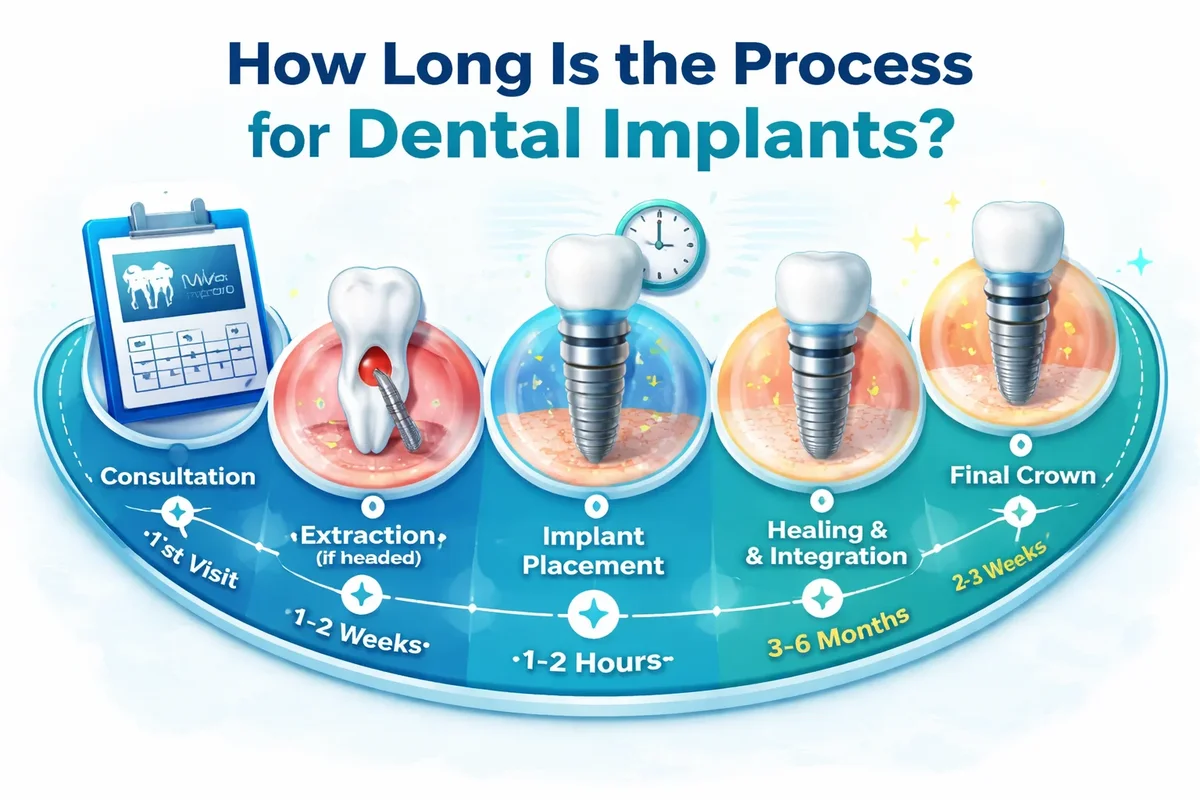
Let’s summarize the typical timeframe:
- Consultation and planning: 1–2 weeks
- Extraction healing (if needed): 6–8 weeks
- Implant placement surgery: 1 day
- Osseointegration healing: 2–6 months
- Abutment and crown placement: 2–4 weeks
As you can see, the answer to how long is the process for dental implants depends on multiple biological and clinical variables. On average, most patients complete treatment within 3–6 months, while complex cases may take longer.
If you would like a personalized timeline based on your dental condition, you can reach out directly through the Redent Klinik Contact Page. A professional evaluation will give you a clear, realistic answer tailored to your needs.
Ultimately, while many patients focus on how long is the process for dental implants, it is equally important to focus on the outcome. Dental implants are designed to last 20 years or more when properly maintained. A few months of treatment can provide decades of comfort, chewing efficiency, and a confident smile 😁.
In conclusion, how long is the process for dental implants is not a one-size-fits-all answer. For most individuals, the journey spans several months to ensure proper healing and long-term success. Understanding each phase helps set realistic expectations and allows you to approach the procedure with confidence.
What Determines How Long Is the Process for Dental Implants?
When patients ask how long is the process for dental implants, the most accurate answer is: it depends on several clinical and biological factors. While many people hope for a simple timeline, dental implant treatment is highly personalized. The total duration varies based on oral health, bone structure, healing capacity, and the complexity of the case. Understanding these factors helps set realistic expectations and ensures a successful outcome 😊.
So, what truly determines how long is the process for dental implants? Let’s explore the key elements that influence the overall treatment timeline.
1. Bone Density and Jawbone Health
The condition of your jawbone is one of the most critical factors affecting how long is the process for dental implants. Dental implants require sufficient bone volume and density to remain stable. If the bone is strong and healthy, implant placement can proceed without delay.
However, if bone loss has occurred due to missing teeth, gum disease, or long-term denture use, a bone graft may be required before implant surgery. Bone grafting can extend the timeline by 3 to 6 months, as the graft must fully integrate with your natural bone before the implant is placed.
When Bone Grafting Is Needed
- Severe bone resorption after tooth loss
- Long-standing periodontal disease
- Trauma or infection affecting the jawbone
In these cases, the answer to how long is the process for dental implants naturally becomes longer because proper bone regeneration cannot be rushed.
2. Need for Tooth Extraction
If a damaged or decayed tooth must be removed before implant placement, healing time must be factored in. After extraction, the socket typically requires 6–8 weeks to heal. In some cases, immediate implant placement is possible, but this depends on infection levels and bone stability.
This is another reason why how long is the process for dental implants varies from patient to patient. Immediate placement can shorten the timeline, but delayed placement may be safer and more predictable in certain situations.
3. Osseointegration Speed
Osseointegration is the biological process where the titanium implant fuses with the jawbone. This phase is often the longest part of treatment and plays a major role in determining how long is the process for dental implants.
Typically, osseointegration takes 2 to 4 months for lower jaw implants and 3 to 6 months for upper jaw implants. The upper jaw usually has softer bone, which may require additional healing time.
Factors That Affect Osseointegration
- Smoking habits 🚬
- Diabetes or systemic conditions
- Oral hygiene quality
- Implant location (upper vs lower jaw)
Patients who maintain excellent oral hygiene and follow post-operative instructions often experience smoother healing, potentially influencing how quickly the process progresses.
4. Number of Implants Needed
Another variable influencing how long is the process for dental implants is the number of implants being placed. A single implant usually follows a straightforward timeline. However, full-arch restorations or multiple implants may require phased surgical sessions and extended healing periods.
For example, full-mouth implant rehabilitation may take 6 to 12 months depending on complexity. Each additional implant site introduces variables that can affect healing and scheduling.
5. Type of Implant Procedure Chosen
Some patients qualify for immediate-load implants, also known as “same-day implants.” In this approach, a temporary crown is placed on the same day as implant surgery. While this may appear to shorten how long is the process for dental implants, the internal healing still requires several months.
Traditional staged implant procedures are often more conservative and predictable. Your dentist will determine which method best suits your bone condition and overall health.
6. Overall Health and Lifestyle
General health plays a surprisingly important role in determining how long is the process for dental implants. Conditions such as uncontrolled diabetes, autoimmune disorders, or poor nutrition can delay healing.
Additionally, smoking reduces blood flow to the gums, potentially extending healing time. Patients who stop smoking during treatment often experience better outcomes and faster recovery.
7. Clinic Experience and Technology
The experience of the dental team and the technology used can also impact how long is the process for dental implants. Clinics that use digital planning, 3D imaging, and guided surgery techniques may reduce surgical time and improve accuracy.
Advanced diagnostic tools help dentists create precise treatment plans, minimizing complications and unnecessary delays. According to the American Dental Association, proper planning significantly increases implant success rates.
8. Healing Response of the Individual Patient
Every body heals differently. Some patients experience rapid tissue recovery, while others require additional monitoring. This biological variability is one of the main reasons why dentists cannot give a universal answer to how long is the process for dental implants.
Even with identical procedures, healing times may vary between individuals. Age, metabolism, and immune response all contribute to recovery speed.
9. Post-Operative Care and Compliance
Following aftercare instructions is essential. Poor oral hygiene, missed appointments, or premature chewing pressure on the implant can delay healing and extend how long is the process for dental implants.
Patients who carefully follow dietary guidelines, attend follow-up visits, and maintain excellent oral hygiene often experience smoother progress.
In summary, how long is the process for dental implants is influenced by bone health, need for grafting, extraction requirements, healing speed, number of implants, and overall health. While average treatment takes between 3 and 9 months, your personal timeline will depend on these combined factors.
If you want a customized evaluation of how long is the process for dental implants in your specific case, professional consultation is essential. Personalized planning ensures not only a clear timeline but also long-term implant success and durability 😁.
Step-by-Step Timeline of the Dental Implant Procedure
Understanding the complete journey is essential when asking how long is the process for dental implants. While the total timeline may range from 3 to 9 months for most patients, breaking the procedure into clear stages makes it easier to understand. Each phase has a specific purpose, and none should be rushed if long-term success is the goal 😊.
Below is a detailed, step-by-step explanation of what determines how long is the process for dental implants from start to finish.
Step 1: Initial Consultation and Diagnostic Planning
The first stage in determining how long is the process for dental implants begins with a comprehensive consultation. During this visit, your dentist evaluates your oral health, reviews medical history, and takes digital X-rays or 3D CBCT scans.
What Happens During This Stage?
- Clinical examination of teeth and gums
- Bone density assessment
- Digital impressions or scans
- Personalized treatment planning
This phase typically takes 1–2 weeks, depending on diagnostic requirements. Although short, it is critical because accurate planning reduces complications and ensures predictable results.
Step 2: Tooth Extraction (If Required)
If a damaged or decayed tooth must be removed before implant placement, this will affect how long is the process for dental implants. After extraction, the socket usually needs 6–8 weeks to heal properly.
In some cases, immediate implant placement can be performed on the same day as extraction. However, this depends on infection levels and bone stability. If infection is present, delayed placement is often safer and more predictable.
Step 3: Bone Grafting (When Necessary)
Bone grafting is one of the main factors that extends how long is the process for dental implants. If there is insufficient bone volume to support an implant, grafting is required before implant placement.
Bone Graft Healing Time
- Minor graft: 3–4 months healing
- Major graft or sinus lift: 4–6 months healing
This healing period allows the grafted material to integrate with your natural bone, creating a stable foundation for the implant. Skipping this step would compromise implant stability.
Step 4: Implant Placement Surgery
Once the jawbone is ready, the titanium implant is surgically placed. Many patients are surprised to learn that the surgical procedure itself usually takes only 1–2 hours per implant.
However, while the surgery is relatively quick, it does not define how long is the process for dental implants. The real timeline depends on what happens next.
Step 5: Osseointegration (Healing Phase)
Osseointegration is the most important biological stage in determining how long is the process for dental implants. During this phase, the implant fuses with the jawbone.
Typical Osseointegration Timeline
- Lower jaw: 2–4 months
- Upper jaw: 3–6 months
This fusion process creates a strong anchor for the future crown. According to the American Dental Association, proper healing during osseointegration is essential for long-term implant success.
Patients who smoke or have systemic health conditions may require additional healing time. This biological factor is often the longest contributor to how long is the process for dental implants.
Step 6: Abutment Placement
After successful osseointegration, a small connector piece called an abutment is attached to the implant. This minor procedure allows the gum tissue to heal around the abutment.
Healing usually takes 2–3 weeks. Although this stage is shorter, it still contributes to the overall answer to how long is the process for dental implants.
Step 7: Final Crown Placement
The final step in determining how long is the process for dental implants is the placement of the permanent crown. Once the gums heal around the abutment, digital impressions are taken to fabricate a custom-made dental crown.
Crown Fabrication Timeline
- Impression and lab work: 1–2 weeks
- Final fitting appointment: 1 visit
After the crown is securely attached, the implant process is considered complete. At this point, the implant functions like a natural tooth in both appearance and chewing ability 😁.
Total Estimated Timeline Overview
To summarize the full breakdown of how long is the process for dental implants:
- Consultation and planning: 1–2 weeks
- Extraction healing (if needed): 6–8 weeks
- Bone graft healing (if required): 3–6 months
- Implant placement surgery: 1 day
- Osseointegration: 2–6 months
- Abutment and crown placement: 2–4 weeks
For straightforward cases without grafting, the complete timeline often falls between 3–6 months. For complex cases involving bone regeneration, the process may extend to 9–12 months.
Ultimately, when patients ask how long is the process for dental implants, the step-by-step explanation provides clarity. Each phase builds on the previous one, ensuring structural stability and long-term durability.
While the treatment may seem lengthy, it is important to remember that dental implants are designed to last 20 years or more with proper care. A few months of treatment can provide decades of function, confidence, and improved oral health.
Understanding this detailed timeline helps patients feel informed and prepared. Rather than focusing only on how long is the process for dental implants, it is beneficial to focus on achieving a stable, natural-looking, and long-lasting result.
Initial Consultation and Treatment Planning Duration
The first and most important step in answering how long is the process for dental implants begins with the initial consultation. Many patients assume the implant timeline starts on the day of surgery, but in reality, proper planning is what determines long-term success. This early phase lays the foundation for everything that follows and directly influences how long is the process for dental implants in your individual case.
The consultation and treatment planning stage typically takes 1 to 2 weeks. However, in complex cases requiring additional diagnostics or specialist coordination, this stage may take slightly longer. Although it may seem short compared to healing phases, this step plays a decisive role in ensuring the implant procedure proceeds smoothly and predictably 😊.
What Happens During the Initial Consultation?
When evaluating how long is the process for dental implants, dentists begin by conducting a comprehensive oral examination. This includes reviewing your dental history, medical background, and current oral health condition.
Comprehensive Oral Examination
- Assessment of gum health
- Evaluation of existing teeth
- Identification of infections or decay
- Checking bite alignment and jaw function
Healthy gums and adequate bone support are essential for implant stability. If gum disease is detected, it must be treated before proceeding. This can influence how long is the process for dental implants because untreated periodontal disease increases the risk of implant failure.
Advanced Imaging and Diagnostic Tools
Modern implant dentistry relies heavily on digital technology. During the planning stage, dentists typically use panoramic X-rays or 3D Cone Beam CT (CBCT) scans. These images allow precise measurement of bone density and anatomical structures such as nerves and sinuses.
Accurate imaging is crucial because it prevents surgical complications and improves implant positioning. Clinics that use digital planning tools often streamline treatment, which may positively affect how long is the process for dental implants.
Why 3D Imaging Matters
- Determines bone thickness and height
- Identifies need for bone grafting
- Helps plan exact implant angle and depth
- Reduces surgical risks
Without detailed imaging, unexpected findings during surgery could delay treatment. Therefore, investing time in diagnostics actually protects the overall timeline.
Medical History and Systemic Health Review
Another key factor influencing how long is the process for dental implants is your general health. During consultation, the dentist evaluates conditions such as diabetes, heart disease, immune disorders, and medications that may affect healing.
For example, uncontrolled diabetes can slow wound healing and osseointegration. If medical stabilization is required before implant placement, this may extend how long is the process for dental implants. However, managing systemic health first greatly improves long-term success.
Customized Treatment Planning
Once diagnostics are complete, a personalized treatment plan is developed. This includes determining:
- Number of implants needed
- Whether extraction is required
- If bone grafting or sinus lift is necessary
- Type of implant system used
- Estimated healing phases
At this stage, patients often receive a detailed explanation of how long is the process for dental implants based on their unique situation. Unlike generic online timelines, this customized estimate is far more accurate.
Discussion of Treatment Options
During planning, your dentist may discuss different approaches, such as traditional staged implants or immediate-load implants. Immediate solutions may appear to shorten how long is the process for dental implants, but they are not suitable for every patient.
The decision depends on bone stability, bite forces, and overall health. Conservative planning often leads to higher long-term success rates, as supported by professional organizations like the American Dental Association.
Financial Planning and Scheduling
Although clinical factors are primary, logistical planning also plays a role in determining how long is the process for dental implants. Coordinating surgery dates, laboratory fabrication of crowns, and follow-up appointments requires careful scheduling.
For international patients or those traveling for treatment, consultation may include travel planning and digital pre-evaluation. Efficient coordination can prevent unnecessary delays between treatment stages.
Psychological Preparation and Patient Education
Another overlooked but essential part of consultation is patient education. Understanding post-operative care, dietary adjustments, and oral hygiene routines helps avoid complications that could extend how long is the process for dental implants.
Patients who are fully informed tend to follow instructions more carefully, leading to smoother healing. This proactive preparation supports a predictable and efficient implant journey.
Why the Planning Stage Should Never Be Rushed
Some patients want to move directly to surgery, focusing only on how long is the process for dental implants from a time perspective. However, skipping thorough planning can result in complications such as implant misalignment, nerve damage, or insufficient bone support.
Proper planning reduces risks, improves aesthetic outcomes, and increases implant longevity. A well-prepared start often prevents unexpected delays later in the process.
Estimated Timeline for Consultation Phase
- Initial examination appointment: 1 day
- Diagnostic imaging and evaluation: same day or within 1 week
- Treatment planning and scheduling: 1–2 weeks
In straightforward cases, the consultation phase may be completed within 7–14 days. Complex cases involving additional tests may require slightly more time. Regardless, this stage sets the tone for the entire treatment journey.
In conclusion, the initial consultation and treatment planning phase is a critical determinant of how long is the process for dental implants. While it may seem like a small portion of the overall timeline, it directly impacts surgical precision, healing predictability, and long-term success. Careful planning ensures that every subsequent step proceeds smoothly, minimizing complications and protecting your investment in a healthy, confident smile 😁.
Tooth Extraction and Healing Time Before Implants
For many patients, the journey toward understanding how long is the process for dental implants begins with tooth extraction. If a damaged, infected, or severely decayed tooth cannot be saved, it must be removed before placing a dental implant. This step directly influences how long is the process for dental implants, as the jawbone and surrounding tissues need adequate time to heal before implant placement can safely occur.
While some cases allow immediate implant placement after extraction, most situations require a healing period. This healing time ensures the bone regenerates properly and reduces the risk of complications. Therefore, when evaluating how long is the process for dental implants, extraction and healing must be factored into the total timeline 😊.
Why Tooth Extraction May Be Necessary
Before determining how long is the process for dental implants, your dentist evaluates whether the existing tooth can be preserved. Extraction is recommended when:
- Severe tooth decay has destroyed the structure
- Advanced periodontal disease has weakened support
- Root fracture or trauma is present
- Chronic infection threatens surrounding bone
Removing the problematic tooth eliminates infection and prepares the area for implant placement. However, once extraction occurs, the body begins a natural healing process that affects how long is the process for dental implants.
Healing After Tooth Extraction
After extraction, the socket fills with a blood clot, which is the foundation for tissue regeneration. Over the next several weeks, bone and soft tissue gradually repair the area. In straightforward cases, the healing phase lasts approximately 6 to 8 weeks.
What Happens During Healing?
- Formation of protective blood clot
- Development of new soft tissue
- Gradual bone regeneration
- Reduction of inflammation
This biological healing process plays a major role in answering how long is the process for dental implants. Rushing implant placement before complete healing can compromise stability and increase the risk of implant failure.
Immediate Implant Placement: Is It Faster?
Some patients qualify for immediate implant placement, meaning the implant is inserted on the same day as extraction. This approach can reduce how long is the process for dental implants in selected cases.
However, immediate placement depends on several factors:
- No active infection present
- Sufficient surrounding bone
- Stable socket walls
- Good overall health
If these conditions are not ideal, delayed implant placement is safer. While waiting may extend how long is the process for dental implants, it significantly improves long-term success rates.
Bone Preservation After Extraction
One of the most important concerns after extraction is bone loss. When a tooth is removed, the jawbone in that area may begin to shrink. This natural resorption process can influence how long is the process for dental implants, especially if bone grafting becomes necessary.
Socket Preservation Technique
To minimize bone loss, dentists often perform a socket preservation procedure. This involves placing bone graft material into the extraction site immediately after removal. The goal is to maintain bone volume for future implant placement.
Socket preservation may slightly extend healing time by a few weeks, but it often prevents larger grafting procedures later. In many cases, this proactive step actually stabilizes the overall answer to how long is the process for dental implants.
Managing Infection Before Implant Placement
If the extracted tooth had an abscess or chronic infection, complete healing becomes even more important. Infection must be fully resolved before implant surgery. This may require antibiotic therapy and additional healing time.
Although this can extend how long is the process for dental implants, eliminating infection ensures the implant integrates successfully during osseointegration.
Pain and Recovery After Extraction
Many patients worry that extraction will significantly delay treatment. In reality, discomfort typically subsides within a few days. Swelling may last up to a week. Following post-operative instructions carefully helps avoid complications that could prolong how long is the process for dental implants.
Tips for Faster Healing
- Avoid smoking 🚭
- Maintain excellent oral hygiene
- Follow soft diet recommendations
- Attend follow-up appointments
Patients who adhere to aftercare instructions often experience smooth healing without delays.
How Extraction Timing Fits Into the Overall Implant Timeline
When calculating how long is the process for dental implants, extraction healing usually adds 1.5 to 2 months before implant placement. After that, the implant itself still requires osseointegration, which may take an additional 2 to 6 months.
Therefore, in cases requiring extraction, the total timeline may range between 4 to 8 months, depending on healing speed and bone condition.
Professional Guidelines and Predictability
According to the American Dental Association, allowing proper healing between extraction and implant placement significantly improves long-term outcomes. This reinforces the idea that patience is essential when determining how long is the process for dental implants.
Although patients often focus on speed, prioritizing biological healing ensures the implant remains stable for decades.
Final Thoughts on Extraction and Implant Timing
Tooth extraction is often the first critical step in determining how long is the process for dental implants. While it may extend the timeline slightly, it prepares a healthy foundation for successful implant placement.
In summary, healing after extraction typically requires 6–8 weeks before implant placement. Immediate implants may shorten the timeline in certain cases, but careful evaluation is necessary. Ultimately, understanding this phase helps patients feel more confident and prepared for their implant journey 😁.
How Long Does Implant Placement Surgery Take?
When patients ask how long is the process for dental implants, many are specifically referring to the surgical phase. Implant placement surgery is often the most anticipated step in the journey. However, while the surgery itself is relatively quick, it represents only one part of the overall timeline. Understanding this distinction helps clarify how long is the process for dental implants from a realistic perspective 😊.
On average, implant placement surgery takes between 60 to 120 minutes per implant. For single implants, the procedure can often be completed within one hour. Multiple implants or full-arch procedures may take several hours. Despite this relatively short surgical time, the healing process afterward plays a much larger role in determining how long is the process for dental implants.
What Happens During Implant Placement Surgery?
Implant surgery is a carefully planned and minimally invasive procedure performed under local anesthesia. In some cases, sedation may be offered for patient comfort. The precision of this stage directly impacts the stability of the implant and influences how long is the process for dental implants in terms of healing success.
Step-by-Step Surgical Procedure
- Administration of local anesthesia
- Small incision in the gum tissue
- Preparation of the bone site using specialized drills
- Insertion of the titanium implant into the jawbone
- Placement of a healing cap or temporary cover
- Suturing of the gum tissue
The procedure is typically painless due to anesthesia. Mild discomfort after surgery is normal but manageable with prescribed medications.
Single Implant vs. Multiple Implants
The number of implants placed in one session influences the surgical duration. For a single tooth replacement, the operation may take less than an hour. However, full-mouth restorations, such as All-on-4 systems, may require 2–4 hours.
Although surgical time varies, it is important to remember that the length of surgery does not fully define how long is the process for dental implants. Healing and osseointegration remain the most time-consuming phases.
Is Implant Surgery Performed in One Visit?
In most straightforward cases, implant placement is completed in a single appointment. However, complex cases involving bone grafting or sinus lifting may require additional procedures, extending how long is the process for dental implants.
When Additional Procedures Are Needed
- Simultaneous bone graft during implant placement
- Sinus lift in the upper jaw
- Guided tissue regeneration
These supplementary treatments may add time to the surgical visit and extend the healing timeline.
Immediate Load vs. Traditional Implant Surgery
Some patients qualify for immediate-load implants, where a temporary crown is attached on the same day as surgery. This can give the impression that how long is the process for dental implants is significantly shorter.
However, even with immediate loading, the internal healing process still takes several months. The implant must fuse with the bone regardless of when the crown is placed. Therefore, cosmetic completion does not eliminate biological healing time.
Post-Surgical Healing Period
After surgery, the body begins osseointegration — the process where the implant integrates with the jawbone. This healing phase largely determines how long is the process for dental implants overall.
Typical Healing Timeline After Surgery
- Initial soft tissue healing: 1–2 weeks
- Bone integration (osseointegration): 2–6 months
Patients may return to daily activities within 24–48 hours. Swelling usually subsides within a few days. Following aftercare instructions carefully helps prevent complications that could extend how long is the process for dental implants.
Does Implant Surgery Hurt?
Modern implant surgery is generally comfortable thanks to local anesthesia and advanced techniques. Most patients report minimal discomfort during the procedure. Mild swelling or tenderness afterward is normal and temporary.
Proper pain management and hygiene practices help ensure smooth healing, reducing the likelihood of delays in how long is the process for dental implants.
Technology and Surgical Precision
Clinics that use digital surgical guides and 3D planning technology can perform implant placement with high precision. Guided surgery reduces operative time and improves accuracy.
Advanced technology not only enhances safety but may also positively influence how long is the process for dental implants by minimizing complications and ensuring proper implant positioning.
According to the American Dental Association, dental implants are considered a predictable and safe treatment when performed with proper planning and technique.
Recovery and Return to Normal Activities
Most patients resume normal daily routines within one to two days after surgery. Heavy physical activity should be avoided for several days. Smoking and poor oral hygiene can negatively affect healing and extend how long is the process for dental implants.
Tips for Faster Post-Surgical Recovery
- Apply cold compress during the first 24 hours ❄️
- Eat soft foods for several days
- Avoid smoking and alcohol
- Follow prescribed medication guidelines
Adhering to these recommendations supports faster healing and improves overall treatment predictability.
Final Perspective on Surgical Timing
While implant placement surgery typically lasts only one to two hours, it represents just one milestone in the broader journey. The surgical procedure itself does not define how long is the process for dental implants; instead, the biological healing afterward determines the total duration.
In summary, implant placement surgery is efficient, safe, and usually completed in a single visit. However, complete treatment — including healing and final crown placement — may take several months. Understanding this distinction helps patients approach the procedure with realistic expectations and confidence 😁.
Osseointegration: The Longest Phase of the Process
When discussing how long is the process for dental implants, one phase stands out as the most time-consuming and biologically critical: osseointegration. While the surgical placement of an implant may take only an hour or two, osseointegration requires patience. This natural healing process determines whether the implant will remain stable and functional for decades 😊.
In simple terms, osseointegration is the process by which the titanium implant fuses with the surrounding jawbone. This fusion creates a solid foundation that mimics the root of a natural tooth. Without successful osseointegration, the implant cannot properly support a crown. Therefore, when patients ask how long is the process for dental implants, the answer largely depends on how well and how quickly this phase progresses.
What Exactly Is Osseointegration?
Osseointegration is a biological bonding process between living bone tissue and the titanium implant surface. Titanium is biocompatible, meaning the body accepts it without rejection. Over time, bone cells grow and attach to the implant surface, creating a secure anchor.
Why Titanium Is Used
- Highly biocompatible material
- Resistant to corrosion
- Strong yet lightweight
- Encourages bone cell attachment
This bonding process is the main reason how long is the process for dental implants cannot be completed in just a few weeks. The body requires sufficient time to generate stable bone integration.
How Long Does Osseointegration Take?
The duration of osseointegration varies depending on the implant location and patient health. On average:
- Lower jaw (mandible): 2–4 months
- Upper jaw (maxilla): 3–6 months
The upper jaw generally has softer bone density, which explains why how long is the process for dental implants may be slightly longer in this area.
Although these timeframes represent averages, individual healing capacity plays a significant role. Some patients integrate implants faster, while others require additional monitoring.
Factors That Influence Osseointegration Speed
Several variables affect how smoothly this phase progresses and directly influence how long is the process for dental implants.
1. Bone Quality and Density
Denser bone provides stronger primary stability, potentially supporting faster integration.
2. Smoking Habits 🚭
Smoking reduces blood supply to gum tissue and slows bone healing, often extending how long is the process for dental implants.
3. Systemic Health Conditions
Uncontrolled diabetes, autoimmune disorders, or osteoporosis may delay bone regeneration.
4. Oral Hygiene
Poor oral hygiene increases the risk of infection, which can interrupt osseointegration.
Careful adherence to post-operative instructions significantly improves the likelihood of timely integration.
What Happens During the Healing Period?
During osseointegration, patients usually wear a temporary restoration or healing cap. Although the implant is placed in the bone, it should not be subjected to excessive chewing forces until full integration occurs.
This waiting period is often when patients most strongly wonder how long is the process for dental implants. While the implant may feel stable, the microscopic bonding process is still ongoing beneath the surface.
Healing Milestones
- Week 1–2: Soft tissue healing around the implant
- Month 1–2: Initial bone attachment
- Month 3–6: Full bone remodeling and stabilization
Only after successful osseointegration can the dentist safely proceed with abutment and crown placement.
Can Osseointegration Be Accelerated?
Patients often ask whether it is possible to shorten how long is the process for dental implants by accelerating healing. While certain advanced implant surface technologies may promote faster integration, the biological process itself cannot be rushed beyond safe limits.
Modern implant systems use specially treated surfaces to enhance bone attachment. These technologies may reduce healing time in selected cases, but patient health remains the most important factor.
According to the American Dental Association, respecting biological healing periods significantly increases implant success rates.
What If Osseointegration Fails?
Although rare, implant failure can occur if integration does not complete successfully. Infection, excessive pressure, or poor bone quality are common causes. In such cases, the implant may need to be removed and replaced after healing.
This possibility highlights why understanding how long is the process for dental implants includes allowing adequate healing time rather than prioritizing speed.
Patient Experience During Osseointegration
Most patients experience minimal discomfort during this phase. After initial surgical soreness subsides, daily activities can resume normally. Regular follow-up visits ensure the implant is integrating properly.
During these appointments, your dentist evaluates stability and monitors bone response. These evaluations help determine whether the timeline for how long is the process for dental implants remains on track.
Why This Phase Is Essential for Long-Term Success
Osseointegration is the foundation of implant durability. A well-integrated implant can last 20 years or more with proper care. This makes the healing period a worthwhile investment in long-term oral health.
Although waiting several months may feel lengthy, it ensures the implant functions like a natural tooth root. When patients fully understand how long is the process for dental implants, they often feel more confident and patient during this critical phase.
Final Thoughts on the Longest Phase
In summary, osseointegration is the defining stage in determining how long is the process for dental implants. While the surgery itself is brief, the biological bonding process requires 2 to 6 months on average.
This healing phase cannot be rushed without compromising stability. By respecting the body’s natural timeline, patients achieve strong, predictable, and long-lasting results 😁.
Abutment Placement and Gum Healing Period
After successful osseointegration, patients often believe they are nearing the end of treatment. However, another important step still plays a role in determining how long is the process for dental implants: abutment placement and gum healing. Although this stage is shorter than osseointegration, it is essential for achieving proper aesthetics, comfort, and long-term stability 😊.
The abutment is a small connector piece that attaches to the top of the implant. It serves as the support structure for the final dental crown. While the implant integrates with the bone beneath the gum, the abutment sits above the gum line, connecting the implant to the visible restoration. This step may seem minor, but it directly impacts how long is the process for dental implants and the overall success of the treatment.
What Is an Abutment and Why Is It Necessary?
The abutment acts as a bridge between the implant and the crown. Without it, the crown would have no stable structure to attach to. Once osseointegration is confirmed, the dentist reopens the gum tissue slightly to access the implant and secure the abutment.
Functions of the Abutment
- Connects implant to final crown
- Shapes gum tissue for natural appearance
- Provides structural stability
- Supports long-term chewing function
This stage typically adds 2–3 weeks to how long is the process for dental implants, as the gums need time to heal and adapt around the abutment.
The Abutment Placement Procedure
Abutment placement is usually a minor procedure performed under local anesthesia. The dentist gently reopens the gum tissue to expose the implant and then attaches the abutment.
Step-by-Step Process
- Local anesthesia for comfort
- Small incision to access implant
- Attachment of abutment
- Placement of healing cap if needed
- Stitching (in some cases)
The procedure itself often takes less than 30 minutes per implant. However, while the appointment is short, healing afterward influences how long is the process for dental implants.
Gum Healing Around the Abutment
Once the abutment is in place, the surrounding gum tissue must heal and form a natural contour. This soft tissue healing typically takes 2 to 3 weeks.
During this period, the gums adapt to the new structure. Proper healing ensures that the final crown fits naturally and blends seamlessly with adjacent teeth. Although this stage may seem brief compared to osseointegration, it still contributes to the total answer to how long is the process for dental implants.
Why Gum Healing Is Important
- Prevents bacterial entry around the implant
- Ensures aesthetic gum contour
- Supports long-term implant health
- Reduces risk of peri-implantitis
Rushing this stage may lead to improper tissue formation or aesthetic compromise.
Temporary vs. Permanent Abutments
In some cases, a temporary abutment is placed to shape the gums before the final restoration. This can slightly extend how long is the process for dental implants, but it improves the final cosmetic result.
Custom abutments may also be fabricated in a dental laboratory to ensure precise fit and alignment. Lab fabrication may require an additional 1–2 weeks before crown placement can proceed.
Discomfort and Recovery
Most patients experience minimal discomfort after abutment placement. Mild tenderness or swelling may occur for a few days. Following proper aftercare instructions helps prevent complications that could delay how long is the process for dental implants.
Post-Procedure Care Tips
- Maintain gentle oral hygiene
- Avoid hard foods for several days
- Rinse with antimicrobial mouthwash
- Attend follow-up visits
Patients who follow these guidelines typically heal quickly without complications.
Impact on Overall Timeline
When calculating how long is the process for dental implants, the abutment stage generally adds 2–4 weeks after osseointegration. This includes healing time and preparation for the final crown.
In straightforward cases, the timeline progresses smoothly. However, if gum inflammation or infection develops, additional healing time may be required. This reinforces the importance of maintaining excellent oral hygiene throughout treatment.
Why This Stage Should Not Be Overlooked
Although many patients focus primarily on implant surgery and osseointegration, abutment placement is crucial for aesthetic and functional success. The contour of the gum tissue significantly affects how natural the final restoration appears.
According to the American Dental Association, maintaining healthy soft tissue around implants is essential for long-term stability. Proper gum adaptation ensures a strong seal around the implant, reducing the risk of bacterial complications.
Preparing for the Final Crown
Once the gums have healed, impressions or digital scans are taken to design the permanent crown. This step moves the patient closer to completing the treatment journey and finalizing the answer to how long is the process for dental implants.
At this stage, patients often feel excited because the visible tooth replacement is just weeks away 😁. However, patience remains important to ensure optimal fit and comfort.
Final Thoughts on the Abutment Stage
In summary, abutment placement and gum healing may add a few additional weeks to how long is the process for dental implants. While relatively short compared to osseointegration, this stage plays a vital role in ensuring natural appearance, structural stability, and long-term implant health.
Understanding this step helps patients appreciate why every phase of treatment contributes to a predictable and durable outcome. By allowing proper gum healing, you ensure that your dental implant not only functions effectively but also looks completely natural for years to come.
Final Crown Placement and Completing the Implant Journey
After months of healing and preparation, patients finally reach the last stage in determining how long is the process for dental implants: the placement of the final crown. This is the moment when the implant transforms from a hidden titanium post into a fully functional, natural-looking tooth. Although this stage is typically shorter than previous phases, it represents the completion of the entire treatment timeline 😊.
When people ask how long is the process for dental implants, they often focus on surgery and healing. However, the final restoration stage is equally important because it ensures proper function, aesthetics, and long-term durability.
What Is the Final Crown?
The final crown is the visible portion of the dental implant — the part that looks and functions like a natural tooth. It is custom-made in a dental laboratory to match the color, shape, and size of surrounding teeth.
Materials Used for Implant Crowns
- Porcelain fused to metal (PFM)
- All-ceramic crowns
- Zirconia crowns
Zirconia and all-ceramic crowns are often preferred for their durability and aesthetic appeal. The choice of material does not significantly affect how long is the process for dental implants, but it may influence laboratory fabrication time.
Impressions and Digital Scanning
Before fabricating the final crown, precise impressions or digital scans are taken. This ensures the crown fits perfectly over the abutment and aligns properly with your bite.
Modern digital scanning technology can speed up this phase slightly, but laboratory production still typically takes 1 to 2 weeks. This short waiting period adds to how long is the process for dental implants, but ensures optimal accuracy and comfort.
Crown Placement Appointment
Once the crown is ready, the dentist schedules a placement appointment. This visit usually lasts less than one hour. During this session:
- The fit of the crown is carefully checked
- Bite alignment is adjusted if necessary
- The crown is securely attached to the abutment
- Final polishing and evaluation are completed
At this stage, patients often feel relieved because the visible part of the journey is complete. However, the entire path to this point defines how long is the process for dental implants, not just this final appointment.
How the Final Stage Impacts the Total Timeline
The crown placement phase generally adds 2–3 weeks after abutment healing. While this may seem minor, it still contributes to the total duration of how long is the process for dental implants.
In straightforward cases without grafting or complications, the full process may take 3–6 months. In more complex cases, including bone grafting or sinus lifting, it may extend to 9–12 months.
Immediate Results After Crown Placement
One of the most satisfying aspects of this stage is the immediate functional improvement. Patients can chew comfortably and smile confidently as soon as the final crown is secured 😁.
Benefits of the Completed Implant
- Restored chewing efficiency
- Improved speech clarity
- Natural-looking aesthetics
- Prevention of adjacent tooth shifting
Although patients are often focused on how long is the process for dental implants, the long-term benefits far outweigh the temporary waiting period.
Post-Placement Care and Maintenance
Even after the crown is placed, maintaining good oral hygiene remains essential. Proper care ensures that the implant lasts 20 years or more.
Long-Term Maintenance Tips
- Brush twice daily with a soft toothbrush
- Floss around the implant using implant-specific floss
- Schedule regular dental check-ups
- Avoid excessive biting forces on hard objects
Consistent maintenance does not affect how long is the process for dental implants, but it protects your investment and prevents complications such as peri-implantitis.
When Is the Process Officially Complete?
From a clinical perspective, the process is considered complete once the final crown is secured and properly adjusted. At this point, the question of how long is the process for dental implants transitions from treatment duration to long-term performance.
However, periodic monitoring remains important. Regular dental visits allow early detection of potential issues and ensure the implant remains stable.
According to the American Dental Association, dental implants are one of the most predictable tooth replacement options when properly maintained.
The Emotional and Functional Impact
Beyond clinical success, completing the implant journey has a strong emotional impact. Many patients report improved confidence, better social interaction, and enhanced quality of life.
While waiting several months may initially feel long when considering how long is the process for dental implants, the outcome provides lasting comfort and satisfaction.
Final Summary of the Implant Journey
To summarize, the final crown placement is the concluding step in determining how long is the process for dental implants. Although this stage itself is relatively quick, it completes a carefully structured treatment plan involving consultation, extraction (if needed), implant placement, osseointegration, and abutment healing.
In total, most patients complete their implant journey within 3 to 9 months, depending on complexity. The final result is a stable, natural-looking, and durable tooth replacement that can last decades.
Understanding every stage helps patients feel informed and confident throughout the journey. When viewed from a long-term perspective, the answer to how long is the process for dental implants becomes less about months and more about achieving a lifetime of improved oral health and confidence.
Can the Dental Implant Process Be Faster? Immediate Load Options
One of the most frequent follow-up questions after asking how long is the process for dental implants is whether the timeline can be shortened. Many patients are interested in faster solutions, especially if they have visible missing teeth or upcoming social events. While traditional implant treatment often takes several months, certain advanced techniques may reduce visible treatment time. However, understanding the difference between cosmetic speed and biological healing is essential when evaluating how long is the process for dental implants 😊.
Immediate load implants — sometimes called “same-day implants” or “teeth in a day” — are designed to place a temporary restoration on the implant shortly after surgery. This approach can significantly reduce the time without a tooth, but it does not eliminate the internal healing process required for long-term stability.
What Are Immediate Load Implants?
Immediate load implants allow a temporary crown or bridge to be attached to the implant within 24–48 hours after placement. In some cases, the temporary restoration is placed on the same day as surgery.
Key Characteristics of Immediate Load Treatment
- Implant and temporary crown placed in one visit
- Reduced time without visible teeth
- Carefully controlled biting forces
- Strict patient selection criteria
While this technique may appear to shorten how long is the process for dental implants, the osseointegration phase still requires several months internally.
Who Is a Candidate for Immediate Load Implants?
Not every patient qualifies for accelerated treatment. Several conditions must be met to safely reduce the visible timeline of how long is the process for dental implants.
Ideal Candidate Requirements
- Strong bone density
- No active infection
- Good overall health
- Non-smoker or light smoker
- Stable bite alignment
Patients with insufficient bone volume or systemic health conditions may require traditional staged treatment. In such cases, attempting to shorten how long is the process for dental implants could compromise implant stability.
Immediate Load vs. Traditional Implants
In traditional implant protocols, the implant is placed and allowed to heal for several months before attaching the crown. Immediate load protocols reduce the waiting period for visible restoration but still require careful monitoring during osseointegration.
The difference lies mainly in when the crown is attached, not in how the bone integrates with the implant. Therefore, even if the aesthetic phase is faster, the biological answer to how long is the process for dental implants remains largely unchanged.
Advantages of Immediate Load Treatment
- Immediate improvement in appearance 😁
- Shorter period without teeth
- Reduced number of surgical visits
- Improved patient satisfaction
These benefits make immediate load implants attractive for eligible patients.
Potential Risks and Considerations
Although faster results are appealing, they require precise planning and execution. Placing pressure on an implant too early may interfere with osseointegration, potentially extending how long is the process for dental implants if complications arise.
Possible Risks
- Implant micromovement
- Delayed bone integration
- Increased risk of early failure
- Need for revision surgery
Careful patient selection and strict adherence to post-operative guidelines are essential to minimize these risks.
All-on-4 and Full-Arch Immediate Solutions
For patients requiring full-mouth restoration, systems like All-on-4 allow placement of multiple implants and a temporary fixed bridge on the same day. This approach can dramatically reduce the cosmetic waiting period.
However, even in these cases, the full biological healing phase continues for several months. Therefore, when evaluating how long is the process for dental implants, it is important to distinguish between visible restoration and complete bone integration.
Does Immediate Load Reduce Overall Treatment Time?
In selected cases, immediate load protocols may shorten the visible phase by several months. However, the underlying healing timeline still follows natural biological processes. For most patients, how long is the process for dental implants still includes 2–6 months of osseointegration before placing the final permanent crown.
The temporary crown placed immediately after surgery is later replaced with a permanent, custom-designed restoration once full healing is confirmed.
Professional Guidelines and Safety
According to the American Dental Association, immediate load implants can be successful when carefully planned and properly executed. However, patient evaluation remains critical to ensure long-term stability.
Attempting to reduce how long is the process for dental implants without meeting proper clinical criteria may increase the risk of implant failure.
Balancing Speed and Long-Term Success
It is natural to want faster results, but dental implants are a long-term investment. Prioritizing stability and health over speed ensures the implant lasts for decades. While immediate load options can improve convenience and aesthetics, they must be chosen carefully.
Ultimately, the true measure of success is not only how long is the process for dental implants, but how well the implant performs over time. A slightly longer treatment plan often provides greater predictability and durability.
Final Perspective on Accelerated Implant Options
In summary, immediate load implants can reduce the time without visible teeth and may shorten certain stages of treatment. However, the biological integration process cannot be rushed. For most patients, how long is the process for dental implants still spans several months to ensure secure bone fusion.
By understanding both traditional and accelerated options, patients can make informed decisions that balance speed with long-term success. A carefully planned implant journey ultimately delivers a stable, natural-looking smile that lasts for many years 😊.