
One of the most common and important questions patients ask before starting implant treatment is
how long is the process of getting dental implants. This is completely understandable.
Dental implants are not a one-day cosmetic procedure; they are a medical treatment that involves
bone, gums, healing biology, and precision dentistry. The total timeline can feel confusing when
patients hear answers ranging from “a few months” to “almost a year.” In reality, the duration
depends on several clinical and personal factors, and understanding these factors helps you set
realistic expectations 😊.
To clearly answer how long is the process of getting dental implants, it’s important
to understand that implant treatment happens in stages. Each stage serves a critical purpose:
preparing the mouth, placing the implant, allowing the bone to heal, and finally restoring the
tooth. Skipping or rushing any of these steps can compromise long-term success. Dental implants
are designed to last decades, so the process prioritizes stability and health over speed.
For patients with ideal oral health and sufficient jawbone, how long is the process of getting dental implants
may be as short as 3 to 4 months. However, for patients who need tooth extractions, bone grafting,
or sinus lift procedures, the timeline can extend to 6–12 months. This doesn’t mean complications—
it simply means the body needs more time to heal and regenerate bone tissue properly 🦷.
Another key reason how long is the process of getting dental implants varies is the
natural healing process called osseointegration. This is when the titanium implant fuses
with your jawbone. It cannot be rushed or artificially accelerated without increasing the risk
of implant failure. Think of it like planting a tree: strong roots take time to grow, but once they
do, the foundation is solid for life 🌱.
Modern dentistry has improved implant timelines significantly. In certain cases, immediate implant
placement or immediate loading (placing a temporary tooth on the same day) may be possible. Even then,
the overall healing phase continues beneath the surface. So while a patient may leave the clinic
with teeth quickly, how long is the process of getting dental implants still includes
several months of biological integration.
Patient-specific factors also influence how long is the process of getting dental implants.
These include age, smoking habits, diabetes, bone density, oral hygiene, and overall health. For example,
a healthy non-smoker with good bone quality will usually heal faster than a patient with advanced gum disease
or bone loss. This is why personalized treatment planning is essential and why timelines should never be
copied from another patient’s experience.
It’s also important to distinguish between treatment time and chair time. While the total
implant journey may take months, the actual time spent in the dental chair is surprisingly short.
Consultations usually take 30–60 minutes, implant surgery often lasts under an hour per implant, and
follow-up visits are brief. When patients ask how long is the process of getting dental implants,
they are often relieved to learn that most of the timeline happens naturally as the body heals on its own.
Dental clinics that follow international standards and evidence-based protocols—such as those recommended
by the American Dental Association—emphasize healing time
because it directly affects implant success rates. Clinics that promise “instant permanent teeth” without
medical justification may increase long-term risks. A careful, staged approach ensures both safety and durability.
If you’re considering implant treatment and want a personalized timeline assessment, a professional consultation
is the best first step. You can reach out directly through the
Redent Klinik Contact Page to receive a detailed evaluation
based on your bone structure, oral health, and treatment goals. This individualized approach gives the most accurate
answer to how long is the process of getting dental implants for you.
In summary, how long is the process of getting dental implants is not a fixed number but a
well-structured medical journey. While the full process typically ranges from a few months to nearly a year,
the reward is a stable, natural-looking, and long-lasting tooth replacement. Understanding the timeline upfront
reduces anxiety, builds trust, and helps patients move forward with confidence 😄.
What Determines How Long the Dental Implant Process Takes?
When patients ask how long is the process of getting dental implants, they are often hoping for a single, simple answer. In reality, the timeline is influenced by a combination of biological, medical, and procedural factors. Dental implant treatment is highly personalized, and no two mouths heal in exactly the same way. Understanding what determines the duration helps patients feel more in control and confident throughout the journey 😊.
At its core, how long is the process of getting dental implants depends on how prepared the mouth is to receive the implant and how efficiently the body heals afterward. Dentists evaluate several key factors before estimating a treatment timeline, and each of these can either shorten or extend the overall process.
Overall Oral and General Health
One of the most important determinants of how long is the process of getting dental implants is the patient’s overall health. Conditions such as uncontrolled diabetes, autoimmune diseases, or osteoporosis can slow healing and require a more cautious treatment pace. Similarly, gum disease must be treated before implants can be placed, which can add weeks or months to the timeline.
General health matters just as much as oral health. A strong immune system supports faster healing and reduces the risk of infection. Patients who maintain good nutrition, manage chronic conditions, and follow medical advice often experience a smoother and more predictable implant process 🧘♂️.
Jawbone Quality and Bone Density
Jawbone condition plays a major role in determining how long is the process of getting dental implants. Dental implants rely on the jawbone for stability, so sufficient bone volume and density are essential. Patients who have experienced bone loss due to long-term tooth loss or gum disease may require additional procedures, such as bone grafting or sinus lifts.
If bone grafting is needed, healing time can add 3–6 months before implant placement is even possible. While this extends how long is the process of getting dental implants, it significantly increases the success and longevity of the implant. Rushing this step can lead to implant failure, which ultimately costs more time and effort.
Bone Grafting vs Natural Bone Healing
Patients with healthy, dense jawbone may be eligible for immediate implant placement, which can shorten how long is the process of getting dental implants. In contrast, grafted bone must mature and integrate before it can safely support an implant. This difference alone can explain why one patient completes treatment in months while another takes closer to a year.
Number of Implants Being Placed
The number of implants needed also influences how long is the process of getting dental implants. A single implant typically requires less planning and fewer surgical steps than multiple implants or full-mouth restorations. However, multiple implants can sometimes be placed during the same surgical session, reducing overall treatment time.
For full-mouth implant solutions, such as implant-supported dentures, advanced planning and healing phases are required. Even though the surgery itself may be completed in one or two days, the biological healing process still plays a critical role in determining how long is the process of getting dental implants.
Healing Ability and Lifestyle Factors
Every patient heals differently, and healing capacity is a key variable in how long is the process of getting dental implants. Smoking, for example, significantly slows blood flow to the gums and bone, increasing healing time and implant failure risk 🚭. Dentists often recommend quitting smoking before and after implant surgery to protect results.
Good oral hygiene, proper rest, and following post-operative instructions can shorten recovery phases. Patients who attend follow-up visits and report issues early often complete their implant journey faster and with fewer complications.
Type of Implant Technique Used
Advancements in implant dentistry have introduced techniques that can influence how long is the process of getting dental implants. In select cases, immediate loading or same-day implants may be possible, allowing a temporary crown to be placed shortly after surgery. However, these techniques are not suitable for everyone and still require months of internal healing.
Conventional implant protocols remain the gold standard for long-term success, as supported by organizations like the
American Dental Association. These protocols prioritize healing biology over speed, ensuring implants remain stable for decades.
Professional Planning and Diagnostic Accuracy
Accurate diagnostics significantly affect how long is the process of getting dental implants. Digital scans, 3D imaging, and detailed treatment planning help dentists avoid surprises that could delay treatment. Poor planning can lead to complications, revisions, or failed implants—all of which extend the timeline.
Clinics that invest time in precise planning often complete implant treatments more efficiently, even if the initial phase feels longer. A well-planned start almost always leads to a smoother and faster finish 🦷.
If you want a clear and personalized estimate for how long is the process of getting dental implants, a professional evaluation is essential. You can schedule a consultation through the
Redent Klinik Contact Page to receive a timeline tailored specifically to your oral health, bone condition, and treatment goals.
In conclusion, how long is the process of getting dental implants is determined by a combination of health, bone structure, lifestyle, and clinical planning. While timelines vary, each step exists to protect your long-term oral health. A carefully paced implant journey is not a delay—it is an investment in a strong, natural, and lasting smile 😄.
Initial Consultation and Planning Timeline Explained
The very first stage in answering how long is the process of getting dental implants begins with the initial consultation and treatment planning phase. While this step does not involve surgery, it is one of the most critical parts of the entire implant journey. A thorough and accurate planning process ensures that every following step is predictable, safe, and successful 😊.
Many patients underestimate this phase, assuming it is just a quick check-up. In reality, the consultation phase lays the foundation for the entire treatment. A well-executed plan can significantly optimize how long is the process of getting dental implants by preventing delays, complications, or unnecessary additional procedures later on.
What Happens During the First Implant Consultation?
During the first appointment, the dentist conducts a comprehensive evaluation of your oral health. This includes examining your teeth, gums, bite alignment, and existing restorations. Advanced imaging techniques such as panoramic X-rays or 3D CBCT scans are often used to assess bone volume and density. These scans play a key role in determining how long is the process of getting dental implants, as they reveal whether the jawbone can immediately support an implant.
The dentist will also review your medical history in detail. Conditions such as diabetes, heart disease, or medications like bisphosphonates can influence healing time. This medical screening helps create a realistic and safe timeline rather than an overly optimistic one 🩺.
Diagnostic Imaging and Digital Planning
Modern implant dentistry relies heavily on digital diagnostics. High-resolution imaging allows dentists to visualize nerve positions, sinus cavities, and bone structure with extreme accuracy. This level of precision reduces surgical risks and contributes to a more efficient answer to how long is the process of getting dental implants.
In many clinics, digital implant planning software is used to simulate the procedure before it happens. This enables dentists to determine the ideal implant size, angle, and placement position. When planning is done correctly, it minimizes surgical time and helps avoid unexpected delays during treatment.
Why Planning Can Take More Than One Visit
In some cases, the consultation and planning stage may require more than one visit. This is especially true if additional tests are needed or if multiple treatment options must be evaluated. While this may slightly extend how long is the process of getting dental implants at the beginning, it often shortens the overall journey by preventing mistakes later.
Customized Treatment Plan and Timeline
Once all diagnostic data is collected, the dentist creates a personalized treatment plan. This plan outlines every stage of the implant process, including extractions, grafting (if needed), implant placement, healing phases, and final restoration. At this point, patients receive a clearer and more accurate estimate of how long is the process of getting dental implants.
This is also when patients learn whether they are candidates for immediate implant placement or if a delayed approach is safer. Immediate placement may shorten visible treatment time, but the biological healing timeline still applies. Honest communication during this stage builds trust and sets realistic expectations 🤝.
Pre-Treatment Preparations
Before moving forward, certain preparatory steps may be required. These can include professional teeth cleaning, gum disease treatment, or tooth extractions. Each of these steps can influence how long is the process of getting dental implants, but they are essential for long-term success.
Patients may also receive instructions regarding smoking cessation, medication adjustments, or dietary changes. Following these recommendations closely can improve healing and prevent delays once implant surgery begins.
Patient Questions and Decision-Making Time
An often-overlooked factor in how long is the process of getting dental implants is the patient’s own decision-making timeline. Some patients choose to proceed immediately, while others prefer time to consider options, schedules, or travel arrangements. This is completely normal and should not be rushed.
Quality clinics encourage patients to ask questions, understand the procedure, and feel confident before moving forward. This collaborative approach reduces anxiety and leads to higher satisfaction throughout the implant process 😌.
Clinics that follow evidence-based standards, such as those outlined by the
American Dental Association, emphasize detailed planning because it directly affects implant success rates and long-term outcomes.
If you want to begin your implant journey with a clear and personalized plan, you can schedule an evaluation through the
Redent Klinik Contact Page. A professional consultation provides the most accurate estimate of how long is the process of getting dental implants based on your unique oral condition.
In summary, the consultation and planning phase may take days or weeks, but it plays a decisive role in determining how long is the process of getting dental implants overall. Investing time in careful diagnosis and planning ensures a smoother, safer, and more efficient implant experience from start to finish 🦷.
Tooth Extraction and Healing Phase Duration
A major factor influencing how long is the process of getting dental implants is whether a tooth extraction is required before implant placement. Many patients seek implants because a tooth is damaged, infected, or already missing. When a tooth must be removed, the body needs time to heal before the jawbone can safely support an implant. This healing phase is not optional—it is essential for long-term implant success 🦷.
Understanding this stage helps clarify how long is the process of getting dental implants and why timelines can vary so much between patients. While some people can proceed quickly, others need additional healing time to protect bone health and gum stability.
When Is Tooth Extraction Necessary?
Tooth extraction is required when a tooth is severely decayed, fractured below the gum line, infected, or causing chronic pain. In these cases, preserving the tooth is no longer possible. Removing the tooth eliminates infection and creates a clean environment for future implant placement.
If extraction is needed, it becomes an early step in determining how long is the process of getting dental implants. The condition of the tooth and surrounding bone at the time of extraction directly affects how soon the next phase can begin.
Immediate Implant vs Delayed Implant Placement
In some situations, an implant can be placed immediately after tooth extraction. This approach, known as immediate implant placement, may shorten the visible timeline and reduce the number of surgical visits. However, it is only suitable when there is no active infection and the bone structure is strong enough.
When immediate placement is not advisable, dentists recommend delayed implant placement. This allows the extraction site to heal naturally before introducing an implant. While this extends how long is the process of getting dental implants, it significantly lowers the risk of complications and implant failure.
Healing Time After Tooth Extraction
After a tooth is removed, the initial gum healing usually takes about 1–2 weeks. However, deeper bone healing continues beneath the surface for several months. For most patients, dentists recommend waiting 6–12 weeks before placing an implant, depending on bone quality and healing speed.
This waiting period is a critical contributor to how long is the process of getting dental implants. Even though the area may look healed externally, internal bone remodeling must be complete to provide a stable foundation for the implant.
Bone Preservation and Socket Healing
One concern after tooth extraction is bone loss. When a tooth is removed, the jawbone no longer receives stimulation from chewing, which can cause gradual bone resorption. To reduce this risk, dentists may perform socket preservation using bone graft material at the time of extraction.
Socket preservation can add healing time, but it often prevents larger grafting procedures later. In many cases, it actually optimizes how long is the process of getting dental implants by preserving bone structure and improving implant readiness.
Pain, Swelling, and Recovery Expectations
Patients often worry about discomfort during this phase. Fortunately, modern extraction techniques are minimally invasive, and post-extraction discomfort is usually mild and manageable with medication. Swelling typically peaks within 48–72 hours and gradually subsides.
Proper aftercare—such as avoiding smoking, maintaining oral hygiene, and following dietary guidelines—can significantly influence healing speed. Faster healing can positively affect how long is the process of getting dental implants by allowing earlier progression to the next stage 😌.
Complications That May Extend Healing Time
While most extractions heal without issue, complications such as dry socket, infection, or delayed bone healing can extend timelines. These complications must be fully resolved before implant placement can proceed safely.
Addressing problems early is key. Patients who attend follow-up visits and report symptoms promptly often avoid long delays in how long is the process of getting dental implants.
Professional Guidelines and Safety Standards
According to clinical guidelines supported by organizations like the
American Dental Association, allowing sufficient healing after extraction is essential for implant success. Attempting to rush this phase increases the risk of implant failure and additional surgeries.
If you’re unsure whether your treatment requires extraction or how it affects your timeline, a professional evaluation is the best step forward. You can consult specialists through the
Redent Klinik Contact Page for a personalized assessment.
In summary, tooth extraction and healing play a major role in determining how long is the process of getting dental implants. While this phase may add weeks or months to the timeline, it protects bone health and ensures the implant has the strongest possible foundation. A carefully healed extraction site is not a delay—it is an investment in a successful, long-lasting dental implant 😊.
Bone Grafting and Sinus Lift: Extra Time Factors
When patients ask how long is the process of getting dental implants, one of the most common reasons for an extended timeline is the need for bone grafting or a sinus lift. These procedures are not complications—they are supportive treatments designed to create a strong, stable foundation for dental implants. Understanding why they are needed and how much time they add helps patients feel prepared rather than surprised 😊.
Dental implants rely entirely on the jawbone for support. If there is not enough bone volume or density, placing an implant immediately can lead to failure. In such cases, grafting procedures become essential and directly influence how long is the process of getting dental implants.
Why Bone Grafting Is Sometimes Necessary
Bone loss commonly occurs after tooth loss, gum disease, trauma, or long-term denture use. When a tooth is missing, the jawbone no longer receives stimulation from chewing, causing gradual resorption. As bone shrinks, it may no longer be thick or tall enough to hold an implant securely.
If bone deficiency is detected during planning, bone grafting is recommended to rebuild the lost structure. While this adds time to how long is the process of getting dental implants, it dramatically improves implant stability and long-term success.
Types of Bone Grafting Procedures
There are several types of bone grafting, and the specific method affects healing time. Minor grafts may involve placing a small amount of graft material at the implant site, while more advanced grafts rebuild larger sections of bone.
The body gradually replaces the graft material with natural bone over time. This biological process cannot be rushed and is a major factor in determining how long is the process of getting dental implants.
Healing Time After Bone Grafting
After bone grafting, healing typically takes 3 to 6 months. During this time, new bone forms and integrates with the existing jawbone. In more complex cases, healing may take up to 9 months. Only once the bone is strong enough can implant placement safely proceed.
Although this waiting period extends how long is the process of getting dental implants, skipping or shortening it significantly increases the risk of implant failure.
What Is a Sinus Lift and Why Is It Needed?
A sinus lift is a specialized bone grafting procedure performed in the upper jaw near the back teeth. In this area, the maxillary sinus sits just above the jawbone. If bone height is insufficient, implants cannot be placed safely without lifting the sinus membrane and adding bone beneath it.
Patients who lost upper molars years ago are especially likely to need this procedure. While a sinus lift adds time, it is often the only way to safely complete treatment and directly impacts how long is the process of getting dental implants.
Sinus Lift Healing Timeline
Healing after a sinus lift typically takes 4 to 9 months, depending on the amount of bone added and the patient’s healing response. During this time, the graft stabilizes and becomes strong enough to support implants.
This phase often represents the longest extension of how long is the process of getting dental implants, but it also enables implant placement in areas that would otherwise be impossible.
Can Bone Grafting and Implants Be Done Together?
In some cases, minor bone grafting can be performed at the same time as implant placement. This approach may shorten overall treatment time. However, it is only suitable when there is enough existing bone to stabilize the implant during healing.
For larger grafts, staged treatment is safer. While this increases how long is the process of getting dental implants, it ensures predictable outcomes and long-term durability.
Patient Healing Factors and Lifestyle Impact
Healing speed after grafting varies between individuals. Non-smokers with good oral hygiene and stable medical conditions typically heal faster. Smoking, poor nutrition, or uncontrolled health issues can significantly delay healing and extend how long is the process of getting dental implants.
Following post-operative instructions carefully—such as avoiding pressure on the area and attending follow-up visits—can prevent setbacks and keep treatment on track 😌.
Safety Standards and Clinical Guidelines
Professional guidelines supported by the
American Dental Association emphasize the importance of proper healing after grafting procedures. These standards exist to protect patients and ensure implants last for decades.
If you’ve been told you may need bone grafting or a sinus lift, a detailed evaluation can clarify your personal timeline. You can request expert guidance through the
Redent Klinik Contact Page to understand exactly how these procedures affect how long is the process of getting dental implants.
In conclusion, bone grafting and sinus lifts are not delays—they are solutions. While they may extend how long is the process of getting dental implants by several months, they create the conditions necessary for strong, stable, and long-lasting implants. Patience during this phase leads to better outcomes and a healthier smile for years to come 😄.
Dental Implant Surgery Step-by-Step Timeframe
Once preparation phases such as consultation, extraction, and bone grafting are complete, patients often feel they are finally reaching the “main event.” This is the implant surgery itself. Many people assume this step defines how long is the process of getting dental implants, but in reality, surgery is only one carefully planned part of a much longer biological timeline. Understanding what happens during surgery—and how long it truly takes—helps reduce anxiety and build realistic expectations 😊.
Dental implant surgery is a precise medical procedure designed to place a titanium implant securely into the jawbone. While it sounds complex, the procedure is highly standardized and typically far quicker than most patients expect. However, what happens after surgery plays an equally important role in determining how long is the process of getting dental implants.
Pre-Surgery Preparation and Appointment Length
On the day of surgery, preparation begins before any incision is made. Local anesthesia is administered to ensure comfort, and in some cases, sedation may be used. This preparation phase usually takes 15–30 minutes and does not significantly impact how long is the process of getting dental implants, but it is essential for a smooth experience.
Patients are often surprised to learn that the surgical appointment itself is relatively short. For a single implant, the entire procedure typically takes 30–60 minutes. Multiple implants may extend surgery time, but they are often placed during the same visit, which can actually reduce overall treatment duration.
Step-by-Step Implant Placement Process
The surgery follows a predictable sequence. First, the dentist makes a small incision in the gum to expose the bone. Then, a precisely sized channel is created in the jawbone where the implant will sit. The implant is placed, and the gum tissue is sutured closed or partially closed over it.
This step does not finalize the implant. Instead, it begins the most biologically important phase that determines how long is the process of getting dental implants: healing and integration.
Immediate Stability vs Long-Term Healing
Some implants feel stable immediately after placement, especially when bone quality is strong. However, this initial stability is mechanical, not biological. True success depends on osseointegration—the process by which bone grows around the implant. Even when surgery is quick, healing time cannot be rushed.
Post-Surgery Recovery Timeline
After surgery, patients usually experience mild swelling, tenderness, and occasional bruising. These symptoms peak within 48–72 hours and gradually improve over the next few days. Most patients return to normal daily activities within 1–2 days, which often surprises those worried about how long is the process of getting dental implants.
Pain is generally mild and manageable with prescribed or over-the-counter medication. Importantly, discomfort does not indicate failure—healing continues quietly beneath the surface for months.
Temporary Restorations and Visual Expectations
In some cases, a temporary crown or denture may be placed during or shortly after surgery. This can give the appearance that treatment is nearly complete. However, even when temporary teeth are used, how long is the process of getting dental implants still includes the full internal healing phase.
Patients should avoid putting pressure on the implant during early healing. Chewing hard foods too soon can disrupt integration and extend the overall timeline.
Follow-Up Visits and Monitoring
Follow-up appointments are scheduled to monitor healing, remove sutures if necessary, and ensure the implant remains stable. These visits are usually brief but essential. Skipping follow-ups can lead to undetected problems that extend how long is the process of getting dental implants.
Dentists assess gum health, implant stability, and signs of infection during these visits. When healing progresses as expected, patients move confidently toward the next phase.
Why Surgery Feels Fast but the Process Is Not
A common misunderstanding is equating surgical time with total treatment time. While surgery may take under an hour, how long is the process of getting dental implants includes months of biological healing afterward. The body needs time to bond with the implant to ensure it functions like a natural tooth.
Organizations such as the
American Dental Association emphasize proper healing over speed, as rushed protocols increase long-term risks.
If you’re preparing for implant surgery and want a personalized explanation of what to expect, professional guidance is key. You can schedule a consultation through the
Redent Klinik Contact Page to receive a clear, customized timeline based on your treatment plan.
In summary, implant surgery itself is efficient, controlled, and typically completed in a single visit. However, it represents only one milestone in answering how long is the process of getting dental implants. The true timeline is shaped not by how fast surgery is completed, but by how carefully healing is respected afterward. This balance between precision and patience is what leads to strong, long-lasting implant success 😄.
Osseointegration: The Critical Healing Period
After implant surgery, the most important phase begins—osseointegration. This biological process is often the single biggest factor in determining how long is the process of getting dental implants. While it happens quietly beneath the gums, osseointegration is what transforms a titanium implant into a stable, functional tooth root. Without proper integration, even perfectly placed implants can fail, which is why this phase must never be rushed 😊.
Osseointegration refers to the direct bonding between the implant surface and the surrounding jawbone. During this time, bone cells grow and attach themselves to the implant, locking it firmly in place. This process is the foundation of implant success and plays a decisive role in how long is the process of getting dental implants.
How Long Does Osseointegration Take?
For most patients, osseointegration takes between 3 and 6 months. This timeframe can vary depending on bone quality, implant location, and individual healing capacity. In the upper jaw, where bone is typically softer, integration may take slightly longer than in the lower jaw.
Because this phase is entirely biological, there is no safe way to shorten it significantly. Even if everything feels fine on the surface, internal healing continues. This is why dentists emphasize patience when explaining how long is the process of getting dental implants.
What Happens During Osseointegration?
Once the implant is placed, the body recognizes it as a stable structure and begins depositing bone around it. Over time, this bone becomes denser and stronger, anchoring the implant in place. This is not just attachment—it is fusion at a microscopic level.
During this stage, the implant is usually not exposed to chewing forces. Protecting the area allows uninterrupted healing and ensures osseointegration proceeds properly, which directly affects how long is the process of getting dental implants.
Why Stability Matters More Than Speed
Some patients wonder why a crown cannot be placed immediately if the implant feels stable. The reason is that early stability does not equal long-term success. Premature loading can interrupt bone growth and cause implant failure.
Allowing full osseointegration may extend how long is the process of getting dental implants, but it dramatically improves success rates and implant longevity.
Factors That Affect Osseointegration Speed
Several factors influence how quickly and successfully osseointegration occurs. Bone density is one of the most important. Dense, healthy bone integrates faster than porous or grafted bone. Implant surface technology also plays a role, as modern implants are designed to encourage faster bone bonding.
Patient habits matter as well. Smoking, poor oral hygiene, and uncontrolled medical conditions can slow healing and increase the risk of implant failure, thereby extending how long is the process of getting dental implants 🚭.
Symptoms During the Healing Phase
Osseointegration is usually symptom-free. Most patients experience little to no discomfort after the initial post-surgical period. Mild tenderness may occur occasionally, but persistent pain or swelling should be reported immediately.
Regular follow-up visits allow the dentist to monitor progress and confirm that healing is on track. Early detection of issues helps prevent delays in how long is the process of getting dental implants.
Can You Speed Up Osseointegration?
While the biological process cannot be rushed, patients can support optimal healing. Maintaining excellent oral hygiene, eating a balanced diet rich in calcium and vitamin D, and following all post-operative instructions can help ensure smooth integration.
Avoiding pressure on the implant site is crucial. Chewing hard foods or using the implant prematurely can disrupt bone growth and significantly extend how long is the process of getting dental implants.
Clinical Standards and Evidence-Based Healing
Clinical protocols supported by the
American Dental Association emphasize respecting osseointegration timelines to ensure predictable outcomes. Long-term studies consistently show higher success rates when healing periods are not shortened unnecessarily.
If you want to understand how osseointegration applies to your specific case, a professional assessment is essential. You can request a personalized healing timeline through the
Redent Klinik Contact Page.
In summary, osseointegration is the heart of implant treatment and the main reason how long is the process of getting dental implants cannot be reduced to a single appointment. While this phase may test patience, it is the reason dental implants feel natural, remain stable, and last for decades. Allowing your body the time it needs during this stage is the key to long-term success and a confident, healthy smile 😄.
Abutment Placement and Gum Healing Time
After successful osseointegration, patients often feel they are approaching the final stages of treatment. However, there is still an important step before the permanent tooth is placed: abutment placement and gum healing. This phase plays a meaningful role in determining how long is the process of getting dental implants, because it focuses on shaping healthy gum tissue and preparing the implant to support a crown 😊.
The abutment is a small connector that sits on top of the dental implant and holds the final crown in place. While it may seem like a minor component, proper abutment placement is essential for both function and aesthetics. Skipping or rushing this step can compromise the final result and extend how long is the process of getting dental implants in the long run.
What Is an Abutment and Why Is It Needed?
A dental implant itself remains hidden beneath the gum. The abutment acts as a bridge between the implant and the visible tooth. Once osseointegration is confirmed, the dentist attaches the abutment to the implant, allowing the gums to heal around it in a natural, tooth-like shape.
This stage answers an important part of how long is the process of getting dental implants, because it transitions treatment from internal healing to visible restoration.
The Abutment Placement Procedure
Abutment placement is a relatively minor procedure compared to implant surgery. In many cases, it is performed under local anesthesia and takes about 20–30 minutes. If the implant was placed beneath the gum, a small incision is made to expose it before attaching the abutment.
Although the procedure is quick, the healing that follows still contributes to how long is the process of getting dental implants. The gums need time to adapt and form a tight seal around the abutment.
One-Stage vs Two-Stage Implant Systems
Some implant systems are designed so that the abutment is placed at the same time as the implant. In these cases, this phase is partially combined with surgery, which may shorten visible treatment time. However, many dentists prefer a two-stage approach for added protection during healing.
Both methods are effective when properly planned, but each affects how long is the process of getting dental implants slightly differently.
Gum Healing After Abutment Placement
Once the abutment is in place, the gums begin to heal and shape themselves around it. This process typically takes 1–2 weeks, although complete tissue maturation may take up to 4 weeks. During this time, patients may notice mild soreness or sensitivity, which usually resolves quickly.
Healthy gum healing is critical for long-term implant success and aesthetics. Poor healing or inflammation at this stage can delay crown placement and extend how long is the process of getting dental implants.
Why Gum Health Matters for the Final Result
Well-healed gums create a natural-looking frame for the implant crown. They also protect the underlying bone and implant from bacteria. Dentists carefully monitor this stage because gum issues are easier to correct now than after the crown is permanently placed.
Patients who maintain excellent oral hygiene during this phase often experience smoother healing and avoid delays in how long is the process of getting dental implants 🪥.
Temporary Crowns During the Healing Phase
In some cases, a temporary crown may be placed on the abutment while the gums heal. This is more common for front teeth where appearance matters most. Even with a temporary crown, patients must avoid excessive pressure to protect the implant.
Although this may give the impression that treatment is nearly complete, internal healing still continues, reinforcing why how long is the process of getting dental implants includes more than just visible milestones.
Follow-Up Visits and Monitoring
Dentists typically schedule follow-up visits during this stage to evaluate gum healing and ensure the abutment is stable. These visits are usually brief but essential. Early detection of inflammation or irritation prevents setbacks that could extend how long is the process of getting dental implants.
Professional guidelines supported by the
American Dental Association emphasize proper soft tissue management around implants as a key factor in long-term success.
If you want to understand how this phase fits into your personal treatment timeline, a professional consultation is the best approach. You can reach out through the
Redent Klinik Contact Page for a tailored explanation of how long is the process of getting dental implants in your case.
In summary, abutment placement and gum healing may only take a few weeks, but they play a vital role in shaping the final outcome. This stage ensures the implant is ready to support a crown that looks natural, feels comfortable, and lasts for years. Respecting this phase keeps how long is the process of getting dental implants predictable and protects the investment you’ve made in your smile 😄.
Final Crown Placement and Completion of Treatment
The final stage of implant treatment is the moment most patients eagerly anticipate: placing the permanent crown. While it may feel like the finish line, this step is carefully timed and plays a crucial role in determining how long is the process of getting dental implants. The crown is not just a cosmetic addition—it completes the functional system that allows the implant to work like a natural tooth 😊.
By the time this phase begins, the implant has fully integrated with the jawbone and the gums have healed around the abutment. This careful preparation ensures the crown fits precisely and lasts for many years. Understanding what happens during this stage helps clarify how long is the process of getting dental implants from start to finish.
What Is the Final Crown?
The final crown is the visible part of the dental implant that replaces the missing tooth. It is custom-designed to match the color, shape, and size of your natural teeth. Crowns are typically made from high-quality ceramic or porcelain materials known for strength and aesthetics.
Unlike temporary restorations, the permanent crown is designed for long-term use. Its placement marks the functional completion of treatment and answers the last phase of how long is the process of getting dental implants.
Impressions and Digital Scanning
Before the crown is made, the dentist takes precise impressions or digital scans of your mouth. These records ensure the crown fits perfectly with your bite and surrounding teeth. This step may take one appointment and does not significantly extend how long is the process of getting dental implants, but accuracy here is essential.
Advanced digital technology allows dental laboratories to create crowns with exceptional precision. A well-fitting crown reduces stress on the implant and surrounding bone.
Crown Fabrication Time
Once impressions are taken, the crown is fabricated in a dental laboratory. This process typically takes 1–2 weeks. During this time, a temporary crown may be worn if needed. Although waiting can feel inconvenient, this step ensures durability and aesthetics.
This short waiting period represents the final contribution to how long is the process of getting dental implants.
Crown Placement Appointment
When the crown is ready, it is attached to the abutment either with dental cement or a small screw. The dentist carefully checks the fit, bite alignment, and appearance before securing it permanently.
This appointment usually takes less than an hour and is painless. Once completed, the implant is fully functional, bringing closure to how long is the process of getting dental implants.
Immediate Function vs Long-Term Adaptation
Patients can typically chew and speak normally right away, but it may take a short period to adapt to the new tooth. The brain and jaw muscles adjust quickly, and the implant soon feels like a natural part of the mouth.
Although treatment is technically complete, maintaining the implant is essential to protect the time invested in how long is the process of getting dental implants.
Aftercare and Maintenance
Dental implants require the same care as natural teeth: brushing, flossing, and regular dental checkups. Proper maintenance ensures the implant and crown remain healthy for decades.
Professional organizations like the
American Dental Association emphasize ongoing oral hygiene and routine exams as part of long-term implant success.
Long-Term Success and Lifespan
When properly cared for, dental implants can last 20 years or more. The crown may eventually need replacement due to normal wear, but the implant itself often remains stable for life.
This longevity highlights why how long is the process of getting dental implants is measured not just in months, but in decades of function and comfort.
If you are approaching the final stage or considering implant treatment, a personalized consultation can provide clarity. You can contact specialists through the
Redent Klinik Contact Page to receive expert guidance tailored to your needs.
In conclusion, final crown placement marks the successful completion of implant treatment. While it may be the shortest appointment in the entire process, it represents the result of months of careful planning and healing. Understanding this final step completes the full picture of how long is the process of getting dental implants—a journey that rewards patience with a strong, natural, and lasting smile 😄.
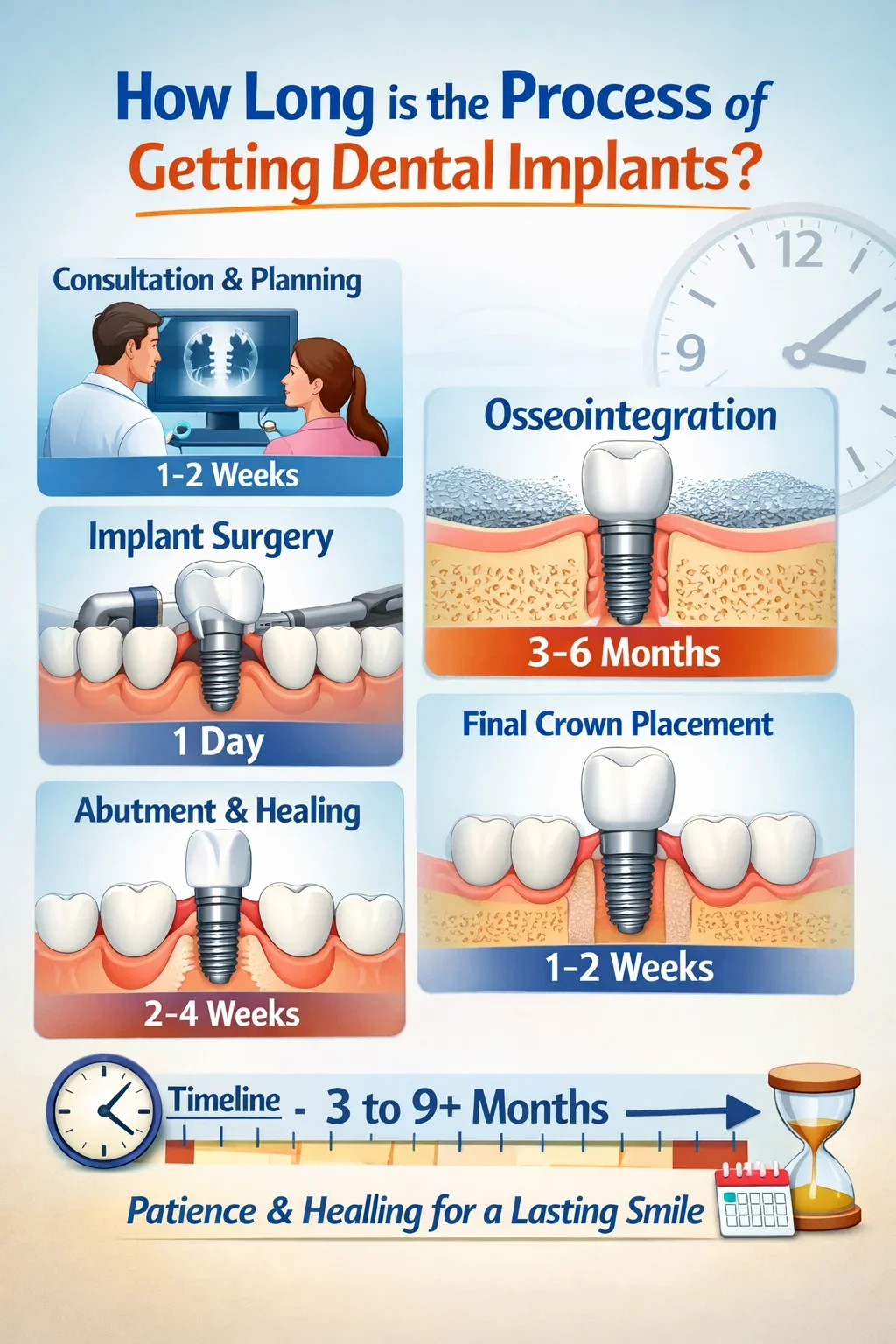
Single Implants vs Full Mouth Implants: Time Comparison
One of the most practical questions patients ask when researching implants is whether the number of implants affects the timeline. Specifically, they want to know how long is the process of getting dental implants for a single missing tooth compared to a full mouth restoration. The difference can be significant, not because one option is riskier, but because the scope and biological demands of treatment change as complexity increases 😊.
Understanding these differences helps patients choose the right solution for their needs while forming realistic expectations about how long is the process of getting dental implants in each scenario.
Timeline for a Single Dental Implant
A single dental implant is the simplest and most common implant procedure. In ideal conditions—good bone quality, healthy gums, and no need for grafting—the entire process may take as little as 3 to 5 months.
For a single implant, how long is the process of getting dental implants typically includes:
- Consultation and planning: 1–2 weeks
- Implant placement surgery: 1 day
- Osseointegration: 3–4 months
- Abutment and crown placement: 2–4 weeks
If tooth extraction or minor grafting is needed, this timeline may extend slightly. Even then, single implants usually represent the shortest answer to how long is the process of getting dental implants.
What Changes With Multiple or Full Mouth Implants?
Full mouth implant treatments replace many or all teeth using multiple implants. While this sounds far more time-consuming, the timeline is not always dramatically longer. In fact, multiple implants are often placed in a single surgical session.
However, the planning, healing, and monitoring phases are more extensive. This naturally affects how long is the process of getting dental implants for full mouth cases.
Full Mouth Implants Step-by-Step Timeline
For full mouth implant solutions, timelines often look like this:
- Comprehensive diagnostics and planning: 2–4 weeks
- Extractions and grafting (if needed): 1–6 months of healing
- Implant placement surgery: 1–2 days
- Osseointegration: 4–6 months
- Final restorations: 3–6 weeks
As a result, how long is the process of getting dental implants for full mouth cases often ranges from 6 to 12 months, depending on complexity.
Immediate Load Options for Full Mouth Implants
Some patients qualify for immediate load or “teeth in a day” solutions, where a temporary fixed bridge is placed shortly after implant surgery. This allows patients to leave with functional teeth very quickly.
However, even with immediate load options, how long is the process of getting dental implants still includes months of internal healing. The final prosthesis is only placed after osseointegration is complete.
Healing Demands: One Implant vs Many
From a biological standpoint, the body does not heal one implant much faster than several placed at the same time. The difference lies in bone volume, bite forces, and prosthetic design.
Full mouth implants must distribute chewing forces evenly, which requires meticulous planning and cautious progression. This careful approach explains why how long is the process of getting dental implants tends to be longer for full mouth cases.
Patient Experience and Recovery Comparison
Interestingly, some patients report that recovery from full mouth implant surgery feels no worse than a single implant. This is because modern techniques minimize trauma, and surgery is often completed efficiently.
The difference lies in follow-up care and adaptation. Learning to use a full implant-supported restoration takes more time, which subtly affects how long is the process of getting dental implants from a functional perspective.
Which Option Is Right for You?
Choosing between single and full mouth implants depends on oral health, tooth loss extent, budget, and long-term goals. A professional evaluation is essential to determine both suitability and timeline.
Organizations such as the
American Dental Association emphasize individualized planning to ensure safety and predictable outcomes.
If you want a clear comparison tailored to your situation, you can consult specialists through the
Redent Klinik Contact Page. A personalized assessment provides the most accurate estimate of how long is the process of getting dental implants for your specific needs.
In conclusion, single implants usually offer the shortest timeline, while full mouth implants require more planning and healing time. Both options, however, follow the same biological principles. Understanding these differences completes the picture of how long is the process of getting dental implants and helps patients choose a solution that balances time, function, and long-term success 😄.