
🦷 If you are considering a career in dentistry, one of the most common and important questions you will ask is: how many years does it take to become a dentist? This question is crucial because becoming a dentist is not just a career decision—it is a long-term commitment that requires dedication, education, and professional training. In this comprehensive guide, we will break down every stage so you clearly understand exactly how many years does it take to become a dentist and what to expect along the journey.
📚 The short answer is that how many years does it take to become a dentist typically ranges between 8 to 12 years, depending on your educational path, specialization, and country. However, this timeline is not fixed. Some students may complete their journey faster through accelerated programs, while others may take longer if they choose advanced specialties.
🎓 To understand how many years does it take to become a dentist, you must first look at the educational structure. The process usually begins with a bachelor’s degree, which takes about 4 years. During this time, students focus on science-related courses such as biology, chemistry, and physics. These subjects build the foundation necessary for dental school admission. So, when calculating how many years does it take to become a dentist, these first four years are essential and unavoidable in most cases.
🏫 After completing undergraduate studies, the next step is dental school, which generally takes another 4 years. This is where students receive both theoretical knowledge and hands-on clinical training. In dental school, you will learn about oral anatomy, patient care, dental procedures, and advanced treatment planning. At this stage, the question of how many years does it take to become a dentist becomes clearer—you are already at around 8 years of education.
🔬 However, the journey does not always stop there. Many dentists choose to specialize in areas such as orthodontics, oral surgery, or periodontics. These specialties require additional training through residency programs, which can take anywhere from 2 to 6 extra years. Therefore, if you pursue specialization, the total answer to how many years does it take to become a dentist can extend up to 10 or even 12 years.
🌍 Another important factor affecting how many years does it take to become a dentist is the country where you study. For example, in some European countries, dental education may begin directly after high school and take around 5 to 6 years total. In contrast, in the United States, the combined undergraduate and dental school path is the standard, making the timeline longer.
💡 It is also worth mentioning that accelerated programs exist. Some universities offer combined undergraduate and dental degrees that can reduce the timeline by 1–2 years. So, if you are asking how many years does it take to become a dentist in the fastest way possible, these programs might allow completion in as little as 6 to 7 years.
💼 Beyond education, licensing is another critical step. After completing dental school, graduates must pass licensing exams to legally practice. While this does not add years, it is an essential part of the process when considering how many years does it take to become a dentist from start to finish.
📈 So why do so many people invest this much time? The answer lies in the rewards. Dentistry is a highly respected profession with strong income potential, job stability, and the opportunity to improve patients’ lives every day. When you evaluate how many years does it take to become a dentist, it becomes clear that the long journey leads to a fulfilling and secure career.
🤝 If you are exploring dental treatments or want to understand the professional expertise behind your dentist’s qualifications, you can always reach out through the Redent Klinik Contact Page. Additionally, for official guidelines and professional standards, you can visit the American Dental Association.
✅ In conclusion, the answer to how many years does it take to become a dentist depends on multiple factors, but the average timeline is around 8 years, extending to 10–12 years with specialization. While the journey is long, it is structured, achievable, and ultimately rewarding. Understanding how many years does it take to become a dentist helps you plan your future with clarity and confidence, ensuring that every step you take brings you closer to a successful dental career.
How Many Years Does It Take to Become a Dentist in Total Timeline
🦷 Understanding the full timeline is essential when asking how many years does it take to become a dentist. This career path is structured, step-by-step, and requires commitment at every level. While the general answer often falls between 8 and 12 years, the exact timeline can vary depending on educational choices, specialization, and geographic location. In this section, we will break down the total timeline in a clear and detailed way so you fully understand how many years does it take to become a dentist from start to finish.
📅 Standard Timeline Overview
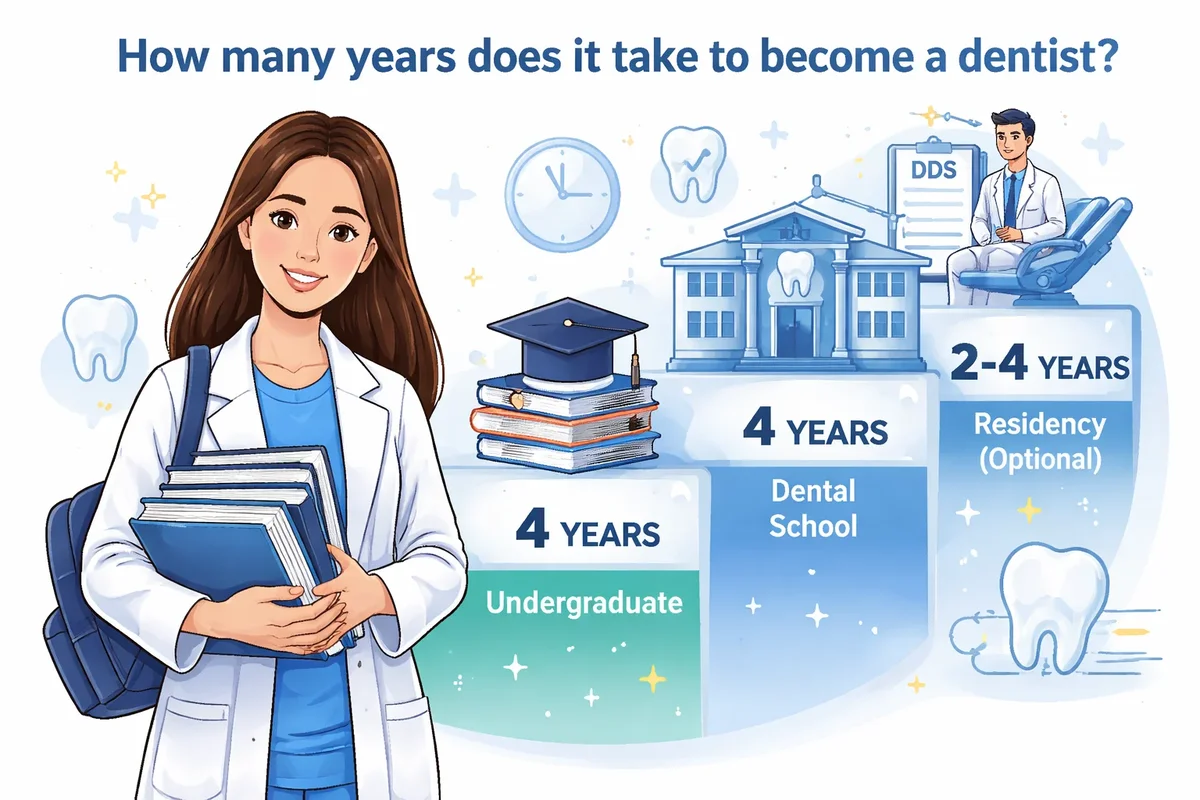
When evaluating how many years does it take to become a dentist, the journey can typically be divided into three major phases: undergraduate education, dental school, and optional specialization. Each phase contributes to the total number of years required.
🎓 Undergraduate Degree (4 Years)
The first major step in determining how many years does it take to become a dentist is completing a bachelor’s degree. This phase usually takes about four years. During this time, students focus on science-based subjects such as biology, chemistry, and physics. These courses are essential because they prepare students for the Dental Admission Test (DAT) and dental school applications.
📘 While some students may wonder if they can skip this step, in many countries—especially in the United States—this stage is mandatory. Therefore, when calculating how many years does it take to become a dentist, the undergraduate period forms the foundation of the timeline.
🏫 Dental School (4 Years)
The next critical stage in understanding how many years does it take to become a dentist is dental school. This phase also takes approximately four years. During the first two years, students focus on theoretical knowledge such as anatomy, oral pathology, and dental materials. The final two years emphasize clinical training, where students treat patients under supervision.
💉 This hands-on experience is crucial because it ensures that graduates are fully prepared to practice dentistry safely and effectively. At this point, if you are tracking how many years does it take to become a dentist, you have already reached around eight years of education.
🔬 Optional Specialization Timeline
For those who want to go beyond general dentistry, specialization adds additional years to the total timeline. This is an important factor when answering how many years does it take to become a dentist in a more advanced or focused field.
🦷 Residency Programs (2–6 Years)
Specialties such as orthodontics, oral surgery, pediatric dentistry, or periodontics require residency programs. These programs can last anywhere from two to six years, depending on the field. For example:
- Orthodontics: 2–3 years
- Oral and Maxillofacial Surgery: 4–6 years
- Endodontics: 2–3 years
- Periodontics: 3 years
📊 When you include specialization, the answer to how many years does it take to become a dentist can extend from 8 years to as much as 12 years or more. This extended timeline reflects the advanced expertise required for specialized treatments.
🌍 Differences by Country
Another key factor influencing how many years does it take to become a dentist is the country where you study. In the United States, the standard path includes both undergraduate and dental school education, totaling about 8 years. However, in some European countries, students can enter dental programs directly after high school, reducing the total timeline to 5 or 6 years.
🌐 This variation means that when asking how many years does it take to become a dentist, the answer is not universal. It depends heavily on the educational system and licensing requirements of each country.
⚡ Accelerated and Alternative Paths
Some universities offer accelerated programs that combine undergraduate and dental education. These programs can shorten the timeline by 1–2 years. For students seeking a faster route, this can significantly impact how many years does it take to become a dentist.
🚀 For example, a combined BS/DDS program might allow completion in 6–7 years instead of the traditional 8. However, these programs are highly competitive and require strong academic performance.
📊 Summary of Total Timeline
To summarize how many years does it take to become a dentist, here is a simplified breakdown:
- Undergraduate Degree: 4 years
- Dental School: 4 years
- Optional Specialization: 2–6 years
📌 Total:
- General Dentist: ~8 years
- Specialist Dentist: 10–12+ years
💡 Why the Timeline Matters
Understanding how many years does it take to become a dentist is not just about counting years—it is about planning your future. This timeline helps you prepare financially, academically, and mentally for the journey ahead. It also allows you to decide whether you want to pursue specialization or enter the workforce sooner as a general dentist.
🤝 If you are considering dental treatment or want to connect with experienced professionals who have completed this extensive journey, you can visit the Redent Klinik Contact Page. For professional standards and educational guidelines, refer to the American Dental Association.
✅ In conclusion, the question of how many years does it take to become a dentist has a structured yet flexible answer. While the standard timeline is about 8 years, additional training and specialization can extend it significantly. By understanding each stage in detail, you gain a realistic perspective on how many years does it take to become a dentist and can confidently plan your path toward a successful and rewarding dental career.
Education Path Breakdown: From High School to Dental School
🦷 To fully understand how many years does it take to become a dentist, it is essential to break down the education path step by step. This journey begins as early as high school and continues through multiple academic and clinical stages. Each stage builds upon the previous one, creating a structured pathway that ensures future dentists are highly trained and qualified professionals.
📚 Many students ask how many years does it take to become a dentist without realizing that preparation starts even before university. The choices you make in high school can significantly influence your timeline and success in dental education. Let’s explore this path in detail.
🏫 High School Preparation: Building the Foundation
The first step in understanding how many years does it take to become a dentist begins in high school. While this stage is not always counted in official timelines, it plays a crucial role in shaping your academic readiness.
📘 Key Subjects to Focus On
Students aiming for dentistry should prioritize science-related courses such as biology, chemistry, and physics. Mathematics is also important for developing analytical thinking skills. Strong performance in these subjects increases your chances of getting accepted into a good undergraduate program.
🎯 Although high school typically lasts 4 years, it is considered preparation rather than part of the official answer to how many years does it take to become a dentist. However, without this foundation, progressing to the next stages becomes much more difficult.
🌟 Extracurricular Activities
Participating in science clubs, volunteering in healthcare settings, or shadowing a dentist can strengthen your application. These experiences not only enhance your resume but also help you confirm whether dentistry is the right career for you.
🎓 Undergraduate Education: The First Official Step
The next stage is undergraduate education, which is a major component when calculating how many years does it take to become a dentist. This phase usually takes about 4 years and is mandatory in many countries, especially in the United States.
📖 Choosing the Right Major
While there is no specific “pre-dentistry” major required, most students choose fields such as biology, chemistry, or health sciences. These majors align with dental school prerequisites and make it easier to prepare for entrance exams.
📊 During this period, students must complete prerequisite courses, including:
- General Biology
- Organic Chemistry
- Physics
- Biochemistry
🧠 These courses are essential because they prepare students for the Dental Admission Test (DAT), which is a critical step in determining how many years does it take to become a dentist successfully.
📝 Dental Admission Test (DAT)
The DAT is a standardized exam required for admission to dental school in many countries. Preparing for this exam can take several months, and a high score significantly improves your chances of acceptance.
📌 While the exam itself does not add years, the preparation period is an important part of the journey when considering how many years does it take to become a dentist.
🏫 Dental School: Core Professional Training
Dental school is the most intensive and defining stage in the process of how many years does it take to become a dentist. This phase typically lasts 4 years and combines both academic learning and clinical practice.
📚 First Two Years: Theoretical Learning
During the initial years, students focus on subjects such as:
- Oral Anatomy
- Dental Materials
- Pathology
- Pharmacology
🔬 These subjects provide the scientific knowledge required for diagnosing and treating dental conditions. This stage is essential for building the expertise needed to answer how many years does it take to become a dentist with confidence.
💉 Final Two Years: Clinical Experience
The last two years of dental school focus heavily on clinical training. Students work directly with patients under the supervision of experienced dentists. This hands-on experience is crucial for developing practical skills.
👨⚕️ By the end of dental school, students are fully prepared to enter the profession. At this point, the answer to how many years does it take to become a dentist reaches approximately 8 years of formal education.
🌍 Variations in Education Systems
It is important to note that the education path can vary depending on the country. In some regions, students can enter dental programs directly after high school, reducing the total time required. However, in countries like the United States, the structured undergraduate + dental school model is the standard.
🌐 Therefore, when asking how many years does it take to become a dentist, always consider the educational system you are part of.
💡 Planning Your Journey
Understanding the full education path helps you plan your career effectively. From choosing the right high school subjects to preparing for dental school, every step plays a role in determining how many years does it take to become a dentist.
🤝 If you are curious about dental treatments or want to consult experienced professionals who have completed this extensive journey, visit the Redent Klinik Contact Page. For official educational standards and guidelines, refer to the American Dental Association.
✅ In conclusion, the education path from high school to dental school is structured and comprehensive. Each stage contributes to the overall answer to how many years does it take to become a dentist. By understanding this journey in detail, you can make informed decisions and confidently move toward a successful career in dentistry.
Undergraduate Degree Duration and Requirements
🎓 When exploring how many years does it take to become a dentist, the undergraduate degree is one of the most critical and foundational stages. This phase is not only about completing a degree but also about preparing academically, mentally, and strategically for dental school. For most students, this stage takes approximately 4 years, and it plays a major role in determining your success in the overall journey.
📚 The undergraduate phase is often underestimated when people ask how many years does it take to become a dentist. However, this stage sets the tone for everything that follows. Without strong academic performance and proper preparation during these years, gaining admission to dental school becomes significantly more challenging.
⏳ Typical Duration of Undergraduate Studies
The standard timeline for completing a bachelor’s degree is four years. This period is a key component when calculating how many years does it take to become a dentist. While some students may attempt to finish earlier, most follow the traditional four-year path due to course requirements and academic workload.
📅 Can You Finish Faster?
In some cases, highly motivated students can complete their undergraduate degree in three years by taking heavier course loads or attending summer classes. However, this approach requires excellent time management and may not be suitable for everyone.
⚠️ It is important to note that rushing through this stage can impact your GPA and preparation, which are crucial factors when applying to dental school. Therefore, while shortening this phase may slightly reduce how many years does it take to become a dentist, it can also increase the risk of rejection from competitive programs.
📖 Choosing the Right Major
One of the most common questions students ask is whether they need a specific major to become a dentist. The answer is no, but certain majors make the process easier and more aligned with dental school requirements.
🔬 Recommended Majors
- Biology
- Chemistry
- Biochemistry
- Health Sciences
🧠 These majors include the prerequisite courses required by most dental schools. Choosing a science-based major simplifies the process and helps you stay on track when considering how many years does it take to become a dentist.
🎯 Non-Science Majors
It is also possible to major in non-science fields such as psychology or business, as long as you complete the required science courses. However, this may increase your workload and require additional planning.
📋 Prerequisite Courses for Dental School
To move forward in the journey of how many years does it take to become a dentist, students must complete specific prerequisite courses during their undergraduate studies. These courses ensure that you have the scientific foundation needed for dental education.
📘 Common Prerequisites
- General Biology (with lab)
- General Chemistry (with lab)
- Organic Chemistry (with lab)
- Physics
- Biochemistry
📊 Completing these courses successfully is essential for dental school admission. Strong grades in these subjects significantly improve your chances of acceptance and help you stay on schedule when calculating how many years does it take to become a dentist.
📝 Importance of GPA and Academic Performance
Your Grade Point Average (GPA) is one of the most important factors during the undergraduate phase. Dental schools are highly competitive, and a strong GPA demonstrates your ability to handle rigorous academic work.
🏆 A high GPA not only increases your chances of admission but also ensures that you do not need to repeat courses or delay your application. This directly impacts how many years does it take to become a dentist, as setbacks can extend the timeline.
📊 Extracurricular Activities and Experience
Beyond academics, extracurricular activities play a crucial role in shaping your application. These experiences help you stand out and demonstrate your commitment to the dental profession.
🤝 Recommended Activities
- Shadowing a dentist
- Volunteering in healthcare settings
- Participating in research projects
- Joining pre-dental clubs
💡 These activities provide valuable insights into the profession and strengthen your dental school application. They also help you confirm whether dentistry is the right career path for you while progressing toward understanding how many years does it take to become a dentist.
🧪 Preparing for the Dental Admission Test (DAT)
The Dental Admission Test (DAT) is a critical milestone during your undergraduate studies. Preparing for this exam typically takes several months and requires a strong understanding of science subjects.
📌 While the DAT itself does not add years to your timeline, inadequate preparation can delay your dental school admission. Therefore, proper planning is essential to stay on track with how many years does it take to become a dentist.
💡 Financial Considerations During Undergraduate Years
The undergraduate phase also involves financial planning. Tuition fees can vary widely depending on the institution and country. Below is a general estimate:
- Public University (per year): $10,000 – $25,000
- Private University (per year): $25,000 – $50,000+
💰 Scholarships, grants, and part-time work can help reduce these costs. Proper financial planning ensures that you can complete your education without delays, which directly affects how many years does it take to become a dentist.
🌍 Transition to Dental School
Once you complete your undergraduate degree and pass the DAT, you are ready to apply to dental school. This transition marks the next major step in the journey of how many years does it take to become a dentist.
🤝 If you want to learn more about professional dental care or connect with experienced dentists who have completed this path, visit the Redent Klinik Contact Page. For official guidelines and educational standards, refer to the American Dental Association.
✅ In conclusion, the undergraduate degree is a crucial stage that typically takes four years and forms the foundation of your dental career. It significantly contributes to the total answer to how many years does it take to become a dentist. By focusing on academics, gaining relevant experience, and preparing strategically, you can successfully navigate this stage and move closer to becoming a dentist.
Dental School Years: What to Expect During Training
🦷 When analyzing how many years does it take to become a dentist, dental school represents the most intensive and transformative stage of the journey. This phase typically lasts 4 years and is where students transition from theoretical learners into clinical professionals. Understanding what happens during these years is essential to fully grasp how many years does it take to become a dentist and why this stage is so critical.
📚 Dental school is not just about studying—it is about developing the skills, confidence, and clinical judgment required to treat real patients. For many students, this is the stage where the reality of how many years does it take to become a dentist becomes clear, as the workload and expectations increase significantly.
📅 Overview of the 4-Year Dental School Structure
The dental school curriculum is typically divided into two main phases: pre-clinical education and clinical training. Each phase plays a vital role in shaping a competent dentist.
📖 First Two Years: Pre-Clinical Education
During the first half of dental school, students focus on building a strong scientific and theoretical foundation. This stage is essential when considering how many years does it take to become a dentist because it prepares students for real-world patient care.
🔬 Key subjects include:
- Oral Anatomy and Physiology
- Dental Materials Science
- Pathology and Microbiology
- Pharmacology
- Radiology
🧠 In addition to lectures, students practice procedures in simulation labs using dental mannequins. These exercises help them develop hand skills and precision before working with actual patients.
📊 At this stage, students often begin to realize that the question of how many years does it take to become a dentist is not just about time—it is about mastering complex knowledge and techniques.
💉 Last Two Years: Clinical Training
The final two years of dental school are focused on clinical experience. This is where students begin treating patients under the supervision of licensed dentists.
👨⚕️ Clinical training includes:
- Performing dental cleanings
- Filling cavities
- Extracting teeth
- Designing treatment plans
- Communicating with patients
🪥 This hands-on experience is crucial because it allows students to apply their knowledge in real-life situations. When evaluating how many years does it take to become a dentist, these clinical years are what truly prepare students for independent practice.
🧪 Skills Developed During Dental School
Dental school is not only about academic learning but also about developing a wide range of professional skills. These skills are essential for success in dentistry and directly influence how many years does it take to become a dentist effectively.
🖐️ Technical Skills
Students learn precision-based techniques such as drilling, shaping, and restoring teeth. These skills require practice and patience, which is why dental school cannot be shortened easily.
🗣️ Communication Skills
Dentists must communicate clearly with patients, explain procedures, and provide reassurance. This skill is developed through patient interactions during clinical training.
🧠 Critical Thinking
Every patient case is different, and dentists must make informed decisions quickly. Dental school trains students to analyze situations and choose the best treatment options.
📊 Exams and Licensing Preparation
Throughout dental school, students must pass multiple exams to progress and eventually graduate. These exams are another key factor when considering how many years does it take to become a dentist.
📝 Written Exams
Students are tested on theoretical knowledge through written assessments covering all major subjects.
🦷 Clinical Exams
Practical exams evaluate students’ ability to perform procedures safely and effectively. These exams ensure that graduates are ready to treat patients independently.
📌 After graduation, students must also pass national or regional licensing exams to practice legally. While these exams do not add years, they are an essential step in completing the journey of how many years does it take to become a dentist.
💰 Cost of Dental School
Dental school is a significant financial investment. Understanding these costs is important when planning how many years does it take to become a dentist.
- Public Dental School (per year): $30,000 – $60,000
- Private Dental School (per year): $60,000 – $100,000+
💡 Scholarships, loans, and financial aid options are available, but students should plan carefully to manage expenses during these four years.
🌍 Challenges Faced During Dental School
Dental school is demanding both academically and physically. Students often face long hours, high expectations, and intense workloads.
⚠️ Common challenges include:
- Managing time effectively
- Handling stress and pressure
- Balancing theory and clinical work
💪 Overcoming these challenges is part of the process and contributes to the overall answer to how many years does it take to become a dentist.
🚀 Transition to Professional Practice
After completing dental school, graduates are ready to begin their careers as general dentists or pursue specialization. At this point, the answer to how many years does it take to become a dentist reaches approximately 8 years of education.
🤝 If you are interested in receiving care from experienced professionals who have completed this rigorous training, visit the Redent Klinik Contact Page. For official standards and professional guidelines, refer to the American Dental Association.
✅ In conclusion, dental school is the most intensive and rewarding stage in the journey. It provides the knowledge, skills, and experience required to practice dentistry safely and effectively. Understanding this phase helps clarify how many years does it take to become a dentist and highlights why these four years are essential for building a successful dental career.
Specializations and How They Affect the Total Years
🦷 When evaluating how many years does it take to become a dentist, many people initially think about general dentistry. However, specialization is a major factor that can significantly extend the timeline. While becoming a general dentist typically takes around 8 years, pursuing a specialty can increase the total duration to 10, 12, or even more years. Therefore, understanding specialization is essential when answering how many years does it take to become a dentist in a complete and realistic way.
📚 Specialization allows dentists to focus on a specific area of oral healthcare, such as orthodontics or oral surgery. These advanced fields require additional training, deeper knowledge, and more clinical experience. As a result, specialization plays a critical role in shaping how many years does it take to become a dentist depending on your career goals.
🎯 What Is Dental Specialization?
Dental specialization refers to advanced training in a specific field of dentistry after completing dental school. This training is usually done through residency programs or postgraduate education.
💡 While general dentists handle a wide range of treatments, specialists focus on more complex procedures. This distinction is important when considering how many years does it take to become a dentist, as specialists must invest additional time to gain expertise.
📌 Why Choose a Specialty?
- Higher earning potential 💰
- Advanced clinical skills 🧠
- Focused career path 🎯
- Opportunity to treat complex cases 🦷
📊 These benefits often motivate dentists to continue their education, even though it increases how many years does it take to become a dentist overall.
⏳ Common Dental Specialties and Their Duration
Different specialties require different lengths of training. Below are some of the most common dental specialties and how they impact how many years does it take to become a dentist.
😁 Orthodontics (2–3 Years)
Orthodontists specialize in correcting misaligned teeth and jaws using braces, aligners, and other devices. This specialty typically requires an additional 2 to 3 years of training after dental school.
📌 If you choose this path, how many years does it take to become a dentist increases to approximately 10–11 years.
🦷 Oral and Maxillofacial Surgery (4–6 Years)
This is one of the most advanced and demanding specialties. Oral surgeons perform complex procedures such as jaw surgery, facial reconstruction, and dental implant placement.
⚠️ Because of the complexity, this specialty requires 4 to 6 additional years of training. This means how many years does it take to become a dentist can extend up to 12–14 years for this field.
👶 Pediatric Dentistry (2–3 Years)
Pediatric dentists focus on treating children’s dental health. This specialty requires additional training in child psychology, growth, and development.
📊 Choosing pediatric dentistry increases how many years does it take to become a dentist to around 10–11 years.
🧬 Periodontics (3 Years)
Periodontists specialize in gum diseases and dental implant placement. Their training focuses on advanced surgical techniques and gum health.
📌 With this specialization, how many years does it take to become a dentist typically becomes 11 years.
🧪 Endodontics (2–3 Years)
Endodontists focus on root canal treatments and diseases of the dental pulp. This specialty requires precision and advanced knowledge of tooth structure.
📊 This path increases how many years does it take to become a dentist to approximately 10–11 years.
📈 Impact on Total Career Timeline
Specialization significantly changes the overall timeline. While general dentists can start practicing after 8 years, specialists must invest additional time before entering the workforce.
📌 Here is a simplified comparison:
- General Dentist: ~8 years
- Orthodontist: ~10–11 years
- Oral Surgeon: ~12–14 years
- Periodontist: ~11 years
📊 As you can see, specialization plays a major role in determining how many years does it take to become a dentist.
💰 Financial Considerations of Specialization
While specialization increases how many years does it take to become a dentist, it can also lead to higher earning potential. However, additional training often comes with extra costs.
- Residency Programs: $20,000 – $60,000 per year (varies)
- Opportunity Cost: Delayed income due to extended education
💡 Despite these costs, many dentists choose specialization because of long-term financial and professional benefits.
⚖️ Is Specialization Worth It?
Choosing whether to specialize depends on your career goals, interests, and willingness to invest additional years. While specialization increases how many years does it take to become a dentist, it also provides opportunities for advanced practice and higher income.
🤔 Ask yourself:
- Do I enjoy a specific area of dentistry?
- Am I willing to study longer?
- Do I want to handle complex cases?
📌 Answering these questions will help you decide whether extending how many years does it take to become a dentist is the right choice for you.
🚀 Final Thoughts on Specialization
Specialization is an optional but highly impactful step in a dental career. It transforms not only your expertise but also your timeline. When considering how many years does it take to become a dentist, specialization is the key factor that can extend the journey beyond the standard 8 years.
🤝 If you are interested in advanced dental treatments performed by specialists, you can explore professional services through the Redent Klinik Contact Page. For official information about dental specialties and standards, visit the American Dental Association.
✅ In conclusion, specialization adds significant value to a dental career but also increases the total time required. Understanding this aspect helps provide a complete and accurate answer to how many years does it take to become a dentist, allowing you to plan your career path with clarity and confidence.
Residency Programs and Advanced Dental Training Time
🦷 When diving deeper into how many years does it take to become a dentist, residency programs and advanced training play a crucial role—especially for those pursuing specialization. While general dentists may begin practicing after dental school, many choose to continue their education through residency programs to gain advanced skills and clinical expertise. This additional phase significantly influences how many years does it take to become a dentist in a more advanced or specialized capacity.
📚 Residency programs are structured training programs that take place after dental school. They are designed to provide hands-on experience in specific areas of dentistry under the supervision of experienced professionals. For many dentists, this stage is essential to refine their skills and expand their knowledge beyond general practice.
🏥 What Is a Dental Residency Program?
A dental residency program is a postgraduate training period where dentists gain specialized clinical experience. These programs are often required for certain specialties and can vary in length depending on the field.
💡 Understanding residency programs is key when answering how many years does it take to become a dentist because this phase can add several years to the total timeline.
📌 Types of Residency Programs
- General Practice Residency (GPR)
- Advanced Education in General Dentistry (AEGD)
- Specialty Residencies (Orthodontics, Oral Surgery, etc.)
📊 Each of these options affects how many years does it take to become a dentist differently, depending on your career path.
⏳ Duration of Residency Programs
The length of residency programs varies widely. This variation is one of the most important factors when calculating how many years does it take to become a dentist in total.
🦷 General Practice Residency (1–2 Years)
General Practice Residency (GPR) programs focus on improving clinical skills in general dentistry. These programs typically last 1 to 2 years and are often completed in hospital settings.
📌 While not always required, completing a GPR can enhance your confidence and clinical abilities. It may extend how many years does it take to become a dentist slightly, but it provides valuable experience.
🏫 Advanced Education in General Dentistry (1 Year)
AEGD programs are similar to GPR but focus more on outpatient care rather than hospital-based training. These programs usually last one year.
📊 Choosing an AEGD program adds a year to how many years does it take to become a dentist, but it can significantly improve your readiness for private practice.
🔬 Specialty Residencies (2–6 Years)
Specialty residencies are required for dentists who want to focus on advanced fields such as orthodontics, oral surgery, or periodontics.
- Orthodontics: 2–3 years
- Endodontics: 2–3 years
- Periodontics: 3 years
- Oral Surgery: 4–6 years
📌 These programs are intensive and require a strong commitment. They significantly increase how many years does it take to become a dentist, often extending the timeline to over a decade.
🧠 Skills Gained During Residency
Residency programs are not just about extending education—they are about mastering advanced skills that are essential for high-level dental practice.
🖐️ Advanced Clinical Skills
Dentists learn complex procedures such as surgical extractions, implant placement, and advanced restorative techniques.
🗣️ Patient Management
Residency training emphasizes communication, patient care, and handling complex cases. These skills are crucial for building a successful dental career.
🧪 Specialized Knowledge
Each residency program provides in-depth knowledge in a specific field, making dentists experts in their chosen specialty.
📊 These skills justify the additional time required and help explain why how many years does it take to become a dentist varies depending on specialization.
💰 Financial Aspects of Residency
Residency programs can have different financial structures. Some programs offer stipends, while others require tuition.
- Paid Residency (GPR): $40,000 – $70,000 annual stipend
- Tuition-Based Programs: $20,000 – $60,000 per year
💡 While residency may delay earning a full salary, it can lead to higher income potential in the long run. This is another factor to consider when evaluating how many years does it take to become a dentist.
⚖️ Is Residency Mandatory?
Not all dentists are required to complete a residency. General dentists can often begin practicing immediately after dental school and licensing exams. However, for those pursuing specialization, residency is mandatory.
📌 This distinction is important because it directly impacts how many years does it take to become a dentist. Choosing to skip residency can shorten the timeline, while specialization extends it significantly.
🚀 Career Benefits of Residency Training
Although residency adds years to the journey, it also provides significant career advantages:
- Higher earning potential 💰
- Advanced expertise 🧠
- Better job opportunities 📈
- Ability to handle complex cases 🦷
📊 These benefits often outweigh the additional time required, making residency a valuable investment in your future.
🌍 Final Thoughts on Residency Training
Residency programs are a critical component in understanding how many years does it take to become a dentist. They provide advanced training, enhance clinical skills, and open doors to specialized career paths.
🤝 If you are interested in receiving care from highly trained professionals who have completed advanced residency programs, visit the Redent Klinik Contact Page. For official information about dental education and residency standards, refer to the American Dental Association.
✅ In conclusion, residency programs can extend how many years does it take to become a dentist, but they also provide invaluable experience and expertise. Whether you choose general practice or specialization, understanding this stage helps you make informed decisions and plan your career path effectively.
Country Differences in Dental Education Length
🌍 When asking how many years does it take to become a dentist, one of the most important factors to consider is the country in which you plan to study. The timeline for becoming a dentist is not universal. Different countries have different education systems, admission requirements, and training structures. As a result, how many years does it take to become a dentist can vary significantly depending on location.
📚 Understanding these differences is essential for students who are considering studying abroad or comparing international dental education systems. In this section, we will explore how many years does it take to become a dentist in different regions and what factors influence these variations.
🇺🇸 United States: The Standard 8-Year Path
In the United States, the most common answer to how many years does it take to become a dentist is approximately 8 years for general dentistry.
🎓 Education Structure
- Undergraduate Degree: 4 years
- Dental School (DDS or DMD): 4 years
📊 This structured pathway is one of the longest compared to other countries. However, it ensures that students receive a strong scientific foundation before entering dental school.
💡 If a student chooses to specialize, the answer to how many years does it take to become a dentist in the U.S. can extend to 10–14 years, depending on the specialty.
🇬🇧 United Kingdom: Direct Entry Programs
In the United Kingdom, students can enter dental programs directly after high school. This significantly reduces how many years does it take to become a dentist.
🏫 Education Structure
- Bachelor of Dental Surgery (BDS): 5 years
📌 Unlike the U.S., there is no separate undergraduate degree requirement. Students begin their dental education immediately, making the total timeline shorter.
📊 Therefore, when asking how many years does it take to become a dentist in the UK, the answer is typically around 5 years for general dentistry.
🇪🇺 Europe: Integrated Dental Programs
Many European countries follow a similar model to the UK, offering integrated dental programs that start after high school.
🌐 Examples
- Germany: 5–6 years
- France: 6 years
- Spain: 5 years
📚 These programs combine theoretical education and clinical training into a single degree. As a result, how many years does it take to become a dentist in Europe is generally shorter than in the United States.
💡 However, some countries may require additional exams or internships before full licensure, which can slightly extend the timeline.
🇹🇷 Turkey: Efficient and Structured Education
In Turkey, dental education is also structured as a direct-entry program after high school.
🏫 Education Structure
- Dental Faculty Program: 5 years
📊 Students receive both theoretical and clinical training within these five years. This makes Turkey an attractive option for those looking to minimize how many years does it take to become a dentist while still receiving high-quality education.
🇨🇦 Canada: Similar to the United States
Canada follows a system similar to the United States, although some variations exist.
🎓 Education Structure
- Undergraduate Degree: 3–4 years
- Dental School: 4 years
📌 This means how many years does it take to become a dentist in Canada is typically around 7–8 years, depending on the program.
🌏 Asia and Other Regions
In many Asian countries, dental education is also offered as a direct-entry program.
🌐 Examples
- India: 5 years (BDS)
- Australia: 5–7 years
- Japan: 6 years
📊 These programs often include internships or clinical rotations as part of the curriculum. Therefore, how many years does it take to become a dentist in these regions typically ranges from 5 to 7 years.
⚖️ Key Factors Influencing Differences
Several factors explain why how many years does it take to become a dentist varies between countries:
📘 Education System Structure
Some countries require a separate undergraduate degree, while others integrate dental education from the start.
🧪 Licensing Requirements
Different countries have different licensing exams and internship requirements, which can affect the total timeline.
🎯 Specialization Opportunities
The availability and length of specialization programs also influence how many years does it take to become a dentist.
💡 Which Country Is Best?
Choosing the best country depends on your goals, budget, and preferred timeline. If your priority is speed, countries with direct-entry programs may be more appealing. However, if you prefer a more structured and research-focused education, the U.S. or Canada may be better options.
📊 Ultimately, understanding how many years does it take to become a dentist globally allows you to make informed decisions about your education and career path.
🤝 Final Thoughts
Country differences play a major role in determining how many years does it take to become a dentist. While the standard timeline is around 8 years in some countries, it can be as short as 5 years in others. These variations highlight the importance of choosing the right education system based on your personal and professional goals.
🤝 If you are exploring dental care or want to connect with internationally trained professionals, you can visit the Redent Klinik Contact Page. For global standards and guidelines, refer to the American Dental Association.
✅ In conclusion, the answer to how many years does it take to become a dentist depends heavily on where you study. By understanding these international differences, you can choose the best path and confidently plan your journey toward becoming a dentist.
Can You Become a Dentist Faster? Accelerated Programs Explained
⚡ One of the most common follow-up questions after asking how many years does it take to become a dentist is whether it is possible to shorten that timeline. The traditional path takes around 8 years or more, but accelerated programs offer an alternative route for highly motivated and academically strong students. These programs are designed to reduce the total number of years required, making them an attractive option for those who want to enter the workforce sooner.
📚 However, while accelerated pathways can reduce how many years does it take to become a dentist, they are not suitable for everyone. They require intense dedication, high academic performance, and the ability to handle a fast-paced learning environment. In this section, we will explore how these programs work, their benefits, and their limitations.
🚀 What Are Accelerated Dental Programs?
Accelerated dental programs are combined or shortened educational pathways that allow students to complete their undergraduate and dental education in a reduced timeframe. These programs are often referred to as BS/DDS or BS/DMD programs.
💡 Instead of completing a separate 4-year undergraduate degree followed by 4 years of dental school, students follow a streamlined curriculum that integrates both stages. This directly impacts how many years does it take to become a dentist by reducing redundancy and overlapping coursework.
📌 Typical Duration
- Traditional Path: 8 years
- Accelerated Programs: 6–7 years
📊 This means that accelerated programs can reduce how many years does it take to become a dentist by 1–2 years, which is a significant advantage for many students.
🎓 Types of Accelerated Programs
There are several types of accelerated pathways available, each with its own structure and requirements.
🏫 Combined BS/DDS Programs
These programs allow students to complete both their bachelor’s degree and dental degree in a single, continuous program. Admission is often highly competitive, and students are typically accepted directly from high school.
📌 This type of program is one of the most effective ways to reduce how many years does it take to become a dentist.
📅 3+4 Programs
In this structure, students complete 3 years of undergraduate education followed by 4 years of dental school. This reduces the total timeline to 7 years.
📊 Compared to the traditional route, this option shortens how many years does it take to become a dentist by one year.
⚡ Early Admission Programs
Some universities offer early assurance programs where students secure a place in dental school during their undergraduate studies. While this does not always reduce the timeline, it eliminates the stress of the application process.
💡 Although these programs may not significantly change how many years does it take to become a dentist, they provide a smoother and more secure pathway.
📈 Advantages of Accelerated Programs
Accelerated programs offer several benefits that make them appealing to ambitious students.
⏳ Reduced Time
The most obvious advantage is the reduction in how many years does it take to become a dentist. Entering the workforce earlier means you can start earning sooner and gain experience faster.
💰 Lower Education Costs
By shortening the duration of study, students can save on tuition fees and living expenses. This can significantly reduce the financial burden associated with dental education.
🎯 Structured Pathway
These programs provide a clear and direct route to becoming a dentist, eliminating uncertainties related to dental school admissions.
⚠️ Challenges and Limitations
While accelerated programs can reduce how many years does it take to become a dentist, they also come with challenges.
📚 Intense Workload
Students must handle a heavier course load in a shorter period. This requires strong time management and academic discipline.
🎯 Limited Flexibility
Accelerated programs often have strict requirements and limited opportunities to explore other fields. Students must be certain about their career choice early on.
🏆 High Competition
Admission to these programs is highly competitive. Only students with excellent academic records and strong extracurricular profiles are typically accepted.
🧠 Is an Accelerated Program Right for You?
Choosing an accelerated program depends on your personal goals, learning style, and readiness to commit to a demanding schedule.
🤔 Consider the following questions:
- Am I academically prepared for a fast-paced program?
- Am I certain about pursuing dentistry as a career?
- Can I handle a heavier workload?
📊 Answering these questions will help you determine whether reducing how many years does it take to become a dentist is worth the challenges involved.
🌍 Global Availability of Accelerated Programs
Accelerated programs are more common in countries like the United States and Canada. In other regions, such as Europe or Turkey, the standard dental programs are already shorter, so accelerated options may not be necessary.
📌 This highlights the importance of considering location when evaluating how many years does it take to become a dentist.
🤝 Final Thoughts on Accelerated Pathways
Accelerated programs offer a valuable opportunity to reduce the time required to enter the dental profession. While they can shorten how many years does it take to become a dentist, they require dedication, discipline, and careful planning.
🤝 If you are interested in learning more about dental careers or seeking professional dental care, you can visit the Redent Klinik Contact Page. For official education standards and program information, refer to the American Dental Association.
✅ In conclusion, accelerated programs can reduce how many years does it take to become a dentist by 1–2 years, offering a faster route into the profession. However, they are best suited for highly motivated students who are ready to commit to an intensive and focused educational journey.
Costs and Financial Timeline of Becoming a Dentist
💰 When evaluating how many years does it take to become a dentist, it is equally important to understand the financial timeline associated with this journey. Becoming a dentist is not only a time investment but also a significant financial commitment. From undergraduate education to dental school and possible specialization, each stage comes with its own costs. Therefore, when asking how many years does it take to become a dentist, you must also consider how much it costs during each of those years.
📚 Financial planning plays a crucial role in successfully completing dental education. Without proper budgeting and awareness, the long timeline of how many years does it take to become a dentist can become financially overwhelming. In this section, we will break down the costs at each stage and provide a clear picture of the total financial journey.
🎓 Undergraduate Education Costs
The first stage in the timeline of how many years does it take to become a dentist is undergraduate education, which typically lasts 4 years. This stage involves tuition fees, living expenses, books, and other academic costs.
📊 Average Costs
- Public Universities: $10,000 – $25,000 per year
- Private Universities: $25,000 – $50,000+ per year
💡 Over four years, this can total between $40,000 and $200,000+. These costs are a major part of the overall financial timeline when calculating how many years does it take to become a dentist.
📘 Additional Expenses
- Books and materials: $1,000 – $3,000 annually
- Housing and living expenses: $10,000 – $20,000 annually
📌 These additional costs further increase the total financial investment during the early years of how many years does it take to become a dentist.
🏫 Dental School Costs
Dental school is the most expensive phase in the journey of how many years does it take to become a dentist. This stage typically lasts 4 years and involves significantly higher tuition fees compared to undergraduate education.
📊 Average Tuition Fees
- Public Dental Schools: $30,000 – $60,000 per year
- Private Dental Schools: $60,000 – $100,000+ per year
💰 Over four years, dental school costs can range from $120,000 to $400,000+. This makes it the largest financial component when considering how many years does it take to become a dentist.
🧪 Equipment and Clinical Costs
- Dental instruments: $5,000 – $15,000
- Lab fees: $2,000 – $10,000 annually
📊 These costs are unique to dental education and add to the overall expense of how many years does it take to become a dentist.
🔬 Specialization and Residency Costs
If you choose to specialize, the financial timeline extends further. This is another key factor influencing how many years does it take to become a dentist in advanced fields.
📊 Residency Costs
- Tuition-based programs: $20,000 – $60,000 per year
- Paid residencies: $40,000 – $70,000 annual stipend
💡 While some programs offer stipends, others require additional tuition. This variation affects both the time and financial aspects of how many years does it take to become a dentist.
💳 Student Loans and Debt
Many dental students rely on loans to finance their education. As a result, debt is a common part of the journey when calculating how many years does it take to become a dentist.
📊 Average Debt
- Dental School Graduates: $200,000 – $400,000+
⚠️ Managing this debt requires careful planning, especially during the early years of your career.
📈 Return on Investment (ROI)
Despite the high costs, dentistry offers strong earning potential, making it a worthwhile investment for many students.
💰 Average Dentist Salary
- General Dentist: $120,000 – $200,000 annually
- Specialists: $200,000 – $400,000+ annually
📊 This earning potential helps offset the costs associated with how many years does it take to become a dentist over time.
💡 Ways to Reduce Costs
There are several strategies to minimize the financial burden during the journey of how many years does it take to become a dentist.
🎓 Scholarships and Grants
Many institutions offer financial aid to high-achieving students.
🏫 Choosing Public Universities
Public institutions generally have lower tuition fees compared to private schools.
🌍 Studying Abroad
Some countries offer high-quality dental education at lower costs, reducing the overall financial investment.
⏳ Financial Timeline Overview
To summarize, here is a simplified financial timeline aligned with how many years does it take to become a dentist:
- Undergraduate (4 years): $40,000 – $200,000+
- Dental School (4 years): $120,000 – $400,000+
- Specialization (optional): Additional $40,000 – $200,000+
📊 Total Estimated Cost: $200,000 – $600,000+
🤝 Final Thoughts on Financial Planning
Understanding the financial aspect is essential when evaluating how many years does it take to become a dentist. The journey requires a significant investment, but the long-term rewards—both financial and professional—can be substantial.
🤝 If you are considering dental treatments or want to connect with experienced professionals, visit the Redent Klinik Contact Page. For official information on dental education and financial planning, refer to the American Dental Association.
✅ In conclusion, the cost of becoming a dentist is closely tied to the timeline. By understanding both the financial and time commitments, you can better prepare for the journey and make informed decisions about your future career in dentistry.