
If you are missing one or more teeth, one of the first questions that probably comes to mind is simple and direct: how much a bridge for teeth? This is one of the most searched questions in modern dentistry because patients want clarity before making a decision. A dental bridge is a fixed restoration used to replace missing teeth by anchoring an artificial tooth (or teeth) to the natural teeth or crowns on either side of the gap. While the concept sounds straightforward, the answer to how much a bridge for teeth depends on several important clinical and financial factors.
Understanding how much a bridge for teeth costs is not just about a number on a bill. It is about evaluating materials, laboratory work, dentist expertise, preparation procedures, and long-term durability. In 2025, dental technology has improved significantly, which affects both the quality and the price of treatment. Patients are also more informed than ever and want transparency when asking how much a bridge for teeth will cost in their specific situation.
A dental bridge is commonly recommended when one to three consecutive teeth are missing. The teeth adjacent to the gap are reshaped to support crowns, and the artificial tooth in between restores both function and appearance. When people search for how much a bridge for teeth, they are usually concerned about three main things: total cost, insurance coverage, and whether it is worth the investment compared to alternatives like dental implants or partial dentures.
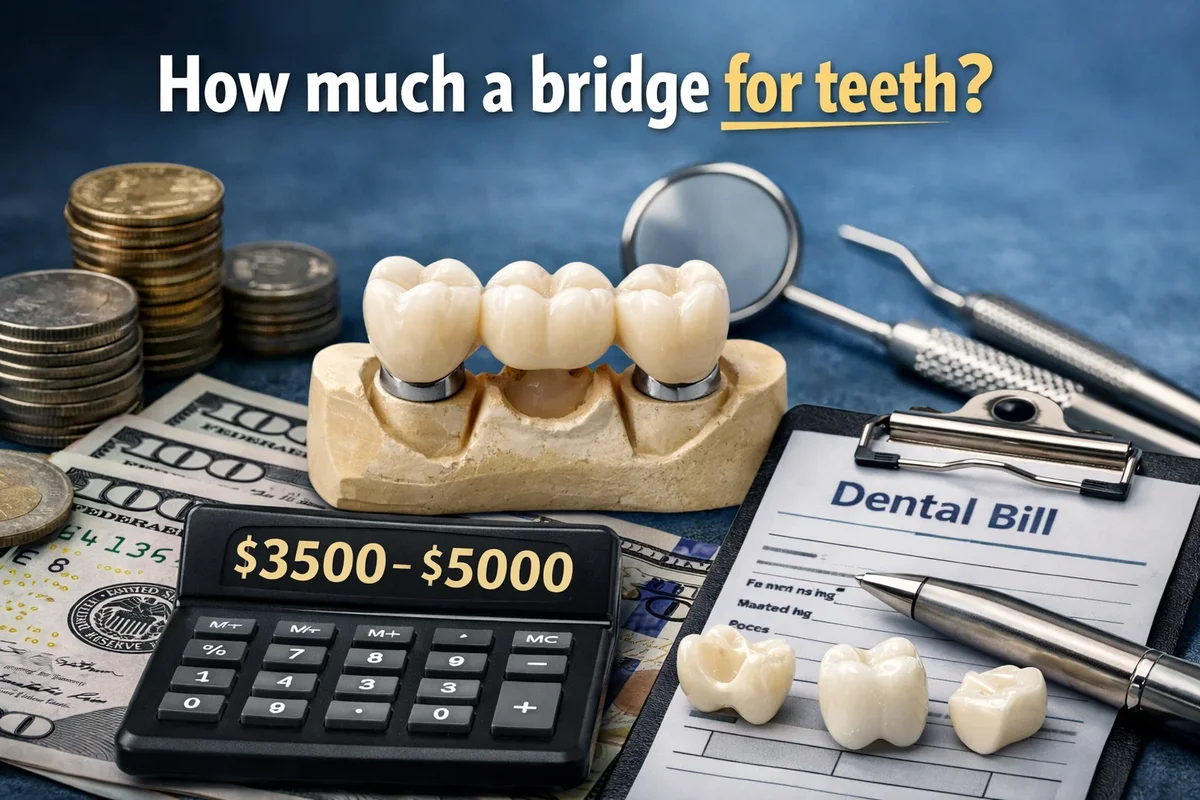
On average, the answer to how much a bridge for teeth in the United States ranges between $1,500 and $5,000 per unit. However, this range can vary widely depending on materials used (porcelain-fused-to-metal, zirconia, or all-ceramic), the number of missing teeth, and the geographic location of the clinic. According to professional guidelines referenced by the American Dental Association, restorative procedures like bridges are customized treatments, which explains why there is no single universal price.
To make it clearer, here is a general breakdown of what influences how much a bridge for teeth may cost:
- Consultation and examination fees
- X-rays or 3D imaging
- Tooth preparation procedures
- Temporary bridge placement
- Laboratory fabrication costs
- Final cementation appointment
Each of these components contributes to the overall cost when calculating how much a bridge for teeth will be in your case. For example, if root canal treatment is required before placing the crowns that support the bridge, this will increase the final price. Similarly, choosing high-end zirconia instead of traditional metal-supported porcelain will also affect how much a bridge for teeth ultimately costs.
Another important factor when evaluating how much a bridge for teeth is long-term durability. A properly designed dental bridge can last between 10 and 15 years, sometimes even longer with excellent oral hygiene. This means that although the initial investment might seem significant, the long-term cost per year can actually be quite reasonable.
Patients often compare tooth bridge cost to other tooth replacement options. While dental implants tend to be more expensive upfront, bridges usually require less surgical intervention and shorter treatment time. So when asking how much a bridge for teeth is, you should also consider recovery time, invasiveness, and your overall dental health.
If you are considering treatment abroad, especially in countries known for dental tourism, the answer to how much a bridge for teeth can be significantly lower while maintaining high standards of care. Many international clinics offer advanced materials at competitive prices. If you would like a personalized treatment plan and transparent cost estimate, you can visit the Redent Klinik Contact Page to speak directly with experienced dental professionals.
In summary, when patients ask how much a bridge for teeth, they are really asking about value, longevity, comfort, and aesthetics combined. The price is influenced by material choice, the number of units, additional treatments, and the expertise of the dentist. Understanding these elements helps you move from uncertainty to confidence. In the following sections, we will explore detailed cost breakdowns, types of bridges, insurance coverage, and comparisons with other treatments so you can make a fully informed decision. 😊
1. What Does How Much a Bridge for Teeth Really Mean?
When patients type how much a bridge for teeth into a search engine, they are usually looking for a clear, honest, and detailed explanation. However, this question is more complex than it first appears. It is not only about the final price. It also reflects concerns about quality, durability, long-term value, insurance coverage, and whether the treatment is the right solution. Understanding what how much a bridge for teeth really means requires looking beyond numbers and exploring the full scope of treatment.
At its core, asking how much a bridge for teeth costs is about evaluating a dental restoration that replaces missing teeth using adjacent teeth for support. A dental bridge typically consists of crowns placed on natural teeth (called abutments) and an artificial tooth (pontic) that fills the gap. But when determining how much a bridge for teeth will cost, dentists must assess multiple clinical factors before giving a precise estimate.
Understanding the Components Behind the Cost
The reason the answer to how much a bridge for teeth varies is because the procedure involves several steps and professional services. These include:
- Initial dental examination and diagnosis
- Digital X-rays or 3D imaging
- Tooth preparation of supporting teeth
- Impressions or digital scanning
- Temporary bridge fabrication
- Custom laboratory production
- Final placement and adjustments
Each step contributes to the total when calculating how much a bridge for teeth will be in a specific case. For example, if the supporting teeth require fillings or root canal therapy before the bridge is placed, this will increase the final cost. Patients often do not realize that how much a bridge for teeth depends heavily on pre-treatment conditions.
Material Choices and Their Impact
Another major factor influencing how much a bridge for teeth is the material selected. Modern dentistry offers several options:
Porcelain-Fused-to-Metal (PFM)
This traditional option combines strength and aesthetics. It is often more affordable, which can reduce how much a bridge for teeth costs overall. However, metal margins may sometimes become visible over time.
All-Ceramic or Porcelain
These bridges offer excellent aesthetics and natural translucency. While they can increase how much a bridge for teeth may cost, they provide superior cosmetic results, especially for front teeth.
Zirconia Bridges
Zirconia is extremely strong and highly aesthetic. Because of its durability and advanced manufacturing process, choosing zirconia may increase how much a bridge for teeth costs initially, but it often offers long-term reliability.
The material decision directly influences the answer to how much a bridge for teeth because laboratory costs differ significantly depending on fabrication complexity.
Number of Missing Teeth Matters
When evaluating how much a bridge for teeth will be, the number of units plays a crucial role. A single missing tooth typically requires a three-unit bridge (two crowns and one pontic). However, if two or three consecutive teeth are missing, additional pontics increase the total cost. Naturally, how much a bridge for teeth rises with each additional unit.
For example, in the United States, a three-unit bridge may range between $3,000 and $5,000 depending on materials and location. Larger bridges can exceed $7,000. These figures illustrate why there is no universal answer to how much a bridge for teeth without a proper examination.
Professional Expertise and Location
The experience of the dentist also affects how much a bridge for teeth costs. Highly trained restorative dentists with advanced certifications may charge more due to their expertise and precision. According to guidance from the American Dental Association, restorative procedures should prioritize quality and longevity over price alone.
Geographic location also influences how much a bridge for teeth will cost. Urban clinics in major cities often have higher overhead expenses compared to smaller towns or international clinics. Dental tourism has become popular partly because patients want high-quality treatment at a more affordable rate while still maintaining safety standards.
Long-Term Value vs. Initial Price
When patients ask how much a bridge for teeth, they often focus only on the upfront payment. However, it is essential to think long-term. A well-made dental bridge can last 10–15 years or longer with proper care. This means the yearly cost of having a functional and aesthetic smile can be quite reasonable when broken down over time.
Maintenance, oral hygiene, and regular dental check-ups also influence the overall value. If patients neglect oral hygiene, supporting teeth may decay, leading to additional expenses. Therefore, how much a bridge for teeth ultimately costs over a lifetime depends partly on patient responsibility.
Getting a Personalized Estimate
The only way to receive an accurate answer to how much a bridge for teeth is to undergo a professional consultation. Every patient’s dental structure, bite alignment, gum health, and aesthetic expectations differ. For a detailed and personalized evaluation, you can visit the Redent Klinik Contact Page and request a treatment plan tailored to your needs.
In summary, the question how much a bridge for teeth truly means understanding the clinical complexity behind the restoration. It includes diagnostic procedures, material selection, number of units, dentist expertise, and long-term durability. By recognizing these components, patients can move beyond a simple price tag and focus on receiving safe, functional, and aesthetically pleasing dental care. 😊
2. Average Cost of a Dental Bridge in 2025
One of the most common questions patients ask in 2025 is simple: how much a bridge for teeth? While the previous section explained what this question truly involves, here we will focus specifically on realistic numbers and updated averages. The cost of a dental bridge has evolved with modern materials, digital dentistry, and laboratory technology. Therefore, understanding how much a bridge for teeth costs today requires looking at current pricing trends and regional differences.
In general, the answer to how much a bridge for teeth in 2025 depends on the number of units involved and the material selected. In the United States, the average cost per unit ranges between $1,000 and $2,500. Since a standard bridge usually includes three units (two crowns and one artificial tooth), the total cost often falls between $3,000 and $5,000. However, premium materials and complex cases can push the price even higher.
National Average Price Breakdown (United States)
To better understand how much a bridge for teeth may cost, here is a general breakdown of current price ranges:
Porcelain-Fused-to-Metal (PFM) Bridge
- Per unit: $1,000 – $1,500
- Three-unit bridge: $3,000 – $4,500
All-Ceramic or Porcelain Bridge
- Per unit: $1,200 – $2,000
- Three-unit bridge: $3,600 – $6,000
Zirconia Bridge
- Per unit: $1,500 – $2,500
- Three-unit bridge: $4,500 – $7,500
These figures give a realistic overview when asking how much a bridge for teeth in high-standard private clinics. The final amount may vary depending on laboratory quality, dentist experience, and additional procedures required before placement.
Additional Procedures That Affect Cost
When calculating how much a bridge for teeth, it is important to consider preparatory treatments. Many patients require additional procedures before the bridge can be safely placed. These may include:
- Tooth extractions ($150 – $500 per tooth)
- Root canal treatment ($700 – $1,500 per tooth)
- Gum treatment or periodontal therapy
- Core build-up procedures
If any of these treatments are necessary, they increase the total cost when evaluating how much a bridge for teeth will be in your specific case. This is why a professional examination is essential before receiving a precise quote.
How Much a Bridge for Teeth Outside the United States?
Dental tourism has grown significantly in recent years because patients are looking for more affordable solutions without compromising quality. So, how much a bridge for teeth in other countries?
United Kingdom
Private clinics: £800 – £2,000 per unit
Canada
$1,200 – $2,500 per unit
Turkey (Dental Tourism Destination)
$300 – $800 per unit depending on material and clinic standards
These international differences clearly show how much a bridge for teeth can vary depending on the country. Many reputable international clinics provide high-quality zirconia or ceramic bridges at significantly lower costs due to reduced operational expenses.
However, when evaluating how much a bridge for teeth abroad, patients should consider travel expenses, accommodation, follow-up visits, and warranty policies. Choosing a trusted clinic with transparent pricing is essential for long-term satisfaction.
Digital Dentistry and Its Influence on Cost
Modern digital scanning and CAD/CAM technology have improved precision and aesthetics. While these technologies can slightly increase how much a bridge for teeth costs, they often result in better fit, reduced appointment times, and longer durability. According to information supported by the American Dental Association, digital workflows improve restorative outcomes and patient comfort.
Because of these advancements, the price of how much a bridge for teeth reflects not only materials but also technological investment and laboratory expertise.
Is the Average Price Worth It?
When patients hear that how much a bridge for teeth may range from $3,000 to $7,000, they sometimes hesitate. However, it is important to consider what this treatment provides:
- Restored chewing ability
- Improved speech clarity
- Prevention of tooth shifting
- Enhanced smile aesthetics 😊
- Balanced bite alignment
Compared to removable dentures, bridges offer a fixed and stable solution. While implants may provide longer-term durability, they often cost significantly more per tooth. Therefore, when asking how much a bridge for teeth, patients should compare both functionality and budget.
Getting a Personalized 2025 Cost Estimate
Because every patient’s oral health is unique, the only accurate way to determine how much a bridge for teeth will cost is through a clinical consultation. Factors such as gum condition, bone support, bite pressure, and aesthetic expectations must be evaluated carefully.
If you are considering treatment and want a transparent breakdown tailored to your situation, you can request a personalized plan through the Redent Klinik Contact Page. A detailed assessment will provide clarity about materials, timeline, and final pricing.
In summary, how much a bridge for teeth in 2025 depends on material type, number of units, geographic location, and preparatory procedures. Average costs in the United States range between $3,000 and $5,000 for a standard three-unit bridge, while international options may offer more affordable alternatives. Understanding these variables ensures that you make an informed, confident decision about restoring your smile.
3. Factors That Influence How Much a Bridge for Teeth Costs
When patients research how much a bridge for teeth, they often expect a simple number. However, the reality is more complex. The final cost is influenced by multiple clinical, technical, and geographic factors. Understanding these elements helps patients move beyond general averages and gain clarity about what truly determines how much a bridge for teeth will cost in their specific situation.
A dental bridge is not a one-size-fits-all solution. Every smile is unique, and every treatment plan must be customized. Therefore, the question of how much a bridge for teeth depends on both medical necessity and patient preferences. Below, we will explore the most important cost-determining factors in detail.
Number of Missing Teeth
One of the primary factors affecting how much a bridge for teeth costs is the number of teeth being replaced. A traditional dental bridge typically requires two supporting crowns and one artificial tooth (pontic). This means that even if only one tooth is missing, three units are usually involved.
Single Missing Tooth
For one missing tooth, a three-unit bridge is common. This directly increases how much a bridge for teeth costs compared to a single crown, because you are paying for multiple components.
Multiple Missing Teeth
If two or more adjacent teeth are missing, additional pontics are required. Naturally, how much a bridge for teeth increases with each added unit due to extra material and laboratory work.
The larger the restoration, the higher the total cost. This is why a detailed examination is necessary before accurately answering how much a bridge for teeth will be.
Material Selection
Material choice plays a significant role in determining how much a bridge for teeth costs. Each material offers different benefits in strength, appearance, and durability.
Porcelain-Fused-to-Metal (PFM)
PFM bridges are generally more affordable. They provide solid strength and acceptable aesthetics, which can lower how much a bridge for teeth may cost compared to premium options.
All-Ceramic Bridges
All-ceramic bridges offer superior natural appearance. Because they require advanced fabrication techniques, they often increase how much a bridge for teeth will cost.
Zirconia Bridges
Zirconia is highly durable and aesthetically pleasing. Its advanced production process often makes it one of the more expensive options, influencing how much a bridge for teeth will be in total.
Choosing between these materials depends on the location of the missing tooth, bite pressure, and cosmetic expectations.
Condition of Supporting Teeth
The health of the adjacent teeth is another critical factor. Before placing a bridge, the supporting teeth must be strong enough to hold crowns. If they require additional procedures such as fillings, root canals, or core build-ups, this will increase how much a bridge for teeth ultimately costs.
For example, if a supporting tooth requires root canal treatment before crown placement, the added procedure can significantly affect how much a bridge for teeth will cost. Proper preparation ensures long-term success and prevents future complications.
Laboratory Quality and Technology
The dental laboratory responsible for fabricating the bridge also impacts how much a bridge for teeth costs. High-quality labs use advanced digital scanning, CAD/CAM systems, and premium materials. While this may increase the upfront investment, it improves precision, fit, and durability.
According to standards supported by the American Dental Association, high-quality restorative work reduces the risk of failure and enhances patient satisfaction. Therefore, when considering how much a bridge for teeth, quality should never be sacrificed for lower cost.
Geographic Location
Location is another key factor influencing how much a bridge for teeth costs. Dental clinics in major cities often have higher overhead expenses, which are reflected in treatment pricing. In contrast, reputable clinics in countries known for dental tourism may offer more competitive rates.
However, patients should carefully evaluate clinic credentials, sterilization standards, and experience when comparing how much a bridge for teeth internationally. A lower price should still include high-quality materials and professional care.
Dentist’s Experience and Specialization
The expertise of the dentist directly affects how much a bridge for teeth may cost. Prosthodontists or cosmetic dentists with advanced training may charge more due to their specialization. However, experienced professionals can often deliver superior long-term results.
Choosing a skilled clinician may slightly increase how much a bridge for teeth costs initially, but it can reduce the likelihood of future complications and replacement expenses.
Insurance and Payment Plans
Insurance coverage plays an important role when patients evaluate how much a bridge for teeth will cost out-of-pocket. Many dental insurance plans cover 40–60% of restorative procedures after deductibles. This can significantly reduce the financial burden.
Additionally, some clinics offer flexible payment plans to help patients manage how much a bridge for teeth costs without delaying treatment.
Long-Term Maintenance and Replacement
When calculating how much a bridge for teeth truly costs, long-term maintenance must also be considered. A well-maintained bridge can last 10–15 years or more. However, poor oral hygiene can lead to decay in supporting teeth, increasing future costs.
Routine dental check-ups, proper brushing, and flossing under the bridge are essential to protect your investment 😊.
Getting a Personalized Evaluation
Because so many variables influence how much a bridge for teeth costs, a personalized consultation is essential. Every patient has unique dental anatomy, bite forces, and aesthetic goals.
If you would like a detailed treatment plan tailored to your specific needs, you can request a professional assessment through the Redent Klinik Contact Page. A transparent consultation will clarify exactly how much a bridge for teeth will cost in your case.
In conclusion, how much a bridge for teeth depends on the number of units, materials chosen, health of supporting teeth, laboratory quality, geographic location, dentist expertise, and insurance coverage. Understanding these factors empowers patients to make informed decisions and choose a solution that balances cost, durability, and aesthetics effectively.
4. Types of Dental Bridges and Their Price Differences
When patients research how much a bridge for teeth, they often assume there is only one standard type of dental bridge. In reality, several different bridge designs exist, and each type directly influences how much a bridge for teeth will cost. The design chosen depends on the location of the missing tooth, the condition of surrounding teeth, bite pressure, and long-term expectations.
Understanding the various types of dental bridges is essential because the structural design affects material usage, laboratory complexity, chair time, and overall durability. All of these variables contribute to how much a bridge for teeth ultimately costs. Below, we will examine the main bridge types and explain how their differences impact pricing.
Traditional Dental Bridge
The traditional bridge is the most common solution when replacing one or more missing teeth. It consists of two crowns placed on adjacent teeth with a pontic (artificial tooth) in between.
Structure and Indications
This type is recommended when healthy teeth exist on both sides of the gap. The supporting teeth are reshaped to accommodate crowns, which anchor the bridge securely.
Cost Considerations
Because it requires at least three units (two crowns and one pontic), how much a bridge for teeth using this method is usually calculated per unit. In the United States, a traditional three-unit bridge typically ranges between $3,000 and $5,000 depending on materials. The complexity of preparation and laboratory work directly affects how much a bridge for teeth will cost in these cases.
Traditional bridges are durable and widely used, making them one of the most predictable solutions in restorative dentistry.
Cantilever Dental Bridge
A cantilever bridge is used when there is only one natural tooth adjacent to the missing space. Instead of two supporting teeth, the bridge is anchored to a single abutment.
When Is It Recommended?
This design is typically used in areas of the mouth that experience less bite pressure, such as front teeth. Because only one supporting crown is required, patients sometimes assume how much a bridge for teeth will be lower with this option.
Cost Differences
Although fewer crowns are involved, cantilever bridges require precise engineering to prevent excessive stress on the single abutment. Therefore, how much a bridge for teeth may not always be significantly cheaper than a traditional bridge. The need for reinforced materials can maintain a similar price range.
Proper case selection is essential to avoid long-term complications.
Maryland (Resin-Bonded) Bridge
The Maryland bridge is a more conservative option often used for replacing front teeth. Instead of full crowns, it uses metal or ceramic wings bonded to the back of adjacent teeth.
Minimally Invasive Design
Because minimal tooth structure is removed, this option can sometimes reduce how much a bridge for teeth costs. The preparation process is less extensive compared to traditional bridges.
Price and Longevity
In many cases, a Maryland bridge costs between $1,500 and $3,000 depending on materials. While this may lower how much a bridge for teeth initially, durability can be slightly less compared to traditional bridges under heavy bite forces.
This option is particularly attractive for younger patients seeking a conservative solution.
Implant-Supported Bridge
An implant-supported bridge differs significantly from traditional bridges because it is anchored to dental implants rather than natural teeth.
Structure and Stability
Instead of preparing adjacent teeth, dental implants are surgically placed into the jawbone. The bridge is then attached to these implants, providing exceptional stability and preserving surrounding teeth.
Cost Implications
This design substantially affects how much a bridge for teeth will cost. Since implant surgery is involved, the total price can range between $5,000 and $15,000 depending on the number of implants required. Although this is more expensive upfront, it often offers superior long-term durability.
According to restorative guidelines supported by the American Dental Association, implant-supported restorations help preserve bone structure and maintain oral health over time.
Material Influence on Each Bridge Type
Regardless of bridge design, material choice significantly impacts how much a bridge for teeth costs. For example:
- Porcelain-fused-to-metal: Moderate cost, reliable strength
- All-ceramic: Higher cost, superior aesthetics
- Zirconia: Premium cost, excellent durability
The combination of bridge type and material ultimately determines how much a bridge for teeth will be in total.
Comparing Value Across Bridge Types
When deciding between bridge types, patients should consider more than just how much a bridge for teeth costs. Key factors include:
- Longevity expectations
- Impact on adjacent teeth
- Aesthetic demands
- Bite force distribution
- Future maintenance requirements
For example, while a Maryland bridge may reduce how much a bridge for teeth initially, it may not be ideal for molar regions exposed to heavy chewing pressure. Conversely, an implant-supported bridge may increase how much a bridge for teeth costs upfront but reduce long-term biological risks.
Choosing the Right Type for Your Case
The best way to determine which bridge type suits your needs is through a comprehensive dental evaluation. Every patient’s oral anatomy, gum condition, and bone support differ. Therefore, the final answer to how much a bridge for teeth depends on selecting the most appropriate design.
If you would like a professional assessment and detailed explanation of your options, you can request a personalized consultation through the Redent Klinik Contact Page. A customized treatment plan ensures clarity about both procedure and cost.
In conclusion, the type of dental bridge chosen plays a major role in determining how much a bridge for teeth costs. Traditional, cantilever, Maryland, and implant-supported bridges each have distinct structural and financial implications. Understanding these differences empowers patients to balance budget, durability, and aesthetics effectively 😊.
5. How Much a Bridge for Teeth With Insurance Coverage?
For many patients, the most practical version of the question how much a bridge for teeth is not just about total price, but about out-of-pocket cost after insurance. Dental bridges are considered restorative procedures, and most dental insurance plans provide partial coverage. However, coverage percentages, waiting periods, annual maximums, and plan limitations all influence how much a bridge for teeth you will personally pay.
Understanding insurance policies can feel overwhelming, but breaking down the components step by step makes it easier to estimate how much a bridge for teeth will cost with financial support from your provider.
Does Dental Insurance Cover Bridges?
In most cases, yes. Dental bridges are typically categorized under major restorative procedures. Many insurance plans cover 40% to 60% of the total approved treatment cost after the deductible is met. This means the final answer to how much a bridge for teeth depends heavily on your specific plan.
Example Calculation
Let’s assume a three-unit bridge costs $4,500.
- Insurance covers 50%
- Annual deductible: $100
- Annual maximum benefit: $1,500
If the insurance maximum is $1,500, even though 50% of $4,500 equals $2,250, the plan may only pay up to $1,500. In this scenario, how much a bridge for teeth would cost you personally would be approximately $3,000 after applying coverage limits and deductibles.
This example clearly shows why asking how much a bridge for teeth requires reviewing your policy details carefully.
Important Insurance Factors That Affect Cost
Several insurance-related elements directly influence how much a bridge for teeth you will pay:
1. Waiting Periods
Many insurance plans include a 6–12 month waiting period for major restorative work. If treatment is started before this period ends, how much a bridge for teeth may become entirely your responsibility.
2. Annual Maximum Limits
Most dental plans have annual caps between $1,000 and $2,000. If your bridge exceeds this amount, how much a bridge for teeth you pay increases once the cap is reached.
3. Frequency Limitations
Some policies restrict how often bridges can be replaced (for example, once every 5–7 years). If a previous bridge was placed recently, insurance may not contribute, affecting how much a bridge for teeth will cost now.
Pre-Authorization and Treatment Planning
Before beginning treatment, many dentists submit a pre-authorization request to your insurance provider. This process clarifies how much a bridge for teeth will be covered and prevents unexpected financial surprises.
According to guidelines supported by the American Dental Association, transparency in treatment planning and financial discussion is essential for patient trust. A written cost estimate ensures clarity regarding how much a bridge for teeth you are responsible for.
What If You Don’t Have Insurance?
If you do not have dental insurance, the full amount of how much a bridge for teeth becomes your direct responsibility. However, many clinics offer alternative financial solutions:
- Monthly installment payment plans
- Healthcare credit financing
- In-house membership plans
- Cash-payment discounts
These options can significantly ease the burden of how much a bridge for teeth costs without insurance coverage.
Insurance vs. Dental Tourism
Some patients compare their insured domestic cost with international treatment options. Even with insurance, how much a bridge for teeth in certain countries may still be higher than paying out-of-pocket abroad. However, travel costs, accommodation, and follow-up care must be considered carefully.
Choosing a reputable clinic with transparent pricing is crucial. If you are exploring treatment options and want a clear financial breakdown, you can request details through the Redent Klinik Contact Page.
Is Insurance Always the Best Financial Option?
While insurance reduces how much a bridge for teeth costs in many cases, it does not always guarantee the lowest total expense. Annual maximum limits may restrict coverage significantly. In some situations, patients may find competitive full-treatment packages that rival insured domestic pricing.
The key is comparing:
- Total treatment fee
- Insurance contribution
- Out-of-pocket balance
- Long-term durability
- Warranty or guarantee policies
This comprehensive evaluation helps determine how much a bridge for teeth truly costs in practical terms.
How to Estimate Your Personal Cost
To calculate how much a bridge for teeth will cost for you:
- Request a full treatment plan with itemized pricing.
- Contact your insurance provider to confirm coverage percentage.
- Verify your remaining annual maximum benefit.
- Account for deductible and waiting periods.
- Ask about payment plan options if needed.
By following these steps, you can gain a realistic understanding of how much a bridge for teeth will impact your budget.
Final Thoughts on Insurance and Cost
Ultimately, how much a bridge for teeth with insurance depends on coverage percentages, policy limits, and treatment complexity. While insurance can significantly reduce expenses, it rarely covers the full amount. Patients should prioritize quality, long-term durability, and professional expertise over price alone.
With careful planning, transparent communication, and professional guidance, you can make a confident decision about restoring your smile 😊.
6. Comparing Dental Bridge Costs vs. Dental Implants
When patients research how much a bridge for teeth, they often compare it with another popular tooth replacement option: dental implants. Both treatments restore missing teeth, improve chewing function, and enhance smile aesthetics. However, the structure, procedure, longevity, and overall investment differ significantly. Understanding these differences is essential before deciding which option offers the best value for your situation.
While the immediate question may be how much a bridge for teeth costs, the smarter question is often: how does that cost compare to implants over time? Let’s explore both treatments in detail.
Initial Cost Comparison
The most noticeable difference between bridges and implants is the upfront investment.
Dental Bridge Average Cost
As discussed earlier, how much a bridge for teeth typically ranges between $3,000 and $5,000 for a standard three-unit bridge in the United States. This price depends on materials, laboratory quality, and dentist expertise.
Dental Implant Average Cost
A single dental implant (including implant fixture, abutment, and crown) can range from $3,000 to $6,000 per tooth. If multiple teeth are missing, the total cost increases accordingly.
At first glance, how much a bridge for teeth may appear more affordable compared to implants, especially when replacing a single missing tooth. However, the comparison should not stop at initial pricing.
Procedure Differences and Complexity
Dental Bridge Procedure
A bridge typically requires reshaping the adjacent teeth to support crowns. The procedure is non-surgical and usually completed within two to three visits. Because it avoids surgery, how much a bridge for teeth often reflects laboratory and crown fabrication costs rather than surgical fees.
Dental Implant Procedure
Implants require minor oral surgery to place a titanium post into the jawbone. Healing may take several months before the final crown is attached. The surgical component contributes significantly to why implants cost more than how much a bridge for teeth in most cases.
Patients who prefer a quicker, non-surgical solution often lean toward bridges, particularly if the adjacent teeth already require crowns.
Longevity and Long-Term Value
Longevity is one of the most important factors when comparing how much a bridge for teeth with implant costs.
Bridge Lifespan
A well-maintained bridge typically lasts 10–15 years. Proper oral hygiene and regular check-ups can extend this timeframe.
Implant Lifespan
Dental implants can last 20 years or more, and in many cases, a lifetime with proper care. Because implants do not rely on neighboring teeth, they preserve natural tooth structure.
Although how much a bridge for teeth is generally lower initially, replacement after 10–15 years may increase long-term expenses. Implants may offer better long-term value despite higher upfront costs.
Impact on Surrounding Teeth
Another key difference when evaluating how much a bridge for teeth versus implants is biological impact.
- Bridge: Requires preparation (reshaping) of healthy adjacent teeth.
- Implant: Does not affect neighboring teeth.
For patients with perfectly healthy adjacent teeth, preserving natural tooth structure may justify choosing implants even if how much a bridge for teeth appears more budget-friendly at first.
Bone Preservation
When a tooth is lost, the jawbone in that area can gradually shrink. Implants stimulate the bone similarly to natural roots, preventing bone loss. Bridges do not provide this stimulation.
This biological factor should be considered alongside how much a bridge for teeth costs. Long-term oral health sometimes outweighs short-term financial savings.
According to clinical insights supported by the American Dental Association, implants are often recommended when bone preservation is a priority and the patient is medically suitable for surgery.
Maintenance and Hygiene
Bridge Maintenance
Bridges require careful flossing under the pontic using special floss threaders. Poor hygiene can lead to decay in supporting teeth, increasing the long-term cost beyond how much a bridge for teeth initially required.
Implant Maintenance
Implants require standard brushing and flossing but no special preparation of adjacent teeth. However, patients must maintain healthy gums to prevent peri-implantitis.
Maintenance habits can influence whether how much a bridge for teeth remains a one-time investment or becomes a recurring expense.
Cost Comparison Table (Estimated)
- Three-Unit Bridge: $3,000 – $5,000 (10–15 year lifespan)
- Single Implant: $3,000 – $6,000 (20+ year lifespan)
- Implant-Supported Bridge: $5,000 – $15,000
This comparison shows that how much a bridge for teeth is often lower at the beginning, but implants may provide longer durability and reduced long-term biological risks.
Which Option Is Right for You?
The choice between a bridge and an implant depends on several factors:
- Bone density and oral health condition
- Budget and financing options
- Time availability for healing
- Condition of adjacent teeth
- Personal preference regarding surgery
If the neighboring teeth already require crowns, choosing a bridge may be practical and cost-effective. In this situation, how much a bridge for teeth becomes more justifiable because crowns are needed regardless.
For a personalized evaluation comparing both solutions and understanding how much a bridge for teeth would cost in your specific case, you can request a consultation through the Redent Klinik Contact Page.
Final Considerations
Ultimately, how much a bridge for teeth should not be the only deciding factor. While bridges offer a faster, non-surgical, and often more affordable solution, implants provide exceptional longevity and bone preservation. The best decision balances budget, long-term health, durability, and comfort 😊.
7. How Location Affects How Much a Bridge for Teeth
When patients search for how much a bridge for teeth, they often notice significant price differences between cities, states, and even countries. One of the most overlooked yet powerful cost factors is geographic location. The region where you receive treatment directly impacts clinic operating costs, laboratory partnerships, material sourcing, and professional fees. As a result, how much a bridge for teeth can vary dramatically depending on where the procedure is performed.
Understanding how location influences pricing helps patients make informed decisions, especially when comparing local treatment with options abroad.
Urban vs. Rural Pricing Differences
Major Metropolitan Areas
Dental clinics in large cities like New York, Los Angeles, or London often have higher overhead expenses. Rent, staffing salaries, equipment costs, and insurance premiums are typically higher in metropolitan areas. These expenses contribute to how much a bridge for teeth costs in urban environments.
In major U.S. cities, a three-unit bridge may range from $4,000 to $7,000 depending on material and clinic reputation. This reflects both the cost of living and the demand for cosmetic and restorative dentistry.
Smaller Cities and Rural Areas
In smaller towns, clinic overhead is generally lower. As a result, how much a bridge for teeth may be 10–30% less compared to large cities. While pricing may be more affordable, patients should still evaluate the experience and quality standards of the clinic.
The difference in location alone can create substantial variation when calculating how much a bridge for teeth will cost.
Country-by-Country Cost Comparison
Global price differences are even more striking. Let’s explore how location affects how much a bridge for teeth internationally.
United States
Average three-unit bridge: $3,000 – $5,000
United Kingdom
Private treatment: £2,000 – £4,500 depending on material and region
Canada
$3,500 – $6,000 CAD
Turkey (Dental Tourism Destination)
$900 – $2,500 for a three-unit bridge depending on material and clinic standards
These differences clearly show how much a bridge for teeth can vary worldwide. Lower operational expenses, favorable currency exchange rates, and competitive medical tourism markets often reduce pricing in certain countries without necessarily compromising quality.
Why Dental Tourism Is Growing
Many patients consider traveling abroad after comparing how much a bridge for teeth costs locally versus internationally. Dental tourism has grown significantly for several reasons:
- Lower treatment costs
- High-quality materials such as zirconia
- Modern digital dentistry technologies
- Comprehensive treatment packages
However, when evaluating how much a bridge for teeth abroad, patients must also factor in:
- Travel expenses
- Accommodation costs
- Time off work
- Follow-up visit logistics
Even after including these expenses, many patients find that how much a bridge for teeth internationally remains more affordable than domestic treatment in high-cost regions.
Laboratory Partnerships and Material Sourcing
The dental laboratory that fabricates the bridge plays a major role in pricing. Clinics in high-cost countries often work with premium domestic labs, which increases how much a bridge for teeth costs. In contrast, some international clinics operate in-house laboratories, reducing production costs.
Advanced CAD/CAM technology, digital impressions, and high-quality zirconia materials may still be used regardless of location. According to information supported by the American Dental Association, material standards and clinical quality are more important than geographic boundaries.
Regulatory Standards and Accreditation
Healthcare regulations differ from country to country. In some regions, strict regulatory compliance and licensing requirements may increase how much a bridge for teeth costs due to higher operational standards. However, many internationally accredited clinics maintain high sterilization and safety protocols while offering competitive pricing.
When comparing how much a bridge for teeth globally, patients should verify:
- Dentist credentials and specialization
- Clinic accreditation
- Material certification
- Warranty policies
Currency Exchange and Economic Factors
Currency exchange rates significantly impact how much a bridge for teeth costs for international patients. For example, patients traveling from countries with strong currencies may find treatment abroad substantially more affordable. Economic differences in labor costs and taxation also influence pricing structures.
This financial advantage is one reason why many patients explore treatment options outside their home country when researching how much a bridge for teeth will cost.
Balancing Cost and Convenience
While location influences how much a bridge for teeth, convenience and accessibility should also be considered. Receiving treatment close to home allows for easier follow-up appointments and long-term monitoring. On the other hand, international clinics often provide comprehensive packages that include consultation, treatment, and short recovery timelines.
Patients must weigh financial savings against travel considerations and personal comfort levels.
Getting a Location-Based Estimate
Because pricing varies widely by region, obtaining a personalized quote is essential. If you are considering treatment abroad and want transparent pricing details, you can request a consultation through the Redent Klinik Contact Page. A professional evaluation will clarify how much a bridge for teeth would cost based on your specific needs and chosen location.
Final Thoughts on Geographic Impact
In conclusion, how much a bridge for teeth depends heavily on where the treatment is performed. Urban clinics, rural practices, and international destinations all have different cost structures influenced by overhead expenses, laboratory partnerships, regulatory standards, and currency factors. By understanding how location affects pricing, patients can confidently compare options and choose the solution that balances quality, affordability, and convenience 😊.
8. Is a Dental Bridge Worth the Investment?
After exploring pricing structures, materials, insurance, and location differences, many patients still ask one crucial question: is it truly worth paying how much a bridge for teeth costs? The answer depends on individual oral health needs, long-term expectations, and overall quality-of-life improvements. While cost is important, value goes far beyond numbers.
When evaluating how much a bridge for teeth, it is essential to consider both functional and psychological benefits. Missing teeth affect more than appearance. They influence chewing efficiency, speech clarity, jaw alignment, and even self-confidence. Therefore, determining whether how much a bridge for teeth is worth it requires a holistic perspective.
Functional Benefits of a Dental Bridge
Restored Chewing Ability
Missing teeth make it difficult to chew certain foods, which may lead to dietary restrictions. A properly designed bridge restores bite force distribution, allowing patients to eat comfortably again. When considering how much a bridge for teeth costs, improved nutrition and digestive health should also be factored in.
Prevention of Tooth Shifting
When a gap is left untreated, surrounding teeth gradually shift toward the empty space. This can lead to bite misalignment, jaw discomfort, and additional dental complications. Addressing the gap early helps justify how much a bridge for teeth may cost by preventing more expensive treatments later.
Speech Improvement
Missing front teeth can affect pronunciation. By restoring proper tooth structure, a bridge supports natural speech patterns, reinforcing the overall value of how much a bridge for teeth represents.
Aesthetic and Psychological Impact
Beyond function, aesthetics play a major role in deciding whether how much a bridge for teeth is a worthwhile investment.
Natural Smile Restoration
Modern ceramic and zirconia bridges are designed to closely mimic natural tooth color and translucency. This means patients can smile confidently without visible gaps.
Boost in Self-Confidence 😊
Confidence affects social interactions, professional opportunities, and overall well-being. Many patients report improved self-esteem after treatment, making how much a bridge for teeth feel like an investment in personal confidence rather than just dental work.
Long-Term Financial Considerations
When calculating how much a bridge for teeth, patients often focus on immediate expense. However, long-term value must be evaluated.
Durability
A high-quality bridge can last 10–15 years or longer with proper care. If the total cost is $4,500 and it lasts 15 years, that averages $300 per year—less than many routine household expenses.
Preventing Future Complications
Leaving a missing tooth untreated can result in bone loss, gum issues, and bite imbalance. These complications may require orthodontic treatment, implants, or complex restorative work later. In that sense, how much a bridge for teeth may actually save money by preventing larger future costs.
According to restorative care standards referenced by the American Dental Association, replacing missing teeth promptly supports long-term oral health stability.
Comparing Investment vs. Alternatives
When deciding whether how much a bridge for teeth is justified, it is useful to compare alternatives:
- Removable Partial Dentures: Lower cost but less stable and less comfortable.
- Dental Implants: Higher initial investment but longer lifespan.
If adjacent teeth already require crowns, a bridge may be the most cost-effective option. In this situation, how much a bridge for teeth becomes part of a broader restorative solution rather than a standalone expense.
Maintenance and Responsibility
The true value of how much a bridge for teeth depends partly on patient commitment. Proper brushing, flossing under the bridge, and routine dental visits are essential to protect supporting teeth.
Daily Oral Hygiene
Using floss threaders or water flossers helps maintain cleanliness under the pontic.
Regular Dental Check-Ups
Routine examinations ensure early detection of potential problems, maximizing the lifespan of the bridge.
With responsible care, how much a bridge for teeth becomes a long-term investment rather than a temporary fix.
Personalized Evaluation Is Key
Ultimately, determining whether how much a bridge for teeth is worth it requires a professional assessment. Every patient’s oral anatomy, bite pressure, and aesthetic expectations differ. A detailed consultation helps clarify benefits, risks, and financial planning.
If you would like a customized treatment plan and transparent cost breakdown, you can request a professional evaluation through the Redent Klinik Contact Page. A personalized approach ensures clarity about how much a bridge for teeth will cost and whether it aligns with your goals.
Final Thoughts
So, is it worth paying how much a bridge for teeth costs? For many patients, the answer is yes. Restored function, improved aesthetics, prevention of further complications, and enhanced self-confidence all contribute to long-term value. While cost is an important consideration, the benefits often outweigh the financial investment when treatment is performed with high-quality materials and professional expertise.
By viewing how much a bridge for teeth as an investment in health, function, and confidence, patients can make informed decisions that support both their smile and overall well-being.
9. How to Get an Accurate Quote for a Dental Bridge
By now, you understand that the question how much a bridge for teeth does not have a single universal answer. The final cost depends on materials, location, insurance, oral health condition, and the complexity of the case. That is why getting an accurate, personalized quote is essential before starting treatment. Instead of relying on online averages alone, a professional clinical evaluation provides clarity about how much a bridge for teeth will truly cost in your situation.
This section explains step-by-step how to obtain a precise estimate, what to look for in a treatment plan, and how to avoid unexpected expenses.
Step 1: Schedule a Comprehensive Dental Examination
The first and most important step in determining how much a bridge for teeth will cost is a detailed dental examination. During this visit, your dentist will evaluate:
- The number of missing teeth
- The health of adjacent supporting teeth
- Gum condition
- Bite alignment
- Jawbone support
X-rays or digital 3D scans may be required to assess underlying structures. Without this diagnostic phase, any estimate of how much a bridge for teeth would be purely speculative.
Why Imaging Matters
Hidden decay, bone loss, or root infections can affect treatment planning. If additional procedures are required, they will influence how much a bridge for teeth ultimately costs.
Step 2: Request a Detailed Written Treatment Plan
Once the evaluation is complete, ask for a written, itemized treatment plan. A transparent breakdown should clearly outline:
- Number of units in the bridge
- Material type (PFM, ceramic, zirconia)
- Laboratory fees
- Additional procedures (if needed)
- Total cost estimate
This document allows you to understand exactly how much a bridge for teeth will cost and what is included in the fee.
Material Clarity
Always confirm which material is being used. Since zirconia and all-ceramic options may increase how much a bridge for teeth costs, knowing the exact material prevents misunderstandings.
Step 3: Verify Insurance Coverage
If you have dental insurance, submit the treatment plan for pre-authorization. This helps clarify how much a bridge for teeth will cost after insurance contributions.
- Check your annual maximum benefit
- Confirm deductible requirements
- Review waiting periods
Insurance approval provides a realistic understanding of how much a bridge for teeth you will pay out-of-pocket.
Professional organizations such as the American Dental Association recommend transparent financial discussions before beginning major restorative procedures.
Step 4: Ask About Additional Costs
To avoid surprises, clarify whether the quoted amount covers:
- Temporary bridge placement
- Follow-up adjustments
- Warranty or guarantee
- Future repairs within a specific period
Some clinics include these services in the total, while others charge separately. These details affect how much a bridge for teeth may truly cost long-term.
Step 5: Compare Multiple Consultations
If you are unsure about pricing, seeking a second opinion can help you better understand how much a bridge for teeth should reasonably cost in your region. However, remember that extremely low quotes may reflect lower-quality materials or limited laboratory standards.
Balance Cost and Quality
The cheapest option is not always the best choice. Instead of focusing only on how much a bridge for teeth costs, evaluate dentist experience, clinic hygiene standards, and material certifications.
Step 6: Consider International Treatment Options
If domestic costs seem high, you may explore reputable international clinics. Location significantly affects how much a bridge for teeth costs. However, when considering treatment abroad, include:
- Travel and accommodation expenses
- Time off work
- Follow-up logistics
Even after adding travel costs, many patients find that how much a bridge for teeth internationally remains competitive compared to high-cost metropolitan areas.
If you would like a personalized quote and transparent treatment plan, you can request details through the Redent Klinik Contact Page. A professional consultation ensures clarity and confidence before proceeding.
Step 7: Evaluate Long-Term Value
An accurate quote should not only answer how much a bridge for teeth costs today but also help you evaluate long-term durability. Ask about expected lifespan, maintenance requirements, and replacement policies.
Cost Per Year Calculation
If a bridge costs $4,500 and lasts 15 years, the annual cost averages $300. Looking at how much a bridge for teeth from a yearly perspective often makes the investment feel more manageable.
Final Thoughts on Getting a Quote
Ultimately,