
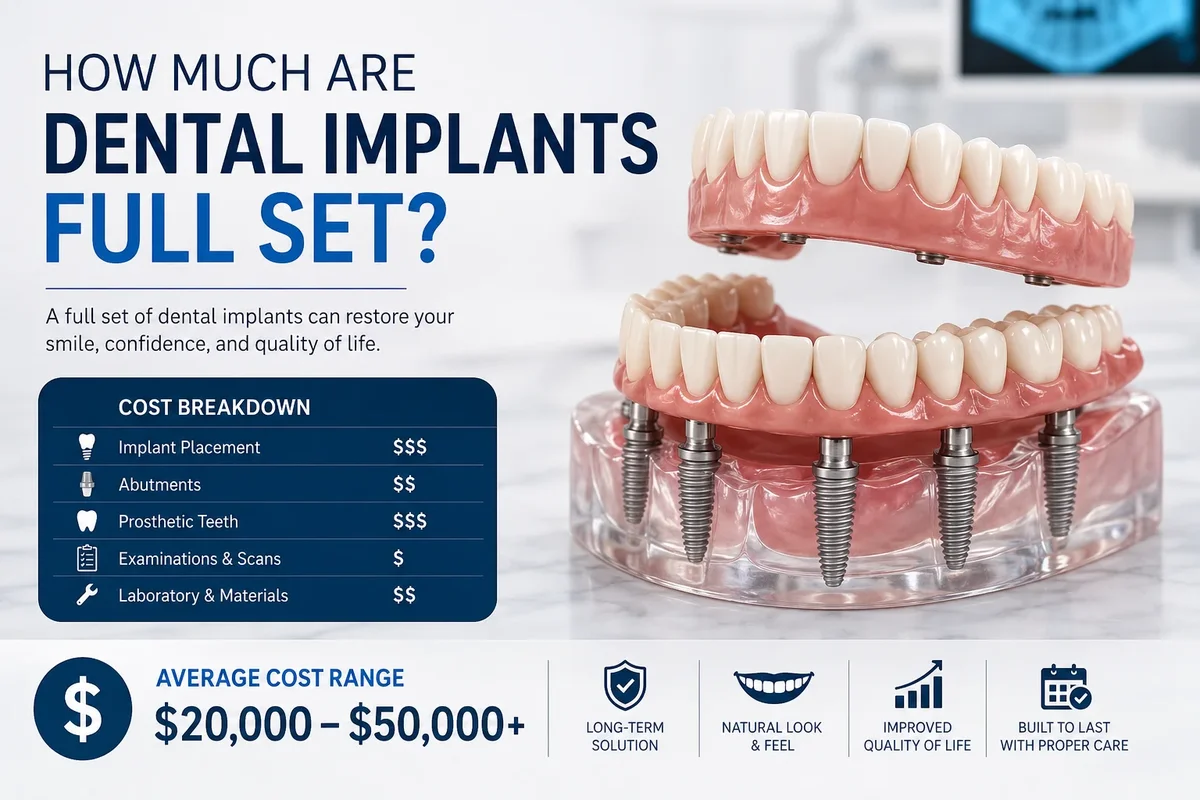
One of the first questions people ask when considering full-mouth tooth replacement is, how much are dental implants full set? The short answer is that the total cost can vary significantly depending on your oral health, the number of implants required, the materials used, the complexity of the procedure, and the country or clinic where treatment is performed. Because every patient’s situation is unique, there is no single price that applies to everyone.
If you are searching online for how much are dental implants full set, you have probably already experienced extensive tooth loss, failing teeth, uncomfortable dentures, or difficulty eating and smiling with confidence. In many cases, a full set of dental implants can provide a long-term solution that looks and functions more like natural teeth than traditional removable dentures. However, understanding the investment involved requires looking beyond a simple price figure.
When evaluating how much are dental implants full set, it is important to understand that treatment plans may range from implant-supported dentures to fixed full-arch restorations. Some patients may need four implants per arch, while others may require six, eight, or more implants depending on bone quality and treatment goals. This is one of the primary reasons why online estimates often differ from actual treatment recommendations.
Another important consideration when researching how much are dental implants full set is whether additional procedures are necessary before implant placement. Some patients require tooth extractions, bone grafting, sinus augmentation, or treatment for gum disease. These factors can influence both the treatment timeline and overall cost. A personalized examination is usually the only reliable way to determine exactly what is needed.
For many people, the more useful question is not only how much are dental implants full set, but also whether full-mouth implants are the right solution for their lifestyle. Patients who want improved chewing ability, greater stability, and a fixed alternative to removable dentures often find that implant-supported restorations provide advantages that justify further investigation. On the other hand, some individuals may be better suited to alternative treatments depending on their health, bone condition, expectations, and budget.
If you are comparing treatment options, remember that the lowest advertised price does not always represent the total treatment cost. When assessing how much are dental implants full set, it is wise to ask what is included in the proposed treatment plan. Diagnostic imaging, surgical guides, temporary teeth, final restorations, follow-up appointments, and maintenance recommendations may vary between providers. Understanding these details helps prevent misunderstandings and allows for a more accurate comparison of available options.
Many patients researching how much are dental implants full set are also concerned about treatment durability. While dental implants are designed to be long-lasting, their success depends on proper planning, oral hygiene, regular dental care, and individual health factors. A comprehensive consultation allows a dental professional to evaluate these factors and explain realistic expectations based on your specific situation.
It is also worth noting that age alone does not determine whether someone can receive full-mouth implants. Some older adults are excellent candidates, while some younger patients may need preparatory treatment before proceeding. This is another reason why searching only for how much are dental implants full set may not provide the complete information needed to make an informed decision.
Patients who have been wearing dentures for years often discover that implant-supported solutions can improve comfort and confidence. Others may be dealing with multiple failing teeth and are considering whether a full-mouth restoration is more practical than repairing individual teeth over time. In these situations, a detailed assessment can help determine which approach is most suitable and financially sensible in the long term.
If you are actively researching how much are dental implants full set, the next step should not be choosing a treatment based solely on price. Instead, focus on obtaining a professional evaluation that identifies your oral health needs, available treatment options, expected outcomes, and potential costs. A personalized treatment plan provides information that online estimates simply cannot match.
At Redent Klinik, patients considering full-mouth implant treatment can receive a detailed assessment designed to identify the most appropriate solution for their individual needs. You can request more information through the Redent Klinik Contact Page. Additional educational resources about oral health and implant treatment can also be found through the American Dental Association.
Practical Next Step: If you are wondering how much are dental implants full set for your specific situation, gather any recent dental X-rays or treatment records and schedule a consultation. A professional examination can identify whether implants are suitable, whether additional procedures are needed, and what factors may influence your final treatment plan and overall investment.
Quick Answer: How Much Are Dental Implants Full Set on Average?
For most people beginning their research, the first concern is straightforward: how much are dental implants full set and what does that investment actually include? While it would be convenient to have a single universal price, full-mouth dental implant treatment is highly personalized. The final cost depends on the number of implants required, the type of restoration selected, the condition of the jawbone, the need for preparatory procedures, and the overall complexity of treatment.
If you are searching online for how much are dental implants full set, you will likely encounter a wide range of figures. This variation is normal because two patients with similar tooth loss may require completely different treatment plans. One person may qualify for immediate implant placement with minimal preparation, while another may need extractions, bone grafting, or gum treatment before implants can be placed safely.
Why There Is No Single Price for Everyone
Understanding how much are dental implants full set starts with recognizing that full-mouth restoration is not a standard product. It is a customized medical and dental procedure designed around each patient’s anatomy and oral health condition.
Several variables influence treatment planning, including:
- Number of implants needed
- Upper arch, lower arch, or both arches
- Bone density and volume
- Type of final prosthetic teeth
- Need for extractions
- Need for bone grafting procedures
- Digital planning and imaging requirements
- Long-term maintenance considerations
Because of these factors, anyone asking how much are dental implants full set should view online estimates as general educational information rather than a guaranteed quote.
What a Full Set of Dental Implants Usually Includes
When comparing options, it is important to understand what may be included within the proposed treatment plan. Many patients researching how much are dental implants full set focus exclusively on the implants themselves, but implants are only one component of the overall restoration.
Diagnostic Evaluation
A comprehensive examination often includes digital scans, photographs, oral health evaluation, and radiographic imaging. These records help determine whether implants are appropriate and identify any potential complications before treatment begins.
Surgical Phase
During the surgical phase, implants are placed into the jawbone. Depending on the patient’s situation, temporary teeth may be provided while healing occurs.
Final Restoration
Once integration is complete, custom prosthetic teeth are attached to the implants. Materials, aesthetics, durability requirements, and treatment goals all influence the final restoration selected.
This is why discussions about how much are dental implants full set should always include the complete treatment journey rather than focusing on implant placement alone.
How to Decide Whether Full-Mouth Implants Are Worth Considering
Many people researching how much are dental implants full set are actually trying to answer a deeper question: “Is this treatment worth it for my situation?”
Full-mouth implants may be worth exploring if you:
- Have multiple missing teeth
- Wear dentures and want more stability
- Have several failing teeth with poor long-term prognosis
- Experience difficulty chewing everyday foods
- Want a fixed alternative to removable dentures
- Desire improved comfort and confidence
However, not every patient requires a complete implant-supported restoration. In some situations, preserving healthy natural teeth, using partial implant solutions, or considering alternative prosthetic options may be more appropriate. This is why a personalized evaluation is often more valuable than simply searching for how much are dental implants full set online.
Questions to Ask During a Consultation
If you are seriously considering treatment, prepare questions that help clarify your individual situation rather than focusing only on price.
- Am I a candidate for full-mouth implants?
- Will I need extractions before treatment?
- Is bone grafting likely to be necessary?
- What type of restoration is recommended?
- How long will treatment take?
- What maintenance will be required?
- What factors could affect my final treatment cost?
These questions often provide more useful information than asking only how much are dental implants full set, because they reveal what treatment is actually needed and what outcomes can realistically be expected.
Making a Smart Decision
The most important takeaway is that full-mouth implant treatment should be evaluated based on long-term function, comfort, oral health needs, and treatment suitability—not solely on advertised pricing. While understanding how much are dental implants full set is an important part of planning, the true value comes from determining whether the proposed treatment matches your goals and clinical needs.
Patients considering full-mouth restoration may benefit from obtaining a detailed treatment assessment through the Redent Klinik Contact Page. Educational information about implant dentistry and oral health can also be reviewed through the American Dental Association.
What to Check Next: Before making any decision, verify whether you have recent dental X-rays, information about previous extractions, or records of existing dental conditions. If you have multiple missing teeth, unstable dentures, difficulty chewing, or concerns about your remaining teeth, request a professional dental consultation to determine whether a full-mouth implant solution is appropriate and what factors may influence your personalized treatment plan.
What Factors Affect How Much Dental Implants Full Set Costs?
When people search for how much are dental implants full set, they often hope to find a simple price list. In reality, the cost of full-mouth implant treatment is influenced by numerous clinical and technical factors. Understanding these variables can help you make a more informed decision and avoid comparing treatment plans based solely on advertised pricing.
The most important thing to remember is that two patients rarely require identical treatment. Even if both individuals are missing all of their teeth, their bone quality, gum health, medical history, treatment goals, and restoration preferences may be completely different. As a result, the answer to how much are dental implants full set depends heavily on the details of the individual case.
Number of Implants Required
One of the biggest factors affecting how much are dental implants full set is the number of implants needed to support the final restoration. Some full-arch solutions may use four implants, while others may require six, eight, or more implants depending on the patient’s anatomy and long-term treatment objectives.
More implants do not automatically mean a better result, but they can increase treatment complexity and influence the overall investment. The appropriate number is determined during clinical planning rather than chosen solely based on budget considerations.
Upper Arch vs. Lower Arch
Treatment requirements can differ significantly between the upper and lower jaw. The upper jaw often has softer bone, which may affect implant planning. In some cases, this difference can influence both treatment methods and the overall answer to the question, how much are dental implants full set.
Bone Quality and Bone Volume
Healthy jawbone is essential for supporting dental implants. If significant bone loss has occurred after years of missing teeth, additional procedures may be recommended before or during implant treatment.
Patients asking how much are dental implants full set are often surprised to learn that bone quality can be just as important as the implants themselves. Bone conditions influence treatment planning, healing expectations, and potential additional procedures.
Bone Grafting Considerations
Bone grafting may be recommended when the existing bone cannot adequately support implants. Not every patient needs this procedure, but when it is required, it becomes an important part of the overall treatment plan. This is why personalized imaging and examination are essential before receiving an accurate estimate.
Type of Final Restoration
Another major factor affecting how much are dental implants full set is the type of prosthetic teeth selected. Different restoration materials offer varying characteristics in terms of aesthetics, durability, maintenance requirements, and manufacturing complexity.
Some patients prioritize natural appearance, while others focus on long-term durability or ease of maintenance. A consultation allows your dental team to explain the advantages and limitations of available options so you can make a decision based on your priorities rather than assumptions.
Preparatory Treatments Before Implants
Before implant placement can occur, some patients require additional dental care. These treatments can affect both the timeline and the final cost.
- Removal of severely damaged teeth
- Treatment of active gum disease
- Management of oral infections
- Bone augmentation procedures
- Correction of certain anatomical limitations
This is one reason why searching only for how much are dental implants full set may not provide meaningful answers without a clinical evaluation. The condition of the mouth often determines what needs to happen before implants can be placed successfully.
Technology and Treatment Planning
Modern implant dentistry frequently uses advanced diagnostic tools such as digital scans, three-dimensional imaging, and computer-guided planning. These technologies help improve precision and allow for more predictable treatment planning.
While many patients focus on how much are dental implants full set, it is also important to consider how the treatment is planned and executed. Comprehensive diagnostics can help identify potential issues before surgery and support more accurate treatment recommendations.
Location and Provider Experience
Geographic location and clinical expertise may also influence overall treatment costs. Different regions have varying operational expenses, laboratory costs, and healthcare structures. Similarly, treatment performed by experienced implant teams may involve different planning protocols and service levels than basic implant solutions.
When evaluating how much are dental implants full set, focus on understanding exactly what is included in the proposed treatment rather than comparing numbers alone. A lower estimate may not always include the same services, materials, or follow-up care.
How to Compare Treatment Plans Correctly
If you receive multiple treatment proposals, compare them carefully. Ask whether each plan includes:
- Diagnostic imaging
- Surgical procedures
- Temporary restorations
- Final prosthetic teeth
- Follow-up appointments
- Maintenance recommendations
Understanding these details can provide a more realistic picture of how much are dental implants full set in your specific situation.
Making the Right Financial and Clinical Decision
The goal should not be to find the cheapest option but to identify the treatment that best matches your oral health needs, long-term goals, and expectations. A personalized assessment often reveals important information that cannot be obtained through online research alone.
Patients interested in exploring full-mouth implant solutions can request an evaluation through the Redent Klinik Contact Page. For additional educational resources about implant dentistry and oral health, visit the American Dental Association.
What to Check Before Moving Forward: If you are comparing treatment options, ask whether you have sufficient bone support, whether additional procedures may be necessary, and what is included in the proposed treatment plan. Request professional advice whenever you have multiple missing teeth, unstable dentures, chronic dental problems, or uncertainty about which full-mouth restoration option may be most appropriate for your situation.
Who Is a Good Candidate for a Full Set of Dental Implants?
Many people begin by asking how much are dental implants full set, but an equally important question is whether they are actually a suitable candidate for the procedure. Full-mouth dental implants can be an effective solution for many individuals with extensive tooth loss, failing teeth, or long-term denture problems. However, candidacy depends on several health, anatomical, and lifestyle factors that should be evaluated before focusing solely on treatment costs.
Understanding whether you are a suitable candidate can save time, help set realistic expectations, and provide a clearer picture of how much are dental implants full set in your particular situation. The best treatment option is not always the most advanced one—it is the solution that best matches your oral health needs and long-term goals.
Patients Who Often Benefit From Full-Mouth Implants
Full-mouth implant treatment is commonly considered by individuals who have lost most or all of their teeth, or whose remaining teeth have a poor long-term prognosis. In these situations, implant-supported restorations may provide improved stability and function compared with some traditional removable solutions.
You may be a candidate if you:
- Have lost most or all teeth in one or both arches
- Currently wear dentures and experience instability
- Have multiple damaged or failing teeth
- Struggle to chew certain foods comfortably
- Want a fixed alternative to removable dentures
- Are committed to maintaining long-term oral hygiene
Patients in these situations frequently research how much are dental implants full set because they want a more permanent and functional tooth replacement option. However, candidacy must always be confirmed through a professional examination.
The Importance of Bone Health
One of the most important factors affecting suitability is the condition of the jawbone. Dental implants rely on adequate bone support for stability and long-term function. If significant bone loss has occurred after years of missing teeth, additional treatment may be recommended before implant placement.
Can You Still Be a Candidate With Bone Loss?
In many cases, yes. Bone loss does not automatically exclude someone from treatment. Modern implant dentistry offers various techniques that may help address reduced bone volume. However, these options can influence treatment planning and may affect discussions about how much are dental implants full set.
This is why diagnostic imaging and detailed evaluation are so important. Without proper assessment, it is impossible to know whether additional procedures may be necessary.
General Health Considerations
Overall health plays a significant role in determining implant suitability. Conditions that affect healing, immune function, or bone metabolism may require special consideration during treatment planning.
A dental professional may review:
- Medical history
- Current medications
- Smoking habits
- Previous dental treatments
- Healing history
- Existing oral health conditions
Individuals researching how much are dental implants full set should understand that medical factors sometimes influence both treatment timing and procedural recommendations. Transparency about your health history helps create a safer and more personalized treatment plan.
Age Is Not Usually the Main Factor
Many patients assume they may be too old for implant treatment. In reality, chronological age alone is rarely the deciding factor. What matters more is overall health, bone condition, and the ability to maintain proper oral care.
Some older adults are excellent candidates for full-mouth implants, while younger patients with significant oral health issues may require additional treatment before implants can be considered. Therefore, questions about how much are dental implants full set should always be accompanied by an assessment of suitability rather than age alone.
Patients Who May Need Alternative Approaches
Not everyone who asks how much are dental implants full set will ultimately choose or qualify for full-mouth implant treatment. Depending on clinical findings, alternative solutions may be recommended.
Examples may include:
- Implant-supported dentures
- Partial implant restorations
- Conventional dentures
- Preservation of healthy natural teeth
- Staged treatment approaches
A comprehensive consultation helps determine which option offers the best balance between function, comfort, treatment complexity, and long-term maintenance.
Lifestyle and Commitment Matter
Successful implant treatment requires more than simply placing implants. Patients must be willing to follow professional instructions, attend follow-up visits, and maintain excellent oral hygiene practices.
If someone is researching how much are dental implants full set solely as a quick fix without considering long-term maintenance, they may not fully appreciate the responsibilities involved. Regular professional care and daily hygiene remain essential even after implant treatment is completed.
Questions to Ask Yourself Before Scheduling a Consultation
Before meeting with an implant provider, consider the following questions:
- Am I missing most or all of my teeth?
- Do my dentures limit my quality of life?
- Do I have difficulty eating or speaking comfortably?
- Am I prepared for a treatment process that may take several months?
- Can I commit to long-term oral hygiene and maintenance?
Your answers can help guide discussions about treatment suitability and provide context when evaluating how much are dental implants full set in relation to your personal goals.
Making an Informed Decision
The right candidate for full-mouth implants is not simply someone who can afford treatment. The ideal candidate is someone whose oral health condition, expectations, and long-term goals align with what implant dentistry can realistically provide. A thorough assessment is essential for determining whether this treatment approach is appropriate.
Patients interested in exploring their options can request an individualized evaluation through the Redent Klinik Contact Page. Additional information about oral health and implant dentistry can be found through the American Dental Association.
What to Check Before Requesting Professional Advice: If you have extensive tooth loss, loose dentures, multiple failing teeth, or concerns about bone loss, schedule a professional dental assessment. Bring any recent X-rays, treatment records, or information about your medical history. These details can help determine whether you are a suitable candidate and what factors may influence your treatment plan, timeline, and overall expectations.
Understanding the Full Dental Implant Procedure Step by Step
When researching how much are dental implants full set, many people focus primarily on cost. However, understanding the treatment process itself is equally important. Knowing what happens before, during, and after implant placement can help you evaluate whether full-mouth implants fit your expectations, lifestyle, timeline, and oral health needs.
The answer to how much are dental implants full set is often linked directly to the complexity of the procedure. Patients who understand each stage of treatment are usually better prepared to make informed decisions and avoid unrealistic expectations about timing or outcomes.
Step 1: Initial Consultation and Assessment
The first stage of treatment involves a detailed dental examination. During this appointment, your dental team evaluates your oral health, reviews your medical history, and determines whether implant treatment may be suitable for your situation.
Diagnostic Imaging and Planning
Modern implant planning often includes digital scans, panoramic imaging, photographs, and three-dimensional radiographic evaluations. These tools help identify bone levels, anatomical structures, and potential challenges before treatment begins.
This assessment is critical because online searches for how much are dental implants full set cannot account for individual differences in bone quality, tooth condition, or treatment complexity. Personalized planning provides much more reliable information than general internet estimates.
Step 2: Treatment Planning and Case Design
Once diagnostic information is collected, a customized treatment plan is created. This plan determines the number of implants required, the type of restoration recommended, and whether additional procedures may be necessary.
At this stage, patients often receive detailed explanations about timelines, possible treatment phases, expected maintenance requirements, and factors that may influence how much are dental implants full set in their individual case.
Reviewing Available Options
Not every patient receives the same recommendation. Depending on clinical findings, treatment options may include:
- Fixed full-arch restorations
- Implant-supported dentures
- Single-arch treatment
- Upper and lower arch rehabilitation
- Staged treatment approaches
Comparing these options helps patients understand both the clinical and financial implications of different solutions.
Step 3: Preparatory Procedures if Needed
Some patients can proceed directly to implant placement, while others require preliminary treatment. The need for preparatory procedures depends on oral health conditions identified during the assessment phase.
Common preparatory treatments may include:
- Extraction of damaged teeth
- Treatment of gum disease
- Management of oral infections
- Bone grafting procedures
- Correction of structural issues
These additional steps may influence both treatment duration and discussions about how much are dental implants full set. This is why personalized consultation is essential before making assumptions about cost or timing.
Step 4: Implant Placement Surgery
Implant placement is the surgical stage where titanium implant fixtures are positioned within the jawbone. These implants serve as artificial tooth roots that will later support the final restoration.
The exact number of implants depends on the treatment design selected during planning. Some full-mouth solutions utilize fewer implants strategically positioned to support an entire arch, while others may require additional implants based on individual circumstances.
Patients who ask how much are dental implants full set often imagine the surgery as the entire process. In reality, implant placement is only one part of a larger treatment journey.
Step 5: Healing and Osseointegration
Following implant placement, a healing phase begins. During this period, the bone gradually integrates with the implant surface in a biological process known as osseointegration.
Healing times vary from patient to patient depending on factors such as overall health, bone quality, treatment complexity, and adherence to professional instructions. The dental team monitors progress through follow-up appointments and clinical evaluations.
Understanding this healing phase is important because patients researching how much are dental implants full set often underestimate the amount of time involved in achieving a stable and functional result.
Step 6: Placement of the Final Restoration
Once adequate healing has occurred, the final prosthetic teeth are fabricated and attached to the implants. These restorations are customized to fit the patient’s facial features, bite relationship, and functional requirements.
Aesthetics and Function
During this phase, attention is given to appearance, speech, comfort, and chewing function. The goal is to create a restoration that supports everyday activities while meeting realistic aesthetic expectations.
Because restoration materials and design options vary, this stage may also contribute to differences in how much are dental implants full set between patients and treatment plans.
Step 7: Long-Term Maintenance and Follow-Up
Treatment does not end when the final teeth are delivered. Ongoing maintenance is an essential part of implant care. Regular dental visits, professional cleanings, and proper home hygiene practices help support long-term oral health.
Anyone researching how much are dental implants full set should include future maintenance considerations in their decision-making process. Long-term success depends not only on treatment quality but also on consistent aftercare.
Making the Right Decision About Treatment
Understanding each phase of the process helps patients evaluate whether full-mouth implants align with their goals, timeline, and expectations. While cost remains an important consideration, the treatment journey, healing requirements, and maintenance responsibilities are equally significant.
Individuals interested in personalized guidance can request a consultation through the Redent Klinik Contact Page. Additional educational information about implant treatment and oral health can be found through the American Dental Association.
What to Check Before Requesting Professional Advice: If you are considering full-mouth implants, determine whether you have recent dental records, information about missing teeth, previous implant treatments, or a history of bone grafting procedures. Request professional advice if you are uncertain about treatment stages, expected healing time, or whether your oral health condition makes you a suitable candidate for a full-mouth implant solution.
Additional Treatments That Can Increase the Total Cost
Many patients begin their research by asking how much are dental implants full set, expecting the answer to include only the implants and replacement teeth. However, one of the most important aspects of treatment planning is understanding that additional procedures may be necessary before implants can be placed successfully. These supplementary treatments are often overlooked during online research, yet they can significantly influence both the treatment timeline and the overall investment.
If you want an accurate understanding of how much are dental implants full set, it is essential to evaluate the condition of your teeth, gums, jawbone, and surrounding oral structures. Some patients can proceed directly to implant placement, while others require preparatory care to create a healthier foundation for long-term treatment success.
Why Additional Procedures May Be Necessary
Dental implants depend on healthy bone and gum tissues for support. When teeth have been missing for many years, or when advanced dental disease is present, the mouth may require corrective treatment before implants become a suitable option.
This is one reason why online searches for how much are dental implants full set often produce such varied answers. The condition of the patient’s oral health frequently determines whether additional procedures are needed and how extensive those procedures may be.
Tooth Extractions Before Implant Treatment
Many individuals seeking full-mouth restoration still have some natural teeth remaining. Unfortunately, not all of these teeth can always be preserved. Severely damaged, infected, fractured, or unstable teeth may need to be removed before implant treatment can begin.
When Extractions May Be Recommended
- Advanced tooth decay
- Severe periodontal disease
- Extensive structural damage
- Non-restorable teeth
- Teeth with poor long-term prognosis
The need for extractions can affect both treatment planning and discussions regarding how much are dental implants full set. While some extractions are straightforward, others may involve additional surgical considerations.
Bone Grafting Procedures
Bone loss is one of the most common challenges encountered during implant planning. After a tooth is lost, the surrounding bone naturally begins to shrink over time. The longer teeth remain missing, the more likely bone reduction may occur.
Because implants require adequate bone support, some patients need bone grafting procedures before implant placement can proceed safely. This is often one of the most significant variables affecting how much are dental implants full set.
Who Might Need Bone Grafting?
Bone grafting may be considered when:
- Teeth have been missing for many years
- Severe periodontal disease has caused bone loss
- Previous infections have damaged bone structures
- Existing bone volume is insufficient for implant support
Not every patient requires grafting, which is why diagnostic imaging remains essential before making assumptions about treatment costs.
Periodontal (Gum) Treatment
Healthy gums are critical for long-term implant success. If active gum disease is present, treatment is typically recommended before implant placement.
Patients researching how much are dental implants full set sometimes focus entirely on replacing teeth while overlooking the importance of treating underlying gum problems. Ignoring these conditions may compromise overall oral health and affect treatment planning.
Signs That Gum Treatment May Be Needed
- Bleeding gums
- Persistent bad breath
- Loose teeth
- Gum recession
- History of periodontal disease
Addressing these issues before implant placement can help create a healthier environment for future restorations.
Temporary Teeth During Treatment
Many patients undergoing full-mouth rehabilitation receive temporary restorations while healing occurs. These temporary teeth can support appearance, speech, and daily function during various stages of treatment.
The type of temporary restoration used may vary according to the treatment plan and can be another factor influencing how much are dental implants full set. Understanding whether temporary restorations are included in a proposed treatment plan is an important question to ask during consultations.
Advanced Imaging and Digital Planning
Modern implant dentistry frequently utilizes sophisticated diagnostic technologies to improve precision and treatment planning. Digital scans and three-dimensional imaging help clinicians evaluate anatomical structures and identify potential challenges before surgery.
While some patients focus only on how much are dental implants full set, these planning tools often play a valuable role in creating a customized and carefully evaluated treatment strategy.
Management of Complex Cases
Some individuals present with additional challenges that may require specialized planning. These can include significant bone loss, anatomical variations, previous implant complications, or extensive restorative needs.
Complex situations do not necessarily prevent treatment, but they may influence recommendations, timelines, and the overall answer to how much are dental implants full set. Comprehensive assessment helps identify these factors early in the process.
Why a Personalized Evaluation Matters
One of the most common mistakes patients make is assuming that every full-mouth implant case follows the same pathway. In reality, additional procedures are often what create the greatest differences between treatment plans.
Rather than relying solely on online estimates of how much are dental implants full set, focus on obtaining a professional evaluation that identifies your specific needs. This approach provides a much clearer understanding of potential treatment requirements and helps prevent unexpected surprises later.
Individuals considering full-mouth implant treatment can request a personalized assessment through the Redent Klinik Contact Page. Additional educational information regarding oral health and implant dentistry is available through the American Dental Association.
What to Check Before Requesting Professional Advice: If you have been missing teeth for several years, have a history of gum disease, wear dentures, or suspect bone loss, ask whether additional procedures such as extractions, bone grafting, or periodontal treatment may be necessary. Request professional advice whenever you are unsure about your oral health condition or when online pricing estimates do not reflect the complexity of your specific situation.
Risks, Recovery Time, and Long-Term Considerations
When researching how much are dental implants full set, many people focus almost entirely on treatment costs and final appearance. While these factors are important, understanding the potential risks, recovery process, and long-term responsibilities is equally essential. Making an informed decision requires looking beyond the initial investment and considering what life with implant-supported teeth may involve over many years.
Every dental procedure carries certain considerations, and full-mouth implant treatment is no exception. Learning about recovery expectations and possible challenges can help patients determine whether this treatment aligns with their health, lifestyle, and long-term goals. The answer to how much are dental implants full set should always be considered alongside the commitment required to maintain the result.
Understanding Recovery After Implant Surgery
Recovery experiences vary from patient to patient. Factors such as overall health, bone quality, treatment complexity, smoking habits, and adherence to professional instructions can all influence healing.
Following implant placement, patients typically experience a healing period during which the implants gradually integrate with the surrounding bone. This process is known as osseointegration and is a critical part of treatment success.
What to Expect During Early Healing
During the first days and weeks after surgery, patients may notice:
- Mild swelling
- Temporary discomfort
- Sensitivity in treated areas
- Dietary restrictions during healing
- Follow-up appointments for monitoring progress
Not every patient experiences the same recovery pattern. This is one reason why understanding the full process is just as important as understanding how much are dental implants full set.
Potential Risks Associated With Dental Implants
While dental implants are widely used in modern dentistry, no treatment can be considered entirely risk-free. Patients should discuss potential complications with their dental provider before beginning treatment.
Possible Surgical Risks
Depending on the individual case, potential surgical considerations may include:
- Infection
- Delayed healing
- Postoperative discomfort
- Bleeding complications
- Implant integration challenges
These risks do not occur in every case, but they should be understood as part of a comprehensive treatment discussion. Patients who focus exclusively on how much are dental implants full set may overlook important clinical factors that influence treatment outcomes.
Factors That May Affect Long-Term Success
Long-term implant performance depends on more than the surgical procedure itself. Daily habits, oral hygiene practices, and overall health can all play important roles in maintaining implant-supported restorations.
Smoking and Oral Health
Tobacco use is often discussed during implant consultations because it may affect healing and ongoing oral health. Patients who smoke should discuss this openly with their dental team so that treatment planning can take these factors into account.
Medical Conditions
Certain health conditions may influence healing and maintenance requirements. This does not automatically prevent treatment, but it highlights the importance of individualized planning and professional supervision.
Anyone researching how much are dental implants full set should understand that long-term success is influenced by health and maintenance factors, not simply by the procedure itself.
The Importance of Ongoing Maintenance
A common misconception is that implant-supported teeth require no future care. In reality, regular maintenance remains essential. Although implants cannot develop cavities in the same way natural teeth can, the surrounding tissues still require professional monitoring and proper hygiene.
Patients considering how much are dental implants full set should include maintenance commitments in their decision-making process. Long-term care often includes:
- Routine dental examinations
- Professional cleanings
- Monitoring of implant health
- Evaluation of prosthetic components
- Home oral hygiene routines
These ongoing responsibilities contribute to preserving oral health and supporting the longevity of the restoration.
Balancing Benefits and Risks
Every patient evaluates treatment differently. For some individuals, improved chewing ability, enhanced stability, and increased confidence may outweigh the treatment commitments involved. For others, alternative treatment options may be more appropriate depending on health conditions, budget considerations, or personal preferences.
The goal is not simply to determine how much are dental implants full set, but also to understand whether the potential benefits align with your expectations and willingness to participate in long-term maintenance.
Questions to Ask Before Treatment
Before proceeding with full-mouth implant treatment, consider discussing the following topics during your consultation:
- What recovery timeline should I expect?
- Are there any health factors that could affect healing?
- What maintenance will be required after treatment?
- What are the potential risks in my specific case?
- How often will follow-up visits be needed?
- Are there alternative treatment options worth considering?
These discussions often provide more valuable guidance than focusing solely on how much are dental implants full set. A thorough understanding of risks and responsibilities helps support better long-term decision-making.
Making a Well-Informed Long-Term Decision
Full-mouth implants can be a significant treatment commitment. The decision should be based not only on cost and appearance but also on your ability to maintain oral health, attend follow-up appointments, and understand the realities of recovery and long-term care.
Patients who want personalized information about treatment suitability and maintenance expectations can request an assessment through the Redent Klinik Contact Page. Additional educational information regarding oral health and implant care is available through the American Dental Association.
What to Check Before Requesting Professional Advice: Review your medical history, smoking status, current medications, and oral hygiene habits before your consultation. Request professional advice if you have concerns about healing, chronic health conditions, previous implant complications, or uncertainty about the long-term responsibilities associated with full-mouth implant treatment. Understanding these factors can help you evaluate both the risks and the overall value of the proposed treatment plan.
Alternatives to a Full Set of Dental Implants
Many people researching how much are dental implants full set assume that a complete implant-supported restoration is the only solution for extensive tooth loss. While full-mouth implants can be an excellent option for many patients, they are not the only treatment available. Depending on your oral health, budget, treatment goals, and personal preferences, alternative solutions may provide a more appropriate path forward.
Understanding available alternatives is important because the best treatment is not necessarily the most complex or the most expensive. A thorough consultation helps determine whether a full set of implants is truly necessary or whether another option may achieve your goals more efficiently. Before focusing entirely on how much are dental implants full set, it is worth exploring all available choices.
Why Alternatives May Be Worth Considering
Every patient’s situation is different. Some individuals have adequate bone support and are excellent candidates for full-mouth implants, while others may have health concerns, financial limitations, or treatment goals that make alternative approaches more suitable.
In many cases, patients who initially search for how much are dental implants full set discover that they may not require a complete implant-supported restoration. Preserving healthy teeth or choosing a less invasive solution can sometimes provide excellent results while reducing treatment complexity.
Implant-Supported Dentures
One of the most common alternatives to a full fixed implant restoration is an implant-supported denture. This treatment combines dental implants with a removable denture that attaches securely to the implants.
Potential Advantages
- Improved stability compared with conventional dentures
- Reduced movement during eating and speaking
- Fewer implants may be required
- May be suitable for patients with limited bone volume
Patients researching how much are dental implants full set often consider implant-supported dentures when seeking a balance between improved function and overall treatment investment.
Conventional Dentures
Traditional removable dentures remain a treatment option for many individuals. While they do not provide the same fixed support as implant-based restorations, they may still be appropriate in certain situations.
When Conventional Dentures May Be Considered
- Patients seeking a non-surgical solution
- Individuals with significant medical limitations
- Situations where implants are not currently feasible
- Patients looking for a shorter treatment process
Although conventional dentures differ significantly from implant-supported restorations, they remain part of the conversation whenever discussing how much are dental implants full set and alternative tooth replacement strategies.
Partial Implant Solutions
Not everyone needs a complete full-mouth restoration. Some patients are missing several teeth but still have healthy natural teeth that can be preserved.
In these situations, strategically placed implants may replace only the missing teeth rather than the entire dentition. This approach may help preserve natural structures while reducing overall treatment complexity.
Patients asking how much are dental implants full set sometimes discover that a partial implant treatment plan better matches their clinical needs and long-term goals.
Fixed Bridges Supported by Remaining Teeth
Depending on the condition of the remaining natural teeth, fixed dental bridges may be another possible option. Bridges use adjacent teeth to support replacement teeth within a specific area of the mouth.
While bridges are not suitable for every patient, they may be considered when tooth loss is limited and neighboring teeth are healthy enough to provide support.
Important Considerations
A bridge solution may not provide the same advantages as implants in every situation. However, understanding available alternatives can help patients make informed decisions rather than focusing exclusively on how much are dental implants full set.
Preserving Healthy Natural Teeth
One of the most important principles in dentistry is preserving healthy natural teeth whenever possible. Some patients assume that replacing all teeth with implants is automatically the best solution, but this is not always the case.
If healthy teeth remain, preserving them may provide important functional and biological benefits. A comprehensive examination can determine whether maintaining natural teeth is a realistic and beneficial option.
Before deciding solely based on how much are dental implants full set, ask whether any existing teeth can be predictably maintained as part of a long-term treatment strategy.
How to Compare Your Options
Rather than asking which treatment is best in general, focus on which treatment is best for your specific circumstances.
Consider the following factors:
- Comfort and stability expectations
- Willingness to undergo surgery
- Current oral health condition
- Bone support availability
- Long-term maintenance requirements
- Treatment timeline preferences
- Budget considerations
Comparing options in this way often provides more useful guidance than focusing exclusively on how much are dental implants full set.
Making a Personalized Decision
There is no universal solution that works for every patient. The most appropriate treatment depends on your clinical findings, goals, expectations, and lifestyle. A thorough consultation can help identify whether full-mouth implants, implant-supported dentures, partial implant treatment, bridges, or conventional dentures are most appropriate for your situation.
Patients who want personalized treatment guidance can schedule an assessment through the Redent Klinik Contact Page. Additional educational information about restorative dentistry and oral health can be found through the American Dental Association.
What to Check Before Requesting Professional Advice: Before choosing a treatment, determine whether you still have healthy natural teeth, whether your dentures are functioning adequately, and whether you are comfortable with surgical procedures. Request professional advice if you are unsure whether a full-mouth implant restoration is necessary or if you would like to compare multiple treatment options based on your specific oral health condition and long-term goals.
Financing Options and Ways to Manage Treatment Costs
One of the most common concerns people have when researching how much are dental implants full set is how they will manage the financial side of treatment. Full-mouth implant rehabilitation can represent a significant investment, and many patients spend considerable time comparing treatment options, payment structures, and long-term value before making a decision.
Understanding financing possibilities is important because the answer to how much are dental implants full set is only part of the decision-making process. Equally important is understanding how treatment can fit within your personal budget and long-term healthcare planning.
Looking Beyond the Initial Cost
When evaluating how much are dental implants full set, many people focus entirely on the initial treatment figure. While this is understandable, it can sometimes lead to incomplete decision-making.
Instead of asking only about immediate costs, consider the broader picture:
- Expected maintenance requirements
- Potential future dental expenses
- Replacement frequency of alternative solutions
- Quality-of-life improvements
- Long-term treatment goals
Looking at treatment from a long-term perspective often helps patients better understand the value of various options rather than focusing exclusively on short-term expenses.
Requesting a Detailed Treatment Plan
Before making financial decisions, it is important to obtain a clear and comprehensive treatment plan. Patients researching how much are dental implants full set should avoid relying solely on advertisements or generalized online estimates.
Questions to Ask About Costs
- What services are included in the proposed plan?
- Are diagnostic scans included?
- Are temporary restorations included?
- Does the estimate include follow-up visits?
- Could additional procedures be required?
- What maintenance costs should be expected?
These questions often provide more useful financial information than simply asking how much are dental implants full set without reviewing the details of treatment.
Exploring Payment Plans
Many patients choose to discuss installment options or structured payment arrangements with their dental provider. Availability varies depending on the clinic, country, and healthcare system, but flexible payment solutions are often explored as part of treatment planning.
If you are concerned about how much are dental implants full set, ask whether phased treatment or payment arrangements may be available. Having a clear understanding of financial expectations can reduce stress and support more confident decision-making.
Benefits of Structured Payment Planning
- Greater financial predictability
- Improved budgeting opportunities
- Potential access to treatment sooner
- Better understanding of long-term obligations
Every arrangement differs, so it is important to review details carefully before making commitments.
Insurance and Coverage Considerations
Insurance policies vary widely between countries and providers. Some plans may contribute toward certain aspects of treatment, while others may offer limited coverage for implant-related procedures.
Patients researching how much are dental implants full set should contact their insurance provider directly to verify what benefits may apply to their specific situation.
Questions for Your Insurance Provider
- Are implant procedures covered?
- Are diagnostic examinations included?
- What annual benefit limits apply?
- Are restorations covered separately?
- Are there waiting periods or exclusions?
Understanding coverage details in advance can help prevent misunderstandings and improve financial planning.
Comparing Treatment Plans Carefully
Patients often receive different recommendations from different providers. While comparing treatment plans can be helpful, it is important to compare the actual services included rather than focusing only on the final number.
A lower estimate for how much are dental implants full set may not necessarily include the same diagnostics, materials, temporary restorations, follow-up care, or maintenance recommendations as another treatment proposal.
When comparing options, ask for written explanations of what is included so that you can evaluate each plan accurately.
Considering Treatment in Phases
In some situations, treatment can be planned in stages. Rather than completing all procedures simultaneously, certain phases may be scheduled over a longer period.
This approach is not appropriate for every patient, but it may be discussed when exploring ways to manage how much are dental implants full set within a realistic financial framework.
The suitability of phased treatment depends on oral health conditions, treatment objectives, and professional recommendations.
Avoiding Decisions Based Solely on Price
While financial considerations are important, choosing treatment based exclusively on the lowest price may not always be the best approach. Clinical experience, diagnostic planning, materials, maintenance support, and treatment quality should also be considered.
The goal is not simply to determine how much are dental implants full set, but to understand which treatment option provides the most appropriate balance between clinical needs, long-term goals, and financial considerations.
Creating a Realistic Financial Strategy
A realistic financial plan begins with understanding your treatment needs and obtaining accurate information. Once a professional evaluation has been completed, it becomes easier to compare options, review payment structures, and determine whether treatment aligns with your budget and priorities.
Patients interested in exploring personalized treatment planning can request an assessment through the Redent Klinik Contact Page. Additional oral health resources are available through the American Dental Association.
What to Check Before Requesting Professional Advice: Gather information about your insurance coverage, current dental records, previous treatment history, and budget expectations before your consultation. Request professional advice if you are comparing multiple treatment plans, unsure about financing options, or trying to determine whether a phased treatment approach may be appropriate for your situation. A personalized discussion can provide a clearer understanding of both clinical and financial considerations.
Frequently Asked Questions About How Much Are Dental Implants Full Set Costs
People researching how much are dental implants full set often have many questions beyond pricing alone. Cost is important, but treatment suitability, recovery expectations, longevity, maintenance requirements, and alternative solutions are also major factors that influence decision-making. This section addresses some of the most frequently asked questions to help you better understand the full picture before scheduling a consultation.
While general information can be helpful, remember that every patient’s situation is unique. The most accurate answers about how much are dental implants full set always come from a personalized evaluation that considers your oral health condition, treatment goals, and clinical needs.
Are Full-Mouth Dental Implants the Same for Every Patient?
No. One of the biggest misconceptions is that every full-mouth implant case follows the same treatment plan. In reality, the number of implants, restoration design, bone condition, and required preparatory procedures can vary significantly between patients.
This is one reason why searches for how much are dental implants full set often produce a wide range of answers. Individual treatment planning plays a major role in determining both the procedure and the overall investment.
How Long Does Full-Mouth Implant Treatment Take?
Treatment timelines vary depending on healing requirements and clinical complexity. Some patients may complete certain stages relatively quickly, while others may require additional procedures that extend the process.
Factors That Influence Treatment Duration
- Bone quality and quantity
- Need for tooth extractions
- Need for bone grafting
- Healing response
- Type of restoration selected
When evaluating how much are dental implants full set, it is helpful to consider both financial investment and treatment timeline. A solution that fits your schedule and expectations may be just as important as the cost itself.
Can Full-Mouth Implants Replace Dentures?
In many situations, implant-supported restorations are used as an alternative to traditional removable dentures. Some patients seek implants because they want increased stability, while others wish to reduce denture movement during eating and speaking.
However, not every denture wearer requires a complete fixed implant solution. Depending on your needs, implant-supported dentures or other alternatives may also be considered. This is why discussions about how much are dental implants full set should always include a review of all available treatment options.
Do Full-Mouth Implants Last Forever?
No dental treatment can be described as permanent without qualification. Implant-supported restorations are designed for long-term use, but longevity depends on multiple factors including oral hygiene, maintenance, health conditions, and lifestyle habits.
Patients researching how much are dental implants full set should understand that long-term success requires ongoing care. Regular dental visits and proper maintenance remain important even after treatment is completed.
Will I Need Bone Grafting?
Some patients require bone grafting while others do not. The need for additional bone support can only be determined through professional evaluation and diagnostic imaging.
Because bone conditions vary greatly, bone grafting is one of the reasons there is no universal answer to how much are dental implants full set. Clinical findings determine whether supplementary procedures are necessary.
Are Full-Mouth Implants Suitable for Older Adults?
Age alone is usually not the determining factor. Many older adults successfully receive implant-supported restorations when their health and oral conditions support treatment.
The decision should be based on overall health, bone support, oral hygiene capability, and individual treatment goals rather than age alone. Patients of various age groups often ask how much are dental implants full set, but suitability depends more on health and anatomy than birth year.
Can Smokers Receive Full-Mouth Implants?
Smoking is an important factor that should be discussed during treatment planning. Tobacco use may influence healing and long-term oral health, which is why dental professionals typically review smoking habits carefully during consultations.
If you smoke and are researching how much are dental implants full set, be sure to discuss your habits openly with your dental provider. This information helps support more personalized recommendations.
How Can I Compare Different Treatment Proposals?
Comparing treatment plans based only on the final number is rarely sufficient. Instead, ask what each proposal includes.
Important Comparison Points
- Diagnostic imaging
- Temporary restorations
- Final prosthetic teeth
- Follow-up appointments
- Maintenance recommendations
- Additional procedures if required
A more complete understanding of these factors provides a better perspective on how much are dental implants full set and helps prevent inaccurate comparisons between treatment plans.
What Is the Most Important Question to Ask During a Consultation?
Instead of asking only about cost, consider asking: “Which treatment option is most appropriate for my specific situation?” This question encourages a more comprehensive discussion about oral health, expectations, treatment alternatives, and long-term outcomes.
Understanding how much are dental implants full set is important, but understanding whether full-mouth implants are truly the right solution is often even more valuable.
Making an Informed Decision
The purpose of these frequently asked questions is to help patients move beyond simple price comparisons and focus on treatment suitability, maintenance requirements, and realistic expectations. Full-mouth implant treatment is highly individualized, and the best decision is one based on professional evaluation rather than assumptions.
Patients who would like personalized guidance can request an assessment through the Redent Klinik Contact Page. Additional educational resources about oral health and implant dentistry are available through the American Dental Association.
What to Check Before Requesting Professional Advice: Make a list of your most important questions before your consultation. Include concerns about treatment suitability, healing time, maintenance requirements, alternative options, and expected outcomes. Request professional advice if you have multiple missing teeth, unstable dentures, concerns about bone loss, or uncertainty about whether a full-mouth implant solution is the best choice for your long-term oral health goals.
Disclosure: this page may contain affiliate links. We may earn a commission if you use them, at no extra cost to you.