
If you are searching for how much are full dental implants, you are likely comparing treatment options, budgeting for a long-term dental restoration, or trying to understand why prices vary so widely across clinics and countries. Full mouth dental implant treatment is one of the most transformative procedures in modern dentistry, offering a permanent, natural-looking, stable, and highly functional solution for people who have lost most or all of their teeth. In this detailed guide, you’ll find a clear and patient-focused explanation of every cost factor, the treatment steps, what influences pricing, and how to evaluate true value instead of just numbers. 🦷✨
Before diving deeper, it’s important to understand that the question “how much are full dental implants” does not have a single universal price. Instead, it depends on a combination of technology, surgeon expertise, material quality, number of implants used, whether bone grafting is required, and the country where treatment is performed. These factors create a price range that can look confusing at first — but with the right knowledge, patients can make informed and confident decisions.
Full mouth implant treatment typically involves replacing all missing teeth in the upper jaw, lower jaw, or both. The most common modern approach is the All-on-4 or All-on-6 method, where strategically placed titanium implants support a full arch of fixed prosthetic teeth. This structure mimics natural teeth in strength and appearance while preventing bone loss — something removable dentures can never achieve.
A major reason people search for how much are full dental implants is because the procedure seems expensive. However, dental specialists emphasize that implants are not just a cosmetic upgrade but a long-term medical investment. Unlike dentures that require repeated replacements, adhesives, adjustments, and cause ongoing discomfort, full implants remain stable, functional, and aesthetic for decades with minimal maintenance. This long-term durability significantly changes the overall cost picture.
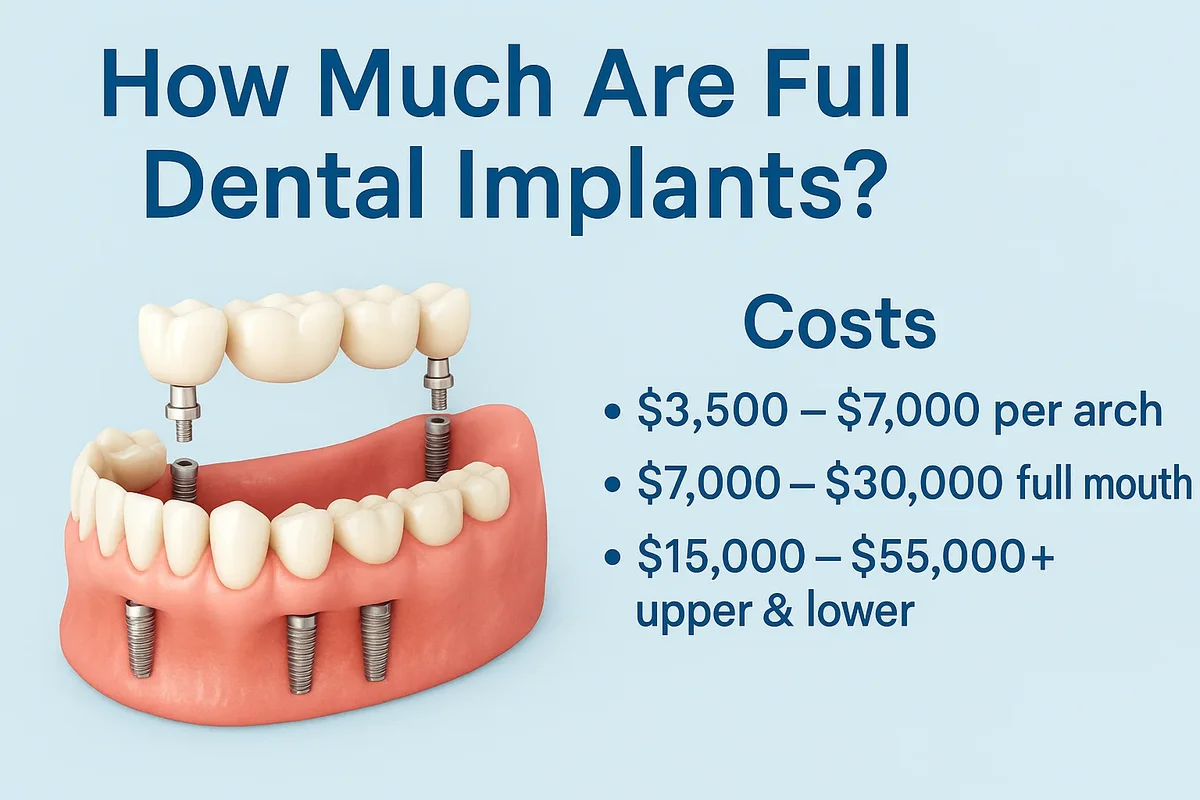
To evaluate realistic pricing, let’s look at globally observed ranges from online research (clinic averages from the U.S., U.K., and Turkey):
Approximate Full Mouth Implant Cost Range (Research-Based):
- United States: $20,000 – $55,000 per arch
- United Kingdom: £12,000 – £28,000 per arch
- Europe (various countries): €8,000 – €22,000 per arch
- Turkey: $3,500 – $8,500 per arch
These numbers illustrate why patients frequently compare countries — differences in labor costs, clinical overhead, and healthcare systems create major contrasts. Still, price shouldn’t be the only deciding factor. The most important elements are surgeon experience, sterilization standards, implant brand, digital planning technology, and long-term follow-up care. For trusted scientific information about dental implant standards, you can review resources from the
American Dental Association.
A common synonym patients use while researching how much are full dental implants is “full mouth restoration cost,” or “complete dental reconstruction pricing.” These terms refer to similar treatment concepts, though the exact procedures may vary slightly. Understanding these related terms helps patients avoid confusion when comparing clinics online.
Another important aspect many people overlook is the value of digital dentistry. Clinics using 3D scanning, surgical guides, and advanced imaging typically achieve more predictable outcomes, fewer complications, and more natural-looking results. While such technology may slightly increase the upfront cost, it reduces long-term risks — making the investment more worthwhile.
Patients also frequently underestimate the importance of communication and clinical transparency. A reputable clinic should clearly explain every detail of the price: implant brand, prosthetic materials, laboratory work, anesthesia type, additional procedures, timelines, and aftercare. If you need assistance from a clinic team, you can reach out through the
Redent Klinik Contact Page.
In summary, answering the question how much are full dental implants requires looking beyond the base price and understanding all factors influencing the final cost. The treatment offers long-term stability, strong chewing ability, bone preservation, natural aesthetics, and the emotional confidence of having a beautiful smile. Because of these benefits, full mouth implants are considered one of the best lifetime dental investments available today. 😊
Understanding Full Dental Implant Systems and What Influences Their Price
When people start researching how much are full dental implants, they quickly realize that the cost varies widely from one clinic to another. This is because full dental implant systems are complex, multi-stage medical treatments involving advanced technology, high-quality materials, and specialized surgical expertise. To fully understand what determines the final price, it’s important to break down each factor that shapes the overall investment. This section explains every element in detail so patients can make informed, confident decisions. 🦷💡
The Structure of Full Mouth Implant Systems
A full dental implant system replaces an entire arch of missing teeth with a strong, fixed prosthetic supported by titanium or zirconia implants. Most clinics use four to six implants per jaw, depending on bone quality. These implants act like artificial roots, anchoring the new teeth securely. When people ask how much are full dental implants, they’re essentially asking how much it costs to rebuild a full arch using this complex foundation.
Full implant systems generally include:
- Surgical placement of implants
- Temporary teeth for the healing period
- Final prosthetic teeth (acrylic, ceramic, or zirconia)
- Digital planning with CBCT scans
- Laboratory production of prosthetics
- Follow-up visits and adjustments
Each of these components affects the final cost, which is why the answer to how much are full dental implants is never a single fixed number. Instead, it is determined by a combination of clinical, technological, and anatomical variables.
Key Factors That Influence Full Implant Pricing
Below are the most important factors that shape the cost of full dental implant treatment. Understanding these explains why two clinics can differ by thousands of dollars.
1. Implant Brand and Material Quality
Premium implant brands like Straumann, Nobel Biocare, and Astra Tech use advanced surface technology and durable titanium alloys. These premium options generally cost more but offer better long-term success. Cheaper brands may reduce the upfront cost but may not offer the same reliability.
When someone looks up how much are full dental implants, the brand choice is usually a major cost variable. Zirconia implants and full-zirconia prosthetics also add to the price because they offer superior aesthetics and strength.
2. Surgeon Expertise and Training
Implant surgery is an advanced dental specialty. Surgeons with decades of experience or additional training (oral surgery, periodontology, prosthodontics) often charge more, but they provide safer, more predictable outcomes. Their expertise directly influences success rates and long-term stability.
3. Number of Implants Used
Some cases require four implants per arch (All-on-4), while others require six or more (All-on-6, All-on-8). As the implant count increases, surgical time, materials, and laboratory work also increase, affecting the overall answer to how much are full dental implants.
4. Prosthetic Material Selection
Patients can choose from various prosthetic materials, each influencing cost:
- Acrylic Hybrid Prosthetics: More affordable, lightweight, but less durable.
- Porcelain Teeth: More natural appearance but higher cost.
- Full Zirconia Bridges: Premium, ultra-strong, extremely aesthetic.
Zirconia restorations increase the total price but also provide the highest long-term value.
5. Imaging and Digital Technology
Most modern clinics use CBCT scanning, digital smile design, and CAD/CAM milling machines. These technologies improve accuracy and help minimize complications. While they add some cost, they significantly enhance treatment predictability.
People comparing how much are full dental implants across clinics should always ask whether digital planning is included in the quote.
6. Additional Procedures (Bone Grafting, Sinus Lift)
Not all patients require additional surgical procedures, but when they do, costs rise. Bone grafting, sinus lifts, or PRF treatments may be necessary to support implants. These factors are often overlooked when patients compare quotes online.
Why Prices Differ Between Countries
International price differences are a major topic in discussions about how much are full dental implants. Countries like the U.S. and U.K. have higher clinical overhead, insurance costs, labor expenses, and regulatory fees. In contrast, countries like Turkey combine high-tech dental care with lower operating costs, making treatment more affordable while maintaining world-class standards.
However, patients should always evaluate clinic quality, not just the price tag. Resources such as the
American Dental Association
provide guidelines for choosing safe and reputable care providers.
Understanding True Long-Term Value
The real question behind how much are full dental implants is whether they are worth the investment. Full mouth implants prevent bone loss, restore full chewing function, and provide decades of stability. When compared with dentures — which often require repairs, adhesives, and replacements — full implants provide superior lifetime value.
Patients who want detailed cost breakdowns or personalized guidance can consult a clinic directly through the
Redent Klinik Contact Page.
In summary, the cost of full dental implant systems depends on materials, expertise, technology, and individual needs. Understanding each factor helps patients compare clinics fairly and choose the safest, most effective treatment option. With all these variables considered, the question how much are full dental implants becomes clearer — it is a long-term investment in health, function, and confidence. 😄
Types of Full Mouth Dental Implants and Cost Differences You Should Know
When researching how much are full dental implants, one of the most important things to understand is that not all full mouth implant systems are the same. Different techniques, implant counts, materials, and prosthetic types can dramatically change both the cost and the long-term value of the treatment. Patients often feel confused because clinics advertise various names — All-on-4, All-on-6, All-on-8, fixed hybrid bridges, zirconia arches, implant-supported overdentures — each with different price brackets and treatment outcomes. This section explains every major type in detail so you can compare them accurately and understand why costs vary so much across countries and clinics.
Major Full Mouth Implant Systems Used Worldwide
Below are the most widely performed full mouth implant solutions. These systems share the same purpose — replacing all missing teeth — but differ in surgical technique, materials, and long-term performance. Understanding these differences is crucial for anyone trying to accurately determine how much are full dental implants in their specific case.
All-on-4® Dental Implant System
The All-on-4 technique uses four implants placed at strategic angles to support a full arch of teeth. Two implants are placed vertically in the front, while two posterior implants are angled to maximize bone contact. This technique is ideal for patients with moderate bone loss who wish to avoid grafting.
- Pros: Shorter surgery time, fewer implants needed, quicker healing, often allows same-day temporary teeth.
- Cons: Less stability compared to six or more implants, not ideal for very heavy bite force or severe bruxism.
- Cost impact: Usually the most affordable full arch system since it uses fewer implants.
When people ask how much are full dental implants, the All-on-4 method often comes up because it offers a balance between affordability and functional success.
All-on-6® Full Arch Implant Solution
All-on-6 implants add extra stability by using six implants instead of four. This method distributes chewing forces more evenly and generally provides a longer-lasting, more resilient foundation.
- Pros: Greater stability, ideal for stronger bite forces, improved long-term durability.
- Cons: Slightly higher cost because of additional implants and surgical time.
- Cost impact: More expensive than All-on-4 but offers better long-term value.
For this reason, many clinics recommend All-on-6 when patients ask how much are full dental implants and want a more durable solution.
All-on-8® or Full Arch Reconstruction With 8 Implants
In cases with excellent bone volume or in patients wanting maximum stability, eight implants may be used to support the full arch.
- Pros: Highest stability, excellent longevity, ideal for robust chewing function.
- Cons: More invasive, higher cost, longer healing time.
- Cost impact: Typically the most expensive fixed solution per arch.
Patients with strong jawbones who prioritize durability and aesthetics often choose this method when evaluating how much are full dental implants.
Implant-Supported Overdentures vs. Fixed Bridges
Full mouth implants come in two major forms: fixed bridges (permanent teeth that stay in the mouth) and removable overdentures (snap-on systems). These two categories differ in function, comfort, and cost.
Fixed Full Arch Implant Bridges
Fixed bridges use an implant-supported structure that stays permanently in place. They offer the closest feel to natural teeth and are preferred by most patients seeking long-term comfort.
- Made from acrylic, porcelain-fused materials, or full zirconia
- Extremely strong and aesthetically realistic
- No movement, no adhesives, no clicking sounds
The cost is higher, but when considering how much are full dental implants over a lifetime, fixed bridges usually provide superior value due to longevity and minimal maintenance.
Implant-Supported Overdentures (Snap-On Dentures)
These use 2–4 implants per jaw with a removable denture that snaps into place. They are more stable than traditional dentures but less stable than fixed bridges.
- More affordable than fixed bridges
- Still removable for cleaning
- Often used by patients with limited budgets
While cheaper, these systems require periodic relining and replacement, which affects the long-term calculation of how much are full dental implants.
The Prosthetic Materials and Their Influence on Cost
The type of prosthetic material is one of the biggest price factors in full mouth implant treatment. Different materials offer different aesthetics, durability, and comfort.
Acrylic Hybrid Prosthetics
These are the most affordable option. They are lightweight but wear faster and may require replacement after several years. Many clinics include acrylic temporaries as part of their treatment packages.
Porcelain or Ceramic Bridges
More durable and natural-looking than acrylic. These cost more but provide excellent aesthetics and functional performance.
Full Zirconia Bridges
The premium choice — incredibly strong, stain-resistant, and extremely lifelike. Zirconia significantly increases the final answer to how much are full dental implants, but offers unmatched longevity.
Why Understanding Implant Types Is Crucial
Choosing the right system is essential because each method affects durability, comfort, maintenance, and cost. Proper clinical evaluation is necessary to determine which system best suits your bone structure, bite force, health condition, and aesthetic expectations.
If you need direct guidance, you can contact a professional team via the
Redent Klinik Contact Page.
You can also refer to reputable dental guidelines from the
American Dental Association
for safe treatment information.
In summary, the answer to how much are full dental implants depends heavily on the implant technique, number of implants, prosthetic materials, and patient-specific needs. Once these factors are evaluated, patients can understand real pricing and select the most effective treatment for long-term oral health. 😄
Step-by-Step Procedure: How Full Dental Implants Are Planned and Priced
Many patients researching how much are full dental implants want to understand not only price ranges but also the exact steps of the procedure. Full mouth implant treatment is a medical and surgical process that requires careful planning, advanced imaging, multiple appointments, and high-quality materials. The pricing is directly linked to each of these stages. The more precisely a treatment is planned, the more predictable and successful the final outcome will be. In this section, you will learn how the treatment works from start to finish, what each step includes, and why these steps influence the final cost. 🦷✨
Initial Consultation and Comprehensive Assessment
Every treatment begins with a detailed consultation. During this phase, the dentist evaluates the patient’s oral health, medical condition, and expectations. Patients often ask how much are full dental implants during this initial visit, but the final price is only determined after precise clinical assessment.
Health History Review
The dentist needs to understand the patient’s full medical background, including diabetes, autoimmune disorders, bone-related conditions, or medications. These factors affect healing time and implant success, which can influence the overall treatment plan and cost.
Digital X-Rays and CBCT Imaging
A Cone Beam CT scan (CBCT) provides 3D imaging of the jawbone. It shows bone density, nerve location, sinus structure, and available bone volume — all of which are essential for planning safe implant placement.
CBCT scans are part of why the answer to how much are full dental implants varies among clinics. Clinics with advanced digital imaging offer more accurate results but may charge slightly higher diagnostic fees.
Custom Treatment Planning and Digital Design
Once imaging is complete, the dental team uses specialized software to design a digital treatment plan. This includes selecting implant angles, exact implant depth, and the prosthetic design.
Digital Smile Design (DSD)
Some clinics use Digital Smile Design tools to preview the patient’s future smile. This technology helps set clear expectations and increases treatment precision. While optional, it can slightly influence the cost structure.
Surgical Guide Creation
A surgical guide is a custom-made template that ensures implants are placed at the exact angle and depth planned digitally. This reduces surgical risks and enhances accuracy. Creating these guides is a key factor affecting the final calculation of how much are full dental implants.
The Surgical Phase: Implant Placement
The surgical procedure is the most significant stage in determining both long-term results and pricing. Once the treatment plan is ready, implants are placed into the jawbone using sterile surgical protocols.
Tooth Extractions (If Needed)
Any remaining damaged or decayed teeth are removed. Extractions add to the cost depending on the number of teeth involved and the complexity of removal.
Bone Grafting or Sinus Lift Procedures
Some patients require bone augmentation to ensure implants have adequate support. These additional procedures are one of the biggest variables in estimating how much are full dental implants. Grafting materials, surgical time, healing requirements, and follow-up visits all contribute to the final cost.
Implant Placement Procedure
Most full arch procedures take between 1–3 hours per jaw. The surgeon inserts each titanium implant into the bone, ensuring ideal placement based on the digital plan. Experience and precision during this stage significantly influence the success and longevity of the implants.
Advanced clinics may also use:
- Piezoelectric surgical tools
- Microsurgical techniques
- Guided implant surgery software
These enhancements may slightly increase the cost but greatly improve accuracy and healing outcomes.
Immediate Load or Temporary Teeth Placement
In many modern clinics, patients receive temporary teeth on the same day — a process known as immediate loading. These provisional restorations allow patients to smile, speak, and eat soft foods while healing.
Providing immediate temporary teeth is another factor included in the overall pricing of how much are full dental implants. Crafting temporary prosthetics requires laboratory work, materials, and in some cases, advanced milling systems.
Healing Phase (Osseointegration)
During the next 3–5 months, the implants fuse with the bone in a process called osseointegration. Regular follow-up visits ensure that the implants are healing properly and that no complications occur.
Although healing itself doesn’t add significant cost, follow-up appointments and evaluations are included in most treatment packages and contribute to the total price.
Final Prosthetic Teeth Placement
After healing, the temporary teeth are replaced with the final prosthetic restorations. This phase includes several important steps:
- Precise impressions
- Jaw relation measurements
- Color and shape selection
- Fabrication of the final zirconia, porcelain, or acrylic bridge
This is where pricing varies significantly. Full zirconia bridges are more expensive but also far more durable and natural-looking. Patients comparing how much are full dental implants should always check which material is included in the quote.
Fitting and Adjustments
The final prosthetic is aligned to ensure a comfortable bite and natural aesthetics. Small adjustments may be made during the final fitting to ensure perfect symmetry and function.
Post-Treatment Care and Long-Term Maintenance
Quality clinics include aftercare instructions, cleaning routines, and periodic check-ups. Maintaining implants properly ensures they last for decades.
For long-term success, patients may also refer to trusted dental health guidelines provided by the
American Dental Association,
and can consult a professional directly through the
Redent Klinik Contact Page.
In conclusion, understanding the full workflow is essential for accurately answering the question how much are full dental implants. Each stage — imaging, planning, surgery, temporaries, final prosthetics, and follow-up — plays a key role in shaping the total cost. When viewed as a long-term investment in oral health, function, and confidence, full implant treatment provides highly predictable, life-changing results. 😄
What Affects How Much Full Dental Implants Cost in Different Countries?
When researching how much are full dental implants, one of the biggest factors that people quickly notice is the dramatic difference in pricing across countries. Full mouth implant costs can range from extremely high in countries like the United States or Canada to significantly more affordable in places such as Turkey, Mexico, or parts of Eastern Europe. Understanding these international price differences is essential for making a well-informed decision. This section explains in detail why the same procedure can vary so much geographically and what patients should consider beyond just the price. 🌍🦷
Global Price Comparison and Why It Varies
Many patients wonder why one clinic charges $50,000 for a full mouth procedure while another clinic offers the same solution for a fraction of the cost. The truth is that the answer to how much are full dental implants depends on numerous regional economic variables. These include labor costs, healthcare regulations, implant brand availability, clinical technology, and operational expenses.
1. Cost of Living and Labor Costs
Countries with higher living expenses, such as the U.S., U.K., Australia, and Canada, naturally have higher dental treatment fees. Dentists must cover:
- Higher staff salaries
- Higher facility rental costs
- Stricter and more expensive insurance requirements
- Higher laboratory fees
Meanwhile, countries like Turkey or Mexico have lower overall operating costs, allowing clinics to provide equally high-quality treatments at significantly lower prices. This is one of the most important factors when analyzing how much are full dental implants worldwide.
2. Healthcare Regulations and Licensing Requirements
Some countries impose strict requirements on dental clinics, including compliance with costly sterilization, licensing, and facility standards. While these rules protect patients, they also increase treatment fees. Other countries maintain equally safe standards but with different cost structures, allowing clinics to operate more efficiently.
3. Dental Implant Brand Availability
Premium implant brands such as Nobel Biocare, Straumann, and Astra Tech often have higher distribution costs in Western countries. These brands may be imported at lower costs in other regions, affecting the final price and influencing the answer to how much are full dental implants.
In some countries, locally manufactured implant systems are available, reducing shipping and import taxes while maintaining international quality standards.
Differences in Clinical Infrastructure and Technology
Another major factor behind pricing variations is the level of technology used in each clinic. Although many assume that lower-cost countries lack advanced tools, this is no longer accurate. Countries known for medical tourism frequently invest heavily in technology to attract international patients.
Advanced Technology That Impacts Pricing
- CBCT (3D imaging) scanners
- In-house CAD/CAM milling machines
- 3D-printed surgical guides
- Digital smile design systems
- Piezoelectric surgical tools
Clinics that invest in these technologies may charge higher prices locally, but when compared internationally, the overall cost still remains lower. This major difference is why patients often ask how much are full dental implants in countries known for dental tourism.
Implant Material Costs and Laboratory Fees
Prosthetic materials such as full zirconia bridges or porcelain-fused ceramic restorations often differ in cost depending on country-specific manufacturing expenses. Countries with lower production costs can offer these materials at reduced rates, which directly impacts the final price of full mouth implants.
Laboratory Cost Differences
Dental labs in developed Western countries charge significantly higher fees due to higher salaries and production costs. High-end zirconia restorations, for example, may cost two to three times more compared to countries with more competitive pricing.
This heavily influences the total answer to how much are full dental implants, since the prosthetic portion makes up a substantial percentage of the final cost.
Government Policies, Import Duties, and Taxes
Another reason for international cost differences is how governments tax medical devices, including dental implants. Some countries impose:
- Import taxes
- Value-added taxes
- Medical equipment surcharges
- Regulatory compliance fees
Countries with low or zero tax on medical devices can offer more affordable treatments. This directly affects how clinics determine how much are full dental implants for their patients.
Surgeon Expertise and Market Competition
In some regions, dental implantology is highly competitive, pushing clinics to offer better pricing. In contrast, countries with fewer implant specialists have higher average fees.
Experience Levels Differ by Region
Countries like Turkey have become leading destinations for full mouth implants due to the large number of highly specialized surgeons performing these procedures daily. High volume often leads to:
- More efficient workflows
- Lower complication rates
- Better aesthetic outcomes
- Lower overall prices
This makes the region appealing for people researching how much are full dental implants but still wanting world-class care.
Travel Costs and Medical Tourism Packages
Some clinics offer all-inclusive packages that cover accommodation, transportation, and treatment. These packages make international care more accessible and can influence the overall perception of price.
However, patients must always consider follow-up care, travel expenses, and long-term warranty conditions.
Choosing the Right Country and Clinic
While affordability is attractive, quality should never be compromised. Patients should always verify:
- Surgeon credentials and experience
- Implant brand transparency
- Prosthetic material quality
- Sterilization and facility standards
To get verified professional guidance, patients can also contact a clinic team through the
Redent Klinik Contact Page.
For medical safety standards, they may refer to trusted resources from the
American Dental Association.
In conclusion, international price differences play a huge role in understanding how much are full dental implants. By comparing countries based on labor costs, technology, material quality, government taxes, and specialist expertise, patients can find the ideal balance between affordability and exceptional clinical results. 🌟
Full Mouth Dental Implant Materials and Their Impact on Long-Term Value
When patients begin researching how much are full dental implants, one of the first things they discover is that the type of material used in the final prosthetic has a major influence on the total cost. Implant materials affect not only price, but also durability, aesthetics, comfort, and long-term maintenance needs. Because full mouth implants are a lifetime investment, choosing the right material is essential for achieving the best value over time. In this section, you’ll learn how each material option compares, why certain choices are more expensive, and how they contribute to the longevity and performance of the full mouth implant system. 🦷💎
The Role of Implant Materials in Full Mouth Reconstruction
Many factors contribute to the final answer to how much are full dental implants, but materials represent one of the top cost determinants. From the titanium roots placed into the jawbone to the final teeth crafted by dental laboratories, every component plays a key role in long-term success. The better the material, the longer the restoration is likely to last — often making the investment more cost-effective over decades.
1. Titanium Implants vs. Zirconia Implants
The implants themselves — the artificial roots inserted into the jaw — are typically made from either titanium or zirconia. Each material has unique benefits that influence overall performance and price.
Titanium Dental Implants
Titanium has been used in implant dentistry for over 40 years and is considered the gold standard because of its biocompatibility and incredible strength. Its ability to fuse with bone through osseointegration is unmatched.
- Pros: Strong, long-lasting, widely used, cost-effective.
- Cons: Slightly metallic color (but hidden under the gum line).
Titanium implants are generally more affordable than zirconia, which reduces the initial cost for patients comparing how much are full dental implants.
Zirconia Dental Implants
Zirconia is a newer, metal-free alternative that appeals to patients seeking holistic or hypoallergenic solutions. Its white color provides an advantage in thin-gum cases.
- Pros: Highly aesthetic, metal-free, biocompatible.
- Cons: More expensive, limited long-term research.
Because zirconia implants cost more to manufacture, they can increase the overall price of full mouth implant treatment.
Prosthetic Material Options for Full Arch Teeth
Once the implants are placed and have healed, the final step involves crafting the full arch of replacement teeth. These prosthetics vary widely in materials, leading to significant differences in appearance, feel, and durability. Understanding these choices is essential when evaluating how much are full dental implants in your particular case.
1. Acrylic Hybrid Prosthetics
Acrylic is typically the most affordable option and is often used for temporary teeth but can also be used for permanent restorations.
- Lightweight
- Affordable
- Easy to repair
However, acrylic can stain, wear down, and may require replacement within several years. This makes it a more budget-friendly option initially but less cost-effective long-term.
2. Composite Resin Prosthetics
Composite resin offers a step up from acrylic in durability and aesthetics. It resists staining better and provides a more natural finish.
The slightly higher cost reflects the improved longevity, making the material attractive for patients who want better aesthetics without going to premium levels.
3. Porcelain-Fused Prosthetics
Porcelain has long been used in cosmetic dentistry for its realistic translucency and shine. Porcelain-fused prosthetics offer excellent aesthetics and strong function.
- Natural appearance
- Durable and strong
- Highly aesthetic for smile zones
Porcelain increases the final cost of full arch restorations. Still, many patients find the investment worthwhile, especially when comparing cosmetic performance across materials.
4. Full Zirconia Bridges
Full zirconia bridges are considered the premium option for full mouth restoration. They are carved from a single block of zirconia, making them incredibly strong, chip-resistant, and highly aesthetic.
- Maximum durability
- Stain-resistant
- Natural translucency
- Long lifespan
Due to advanced manufacturing processes and superior performance, zirconia bridges significantly increase the total answer to how much are full dental implants. They also offer the best long-term value for patients prioritizing strength and aesthetics.
The Importance of Laboratory Quality and Craftsmanship
Many patients are unaware that dental laboratory work plays a huge role in determining cost. High-end labs use advanced CAD/CAM technology, expert ceramists, and premium materials to create lifelike restorations. The level of craftsmanship can dramatically affect pricing, even if the implant and prosthetic materials are the same.
Countries with high laboratory fees naturally have higher overall treatment costs, which is a key point for patients comparing how much are full dental implants across regions.
Longevity and Maintenance Costs by Material Type
Material choice affects long-term maintenance costs. For example:
- Acrylic may need replacement every 5–7 years.
- Porcelain may chip over time but lasts longer than acrylic.
- Full zirconia can last 15–25 years with minimal maintenance.
While zirconia has a higher upfront cost, many patients find that it reduces lifetime expenses, making it a more economical choice when considering how much are full dental implants over decades.
Choosing the Best Material for Your Needs
Choosing implant materials should be based on:
- Bite force and chewing habits
- Aesthetic expectations
- Budget
- Bone structure
- Long-term maintenance goals
Patients can consult specialists through the
Redent Klinik Contact Page
to determine which material suits their case. For trusted dental guidelines,
the American Dental Association
offers detailed professional resources.
In conclusion, the material used for both implants and prosthetics greatly influences the final answer to how much are full dental implants. By understanding each option’s strengths, limitations, and long-term costs, patients can confidently choose a solution that offers exceptional value, durability, and natural aesthetics for many years ahead. 😄
Hidden Expenses: Additional Treatments That Change Full Implant Pricing
When researching how much are full dental implants, many patients focus only on the base price of the implant procedure. However, full mouth restoration often includes several additional treatments that can significantly influence the total cost. These “hidden expenses” are not unnecessary extras — they are essential clinical steps that ensure long-term success, stability, and oral health. Understanding these factors is crucial for accurately estimating the real financial investment of full dental implants. This section explains each possible additional treatment in detail and how it contributes to the overall price. 🦷💰
Why Additional Procedures Are Often Necessary
Full mouth implant treatment is customized for each patient. Since every mouth is different, many individuals require preparation procedures before implants can be placed safely. These preparatory steps can greatly affect how much are full dental implants in your specific case. Rather than being optional add-ons, these treatments ensure that implants have a stable foundation and that long-term results meet functional and aesthetic expectations.
1. Bone Grafting and Bone Regeneration
Bone grafting is one of the most common additional procedures and also one of the biggest contributors to cost variations. When the jawbone has deteriorated due to missing teeth, gum disease, or trauma, implants cannot be placed without strengthening the bone.
Bone grafting may involve:
- Minor grafting for small defects
- Major grafting for severe bone resorption
- Block grafts from the patient’s own bone
- Advanced regeneration with membranes and growth factors
Because grafting requires additional materials, surgical expertise, and healing time, it significantly influences the total calculation of how much are full dental implants. In some cases, using premium graft materials or PRF (Platelet-Rich Fibrin) treatments can also increase the cost.
2. Sinus Lift Surgery
A sinus lift is necessary when the upper jawbone is too thin to support implants. The procedure gently elevates the sinus membrane and adds bone material to create adequate height for implant placement.
Sinus lifts are highly specialized surgeries, requiring:
- 3D imaging and surgical planning
- Expert technique
- Healing periods of several months
This additional procedure can substantially alter the overall answer to how much are full dental implants, especially for patients restoring the upper arch.
Soft Tissue Procedures and Gum Health Optimization
Healthy gums provide the foundation for stable, long-lasting dental implants. In some cases, patients need gum-related treatments before implants are placed.
3. Gum Disease Treatment (Periodontal Therapy)
If gum infection is present, it must be treated before implant surgery. Untreated periodontal disease can lead to implant failure, bone loss, and long-term complications.
Periodontal treatment may include:
- Deep cleaning (scaling and root planing)
- Laser gum therapy
- Antibacterial treatments
While these procedures add to the cost, they are essential for achieving a healthy foundation — a key factor in determining how much are full dental implants in the long term.
4. Soft Tissue Grafting
Some patients require gum grafting to improve tissue thickness, cover exposed implant surfaces, or enhance aesthetics around the final bridge. Soft tissue grafts can be necessary for patients with thin gums or recession.
Though this procedure increases the initial price, it ensures the final result looks natural and is medically stable for decades.
Additional Costs Related to Temporary Teeth
Temporary teeth are a standard part of full mouth implant treatment, especially in clinics offering same-day restorations. However, the type and quality of temporary prosthetic can influence the overall cost of treatment.
5. Immediate Temporaries vs. High-Quality Provisionals
Some clinics provide basic acrylic temporary teeth at no additional charge, while others offer more advanced options such as:
- Reinforced acrylic bridges
- Composite temporary arches
- 3D-printed provisional bridges
Upgraded temporaries can significantly improve comfort during the healing phase but may increase the overall answer to how much are full dental implants.
Anesthesia and Sedation Fees
Full mouth implant surgery can be performed under local anesthesia, IV sedation, or general anesthesia. Each type comes with different costs.
6. Sedation Dentistry Options
- Local anesthesia: Usually included in standard pricing.
- IV sedation: Adds cost due to anesthesiologist involvement.
- General anesthesia: Significantly increases the total fee.
For nervous patients or long surgeries, sedation can be extremely beneficial but must be included when calculating how much are full dental implants.
Maintenance, Follow-Up Visits, and Warranty Policies
Some clinics include follow-up visits, cleanings, adjustments, and warranties in their pricing, while others charge separately for these services.
7. Long-Term Care Costs
Maintenance can include:
- Annual check-ups
- Implant cleanings
- Bite adjustments
- Replacement of screws or attachments
While these future costs are often small, they should still be considered when estimating how much are full dental implants over the lifetime of the restoration.
How to Avoid Unexpected Costs
To avoid surprises, always ask the clinic for:
- A detailed written treatment plan
- A full cost breakdown
- Information about what is included and what is not
- Material and brand transparency
If you need professional guidance, you can reach out through the
Redent Klinik Contact Page.
For evidence-based dental guidelines, visit the
American Dental Association.
In conclusion, many additional procedures can influence the final answer to how much are full dental implants. Bone grafting, sinus lifts, gum treatments, anesthesia, temporaries, and long-term maintenance all play vital roles in ensuring long-lasting and natural-looking results. Understanding these hidden costs helps patients budget accurately and choose the right clinic with confidence. 🌟
Comparing Full Dental Implant Costs With Alternatives Like Dentures or Bridges
Many patients begin searching for how much are full dental implants because they want to compare implant costs with more traditional tooth replacement options such as dentures or dental bridges. While full mouth implants generally represent the highest upfront investment, they also deliver the strongest long-term value, comfort, stability, aesthetics, and oral health benefits. To truly understand the cost differences, it’s important to evaluate what you gain — or lose — with each option. This section provides an accurate and comprehensive comparison to help you make an informed decision that fits both your health needs and your budget. 🦷💡
Why Comparing Tooth Replacement Options Is Essential
Before deciding, patients should understand that dentures, bridges, and full dental implants are not just different treatments — they are completely different technologies. Their lifespan, performance, maintenance needs, and long-term expenses vary dramatically. When calculating how much are full dental implants, you’re not just comparing a product; you’re comparing an investment in long-term oral health.
Understanding the Lifespan and Maintenance Differences
Each solution has a different expected lifespan:
- Traditional dentures: Last 3–5 years before needing replacement.
- Dental bridges: Last 7–12 years depending on materials.
- Full mouth implants: Last 20–25+ years, often for life.
While dentures and bridges may seem cheaper upfront, they often end up costing more over time due to replacements, repairs, adhesives, clinic visits, and comfort-related issues.
Comparing Full Mouth Dental Implants vs. Dentures
1. Stability and Function
Dentures rest on the gums, which leads to movement, gum irritation, and reduced chewing power. Full mouth implants, however, are anchored firmly into the jawbone, providing nearly 90–95% of natural chewing strength. This difference is one of the major reasons patients switch from dentures to implants despite the higher initial cost.
When evaluating how much are full dental implants, consider that implants restore full function, allowing patients to eat confidently, speak naturally, and enjoy a strong, stable bite.
2. Bone Loss Prevention
Dental implants stimulate the jawbone, preventing bone deterioration. Dentures cannot do this. Over time, denture wearers experience bone resorption, facial collapse, sagging cheeks, and a prematurely aged appearance. Treating bone loss later can significantly increase costs.
Therefore, the long-term health implications should be factored into the calculation of how much are full dental implants compared to cheaper alternatives.
3. Comfort and Daily Experience
Dentures:
- May slip or click during eating
- Require adhesives
- Can cause sore spots on the gums
- Limit food choices
Full mouth implants:
- Feel like natural teeth
- Do not move or shift
- Allow a full diet without restrictions
- Do not require removal at night
This dramatic difference in daily comfort is a core reason patients choose implants despite the higher price.
Comparing Full Dental Implants vs. Traditional Dental Bridges
1. Impact on Nearby Teeth
Dental bridges require the grinding and reshaping of healthy neighboring teeth. This permanently alters natural teeth. Full implants do not touch healthy teeth, preserving overall oral health and integrity.
When assessing how much are full dental implants, preserving natural tooth structure is a long-term value that many patients consider priceless.
2. Strength and Durability
While bridges can be strong, they rely on other teeth for support, making them prone to complications if the supporting teeth weaken. Full implants, however, are independently supported by the jawbone.
This independence provides stronger stability and reduces the need for future replacement surgeries, lowering lifetime costs.
3. Aesthetic and Functional Limitations
Bridges can look very natural but may stain or accumulate plaque where the artificial tooth meets the gums. Implants, especially zirconia prosthetics, maintain superior aesthetics for decades.
For patients who prioritize appearance and confidence, understanding how much are full dental implants compared with bridges is a key part of making a long-term decision.
Long-Term Cost Breakdown: Implants vs. Dentures vs. Bridges
Below is a simplified comparison based on global averages gathered through online research:
Approximate Lifetime Cost Comparison (Per Arch):

- Traditional Dentures:
  $300 – $1500 initial + continuous repairs and replacements
  Total over 20 years: $5,000 – $15,000

- Dental Bridges:
  $2,000 – $5,000 per bridge (may need 2–4 per arch)
  Total over 20 years: $8,000 – $20,000+

- Full Mouth Dental Implants:
  $3,500 – $55,000 per arch depending on the country
  Total over 20 years: Typically LOWER than dentures or bridges due to longevity
This comparison shows that while implants cost more upfront, they can be more economical long-term — an essential insight when determining how much are full dental implants from a lifetime perspective.
Quality of Life Differences
1. Confidence and Social Comfort
Implants provide the closest feel to natural teeth, improving confidence during speaking, laughing, eating, and social interaction. This psychological benefit is often underestimated.
2. Oral Health Preservation
Implants protect the jawbone, facial aesthetics, and healthy teeth — something dentures and bridges cannot offer.
These cumulative health benefits significantly elevate the long-term value of implants.
Choosing the Best Option for Your Needs
Patients should evaluate:
- Their long-term budget, not just upfront cost
- Bite strength and chewing needs
- Desire for natural aesthetics
- Jawbone condition
- Comfort expectations
For personalized assistance, you can consult a professional through the
Redent Klinik Contact Page.
For trusted evidence-based dental advice, review guidelines from the
American Dental Association.
In conclusion, understanding how much are full dental implants requires comparing them with dentures and bridges in terms of long-term value, maintenance, oral health, and daily comfort. While implants have a higher initial cost, they provide unmatched stability, function, confidence, and lifespan — making them the most cost-effective and life-enhancing solution over time. 😄
Long-Term Maintenance Costs and How They Influence Overall Implant Investment
Many patients researching how much are full dental implants focus primarily on the upfront cost of treatment. However, one of the most overlooked yet crucial factors is the long-term maintenance required to keep full mouth implants functioning perfectly for decades. Proper maintenance ensures long-lasting durability, protects against complications, and preserves the aesthetics of your new smile. This section explains, in detail, the true lifetime cost of full mouth implants — including cleaning, check-ups, potential repairs, hygiene routines, and long-term durability considerations — so you can evaluate the full investment accurately. 🦷💎
Why Maintenance Costs Matter in the Total Investment
Although dental implants are considered the most durable and stable tooth replacement option, they still require routine care to maintain optimal function. Maintenance affects not only your smile’s longevity but also your long-term financial planning, which is why understanding these expenses is essential when calculating how much are full dental implants.
Compared to dentures and bridges, full mouth implants have lower long-term maintenance expenses — but they’re not entirely cost-free. The key advantage is that implants rarely need major repairs when cared for properly, saving thousands in replacement costs over 20–30 years.
Annual Check-Ups and Professional Cleanings
1. Implant-Specific Dental Cleanings
Implant hygiene visits typically occur once or twice per year. These visits are different from regular dental cleanings because implants require specialized tools that prevent scratching the prosthetic surface.
During these visits, dental professionals:
- Remove plaque and calculus from around implants
- Check gum health and pocket depth
- Inspect the prosthetic bridge for wear or cracks
- Verify implant stability (osseointegration)
- Examine bite alignment and chewing function
The typical cost of implant cleanings ranges from $100–$300 per session, depending on the country and clinic. When determining how much are full dental implants over a lifetime, professional cleanings form a core part of the ongoing maintenance cost.
2. Annual or Semiannual Exams
These periodic exams ensure your implants remain fully functional. Your dentist checks for:
- Inflammation or signs of peri-implantitis
- Wear on the prosthetic teeth
- Bite changes that may require adjustments
- Implant screw stability
These exams usually range from $50–$150 and help prevent costly repairs later on.
Repairs, Adjustments, and Prosthetic Replacement
1. Screw Tightening and Connector Adjustments
The connection between the implant and the prosthetic bridge may occasionally require tightening. This is a simple procedure that often costs very little or is included in warranty programs.
Such adjustments protect the long-term integrity of the implant system, meaning they should be included when considering how much are full dental implants in total.
2. Replacement of Prosthetic Teeth
Although the implants themselves can last a lifetime, the prosthetic teeth (the visible portion) may need replacement after many years of wear. Lifespan depends significantly on the material used.
- Acrylic bridges: May require replacement every 5–7 years
- Porcelain bridges: Last 10–15+ years
- Zirconia bridges: Last 15–25+ years
Zirconia is the longest-lasting and most durable material but also the most expensive — which impacts the total calculation of how much are full dental implants. Still, zirconia often offers the best cost-to-value ratio over decades.
3. Repairing Chips or Cracks
While zirconia rarely chips, porcelain or acrylic materials may need minor repairs. These repairs typically cost far less than full replacement and can extend the lifespan of the prosthetic arch.
Preventing Peri-Implantitis
Peri-implantitis is a gum disease-like infection around implants. It is one of the only significant long-term risks, but it is entirely preventable with proper care.
Prevention involves:
- Daily brushing with non-abrasive toothpaste
- Flossing or using interdental brushes
- Regular professional cleanings
- Maintaining healthy gums
If peri-implantitis does occur, early treatment can save the implant. Advanced cases may require surgical intervention, which increases long-term costs — another factor to consider in your long-term evaluation of how much are full dental implants.
Home Care Responsibilities
1. Daily Oral Hygiene Routine
Just like natural teeth, implants require daily care. A strong routine drastically reduces maintenance issues. Recommended steps include:
- Brushing twice daily
- Using water flossers for deep cleaning
- Using implant-safe mouthwash
- Avoiding abrasive whitening toothpastes
2. Diet Considerations
While you can eat nearly anything with implants, avoiding extremely hard foods (like cracking ice or biting bones) helps protect the prosthetic.
Warranty Policies and How They Affect Long-Term Costs
Some clinics provide extensive warranties covering implants and prosthetics for up to 10–20 years. Others may offer limited warranties or charge extra for coverage.
Warranty differences significantly affect the long-term answer to how much are full dental implants because they help reduce future expenses for repairs or replacements.
Comparing Maintenance Costs to Dentures and Bridges
Dentures and bridges often have LOWER upfront costs but HIGHER lifetime maintenance spending due to:
- Relining
- Frequent replacements
- Adhesives
- Breakage and repairs
- Bone loss treatments
Implants usually cost LESS over 20–25 years despite a higher initial cost.
Getting Personalized Maintenance Estimates
Every patient’s implant maintenance requirements differ. For a treatment plan and long-term maintenance estimate, you can consult specialists via the
Redent Klinik Contact Page.
For evidence-based dental guidelines, visit the
American Dental Association.
In conclusion, when calculating how much are full dental implants over a lifetime, long-term maintenance must be considered alongside initial costs. Implants generally provide the lowest lifetime cost, the highest durability, and the most natural function — making them the most cost-effective solution over decades. 🌟
How to Choose a Clinic for Full Mouth Implants Without Overpaying
When people begin researching how much are full dental implants, one of the biggest challenges they face is choosing the right clinic — one that balances quality, expertise, and affordability. Because full mouth implants are a major medical and financial investment, selecting the correct dental center is just as important as the treatment itself. The goal is not just to find the lowest price but to find the best value: a clinic that offers excellent materials, experienced surgeons, transparent pricing, and proven long-term success. This comprehensive guide explains exactly how to evaluate clinics so you can avoid overpaying while still receiving world-class implant treatment. 🦷💎
Why Choosing the Right Clinic Affects the Overall Outcome
The cost of full mouth implants varies dramatically across clinics, countries, and even cities. However, lower prices do not always signal low quality — and higher prices do not always guarantee better results. A clinic’s expertise, reputation, technology, and treatment protocols play a major role in determining how much are full dental implants and how successful your long-term results will be.
Your goal should be to choose a clinic that is transparent, highly experienced, and committed to providing long-lasting implant solutions, not quick or incomplete treatment.
Evaluating the Clinic’s Expertise and Credentials
1. Surgical Experience Matters
Dental implants require precision, advanced training, and years of clinical practice. Always check for:
- How many full mouth implant cases the clinic performs yearly
- Whether surgeons have oral surgery or prosthodontics specialization
- Training in all-on-4, all-on-6, and bone grafting techniques
- Experience with complex or high-risk cases
A highly skilled surgical team greatly increases success rates and reduces the risk of complications — a crucial factor when calculating how much are full dental implants over the long term.
2. Technology and Diagnostic Equipment
Modern implant dentistry relies heavily on digital tools to deliver predictable and safe outcomes. Look for clinics that use:
- 3D CBCT scanning
- Digital intraoral scanning
- CAD/CAM milling technology
- Fully guided implant surgery systems
These technologies improve accuracy, reduce healing complications, and allow for more natural-looking results.
Material Transparency and Prosthetic Quality
1. Implant Brands Used
Reputable clinics use globally recognized implant brands with extensive research behind them, such as:
- Nobel Biocare
- Straumann
- Osstem
- Zimmer Biomet
High-quality implant brands may raise the upfront cost of how much are full dental implants, but they provide reliability, long-term safety, and better integration with the jawbone.
2. Prosthetic Materials Used for Final Teeth
Acrylic, composite, porcelain-fused, and full zirconia bridges differ widely in price and longevity. Clinics that offer premium zirconia bridges typically have higher costs but deliver superior durability and aesthetics.
3. Lab Quality and Craftsmanship
The dental lab producing your prosthetic teeth is just as important as the clinic itself. Look for:
- Labs using CAD/CAM digital design
- Certified technicians or ceramists
- High-strength zirconia
- Natural aesthetic layering techniques
Premium lab craftsmanship increases the value of your treatment and ensures your final smile looks natural, balanced, and long-lasting.
Understanding Pricing Transparency
1. Request a Detailed Written Quote
A trustworthy clinic should provide a full breakdown including:
- Implant placement cost
- Bone grafting or sinus lift fees
- Temporaries
- Final bridge materials
- Surgery, anesthesia, and digital imaging
- Follow-up visits and maintenance
If a clinic refuses to clearly explain how much are full dental implants, consider it a warning sign.
2. Beware of Extremely Low Prices
Some clinics advertise unrealistically low prices to attract international patients. These often exclude essential steps such as:
- Bone grafting
- Digital scanning
- High-quality prosthetics
- Final zirconia teeth
Always check what is included and what is not. Cheap treatment can lead to expensive corrections later.
Evaluating Patient Reviews, Before–After Photos, and Testimonials
1. Real Patient Reviews
Look for reviews that mention:
- Comfort during surgery
- Friendliness of the staff
- Aesthetic quality of the final results
- Healing experience
Consistent, authentic positive reviews are a strong indicator of quality.
2. Before–After Results
Before–after photos reveal:
- Whether results look natural
- If gum aesthetics are optimized
- How symmetrical and balanced the smile is
These photos help you evaluate whether the higher cost of how much are full dental implants at the clinic is justified.
Comparing Local vs. International Clinics
Many patients travel abroad to reduce the overall cost of full mouth implants. Countries like Turkey often offer high-quality care at lower prices due to lower operational costs, not reduced standards.
1. Benefits of Considering International Clinics
- Significantly lower prices
- Highly trained surgeons
- Advanced technology
- Premium materials included
2. What to Check Before Traveling Abroad
- Clinic accreditation
- Experience with international patients
- Warranty policies
- Aftercare plan
When searching for how much are full dental implants globally, evaluating both local and international options can help you find the best combination of quality and affordability.
Ensuring Long-Term Support and Aftercare
A reliable clinic also provides long-term aftercare such as:
- Follow-up visits
- Free check-ups during the healing period
- Guidance for maintenance
- Warranty coverage for implants and prosthetics
This ongoing support adds significant value to your investment.
Where to Get Personalized Guidance
If you want expert help choosing a clinic, you can contact professionals through the
Redent Klinik Contact Page.
For trusted guidance on implant standards, review resources from the
American Dental Association.
In summary, understanding how much are full dental implants is not just about comparing prices — it’s about evaluating expertise, technology, materials, transparency, and aftercare. By following these detailed steps, you can choose the right clinic confidently, avoid unnecessary expenses, and achieve a beautiful, long-lasting smile that truly improves your quality of life. 😄