
One of the most common questions patients ask before starting treatment is simple yet important: how much cost an implant? If you are considering replacing a missing tooth, understanding the financial side of the procedure is just as essential as understanding the medical steps involved. Dental implants are known for their durability, natural appearance, and long-term reliability—but they are also an investment in your health and confidence. 😊
When people search for how much cost an implant, they are usually looking for a clear, honest breakdown of what they can expect to pay. In 2026, the average cost of a single dental implant in the United States typically ranges between $3,000 and $5,500 per tooth. This estimate usually includes the implant post, abutment, and crown. However, the exact answer to how much cost an implant depends on several clinical and geographic factors.
To fully understand how much cost an implant, it’s important to know what you are paying for. A dental implant is not just a “screw” placed in the jaw. It is a multi-step treatment that involves a titanium implant post surgically inserted into the bone, a healing period for osseointegration (where the implant fuses with the jawbone), and finally the placement of a custom-made crown. Each of these stages contributes to how much cost an implant in total.
Let’s look at a simplified price breakdown in the United States:
- Initial consultation and 3D imaging: $150 – $500
- Implant placement surgery: $1,500 – $3,000
- Abutment placement: $300 – $800
- Custom dental crown: $1,000 – $2,000
When combined, you can see why many patients ask how much cost an implant before committing to treatment. The total can quickly reach several thousand dollars. However, this cost reflects advanced surgical skill, high-quality biocompatible materials, and modern digital planning technologies that improve precision and long-term success.
Another major factor influencing how much cost an implant is location. In large metropolitan areas, implant procedures often cost more due to higher operational expenses. In contrast, some countries known for dental tourism offer lower prices. For example, implant treatment in certain European or Middle Eastern clinics may range between $1,500 and $3,000 per tooth, depending on the clinic’s expertise and included services. Still, when comparing how much cost an implant internationally, it is essential to evaluate quality standards, sterilization protocols, and dentist qualifications.
According to the American Dental Association, dental implants are considered one of the most predictable and successful long-term tooth replacement solutions. With proper care, implants can last 20 years or more—often a lifetime. This longevity plays a crucial role when patients evaluate how much cost an implant versus alternative treatments like bridges or dentures.
It is also important to understand that every patient’s oral condition is unique. If you have sufficient jawbone density and healthy gums, your procedure may be straightforward. However, if bone loss is present, additional treatments such as bone grafting or sinus lifting may increase how much cost an implant. These preparatory procedures ensure stability and long-term success but can add $500 to $3,000 or more to the overall cost.
Beyond the financial aspect, patients often want to know whether the investment is worth it. When comparing how much cost an implant to the long-term costs of replacing bridges or maintaining removable dentures, implants often prove to be more economical over time. Unlike bridges, implants do not require grinding down adjacent healthy teeth. Unlike dentures, they prevent bone loss and maintain facial structure. 💡
If you are seriously considering treatment and want a personalized evaluation of how much cost an implant in your specific case, the best approach is to schedule a professional consultation. At Redent Klinik, our team uses advanced digital imaging to provide transparent and detailed treatment plans tailored to your needs. You can request an individualized assessment through our Redent Klinik Contact Page.
In summary, how much cost an implant depends on factors such as the number of implants required, your bone condition, the materials used, and the clinic’s expertise. On average, you should expect to invest between $3,000 and $5,500 per tooth in the U.S. While this may seem significant, dental implants offer unmatched stability, aesthetics, and durability. When patients ask how much cost an implant, the real answer is not just a number—it is a combination of long-term health benefits, restored function, and renewed confidence. 😁
How Much Cost an Implant in 2026?
As dental technology continues to advance, many patients are asking a very practical question in 2026: how much cost an implant today compared to previous years? The answer is not always simple, because modern implant dentistry now includes digital planning, guided surgery, improved biomaterials, and enhanced aesthetic techniques. While these innovations improve success rates and patient comfort, they also influence how much cost an implant in the current year.
In 2026, the national average in the United States for a single dental implant typically ranges between $3,000 and $5,500 per tooth. However, when patients search for how much cost an implant, they are often surprised to learn that this number represents a complete treatment rather than a single procedure. The cost generally includes consultation, imaging, surgical placement, the abutment, and the final crown.
Average 2026 Cost Breakdown
To better understand how much cost an implant, it helps to examine each component individually. A standard treatment plan often includes:
- Initial consultation and 3D CBCT scan: $150 – $500
- Surgical implant placement: $1,500 – $3,000
- Abutment placement: $300 – $800
- Custom ceramic crown: $1,000 – $2,000
When combined, these figures explain why many people researching how much cost an implant see totals exceeding $4,000. Each stage requires specialized training, sterile surgical conditions, and advanced materials such as medical-grade titanium or zirconia.
Why Prices Increased in 2026
Several factors explain why how much cost an implant may be slightly higher in 2026 than in past years. First, clinics now use fully digital workflows. Digital impressions, 3D surgical guides, and CAD/CAM-designed crowns improve precision and long-term outcomes. While these technologies increase quality, they also raise operational expenses.
Second, implant materials have evolved. Premium implant brands invest heavily in research and surface technology to enhance osseointegration—the process where the implant fuses with the jawbone. This innovation contributes to long-term durability, but it also affects how much cost an implant overall.
Impact of Geographic Location
Another major factor influencing how much cost an implant is geographic location. In cities like New York, Los Angeles, or Chicago, the price may reach the higher end of the spectrum due to higher rent, staffing costs, and demand. In smaller cities or suburban areas, the cost may be slightly lower.
Internationally, patients may find lower advertised prices. For example, some European and Middle Eastern clinics offer implant packages between $1,500 and $3,000 per tooth. However, when evaluating how much cost an implant abroad, patients must consider travel expenses, follow-up visits, and quality standards. According to the American Dental Association, choosing a qualified and experienced implant dentist is crucial for safety and long-term success.
Additional Procedures That Affect Cost
When researching how much cost an implant, patients must also consider whether additional procedures are necessary. Not every case is straightforward. Some individuals require preparatory treatments before implant placement.
- Bone grafting: $500 – $3,000
- Sinus lift: $1,500 – $3,000
- Tooth extraction: $200 – $600
If bone loss has occurred due to long-term tooth absence, grafting may be essential to ensure implant stability. These added steps increase how much cost an implant but significantly improve the success rate.
Single Implant vs. Full Arch Cost
Another common question related to how much cost an implant is whether replacing multiple teeth changes the price per unit. For example, full-arch solutions such as All-on-4 or All-on-6 systems typically cost between $20,000 and $40,000 per arch in the U.S. Although this seems high, the cost per tooth becomes more economical when compared to placing individual implants for every missing tooth.
Understanding how much cost an implant in complex cases requires a comprehensive clinical evaluation. A personalized treatment plan ensures you receive an accurate estimate rather than a generic average.
Are Implants Worth the 2026 Investment?
When patients ask how much cost an implant, they are not just asking about money—they are asking about value. Dental implants preserve jawbone density, prevent facial sagging, restore chewing function, and provide natural aesthetics. Unlike bridges, implants do not damage adjacent teeth. Unlike dentures, they do not slip or require adhesives. 😊
From a long-term perspective, implants often prove more cost-effective. Bridges may need replacement every 10–15 years, while implants can last 20 years or more with proper care. Therefore, when evaluating how much cost an implant, it is important to compare not just upfront cost but long-term durability.
If you are considering treatment and want an accurate answer tailored to your case, you can request a detailed consultation through our Redent Klinik Contact Page. A professional evaluation will clarify exactly how much cost an implant based on your oral health, bone structure, and aesthetic goals.
In summary, how much cost an implant in 2026 depends on location, technology, materials, and individual clinical needs. On average, expect a range between $3,000 and $5,500 per tooth in the United States. While this investment may seem substantial, the long-term benefits in function, comfort, and confidence make dental implants one of the most reliable tooth replacement options available today. 😁
Average Dental Implant Prices by Country
When patients begin researching how much cost an implant, they quickly discover that prices vary significantly from one country to another. While the clinical procedure is fundamentally the same—placing a titanium post into the jawbone followed by a crown—the overall expense depends on labor costs, material standards, technology, and healthcare regulations in each region. 🌍
Understanding international price differences helps patients make informed decisions, especially those considering dental tourism. However, when evaluating how much cost an implant abroad, it is essential to balance affordability with safety, expertise, and long-term follow-up care.
United States: Premium Technology, Higher Costs
In the United States, the average answer to how much cost an implant ranges between $3,000 and $5,500 per tooth. This usually includes consultation, 3D imaging, implant surgery, abutment, and crown placement. In major cities like New York or Los Angeles, prices may exceed $6,000 per tooth.
Higher costs are largely due to advanced digital planning systems, strict sterilization standards, laboratory fees, and professional expertise. According to the American Dental Association, high clinical standards and evidence-based protocols significantly contribute to implant success rates exceeding 95%.
Why U.S. Prices Are Higher
- Higher operational expenses and staffing costs
- Premium implant brands and laboratory materials
- Advanced CBCT imaging and guided surgery systems
- Comprehensive malpractice and insurance regulations
For patients asking how much cost an implant in the U.S., the higher price often reflects long-term reliability and structured follow-up care.
United Kingdom: Private vs NHS Options
In the United Kingdom, private dental implant treatment typically costs between £2,000 and £3,500 per tooth. While the NHS may cover implants in rare medical cases, most patients pay privately. When converted to U.S. dollars, this places the UK in a similar range to American pricing.
Patients comparing how much cost an implant in the UK should note that laboratory fees and clinician expertise heavily influence the final quote.
Germany and Western Europe
In Germany, France, and Switzerland, implant prices typically range between €2,000 and €4,000 per tooth. Germany is particularly known for high-quality implant systems and strict medical standards. While costs are slightly lower than in the U.S., they remain within a premium range due to technological precision and regulatory compliance.
When patients evaluate how much cost an implant in Western Europe, they often find a balance between advanced care and moderate savings compared to American pricing.
Turkey: Popular Dental Tourism Destination
Turkey has become one of the leading destinations for dental tourism. The typical answer to how much cost an implant in Turkey ranges between $1,200 and $2,500 per tooth, depending on the clinic and implant brand.
Lower operational expenses and favorable currency exchange rates make Turkey attractive for international patients. However, it is essential to choose accredited clinics with experienced surgeons and internationally recognized implant systems.
When evaluating how much cost an implant abroad, patients should consider:
- Travel and accommodation costs
- Number of required visits
- Warranty and aftercare services
- Language communication and follow-up accessibility
Mexico and Latin America
In Mexico, implant costs typically range between $1,000 and $2,000 per tooth. Border cities such as Tijuana and Cancun attract American patients seeking more affordable solutions. While many clinics offer excellent care, verifying certifications and sterilization protocols is crucial.
Patients researching how much cost an implant in Latin America should factor in travel expenses and potential return visits for adjustments or complications.
Asia: Competitive Pricing
Countries like Thailand and India also offer implant treatments ranging from $800 to $2,000 per tooth. These lower prices reflect reduced operational costs rather than lower material quality in many reputable clinics. Still, standards vary significantly, so thorough research is essential.
Cost Comparison Overview
| Country | Average Cost Per Implant |
|---|---|
| United States | $3,000 – $5,500 |
| United Kingdom | $2,500 – $4,500 (converted) |
| Germany | $2,200 – $4,400 (converted) |
| Turkey | $1,200 – $2,500 |
| Mexico | $1,000 – $2,000 |
| Thailand | $800 – $2,000 |
This table illustrates how much cost an implant varies internationally. While the numbers differ, the quality of materials, clinician experience, and follow-up care are just as important as price.
Is Cheaper Always Better?
When considering how much cost an implant globally, the lowest price is not always the best choice. Implant success depends on surgical skill, proper diagnosis, and long-term maintenance. A poorly placed implant can lead to infection, bone loss, and additional expenses.
Instead of focusing solely on how much cost an implant, patients should evaluate overall value: materials used, dentist credentials, sterilization standards, and patient reviews. 😊
If you are comparing international options and want a detailed, personalized cost analysis, you can reach out through our Redent Klinik Contact Page. Our team provides transparent treatment plans and clear explanations tailored to your needs.
In conclusion, how much cost an implant varies widely by country due to economic conditions, medical standards, and clinic expertise. While the United States and Western Europe represent the higher end of the pricing spectrum, countries like Turkey, Mexico, and Thailand offer competitive alternatives. The key is to balance affordability with safety, quality, and long-term reliability. 😁
What Is Included in the Total Implant Cost?
When patients search for how much cost an implant, they often focus on a single number. However, dental implant treatment is not a one-step procedure. The total cost reflects a series of carefully planned stages designed to ensure safety, function, and long-term durability. Understanding what is included helps patients evaluate whether the quoted price truly represents value. 😊
To properly answer how much cost an implant, you must look beyond the implant post itself. A complete implant treatment typically includes consultation, diagnostic imaging, surgical placement, healing time, prosthetic components, and follow-up care. Each of these elements contributes to the final investment.
Initial Consultation and Diagnostic Imaging
The first stage that affects how much cost an implant is the diagnostic phase. Before surgery, your dentist must evaluate bone density, gum health, and overall oral condition. This often involves:
- Comprehensive oral examination
- Digital X-rays
- 3D CBCT scan (Cone Beam Computed Tomography)
- Treatment planning consultation
The cost for this stage typically ranges between $150 and $500. While some clinics include this in the total package, others charge separately. Advanced 3D imaging allows precise planning and reduces surgical risks, which directly impacts how much cost an implant in terms of quality and long-term success.
Surgical Implant Placement
The surgical phase is one of the largest components influencing how much cost an implant. During this procedure, a titanium post is inserted into the jawbone under local anesthesia. In some cases, sedation options are also available.
The average cost for implant placement alone ranges from $1,500 to $3,000 per implant in the United States. This price reflects:
- The surgeon’s expertise
- Sterile surgical environment
- High-quality titanium implant systems
- Use of guided surgical technology
When evaluating how much cost an implant, remember that precision at this stage determines long-term stability.
Type of Implant Material
Most implants are made of medical-grade titanium, but zirconia implants are also available. Premium brands invest in advanced surface technology to enhance osseointegration—the biological fusion between implant and bone. Higher-quality materials may slightly increase how much cost an implant but significantly improve durability.
Abutment and Crown Placement
After the healing period (usually 3–6 months), the abutment and final crown are placed. These prosthetic components restore chewing function and aesthetics.
- Abutment: $300 – $800
- Crown: $1,000 – $2,000
The crown is custom-designed to match the color, shape, and alignment of your natural teeth. The craftsmanship involved in creating a natural-looking restoration contributes to how much cost an implant overall.
Additional Procedures That May Be Included
Not every patient is an immediate candidate for implant placement. Some individuals require preparatory treatments, which affect how much cost an implant in total.
Bone Grafting
If bone density is insufficient, a bone graft may be required. Costs typically range from $500 to $3,000, depending on complexity.
Sinus Lift
For upper molar implants, a sinus lift may be necessary. This procedure generally costs between $1,500 and $3,000.
These additional procedures ensure implant stability and longevity, which is why they influence how much cost an implant in certain cases.
Anesthesia and Sedation Options
Basic implant placement is usually performed under local anesthesia, which is included in the surgical fee. However, patients with dental anxiety may choose IV sedation or conscious sedation, adding $500 to $1,500 to the total. This optional service may increase how much cost an implant but enhances comfort for many patients. 😌
Follow-Up Visits and Aftercare
Post-operative care is another component often included when discussing how much cost an implant. Follow-up appointments ensure proper healing and early detection of complications. Some clinics include aftercare within the total package, while others charge separately.
According to the American Dental Association, proper maintenance and professional monitoring significantly increase implant longevity. This reinforces the importance of evaluating how much cost an implant not just as a surgical fee but as a comprehensive treatment plan.
Warranty and Guarantee Policies
Many reputable clinics offer warranties on implant components. Some provide 5–10 year guarantees, while others offer lifetime warranties under specific conditions. This level of protection can influence how much cost an implant but adds peace of mind.
Total Estimated Cost Summary
When combining all components, a typical full implant treatment in the United States includes:
- Consultation and imaging
- Surgical placement
- Abutment and crown
- Follow-up visits
The total commonly ranges between $3,000 and $5,500 per tooth. However, complex cases may exceed this range.
If you would like a detailed breakdown tailored to your needs, you can schedule a personalized consultation through our Redent Klinik Contact Page. A customized treatment plan will provide a precise estimate of how much cost an implant in your specific situation.
In conclusion, understanding what is included in the total price is essential when evaluating how much cost an implant. The figure represents not just a surgical screw but a complete medical procedure involving advanced diagnostics, expert surgery, customized prosthetics, and professional aftercare. When viewed as a long-term investment in oral health and confidence, the cost reflects quality, precision, and durability. 😁
How Much Cost an Implant With Bone Grafting?
Many patients researching how much cost an implant are surprised to learn that bone health plays a major role in the final price. While a straightforward implant case may fall within the average range of $3,000 to $5,500 per tooth in the United States, the presence of bone loss can significantly change how much cost an implant in total. Bone grafting is often required when the jawbone lacks the density or volume needed to securely support the implant post.
Understanding the relationship between bone grafting and how much cost an implant is essential before beginning treatment. Bone grafting is not an unnecessary add-on; it is a medically important step that ensures long-term implant stability and success. Without adequate bone support, the implant may fail, leading to further complications and additional expenses.
Why Bone Grafting Is Sometimes Necessary
After a tooth is lost or extracted, the surrounding jawbone gradually begins to shrink—a process called bone resorption. Over time, this can reduce bone width and height. When patients wait several years before replacing a missing tooth, the likelihood of needing a graft increases.
If imaging reveals insufficient bone volume, your dentist may recommend grafting before or during implant placement. This directly affects how much cost an implant because the grafting procedure adds surgical time, biomaterials, and healing stages.
Common Reasons for Bone Loss
- Long-term tooth absence
- Periodontal (gum) disease
- Trauma or injury
- Previous infection
Each of these conditions can influence how much cost an implant by increasing procedural complexity.
Types of Bone Grafting Procedures
There are different grafting techniques, and the type required will determine how much cost an implant in your specific case.
Minor Bone Graft
For small bone deficiencies, a minor graft may be performed at the same time as implant placement. This typically costs between $500 and $1,500. When combined with implant surgery, the total amount increases accordingly.
Major Bone Graft
More significant bone loss may require a larger graft, sometimes performed months before implant placement. Major grafts typically range between $1,500 and $3,000. In these cases, the healing period may extend treatment time by 3–6 months.
Sinus Lift Procedure
For implants in the upper back jaw, a sinus lift may be required if the sinus cavity is too close to the implant site. This procedure generally costs between $1,500 and $3,000. A sinus lift directly impacts how much cost an implant because it adds surgical complexity.
Total Cost Estimate With Bone Grafting
If we combine average implant costs with grafting procedures, the overall financial picture becomes clearer. Here is a simplified estimate:
- Standard implant procedure: $3,000 – $5,500
- Minor graft added: + $500 – $1,500
- Major graft added: + $1,500 – $3,000
- Sinus lift added: + $1,500 – $3,000
In complex cases, how much cost an implant with grafting may reach between $5,000 and $8,000 per tooth. While this may seem high, it ensures structural stability and long-term success.
Does Insurance Cover Bone Grafting?
Insurance coverage varies widely. Some dental insurance plans may partially cover grafting if it is medically necessary. However, implants themselves are often classified as elective procedures. Patients should consult their provider to determine how much cost an implant will be covered under their specific plan.
According to the American Dental Association, proper diagnosis and treatment planning are essential before implant placement. Bone grafting ensures the implant integrates correctly with the jawbone, reducing failure risk.
Is Bone Grafting Worth the Additional Cost?
When evaluating how much cost an implant with grafting, it is important to consider long-term value rather than short-term expense. An implant placed without adequate bone support is more likely to fail, which can result in further surgeries and higher overall costs.
Bone grafting improves:
- Implant stability
- Chewing strength
- Long-term durability
- Facial structure preservation
Although grafting increases how much cost an implant initially, it significantly improves the success rate and longevity of the restoration. 😊
Healing Time and Treatment Timeline
Bone graft healing typically takes 3 to 6 months before implant placement can occur, depending on graft size. This extended timeline may influence patient planning but does not necessarily change the core answer to how much cost an implant—only the structure of the payment and treatment schedule.
Personalized Cost Evaluation
Because every patient’s bone structure is unique, only a professional consultation can provide an accurate answer to how much cost an implant with grafting in your specific case. Advanced 3D imaging helps determine the exact volume of bone required and whether grafting can be done simultaneously with implant placement.
If you would like a customized evaluation and transparent pricing breakdown, you can schedule an appointment through our Redent Klinik Contact Page. A personalized treatment plan ensures clarity regarding how much cost an implant based on your oral health condition.
In conclusion, how much cost an implant with bone grafting depends on the severity of bone loss and the type of graft required. While the total may range from $5,000 to $8,000 in complex cases, this investment significantly increases stability and long-term success. Choosing the right preparation ensures that your implant remains strong, functional, and reliable for decades. 😁
Single Tooth vs Full Mouth: Cost Comparison
When patients research how much cost an implant, they often focus on replacing a single missing tooth. However, the financial picture changes significantly when multiple teeth or a full arch need restoration. Understanding the difference between single-tooth implants and full-mouth implant solutions is essential for making an informed decision. 😊
The answer to how much cost an implant depends greatly on the number of teeth being replaced. A single implant has a different pricing structure compared to full-arch systems such as All-on-4 or All-on-6. While the per-unit price of a single implant may seem high, full-mouth treatments may provide better value per tooth when calculated carefully.
How Much Cost an Implant for a Single Tooth?
For one missing tooth, how much cost an implant in the United States typically ranges between $3,000 and $5,500. This usually includes consultation, 3D imaging, implant placement, abutment, and a custom crown.
The breakdown often looks like this:
- Consultation and imaging: $150 – $500
- Implant surgery: $1,500 – $3,000
- Abutment: $300 – $800
- Crown: $1,000 – $2,000
When patients ask how much cost an implant for one tooth, this comprehensive range reflects a complete and functional restoration. A single implant is ideal when surrounding teeth are healthy and do not require additional treatment.
Advantages of a Single Implant
- No damage to adjacent teeth (unlike bridges)
- Prevents bone loss
- Feels and functions like a natural tooth
- Long-term durability (20+ years)
Although how much cost an implant for one tooth may seem significant, it often proves cost-effective over time compared to bridges that may need replacement every 10–15 years.
How Much Cost an Implant for Multiple Teeth?
When replacing multiple missing teeth, dentists may recommend either several individual implants or a fixed implant-supported bridge. In this case, how much cost an implant depends on the number of implants placed and the prosthetic design.
For example:
- 2–3 individual implants: $6,000 – $15,000 total
- Implant-supported bridge (3 teeth on 2 implants): $5,000 – $12,000
In these cases, how much cost an implant per tooth may actually decrease slightly when implants support multiple crowns.
How Much Cost an Implant for Full Mouth Restoration?
For patients missing all teeth in one arch (upper or lower), full-mouth implant solutions provide stability and comfort compared to removable dentures. Systems like All-on-4 or All-on-6 use four to six strategically placed implants to support a complete fixed prosthesis.
In the United States, how much cost an implant for a full arch typically ranges between $20,000 and $40,000 per arch. For both upper and lower arches, total costs may reach $40,000 to $80,000.
Why Full-Arch Costs Are Higher
- Multiple implants placed in one procedure
- Advanced surgical planning and guided placement
- Custom-designed full-arch prosthesis
- Laboratory craftsmanship and premium materials
Although the total number appears large, when dividing by the number of teeth restored, how much cost an implant per tooth may actually become more economical in full-mouth cases.
Single Implant vs Full Arch: Value Comparison
When evaluating how much cost an implant for different treatment scales, it is helpful to compare long-term benefits. A single implant restores localized function and aesthetics. A full-arch solution restores complete chewing ability, facial support, and speech clarity.
According to the American Dental Association, dental implants are one of the most predictable long-term tooth replacement solutions available today. Full-mouth solutions often provide improved quality of life compared to traditional removable dentures.
International Cost Comparison
Outside the United States, how much cost an implant for full-mouth restoration may be lower. In countries known for dental tourism, full-arch treatments may range between $10,000 and $20,000 per arch. However, travel, accommodation, and follow-up visits should be factored into the total expense.
When comparing how much cost an implant internationally, quality, experience, and aftercare accessibility are critical considerations.
Which Option Is Right for You?
Choosing between a single implant and a full-mouth solution depends on your oral health, number of missing teeth, bone density, and financial planning. If only one tooth is missing, a single implant is usually the best approach. If multiple teeth are lost, a comprehensive solution may offer better functional and financial efficiency.
For a personalized consultation and transparent cost breakdown, you can contact our clinic through the Redent Klinik Contact Page. Our team will assess your case and provide a detailed explanation of how much cost an implant based on your individual needs.
In conclusion, how much cost an implant varies significantly between single-tooth replacement and full-mouth restoration. While a single implant typically costs $3,000–$5,500, full-arch solutions may range from $20,000–$40,000 per arch in the U.S. The key is to evaluate long-term value, durability, and overall oral health benefits when making your decision. 😁
Does Insurance Cover Dental Implant Costs?
One of the most important financial questions patients ask—after how much cost an implant—is whether insurance will cover any part of the treatment. Dental implants are widely recognized as a long-term and highly effective tooth replacement option. However, insurance coverage varies significantly depending on your provider, policy type, and the medical necessity of the procedure.
Understanding how insurance affects how much cost an implant can help you plan your treatment more confidently. While some plans provide partial support, others classify implants as elective or cosmetic procedures, limiting reimbursement.
Why Insurance Coverage Varies
Dental insurance policies were originally designed to cover preventive care such as cleanings, fillings, and basic restorative procedures. Because implants are more advanced and often more expensive, many insurance companies consider them “major procedures.” This classification influences how much cost an implant you must pay out of pocket.
In general, most traditional dental insurance plans:
- Cover preventive services at 100%
- Cover basic restorative care at 70–80%
- Cover major procedures (like implants) at 0–50%
If implants are covered, reimbursement is often capped at an annual maximum—typically between $1,000 and $2,000 per year. This means even if your implant costs $4,500, insurance may only pay a small portion.
Does Medical Insurance Ever Apply?
In some cases, medical insurance may partially cover implant-related procedures if tooth loss resulted from trauma, cancer treatment, or congenital conditions. For example, if jaw reconstruction is required after an accident, medical insurance may help reduce how much cost an implant in total.
However, for routine tooth loss due to decay or periodontal disease, medical insurance rarely contributes.
When Implants Are Considered Medically Necessary
- Facial trauma requiring reconstruction
- Bone loss caused by tumor removal
- Severe congenital dental abnormalities
In these specific scenarios, documentation from your dentist or oral surgeon may help reduce how much cost an implant through insurance reimbursement.
What Parts of the Procedure Might Be Covered?
Even if the implant post itself is not covered, some insurance plans may reimburse related procedures. These may include:
- Tooth extraction
- Bone grafting (if medically necessary)
- Diagnostic imaging
- The crown portion (sometimes classified separately)
Because implants involve multiple stages, insurance may partially reduce how much cost an implant by covering individual components rather than the entire treatment.
Example Cost Scenario With Insurance
Let’s assume the total implant cost is $4,500. Your insurance plan covers 50% of major procedures up to a $1,500 annual maximum.
- Total implant cost: $4,500
- Insurance maximum payout: $1,500
- Patient responsibility: $3,000
In this example, insurance reduces how much cost an implant by approximately one-third. However, patients are still responsible for the remaining balance.
Dental Discount Plans and Supplemental Insurance
Some patients choose dental discount programs or supplemental implant coverage. These programs are not traditional insurance but offer reduced fees through participating providers. While they may not dramatically lower how much cost an implant, they can provide modest savings.
Before committing, carefully review the policy waiting periods. Many insurance plans impose waiting periods of 6–12 months before covering major procedures. This timing can influence how much cost an implant you must initially pay.
Flexible Spending Accounts (FSA) and Health Savings Accounts (HSA)
Another effective way to manage how much cost an implant is through tax-advantaged accounts such as FSA or HSA plans. These accounts allow you to use pre-tax dollars for qualified medical and dental expenses, including implants. This does not reduce the sticker price but lowers your effective out-of-pocket expense.
Are Implants Worth Paying Out of Pocket?
Even if insurance coverage is limited, implants remain one of the most durable tooth replacement solutions. According to the American Dental Association, dental implants have high long-term success rates when properly maintained. Unlike bridges, implants do not compromise adjacent teeth, and unlike dentures, they prevent progressive bone loss.
When comparing how much cost an implant to alternative treatments, consider the long-term financial impact. Bridges may need replacement every 10–15 years, while implants can last 20 years or more with proper care. Over time, implants may actually prove more cost-effective.
How to Get a Personalized Insurance Estimate
The most accurate way to determine how much cost an implant after insurance is to request a pre-treatment estimate. Dental offices typically submit a treatment plan to your insurer, outlining expected coverage.
If you would like assistance reviewing your benefits and understanding exactly how much cost an implant in your case, you can contact our team through the Redent Klinik Contact Page. We help patients navigate insurance details and provide transparent cost breakdowns.
In conclusion, insurance coverage for implants varies widely. While many plans provide partial reimbursement for related procedures, full coverage is rare. Understanding your policy, annual maximums, and supplemental options is essential when calculating how much cost an implant out of pocket. With proper planning and professional guidance, implant treatment can become a manageable and worthwhile investment in your oral health. 😁
Factors That Affect How Much Cost an Implant
When patients search for how much cost an implant, they often expect a single fixed number. However, the final cost of dental implant treatment is influenced by many clinical, technical, and geographic factors. No two implant cases are exactly the same. Understanding these variables will help you better interpret quotes and make confident decisions about your oral health investment. 😊
To accurately answer how much cost an implant in your specific case, your dentist must evaluate bone structure, gum condition, implant materials, and treatment complexity. Let’s explore the most important factors in detail.
1. Number of Implants Needed
The most obvious factor influencing how much cost an implant is the number of teeth being replaced. A single implant will naturally cost less than multiple implants or a full-arch restoration.
- Single implant: $3,000 – $5,500
- Multiple implants: $6,000 – $20,000+
- Full arch (All-on-4): $20,000 – $40,000 per arch
While the per-unit cost may decrease in larger cases, the total investment increases. Therefore, the scale of treatment significantly impacts how much cost an implant overall.
2. Bone Quality and Density
Bone health is one of the most critical medical factors affecting how much cost an implant. If sufficient bone volume exists, implant placement is straightforward. However, bone loss may require grafting or sinus lift procedures.
Additional Procedures That Increase Cost
- Bone grafting: $500 – $3,000
- Sinus lift: $1,500 – $3,000
- Ridge augmentation: $1,000 – $4,000
These preparatory treatments ensure implant stability and longevity. Although they raise how much cost an implant, they significantly improve success rates.
3. Type and Brand of Implant System
Implant brands vary in quality, research backing, and material technology. Premium brands invest in surface enhancements that promote faster and stronger osseointegration.
Higher-end implant systems may increase how much cost an implant slightly, but they offer better long-term reliability. Some patients may opt for zirconia implants instead of titanium, which can also influence the final cost.
4. Dentist’s Expertise and Specialization
The skill level and specialization of the provider play a major role in determining how much cost an implant. Oral surgeons and periodontists with advanced implant training may charge higher fees due to experience and surgical precision.
Choosing a highly experienced clinician may increase how much cost an implant initially, but it reduces the risk of complications or implant failure in the future.
5. Geographic Location
Location significantly affects how much cost an implant. Urban clinics often have higher operational expenses, leading to higher treatment fees. In contrast, smaller cities or international clinics may offer lower prices due to reduced overhead.
However, lower prices should always be balanced with quality standards and follow-up accessibility.
6. Technology and Equipment Used
Modern implant dentistry frequently uses digital workflows, including:
- 3D CBCT imaging
- Computer-guided implant placement
- Digital impressions
- CAD/CAM-designed crowns
Advanced technology improves precision and long-term success but may slightly increase how much cost an implant compared to traditional techniques.
7. Type of Restoration (Crown Material)
The material used for the final crown also influences how much cost an implant. Porcelain-fused-to-metal crowns are generally less expensive, while full zirconia or all-ceramic crowns offer superior aesthetics and durability at a higher cost.
Patients who prioritize natural appearance and long-term strength may choose premium crown materials, affecting how much cost an implant in total.
8. Sedation and Comfort Options
Local anesthesia is typically included in implant surgery. However, IV sedation or conscious sedation may add $500–$1,500 to the overall price. While optional, sedation improves patient comfort and may increase how much cost an implant for those who prefer anxiety-free treatment.
9. Aftercare and Warranty Policies
Some clinics include follow-up visits and warranty coverage in their pricing. A long-term warranty may slightly increase how much cost an implant upfront but provides added security.
According to the American Dental Association, proper maintenance and regular check-ups significantly extend implant lifespan. Long-term follow-up is essential for protecting your investment.
Comparing Short-Term Cost vs Long-Term Value
When evaluating how much cost an implant, it is important to consider not only the immediate expense but also the long-term value. Cheaper treatment options may compromise material quality or surgical precision, potentially leading to additional costs in the future.
Dental implants can last 20 years or more when properly maintained. Compared to bridges or removable dentures, implants often prove more cost-effective over time.
Get a Personalized Cost Assessment
Because so many factors influence how much cost an implant, a personalized consultation is the only way to receive an accurate estimate. Each patient’s oral health condition, bone structure, and aesthetic goals are unique.
If you would like a transparent and detailed evaluation, you can contact our clinic through the Redent Klinik Contact Page. Our team will carefully assess your case and explain exactly how much cost an implant based on your specific needs.
In summary, how much cost an implant depends on numerous variables, including bone health, implant brand, dentist expertise, location, and technology used. Understanding these factors helps you make an informed decision and ensures your investment delivers long-term functional and aesthetic benefits. 😁
Affordable Payment Plans and Financing Options
After understanding how much cost an implant, many patients immediately ask the next practical question: “How can I afford it?” Dental implants are a long-term investment in oral health, function, and confidence, but the upfront expense can feel overwhelming. Fortunately, modern dental practices offer multiple payment plans and financing solutions designed to make implant treatment more accessible. 😊
While the average cost in the United States ranges between $3,000 and $5,500 per tooth, the way you pay for treatment can significantly reduce financial stress. Instead of focusing only on how much cost an implant in total, it is helpful to explore structured payment strategies that spread the expense over time.
In-House Payment Plans
Many dental clinics offer in-house installment plans. These arrangements allow patients to divide how much cost an implant into manageable monthly payments. Depending on the clinic, payment terms may range from 6 to 24 months.
How In-House Plans Typically Work
- Initial down payment (often 10–30%)
- Monthly installments without interest (short-term plans)
- Flexible scheduling aligned with treatment stages
For example, if how much cost an implant is $4,500, a clinic may require a $1,000 down payment, followed by monthly installments of approximately $290 over 12 months. This structure makes treatment more financially manageable without delaying necessary care.
Third-Party Financing Companies
Another common solution for covering how much cost an implant is third-party medical financing. Companies specializing in healthcare financing allow patients to apply for credit-based payment plans.
These programs often provide:
- 0% interest promotional periods (6–18 months)
- Extended repayment terms (up to 60 months)
- Immediate approval decisions
When evaluating how much cost an implant under financing, patients should carefully review interest rates after promotional periods expire. Longer repayment terms may increase total paid over time.
Using Health Savings Accounts (HSA) and Flexible Spending Accounts (FSA)
HSAs and FSAs are powerful tools to reduce how much cost an implant effectively. These accounts allow you to use pre-tax income for qualified medical and dental expenses, including implants.
For example, if how much cost an implant is $4,000 and you are in a 25% tax bracket, paying through an HSA may effectively reduce your real cost by approximately $1,000 in tax savings. This approach does not change the listed price but lowers your net financial burden.
Dental Discount Plans
Dental discount plans are not traditional insurance but offer negotiated lower fees with participating providers. While discounts vary, they may reduce how much cost an implant by 10–30% depending on the agreement.
Before enrolling, confirm that the implant procedure is included and clarify any annual membership fees.
Combining Insurance and Financing
If your dental insurance provides partial reimbursement, combining coverage with financing can significantly reduce how much cost an implant upfront. For example:
- Total implant cost: $4,500
- Insurance reimbursement: $1,500
- Remaining balance: $3,000
- Financed over 12 months: $250 per month
This layered strategy allows patients to address how much cost an implant without paying the full amount immediately.
Phased Treatment Planning
In certain cases, dentists may divide implant treatment into phases to spread costs over time. For example:
- Phase 1: Extraction and bone graft
- Phase 2: Implant placement (after healing)
- Phase 3: Crown placement
Because each phase is billed separately, patients can manage how much cost an implant more comfortably by aligning payments with each stage.
International Treatment Options
Some patients explore dental tourism to reduce how much cost an implant. In countries such as Turkey or Mexico, implant treatment may cost between $1,200 and $2,500 per tooth. However, travel expenses, accommodation, and potential follow-up visits must be factored into the total financial picture.
According to the American Dental Association, patients should carefully verify provider credentials and quality standards when seeking treatment abroad.
Is Financing Worth It?
When patients ask how much cost an implant, they often focus only on price rather than value. Dental implants can last 20 years or longer with proper care, making them a durable solution compared to bridges or removable dentures.
Spreading how much cost an implant over manageable monthly payments allows patients to restore oral function immediately rather than postponing treatment due to financial concerns. Delaying care can lead to further bone loss, which may increase how much cost an implant later if additional procedures become necessary.
Personalized Financial Consultation
Every patient’s financial situation is unique. The best way to determine how much cost an implant in your case—and how to structure payment—is through a personalized consultation. Transparent cost breakdowns and financing guidance can remove uncertainty and help you move forward confidently.
If you would like assistance exploring payment options, please visit our Redent Klinik Contact Page. Our team provides clear explanations and customized financial solutions based on your needs.
In conclusion, how much cost an implant should not be viewed as a barrier but as an investment that can be managed strategically. With in-house payment plans, third-party financing, HSAs, insurance coordination, and phased treatment approaches, implant therapy becomes significantly more accessible. By choosing the right financial strategy, you can restore your smile without unnecessary stress and enjoy the long-term benefits of a stable, natural-looking tooth replacement. 😁
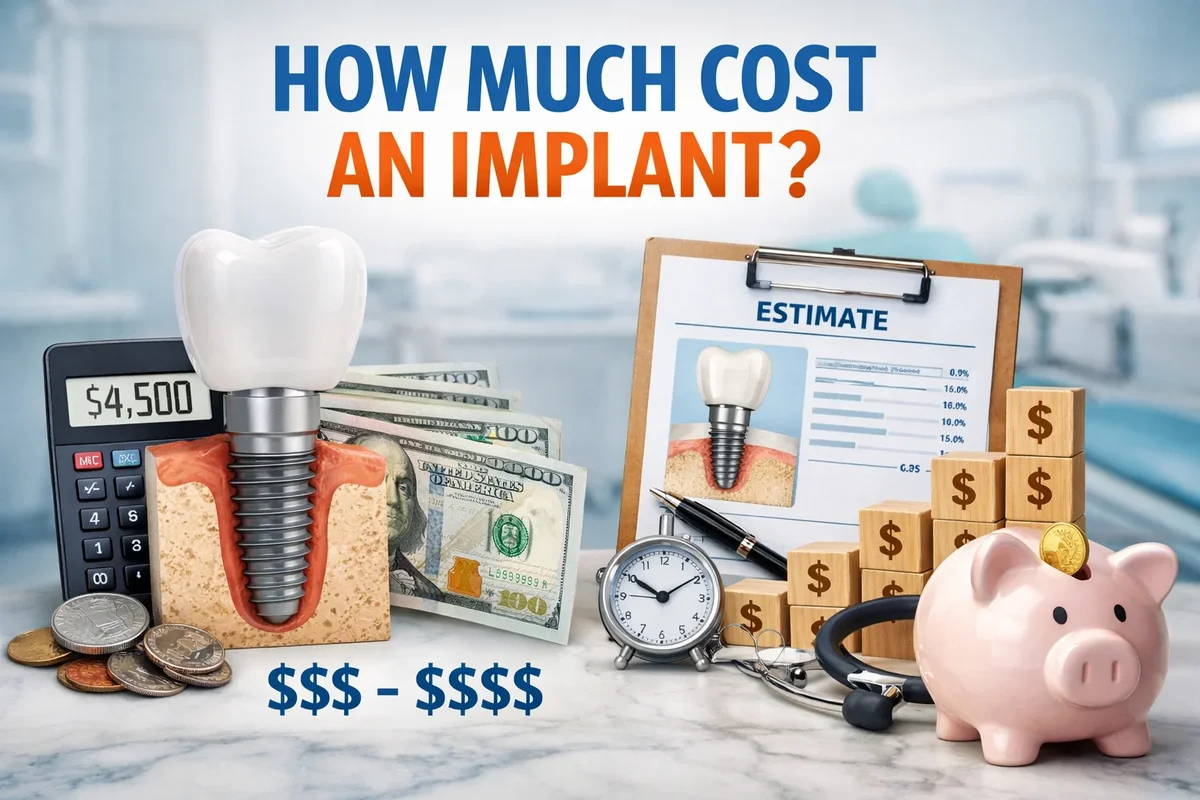
Is a Dental Implant Worth the Cost Long-Term?
After thoroughly exploring how much cost an implant, many patients reach the most important question of all: Is it truly worth the investment in the long run? While the upfront expense may seem significant, dental implants are widely regarded as one of the most durable and functionally effective tooth replacement solutions available today. Understanding long-term value—not just initial price—is essential when evaluating how much cost an implant compared to other restorative options. 😊
In the United States, the average answer to how much cost an implant ranges between $3,000 and $5,500 per tooth. At first glance, this may appear higher than alternatives like bridges or removable dentures. However, a deeper comparison often reveals that implants provide superior long-term financial and health benefits.
Longevity and Durability
One of the strongest arguments supporting the value behind how much cost an implant is longevity. With proper care, dental implants can last 20 years or more—and in many cases, a lifetime. The titanium implant post integrates with the jawbone through a biological process called osseointegration, creating a stable and permanent foundation.
Comparison With Other Tooth Replacement Options
- Dental bridge lifespan: 10–15 years
- Removable dentures lifespan: 5–10 years
- Dental implant lifespan: 20+ years
When factoring replacement and maintenance costs over decades, how much cost an implant often becomes more economical than repeatedly replacing bridges or dentures.
Bone Preservation and Oral Health Benefits
Unlike traditional bridges, implants stimulate the jawbone and prevent bone loss. After tooth extraction, bone naturally begins to shrink. Over time, this can lead to facial sagging and structural changes.
When evaluating how much cost an implant, it is important to consider this protective benefit. Implants preserve bone density, maintain facial structure, and prevent shifting of adjacent teeth. These health advantages reduce the risk of future dental complications and additional costs.
According to the American Dental Association, implants are one of the most predictable and successful restorative treatments when properly maintained.
Improved Quality of Life
Beyond financial value, how much cost an implant must also be weighed against quality-of-life improvements. Patients with implants often report:
- Improved chewing efficiency
- Clearer speech
- Enhanced comfort compared to dentures
- Increased confidence in social situations
Unlike removable dentures, implants do not shift or require adhesives. They function like natural teeth, allowing patients to eat and speak without concern. When asking how much cost an implant, many patients realize the emotional and psychological benefits are equally significant.
Maintenance and Ongoing Costs
Implants require routine oral hygiene and regular dental check-ups—similar to natural teeth. However, they do not typically require specialized maintenance products or recurring adjustments like dentures.
Although how much cost an implant may appear higher initially, ongoing maintenance expenses are generally minimal. Regular cleanings and professional evaluations ensure long-term success.
Financial Perspective Over 20 Years
Let’s compare a simplified long-term cost example:
- Single implant: $4,500 lasting 20+ years
- Bridge: $3,000 replaced twice in 20 years = $6,000
- Dentures: $2,000 replaced three times = $6,000+
When analyzed over two decades, how much cost an implant often results in lower cumulative expenses than alternative treatments.
Risk of Delaying Treatment
Postponing implant treatment can lead to additional bone loss, which may require bone grafting later. This can increase how much cost an implant due to added surgical procedures.
Addressing missing teeth promptly not only restores function but may prevent more complex and expensive treatments in the future.
Are Implants a Good Investment?
From both a health and financial perspective, many dental professionals agree that implants represent a strong long-term investment. While how much cost an implant may initially cause hesitation, the stability, durability, and natural appearance often justify the expense.
Patients who choose implants frequently describe the decision as life-changing. The ability to eat comfortably, smile confidently, and maintain bone health makes the investment worthwhile.
Personalized Value Assessment
The only way to truly determine whether how much cost an implant is worth it for you is through a personalized consultation. Every patient’s oral condition, bone density, and treatment goals are unique.
If you would like a comprehensive evaluation and cost breakdown, you can contact our team through the Redent Klinik Contact Page. We provide transparent treatment plans and explain clearly how much cost an implant based on your specific needs.
In conclusion, how much cost an implant should be evaluated not only as a financial number but as a long-term investment in health, function, and confidence. When considering durability, bone preservation, comfort, and overall quality of life, dental implants often prove to be one of the most valuable restorative solutions available today. 😁