
One of the most common questions patients ask before starting treatment is how much dental implants cost. Dental implants have become one of the most reliable and long-lasting solutions for replacing missing teeth, restoring oral function, and improving smile aesthetics. However, because implant treatment is highly personalized, there is no single answer that applies to every patient. Understanding how much dental implants cost requires looking at several important factors, including the number of implants needed, the quality of materials used, the complexity of the procedure, and the location of the dental clinic.
Dental implants are artificial tooth roots, usually made from titanium or zirconia, that are surgically placed into the jawbone. Once the implant integrates with the bone through a process called osseointegration, a crown, bridge, or full-arch restoration is attached. This creates a durable and natural-looking replacement for missing teeth. Because implants are designed to function like natural teeth, many patients consider them a worthwhile long-term investment despite the initial expense.
When researching how much dental implants cost, patients often discover a wide range of prices. In the United States, a single dental implant with an abutment and crown may range from approximately $3,000 to $6,000. In Western Europe, costs can range from €2,000 to €5,000 per tooth. In countries known for dental tourism, such as Turkey, treatment may range from €500 to €1,500 per implant depending on the clinic, materials, and treatment plan. These estimates are general guidelines and can vary significantly from one case to another.
🦷 Several factors influence how much dental implants cost. The first is the number of missing teeth being replaced. Replacing a single tooth requires one implant and one crown, while multiple missing teeth may require several implants, bridges, or full-mouth restorations. The second factor is bone quality. If a patient has experienced bone loss due to gum disease or prolonged tooth loss, additional procedures such as bone grafting or sinus lifting may be required before implant placement.
Another important consideration when evaluating how much dental implants cost is the type of implant system used. Premium implant brands often have extensive research, long-term success records, and worldwide recognition. Although these systems may have higher initial costs, they can provide added confidence regarding durability and support. Similarly, the material selected for the final restoration can impact the overall price. Zirconia crowns, for example, are often more expensive than porcelain-fused-to-metal alternatives because of their superior aesthetics and strength.
Patients should also understand that the total cost of treatment may include more than just the implant itself. Diagnostic imaging, digital scans, consultations, temporary restorations, anesthesia, follow-up visits, and maintenance appointments can all contribute to the final fee. Therefore, when comparing clinics, it is important to request a detailed treatment plan outlining exactly what is included.
For many individuals, understanding how much dental implants cost involves comparing implants with alternative tooth replacement solutions. Traditional dentures and dental bridges typically have lower upfront costs. However, they may require periodic replacement, adjustments, or repairs over time. Dental implants, on the other hand, can last for decades when properly maintained, making them a cost-effective solution in the long run. Many patients find that the improved comfort, stability, and chewing ability justify the higher initial investment.
📊 Below is a general pricing overview that patients commonly encounter:
| Treatment Type | Estimated Cost Range |
|---|---|
| Single Implant with Crown | $3,000 – $6,000 |
| Implant-Supported Bridge | $5,000 – $15,000+ |
| All-on-4 Treatment | $12,000 – $35,000+ |
| Full Mouth Dental Implants | $20,000 – $60,000+ |
As patients continue researching how much dental implants cost, they should also consider financing options. Many clinics offer payment plans, installment programs, or partnerships with healthcare financing providers. Some dental insurance policies may partially cover certain aspects of treatment, particularly restorations or medically necessary procedures. Patients are encouraged to review their insurance benefits carefully before beginning treatment.
Ultimately, the answer to how much dental implants cost depends on the unique needs of each patient. The best way to obtain an accurate estimate is through a comprehensive examination and consultation with an experienced implant dentist. During this assessment, the dentist can evaluate oral health, review diagnostic images, discuss treatment goals, and provide a personalized treatment plan.
For patients seeking professional guidance and individualized treatment recommendations, visit the Redent Klinik Contact Page. You can also learn more about dental health standards and implant dentistry through the American Dental Association. By understanding the factors that influence how much dental implants cost, patients can make informed decisions and choose the most appropriate treatment option for restoring their smile, confidence, and quality of life.
How Much Dental Implants Cost for a Single Tooth Replacement
For patients missing one tooth, one of the first questions that comes to mind is how much dental implants cost when replacing a single tooth. A dental implant is widely considered the gold standard for tooth replacement because it restores both the visible crown and the underlying tooth root. Unlike traditional bridges, implants do not require adjacent healthy teeth to be altered, making them a conservative and long-lasting solution.
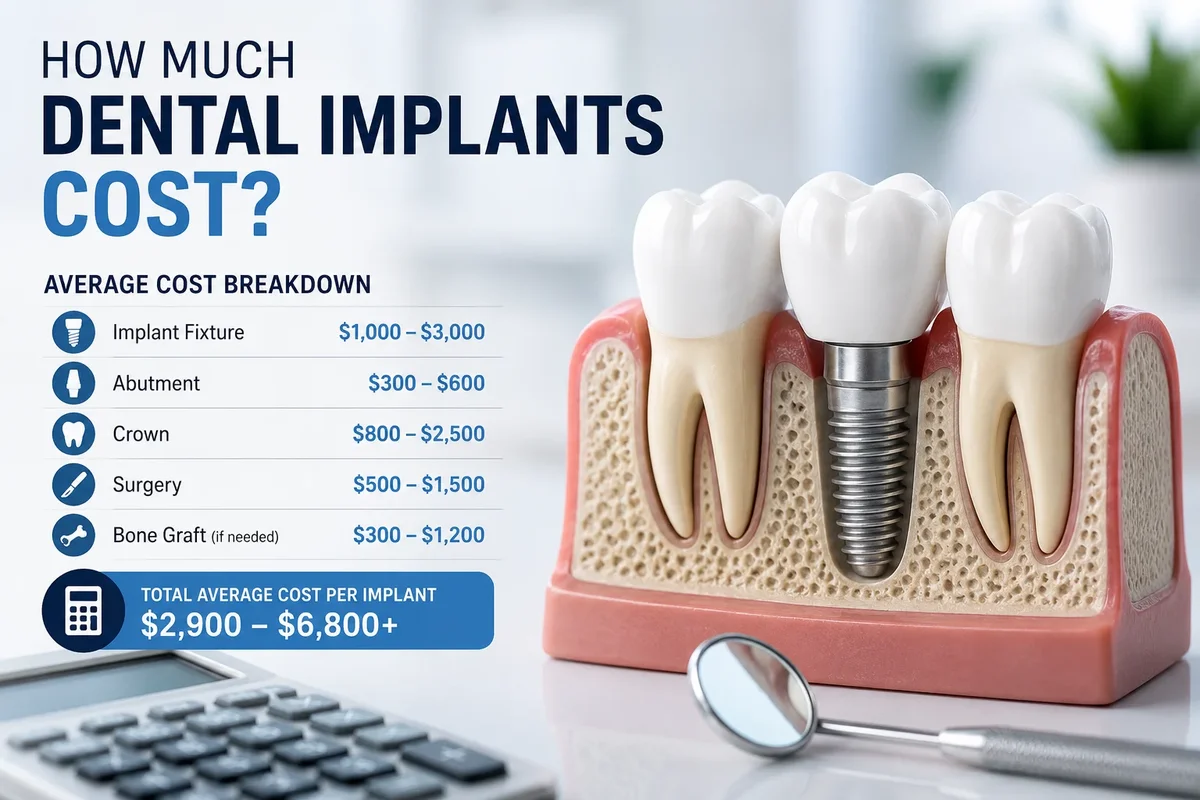
Understanding how much dental implants cost for a single tooth requires looking beyond the implant fixture itself. A complete implant restoration typically consists of three primary components: the implant post, the abutment, and the final crown. Each component contributes to the overall treatment cost. In addition, diagnostic imaging, consultations, surgical planning, and follow-up appointments are often included in the treatment process.
What Is Included in a Single Dental Implant?
Many patients researching how much dental implants cost assume they are paying only for the titanium implant placed in the jawbone. In reality, implant treatment is a multi-stage process that includes several professional services and components.
- Initial consultation and oral examination
- Digital X-rays and 3D CBCT scans
- Surgical implant placement
- Healing and osseointegration period
- Abutment connection
- Custom-made dental crown
- Follow-up evaluations
Each step is essential for achieving a stable and natural-looking result. This is why how much dental implants cost can vary significantly from one patient to another, even when replacing only a single tooth.
Average Cost of a Single Dental Implant
Patients comparing treatment options often want a straightforward answer regarding how much dental implants cost. While prices vary by country and clinic, average costs generally fall within the following ranges:
| Region | Average Cost per Single Implant |
|---|---|
| United States | $3,000 – $6,000 |
| Canada | $3,000 – $5,500 |
| United Kingdom | £2,000 – £4,500 |
| Germany | €2,000 – €4,000 |
| Turkey | €500 – €1,500 |
These figures are estimates and may vary depending on individual circumstances. Patients should remember that the lowest price is not always the best value. When considering how much dental implants cost, experience, technology, materials, and aftercare services should also be evaluated.
Why Prices Differ Between Clinics
One reason patients encounter different answers to the question of how much dental implants cost is that clinics operate under varying business models and treatment philosophies. Premium clinics often invest heavily in advanced imaging systems, digital treatment planning software, sterile surgical environments, and internationally recognized implant brands.
Additionally, highly experienced implant surgeons may charge more due to their expertise and success rates. While these factors may increase initial expenses, they often contribute to better long-term outcomes and reduced risk of complications.
Factors That Affect Single Implant Pricing
Several important variables influence how much dental implants cost for a single missing tooth.
Bone Density and Jaw Health
A healthy jawbone is essential for implant stability. If bone loss has occurred, additional procedures such as bone grafting may be required. These treatments can increase overall costs but are often necessary to achieve successful implant integration.
Implant Brand Selection
Not all implant systems are identical. Premium implant manufacturers invest significantly in research, development, and clinical testing. As a result, implant brand selection can directly affect how much dental implants cost.
Crown Material
The final crown material also impacts pricing. Zirconia crowns are known for excellent aesthetics and durability, while porcelain-fused-to-metal crowns may offer a more economical alternative. Patients discussing how much dental implants cost should ask which crown material is included in their treatment plan.
Long-Term Financial Benefits of Dental Implants
While the initial answer to how much dental implants cost may seem expensive, implants often provide significant long-term value. Traditional bridges and removable dentures frequently require adjustments, repairs, relining, or replacement over time. Dental implants, however, can last decades when properly maintained.
Because implants help preserve jawbone density and maintain facial structure, they may also prevent future oral health issues that could require additional treatment. Many patients therefore view implants as an investment rather than simply a dental expense.
Comparing Implants to Alternative Solutions
When evaluating how much dental implants cost, patients often compare implants with other tooth replacement options.
| Solution | Initial Cost | Longevity |
|---|---|---|
| Dental Implant | Higher | 20+ years or longer |
| Dental Bridge | Moderate | 10–15 years |
| Removable Partial Denture | Lower | 5–10 years |
Although implants generally require a larger upfront investment, their durability and functionality often make them the preferred solution for long-term oral health.
Financing Options for Implant Treatment
For patients concerned about how much dental implants cost, many clinics now provide flexible financing solutions. Monthly payment plans, healthcare financing companies, and phased treatment approaches can help make implant therapy more accessible.
Some dental insurance plans may also contribute toward portions of treatment, particularly examinations, imaging, crowns, or medically necessary procedures. Patients should carefully review their policy benefits before treatment begins.
Making an Informed Decision
Ultimately, understanding how much dental implants cost involves balancing financial considerations with quality, durability, and long-term oral health benefits. A single implant can restore chewing ability, improve appearance, prevent neighboring teeth from shifting, and help preserve jawbone structure. These advantages make implants one of the most predictable and successful treatments in modern dentistry.
When evaluating how much dental implants cost, patients should request a comprehensive treatment plan that clearly outlines all included services and materials. By understanding the factors behind implant pricing, individuals can make confident decisions and choose the treatment option that best supports their health, comfort, and smile for many years to come.
Factors That Influence How Much Dental Implants Cost
Many patients begin their research by asking a simple question: how much dental implants cost. While online price estimates can provide a general idea, the actual cost of treatment varies considerably from one patient to another. Dental implant treatment is highly personalized, and several clinical, technical, and geographical factors influence the final investment. Understanding these variables can help patients make informed decisions and better evaluate treatment proposals from different clinics.
When discussing how much dental implants cost, it is important to recognize that dental implants are not a one-size-fits-all treatment. Every patient has unique oral health conditions, bone structure, aesthetic expectations, and restorative needs. These differences directly affect the complexity and cost of treatment.
Number of Implants Required
One of the most significant factors affecting how much dental implants cost is the number of implants needed. Replacing a single missing tooth typically requires one implant and one crown. However, patients missing multiple teeth may require several implants, implant-supported bridges, or full-arch restorations.
For example, replacing an entire upper or lower arch does not necessarily require one implant for every missing tooth. Modern techniques such as All-on-4 or All-on-6 allow dentists to support a full prosthetic arch using fewer implants. While these treatments may initially seem expensive, they can often be more cost-effective than placing individual implants for every missing tooth.
Single Tooth vs. Full Mouth Restoration
- Single implant treatment generally involves lower total costs.
- Multiple implants increase surgical and restorative expenses.
- Full-mouth rehabilitation requires advanced planning and additional materials.
- Complex restorations often require more appointments and laboratory work.
As treatment complexity increases, so does how much dental implants cost.
Bone Quality and Jawbone Health
Another critical factor influencing how much dental implants cost is the condition of the patient’s jawbone. Dental implants depend on sufficient bone volume and density for stability. If a tooth has been missing for a long period, bone resorption may occur, reducing available support.
Patients with significant bone loss may require preparatory procedures before implant placement. These procedures can increase treatment costs but are often essential for long-term implant success.
Common Preparatory Procedures
| Procedure | Purpose |
|---|---|
| Bone Grafting | Rebuilds lost jawbone volume |
| Sinus Lift | Creates additional bone height in the upper jaw |
| Ridge Augmentation | Improves bone contour and width |
| Socket Preservation | Prevents bone loss after extraction |
Patients often discover that these additional treatments significantly impact how much dental implants cost, particularly when extensive reconstruction is required.
Implant Brand and Manufacturer
The implant system selected by the dentist is another important determinant of how much dental implants cost. There are numerous implant manufacturers worldwide, ranging from budget-friendly systems to premium brands with decades of clinical research.
Premium implant companies typically invest heavily in scientific studies, manufacturing precision, quality control, and global support networks. These advantages can contribute to higher pricing but may also offer greater reliability and long-term predictability.
Benefits of Premium Implant Systems
- Extensive clinical research
- High manufacturing standards
- Strong global reputation
- Availability of replacement components
- Long-term support and warranties
When comparing treatment plans, patients should ask which implant system is being used and how it affects how much dental implants cost.
Material Used for the Final Restoration
The visible tooth restoration attached to the implant also affects how much dental implants cost. Several restorative materials are available, each offering different levels of aesthetics, durability, and strength.
Popular Crown Materials
- Zirconia Crowns
- Porcelain Crowns
- Porcelain-Fused-to-Metal Crowns
- Hybrid Ceramic Restorations
Zirconia restorations often command higher prices because of their exceptional appearance and resistance to wear. Patients seeking the most natural-looking result may choose premium materials despite the higher cost.
Technology and Treatment Planning
Modern dentistry increasingly relies on digital technology. Advanced imaging and computer-guided implant placement improve accuracy and treatment outcomes, but they may also influence how much dental implants cost.
Many high-quality clinics utilize:
- CBCT three-dimensional imaging
- Digital smile design software
- Computer-guided implant surgery
- CAD/CAM restoration fabrication
- Digital intraoral scanning
These technologies require substantial investment by clinics, which may be reflected in treatment pricing. However, they often improve precision, efficiency, and patient comfort.
Geographic Location of the Clinic
Location plays a major role in determining how much dental implants cost. Dental clinics operating in major metropolitan areas often face higher operating expenses, including rent, staffing, insurance, and equipment costs.
This explains why implant treatment prices can vary significantly between countries and even between cities within the same country.
Regional Cost Differences
| Location | General Cost Level |
|---|---|
| United States | Very High |
| Canada | High |
| Western Europe | High |
| Eastern Europe | Moderate |
| Turkey | Moderate to Low |
Dental tourism has become increasingly popular because patients seeking affordable answers to how much dental implants cost often travel internationally for treatment while maintaining high clinical standards.
Dentist Experience and Expertise
The qualifications and experience of the implant dentist significantly influence how much dental implants cost. Specialists with extensive training in implantology, oral surgery, and prosthetic rehabilitation may charge higher fees due to their expertise.
While choosing a lower-cost provider may seem appealing, implant placement is a highly technical procedure. Experience can reduce complications, improve outcomes, and increase long-term success rates.
Aftercare and Long-Term Maintenance
Many patients overlook maintenance costs when considering how much dental implants cost. Regular professional cleanings, periodic examinations, and proper home care are essential for maintaining implant health.
Some clinics include follow-up appointments and maintenance programs within their treatment packages, while others charge separately. Patients should clarify these details before beginning treatment.
Understanding True Value Beyond Price
Ultimately, determining how much dental implants cost involves much more than comparing numbers. Patients should evaluate treatment quality, materials, technology, professional expertise, and long-term value. A lower initial price may not always represent the best investment if compromises are made regarding materials or clinical standards.
By understanding the many factors that influence how much dental implants cost, patients can better interpret treatment estimates, ask informed questions during consultations, and choose a solution that balances affordability with excellent long-term results. Dental implants are often a lifelong investment in oral health, confidence, function, and quality of life, making careful evaluation of all cost-related factors essential before proceeding with treatment.
Average Dental Implant Prices Around the World
Patients researching how much dental implants cost quickly discover that prices vary dramatically from one country to another. While the treatment process itself is generally similar worldwide, factors such as labor costs, healthcare regulations, clinic overhead, taxation, technology investments, and local economic conditions all influence pricing. Understanding global implant costs can help patients evaluate treatment options and determine whether local treatment or dental tourism may be the better choice.
The question of how much dental implants cost cannot be answered with a single number because implant treatment is highly individualized. However, examining average costs around the world provides valuable insight into what patients can realistically expect when budgeting for implant therapy.
Why Implant Costs Differ Internationally
One reason how much dental implants cost varies between countries is the difference in operating expenses. Clinics in countries with higher wages, real estate costs, insurance requirements, and regulatory expenses generally charge more for treatment. In contrast, countries with lower operational costs may offer significantly lower prices while still maintaining high treatment standards.
Additional factors influencing international pricing include:
- Cost of imported implant materials
- Dental laboratory expenses
- Professional training requirements
- Clinic technology investments
- Currency exchange rates
- Local healthcare systems
These factors help explain why answers to how much dental implants cost can differ by several thousand dollars depending on location.
United States Dental Implant Costs
The United States consistently ranks among the most expensive countries for implant dentistry. Patients asking how much dental implants cost in America often encounter higher prices due to elevated labor costs, insurance premiums, facility expenses, and professional fees.
Typical U.S. Price Ranges
| Treatment | Average Cost |
|---|---|
| Single Implant with Crown | $3,000 – $6,000 |
| Implant-Supported Bridge | $6,000 – $15,000 |
| All-on-4 Restoration | $15,000 – $35,000+ |
| Full Mouth Reconstruction | $25,000 – $60,000+ |
While prices may appear high, many American clinics utilize advanced digital technologies, premium implant systems, and comprehensive aftercare programs.
Dental Implant Costs in Canada
Canadian patients researching how much dental implants cost often find pricing slightly lower than in the United States but still relatively high compared with many international destinations.
Single implant treatments generally range between CAD $3,000 and CAD $5,500. Major metropolitan areas such as Toronto and Vancouver often have higher treatment costs due to increased operating expenses.
Dental Implant Costs in the United Kingdom
The United Kingdom is another country where patients frequently seek information about how much dental implants cost. Private implant treatment is common because dental implants are not routinely available through standard public healthcare services.
Typical UK Implant Costs
- Single Implant: £2,000 – £4,500
- Implant Bridge: £5,000 – £12,000
- All-on-4 Treatment: £10,000 – £25,000+
Costs vary depending on location, with clinics in London generally charging more than those in smaller cities.
Dental Implant Costs in Germany and Western Europe
Germany is widely recognized for high-quality dentistry and advanced implant technologies. However, patients evaluating how much dental implants cost in Germany should expect premium pricing.
| Country | Single Implant Range |
|---|---|
| Germany | €2,000 – €4,500 |
| France | €1,800 – €4,000 |
| Switzerland | €3,000 – €6,000+ |
| Netherlands | €2,000 – €4,500 |
Western European clinics often emphasize strict quality standards, advanced digital workflows, and highly trained specialists.
Turkey and the Rise of Dental Tourism
In recent years, Turkey has become one of the most popular destinations for patients researching how much dental implants cost. Many international patients travel to Turkey because treatment costs are often significantly lower than those in North America or Western Europe.
Average Implant Prices in Turkey
| Treatment | Average Cost |
|---|---|
| Single Implant | €500 – €1,500 |
| Implant Bridge | €2,000 – €6,000 |
| All-on-4 | €4,000 – €10,000 |
| Full Mouth Restoration | €8,000 – €20,000+ |
Lower operating expenses allow many Turkish clinics to offer competitive pricing while utilizing internationally recognized implant systems and modern technologies.
For patients seeking personalized implant consultations and treatment planning, the Redent Klinik Contact Page can provide additional information regarding available treatment options.
Eastern Europe Implant Pricing
Countries such as Hungary, Poland, Romania, and Croatia have also become popular among patients comparing how much dental implants cost. These destinations often combine lower treatment costs with strong professional standards.
- Hungary: €700 – €1,800 per implant
- Poland: €800 – €2,000 per implant
- Romania: €700 – €1,800 per implant
- Croatia: €900 – €2,200 per implant
These countries continue to attract dental tourists from across Europe seeking quality treatment at more affordable prices.
Asia and International Implant Markets
Patients interested in global comparisons of how much dental implants cost may also consider countries throughout Asia.
Examples of Implant Pricing in Asia
| Country | Single Implant Range |
|---|---|
| Thailand | $1,000 – $2,500 |
| India | $400 – $1,500 |
| South Korea | $1,500 – $3,500 |
| Singapore | $2,000 – $5,000 |
Each destination offers different advantages regarding technology, accessibility, specialist availability, and overall treatment costs.
Additional Expenses Patients Should Consider
When evaluating how much dental implants cost internationally, patients should remember that treatment expenses extend beyond the implant procedure itself.
Potential Additional Costs
- Travel expenses
- Accommodation costs
- Diagnostic imaging
- Bone grafting procedures
- Medication expenses
- Follow-up appointments
- Temporary restorations
These additional costs can significantly affect the total investment and should always be included when comparing treatment options.
Quality Versus Cost Considerations
Although patients naturally focus on how much dental implants cost, price alone should never be the sole decision-making factor. Implant success depends on accurate diagnosis, proper treatment planning, surgical skill, high-quality materials, and ongoing maintenance.
Organizations such as the American Dental Association emphasize the importance of choosing qualified dental professionals and evidence-based treatment approaches.
Ultimately, understanding how much dental implants cost around the world enables patients to make informed comparisons while balancing affordability, safety, expertise, and long-term value. Whether treatment is performed locally or abroad, selecting a reputable clinic with experienced professionals is often the most important factor in achieving a successful and lasting outcome. While costs vary significantly by region, investing in quality implant care can provide decades of improved oral health, confidence, and functionality.
How Much Dental Implants Cost Compared to Other Tooth Replacement Options
When patients begin exploring solutions for missing teeth, one of the most important questions they ask is how much dental implants cost compared to alternative treatment options. While dental implants are widely regarded as the most advanced and durable method of tooth replacement, they are not the only available solution. Traditional dental bridges, removable partial dentures, and complete dentures are also commonly used to restore function and appearance. Understanding the differences between these options helps patients evaluate not only how much dental implants cost but also the long-term value each treatment provides.
At first glance, dental implants often appear more expensive than other restorative treatments. However, a proper comparison requires looking beyond initial costs and considering durability, maintenance requirements, aesthetics, comfort, and long-term oral health benefits.
Understanding the Main Tooth Replacement Options
Before comparing prices, patients should understand the primary treatment choices available for replacing missing teeth.
- Single Dental Implant
- Dental Bridge
- Removable Partial Denture
- Complete Denture
- Implant-Supported Denture
- Full-Arch Implant Restoration
Each solution addresses tooth loss differently and affects both treatment outcomes and overall expenses.
Why Patients Compare Costs
Many individuals initially focus on how much dental implants cost because implant treatment usually involves a higher upfront investment. However, lower-cost alternatives may require additional maintenance, repairs, or replacement over time. As a result, evaluating only the initial treatment fee can be misleading.
Dental Implants vs. Traditional Dental Bridges
A dental bridge replaces one or more missing teeth by attaching an artificial tooth to crowns placed on neighboring teeth. For decades, bridges were among the most common tooth replacement solutions.
Average Cost Comparison
| Treatment | Average Initial Cost | Expected Lifespan |
|---|---|---|
| Single Dental Implant | $3,000 – $6,000 | 20+ years |
| Traditional Bridge | $2,000 – $5,000 | 10–15 years |
At first glance, a bridge may appear more affordable than the answer to how much dental implants cost. However, bridges require preparation of adjacent healthy teeth, which may increase future treatment needs. Dental implants preserve neighboring teeth because they function independently.
Additionally, bridges may need replacement after 10 to 15 years, whereas implants often last decades with proper care.
Dental Implants vs. Removable Partial Dentures
Partial dentures are frequently chosen by patients seeking a lower-cost solution. These removable appliances replace one or more missing teeth and are typically supported by remaining natural teeth.
Cost Comparison
| Treatment | Average Initial Cost |
|---|---|
| Single Dental Implant | $3,000 – $6,000 |
| Partial Denture | $500 – $2,500 |
When evaluating how much dental implants cost, partial dentures are usually less expensive initially. However, they often require periodic adjustments as the shape of the jaw changes over time. Some patients also experience challenges with stability, speech, chewing efficiency, and comfort.
Dental implants offer a fixed solution that closely mimics natural teeth, providing superior function and confidence during daily activities.
Dental Implants vs. Complete Dentures
Patients missing all teeth in one or both arches often compare complete dentures with implant-supported alternatives. Traditional dentures remain one of the most affordable methods of replacing an entire arch.
Typical Pricing Comparison
| Treatment | Average Cost |
|---|---|
| Complete Denture | $1,000 – $5,000 |
| Implant-Supported Denture | $6,000 – $20,000+ |
| All-on-4 Restoration | $12,000 – $35,000+ |
Patients comparing how much dental implants cost often notice a significant difference when considering full-arch treatment. However, implant-supported restorations provide major advantages including improved chewing ability, enhanced speech, increased stability, and better preservation of jawbone structure.
Long-Term Cost Analysis
One of the most overlooked aspects when discussing how much dental implants cost is long-term ownership cost. A lower initial price does not necessarily mean lower lifetime expenses.
Potential Future Expenses for Alternative Treatments
- Bridge replacement
- Denture relining
- Denture replacement
- Repairs and adjustments
- Treatment of supporting teeth
- Bone loss management
Dental implants generally require fewer replacements and can remain functional for decades when properly maintained. As a result, many patients find that the long-term cost difference is smaller than expected.
Impact on Jawbone Health
An important consideration beyond how much dental implants cost is how each treatment affects oral health. After tooth loss, the jawbone begins to shrink because it no longer receives stimulation from natural tooth roots.
Traditional dentures and bridges do not replace the root structure. Consequently, bone resorption continues over time. Dental implants are unique because they integrate directly with the jawbone and help maintain bone density.
Benefits of Bone Preservation
- Maintains facial structure
- Reduces premature aging appearance
- Improves long-term oral stability
- Supports surrounding teeth
- Enhances chewing function
These benefits add significant value beyond simply considering how much dental implants cost.
Comfort and Daily Function
Patients frequently report that implants feel more natural than removable alternatives. When evaluating how much dental implants cost, comfort and quality of life should also be considered.
Implants provide:
- Natural chewing ability
- Stable speech
- No adhesives required
- No slipping during eating
- Improved confidence
- Natural appearance
For many individuals, these practical advantages justify the higher initial investment.
Aesthetic Considerations
Modern dental implants are designed to closely replicate natural teeth. High-quality ceramic or zirconia crowns provide realistic translucency, shape, and color matching.
Patients researching how much dental implants cost often prioritize appearance, especially when replacing visible front teeth. In these situations, implants frequently offer superior aesthetic outcomes compared to removable prosthetics.
Maintenance Requirements
Another factor influencing treatment value is maintenance. While all restorations require proper oral hygiene, implants generally require care similar to natural teeth.
In contrast, dentures often require removal for cleaning, overnight storage, and periodic adjustments. Bridges may require specialized cleaning tools to access areas beneath the restoration.
Understanding these ongoing responsibilities helps patients better evaluate how much dental implants cost compared to alternatives.
Choosing the Right Solution
There is no universal answer regarding which tooth replacement option is best. Every patient has different oral health conditions, financial considerations, and treatment goals. While cost remains an important factor, focusing solely on the answer to how much dental implants cost may overlook critical long-term benefits.
Patients seeking personalized guidance can visit the Redent Klinik Contact Page for additional information about implant treatment options. Educational resources from the American Dental Association can also help patients better understand restorative dentistry.
Ultimately, comparing how much dental implants cost with bridges, dentures, and other alternatives reveals that implants often provide the greatest combination of durability, function, aesthetics, and long-term value. Although the initial investment may be higher, many patients view implants as the most predictable and cost-effective solution over a lifetime of oral health.
Additional Procedures That Affect Total Implant Costs
When patients research how much dental implants cost, they often focus on the price of the implant itself. However, dental implant treatment frequently involves additional procedures that can significantly influence the final investment. While some patients qualify for straightforward implant placement, others require preparatory or supportive treatments to create the ideal conditions for long-term success. Understanding these procedures is essential for anyone seeking a realistic estimate of how much dental implants cost.
Every patient’s oral health situation is unique. Factors such as bone loss, gum disease, damaged teeth, sinus anatomy, and healing requirements may necessitate supplementary treatments before or during implant therapy. These procedures are not unnecessary extras; rather, they are often critical steps that help ensure the implant remains stable and functional for many years.
Why Additional Procedures May Be Necessary
Dental implants require a healthy oral environment and sufficient bone support. If the supporting structures are compromised, implant placement may be difficult or even impossible without corrective treatment.
This is one reason why answers to how much dental implants cost vary widely among patients. Two individuals replacing the same missing tooth may receive entirely different treatment plans depending on their oral health condition.
Common Reasons for Additional Procedures
- Insufficient bone volume
- Advanced gum disease
- Tooth infection
- Bone resorption after tooth loss
- Poor sinus positioning
- Damaged surrounding tissues
- Need for aesthetic enhancement
Each of these factors can influence how much dental implants cost by increasing treatment complexity and the number of procedures required.
Tooth Extraction Before Implant Placement
Many patients require extraction of a damaged or failing tooth before implant placement can begin. If a tooth is severely decayed, fractured, infected, or structurally compromised, removal may be the first step toward implant treatment.
Extraction Costs and Considerations
| Procedure | Typical Cost Range |
|---|---|
| Simple Extraction | $100 – $500 |
| Surgical Extraction | $300 – $1,000+ |
| Wisdom Tooth Extraction | $200 – $1,500+ |
When calculating how much dental implants cost, extraction expenses should be included if the existing tooth has not yet been removed.
Bone Grafting Procedures
Bone grafting is among the most common procedures affecting how much dental implants cost. After tooth loss, the jawbone naturally shrinks over time because it no longer receives stimulation from the tooth root. If too much bone has been lost, implant placement may not be possible without rebuilding the area.
What Bone Grafting Accomplishes
- Restores bone volume
- Improves implant stability
- Enhances long-term success rates
- Supports facial structure
- Creates ideal implant positioning
Bone grafting can be performed using synthetic materials, donor bone, animal-derived materials, or the patient’s own bone. The type and quantity of grafting material required directly influence how much dental implants cost.
Estimated Bone Grafting Costs
| Bone Grafting Type | Estimated Cost |
|---|---|
| Minor Bone Graft | $300 – $1,500 |
| Moderate Bone Graft | $1,000 – $3,000 |
| Major Bone Reconstruction | $3,000 – $10,000+ |
Sinus Lift Surgery
Patients requiring implants in the upper back jaw may need a sinus lift procedure. This treatment is often necessary when the sinus cavity sits too close to the jawbone, leaving insufficient space for implant placement.
Because sinus augmentation increases available bone height, it can play a major role in determining how much dental implants cost for upper jaw restorations.
Benefits of Sinus Lifting
- Creates adequate implant support
- Improves implant positioning
- Enhances treatment predictability
- Increases long-term stability
Depending on complexity, sinus lift procedures can range from approximately $1,500 to $5,000 or more.
Socket Preservation After Extraction
In some cases, dentists recommend socket preservation immediately after tooth extraction. This preventive procedure helps reduce bone loss while the extraction site heals.
Although it adds to how much dental implants cost initially, socket preservation may reduce the need for larger and more expensive grafting procedures later.
Advantages of Socket Preservation
- Maintains bone volume
- Simplifies future implant placement
- Improves aesthetic outcomes
- Reduces long-term treatment complexity
Gum Disease Treatment
Healthy gums are essential for implant success. If active periodontal disease is present, treatment must usually be completed before implants can be placed.
Patients evaluating how much dental implants cost should understand that untreated gum disease may compromise implant outcomes and increase the risk of future complications.
Periodontal Treatments That May Be Required
- Scaling and root planing
- Periodontal maintenance therapy
- Gum grafting procedures
- Laser periodontal treatment
The extent of periodontal treatment required can significantly affect overall costs.
Temporary Restorations During Healing
Many patients choose temporary prosthetic solutions while waiting for implant integration. During the healing period, temporary restorations can improve aesthetics and maintain normal daily function.
Depending on the treatment plan, temporary options may include:
- Temporary crowns
- Flipper dentures
- Temporary bridges
- Immediate-load provisional restorations
These temporary solutions can influence how much dental implants cost, particularly in highly visible areas of the mouth.
Advanced Digital Diagnostics
Modern implant dentistry increasingly relies on sophisticated diagnostic technologies. While these technologies improve treatment precision, they also contribute to how much dental implants cost.
Common Diagnostic Technologies
- CBCT scans
- Digital impressions
- Intraoral scanning
- Computer-guided surgical planning
- Digital smile design
These tools help clinicians identify potential challenges before surgery and often improve treatment outcomes.
Soft Tissue Grafting and Aesthetic Procedures
In some situations, particularly involving front teeth, dentists may recommend soft tissue grafting to improve gum contours and appearance. These procedures can be important for achieving natural-looking cosmetic results.
Patients concerned about aesthetics should discuss whether soft tissue enhancement may influence how much dental implants cost in their individual case.
Understanding the Complete Treatment Investment
When evaluating how much dental implants cost, patients should always request a comprehensive treatment plan that identifies all anticipated procedures. Comparing implant prices without understanding what is included can lead to confusion and unexpected expenses later.
For personalized treatment planning and cost estimates, patients can visit the Redent Klinik Contact Page. Additional educational resources regarding implant dentistry and oral health can be found through the American Dental Association.
Ultimately, understanding the additional procedures that influence how much dental implants cost helps patients prepare financially and make informed treatment decisions. While these procedures may increase upfront expenses, they are often essential for achieving predictable, stable, and long-lasting implant results. Investing in proper preparation frequently contributes to greater implant success, improved aesthetics, and enhanced oral health outcomes over the long term.
Dental Implant Materials and Their Impact on Pricing
One of the most overlooked factors when evaluating how much dental implants cost is the type of materials used throughout the treatment process. While many patients focus on the number of implants required or the reputation of the clinic, material selection plays a major role in determining both treatment quality and overall cost. From the implant fixture placed in the jawbone to the final crown visible in the mouth, every component contributes to the answer to how much dental implants cost.
Modern implant dentistry has evolved significantly over the past few decades. Today’s patients can choose from a variety of implant systems, restorative materials, and prosthetic options. Each material offers unique advantages related to strength, aesthetics, biocompatibility, longevity, and price. Understanding these differences can help patients make informed decisions when comparing treatment plans.
The Three Main Components of a Dental Implant
To fully understand how much dental implants cost, it is important to recognize that a complete implant restoration consists of three primary components:
- Implant Fixture (the artificial root)
- Abutment (connector piece)
- Final Crown or Restoration
Each component can be manufactured from different materials, which directly influences the final treatment cost.
Why Material Selection Matters
Material choice affects:
- Durability
- Aesthetic appearance
- Biocompatibility
- Long-term success rates
- Maintenance requirements
- Overall treatment cost
As a result, two patients receiving seemingly similar treatments may receive very different answers regarding how much dental implants cost.
Titanium Implants: The Industry Standard
Titanium remains the most widely used implant material worldwide. For decades, titanium implants have demonstrated excellent clinical success rates and outstanding compatibility with human bone.
Advantages of Titanium Implants
- Exceptional strength
- Long clinical history
- Excellent osseointegration
- Predictable long-term outcomes
- Broad availability worldwide
Because titanium has been extensively studied, many dentists consider it the gold standard when discussing how much dental implants cost. Titanium implants are available in a wide range of systems and price points, making them suitable for many patients.
Titanium Implant Pricing Impact
Standard titanium implant systems generally represent the most cost-effective option among premium implant materials. However, implant prices can still vary depending on manufacturer reputation, research support, and design characteristics.
Zirconia Implants: A Metal-Free Alternative
In recent years, zirconia implants have gained popularity among patients interested in metal-free dentistry. Zirconia is a highly durable ceramic material known for its natural tooth-like color and aesthetic appeal.
Patients exploring how much dental implants cost often discover that zirconia implants are typically more expensive than traditional titanium systems.
Benefits of Zirconia Implants
- Metal-free construction
- Excellent aesthetics
- Natural white coloration
- Biocompatibility
- Resistance to corrosion
Although zirconia implants offer several advantages, they generally require more specialized manufacturing processes, contributing to higher treatment costs.
Zirconia vs Titanium Comparison
| Feature | Titanium | Zirconia |
|---|---|---|
| Clinical History | Excellent | Growing |
| Strength | Very High | High |
| Aesthetics | Good | Excellent |
| Cost | Moderate | Higher |
This comparison helps explain why material selection can significantly influence how much dental implants cost.
Abutment Materials and Pricing
The abutment serves as the connection between the implant fixture and the visible crown. While relatively small, this component also contributes to how much dental implants cost.
Common Abutment Materials
- Titanium Abutments
- Zirconia Abutments
- Custom CAD/CAM Abutments
- Hybrid Abutments
Custom abutments designed using digital technology often provide superior fit and aesthetics but may increase treatment expenses.
Crown Materials and Their Influence on Cost
The final restoration attached to the implant has a major impact on both appearance and pricing. Patients comparing how much dental implants cost should pay close attention to crown materials included in treatment plans.
Porcelain-Fused-to-Metal Crowns
These crowns combine a metal framework with a porcelain exterior. They are durable and generally more affordable than premium ceramic alternatives.
Full Zirconia Crowns
Zirconia crowns have become increasingly popular because they offer exceptional strength and highly natural aesthetics. However, they typically increase how much dental implants cost due to advanced manufacturing requirements.
E-Max and Premium Ceramic Crowns
These restorations provide excellent translucency and appearance, making them popular for front teeth. Premium aesthetics often come with higher costs.
Premium Implant Brands vs Budget Systems
Another important factor influencing how much dental implants cost is the manufacturer behind the implant system.
Characteristics of Premium Implant Brands
- Extensive research and development
- Long-term clinical studies
- Global support networks
- Proven success rates
- Advanced surface technologies
Premium systems often command higher prices because of their established reputation and scientific validation.
Budget implant systems may offer lower initial costs, but patients should carefully evaluate available research, warranty policies, and long-term support.
Digital Manufacturing and CAD/CAM Technology
Modern restorative dentistry increasingly relies on CAD/CAM technology for designing crowns, abutments, and implant-supported prosthetics. These technologies improve precision and consistency but can affect how much dental implants cost.
Benefits of Digital Manufacturing
- Improved fit
- Enhanced aesthetics
- Reduced adjustment needs
- Greater treatment accuracy
- Predictable outcomes
Patients often find that the additional investment results in superior long-term satisfaction.
How Material Quality Influences Longevity
When evaluating how much dental implants cost, patients should consider lifespan rather than focusing solely on initial expenses. High-quality materials frequently provide greater durability and reduced maintenance requirements.
Premium implant components can often remain functional for decades when supported by proper oral hygiene and professional maintenance. This long-term reliability frequently offsets higher upfront costs.
Balancing Cost and Value
The question of how much dental implants cost becomes more meaningful when viewed through the lens of overall value. The least expensive materials are not always the most economical choice over time, especially if they compromise aesthetics, durability, or clinical performance.
Patients seeking personalized implant treatment options can explore the Redent Klinik Contact Page for additional information. Educational resources from the American Dental Association can also provide valuable guidance regarding implant dentistry and restorative materials.
Ultimately, understanding how materials influence how much dental implants cost empowers patients to make informed treatment decisions. By considering strength, appearance, longevity, and clinical reliability alongside price, patients can choose implant solutions that deliver the best balance of quality, function, and long-term value for their individual needs.
Insurance Coverage and Financing Options for Dental Implants
For many patients, the question is not only how much dental implants cost but also how they can afford treatment without placing excessive strain on their finances. Dental implants are widely recognized as one of the most effective and long-lasting solutions for missing teeth, yet the initial investment can appear significant. Fortunately, modern dental practices and insurance providers offer a variety of payment solutions that help make implant treatment more accessible.
Understanding insurance benefits, financing plans, healthcare loans, flexible payment arrangements, and tax-advantaged healthcare accounts can significantly reduce concerns about how much dental implants cost. Patients who fully explore available financial resources often discover that implant treatment is more attainable than they initially expected.
Why Dental Implant Coverage Varies
One reason many patients struggle to determine how much dental implants cost after insurance is that coverage policies vary considerably among providers. Unlike routine preventive services such as examinations and cleanings, implants are frequently categorized differently depending on the insurance company.
Some insurers classify implants as elective procedures, while others recognize them as medically necessary tooth replacement treatments. As a result, benefits can differ substantially between policies.
Factors Influencing Coverage
- Type of dental insurance plan
- Annual coverage maximums
- Waiting periods
- Medical necessity requirements
- Employer-sponsored benefits
- Network provider participation
Because of these variables, patients should always contact their insurer directly before assuming how much assistance will be available toward how much dental implants cost.
What Dental Insurance May Cover
Although complete implant coverage remains uncommon in some regions, many dental insurance plans contribute toward portions of implant treatment.
Services Commonly Covered
| Service | Potential Coverage |
|---|---|
| Consultation | Often Covered |
| X-rays and Diagnostics | Frequently Covered |
| Tooth Extraction | Often Covered |
| Bone Grafting | Sometimes Covered |
| Implant Placement | Variable Coverage |
| Crown Restoration | Often Partially Covered |
Patients evaluating how much dental implants cost should request a detailed insurance preauthorization whenever possible. This helps identify anticipated benefits before treatment begins.
Annual Maximum Limitations
One challenge many patients encounter when determining how much dental implants cost after insurance is the annual maximum benefit cap. Traditional dental plans often limit yearly reimbursements to amounts ranging from $1,000 to $2,500.
Because implant treatment frequently exceeds these limits, patients may still be responsible for a significant portion of expenses even when coverage is available.
Strategies for Maximizing Benefits
- Split treatment across calendar years
- Coordinate dual insurance plans
- Utilize flexible spending accounts
- Combine dental and medical benefits
- Request phased treatment scheduling
These strategies can reduce the effective cost of treatment and improve affordability.
Medical Insurance and Implant Treatment
Many patients overlook the possibility that medical insurance may contribute toward certain aspects of treatment. While medical plans generally do not cover routine dental care, exceptions may exist when tooth loss results from trauma, disease, congenital conditions, or medically necessary reconstructive procedures.
In these situations, understanding both dental and medical benefits can significantly affect how much dental implants cost out of pocket.
Situations That May Qualify
- Facial trauma
- Accidents and injuries
- Tumor-related reconstruction
- Congenital abnormalities
- Certain medically necessary treatments
Flexible Spending Accounts (FSA)
Flexible Spending Accounts provide another effective way to manage how much dental implants cost. These employer-sponsored programs allow employees to use pre-tax income for qualified healthcare expenses.
Because implant treatment typically qualifies as an eligible medical expense, FSAs can reduce the effective financial burden by lowering taxable income.
Advantages of FSA Funding
- Pre-tax savings
- Reduced overall treatment cost
- Immediate access to annual funds
- Wide acceptance among providers
Health Savings Accounts (HSA)
Health Savings Accounts function similarly to FSAs but often provide greater flexibility. Patients researching how much dental implants cost may find HSAs particularly beneficial because unused funds can roll over year after year.
This allows individuals to save gradually for future implant treatment while benefiting from tax advantages.
Benefits of HSAs
- Tax-deductible contributions
- Tax-free growth
- Tax-free qualified withdrawals
- Long-term healthcare savings
Dental Financing Programs
Modern dental practices increasingly partner with third-party financing companies to help patients manage how much dental implants cost. These financing options allow treatment expenses to be divided into manageable monthly payments.
Common Financing Features
- Low monthly payments
- Short-term financing options
- Extended repayment plans
- Promotional interest-free periods
- Fast approval processes
Financing programs often enable patients to begin treatment immediately rather than delaying care while saving funds.
In-House Payment Plans
Some dental clinics offer direct payment arrangements without involving external lenders. These plans can be particularly useful for patients concerned about traditional credit approval requirements.
When evaluating how much dental implants cost, patients should ask whether the clinic provides customized payment schedules.
Potential In-House Benefits
- Flexible terms
- Personalized payment arrangements
- Reduced administrative complexity
- Improved treatment accessibility
Dental Tourism and Cost Savings
International treatment options have become increasingly popular among patients seeking lower answers to how much dental implants cost. Dental tourism destinations often offer substantial savings while maintaining high standards of care.
Countries such as Turkey have become particularly attractive due to competitive pricing, modern facilities, and experienced implant specialists.
Patients interested in personalized treatment planning can visit the Redent Klinik Contact Page to learn more about available treatment and financing options.
Evaluating Total Financial Value
When considering how much dental implants cost, patients should focus not only on the initial expense but also on long-term value. Implants often provide decades of functionality and may reduce future dental expenses associated with bridges, dentures, or repeated restorative procedures.
Compared with alternatives that require frequent maintenance or replacement, dental implants often represent a financially sound long-term investment.
Long-Term Financial Advantages
- Reduced replacement costs
- Fewer repair expenses
- Improved oral health preservation
- Enhanced quality of life
- Greater treatment longevity
Making Implant Treatment Affordable
Organizations such as the American Dental Association encourage patients to discuss financial concerns openly with their dental providers. Many clinics can customize treatment schedules and payment options to fit individual budgets.
Ultimately, understanding insurance coverage and financing solutions can dramatically change perceptions of how much dental implants cost. By combining insurance benefits, healthcare savings accounts, financing programs, and strategic treatment planning, many patients discover that implant therapy is more achievable than expected. With proper financial preparation, dental implants can provide a lasting investment in oral health, confidence, comfort, and overall quality of life.
Long-Term Value: Why Dental Implants Can Be Cost-Effective
When patients first research how much dental implants cost, they often focus primarily on the initial treatment price. This reaction is understandable because dental implants generally require a larger upfront investment than bridges, removable dentures, or other tooth replacement options. However, evaluating implant treatment solely based on initial expenses can provide an incomplete picture. To truly understand how much dental implants cost, patients should also consider the long-term value, durability, maintenance requirements, and overall financial impact of the treatment over many years.
Dental implants are often described as an investment rather than an expense. Unlike many alternative restorations that may require frequent replacement, adjustments, or repairs, implants are designed to function as a permanent solution for missing teeth. When viewed over decades rather than months, the economics of implant treatment can become much more favorable.
Understanding Cost Versus Value
One of the biggest misconceptions surrounding how much dental implants cost is the belief that lower initial costs automatically mean better financial value. In reality, the least expensive treatment option may become more costly over time if repeated maintenance, repairs, or replacements are required.
Value should be measured not only by the purchase price but also by factors such as:
- Treatment longevity
- Maintenance expenses
- Replacement frequency
- Oral health preservation
- Quality of life improvements
- Functional performance
These factors help explain why many dentists consider implants one of the most cost-effective restorative treatments available despite the higher initial answer to how much dental implants cost.
Exceptional Longevity of Dental Implants
One of the primary reasons implants provide excellent long-term value is their remarkable lifespan. Modern implant systems have demonstrated success rates exceeding 90–95% over extended periods when properly maintained.
Average Lifespans of Common Restorations
| Treatment Type | Average Lifespan |
|---|---|
| Dental Implant | 20–30+ Years |
| Dental Bridge | 10–15 Years |
| Partial Denture | 5–10 Years |
| Complete Denture | 5–10 Years |
When considering how much dental implants cost, the extended lifespan often reduces the annualized cost of treatment compared with alternatives that require replacement multiple times throughout a patient’s life.
Reduced Replacement Costs Over Time
Many tooth replacement solutions eventually wear out, fracture, loosen, or become incompatible with changing oral anatomy. These issues can result in recurring expenses that accumulate over time.
Dental implants typically require fewer major replacements than bridges or dentures. Although crowns attached to implants may occasionally need maintenance or replacement after many years, the implant fixture itself often remains functional for decades.
Potential Future Costs of Alternative Treatments
- Bridge replacement
- Denture replacement
- Frequent relining procedures
- Adjustment appointments
- Repair of fractured prosthetics
- Replacement due to poor fit
These recurring expenses should be considered when comparing how much dental implants cost with other restorative options.
Preservation of Jawbone Health
A unique advantage of implants is their ability to preserve jawbone structure. Following tooth loss, the surrounding bone gradually shrinks because it no longer receives stimulation from natural tooth roots.
Traditional dentures and bridges do not prevent this process. Dental implants, however, integrate directly with the jawbone and help maintain bone density.
Long-Term Benefits of Bone Preservation
- Maintains facial contours
- Reduces premature aging appearance
- Preserves oral stability
- Supports neighboring teeth
- Protects chewing function
These health benefits contribute significantly to the overall value associated with how much dental implants cost.
Improved Daily Function and Quality of Life
Cost-effectiveness extends beyond financial calculations. Many patients report substantial improvements in comfort, confidence, and functionality after implant treatment.
Dental implants closely mimic natural teeth, allowing patients to eat, speak, and smile without many of the limitations associated with removable prosthetics.
Quality of Life Advantages
- Improved chewing efficiency
- Enhanced speech clarity
- Greater self-confidence
- Stable bite force
- Natural appearance
- No need for adhesives
Although these benefits cannot always be quantified financially, they are important considerations when evaluating how much dental implants cost.
Lower Maintenance Requirements
Dental implants generally require maintenance similar to natural teeth. Routine brushing, flossing, and professional cleanings are usually sufficient to maintain implant health.
By comparison, removable dentures often require:
- Daily removal
- Special cleaning products
- Adhesive applications
- Periodic relining
- Frequent adjustments
Reduced maintenance demands can contribute to the long-term value associated with how much dental implants cost.
Potential Savings on Future Dental Treatment
Another reason implants can be cost-effective involves their protective effect on surrounding oral structures. Tooth loss can trigger a cascade of complications that may eventually require additional treatment.
Problems Often Prevented by Implants
- Tooth shifting
- Bite misalignment
- Bone deterioration
- Excessive wear on remaining teeth
- Jaw joint dysfunction
By preserving oral stability, implants may help patients avoid future treatment expenses, further improving the value proposition behind how much dental implants cost.
Financial Perspective: Cost Per Year of Service
One useful way to evaluate how much dental implants cost is to calculate the annual cost of treatment over its expected lifespan.
For example:
- A $5,000 implant lasting 25 years equals approximately $200 per year.
- A $2,500 bridge lasting 10 years equals approximately $250 per year.
- A $1,500 denture lasting 5 years equals approximately $300 per year.
While simplified, this perspective demonstrates how higher initial costs can translate into lower annual expenses over time.
Professional Support and Long-Term Planning
Patients considering implant treatment should discuss both short-term costs and long-term value with their dental provider. A comprehensive treatment consultation can provide a clearer understanding of expected outcomes, maintenance requirements, and projected longevity.
Individuals interested in personalized implant evaluations can visit the Redent Klinik Contact Page for additional guidance. Educational information regarding implant dentistry is also available through the American Dental Association.
Why Many Patients Consider Implants Worth the Investment
Ultimately, understanding how much dental implants cost requires looking beyond the initial treatment fee. Dental implants provide exceptional durability, preserve oral health, improve daily function, and often reduce future restorative expenses. While the upfront investment may exceed that of bridges or dentures, the long-term value frequently outweighs the higher initial cost.
For many patients, the combination of longevity, comfort, aesthetics, stability, and oral health preservation makes dental implants one of the most cost-effective restorative solutions available. By considering total lifetime value rather than immediate expense alone, patients can make more informed decisions regarding how much dental implants cost and whether implant treatment is the right investment for their future oral health.
How to Choose the Right Clinic When Evaluating Dental Implant Costs
After learning about treatment options, materials, financing solutions, and the many factors that influence pricing, patients often arrive at one final question: how should they choose the right clinic when comparing how much dental implants cost? While cost is naturally an important consideration, selecting a dental provider based solely on the lowest price can sometimes lead to disappointing outcomes. Dental implants are a long-term investment in oral health, appearance, and quality of life, making clinic selection one of the most important decisions in the entire treatment process.
Understanding how much dental implants cost is valuable, but understanding why costs differ between clinics is even more important. Two treatment plans with dramatically different prices may involve different implant systems, varying levels of expertise, alternative treatment approaches, or distinct standards of care. Patients who evaluate clinics carefully often achieve better long-term results and greater overall satisfaction.
Why Choosing the Right Clinic Matters
Dental implant treatment combines surgery, restorative dentistry, digital planning, and long-term maintenance. Success depends not only on the implant itself but also on the knowledge, experience, and technology behind the procedure.
When researching how much dental implants cost, patients should remember that implants are intended to last for decades. A slightly higher investment at the beginning may provide substantially better outcomes over the long term.
Key Benefits of Selecting a Qualified Clinic
- Higher success rates
- Better aesthetic outcomes
- Reduced complication risks
- Improved long-term stability
- Comprehensive aftercare support
- More predictable treatment planning
Evaluate the Dentist’s Experience
One of the first factors patients should examine when considering how much dental implants cost is the experience level of the implant provider. Implant dentistry requires advanced skills that extend beyond general restorative treatment.
Experienced implant dentists often have extensive training in:
- Oral surgery
- Implantology
- Bone grafting procedures
- Digital treatment planning
- Full-mouth rehabilitation
- Aesthetic implant restoration
While more experienced providers may charge higher fees, their expertise can contribute significantly to treatment success and patient satisfaction.
Questions to Ask About Experience
- How many implant cases have been completed?
- How long has the dentist been placing implants?
- What advanced training has been completed?
- Are before-and-after cases available for review?
Assess Technology and Diagnostic Capabilities
Modern technology plays a major role in both treatment quality and how much dental implants cost. Advanced diagnostic tools improve accuracy, safety, and treatment predictability.
Important Technologies to Look For
| Technology | Benefit |
|---|---|
| CBCT Imaging | 3D bone evaluation |
| Digital Scanners | Improved impressions |
| Guided Surgery | Greater precision |
| CAD/CAM Systems | Accurate restorations |
| Digital Smile Design | Enhanced aesthetics |
Clinics investing in advanced technologies often provide more predictable outcomes, which may justify differences in how much dental implants cost.
Understand What Is Included in the Price
Many patients comparing how much dental implants cost focus only on headline pricing. However, advertised prices may not always include all necessary services.
Some clinics quote only the implant fixture itself, while others provide comprehensive treatment packages.
Items That Should Be Clarified
- Consultation fees
- Diagnostic imaging
- Implant placement surgery
- Abutments
- Crowns or prosthetics
- Temporary restorations
- Follow-up appointments
- Maintenance visits
A transparent treatment plan helps patients accurately compare how much dental implants cost between providers.
Research Implant Brands Used by the Clinic
The implant system selected by the clinic can significantly affect both treatment quality and how much dental implants cost. Reputable implant manufacturers often support their products with extensive clinical research and long-term performance data.
Characteristics of Trusted Implant Brands
- Long clinical history
- Scientific validation
- Global support networks
- Reliable replacement components
- Documented success rates
Patients should feel comfortable asking which implant systems will be used and why they were selected.
Review Patient Testimonials and Case Studies
Patient reviews can provide valuable insight into the overall treatment experience. While researching how much dental implants cost, it is also useful to evaluate patient satisfaction and clinical outcomes.
What to Look for in Reviews
- Consistent positive feedback
- Long-term follow-up experiences
- Professional communication
- Treatment transparency
- Successful aesthetic results
Before-and-after photographs can also help demonstrate the clinic’s capabilities.
Consider Aftercare and Maintenance Support
Implant treatment does not end when the crown is attached. Long-term maintenance plays a crucial role in implant longevity. Therefore, aftercare should be considered when evaluating how much dental implants cost.
Important Aftercare Services
- Regular follow-up examinations
- Professional implant cleaning
- Emergency support availability
- Maintenance recommendations
- Warranty programs
Comprehensive aftercare often provides greater long-term value than lower-cost treatment with limited support.
Dental Tourism Considerations
Many international patients explore treatment abroad when comparing how much dental implants cost. Dental tourism can offer substantial savings, but careful research remains essential.
Questions International Patients Should Ask
- What qualifications do the dentists have?
- Which implant systems are used?
- How many appointments are required?
- What follow-up support is available?
- Are treatment guarantees offered?
Thorough planning helps patients maximize both value and treatment quality.
Balancing Cost and Quality
The goal is not simply to find the lowest answer to how much dental implants cost. Instead, patients should seek the best balance between affordability, clinical expertise, technology, materials, and long-term support.
A lower initial price may not always represent the best value if compromises are made regarding implant quality, diagnostic capabilities, or professional experience.
Questions to Ask During a Consultation
Before committing to treatment, patients should prepare a list of questions to better understand how much dental implants cost and what is included.
- What procedures are included in the quoted price?
- Are bone grafts included if needed?
- Which implant brand will be used?
- How long is the expected treatment timeline?
- What maintenance is recommended?
- Are financing options available?
Making an Informed Decision
Choosing the right implant clinic requires more than comparing price quotes. Patients should evaluate qualifications, technology, treatment transparency, implant systems, patient reviews, and long-term support. By examining all these factors together, individuals can make informed decisions regarding how much dental implants cost and which provider offers the greatest overall value.
Patients seeking professional guidance can contact the Redent Klinik Contact Page for personalized consultations and treatment information. Additional educational resources regarding implant dentistry are available through the American Dental Association.
Ultimately, understanding how much dental implants cost is only one part of the decision-making process. The true goal is finding a qualified clinic capable of delivering safe, predictable, aesthetically pleasing, and long-lasting results. When quality, expertise, and value are considered together, patients are far more likely to achieve a successful implant experience and enjoy the benefits of their restored smile for many years to come.