
One of the most common questions patients ask when facing gum recession treatment is how much do gum grafts cost. Gum grafting is a specialized periodontal procedure designed to restore lost gum tissue, protect exposed tooth roots, reduce sensitivity, and improve both oral health and appearance. Because untreated gum recession can lead to tooth instability, root decay, and even tooth loss, understanding how much do gum grafts cost is an important step in planning treatment.
The answer to how much do gum grafts cost is not always straightforward. Several factors influence pricing, including the severity of gum recession, the number of teeth requiring treatment, the grafting technique used, the experience of the periodontist, and the geographic location of the dental practice. In most cases, patients can expect costs ranging from a few hundred dollars to several thousand dollars depending on the complexity of the procedure.
Gum graft surgery involves taking tissue from another area of the mouth or using donor tissue to rebuild receded gums. The primary goal is to cover exposed roots and restore healthy gum levels around the affected teeth. Many patients researching how much do gum grafts cost are surprised to learn that investing in treatment early can often prevent more expensive restorative procedures in the future.
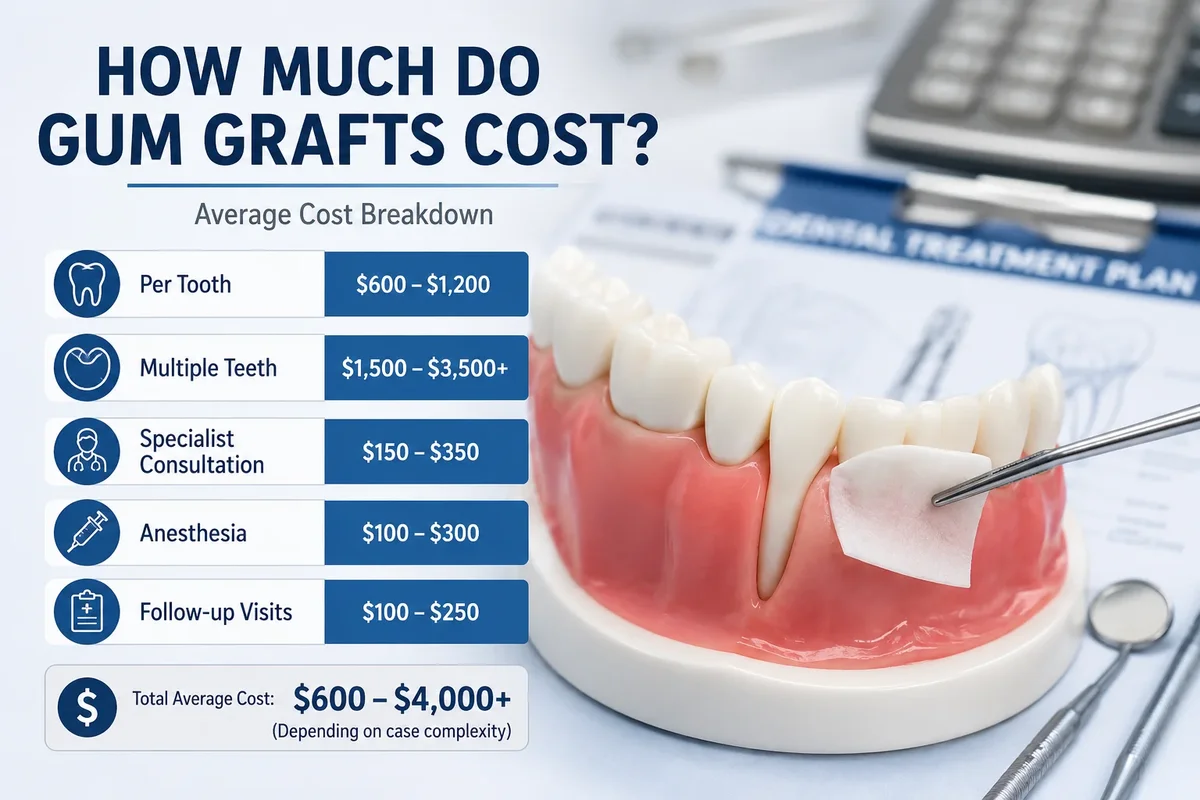
Generally, a single-site gum graft may cost between $600 and $1,500. Multiple teeth or more extensive treatment can increase costs significantly. When evaluating how much do gum grafts cost, patients should also consider additional expenses such as consultations, X-rays, sedation, follow-up appointments, and post-operative care.
Below is a general pricing overview that many dental clinics and periodontal specialists use as a reference:
| Procedure | Estimated Cost Range |
|---|---|
| Single Tooth Gum Graft | $600 – $1,500 |
| Multiple Tooth Gum Graft | $1,500 – $4,000+ |
| Connective Tissue Graft | $700 – $2,000 |
| Free Gingival Graft | $600 – $1,800 |
| Donor Tissue Graft | $800 – $2,500 |
| Sedation (if required) | $100 – $600 |
Patients often wonder whether dental insurance will help reduce how much do gum grafts cost. The answer depends on the insurance provider and the reason for treatment. If gum grafting is deemed medically necessary due to periodontal disease or severe recession, insurance may cover a portion of the expense. Coverage percentages often range from 30% to 80%, although annual maximums and deductibles may apply.
Another factor affecting how much do gum grafts cost is the technique selected by the specialist. Connective tissue grafts remain the most commonly recommended option because they offer predictable outcomes and excellent root coverage. However, alternative procedures such as free gingival grafts or allograft tissue grafts may be suggested depending on the patient’s anatomy and treatment goals.
Beyond financial considerations, patients should focus on long-term value. Understanding how much do gum grafts cost involves more than simply comparing treatment fees. A successful gum graft can protect teeth from future damage, reduce sensitivity to hot and cold foods, improve smile aesthetics, and help maintain overall periodontal health for many years.
Many people postpone treatment because they are concerned about expenses. However, delaying care can allow gum recession to worsen, potentially increasing future treatment costs. When researching how much do gum grafts cost, it is important to remember that early intervention often results in simpler procedures and better outcomes.
Choosing an experienced periodontal specialist is equally important. While it may be tempting to select the lowest-priced option, expertise, technology, patient reviews, and treatment planning quality can significantly affect results. Patients interested in learning more about treatment options can contact a qualified dental professional through the Redent Klinik Contact Page for personalized guidance.
For additional information about periodontal health, gum disease prevention, and professional dental care standards, patients can visit the American Dental Association.
Ultimately, the question how much do gum grafts cost depends on individual circumstances. The best way to obtain an accurate estimate is through a comprehensive examination that evaluates the extent of gum recession, oral health status, and treatment objectives. By understanding the factors involved and exploring available payment options, patients can make informed decisions that support both their oral health and their budget. 😊
How Much Do Gum Grafts Cost in 2026?
For many patients experiencing gum recession, one of the first questions that comes to mind is how much do gum grafts cost in 2026. As dental technology continues to improve and more advanced periodontal procedures become available, the overall cost of gum graft surgery can vary significantly. Understanding the latest pricing trends helps patients prepare financially while making informed decisions about their oral health.
When evaluating how much do gum grafts cost, it is important to understand that there is no universal price. Costs differ based on the complexity of treatment, the number of affected teeth, the materials used, and the expertise of the periodontist performing the procedure. In most developed countries, gum graft treatment remains one of the most effective methods for addressing gum recession and protecting long-term dental health.
Average Gum Graft Costs in 2026
In 2026, the average answer to the question how much do gum grafts cost falls within a broad range. Patients with mild recession affecting one tooth may spend considerably less than individuals requiring extensive treatment across multiple areas of the mouth.
| Treatment Type | Estimated 2026 Cost |
|---|---|
| Single Tooth Gum Graft | $600 – $1,500 |
| Two to Three Teeth | $1,200 – $3,000 |
| Full Quadrant Treatment | $2,500 – $5,000+ |
| Multiple Area Grafting | $3,000 – $8,000+ |
| Sedation Services | $100 – $600 |
| Follow-Up Care | $50 – $300 |
These figures provide a general benchmark for patients researching how much do gum grafts cost. Actual treatment plans may vary depending on individual clinical needs and geographic location.
Why Gum Graft Prices Continue to Increase
Several factors have contributed to rising periodontal treatment costs in recent years. Patients asking how much do gum grafts cost today may notice higher prices compared to a few years ago. Increased operating expenses, advanced surgical technologies, higher laboratory fees, and inflation all play a role in treatment pricing.
Modern periodontal practices now utilize advanced diagnostic imaging, minimally invasive surgical instruments, and enhanced tissue regeneration techniques. While these innovations can improve patient comfort and clinical outcomes, they may also affect overall costs.
Advanced Technology and Treatment Quality
Technology has transformed periodontal care. Digital imaging, laser-assisted procedures, and improved grafting materials have helped create more predictable results. Although patients researching how much do gum grafts cost may focus primarily on price, treatment quality should remain a top consideration.
A lower-cost procedure may not always provide the same level of long-term success as treatment performed by an experienced specialist using modern techniques. Investing in quality care often reduces the likelihood of complications or additional treatment later.
Cost Differences by Geographic Region
Location remains one of the most influential factors affecting how much do gum grafts cost. Major metropolitan areas typically have higher treatment fees due to increased operational expenses, higher staff salaries, and greater demand for specialized dental services.
For example, patients in large cities such as New York, Los Angeles, London, Toronto, or Sydney may pay significantly more than those receiving treatment in smaller communities. Dental tourism destinations may offer lower fees, but patients should carefully evaluate provider qualifications, facility standards, and post-treatment support before making decisions based solely on cost.
What Is Included in Gum Graft Pricing?
Many patients assume that the quoted fee represents the entire treatment expense. However, understanding exactly what is included can help clarify how much do gum grafts cost in real-world situations.
A comprehensive treatment plan may include:
- Initial consultation and examination
- Digital X-rays and diagnostic imaging
- Periodontal assessment
- Local anesthesia
- Grafting procedure
- Protective surgical dressing
- Post-operative instructions
- Follow-up visits
- Monitoring of healing progress
Some practices bundle these services into one fee, while others charge separately. Patients should always request a detailed estimate before proceeding with treatment.
Hidden Costs Patients Should Consider
When calculating how much do gum grafts cost, it is wise to consider potential additional expenses. Prescription medications, sedation options, tissue bank materials, emergency visits, and future maintenance appointments may not always be included in the initial quote.
Asking detailed questions during the consultation can prevent unexpected financial surprises and help patients budget more effectively.
Is Gum Grafting Worth the Cost?
Many individuals researching how much do gum grafts cost ultimately want to determine whether the investment is worthwhile. In most cases, the answer is yes. Gum grafting addresses the underlying effects of gum recession, which can otherwise lead to tooth sensitivity, root decay, bone loss, and eventual tooth loss.
Replacing a lost tooth often requires significantly more expensive procedures such as dental implants, bridges, or dentures. By addressing recession early, patients may avoid much larger dental expenses in the future.
Beyond the financial perspective, gum grafting can improve smile aesthetics, increase comfort when eating and drinking, and boost overall confidence. These long-term benefits often make the procedure highly valuable despite the initial expense.
Ultimately, the question how much do gum grafts cost should be evaluated alongside the long-term benefits of preserving natural teeth and maintaining healthy gums. While treatment costs vary from patient to patient, obtaining professional periodontal care early remains one of the smartest investments individuals can make in their oral health and overall well-being. 😊
Factors That Influence How Much Do Gum Grafts Cost
When patients begin researching how much do gum grafts cost, they often discover that prices can vary dramatically from one case to another. While average pricing ranges can provide a useful starting point, the final cost of treatment depends on several clinical, geographic, and procedural factors. Understanding these variables helps patients make informed decisions and better anticipate the investment required to restore healthy gums.
The reason there is no universal answer to how much do gum grafts cost is that every patient presents a unique combination of oral health conditions, treatment goals, and anatomical considerations. Some patients require a simple procedure on a single tooth, while others may need comprehensive periodontal treatment involving multiple areas of the mouth.
Severity of Gum Recession
One of the most significant factors affecting how much do gum grafts cost is the severity of gum recession. Mild recession typically requires less surgical intervention and shorter treatment times. In contrast, advanced recession often demands more extensive grafting procedures, additional tissue coverage, and increased clinical expertise.
Periodontists generally classify gum recession into different stages based on how much gum tissue has been lost and whether supporting bone structures have been affected. As recession becomes more severe, treatment complexity increases, which naturally impacts pricing.
Mild Recession Cases
Patients with minimal recession may require treatment on only one tooth. These procedures are generally quicker and less invasive, resulting in lower overall costs.
Advanced Recession Cases
When multiple teeth are affected or substantial root exposure exists, the answer to how much do gum grafts cost can increase considerably due to longer surgical times and more extensive tissue management.
Number of Teeth Requiring Treatment
The number of teeth involved plays a major role in determining how much do gum grafts cost. Treating a single tooth is typically much less expensive than treating an entire section of the mouth.
Many patients develop gum recession in multiple areas due to aggressive brushing, periodontal disease, genetic factors, or long-term orthodontic movement. As the treatment area expands, more grafting material and clinical time become necessary.
| Treatment Scope | Typical Cost Range |
|---|---|
| One Tooth | $600 – $1,500 |
| Two to Four Teeth | $1,200 – $3,500 |
| Five or More Teeth | $3,000 – $8,000+ |
| Full Mouth Recession Treatment | $5,000 – $15,000+ |
This demonstrates why the answer to how much do gum grafts cost can vary dramatically between patients.
Type of Gum Graft Procedure
The specific grafting technique selected by the periodontist significantly influences treatment costs. Different procedures require different levels of surgical complexity, materials, and expertise.
Connective Tissue Grafts
This is the most common procedure used to address exposed tooth roots. Because it provides excellent aesthetic results and predictable outcomes, it is often considered the gold standard for recession treatment.
Free Gingival Grafts
These grafts are commonly used when additional gum thickness is needed. Although effective, the procedure may involve different surgical considerations that can affect overall pricing.
Allograft or Donor Tissue Grafts
Patients seeking alternatives to harvesting tissue from their own palate may choose donor tissue. Since specialized materials are required, the overall answer to how much do gum grafts cost may be higher in these cases.
Experience of the Periodontist
The qualifications and experience of the specialist performing the surgery can also affect how much do gum grafts cost. Highly experienced periodontists often charge higher fees because they bring advanced training, specialized expertise, and a proven record of successful outcomes.
While selecting the least expensive provider may seem attractive, experience often plays a critical role in treatment success. A skilled specialist can improve graft survival, reduce complications, and enhance aesthetic results.
Geographic Location
Location remains one of the most obvious influences on how much do gum grafts cost. Dental practices in major metropolitan areas typically have higher operating expenses than those in smaller towns or rural communities.
Factors that contribute to regional price differences include:
- Commercial rent costs
- Local wage levels
- Demand for periodontal services
- Insurance reimbursement rates
- Competition among specialists
As a result, identical procedures may vary significantly in price depending on where treatment is performed.
Use of Sedation and Additional Services
Another important consideration when evaluating how much do gum grafts cost is whether sedation will be used. Many patients are comfortable with local anesthesia alone, while others prefer oral sedation, IV sedation, or other comfort-enhancing options.
Sedation fees can add several hundred dollars to the total treatment cost. Additional services such as advanced imaging, post-operative medications, and specialized protective appliances may also increase expenses.
Diagnostic Procedures
Before surgery begins, many specialists perform comprehensive evaluations that include digital imaging and periodontal measurements. These assessments help create accurate treatment plans but may carry separate fees.
Post-Operative Care
Follow-up visits, healing evaluations, and maintenance appointments are often essential components of successful treatment. Some clinics include these services in their pricing, while others bill them separately.
Insurance Coverage and Payment Plans
Dental insurance can significantly affect the final answer to how much do gum grafts cost. If the procedure is considered medically necessary to address periodontal disease or severe recession, some insurance providers may cover part of the expense.
Coverage percentages commonly range between 30% and 80%, depending on the policy. Additionally, many dental clinics offer financing options that allow patients to spread treatment costs across manageable monthly payments.
Ultimately, understanding the factors that influence how much do gum grafts cost allows patients to evaluate treatment quotes more accurately. Severity of recession, number of teeth treated, graft type, specialist expertise, location, sedation requirements, and insurance benefits all contribute to the final cost. By discussing these factors openly during a consultation, patients can develop realistic expectations and make confident decisions about protecting their long-term oral health. 😊
Average Gum Graft Cost by Procedure Type
Patients researching how much do gum grafts cost often discover that treatment pricing varies considerably depending on the specific grafting procedure recommended by their periodontist. While all gum graft procedures aim to restore receded gum tissue and protect exposed tooth roots, the techniques used, surgical complexity, treatment materials, and expected outcomes can differ significantly. As a result, understanding the average cost associated with each procedure type is essential when evaluating treatment options.
There is no single answer to how much do gum grafts cost because periodontal specialists choose different grafting methods based on the patient’s oral anatomy, severity of gum recession, aesthetic expectations, and long-term treatment goals. Some procedures require harvesting tissue directly from the patient’s palate, while others utilize donor tissue obtained from regulated tissue banks. Each approach has unique advantages, disadvantages, and pricing considerations.
Understanding the Most Common Gum Graft Procedures
Before discussing specific pricing, it is helpful to understand the primary types of gum graft surgery used in modern periodontal care. The answer to how much do gum grafts cost is often directly linked to which of these procedures is recommended.
Connective Tissue Graft
The connective tissue graft is the most commonly performed gum graft procedure. During treatment, a small flap is created on the roof of the mouth, and connective tissue is removed from beneath the surface layer. This tissue is then placed over the area experiencing gum recession.
Because connective tissue grafts provide excellent root coverage and predictable aesthetic results, they are frequently considered the gold standard for treating exposed tooth roots.
Average Cost: $700 – $2,000 per treatment area.
Patients asking how much do gum grafts cost often find that connective tissue grafts offer one of the best balances between long-term success and overall affordability.
Free Gingival Graft
A free gingival graft involves removing a thin layer of tissue directly from the roof of the mouth and placing it onto the area requiring treatment. This technique is commonly used when patients need additional gum thickness rather than significant root coverage.
Although the procedure may appear similar to a connective tissue graft, the clinical goals are often different. Free gingival grafts are particularly useful for strengthening thin gum tissue around teeth and dental implants.
Average Cost: $600 – $1,800 per area.
When evaluating how much do gum grafts cost, free gingival grafts are often among the more affordable treatment options.
Pedicle Gum Graft
A pedicle graft uses healthy gum tissue located adjacent to the recession defect. Instead of harvesting tissue from another location, the periodontist partially cuts nearby gum tissue and repositions it over the exposed root.
This approach can reduce patient discomfort because no second surgical site is required. However, not every patient is a candidate for this procedure because sufficient surrounding gum tissue must already be present.
Average Cost: $800 – $2,000 per site.
For eligible patients, the answer to how much do gum grafts cost may be lower due to reduced surgical complexity and shorter treatment times.
Donor Tissue and Allograft Procedures
Many patients prefer to avoid harvesting tissue from the roof of the mouth. Modern periodontal medicine offers donor tissue alternatives that eliminate the need for a second surgical site.
Allograft Tissue Grafting
Allograft procedures utilize carefully processed donor tissue from accredited tissue banks. The graft material is prepared according to strict medical standards before being used during surgery.
Patients frequently choose this option because it often results in greater comfort during recovery and shorter surgical appointments.
Average Cost: $800 – $2,500 per treatment area.
The use of specialized donor materials is one reason why the answer to how much do gum grafts cost can increase when allografts are selected.
Advanced Regenerative Procedures
In certain cases, specialists may combine gum grafting with regenerative materials designed to encourage tissue healing and regeneration. These techniques may involve growth factors, collagen matrices, or biologic membranes.
While these treatments can improve outcomes for complex recession defects, they typically involve additional costs.
Average Cost: $1,500 – $4,000+ depending on complexity.
Cost Comparison by Procedure Type
| Procedure Type | Typical Cost Range | Main Purpose |
|---|---|---|
| Free Gingival Graft | $600 – $1,800 | Increase gum thickness |
| Connective Tissue Graft | $700 – $2,000 | Root coverage and aesthetics |
| Pedicle Graft | $800 – $2,000 | Localized recession repair |
| Allograft Procedure | $800 – $2,500 | Avoid donor site surgery |
| Advanced Regenerative Graft | $1,500 – $4,000+ | Complex tissue regeneration |
How Procedure Selection Influences Overall Cost
When researching how much do gum grafts cost, many patients focus solely on the surgical fee. However, the procedure selected also affects recovery time, post-operative comfort, aesthetic outcomes, and long-term success rates.
For example, connective tissue grafts may initially cost slightly more than free gingival grafts, but they often provide superior root coverage and cosmetic results. Similarly, donor tissue procedures may have higher material costs but can reduce post-operative discomfort significantly.
Short-Term Cost vs Long-Term Value
The lowest-cost procedure is not always the most economical choice over time. Selecting a treatment that delivers durable results may reduce the likelihood of future corrective procedures and additional expenses.
Patients evaluating how much do gum grafts cost should consider both immediate treatment fees and long-term oral health benefits.
Which Gum Graft Procedure Is Right for You?
Determining the most appropriate procedure requires a comprehensive periodontal evaluation. Factors such as gum thickness, root exposure, bone support, smile aesthetics, and overall oral health all influence treatment planning.
Because every case is unique, the answer to how much do gum grafts cost varies from patient to patient. A personalized consultation allows the periodontist to recommend the most effective grafting technique while providing an accurate cost estimate based on individual needs.
Ultimately, understanding the average cost of each procedure type helps patients navigate treatment decisions more confidently. Whether the recommendation involves a connective tissue graft, free gingival graft, pedicle graft, or donor tissue procedure, investing in gum health can help preserve natural teeth, improve smile aesthetics, reduce sensitivity, and prevent more costly dental complications in the future. 😊
Connective Tissue Graft vs Free Gingival Graft Costs
When patients begin researching how much do gum grafts cost, one of the most important comparisons involves the two most commonly performed gum graft procedures: the connective tissue graft and the free gingival graft. Although both techniques are designed to address gum recession and improve periodontal health, they differ in surgical approach, treatment goals, healing characteristics, aesthetic outcomes, and overall cost.
Understanding the differences between these procedures can help patients better evaluate treatment recommendations and gain a clearer understanding of how much do gum grafts cost based on their specific clinical needs. While a periodontal specialist will ultimately determine which option is most appropriate, knowing the advantages and pricing considerations of each procedure can make the decision-making process easier.
What Is a Connective Tissue Graft?
A connective tissue graft is widely considered the most commonly performed gum graft procedure for treating exposed tooth roots caused by gum recession. During surgery, the periodontist creates a small flap on the roof of the mouth and removes connective tissue from beneath the surface. This tissue is then carefully positioned over the area affected by recession.
The procedure is particularly effective because it provides excellent root coverage while also producing highly natural cosmetic results. Patients who are concerned about smile aesthetics often benefit significantly from this technique.
Main Benefits of Connective Tissue Grafts
- Excellent root coverage
- Predictable long-term success rates
- Natural-looking gum appearance
- Reduced tooth sensitivity
- Strong protection against future recession
- High patient satisfaction rates
Because of these advantages, many patients researching how much do gum grafts cost ultimately receive recommendations for connective tissue graft procedures.
Average Cost of Connective Tissue Grafts
The answer to how much do gum grafts cost for connective tissue graft procedures typically ranges between $700 and $2,000 per treatment area. The final cost depends on the severity of recession, the number of teeth involved, and the complexity of the surgery.
In cases involving multiple teeth or extensive recession, total treatment costs can exceed $3,000 to $5,000 or more.
What Is a Free Gingival Graft?
A free gingival graft differs from a connective tissue graft because the periodontist removes a thin layer of tissue directly from the roof of the mouth rather than harvesting connective tissue beneath the surface layer. The graft is then transferred to the area requiring treatment.
This technique is frequently used when the primary goal is to increase the thickness of existing gum tissue rather than maximize root coverage. Patients with naturally thin gums often benefit from this approach because thicker tissue can improve long-term periodontal stability.
Main Benefits of Free Gingival Grafts
- Increases gum thickness effectively
- Strengthens vulnerable gum tissue
- Helps prevent future recession
- Suitable for patients with thin periodontal tissue
- Can improve support around dental implants
When evaluating how much do gum grafts cost, free gingival grafts are often slightly less expensive than connective tissue grafts, although individual pricing varies significantly.
Average Cost of Free Gingival Grafts
The typical answer to how much do gum grafts cost for free gingival graft procedures falls between $600 and $1,800 per treatment area. However, costs can increase if multiple areas require treatment or if additional periodontal procedures are performed simultaneously.
Comparing Treatment Goals
One of the biggest differences between these procedures lies in their intended purpose. Understanding these objectives helps explain why the answer to how much do gum grafts cost may differ depending on the recommended treatment.
| Factor | Connective Tissue Graft | Free Gingival Graft |
|---|---|---|
| Primary Goal | Root Coverage | Increase Gum Thickness |
| Cosmetic Results | Excellent | Moderate |
| Root Protection | Excellent | Good |
| Tissue Thickness Gain | Moderate | Excellent |
| Typical Cost | $700–$2,000 | $600–$1,800 |
As this comparison shows, the procedure selected influences not only treatment outcomes but also how much do gum grafts cost.
Healing and Recovery Differences
Patients frequently ask whether recovery affects how much do gum grafts cost. While healing itself does not directly increase pricing, recovery requirements can influence overall treatment planning.
Connective Tissue Graft Recovery
Most patients experience mild to moderate discomfort for several days after surgery. Healing typically progresses steadily over two to four weeks, with complete tissue maturation occurring over several months.
Because the donor site remains partially covered by surface tissue, some patients report reduced discomfort compared to alternative grafting methods.
Free Gingival Graft Recovery
Recovery after a free gingival graft may involve slightly greater palate discomfort because a larger surface area is exposed during tissue harvesting. However, healing outcomes remain highly predictable when proper post-operative instructions are followed.
Which Procedure Provides Better Value?
Many patients researching how much do gum grafts cost want to know which procedure offers the best value. The answer depends largely on individual treatment goals.
If root coverage and smile aesthetics are the primary concerns, connective tissue grafts often provide superior long-term value despite slightly higher costs. Their predictable cosmetic outcomes make them a popular choice among both patients and periodontists.
On the other hand, patients who primarily need stronger, thicker gum tissue may achieve excellent results with a free gingival graft at a somewhat lower cost.
Long-Term Financial Considerations
When comparing procedures, patients should consider more than the initial surgical fee. A treatment that successfully prevents future recession, tooth sensitivity, and periodontal complications may ultimately save significant money over time.
This broader perspective is essential when evaluating how much do gum grafts cost. Choosing the most appropriate procedure based on clinical needs rather than solely on price often leads to the best long-term outcomes.
Making the Right Treatment Decision
Ultimately, the choice between a connective tissue graft and a free gingival graft should be guided by a qualified periodontal specialist. Each procedure offers unique benefits, and both can play a valuable role in restoring healthy gums and protecting natural teeth.
For patients investigating how much do gum grafts cost, understanding the distinctions between these two procedures provides valuable insight into treatment recommendations and pricing variations. Whether the goal is superior root coverage, improved aesthetics, increased tissue thickness, or long-term periodontal stability, selecting the right procedure can have a lasting positive impact on oral health and quality of life. 😊
How Insurance Affects How Much Do Gum Grafts Cost
For many patients, one of the biggest concerns when researching how much do gum grafts cost is whether dental insurance will help cover the expense. Gum graft surgery can represent a significant investment, especially when multiple teeth are affected or advanced periodontal procedures are required. Fortunately, insurance coverage may substantially reduce out-of-pocket expenses in certain situations.
However, insurance coverage for periodontal procedures is not always straightforward. The answer to how much do gum grafts cost after insurance depends on the specific policy, the reason treatment is being performed, annual coverage limits, deductibles, waiting periods, and the insurance company’s definition of medical necessity.
Understanding how insurance companies evaluate gum graft procedures can help patients estimate their true financial responsibility and avoid unexpected costs.
Does Dental Insurance Cover Gum Grafts?
In many cases, dental insurance plans provide at least partial coverage for gum graft surgery. Coverage is generally more likely when the procedure is considered medically necessary rather than purely cosmetic.
For example, if gum recession is causing:
- Exposed tooth roots
- Tooth sensitivity
- Progressive periodontal disease
- Risk of tooth loss
- Root surface decay
- Compromised oral health
Insurance providers are more likely to contribute toward treatment costs.
When evaluating how much do gum grafts cost, patients should first determine whether their periodontal condition qualifies for insurance reimbursement.
Medically Necessary vs Cosmetic Procedures
Insurance companies frequently distinguish between medically necessary treatment and cosmetic enhancement.
If the primary purpose of the procedure is to protect teeth and preserve oral health, coverage may be available. However, if treatment is performed primarily to improve smile aesthetics without documented health concerns, insurance reimbursement may be limited or denied.
This distinction can significantly impact how much do gum grafts cost after insurance benefits are applied.
Typical Insurance Coverage Percentages
Patients often ask exactly how much insurance will pay toward treatment. While every policy differs, periodontal procedures frequently fall into the category of major dental services.
Many plans cover between 30% and 80% of approved treatment costs.
| Coverage Level | Typical Patient Responsibility |
|---|---|
| 30% Insurance Coverage | 70% Out-of-Pocket |
| 50% Insurance Coverage | 50% Out-of-Pocket |
| 70% Insurance Coverage | 30% Out-of-Pocket |
| 80% Insurance Coverage | 20% Out-of-Pocket |
For example, if treatment costs $2,000 and insurance covers 50%, the patient’s responsibility may be approximately $1,000 before considering deductibles or annual maximums.
This is why the answer to how much do gum grafts cost varies significantly between insured and uninsured patients.
Annual Maximums and Their Impact
One of the most overlooked factors affecting how much do gum grafts cost is the annual maximum benefit included in many dental insurance plans.
Most traditional dental policies contain annual coverage limits ranging from approximately:
- $1,000 per year
- $1,500 per year
- $2,000 per year
- $2,500 per year
Even if insurance covers a high percentage of treatment, payments typically stop once the annual maximum has been reached.
Example of Annual Maximum Limitations
Suppose a patient’s gum graft procedure costs $4,000 and the insurance policy covers 80% of major periodontal services.
Without an annual limit, insurance would pay $3,200. However, if the policy has a $1,500 annual maximum, insurance may only contribute $1,500, leaving the patient responsible for the remaining $2,500.
This illustrates why understanding policy details is critical when estimating how much do gum grafts cost.
Waiting Periods for Periodontal Procedures
Many dental insurance plans impose waiting periods before major services become eligible for reimbursement.
Common waiting periods include:
- 6 months
- 12 months
- 18 months
If a patient requires immediate treatment but has not satisfied the waiting period requirements, insurance benefits may not be available.
As a result, the actual answer to how much do gum grafts cost may differ substantially depending on when treatment is performed.
Pre-Authorization and Treatment Approval
Many periodontists recommend submitting a pre-treatment estimate to the insurance company before scheduling surgery.
This process allows the insurer to review:
- Clinical findings
- X-rays
- Periodontal measurements
- Treatment recommendations
- Medical necessity documentation
Obtaining pre-authorization can provide a more accurate estimate of how much insurance is expected to contribute toward treatment.
Benefits of Pre-Treatment Estimates
Patients who obtain pre-approval often have a clearer understanding of how much do gum grafts cost after insurance. This reduces uncertainty and allows better financial planning before treatment begins.
How Flexible Spending Accounts and HSAs Can Help
Even when insurance coverage is limited, many patients can reduce their financial burden through Flexible Spending Accounts (FSAs) or Health Savings Accounts (HSAs).
These accounts allow individuals to use pre-tax dollars for eligible healthcare expenses, including many periodontal treatments.
Using these funds effectively can lower the net cost associated with how much do gum grafts cost while also providing tax advantages.
Options for Patients Without Insurance
Not every patient has dental insurance. Fortunately, many periodontal practices offer alternative financing solutions.
Common options include:
- Monthly payment plans
- Third-party healthcare financing
- Interest-free promotional periods
- Extended repayment programs
- In-house financing arrangements
These programs help make treatment more accessible for patients who are concerned about the immediate cost of surgery.
Comparing Total Costs Carefully
Patients should always compare financing terms carefully. While monthly payments may appear affordable, interest rates and repayment periods can affect the total amount paid over time.
Understanding these factors helps provide a more realistic picture of how much do gum grafts cost over the long term.
Making an Informed Financial Decision
Ultimately, insurance can dramatically influence how much do gum grafts cost, but coverage varies widely from one policy to another. Patients should review benefits carefully, verify annual maximums, understand waiting periods, and request pre-treatment estimates whenever possible.
Whether insurance covers a small portion or a substantial percentage of treatment, early planning allows patients to make informed financial decisions while protecting their oral health. By combining insurance benefits, financing options, HSAs, or FSAs, many individuals can make gum graft surgery far more affordable while preserving their natural teeth and preventing future periodontal complications. 😊
Additional Fees Associated With Gum Graft Treatment
When patients search online for how much do gum grafts cost, they often focus primarily on the quoted surgical fee. However, the total investment required for gum graft treatment frequently extends beyond the graft procedure itself. While many dental practices provide a base treatment estimate, additional services, diagnostics, medications, and post-operative care may affect the final amount patients pay.
Understanding these supplementary expenses is essential for anyone trying to accurately determine how much do gum grafts cost. In some cases, additional fees are relatively minor. In more complex periodontal situations, they can significantly increase the overall treatment budget.
Patients who fully understand these potential costs are often better prepared financially and less likely to encounter unexpected expenses during treatment.
Initial Consultation and Periodontal Examination
Before any gum graft procedure is performed, a thorough periodontal evaluation is usually required. During this appointment, the specialist assesses the severity of gum recession, measures periodontal pockets, evaluates bone support, reviews medical history, and develops a customized treatment plan.
Although some practices offer complimentary consultations, many charge professional examination fees.
Typical Consultation Costs
| Service | Estimated Cost |
|---|---|
| Initial Consultation | $50 – $250 |
| Comprehensive Periodontal Evaluation | $100 – $400 |
| Specialist Assessment | $150 – $500 |
These costs may influence the final answer to how much do gum grafts cost, especially if multiple evaluations are required before surgery.
Diagnostic Imaging and X-Rays
Modern periodontal treatment relies heavily on diagnostic imaging. Before surgery, the periodontist often needs detailed images to evaluate bone levels, root exposure, and surrounding structures.
Diagnostic tools may include:
- Traditional dental X-rays
- Digital radiographs
- Panoramic imaging
- CBCT (Cone Beam CT) scans
- Periodontal charting records
Average Imaging Costs
Depending on the type of imaging required, patients may pay anywhere from $25 to $500+ for diagnostic records. These fees are sometimes included in treatment packages but may also appear as separate charges.
Therefore, when evaluating how much do gum grafts cost, it is important to clarify whether imaging expenses are already included in the estimate.
Local Anesthesia and Sedation Fees
Most gum graft procedures are performed using local anesthesia. In many clinics, local anesthetic costs are included within the surgical fee. However, sedation services often involve additional charges.
Common Sedation Options
- Oral sedation
- Nitrous oxide (laughing gas)
- IV sedation
- Conscious sedation
| Sedation Type | Estimated Cost |
|---|---|
| Nitrous Oxide | $50 – $200 |
| Oral Sedation | $100 – $400 |
| IV Sedation | $300 – $1,000+ |
Patients who experience dental anxiety may find sedation worthwhile, but it can affect how much do gum grafts cost overall.
Donor Tissue and Biomaterial Charges
Some gum graft procedures require donor tissue rather than tissue harvested from the patient’s palate. These specialized materials are sourced from accredited tissue banks and processed according to strict medical standards.
Additionally, regenerative biomaterials such as collagen membranes, growth factors, or tissue-enhancing products may be incorporated into treatment plans.
Additional Material Costs
Depending on the materials selected, patients may incur extra fees ranging from $200 to $2,000 or more. This is one of the reasons the answer to how much do gum grafts cost can vary substantially between patients.
Prescription Medications
Following surgery, patients are often prescribed medications to support healing and improve comfort.
Common prescriptions include:
- Pain relievers
- Anti-inflammatory medications
- Antibiotics
- Antimicrobial mouth rinses
- Specialized oral care products
While medication costs are generally modest compared to surgical fees, they should still be considered when estimating how much do gum grafts cost.
Average Medication Expenses
Prescription costs typically range from $20 to $200, depending on insurance coverage and medication requirements.
Post-Operative Follow-Up Visits
Successful gum graft treatment requires careful monitoring throughout the healing process. Most periodontists schedule follow-up appointments to evaluate tissue integration, remove protective dressings if necessary, and ensure proper recovery.
Patients often underestimate the role these visits play in determining how much do gum grafts cost.
Typical Follow-Up Costs
| Follow-Up Service | Estimated Cost |
|---|---|
| Routine Healing Check | $50 – $150 |
| Additional Monitoring Visit | $75 – $200 |
| Emergency Evaluation | $100 – $300 |
Some practices include follow-up care within the original treatment fee, while others bill separately.
Management of Complications
Although gum graft surgery generally has a high success rate, complications occasionally occur. These may include infection, graft failure, excessive bleeding, delayed healing, or additional recession.
If corrective treatment becomes necessary, costs may increase beyond the original estimate.
Potential Additional Treatment Costs
Corrective procedures can range from a few hundred dollars to several thousand dollars depending on the complexity of the situation. While complications are uncommon, patients should understand that they may affect how much do gum grafts cost in rare cases.
Travel and Time-Off Expenses
Many patients overlook indirect expenses associated with treatment. Travel costs, transportation arrangements, parking fees, hotel accommodations for long-distance patients, and time away from work can all contribute to the overall financial impact of treatment.
For individuals undergoing extensive procedures, these indirect expenses may represent a meaningful portion of the total investment.
Hidden Costs Beyond the Dental Office
Lost wages due to recovery time, caregiver assistance, childcare expenses, and transportation needs are often overlooked when calculating how much do gum grafts cost. Planning for these factors helps create a more realistic treatment budget.
How to Avoid Unexpected Charges
The best way to accurately determine how much do gum grafts cost is to request a detailed written treatment estimate before proceeding. Patients should ask whether the quote includes consultations, imaging, anesthesia, donor materials, medications, follow-up care, and potential maintenance visits.
A transparent treatment plan provides clarity and allows patients to compare options effectively. Ultimately, understanding additional fees associated with gum graft treatment ensures there are no surprises and helps patients make confident decisions about protecting their periodontal health. While the surgical procedure itself represents the largest expense, these supplementary costs can play an important role in the total answer to the question: how much do gum grafts cost? 😊
How Much Do Gum Grafts Cost Compared to Alternative Treatments?
Many patients researching how much do gum grafts cost are also interested in understanding whether alternative treatments may be available. While gum graft surgery is widely recognized as one of the most effective methods for treating gum recession, it is not always the only option. Depending on the severity of recession, oral health status, aesthetic concerns, and long-term goals, a periodontist may recommend alternative procedures or supportive therapies.
Comparing gum graft costs with other treatment options helps patients make informed decisions about both their finances and their oral health. Although some alternatives initially appear less expensive, they may not provide the same long-term protection or clinical effectiveness as gum graft surgery.
To fully understand how much do gum grafts cost, it is important to evaluate not only the upfront expense but also the long-term value of treatment compared with available alternatives.
Why Gum Grafts Remain the Gold Standard
Before comparing costs, it is important to understand why gum grafting remains the preferred solution for many cases of moderate to severe gum recession.
Gum graft procedures can:
- Cover exposed tooth roots
- Reduce tooth sensitivity
- Protect roots from decay
- Improve smile aesthetics
- Prevent further recession
- Preserve natural teeth
Because of these benefits, many periodontists recommend grafting when significant recession is present. Consequently, while patients may initially focus on how much do gum grafts cost, they should also consider the long-term clinical advantages that alternative treatments may not provide.
Deep Dental Cleaning (Scaling and Root Planing)
One common alternative often discussed before gum graft surgery is scaling and root planing. This non-surgical periodontal treatment removes plaque, tartar, and bacterial deposits below the gum line.
Average Cost of Scaling and Root Planing
| Treatment | Typical Cost |
|---|---|
| Single Quadrant | $150 – $400 |
| Full Mouth Treatment | $600 – $1,600 |
Compared to how much do gum grafts cost, scaling and root planing is generally less expensive. However, it does not replace lost gum tissue or cover exposed roots. Instead, it helps control periodontal disease and reduce inflammation.
For patients with active gum disease, scaling and root planing may be performed before considering graft surgery.
Pinhole Surgical Technique (PST)
The Pinhole Surgical Technique is a newer minimally invasive approach used to treat certain cases of gum recession. Rather than harvesting donor tissue, the periodontist creates a small opening in the gum tissue and gently repositions existing tissue over exposed roots.
Average Pinhole Technique Costs
The answer to how much do gum grafts cost compared to the Pinhole Surgical Technique can vary significantly. PST treatment commonly ranges from:
- $1,500 – $4,000 for localized treatment
- $3,000 – $10,000+ for multiple teeth
Although some patients prefer the shorter recovery period associated with PST, not everyone is a suitable candidate. The procedure’s availability is also more limited than traditional grafting.
Composite Bonding for Exposed Roots
In some cases, dentists use tooth-colored composite resin to cover exposed root surfaces. This approach can reduce sensitivity and improve appearance without surgical intervention.
Average Composite Bonding Costs
| Procedure | Typical Cost |
|---|---|
| Single Tooth Bonding | $150 – $600 |
| Multiple Teeth | $500 – $2,500+ |
While considerably less expensive than how much do gum grafts cost, composite bonding does not restore missing gum tissue. It primarily serves as a cosmetic or sensitivity-management solution.
As a result, it is generally not considered a true substitute for gum graft surgery in cases involving significant recession.
Orthodontic Treatment Adjustments
Sometimes gum recession develops as a result of tooth positioning issues. In carefully selected cases, orthodontic treatment may improve gum health by moving teeth into more favorable positions.
Average Orthodontic Costs
- Traditional Braces: $3,000 – $8,000
- Clear Aligners: $3,500 – $9,000
Although orthodontics addresses underlying structural concerns, it usually does not replace the need for grafting when significant tissue loss has already occurred.
Consequently, patients evaluating how much do gum grafts cost should understand that orthodontic treatment often serves a complementary rather than alternative role.
Tooth Extraction and Implant Replacement
In severe cases of advanced periodontal disease, tooth loss may eventually occur if recession remains untreated. Some patients wonder whether extraction and implant replacement might be a better investment.
Average Implant Costs
| Procedure | Estimated Cost |
|---|---|
| Tooth Extraction | $150 – $800 |
| Single Dental Implant | $3,000 – $7,000 |
| Bone Grafting (if needed) | $300 – $3,000 |
When comparing these figures to how much do gum grafts cost, preserving natural teeth through grafting is often significantly less expensive than replacing teeth after they are lost.
This is one of the strongest arguments in favor of early intervention when gum recession is diagnosed.
Long-Term Cost Comparison
Patients often focus on immediate treatment expenses without considering future costs. However, evaluating long-term financial implications is essential when comparing alternatives.
| Treatment Option | Initial Cost | Long-Term Value |
|---|---|---|
| Gum Graft Surgery | $600 – $4,000+ | Excellent |
| Scaling and Root Planing | $150 – $1,600 | Moderate |
| Composite Bonding | $150 – $2,500 | Limited |
| Pinhole Technique | $1,500 – $10,000+ | Good to Excellent |
| Implant Replacement | $3,000 – $10,000+ | High but Costly |
This comparison demonstrates that while alternatives may initially appear less expensive, they do not always provide the same comprehensive benefits as graft surgery.
Which Option Provides the Best Overall Value?
The answer depends on the patient’s specific clinical situation. For mild recession, conservative treatments may be appropriate. However, when substantial tissue loss is present, gum graft surgery often remains the most predictable and cost-effective long-term solution.
Patients evaluating how much do gum grafts cost should consider not only today’s treatment expenses but also the future costs associated with tooth sensitivity, root decay, periodontal disease progression, and potential tooth replacement.
Protecting Your Investment in Oral Health
Ultimately, gum grafting is frequently viewed as a preventive investment. By restoring lost tissue and protecting vulnerable tooth roots, the procedure can help avoid far more expensive treatments in the future.
When all factors are considered, the answer to how much do gum grafts cost often becomes less important than the value of preserving healthy natural teeth, maintaining smile aesthetics, and preventing long-term periodontal complications. For many patients, gum graft surgery offers the strongest balance between cost, effectiveness, and lasting oral health benefits. 😊
Ways to Reduce How Much Do Gum Grafts Cost
For many patients, learning how much do gum grafts cost can initially feel overwhelming. Although gum graft surgery is often one of the most effective solutions for treating gum recession and protecting long-term oral health, the financial investment can be substantial. Fortunately, there are several practical strategies patients can use to reduce costs without compromising the quality of their treatment.
Understanding how to manage expenses effectively is an important part of the decision-making process. While it is never advisable to choose treatment based solely on the lowest price, informed patients can often lower the overall financial burden associated with how much do gum grafts cost through proper planning, insurance optimization, preventive care, and financing options.
Seek Treatment Early
One of the most effective ways to reduce how much do gum grafts cost is to address gum recession as early as possible. Mild recession generally requires less extensive treatment than advanced cases.
When gum recession is ignored, additional tissue loss may occur over time. This can lead to:
- Greater root exposure
- Increased tooth sensitivity
- Bone loss
- Root decay
- More complex surgical procedures
- Higher treatment costs
By seeking treatment during the early stages of recession, patients may qualify for simpler and less expensive procedures.
Early Intervention Saves Money
A patient who treats a single receding tooth today may spend significantly less than someone who waits until multiple teeth require grafting. Therefore, delaying treatment often increases how much do gum grafts cost over the long term.
Maximize Dental Insurance Benefits
Insurance remains one of the most powerful tools for reducing how much do gum grafts cost. Many dental plans provide partial coverage for medically necessary periodontal procedures.
Patients should carefully review their policies to understand:
- Coverage percentages
- Annual maximums
- Waiting periods
- Deductibles
- Network provider requirements
Taking full advantage of available benefits can significantly reduce out-of-pocket expenses.
Use Benefits Before They Expire
Many insurance plans reset annually. Scheduling treatment before benefits expire may help patients utilize remaining coverage that would otherwise be lost.
This simple strategy can substantially influence how much do gum grafts cost after insurance contributions are applied.
Consider Flexible Spending Accounts (FSAs) and HSAs
Health Savings Accounts (HSAs) and Flexible Spending Accounts (FSAs) allow patients to pay eligible healthcare expenses using pre-tax dollars.
Because periodontal procedures often qualify as eligible expenses, these accounts can effectively reduce the overall financial impact of how much do gum grafts cost.
The tax savings generated through these programs can sometimes lower effective treatment costs by 20% to 40%, depending on the patient’s tax situation.
Explore Financing Options
Many periodontal specialists understand that patients may be concerned about treatment costs. As a result, numerous practices offer flexible financing programs.
Common financing options include:
- Monthly payment plans
- Healthcare credit programs
- Interest-free promotional periods
- Extended repayment arrangements
- In-house financing options
While financing does not necessarily reduce how much do gum grafts cost, it can make treatment far more manageable by spreading expenses across several months or years.
Review Financing Terms Carefully
Patients should always examine interest rates, repayment periods, and total repayment amounts before committing to financing. Understanding these details prevents unexpected financial obligations later.
Maintain Excellent Oral Hygiene
Preventive care remains one of the most overlooked ways to reduce future expenses related to how much do gum grafts cost. Proper brushing, flossing, and professional cleanings can slow the progression of gum recession and periodontal disease.
Healthy gums are less likely to require extensive surgical intervention. By maintaining strong oral hygiene habits, patients may reduce both the likelihood and severity of future treatment needs.
Prevention Is Less Expensive Than Treatment
Routine preventive care costs only a fraction of what advanced periodontal treatment may require. Investing in daily oral health practices can generate substantial savings over time.
Choose an Experienced Specialist
Many patients assume the lowest treatment quote automatically represents the best value. However, selecting a highly qualified periodontist often produces better long-term results.
Although experienced specialists may charge slightly higher fees, successful treatment can reduce the risk of:
- Graft failure
- Repeat procedures
- Post-operative complications
- Additional corrective treatment
When evaluating how much do gum grafts cost, patients should consider both immediate expenses and long-term outcomes.
Request a Detailed Treatment Estimate
Transparent pricing helps patients avoid surprises. Before scheduling surgery, patients should request a written treatment plan that clearly outlines all expected expenses.
The estimate should include:
- Consultation fees
- Diagnostic imaging
- Surgical costs
- Anesthesia charges
- Donor tissue fees
- Follow-up appointments
- Medication expenses
This allows patients to compare providers more accurately and gain a realistic understanding of how much do gum grafts cost.
Ask About Package Pricing
Some periodontal practices bundle services together into comprehensive treatment packages. These packages can sometimes provide better value than paying separately for each component of care.
Compare Treatment Approaches Carefully
Not every case of gum recession requires the same type of graft procedure. Depending on the patient’s condition, multiple treatment options may be available.
Patients should discuss:
- Connective tissue grafts
- Free gingival grafts
- Allograft procedures
- Pinhole Surgical Technique
- Regenerative alternatives
Different techniques may produce different answers to how much do gum grafts cost. A specialist can explain the advantages, limitations, and costs associated with each approach.
Use Preventive Periodontal Maintenance
After successful treatment, ongoing maintenance is essential. Regular periodontal evaluations and professional cleanings help preserve results and reduce the likelihood of additional recession.
Maintenance visits represent a relatively small investment compared to the expense of repeat surgical procedures.
Protecting Your Long-Term Investment
Successful gum graft treatment should be viewed as a long-term investment in oral health. Protecting that investment through preventive care helps minimize future expenses and preserve treatment outcomes.
Balancing Cost and Quality
Ultimately, patients seeking ways to reduce how much do gum grafts cost should focus on maximizing value rather than simply finding the lowest price. Early treatment, insurance optimization, preventive care, financing solutions, and careful provider selection can all contribute to significant savings.
While gum graft surgery may initially seem expensive, the cost of untreated recession can be far greater. By taking proactive steps and understanding available cost-saving strategies, patients can make treatment more affordable while preserving healthy gums, protecting natural teeth, and avoiding more complex dental problems in the future. 😊
Choosing the Right Periodontist for Gum Graft Surgery
When patients research how much do gum grafts cost, it is natural to focus on pricing. However, one of the most important decisions affecting both treatment outcomes and long-term value is selecting the right periodontist. The experience, training, technology, and treatment philosophy of the specialist performing the procedure can have a significant impact on healing, aesthetics, comfort, and overall success.
While cost is certainly an important factor, choosing a provider based solely on the lowest price may not always produce the best results. Understanding what to look for in a periodontal specialist helps patients make informed decisions while gaining a more realistic perspective on how much do gum grafts cost in relation to quality care.
A successful gum graft not only restores lost tissue but also protects natural teeth, improves smile appearance, and reduces the risk of future periodontal complications. Selecting the right specialist plays a crucial role in achieving these goals.
Why Specialist Training Matters
Periodontists are dentists who complete additional years of advanced education focused specifically on gum health, periodontal disease, dental implants, and surgical procedures involving the supporting structures of the teeth.
This specialized training gives periodontists extensive experience in managing gum recession and performing complex grafting procedures.
Benefits of Choosing a Periodontist
- Advanced surgical expertise
- Extensive recession treatment experience
- Access to specialized techniques
- Improved aesthetic outcomes
- Comprehensive periodontal evaluations
- Enhanced long-term treatment planning
Patients comparing how much do gum grafts cost should recognize that specialist expertise often contributes significantly to treatment success.
Evaluating Clinical Experience
Not all providers perform the same number of gum graft procedures. Experience matters because repetitive clinical exposure often improves technical skill and treatment predictability.
Patients should feel comfortable asking potential providers questions such as:
- How many gum graft procedures do you perform annually?
- Which graft techniques do you recommend most often?
- What are your success rates?
- Can you provide before-and-after examples?
- How do you manage complex recession cases?
These questions help patients understand whether the specialist has the experience necessary to achieve optimal results.
Experience Can Influence Long-Term Value
Although a highly experienced provider may charge slightly more, successful treatment often reduces the risk of complications and repeat procedures. Therefore, when evaluating how much do gum grafts cost, patients should consider long-term value rather than focusing solely on the initial fee.
Reviewing Before-and-After Cases
Many periodontal specialists maintain portfolios showcasing previous treatment outcomes. Reviewing these cases provides valuable insight into the provider’s skill level and aesthetic capabilities.
Patients should look for:
- Natural gum contours
- Consistent root coverage
- Healthy tissue appearance
- Long-term stability
- Cases similar to their own condition
These visual examples often reveal more about treatment quality than pricing information alone.
Technology and Modern Treatment Approaches
Advancements in periodontal technology have improved both patient comfort and treatment outcomes. Modern practices frequently utilize digital imaging, minimally invasive surgical techniques, and advanced regenerative materials.
Technologies That May Improve Results
| Technology | Potential Benefit |
|---|---|
| Digital Imaging | Improved diagnosis |
| CBCT Scanning | Detailed treatment planning |
| Microsurgical Instruments | Less tissue trauma |
| Regenerative Materials | Enhanced healing |
| Advanced Suturing Techniques | Improved graft stability |
Practices that invest in advanced technology may have slightly higher fees, which can influence how much do gum grafts cost. However, these investments often support better clinical outcomes.
Understanding Treatment Recommendations
A trustworthy periodontist should provide a clear explanation of the proposed treatment plan. Patients should understand:
- Why grafting is recommended
- Which graft type will be used
- Expected outcomes
- Recovery requirements
- Potential risks
- Total projected costs
Comprehensive communication helps patients feel confident about both the procedure and the financial investment involved.
Transparency Builds Trust
When discussing how much do gum grafts cost, reputable specialists provide detailed written estimates and clearly explain any additional fees. Transparency helps eliminate confusion and allows patients to budget effectively.
Reading Patient Reviews and Testimonials
Online reviews can provide valuable insight into patient experiences. While no practice receives perfect feedback, consistent positive reviews often indicate high standards of care.
Patients should pay attention to comments regarding:
- Treatment outcomes
- Comfort during surgery
- Staff professionalism
- Communication quality
- Billing transparency
- Post-operative support
Reviews can offer useful context when comparing providers and evaluating overall value relative to how much do gum grafts cost.
Comparing Treatment Estimates Carefully
Obtaining multiple consultations can be beneficial. However, patients should avoid comparing estimates based solely on price.
A lower quote may not include:
- Diagnostic imaging
- Sedation services
- Follow-up appointments
- Donor tissue materials
- Post-operative medications
Therefore, patients should compare complete treatment plans rather than focusing only on the surgical fee.
Understanding True Treatment Costs
When researching how much do gum grafts cost, the most accurate comparison comes from reviewing comprehensive estimates that include all associated services.
The Importance of Follow-Up Care
Successful gum graft treatment extends beyond the day of surgery. Proper follow-up care is essential for monitoring healing, ensuring graft stability, and addressing any concerns that may arise during recovery.
Patients should ask providers about:
- Post-operative monitoring schedules
- Emergency availability
- Long-term maintenance programs
- Support during recovery
Practices that prioritize ongoing care often contribute to better long-term treatment outcomes.
Balancing Cost, Expertise, and Value
Ultimately, choosing the right periodontist requires balancing several factors, including qualifications, experience, technology, communication, patient satisfaction, and cost.
Although it is reasonable to compare fees when researching how much do gum grafts cost, treatment quality should remain a primary consideration. An expertly performed gum graft can preserve natural teeth, improve smile aesthetics, reduce sensitivity, and prevent future periodontal complications.
Making a Confident Decision
The best provider is not necessarily the least expensive or the most expensive. Instead, the ideal periodontist combines clinical expertise, transparent communication, modern technology, and personalized care. By carefully evaluating these factors, patients can make confident decisions that maximize both treatment success and long-term value.
In the end, understanding how much do gum grafts cost is important, but choosing the right specialist may have an even greater impact on the overall success of treatment. Investing in qualified periodontal care today can help protect oral health, preserve natural teeth, and deliver lasting benefits for years to come. 😊