
One of the most common questions patients ask after receiving a dental implant is: how much does a crown for a dental implant cost? The short answer is that the cost can vary significantly depending on the material used, the complexity of the case, the location of the dental clinic, the laboratory involved, and whether additional treatment is needed before the crown can be placed. In many cases, the crown itself represents only one part of the overall implant restoration process.
If you are researching how much does a crown for a dental implant cost, it is important to understand that there is no universal price that applies to every patient. Some implant crowns are made from porcelain-fused-to-metal materials, while others are fabricated from premium zirconia or high-strength ceramic materials. These differences can affect durability, aesthetics, and ultimately the final treatment cost.
When evaluating how much does a crown for a dental implant cost, it helps to think beyond the number itself. A dental implant crown is the visible tooth-like restoration attached to the implant fixture. It plays a major role in chewing function, appearance, speech, and long-term comfort. Choosing the most appropriate option often depends on the location of the implant, your bite forces, cosmetic expectations, and oral health condition.
For many patients, the better question is not simply how much does a crown for a dental implant cost, but rather whether the crown being recommended is suitable for their specific situation. A lower-cost option may be appropriate in some cases, while other situations may benefit from more durable or highly aesthetic materials. The right choice should balance budget, longevity, and clinical needs.
Another factor to remember when researching how much does a crown for a dental implant cost is that the crown may not always be replaced immediately after implant placement. Dental implants generally require a healing period before the final crown can be attached. During this time, some patients may wear a temporary restoration. The timing and treatment sequence can influence overall expenses and treatment planning decisions.
Patients often compare implant crowns with traditional dental crowns placed on natural teeth. While both restorations look similar from the outside, implant crowns involve specialized components and laboratory procedures. This is one reason why the answer to how much does a crown for a dental implant cost may differ from the cost of a conventional crown supported by a natural tooth.
If aesthetics are especially important, such as when replacing a front tooth, your dentist may recommend premium materials that closely mimic natural enamel. These options can improve appearance but may also affect the answer to the question, how much does a crown for a dental implant cost. On the other hand, molar restorations often prioritize strength and durability due to higher chewing forces.
According to guidance from the American Dental Association, treatment recommendations should always be based on an individual clinical examination rather than generalized online estimates. This is because every patient’s oral anatomy, bone condition, bite relationship, and restorative needs are different.
It is also important to know when professional evaluation becomes necessary. If you already have a dental implant and are preparing for the final restoration stage, a consultation can help determine the most suitable crown type, material, and treatment timeline. If you have noticed damage, looseness, wear, or discomfort around an existing implant crown, an examination is recommended before deciding on replacement options.
At Redent Klinik, treatment planning focuses on helping patients understand not only how much does a crown for a dental implant cost, but also what factors influence long-term value and treatment success. A personalized assessment allows patients to compare available options based on function, appearance, maintenance requirements, and budget considerations. Patients seeking individualized information can request an evaluation through the Redent Klinik Contact Page.
Ultimately, the answer to how much does a crown for a dental implant cost depends on several clinical and technical variables. Online estimates can provide general guidance, but they cannot replace a professional examination. Understanding the factors behind the cost helps patients make more informed decisions and avoid surprises during treatment.
Practical next step: If you are considering an implant crown or replacing an existing one, gather any previous dental records or X-rays and schedule a consultation with an implant dentist. A personalized examination is the most reliable way to determine which crown option is appropriate for your needs, what treatment steps may be required, and what costs may reasonably apply to your situation.
Quick Answer: How Much Does a Crown for a Dental Implant Cost?
If you are searching for a straightforward answer to how much does a crown for a dental implant cost, the reality is that costs can vary considerably based on multiple factors. While many online sources provide broad price ranges, the actual amount a patient pays depends on the crown material, the implant system being used, laboratory fees, geographic location, and any additional restorative procedures that may be necessary. For this reason, there is no single price that accurately answers how much does a crown for a dental implant cost for every patient.
The most important thing to understand is that the implant crown is not simply a cosmetic tooth cap. It is the visible restoration attached to the implant and is responsible for restoring appearance, chewing function, comfort, and confidence. When evaluating how much does a crown for a dental implant cost, patients should focus not only on the initial expense but also on the quality, durability, and suitability of the restoration for their individual needs.
What Is Included When Calculating the Cost?
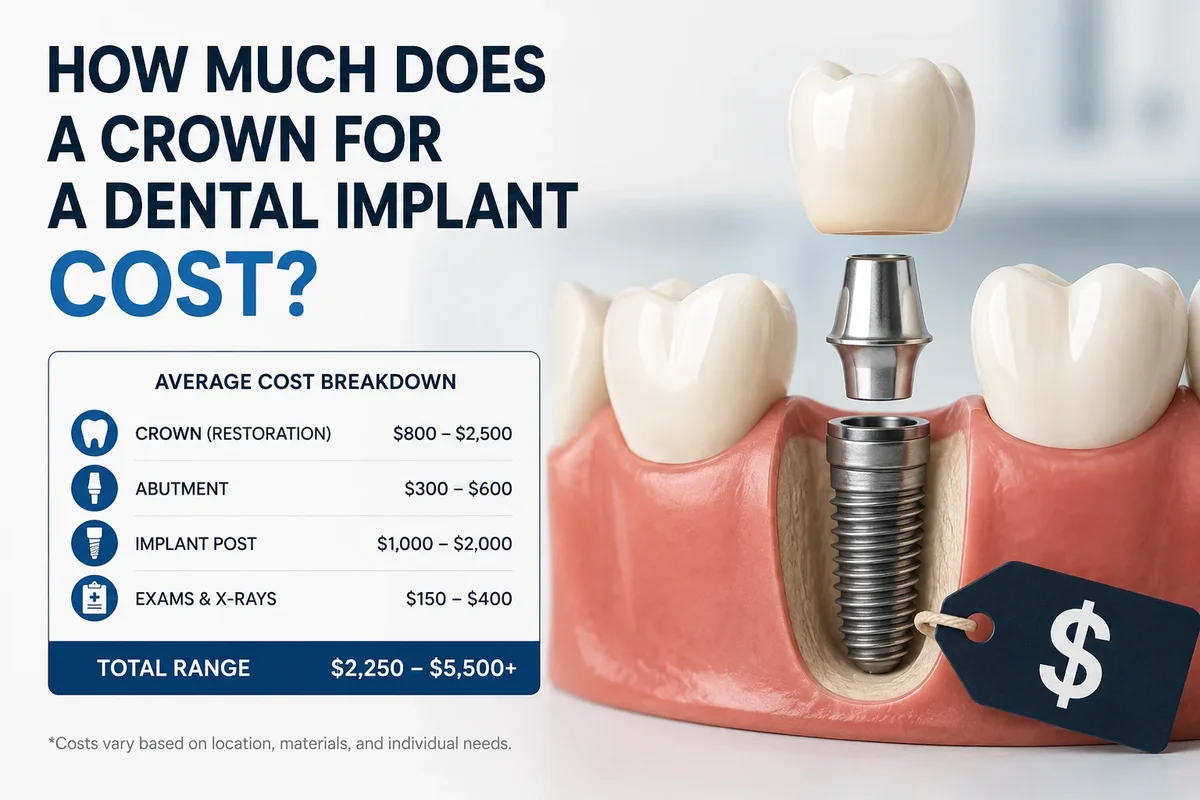
Many people researching how much does a crown for a dental implant cost assume the crown itself is the only expense involved. In reality, the final restoration may include several components. Depending on the treatment plan, the cost may involve the implant crown, the abutment that connects the crown to the implant, laboratory fabrication fees, digital scanning, bite adjustments, and follow-up visits.
Because treatment plans vary, two patients asking exactly the same question—how much does a crown for a dental implant cost—may receive very different recommendations. One patient may require a straightforward restoration, while another may need custom components designed to improve aesthetics or function.
Why Online Prices Can Be Misleading
One common mistake patients make is relying entirely on online price estimates. Although internet research can provide useful background information, online figures rarely account for individual clinical conditions. When people ask how much does a crown for a dental implant cost, they are often comparing numbers without understanding the differences in materials, manufacturing techniques, or treatment complexity.
For example, a restoration placed in a highly visible front tooth area may require advanced aesthetic planning. The same question—how much does a crown for a dental implant cost—can therefore have a different answer compared with a restoration placed on a back molar where appearance is less critical and strength becomes the primary concern.
The Lowest Price Is Not Always the Best Value
It can be tempting to focus solely on finding the lowest possible cost. However, selecting a restoration based only on price may not always provide the best long-term outcome. The answer to how much does a crown for a dental implant cost should always be balanced against factors such as durability, appearance, maintenance requirements, and expected longevity.
A crown that initially costs less may not necessarily be the most cost-effective solution over time if it requires more repairs, adjustments, or replacement. Patients should consider overall value rather than comparing numbers alone.
How Should You Decide Which Option Is Right?
If you are trying to determine how much does a crown for a dental implant cost for your specific situation, start by identifying your priorities. Ask yourself the following questions:
- Is appearance the most important factor?
- Will the restoration be located in a visible smile area?
- Do you have a strong bite or a history of teeth grinding?
- Are you looking for the most durable long-term solution?
- Do you have insurance benefits that may influence treatment planning?
Your answers can significantly affect the recommendation your dentist makes. In many cases, patients discover that the most appropriate restoration is not necessarily the most expensive or the least expensive option.
When Is a Consultation Necessary?
A professional consultation becomes important whenever online information stops being specific enough to guide a decision. If you already have a dental implant in place and are preparing for the final restoration stage, an examination can determine which crown materials and designs are suitable for your oral health needs.
Likewise, if you currently have an implant crown that feels loose, worn, chipped, or uncomfortable, it is advisable to seek professional assessment rather than relying on generalized information about how much does a crown for a dental implant cost. Problems involving implant restorations may require evaluation of both the crown and the supporting implant components.
At Redent Klinik, patients are encouraged to view cost discussions as one part of a broader treatment-planning process. Understanding how much does a crown for a dental implant cost is important, but understanding why a specific restoration is recommended is equally valuable. A personalized assessment helps clarify treatment options, expected maintenance needs, and the factors that may influence overall investment.
What to check next: Before requesting a quote, ask whether the estimate includes the crown, abutment, laboratory work, digital scans, adjustments, and follow-up visits. If you are unsure which restoration type is appropriate, or if your implant treatment plan is still being developed, schedule a professional consultation to receive recommendations based on your individual oral health condition rather than general online estimates.
What Factors Affect How Much a Crown for a Dental Implant Cost?
When patients research how much does a crown for a dental implant cost, they often hope to find a single price that applies to everyone. However, implant crown pricing is influenced by a combination of clinical, technical, and material-related factors. Understanding these variables can help you make a more informed decision and avoid focusing solely on the lowest quote.
The answer to how much does a crown for a dental implant cost depends on far more than the crown itself. Factors such as the restoration material, implant system compatibility, laboratory fabrication methods, location of the missing tooth, and overall oral health can all influence the final treatment plan. Knowing what affects cost allows patients to compare options based on value rather than price alone.
Crown Material Selection
One of the most significant factors influencing how much does a crown for a dental implant cost is the material used to fabricate the restoration. Different materials provide different levels of strength, aesthetics, and longevity.
Common implant crown materials include:
- Zirconia crowns
- Porcelain-fused-to-metal crowns
- Full ceramic crowns
- Layered zirconia restorations
- Hybrid restorative materials
For example, patients replacing a front tooth may prioritize natural appearance and translucency, while those restoring a molar often focus on strength and resistance to chewing forces. These differences directly affect the answer to how much does a crown for a dental implant cost because higher-end materials generally require more advanced manufacturing techniques.
The Location of the Implant
The position of the implant inside the mouth can also influence treatment complexity. A front tooth restoration frequently requires more detailed aesthetic planning than a back tooth restoration. Achieving a natural gum contour, matching neighboring teeth, and creating a realistic appearance may involve additional laboratory work.
As a result, when asking how much does a crown for a dental implant cost, patients should understand that a crown placed in the smile zone may require different procedures and materials than one placed in a less visible area.
Front Teeth vs. Back Teeth
Front teeth restorations often emphasize aesthetics, while molar restorations prioritize durability. Neither approach is automatically better than the other. The correct option depends on the functional and cosmetic requirements of the individual patient.
This distinction is another reason why there is no universal answer to how much does a crown for a dental implant cost.
Custom vs. Standard Abutments
The abutment is the component that connects the implant fixture to the visible crown. Some cases can be restored using standard prefabricated abutments, while others benefit from custom-designed components.
Custom abutments may improve fit, appearance, and support for surrounding gum tissue. However, because they require additional design and manufacturing processes, they may influence how much does a crown for a dental implant cost.
Patients concerned about aesthetics or complex implant positioning should discuss whether a custom abutment is recommended and why it may be beneficial in their specific case.
Dental Laboratory Technology
The laboratory producing the crown also plays a role in determining how much does a crown for a dental implant cost. Modern dental laboratories often use advanced CAD/CAM technology, digital scanning, and precision milling systems to fabricate restorations.
These technologies can improve accuracy and consistency, but they also contribute to manufacturing costs. Some laboratories offer highly customized aesthetic solutions, while others focus on standard restorative options.
When comparing treatment plans, ask about the type of laboratory used and whether the restoration will be digitally designed or conventionally fabricated.
Implant System Compatibility
Not all implant systems use identical components. Some manufacturers provide proprietary restorative parts that may affect treatment planning and overall expenses.
If you already have an implant placed years ago, your dentist may need to identify the implant brand before creating the final crown. In certain situations, obtaining compatible restorative components can affect how much does a crown for a dental implant cost.
This is particularly relevant for patients who received implant treatment at another clinic and are now seeking restoration elsewhere.
Additional Treatment Requirements
Occasionally, patients require more than a simple crown placement. Gum contour corrections, implant maintenance procedures, bite adjustments, or replacement of worn restorative components may be recommended before the final crown is delivered.
These circumstances can change the answer to how much does a crown for a dental implant cost because the treatment involves more than the restoration alone.
It is important to remember that additional procedures are not necessarily signs of a problem. In many cases, they are performed to improve long-term function, comfort, and appearance.
Should You Choose Based on Cost Alone?
While budget considerations are important, selecting an implant crown solely because it is the cheapest option may not always produce the best outcome. Durability, aesthetics, maintenance requirements, and compatibility with your implant system should all be considered.
When evaluating how much does a crown for a dental implant cost, try to compare overall value rather than focusing only on the initial price. A restoration that fits properly, functions comfortably, and meets your expectations may offer better long-term satisfaction than a lower-cost alternative that compromises important treatment goals.
At Redent Klinik, treatment recommendations are based on the patient’s oral condition, functional needs, aesthetic goals, and long-term expectations. Understanding the factors behind how much does a crown for a dental implant cost helps patients participate more confidently in treatment decisions and choose an option that aligns with both their dental needs and budget.
What to check next: Before approving treatment, ask your dentist which crown material is being recommended, whether a custom abutment is needed, what laboratory will fabricate the restoration, and whether any additional procedures are expected. If multiple options are available, request a comparison of benefits, limitations, maintenance requirements, and expected longevity so you can make a well-informed decision.
Who Is a Good Candidate for an Implant Crown?
Understanding whether you are a suitable candidate for an implant crown is just as important as understanding how much does a crown for a dental implant cost. Many patients focus on pricing first, but long-term success depends on choosing the right treatment at the right time. An implant crown is the visible tooth restoration attached to a dental implant, and while it can be an excellent solution for many people, it is not automatically appropriate for every situation.
If you are researching how much does a crown for a dental implant cost, you should also evaluate whether your implant site, oral health, and treatment goals support a successful restoration. A professional assessment helps determine if an implant crown is the best option or whether alternative treatments should be considered.
Patients With a Fully Healed Dental Implant
The most common candidate for an implant crown is someone who already has a dental implant that has successfully integrated with the surrounding bone. Before the final restoration can be attached, the implant generally needs adequate healing and stability.
Patients often ask how much does a crown for a dental implant cost shortly after implant surgery. However, the timing of crown placement depends on healing progress rather than a fixed schedule. Your dentist may recommend waiting until the implant demonstrates sufficient stability before moving forward with the final crown.
If healing is progressing normally, the next step is usually selecting the crown material, evaluating aesthetics, and planning the final restoration.
Patients Missing a Single Tooth
One of the most common situations involving implant crowns is replacement of a single missing tooth. In many cases, a dental implant with a custom crown allows patients to restore chewing function without affecting neighboring teeth.
For these individuals, the question is not only how much does a crown for a dental implant cost, but whether the implant-supported restoration offers advantages compared with a traditional bridge or removable option.
A single implant crown may be particularly attractive when adjacent teeth are healthy and do not require restoration themselves. Preserving natural tooth structure is often an important consideration during treatment planning.
Front Tooth Replacement Candidates
Patients replacing a front tooth frequently place a high value on appearance. In these situations, an implant crown may provide excellent cosmetic potential when planned correctly. However, aesthetics require careful consideration of gum contours, neighboring teeth, smile line characteristics, and restorative materials.
Because of these additional aesthetic requirements, discussions about how much does a crown for a dental implant cost often include factors beyond basic functionality. The goal is usually to achieve a restoration that blends naturally with surrounding teeth.
Patients With Good Oral Hygiene Habits
Long-term implant success is closely connected to oral hygiene. Patients who brush effectively, clean between teeth regularly, and attend routine dental examinations are generally better candidates for implant-supported restorations.
Even if you already know how much does a crown for a dental implant cost, maintaining the restoration after placement remains a critical responsibility. Poor oral hygiene can increase the risk of gum inflammation around implants and may affect long-term outcomes.
A dentist may recommend improving oral hygiene practices before proceeding with the final restoration if signs of inflammation are present.
Patients With Healthy Gum Tissue
Healthy gums play an important role in supporting both the appearance and function of an implant crown. If gum disease is present, treatment may be recommended before the final crown is delivered.
When researching how much does a crown for a dental implant cost, patients sometimes overlook the importance of gum health. However, healthy tissue helps create a stable environment around the implant and contributes significantly to long-term success.
Addressing gum concerns before crown placement can help improve both aesthetics and function.
Patients Who Grind or Clench Their Teeth
People who grind or clench their teeth can still be candidates for implant crowns, but additional planning may be necessary. Excessive bite forces can place increased stress on restorative components.
If you have a history of bruxism, your dentist may discuss protective measures such as a night guard. These considerations may influence recommendations related to materials and may indirectly affect discussions about how much does a crown for a dental implant cost.
The objective is not simply to place a crown but to select a restoration capable of functioning reliably under your specific bite conditions.
When an Implant Crown May Not Be the Immediate Next Step
Not every patient is immediately ready for a final implant crown. In some situations, additional healing time, gum treatment, bite adjustments, or implant evaluation may be recommended before proceeding.
Patients sometimes focus entirely on how much does a crown for a dental implant cost and overlook the importance of treatment readiness. A well-timed restoration often contributes more to long-term success than rushing the process.
If your dentist recommends postponing the final crown, it is usually because they want to optimize the clinical conditions before restoration.
Making the Right Decision
Being a candidate for an implant crown involves more than simply having an implant in place. Factors such as healing progress, gum health, oral hygiene habits, bite forces, and aesthetic expectations all influence treatment recommendations.
When evaluating how much does a crown for a dental implant cost, consider whether the proposed restoration aligns with your functional needs and long-term goals. The best treatment option is not always the least expensive one; it is the one that provides an appropriate balance of durability, comfort, appearance, and maintainability.
At Redent Klinik, patient evaluations focus on both restorative success and long-term oral health. Understanding candidacy before proceeding with treatment helps patients make more informed decisions and better understand why specific recommendations are made.
What to check next: If you already have an implant, ask your dentist whether the implant has fully healed, whether your gum tissue is healthy, and whether any bite-related factors could affect crown selection. If you are uncertain about your suitability for an implant crown, request a professional examination before comparing treatment options or cost estimates.
What Is Included in the Cost of an Implant Crown?
When patients ask how much does a crown for a dental implant cost, they often assume the answer refers only to the visible artificial tooth attached to the implant. In reality, the final cost may include several different components, appointments, laboratory processes, and clinical procedures. Understanding what is included can help you compare treatment plans more accurately and avoid misunderstandings when reviewing estimates.
The answer to how much does a crown for a dental implant cost is rarely based on a single item. Instead, it usually reflects a combination of restorative materials, custom components, professional expertise, laboratory fabrication, and follow-up care. Before comparing prices between clinics, it is important to understand exactly what services and materials are included in the proposed treatment.
The Implant Crown Itself
The most obvious component of the treatment is the implant crown. This is the visible restoration designed to look and function like a natural tooth. The crown is custom-made to match the surrounding teeth in shape, size, and color whenever possible.
Different materials can influence both performance and appearance. Since material selection is one of the major factors affecting how much does a crown for a dental implant cost, patients should ask their dentist which restorative option is being recommended and why.
The crown is often the part patients focus on most, but it is only one component of the complete restoration.
The Abutment Connection
Between the implant fixture and the crown sits an important component called the abutment. The abutment acts as a connector that supports the crown and attaches it securely to the implant.
When discussing how much does a crown for a dental implant cost, it is important to ask whether the abutment is included in the quoted fee. Some treatment plans include the abutment as part of the restoration package, while others list it separately.
Depending on the clinical situation, a dentist may recommend either a standard abutment or a custom-designed version. Custom abutments are often used to improve aesthetics, support gum contours, or accommodate unique implant positions.
Why Custom Abutments May Be Recommended
Custom abutments are designed specifically for the patient’s anatomy. They can improve the emergence profile of the crown and help create a more natural appearance, especially in highly visible areas of the mouth.
Because they require additional design and manufacturing processes, they may influence discussions about how much does a crown for a dental implant cost. However, in some situations, the added customization may provide meaningful functional or aesthetic benefits.
Laboratory Fabrication Costs
Modern implant crowns are usually fabricated in specialized dental laboratories. The laboratory plays a critical role in creating a restoration that fits accurately and functions properly.
Laboratory fees are often included when determining how much does a crown for a dental implant cost. Factors such as material choice, digital design requirements, aesthetic customization, and manufacturing techniques can all influence these costs.
Higher levels of customization generally require more laboratory time and expertise. This does not necessarily mean that every patient needs the most advanced option, but understanding the laboratory’s role helps explain why pricing can vary.
Digital Scans and Impressions
Before the crown is fabricated, detailed information about the implant position and surrounding teeth must be captured. Many clinics now use digital scanners instead of traditional impression materials, although both approaches remain common.
The technology and workflow used to gather this information can contribute to how much does a crown for a dental implant cost. Digital workflows may offer benefits such as improved accuracy, greater patient comfort, and efficient communication with dental laboratories.
Patients comparing treatment plans should ask whether digital scanning is included and whether any additional fees apply.
Clinical Appointments and Adjustments
Many people underestimate the number of professional appointments involved in delivering a successful implant crown. The final restoration often requires evaluation visits, fitting appointments, bite adjustments, and follow-up assessments.
These clinical services may be included in the answer to how much does a crown for a dental implant cost, depending on how the clinic structures its treatment fees.
It is worthwhile to ask whether post-placement adjustments are included, particularly if minor refinements are needed after the crown is delivered.
Maintenance and Long-Term Value
When evaluating how much does a crown for a dental implant cost, patients should consider not only the initial treatment but also the long-term maintenance requirements. Implant crowns benefit from regular examinations, professional cleanings, and periodic evaluations to help maintain healthy surrounding tissues.
Although maintenance visits are generally separate from the crown fee itself, understanding long-term care expectations can help you plan realistically for the future.
A restoration that functions well, fits accurately, and is supported by appropriate maintenance may provide greater value over time than a lower-cost option that requires more frequent intervention.
How to Compare Treatment Estimates
If you receive multiple treatment proposals, do not focus exclusively on the final number. Instead, compare what each estimate includes. Two clinics may provide very different answers to how much does a crown for a dental implant cost because they are including different services, materials, or restorative components.
Ask questions such as:
- Is the abutment included?
- What crown material is being used?
- Are laboratory fees included?
- Does the estimate include digital scans?
- Are follow-up visits part of the treatment plan?
- Will any additional appointments be necessary?
At Redent Klinik, treatment planning focuses on transparency and patient understanding. Rather than discussing only how much does a crown for a dental implant cost, the goal is to help patients understand what they are receiving and why specific recommendations are being made. This approach allows patients to compare options based on clinical value as well as cost.
What to check next: Before accepting any treatment estimate, ask for a detailed breakdown of the crown, abutment, laboratory work, digital scanning, and follow-up appointments. If you are unsure whether all necessary components are included, request clarification from your dentist so you can make an informed decision based on both treatment quality and budget considerations.
The Implant Crown Procedure and Timeline
When researching how much does a crown for a dental implant cost, many patients focus primarily on pricing and overlook the treatment process itself. However, understanding the procedure and timeline can help you make better decisions about treatment planning, budgeting, and expectations. The answer to how much does a crown for a dental implant cost is often connected to the number of appointments required, the complexity of the restoration, and whether additional procedures are needed before the final crown can be delivered.
An implant crown is usually the final stage of dental implant treatment. While every patient is different, the restoration process generally follows a sequence designed to ensure stability, function, and aesthetics. Knowing what happens during each phase can help you understand why treatment timelines vary and why costs may differ from one patient to another.
Step 1: Confirming Implant Healing
Before the final crown can be attached, the dental implant must integrate with the surrounding bone. This biological process is known as osseointegration. Depending on the individual case, healing may take several weeks or several months.
Patients frequently ask how much does a crown for a dental implant cost immediately after implant placement. However, the crown cannot always be fabricated right away. Your dentist will usually evaluate implant stability and healing progress before moving to the restorative stage.
Rushing this process may compromise treatment outcomes, which is why most dentists prefer to confirm successful healing before proceeding with the final restoration.
Step 2: Evaluation and Treatment Planning
Once healing is complete, the next stage involves a detailed assessment of the implant site. During this appointment, your dentist evaluates the surrounding gum tissue, bite relationship, implant position, and aesthetic requirements.
This assessment plays an important role in determining how much does a crown for a dental implant cost because it influences decisions regarding materials, custom components, laboratory requirements, and restoration design.
At this stage, patients should discuss their priorities, including durability, appearance, budget, and long-term maintenance expectations.
Questions to Ask During the Planning Stage
- Which crown material is recommended?
- Will a custom abutment be required?
- How many appointments are expected?
- Are digital scans being used?
- What maintenance will be needed after placement?
These questions help patients understand not only how much does a crown for a dental implant cost but also what value they are receiving from the proposed treatment.
Step 3: Digital Scanning or Impressions
After treatment planning, detailed records of the implant position must be captured. Many clinics use digital scanners to create highly accurate virtual models, while others may use conventional impression techniques.
The information gathered during this stage is sent to a dental laboratory where the implant crown is designed and fabricated. Since technology and laboratory involvement contribute to how much does a crown for a dental implant cost, patients may notice differences between treatment plans depending on the workflow used.
Digital workflows can often improve precision and communication between the clinic and laboratory, although the most appropriate method depends on the individual case.
Step 4: Crown Fabrication
Once records have been collected, the dental laboratory creates the final restoration. This phase may involve digital design software, computer-aided manufacturing, ceramic layering techniques, and quality-control procedures.
The fabrication stage is one reason why the answer to how much does a crown for a dental implant cost varies between patients. Different materials and customization levels require different amounts of laboratory work.
For highly visible front teeth, additional attention may be given to shade matching and aesthetics. For back teeth, the laboratory may focus more heavily on strength and durability.
Step 5: Crown Placement Appointment
After the laboratory completes the restoration, the patient returns for the placement appointment. During this visit, the dentist evaluates fit, appearance, bite alignment, and comfort before securing the crown to the implant.
Even if a patient already understands how much does a crown for a dental implant cost, the placement appointment remains one of the most important stages because it determines whether the restoration functions properly in daily use.
Minor adjustments may be necessary to optimize comfort and chewing efficiency.
Step 6: Follow-Up and Maintenance
Successful treatment does not end when the crown is attached. Follow-up visits help ensure that the restoration is functioning correctly and that the surrounding tissues remain healthy.
Patients sometimes focus exclusively on how much does a crown for a dental implant cost without considering the importance of long-term maintenance. Regular examinations and professional cleanings help monitor implant health and identify any issues early.
Good oral hygiene habits remain essential even after treatment is complete.
How Long Does the Entire Process Take?
The timeline varies depending on the patient’s clinical situation. If the implant has already healed and is ready for restoration, the crown process may involve only a few appointments. If additional healing or preparatory procedures are needed, treatment may take longer.
This variation is another reason why there is no universal answer to how much does a crown for a dental implant cost. Different timelines often reflect different levels of complexity and customization.
Patients should avoid comparing treatment duration alone and instead focus on receiving a restoration that is appropriate for their needs.
Making an Informed Decision
Understanding the procedure helps patients evaluate treatment recommendations more confidently. Rather than focusing solely on how much does a crown for a dental implant cost, consider the entire process, including planning, fabrication, placement, and maintenance.
At Redent Klinik, implant crown treatment planning emphasizes careful evaluation, clear communication, and individualized recommendations. The goal is to help patients understand not only the financial aspect of treatment but also the steps required to achieve a stable and functional result.
What to check next: Ask your dentist which stage of treatment you are currently in, whether your implant has fully healed, how many appointments remain, and whether any additional procedures are anticipated before crown placement. If your treatment timeline seems unclear, request a detailed explanation so you can plan your schedule, expectations, and budget more effectively.
Risks, Complications, and Possible Additional Costs
When evaluating how much does a crown for a dental implant cost, most patients naturally focus on the expected treatment fee. However, understanding potential risks, complications, and additional expenses is equally important. While implant crowns have a strong track record of long-term success when properly planned and maintained, no dental treatment is completely free from potential challenges. Knowing what can happen—and how those situations may affect treatment decisions—helps patients make more informed choices.
If you are researching how much does a crown for a dental implant cost, it is helpful to think beyond the initial placement appointment. Some factors that influence long-term satisfaction are not always visible during the treatment planning stage. By understanding possible complications, patients can better prepare for maintenance requirements and realistic expectations.
Not Every Implant Crown Requires Additional Treatment
It is important to emphasize that many implant crowns function successfully for years without major complications. Patients should not assume that additional procedures are inevitable. However, awareness of potential issues allows for earlier intervention if concerns arise.
When discussing how much does a crown for a dental implant cost, a dentist may explain possible maintenance needs because preventive care often helps reduce future problems. Understanding these possibilities is part of responsible treatment planning rather than a prediction that complications will occur.
Wear and Tear Over Time
Like natural teeth and other dental restorations, implant crowns experience daily chewing forces. Over time, normal wear may affect the restoration’s surface, appearance, or bite relationship.
Patients who ask how much does a crown for a dental implant cost should understand that long-term maintenance may eventually become part of ownership. Routine monitoring allows dentists to identify wear patterns before they become more significant concerns.
Factors that may increase wear include:
- Heavy chewing forces
- Teeth grinding or clenching
- Poor bite alignment
- Certain dietary habits
- Inconsistent dental maintenance
These factors do not automatically create problems, but they may influence how a restoration performs over time.
Bruxism and Implant Crowns
Patients who grind or clench their teeth often place greater stress on dental restorations. If bruxism is present, your dentist may recommend protective measures such as a custom night guard.
Although patients often focus on how much does a crown for a dental implant cost, discussing bite forces during treatment planning can be equally important because material selection and maintenance recommendations may differ for patients with stronger chewing habits.
Loose or Damaged Components
An implant crown consists of multiple components working together. In some cases, screws, abutments, or restorative parts may require adjustment or replacement.
If an implant crown feels loose, patients should seek professional evaluation rather than attempting self-treatment. Situations involving mobility can sometimes be resolved with relatively simple corrective procedures when addressed promptly.
Understanding these possibilities helps explain why the answer to how much does a crown for a dental implant cost is not always limited to the initial restoration. Long-term care occasionally involves maintenance of supporting components.
Gum Tissue and Implant Health
The health of the gum tissue surrounding an implant is a major factor in long-term success. Even though implants do not develop cavities like natural teeth, the surrounding tissues still require ongoing care.
Plaque accumulation, inadequate cleaning, and missed maintenance appointments may contribute to inflammation around implant-supported restorations. This is one reason why dentists emphasize oral hygiene when discussing how much does a crown for a dental implant cost. Protecting the investment often depends on consistent home care and professional monitoring.
Regular examinations allow dentists to evaluate tissue health and identify early signs of irritation before more extensive treatment becomes necessary.
Aesthetic Changes Over Time
Some patients seek implant crowns primarily for cosmetic reasons. While modern restorations can achieve excellent aesthetic results, changes in gum contours or neighboring teeth may influence appearance over time.
Patients comparing treatment options based solely on how much does a crown for a dental implant cost should also consider long-term aesthetic stability. Factors such as gum health, oral hygiene habits, and natural aging processes can affect appearance years after treatment is completed.
Routine follow-up care helps monitor these changes and determine whether any adjustments are appropriate.
Unexpected Additional Costs
One reason patients ask how much does a crown for a dental implant cost is to avoid financial surprises. While treatment plans are designed to be as comprehensive as possible, unforeseen findings occasionally arise during evaluation or maintenance.
Examples may include:
- Replacement of worn restorative components
- Bite adjustments
- Professional implant maintenance procedures
- Repair of chipped restorative materials
- Replacement of aging restorations when clinically indicated
These situations vary widely between patients and should not be viewed as expected outcomes. However, understanding that future maintenance may occasionally be required allows for more realistic treatment planning.
How to Reduce Risks
Patients can actively support the long-term success of implant crowns by following professional recommendations and maintaining healthy habits.
Helpful strategies include:
- Attending routine dental checkups
- Maintaining excellent oral hygiene
- Using recommended cleaning aids
- Following bite protection recommendations if grinding is present
- Reporting discomfort or looseness promptly
When evaluating how much does a crown for a dental implant cost, remember that protecting the restoration is often more cost-effective than waiting for minor concerns to become larger issues.
Making a Balanced Decision
The goal of treatment planning should not be to avoid every possible risk but to understand them realistically. Implant crowns remain a widely used restorative solution because they can provide strong function and natural appearance when appropriately planned and maintained.
At Redent Klinik, discussions about how much does a crown for a dental implant cost include not only the restoration itself but also the factors that support long-term success. Patients who understand maintenance requirements, potential complications, and realistic expectations are often better equipped to make confident treatment decisions.
What to check next: Ask your dentist whether you have any risk factors such as teeth grinding, gum inflammation, heavy bite forces, or existing restorative concerns that could influence long-term outcomes. If you notice looseness, discomfort, swelling, bite changes, or visible damage around an implant crown, request professional evaluation as soon as possible rather than waiting for symptoms to worsen.
Alternatives to an Implant Crown and Cost Comparisons
Many patients researching how much does a crown for a dental implant cost eventually ask a second important question: are there alternatives that may be more suitable for their needs, budget, or oral health situation? While implant crowns are a popular solution for replacing missing teeth, they are not the only treatment option available. Understanding the advantages, limitations, and cost considerations of alternative treatments can help you make a more informed decision.
The right treatment is not always determined solely by the answer to how much does a crown for a dental implant cost. Factors such as bone health, gum condition, adjacent teeth, long-term maintenance expectations, and personal preferences all play a role. In some situations, an implant crown may be the preferred choice, while in others, a different restorative solution may be more appropriate.
Traditional Dental Bridges
A dental bridge is one of the most common alternatives to an implant crown. A bridge replaces a missing tooth by using neighboring teeth as support for the restoration.
Patients comparing options often begin by asking how much does a crown for a dental implant cost and then compare that figure with the estimated cost of a bridge. While bridges may sometimes involve lower initial treatment expenses, they require preparation of adjacent teeth in many cases.
For some patients, preserving healthy neighboring teeth is an important consideration. Others may prioritize shorter treatment timelines or different financial factors. The most suitable option depends on the individual’s clinical situation rather than a single price comparison.
When a Bridge May Be Considered
- When adjacent teeth already require crowns
- When implant placement is not preferred
- When treatment timelines need to be shorter
- When specific anatomical factors influence treatment planning
A professional examination is necessary to determine whether a bridge is a practical alternative in your particular case.
Removable Partial Dentures
Another alternative is a removable partial denture. This option replaces one or more missing teeth using a removable appliance that rests on the gums and, in some designs, attaches to remaining teeth.
Patients investigating how much does a crown for a dental implant cost sometimes consider removable dentures because they may involve lower upfront treatment costs. However, differences in comfort, stability, chewing performance, and maintenance requirements should also be considered.
For some individuals, removable restorations provide a practical solution. Others prefer fixed options because they more closely resemble natural teeth during daily activities.
No Immediate Replacement
In certain situations, patients may choose to delay treatment temporarily rather than immediately replacing a missing tooth. This decision may be influenced by financial planning, ongoing dental treatment, or personal circumstances.
Although patients frequently focus on how much does a crown for a dental implant cost, delaying treatment should be discussed carefully with a dentist. Depending on the location of the missing tooth and surrounding conditions, postponing treatment may have consequences for bite function, neighboring teeth, or future treatment planning.
A professional evaluation can help determine whether delaying treatment is a reasonable short-term option.
Implant-Supported Bridges
For patients missing multiple teeth, an implant-supported bridge may be considered. Instead of replacing each missing tooth with an individual implant crown, several teeth may be supported by strategically placed implants.
This approach may influence the overall answer to how much does a crown for a dental implant cost because treatment planning differs significantly from replacing a single tooth. The most efficient solution depends on the number of missing teeth, bone availability, and restorative goals.
Patients with multiple missing teeth should discuss all available implant-supported options rather than assuming that each missing tooth automatically requires an individual implant crown.
Factors Beyond Initial Cost
When comparing alternatives, it is important not to focus exclusively on the immediate treatment fee. Patients often begin with the question how much does a crown for a dental implant cost, but long-term value is equally important.
Questions worth considering include:
- How long is the expected treatment timeline?
- What maintenance requirements are involved?
- Will adjacent teeth be affected?
- How stable is the restoration during chewing?
- What aesthetic result is expected?
- How comfortable is the solution in daily life?
Different patients may prioritize these factors differently. A treatment that is ideal for one person may not be the best fit for another.
Cost vs. Value
The lowest-cost option is not always the most economical over time. Likewise, the most expensive treatment is not automatically the best choice. The objective is to balance function, appearance, maintenance requirements, and financial considerations.
When evaluating how much does a crown for a dental implant cost, consider how the restoration aligns with your long-term goals rather than focusing solely on the initial number.
Who May Benefit Most From an Implant Crown?
Many patients choose implant crowns because they offer a fixed solution that does not rely on neighboring teeth for support. They can provide a natural appearance and help restore chewing function when properly planned and maintained.
However, suitability depends on several clinical factors. Patients should not assume that an implant crown is automatically the best option simply because they have heard positive experiences from others.
Instead of asking only how much does a crown for a dental implant cost, ask whether the implant crown is the most appropriate treatment for your specific oral health condition and lifestyle needs.
Making the Final Decision
Choosing between an implant crown and alternative treatments requires balancing clinical recommendations with personal priorities. Budget matters, but so do comfort, aesthetics, maintenance, and long-term functionality.
At Redent Klinik, treatment discussions focus on helping patients understand all available options before making a decision. Understanding how much does a crown for a dental implant cost is important, but comparing the advantages and limitations of alternatives often leads to a more confident treatment choice.
What to check next: If you are considering alternatives, ask your dentist to compare implant crowns, bridges, removable partial dentures, and any other suitable options for your case. Request explanations regarding treatment timelines, maintenance requirements, effects on neighboring teeth, and expected long-term outcomes before making a final decision.
Financing, Insurance, and Payment Planning Options
For many patients, understanding how much does a crown for a dental implant cost is only the first step. The next question is often how to pay for treatment in a way that fits their financial situation. Implant crowns can represent an important investment in oral function and appearance, which is why careful financial planning is often just as important as choosing the right restorative material or treatment approach.
If you are researching how much does a crown for a dental implant cost, it is helpful to understand the different financing, insurance, and budgeting options that may be available. Every patient’s circumstances are unique, and the most practical solution is not always the same for everyone.
Understanding the Difference Between Cost and Affordability
Many patients focus entirely on the total fee when asking how much does a crown for a dental implant cost. While the total amount is important, affordability is often influenced by how treatment expenses are structured over time.
For example, some patients prefer to complete treatment immediately and pay in full, while others benefit from staged treatment planning or payment arrangements that distribute costs across several months. Understanding these options can make treatment more manageable without compromising the quality of care.
The goal should not simply be finding the lowest price but identifying a treatment plan that balances clinical needs with financial comfort.
Dental Insurance Considerations
Insurance coverage for implant-related treatment varies significantly depending on the policy, provider, and region. Some plans may contribute toward certain restorative components, while others may offer limited or no benefits for implant-supported crowns.
Because of these differences, patients should avoid assuming that their insurance policy will provide the same coverage as another person’s. When discussing how much does a crown for a dental implant cost, it is advisable to request a detailed explanation of what benefits may or may not apply.
Important questions to ask your insurance provider include:
- Does the policy cover implant crowns?
- Are abutments included in coverage calculations?
- Are annual maximum benefits applicable?
- Are there waiting periods?
- Are specific materials covered differently?
Obtaining this information before treatment begins can help prevent unexpected financial surprises.
Preauthorization and Benefit Verification
Some patients benefit from obtaining preauthorization or benefit verification before starting treatment. This process may provide a clearer understanding of potential insurance contributions and any limitations that could affect planning.
Although preauthorization does not necessarily guarantee payment, it can help patients better understand the financial implications of how much does a crown for a dental implant cost in relation to their individual insurance plan.
Clinic Financing Programs
Many dental clinics offer financing solutions designed to help patients manage treatment expenses. Depending on the provider, these arrangements may include installment plans, third-party financing services, or staged treatment options.
Patients concerned about how much does a crown for a dental implant cost should ask whether payment plans are available and whether any administrative fees or financing conditions apply.
When reviewing financing options, consider:
- Monthly payment amounts
- Repayment duration
- Administrative charges
- Eligibility requirements
- Flexibility of payment schedules
Comparing these factors can help determine whether a financing solution aligns with your budget and financial goals.
Budgeting for Long-Term Oral Health
When evaluating how much does a crown for a dental implant cost, it is helpful to think beyond the initial treatment phase. Implant crowns benefit from routine maintenance, professional examinations, and ongoing oral hygiene care.
Budgeting for these future needs can contribute to long-term treatment success. Although maintenance expenses are generally much lower than the cost of replacing a restoration, planning ahead helps patients avoid unnecessary stress and maintain healthy habits.
Viewing treatment as a long-term oral health investment rather than a one-time purchase often leads to more balanced decision-making.
Should You Delay Treatment to Save Money?
Some patients wonder whether postponing treatment is the best response after learning how much does a crown for a dental implant cost. In certain situations, delaying treatment may be reasonable, especially if the implant is still healing or if financial planning is needed.
However, delaying treatment without professional guidance may not always be advisable. Depending on the clinical situation, postponement could affect restoration timing, bite function, or overall treatment planning.
The appropriate approach depends on the condition of the implant, surrounding tissues, and the recommendations of the treating dentist.
Questions to Ask Before Delaying Treatment
- Will postponing treatment affect implant health?
- Is a temporary restoration recommended?
- How long can treatment reasonably be delayed?
- Will costs change if treatment is postponed?
- Are there maintenance requirements during the waiting period?
Receiving professional guidance can help patients make decisions based on clinical considerations rather than assumptions.
Comparing Quotes Correctly
When gathering treatment estimates, many patients focus exclusively on the final number. However, a lower quote does not necessarily indicate better value.
If you are comparing answers to how much does a crown for a dental implant cost, ask whether each estimate includes:
- The implant crown
- The abutment
- Laboratory fees
- Digital scans or impressions
- Adjustment appointments
- Follow-up evaluations
Two treatment plans may appear similar at first glance but include significantly different services and materials.
Making a Financially Informed Decision
The best financial decision is not always the lowest-cost option. Patients should evaluate treatment recommendations based on clinical suitability, expected longevity, maintenance requirements, and affordability.
At Redent Klinik, discussions about how much does a crown for a dental implant cost are approached with transparency and individualized planning. By understanding insurance considerations, financing opportunities, and long-term maintenance expectations, patients can make decisions that align with both their oral health goals and financial circumstances.
What to check next: Before committing to treatment, request a written estimate that clearly outlines included services, ask your insurance provider about potential benefits, and discuss available payment options with the clinic. If financial concerns are influencing your treatment decision, seek professional guidance so you can explore practical solutions without compromising appropriate care.
Frequently Asked Questions About How Much Does a Crown for a Dental Implant Cost
Many patients spend considerable time researching how much does a crown for a dental implant cost before scheduling a consultation. While understanding pricing is important, patients often have additional questions about durability, materials, insurance coverage, timelines, and long-term maintenance. This FAQ section addresses some of the most common concerns and helps readers make more informed decisions before proceeding with treatment.
If you are trying to determine how much does a crown for a dental implant cost, remember that online information can provide general guidance, but a personalized evaluation remains the most reliable way to receive recommendations tailored to your specific needs.
Is the Crown Included in the Original Implant Cost?
Not always. One of the most common misunderstandings about how much does a crown for a dental implant cost is assuming that the implant surgery and the final crown are always included in a single fee.
In some treatment plans, the implant fixture, abutment, and crown are quoted separately. In others, they may be presented as part of a comprehensive treatment package. This is why patients should always request a detailed breakdown of what is included in any estimate.
Before comparing treatment plans, verify whether the quoted fee includes all restorative components and associated appointments.
Why Do Implant Crown Prices Vary So Much?
The answer to how much does a crown for a dental implant cost varies because every patient presents unique clinical requirements. Factors that commonly influence treatment recommendations include:
- The crown material selected
- The location of the implant in the mouth
- The need for custom components
- The laboratory manufacturing process
- The complexity of the restorative case
- The geographic location of the clinic
Because these variables differ from patient to patient, two individuals receiving implant crowns may receive very different treatment proposals.
Does a Higher Price Always Mean Better Quality?
Not necessarily. While advanced materials and highly customized restorations may increase treatment costs, a higher price alone does not automatically guarantee a superior outcome.
When evaluating how much does a crown for a dental implant cost, focus on the suitability of the restoration for your specific needs rather than assuming the most expensive option is always the best one.
The ideal treatment balances function, aesthetics, durability, maintenance requirements, and budget considerations.
How Long Can an Implant Crown Last?
Many patients ask about longevity while researching how much does a crown for a dental implant cost. The lifespan of an implant crown depends on several factors, including oral hygiene habits, bite forces, material selection, and routine dental maintenance.
Regular professional evaluations and good home care habits can contribute to long-term restoration performance. However, individual outcomes vary, and no restoration can be expected to perform identically in every patient.
Rather than focusing solely on lifespan estimates, discuss maintenance expectations with your dentist before treatment begins.
Will Insurance Pay for an Implant Crown?
Insurance coverage varies widely depending on the policy and provider. Some plans may contribute toward restorative treatment, while others may offer limited or no benefits for implant-related procedures.
Because insurance policies differ significantly, patients researching how much does a crown for a dental implant cost should verify coverage directly with their provider before making assumptions.
Requesting benefit verification before treatment can help clarify potential out-of-pocket expenses.
Can a Damaged Implant Crown Be Repaired?
In some situations, minor damage may be repairable. In others, replacement of the crown or associated components may be recommended. The appropriate solution depends on the type of damage, the condition of the supporting implant, and the overall restorative design.
If a crown becomes chipped, loose, or uncomfortable, professional evaluation is recommended. Patients should avoid delaying assessment simply because they are concerned about how much does a crown for a dental implant cost. Early intervention often helps prevent more complex issues.
What Symptoms Should Prompt an Appointment?
- Persistent discomfort
- Visible damage to the restoration
- Looseness during chewing
- Changes in bite alignment
- Swelling or irritation around the implant
These symptoms do not necessarily indicate a serious problem, but they should be professionally assessed.
Can I Choose Any Crown Material I Want?
Patients often have preferences regarding aesthetics or budget. However, the most appropriate material should be selected based on clinical factors, functional demands, and restorative goals.
When discussing how much does a crown for a dental implant cost, ask your dentist to explain why a particular material is being recommended. The goal is to choose a solution that performs well under your specific oral conditions rather than selecting a material based solely on price.
Is Traveling Abroad for Treatment Worth Considering?
Some patients compare domestic and international treatment options when researching how much does a crown for a dental implant cost. While treatment abroad may offer financial advantages in certain situations, patients should also consider factors such as follow-up care, communication, travel expenses, and long-term maintenance.
Cost comparisons should always include the complete treatment experience rather than focusing only on the initial quoted fee.
What Is the Best Way to Compare Clinics?
When comparing providers, do not evaluate treatment proposals solely by asking how much does a crown for a dental implant cost. Instead, consider:
- Clinical experience
- Diagnostic processes
- Materials used
- Laboratory partnerships
- Maintenance protocols
- Transparency of treatment planning
A thorough evaluation often provides more useful information than a simple price comparison.
Making the Right Decision
The question how much does a crown for a dental implant cost is important, but it should be viewed as one part of a larger treatment decision. Material selection, oral health status, maintenance expectations, and provider experience all contribute to the overall value of treatment.
At Redent Klinik, patients are encouraged to ask detailed questions and participate actively in treatment planning. Understanding both the financial and clinical aspects of care helps patients make decisions that align with their long-term oral health goals.
What to check next: Before proceeding with treatment, create a list of questions regarding materials, maintenance, insurance coverage, follow-up care, and expected treatment stages. If any aspect of your treatment plan remains unclear, request a detailed consultation so you can move forward with confidence and realistic expectations.